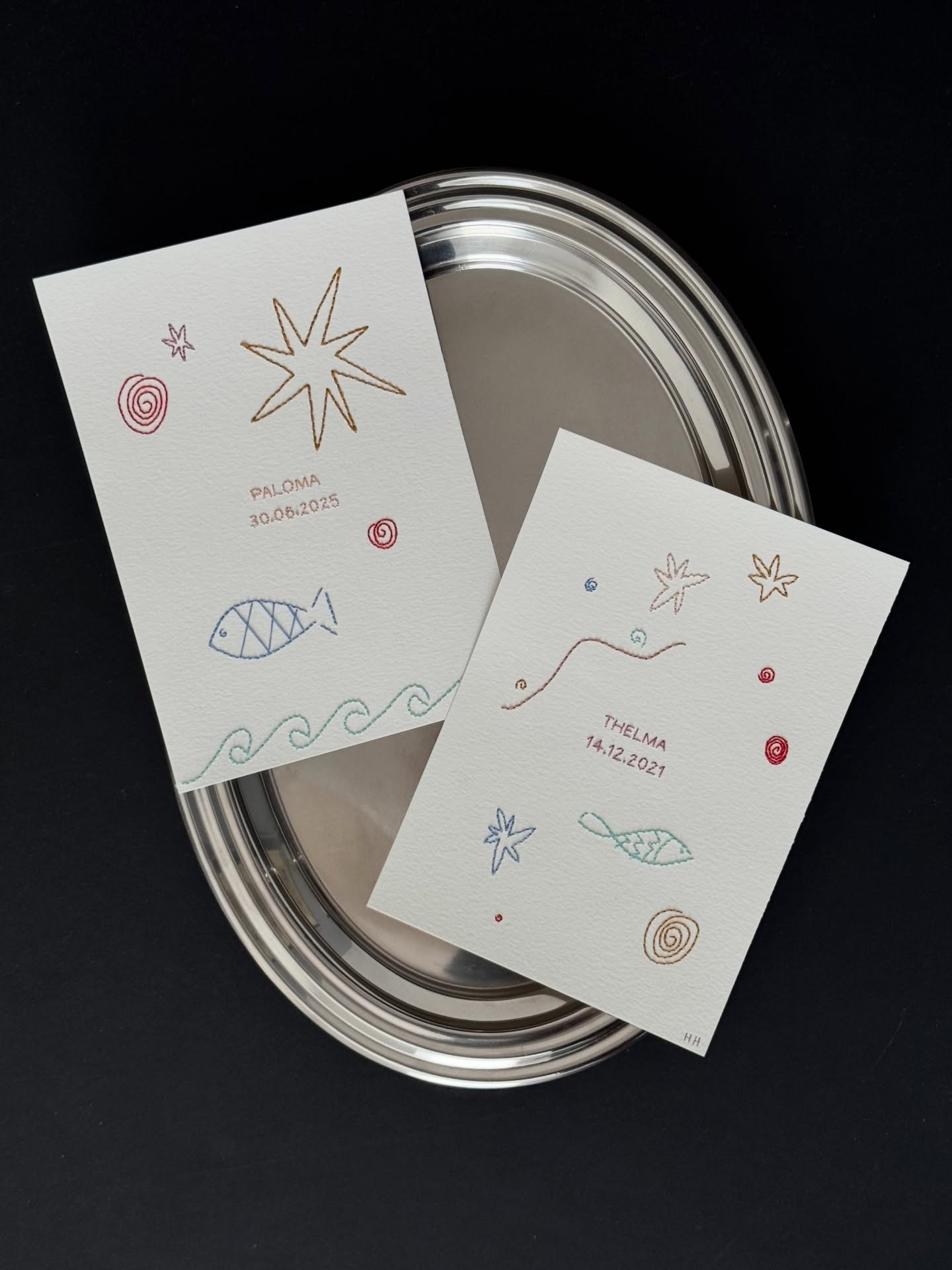
Once a wedding stretches across a whole weekend, the paper stops being a formality and turns into a small design project of its own. Save the dates, invitations, rehearsal dinner cards, menus, seating charts, welcome signage — multiply that by three days and you can end up with a stack of pieces that either look like they belong to five different weddings, or like someone photocopied the same motif onto everything they could find. Neither is the goal. The goal is stationery that reads as one story, told a little differently each time it shows up.
We asked Jess of The Jess Press, a calligraphy and stationery studio based in New Jersey and a Wedvibes member, how she keeps a full weekend of paper feeling like one thing without making every piece identical.
Meet the Expert
Jess spent years as an Art Director in cosmetics licensing in New York City, which is where most of her design instincts got built: print production, file setup, the practical side of turning an idea into something you can actually manufacture. The calligraphy side started almost by accident. A local class didn’t feel like the right fit, so she taught herself off YouTube instead, practicing on a couple of wood signs from Michaels. One photo of those signs on her personal Instagram brought in enough messages that she started to wonder if there was a business here. A faux seating chart written on a mirror sealed it — someone asked to hire her for their wedding before she’d even named the company.
About six months of working her day job from 6am to 7pm and building The Jess Press on the side later, she was able to go full time. She holds a BFA in Graphic Design and Illustration, and has picked up nearly every fine art skill along the way, from advanced stained glass to watercolor painting.

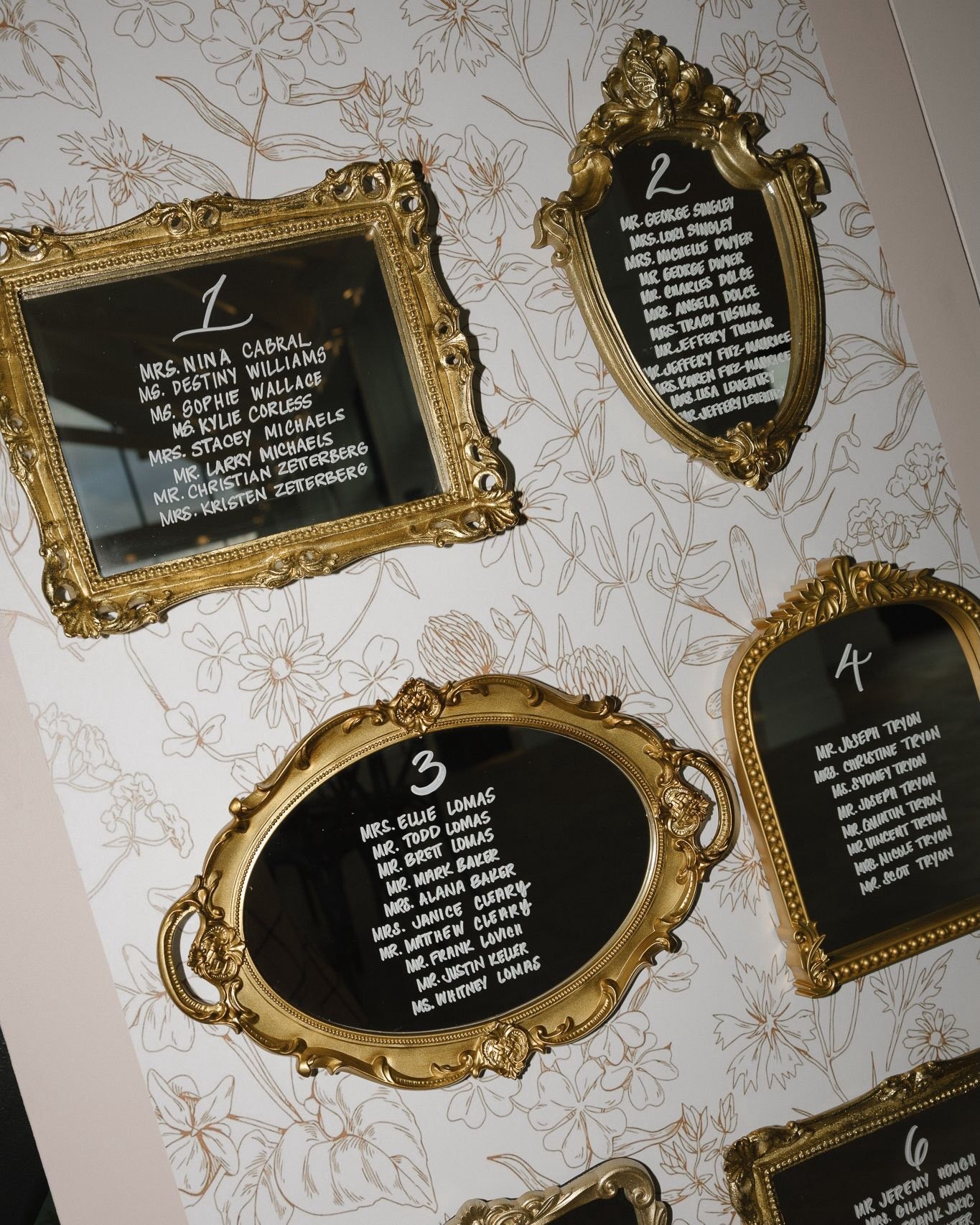
Photo: Courtesy of The Jess Press, Dar By Shaye Photo
Start With the Couple, Not the Palette
Before Jess sketches a single line, she asks every couple the same opening question: “Describe the vibe of your wedding. What is really important to you that you want to convey as a couple?” It’s not a question about the Pinterest board or the color scheme, at least not yet. She wants to hear about the couple first.
That question matters more than it sounds like it should, because a lot of stationery mistakes trace back to skipping it. A palette borrowed from an inspiration photo can look beautiful and still say nothing about the two people getting married. Jess pushes her couples toward specifics: why this venue, what a signature cocktail could reference about how they met, whether their colleges or their pets or their favorite bar deserve a mention somewhere on the page. “The day is about you both as a couple,” she says. “How can we execute that to your guests to show how personalized it is?” Get that part right, and the rest of the paper story tends to follow it naturally.
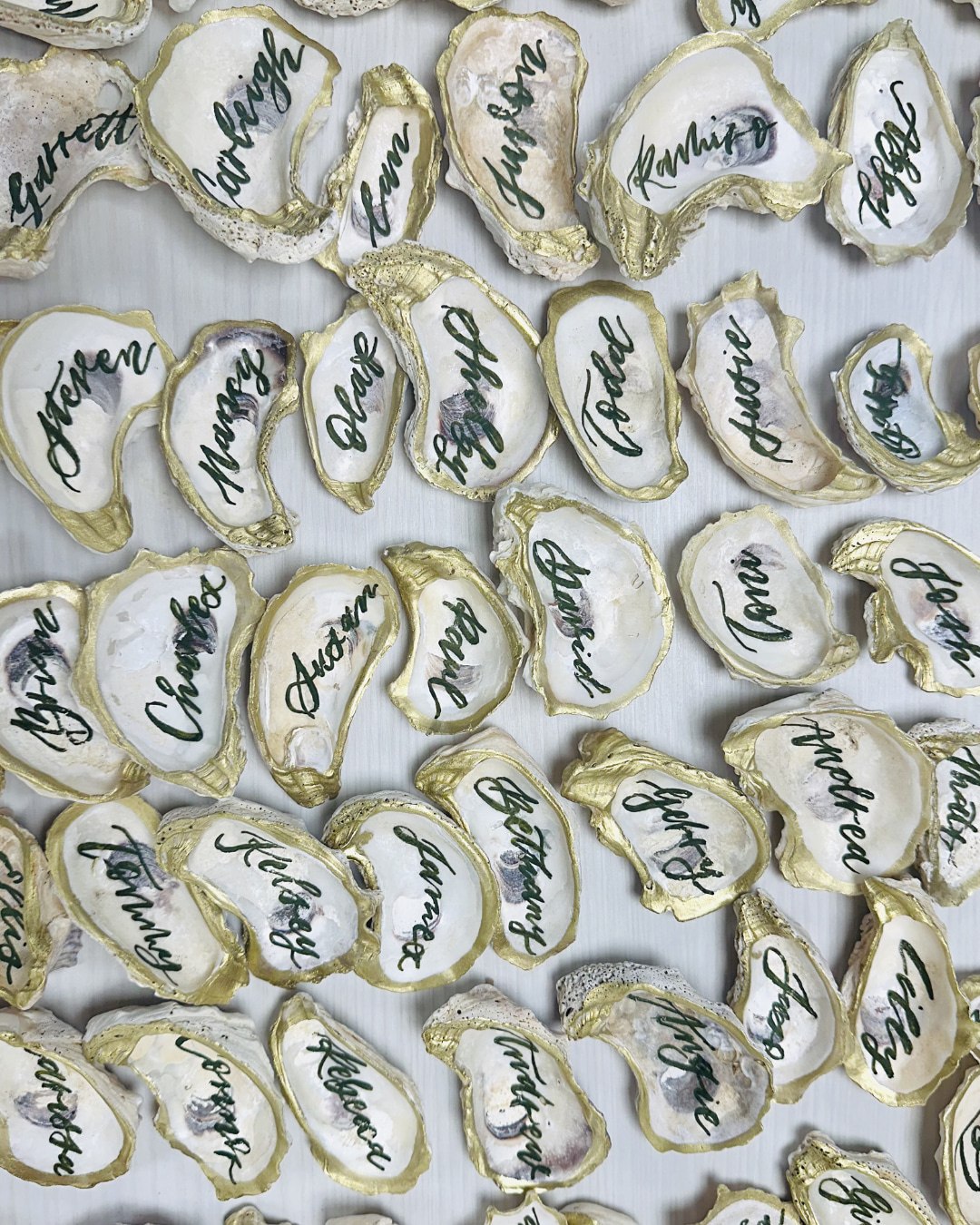
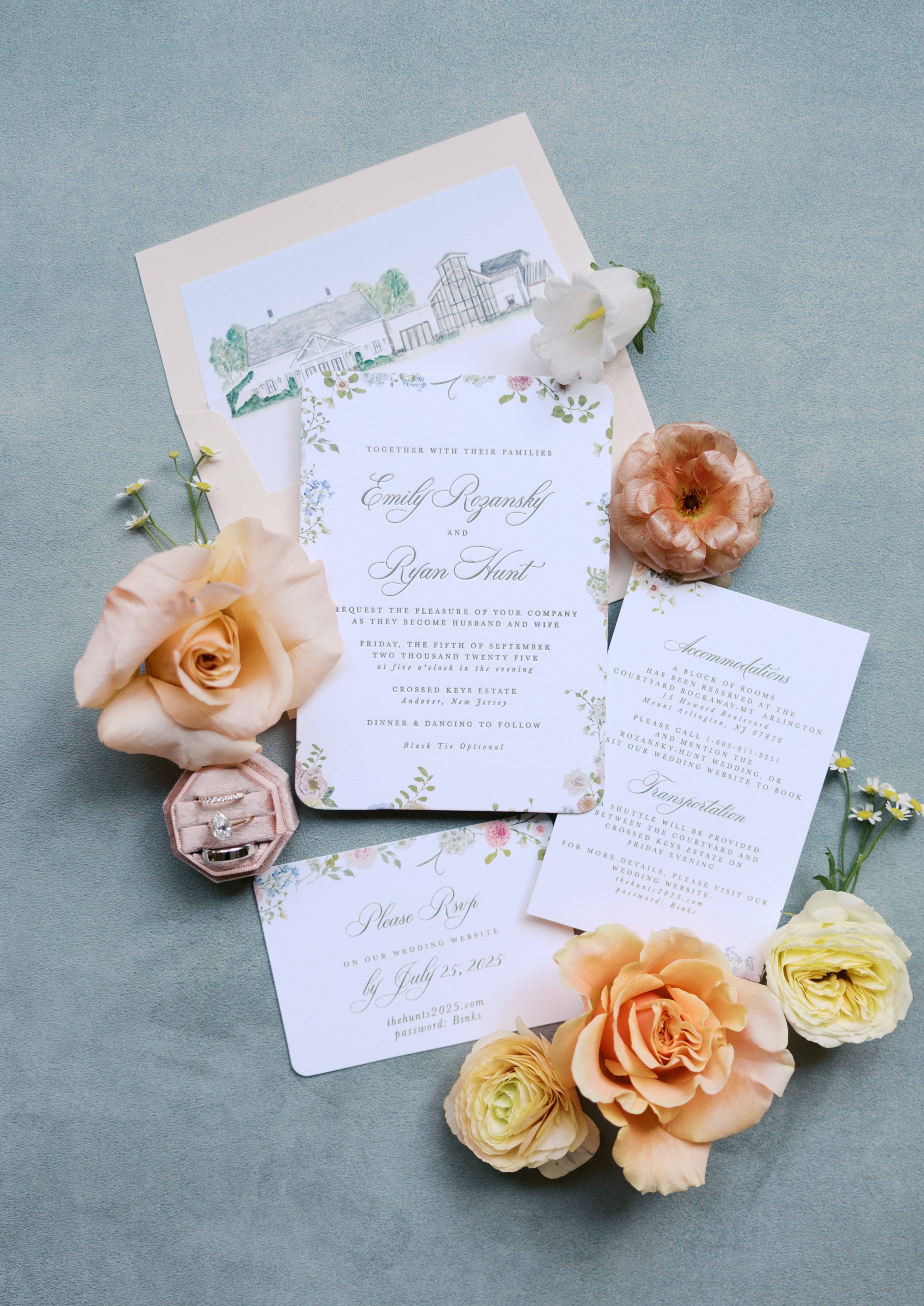
Photo: Courtesy of The Jess Press, Caroline Morris Watters
Cohesive ≠ Identical
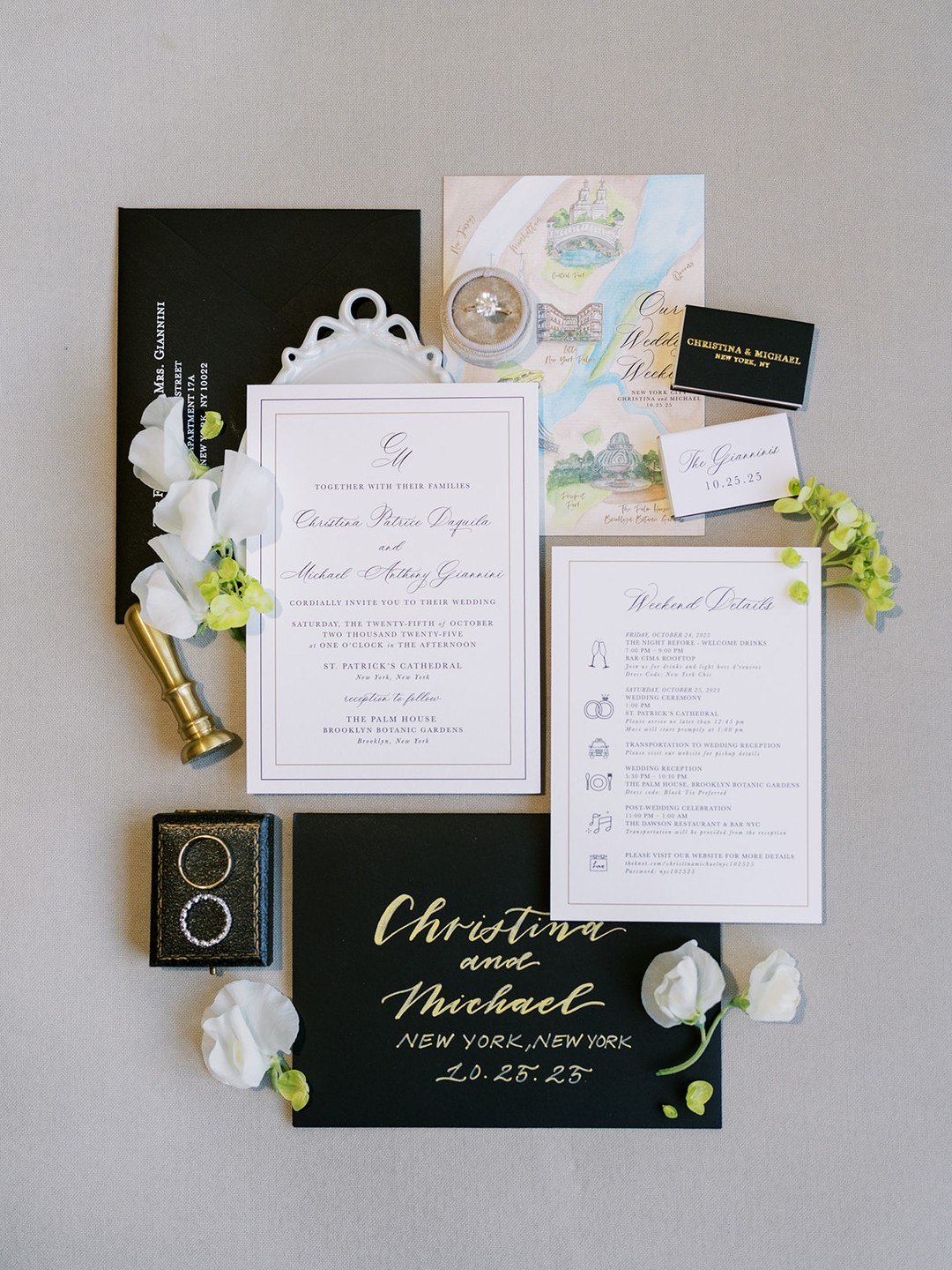
Here’s the part Jess pushes back on the most, gently but consistently. Couples often assume that matching is the safest choice, so they’ll ask for the exact same wood tone or the exact same print on every single sign. Jess calls this out directly: “I love a cohesive look, but not matchy-matchy.” Her fix is to treat the invitation suite as a set of ingredients rather than a template. Pull one color and one print motif from it, then let each piece use that pairing a little differently instead of copying it wholesale.
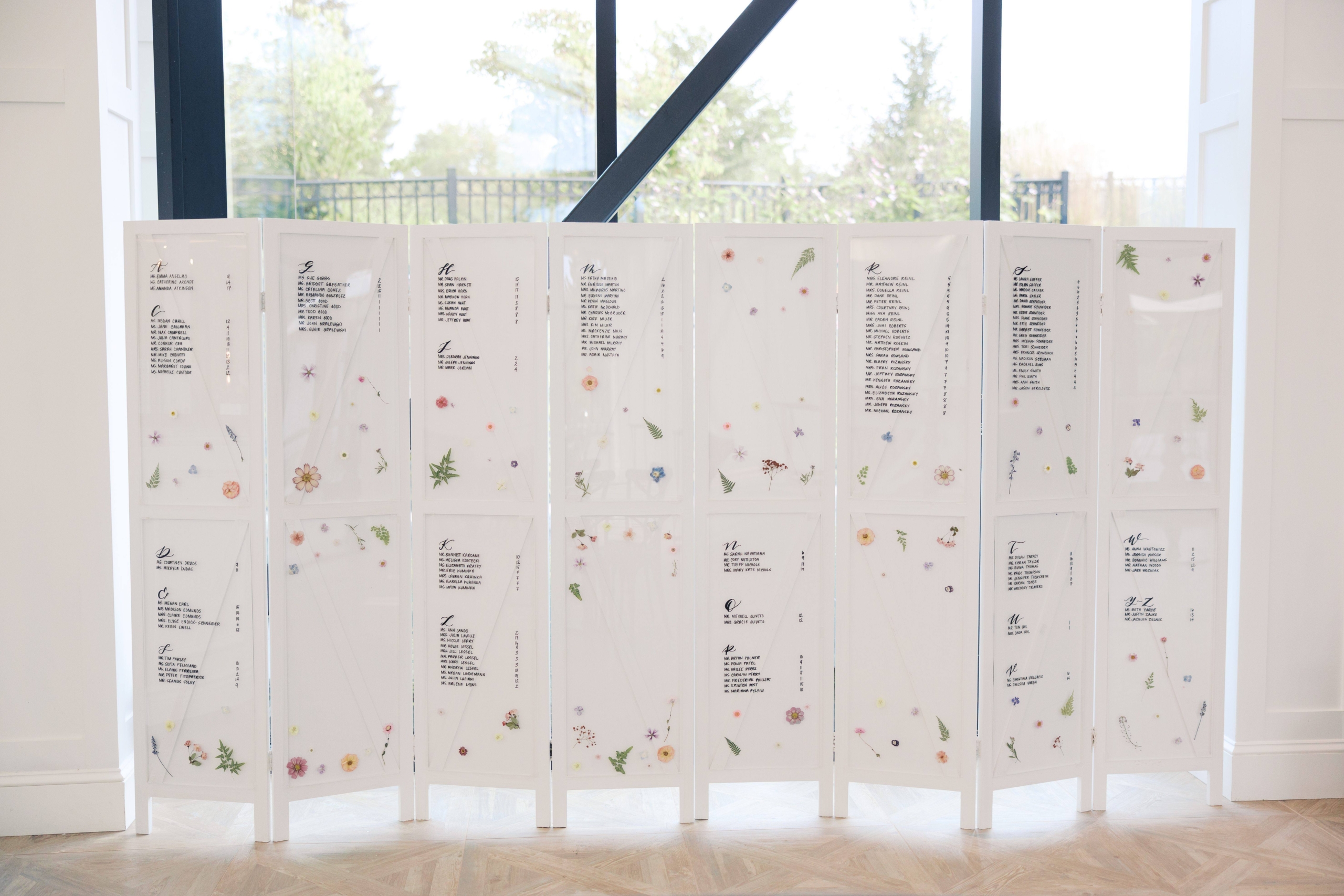
Photo: NELA Photography
Let the Invitation Set the Rules
That same logic carries straight into the reception, which is where a lot of couples lose the thread. Jess’s approach is to keep asking herself one question at every stage: “How can we bring this invitation suite that set the entire tone of the wedding into our day-of materials, with its coordinating linens, florals, table and flatware?”
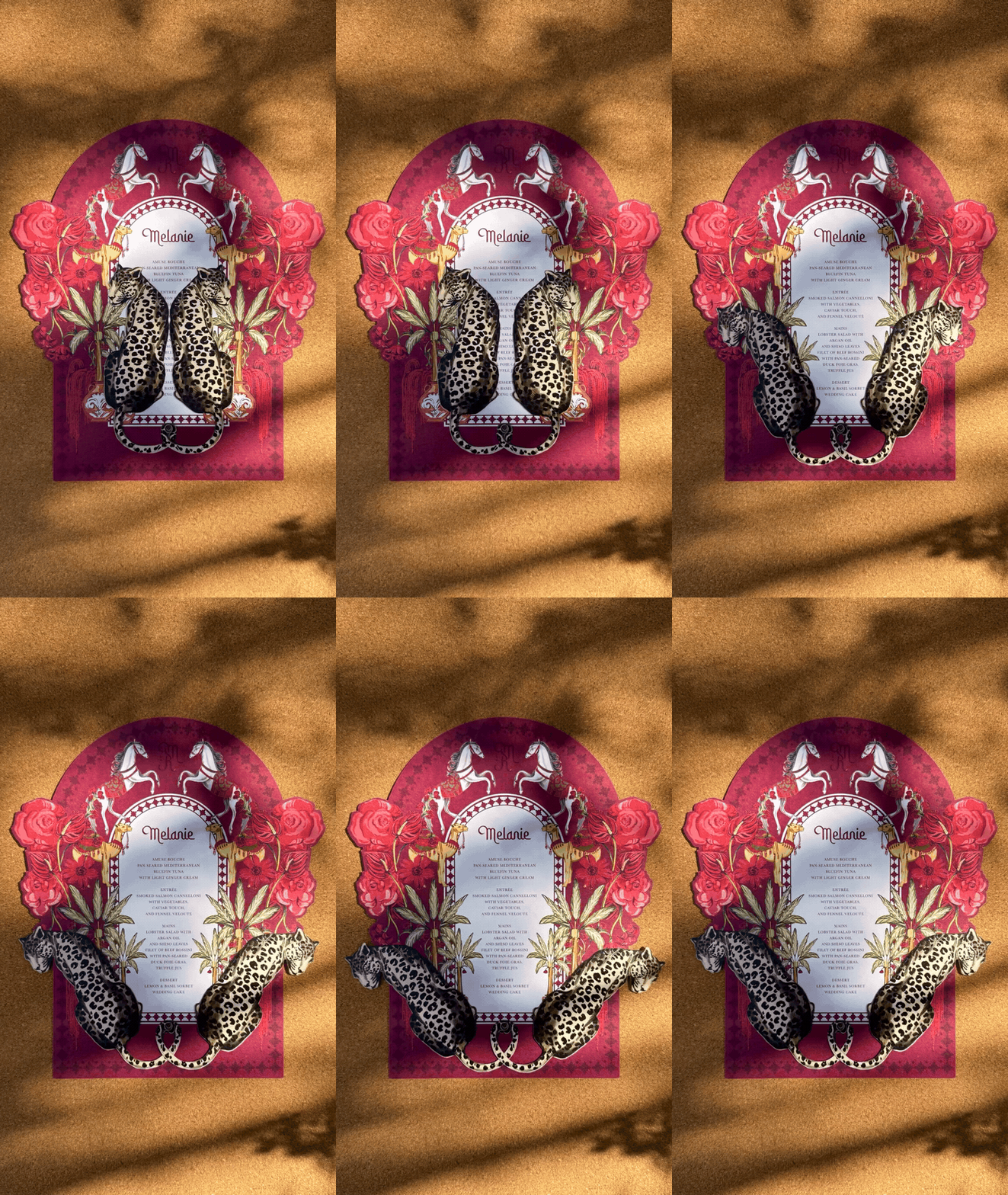
In practice, that means the invitation’s color and print motif keep resurfacing in new forms instead of a straight repeat. Velvet diecut table numbers, debossed to match the print treatment and set against the linens. Menu cards on the same stock as the invite, calligraphed with each guest’s name and closed with a wax seal that echoes the invitation’s own monogram. Signage that reuses those same materials, or takes a linen’s pattern and reprints it as a kind of wallpaper, so even the tablecloths and the welcome sign end up quoting each other. Nothing repeats outright. Everything clearly comes from the same place.
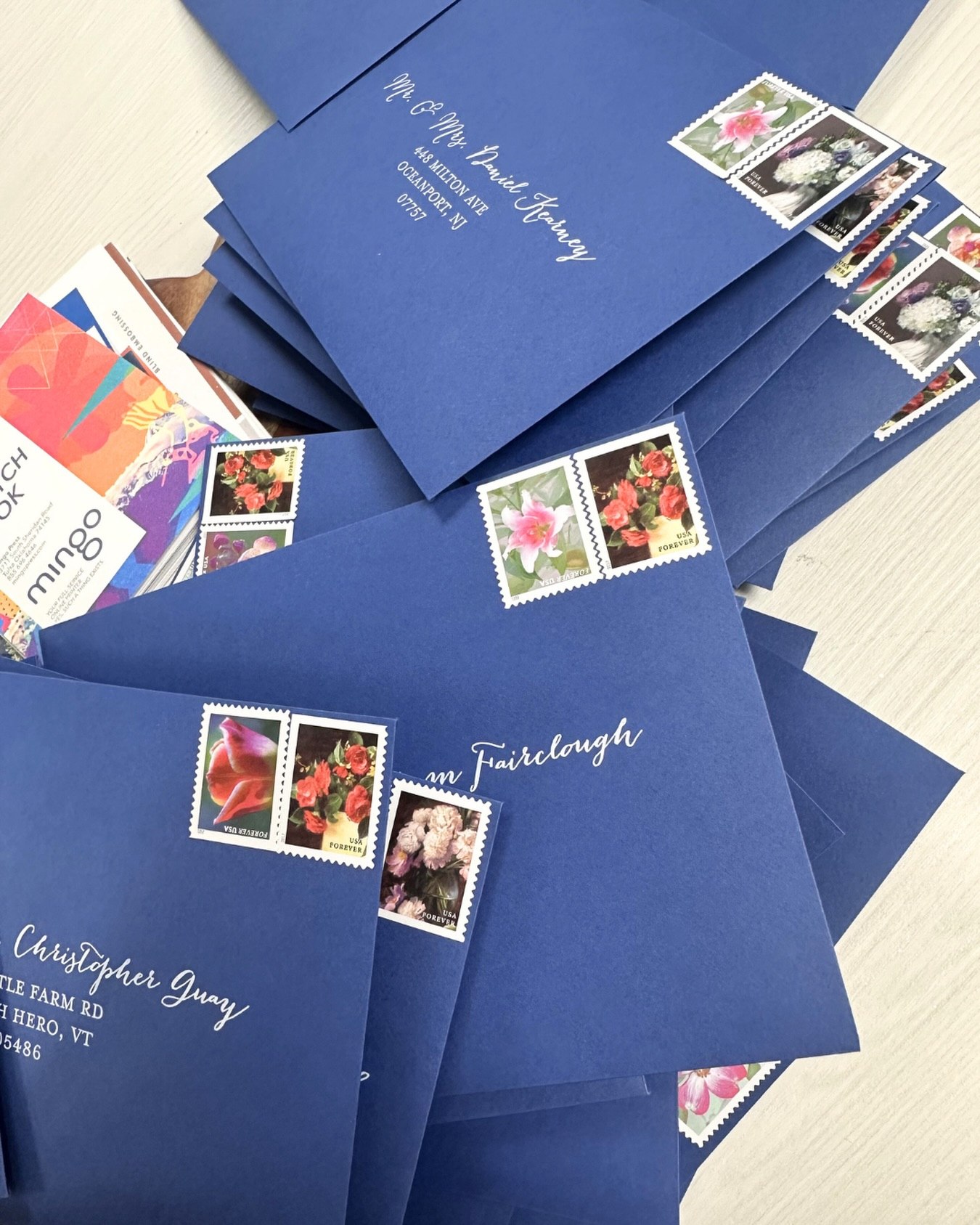
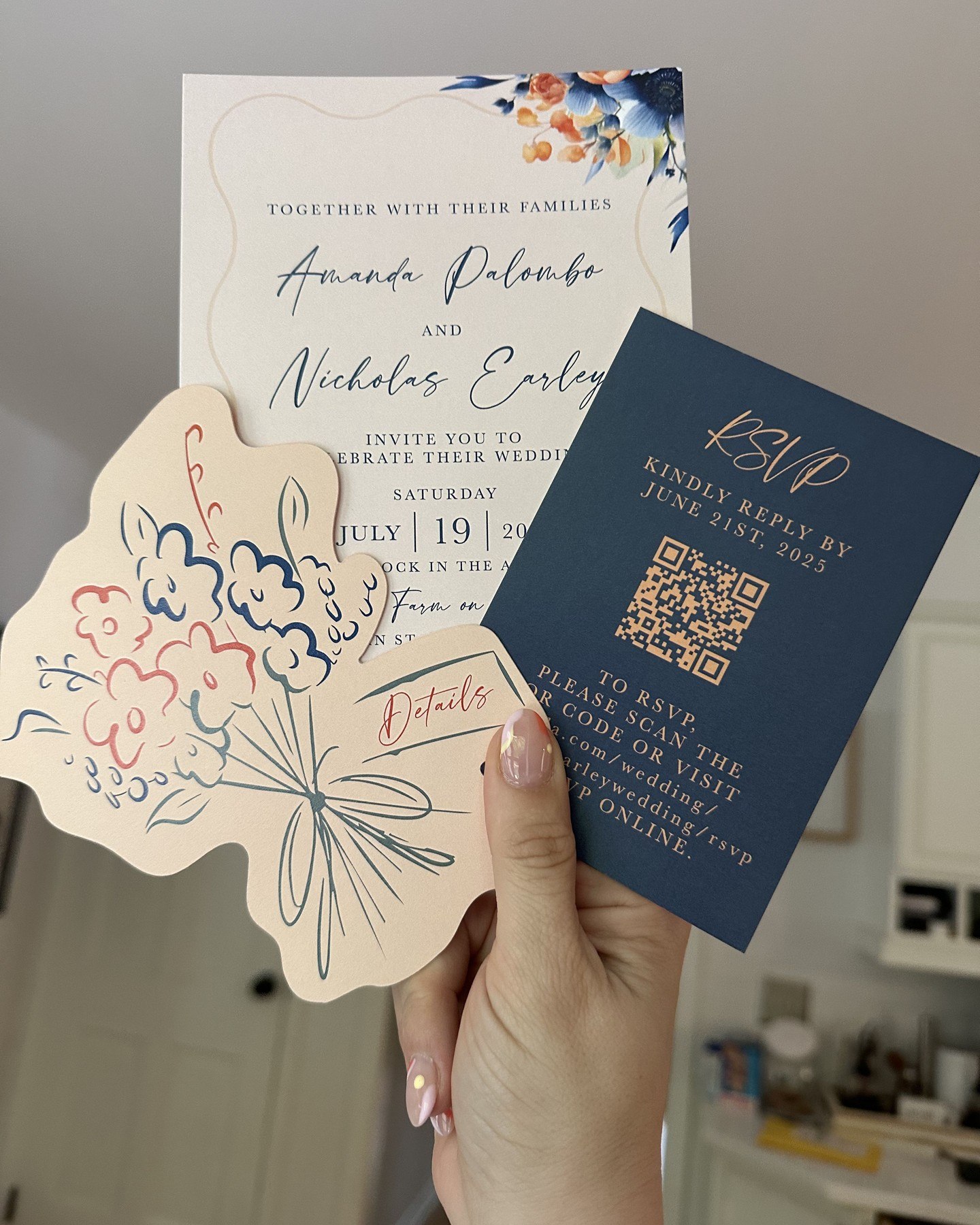
Photo: Courtesy of The Jess Press
A Real Example: Emma and Paul
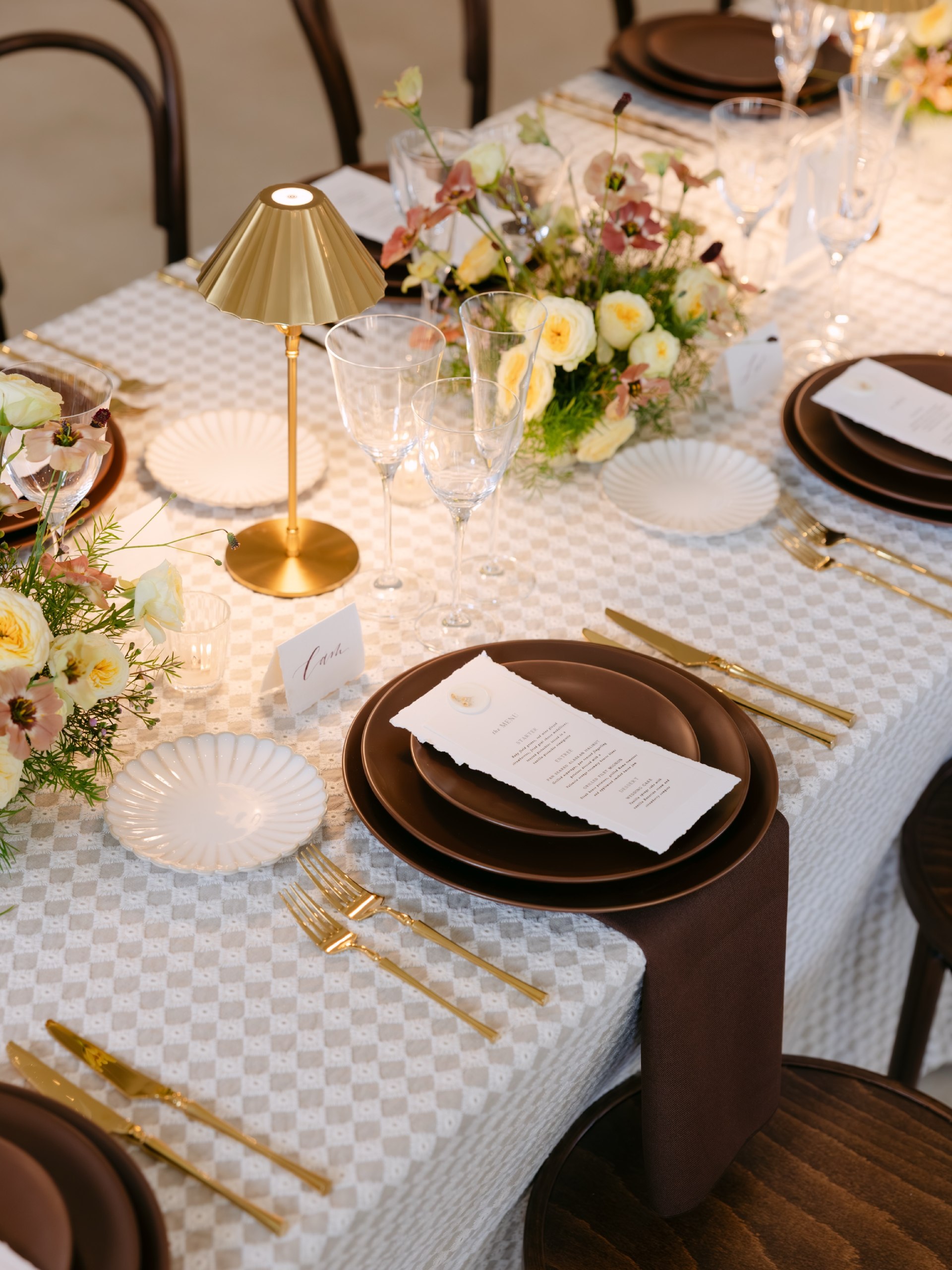
Jess points to one wedding in particular when she talks about this working end to end: Emma and Paul, married at Asbury Lanes, a converted vintage bowling alley with brick walls and history that stationery usually has to fight against, not work with. Her goal, in her own words, was simply “to elevate the entire space.”
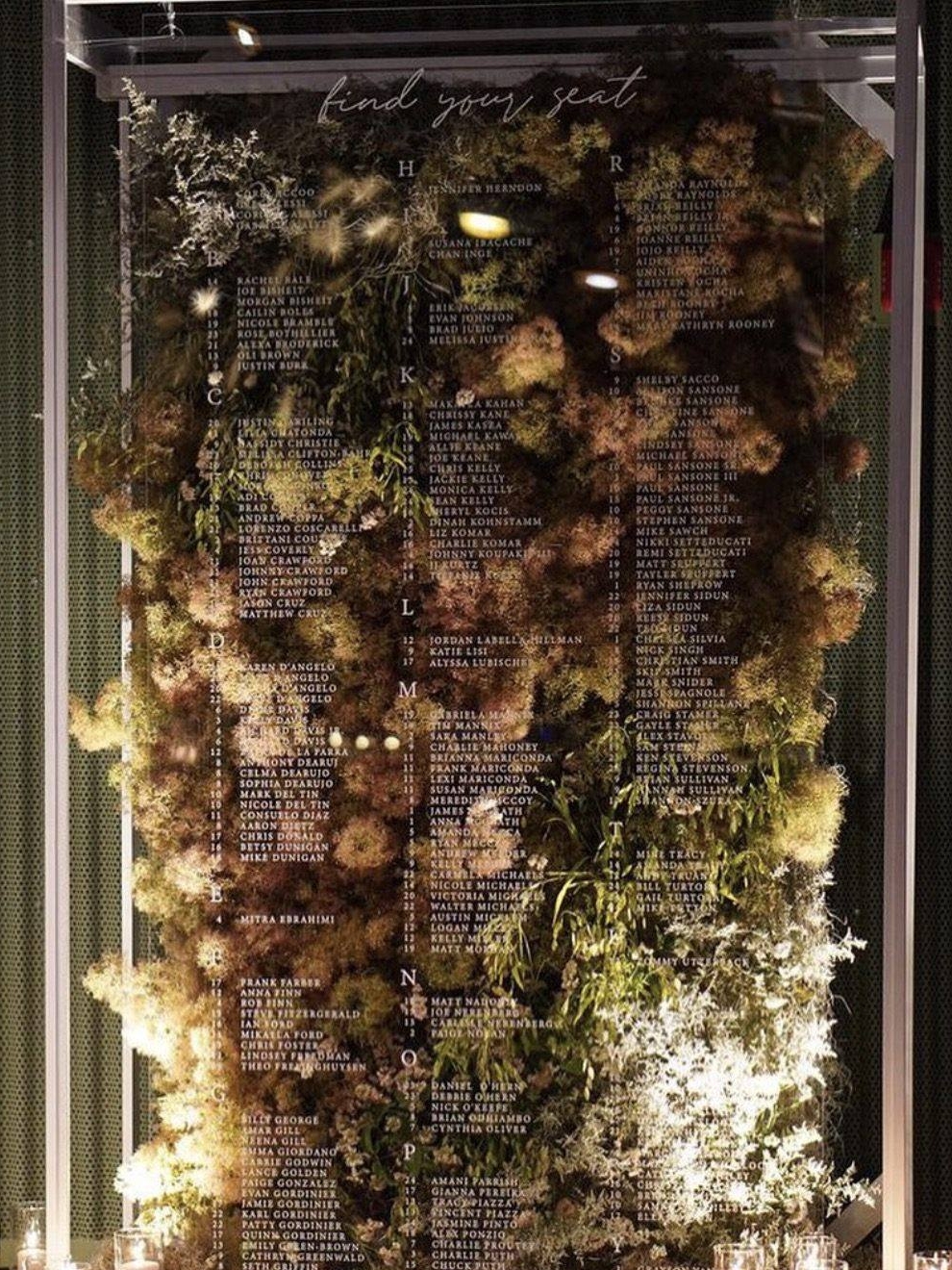
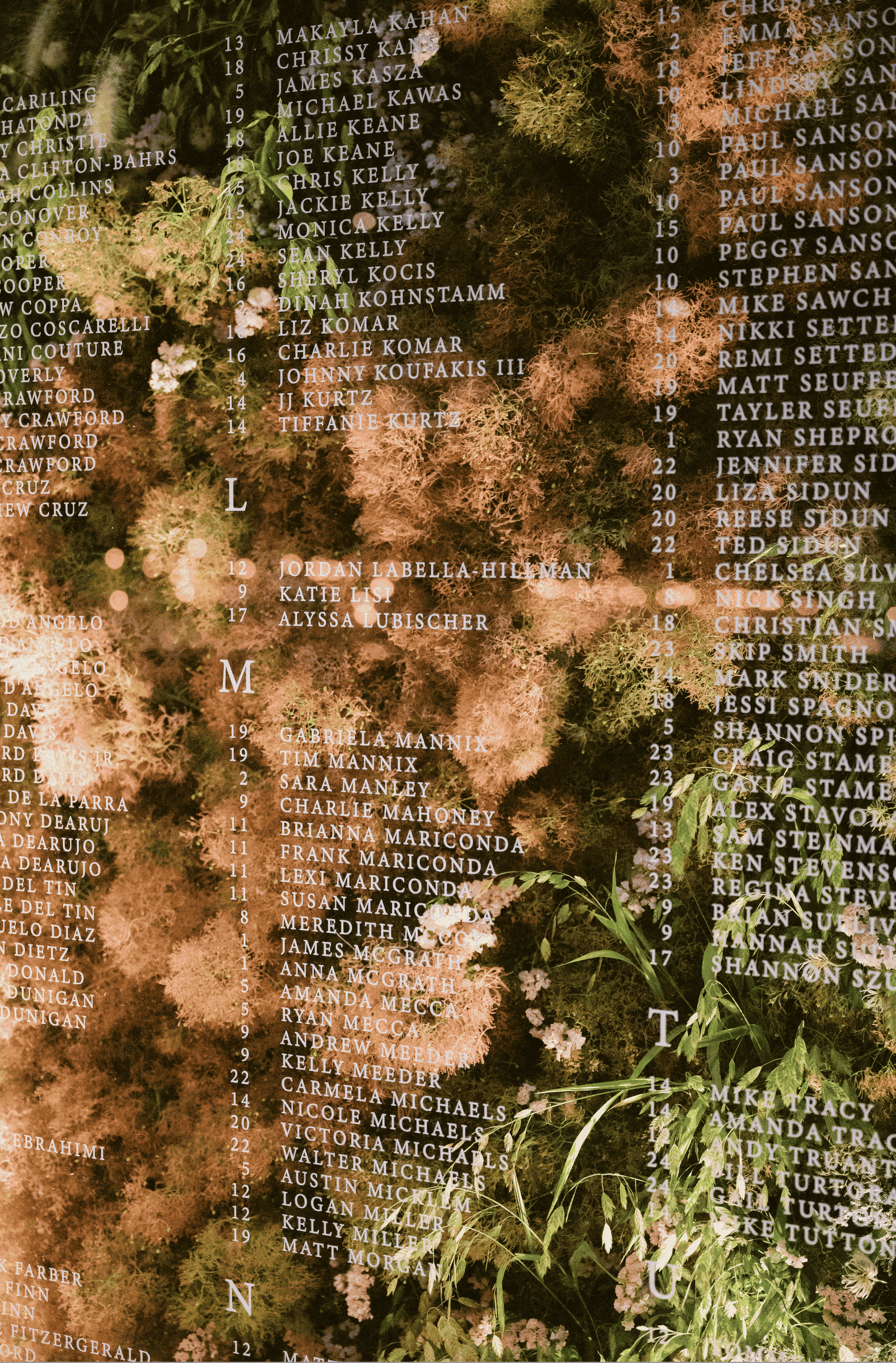
The save the dates opened like a small pocket, textured paper letterpressed “save the date” in charcoal, with a suede ribbon at the top for hanging. The invitations carried that same charcoal print onto deckled paper under a rose gold vellum overlay, finished with vintage stamps. “Chefs kiss,” is how Jess still describes that suite. The showpiece, though, was the eight-foot seating chart: printed vellum layered over moss and florals, built to hold its own against all that brick.
A year out is Jess‘s rule of thumb for booking a stationery designer, which lines up with when save the dates typically need to go in the mail anyway, usually eight to twelve months before the wedding. “I had a couple reach out for a 2028 wedding yesterday, and I was impressed, lol,” she says. Reach out much earlier than that, though, and you risk planning around a trend that won’t survive the engagement. Jess has watched more than one couple’s vision shift completely within a single year, as new colors and ideas take over their feed.
“My biggest piece of advice to couples, and even just to myself, is to stay true to self.”
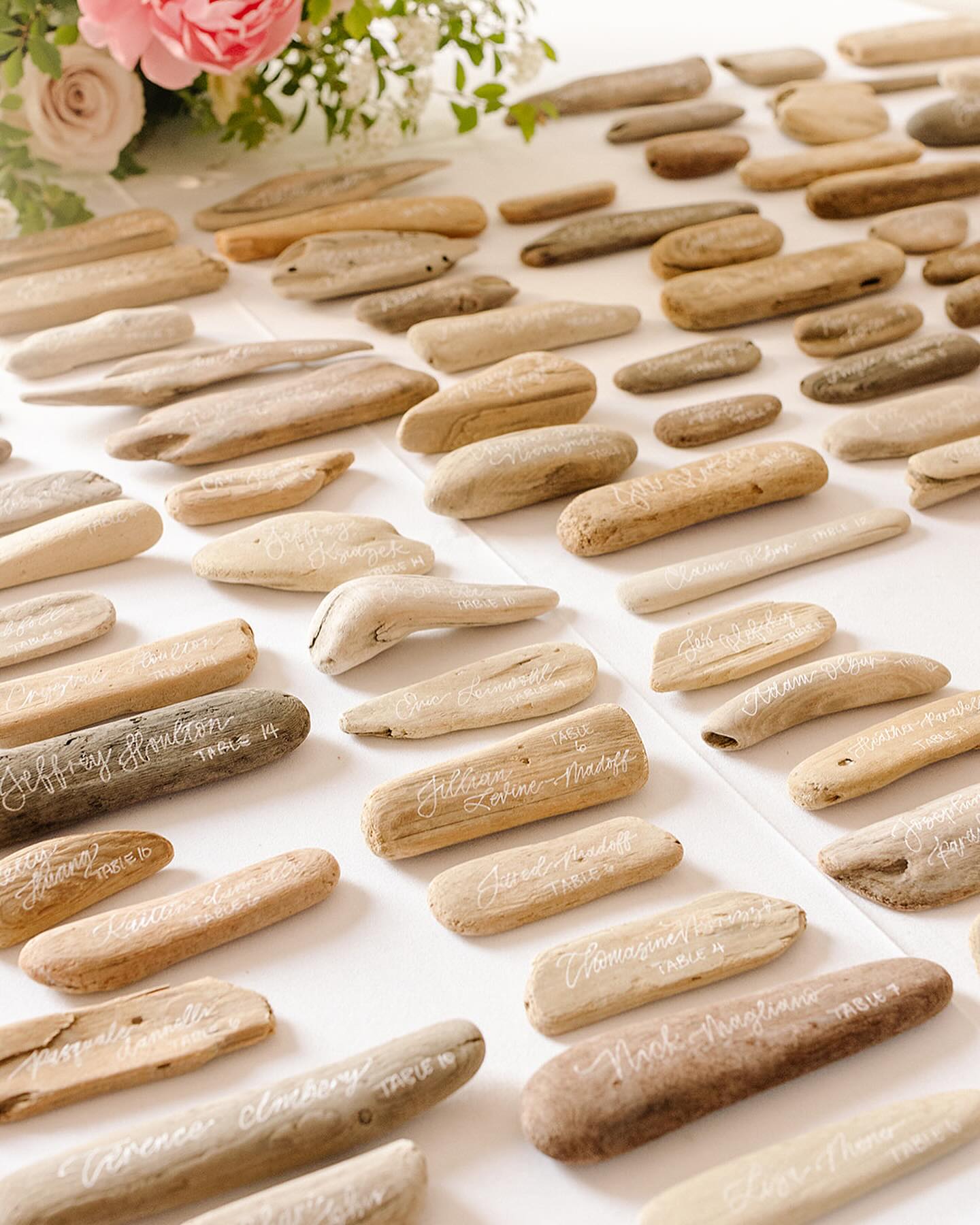
Photo: Mikala Gallo, Katherine Joy
That’s also why she won’t take a straight copy-paste job. “No copy and paste,” she says. “If someone asks me to copy and paste, I’ll direct them to work with the vendor they sent the picture of.” For Jess, the best part of the job is never the copy, it’s the couple’s own story, turned into something nobody else could have made.