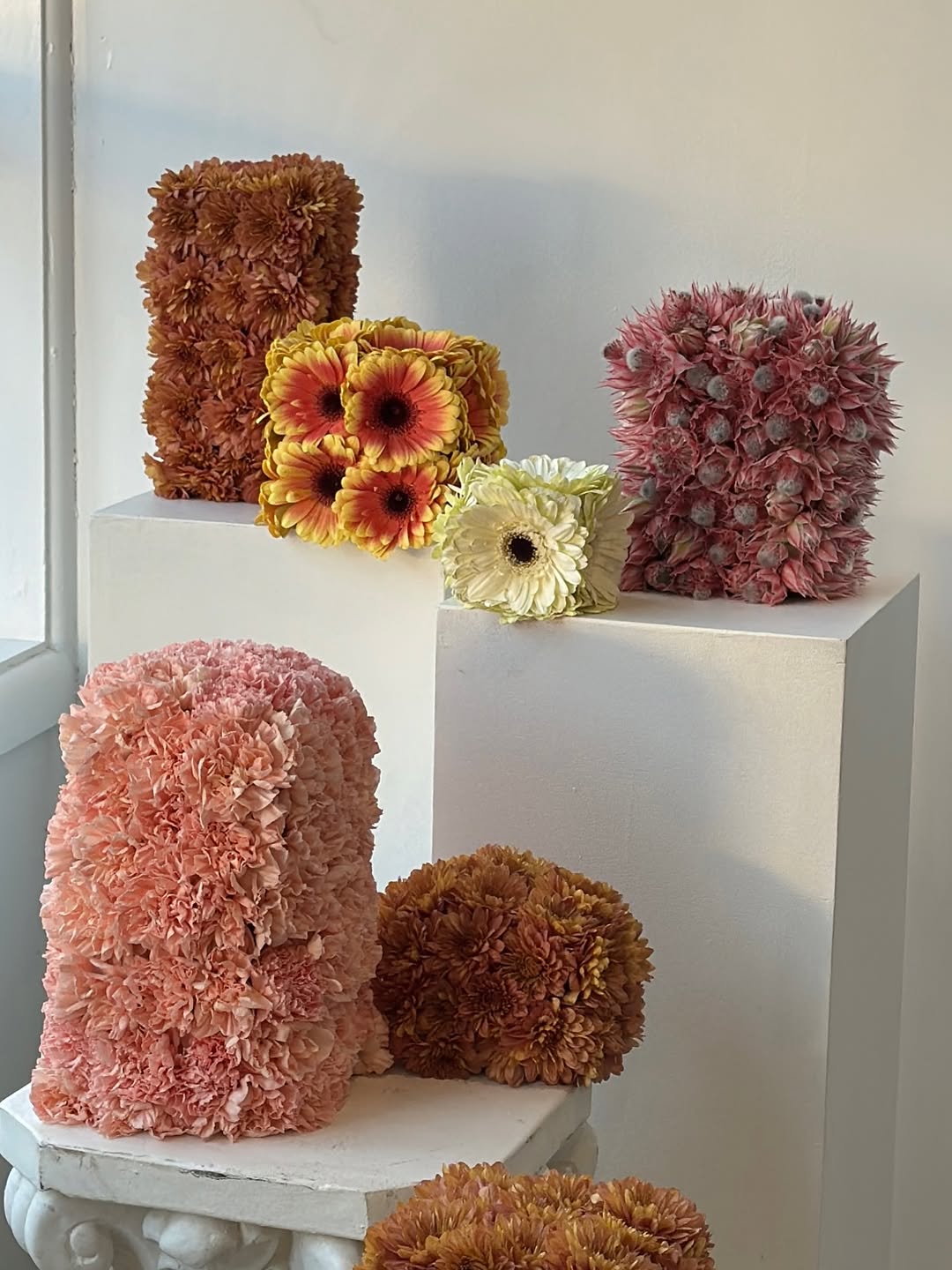
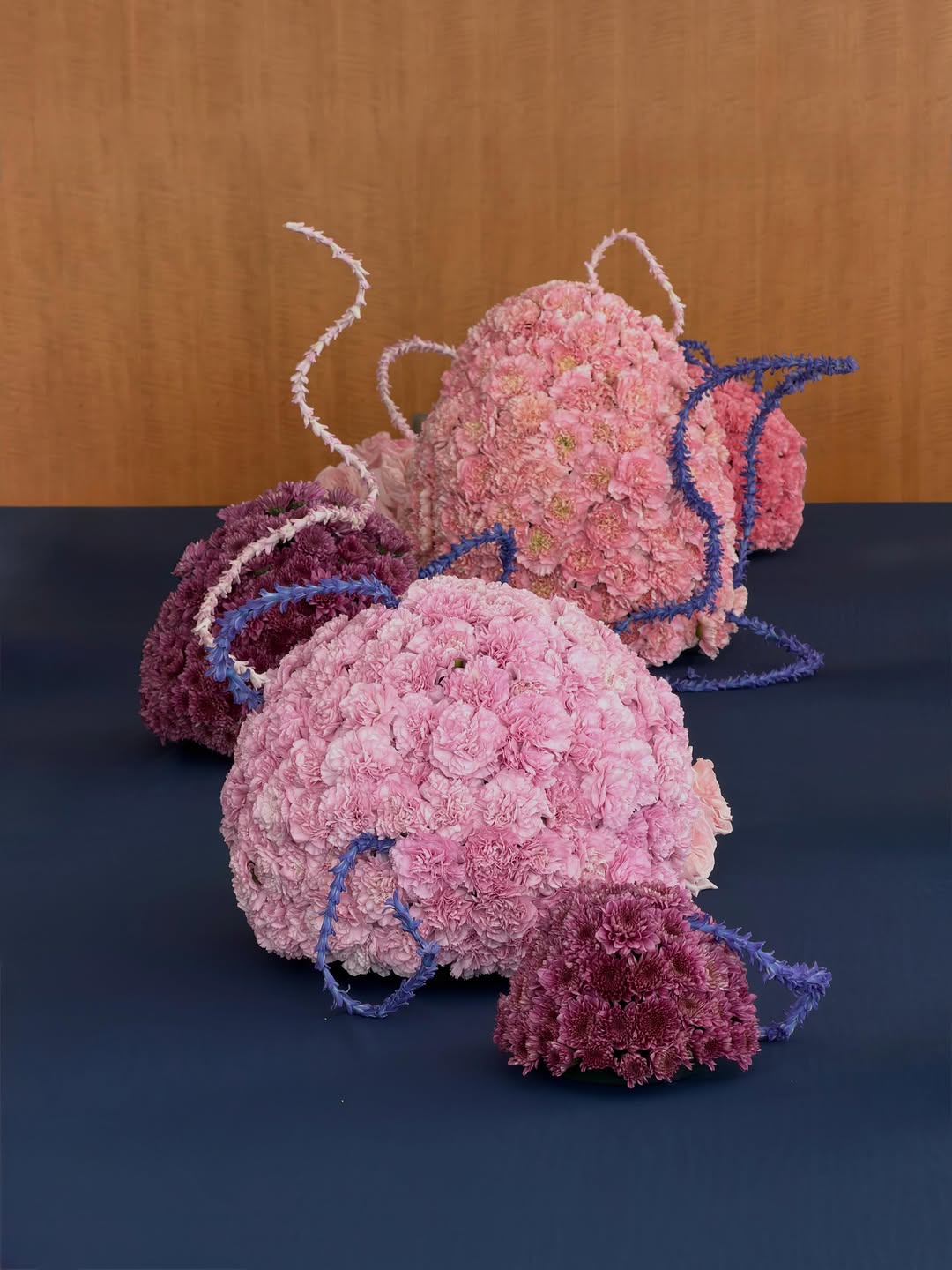
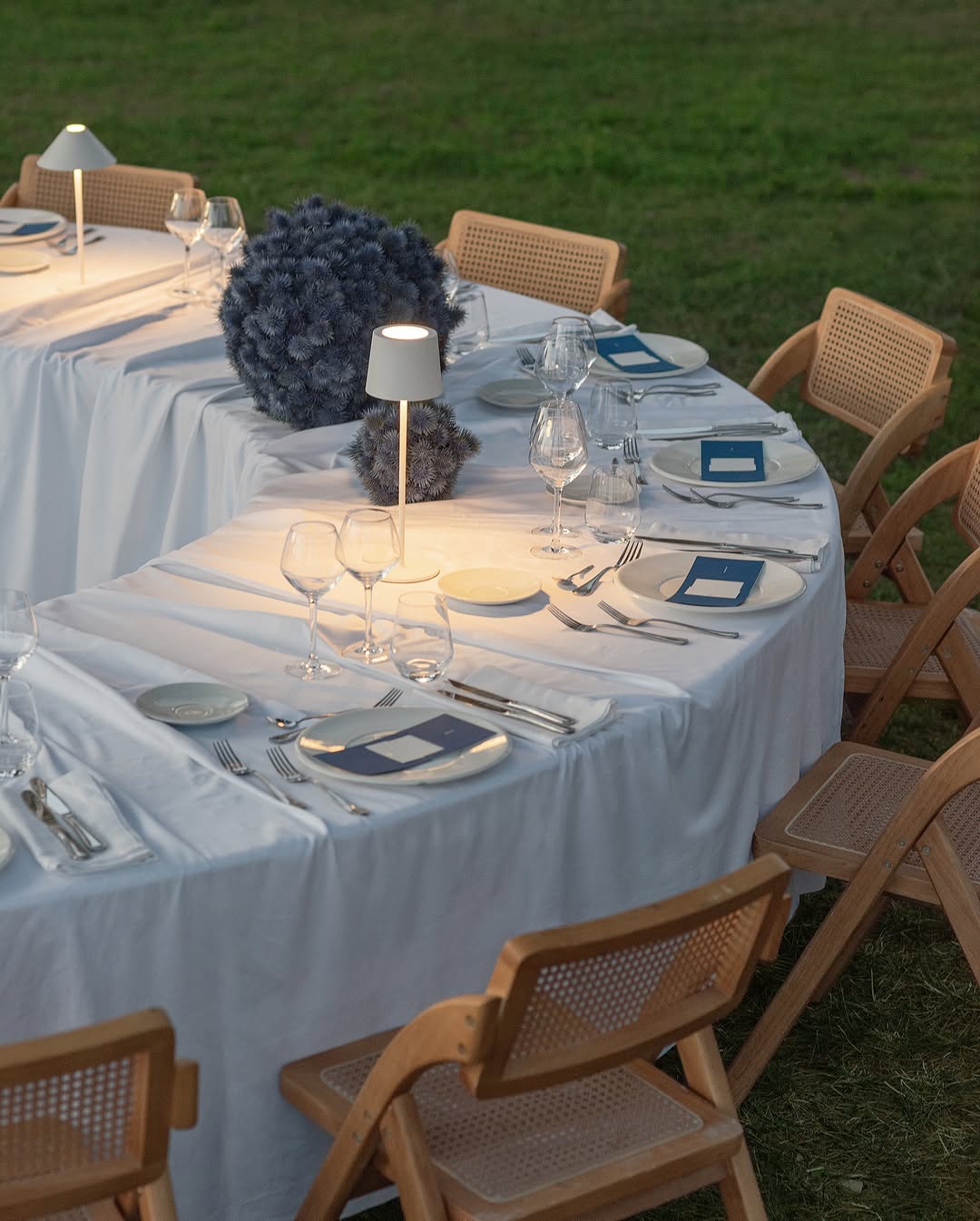
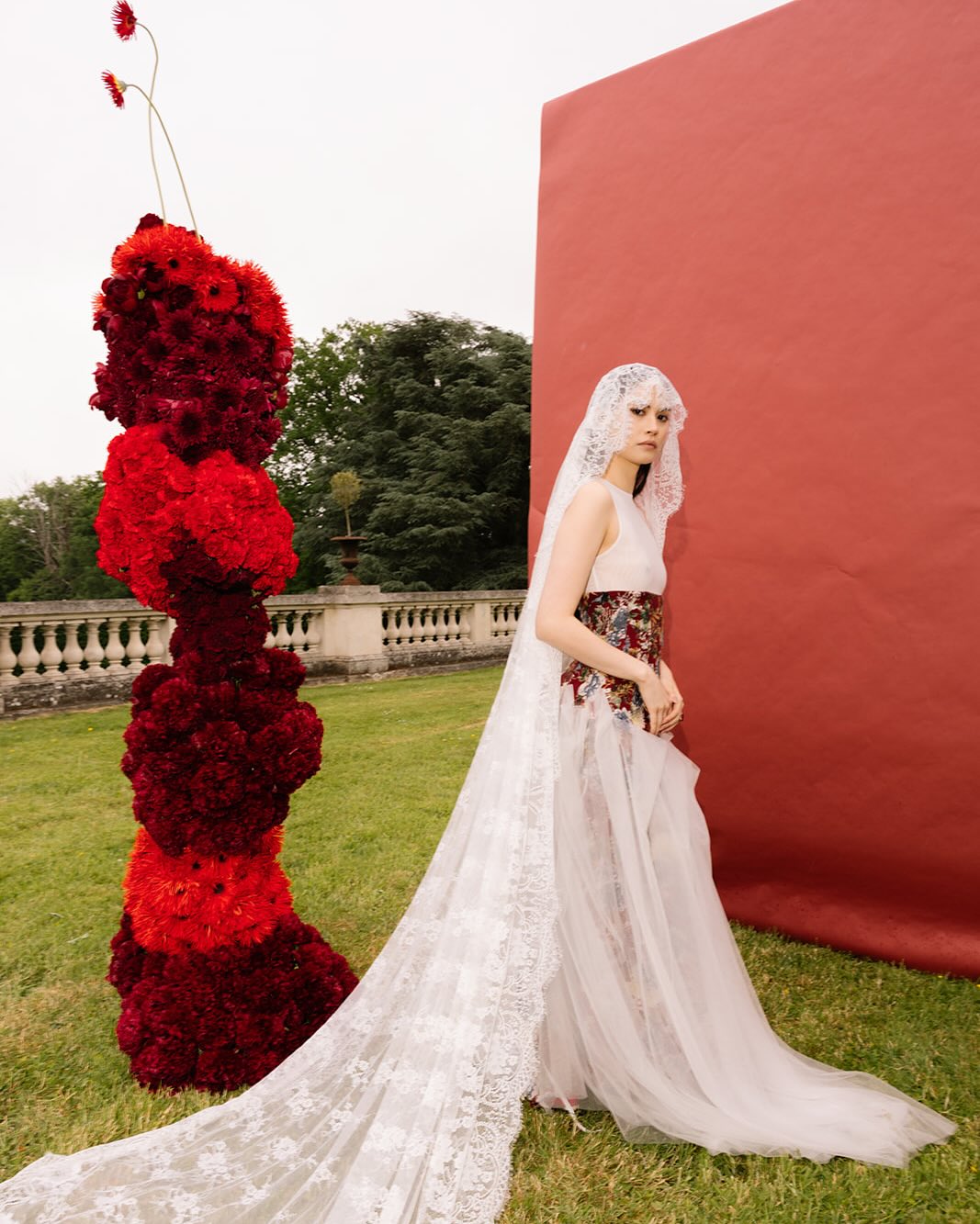
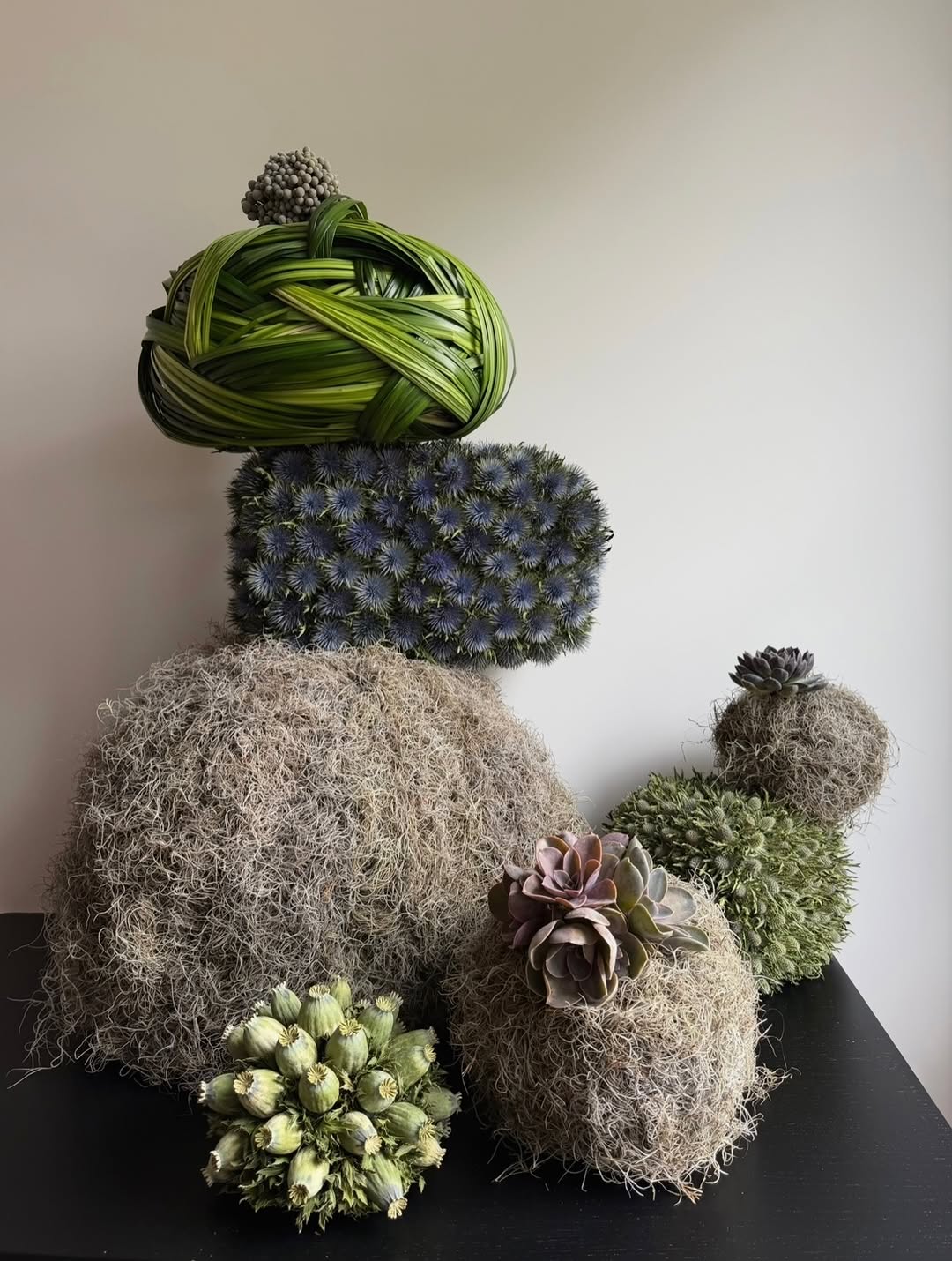
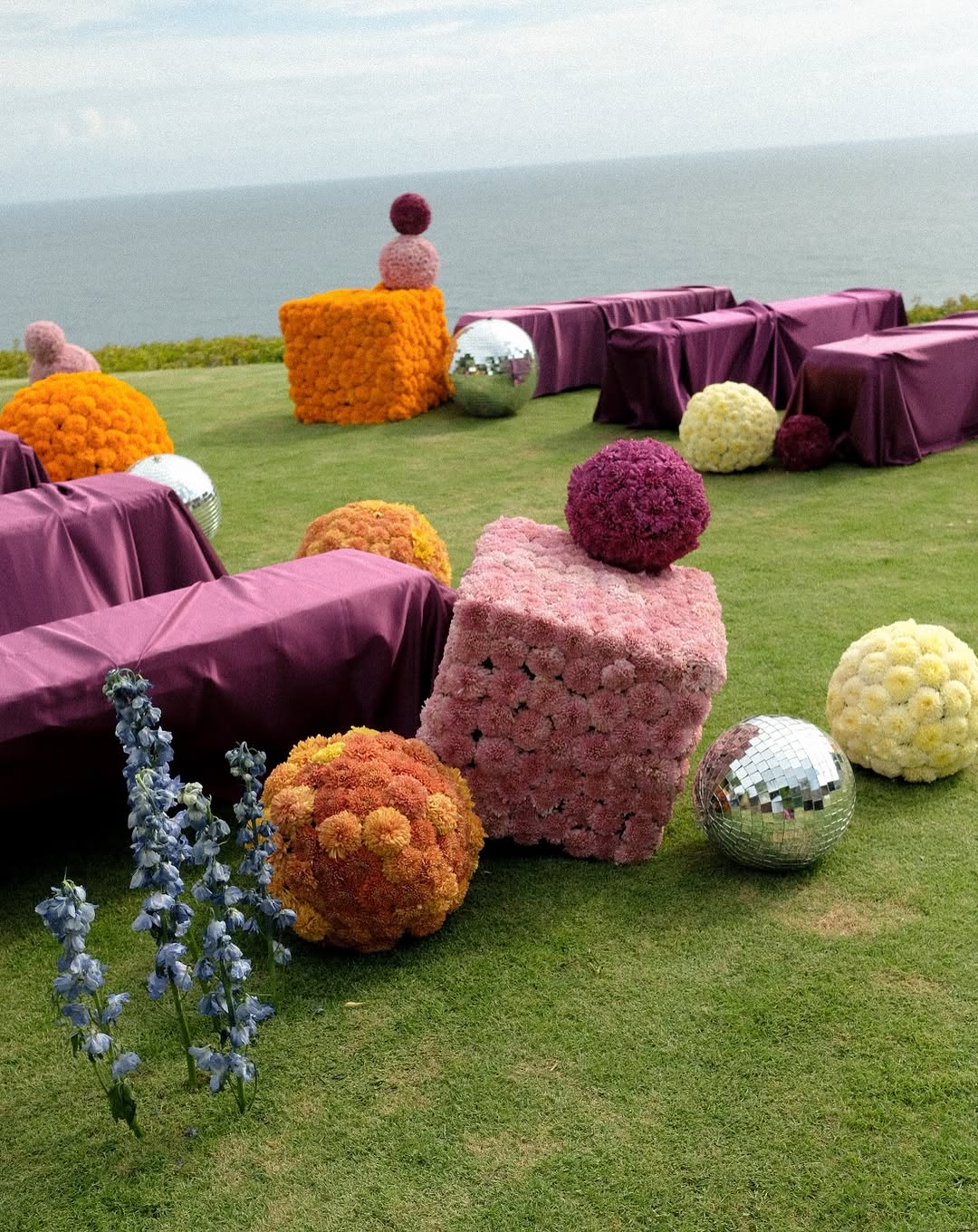
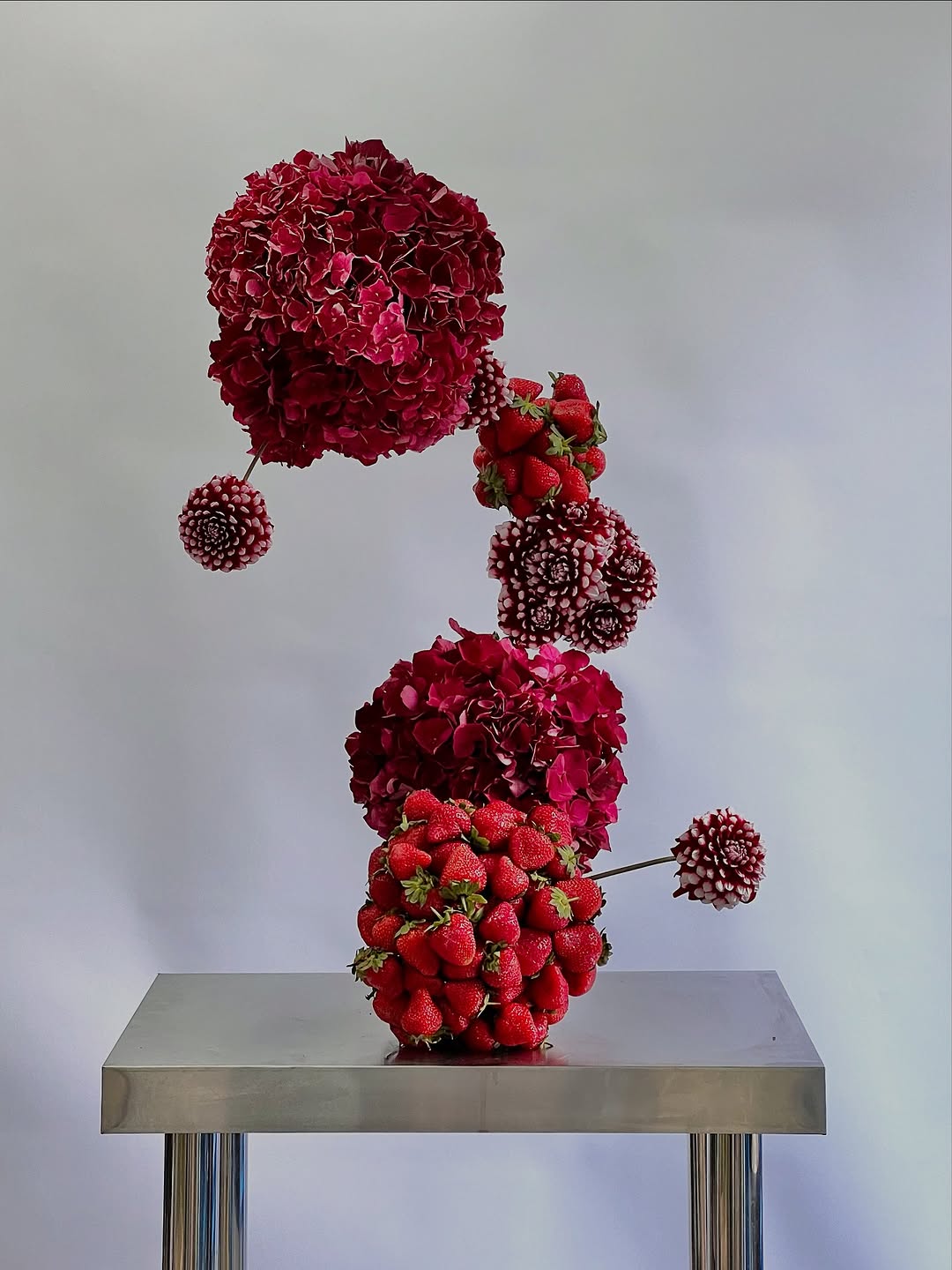
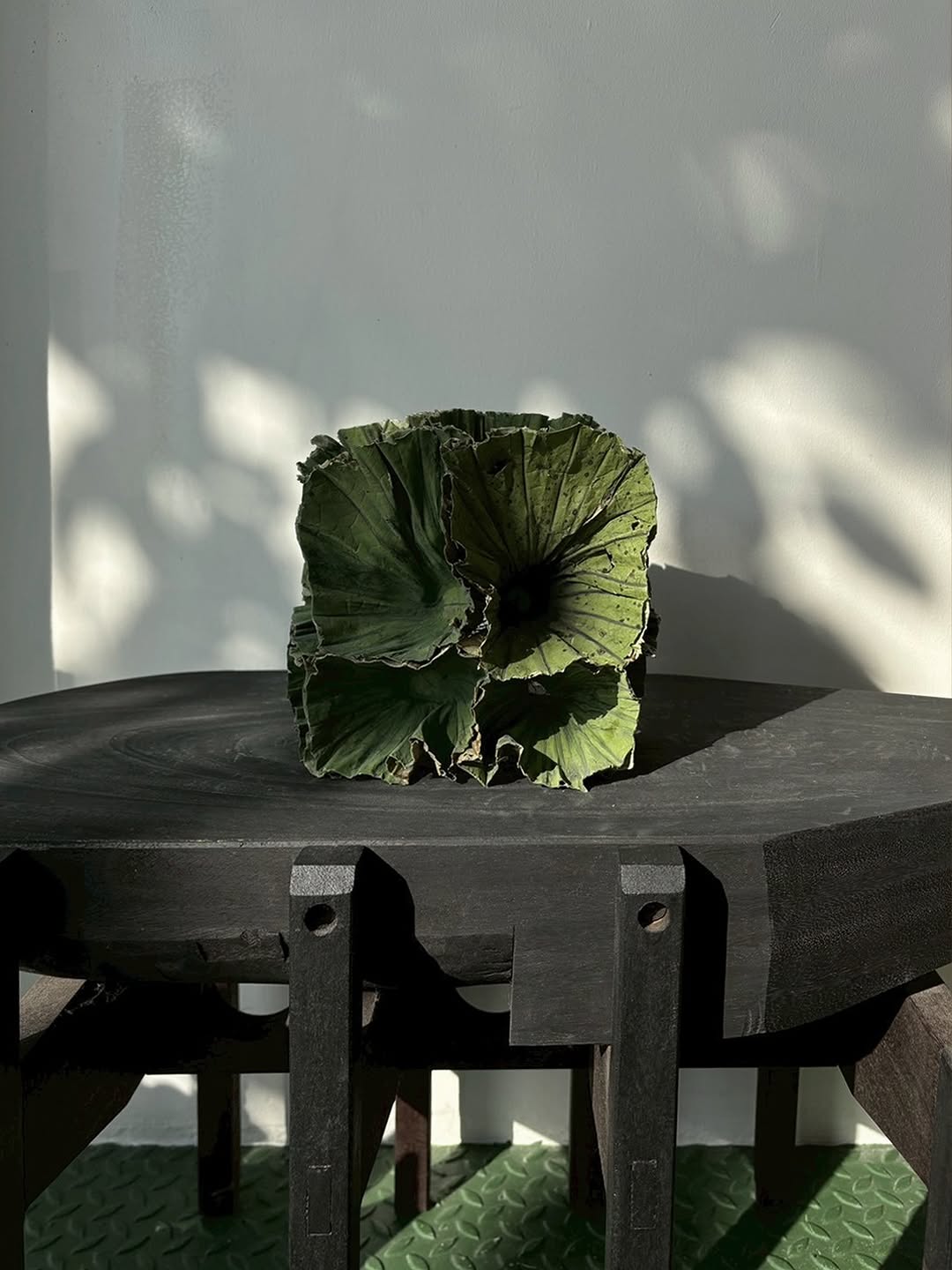
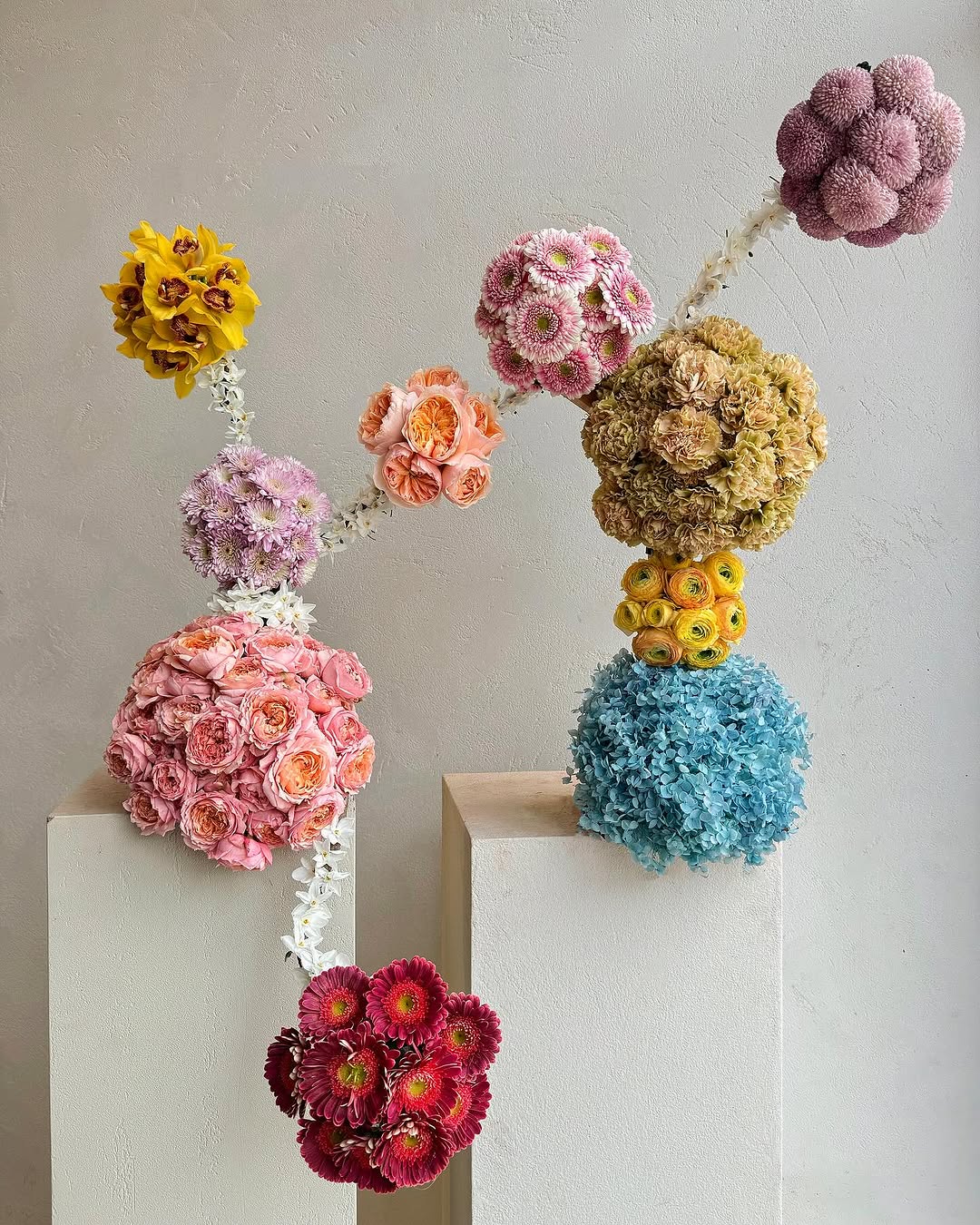
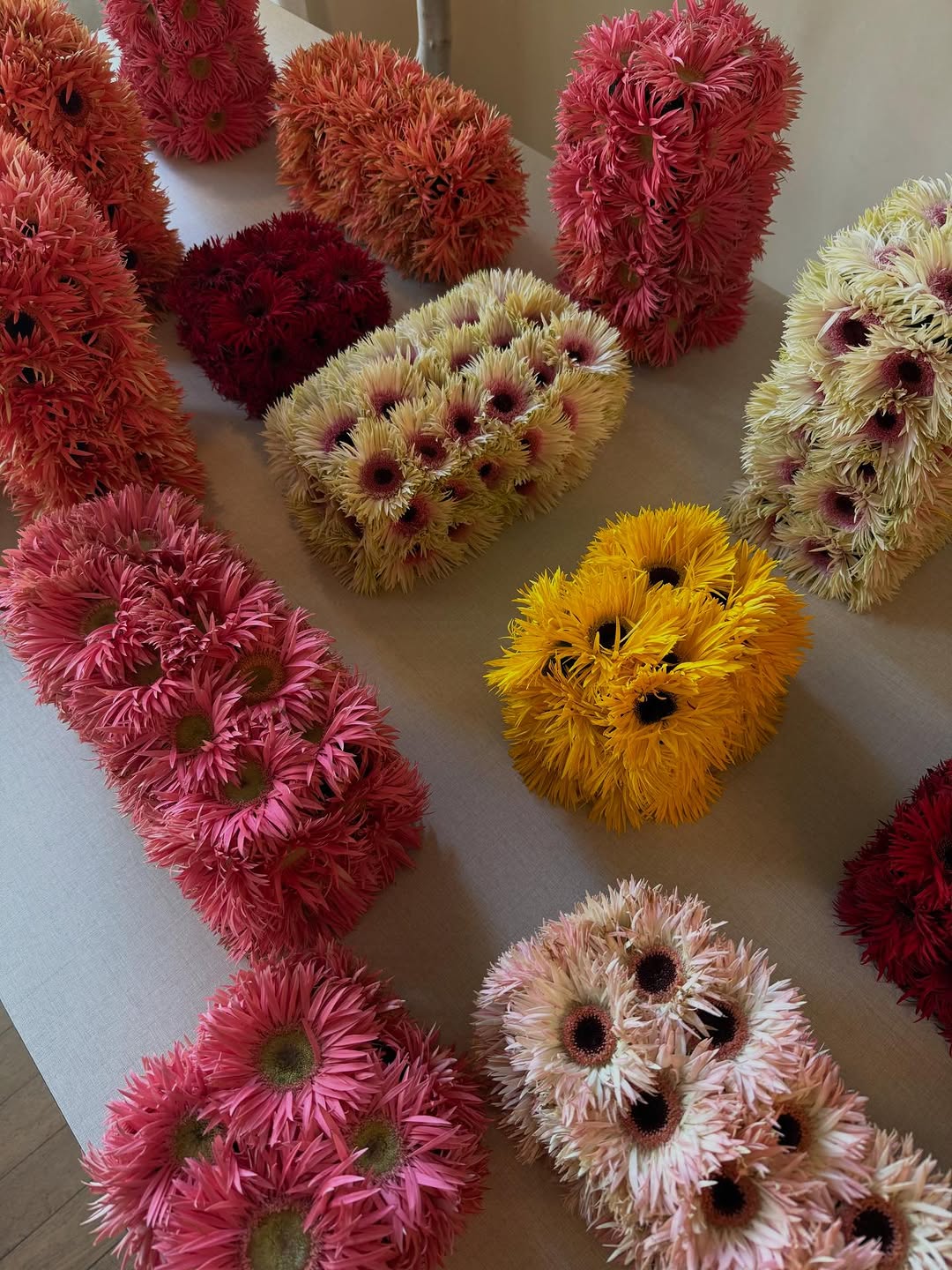
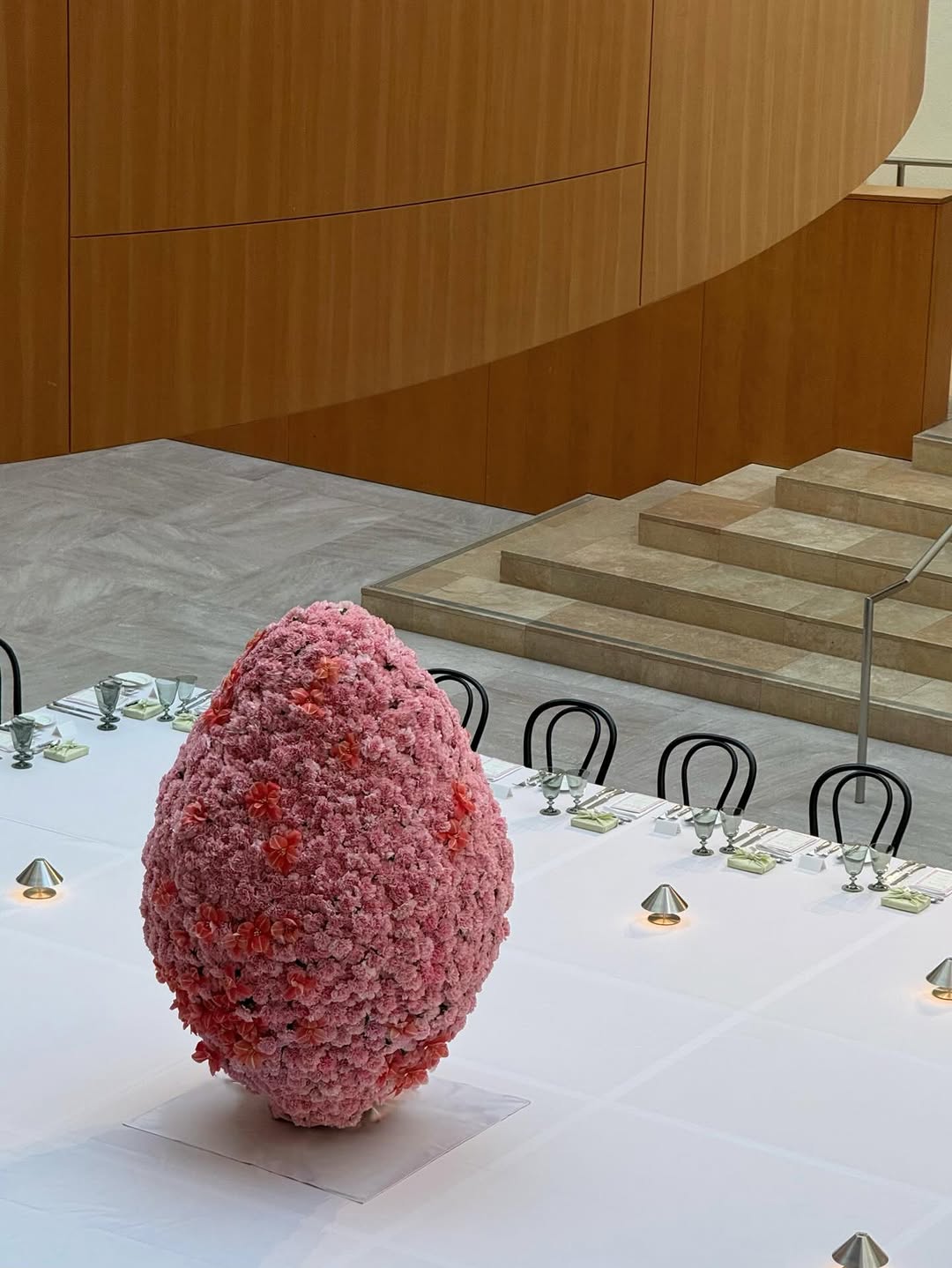
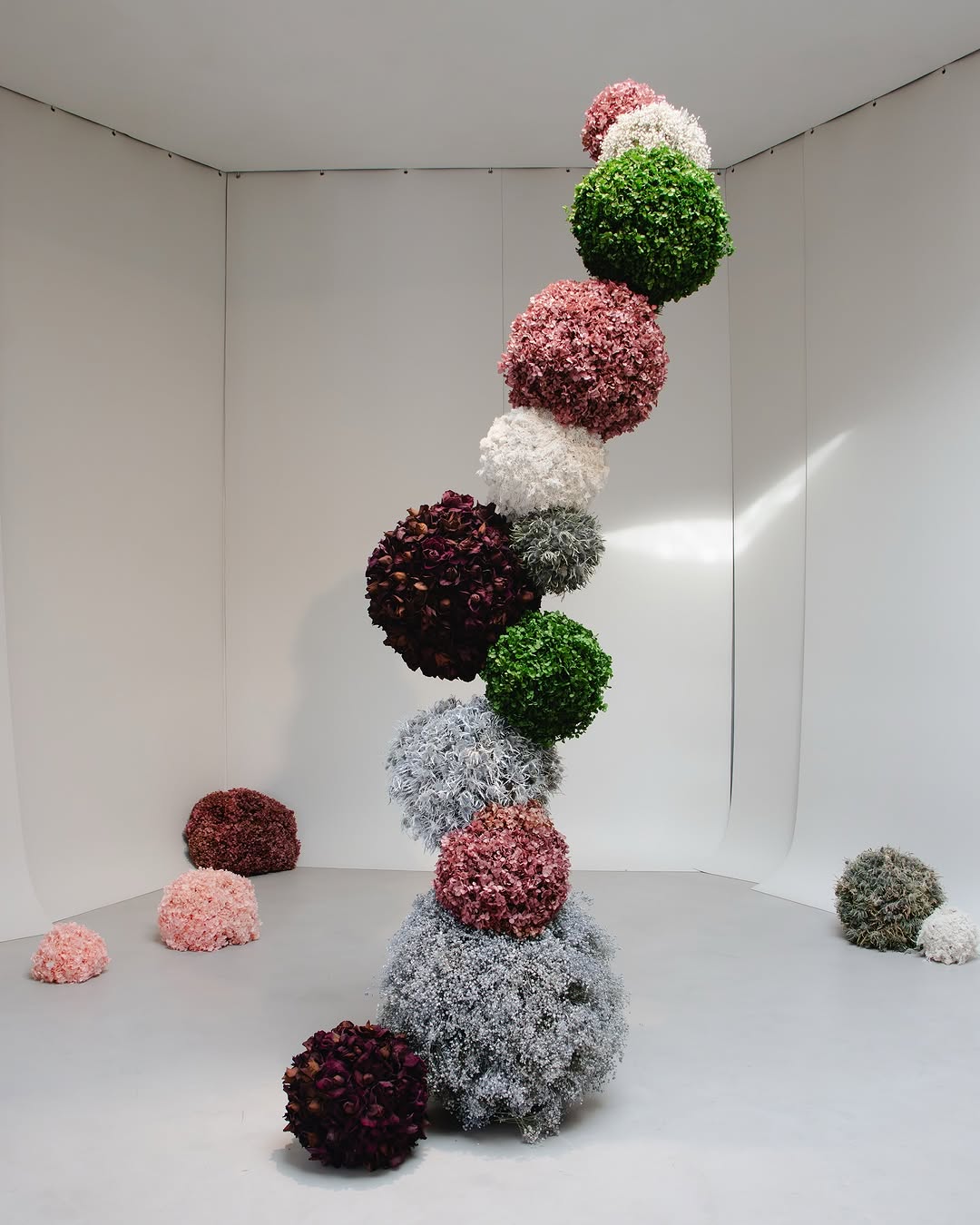
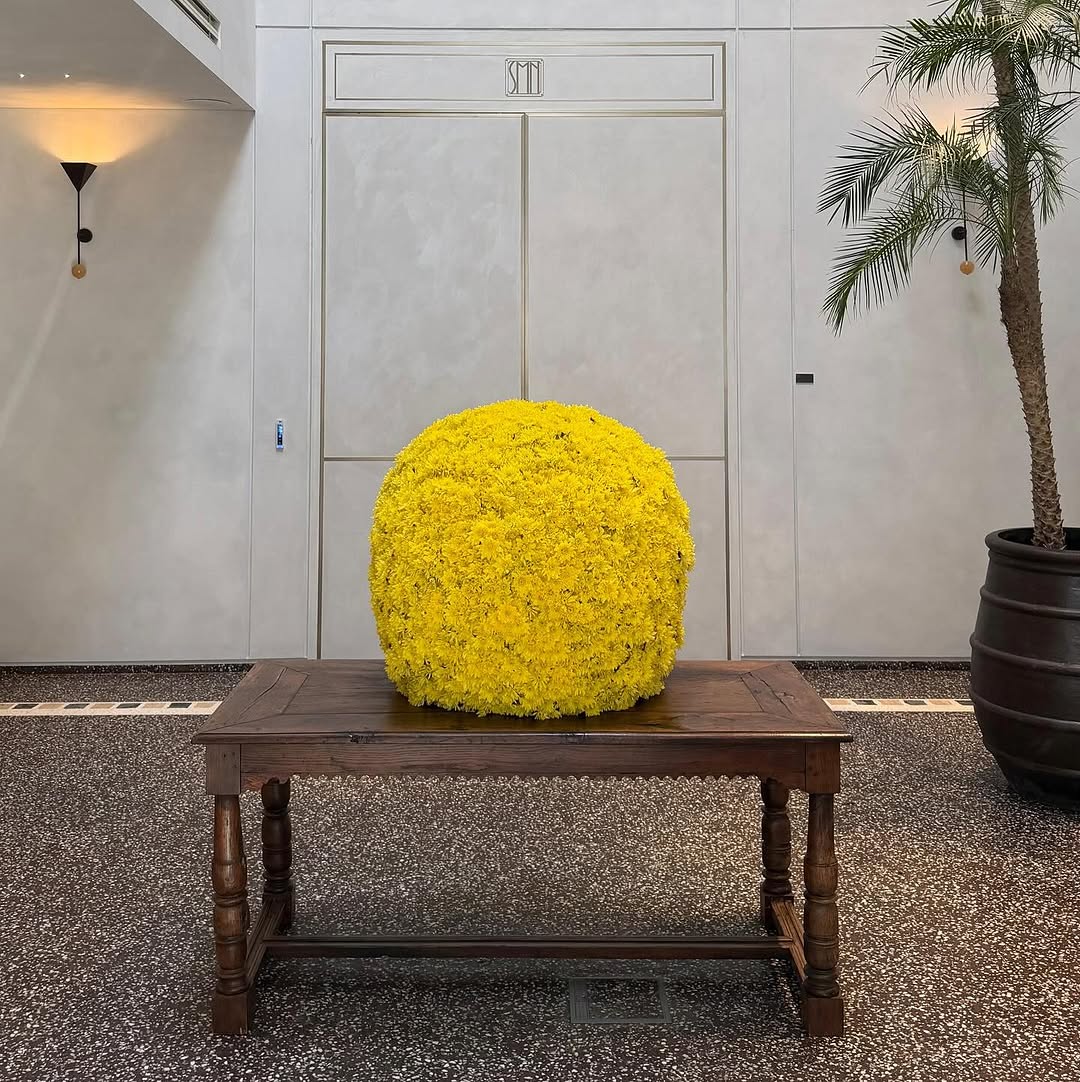
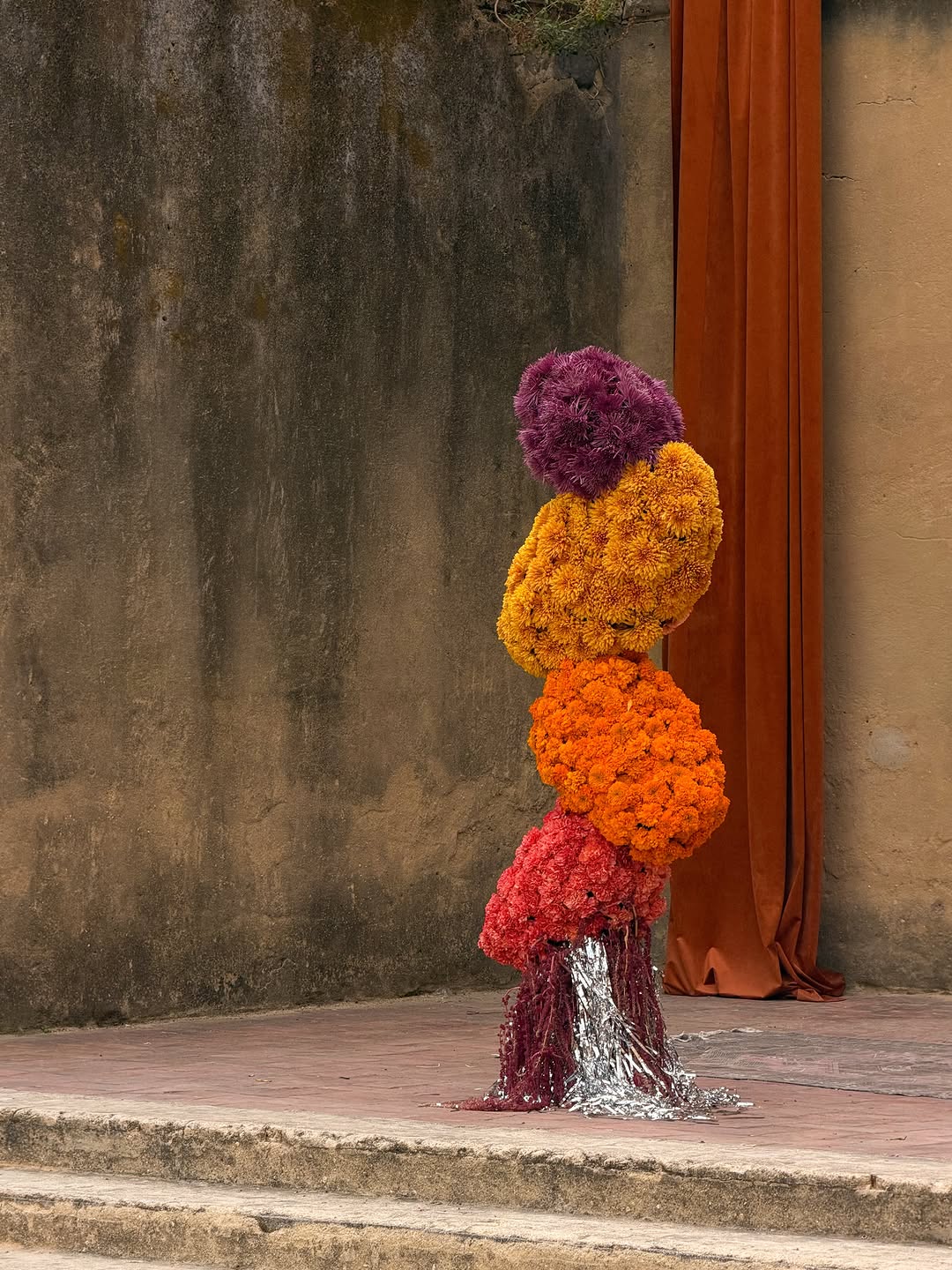
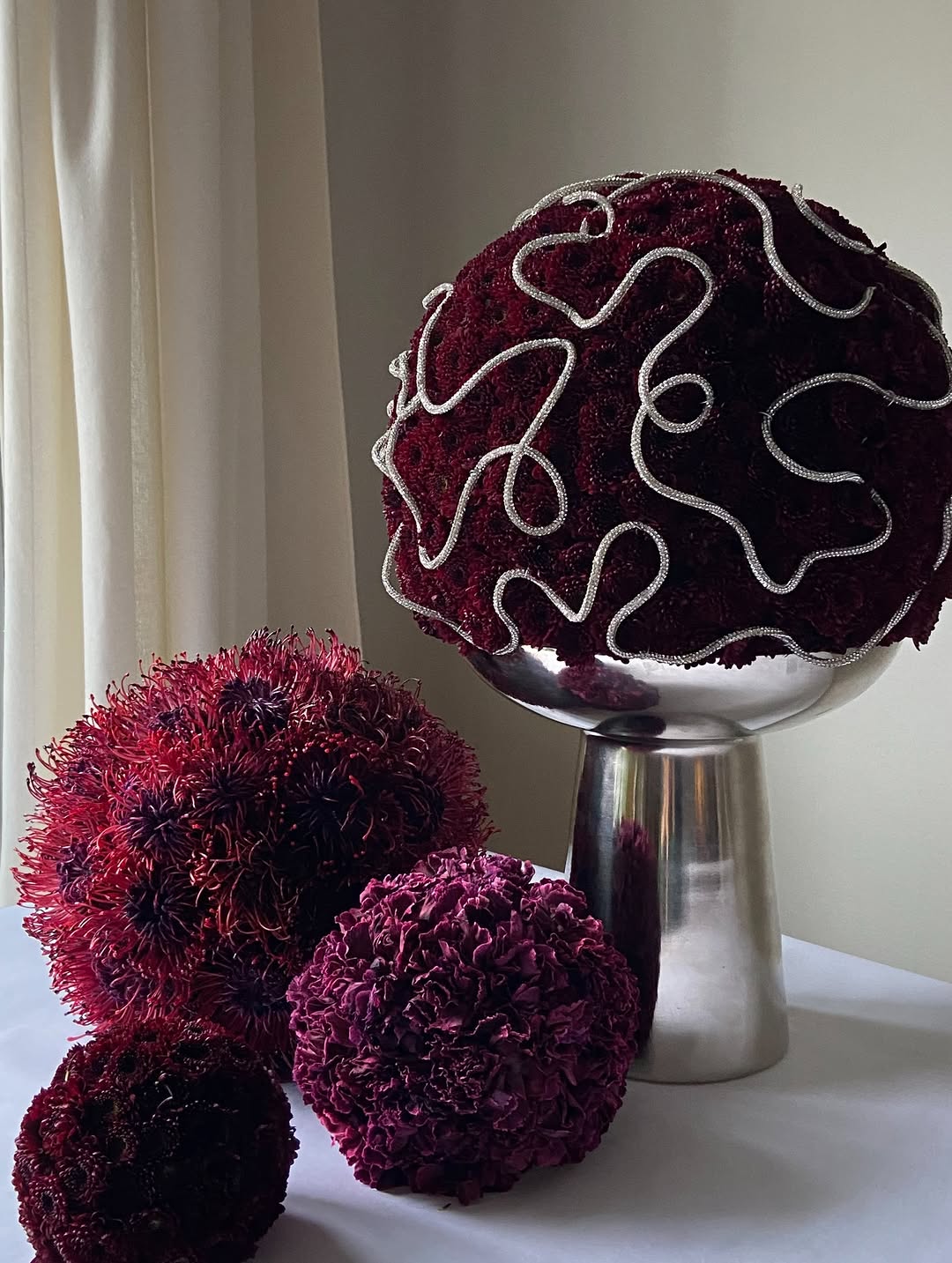
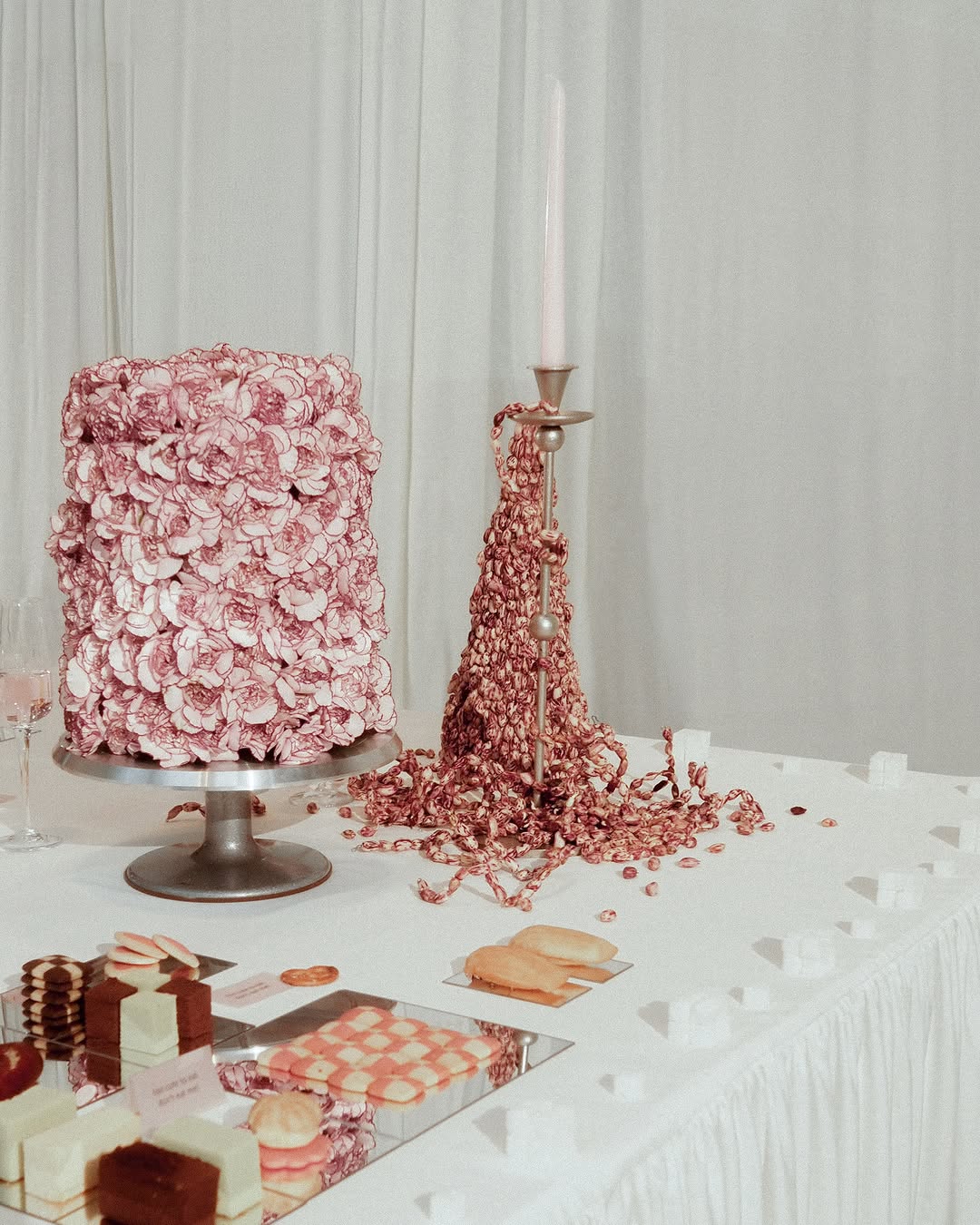
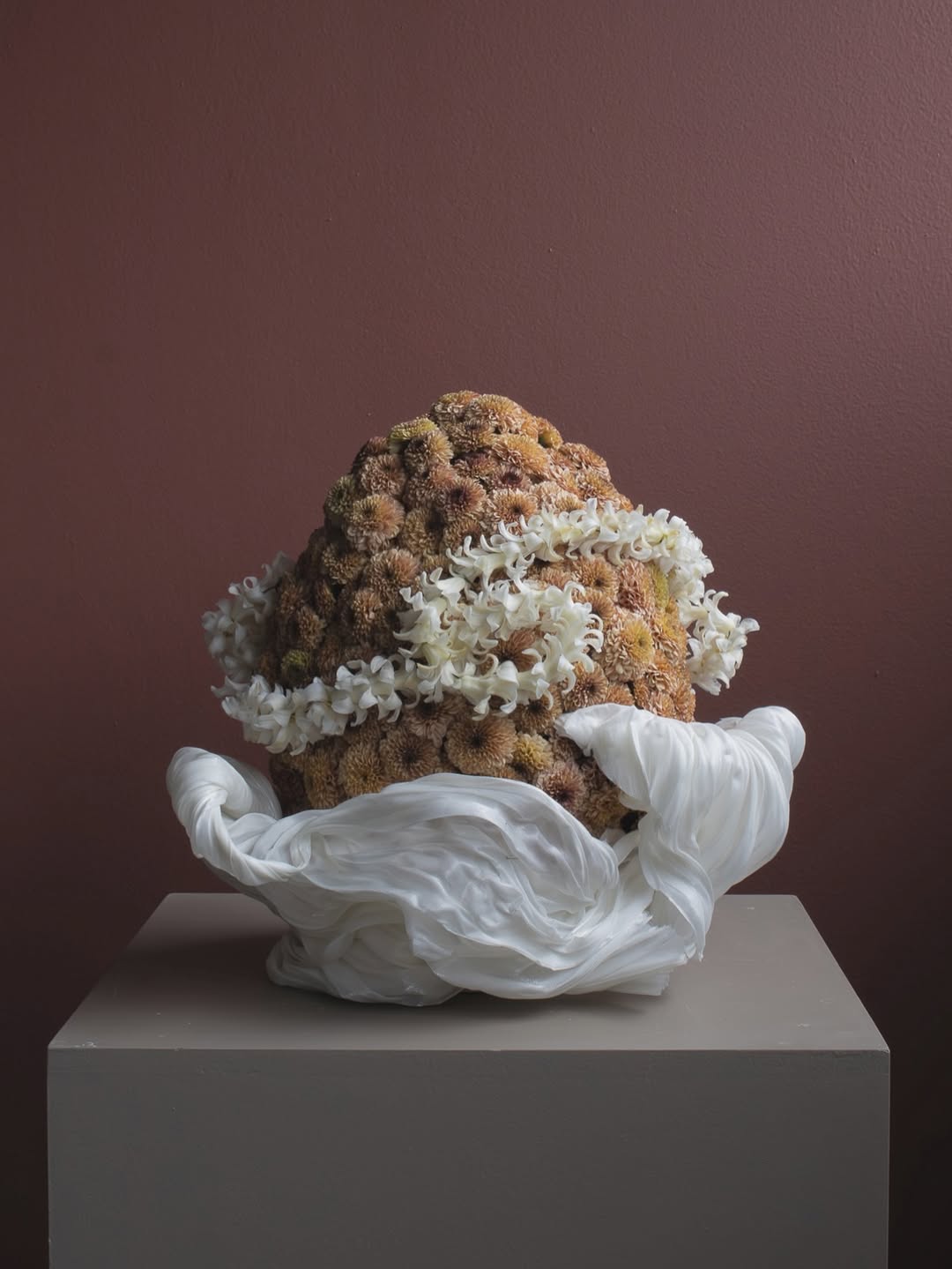
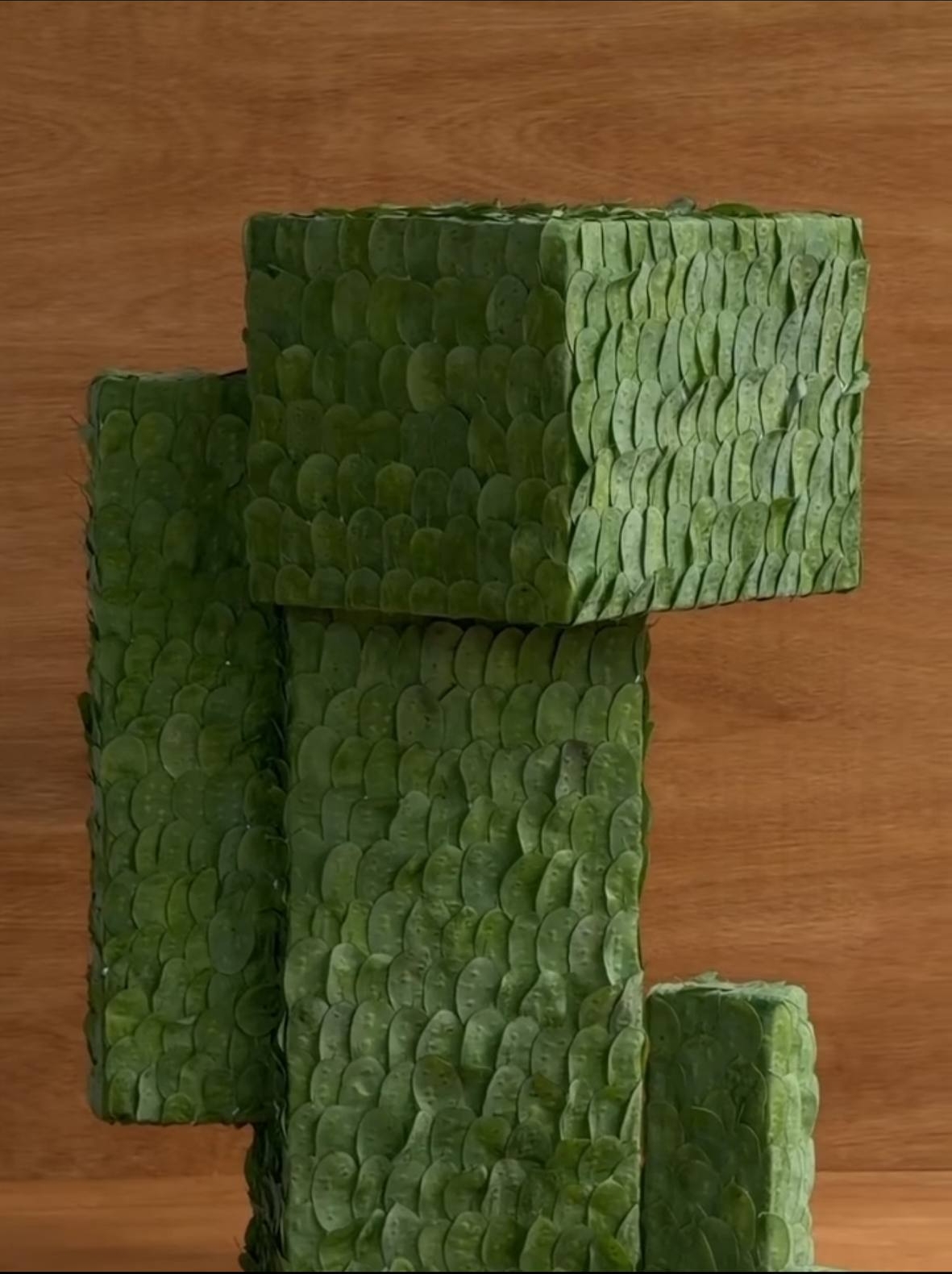
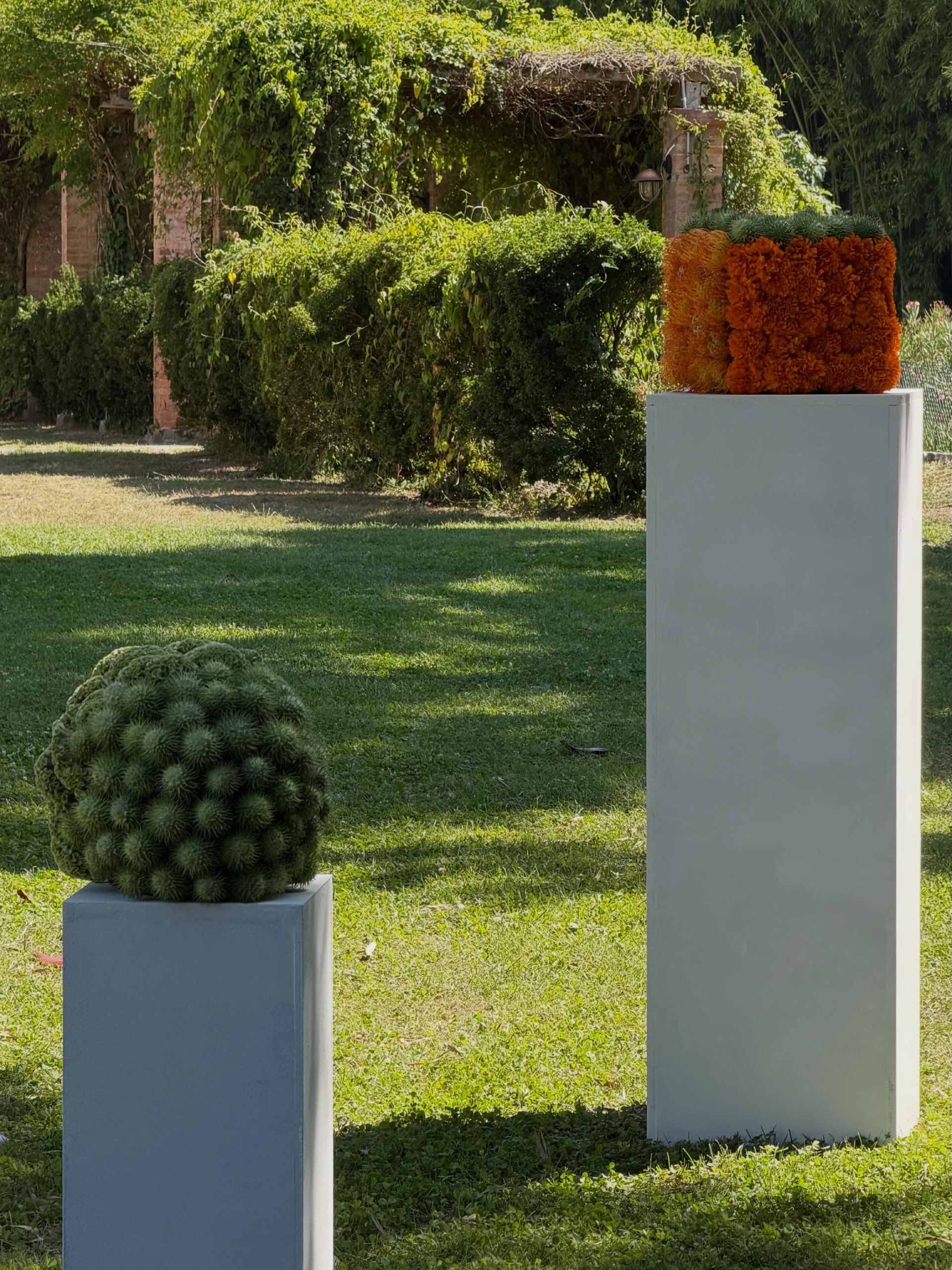
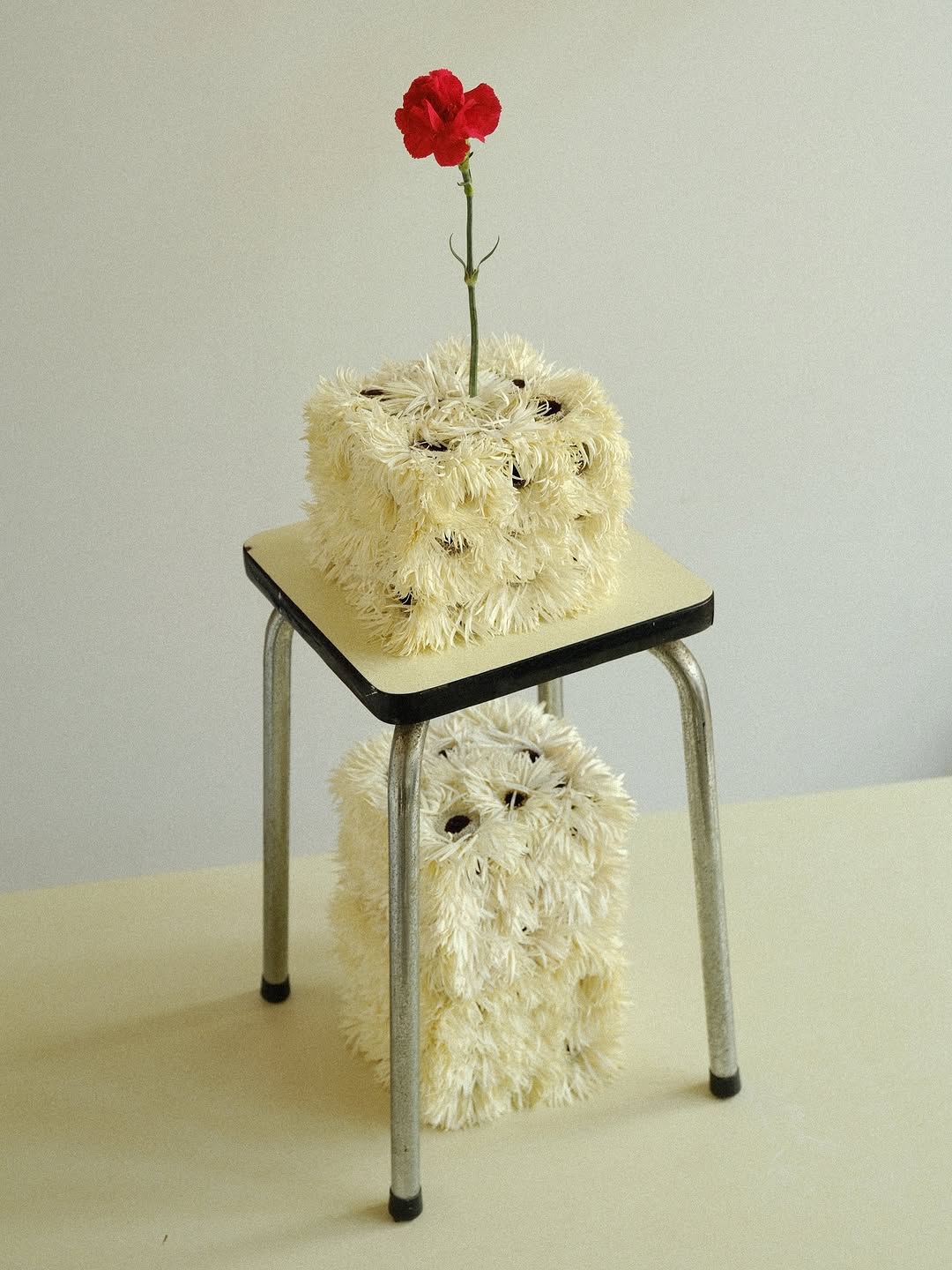
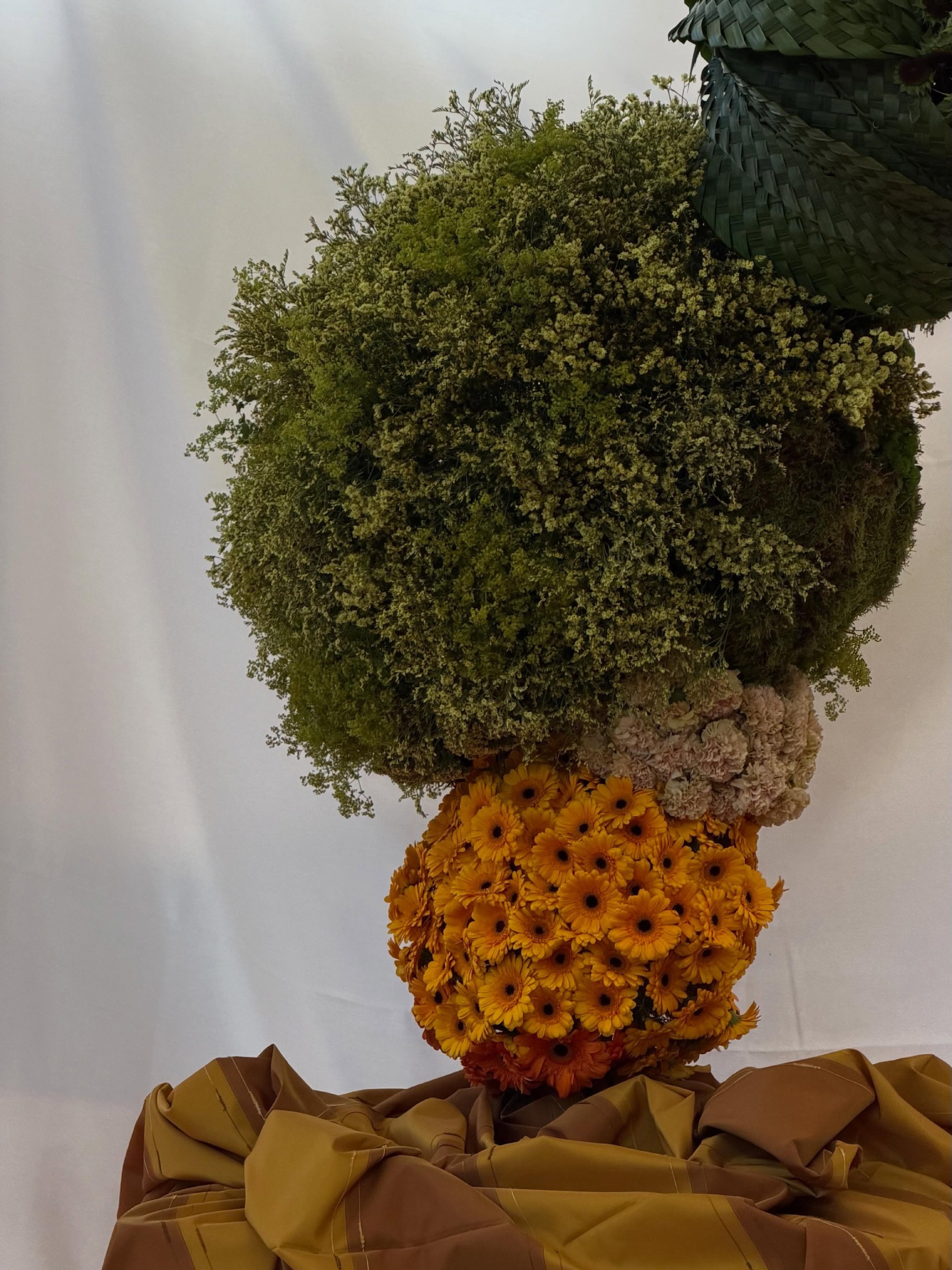
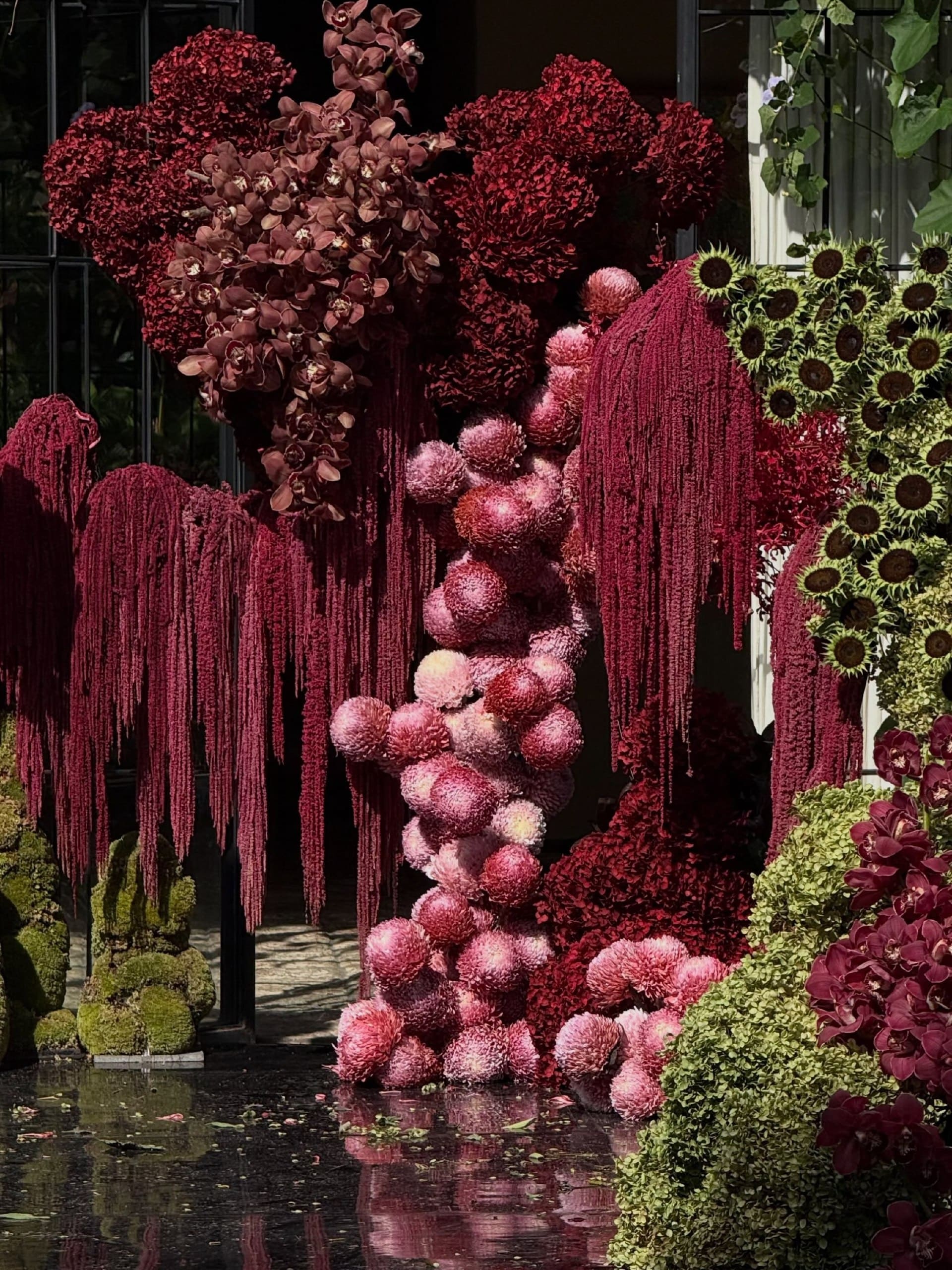
Wedding floristry has spent most of 2026 in conversation with geometry, and it shows no sign of stopping. Flowers packed edge to edge into cubes, spheres, rectangulars, cones, and ovals have been turning up on ceremony backdrops, dinner tables, and freestanding installations all year, and the look is different enough from anything that came directly before it to be worth calling out properly.
Last year’s version of creative floristry leaned another direction entirely: uneven, loose, deliberately imperfect, or more meadow-like. This year swings back toward structure, but not in the tightly symmetrical, old-school centerpiece sense. What makes the current wave feel new is the execution: dense clusters of a single flower variety, all one color, shaped into a hard geometric form that has nothing to do with how that flower actually grows.
It also solves a real design problem: a single-flower, single-color block reads clearly from across a lawn or a reception hall in a way a busier, mixed arrangement often doesn’t, which is presumably why it keeps showing up at scale, stacked in columns, lined up like a still life, or scattered across a table like giant pieces of confetti. Florists seem to be treating the geometric form as the fixed variable and using color and flower choice to do the rest of the talking, whether that means rows of dusty blue hydrangea spheres or cubes built entirely from orange gerbera daisies. Structure is back, but it just no longer wants to look like it’s trying.