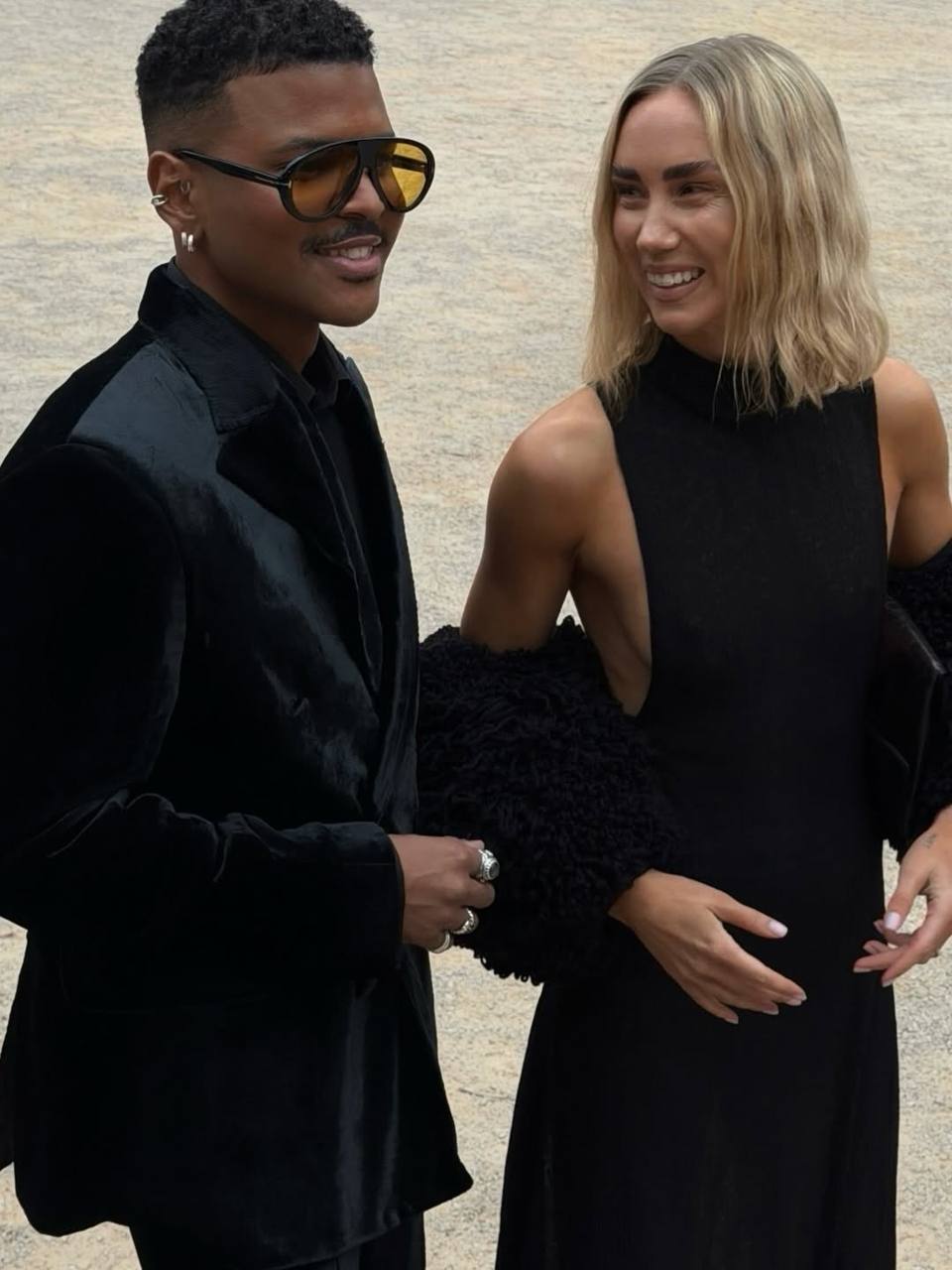
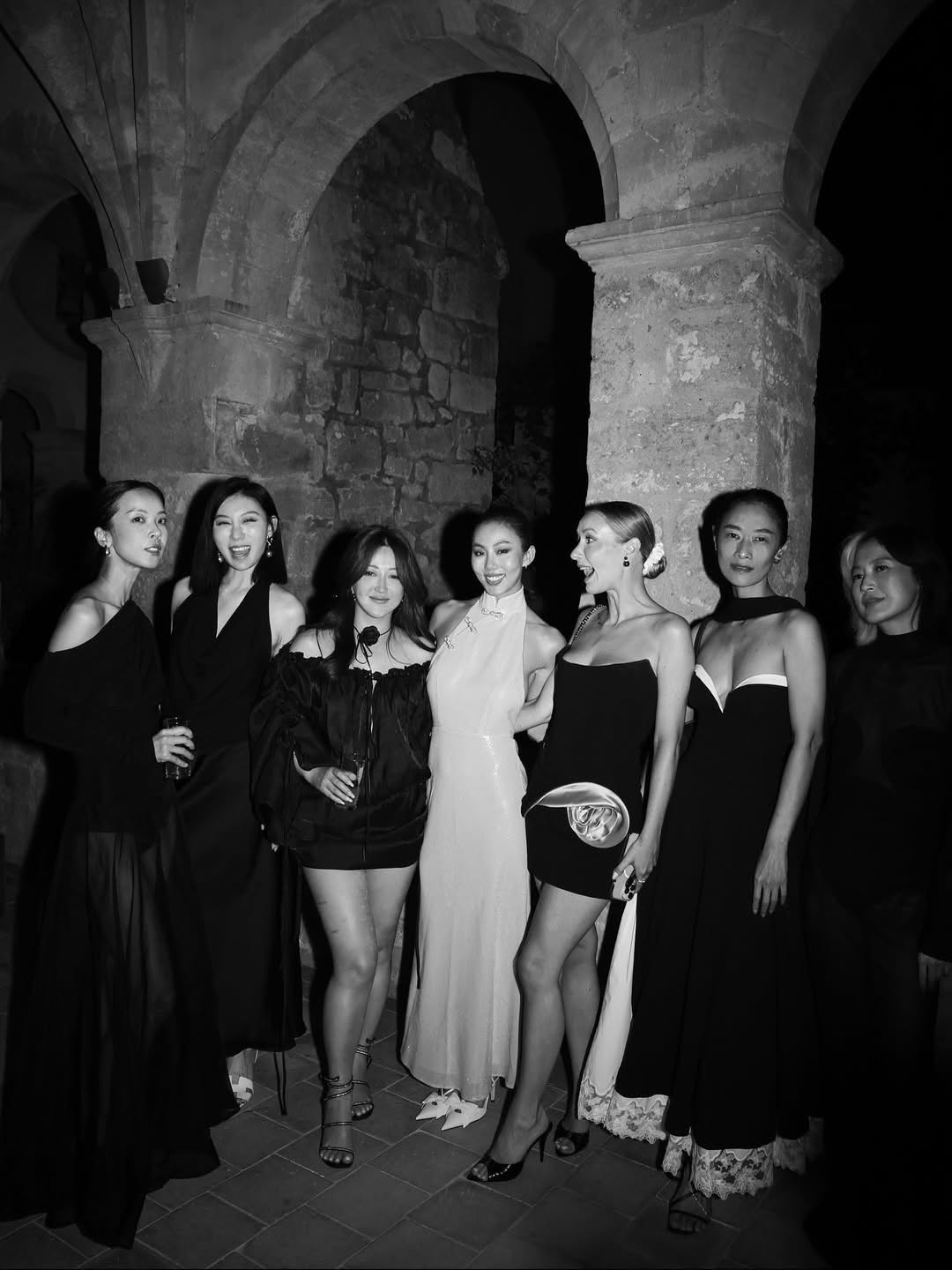
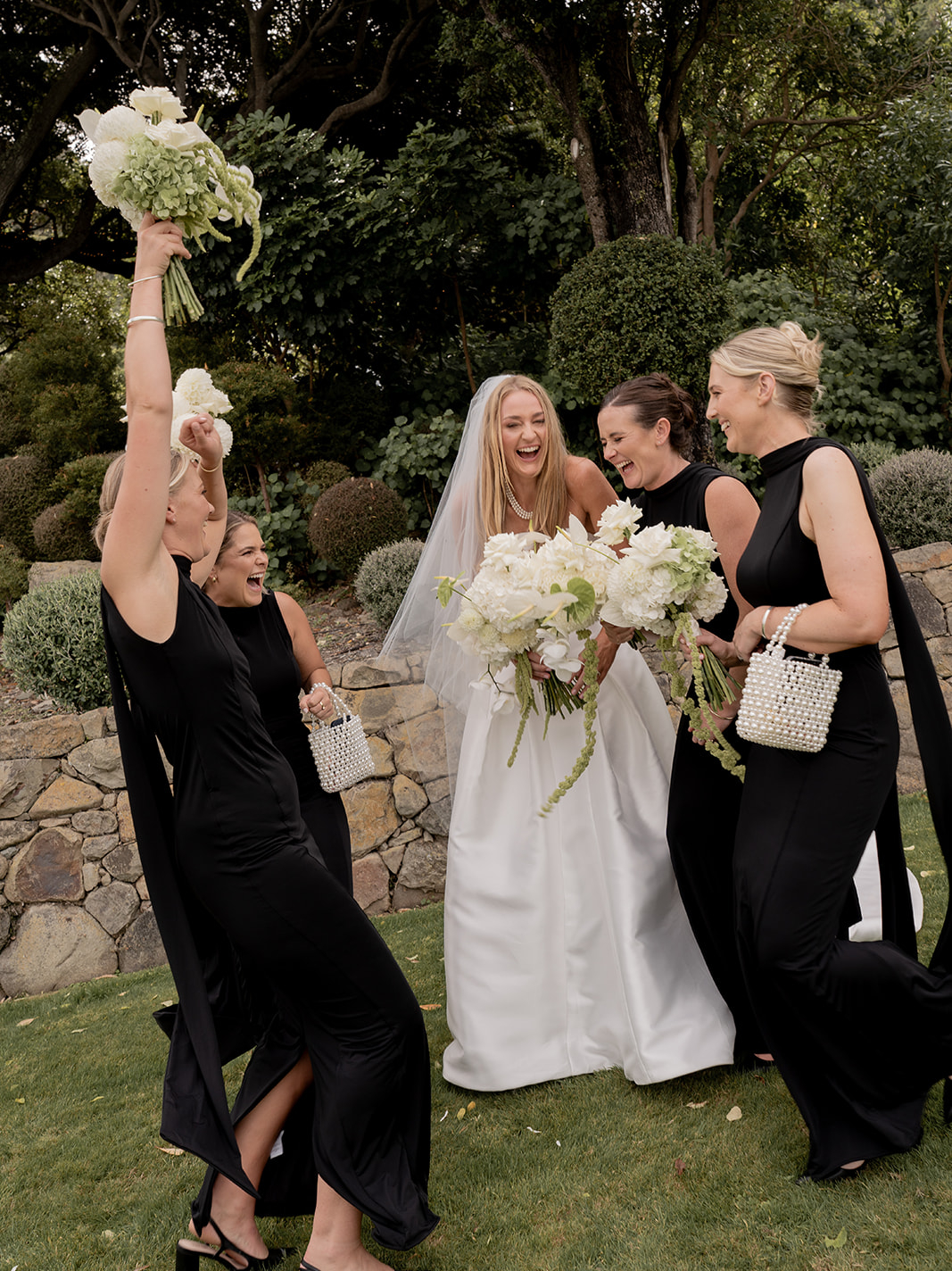
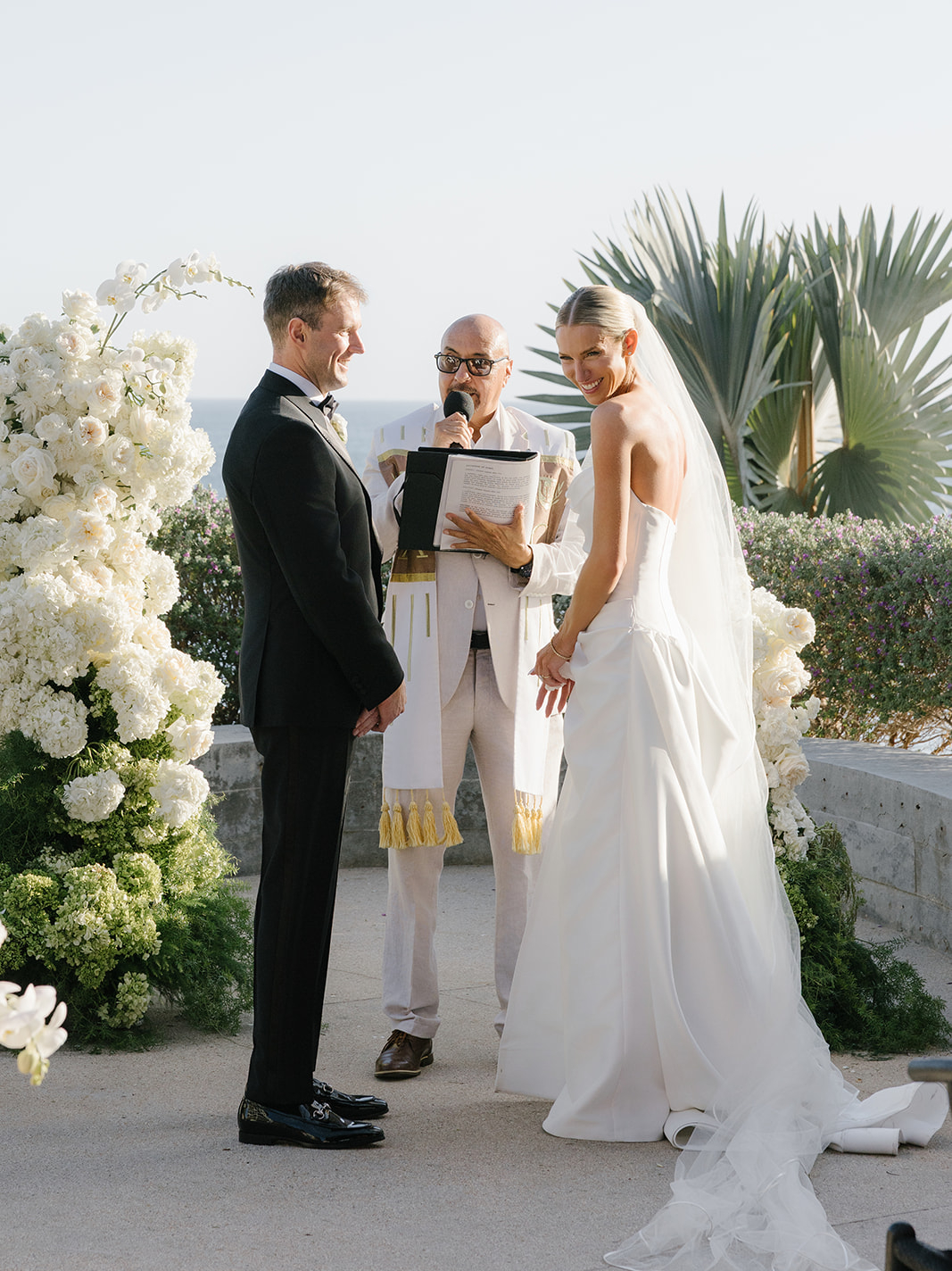
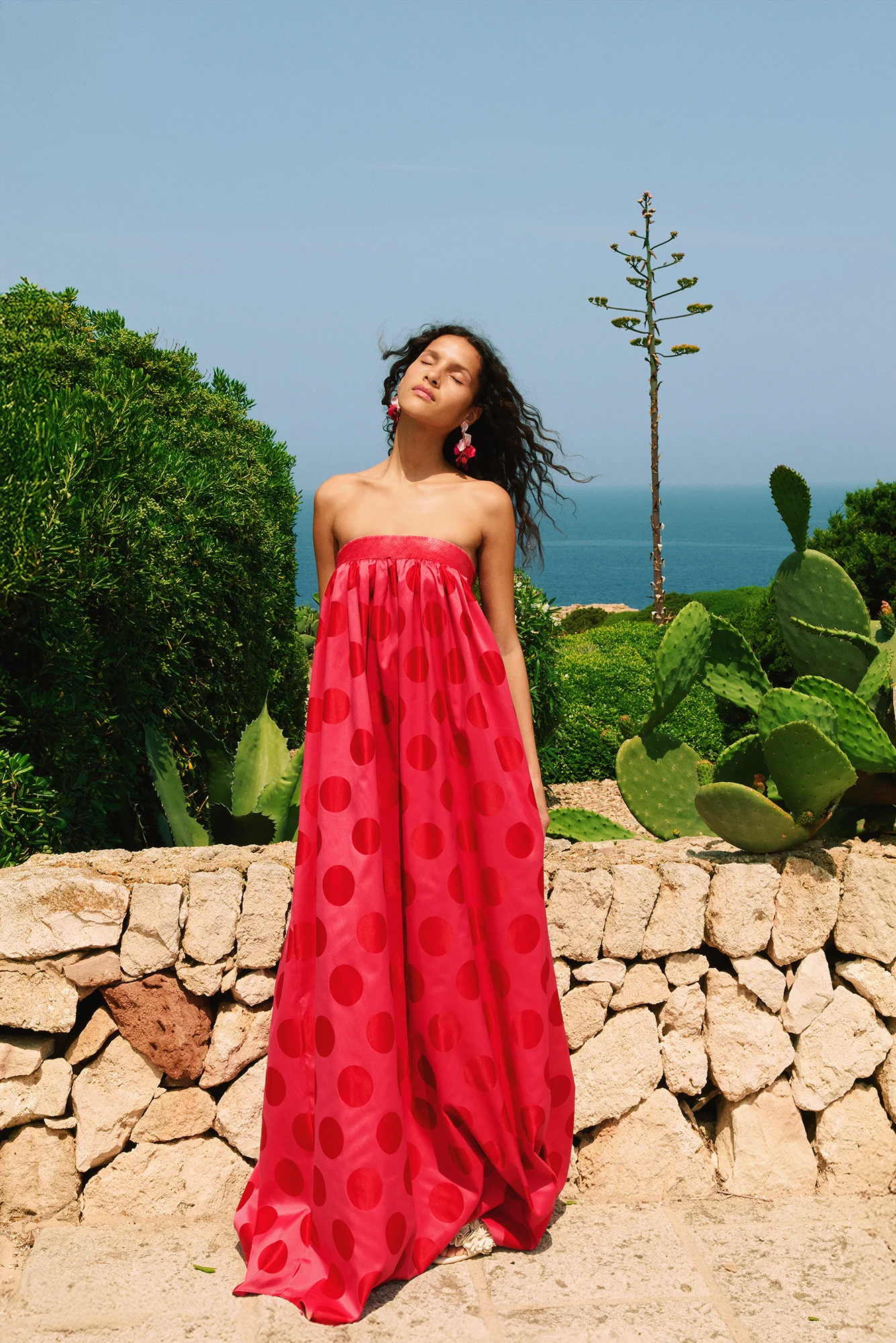
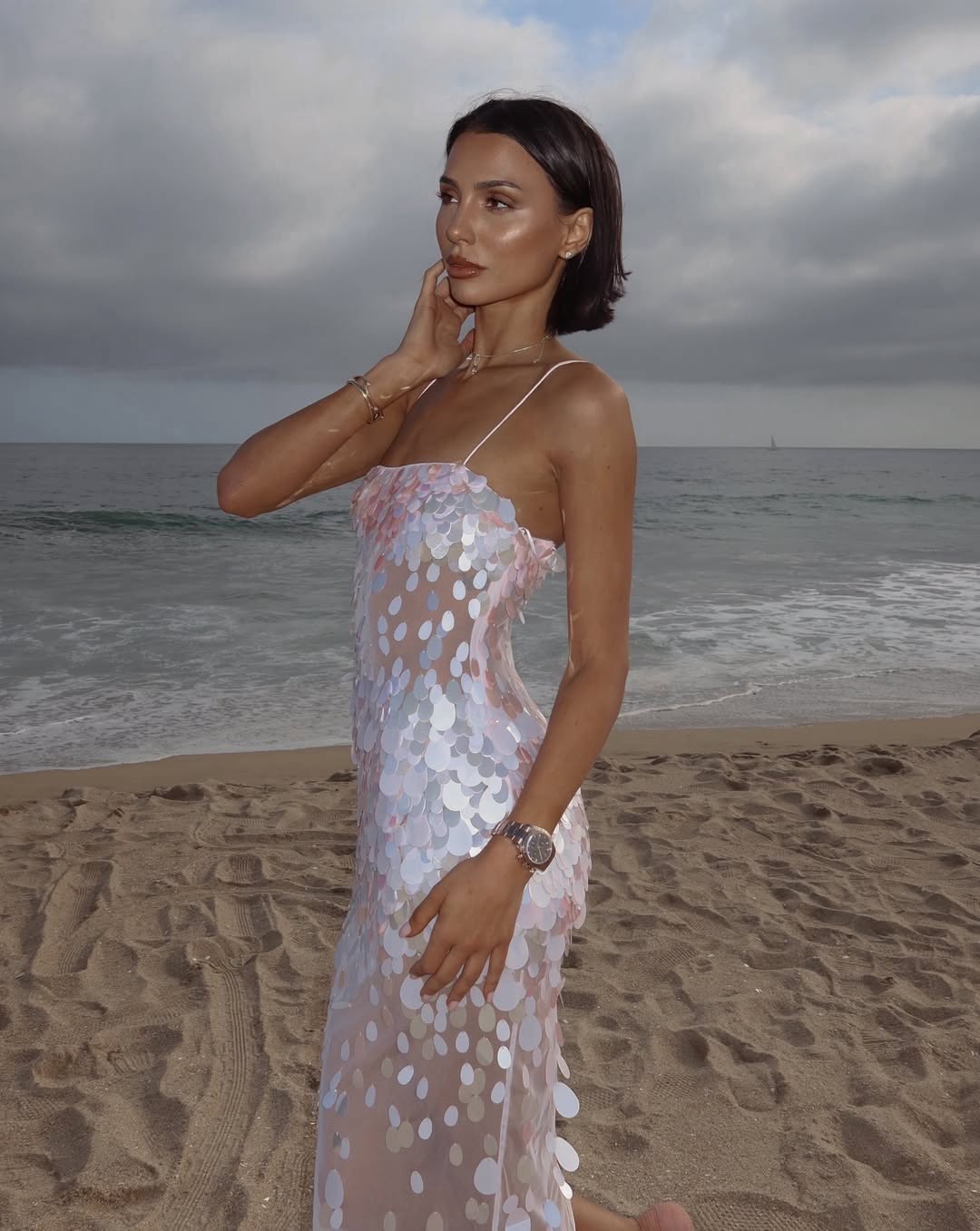
For decades, black at a wedding meant one thing: you were in mourning, or you didn’t get the memo. That rule is gone. Guests, bridesmaids, and even brides are choosing black on purpose now, and it reads elegant, chic, and luxurious. So, yes or no? Here’s why black became the color of grief in the first place, when that started to shift, and how real couples have made it work, black tie and beyond.
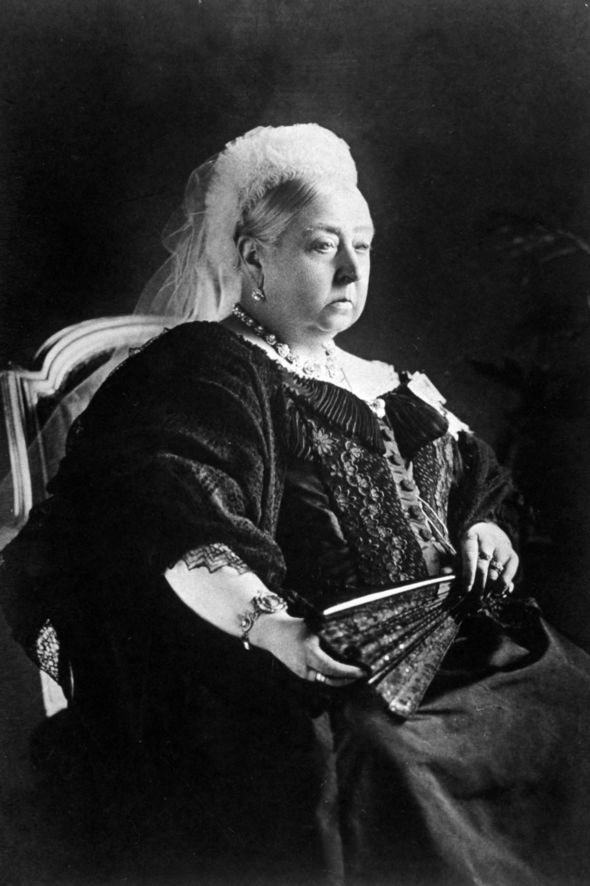
The rule traces back to Queen Victoria. After Prince Albert died in 1861, she wore black for the rest of her life, nearly forty years. Her mourning set the template for an entire era. Victorian women followed strict stages of grief through fabric alone: full mourning meant solid black in dull, light-absorbing crepe. Second mourning eased the rules slightly. Half mourning, the final stage, allowed grey, lavender, or white trim back in.
Attending a wedding while still in black, unless you were in mourning, would have raised eyebrows for the opposite reason: it meant you weren’t paying attention to the rules at all.
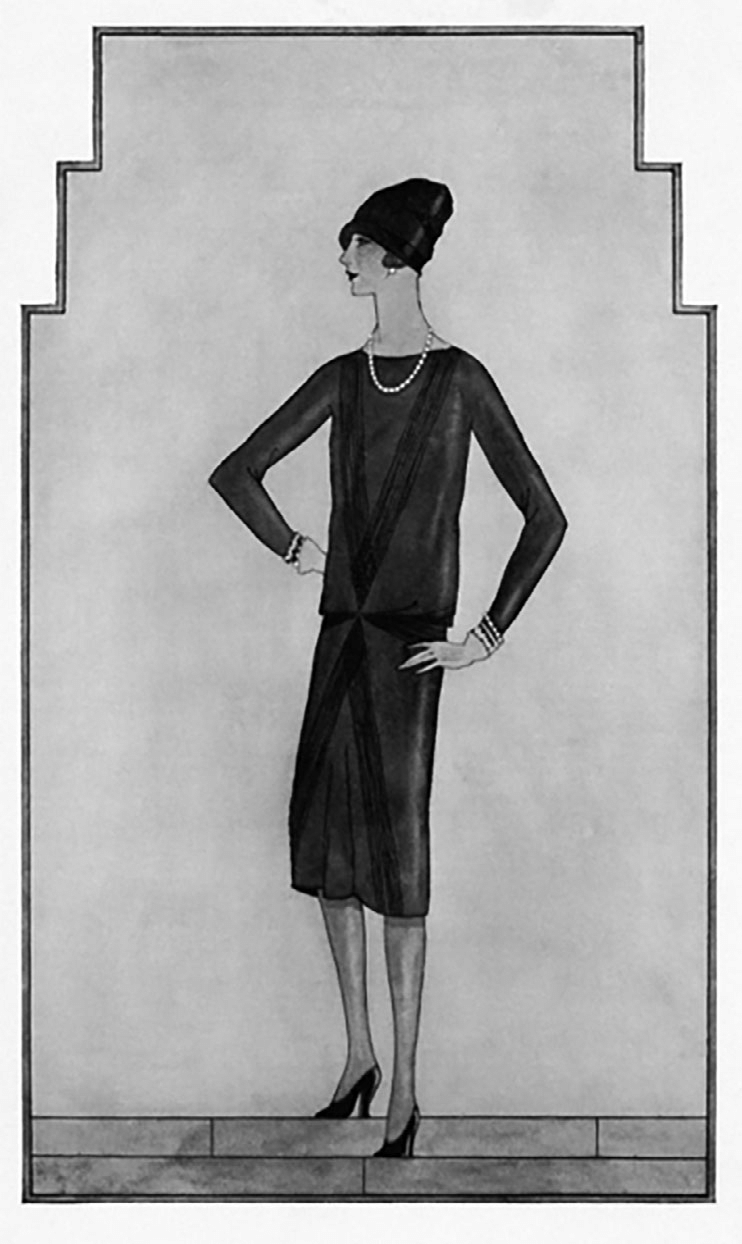
Coco Chanel is the one who broke the pattern. In October 1926, Vogue published a sketch of her simple black dress and nicknamed it “Chanel’s Ford,” comparing it to the Model T for how accessible and universal it was built to be. Before that, black belonged to funerals and little else. Chanel made it a wardrobe staple instead, something a woman could wear anywhere, day or night, mourning or not. It took decades for that idea to reach bridal fashion, but the shift started there.
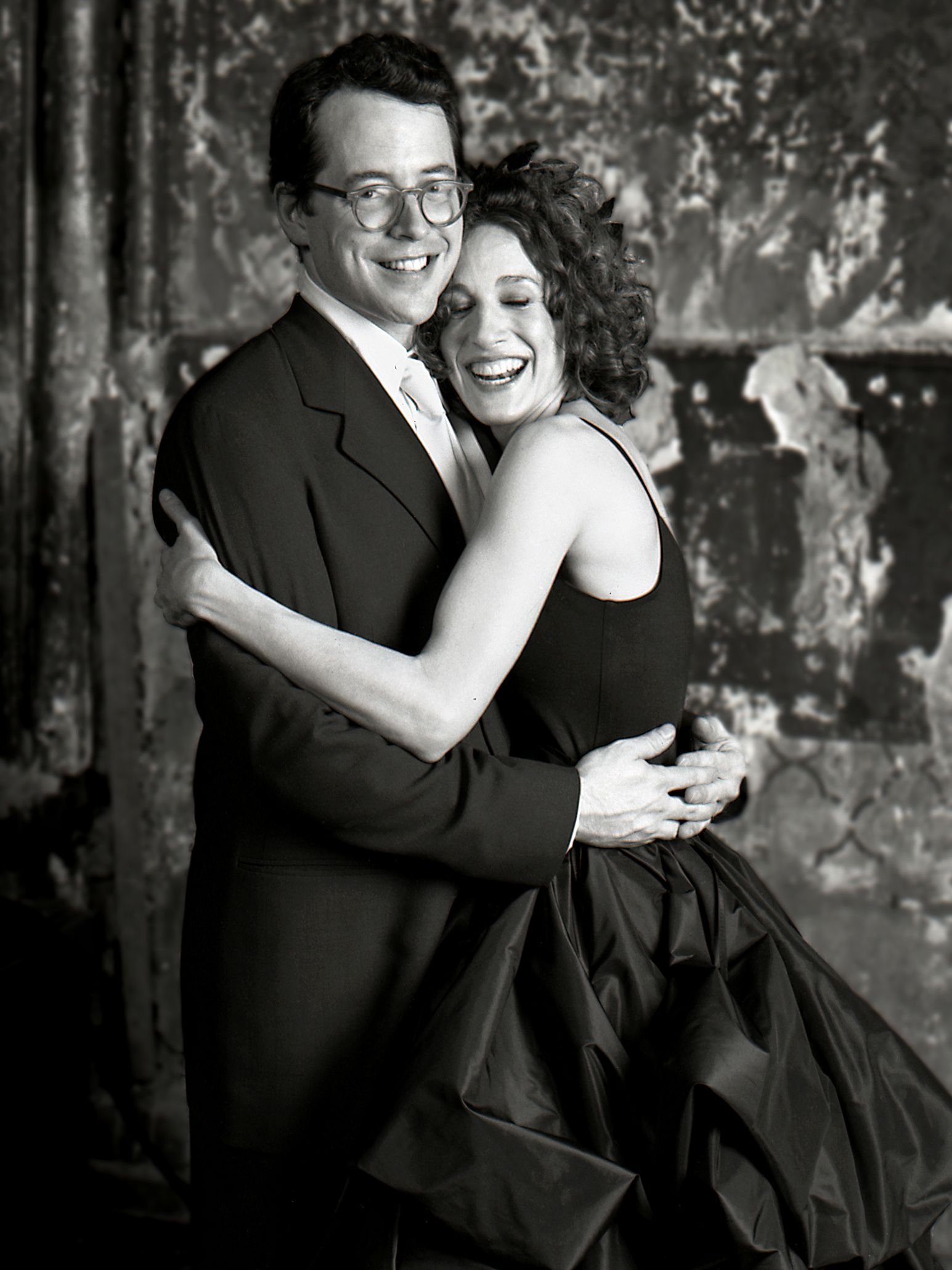
Fashion editorials and a handful of headline-making brides brought black back into wedding fashion long before it became a trend. Sarah Jessica Parker wore a black ball gown by Morgane Le Fay to marry Matthew Broderick in 1997, at a time when the choice still read as bold, even eccentric. It opened the door for other celebrities to wear black down the aisle themselves, Kourtney Kardashian among them, who wore a black mini dress during her wedding celebration in Italy.
And that’s the detail worth sitting with: these weren’t just guests testing the limits. These were brides. Once the bride herself can wear black on her wedding day, asking bridesmaids to do the same barely registers as a risk.
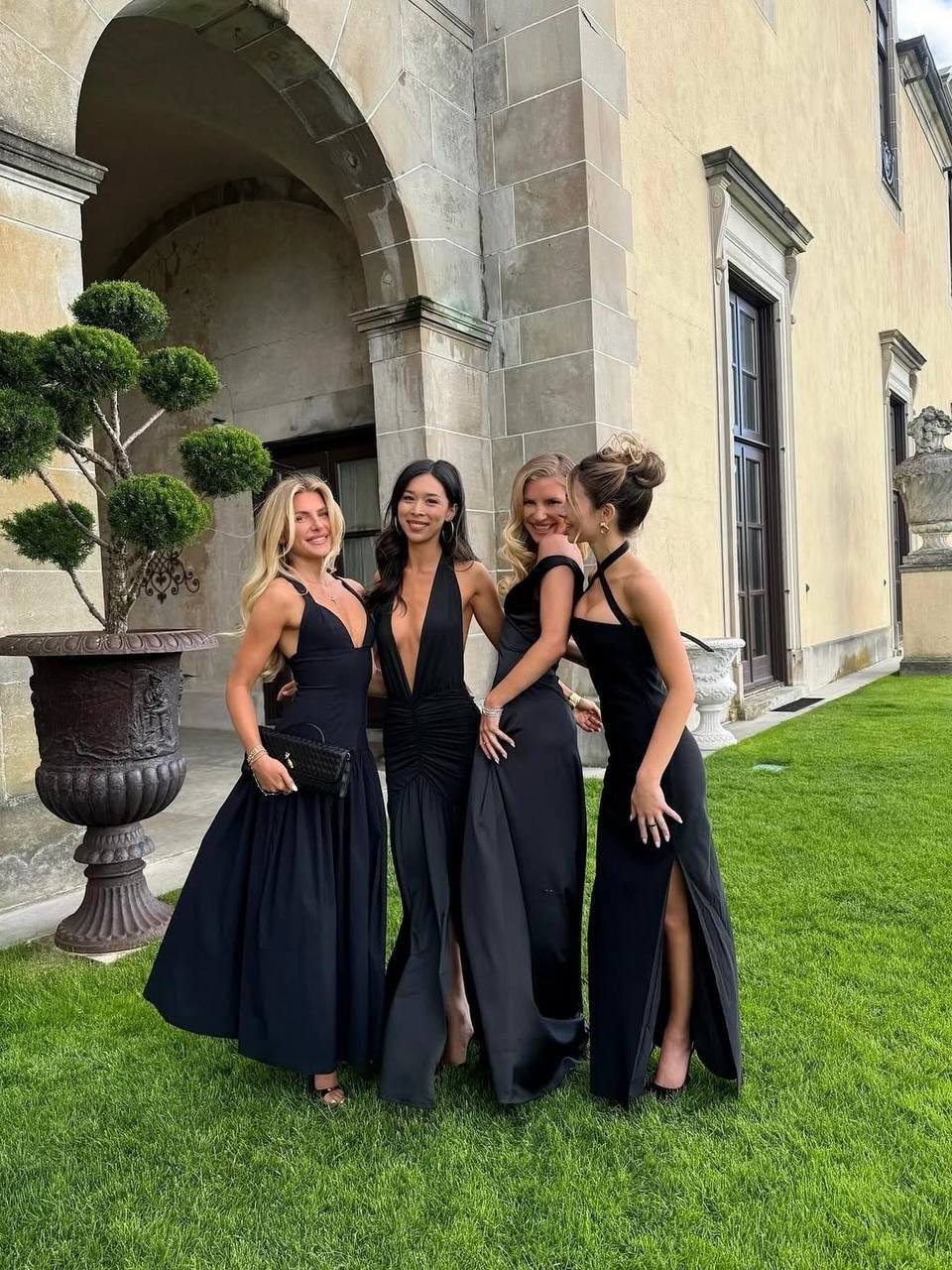
There’s a practical case for black too. It’s the most universal color in most people’s closets, and it doesn’t splinter into competing shades the way blush or sage does, where every guest’s version looks slightly different. A couple who wants a cohesive, elevated crowd without asking anyone to shop specifically for the day gets there fastest with black.
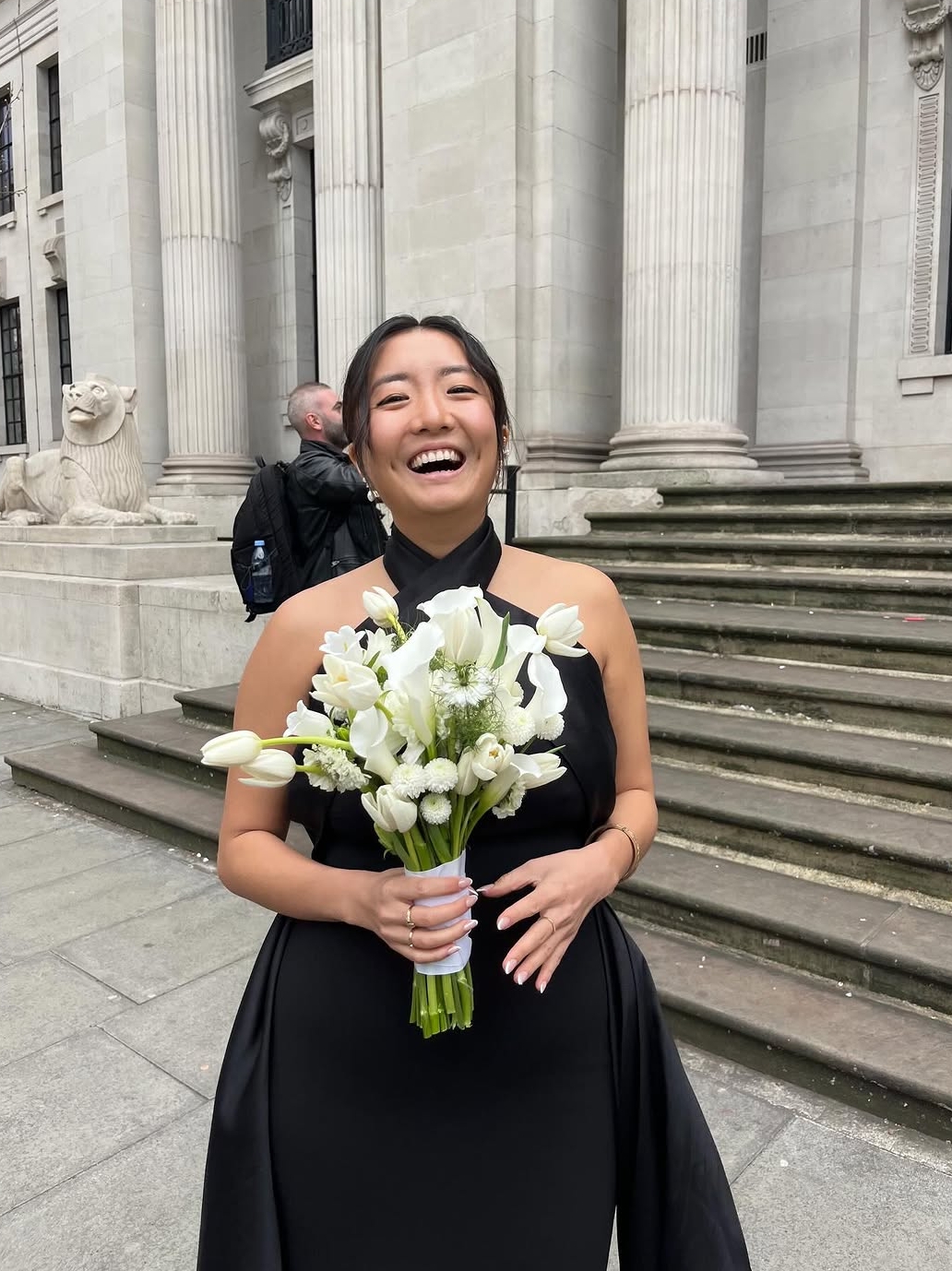
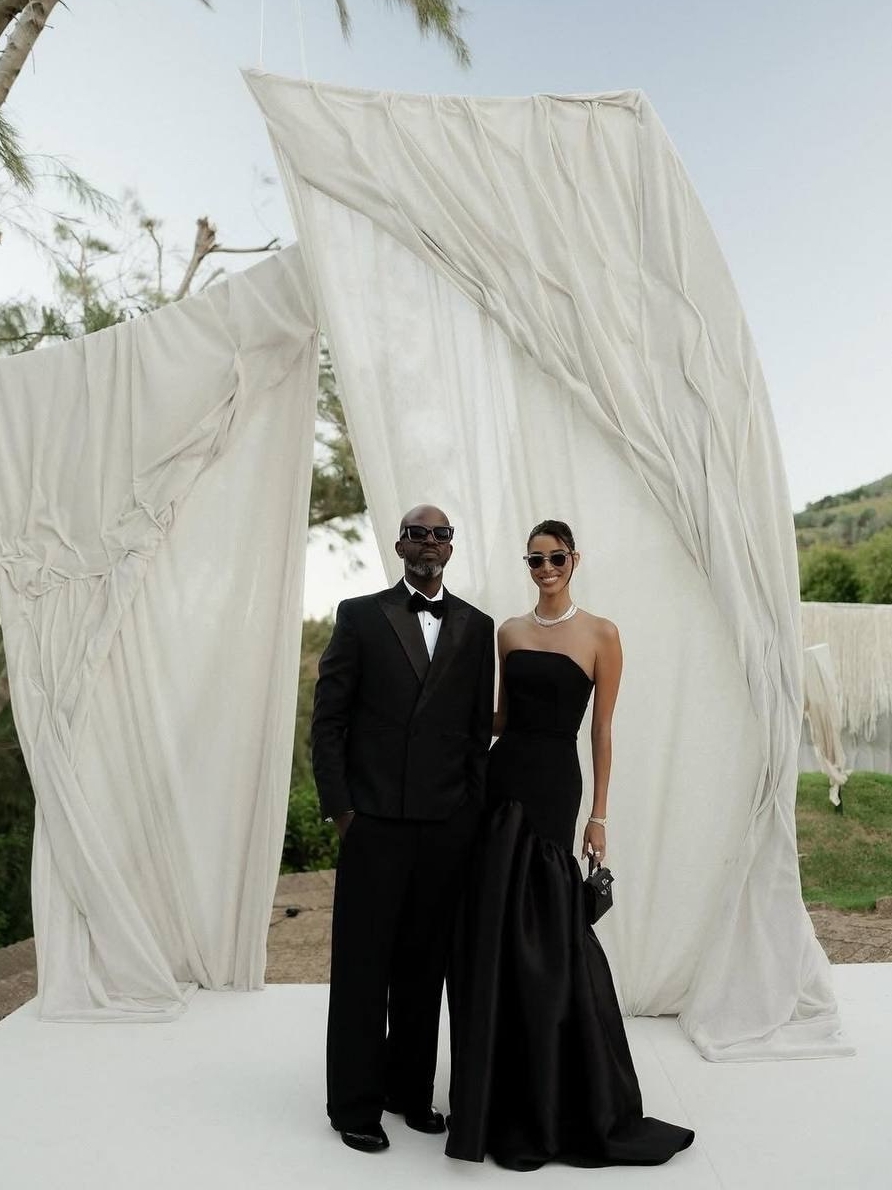
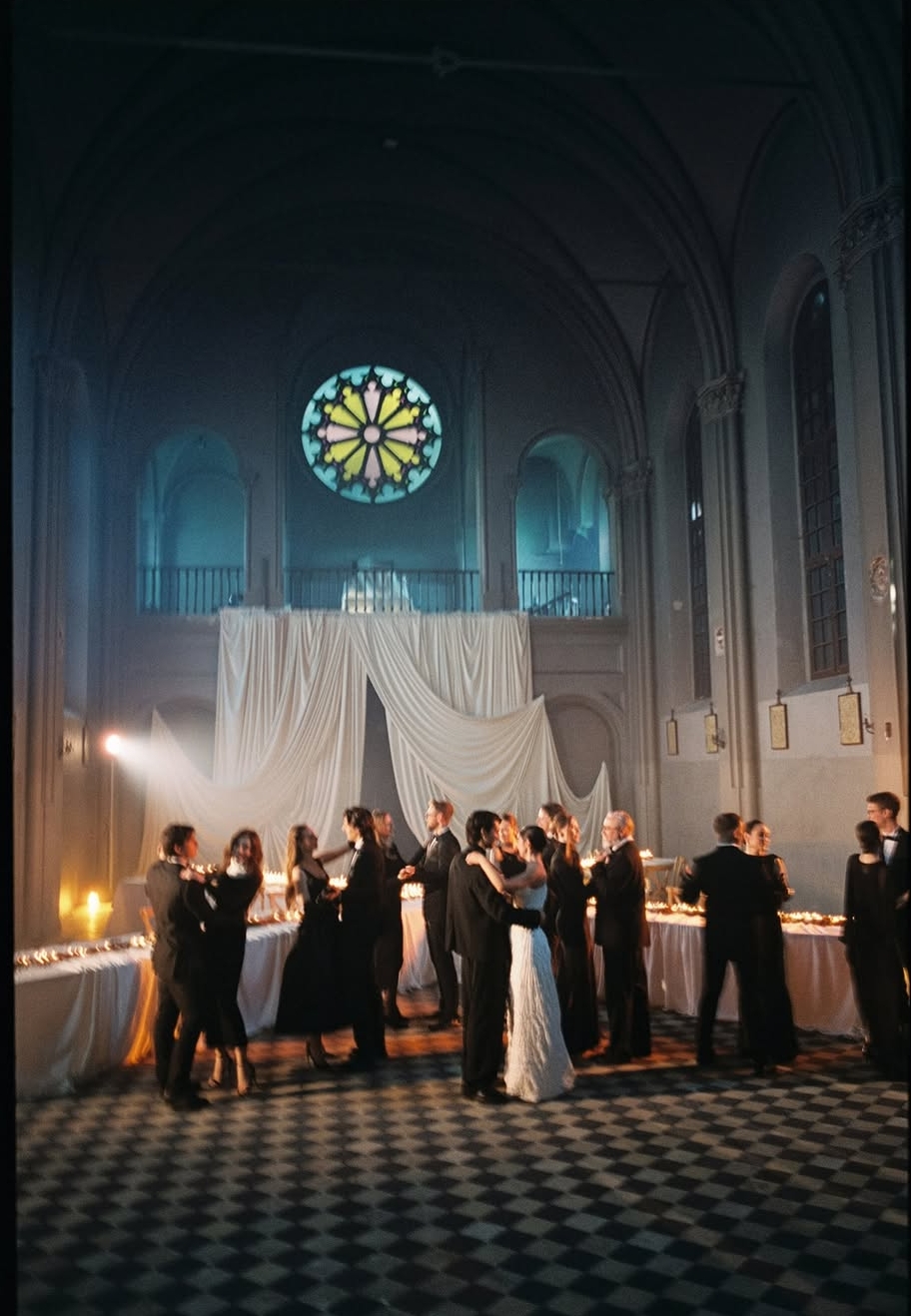
Black-tie invitations are already asking for it, which makes formal evening weddings the easiest place to lean in. City venues work the same way, marble columns and candlelight photograph beautifully in black against a neutral, architectural backdrop.
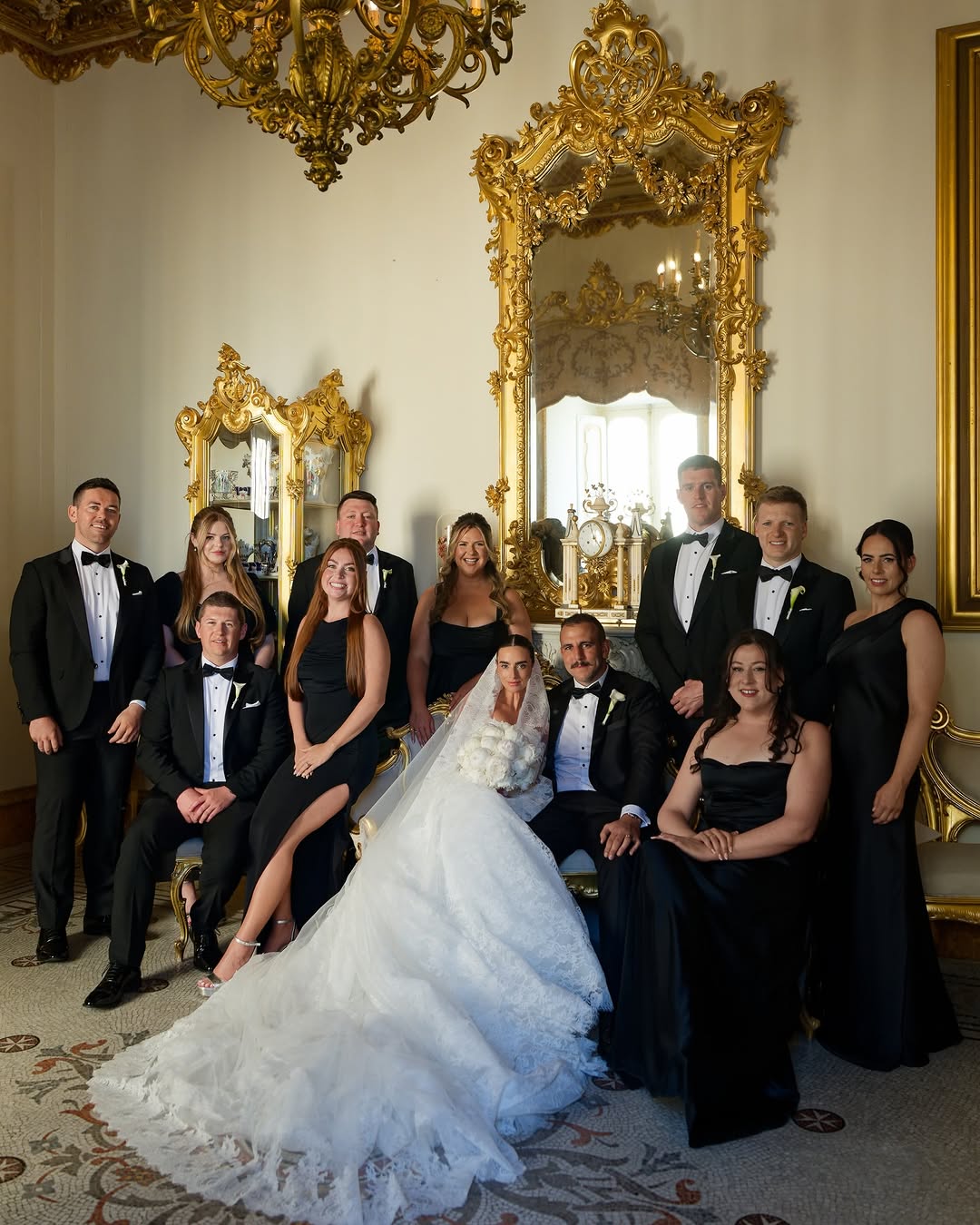
Gothic and moody concepts take it further. Cathedrals, historic estates, and anything with stone walls or candlelight naturally pull black into the frame, less like a dress code and more like part of the set.
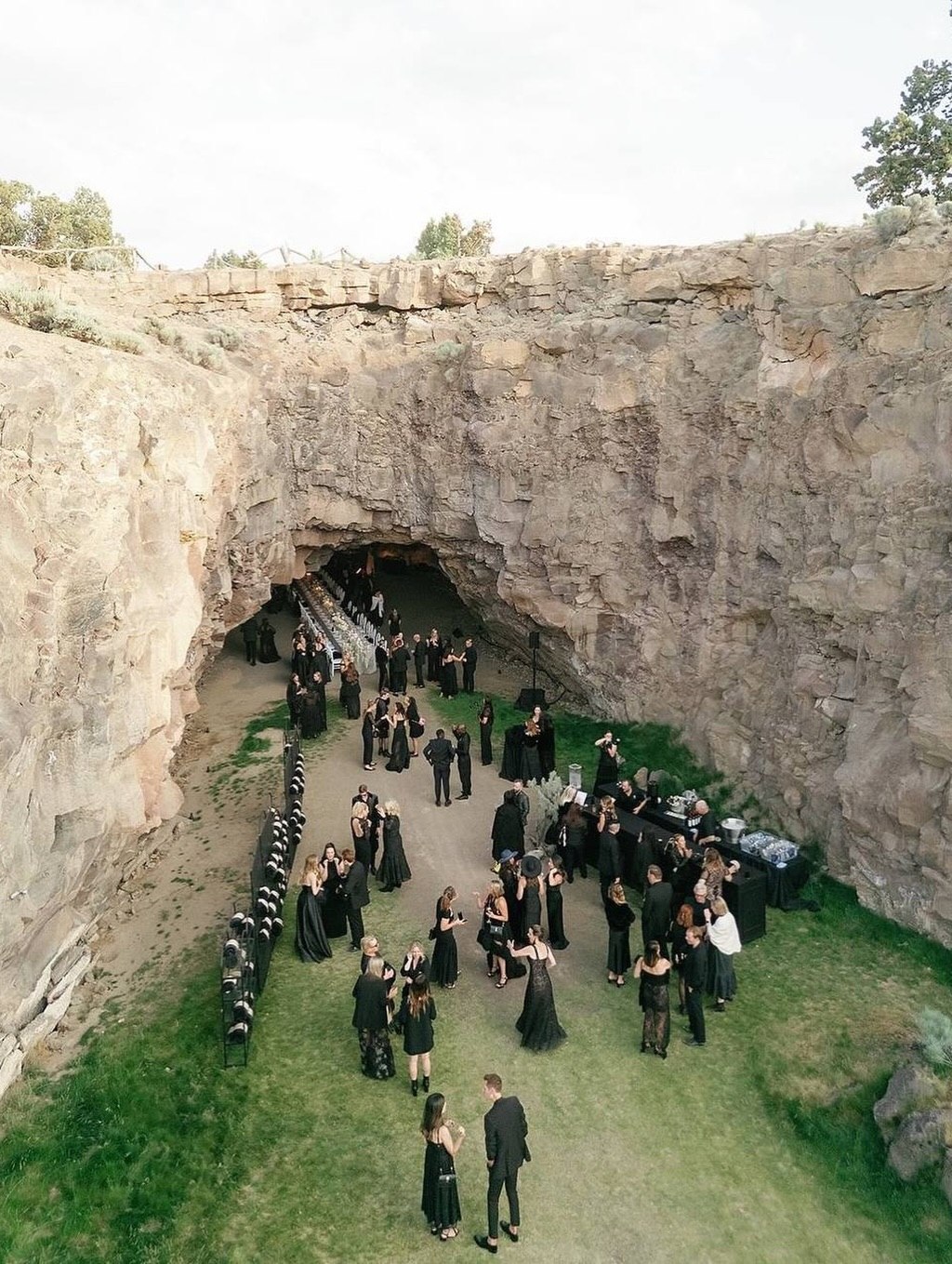
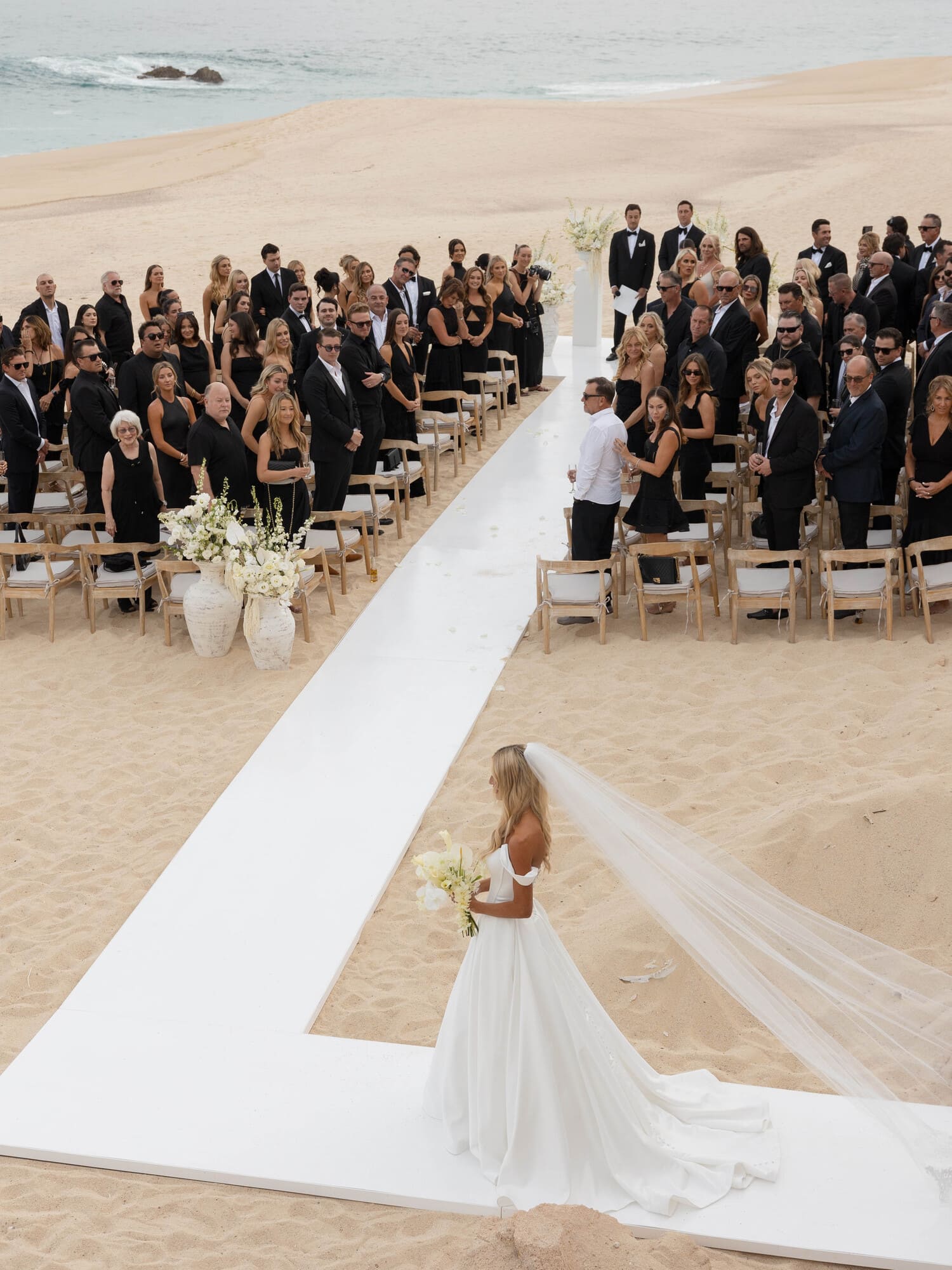
Even destination weddings can make it work, oceanfront included, if the rest of the palette leans crisp and architectural rather than soft and tropical. Contrast is the key. Black against sand, stone, or greenery reads sharp. Black against more black, without anything to set it off, reads heavy.
The first move is always the couple’s moodboard, if they’ve shared one. It usually settles most questions about tone, formality, and how literally to take “black.” When in doubt, coordinating directly with the bride or the planner beats guessing every time.
If that’s not an option, a few universal rules hold up:
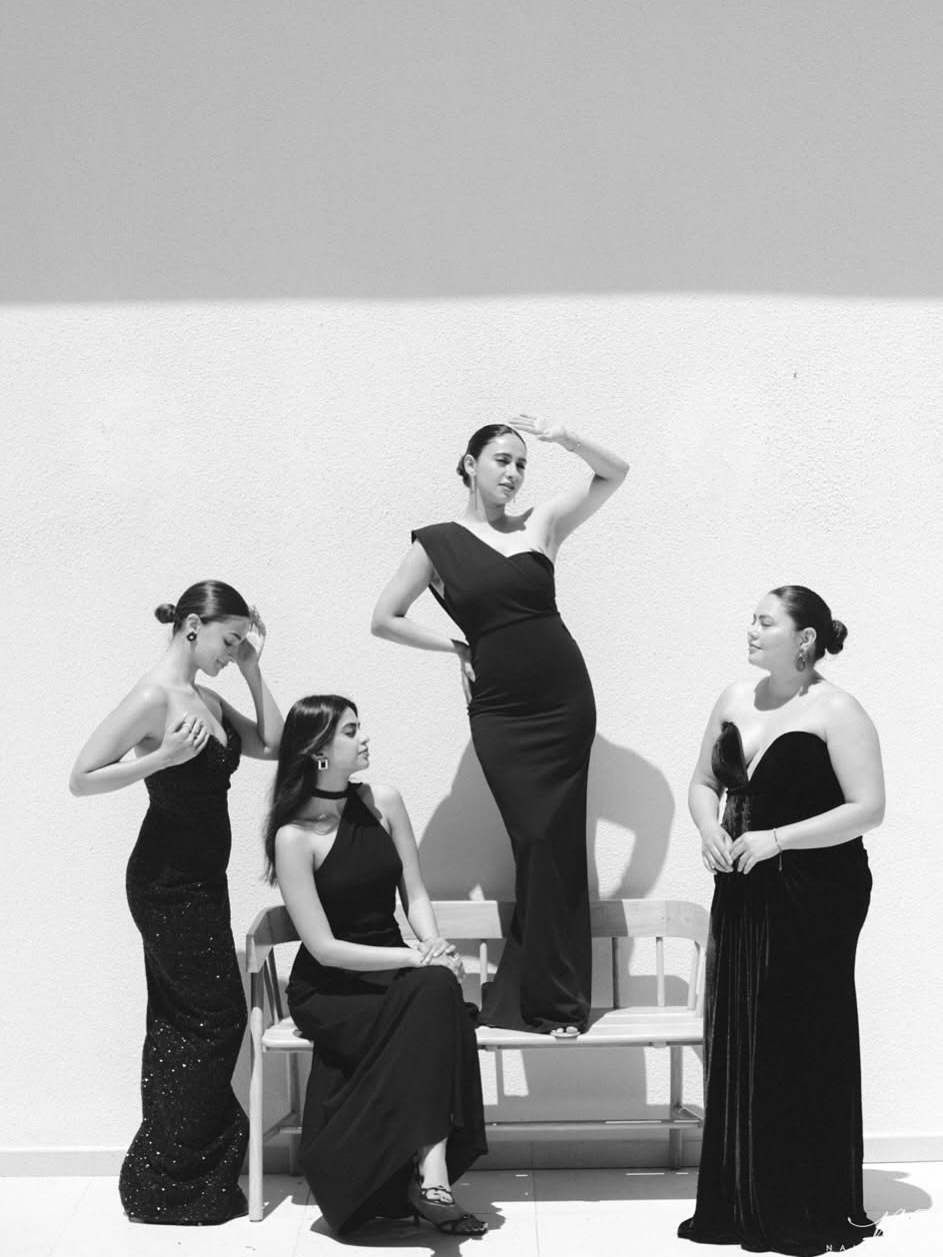
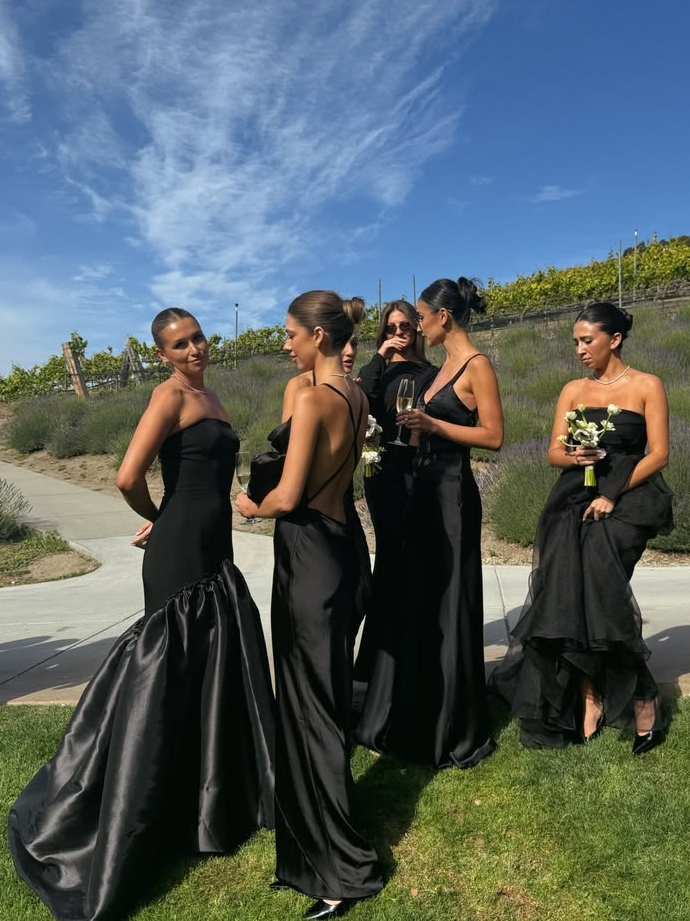
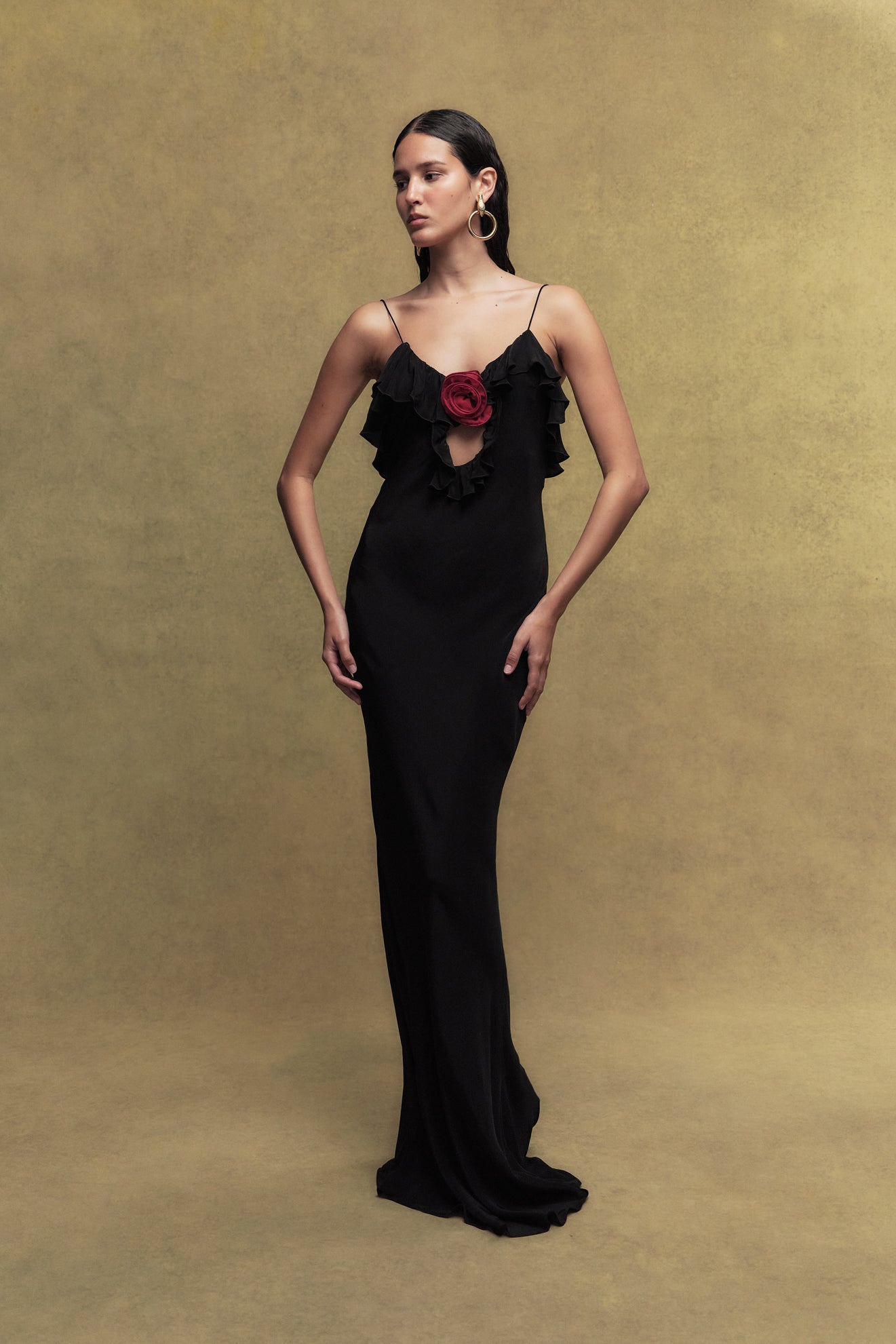
Silhouette.A slip dress or column gown feels modern and easy, especially for anyone new to wearing black at a formal event. A structured, sculptural silhouette leans dressier. Draped or asymmetric cuts add movement without adding volume, which keeps the look from feeling stiff.
Fabric. Satin catches light and reads polished. Lace softens black, keeping it from feeling too severe or heavy. Velvet feels rich and works best for cooler-season weddings, less so for anything outdoors in summer heat.
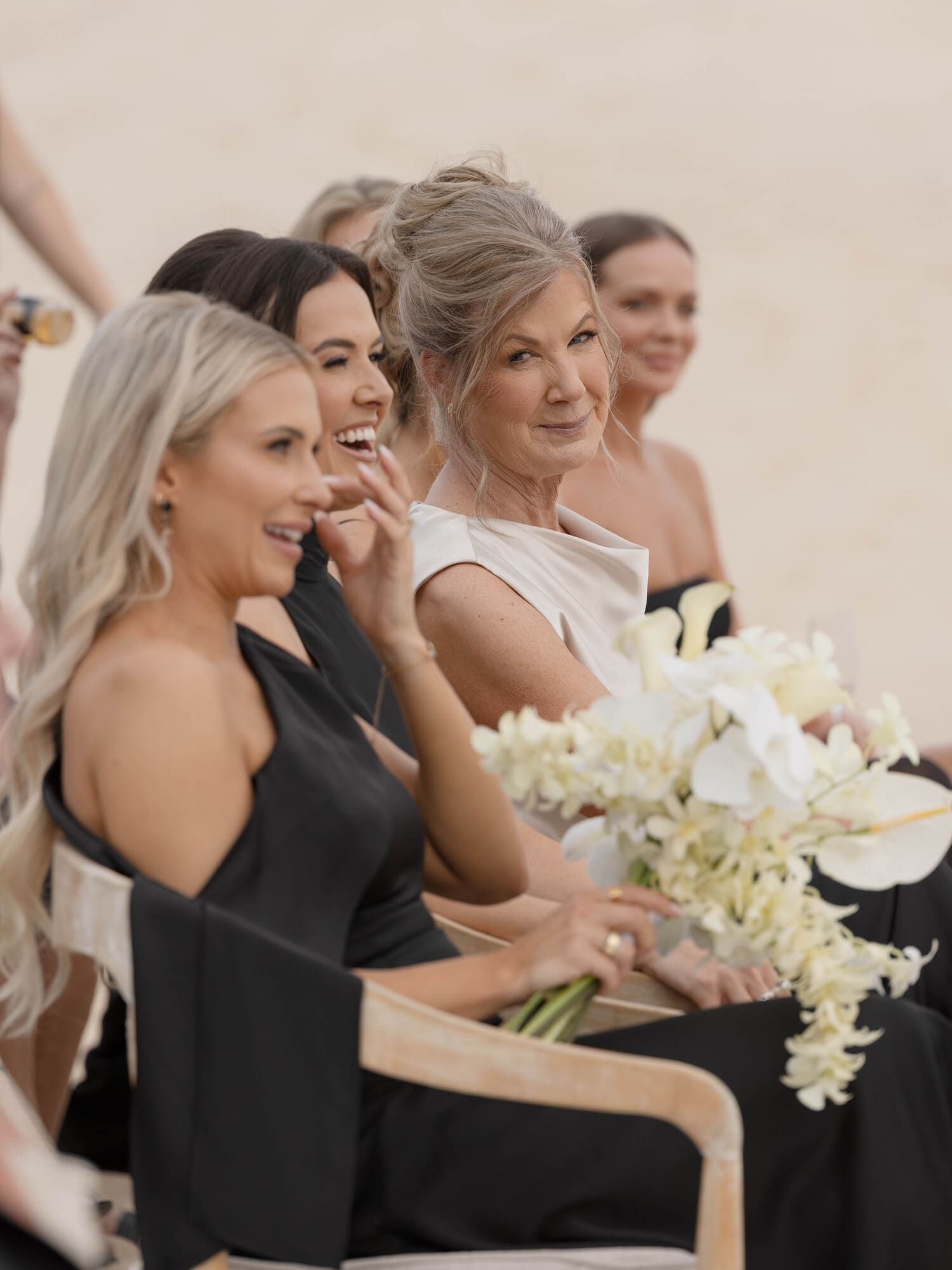
The detail that saves it from reading like mourning wear. A statement neckline, an interesting sleeve, or a touch of sheer fabric changes the whole tone. Flat, boxy black can look somber. Black with texture, shape, or a bit of shine looks intentional.
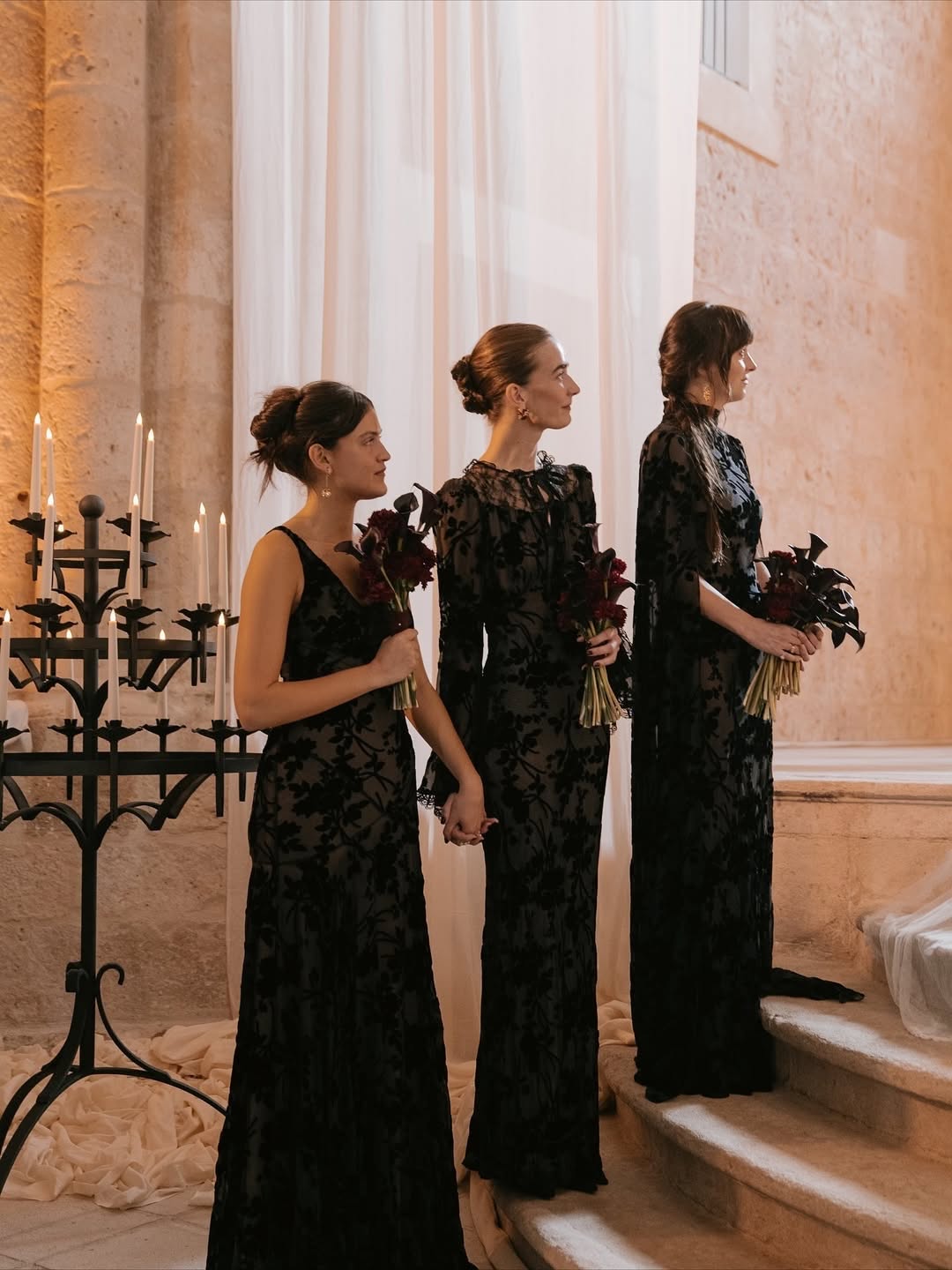
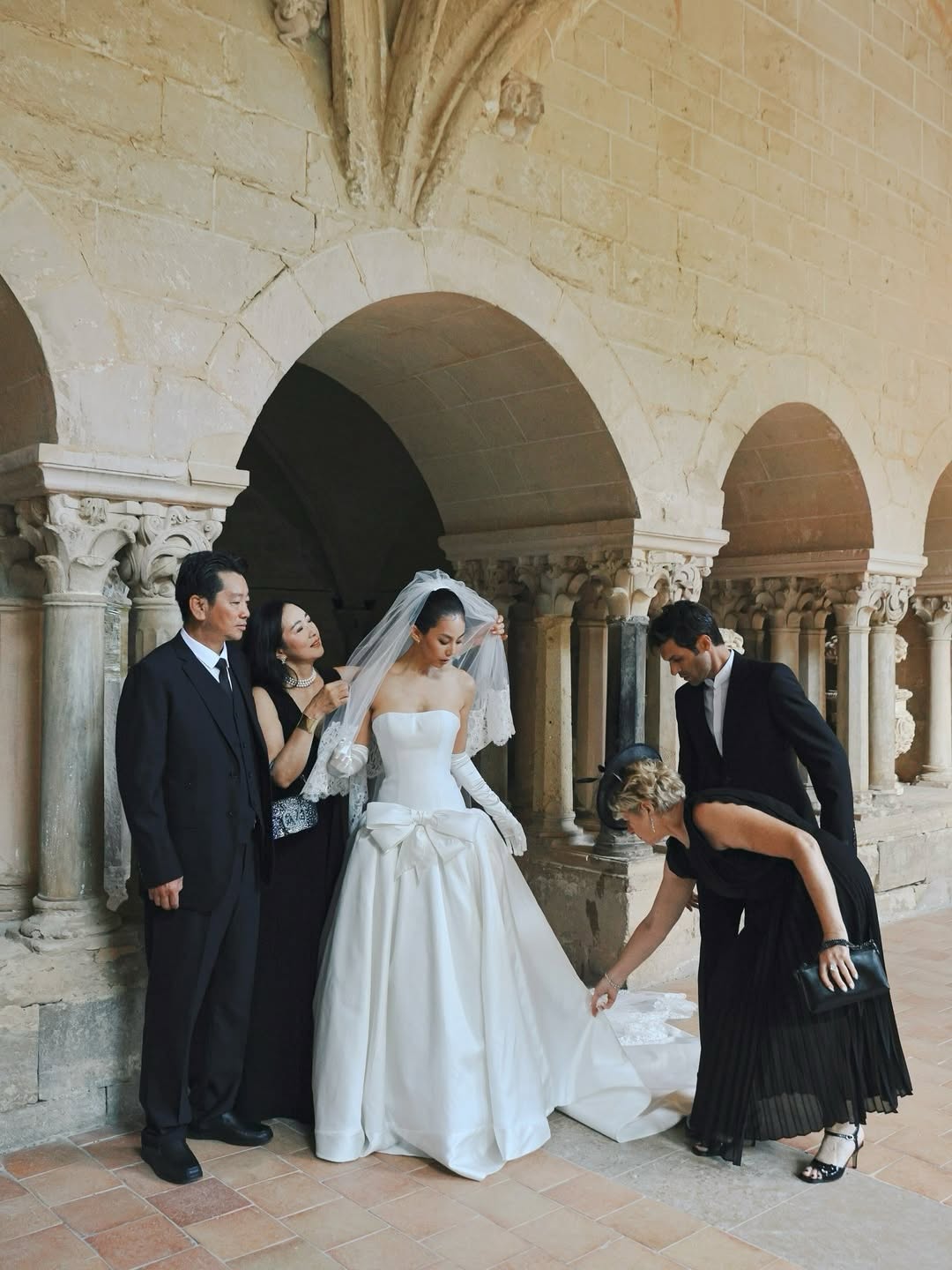
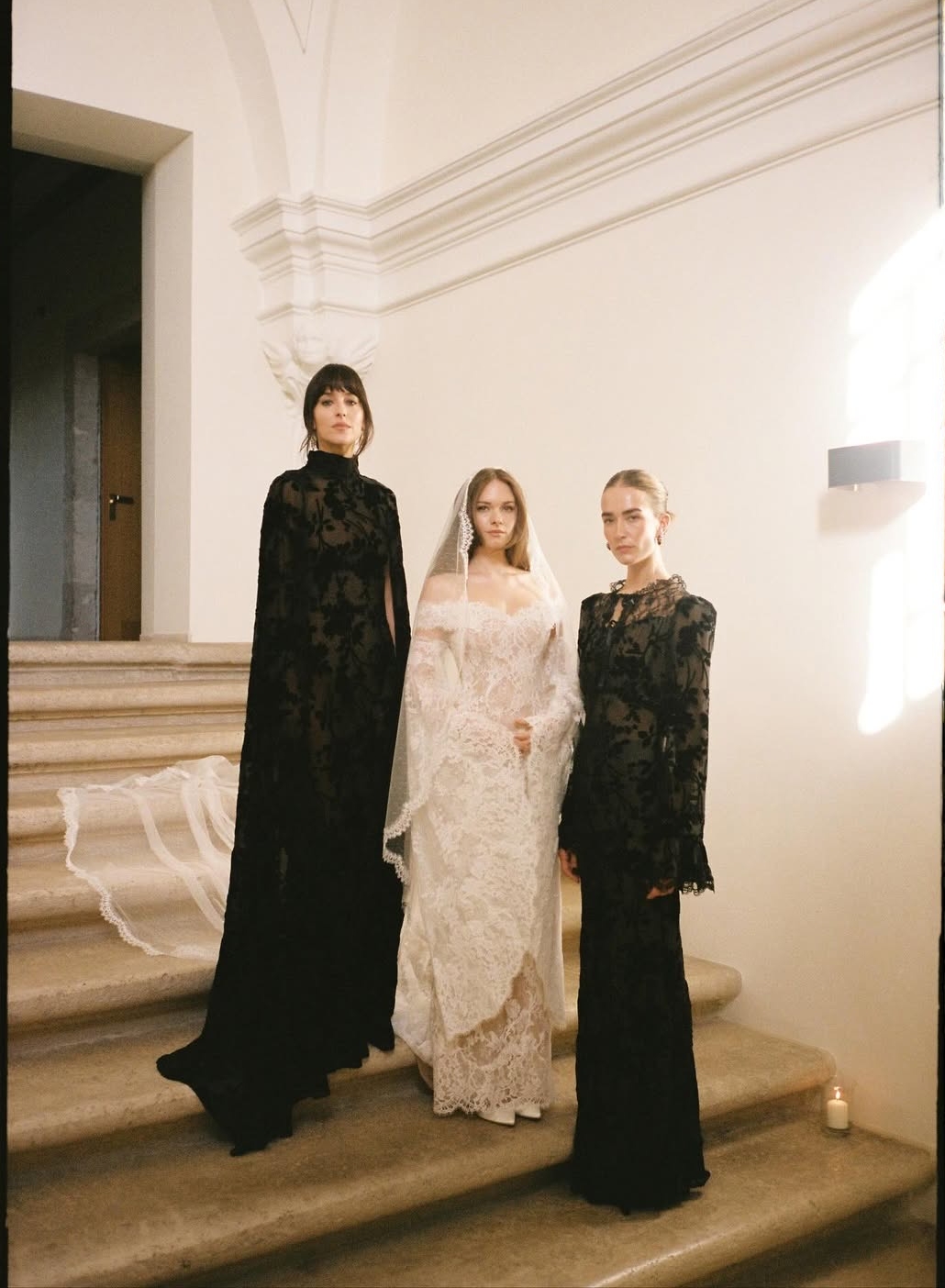
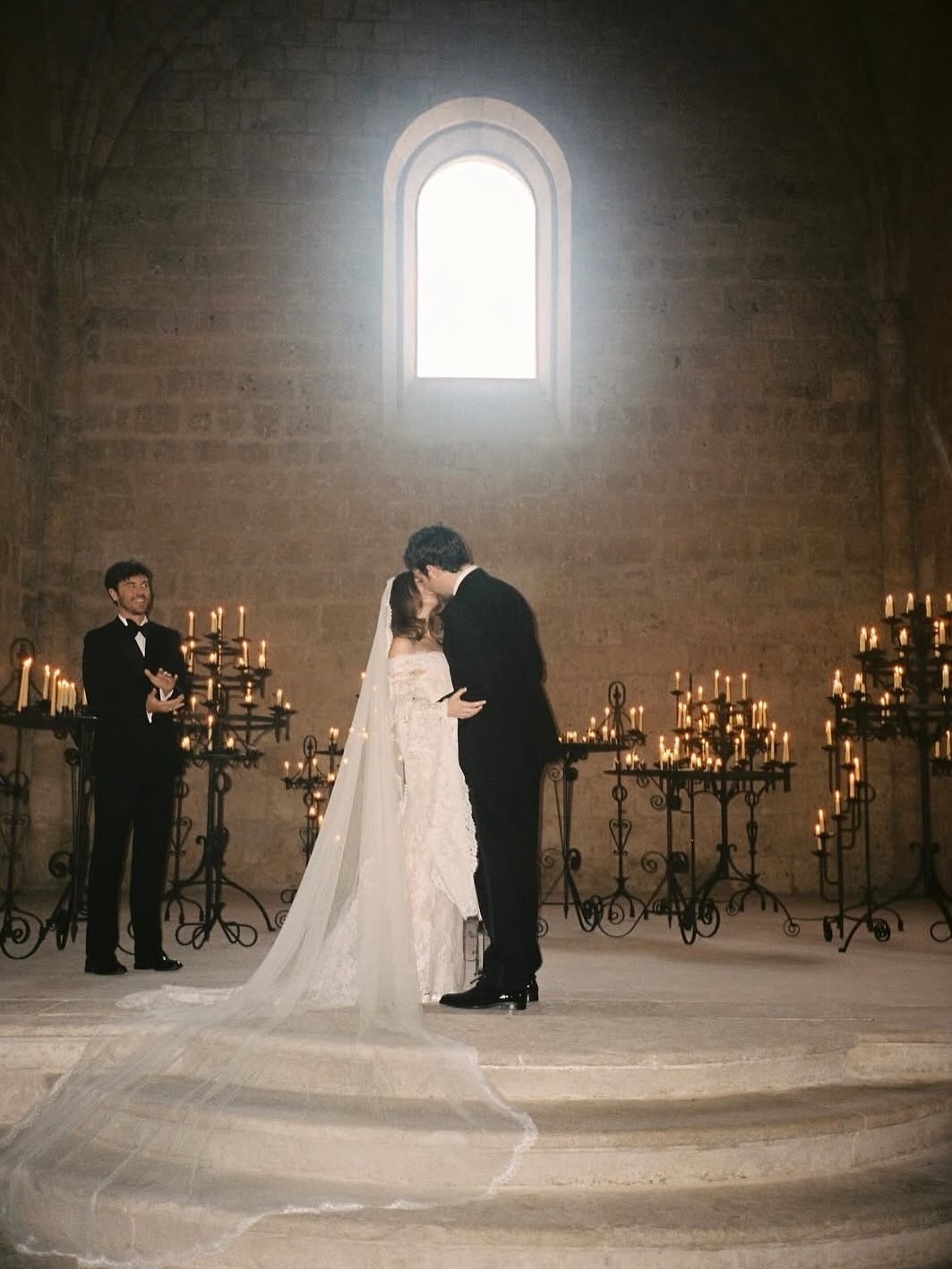
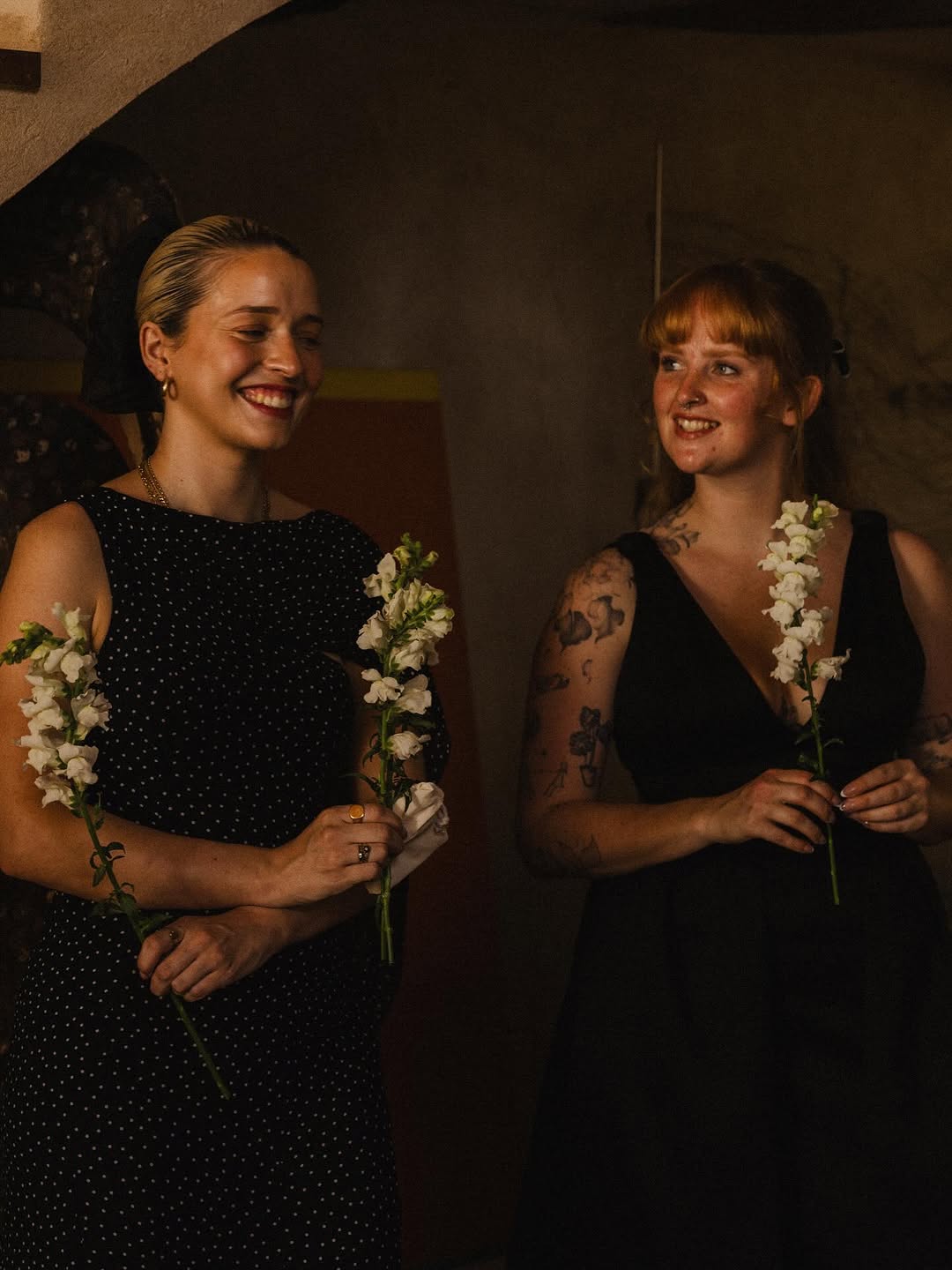
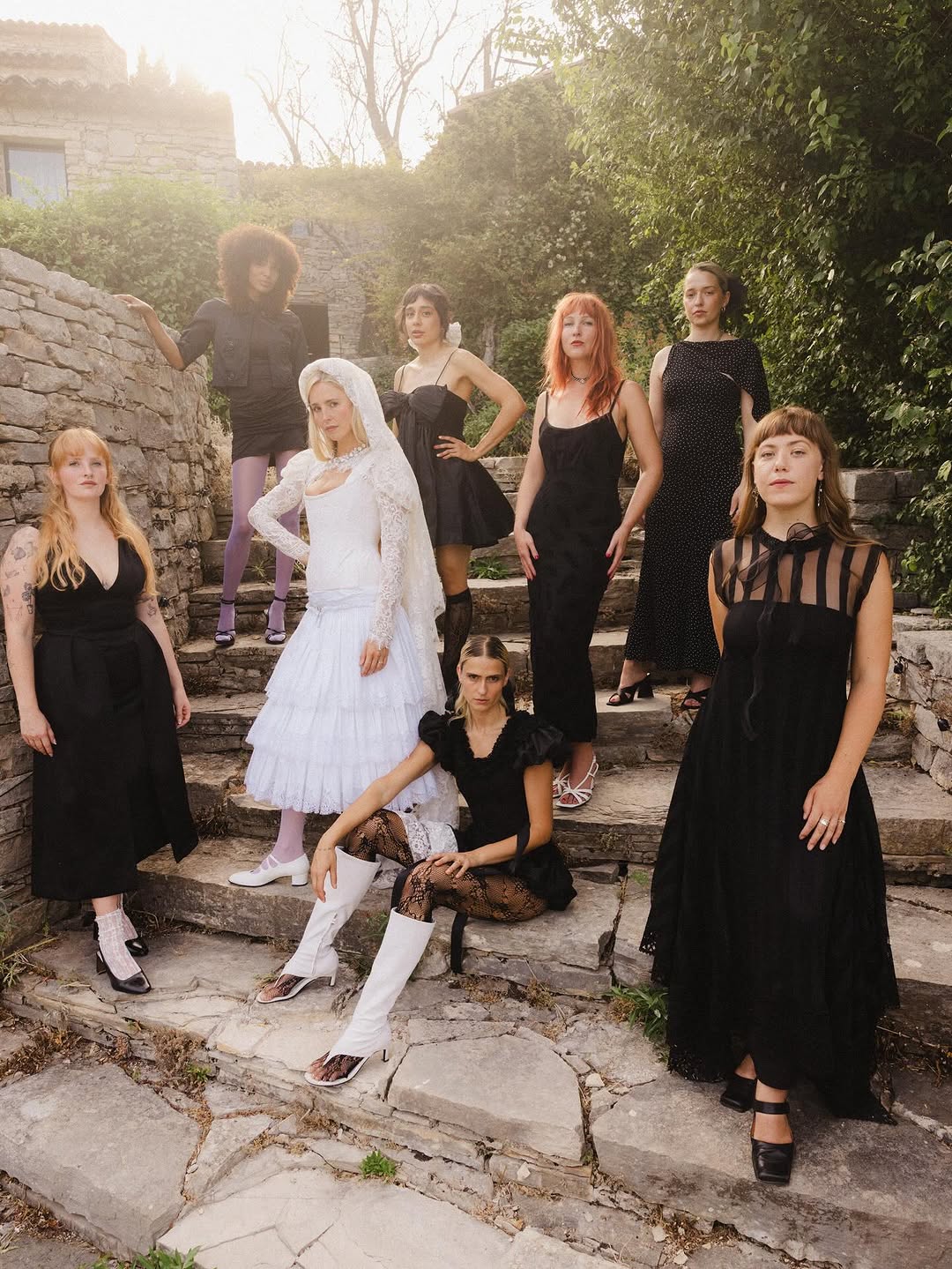
Stella & Alex, Spain. Stella Banderas Griffith married inside the 12th-century Abadía Retuerta, candlelit and thick with gothic romance. She wore a custom Rodarte lace gown, but it was her bridal party, including Dakota Johnson, that led the black dress code, in matching Rodarte velvet gowns and capes. The bride carried black calla lilies to tie her own look into theirs.
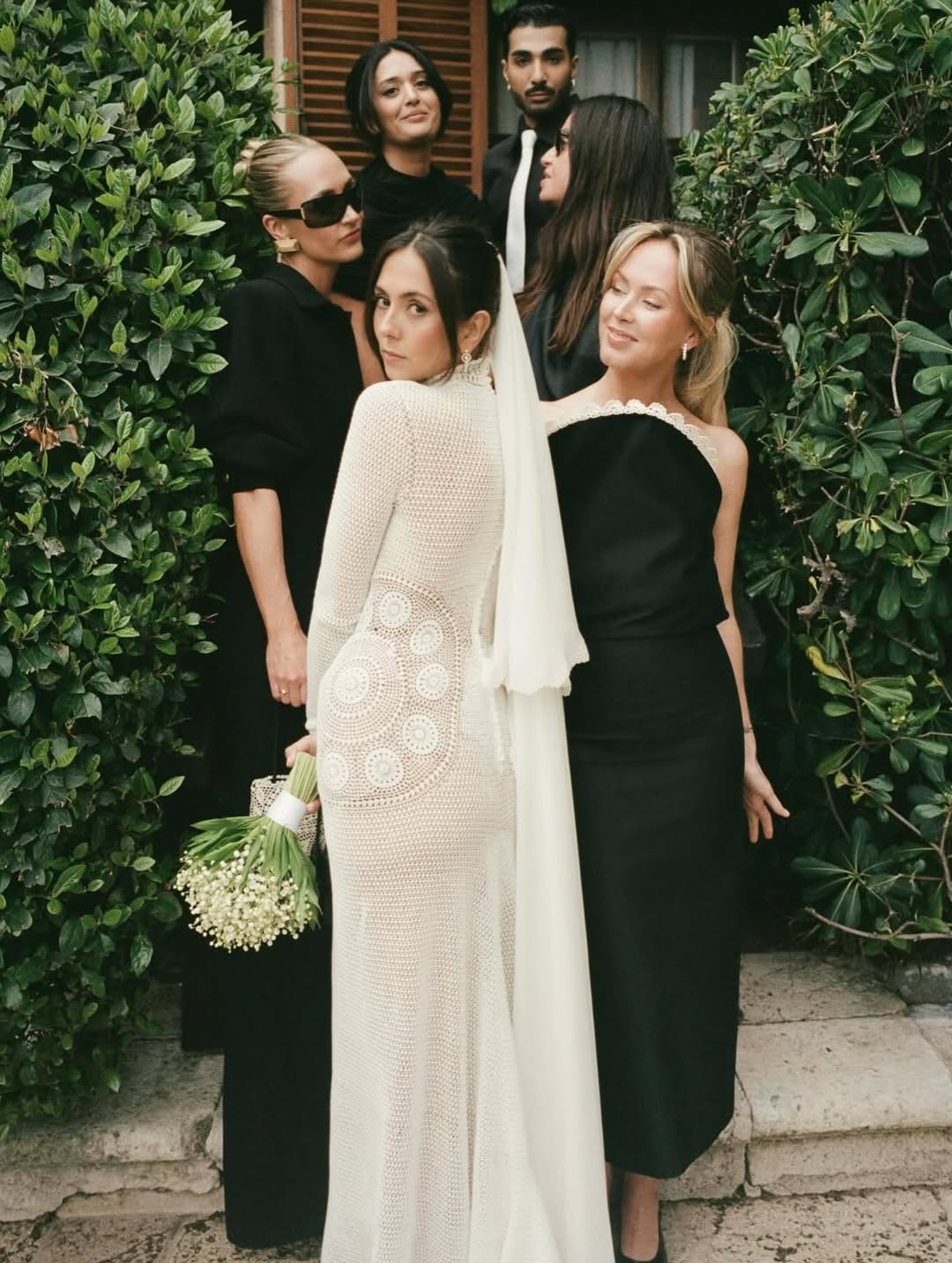
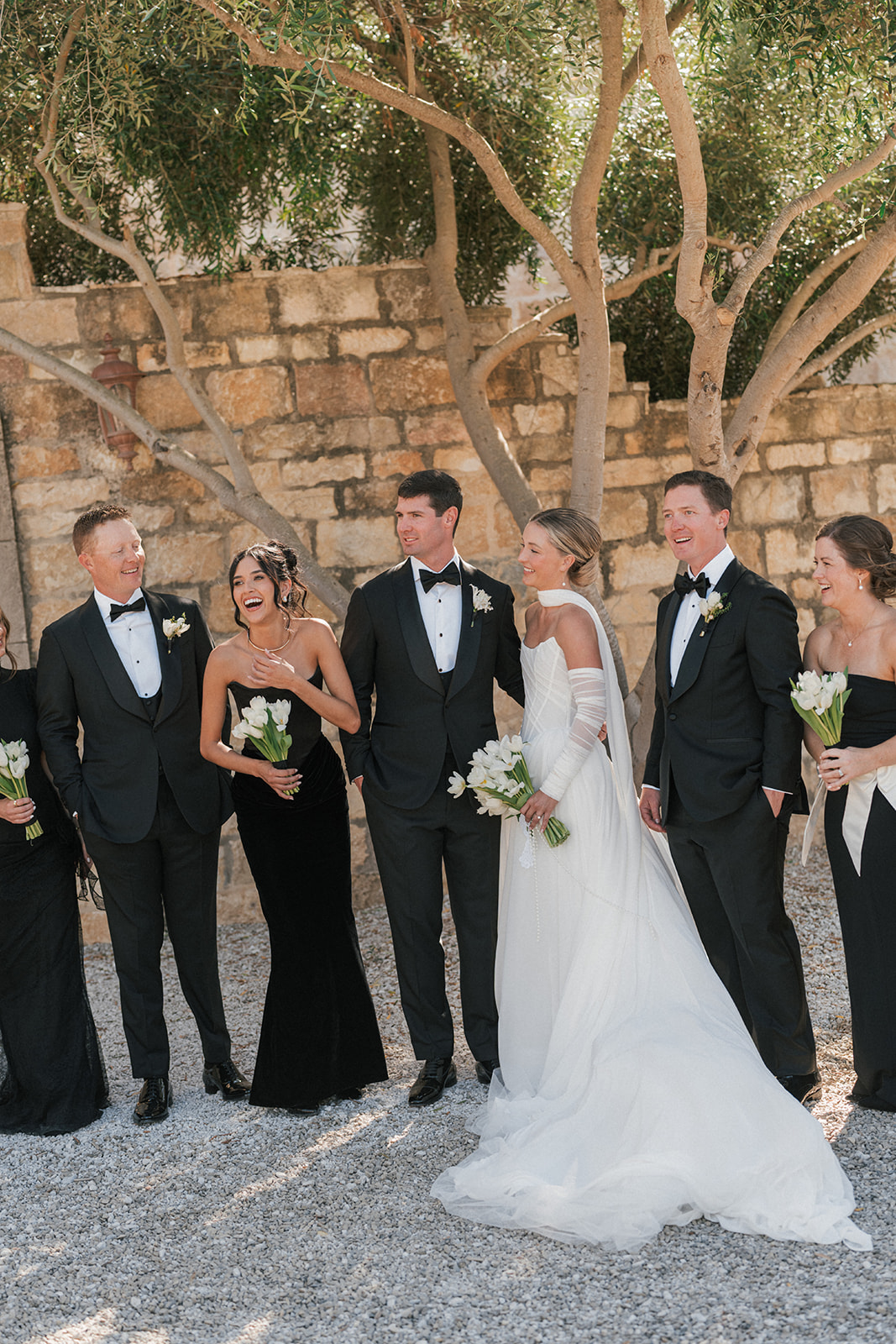
Laurel & Elliott, Provence. The bride kept her look light in a Dolce & Gabbana bridal skirt. The black dress code stayed close to the wedding party, bridesmaids and the groom’s closest friends, while guests dressed freely and still caught the fashion-week energy of the day.
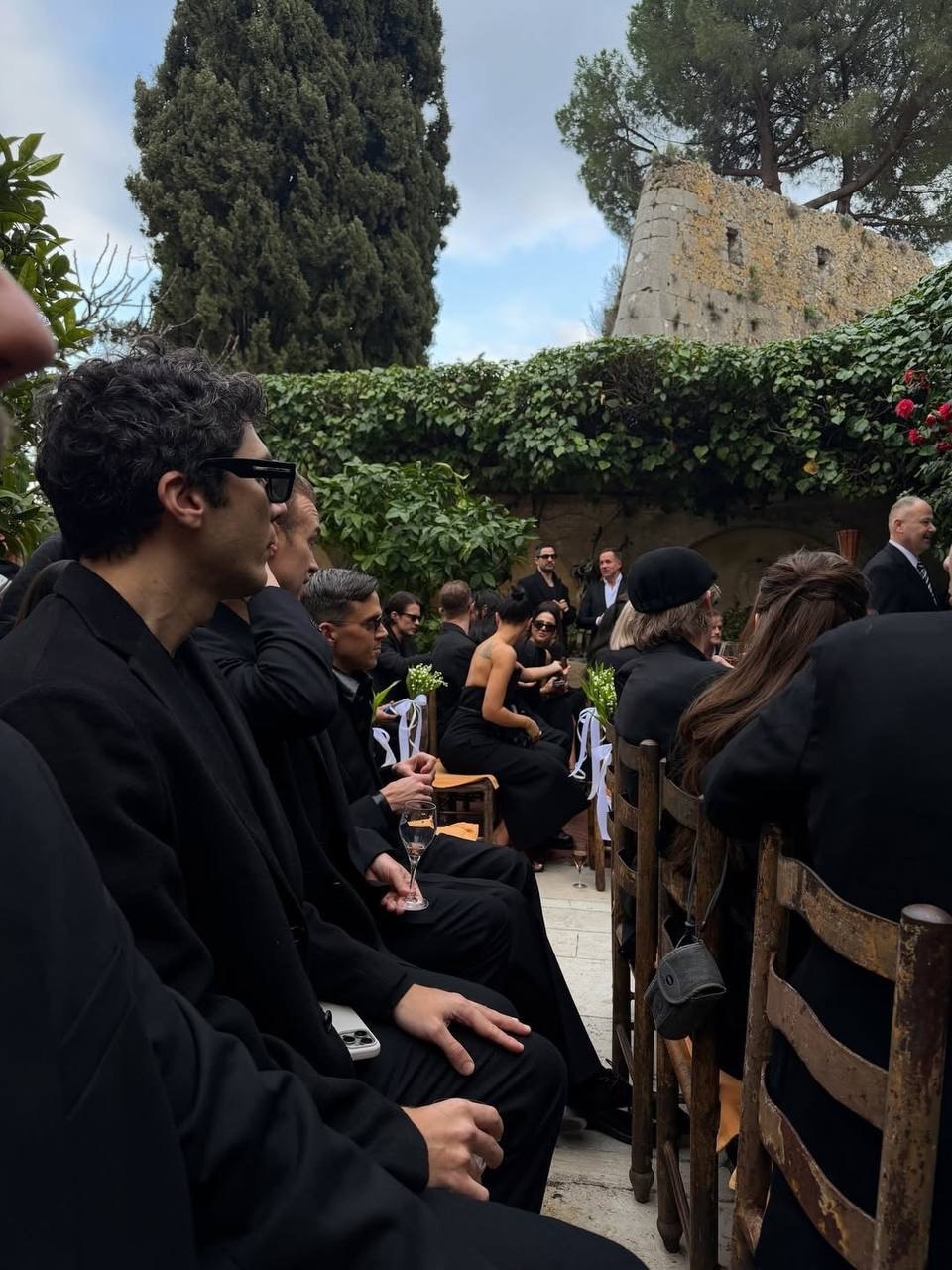
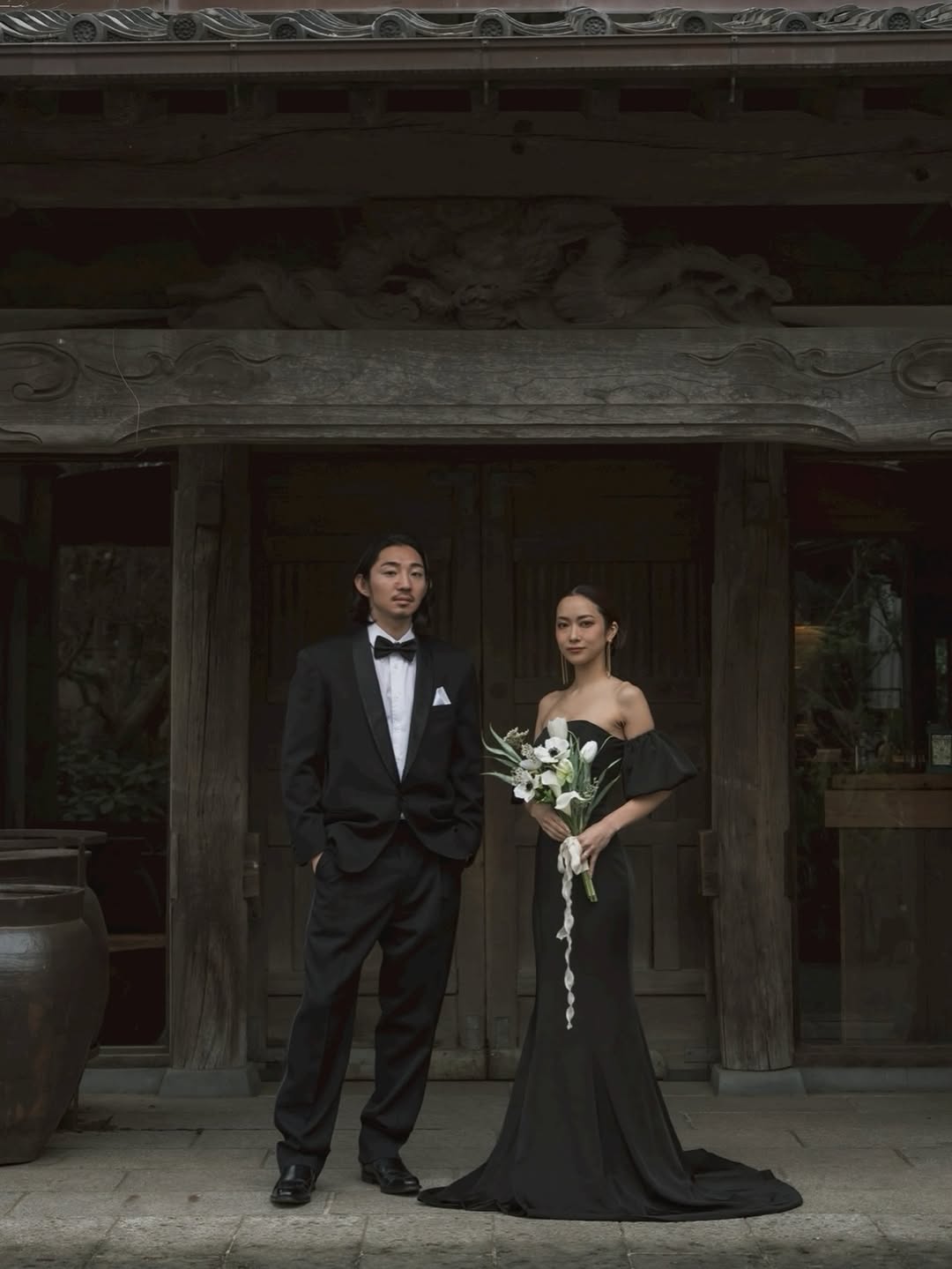
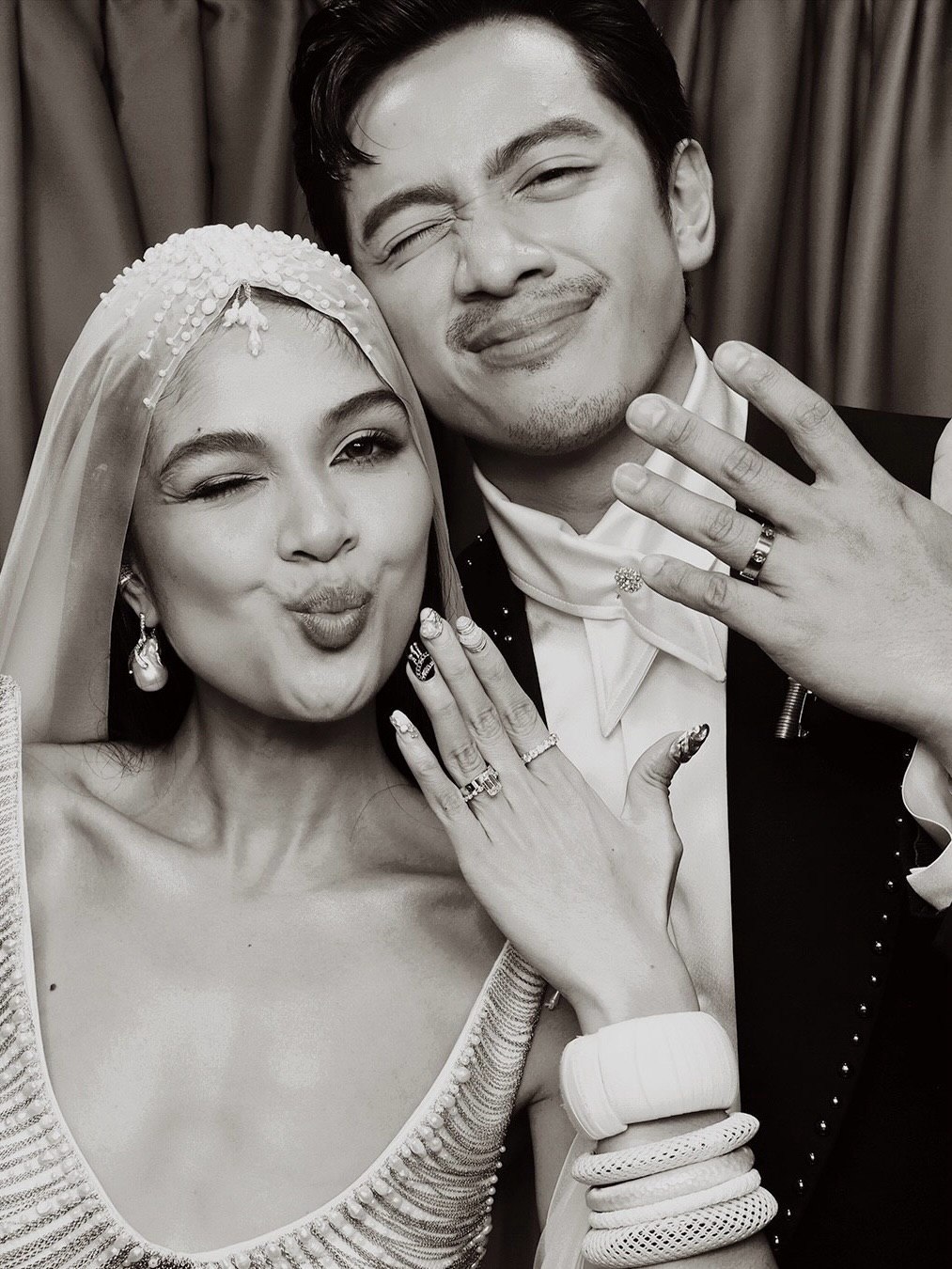
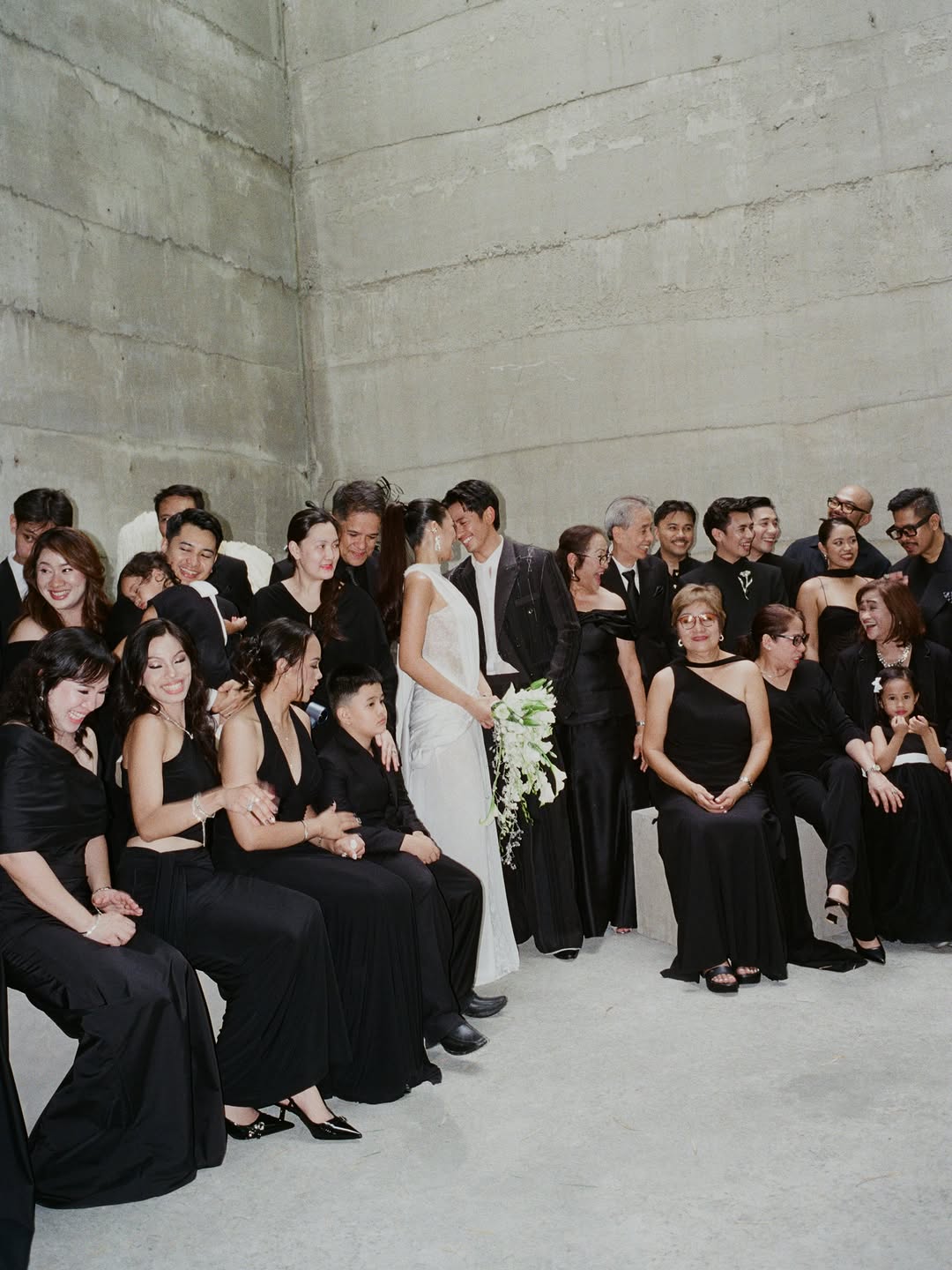
David & Angelique, Philippines. Nearly the entire wedding party and guest list wore black, down to matching tones and silhouettes. It read as a confident, cohesive styling choice, not a dress code afterthought, and it let the bride’s sculptural white gown stand out with real contrast instead of blending into a sea of pastel or mismatched color.
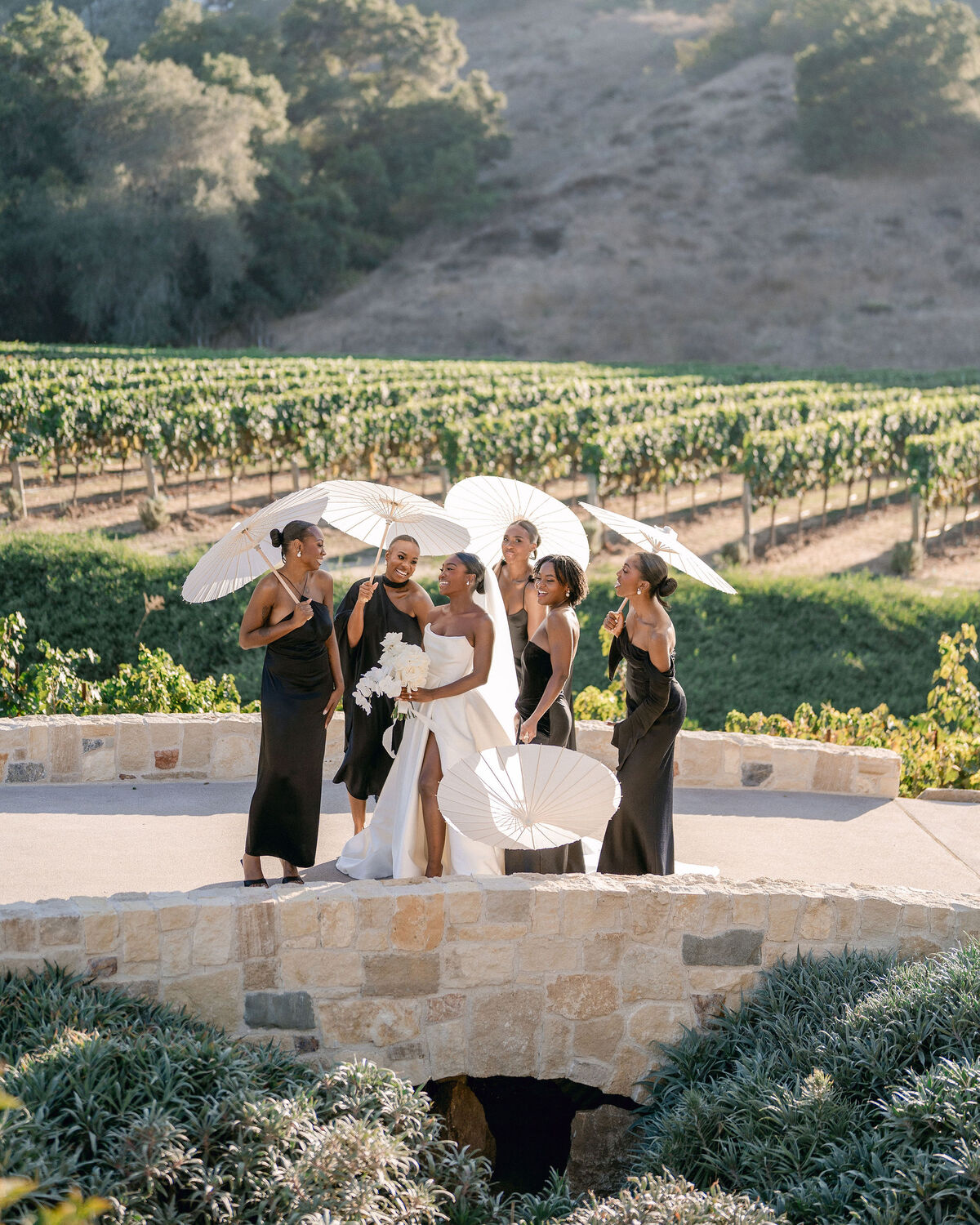
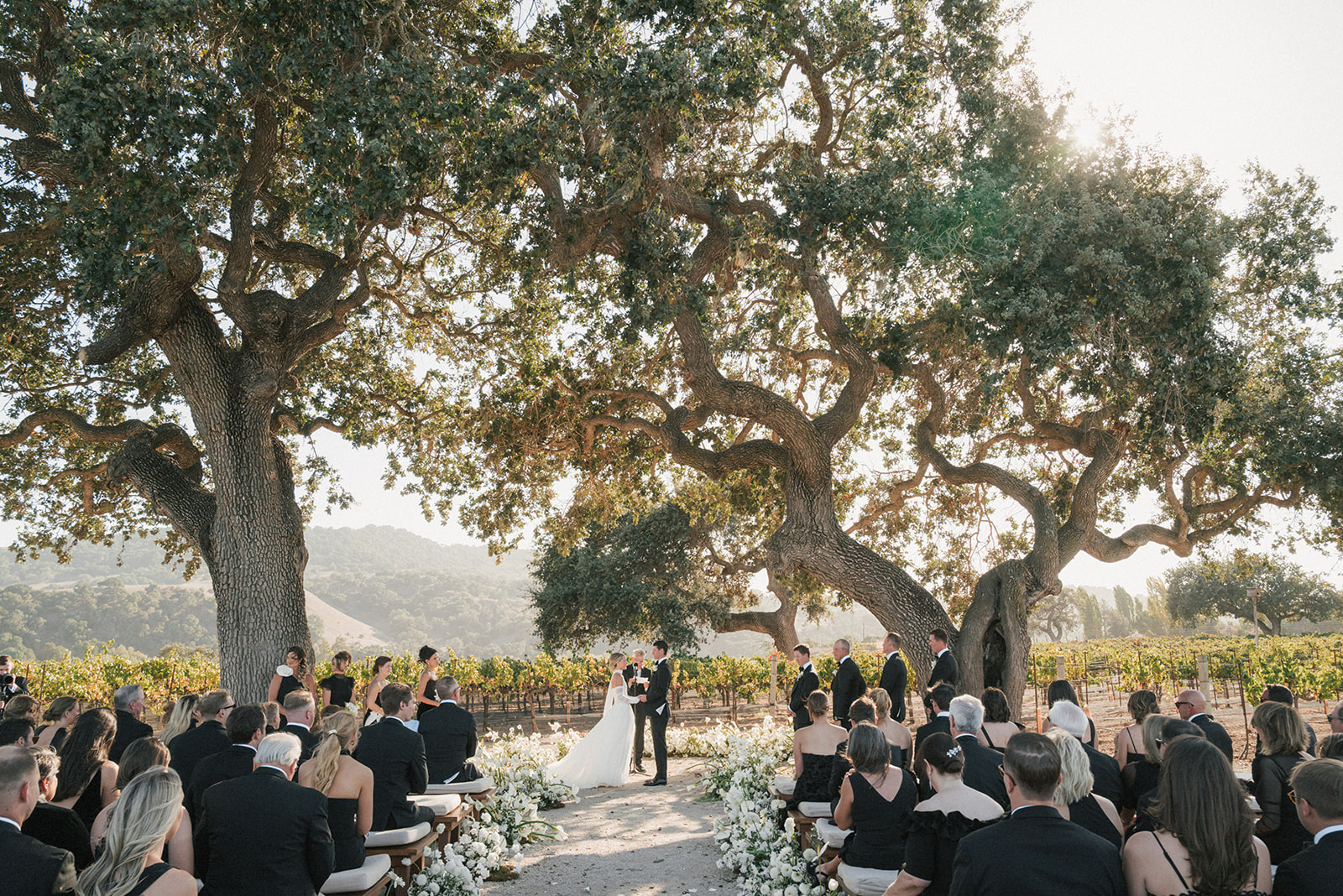
Allie & Brooks, California. A classic black-tie affair at their vineyard venue: bridesmaids, groomsmen, and guests all in black, while the bride kept her look soft in white. It’s the most traditional version of a black dress code, letting the bride stand apart from an otherwise monochrome crowd.
Lauren & Kaz, Cabo. Proof that black works even at a beach wedding. Bridesmaids and groomsmen went all black against the sand and ocean, while the bride stayed in white, and the contrast did all the work.
There’s actual folklore behind this one. An old Victorian rhyme about wedding-dress colors warns: “Married in black, you will wish yourself back,” lumped in with equally dire lines like “married in red, you’ll wish yourself dead.” It’s superstition, but it’s part of why black held on as an off-limits color for brides specifically, long after black wedding guests became common.
Cultural readings vary elsewhere too. In parts of Spain, black bridal lace has historically symbolized devotion, a nod to the vow “till death do us part,” rather than anything unlucky. In other regions of Europe and Latin America, the mourning association still lingers, and older guests may read black as an odd choice for a celebration.
There’s no universal rule, and that’s the point. If you’re a guest unsure how black will land, the invitation usually has clues, or a quick message to the couple settles it. If you’re the couple setting a black dress code, know that it won’t read the same to everyone in the room, and that’s worth factoring in before you commit to it.