Open beaches are one of the most misunderstood venue types in wedding planning. They look simple but ask any planner who’s built one from scratch, and you’ll hear a different story.
At Wedvibes, we talk to couples and vendors about real weddings every day, and this is a topic that comes up constantly. Couples fall for a stretch of shoreline without realizing everything sitting underneath that view: permits, power, tides, sound restrictions, unpredictable weather. So we went straight to the experts. We asked wedding planners who’ve built beach weddings from scratch what they wish every couple knew before booking an open or public shoreline.
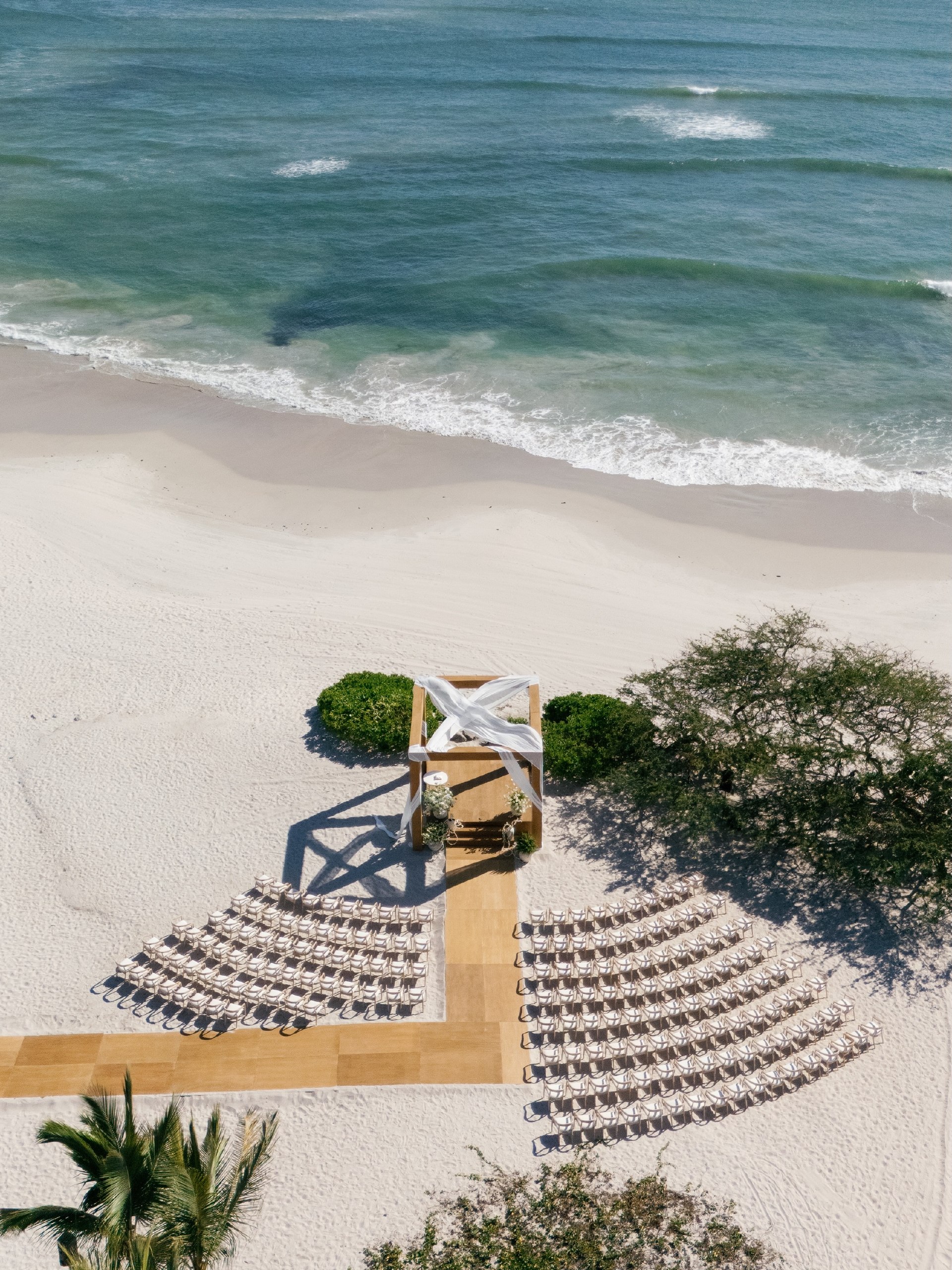
Photo: Thomas Bocage, Hannah Wynter Films
In This Article:
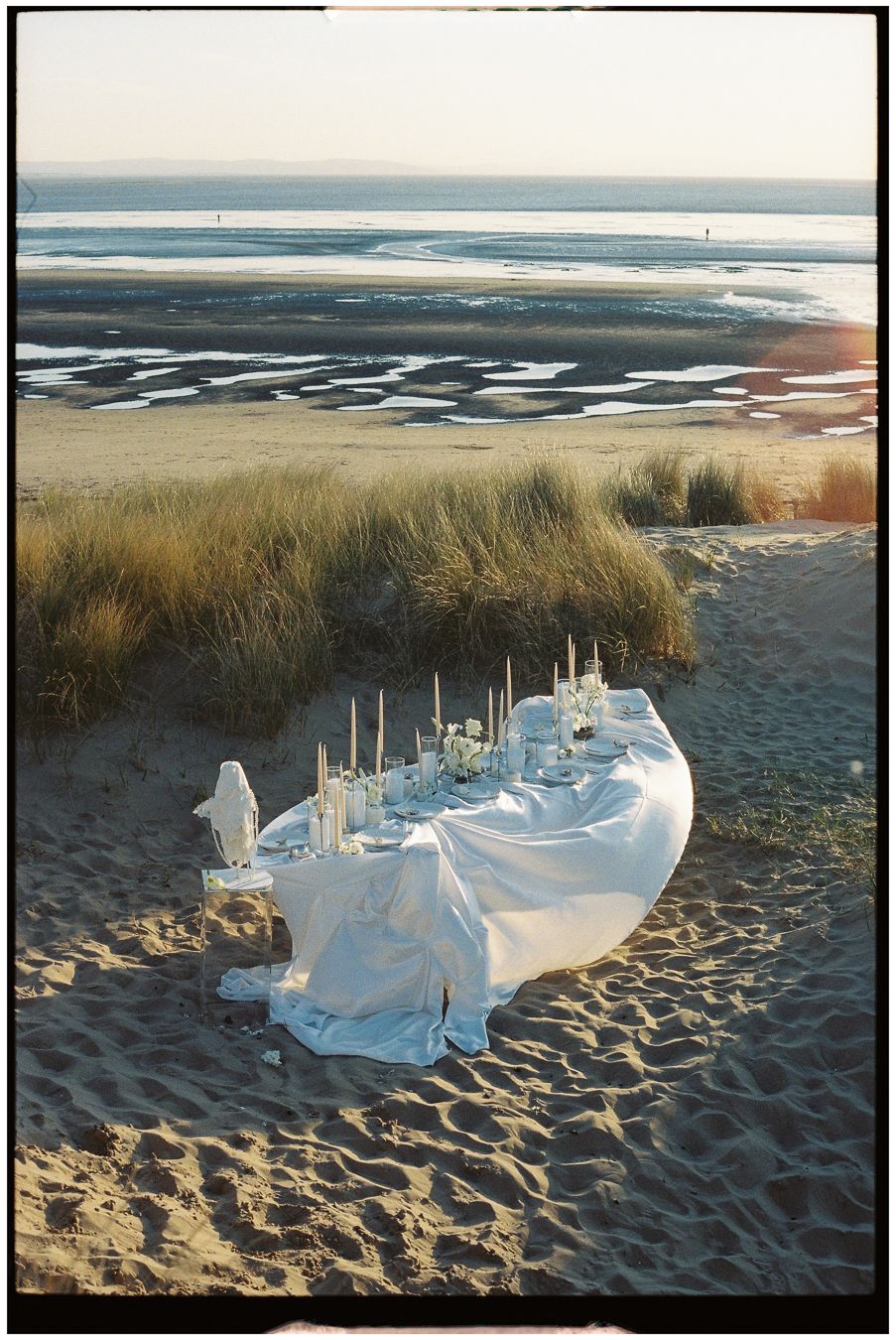
Photo: Emily Choy, Louise Griffin
Public vs. Hotel-Attached
Let’s start with the basics, so it’s clear what you’re getting with each option.
A hotel or resort beach comes with built-in support. Wylie Abbott of Amy Abbott Events points to catering, electricity, restrooms, and operational staff as things that are usually already in place, which simplifies planning considerably. Bonnie Chase of Bliss Events adds that resort teams know the daily conditions of their own beach, and vendor loading tends to go more smoothly as a result.
A fully public beach flips that setup. Nothing is provided — generators, catering infrastructure, rentals, lighting, waste removal all have to be brought in. Zeiry Cortez Gomez of Zeiry by Design notes that this means more independent planning and coordination overall, from vendor access to guest accommodations nearby. But that extra effort buys freedom: no preferred vendor list to work around, no venue fee, and more room to shape the day exactly as you want it.
As Alyssa Alvarez of All the Deets puts it: “Public beaches offer incredible views at a lower cost, but the tradeoff is less privacy, more restrictions, and less control over your surroundings.”

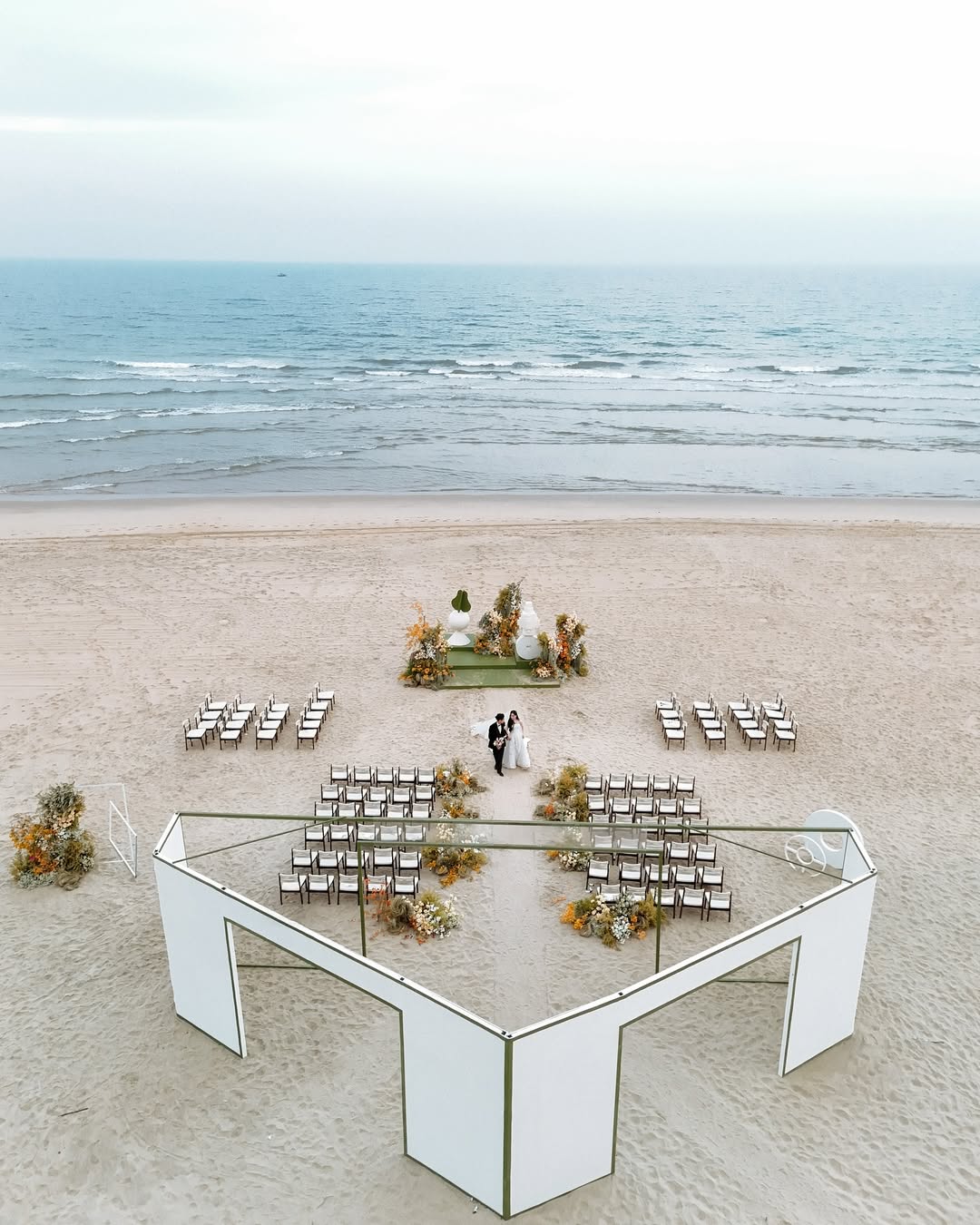
Photo: Deid, NukiA Studio
Permits & the Legal Reality
Getting a permit for a public beach usually starts with confirming availability and understanding local regulations — curfews, cleanup requirements, vendor access — according to Wylie Abbott. What catches most couples off guard, she says, is that the beach itself is only part of the cost. Beach installations require extra labor, transport, specialty equipment, and longer setup times, all of which push vendor pricing higher than a traditional venue.
Zeiry Cortez Gomez points out that permits often go further than most couples expect — regulating guest count, ceremony timing, decor, amplified sound, and even structures like tents or arches. Some beaches add seasonal restrictions on top of that, like protections during turtle nesting season.
Vicky Furman of Vicky Furman Events sums up the mindset it takes: “It can feel like the wild wild west.” Fees and requirements vary widely by location, and couples need to stay flexible as the details come together.
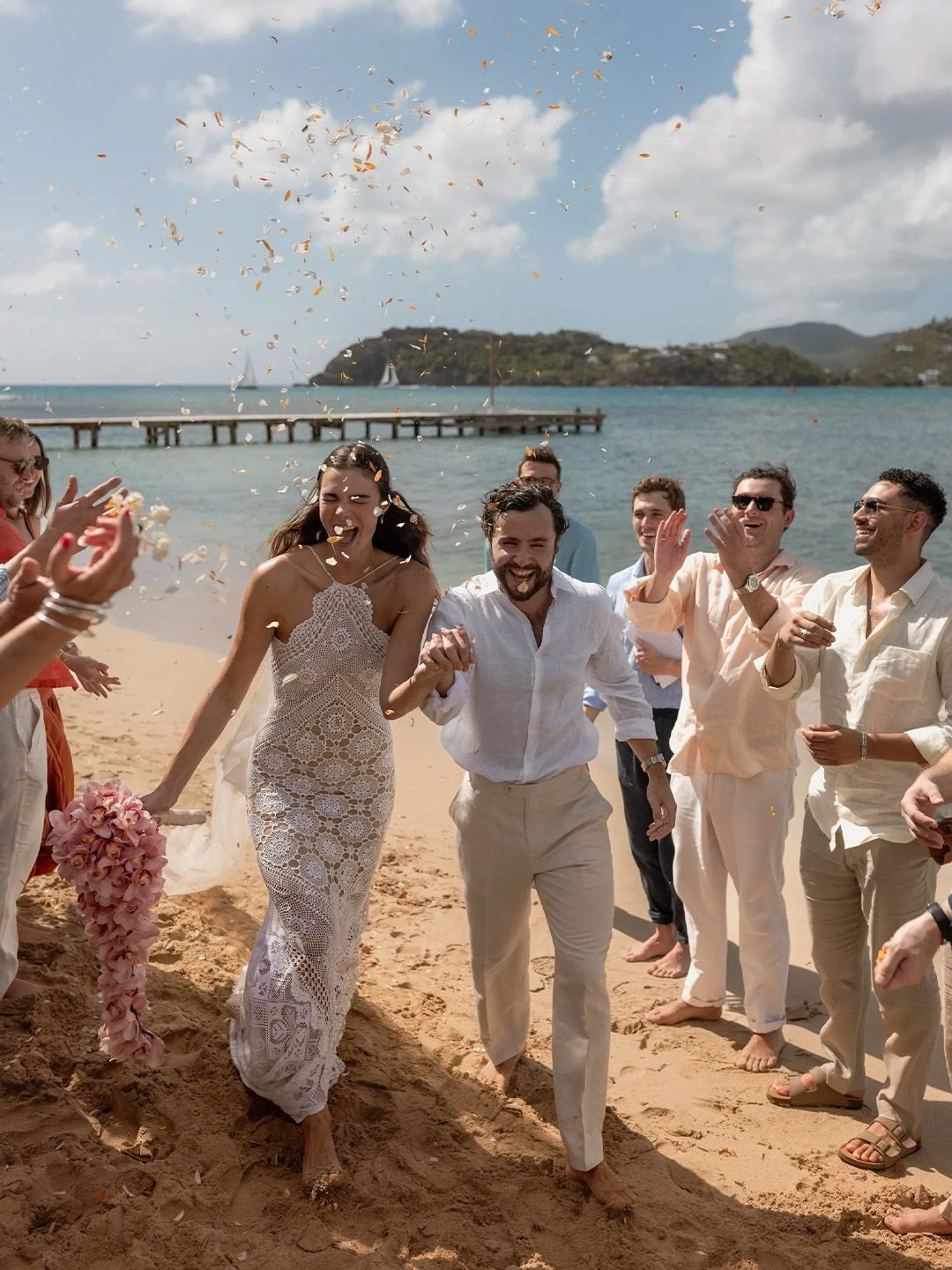
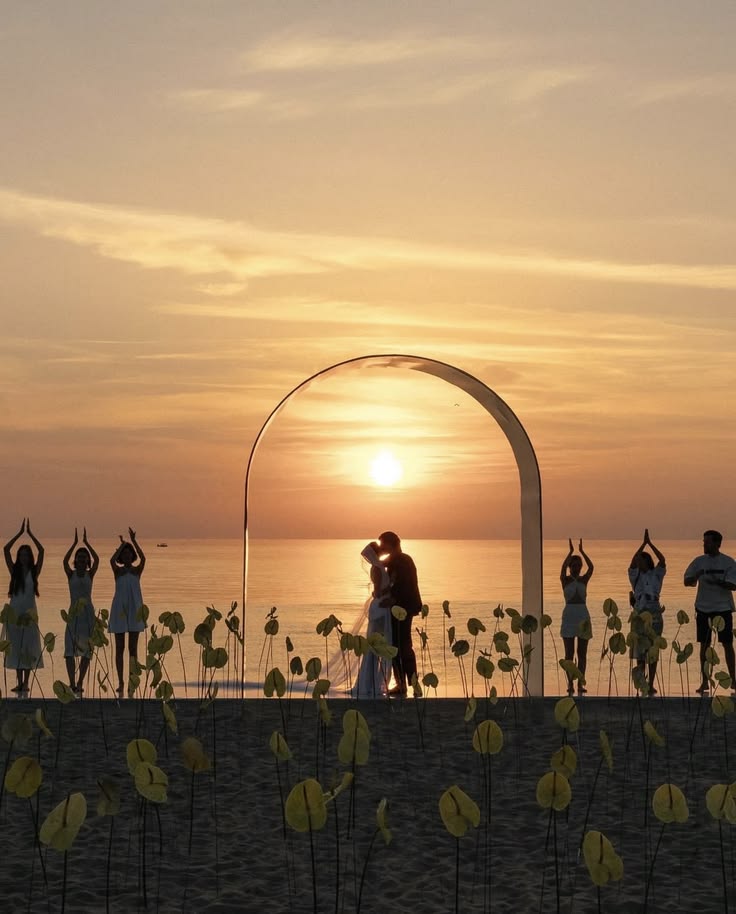
Photo: Rob James, Tatyana Sozonova
Sharing the Beach With Strangers
A public beach means exactly that — public. Even with a permit, it doesn’t come with the kind of privacy couples often picture. Choose this route, and you can expect passersby who slow down to watch, snap a photo, or just linger a little longer than you’d like.
“The area just outside of your space is free for the using, and many people have no problem parking their family picnic right on the perimeter,” says Bonnie Chase. Her fix: mark the boundary clearly with lighting, candles, or furniture so it’s obvious where outsiders should and shouldn’t walk, and ideally have a security person on hand to redirect passersby without a scene.
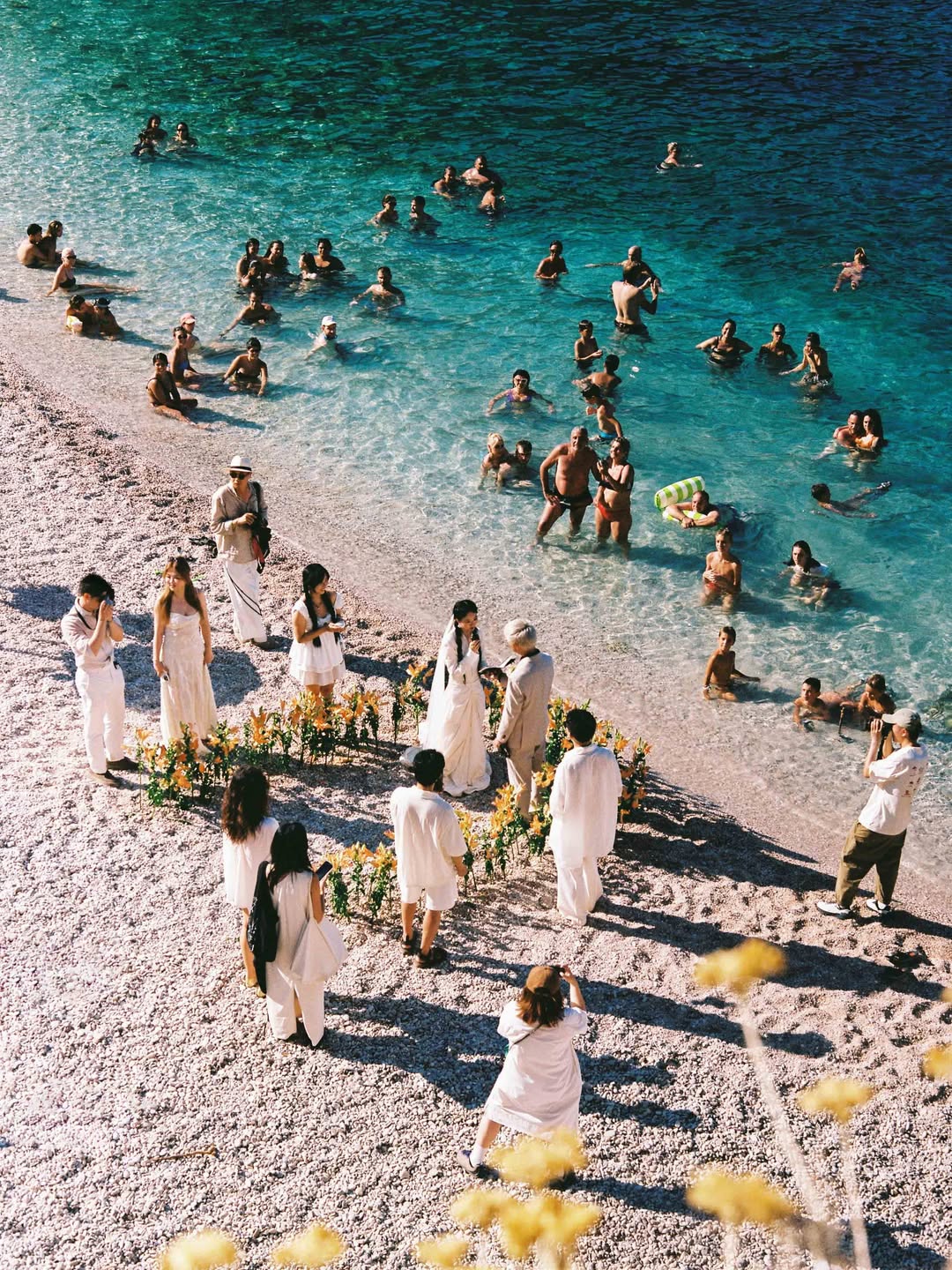
Photo: Liang Xiao Tie, Nuvoir
Wylie Abbott takes a similar approach with staff positioned along the ceremony perimeter, coordinated with the photo and video team to keep the shots clean. In her experience, most people are respectful once they realize a ceremony is happening — “a quick, friendly conversation is usually all it takes.”
Zeiry Cortez Gomez leans on strategy over confrontation: positioning the ceremony thoughtfully, using natural landscaping as a buffer, and scheduling around quieter times of day.
The consensus across planners is reassuring, even if it takes some getting used to: onlookers are simply part of the setting on a public beach, but a little planning keeps them from ever becoming a distraction.
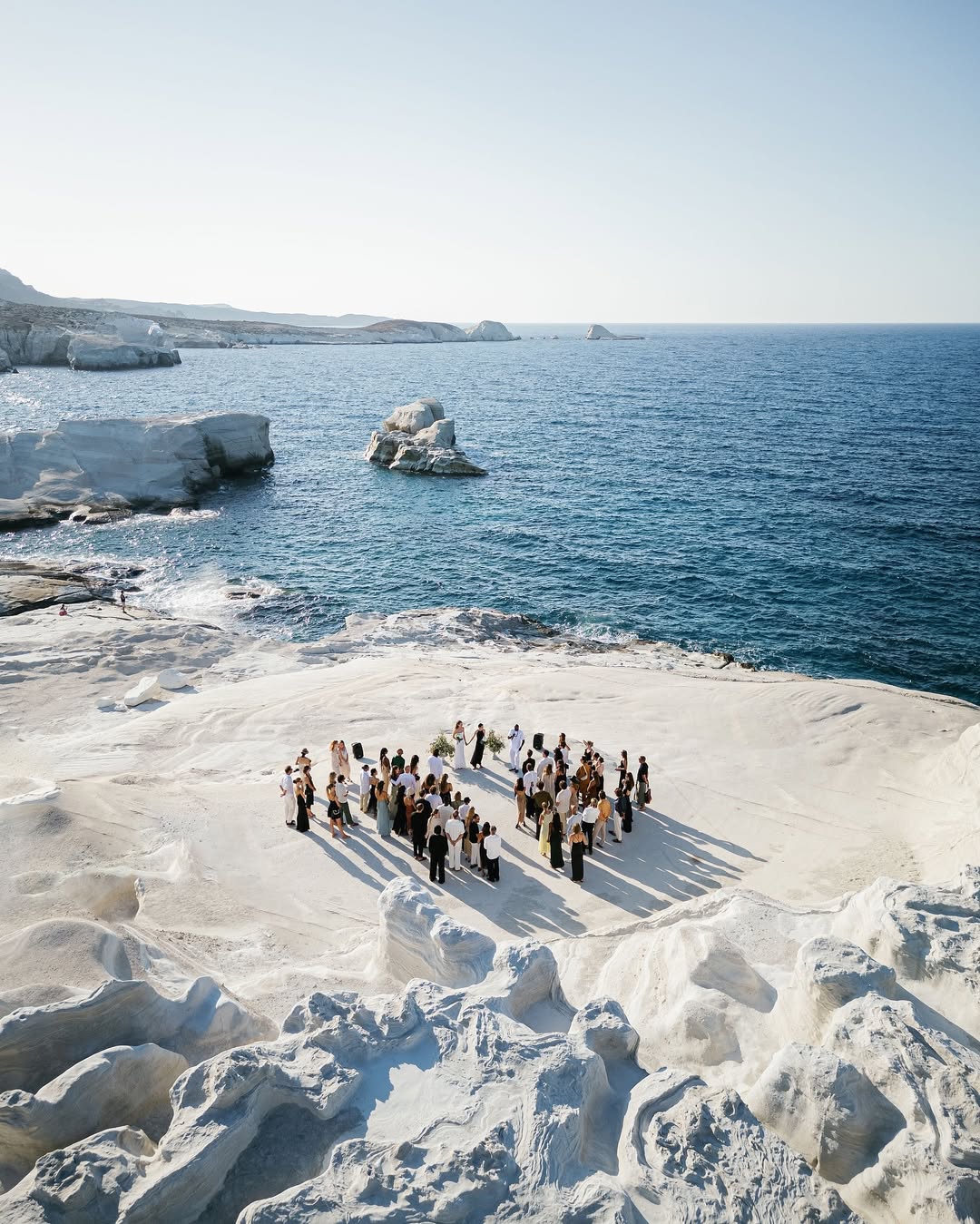

Photo: Les Anagnou, Dear Vincent
Sound & Amplification on a Public Beach
“A common mistake is assuming a couple of powerful speakers will be enough,” says Wylie Abbott. “On a public beach, sound dissipates quickly. Wind and waves compete with your audio, so simply increasing the volume isn’t the answer.” Her team works with professional AV crews to set up a distributed speaker layout, so every guest hears the ceremony evenly instead of relying on one or two speakers to cover the whole stretch of sand.
Regulations add another layer. Bonnie Chase notes that most public beaches cap noise around 85 decibels measured from 50 feet, with an amplified sound curfew typically falling between 8 and 10 PM depending on the day — and the rules get stricter the closer you are to hotels or houses. Zeiry Cortez Gomez adds that many public beaches limit or prohibit amplified sound altogether, which makes checking local regulations early a non-negotiable step — along with having battery-powered sound systems as a backup when amplification isn’t allowed.
The takeaway: sound needs its own plan on a public beach, not an afterthought tacked onto the AV budget.
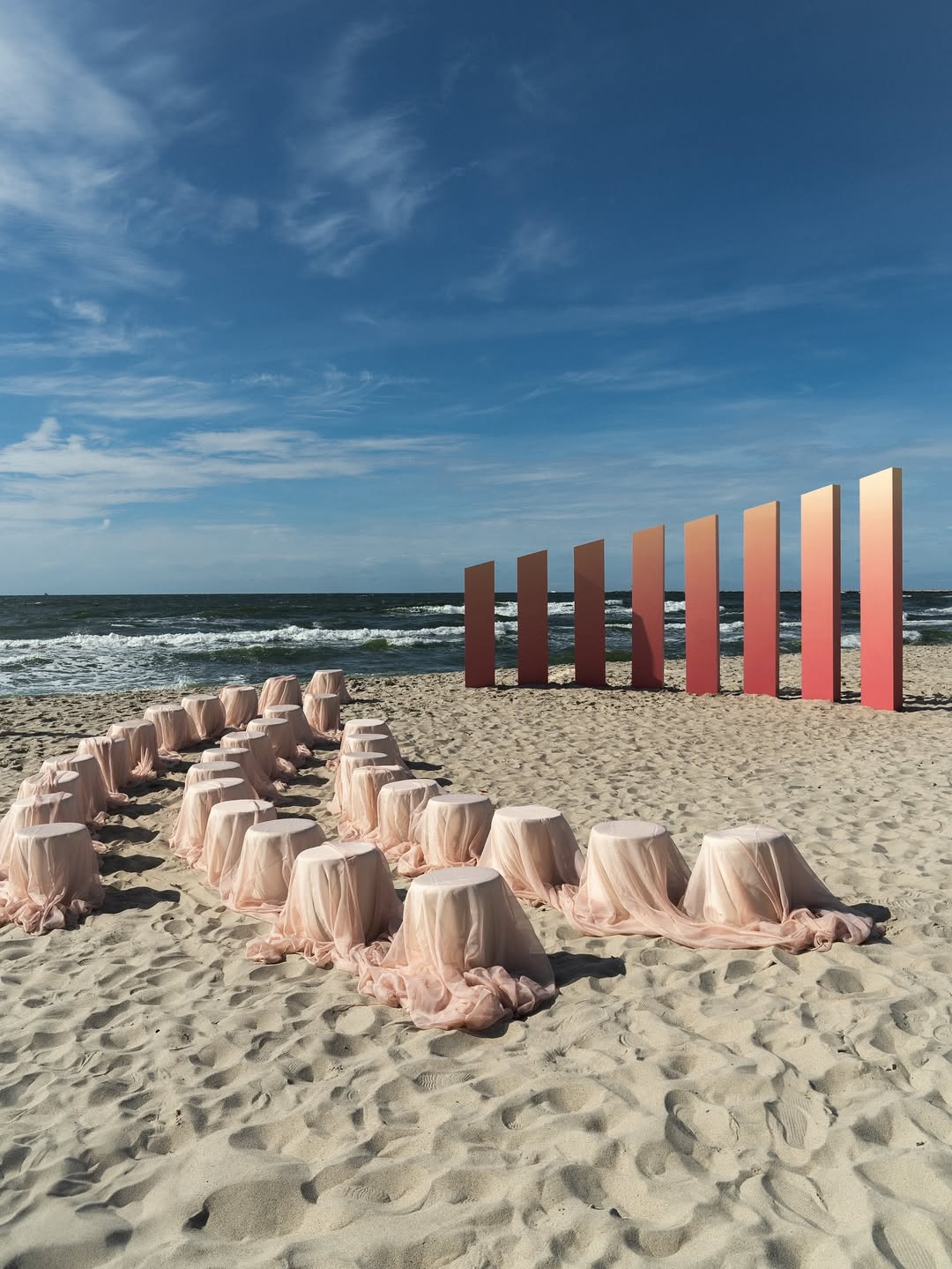

Photo: Tatyana Sozonova, Kyla Jeanette
Beach-Proofing Your Decor
Coastal wind doesn’t care about your mood board, and planners are unanimous on one thing: lightweight and delicate decor rarely survives the day. Loose fabrics, taper candles, glass-heavy arrangements, and tall table centerpieces are the most common casualties — anything with a low center of gravity holds up better than anything reaching upward.
Vicky Furman keeps it simple on one point in particular: she’s not a fan of silk florals at any wedding, “but specially on a coastal setting.”

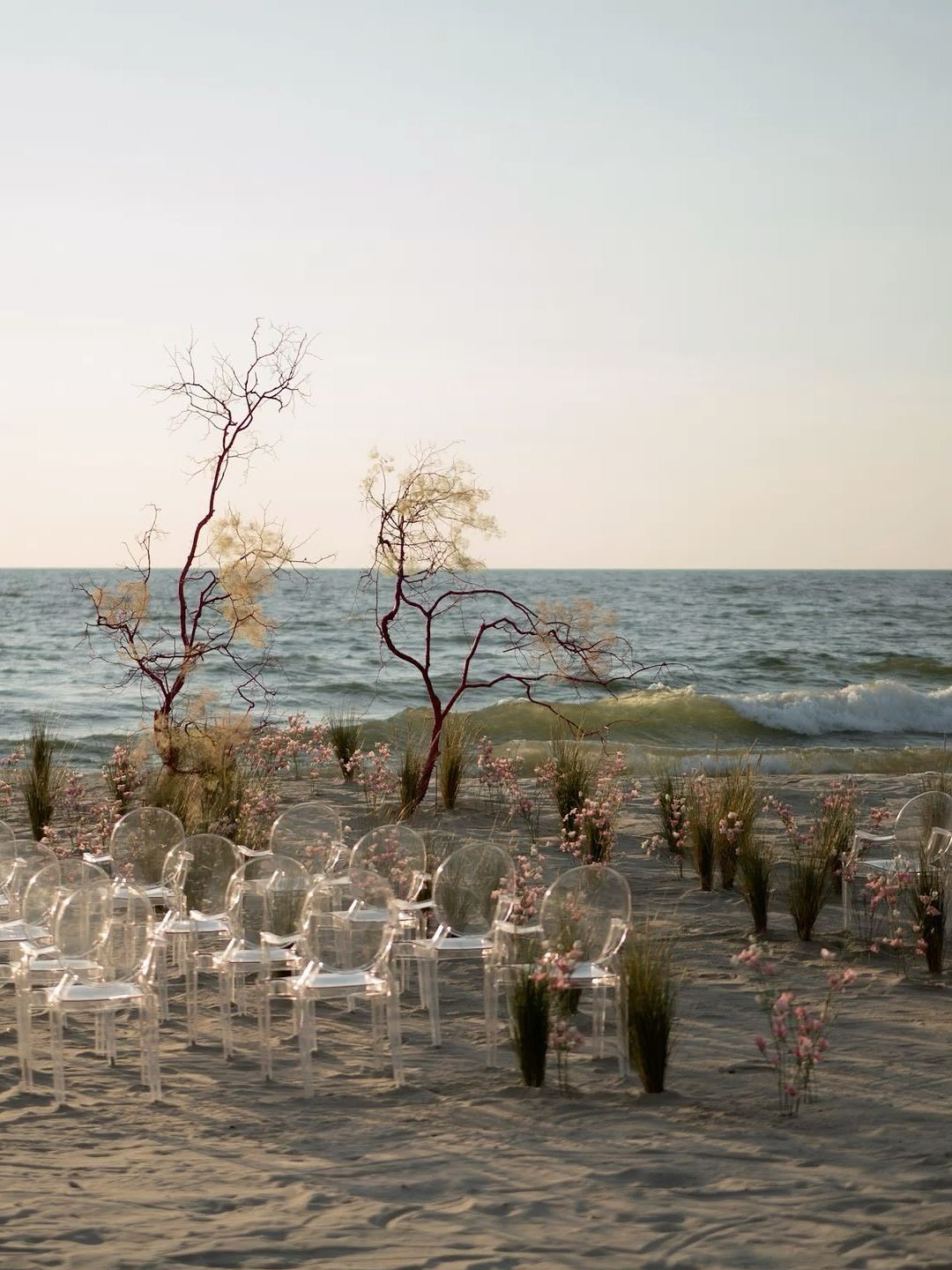
Photo: Pinterest, Pinterest
Open flame is where things get tricky. Bonnie Chase swaps it out entirely: “I always suggest heavier design items because delicate ones don’t hold up to the wind. And most of all, you’re going to want to use battery powered candles” — ideally in lanterns or vases that aren’t fully transparent, so the glow still reads as real.
Alyssa Alvarez uses hurricane holders for the same reason, with one small trick: “Make the candles smaller with a taller holder to keep them lit.”
Wylie Abbott adds a detail most couples wouldn’t think to pack: double-sided tape. It’s a small tool, but it’s what keeps escort cards, linens, and lightweight decor exactly where they’re supposed to be once the wind picks up.
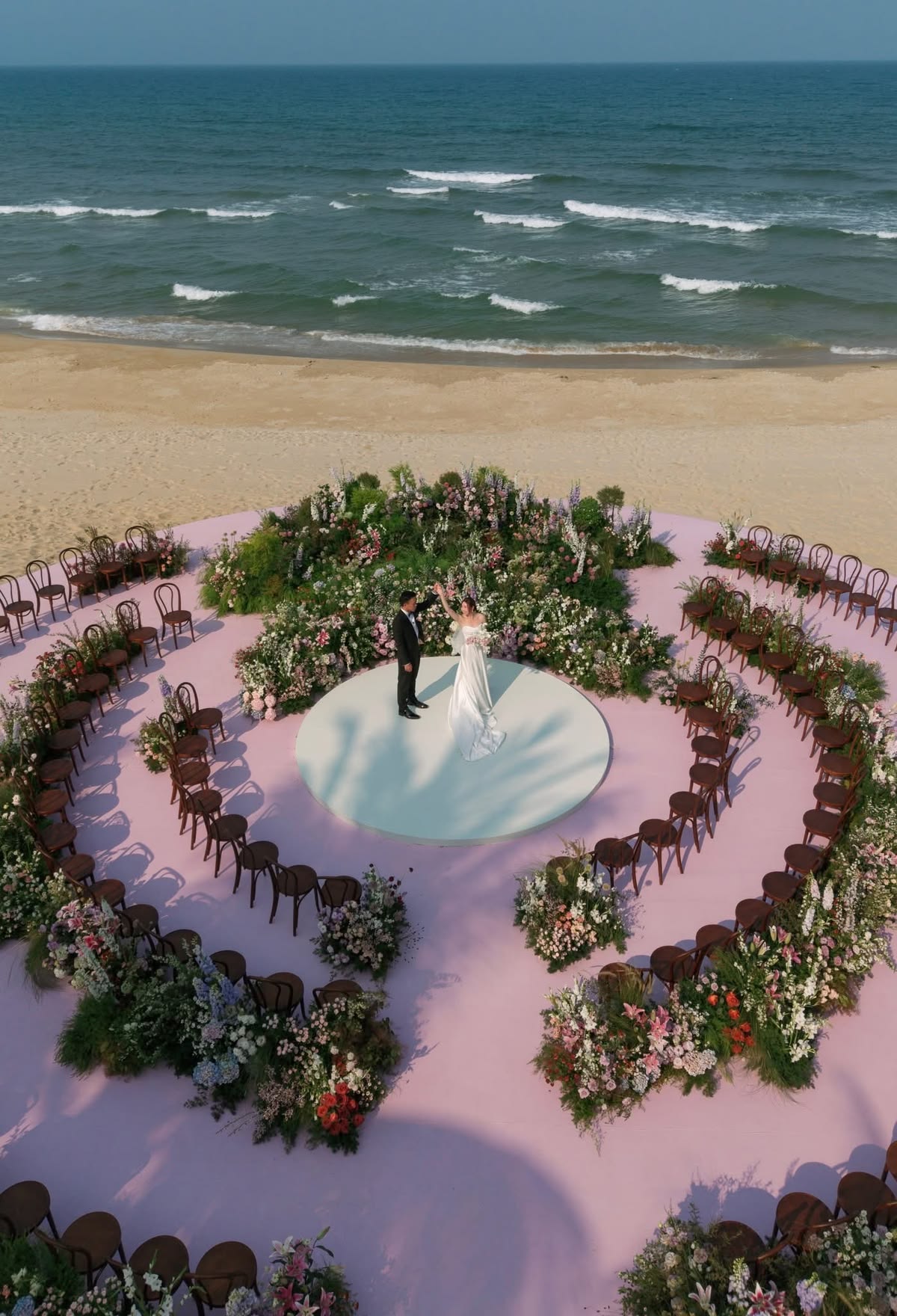
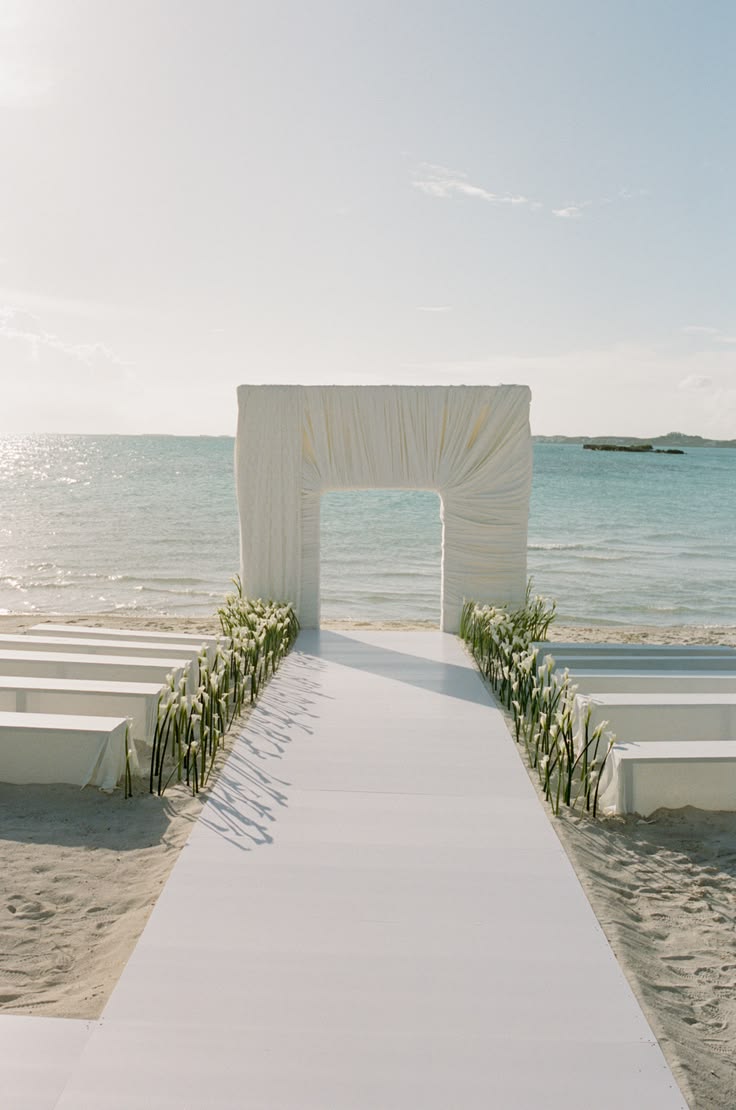
Photo: Viet Nam, Nicole Plett
Timing, Tides & Your Backup Plan
Tides are one of the few things on a public beach you can actually predict. Bonnie Chase of Bliss Events checks tide charts as soon as the date is set — sometimes a year out — to lock in the ceremony time, then revisits them every couple of months and confirms again two to four weeks before the wedding, to make sure setup and production align with the schedule. “While the tides are very predictable, other beach conditions are not,” she notes — wind, storms, seasonal erosion, and coastal flooding can all shift the size and shape of the beach as the date gets closer.
Not every planner builds around tides first. Vicky Furman of Vicky Furman Events checks tide charts too, but says she doesn’t rely on them to set the ceremony time — instead, she builds the schedule around sunset and the quality of light for photos.
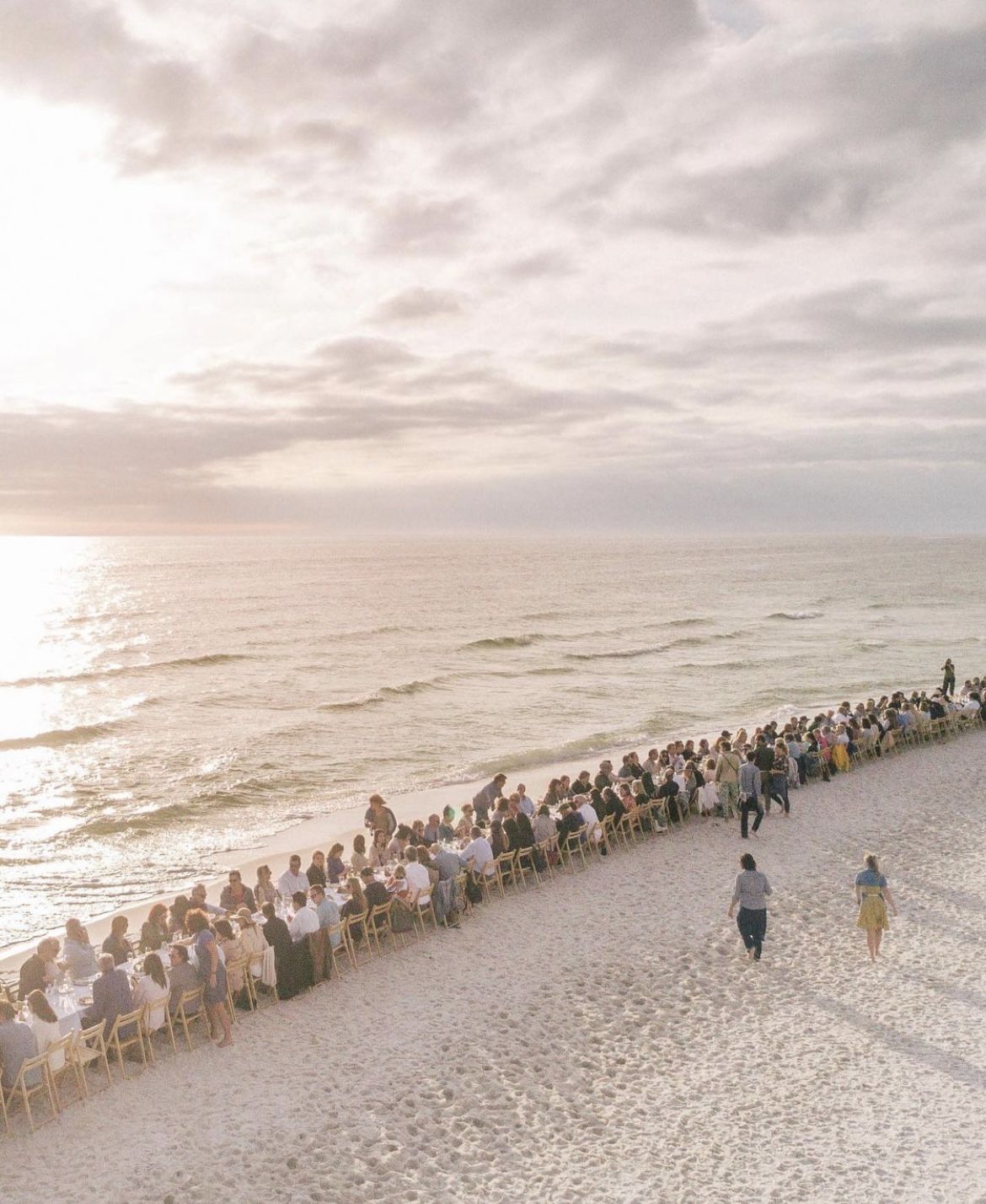
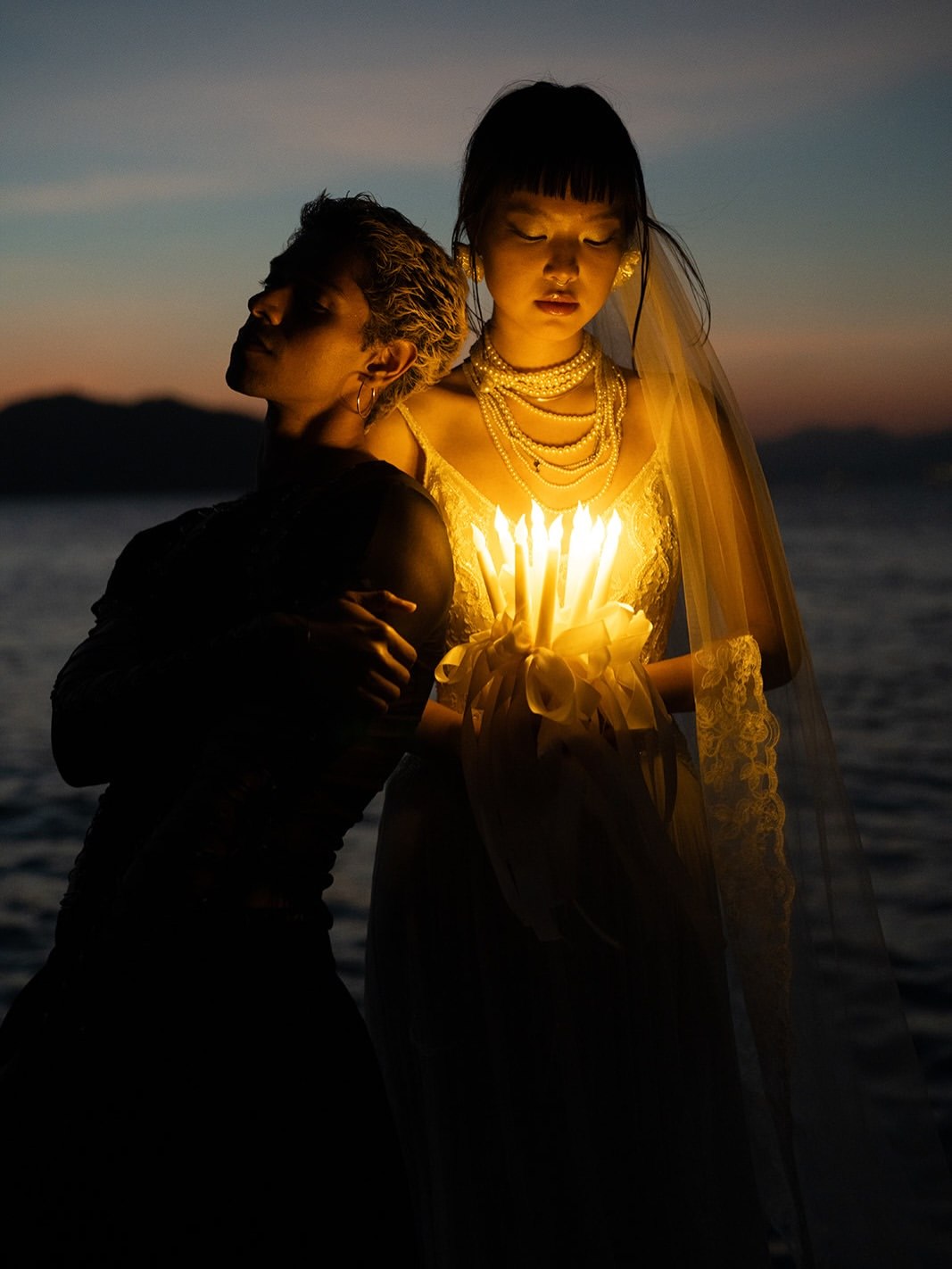
Photo: Outstanding in the Field, Erye Film
Weather backup planning starts far earlier than most couples expect. “We don’t wait for the forecast to start talking about a backup plan,” says Wylie Abbott of Amy Abbott Events. “That conversation happens the day the venue is booked.” For a resort beach, that usually means reserving an indoor alternative — a restaurant, covered terrace, or ballroom. On a fully public beach, there’s no built-in fallback, which is why Vicky Furman treats a tent as close to mandatory: “Couples should always have a tent on public beach spaces, as there is no plan B.”
Flooring is a related decision worth making early, and here the planners don’t fully agree. Bonnie Chase flags installing a platform or dance floor as one of the bigger line items in a beach wedding budget — one that can also trigger additional permitting, so it’s worth deciding on before the rest of the planning is underway. Vicky Furman takes the opposite view: “If you want flooring everywhere, choose a different venue.”
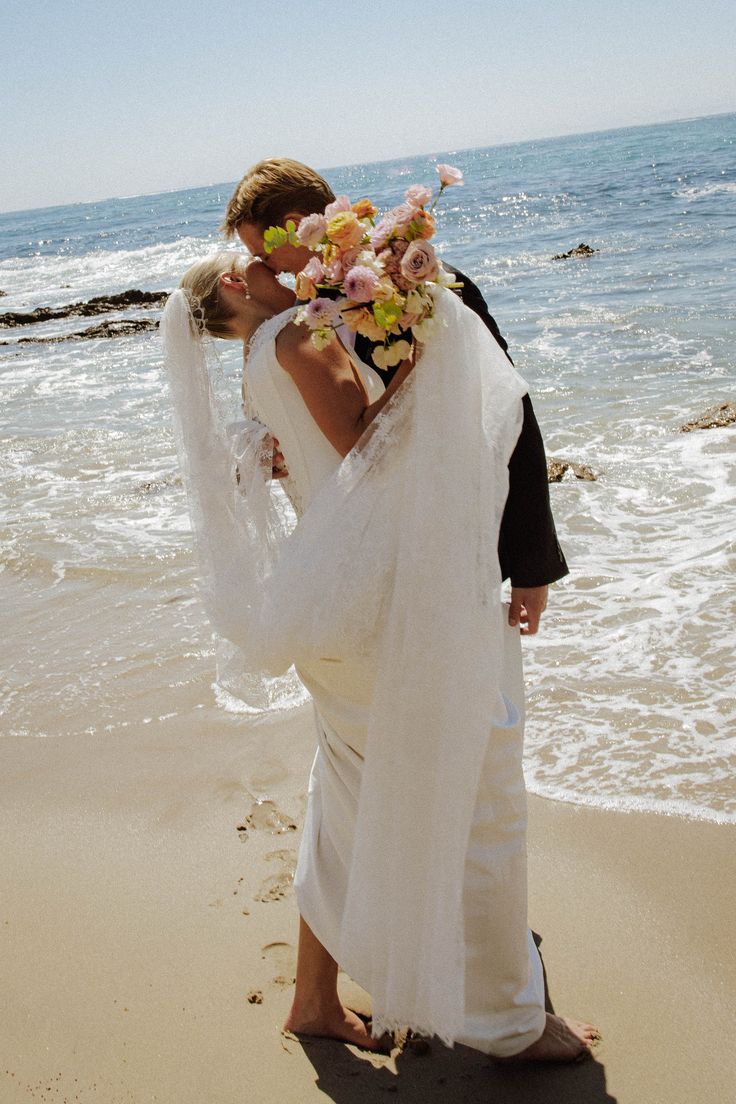
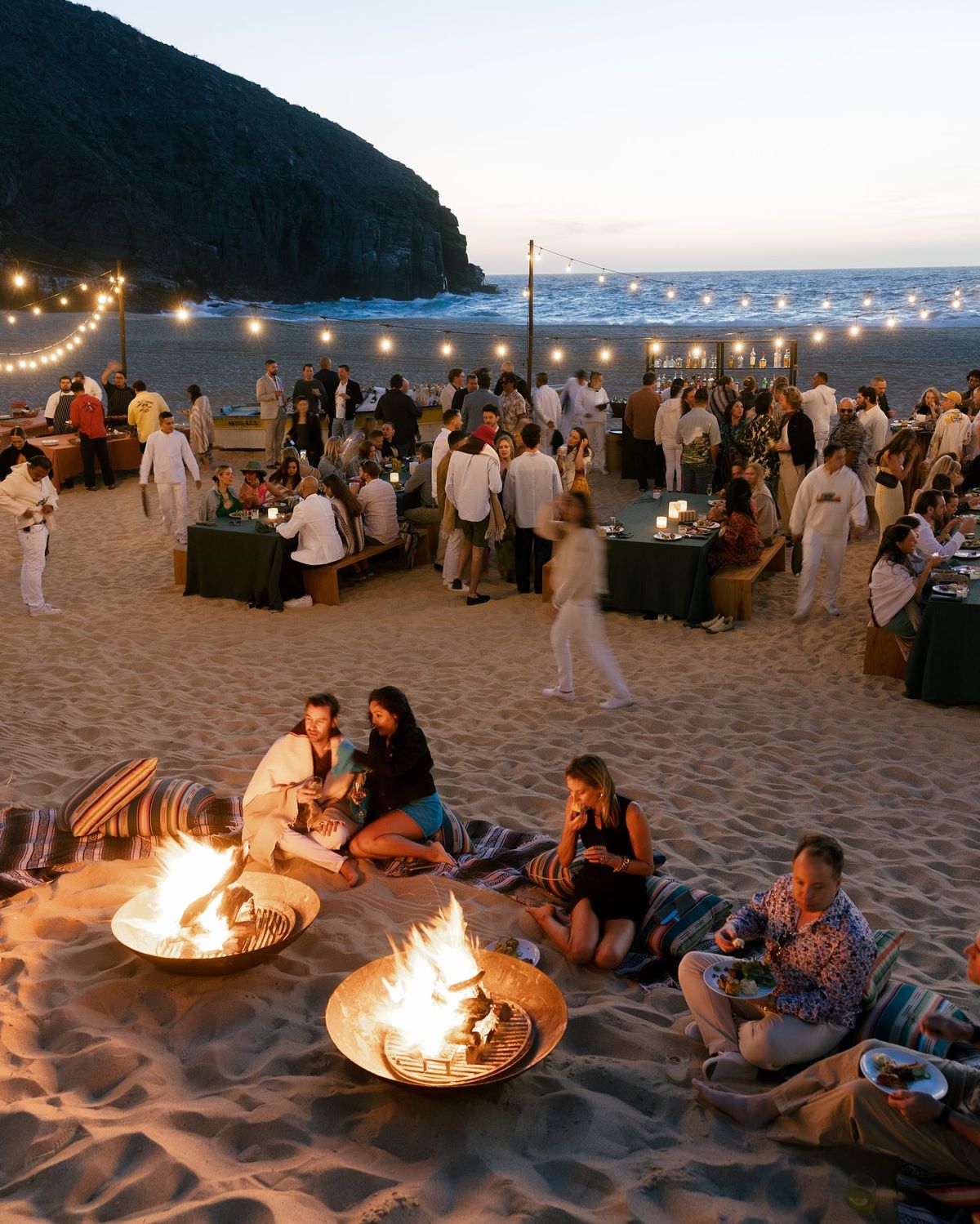
Photo: Martina Micko, Shannon Yen
Guest Comfort & the Details Couples Forget
Good design only goes so far if guests are uncomfortable. Wylie Abbott recommends flooring or walkways where possible, plus a few small touches that make a big difference: shoe valet stations, footwear guidance, shade, hydration, and blankets for cooler evenings. “The best beach weddings solve those little inconveniences before guests ever notice them.”
Bonnie Chase suggests letting guests know in advance that the event will be in sand, so they can trade heels for wedges or flat sandals. A basket of pashminas is a small touch she always recommends, since beaches can turn chilly once the sun goes down.
Even with all of that covered, planners agree there’s usually one detail that slips through. For Wylie Abbott, it’s power: “It’s easy to fall in love with a beautiful stretch of beach before asking how the wedding will actually be powered.” Lighting, entertainment, and catering equipment all depend on it, and many public beaches simply don’t have accessible sources — something worth resolving before the location is locked in, since it shapes design, budget, and the entire production plan.
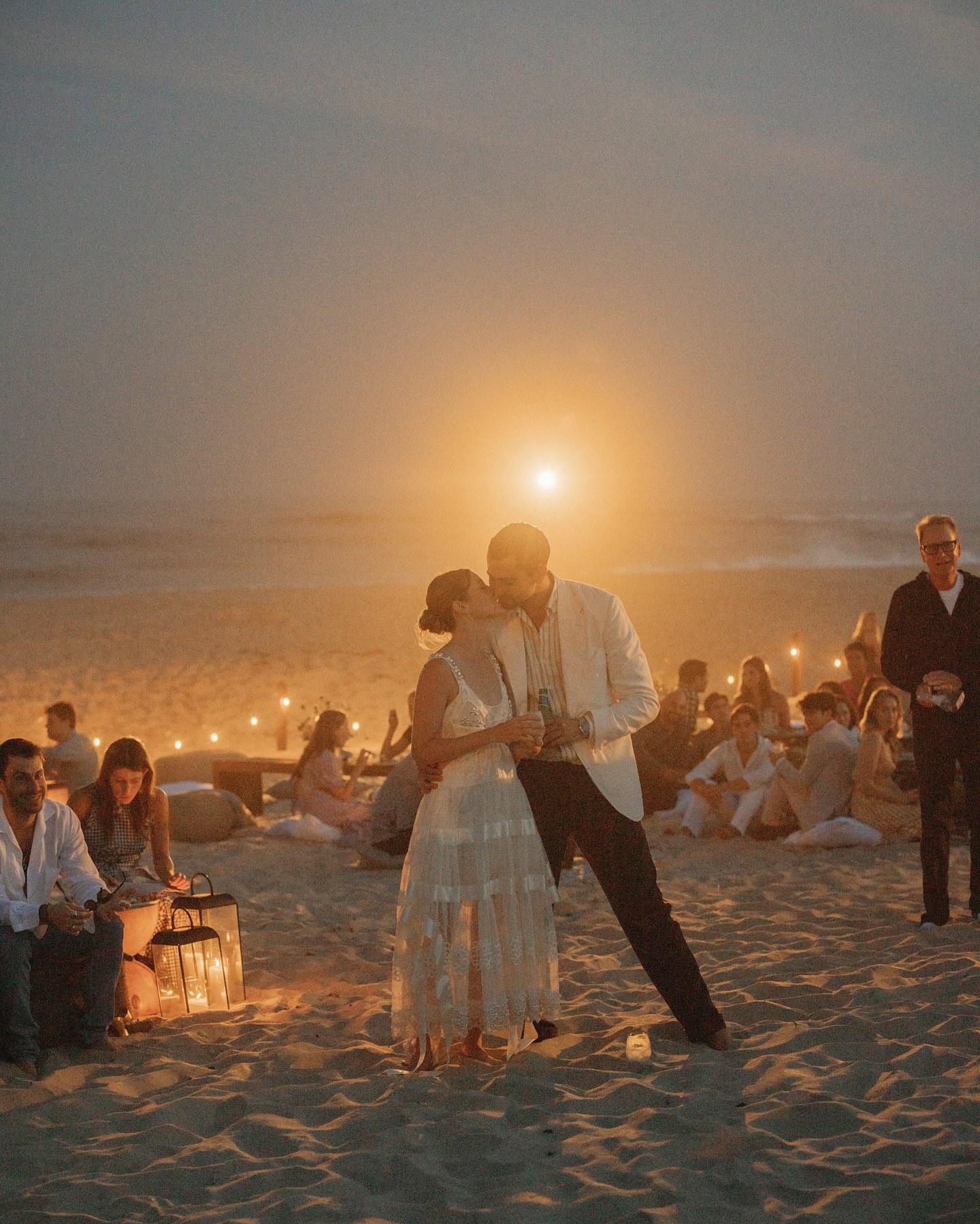
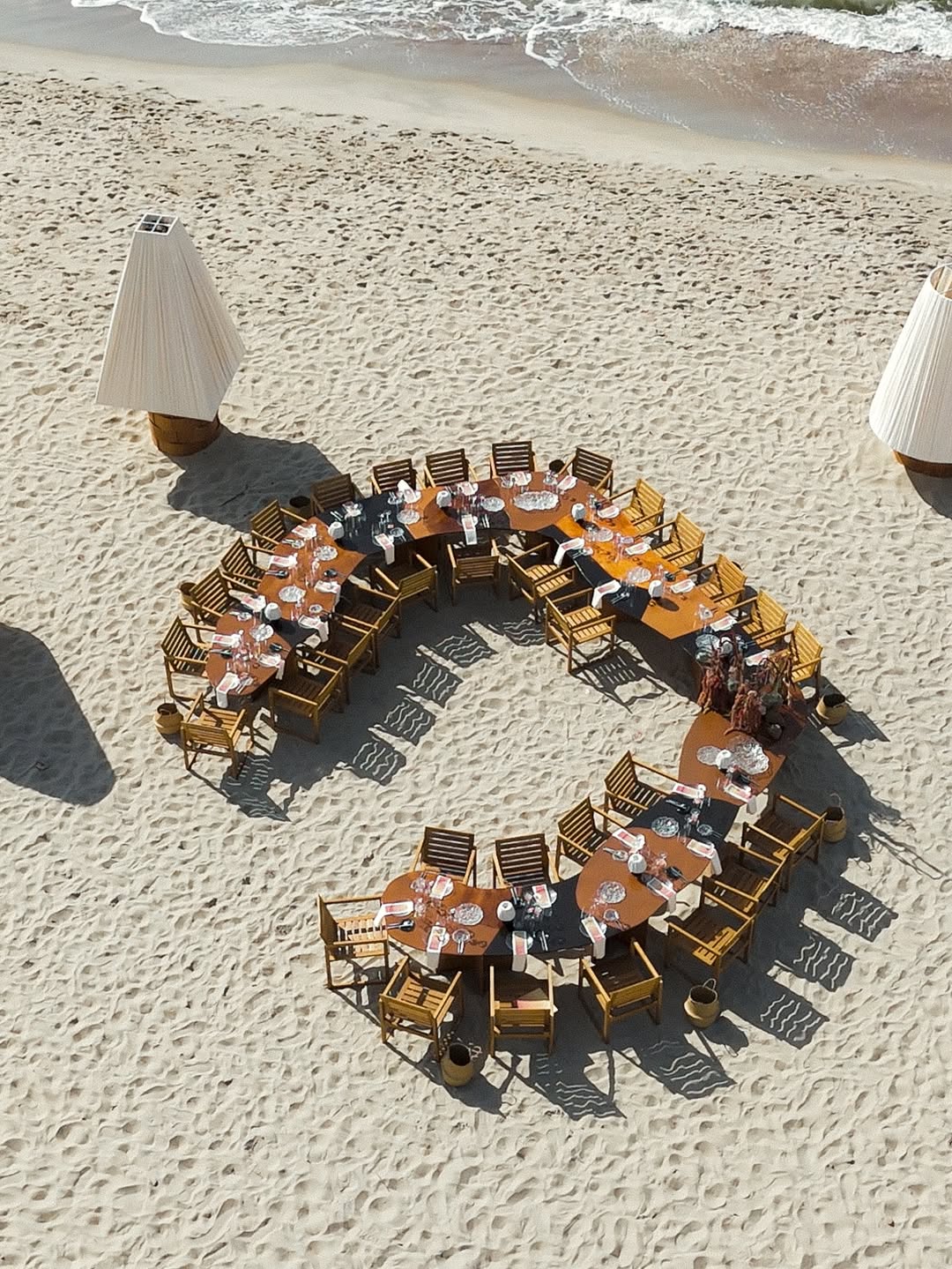
Photo: Samm Blake, Tatyana Sozonova
For Zeiry Cortez Gomez it’s the timeline. Sunset only lasts a few minutes, tides shift throughout the day, and beach conditions can change quickly — building the schedule around light, tides, and weather is one of the most important parts of the process.
And for Vicky Furman it’s shade. “It is not fun to be fully dressed at a warm beach event,” she says, and recommends planning for it from the start — fans, ample ice water, and shaded areas that protect the guest experience as much as any part of the decor.
None of this means a public beach wedding is off the table — it just means the romance and the logistics need equal attention. Get the planning right, and the result is a celebration guests remember for the right reasons: bare feet in the sand, golden light, and not a single detail left to chance.
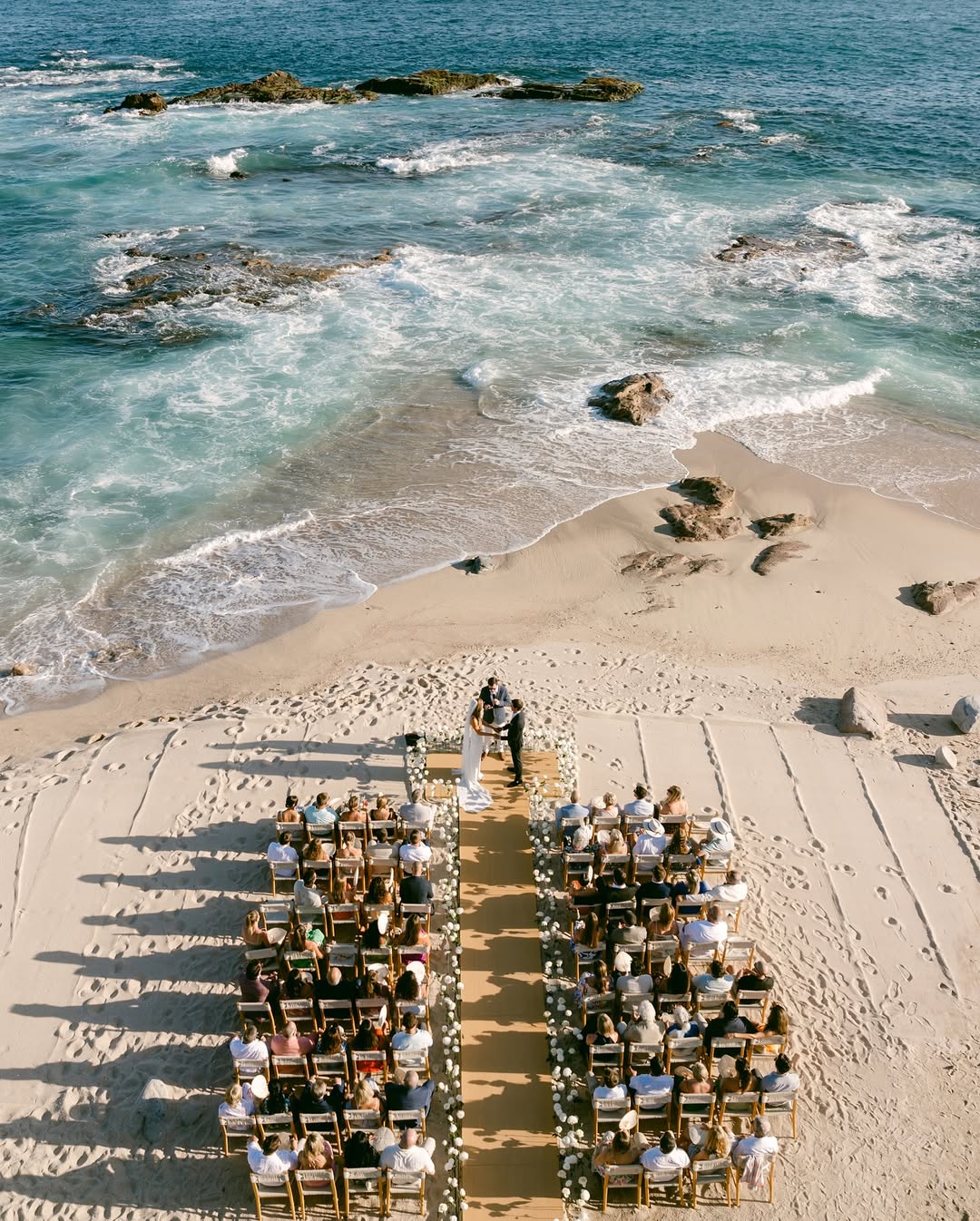
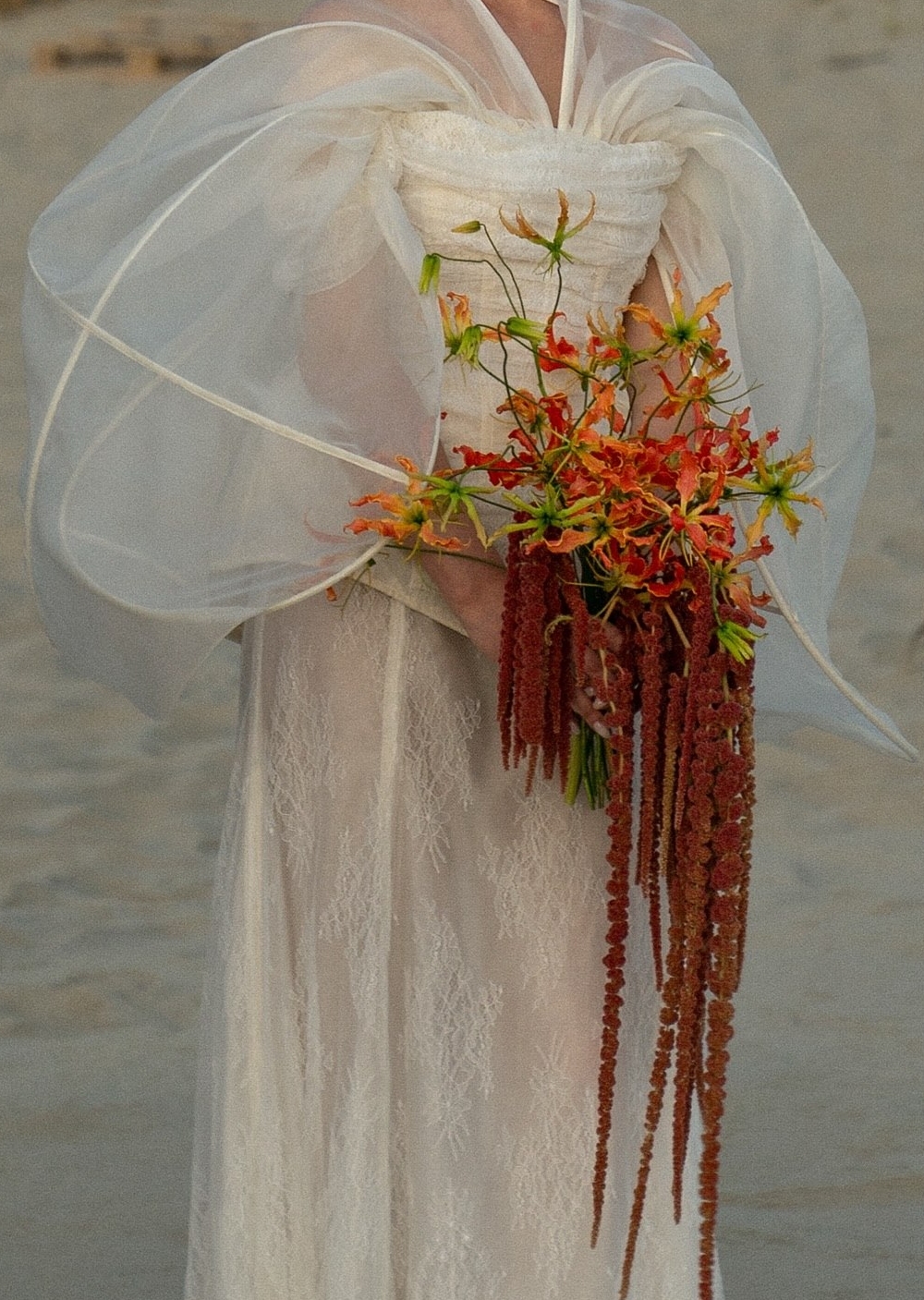
Photo: LA76 Photography, Tatyana Sozonova
Questions to Ask Yourselves Before You Book
Before you fall for a stretch of public sand, it helps to sit down together and answer a few honest questions.
- Are you comfortable with strangers watching, or even asking for a photo, during your ceremony?
- Will your hair and outfit hold up in real wind? That romantic loose hair might not survive the photos.
- Is your guest list ready for sand, sun, and a walk from the parking area?
- Do you have a real backup plan if the weather turns, not just a hope that it won’t?
- Are you okay handling permits, power, and vendor logistics yourselves?
There’s no wrong answer here. Some couples want the wide-open, anything-can-happen version of a beach wedding. Others will sleep better with a hotel team handling the details. Either way, knowing which couple you are before you book is what makes the day feel effortless instead of stressful.
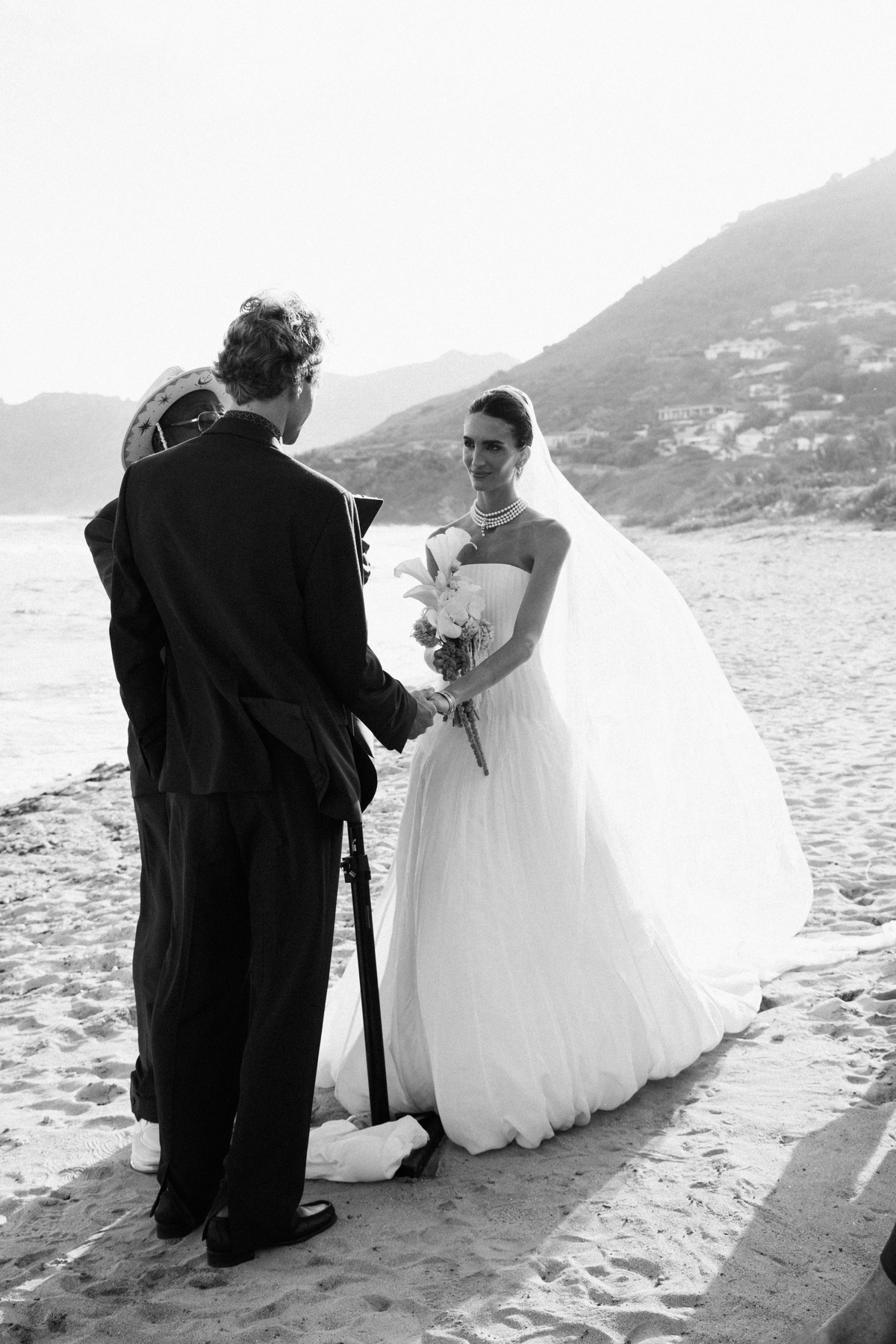
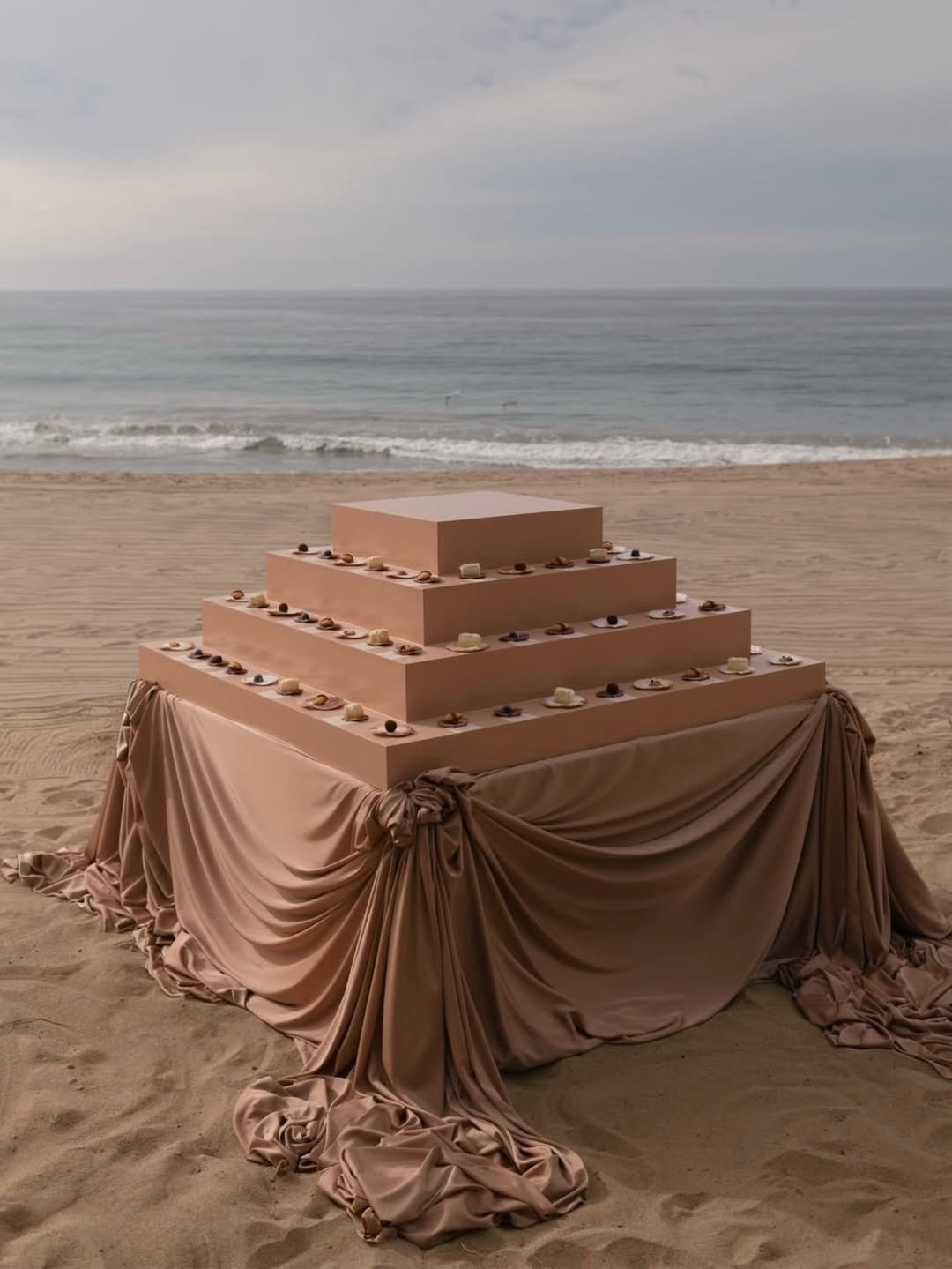
Photo: Emily Lab, Kristin Piteo