We’re always in favor of couples experimenting with the traditional building blocks of a wedding, and we’ll keep saying so. But summer weddings in particular seem to invite it, making couples reach for more feeling and less formula. The bouquet is one of the places to actually act on that instinct: it changes hands for a few hours, not a lifetime, and there’s real room to get a little freer with it. The eight ideas below all solve it differently. Bring whichever one you like most to a florist consultation, and don’t be surprised if they already know exactly what you mean.
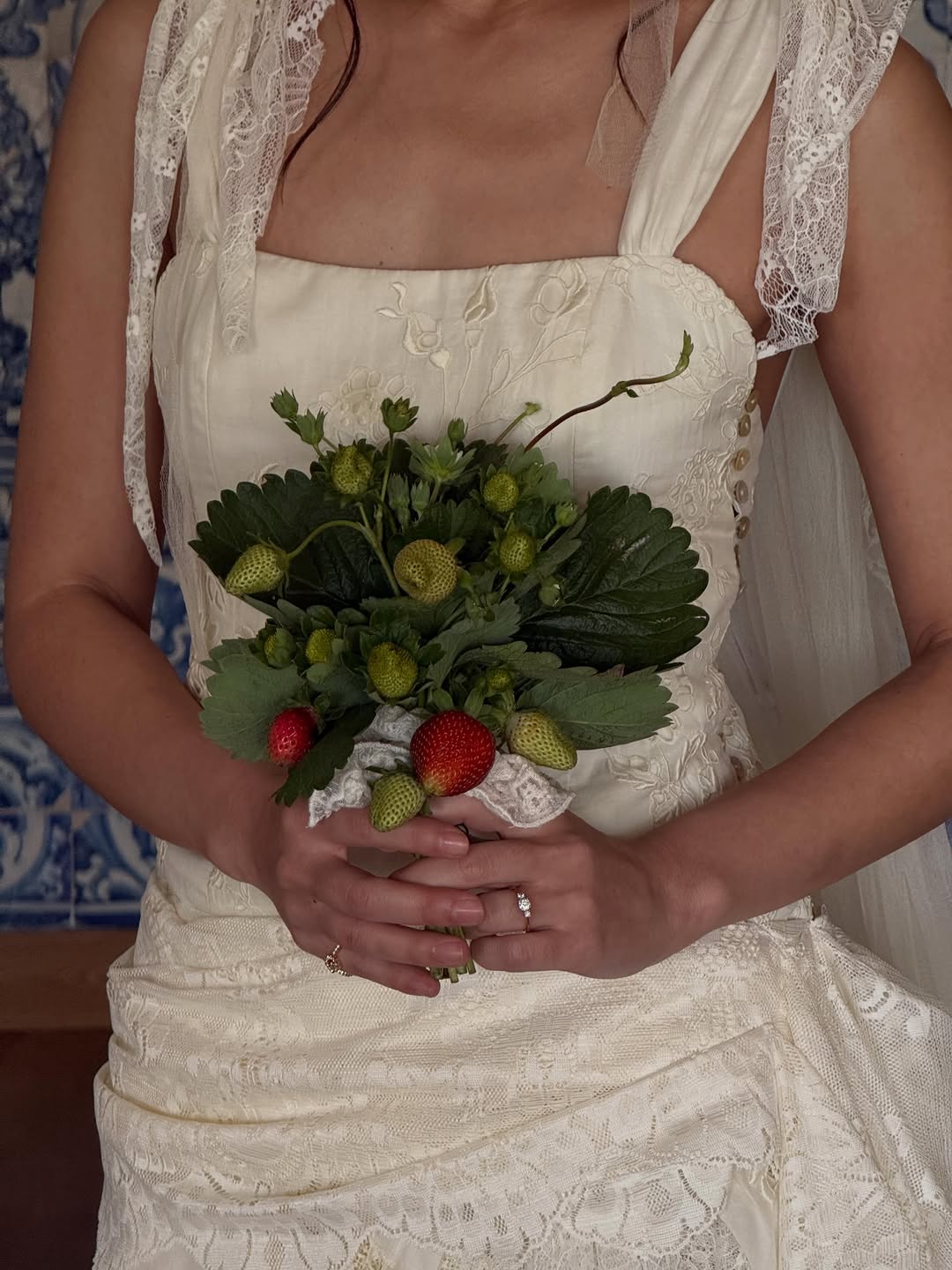
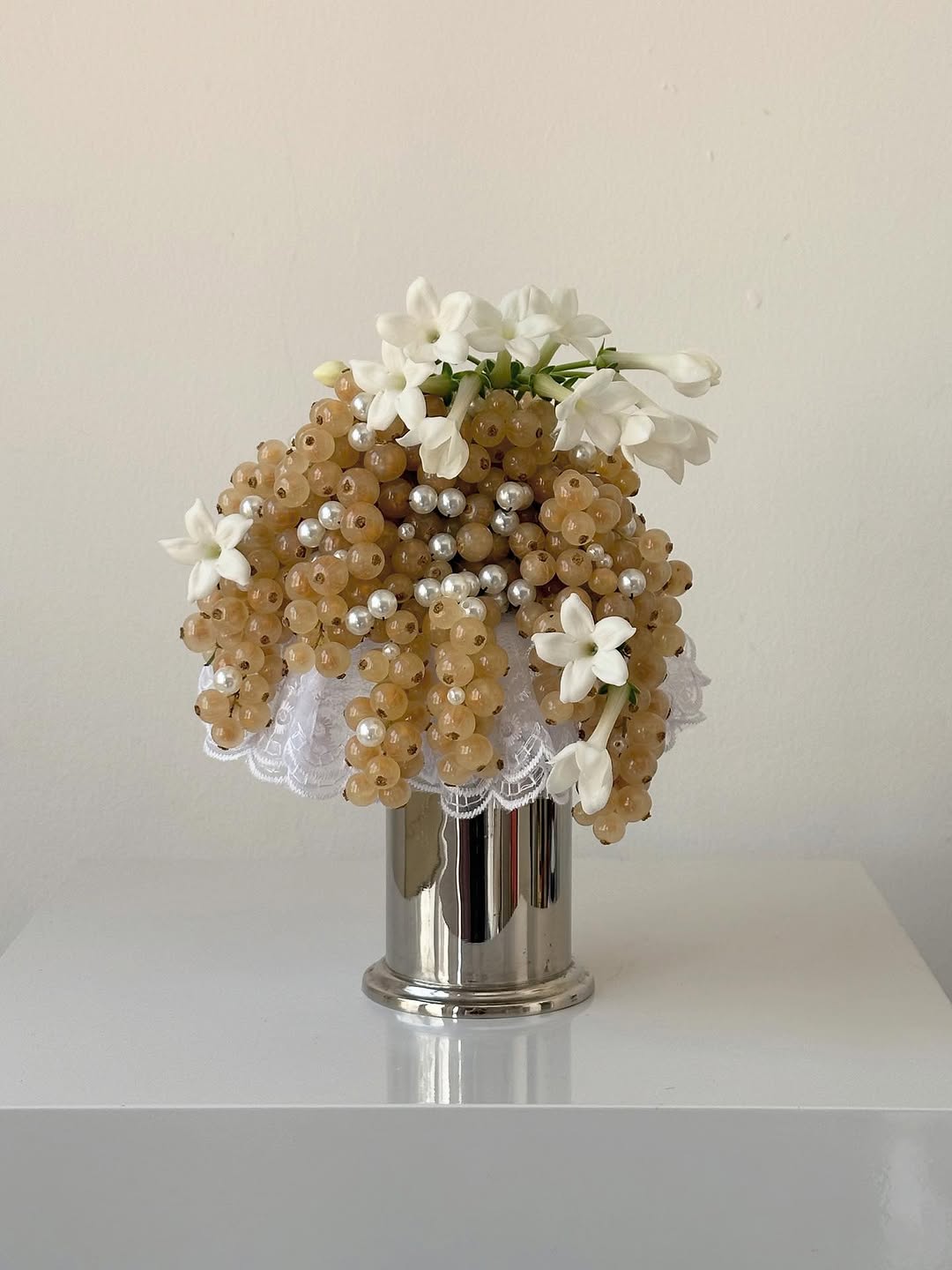
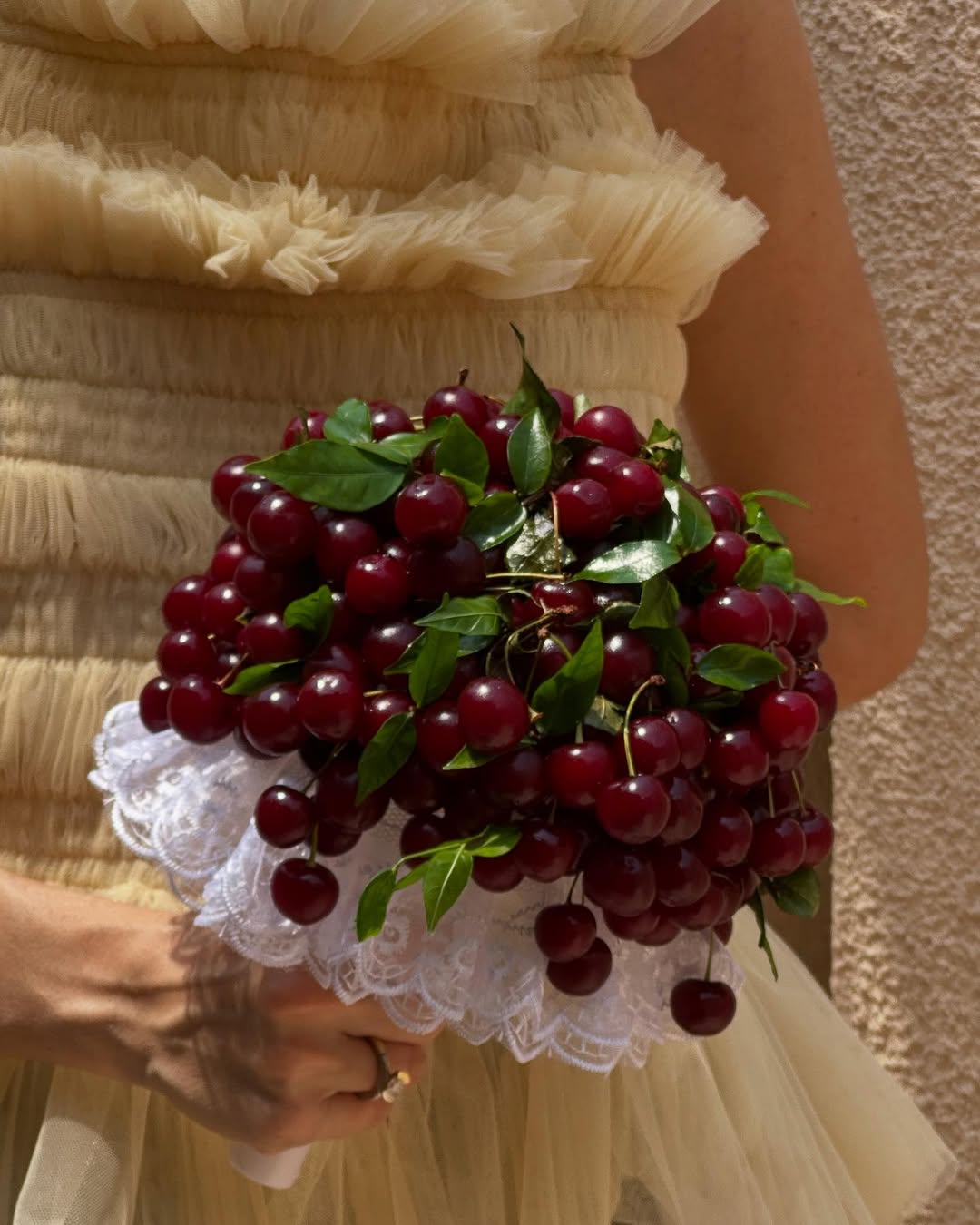
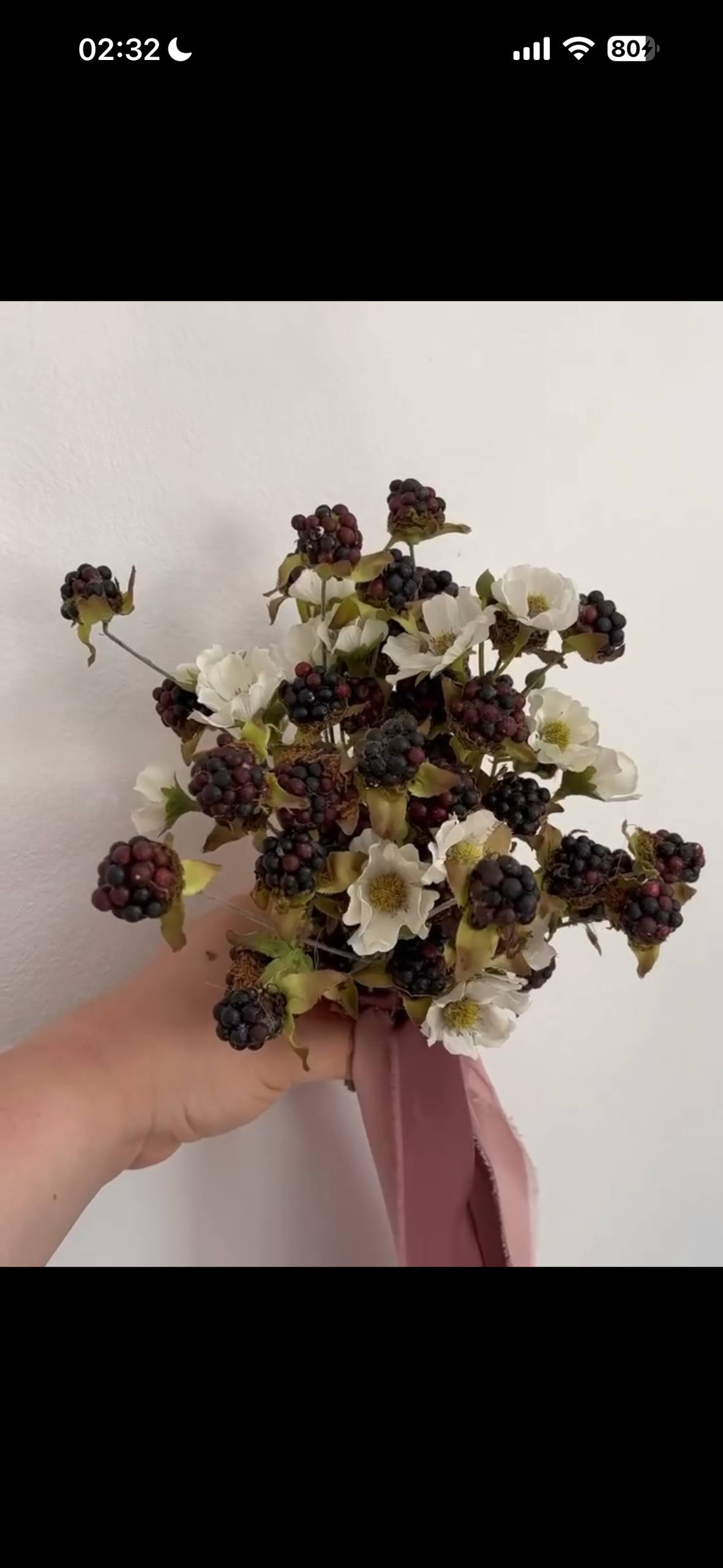
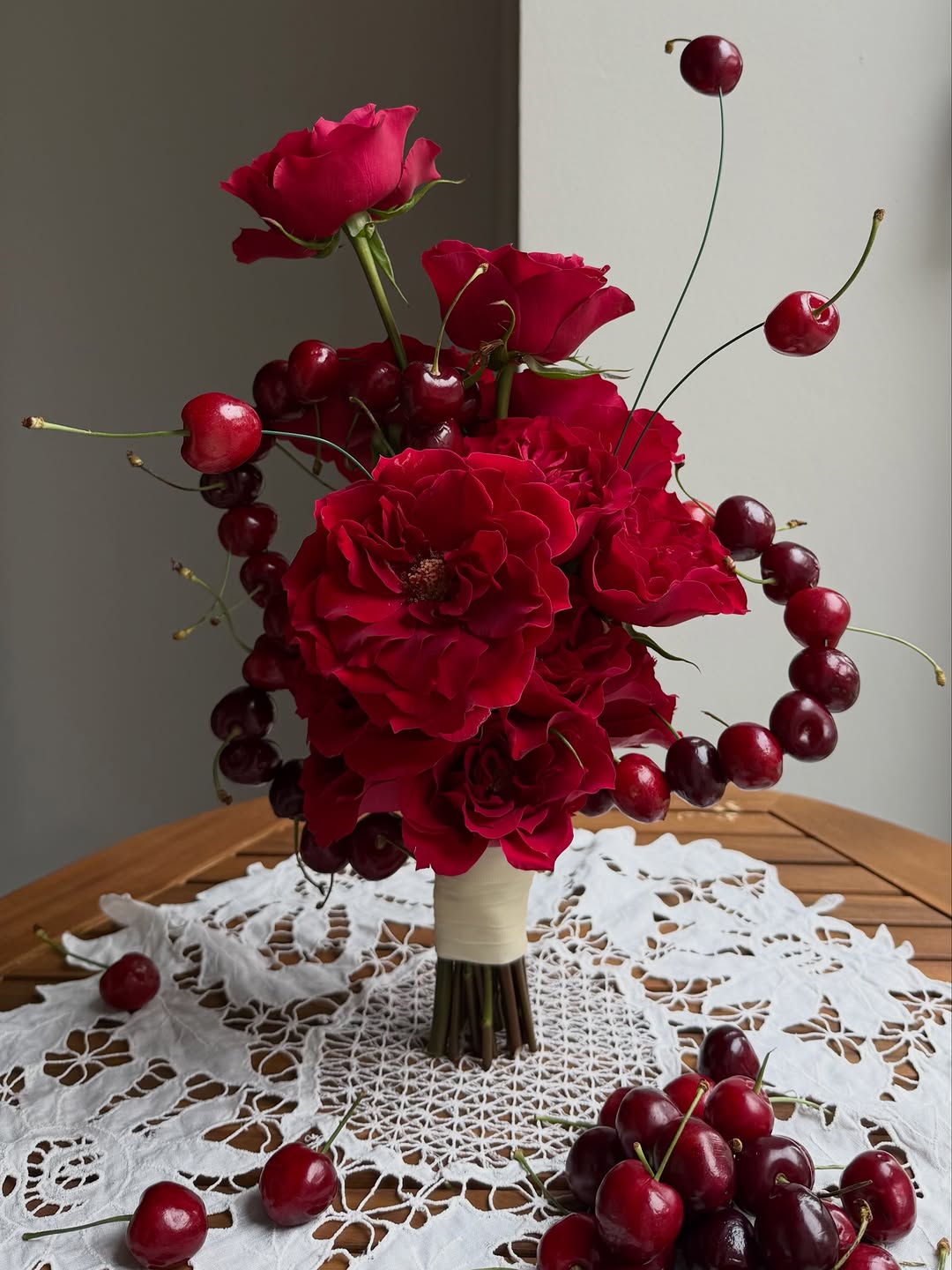
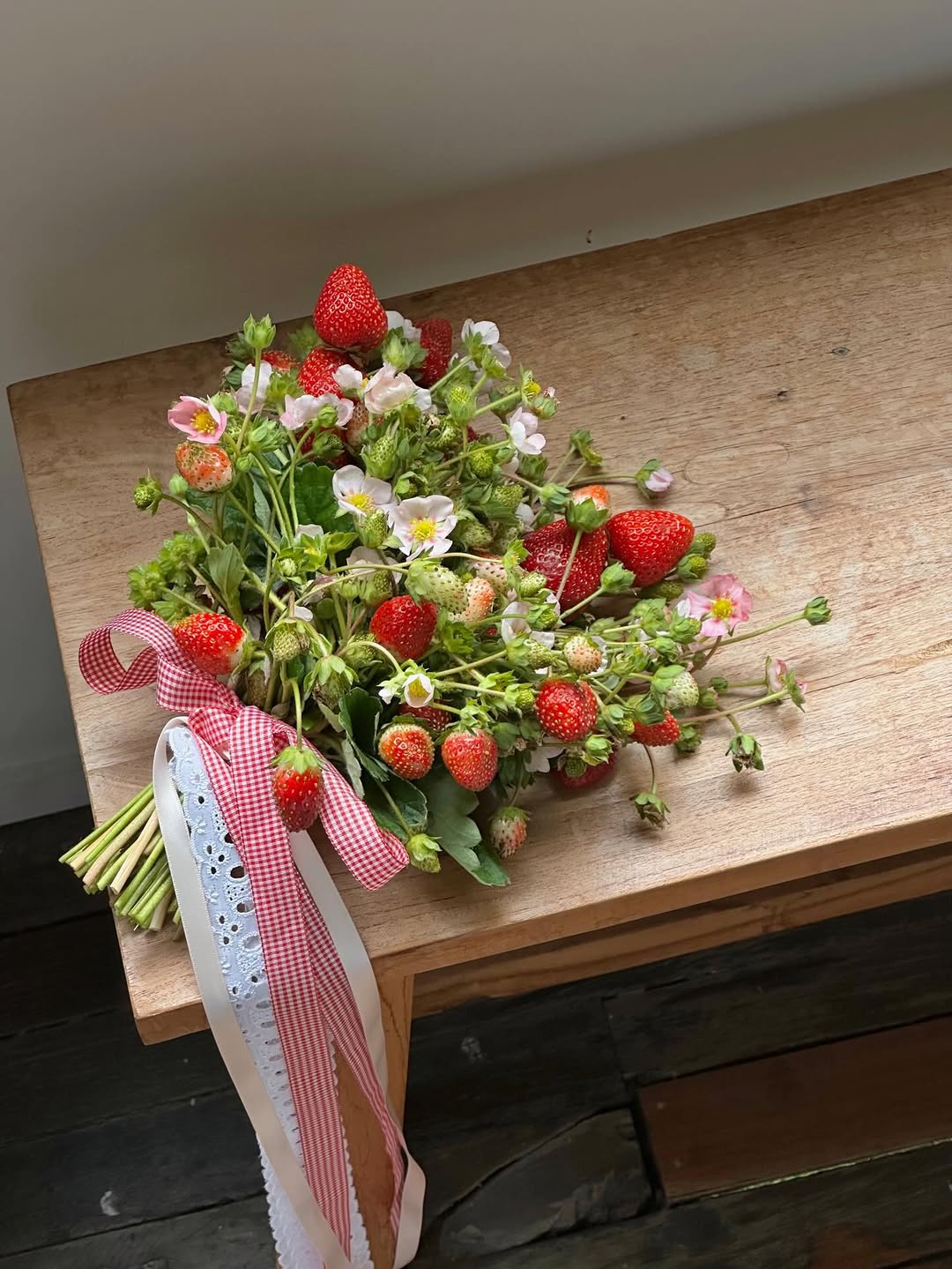
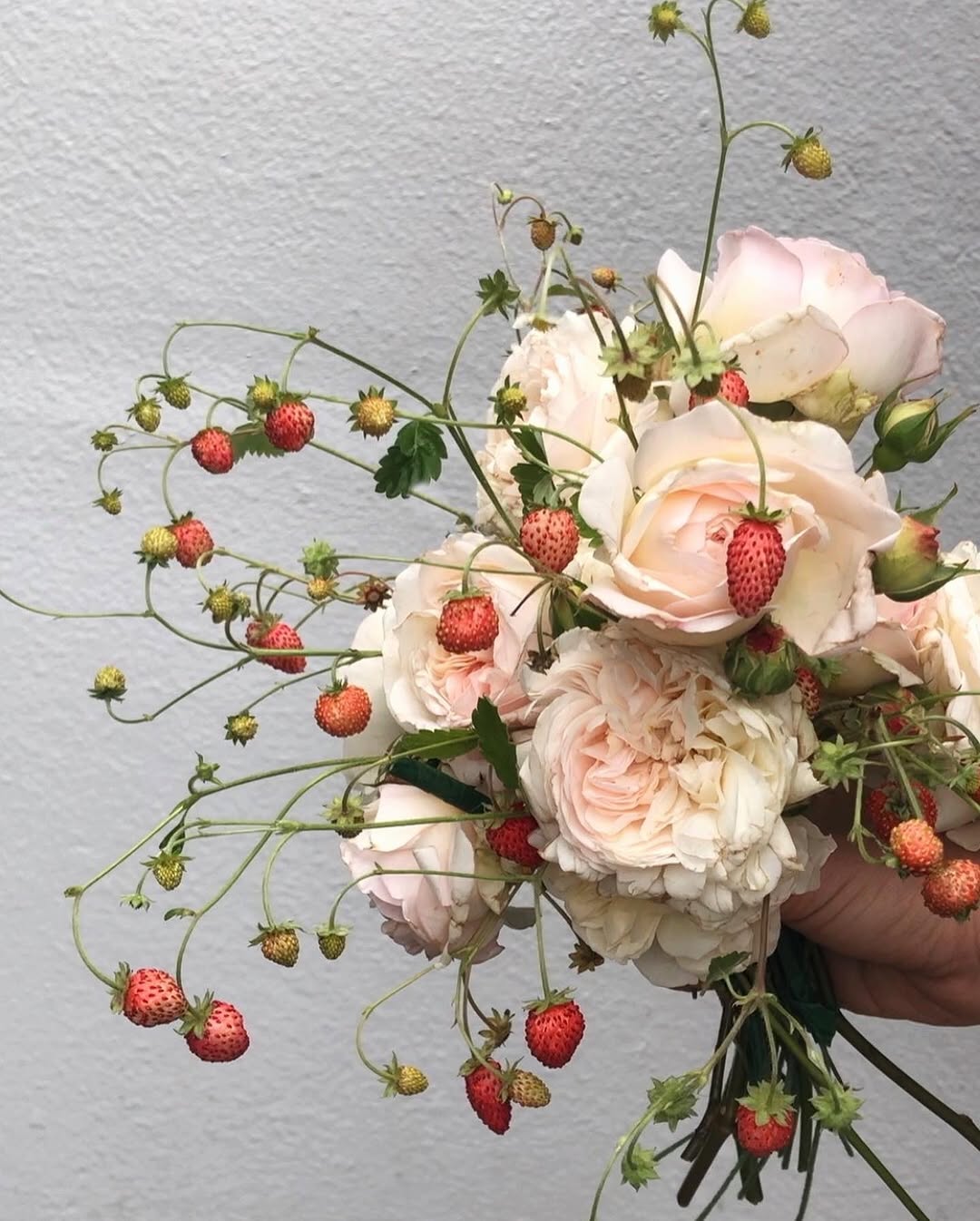
Fresh berries tucked straight into the bouquet, stems, leaves, and all, might be the most purely seasonal idea on this list. Cherries, currants, blackberries, and wild strawberries all work the same way: they add weight, shine, and a slightly wild, just-picked feel that greenery alone can’t fake. The effect reads less like a florist’s arrangement and more like something pulled off the vine that morning, and it pairs just as well with a formal rose bouquet as it does with a loose, wildflower one.
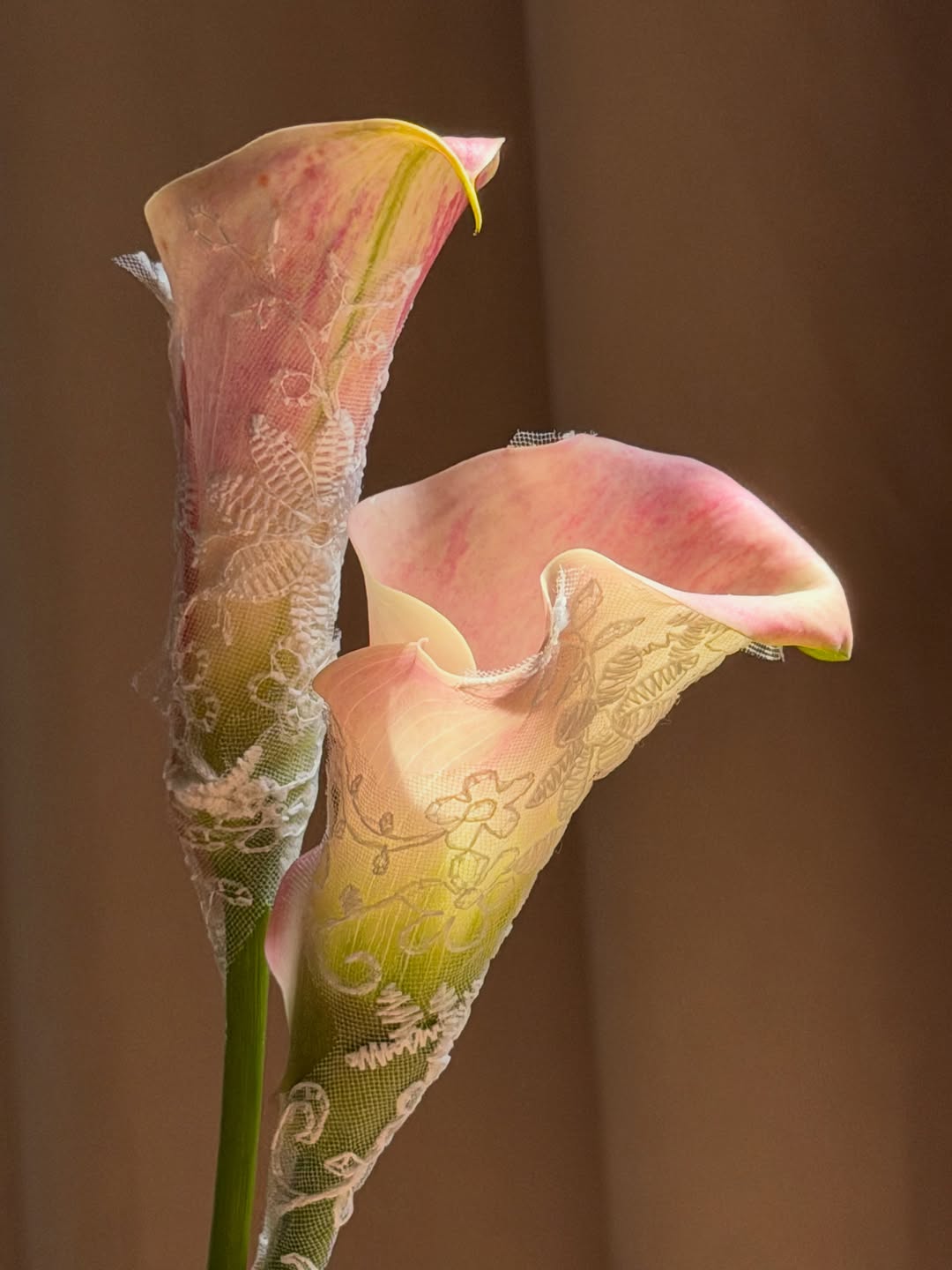
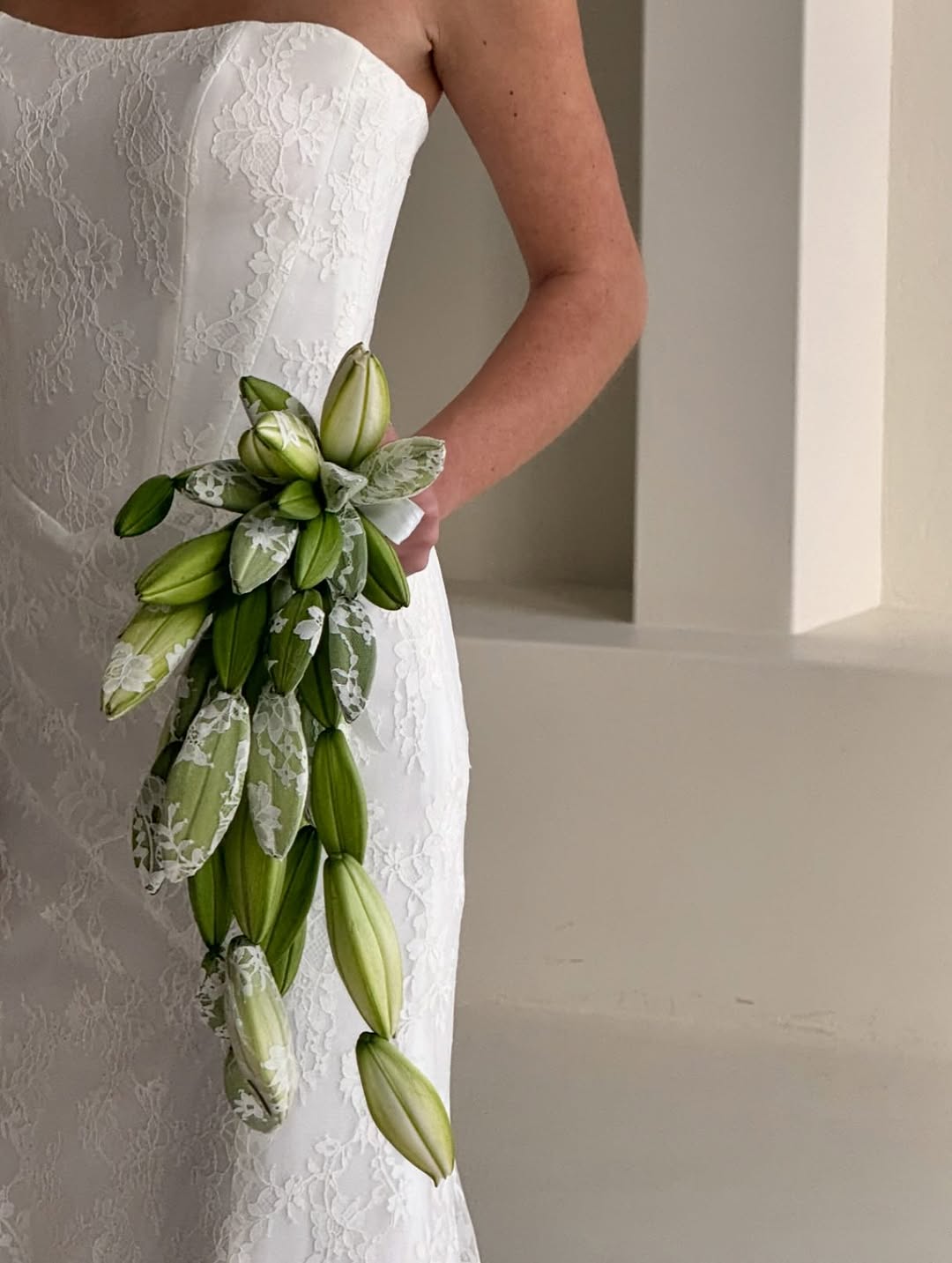
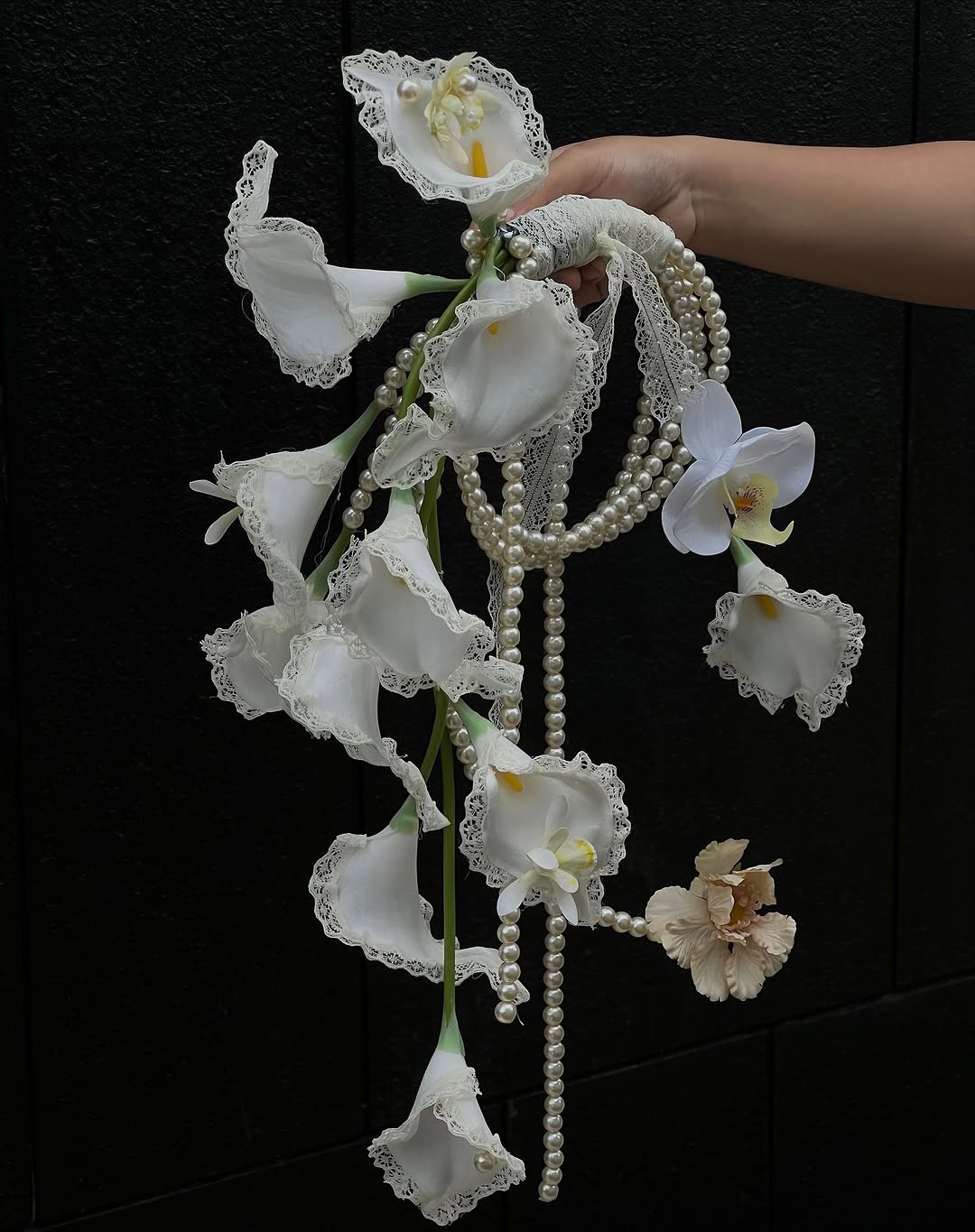
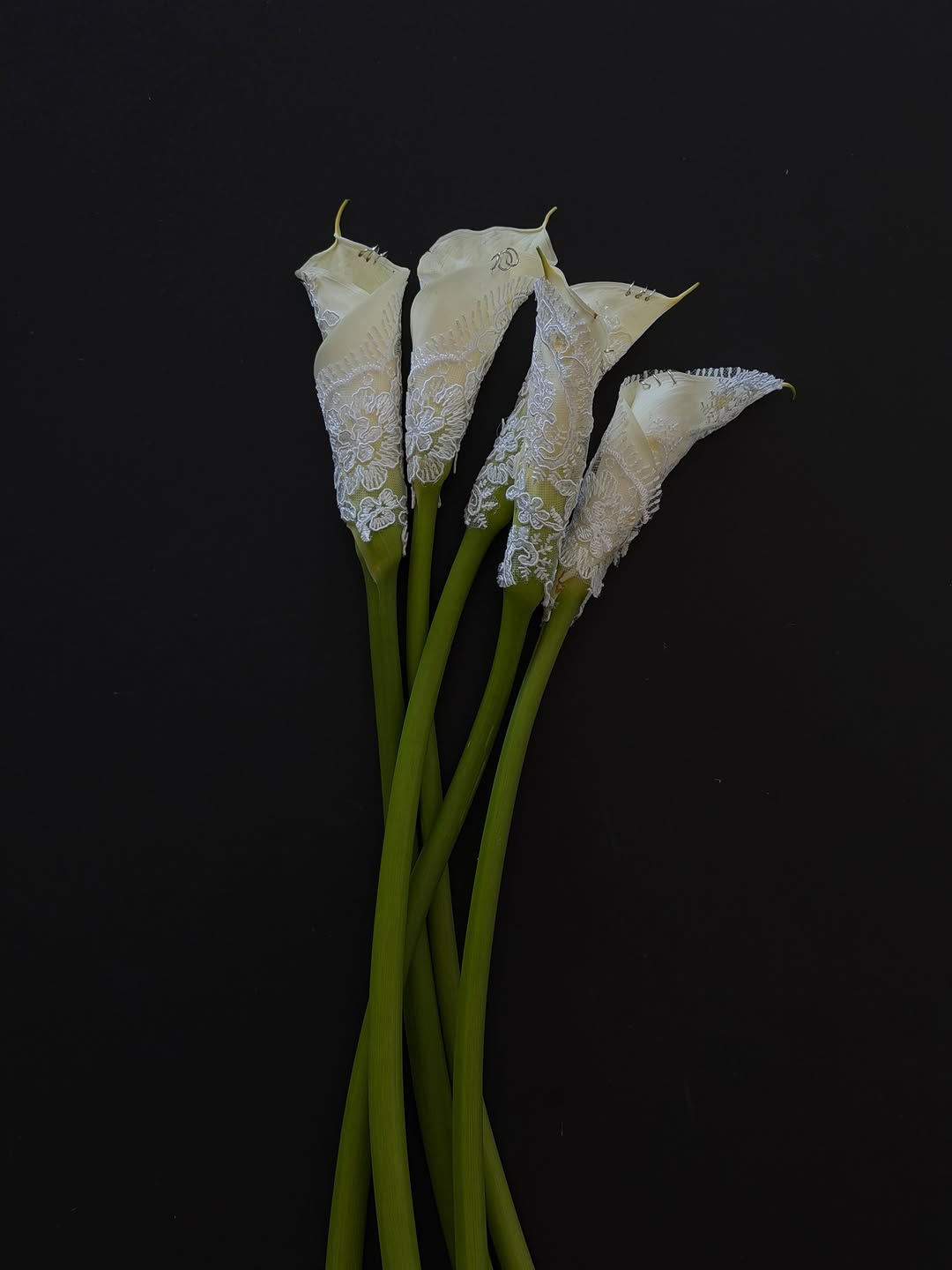
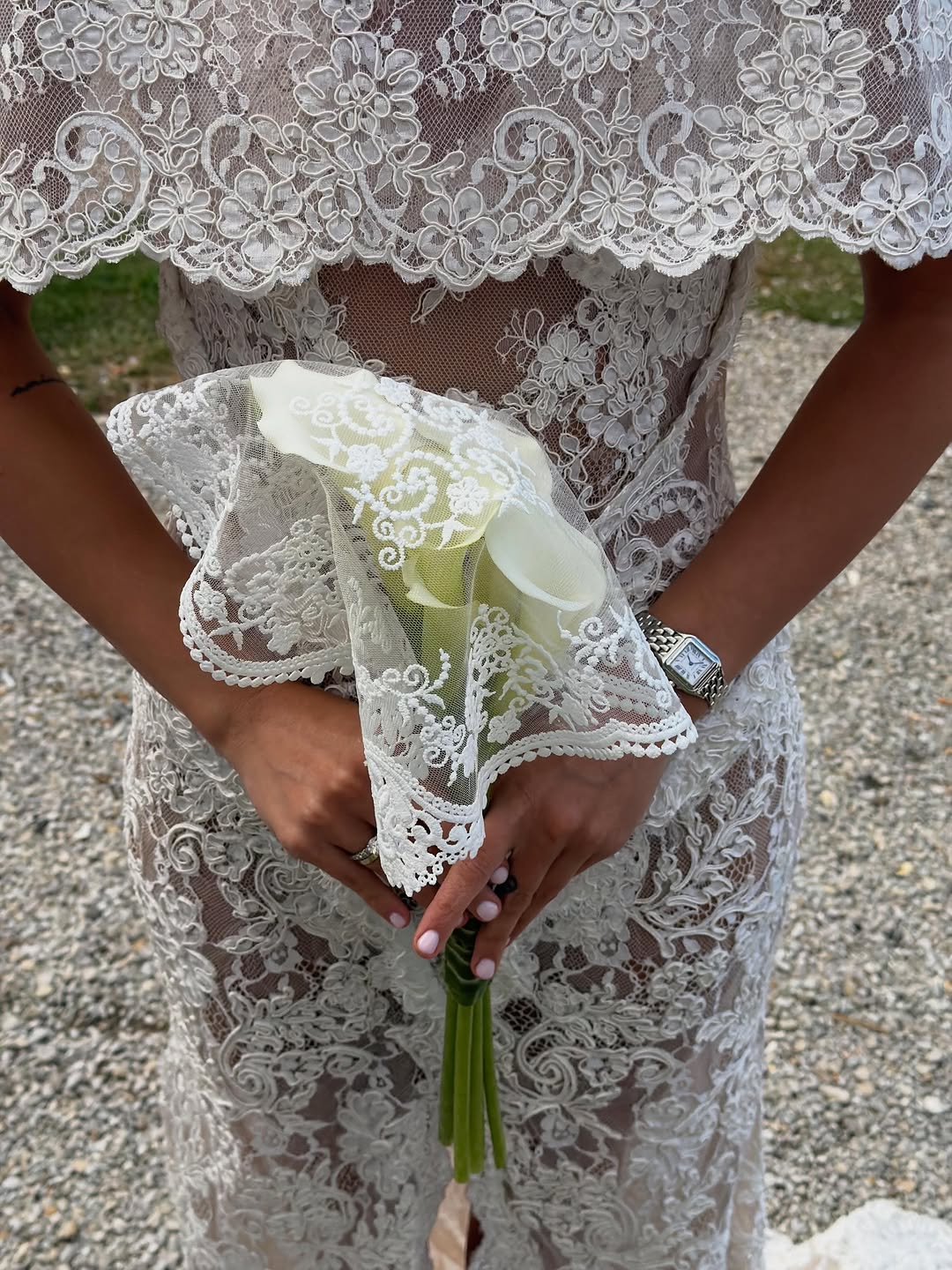
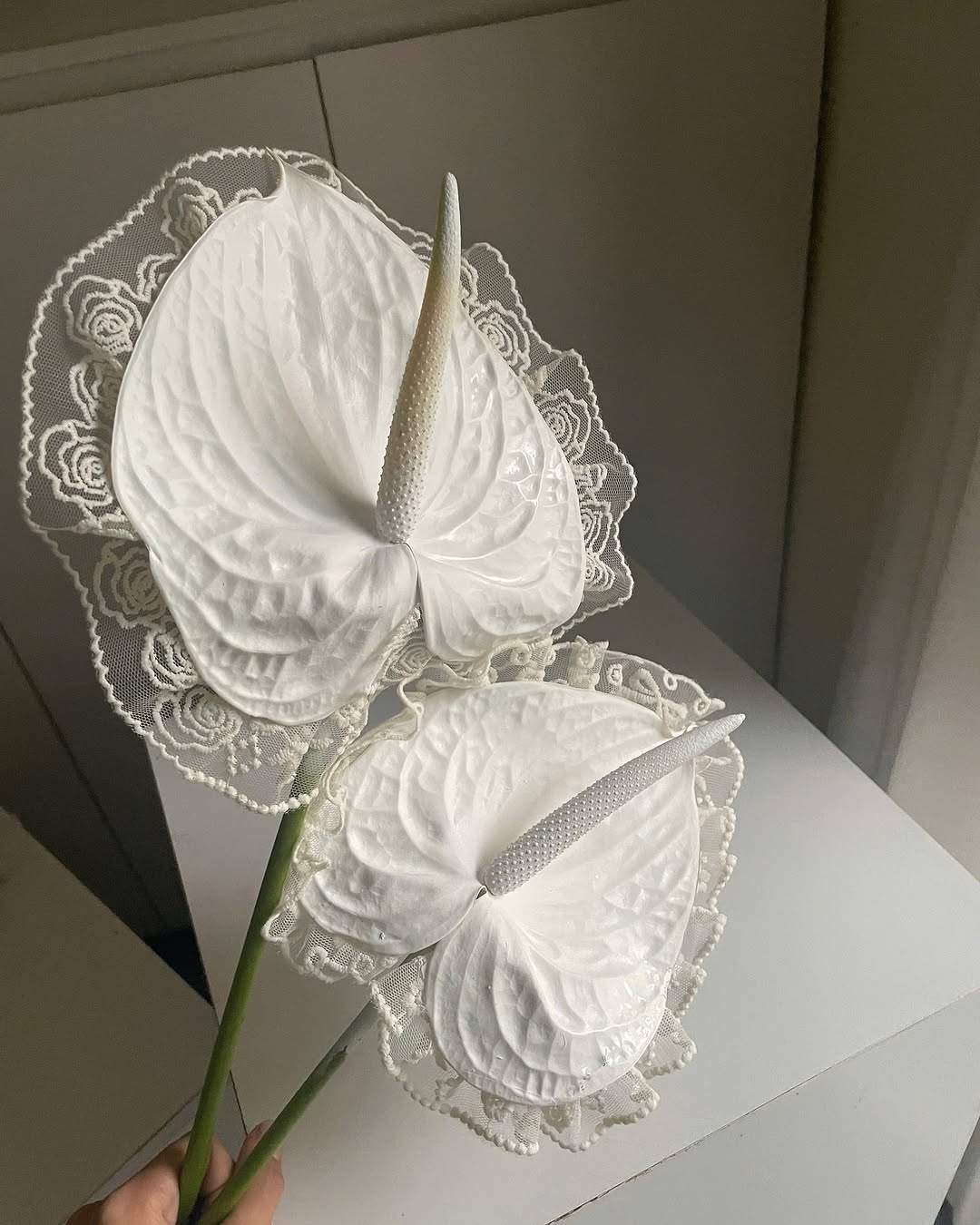
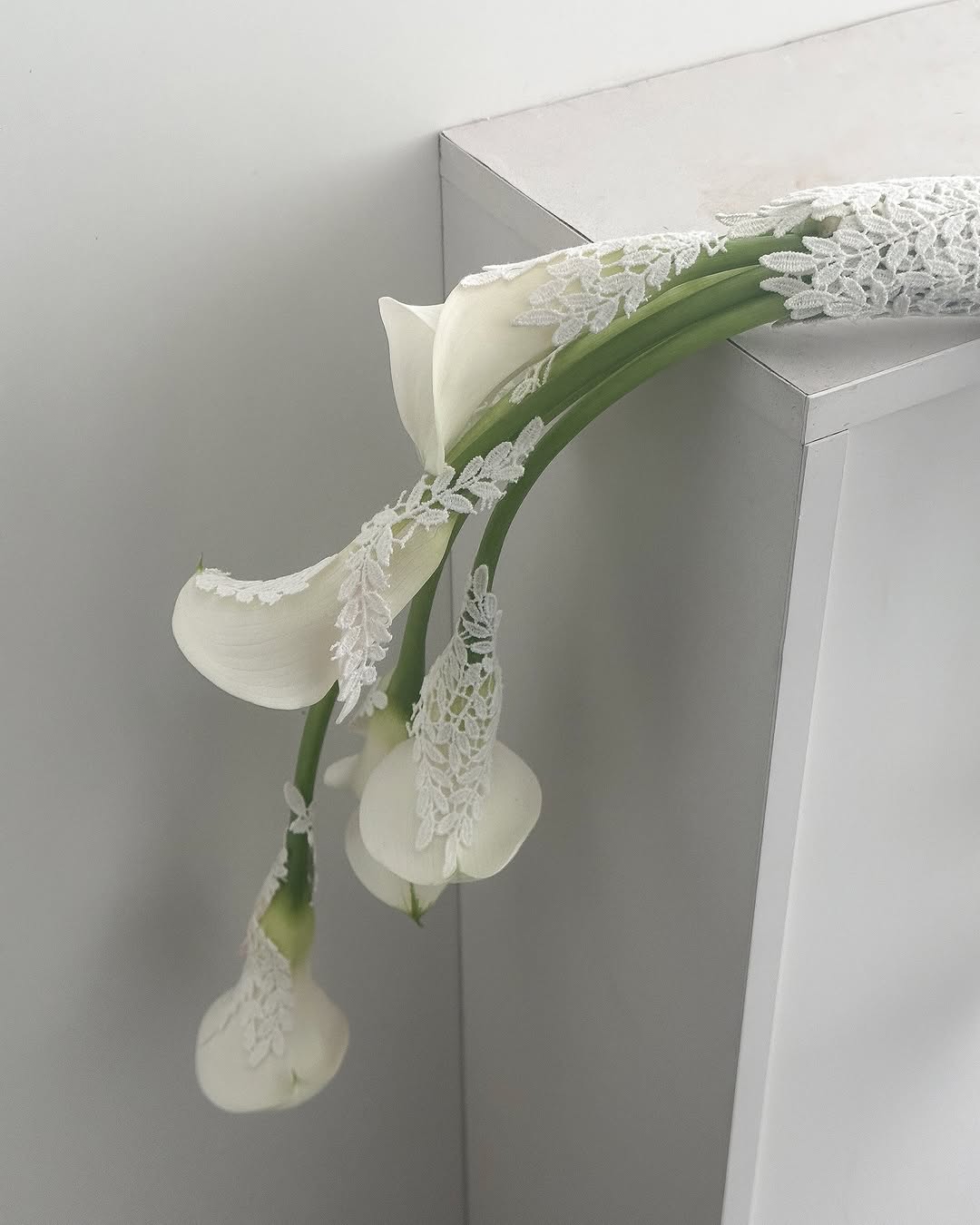
Some florists have started gluing or stitching lace directly onto the petals. It only works with flowers that have a flat, wide petal to build on, mostly callas and anthuriums, sometimes an orchid, and each stem has to be finished by hand one at a time. Works especially well if the bride is already wearing lace herself.
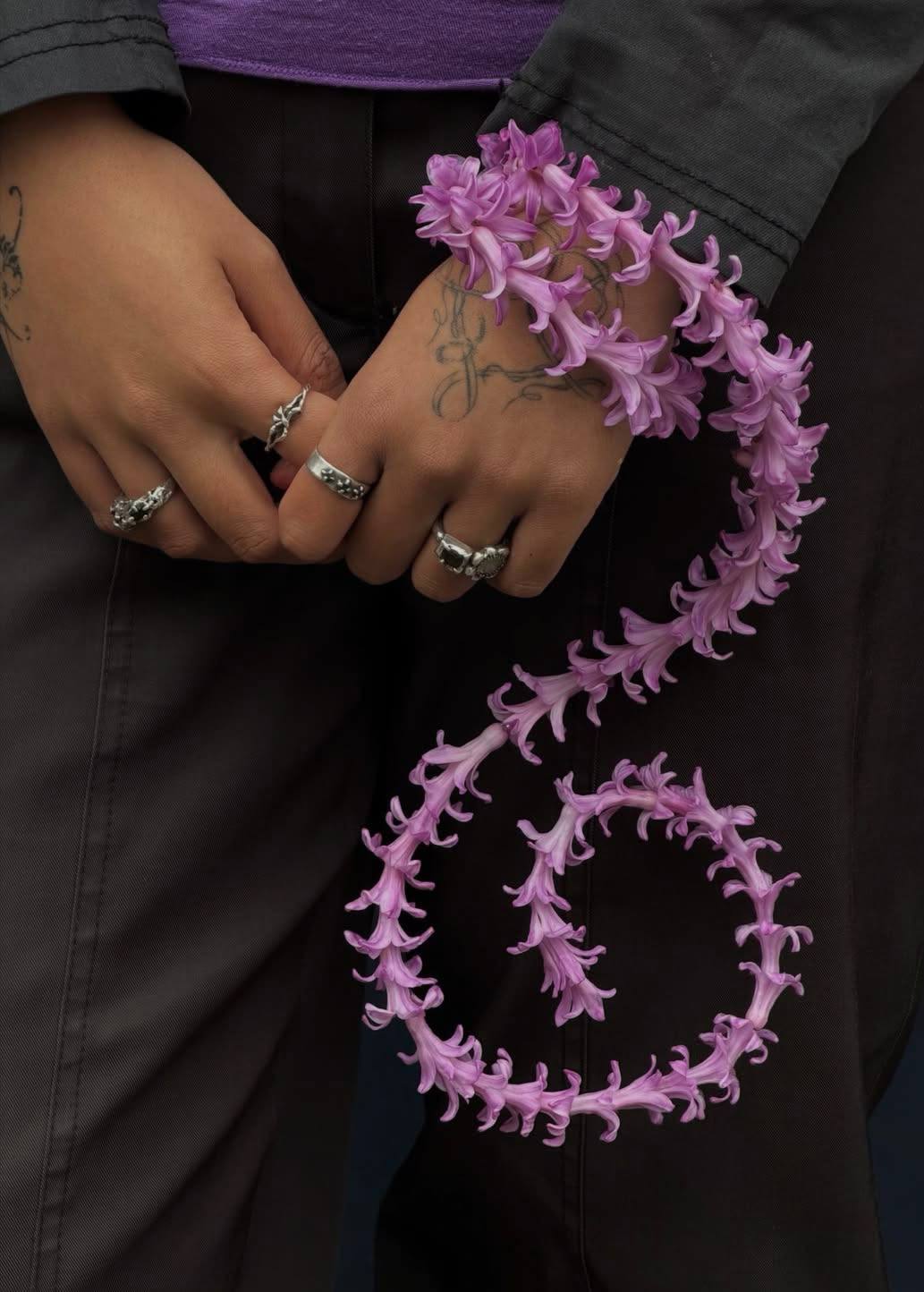
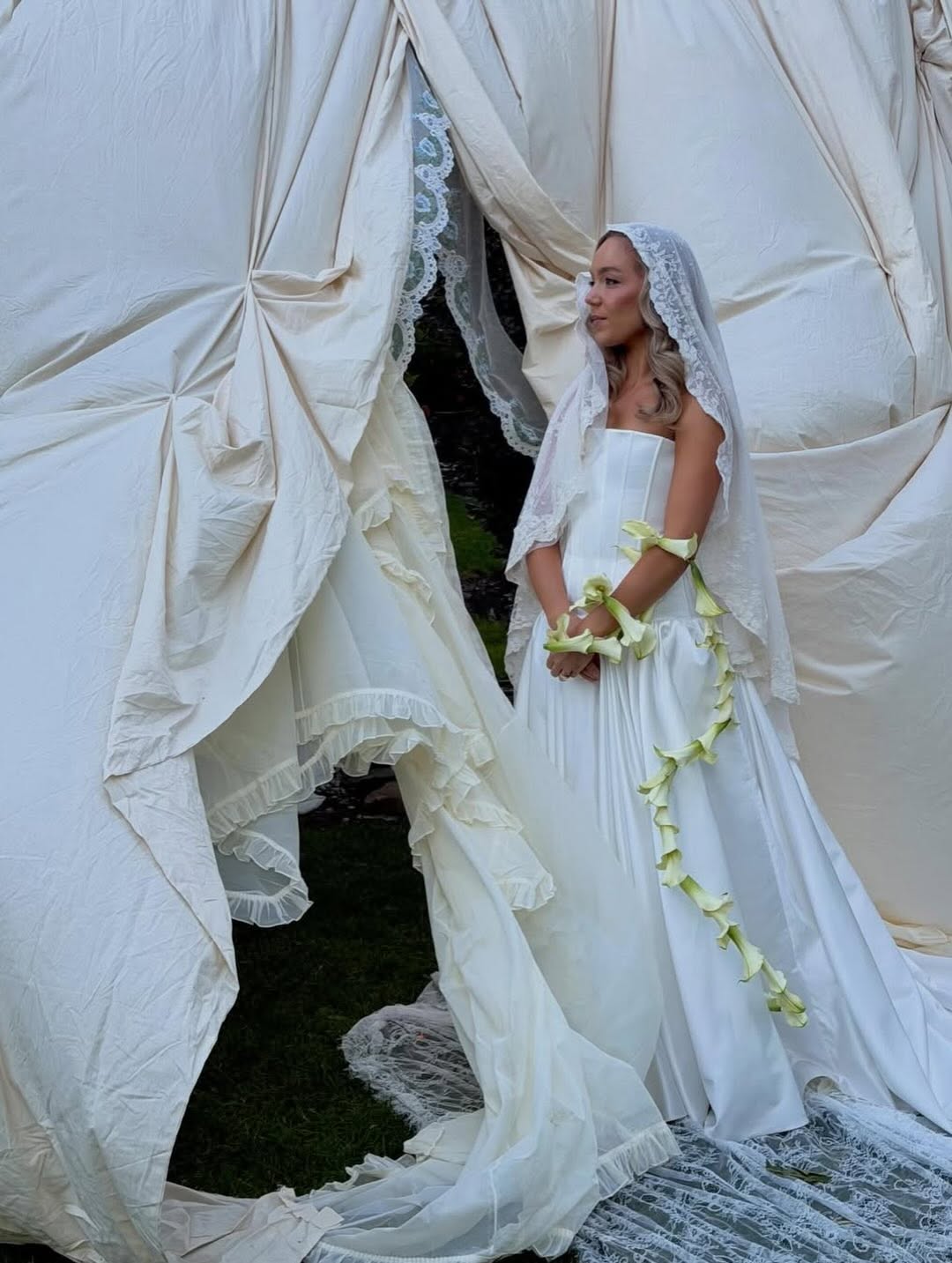
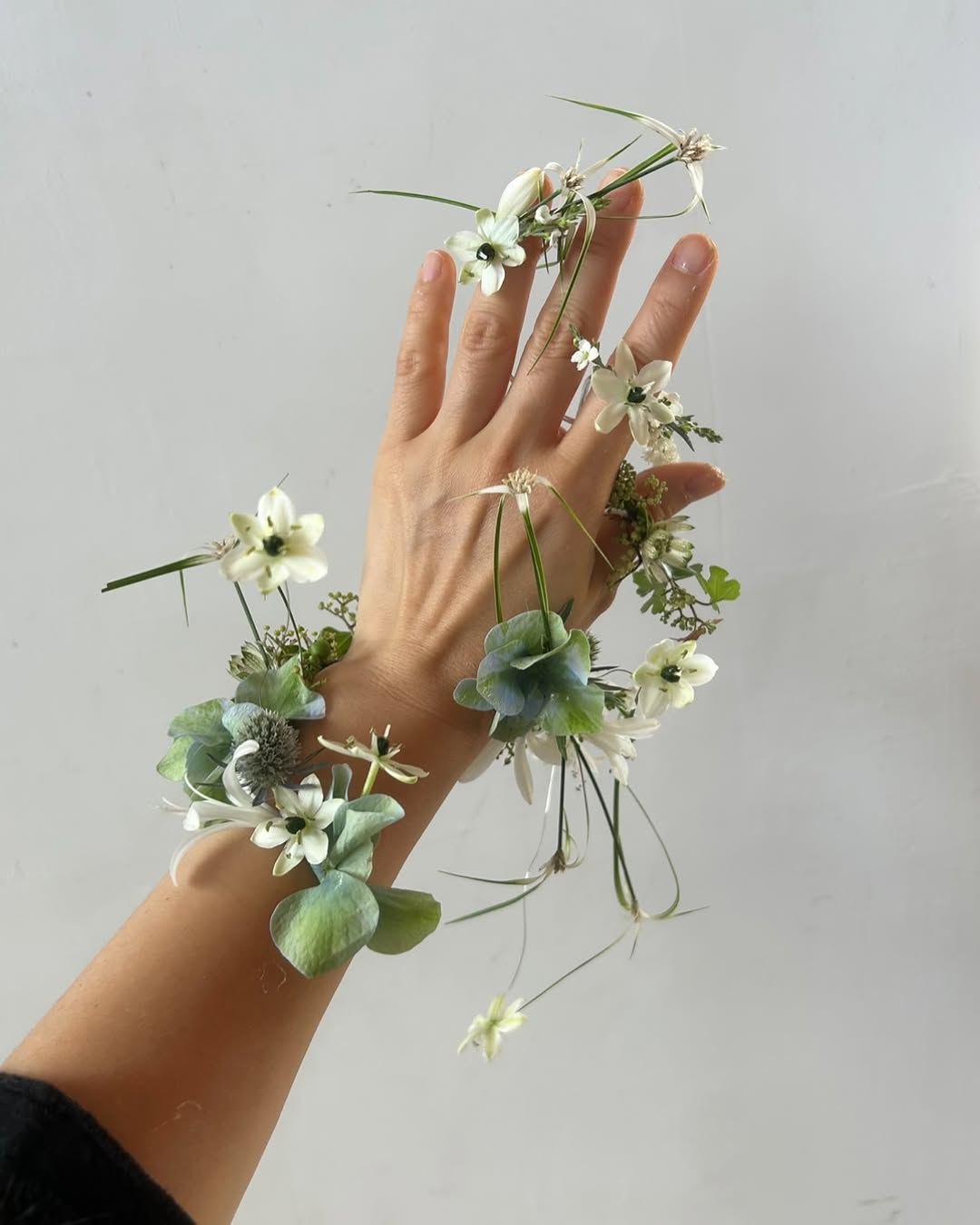
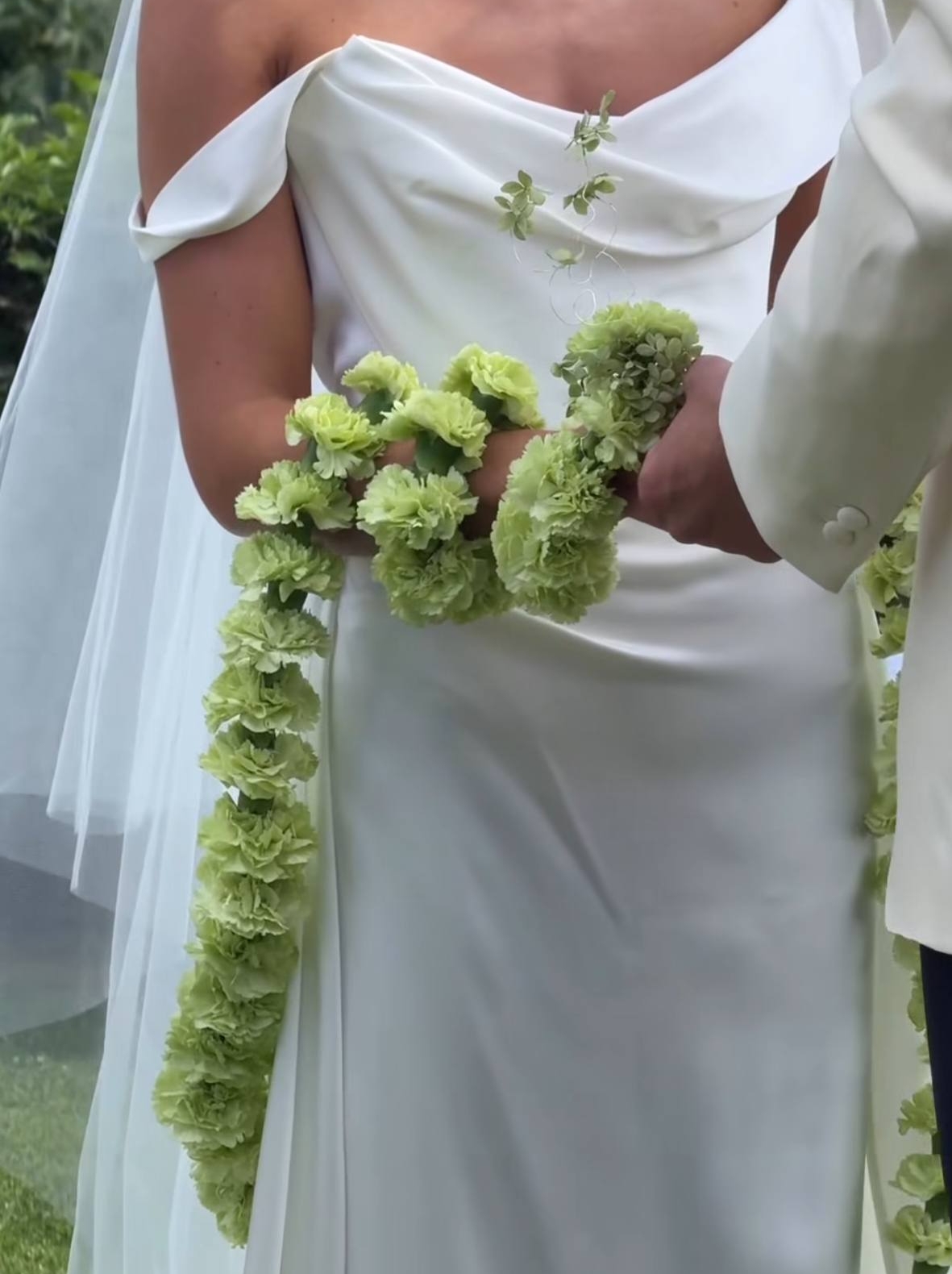
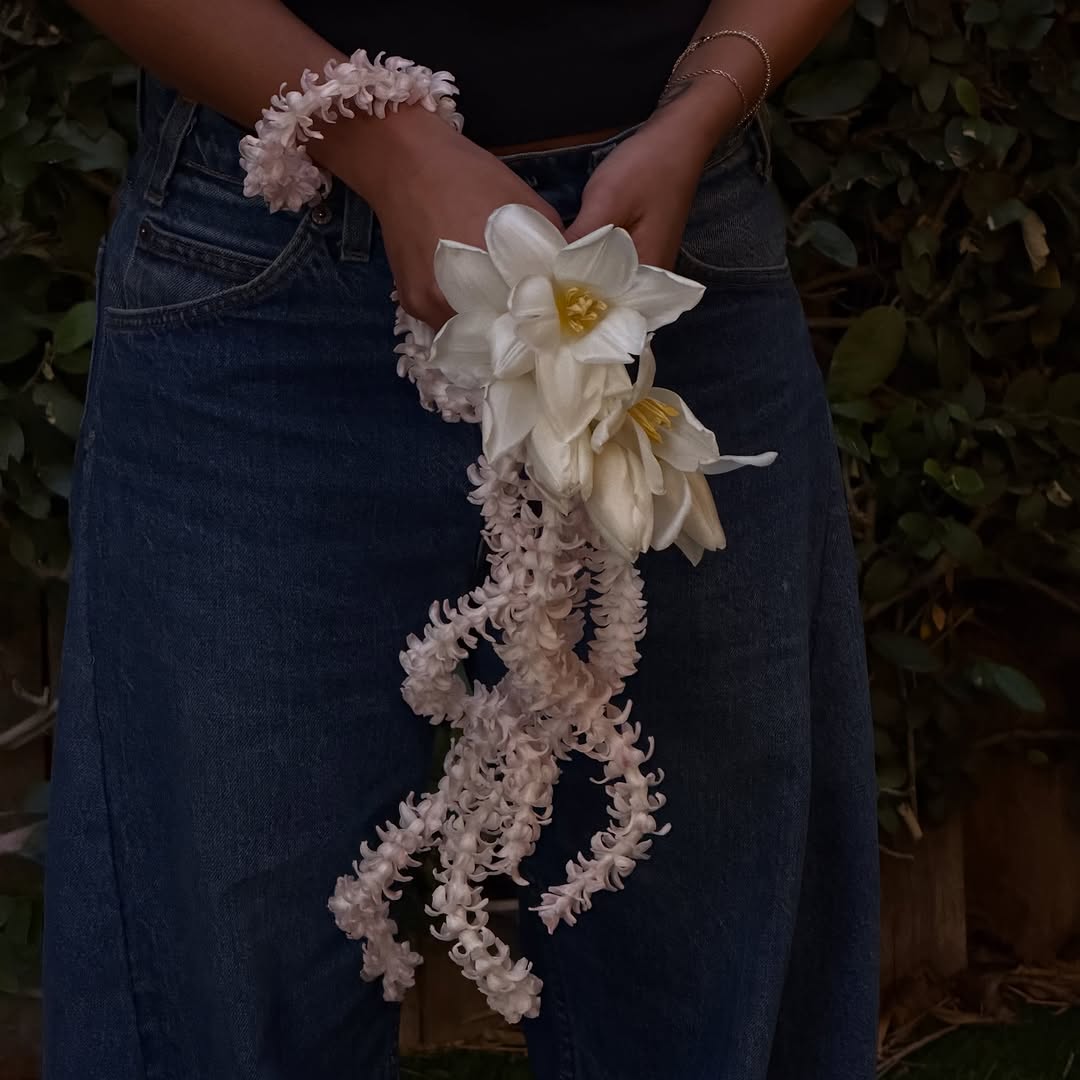
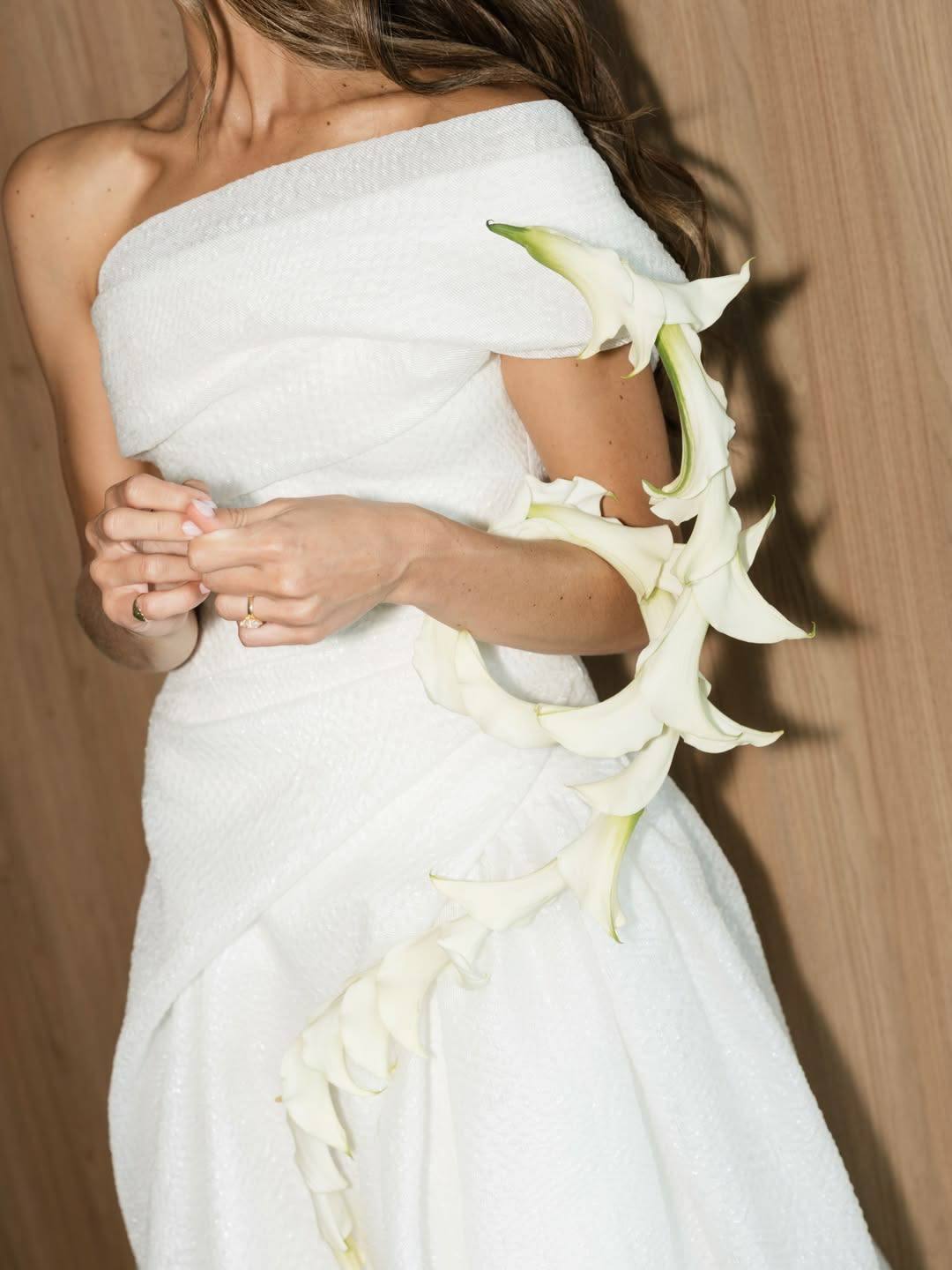
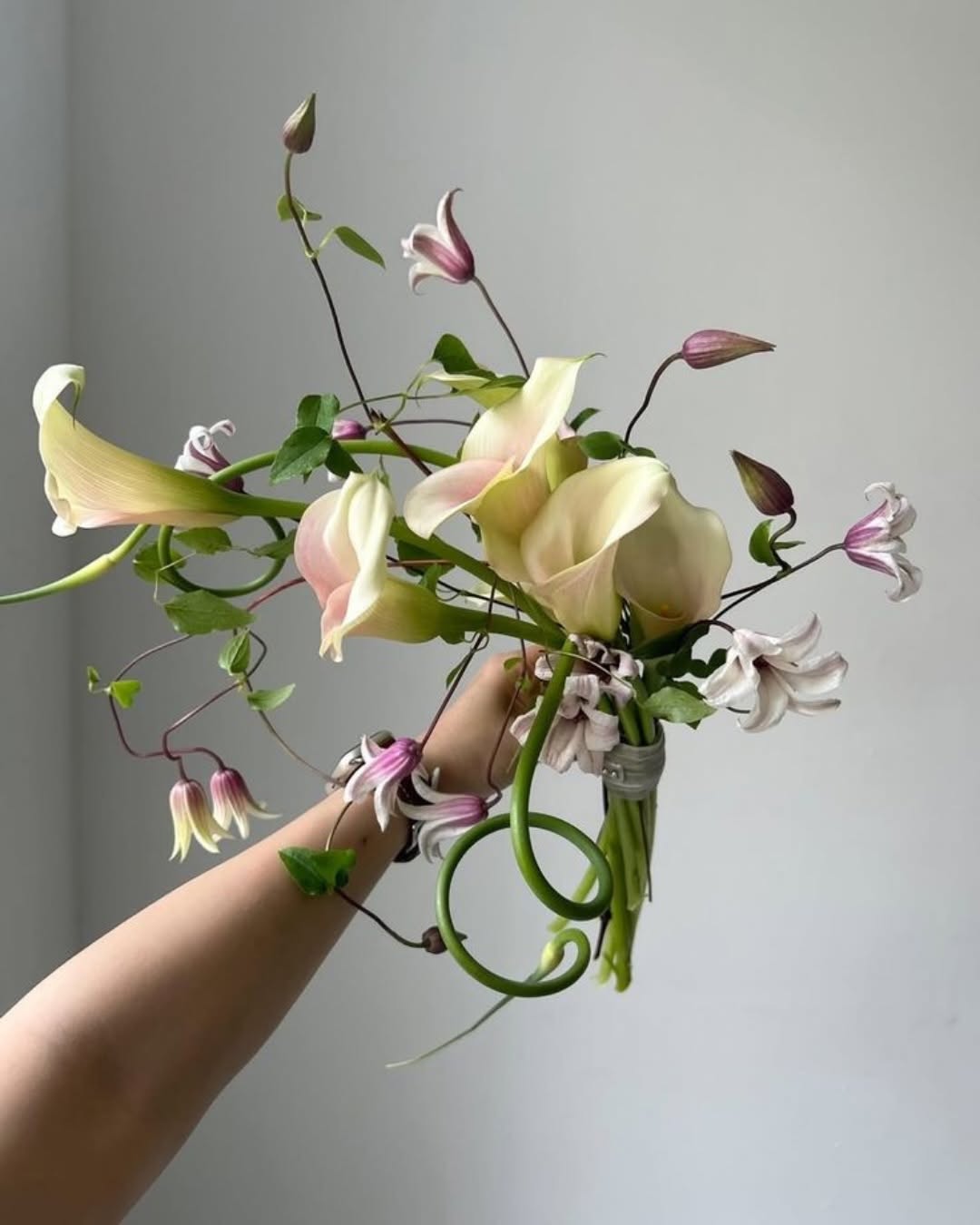
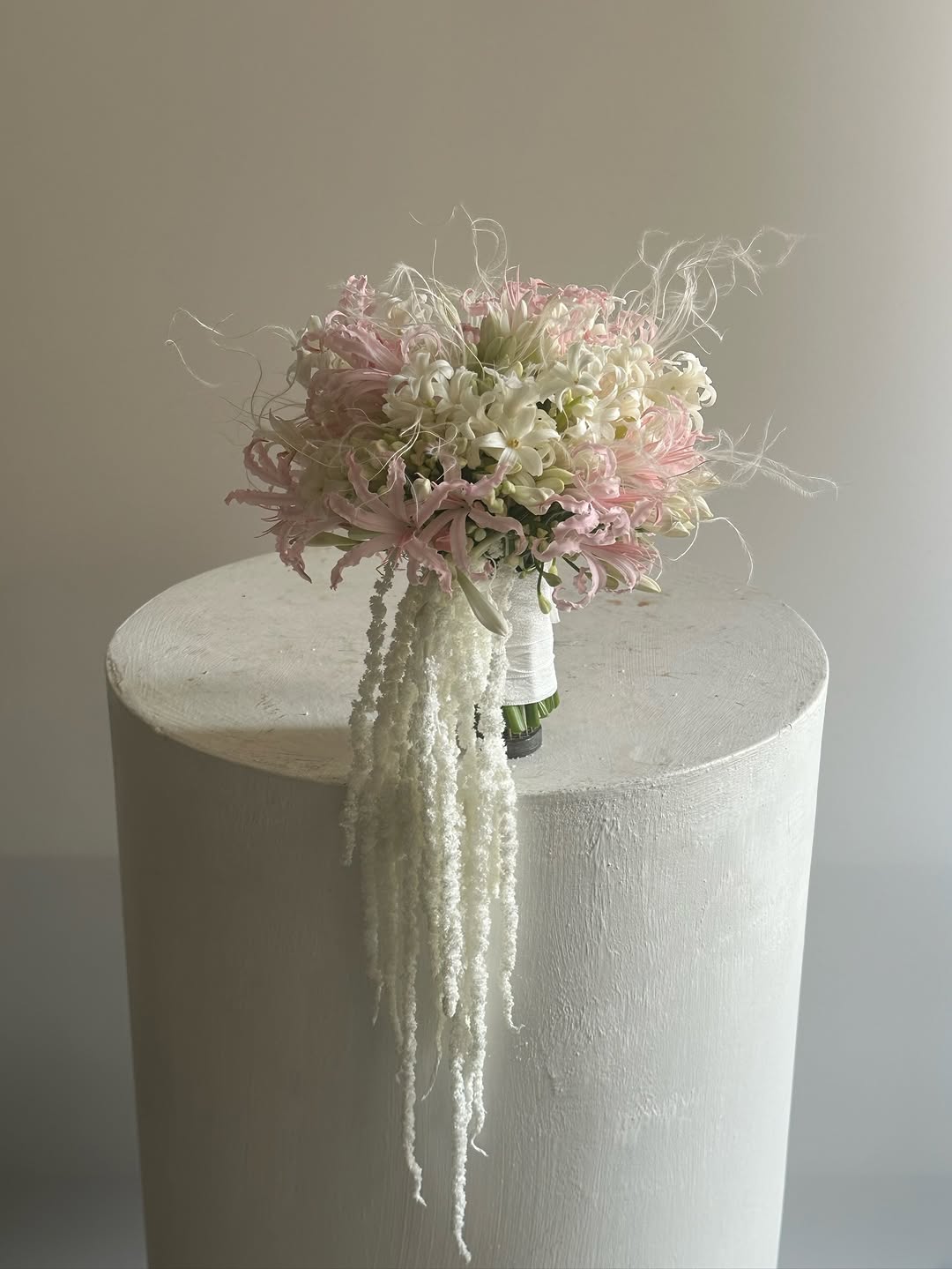
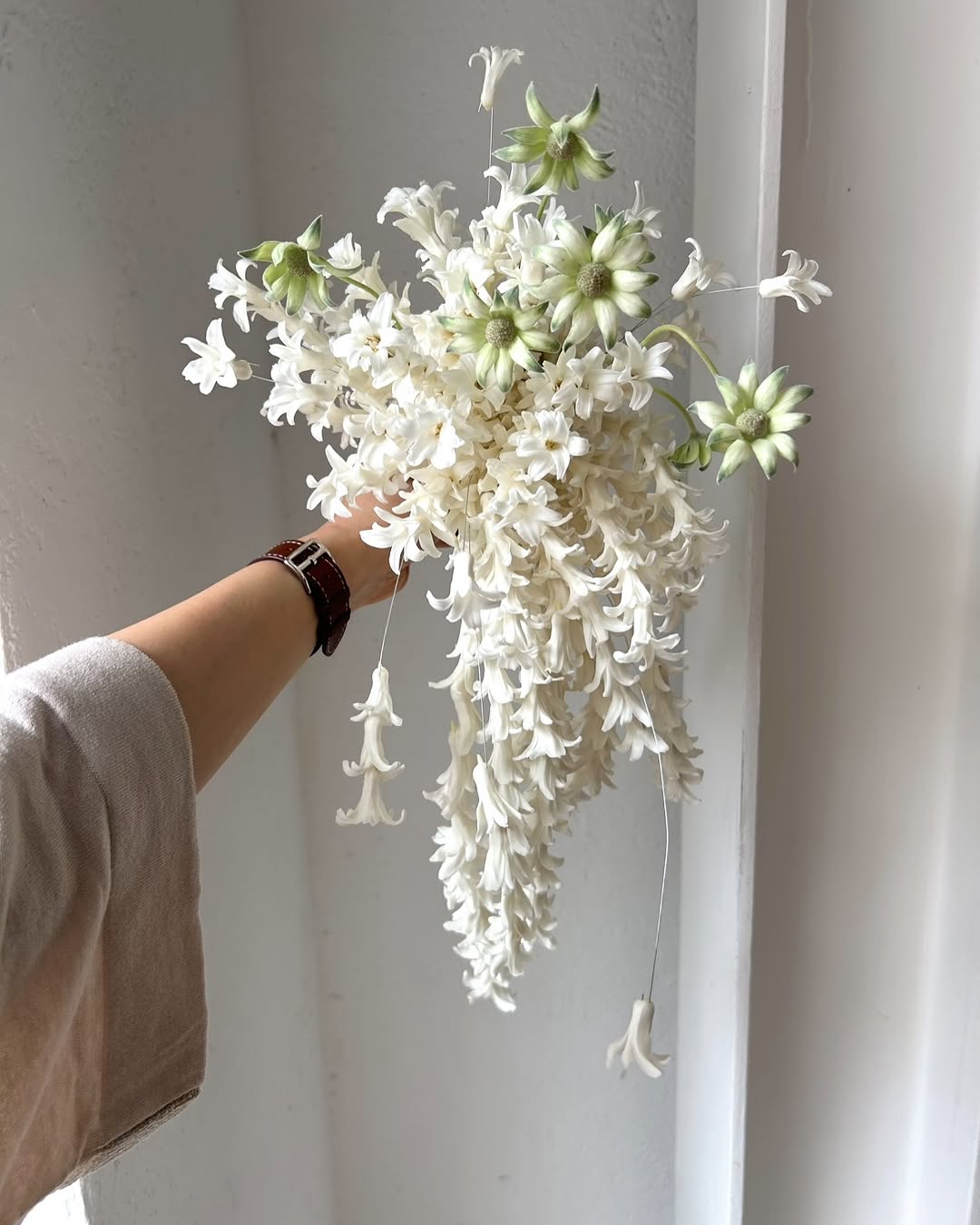
Skip the handle entirely and the flowers just wind straight around the wrist and forearm instead, sometimes trailing all the way down to the floor. Hyacinth works especially well for this since the individual florets bend into a loose spiral almost on their own, but calla lilies, carnations, and tiny wildflowers all get twisted into the same coiled shape. Less something to hold, more something worn.
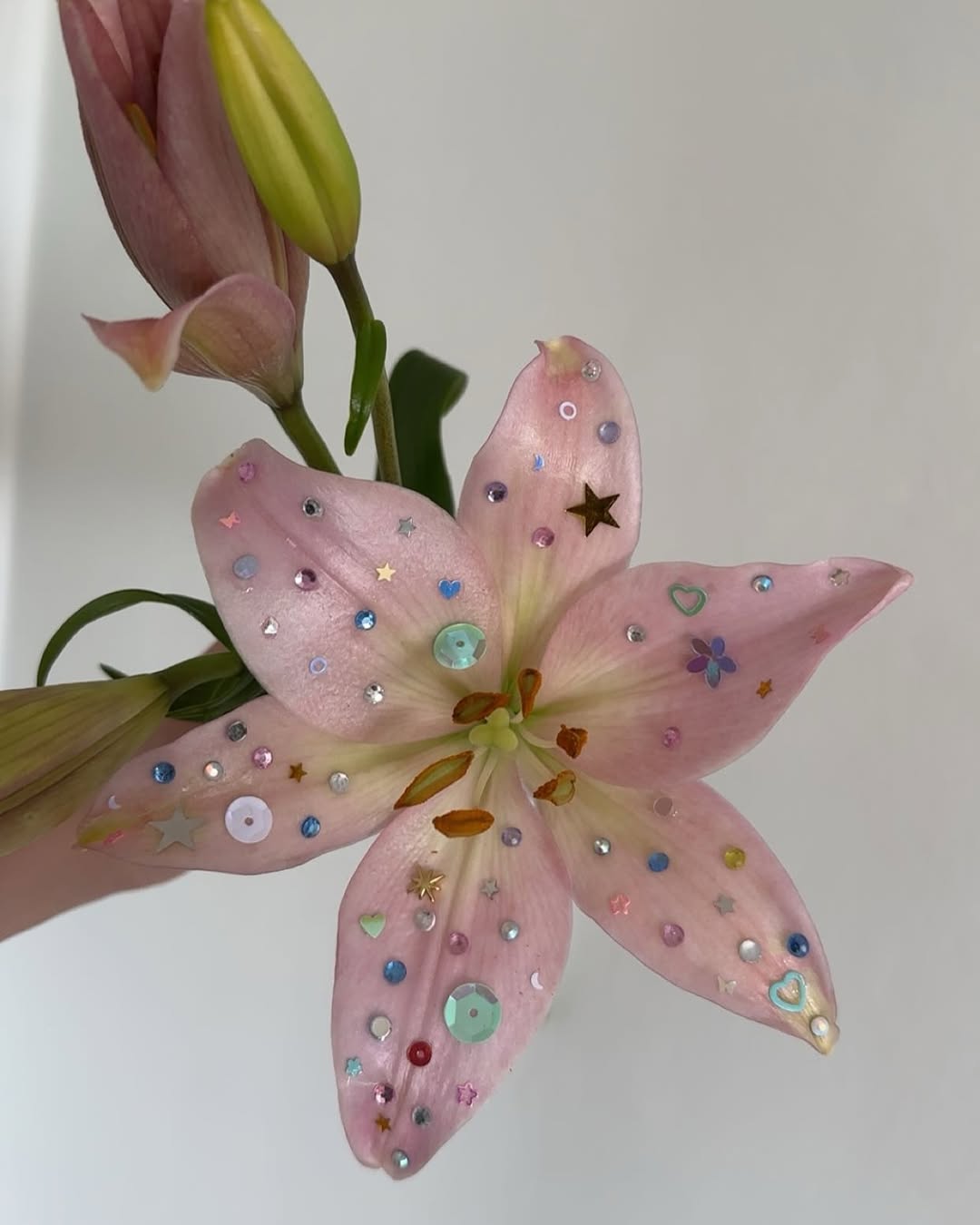
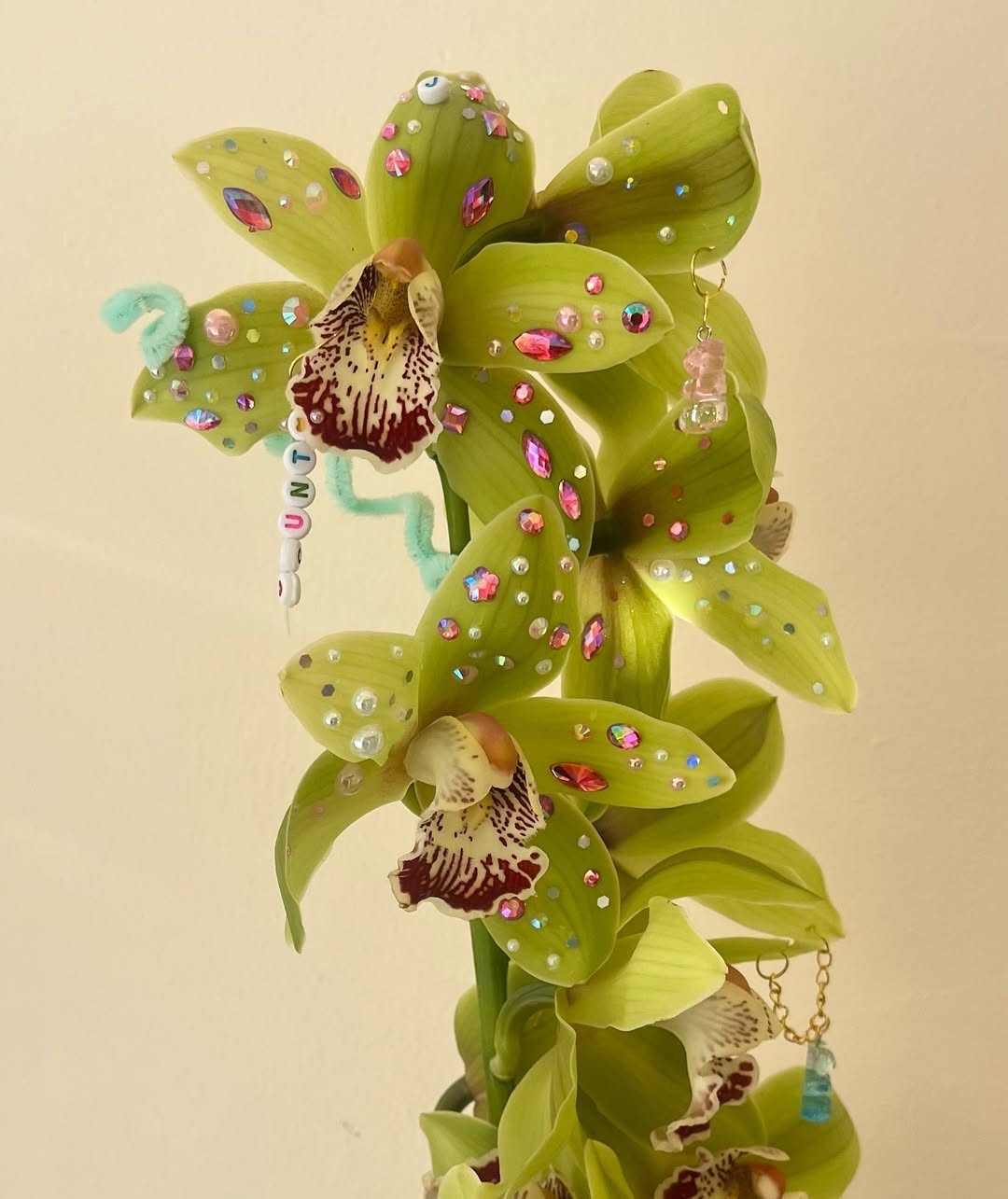
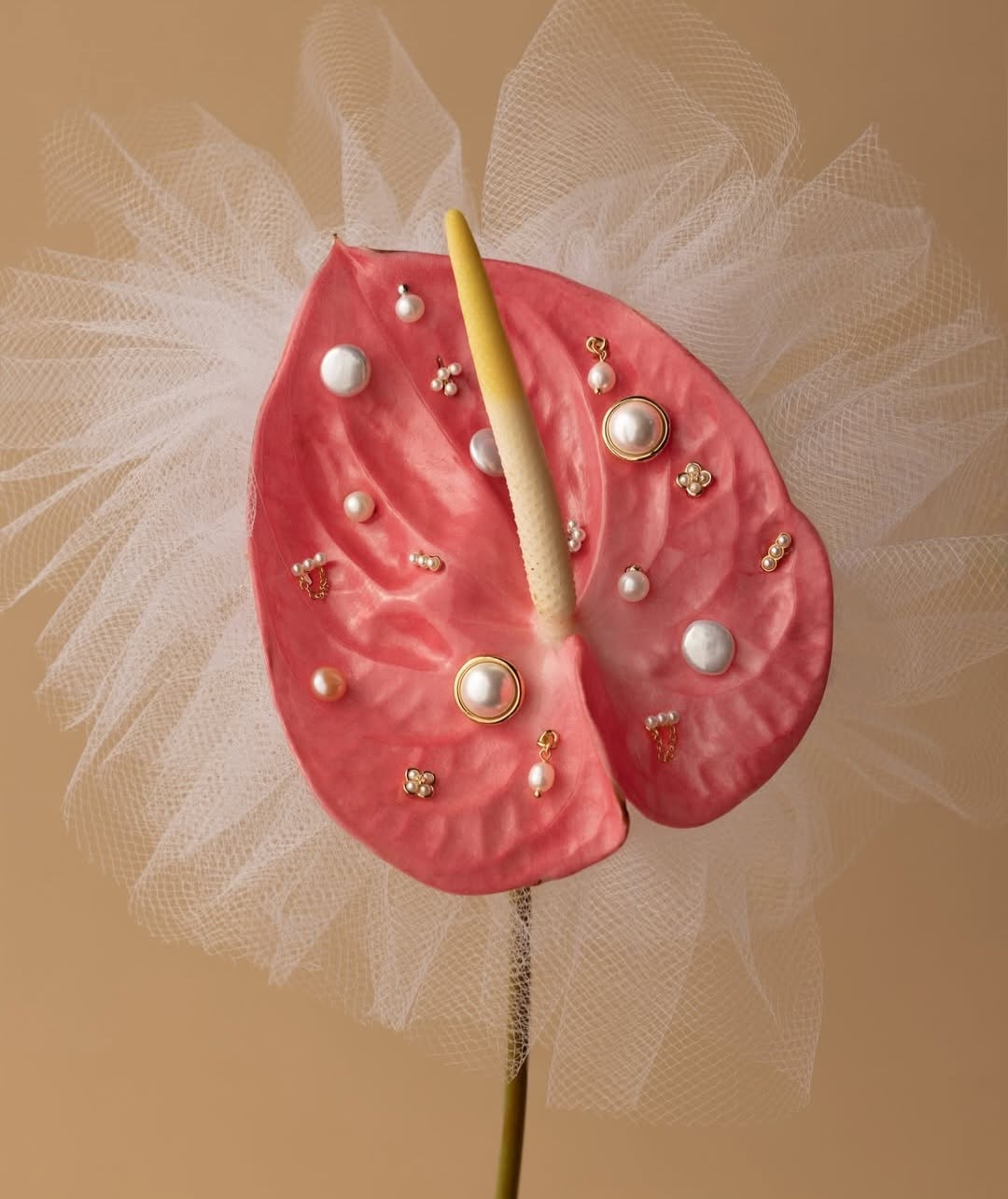
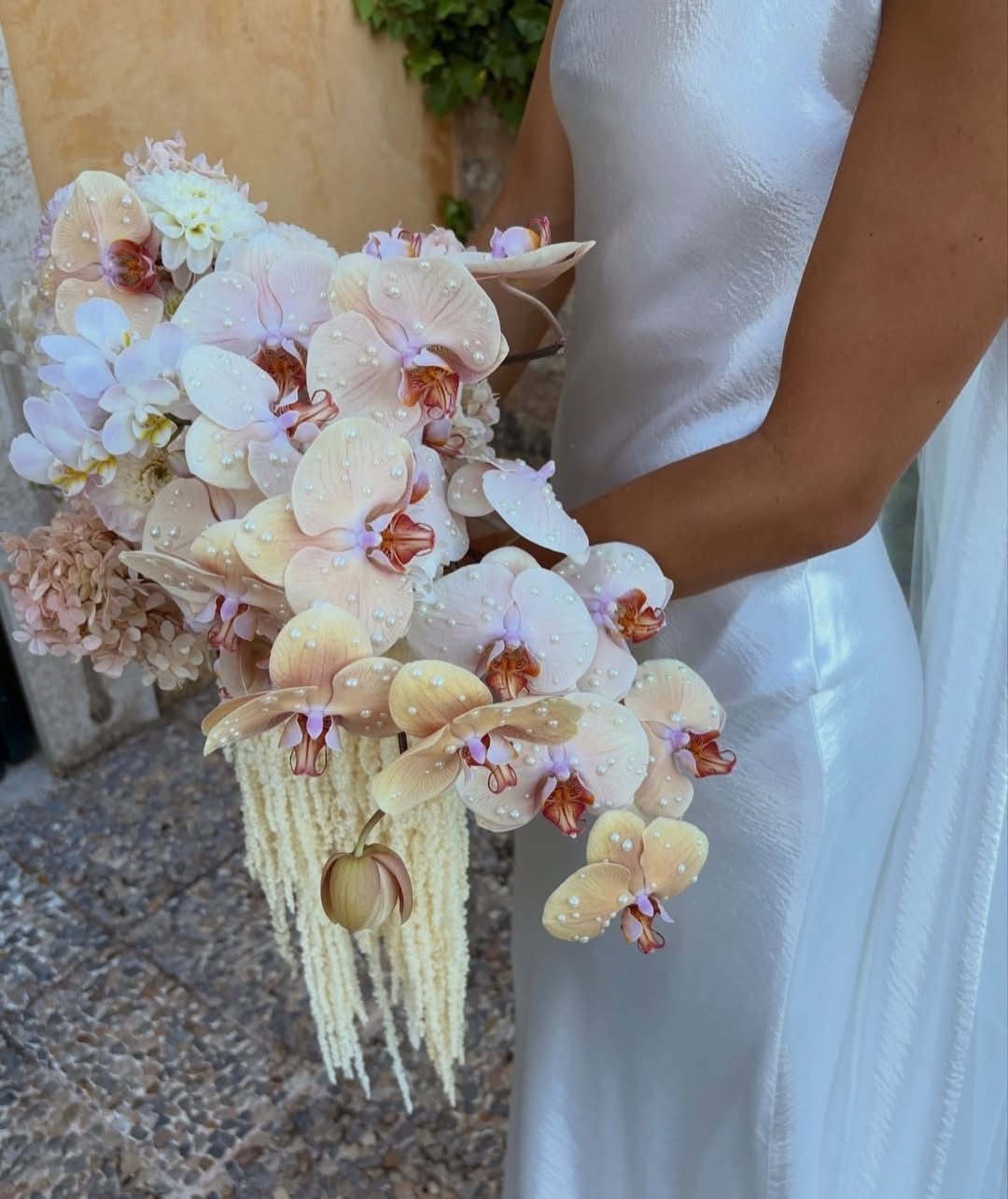
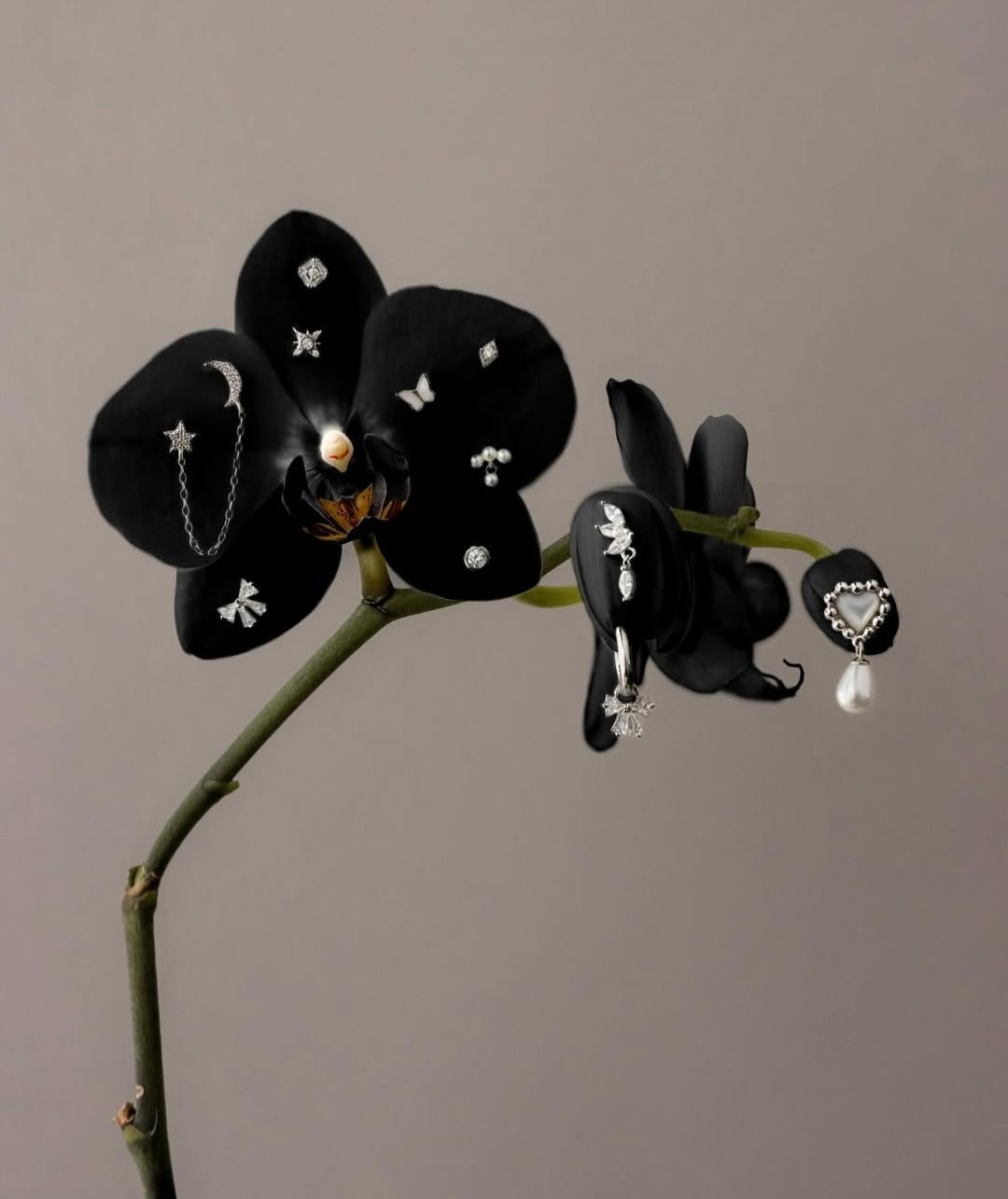
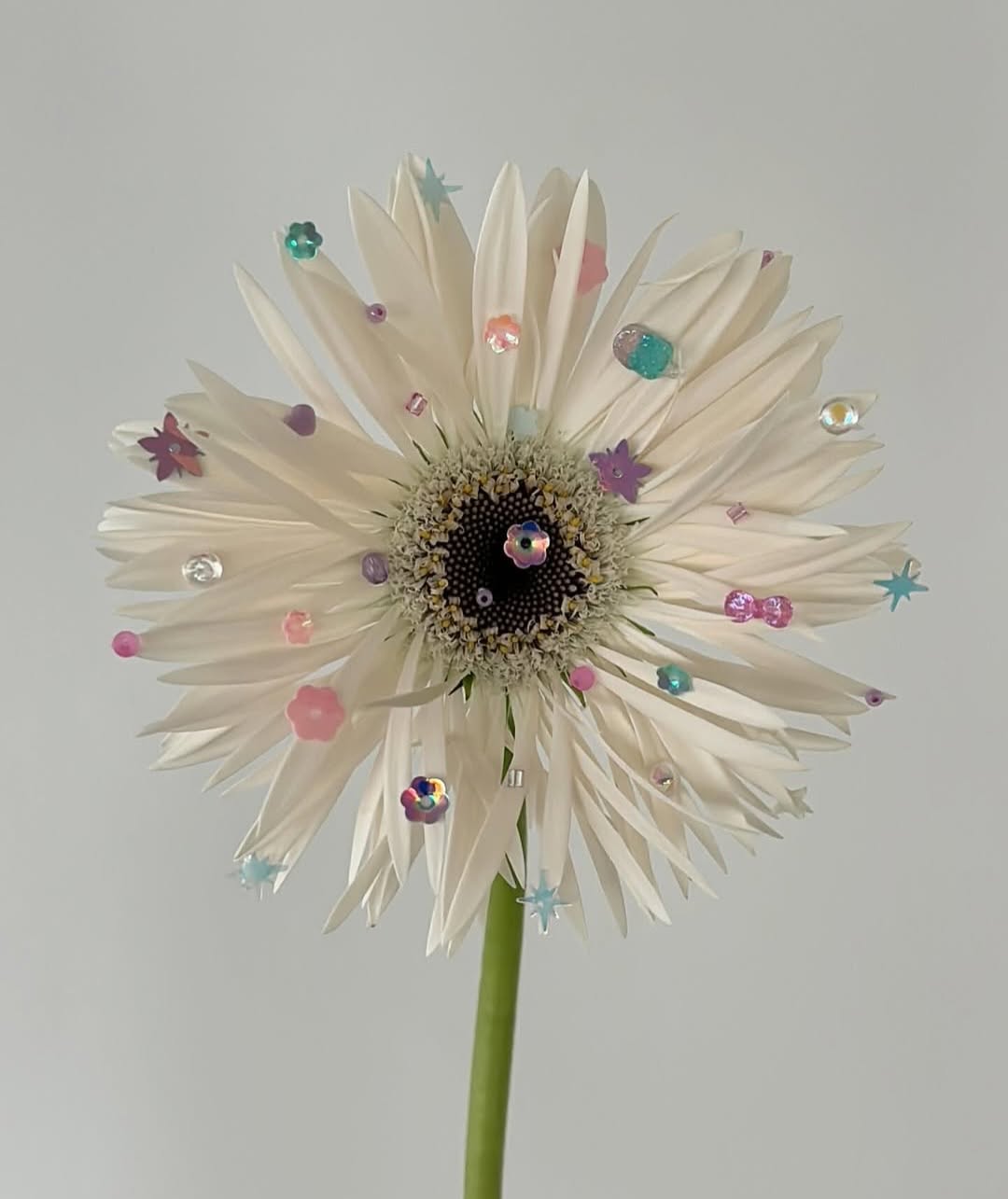
Crystals, gems, and tiny charms get scattered straight onto the petals here, sometimes barely-there and scattered like dew, sometimes closer to a full jewelry collection pinned onto a single bloom. The look leans maximalist and a little Y2K, more playful than romantic, and it tends to work best on flowers with wide, flat petals, lilies, orchids, gerbera daisies, anthurium, simply because there’s more surface to cover.
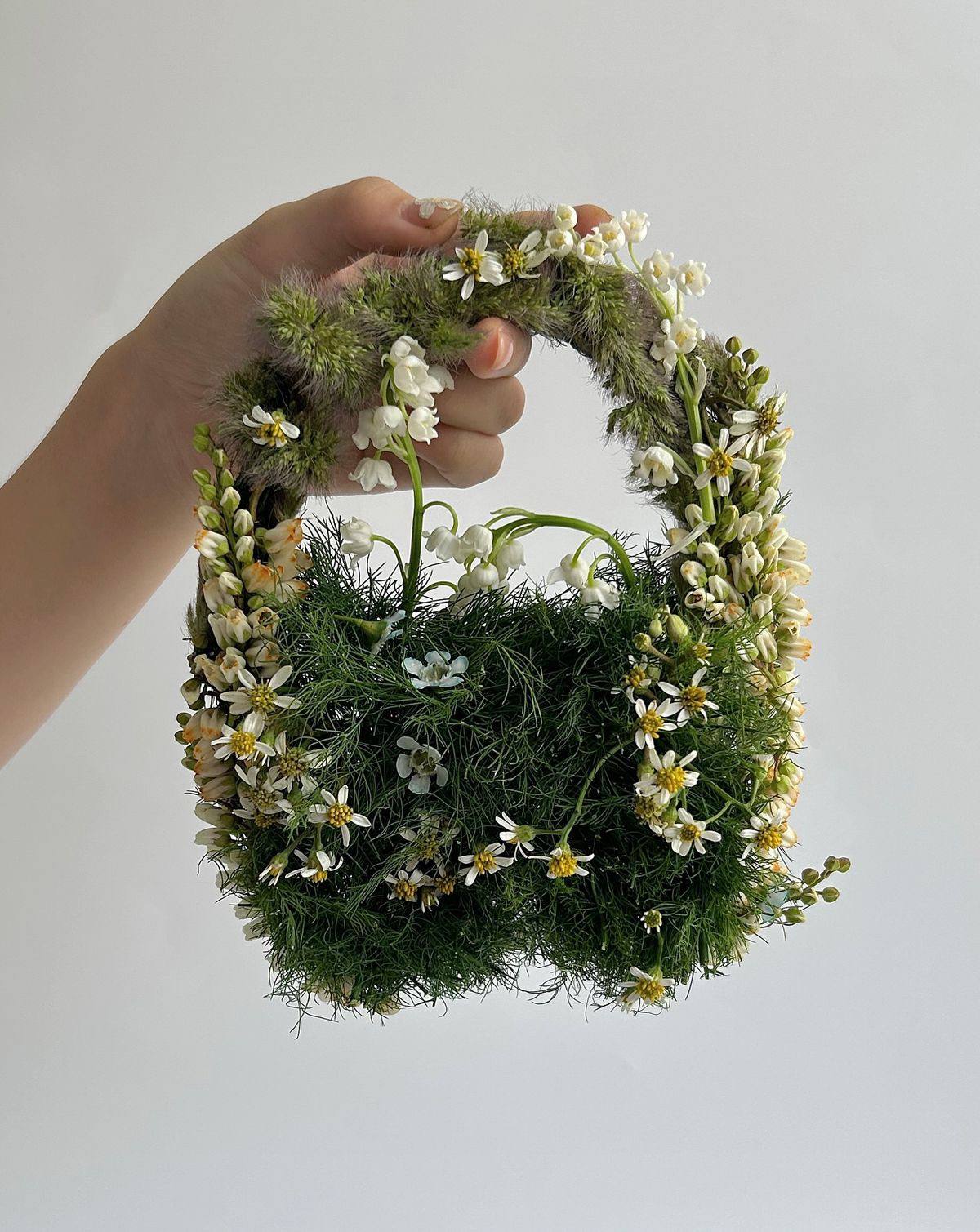
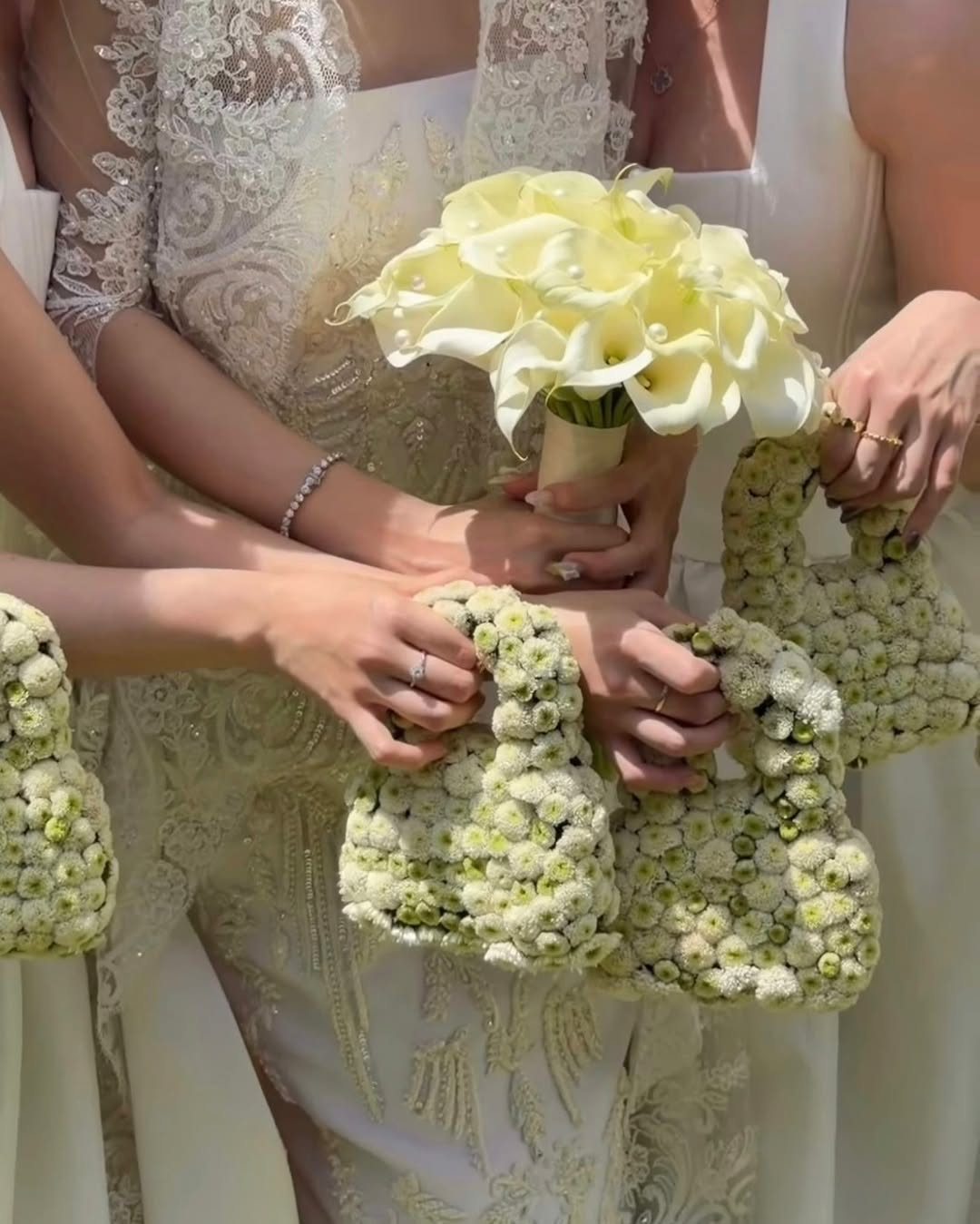
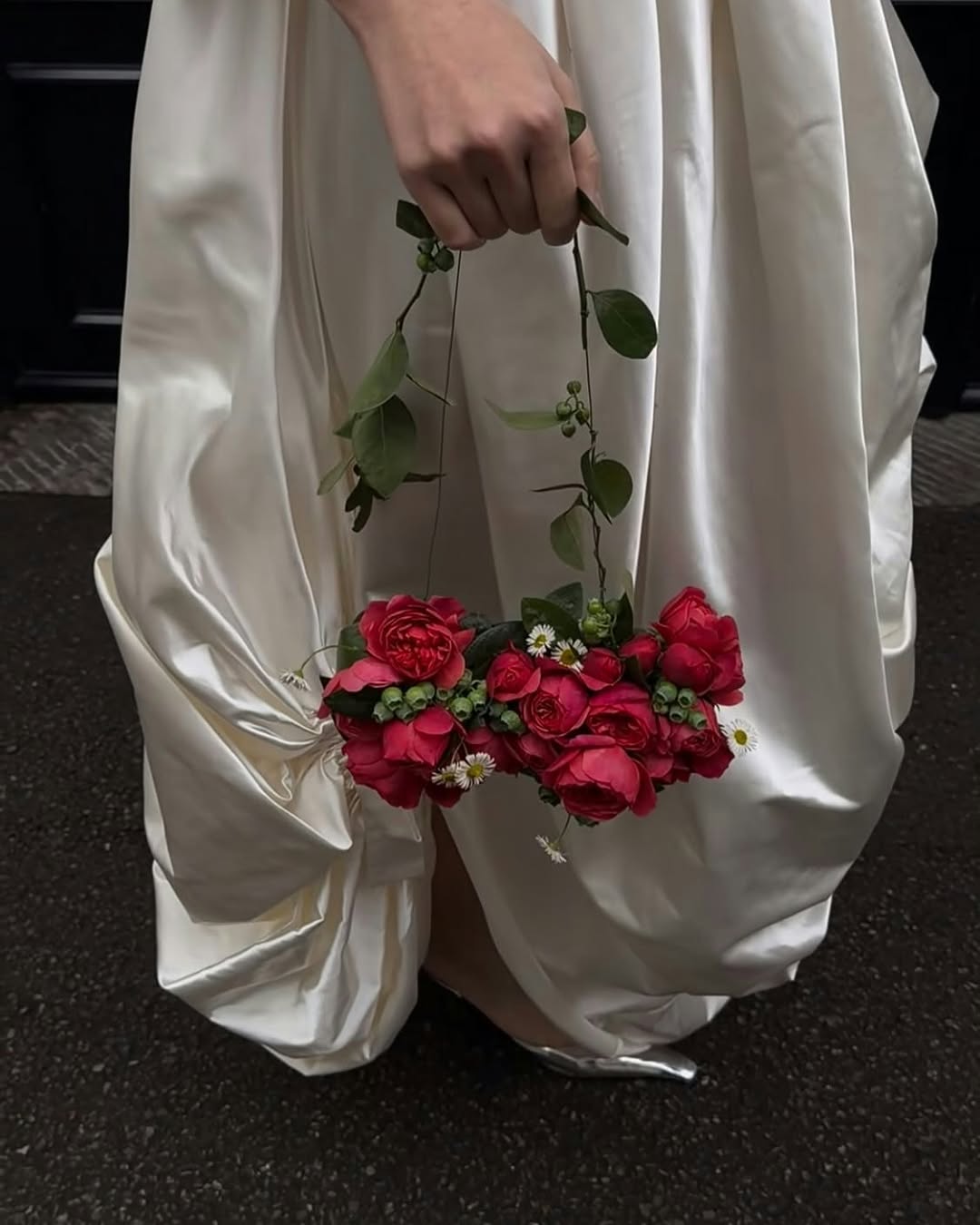
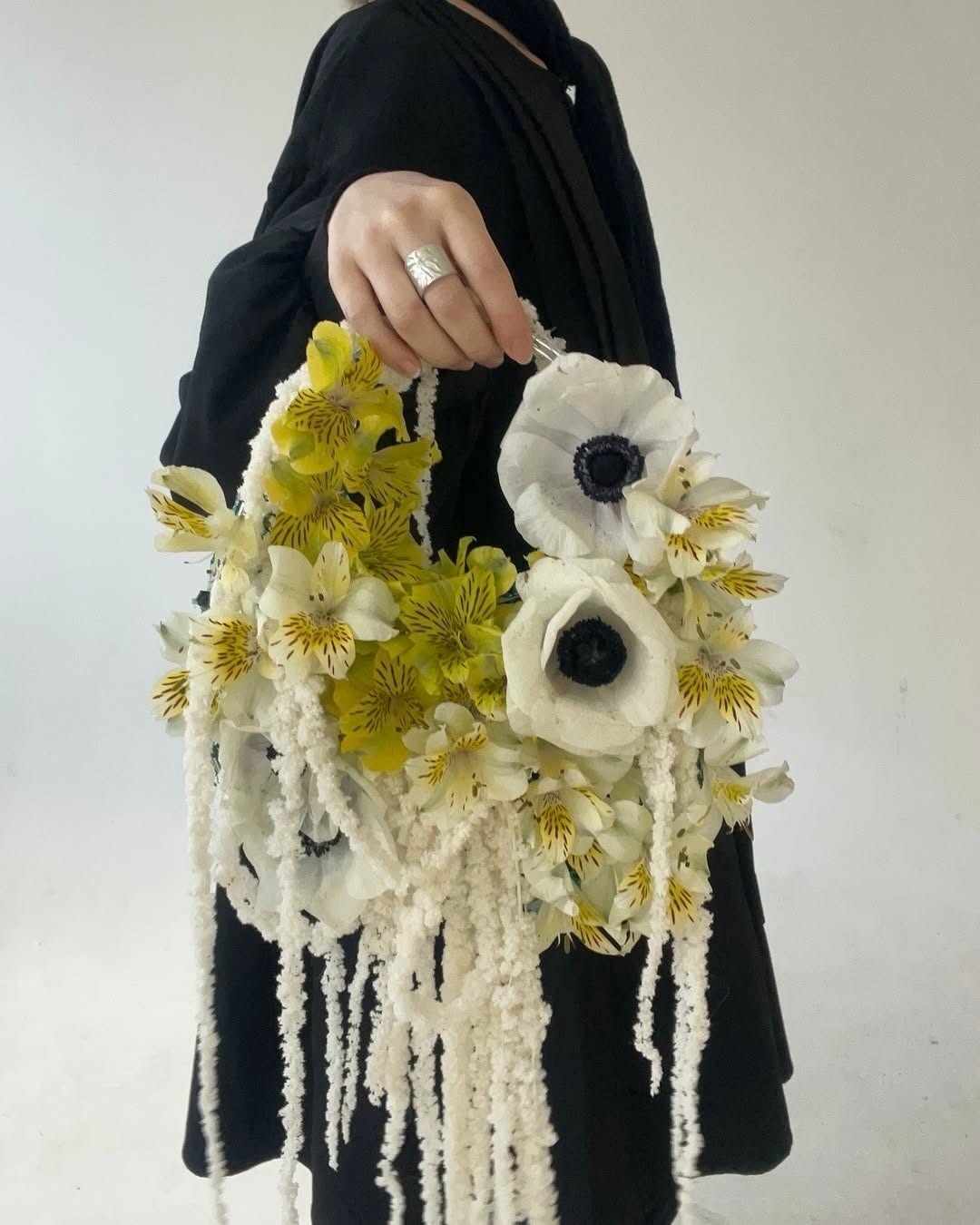
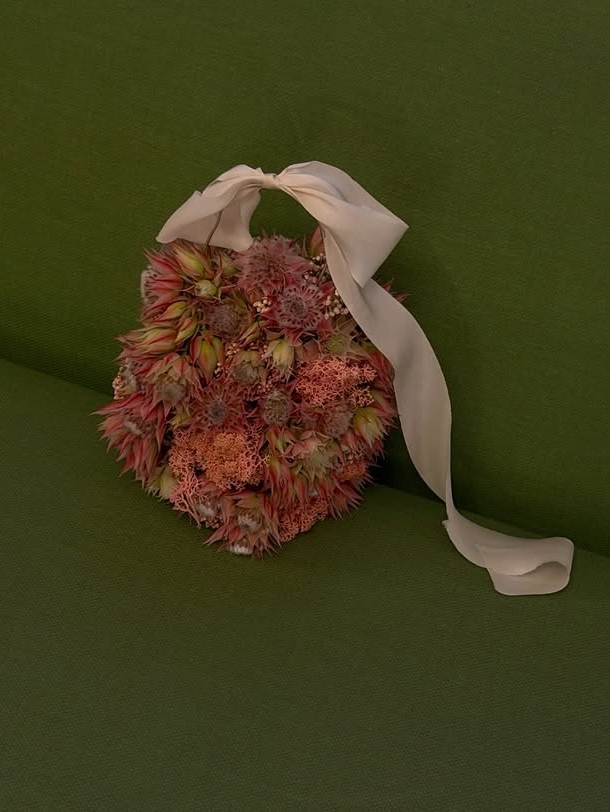
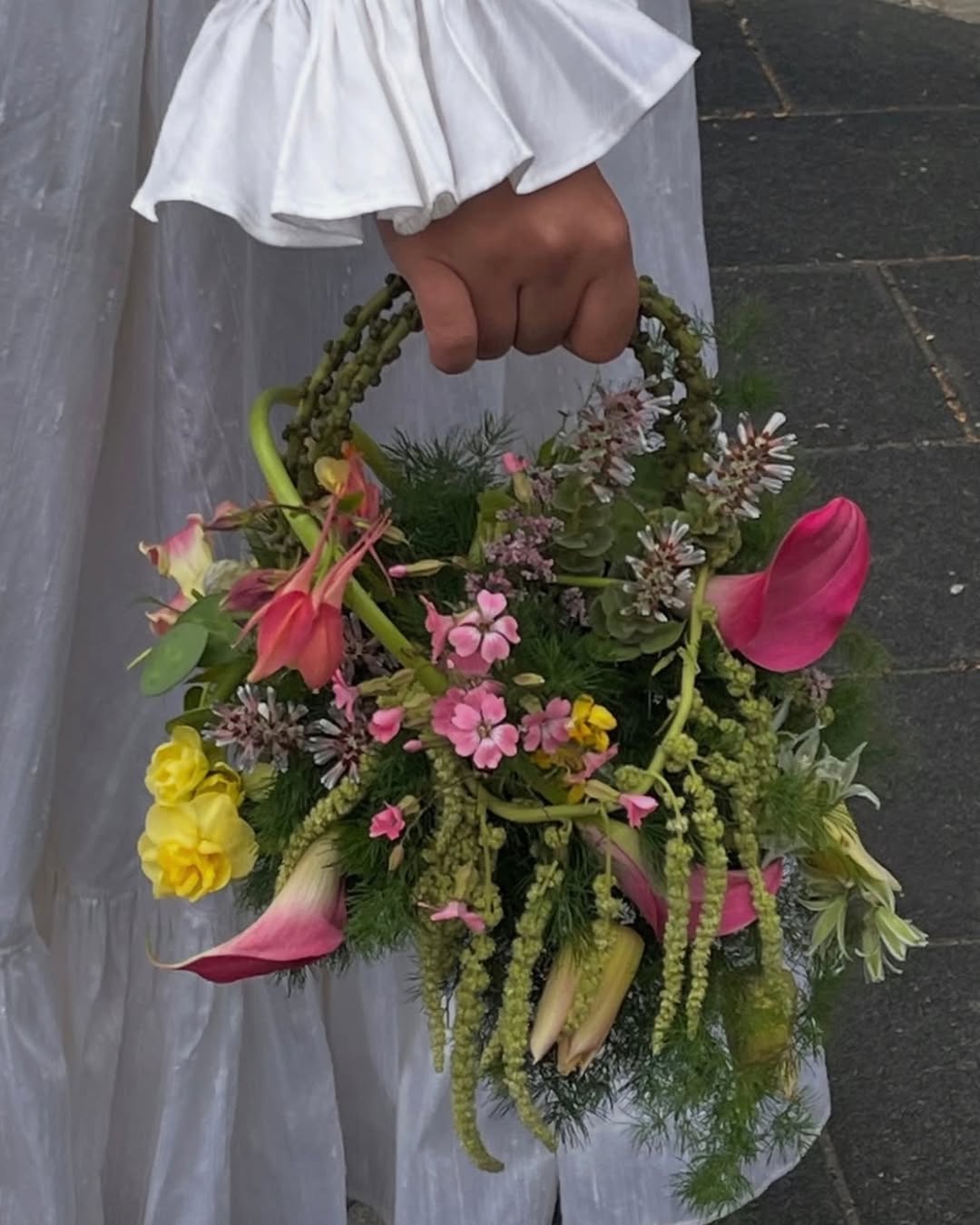
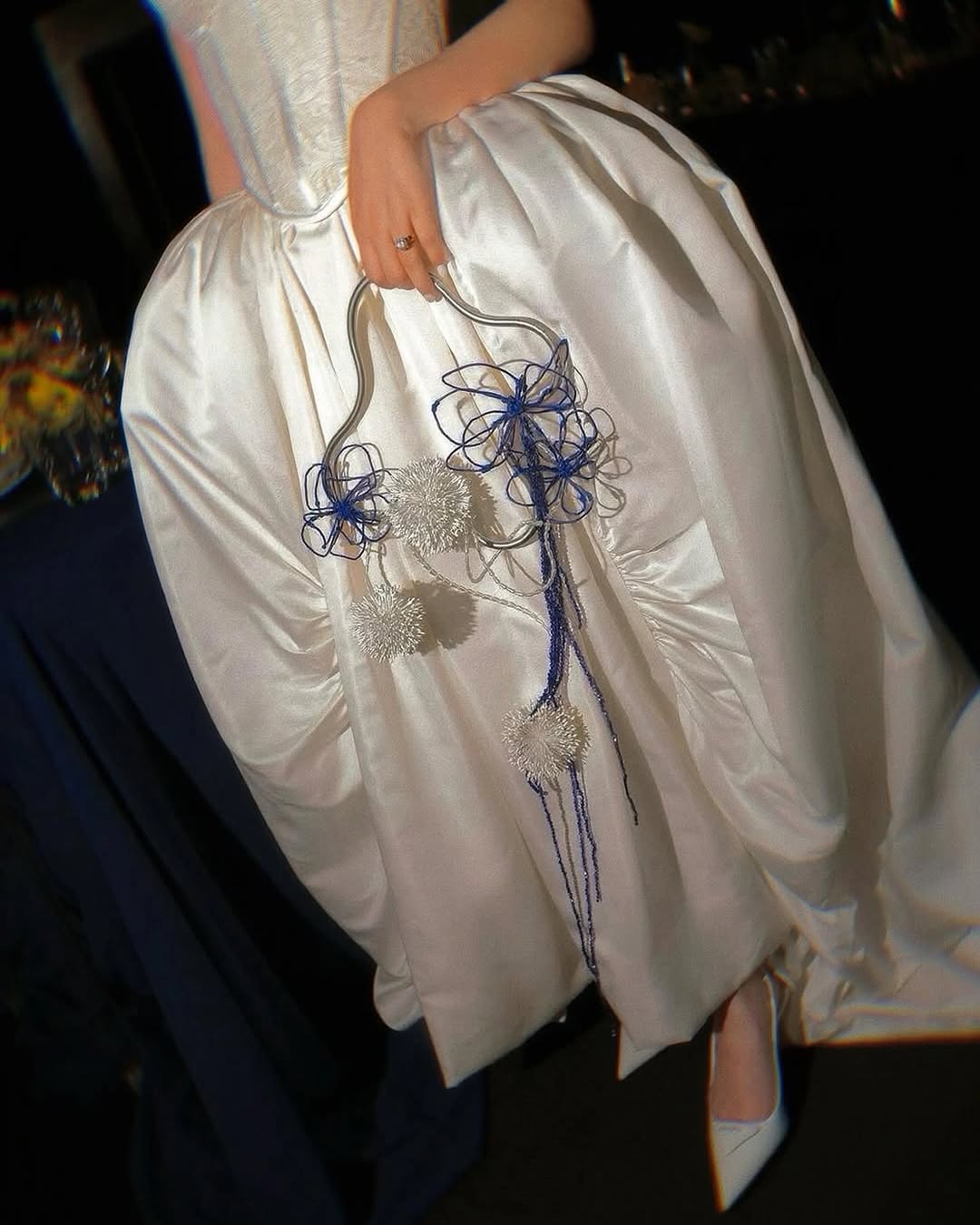
A handle turns a bouquet into a bag, literally, and once florists caught on, the shape stuck. The range is wider than you’d expect: a dense clutch built entirely from tight white mums, a woven fern-and-daisy tote with real structure to it, a satin ribbon bow standing in for a handle on a cluster of dried protea, even flowers strung loosely from vines and left to dangle underneath. It’s less about carrying anything and more about walking down the aisle with both hands technically free.
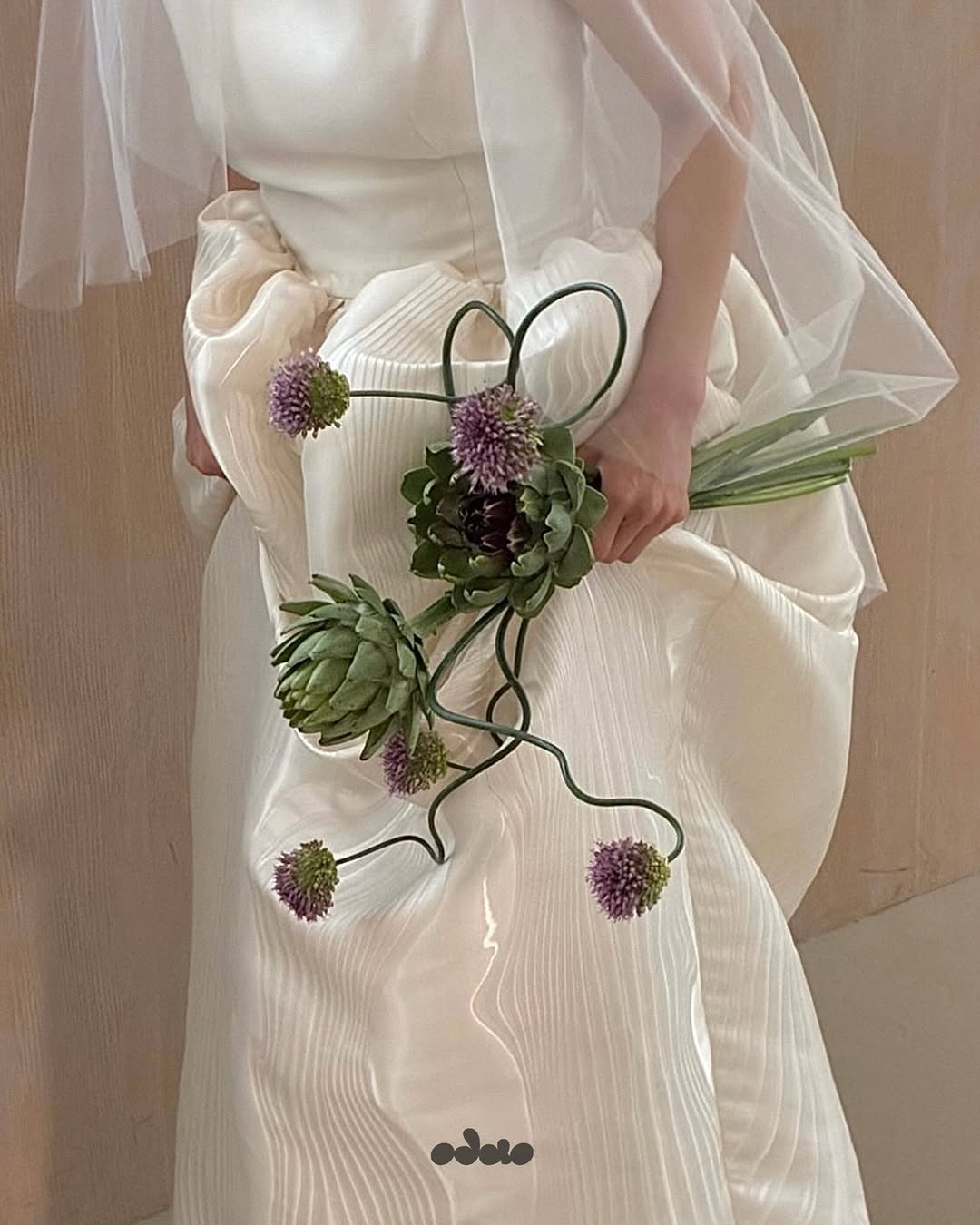
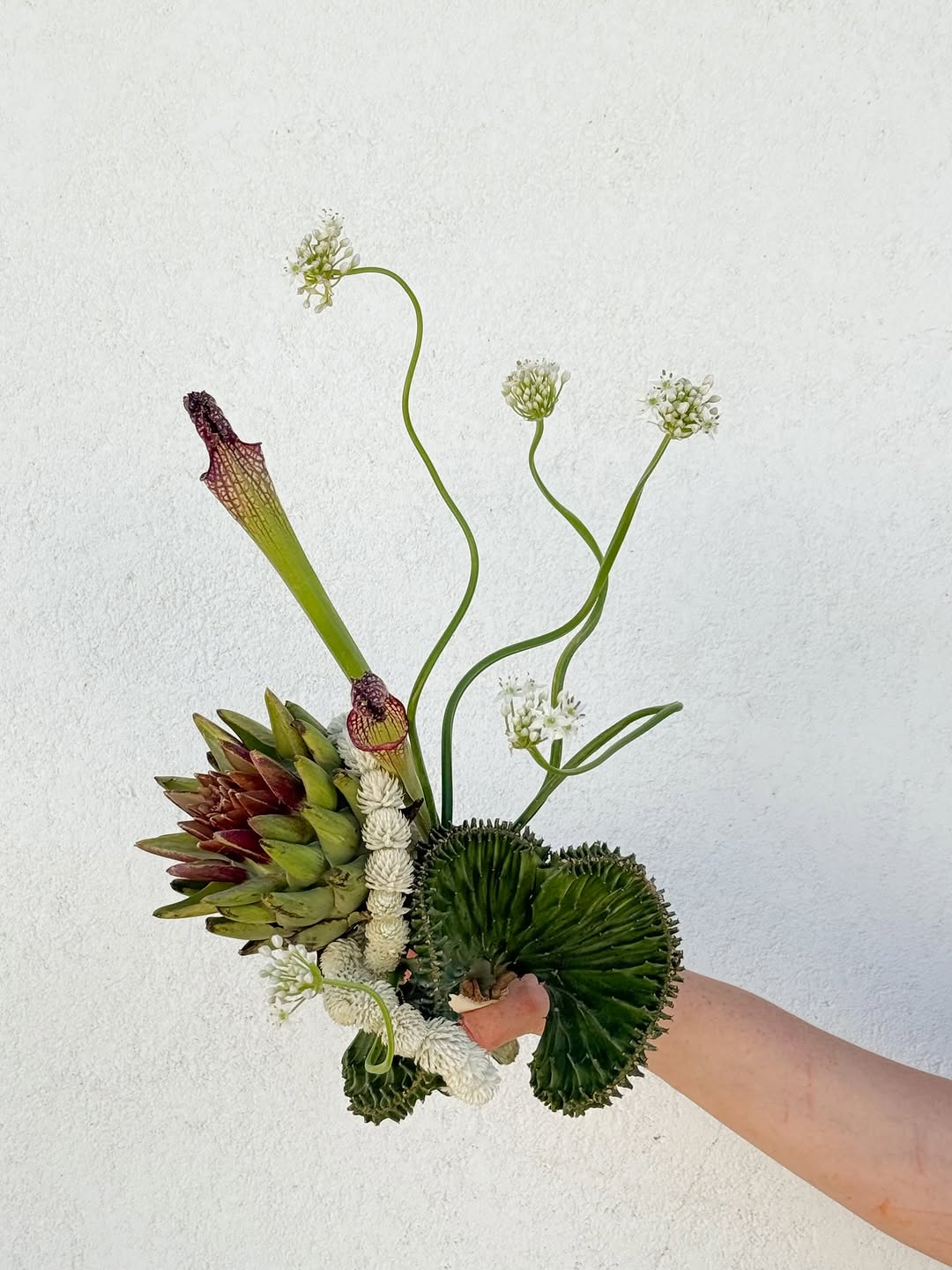
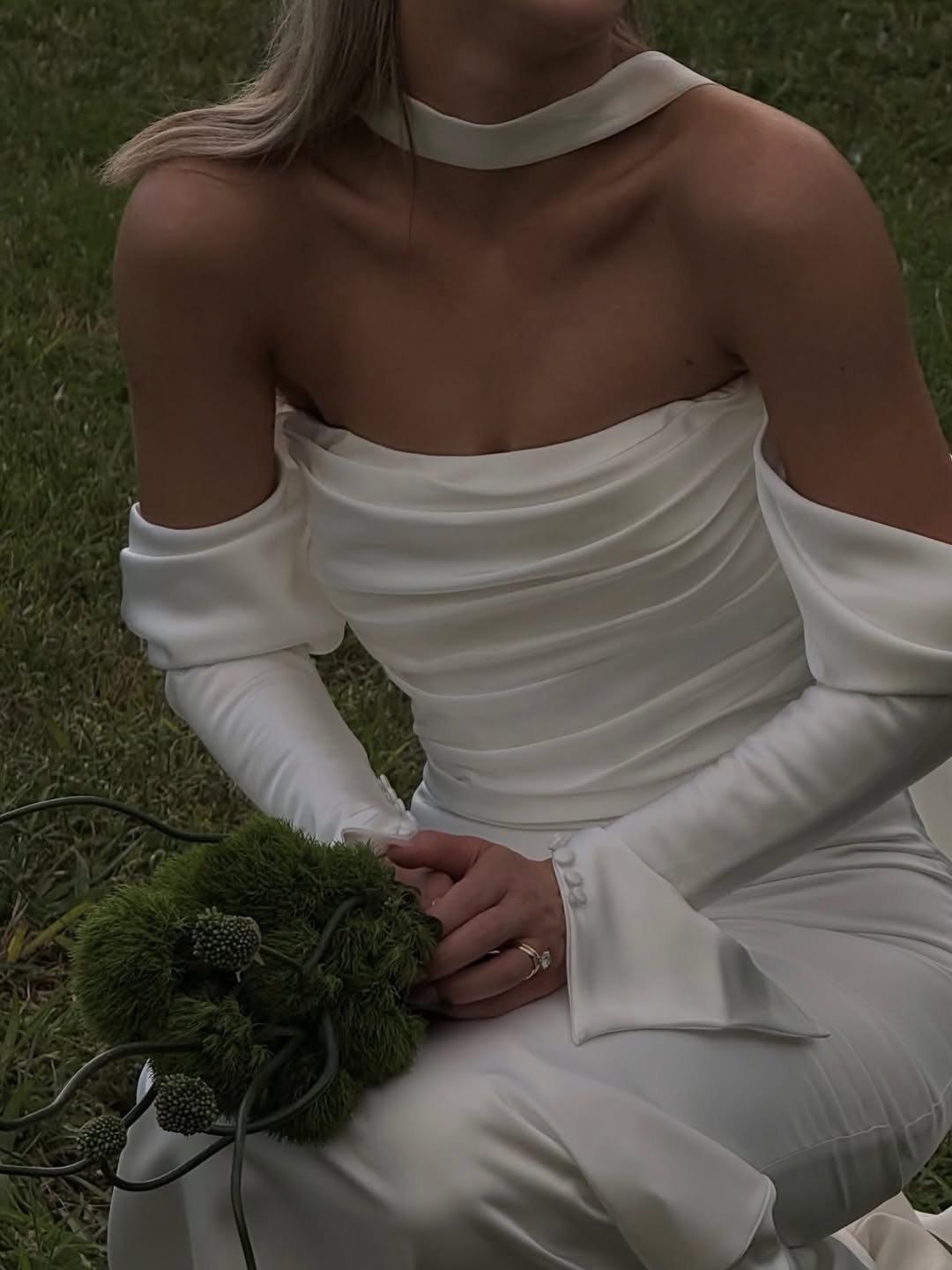
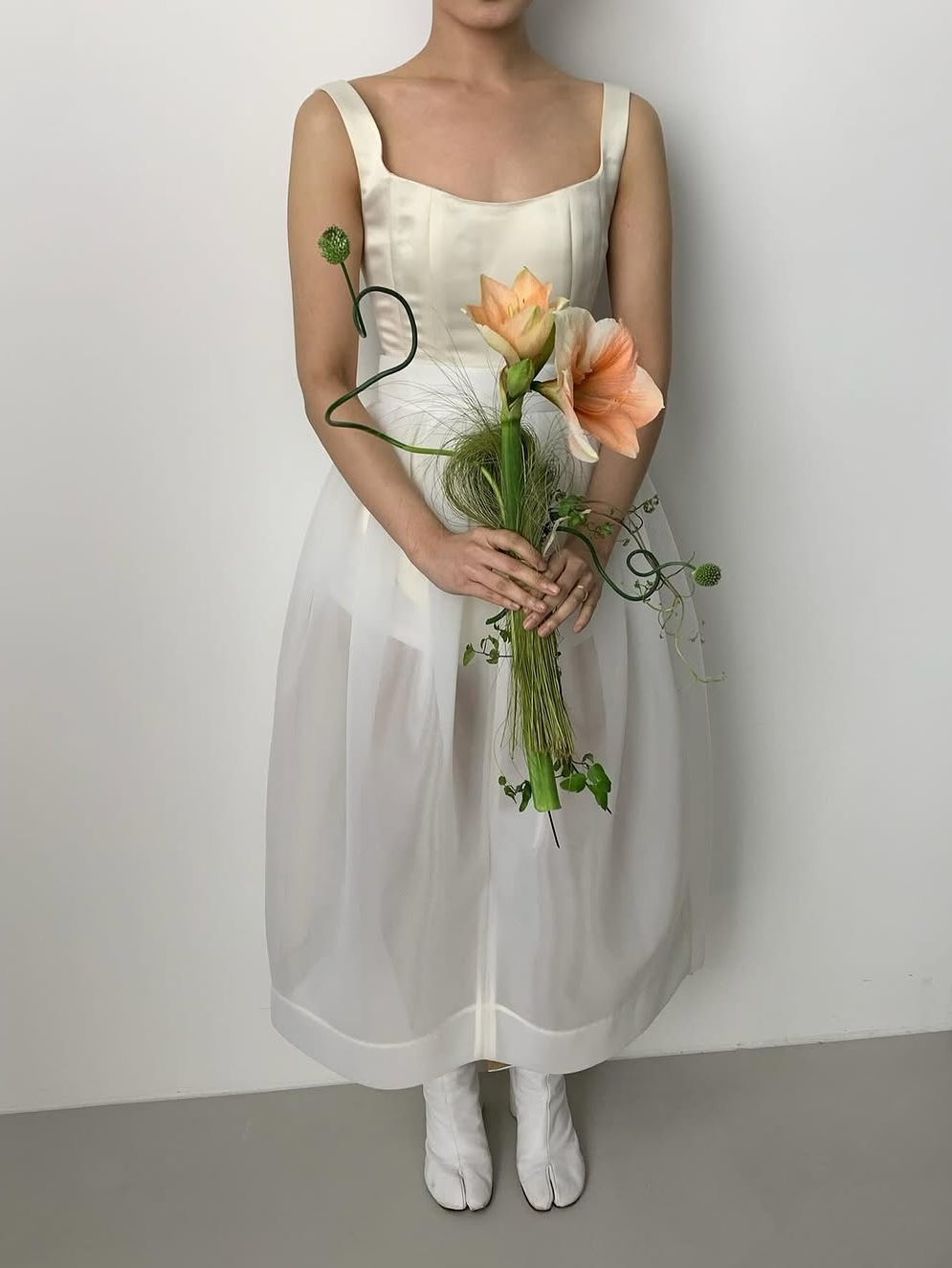
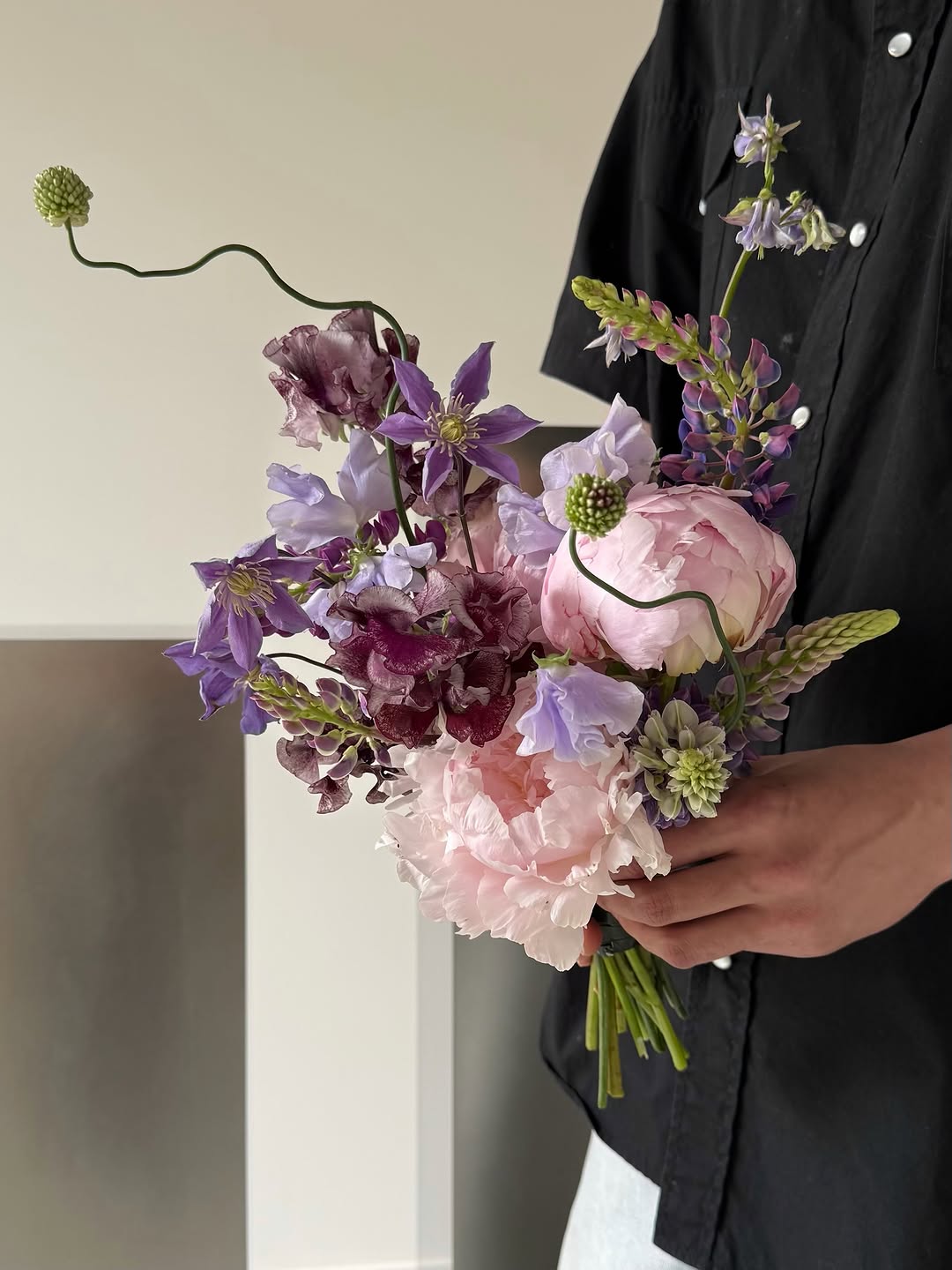
Those loose, wiry curls threading through an otherwise structured bouquet usually trace back to snake-ball allium, the curly-stemmed variety with a small bud instead of the classic round bloom. Florists are increasingly leaving the bulb structure exposed on purpose, letting a few stems escape and curl outward past the main cluster of flowers. It breaks the tidy, rounded silhouette that’s defined bridal bouquets for years, trading a clean outline for negative space and a few stems that clearly have a mind of their own.
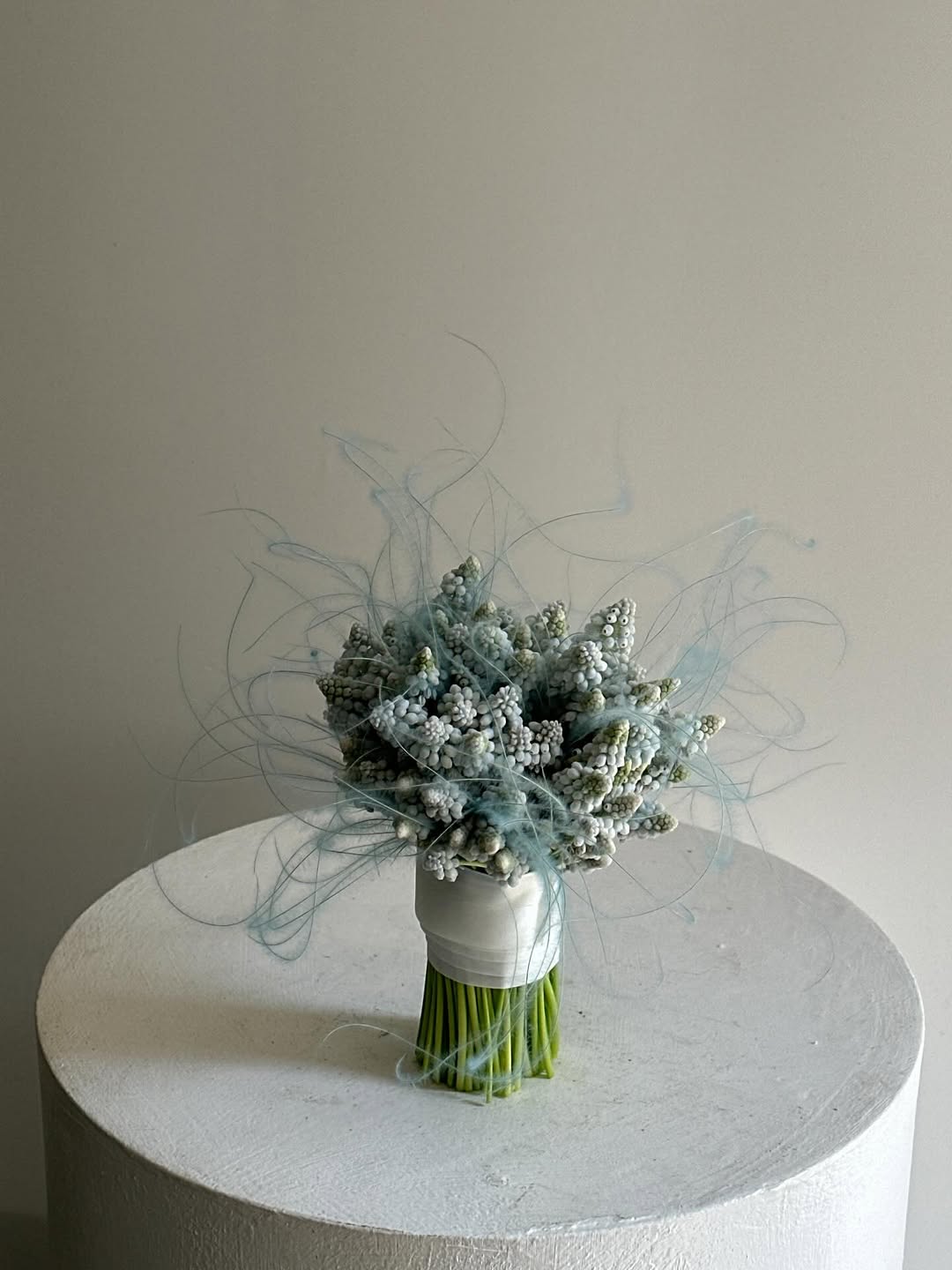
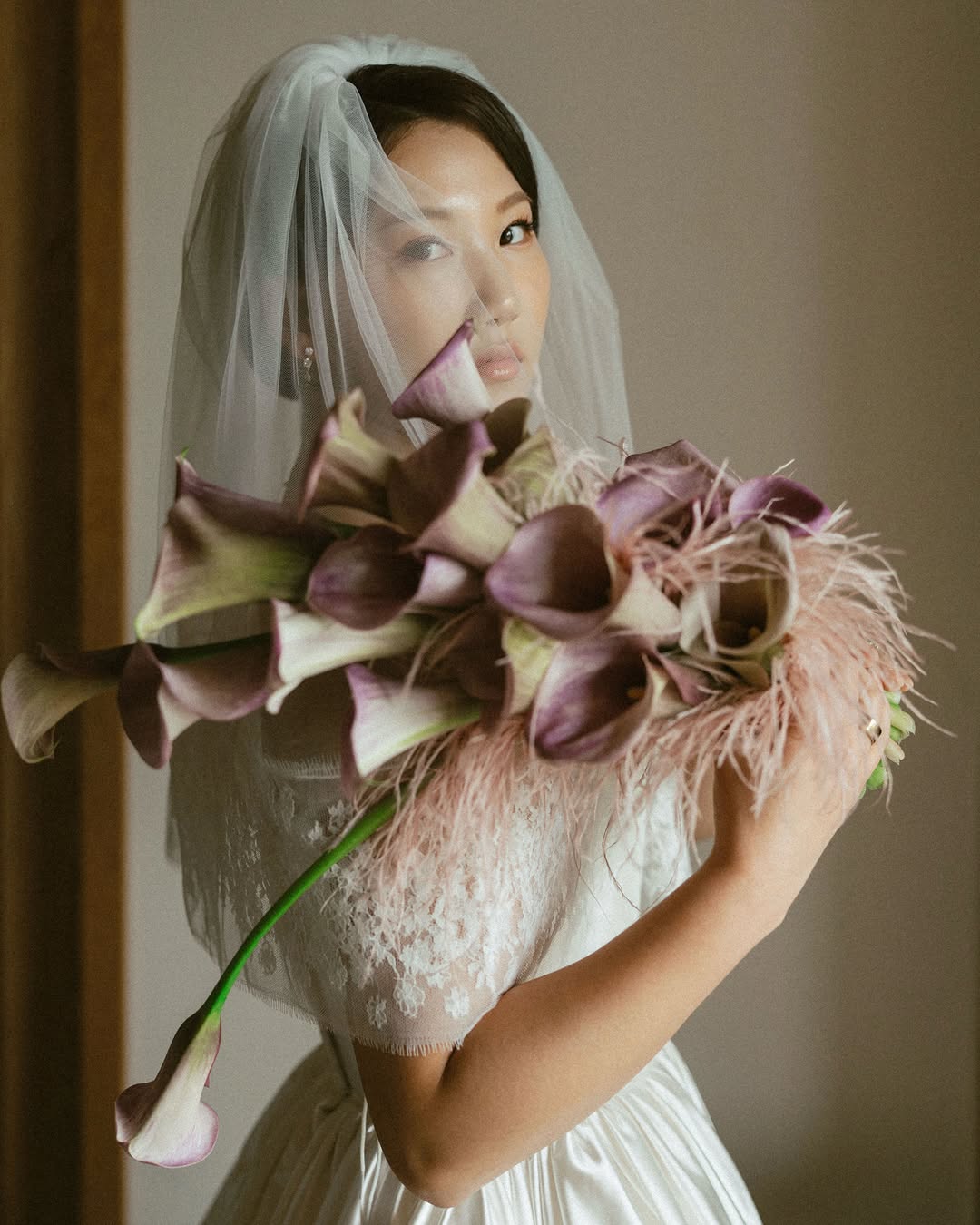
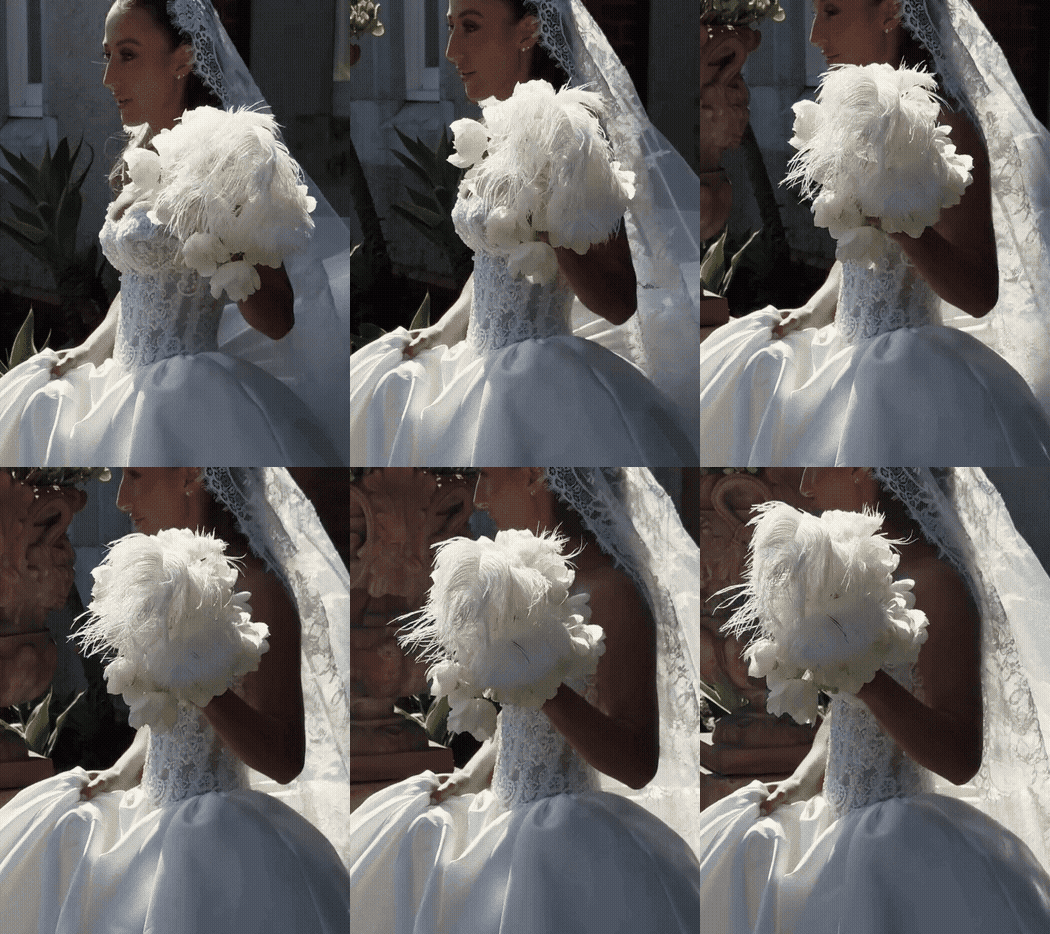
There’s no greenery in any of these, feathers are doing that job instead. Tucked between calla lilies, tulips, and muscari, they fill the same gaps foliage usually would, but the result reads soft and slightly wild rather than structured. Sometimes it’s just a few wisps escaping the edges, other times the feathers nearly take over and the flowers become the accent instead of the other way around. Either way, it swaps out the usual leafy filler for something with a lot more movement and an unmistakably romantic, almost dreamy finish.
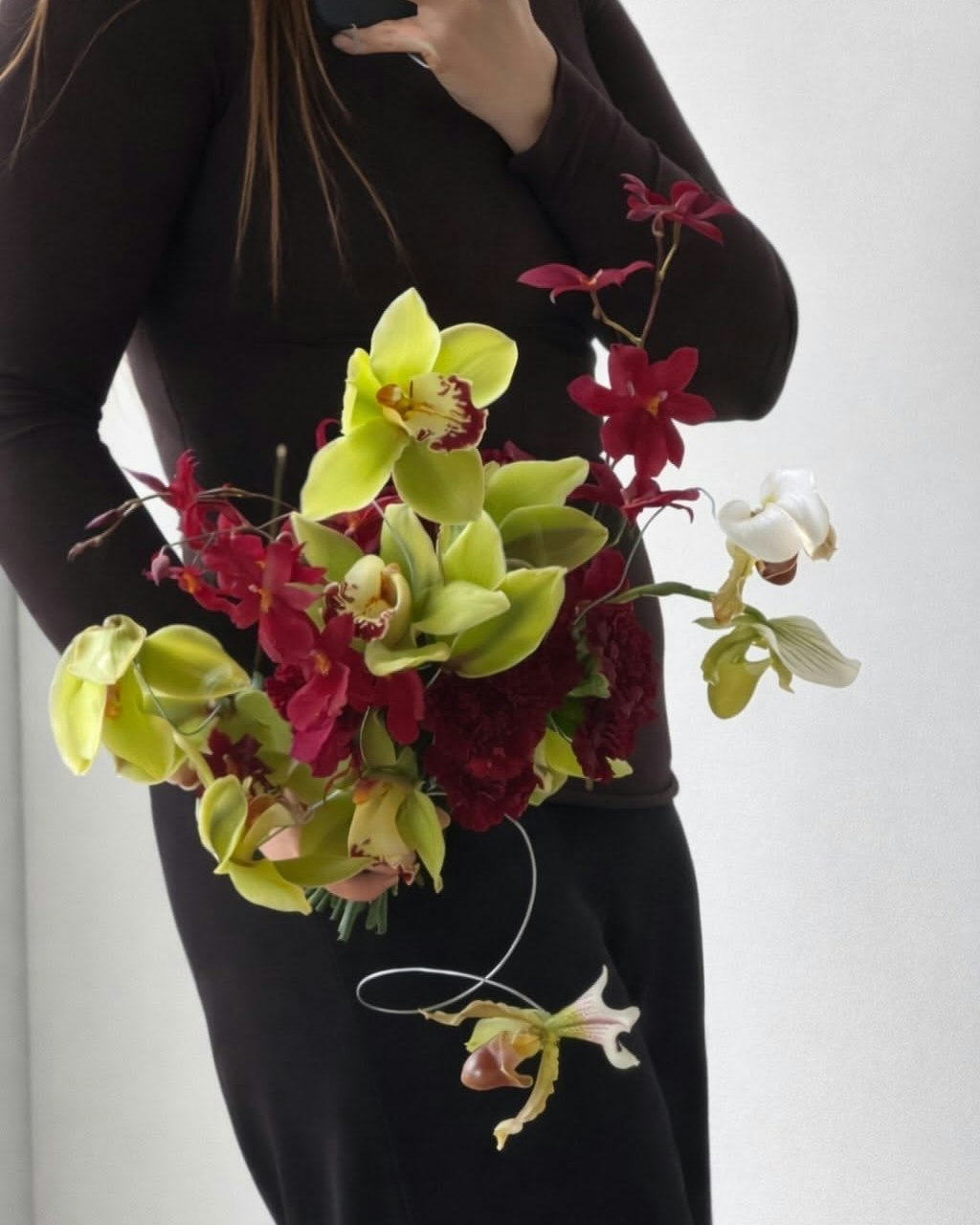
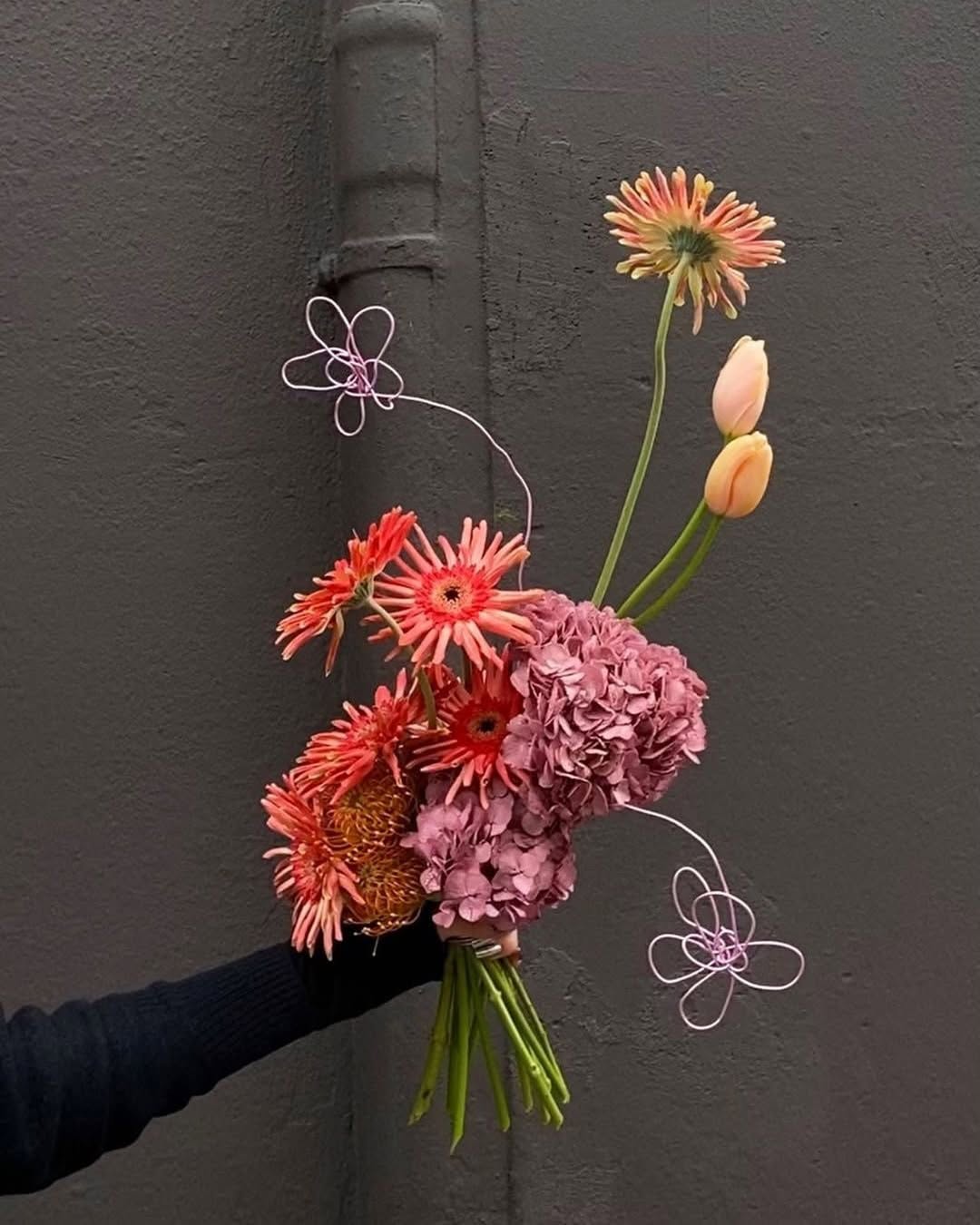
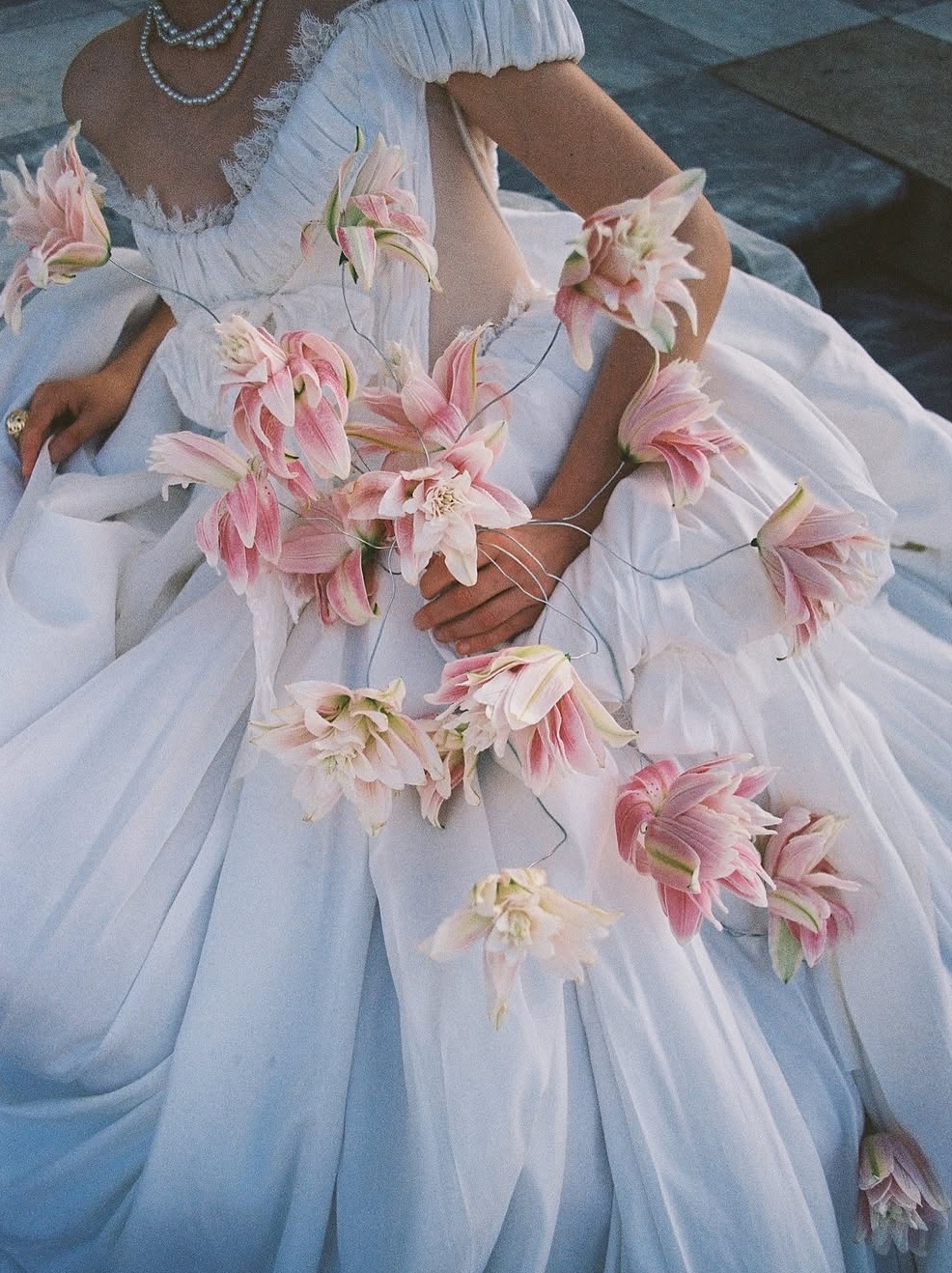
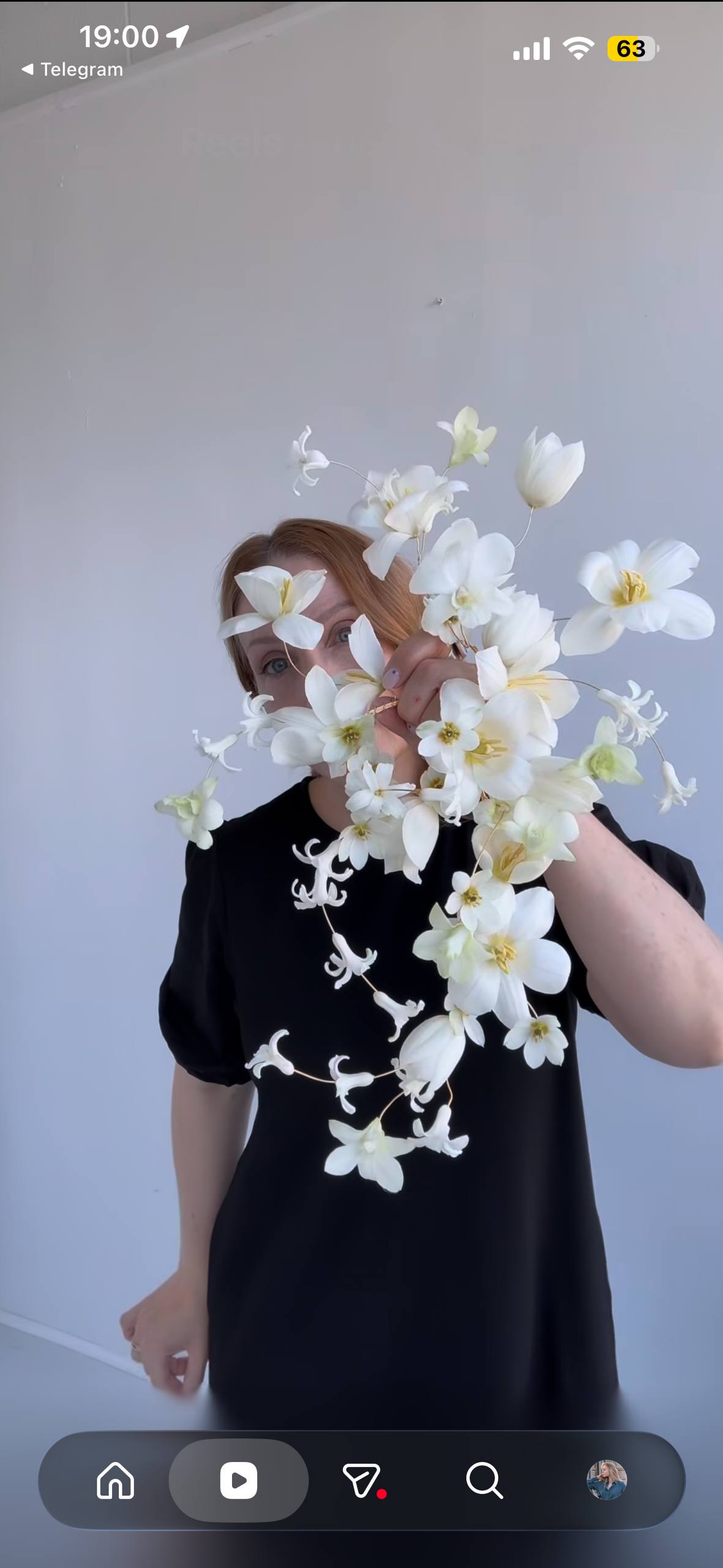
Wire shows up here doing two different jobs. Sometimes it’s bent into its own flower shapes and tucked in among the real ones. But more often, it’s used to extend a single stem out past the edge of the bouquet, so a single orchid, gerbera, or lily appears to float several inches away from the rest, held by something almost invisible. It gives a florist a way to place a flower exactly where gravity wouldn’t normally let it sit.