Our editorial team experiences a huge volume of weddings, styled shoots, and event news every day, always paying close attention to the visual language brought to life by creative professionals. We’re constantly discovering new ideas and delight in seeing our favorites regain popularity or take on fresh, inventive twists. Flowers and floral design are one of those areas we love to follow—they instantly evoke emotion, stir memories, and spark inspiration.
Here, we’ve curated a selection of blooms we adore, shared why we love them, and invite you to consider them for your 2026 wedding, if floral design is a priority for you and you’re looking for a little inspiration.
“Carnations stole my heart many years ago with their ruffled petals and their stunning, cool-fresh scent,” shares Helen, Editor-in-Chief. “I feel this beautiful flower was underrated for many years, and I’m thrilled to see wedding florists rediscovering it and creating more and more exciting new arrangements. White carnations are a particular favorite of mine—they can look like fluffy, cloud-like clusters in abundance—but lilac ones are stunning too. In fact, with such a wide range of shades, carnations can easily complement any color palette.”
Another major advantage is their durability: carnations hold up extremely well throughout a long wedding day and tolerate heat better than many delicate blooms. Because they are relatively affordable, they are also ideal for large-scale floral installations that need both volume and visual impact.
“Hyacinths bring more than just color to wedding flowers—they also introduce fragrance. Their sweet, recognizable scent can subtly fill a space and add another sensory layer to the wedding atmosphere,” Helen goes. Structurally, hyacinths have dense vertical clusters of small blossoms, which create an interesting architectural element in arrangements. Their watercolor palette—lavender, soft blue, pink, blush, and creamy white—makes them perfect for spring weddings.
Hyacinths work particularly well in smaller bouquets, centerpieces, or intimate ceremony arrangements where guests can appreciate both their shape and fragrance. They can be used to create a beautiful cascading floral accessory for a bride or a soft boutonniere for the groom. In some of the images below, the flowers are also featured in larger floral installations, where they cascade and intertwine in an almost architectural way.
“Personally, I’m very drawn to lilies, particularly those with large, open blooms,” says Liz, Social Media Manager. “They look lush and elegant, immediately drawing the eye while still maintaining a refined, minimalist aesthetic.” Depending on the variety, lilies can feel either classic and romantic or bold and modern. White Oriental lilies are prominently featured in the floral arrangements, especially in the centerpieces and bridal bouquets. While colorful Nerine lilies, also known as Nerine bowdenii, feature narrow petals that curl outward, giving them a distinctive, whimsical, almost spider-like appearance.
“Tulips are very clean, elegant, and almost architectural. They work beautifully in minimalist designs and bring freshness without taking all the attention,” says Anna, Deputy-in-Chief. Their smooth petals and graceful stems create lines that work beautifully in contemporary wedding design. One fascinating characteristic of tulips is that they continue to grow and gently bend even after being cut, which gives arrangements a natural sense of movement. Because tulips come in an enormous range of colors—from crisp white to deep plum—they can easily adapt to different palettes and styles. They are especially striking in mono-flower bouquets or minimalist arrangements where their sculptural form can take center stage.
Sunflowers immediately evoke warmth, happiness, and the brightness of summer. They are especially popular for outdoor weddings, where their natural energy complements relaxed, countryside-inspired settings. “They give me these rural, summery vibes—more specifically, the middle of summer, maybe even early fall, when it’s still warm and sunny. I also love them as part of table décor because they instantly create a cozy, welcoming feeling,” shares Anna, Senior Content and Community Manager.
Their golden petals and dark centers create a bold visual contrast that draws the eye even in simple arrangements. Some decorative varieties even feature soft green or lime-toned petals, offering a more subtle and contemporary take on the flower.
“Poppies look like little works of art, with their slightly irregular stems and joyful, vibrant hues,” Helen, Editor-in-Chief, says. “You don’t even need to use them in large quantities to make an impression. Perhaps, they might work best as statement blooms rather than structural flowers, considering how delicate and fragile they are.” Their delicate, paper-thin petals emphasize their fleeting beauty, giving arrangements an airy, almost painterly, romantic quality. Poppies are especially appealing in artistic or editorial-inspired weddings where couples want a look that feels slightly wild and expressive rather than overly polished.
“Lilac instantly makes me think of spring—late April and early May, one of my favorite times of the year,” shares Helen. Its airy clusters of tiny blossoms create a cloud-like texture that adds softness and volume to arrangements, while its shades of lavender, pale violet, blush, and creamy white blend beautifully into pastel color palettes. “Lilac’s unique, unmistakably springlike scent is almost intoxicating, which is both a gift and a challenge,” Helen goes. “I find it’s important to be thoughtful when using it in floral design. Consider placing it in strategic spots or making it part of a focal point where its fragrance and beauty can truly shine. It works particularly well in large vases, ceremony arrangements, or garden-style installations.”
Calla lilies are among the most sculptural flowers used in weddings. Even a small number of calla lilies can create a powerful visual statement because their form is so distinctive. They look particularly elegant in simple bouquets or clean, contemporary arrangements where the beauty of the line itself becomes the focus. “Since I work with weddings all the time, I’ve seen so many of the classic “pretty” arrangements that they don’t surprise me much anymore,” shares Anna, Deputy-in-Chief. “I’m much more drawn to asymmetrical, architectural, or layered floral work with interesting accents. The kind you want to stop and really look at. And calla lilies are one of those floral miracles. I love seeing them in very simple mono arrangements with single stems. To me, that look always feels timeless.”
Spider gerbera is a striking variation of the classic gerbera, recognizable by its long, narrow petals that radiate outward like sun rays. “I discovered Spider Gerberas while working in the wedding industry, and over time I found myself completely captivated by them,” Helen, Editor-in-Chief, shares. “Their texture is fascinating—it’s both spiky and fluffy at the same time. Compared to traditional gerberas, they feel more playful, light, and refreshing, and they immediately catch the eye.They almost resemble cut paper or delicate fringe, except they’re alive.”
This flower fits well in warm-weather celebrations, with bold color palettes and contemporary floral concepts, where designers want something playful yet stylish. Because of their distinctive form, even a few stems can become a visual focal point in a bouquet or centerpiece, bringing movement and a slightly fashion-forward edge to the design.
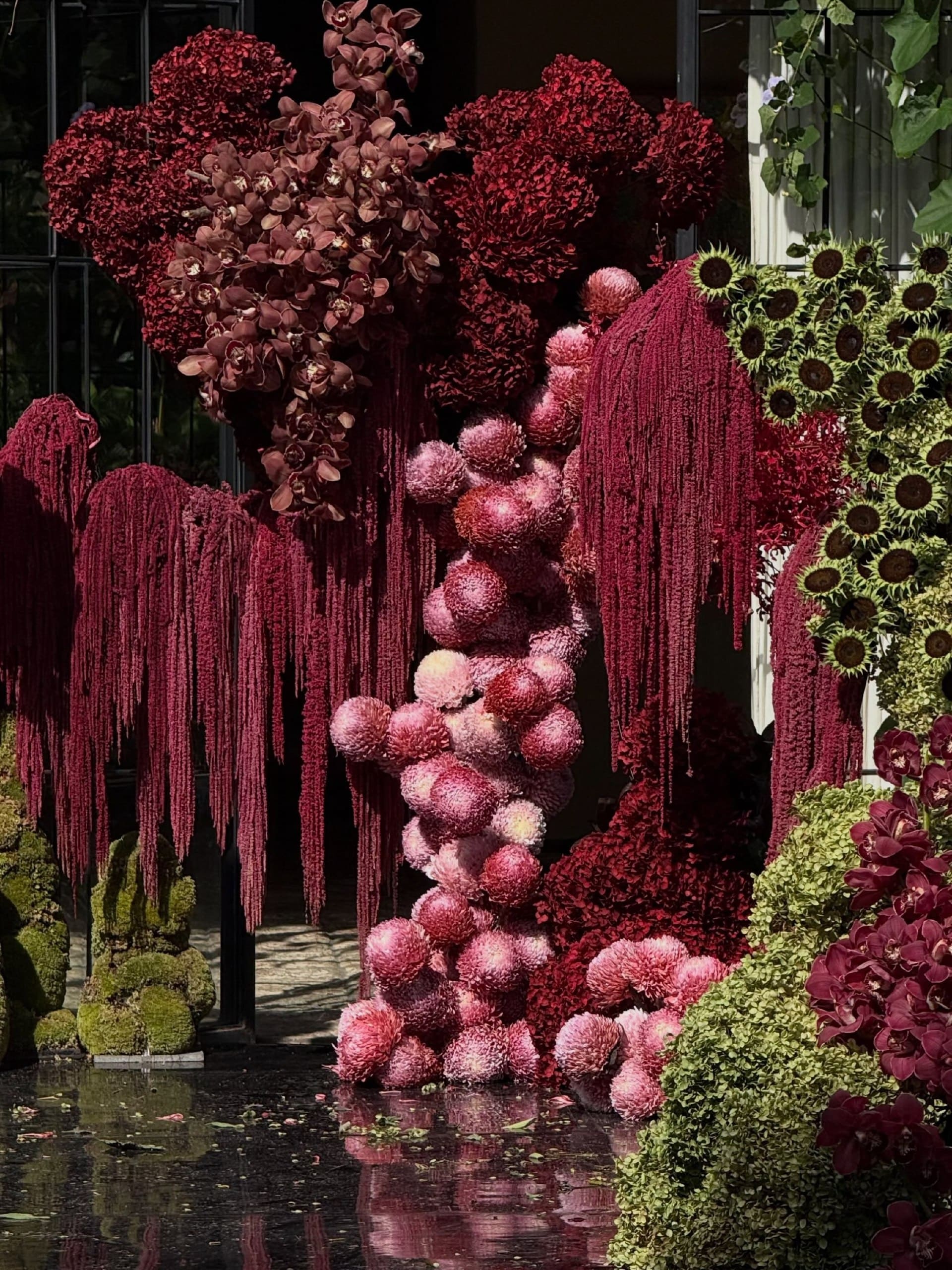
Orchids bring a sense of sophistication and exotic beauty to wedding florals. Their intricate shapes and delicate patterns make them instantly recognizable and visually captivating. Because there are so many orchid varieties (pay your special attention to Cymbidium Orchids), they can work in both dramatic and minimalist designs. In wedding decor, orchids are often used as accent flowers in bouquets, installations, or modern centerpieces where their unique form can truly stand out. “Orchids are a real showstopper, especially in cascading bridal bouquets. They combine beautifully with other flowers and add a subtle tropical note that makes the bouquet more dynamic,” says s Anna, Deputy-in-Chief. They also have the practical advantage of lasting longer, making them suitable for longer celebrations or elaborate installations.
Hydrangeas are beloved by florists for their ability to instantly create fullness and volume. A single large bloom can fill a significant portion of an arrangement, giving designs a lush and abundant appearance. They are particularly effective in large centerpieces, floral arches, and ceremony installations where designers want to create a feeling of richness and scale. Their soft, cloud-like texture pairs beautifully with more structured flowers, creating balance within a composition.
Hydrangeas also come in a wide range of tones—from soft blue and pale green to dusty pink and creamy white—which makes them easy to incorporate into many wedding palettes. “I love hydrangeas for the freedom they give you to play with color, especially when you want something bold and statement-making. My favorites are the first and sixth photos below—the cornflower and sky blue shades. They’re truly wow-worthy,” says Liz, Social Media Manager.
Peonies remain one of the most iconic wedding flowers, and their popularity is easy to understand. Their large buds slowly open into generous, layered blooms with incredibly soft textures. This transformation creates a sense of romance and natural elegance that many couples appreciate. Because they have a relatively short natural season, typically in late spring and early summer, they often become a highlight flower that helps define the seasonal character of a wedding.
“I’m naturally drawn to classic floral designs—preferably monochromatic and with very little greenery,” shares Ayan, Content and Community Manager. “Lush, voluminous blooms that look like soft clouds from a distance are completely my cup of tea. So, it’s no surprise that my go-to flowers are peonies, cliché as that may sound. And the fragrance? Absolutely incredible. I also love when florists create a kind of ‘field’ of flowers, and just imagine that with peonies. Pure luxury and beauty.
“Modern varieties of chrysanthemums offer an incredible range of forms and appearances. Some resemble perfect spheres, others have a wildflower feel, yet the spider mum, also known as the Fuji mum, stands out to me for its unique texture and whimsy,” says Helen, Editor-in-Chief. This is a popular variety of chrysanthemum named for their long, tubular-shaped petals come in many different colors, and their meaning can vary based on where they’re used.
Florists appreciate chrysanthemums for their exceptional longevity—they stay fresh for a long time and easily withstand the demands of a full wedding day. Many designer varieties look so distinctive that they naturally become the centerpiece of a floral composition. They are especially popular for fall weddings, where their rich textures complement the seasonal mood, but contemporary varieties are increasingly used year-round in modern floral design.
Daffodils are strongly associated with renewal and new beginnings, making them a meaningful flower for weddings. Their cheerful yellow and creamy tones immediately brighten a floral palette and bring a sense of optimism to the design. The distinctive trumpet-shaped center makes daffodils visually recognizable and adds playful character to arrangements. They are particularly well-suited for spring weddings, where they evoke the feeling of nature waking from winter. Daffodils pair beautifully with other early-season blooms, such as tulips and hyacinths, creating fresh, joyful floral compositions.
Jane, Art Director, recalls: “Daffodils used to grow in the garden at my grandmother’s country house. I love their scent, their brightness, and the sense of nostalgia they bring me—they feel like a flower from childhood. And since a wedding is a celebration of who couples are, drawing on core memories through floral design can be a beautiful and meaningful idea.”