Choosing your wedding dress is one of the most exciting and complicated decisions you’ll make as a bride. It’s personal in a way almost nothing else is. It’s the thing you’ll remember feeling and wearing. And it arrives at a moment when everyone around you has an opinion, your feed is full of options, and the algorithm keeps serving you version after version of what you already liked — until you can’t quite remember what you actually wanted in the first place.
Where do you even start? How many showrooms are too many? And when do you finally stop looking? If you’re about to begin the process — or already feel like you’re drowning in it — this is everything you need to know. Top bridal stylists share the insights that will actually make a difference.
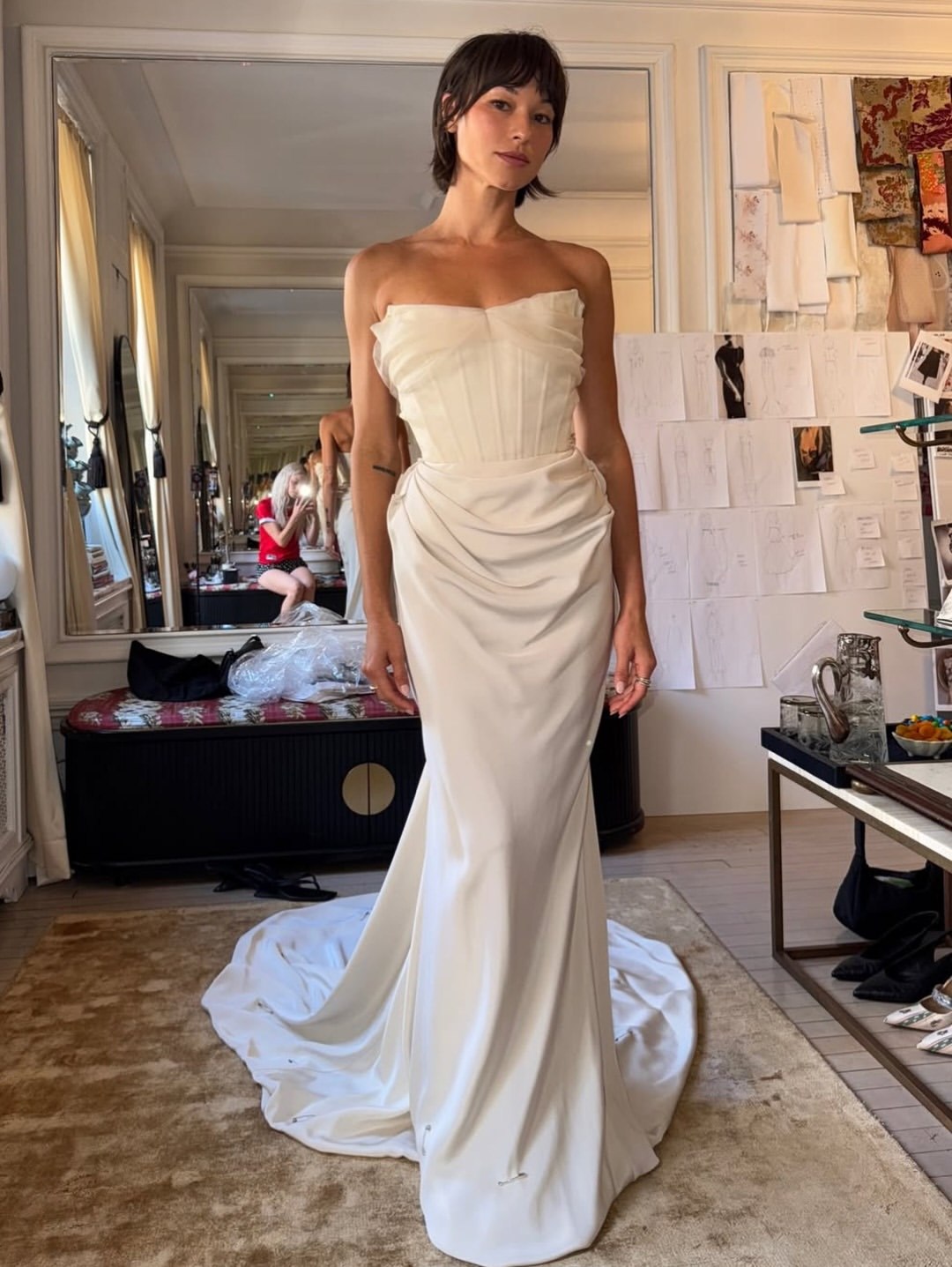
Photo: Courtesy of Loho Bride, Victoria Kait
Before You Step Into a Showroom
The most common mistake brides make happens before they ever try on a single gown: they walk in without a clear sense of how they want to feel.
“It’s incredibly important for a bride to understand how she wants to feel on her wedding day — not just how she wants to look,” says Samantha Ruiz, founder of It’s Giving Bridal. “There are countless beautiful dresses, but each one carries a different energy. Do you want to feel powerful? Romantic? Understated? Effortless? Identifying that emotional intention gives us direction before we ever step into a showroom.”
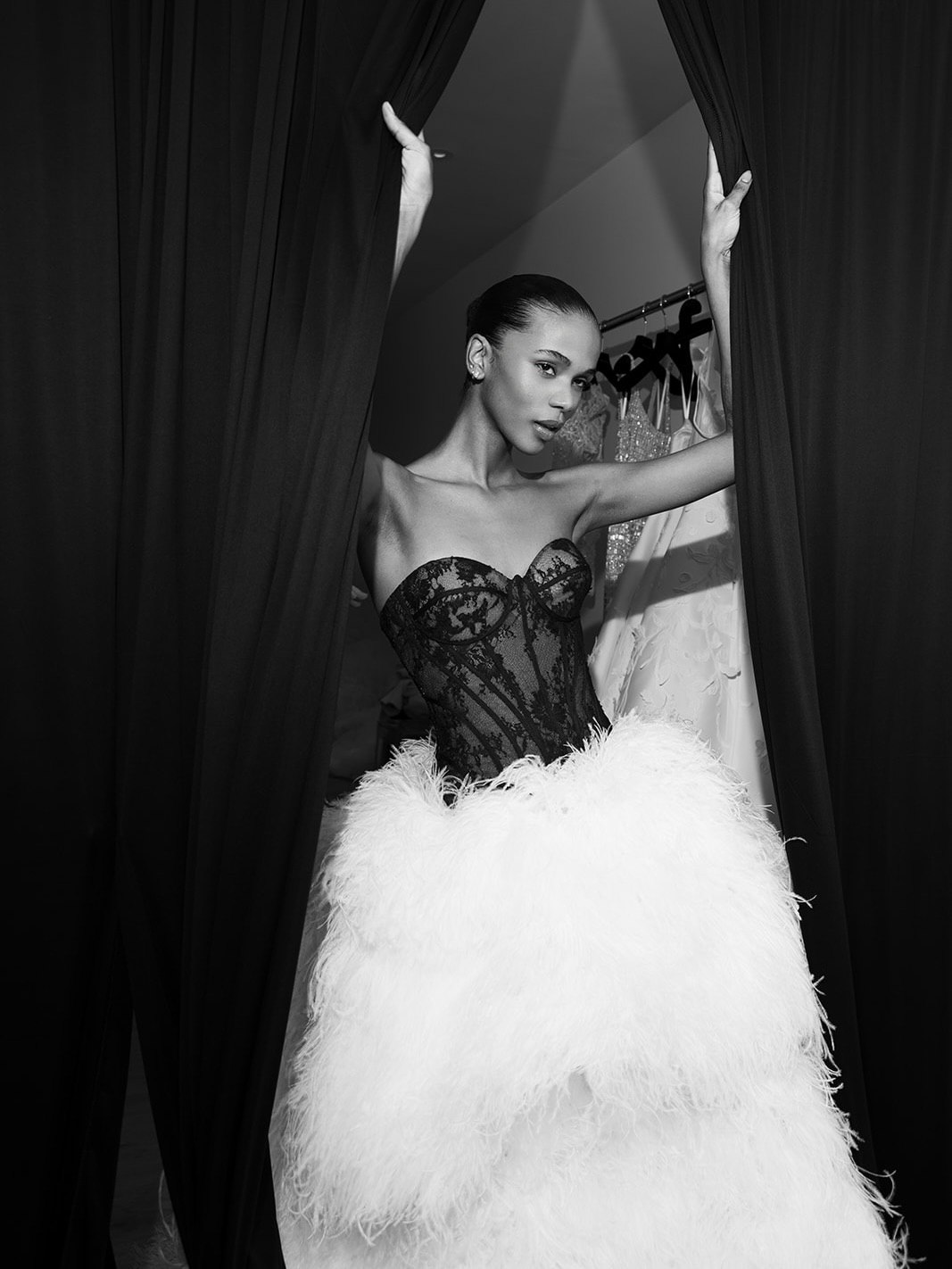
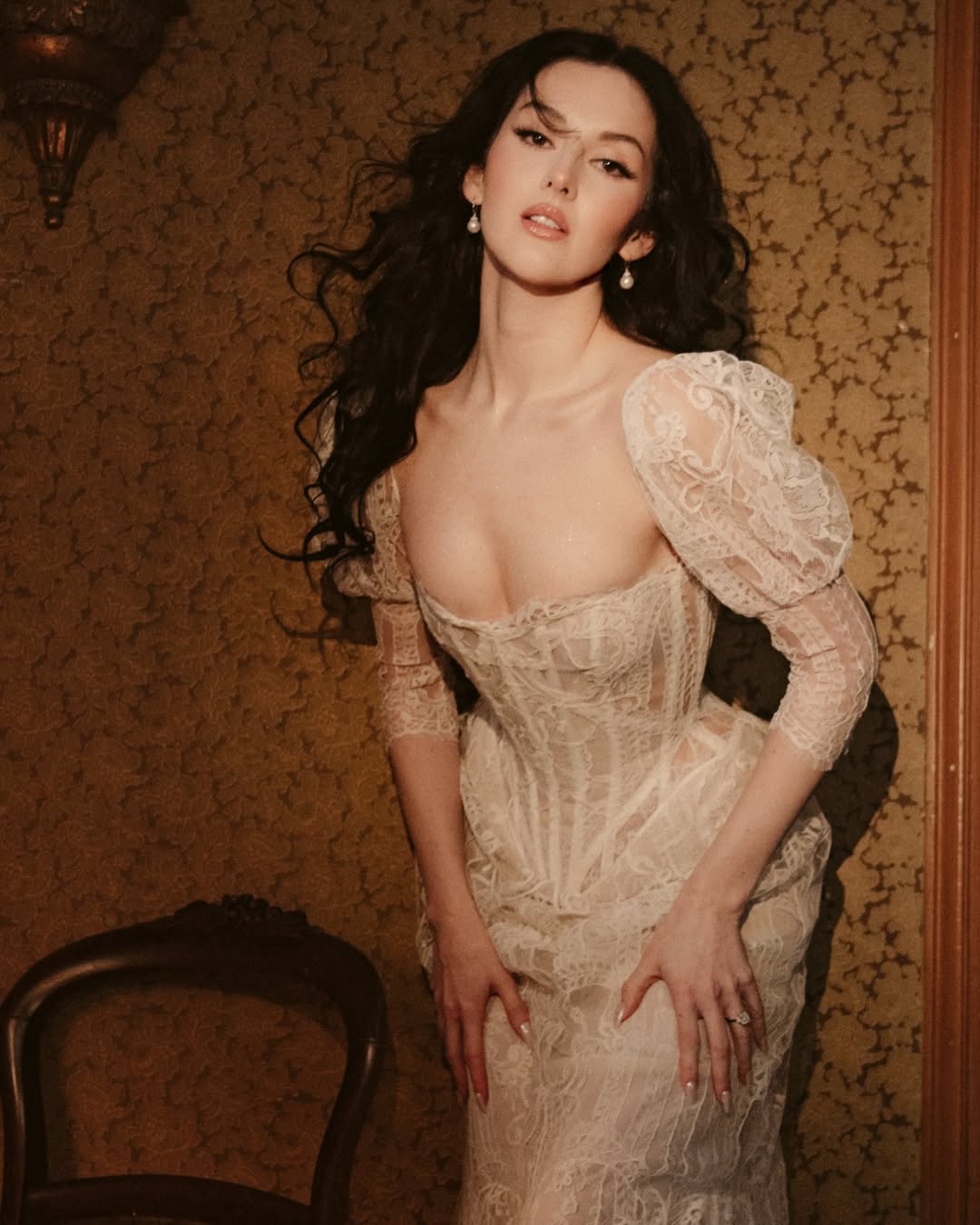
Photo: Aisleglam for Nicole & Felicia, Koko King
Imagery helps but only to a point. Ruiz notes that a bride might pin a dozen gowns that look different on the surface yet all evoke the same underlying mood. That through-line is what actually matters.
Practical questions matter just as much. What’s the tone of the wedding: formal or relaxed, indoors or outdoors? How much structure feels right? How fitted is too fitted? Kennedy Schmidt of The Bisou Bride frames it simply: clarify which silhouettes make you feel most like yourself, and start there.
Christy Baird, founder of the bridal shop LOHO Bride adds a logistical note that’s easy to overlook: arriving with at least a starting vision makes the appointment more valuable for everyone. “You’re going to get a lot more value out of that time,” she says — especially now that most appointments are paid.
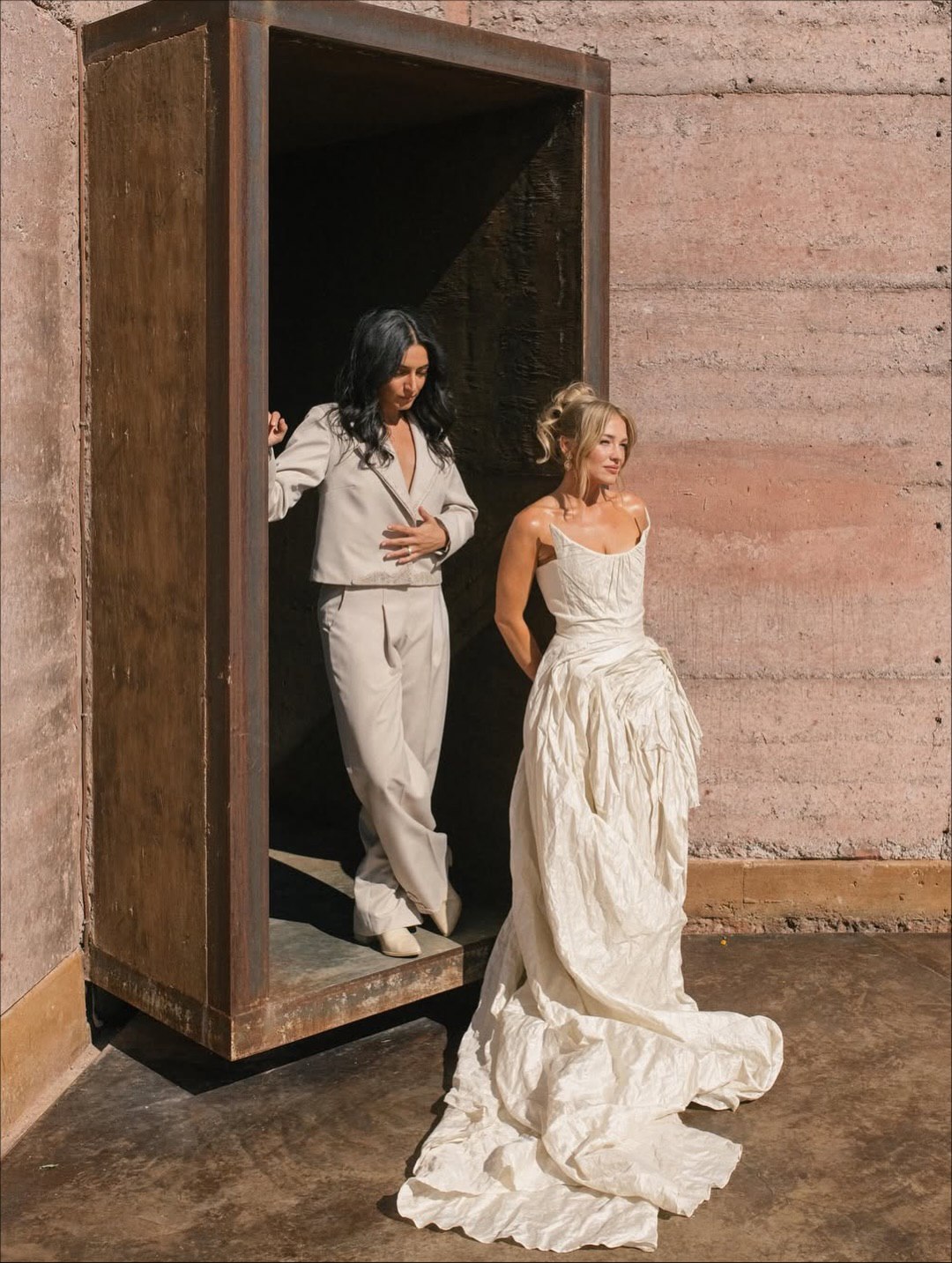
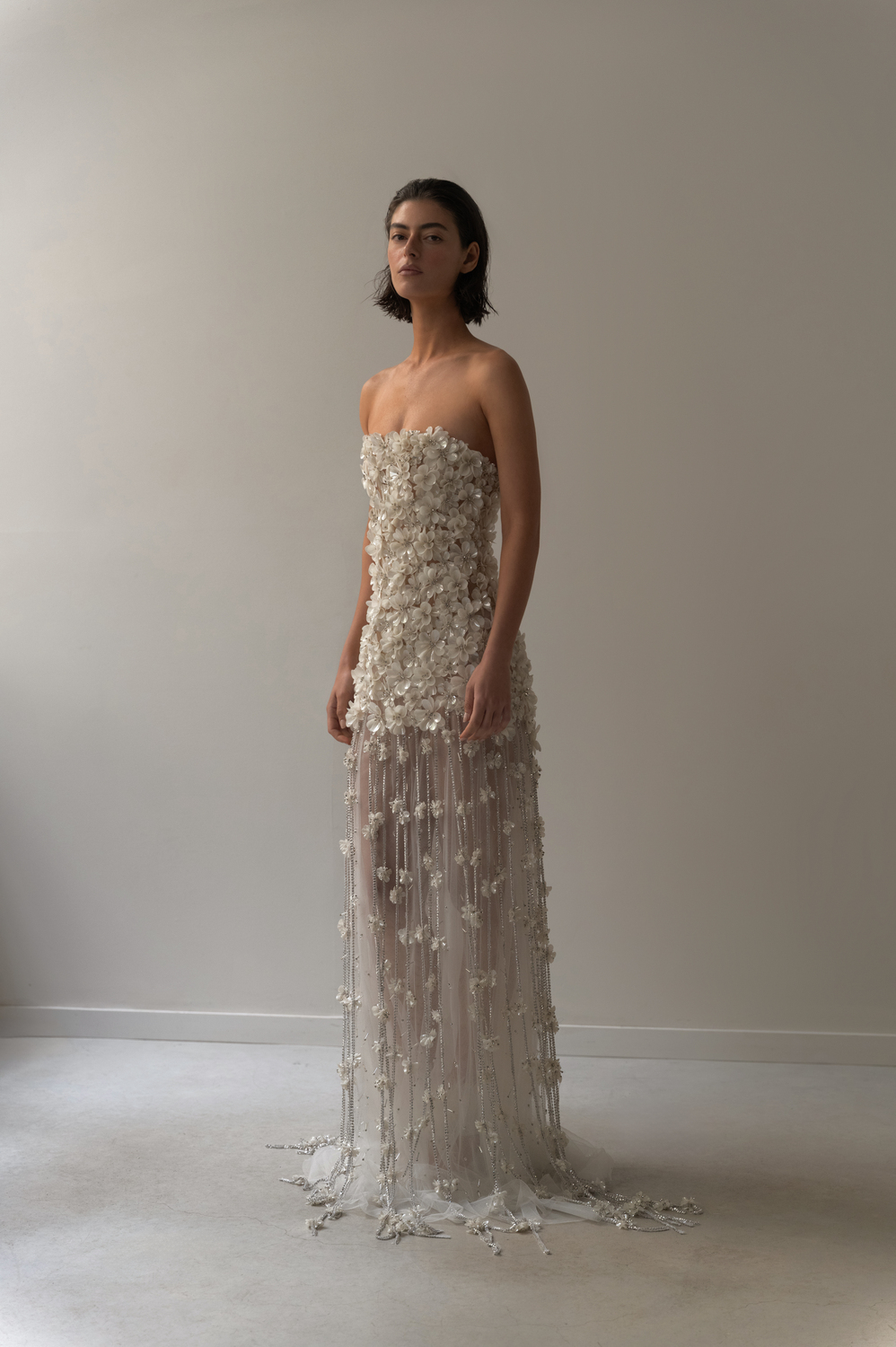
Photo: La Dichosa, Courtesy of Lihi Hod
Showroom Strategy: How Many Is Too Many
Three to five appointments is the range most stylists recommend — and the upper end is already pushing it.
“I usually recommend three to four,” says Samantha Ruiz. “Beyond that, most brides aren’t really learning anything new. They’re just overwhelming themselves.” The first few try-ons are information-gathering: what silhouettes feel right, what fabrics work, how much structure you actually want. Once you have that clarity, narrowing down becomes intuitive. “Too many appointments tend to quiet your instinct instead of sharpen it.”
The other variable that can derail a fitting faster than too many showrooms? Too many people in the room. “The most common mistake I see is a bride slowly disconnecting from her own instinct,” says Ruiz. “Fittings can quickly turn into a panel discussion — mom has a preference, a friend wants something more dramatic. All of that input can be well-intentioned, and still drown out the only voice that really matters.” Kennedy Schmidt puts it even more plainly: “Too many opinions in the room. The bride stops listening to her own instinct.”
The fix is simple, if not always easy: notice your first reaction. Before anyone speaks. Before you analyze. That initial feeling is usually the most honest one.
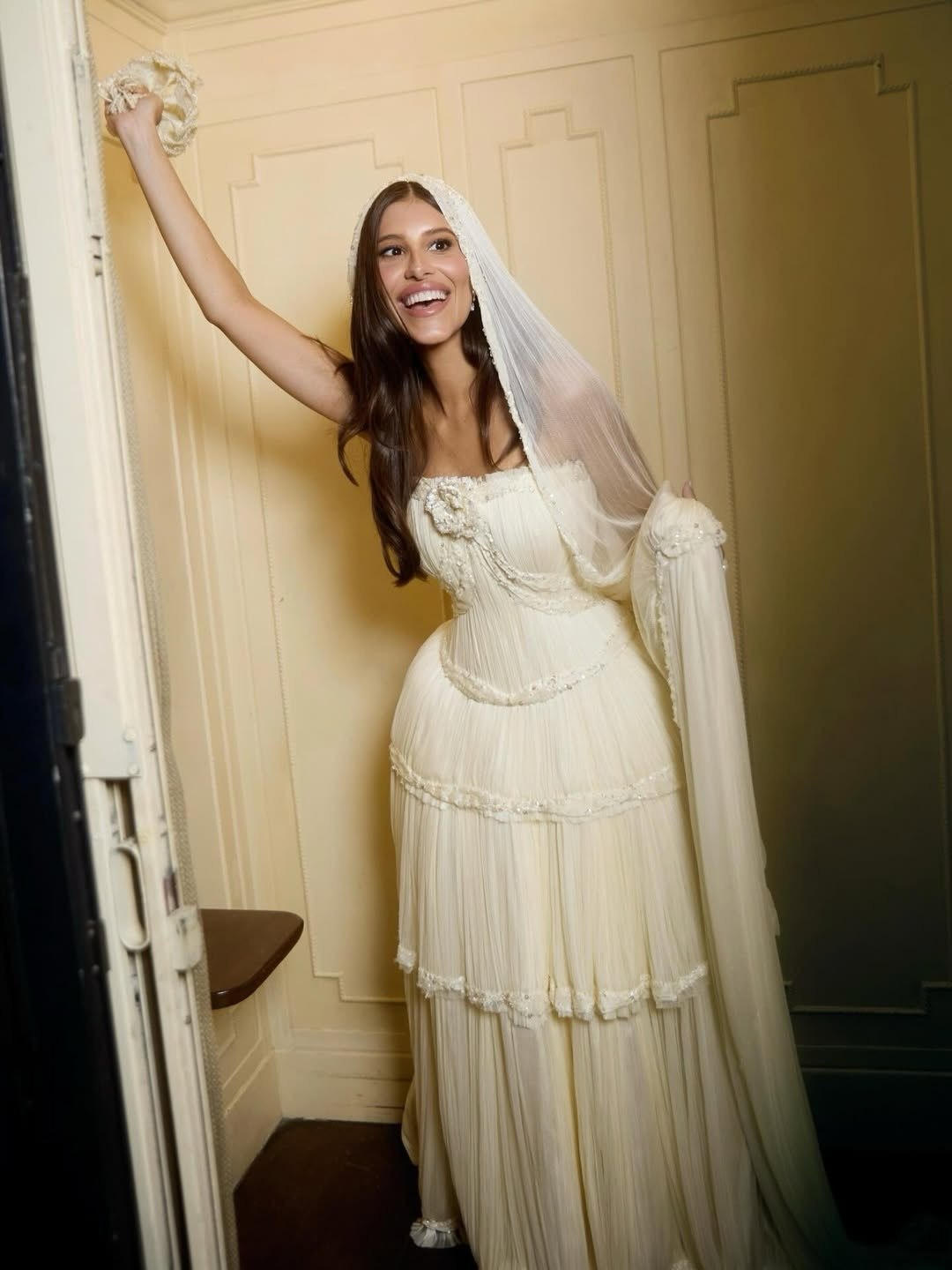
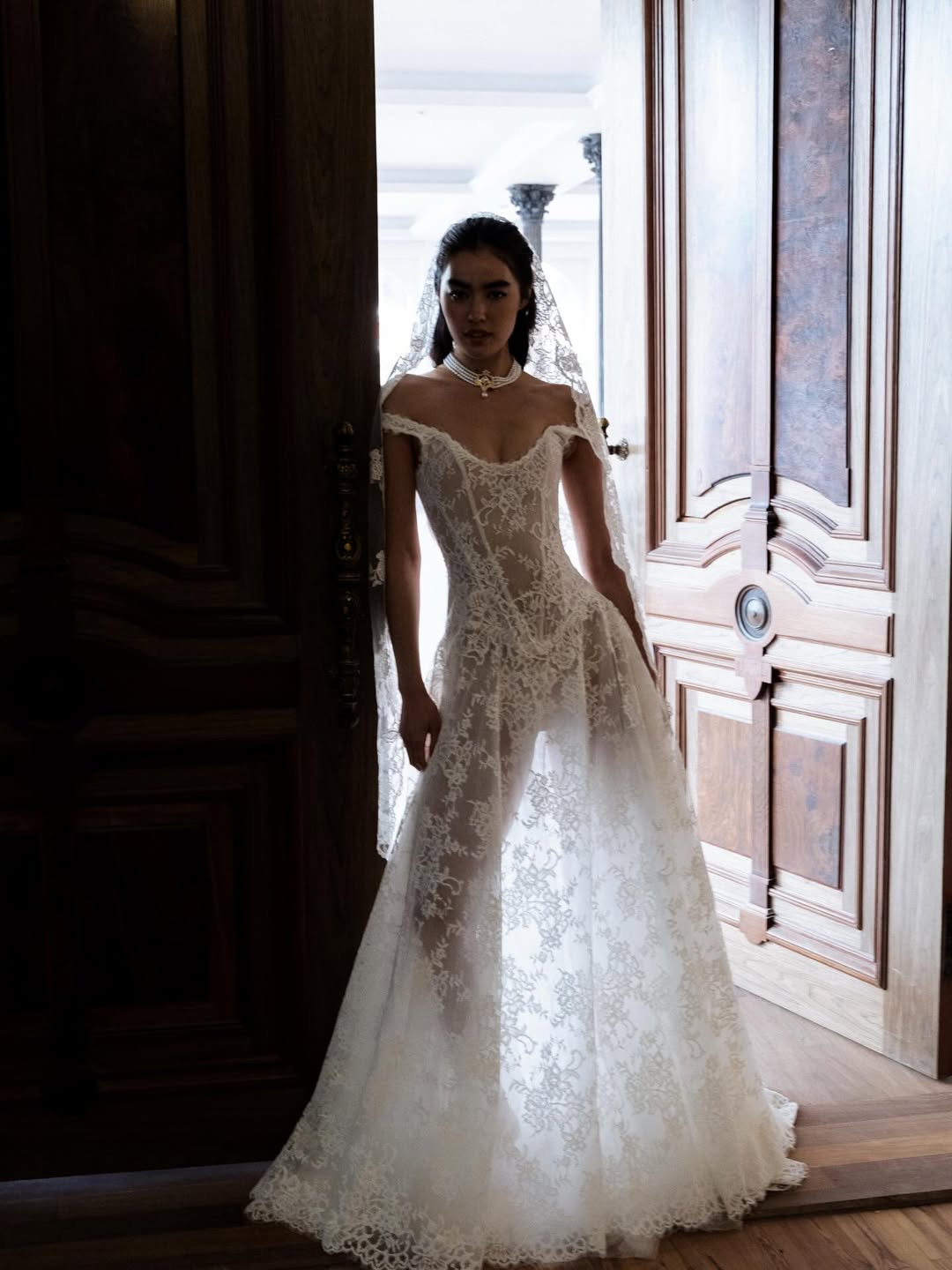
Photo: Rod Sack x Isabela Montenegro x Yellow Foto, Courtesy of Maison Margot
Fittings & Alterations: What to Expect
Most brides need two to three fittings. More than that is uncommon unless the work involves significant customization.
Standard alterations — adjusting straps, taking in a bodice, hemming, adding a bustle — are straightforward and expected. Structural redesigns are a different matter. “It’s the structural changes or customizations where a bride is redesigning a part of the gown that can cause more complexities,” says Christy Baird. “More time and budget should be allotted to execute those design decisions.”
Alterations typically happen in the final two months before the wedding. Ruiz advises treating those appointments with intention: bring the exact shoes you’ll wear, the right undergarments, the accessories you want to see styled with the dress. Small variables have a real impact on proportion and hem length. And move in the dress — sit, walk, dance a little. “The goal isn’t just that it photographs beautifully,” she says. “It’s that you feel completely at ease wearing it.”
Schmidt reframes the whole process in a way worth remembering: “Alterations refine, they don’t reinvent. Budget time and money for them, and expect the dress to feel imperfect until the final fitting.”
One unexpected upside: leftover fabric. Christy Baird of the LOHO Bride is a fan of getting creative with it. Her atelier recently worked with a seamstress to turn hem scraps into tablecloths for an anniversary party. “The fabrics used on wedding gowns are so gorgeous,” she says. “I love knowing they find a home in the end.”
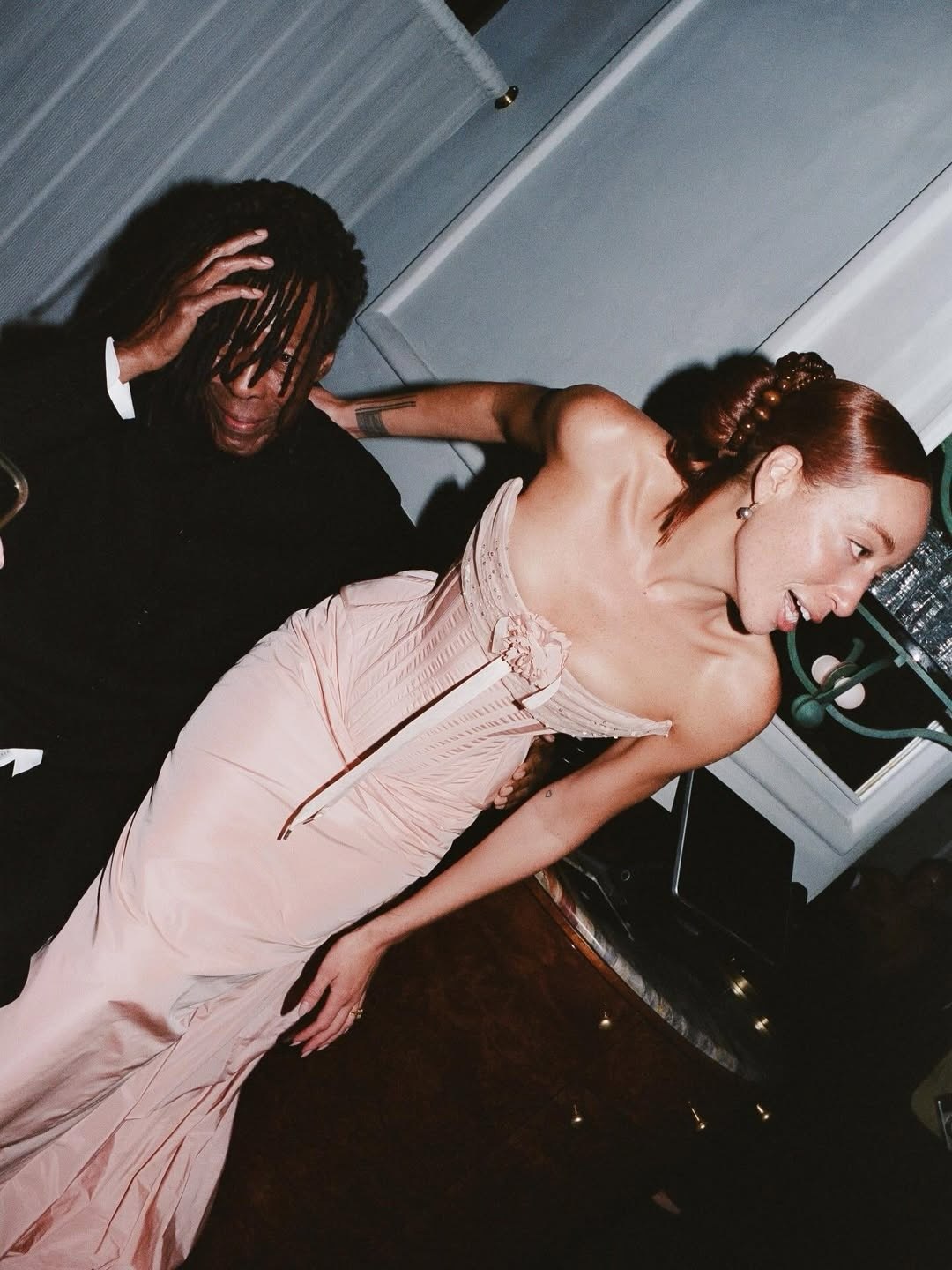
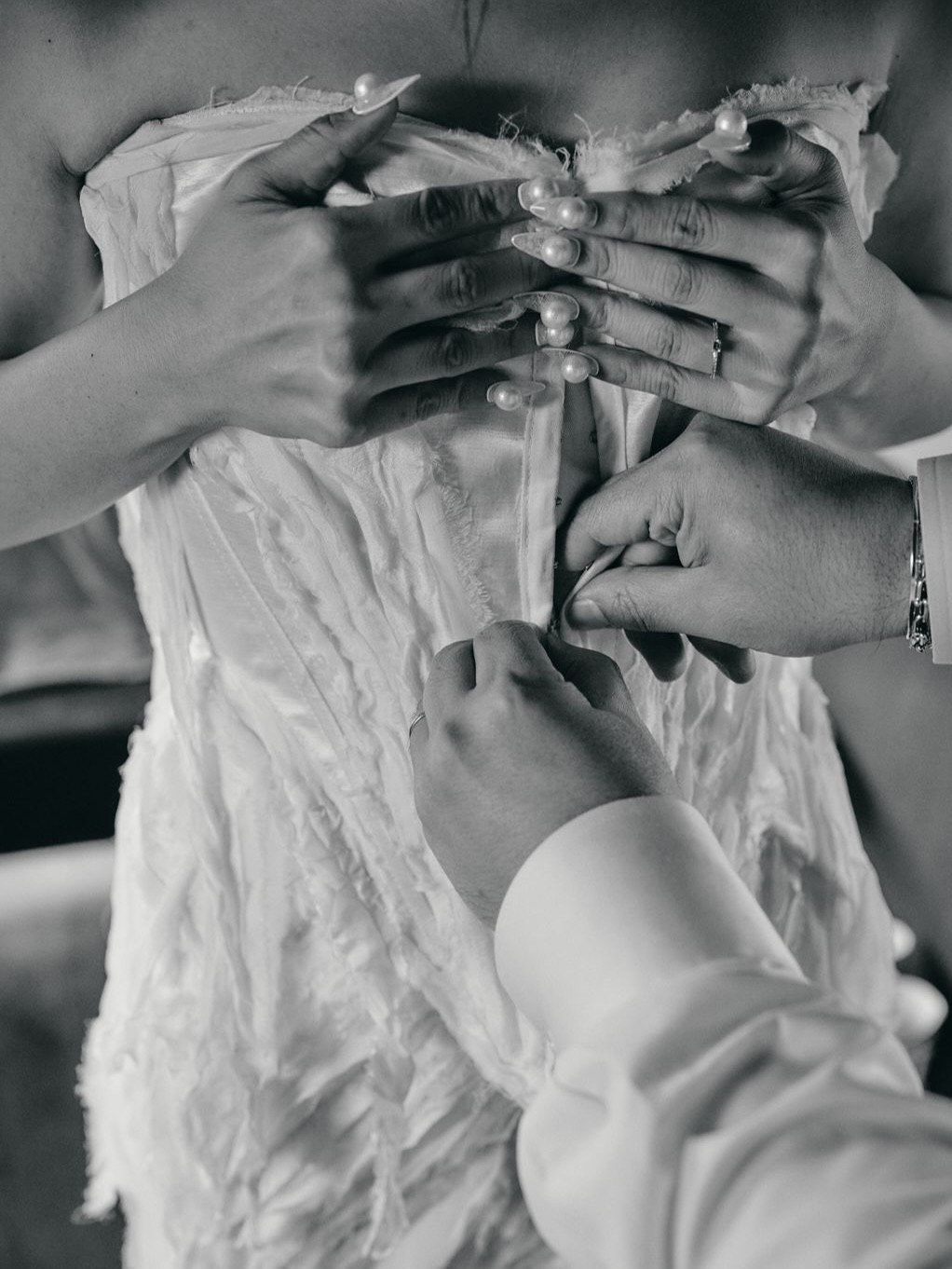
Photo: Kelly Vahos, Christine Hahn x Louisa Meng
How to Decide Without Regret
At a certain point in the process, more input stops helping. It starts hurting.
Decision fatigue in a bride has a recognizable pattern. She starts looking outside herself for answers, polling everyone around her, second-guessing choices she previously felt excited about. “She uses language like ‘I don’t know anymore’ or ‘Maybe I should just,'” says Samantha Ruiz. “When instinct gets quiet and outside noise gets loud — that’s decision fatigue.” Kennedy Schmidt‘s version is equally precise: “When ‘I love this’ turns into ‘What if there’s something better?'”
The reset is almost always the same: reduce inputs. Step away from Pinterest, Instagram, group texts, additional appointments. Return to the original feeling. “When we strip it back to: ‘How did you feel when you first tried it on?’ — the answer is usually still there,” says Ruiz.
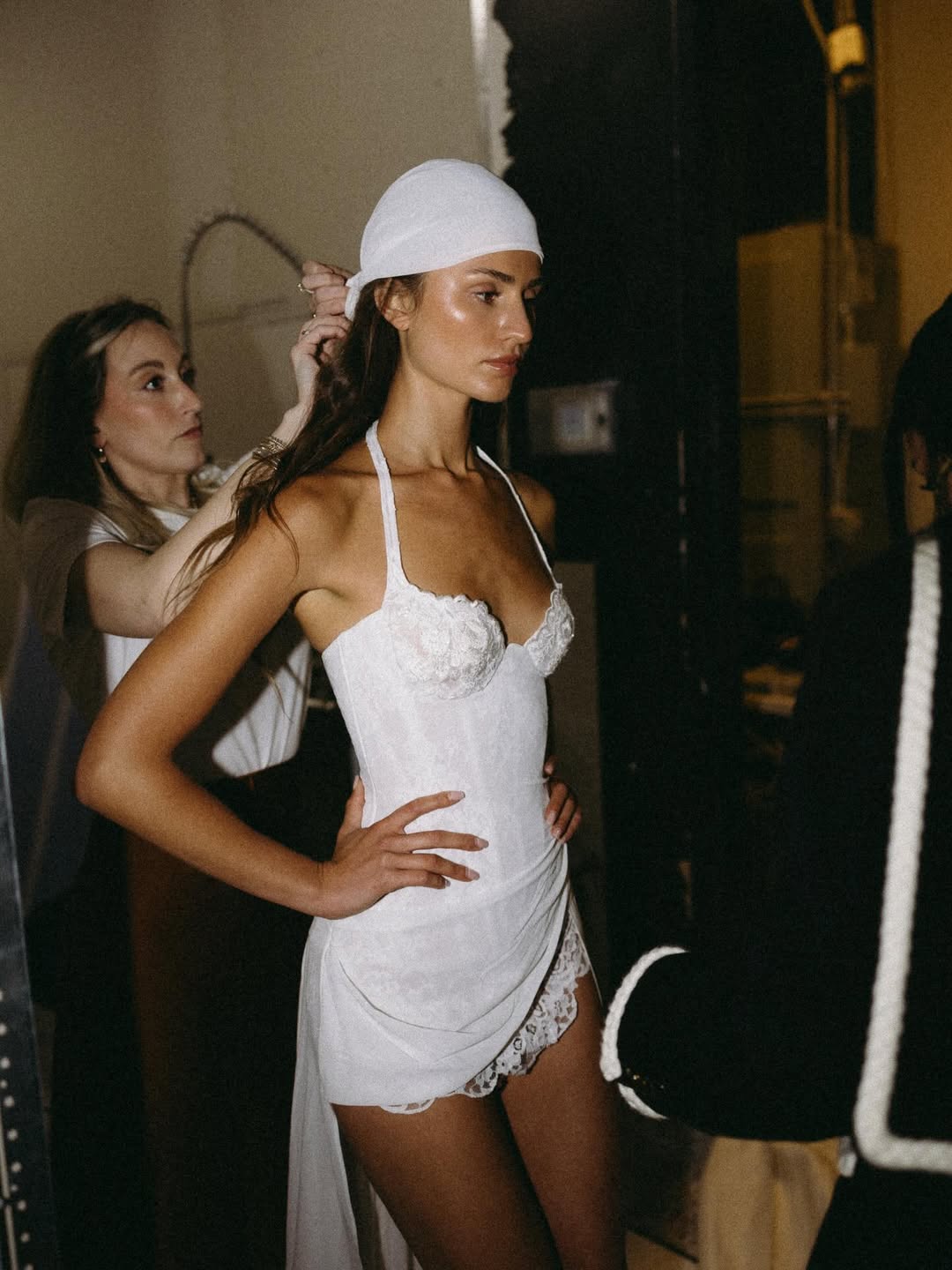
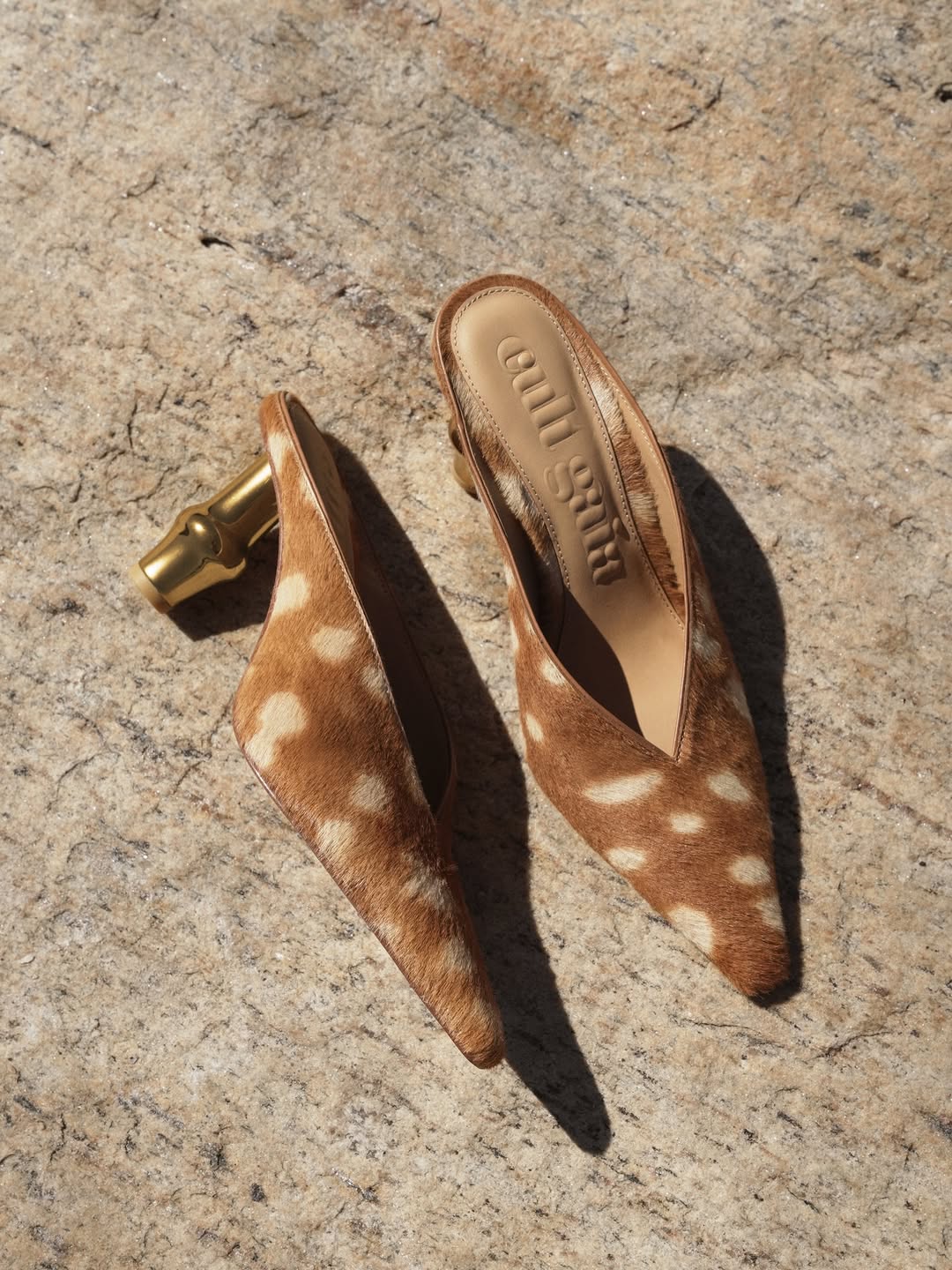
Photo: Courtesy of Maison Margot, Cult Gaia
Social media deserves its own mention here, because the problem isn’t just volume — it’s the algorithm. “If you’re drawn to a certain silhouette or designer, your entire feed starts to look like it,” Ruiz explains. “It can create this false sense that ‘everyone’ has your dress, or that your choice isn’t as unique as you thought. In reality, you’re just being shown a hyper-curated loop.”
On the trend VS timeless question, the stylists land in slightly different places — which is itself instructive. Ruiz is direct: wear what you love, full stop. “Trends come and go. So do opinions. But the memory of how you felt walking down the aisle lasts.” Schmidt takes a more structured approach: choose a timeless silhouette, then express personality through styling details.
Both agree on the signal that means you’re done looking. It’s not a dramatic, cinematic moment. “There may not be tears or an instant certainty,” says Ruiz. “More often, it’s a feeling of calm. A quiet confidence. A genuine excitement that feels grounded instead of frantic.” Schmidt calls it the same thing from a different angle: “When she feels peace and not adrenaline. Excitement is lovely. But peace is the signal.”
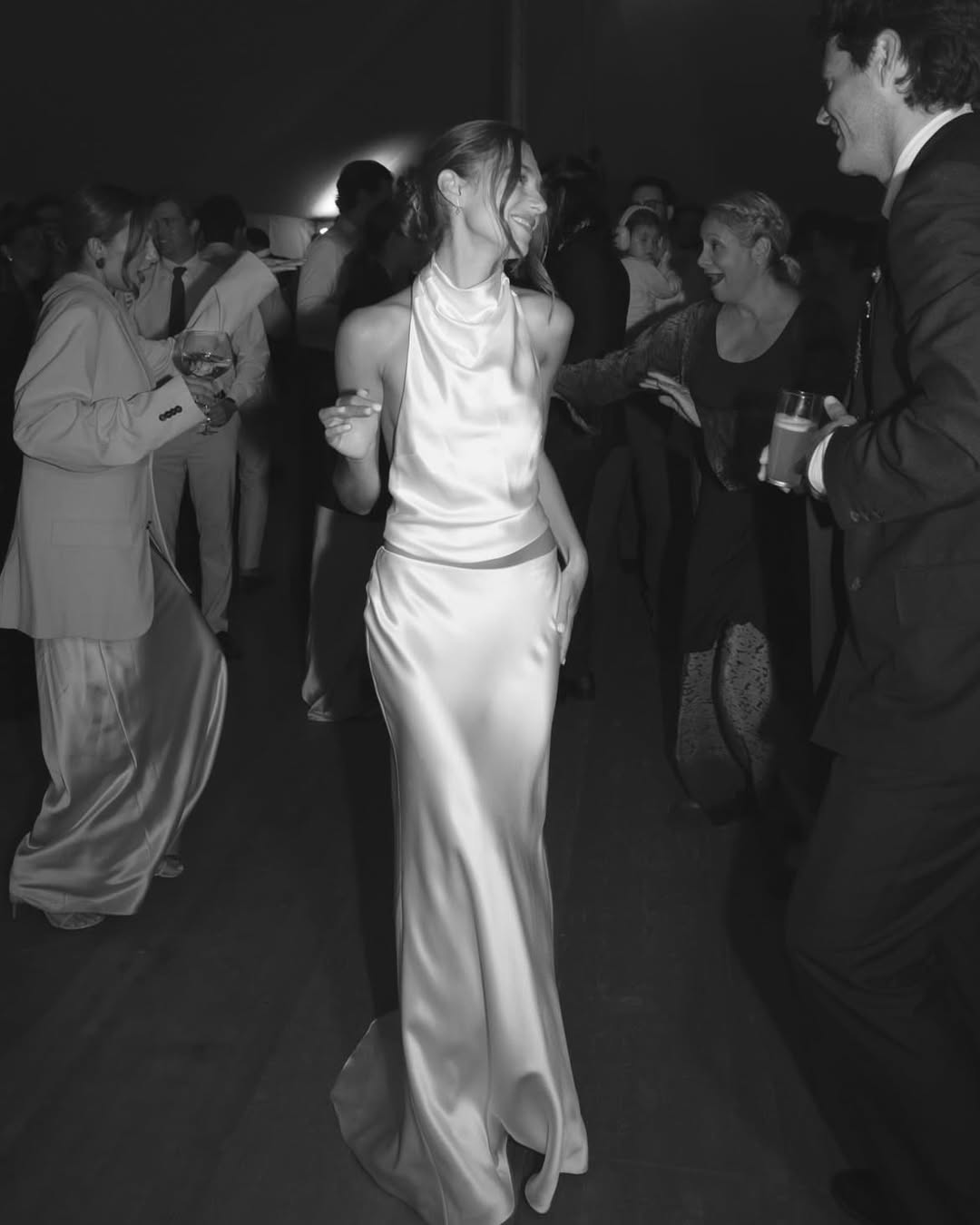
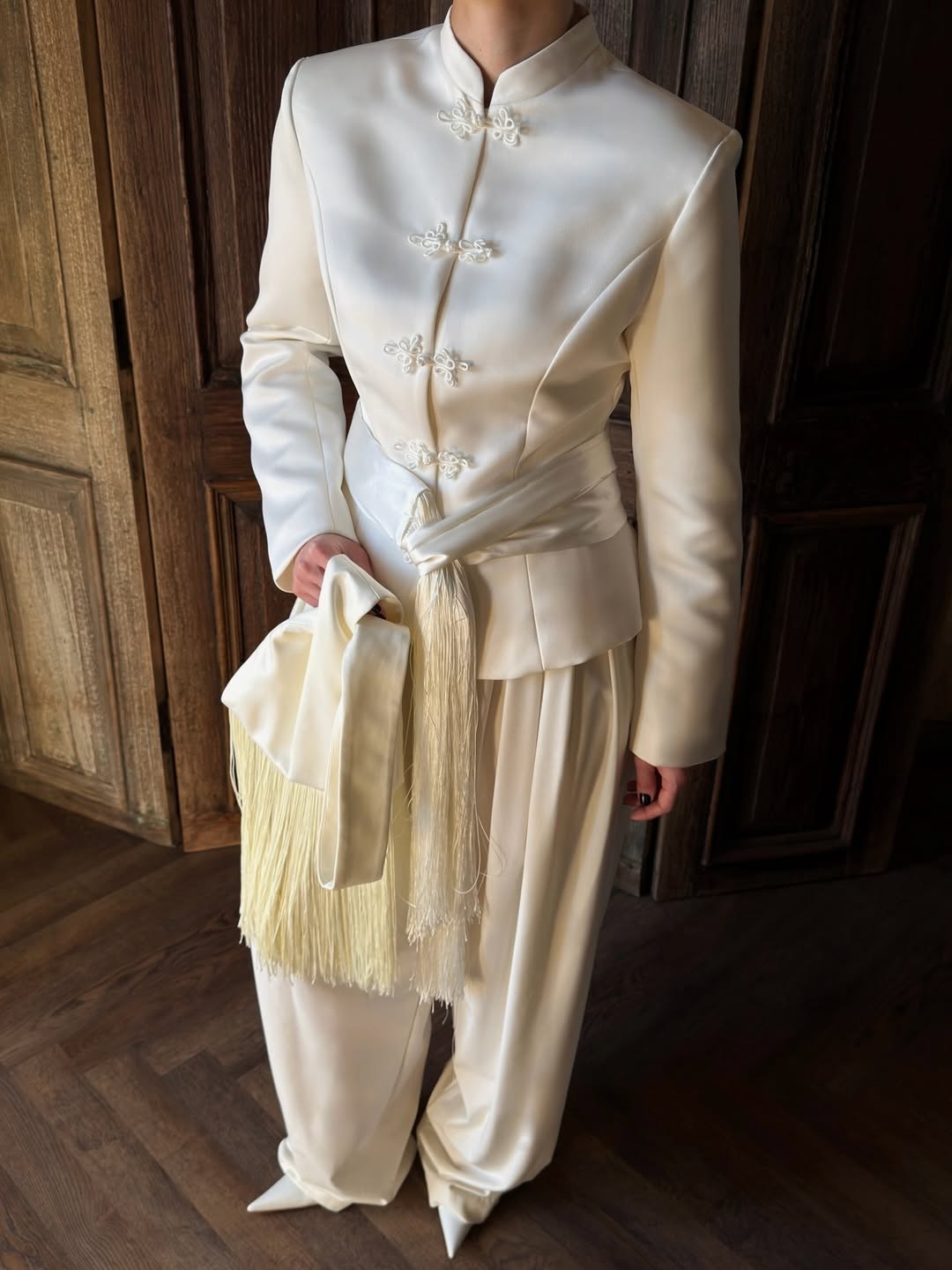
Photo: Courtesy of Alexandra Grecco, Gloria
Accessories: What Works, What Doesn't
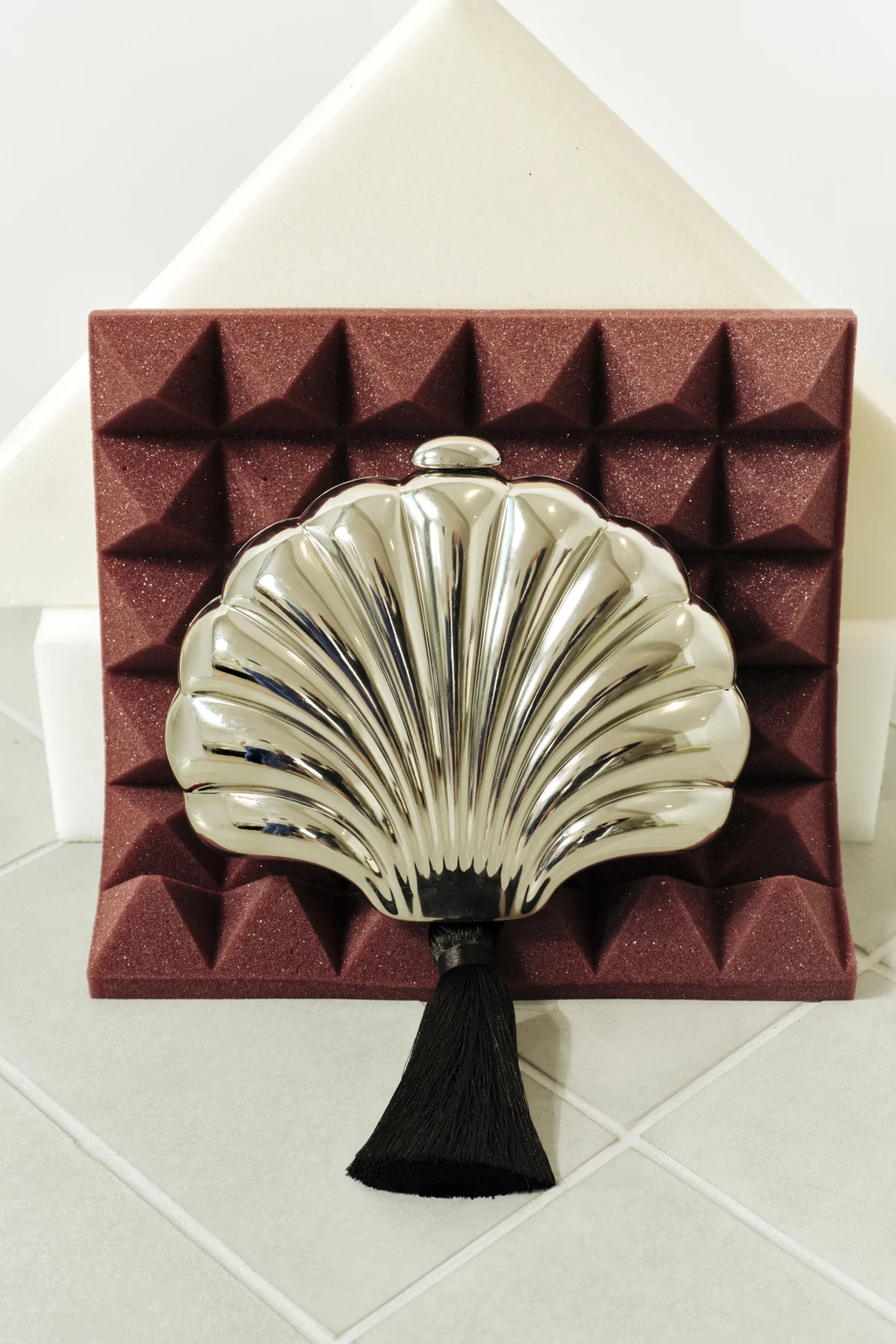
Start with focal point logic: every bridal look has one. The goal of accessories is to support it, not compete with it.
The most overestimated accessory, according to Samantha Ruiz of It’s Giving Bridal? Ceremony shoes. “With a full-length gown, they’re rarely seen beyond a few photos, and even then it’s usually just a quick glimpse.” Comfort, she argues, matters far more than the shoe itself. “No one is really going to see your shoes during your ceremony — but they will notice if you’re in pain or fidgeting at the altar.”
On the must-have side, the answers converge around one idea: something personal. “Maybe it’s your great-grandmother’s earrings. Maybe it’s a tiny photo of your dog tucked into your bouquet. Maybe it’s hot pink party shoes because that’s your favorite color,” says Ruiz. A personal detail grounds the look and gives it heart. “Years from now, that’s the piece that will still make you smile.”
Kennedy Schmidt of The Bisou Bride makes a case for the veil as a transformational tool that’s easy to underestimate: “A veil transforms posture, movement, and ceremony presence. Even the simplest gown becomes cinematic with the right length and proportion.” Worth considering — even if you ultimately decide to skip it.
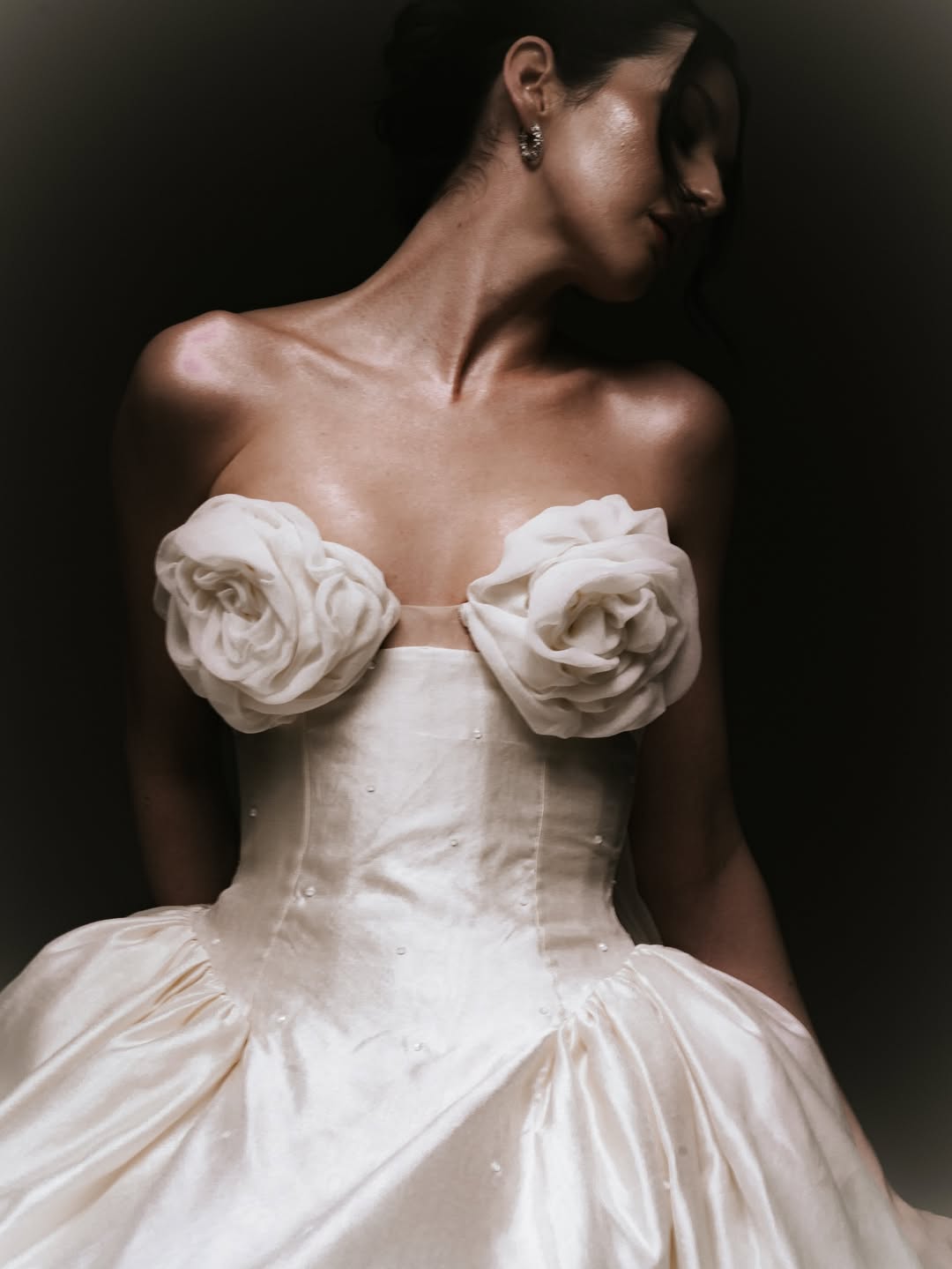
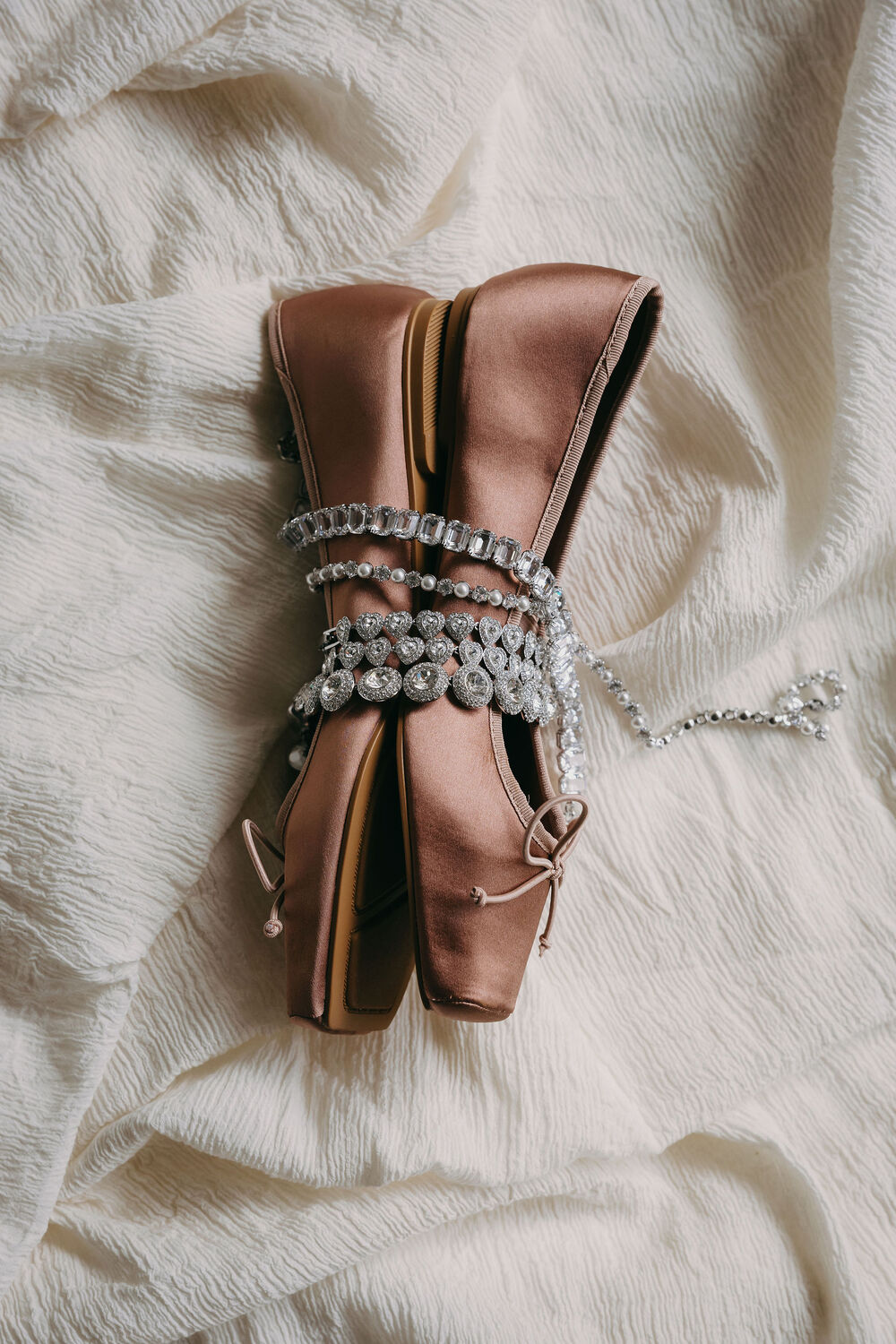
Photo: Koko King for Bretagne, Conta-Me Como Foi x Bouquet De Liz
The One Thing
Every stylist has a detail that, in their experience, reliably elevates a bridal look.
Ruiz: something unexpected. “Not for shock value — but for intention. A modern earring with a very classic gown. A clean, architectural hairstyle instead of something overly romantic. A pop of color hidden beneath layers of silk. That one thoughtful deviation adds depth. It signals confidence. And it makes the entire look feel considered rather than conventional.”
Schmidt: fit. “Proper tailoring at the waist and bust. Even the most expensive gown looks average if it doesn’t fit impeccably.”
Two answers. One direction — the details you control make all the difference.
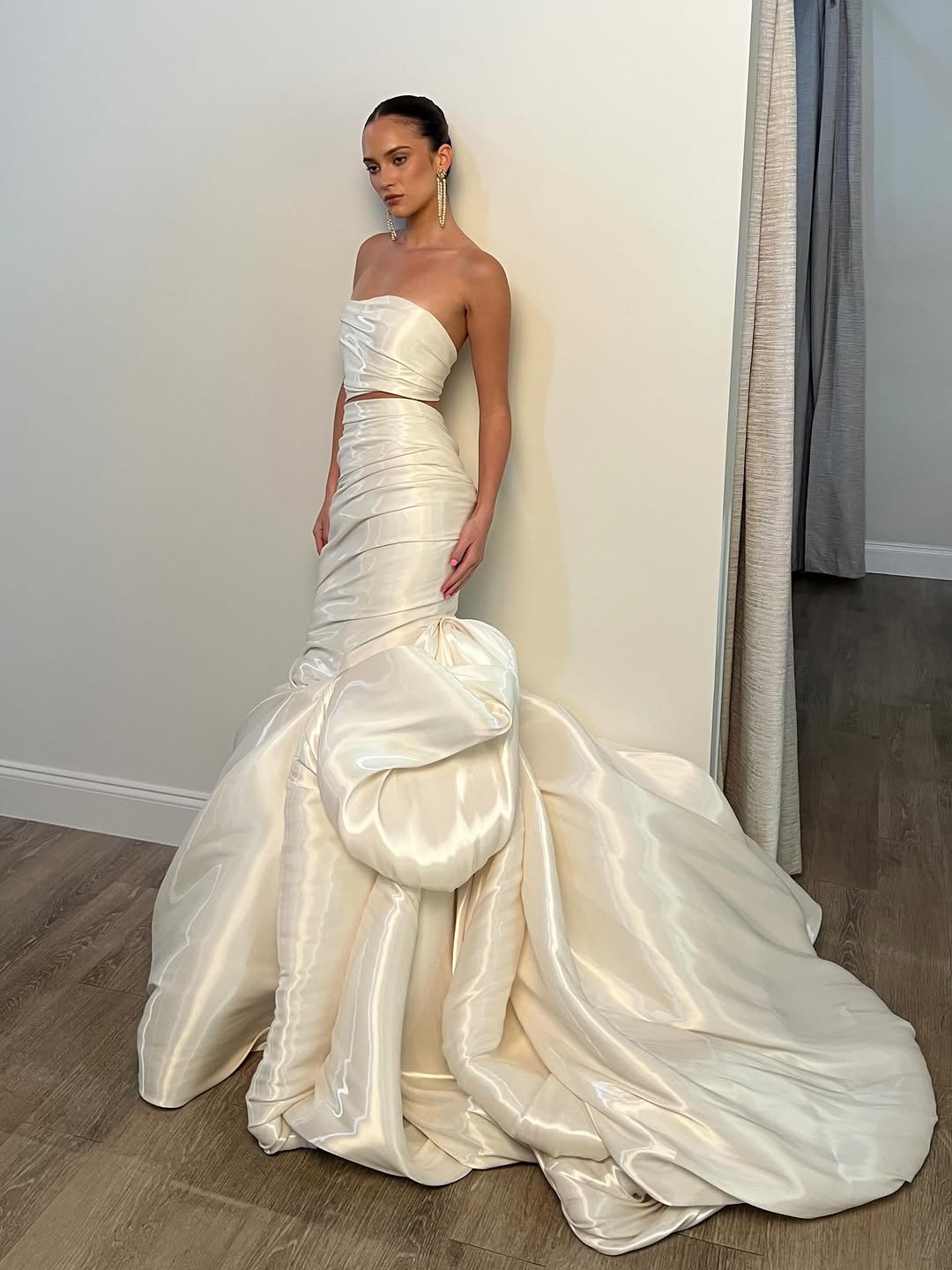
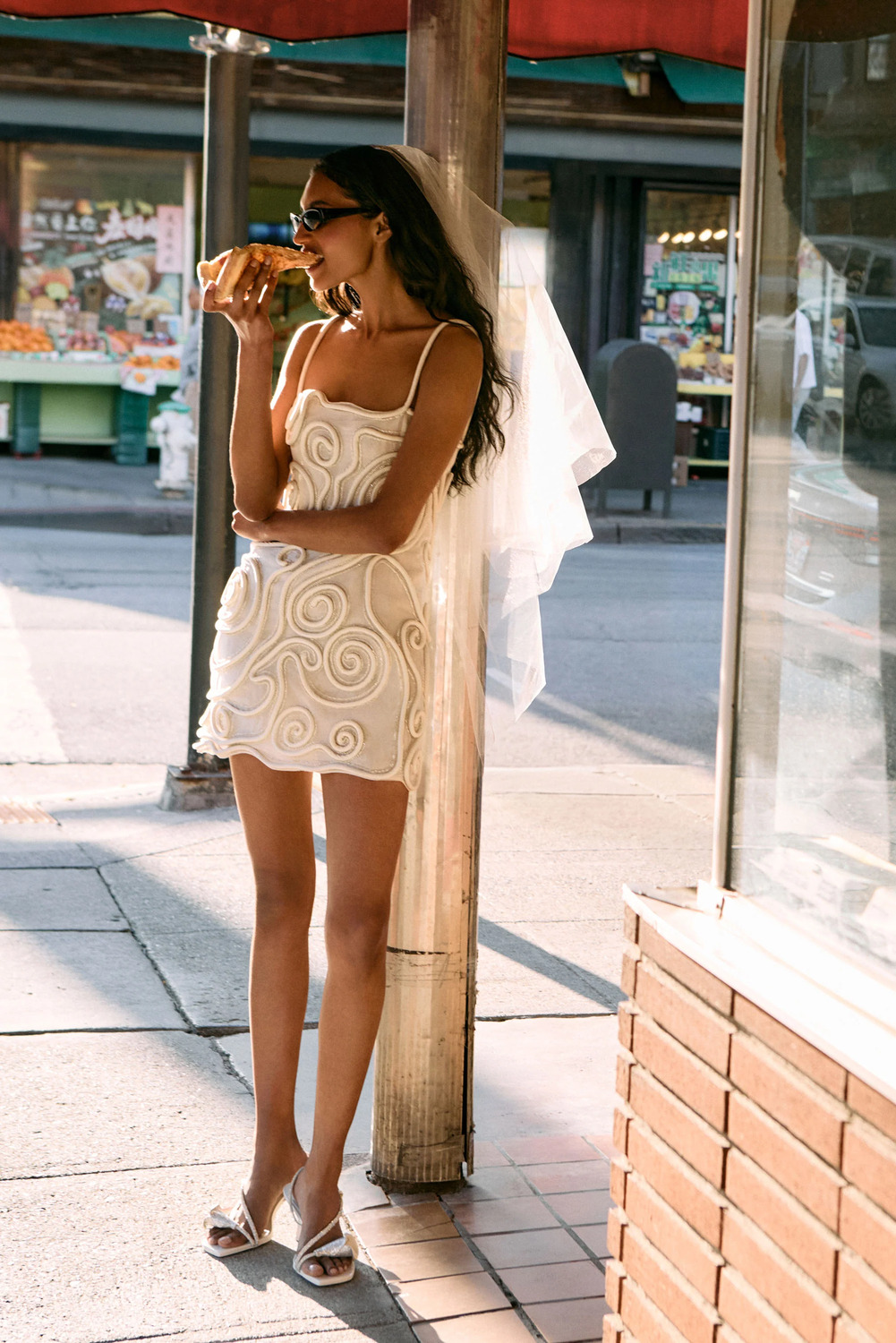
Photo: Kristen Weaver for Ines Di Santo, Courtesy of Cult Gaia