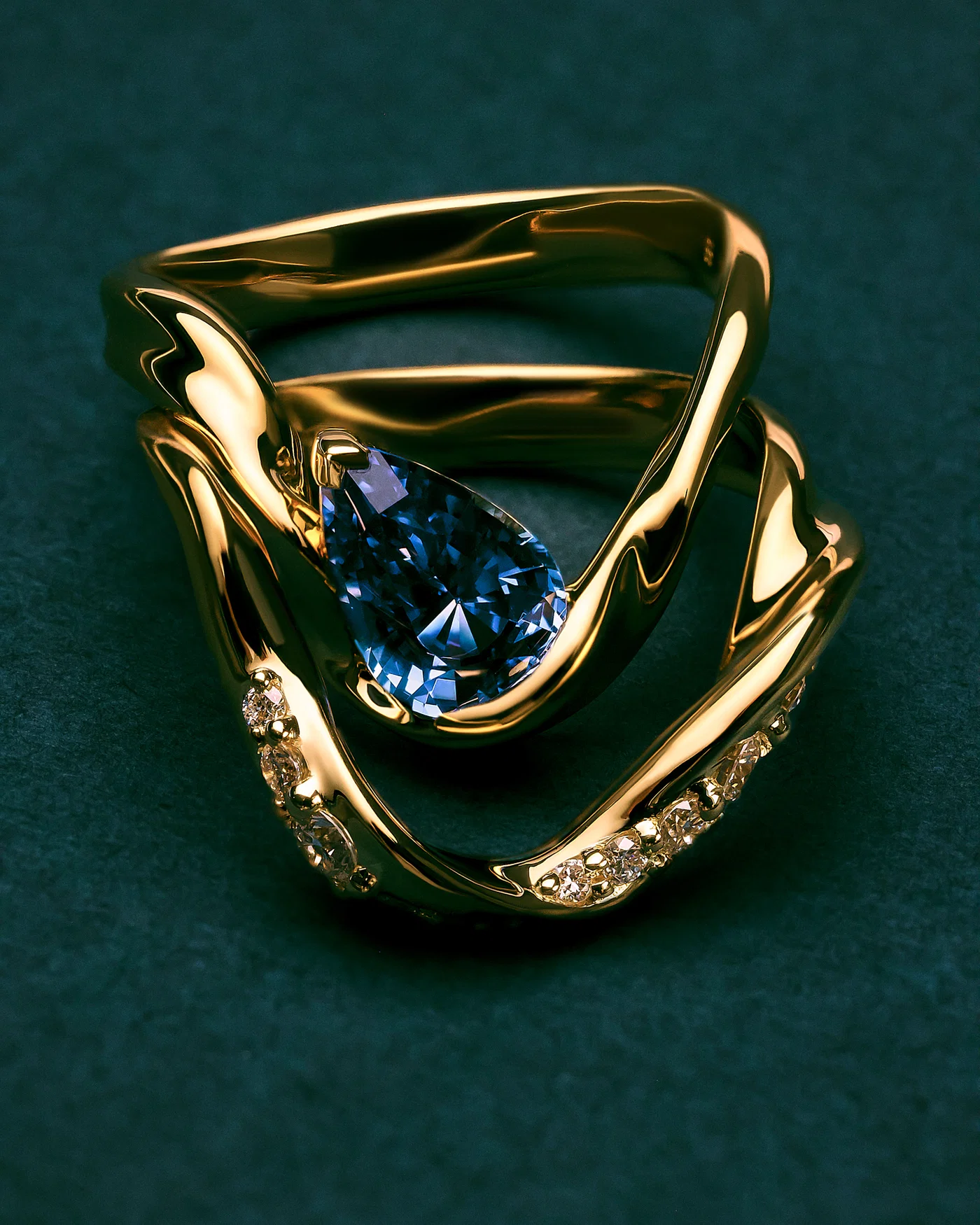
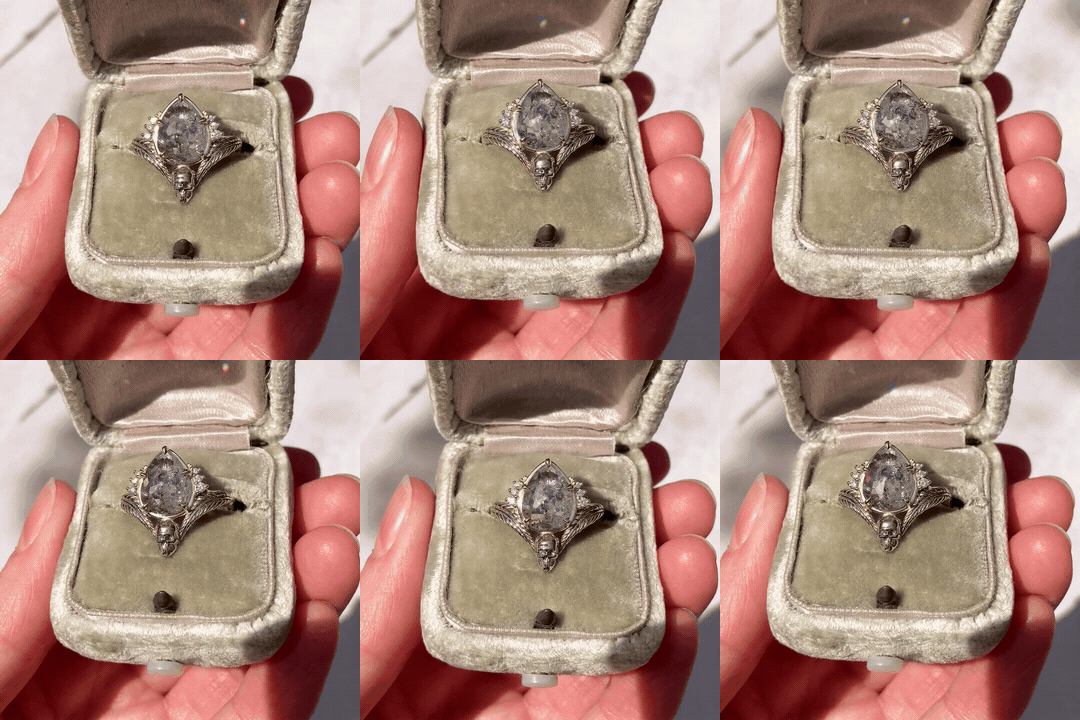
Lab-grown diamonds now sit in more than half of newly appraised engagement rings, according to BriteCo’s latest jewelry price index. When the white solitaire becomes the easiest thing in the case to buy, color becomes the clearest way to make a ring feel like yours. That’s why more brides are turning to gemstone engagement rings, and Halle Berry joined them this year with a vintage ring that frames its diamond in blue sapphires. Color also looks right in yellow gold, which has recently overtaken white gold as the more popular metal. Below are 16 gemstones worth considering, each with a little history and an honest note on everyday wear. For durability we use the Mohs scale, where diamond scores 10 and anything below 7 needs a protective setting and a little more care.
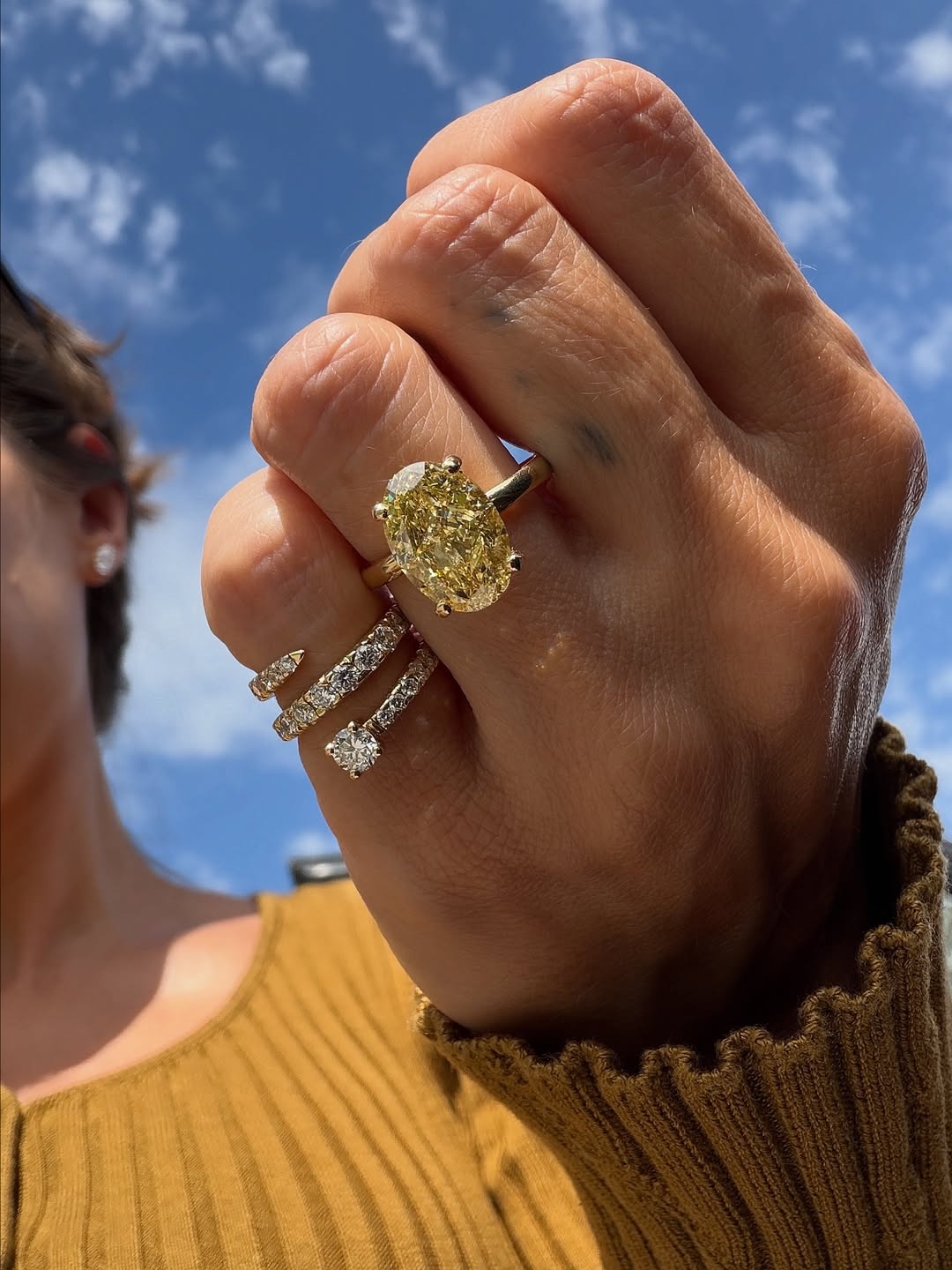
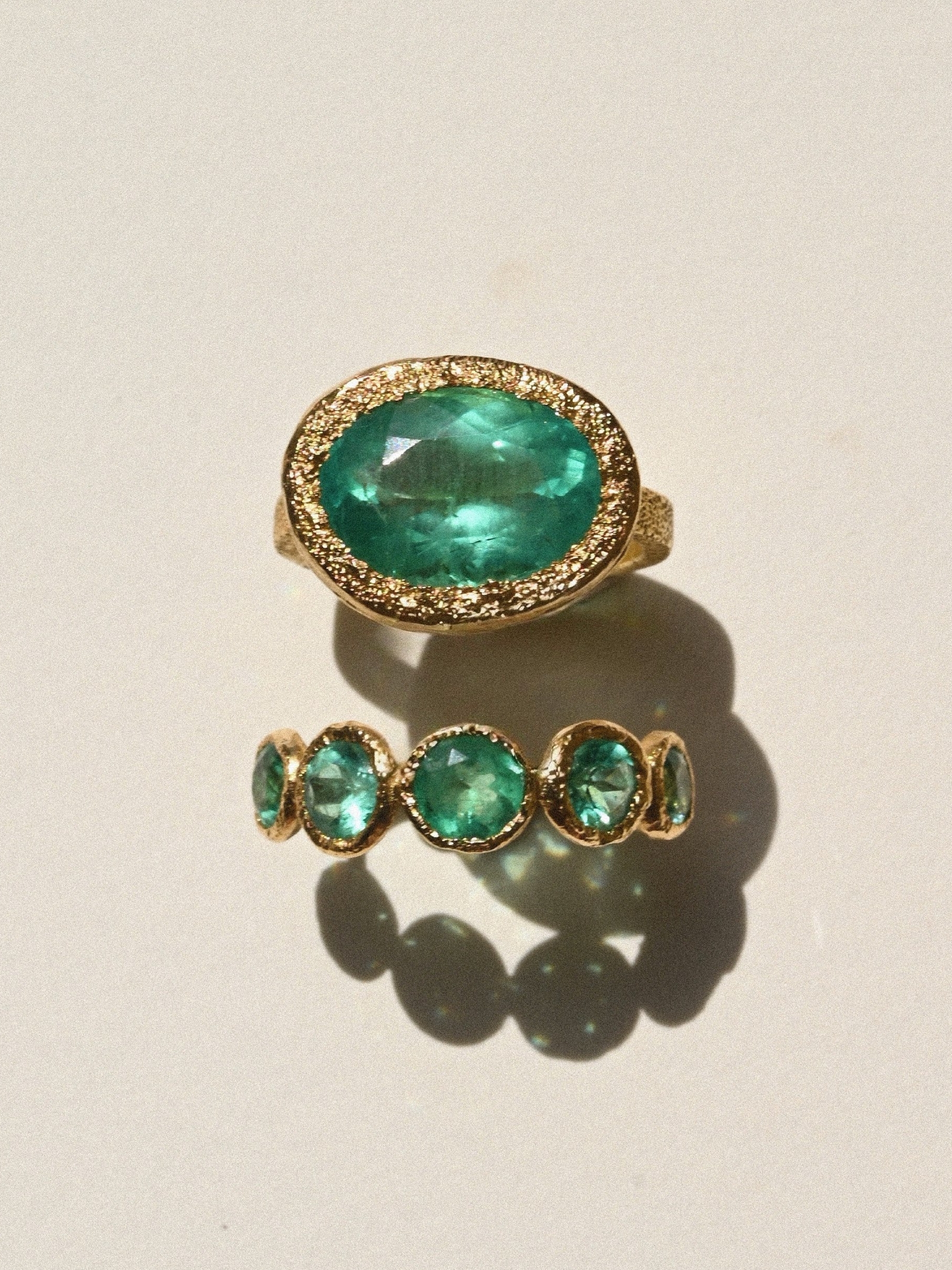
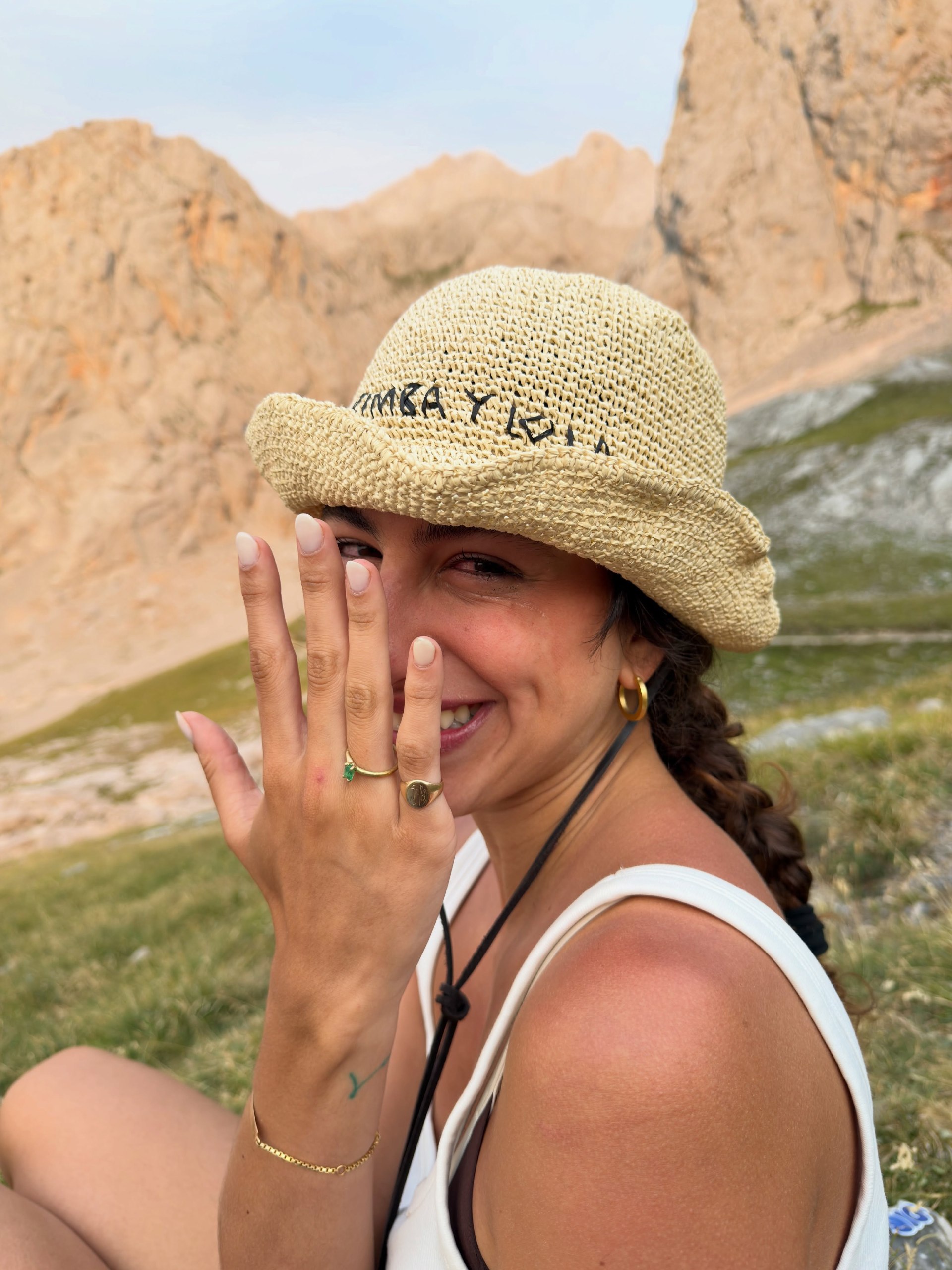
Rings: fckmyfinger, Uzal Jewelry
Emerald
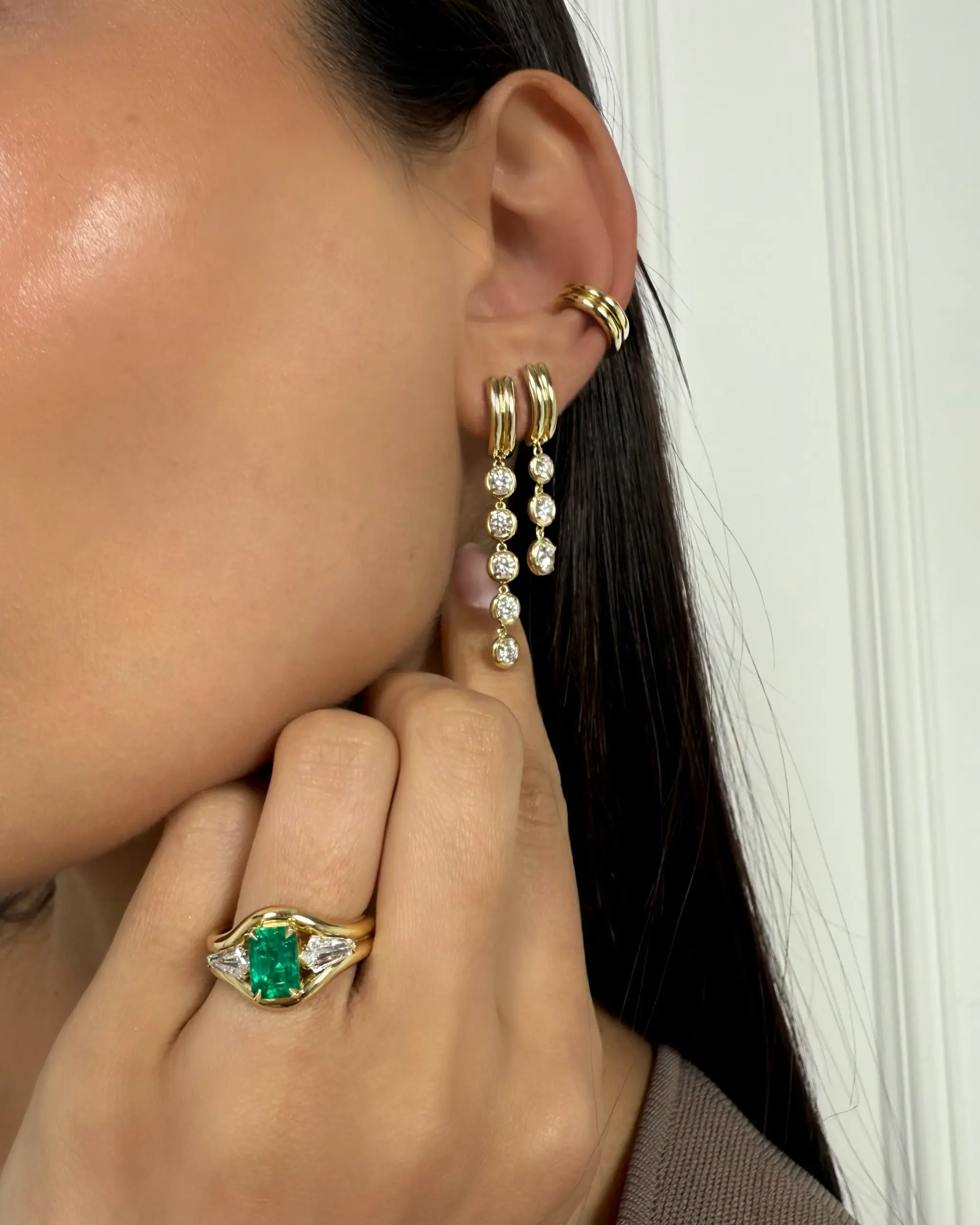
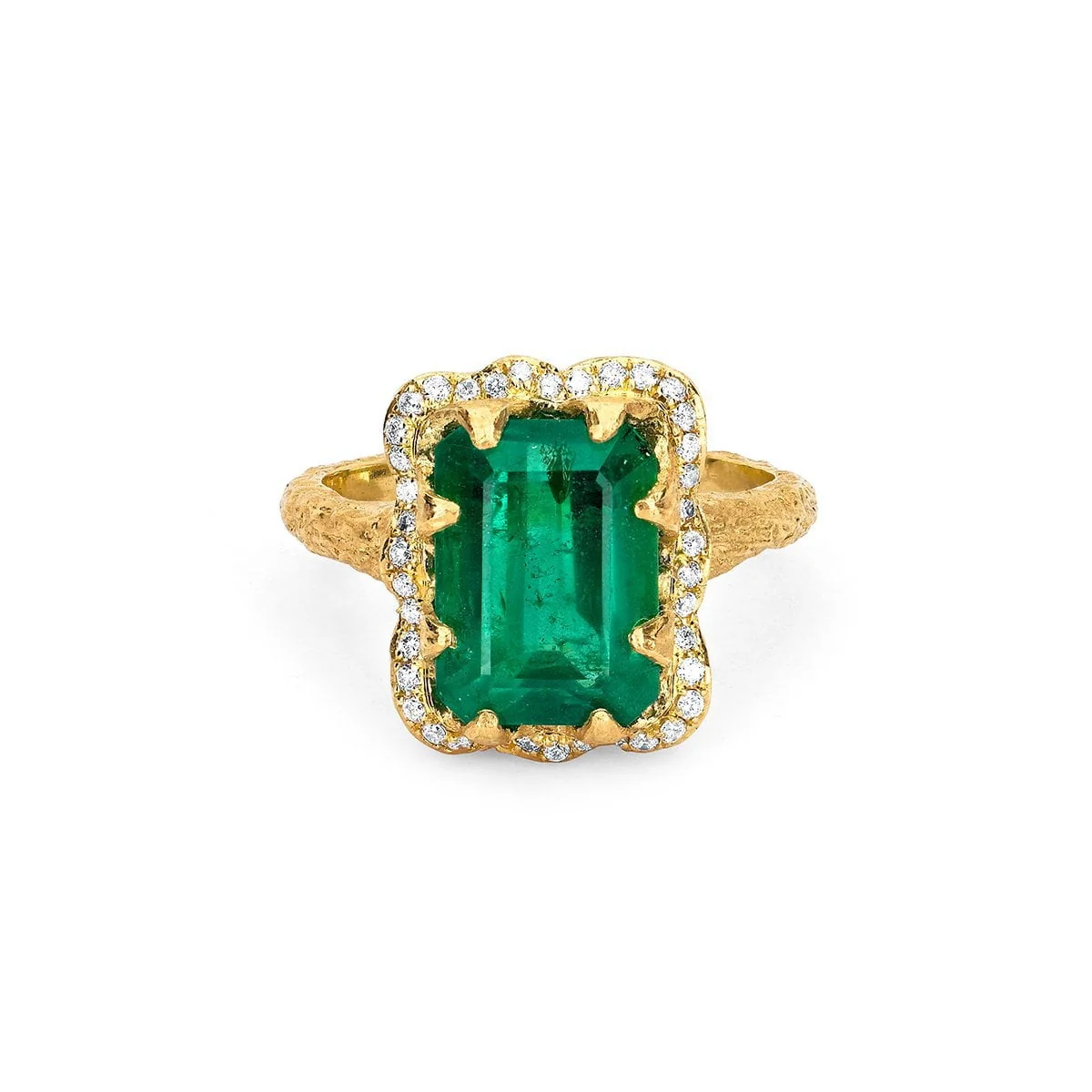
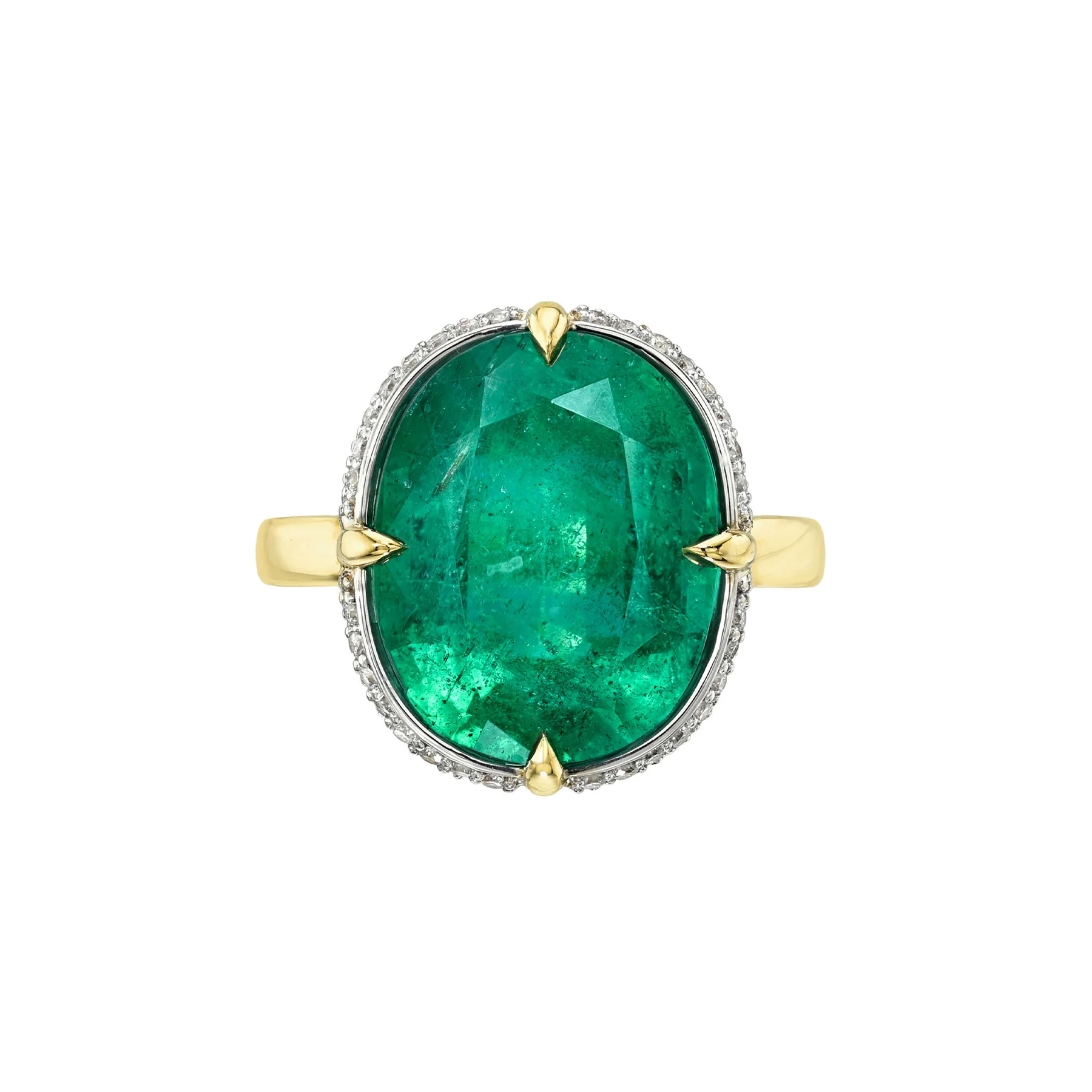
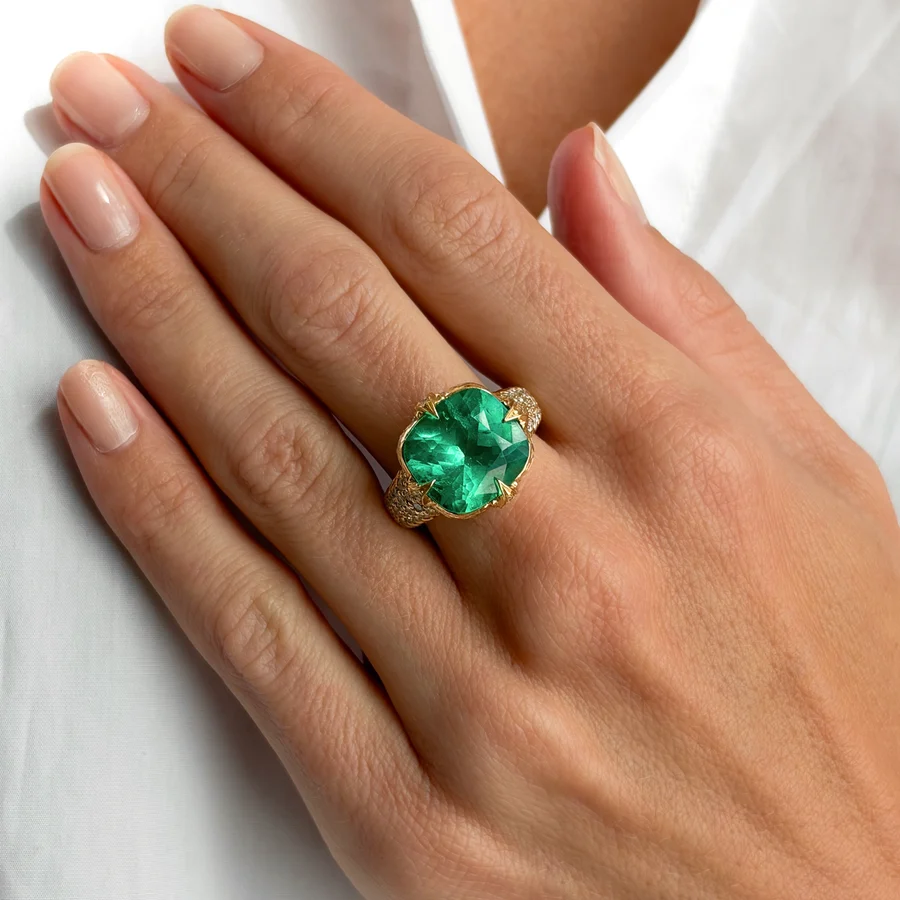
An emerald engagement ring suits a bride who loves a deep green and values character over perfect clarity. The most prized stones show a pure to slightly bluish green, while stones too pale to qualify are sold as green beryl. Nearly every emerald has inclusions, which the trade calls jardin, French for garden, and most are oiled to make those fissures less visible, so ask about treatment. Jackie Kennedy’s 1953 Van Cleef & Arpels ring set an emerald beside a diamond in an early toi et moi. Anya Taylor-Joy chose an emerald center with diamonds on a gold band. At 7.5 to 8 on the Mohs scale, emerald handles daily wear, but its inclusions make it prone to chipping, so choose a bezel or a setting that protects the corners. And if you were born in May, emerald is also your birthstone, a detail that makes the ring feel even more personal.
Citrine
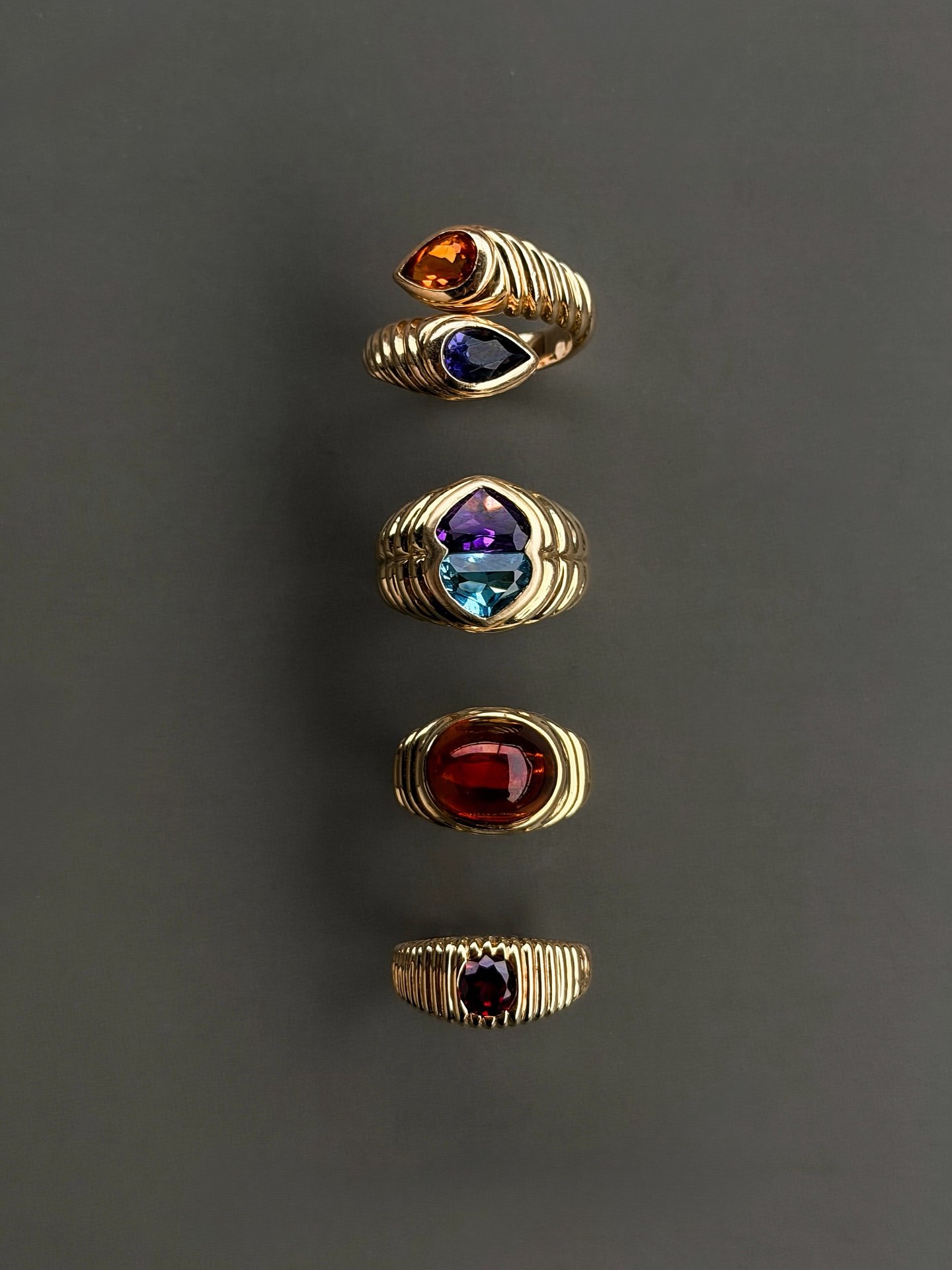
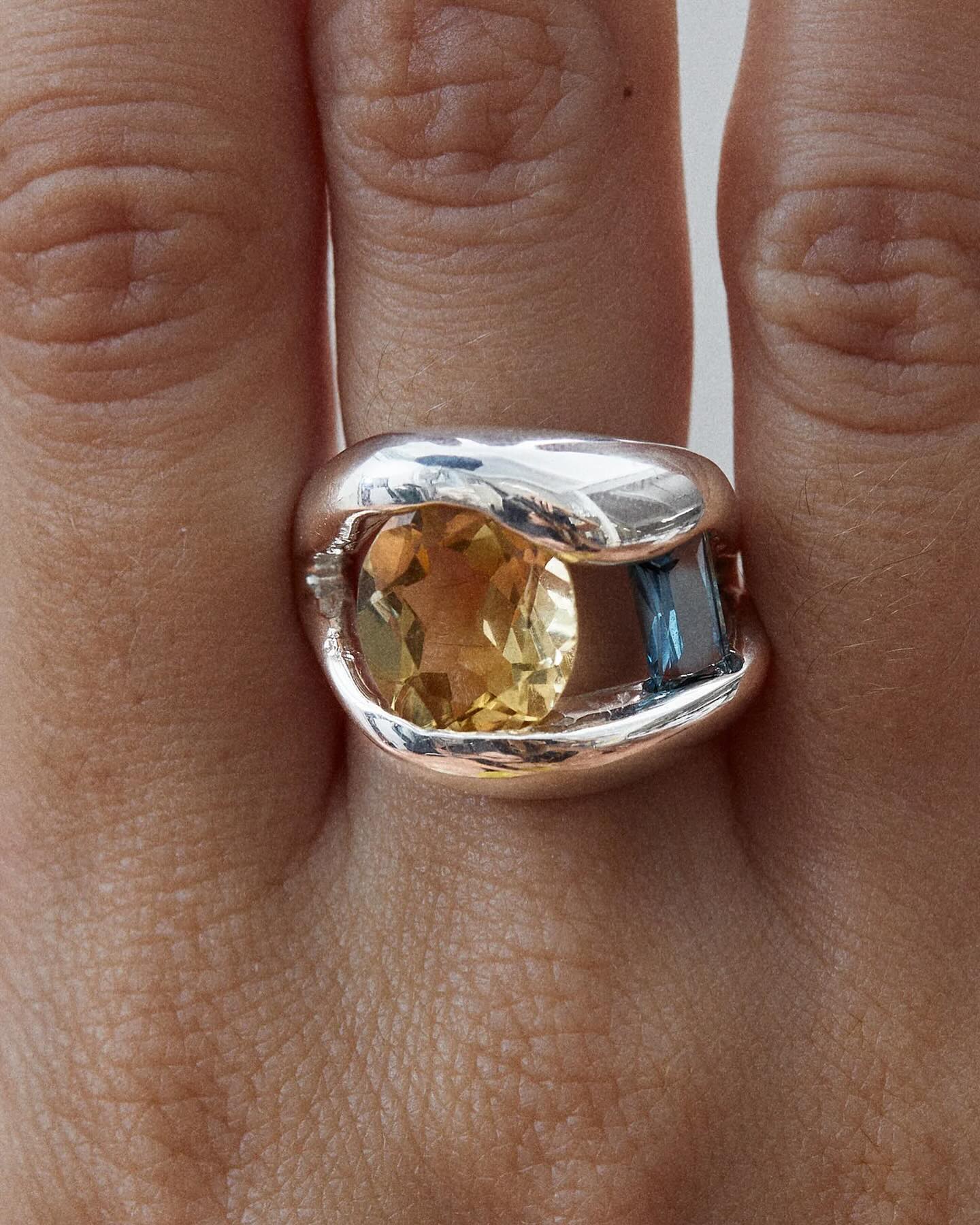
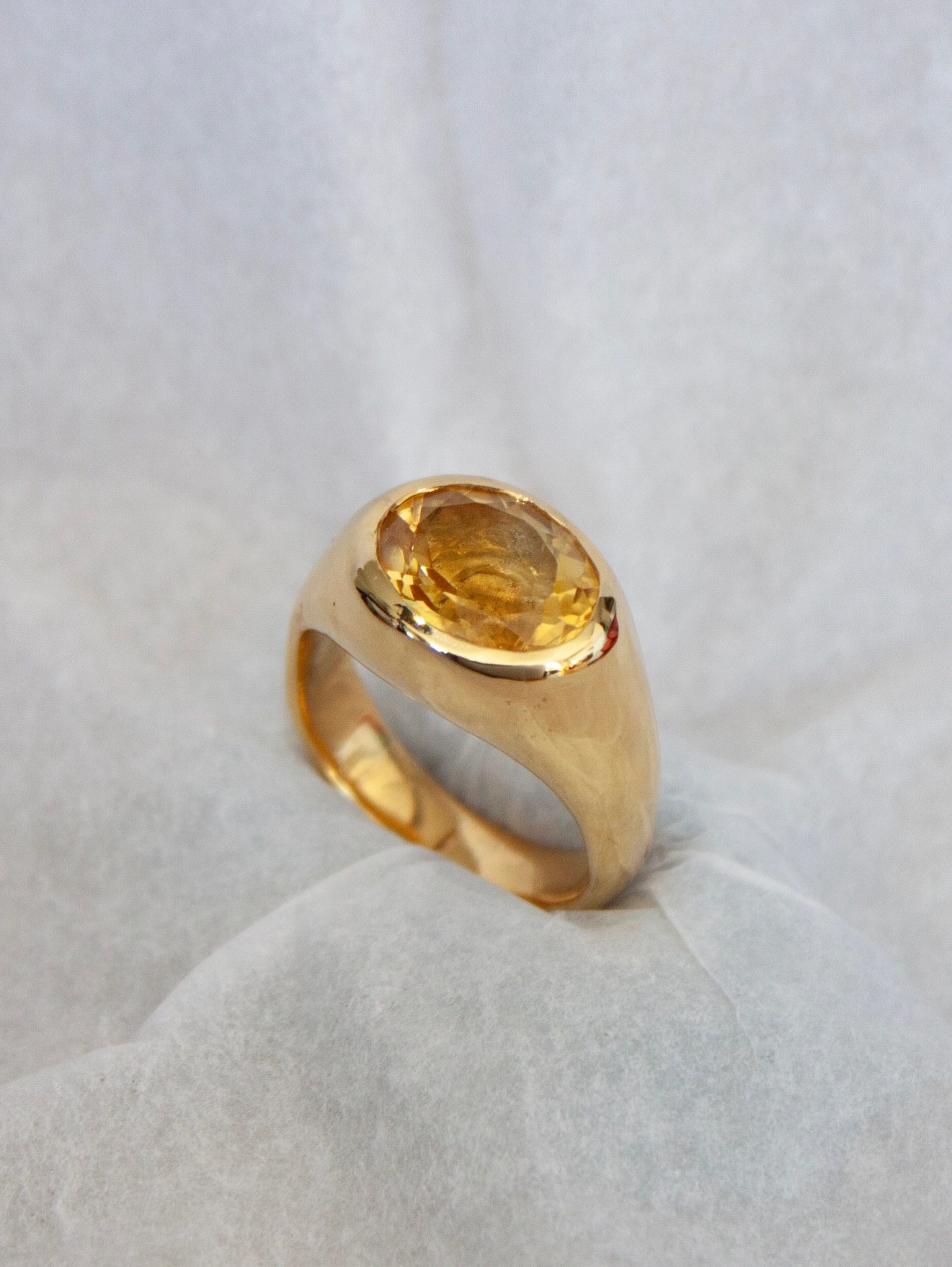
Most citrine on the market started out as amethyst. Natural citrine is rare, and the golden stones you’ll see in most jewelry cases got their color from heat treatment. That’s completely normal, so let the color guide you instead. Pale lemon reads fresh and modern, while deep Madeira citrine leans toward cognac and looks richer by candlelight. Citrine belongs in yellow gold, where warm stone and warm metal blend into one piece, and a thick bezel or an east-west oval keeps it from looking like a cocktail ring. It’s also one of the most budget-friendly stones on this list. At 7 on the Mohs scale, citrine handles daily wear well, though it will collect fine scratches sooner than a sapphire. Citrine is one of the two November birthstones, a fitting match for its fall-gold color.
Rings: Hernan Herdez, Nattie Jewellery
Sapphire
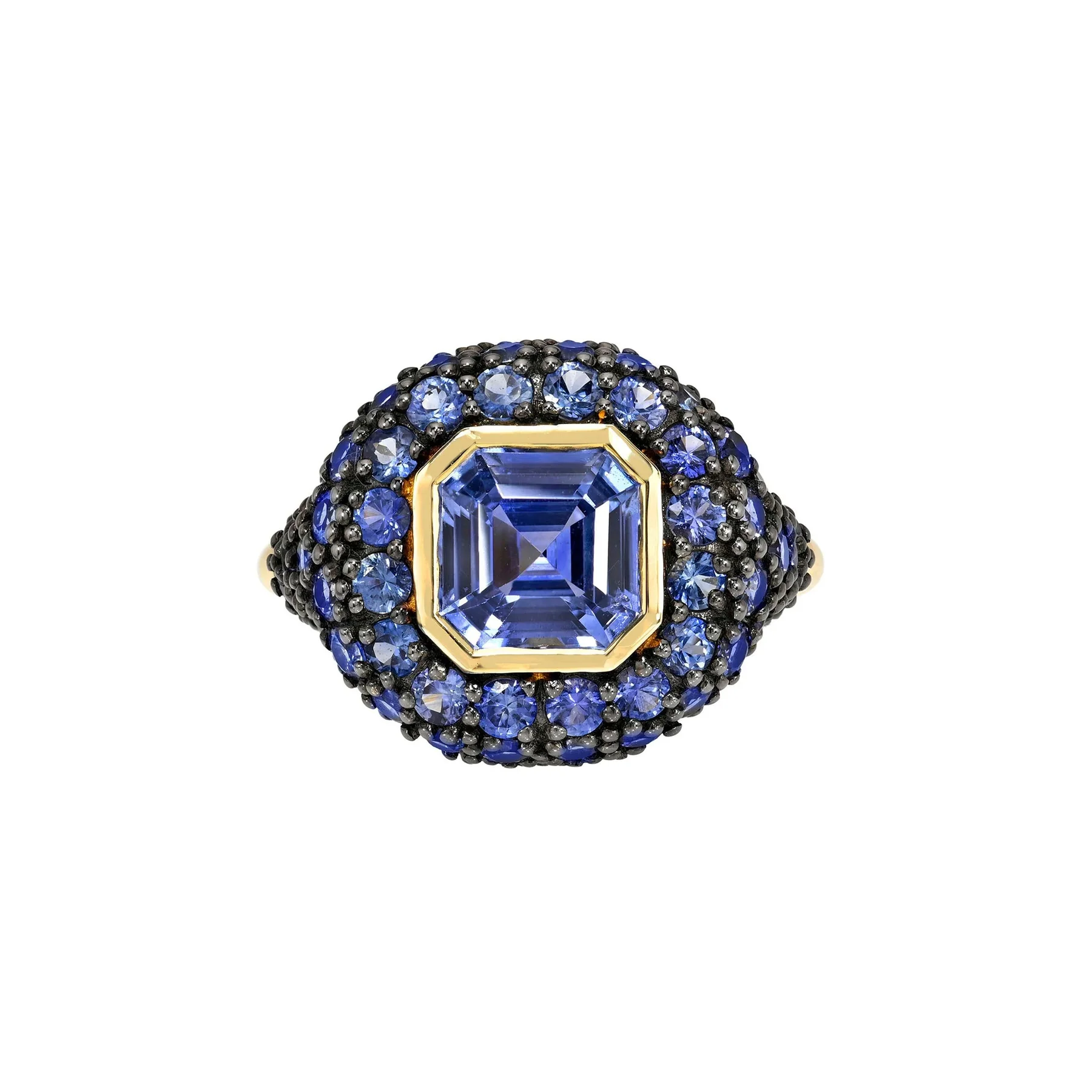
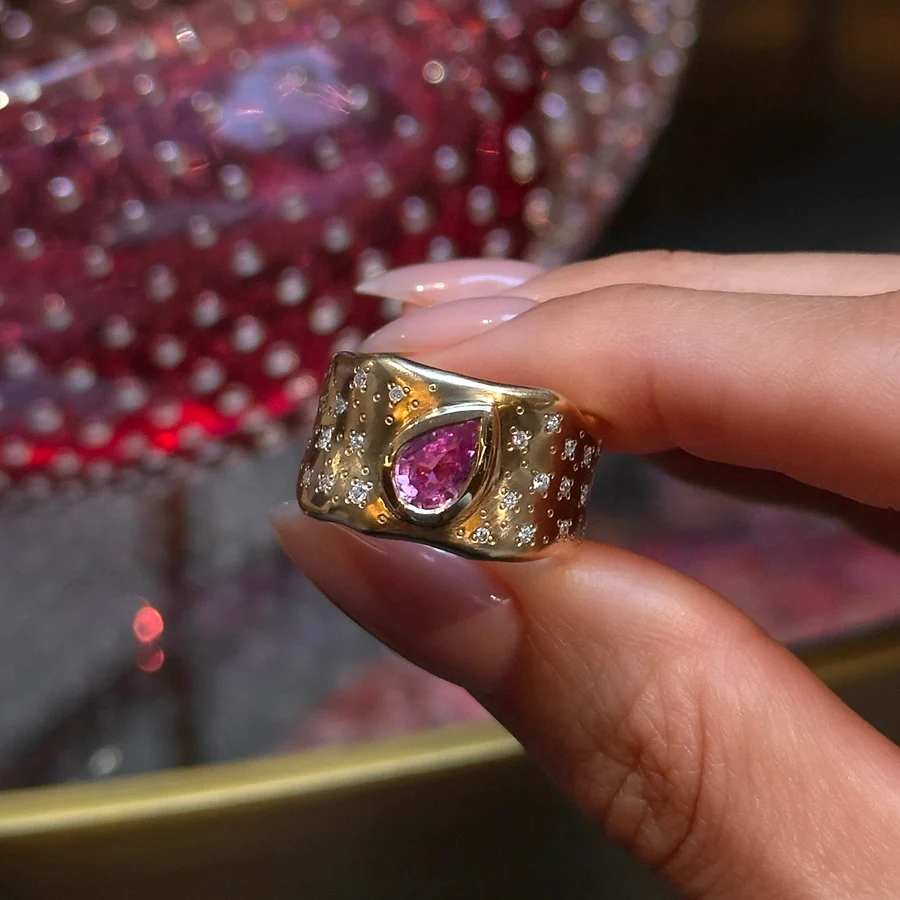
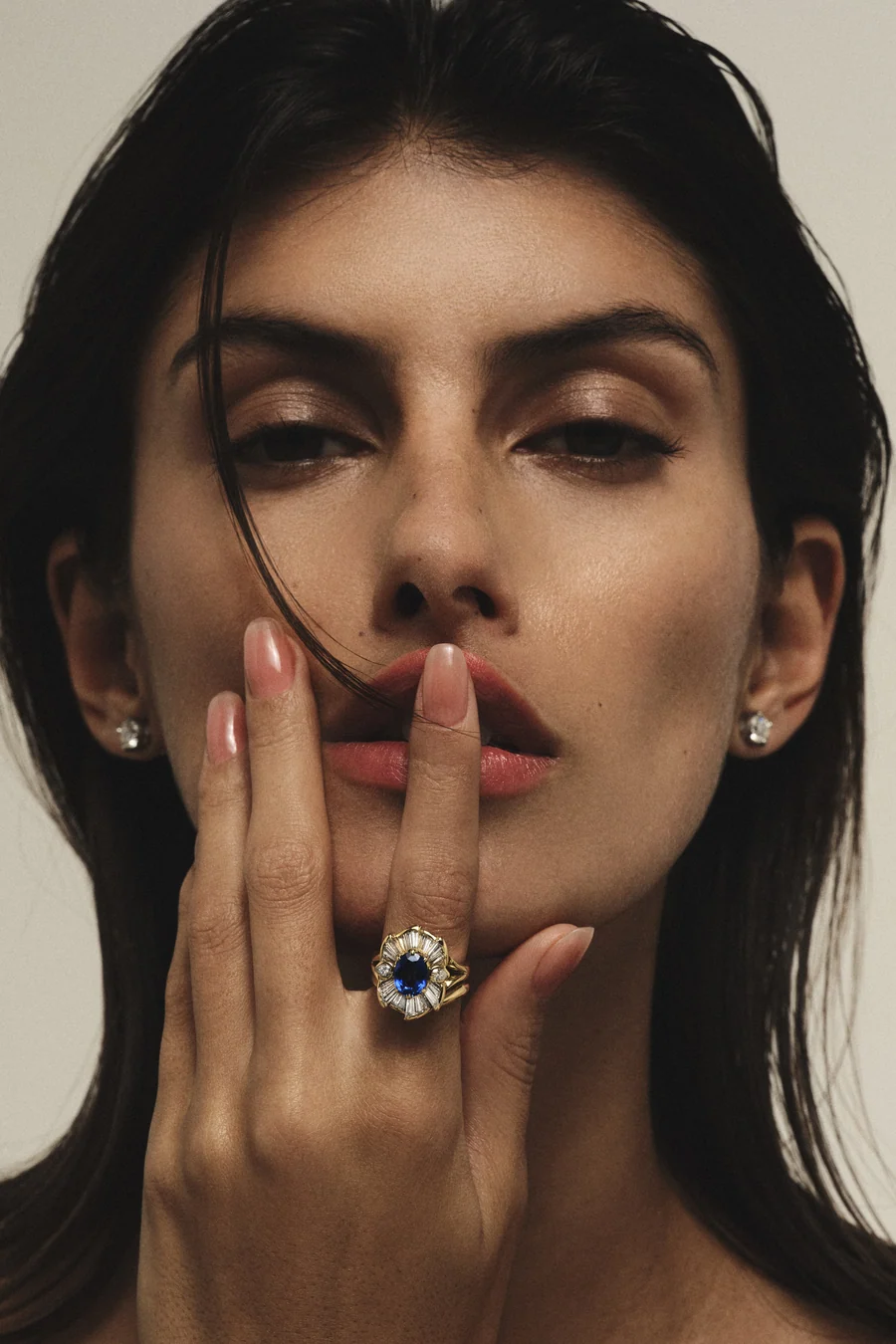
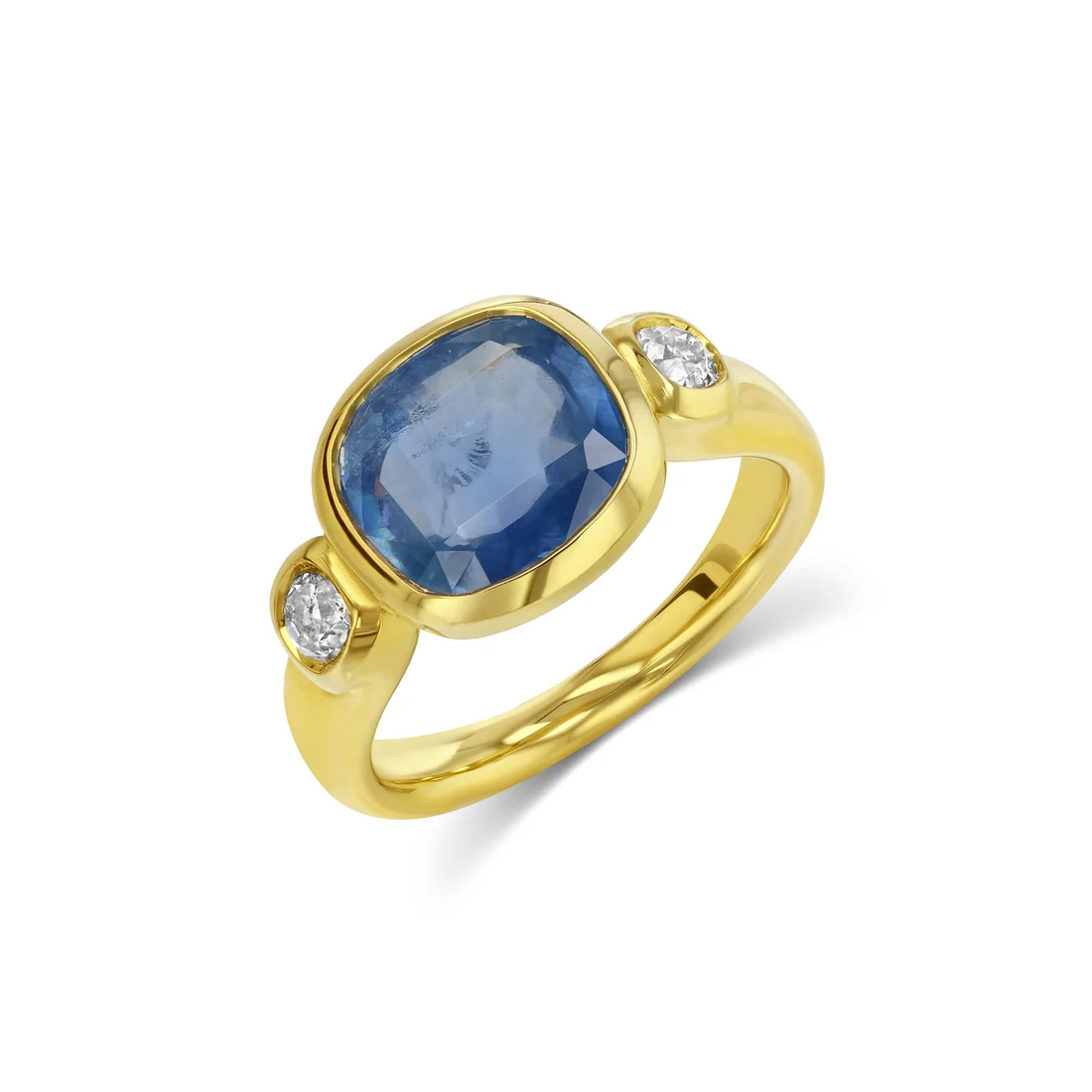
Sapphire is the safest gemstone for an engagement ring and the most regal. At 9 on the Mohs scale it sits just behind diamond, so it can live through the same daily routine as a solitaire. Princess Diana’s Ceylon sapphire from Garrard, now worn by the Princess of Wales, made blue the classic, yet sapphire comes in almost every color. The one exception is red, because red corundum is called ruby. Princess Eugenie chose a coral-pink padparadscha in 2018, and teal and parti sapphires, which show two or more colors in a single stone, appeal to brides who want something less formal. Halle Berry’s 2026 ring takes another route, with step-cut blue sapphires surrounding a round diamond in yellow gold. Also, sapphire is the September birthstone, and it has long been a symbol of faithfulness, which may be the best reason of all to put it on an engagement ring.
Pearl
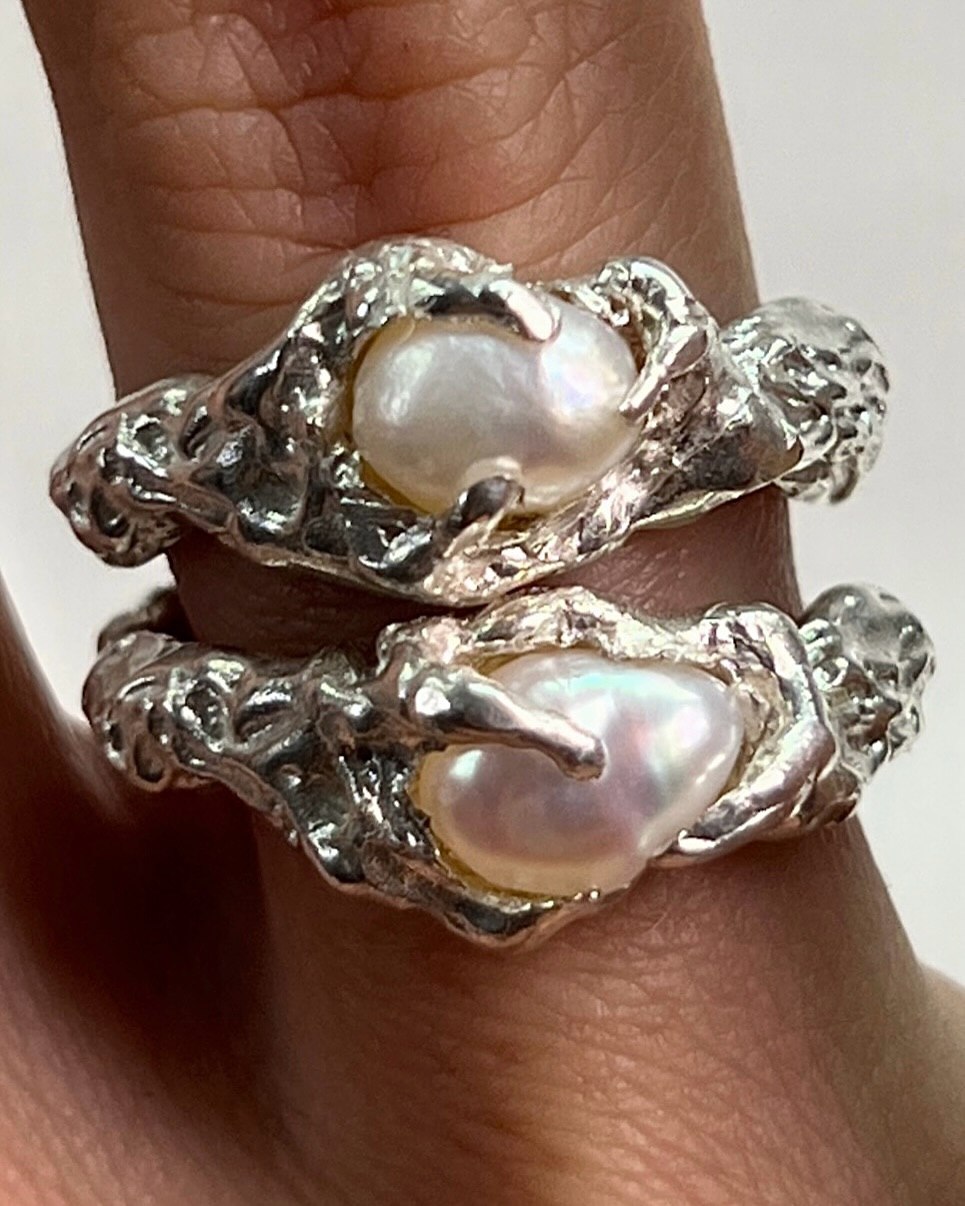
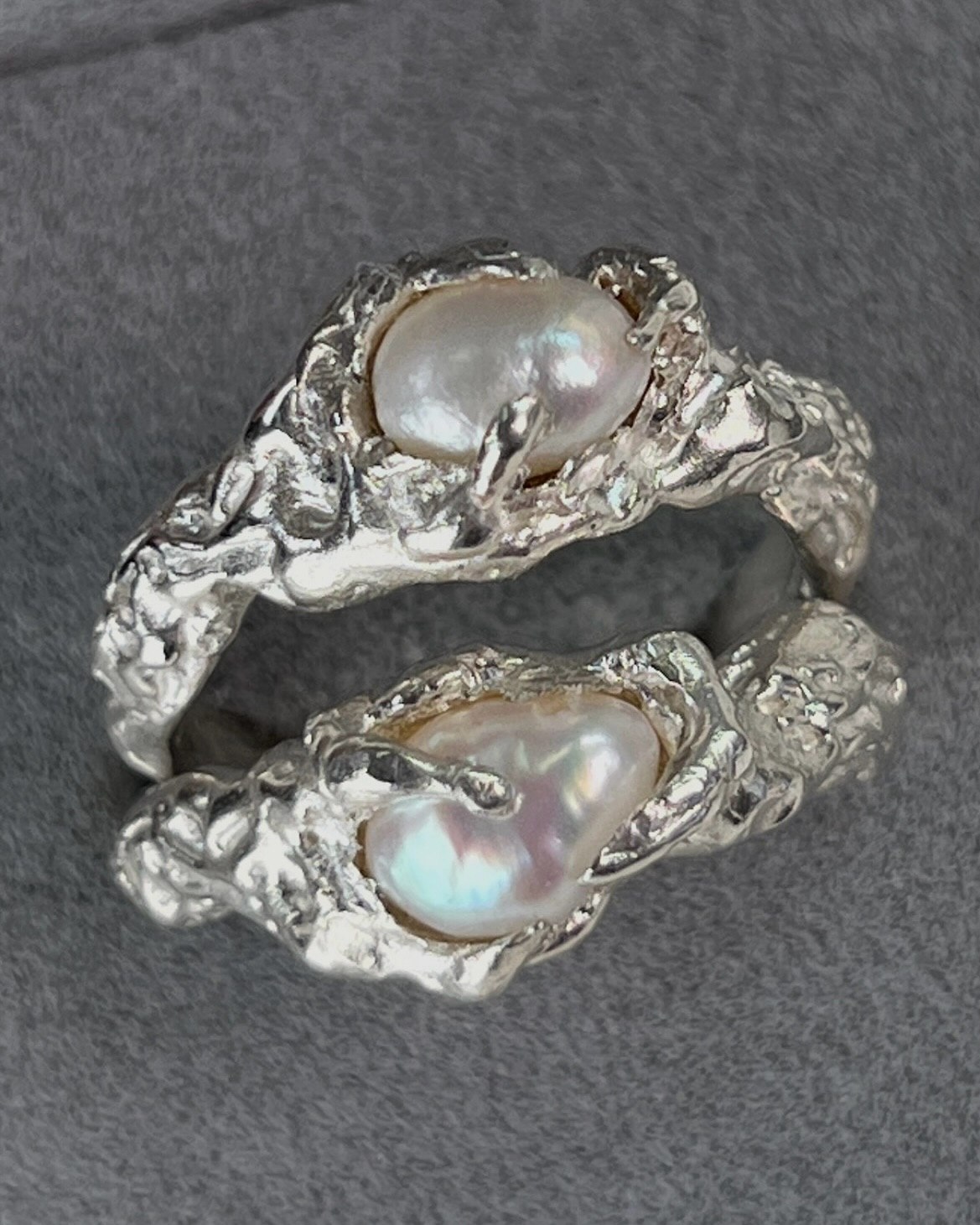
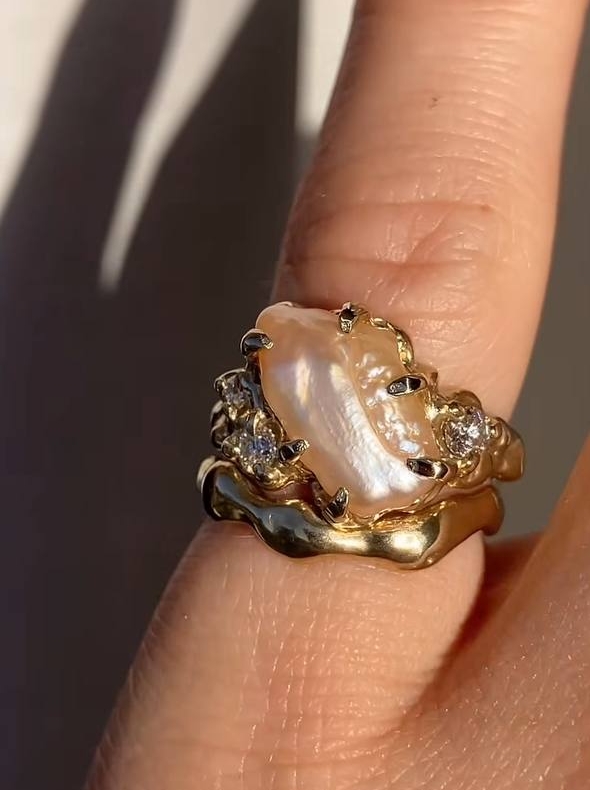
Pearl is the only stone on this list grown by a living creature, and it’s also the most delicate. At 2.5 to 4.5 on the Mohs scale, it’s the softest option here, and hand cream and perfume slowly wear down its luster. Ariana Grande’s 2020 ring paired a pearl with an oval diamond in a toi et moi, and a diamond does add sparkle and value. Still, a pearl can carry the ring on its own. Irregular baroque pearls look modern in sculptural, molten-looking gold or silver, and a bezel or a setting that wraps around the pearl protects it from everyday knocks. Akoya pearls have a crisp white sheen, and South Sea and Tahitian pearls are larger, in golden or dark peacock tones. Pearl belongs to June, a month that has been tied to weddings for generations.
Rings: fckmyfinger, Lauren MacPhail
Opal
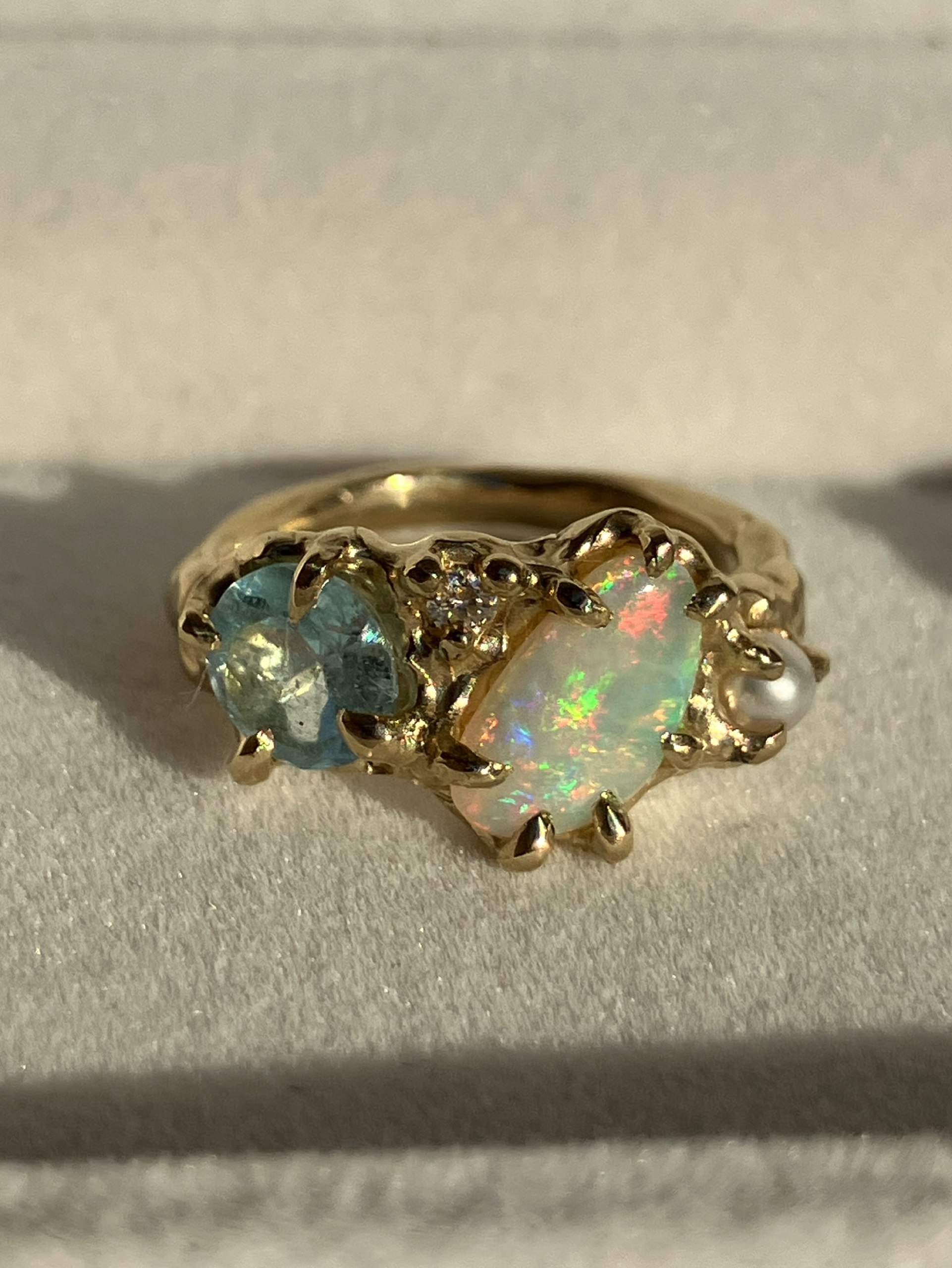
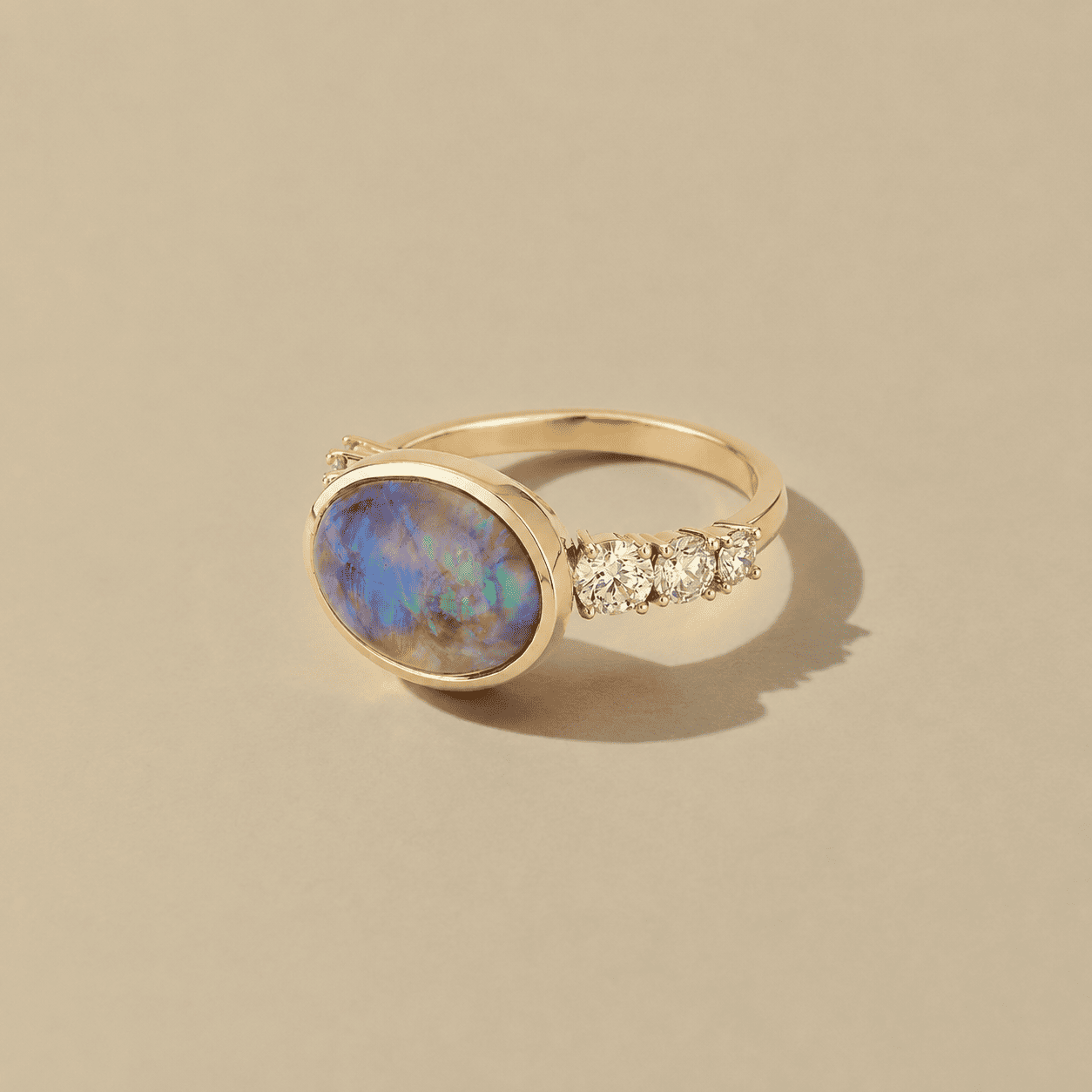
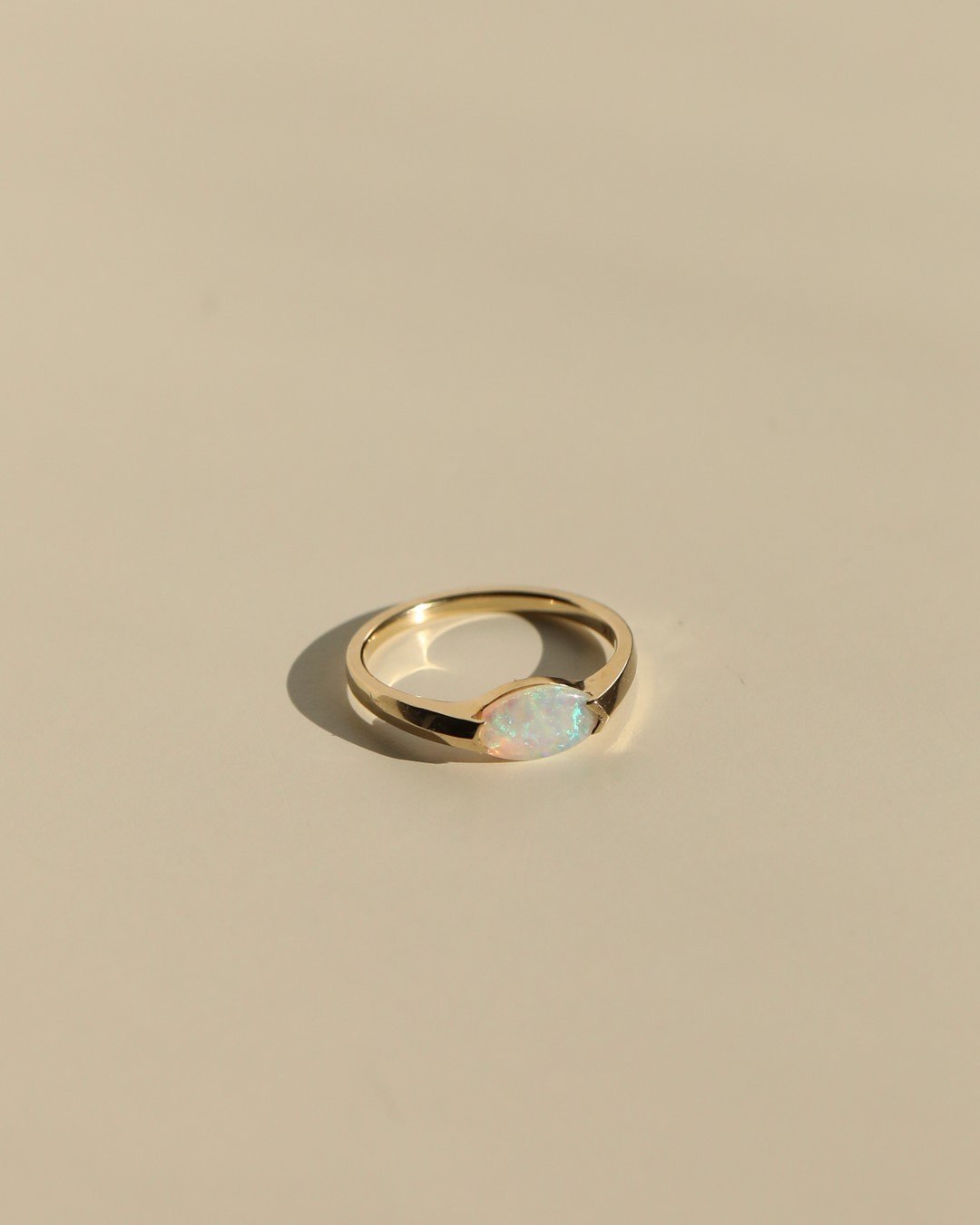
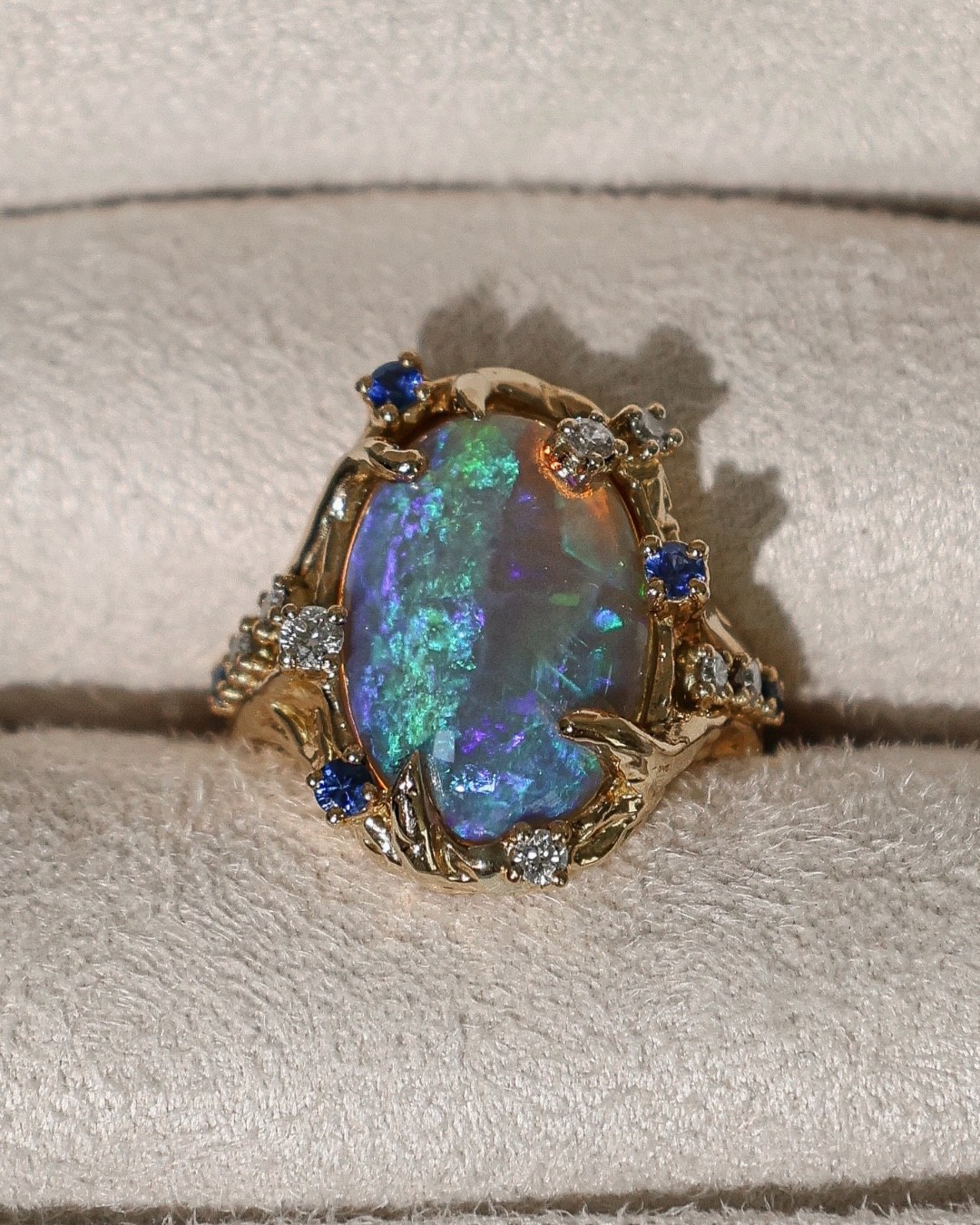
Opal has the most dramatic face of any stone here. Its play of color shifts with every movement, and the Roman writer Pliny claimed some opals rival “the deepest and richest colors of painters.” Australian opal, especially black opal from Lightning Ridge, is the most prized, while Ethiopian Welo opal is more affordable but can absorb water and turn cloudy for a while. At 5.5 to 6.5 on the Mohs scale, opal is a stone for a careful wearer. Choose a solid opal over a thin doublet and set it in a bezel. Take it off before swimming or doing the dishes.
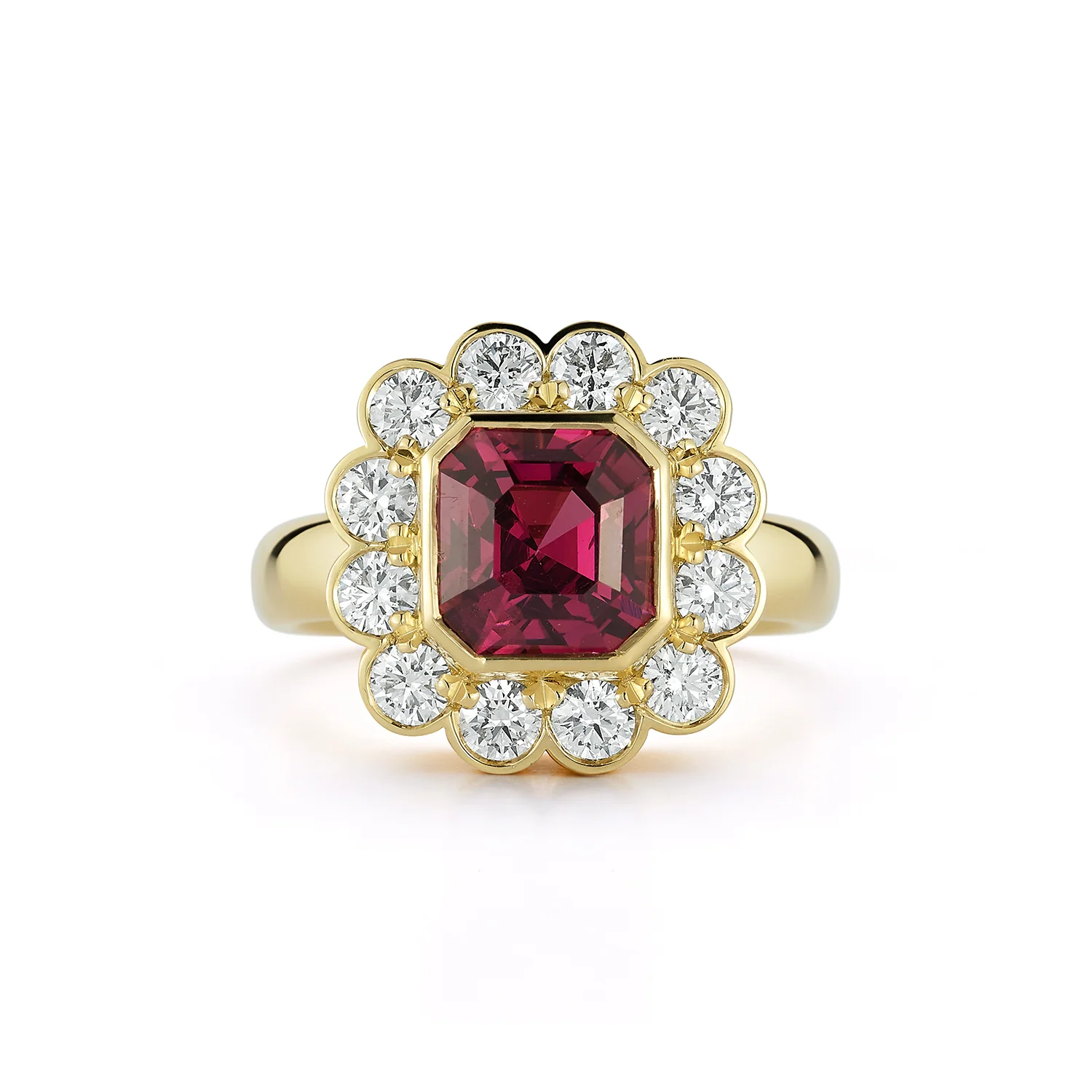
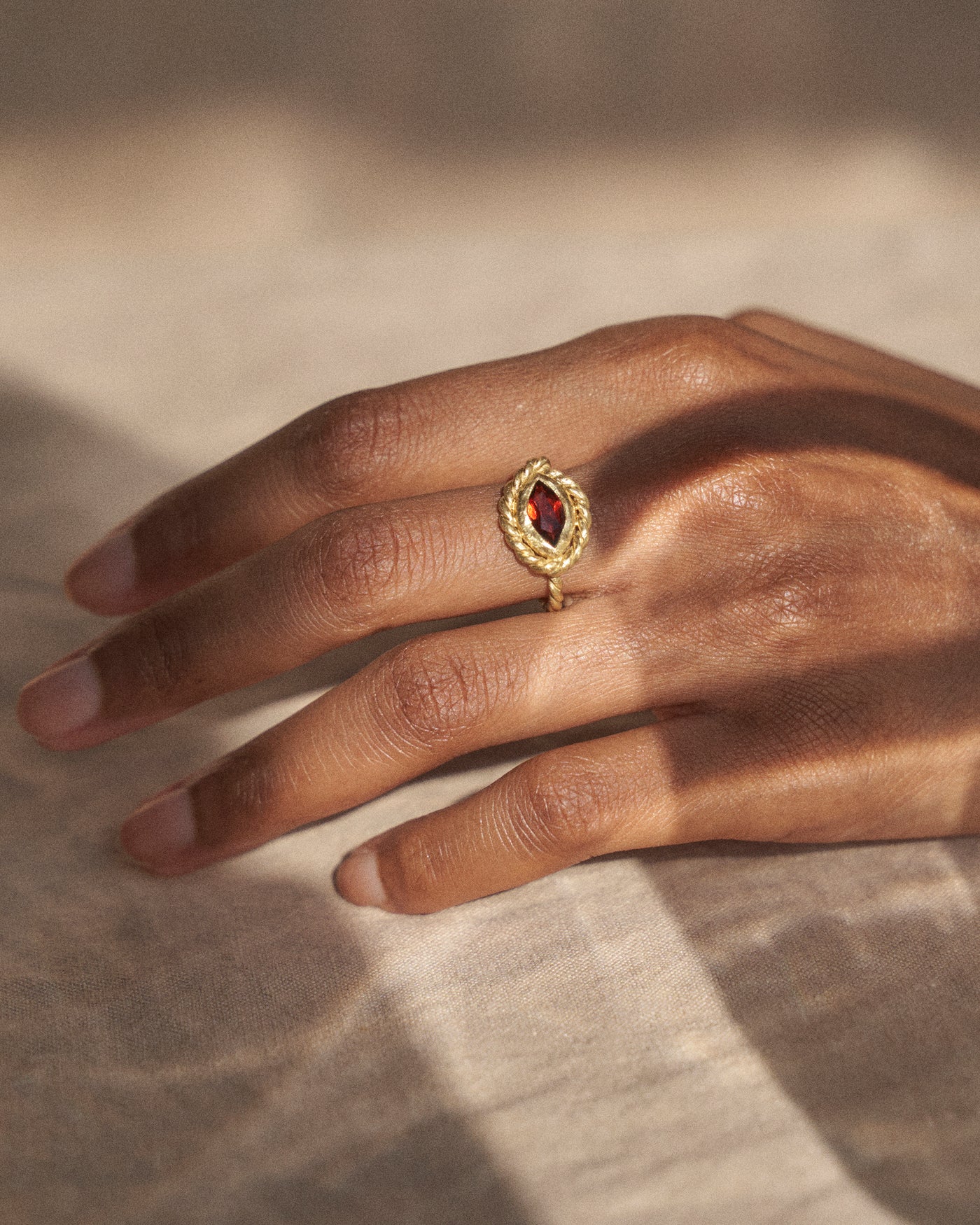
Garnet
Garnet is far more than the dark red stone in your grandmother’s Victorian brooch. The name comes from the Latin granatum, for pomegranate, and the classic Bohemian red still looks gorgeous in clusters. But the family runs wide. Rhodolite leans raspberry and spessartite turns a vivid orange. Green tsavorite and demantoid can rival emerald’s color, and demantoid even has more fire than diamond. Garnet is rarely treated, which makes it one of the more straightforward stones to buy, and as the January birthstone it comes with built-in meaning. Durability depends on the variety. Garnets range from 6.5 to 7.5 on the Mohs scale, so a demantoid deserves more protection than a rhodolite.
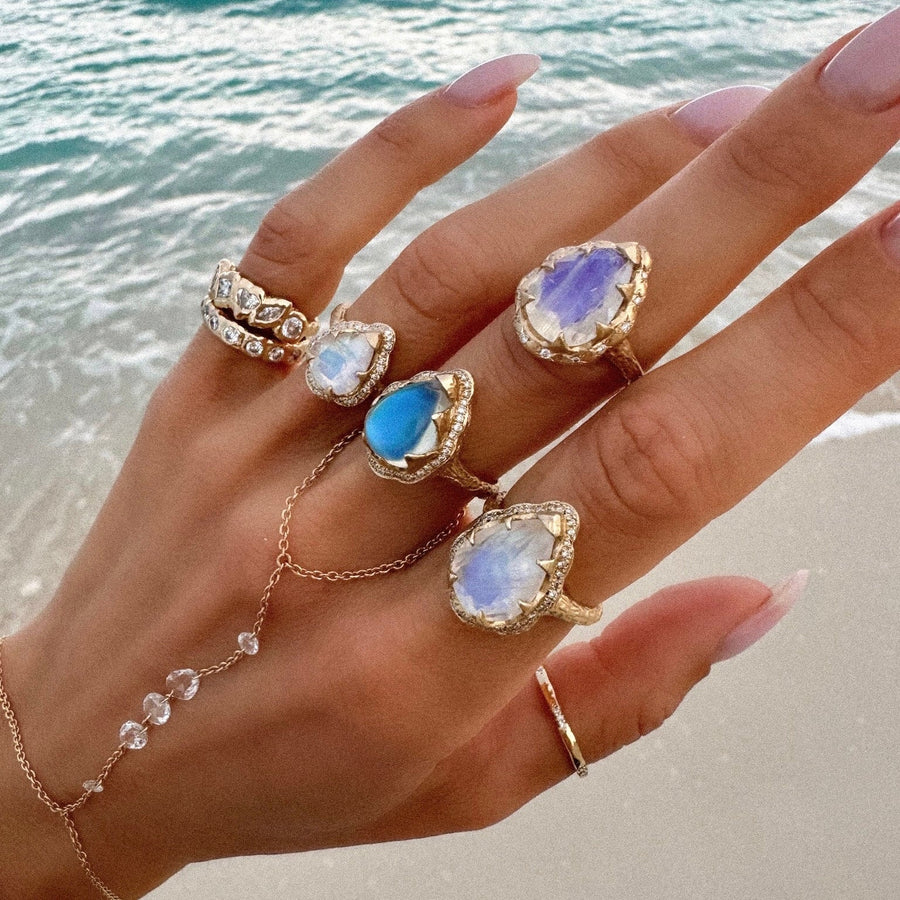
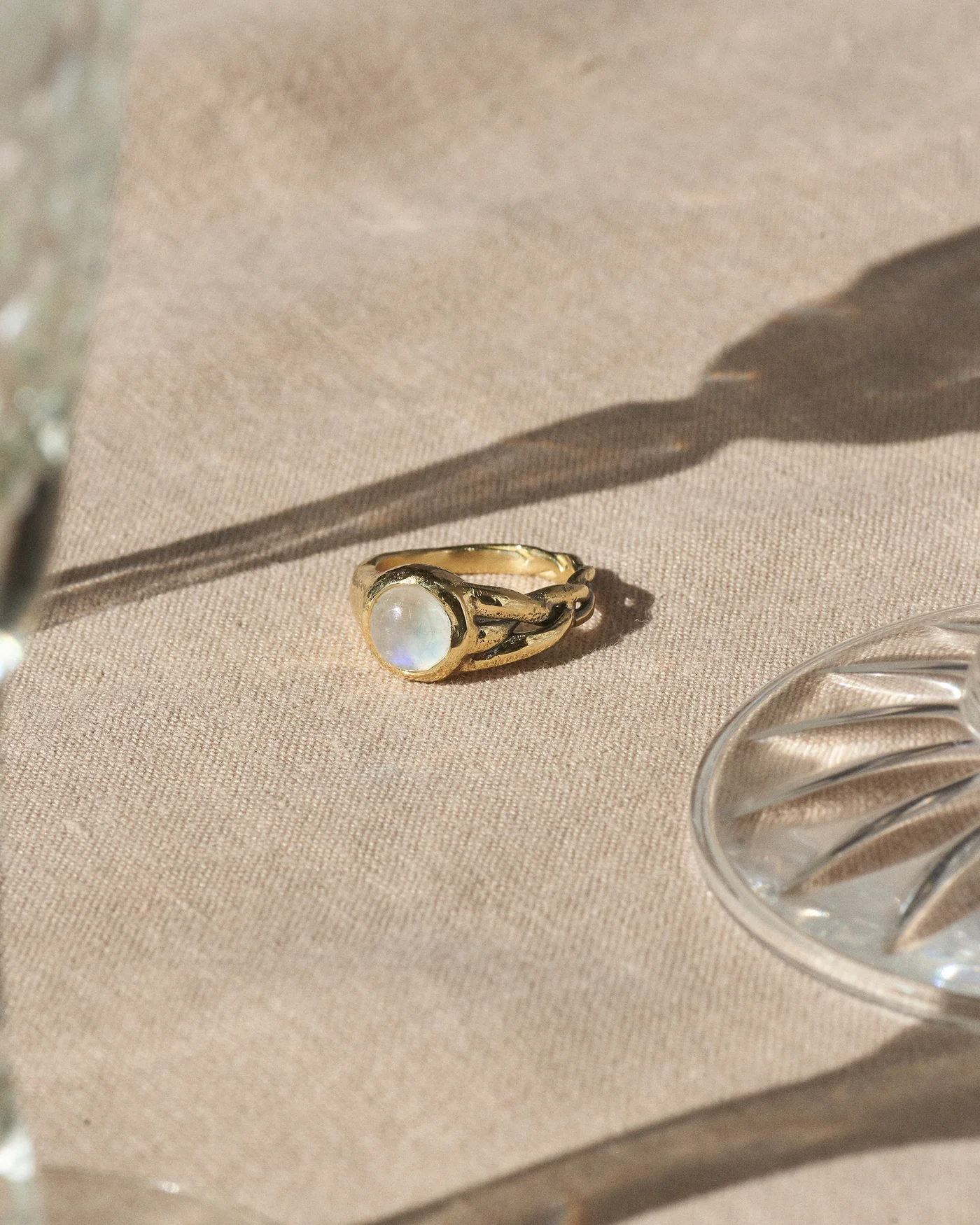
Moonstone
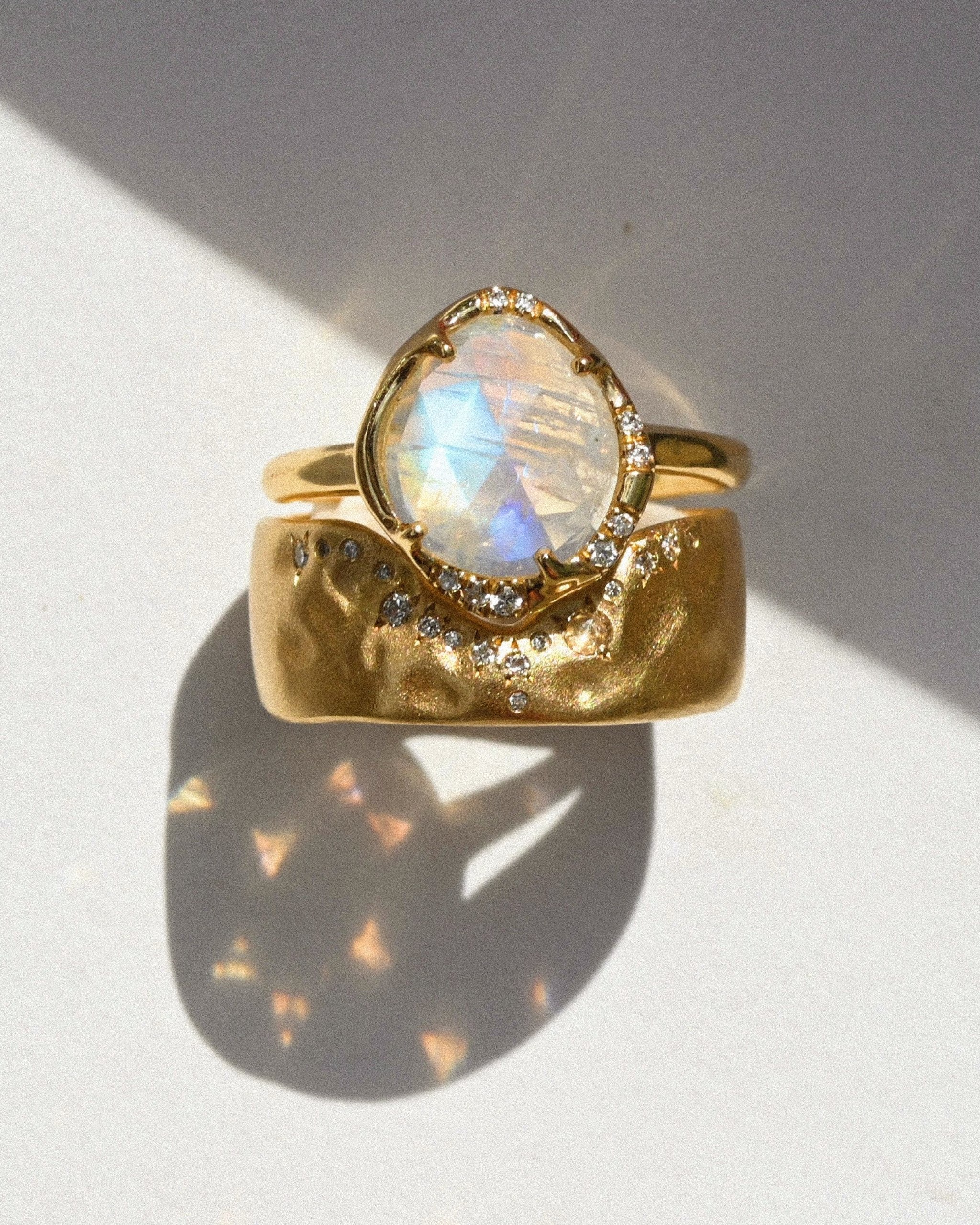
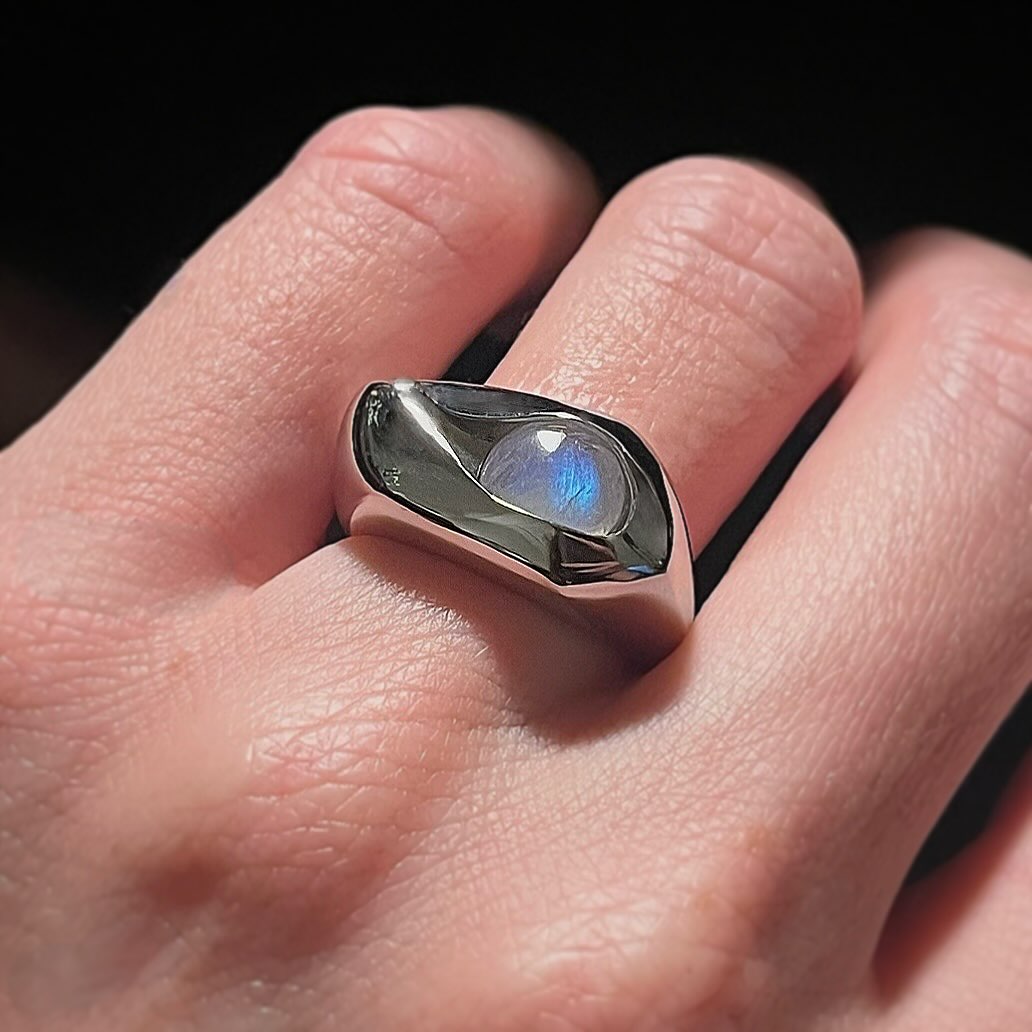
Moonstone is the dreamiest engagement ring stone here, with a soft blue sheen that seems to float under the surface. Gemologists call that effect adularescence. René Lalique and Louis Comfort Tiffany both used moonstone in Art Nouveau jewelry, and it still suits a bride drawn to vintage lace and candlelit ceremonies. Most moonstone is cut as a smooth cabochon, which shows the sheen best. Both sit around 6 to 6.5 on the Mohs scale and can split along internal planes after a hard knock, so a full bezel is a must. If your birthday falls in June, moonstone is an alternative to pearl that’s a little more mysterious and a little more bohemian.
Peridot
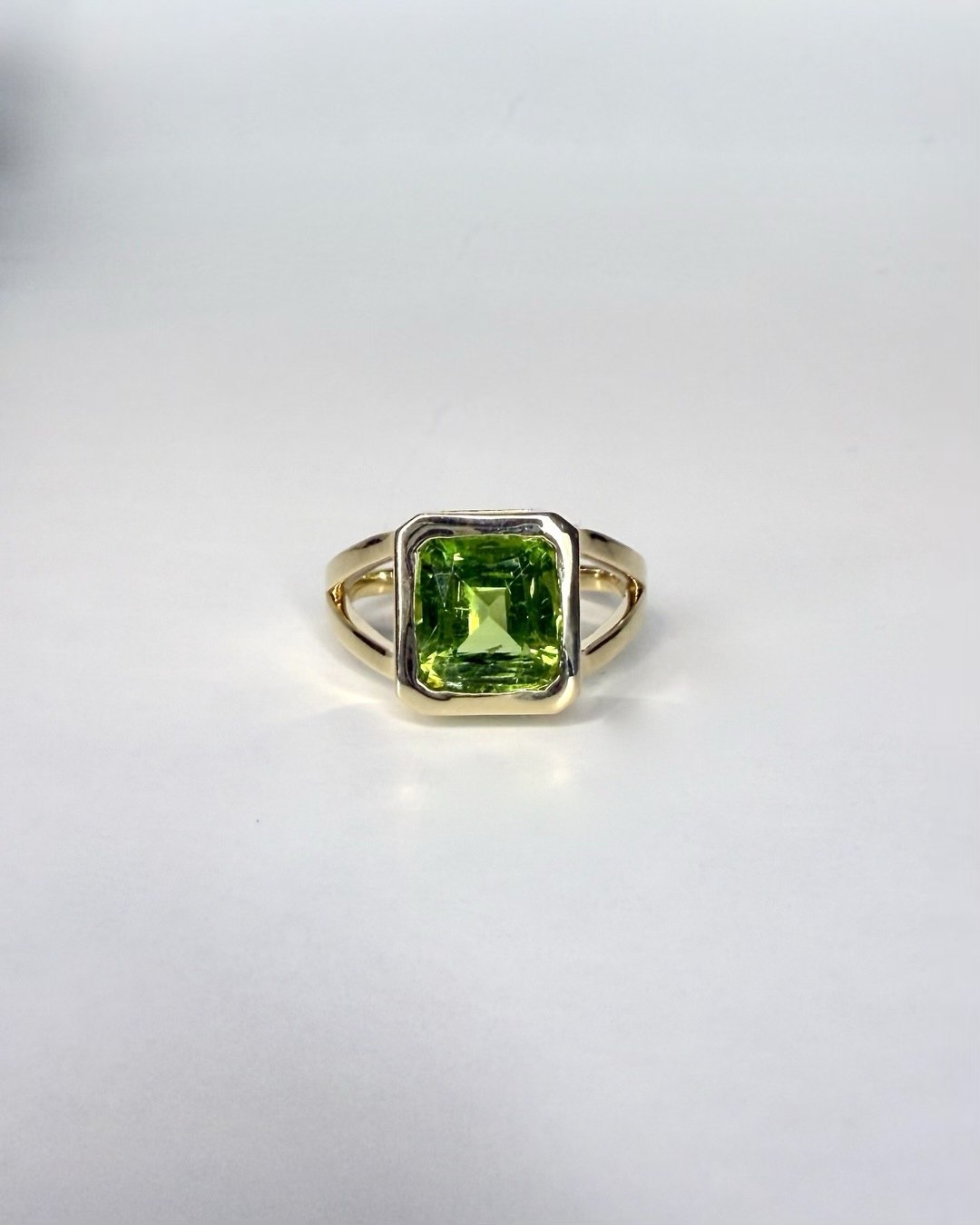
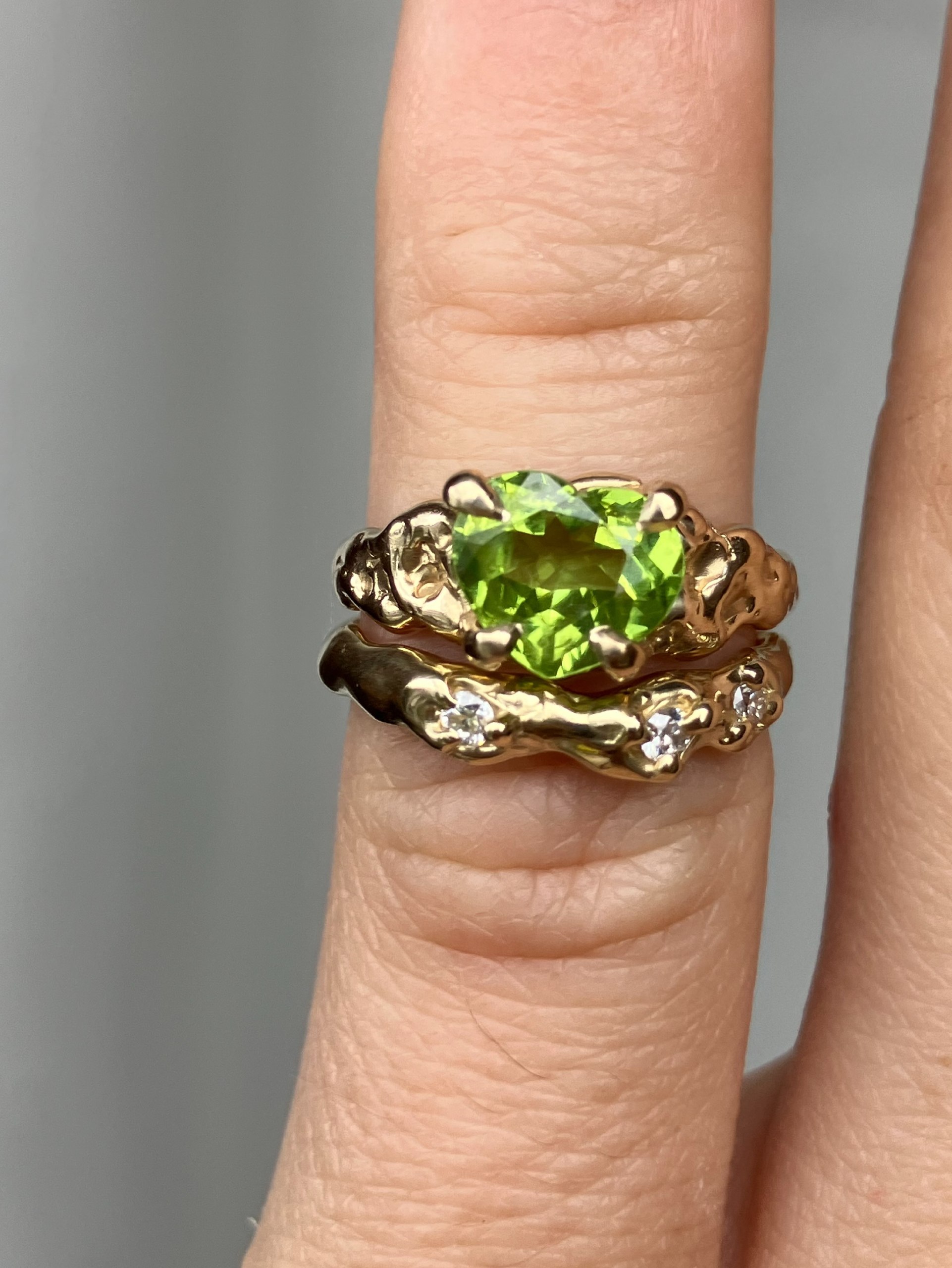
Some historians believe Cleopatra’s famous emeralds were actually peridot. The stone was mined on Zabargad, a small island in the Red Sea, and a rare few peridots have even reached Earth inside meteorites. Unlike sapphire or tourmaline, peridot comes only in green, from lime to olive, and the most prized stones show a pure green with no brown. A peridot engagement ring looks best in yellow gold, which deepens the color, and it pairs nicely with small white diamonds. At 6.5 to 7 on the Mohs scale, peridot needs a protective setting and shouldn’t face sudden heat, so skip the steam cleaner.
Rings: Lovely Sunday, Lauren MacPhail
Onyx
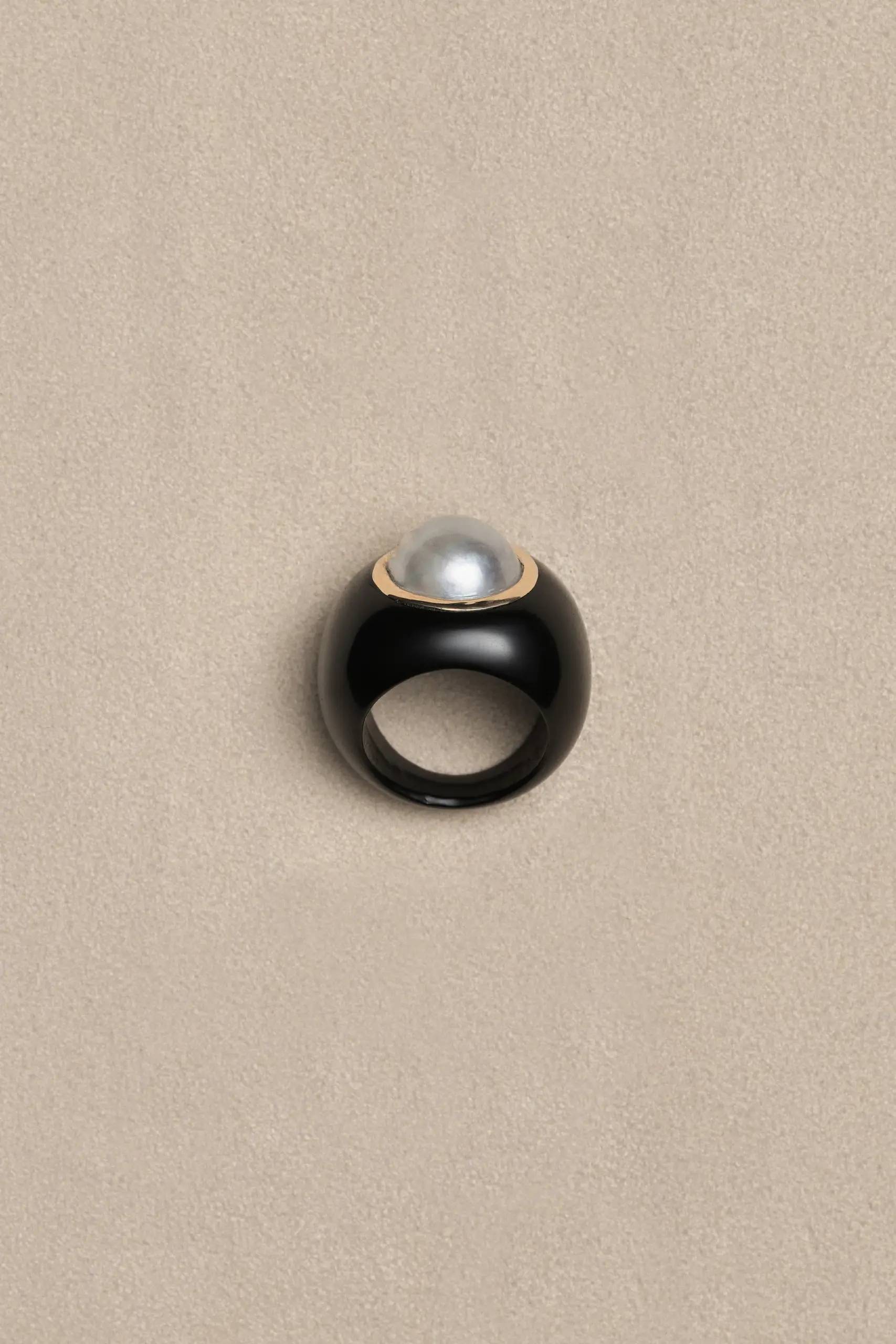
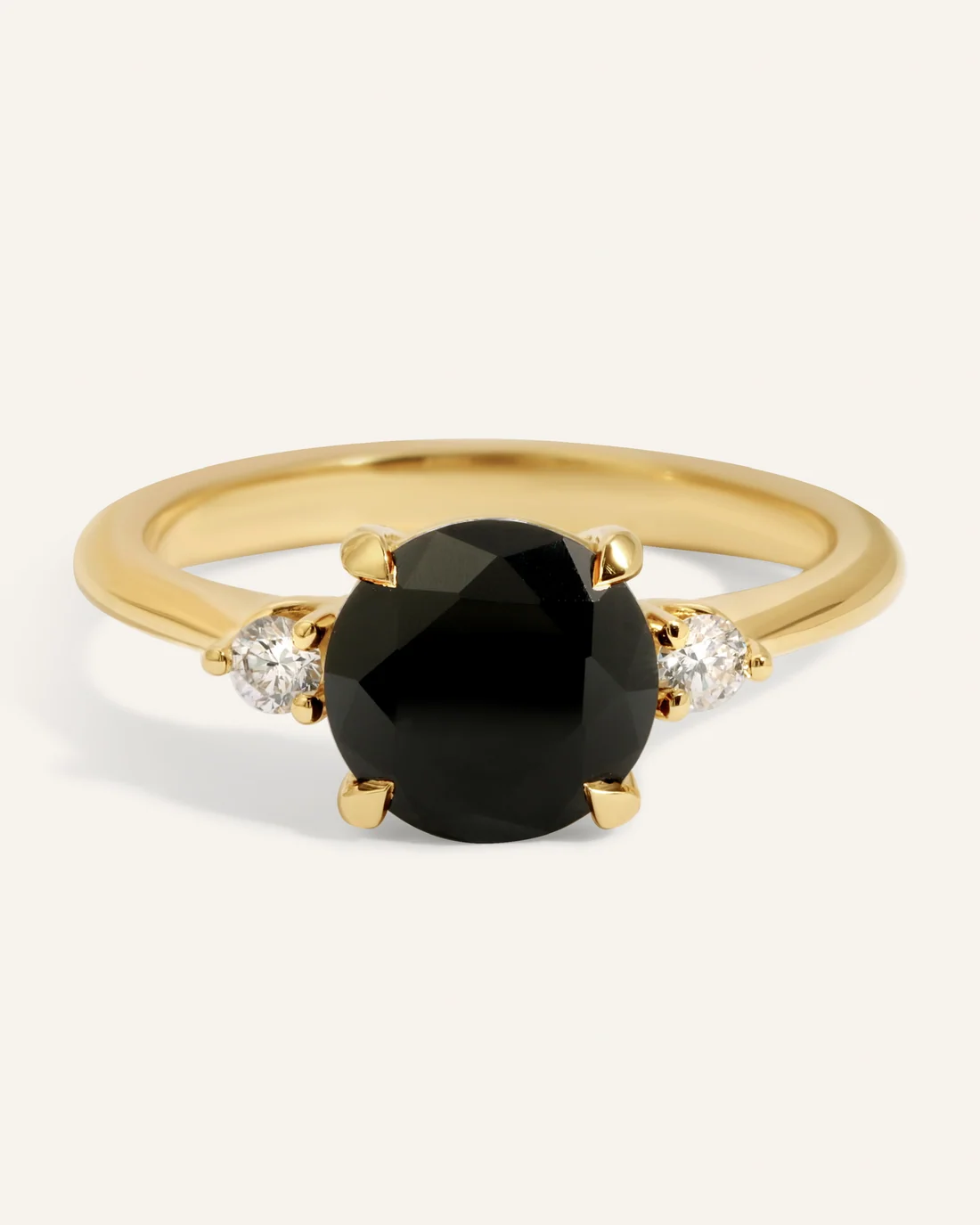
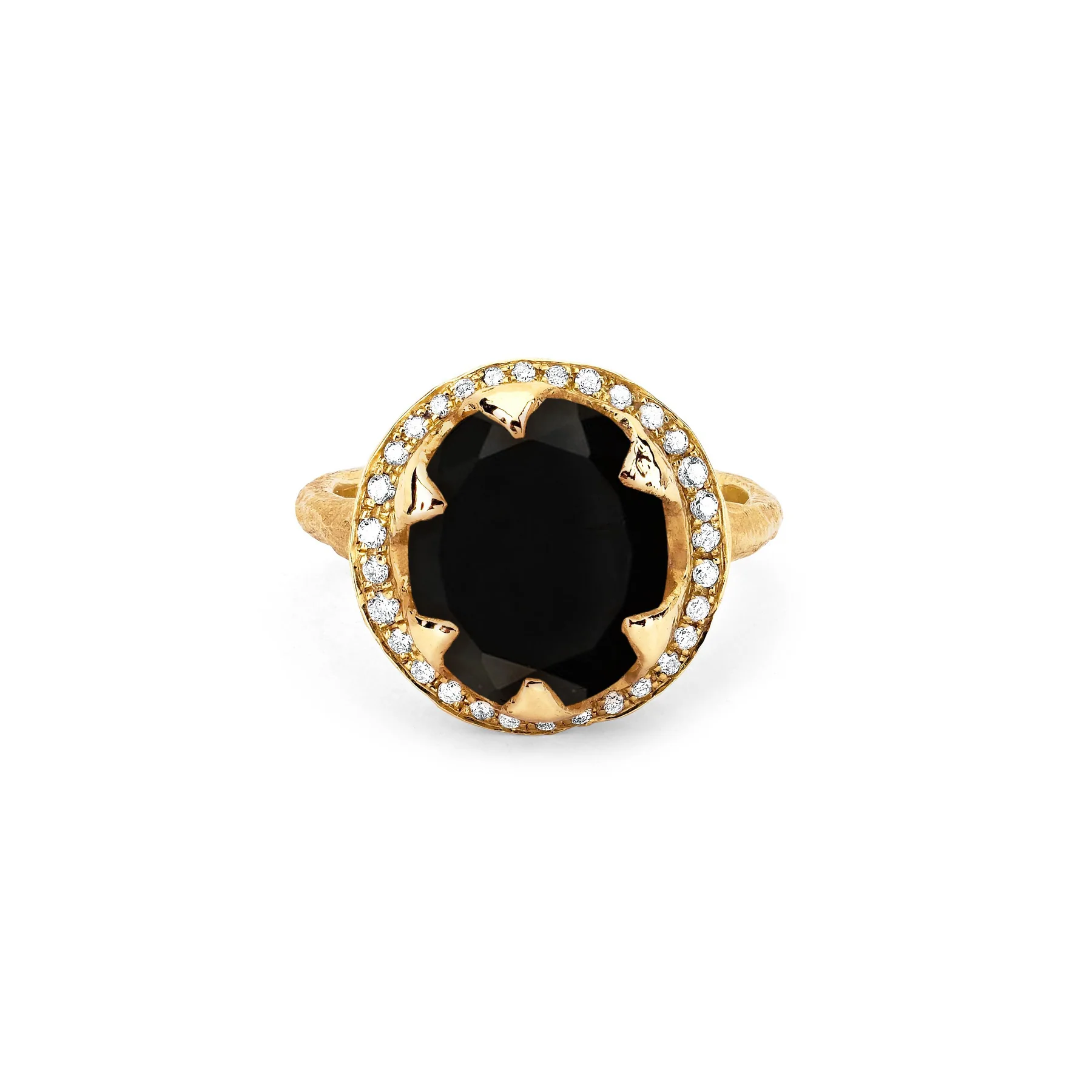
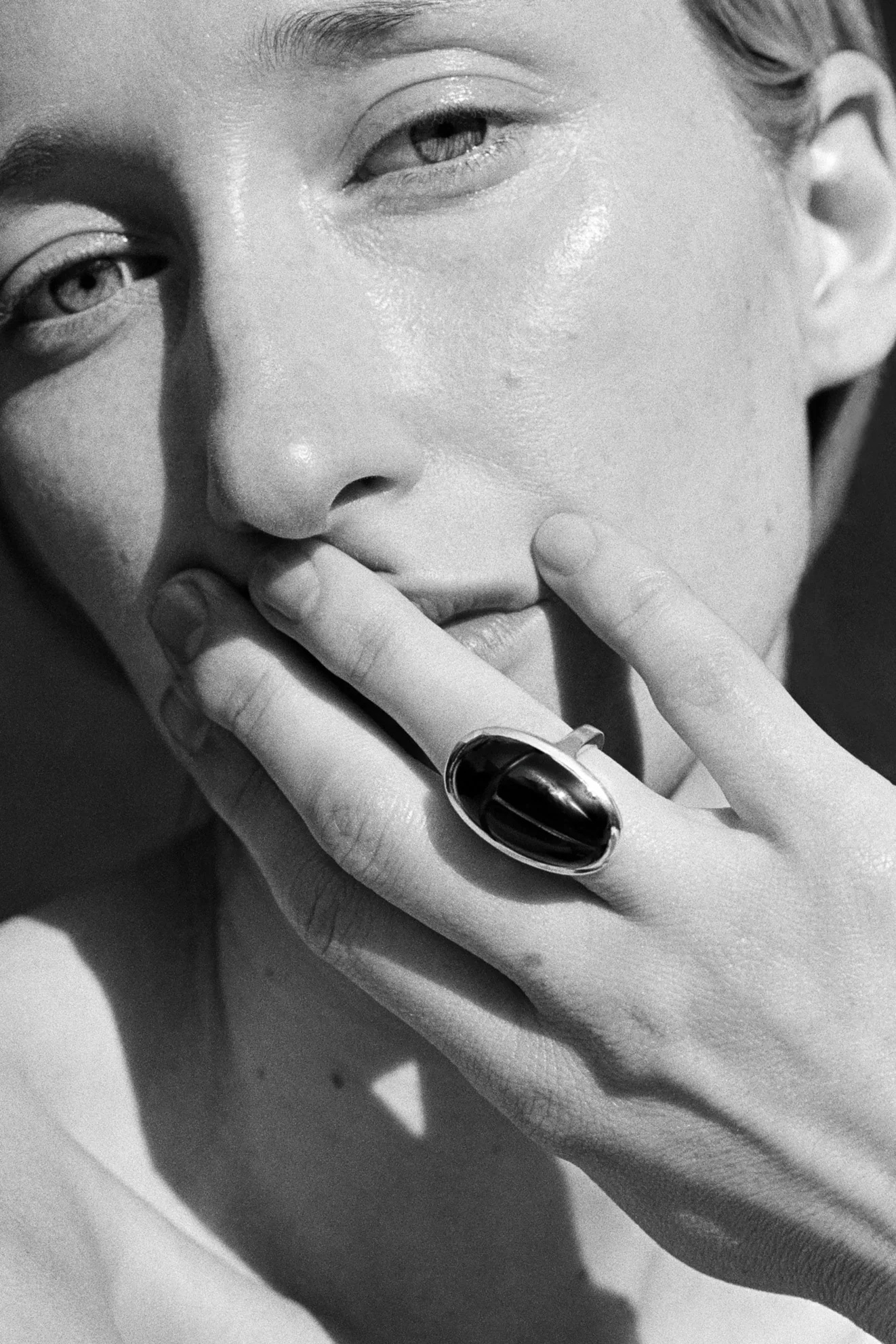
Onyx is for the bride who wants her ring to feel graphic rather than sparkly, and it fits the dark romance mood running through bridal right now. An opaque black stone shows off shape and metal, which is why Art Deco jewelers paired onyx with diamonds in crisp geometric designs. A flat onyx table with a single diamond, or an onyx frame around a white center stone, reads modern and a little gothic. Know what you’re buying, though. Most black onyx is dyed chalcedony, which is standard and keeps prices low. At 6.5 to 7 on the Mohs scale it holds up reasonably well, but keep it away from harsh cleaners. If you want black with sparkle, look at black spinel or a black diamond instead.
Tanzanite
Tanzanite didn’t exist in jewelry before 1967, when a Masai tribesman found the first crystals in Merelani, northern Tanzania. Tiffany named the gem after its country and launched it with a major campaign in 1968, and it’s still mined commercially only in that small area near Kilimanjaro. Tanzanite shows different colors from different angles, moving between blue and violet, so a skilled cutter makes a real difference. Nearly all of it is heat-treated to bring out that color. At 6 to 7 on the Mohs scale, with a tendency to cleave, it’s best in a bezel or with a halo that guards the edges, and it should never go into an ultrasonic cleaner. It’s one of the December birthstones.
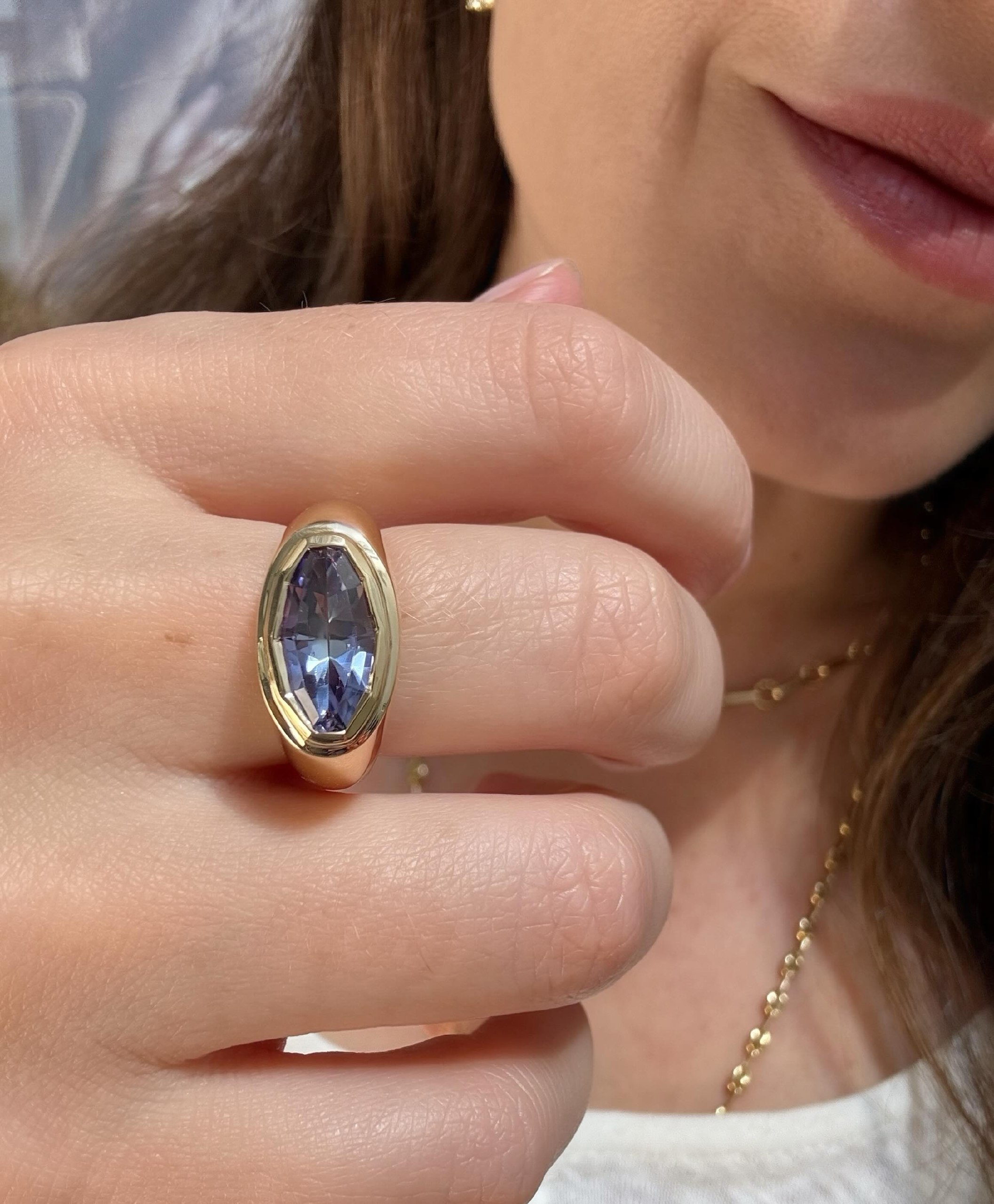
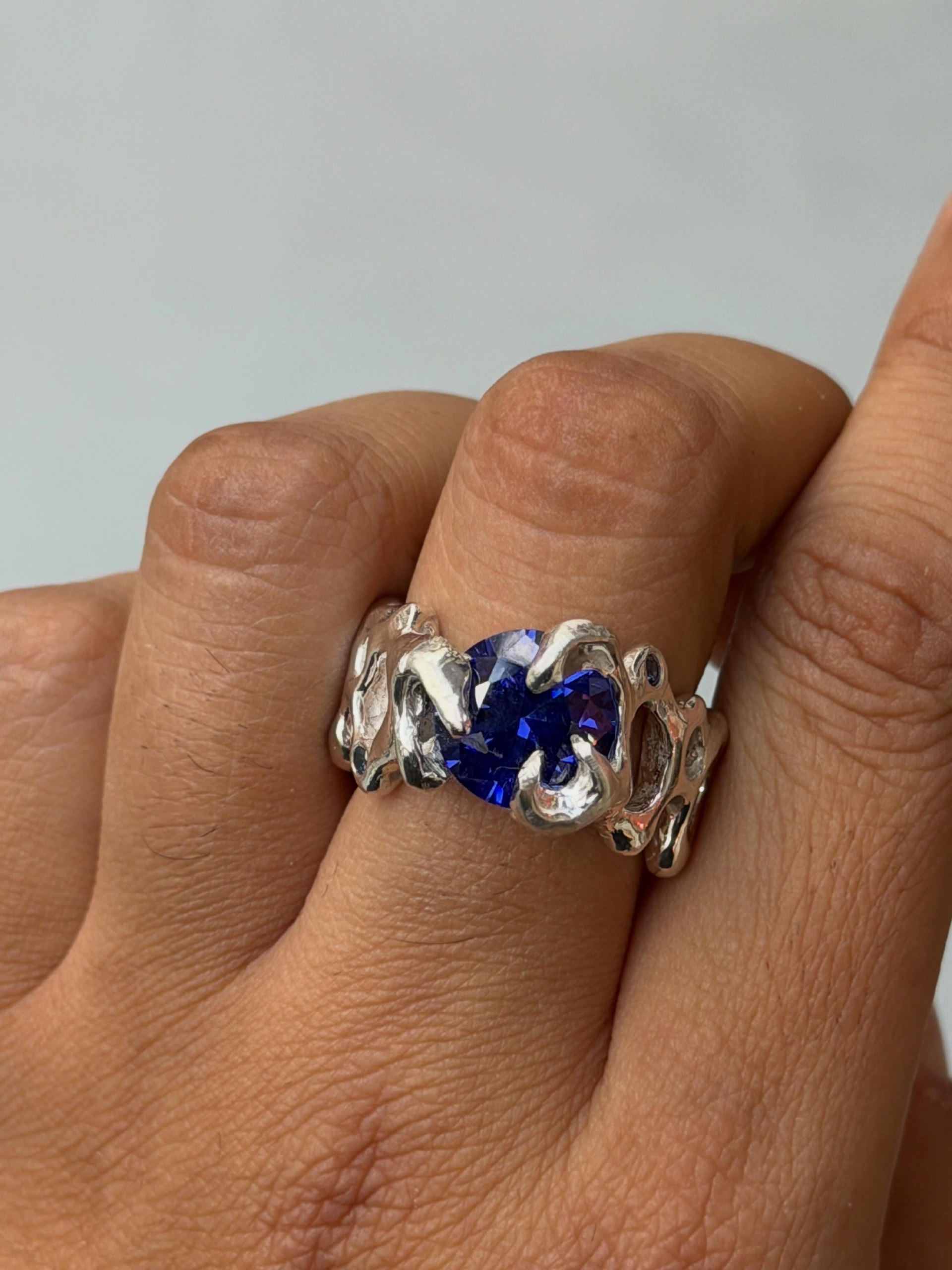
Rings: Emmerson Jewels, Areeesha
Tourmaline
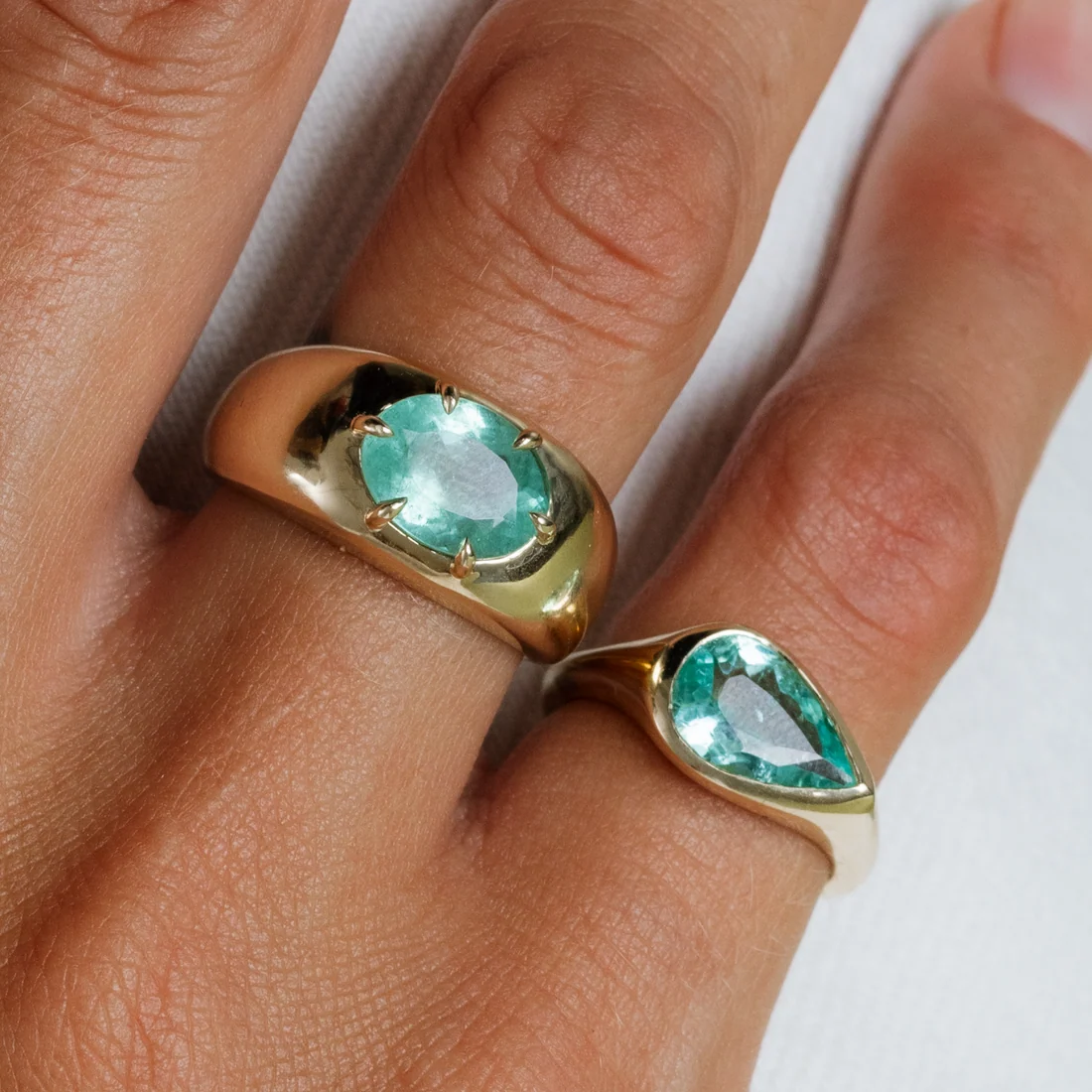
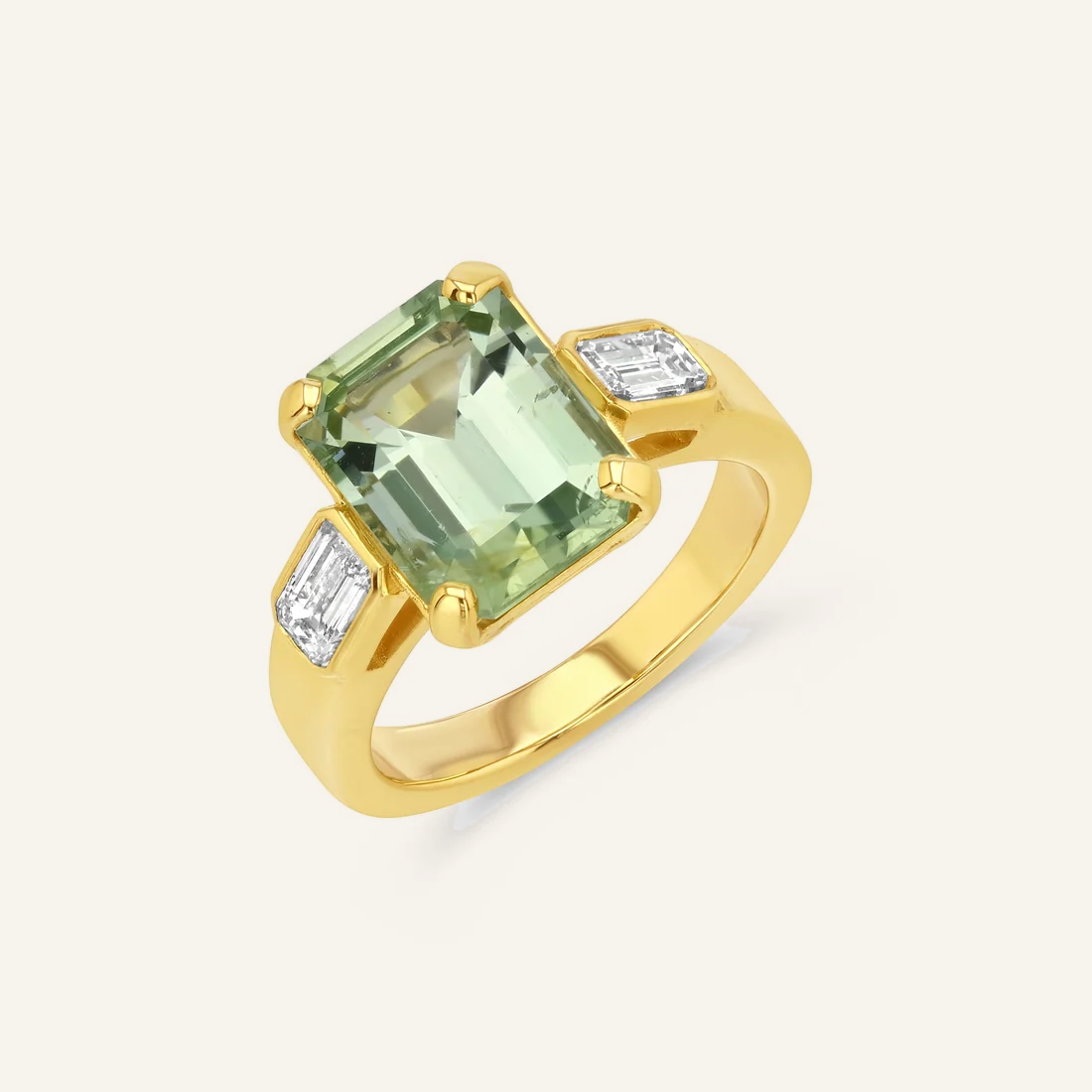
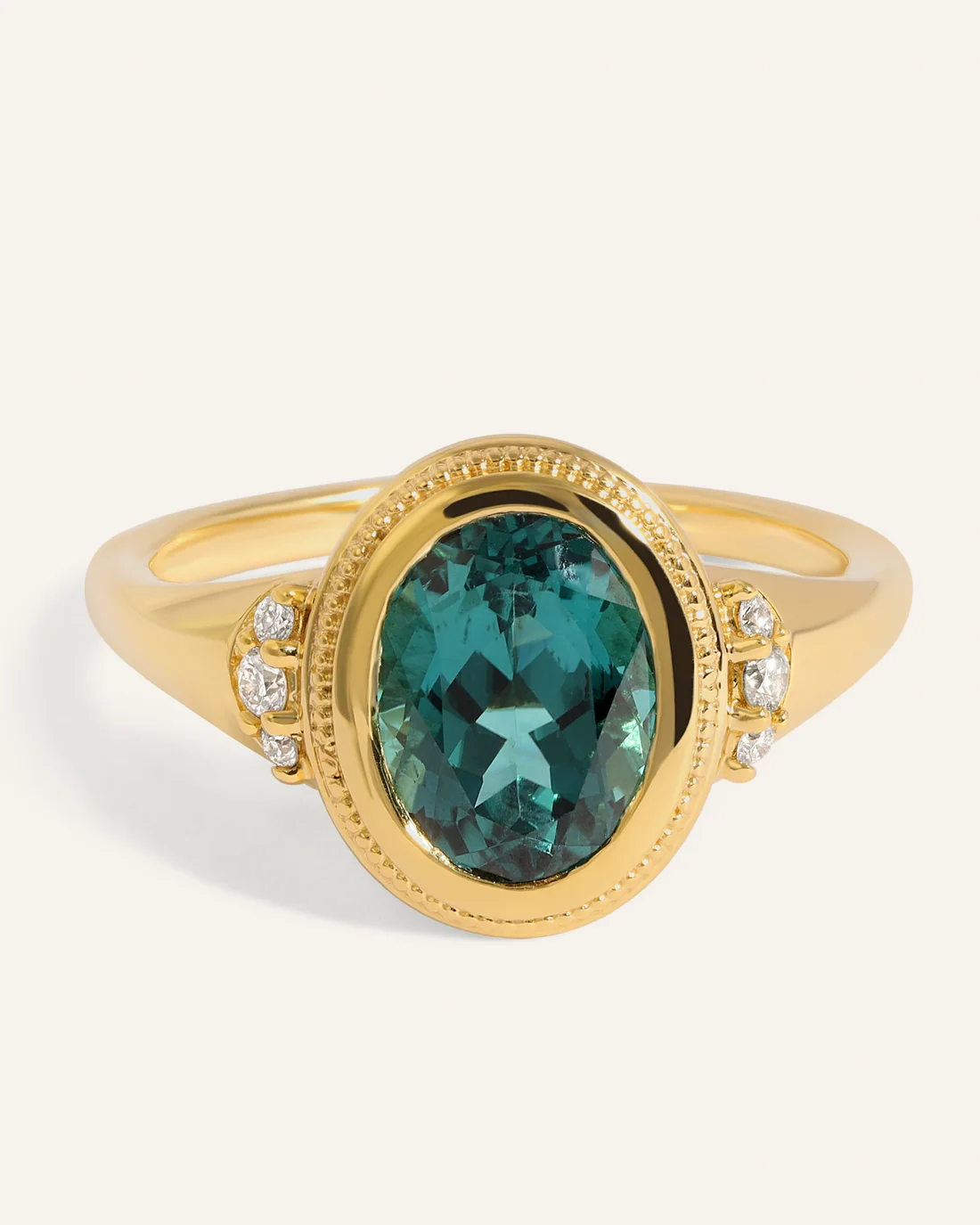
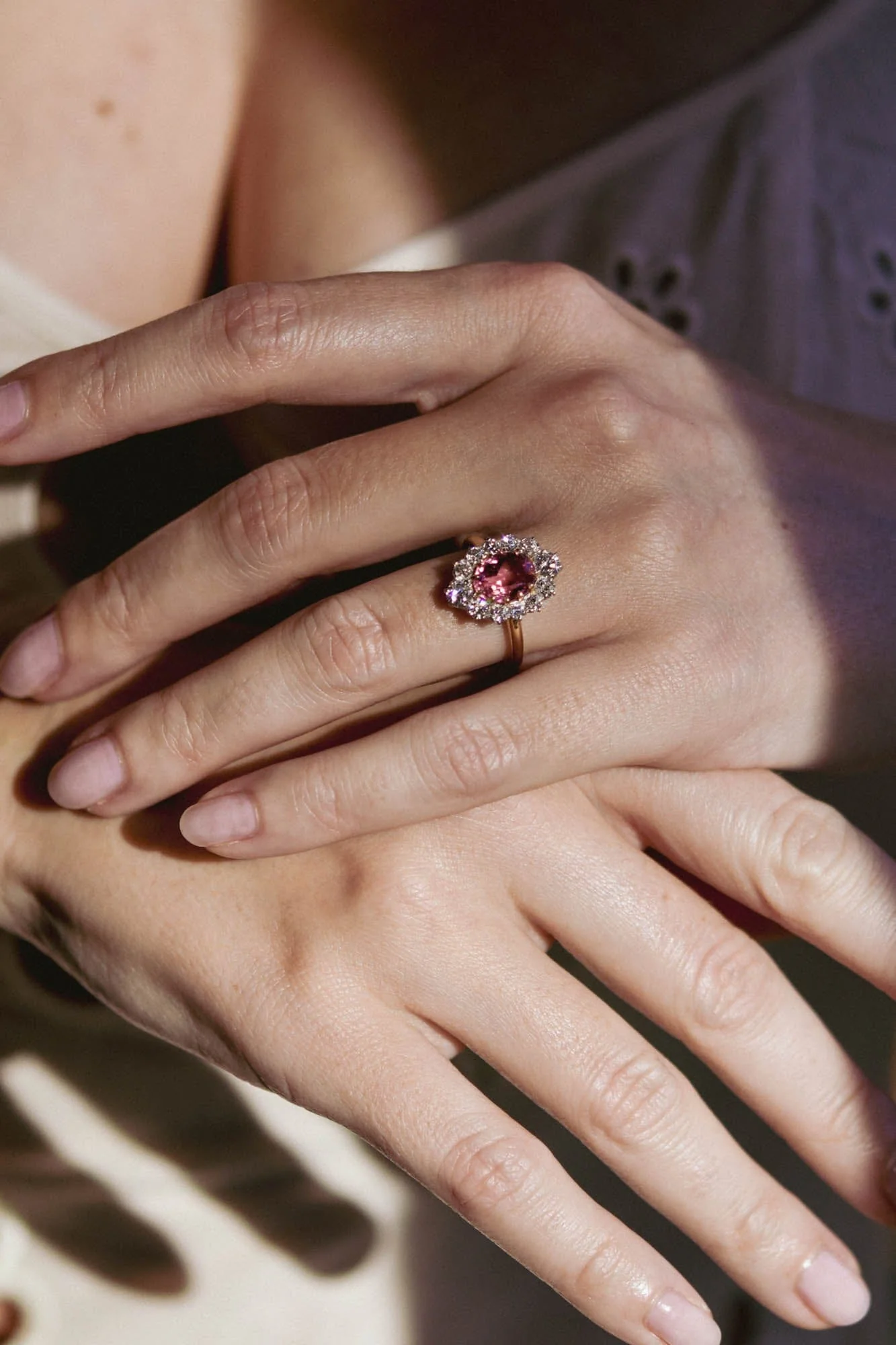
Tourmaline has the widest color range of any gem family, which is how it got its name. Dutch traders used the Sinhalese word toramalli, roughly “mixed gems,” for the colorful pebbles they found in Sri Lanka. Watermelon tourmaline shows pink and green in a single crystal, and copper-rich Paraíba tourmaline from Brazil has an almost neon blue-green color. There’s a Southern California chapter, too. Around the turn of the 20th century, much of the pink tourmaline mined in San Diego County was shipped to China, where the Empress Dowager Cixi loved the color, until the trade collapsed after the dynasty fell in 1912. At 7 to 7.5 on the Mohs scale, tourmaline wears well every day, and pink tourmaline is an October birthstone.
Morganite
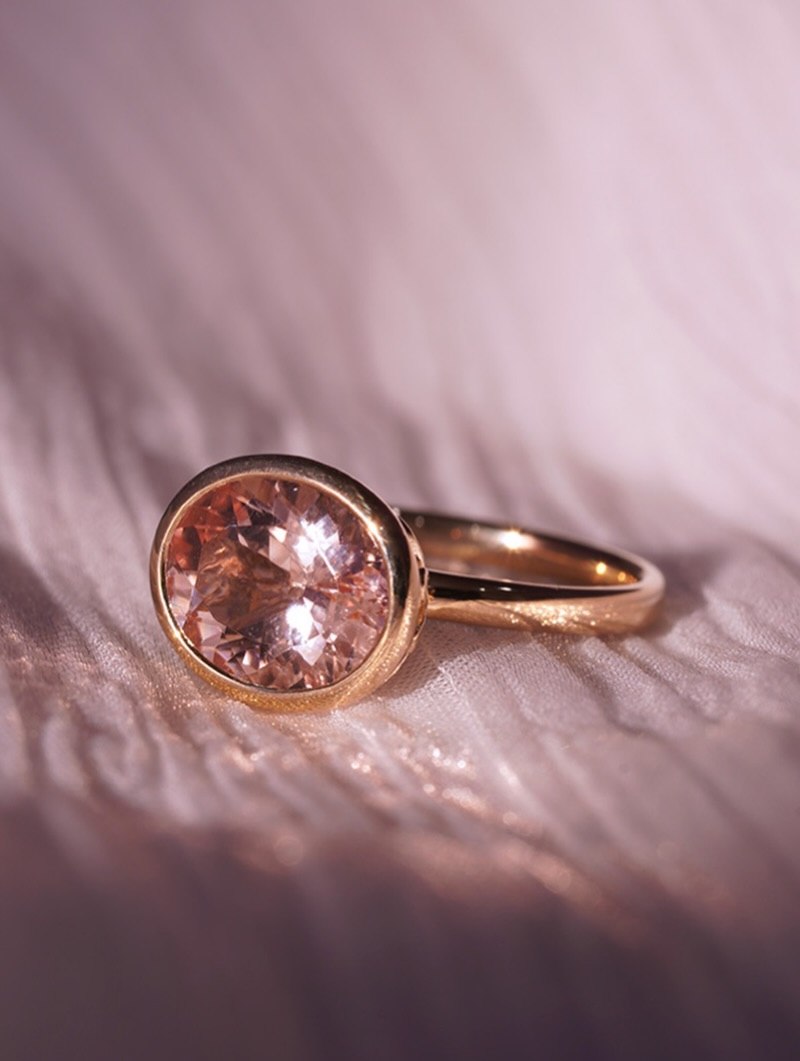
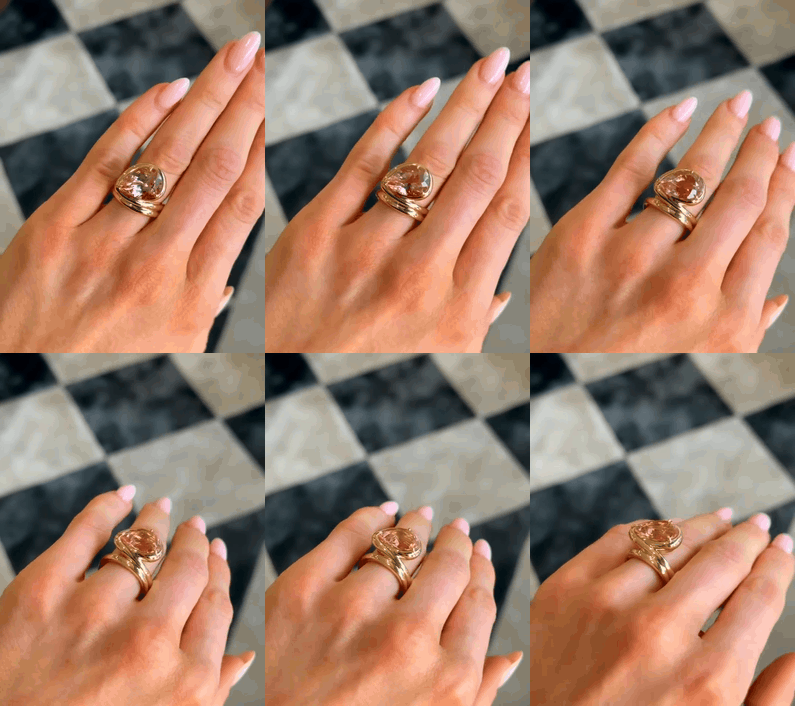
Morganite is pink beryl, a sister to emerald and aquamarine, and it owes its name to a banker. Tiffany’s chief gemologist George Kunz proposed it in 1910 to honor his friend and client J.P. Morgan. The color ranges from blush pink to peach, and the stones tend to be clean, so you can go big for far less than a diamond of the same size. Scheana Shay of Vanderpump Rules wears a 12.74-carat pink morganite, which shows the scale it allows. Morganite looks soft in rose gold and surprisingly fresh in yellow gold. At 7.5 to 8 on the Mohs scale it’s fine for daily wear, but its pale color shows dirt and lotion quickly, so plan on frequent cleaning.
Aquamarine
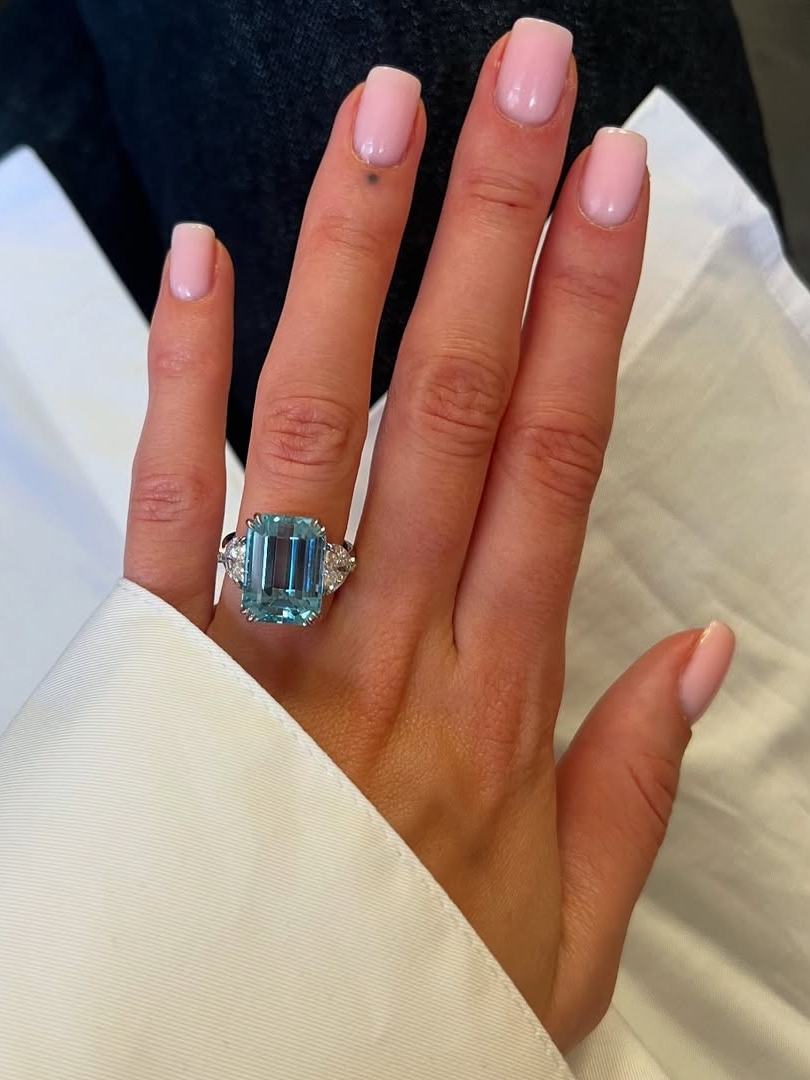
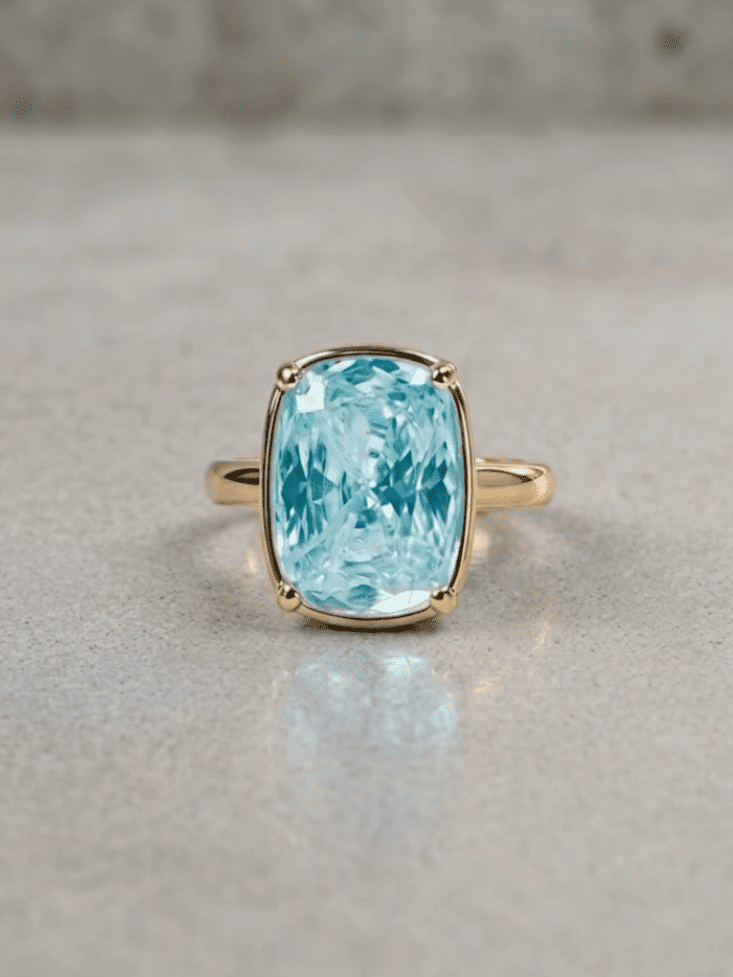
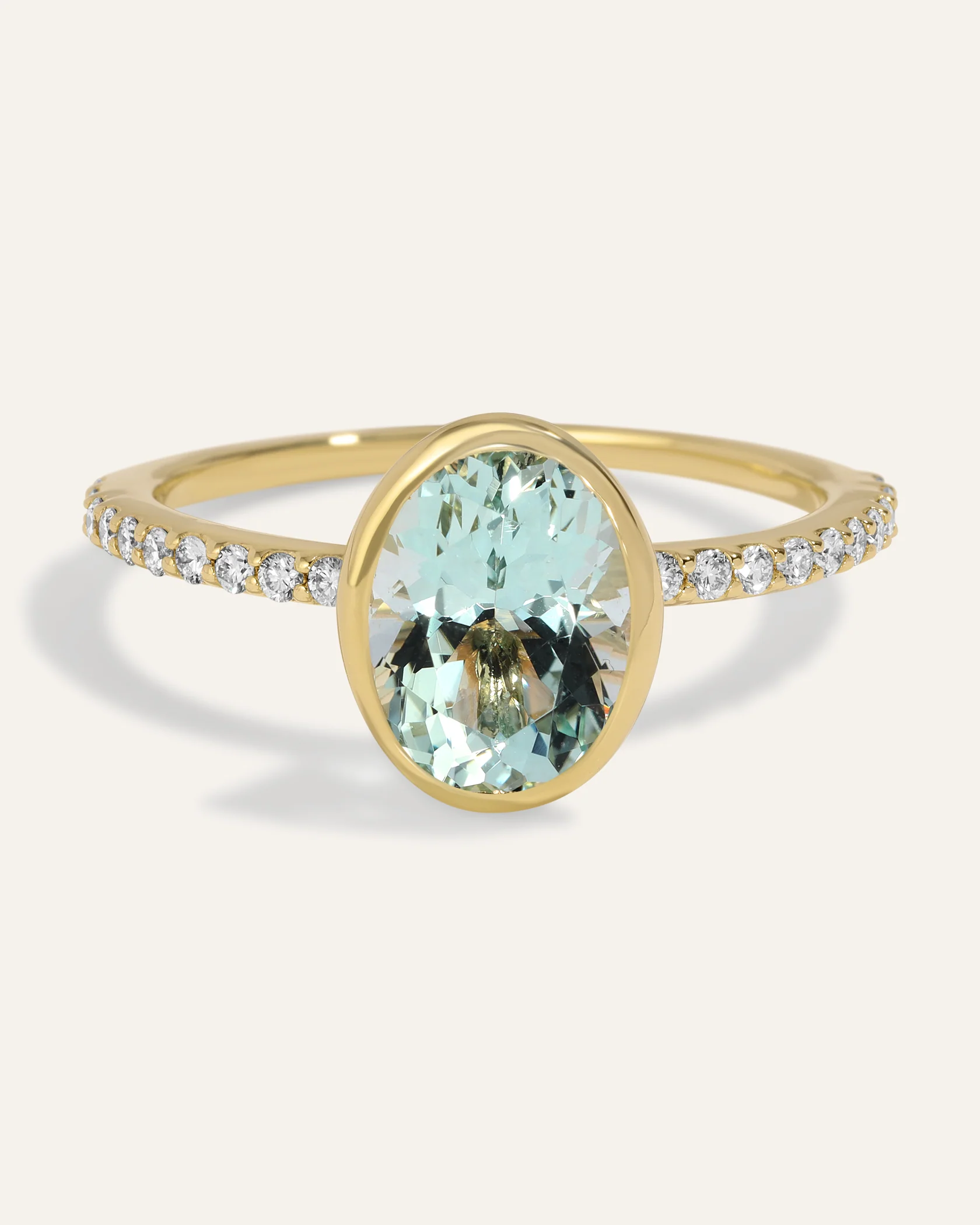
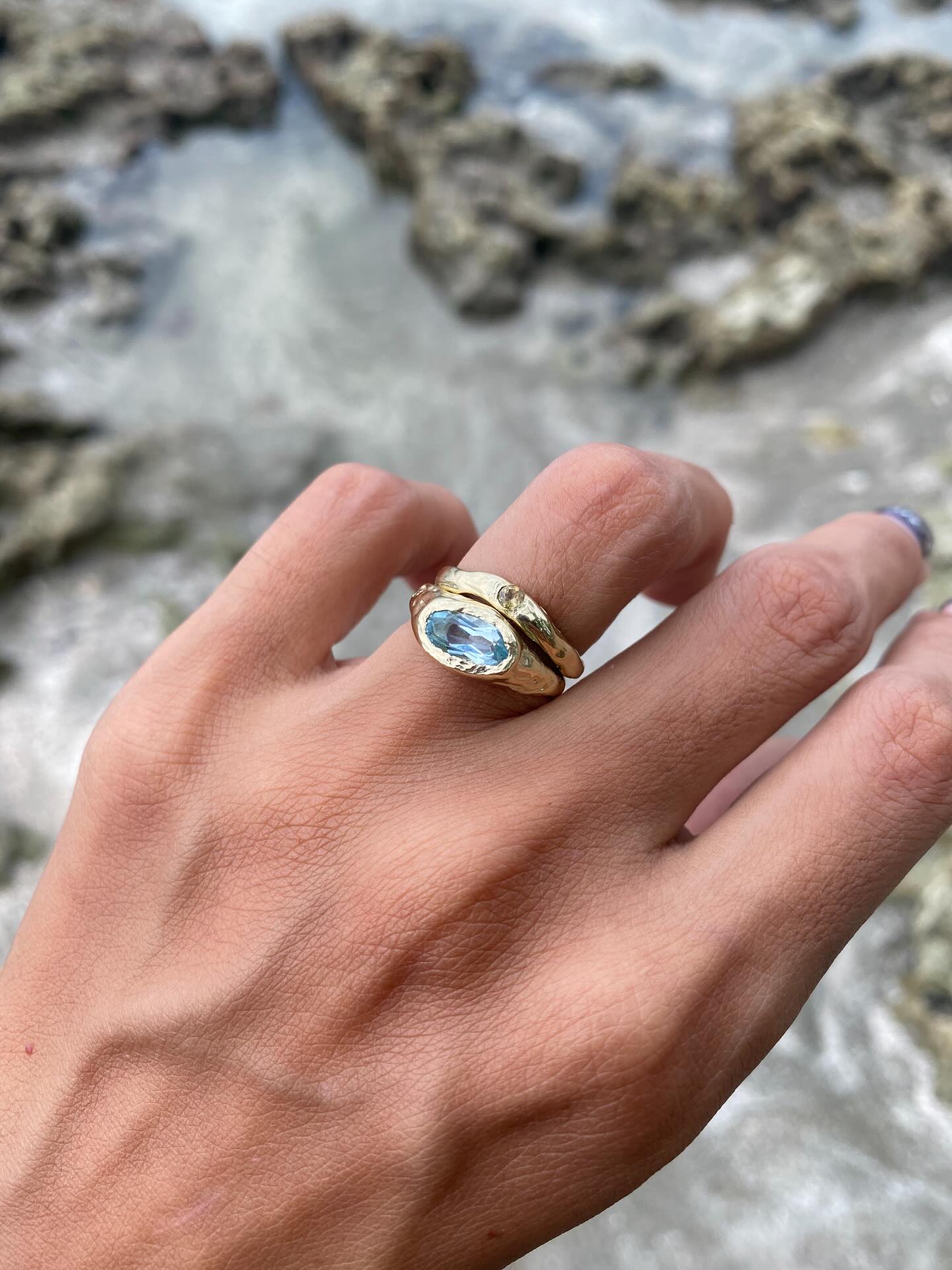
Aquamarine takes its name from the Latin for seawater, and the best stones look exactly like it, clear and cool blue. It’s another beryl, a cousin of emerald and morganite, but usually with far fewer inclusions. The most famous bridal aquamarine is Princess Diana’s emerald-cut cocktail ring, which Meghan Markle wore to her 2018 evening reception. In an aquamarine engagement ring, step cuts like the emerald cut work best because they show off its clarity and depth of color. A stronger blue costs more, and much of what’s on the market has been heat-treated to remove a green tint. At 7.5 to 8 on the Mohs scale, aquamarine is practical for daily wear, and it’s the March birthstone.
Amethyst
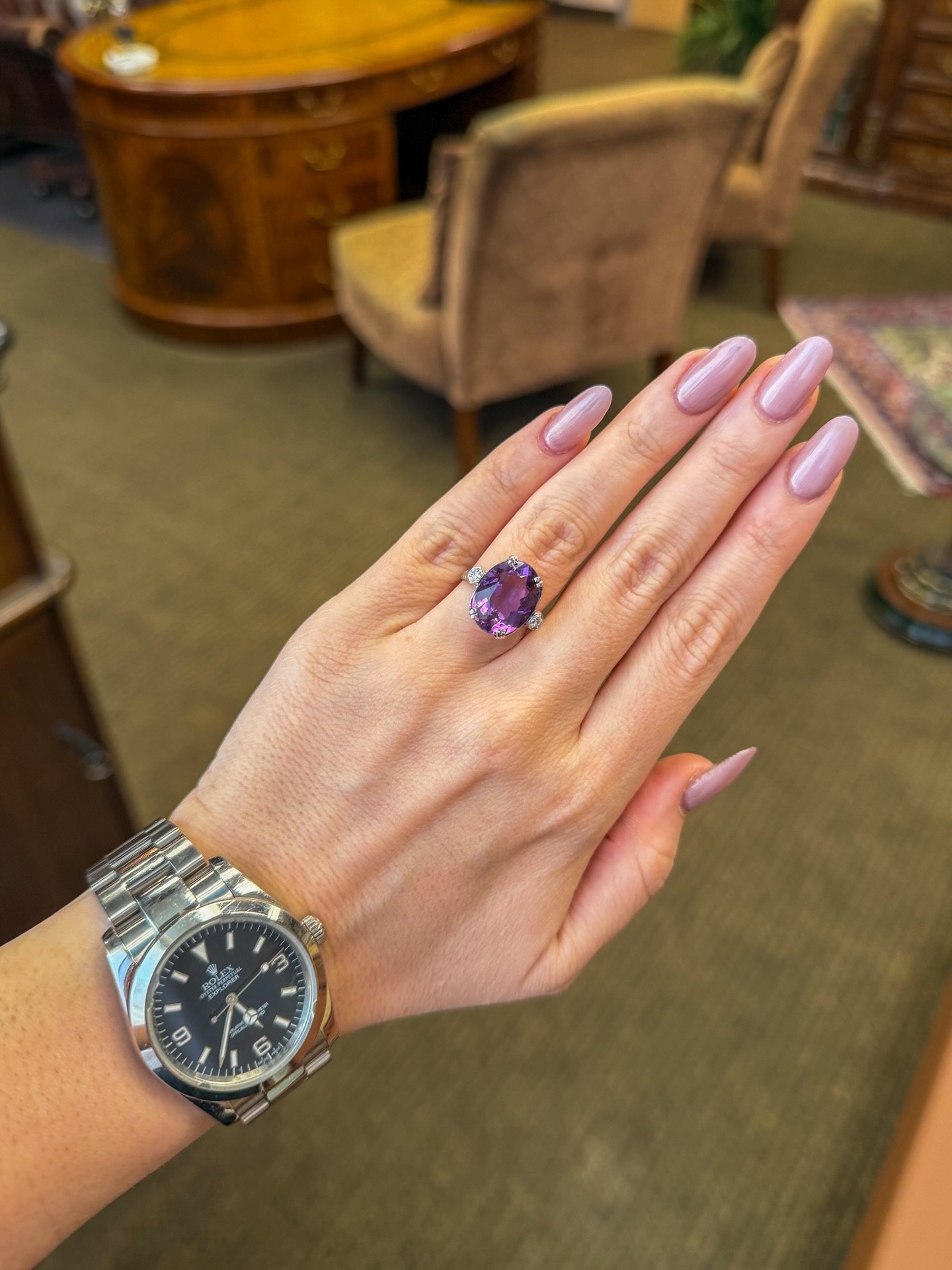
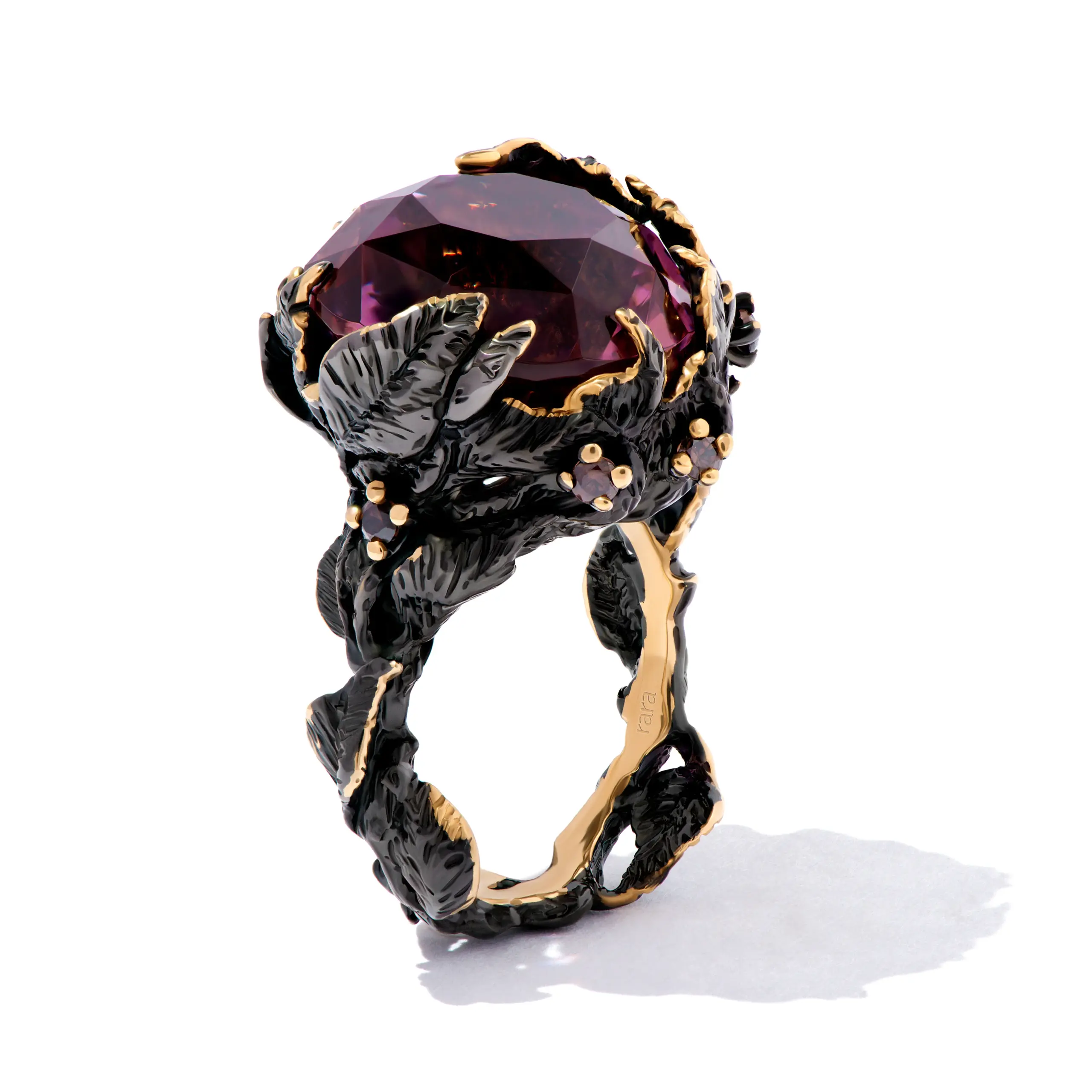
Amethyst was once as precious as ruby and emerald, until large deposits in Brazil made it affordable in the 19th century. Its name comes from the Greek amethystos, “not drunk,” because people believed it guarded against intoxication, which makes it a fun wink at a wedding with an open bar. The color runs from pale lilac, often sold as Rose de France, to deep purple with red flashes. Lilac looks soft and modern in yellow gold, while deep purple feels regal next to diamonds. At 7 on the Mohs scale, amethyst handles daily wear well. It’s also the February birthstone.
Rings: Bella’s Designs, Rara ($730)
Ruby
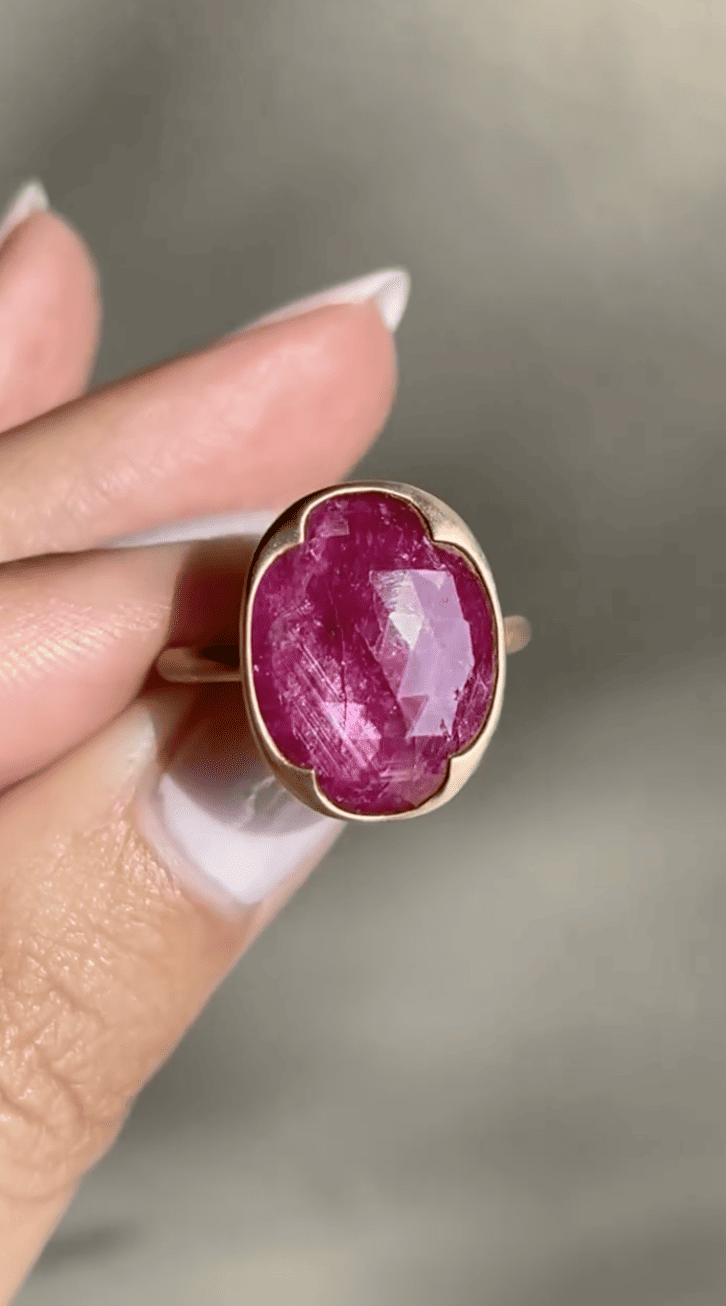
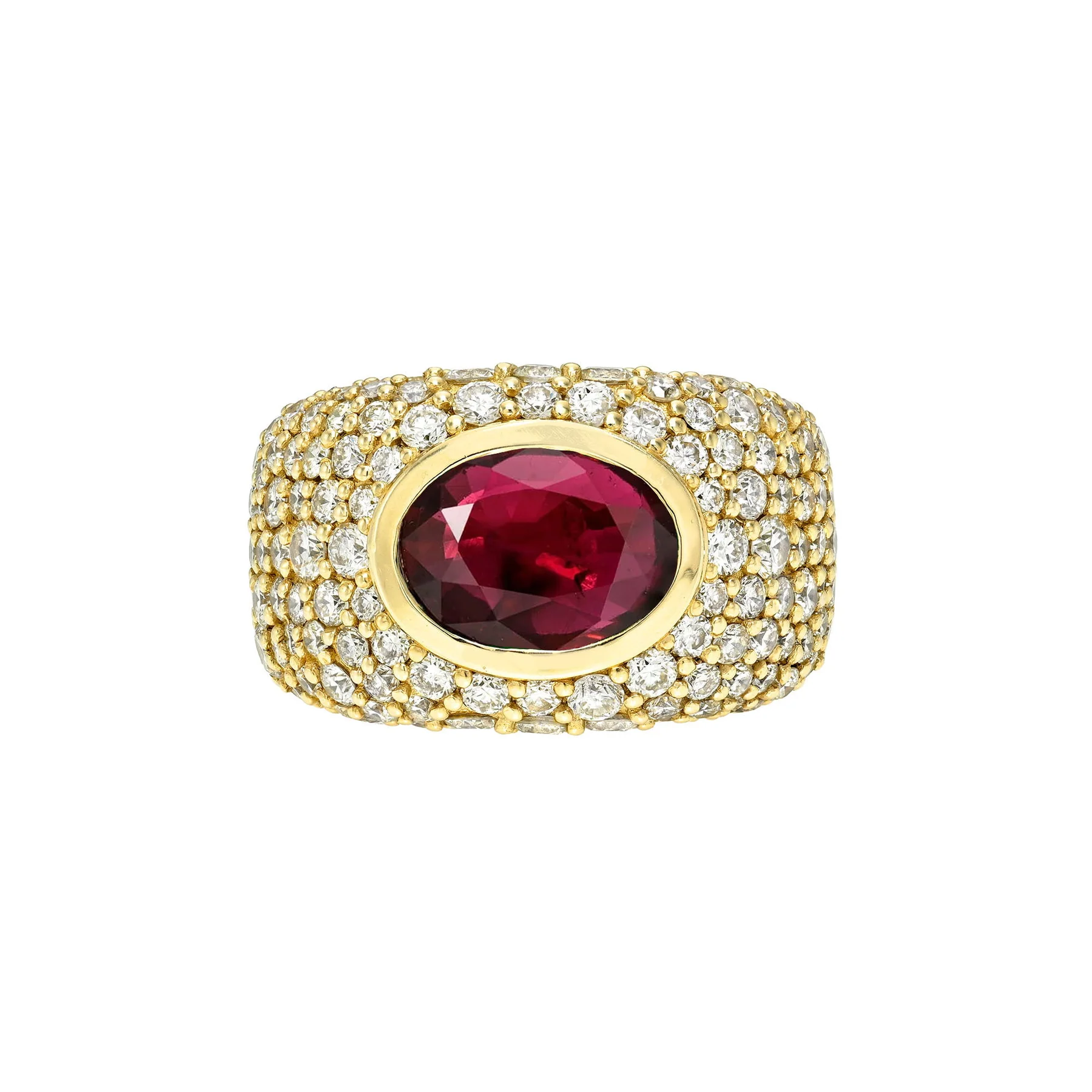
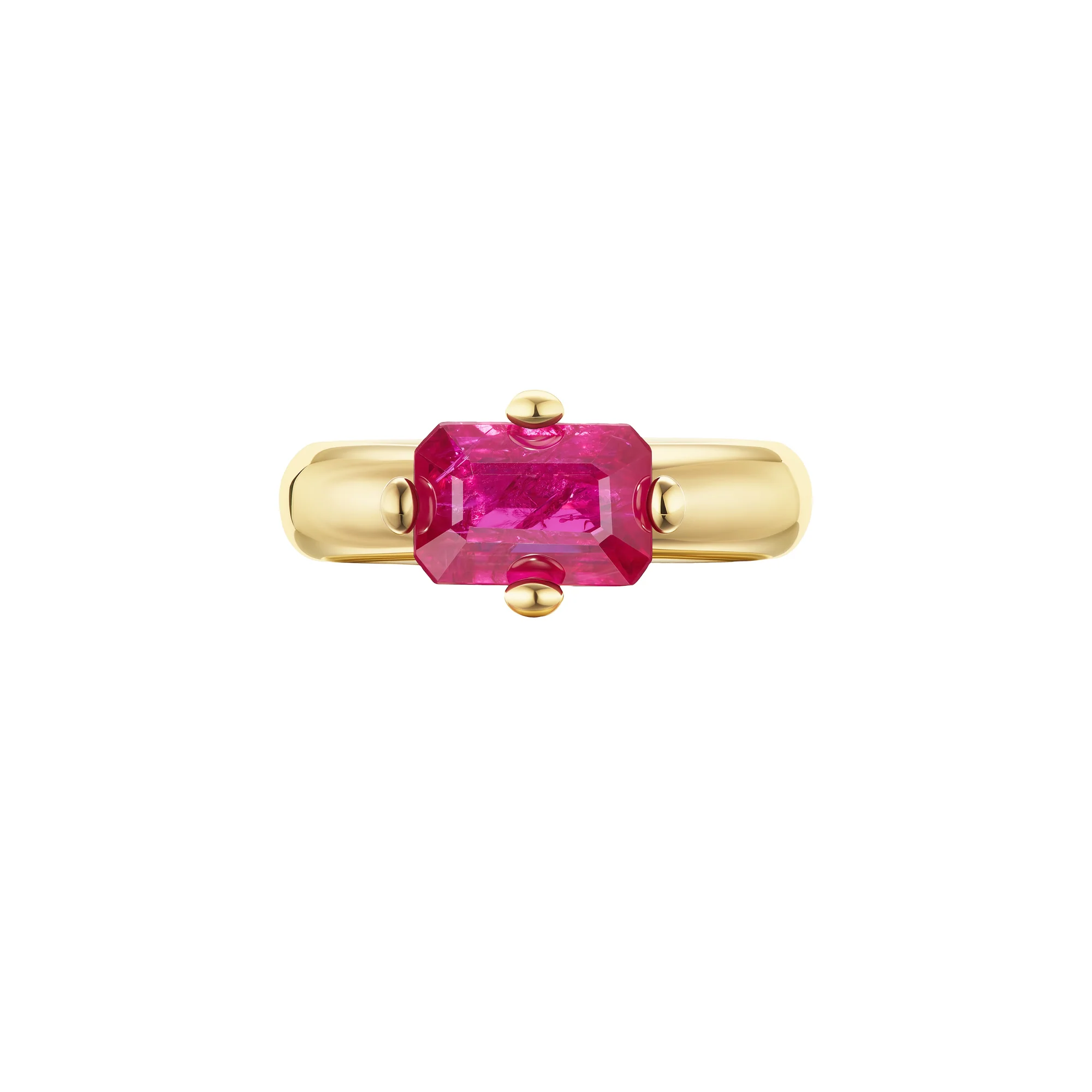
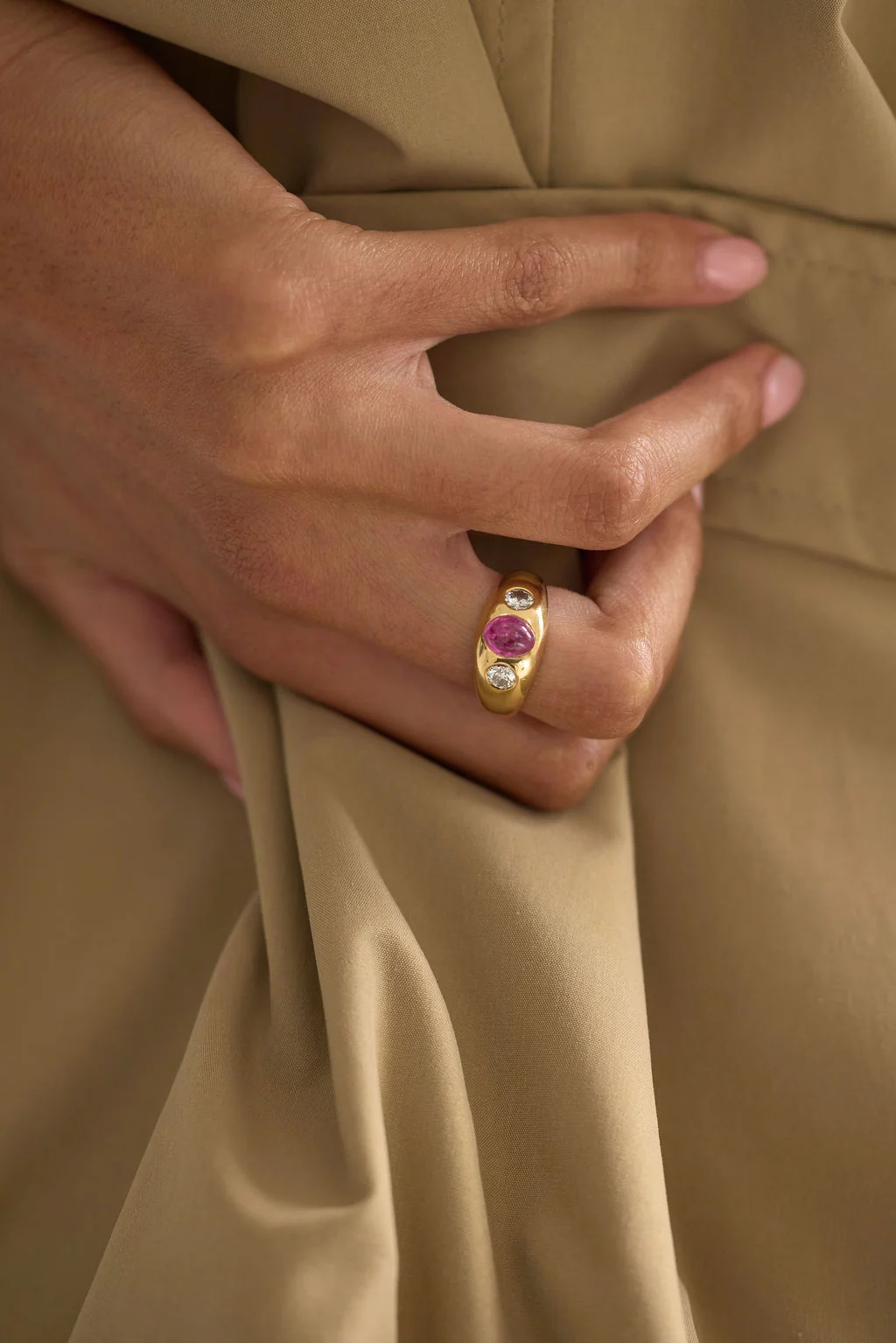
If sapphire is the safe choice, a ruby engagement ring is the confident one. It’s the red form of corundum, the same mineral as sapphire, so it also scores a 9 on the Mohs scale and can be worn every day without worry. Eva Longoria’s oval ruby by Jean Dousset, framed in diamonds, shows it can look elegant rather than flashy. The most prized color is a saturated red the trade calls pigeon’s blood, traditionally linked to Burma and now often found in Mozambique. Fine rubies can cost more per carat than diamonds, so it pays to understand treatments. Heating is standard and accepted, while glass-filled rubies are much cheaper for a reason and far less durable. Ask for a report from GIA or another major lab. Ruby is the July birthstone, so for anyone with a summer birthday, it turns a bold ring into a personal one.
Topaz
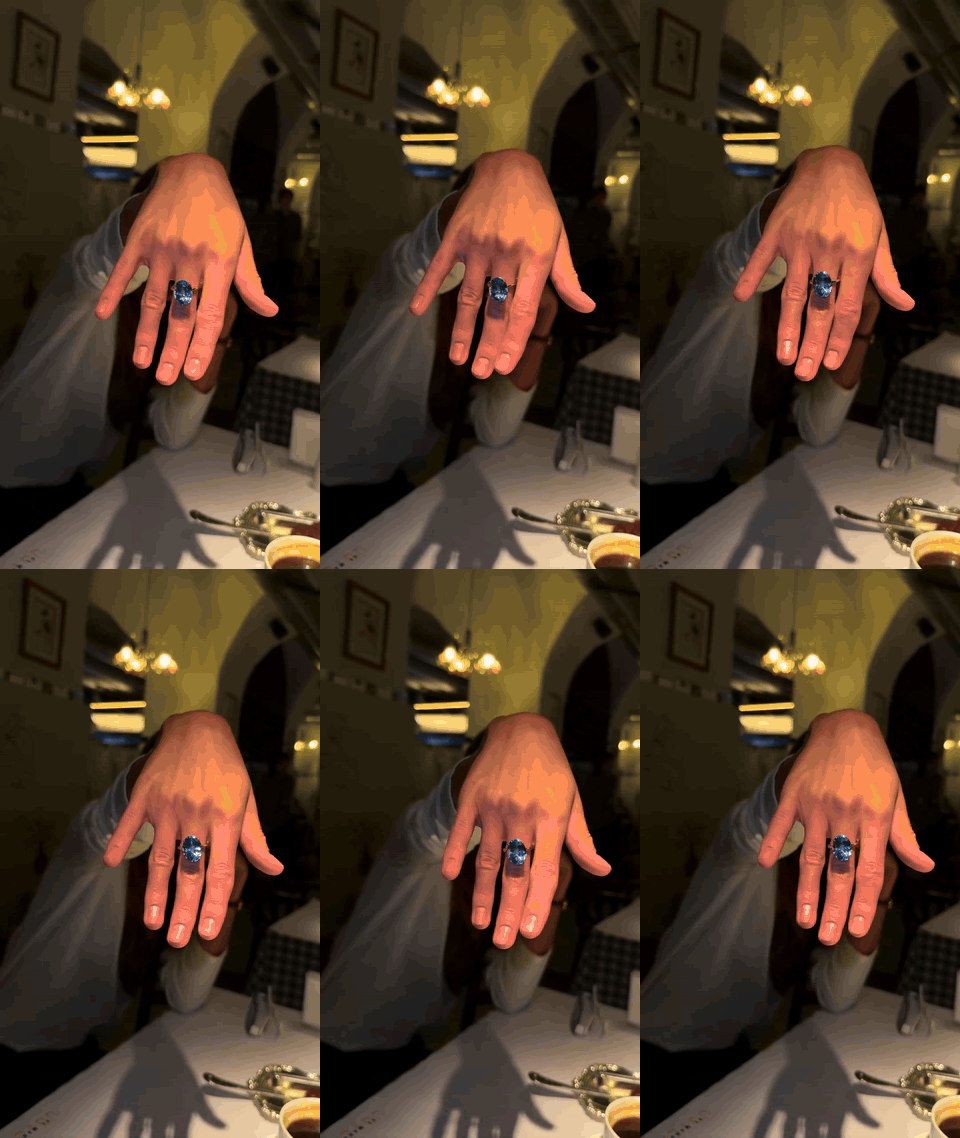
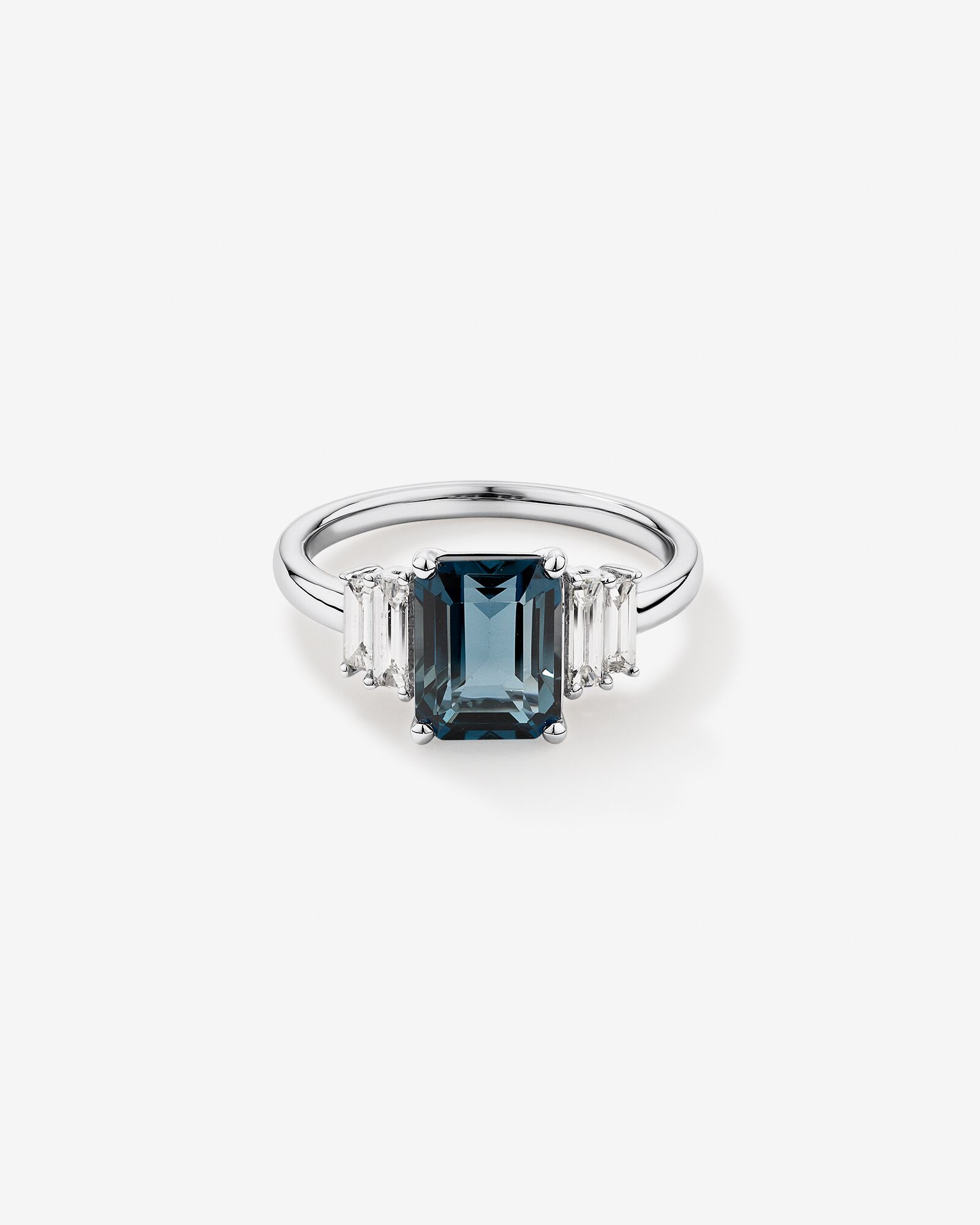
At 8 on the Mohs scale, Topaz is harder than quartz, but it has perfect cleavage, so a sharp knock in the wrong spot can split it. A protective setting solves that. Most blue topaz, from pale Sky Blue to inky London Blue, gets its color through treatment, which keeps it very affordable. Imperial topaz is the collector’s version, a warm orange to orange-red stone whose only commercial deposits are near Ouro Prêto in Brazil. Skip mystic topaz for an engagement ring, since its rainbow effect is a surface coating that wears off with daily use. Topaz shares November with citrine.
Rings: Moonka, Michael Hill ($4,999)