Colored, or “fancy,” diamonds make up roughly one percent of all diamonds mined, colored by trace elements or structural quirks that occur during formation rather than added afterward. Unlike a traditional white diamond, where value increases the closer a stone gets to perfectly colorless, a fancy diamond works in reverse: the more saturated and pure the color, the more valuable the stone becomes. That rarity has made colored diamonds one of the more personal, story-driven choices in engagement ring shopping, and a handful of celebrity moments have done a lot to bring specific colors into the spotlight. Lab-grown versions have also changed the math considerably: chemically identical to their mined counterparts, they’ve made colors that were once out of reach for most budgets, especially at larger carat sizes, a genuinely realistic option. Here’s a closer look at each color worth bringing to a jeweler before you decide.
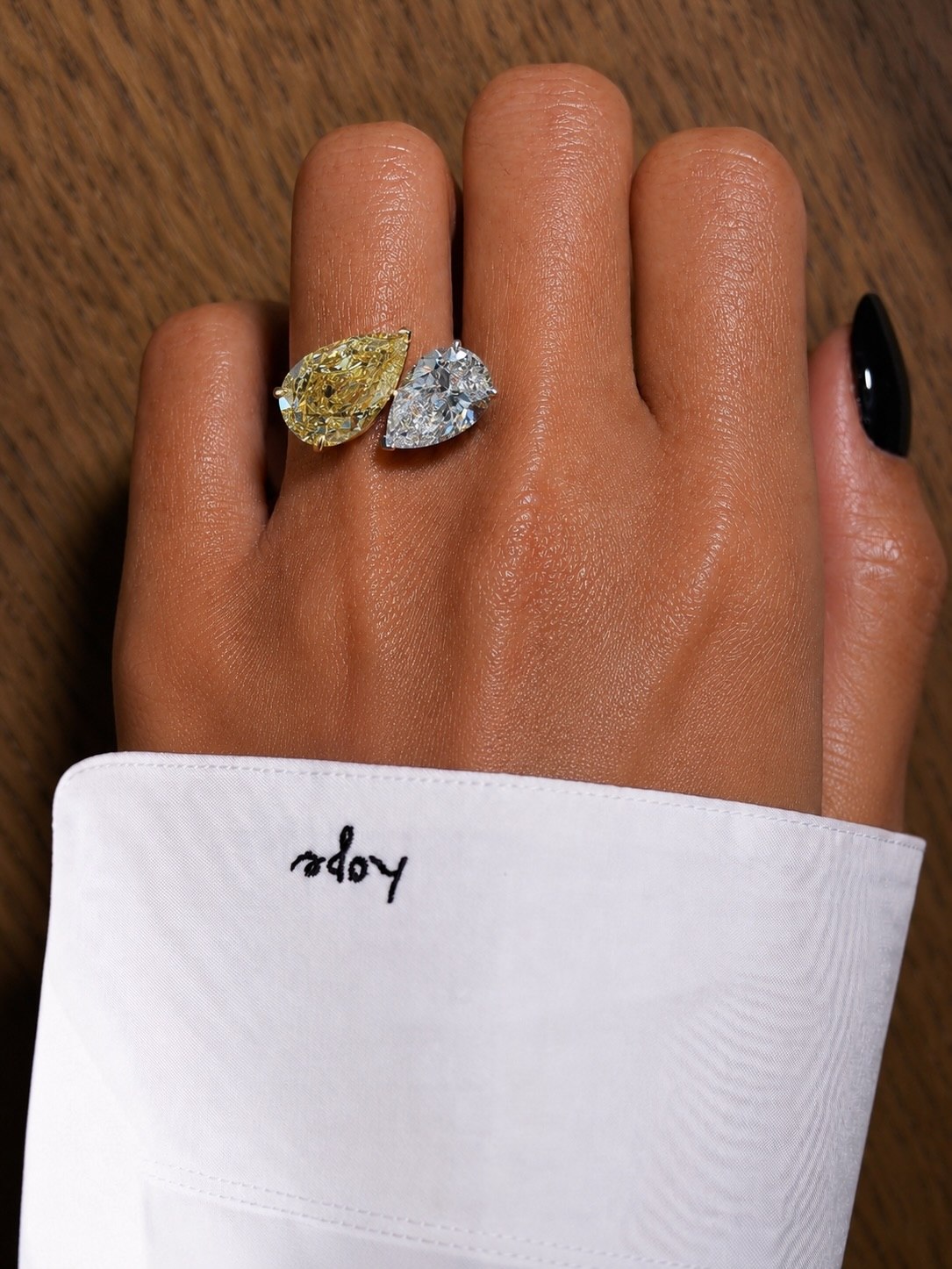
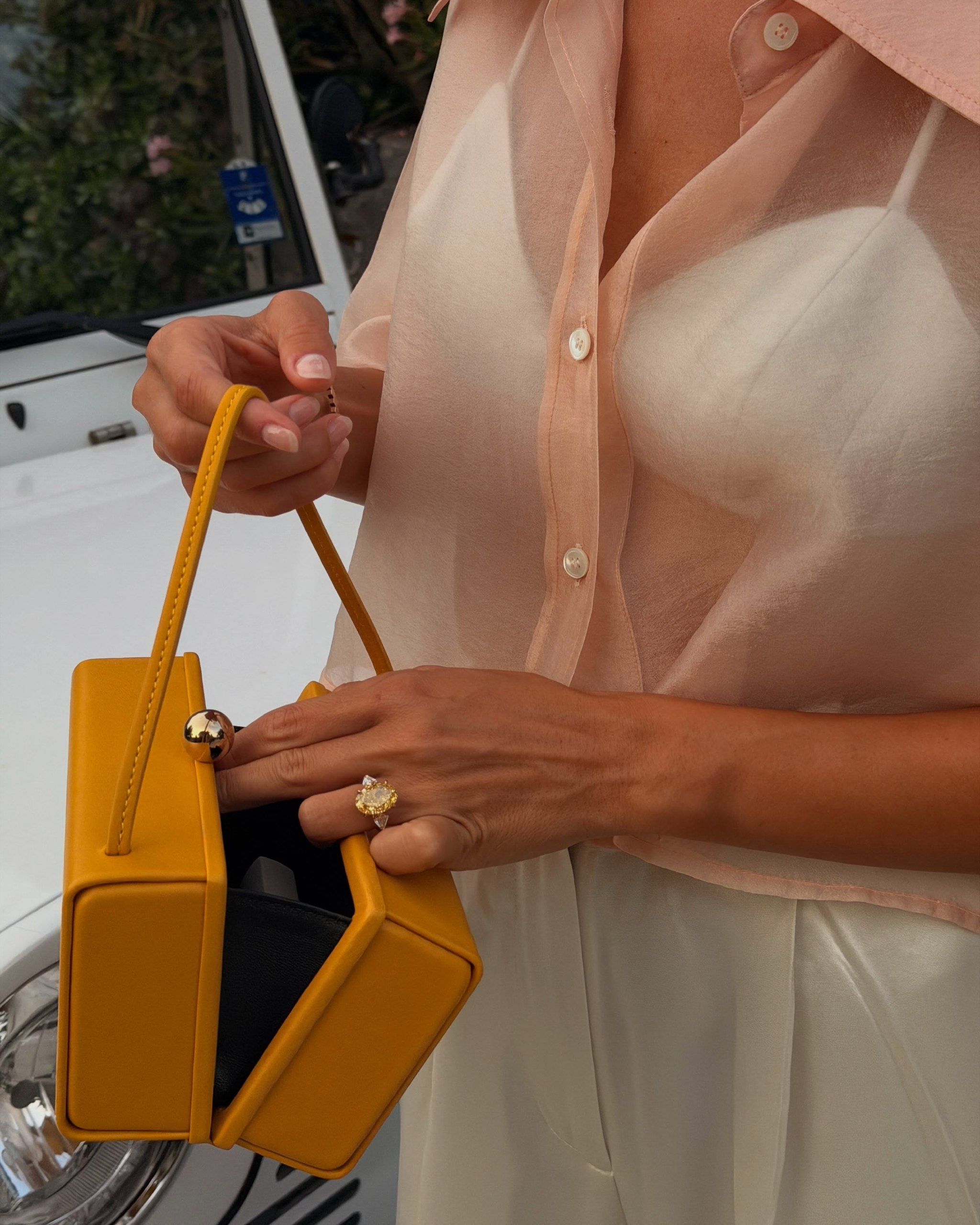
Photo: Carate, Carmen Montero Mundt
Yellow Diamond Rings
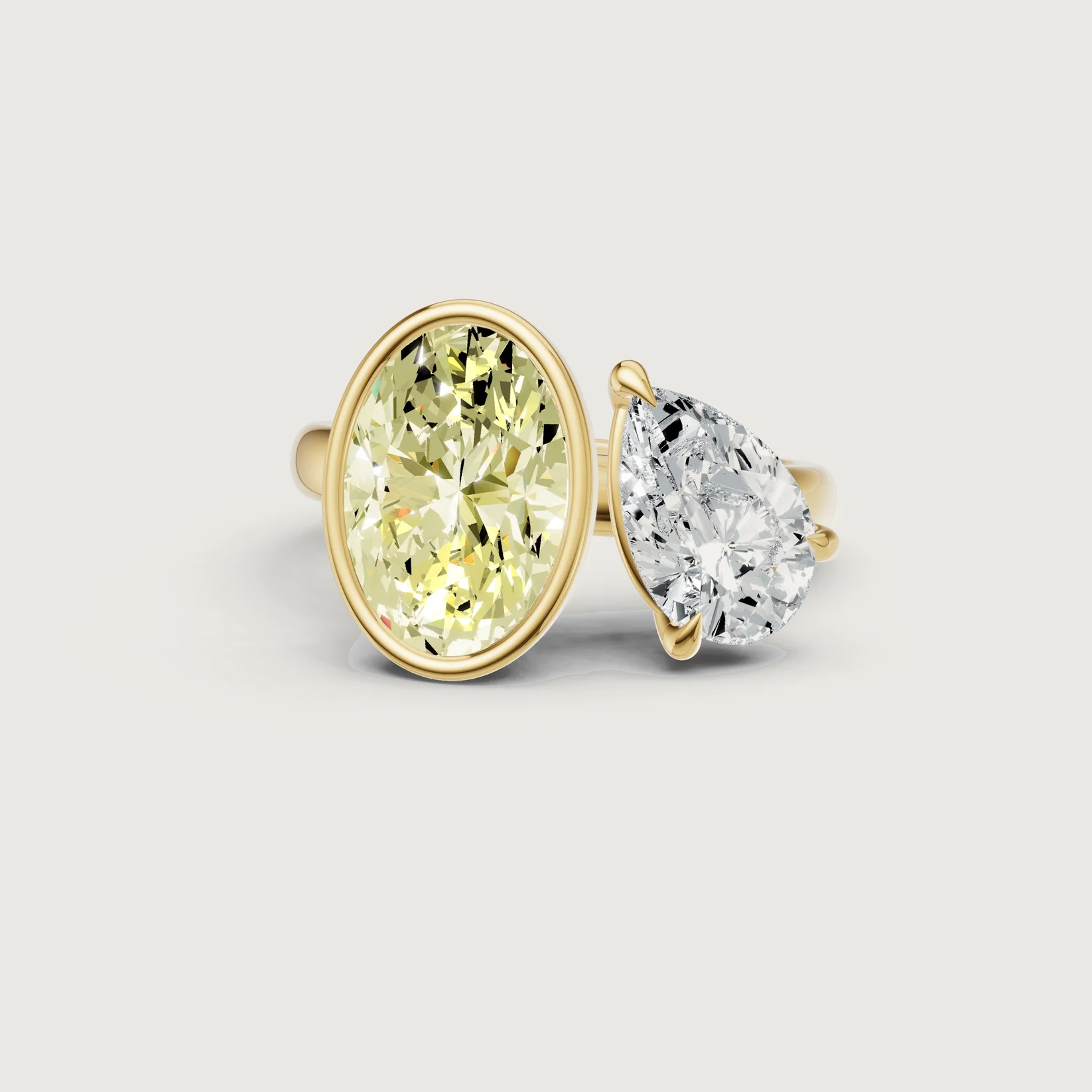
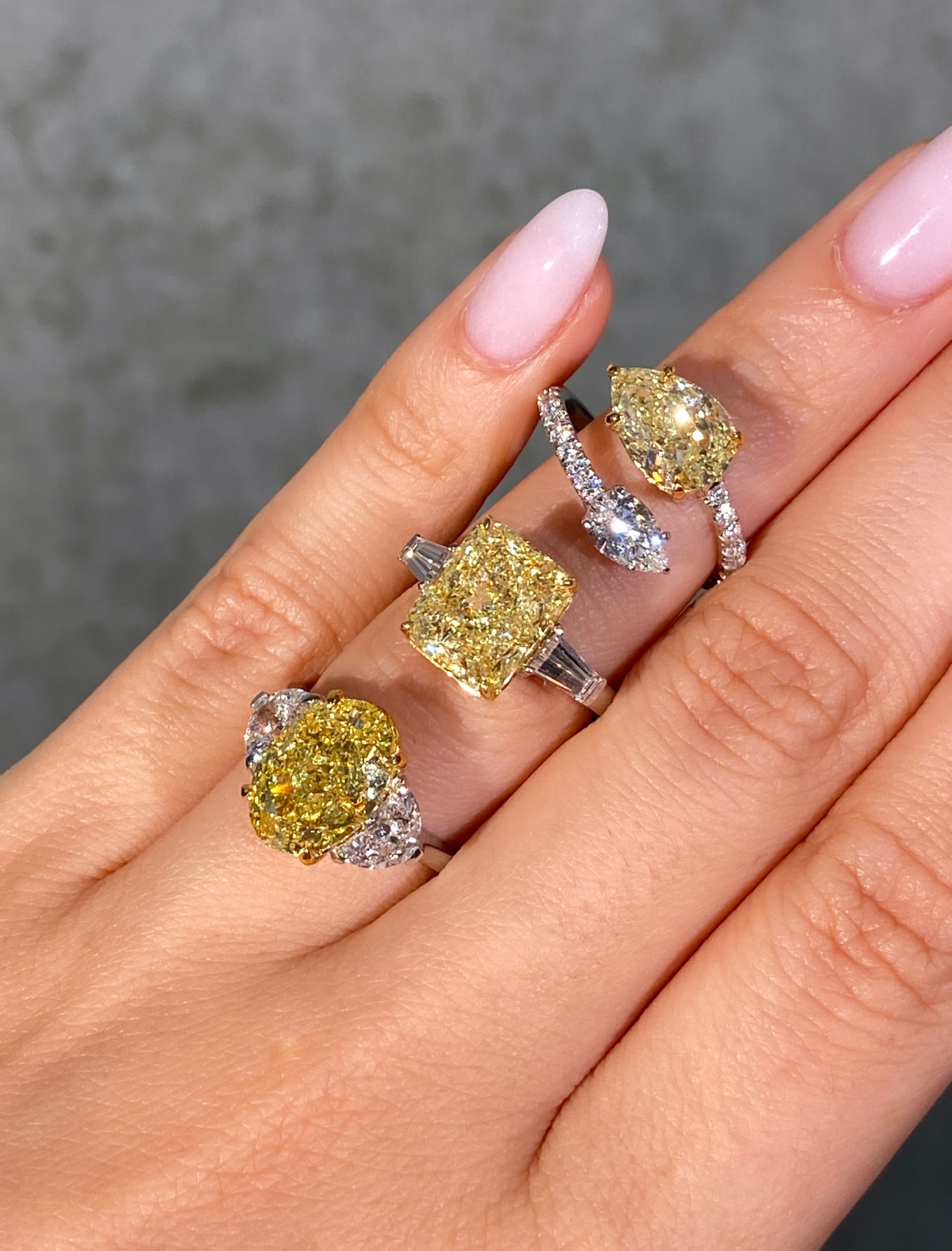
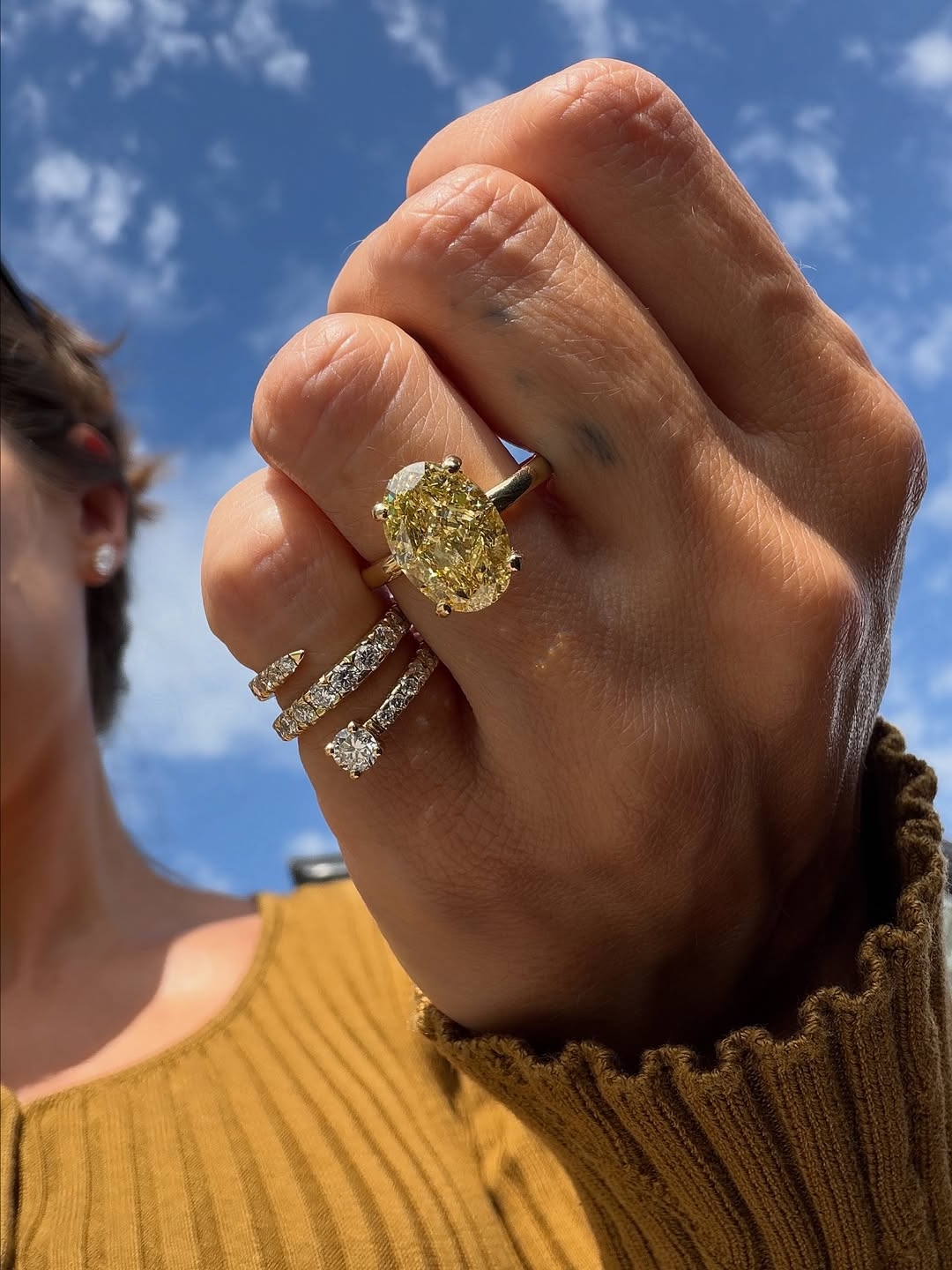
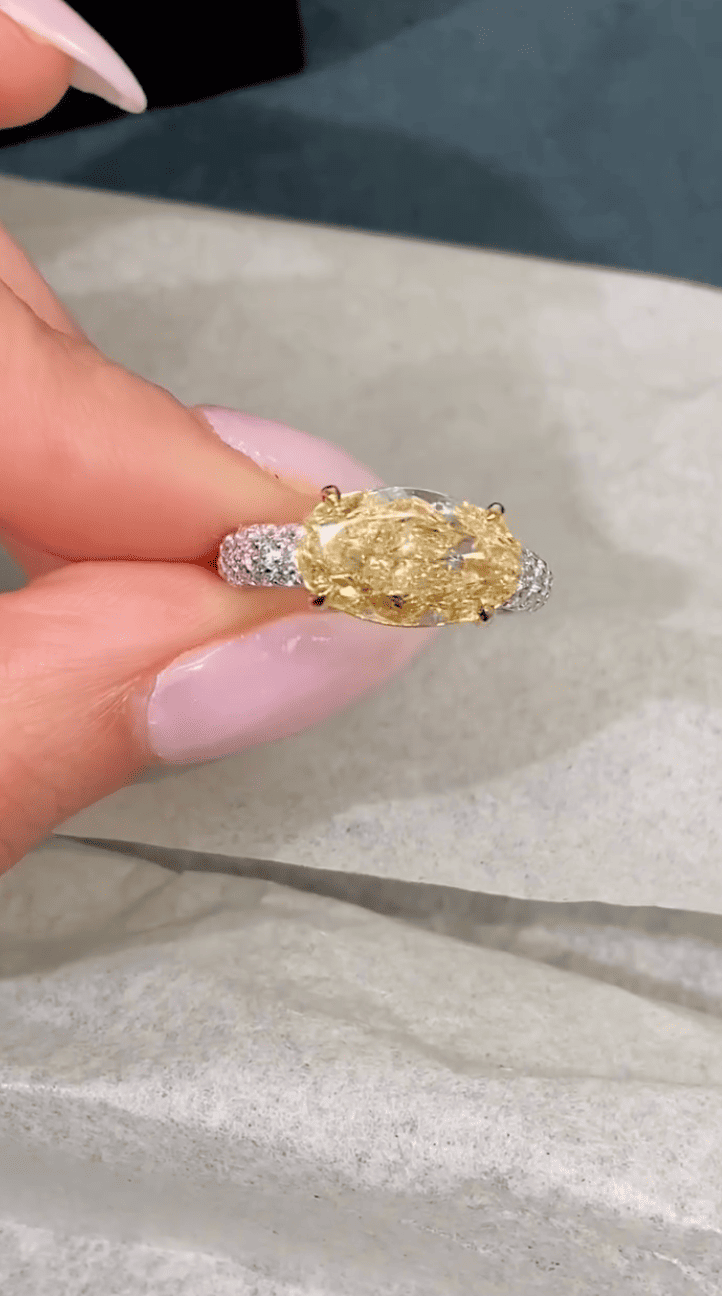
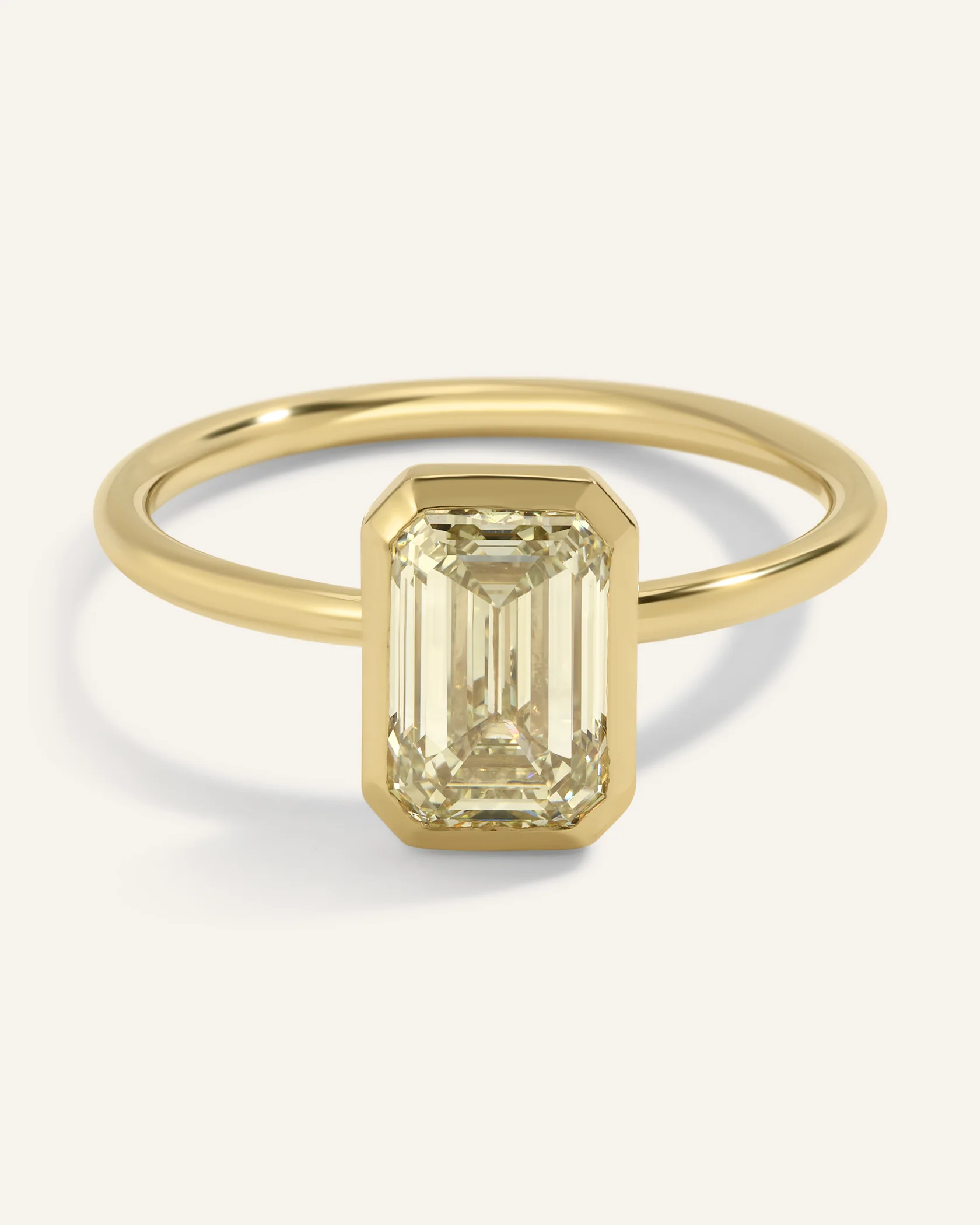
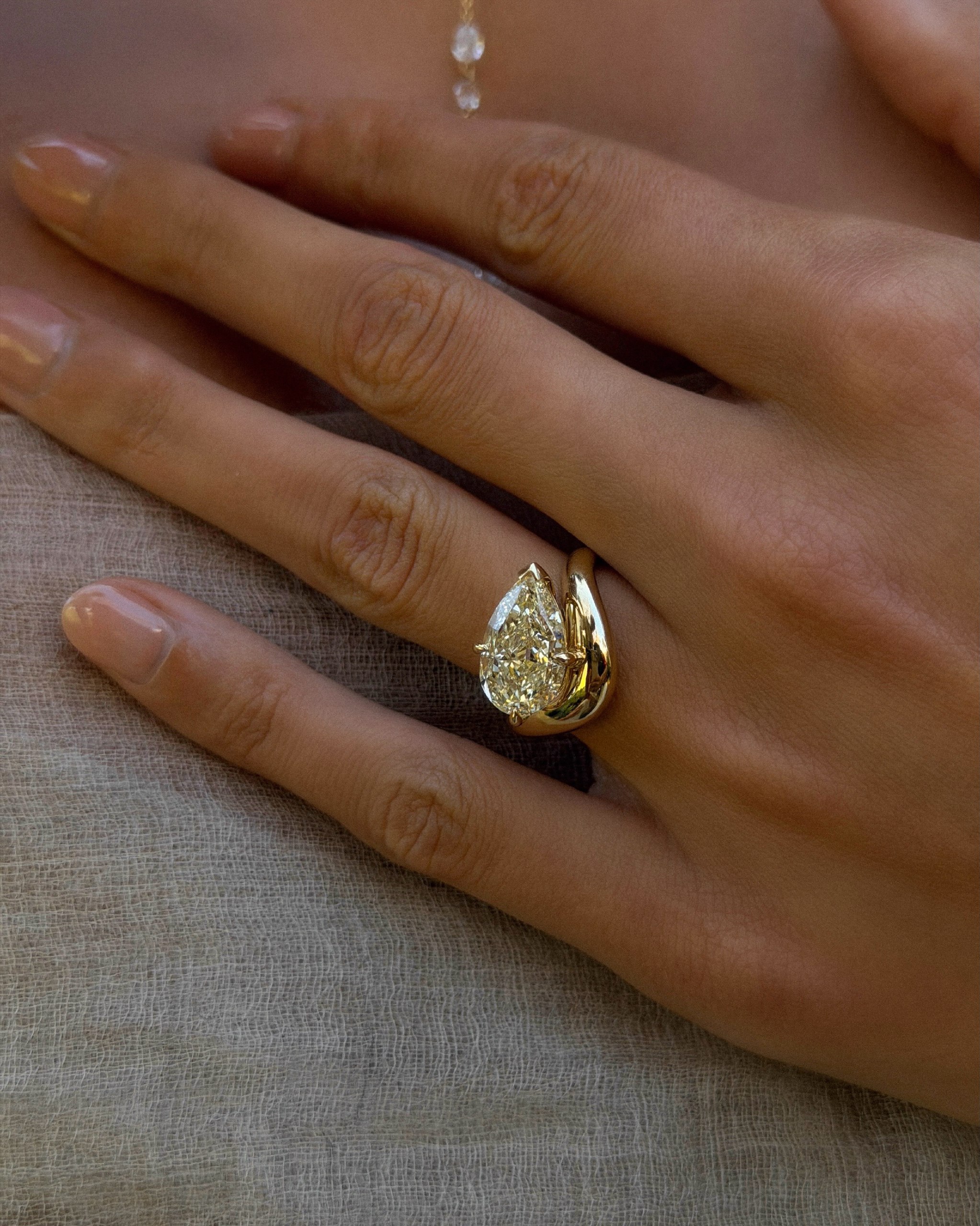
Yellow is the most commonly seen fancy diamond color, owing its warmth to trace nitrogen absorbed during formation. Shades run from a pale, soft lemon to a deep, saturated gold, sometimes called canary at its most vivid. Natural yellow diamonds are still genuinely hard to source despite being the most common fancy color overall, which has made lab-grown yellow diamonds especially popular, chemically identical stones at a fraction of the price, without sacrificing size or presence.
Pink Diamond Rings
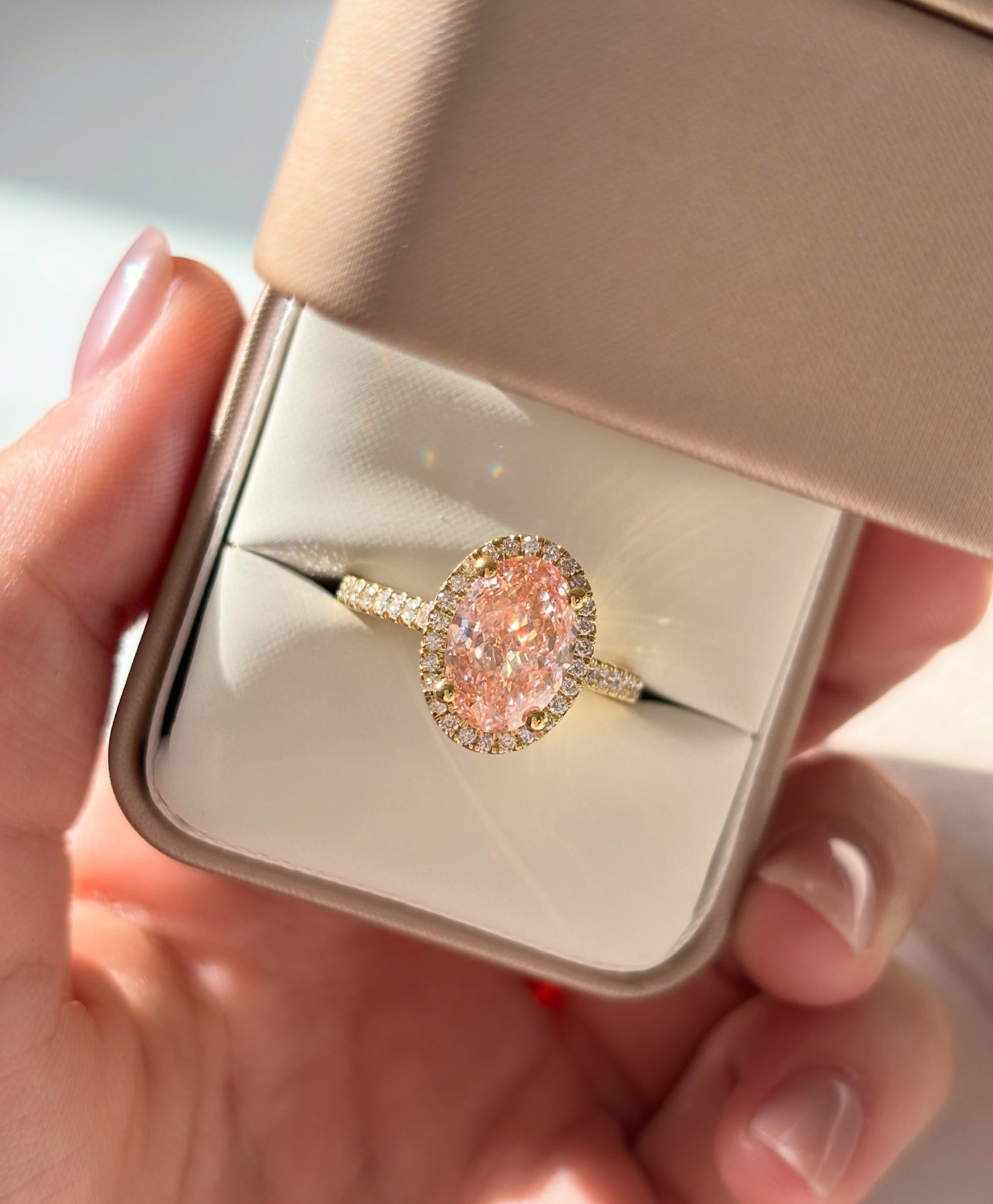
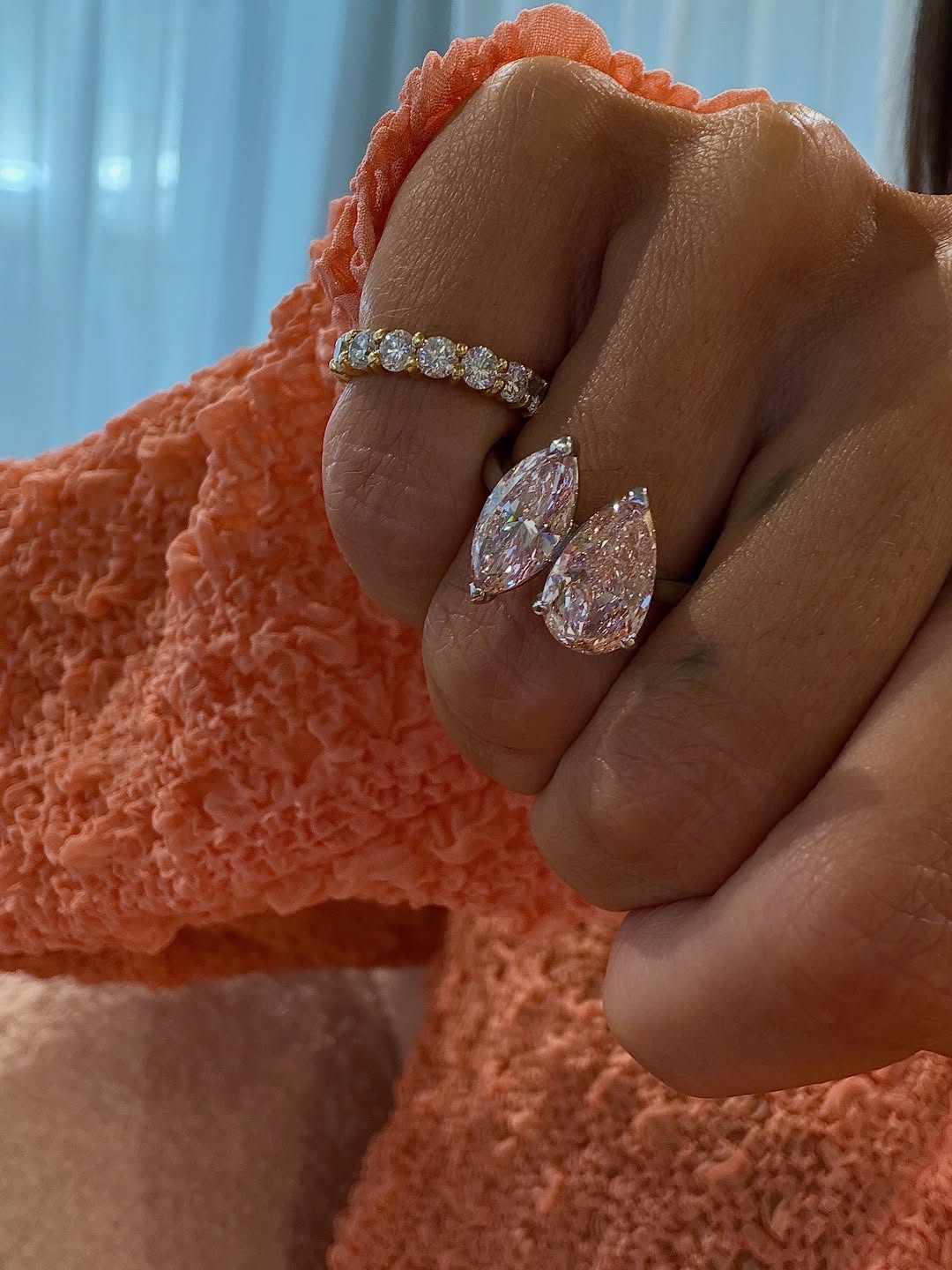
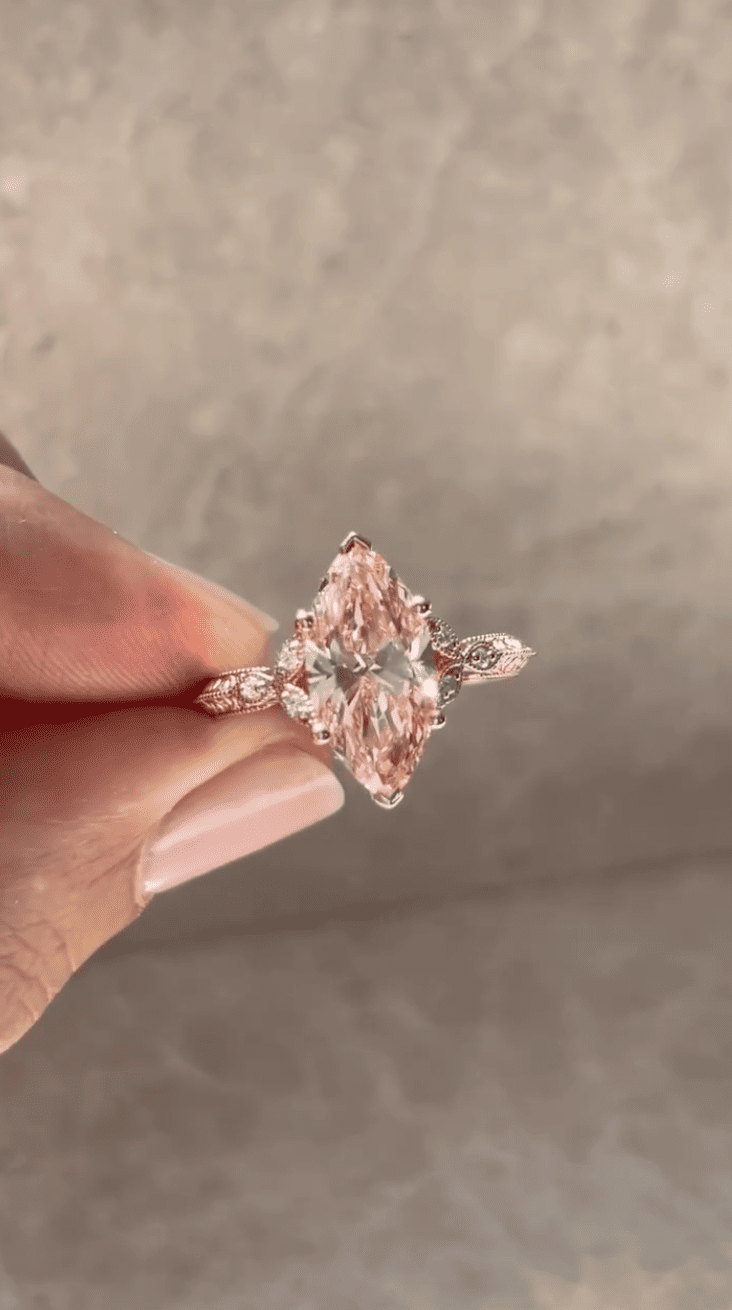
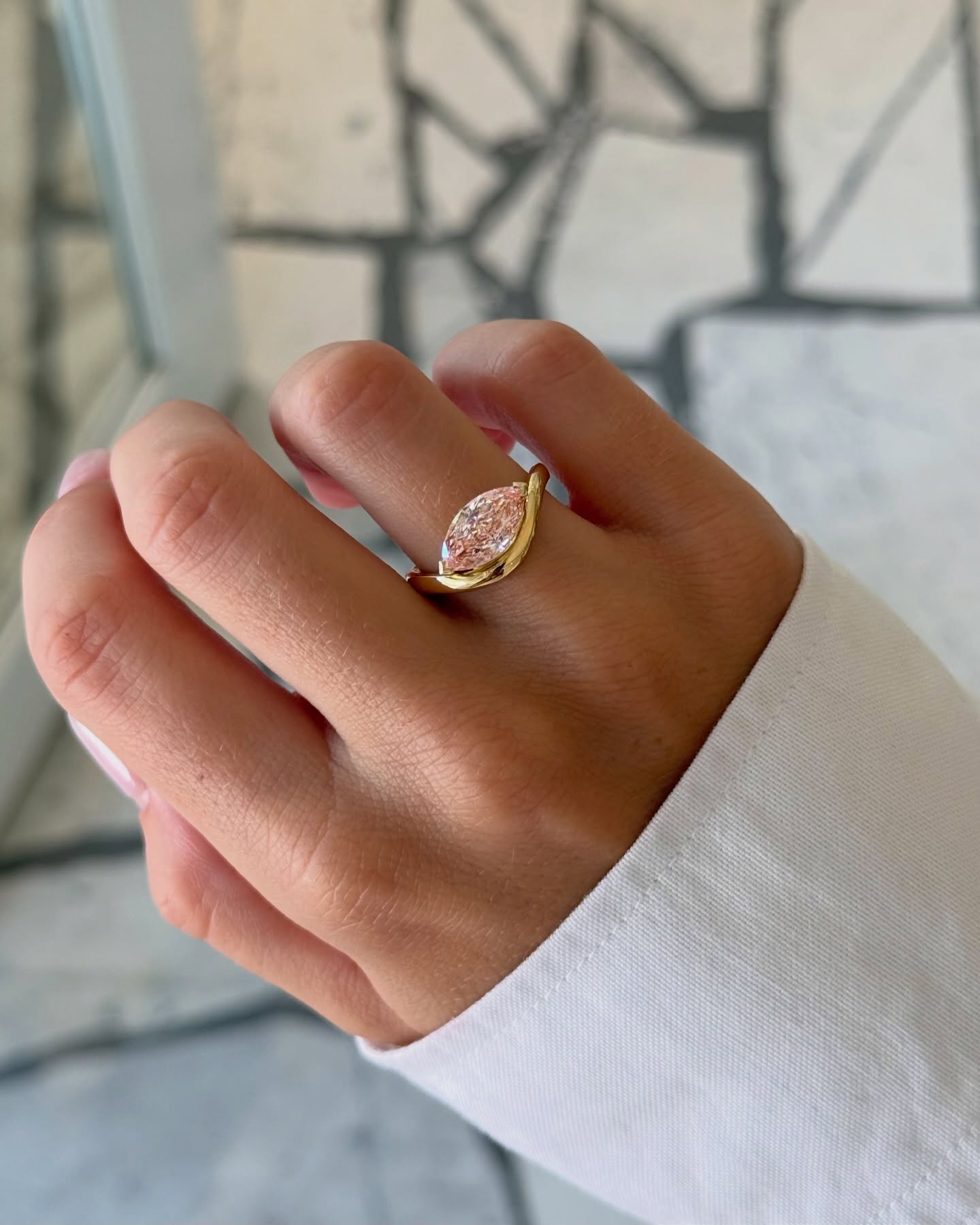
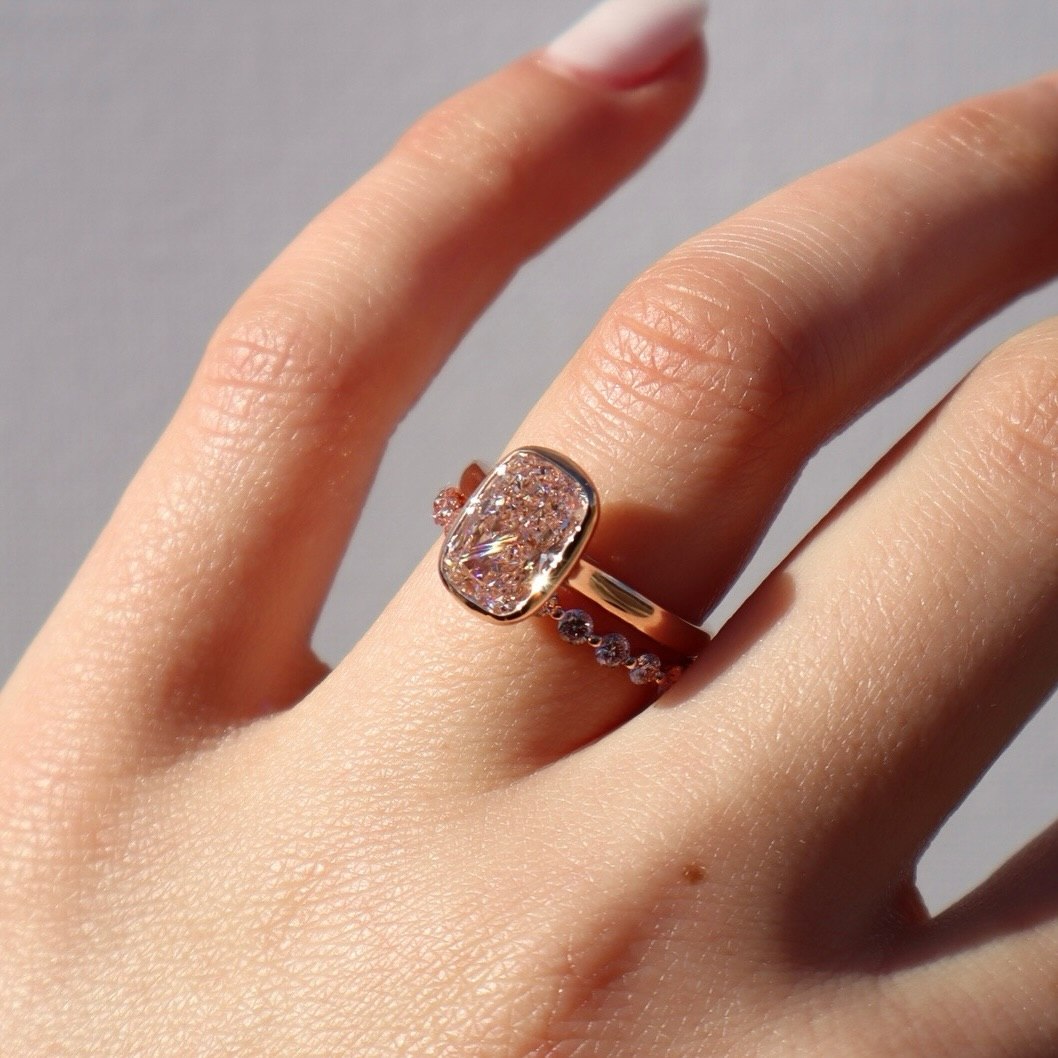
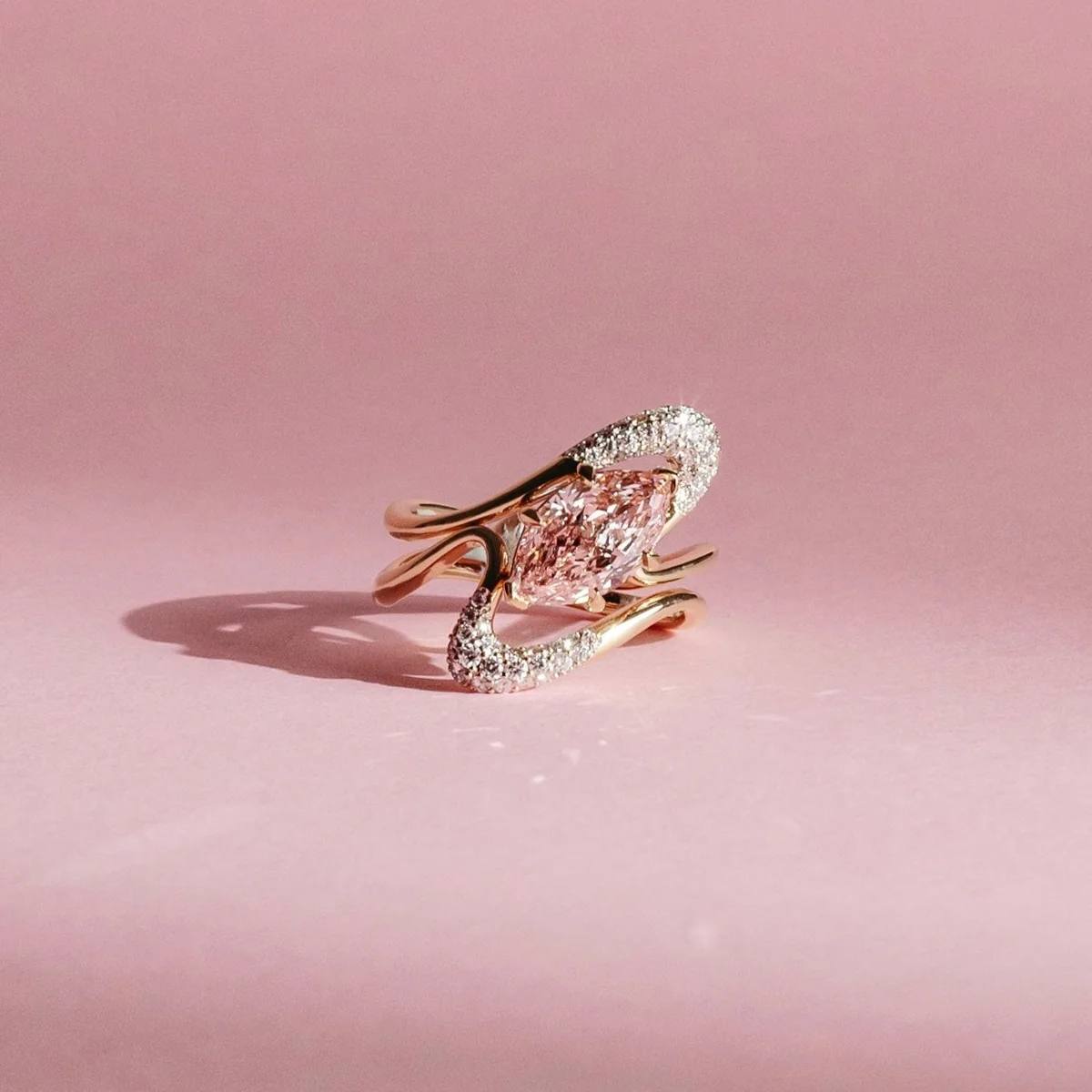
Pink is one of the most in-demand fancy colors, closely tied to romance in a way few other stones are. Its moment in the mainstream really took off in 2002, when Ben Affleck proposed to Jennifer Lopez with a 6.10-carat pink diamond from Harry Winston, a ring credited with sparking a much wider interest in colored diamonds generally. Pink diamonds range from a barely-there blush to a deep, saturated fuchsia, and remain genuinely rare at the higher end of that spectrum.
Brown & Champagne Diamond Rings
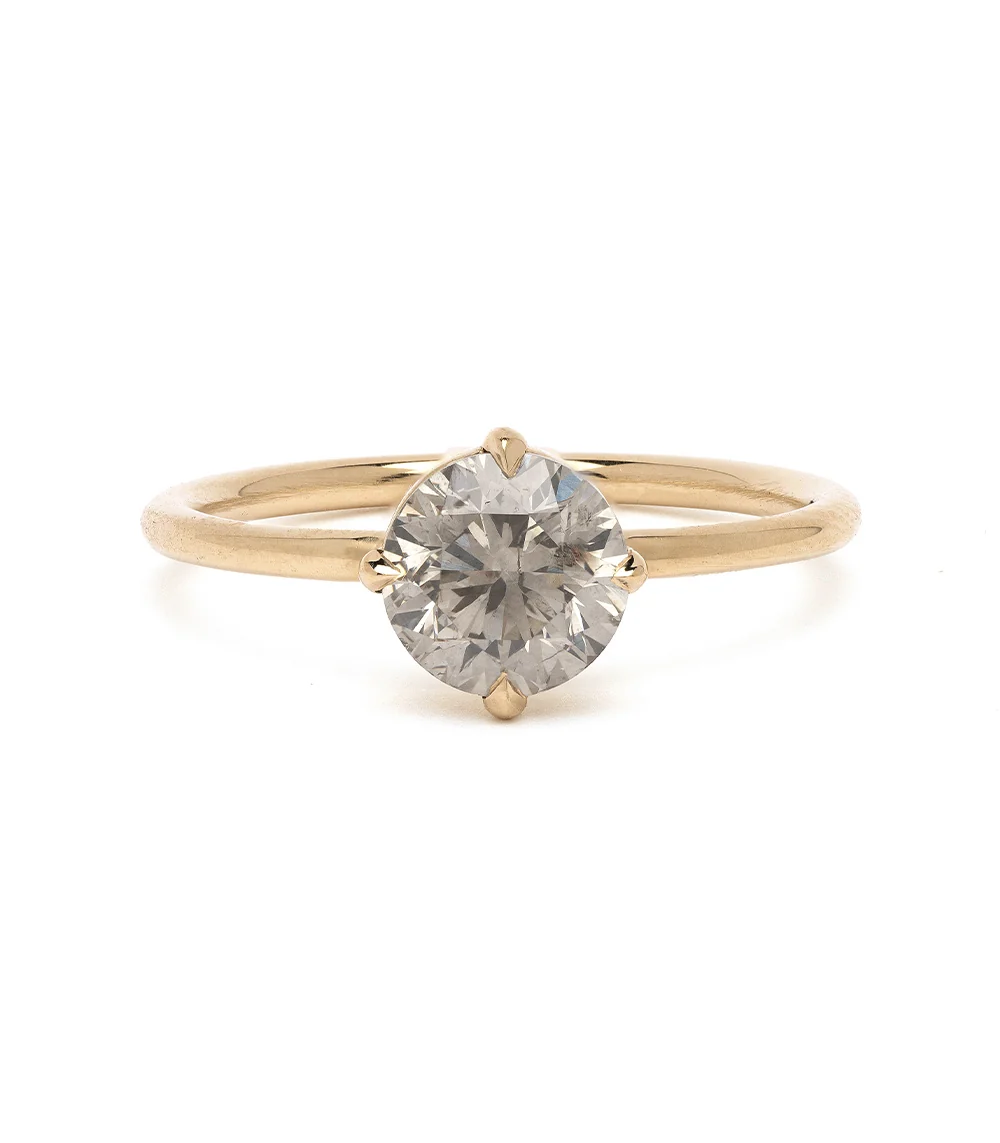
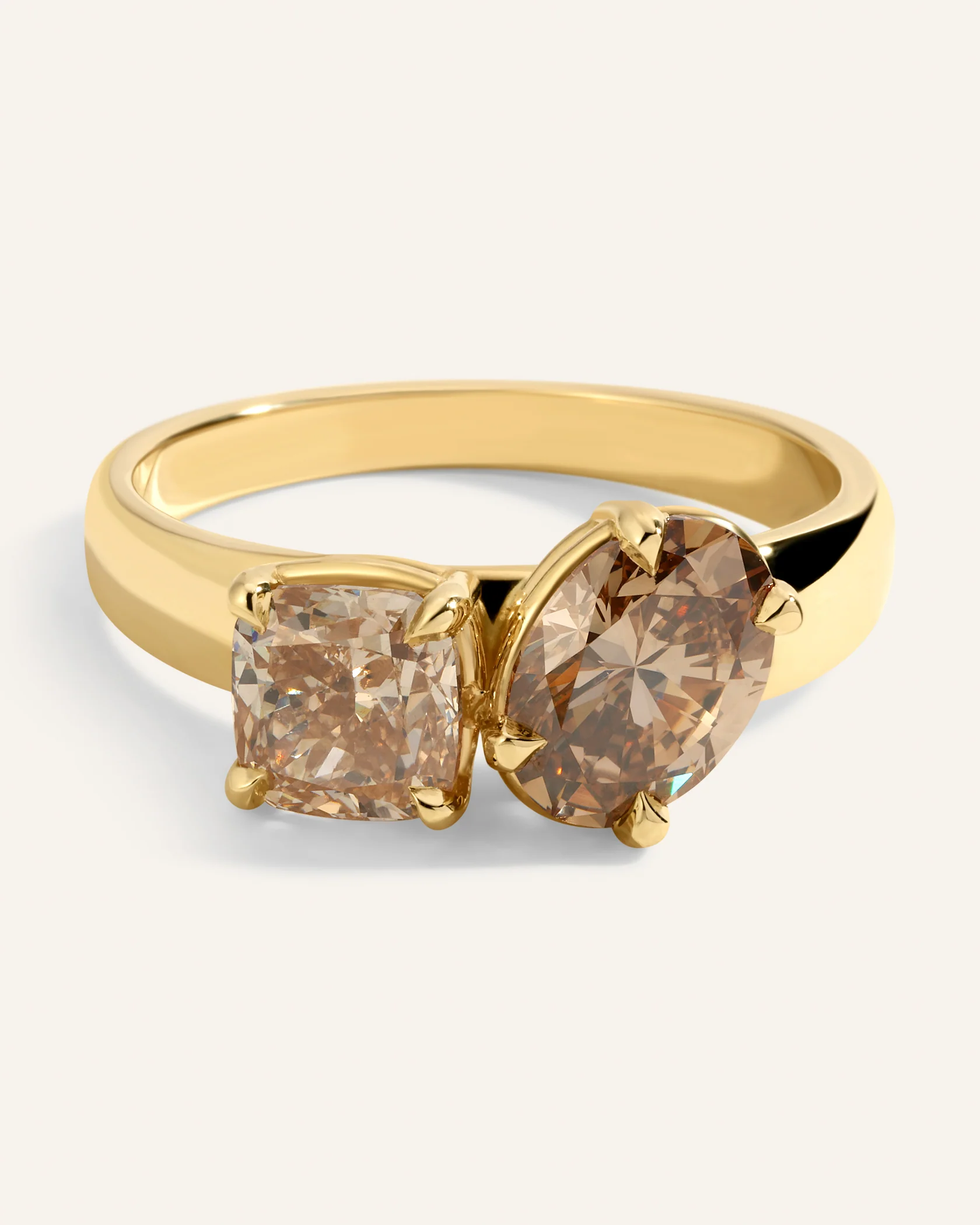
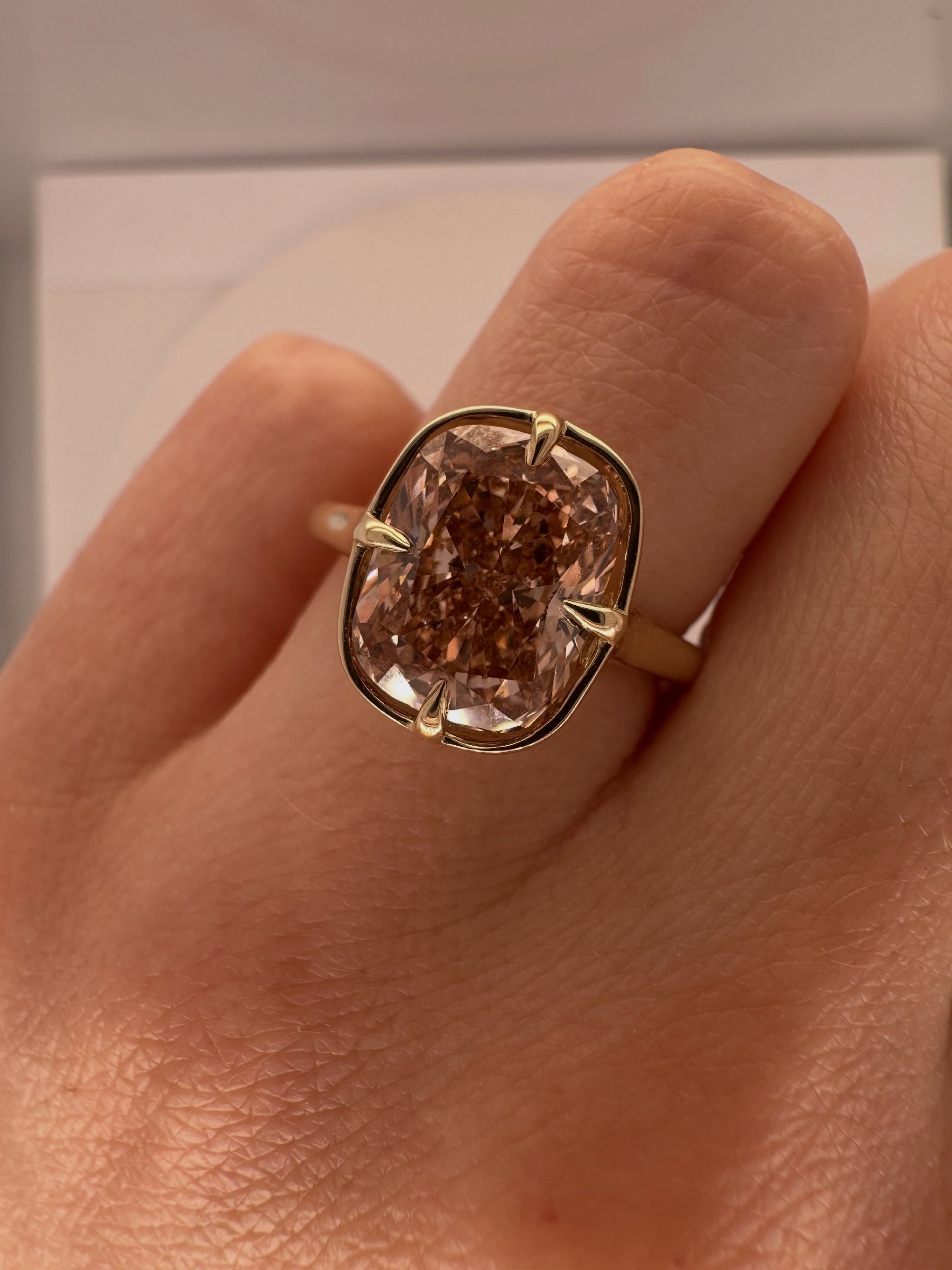
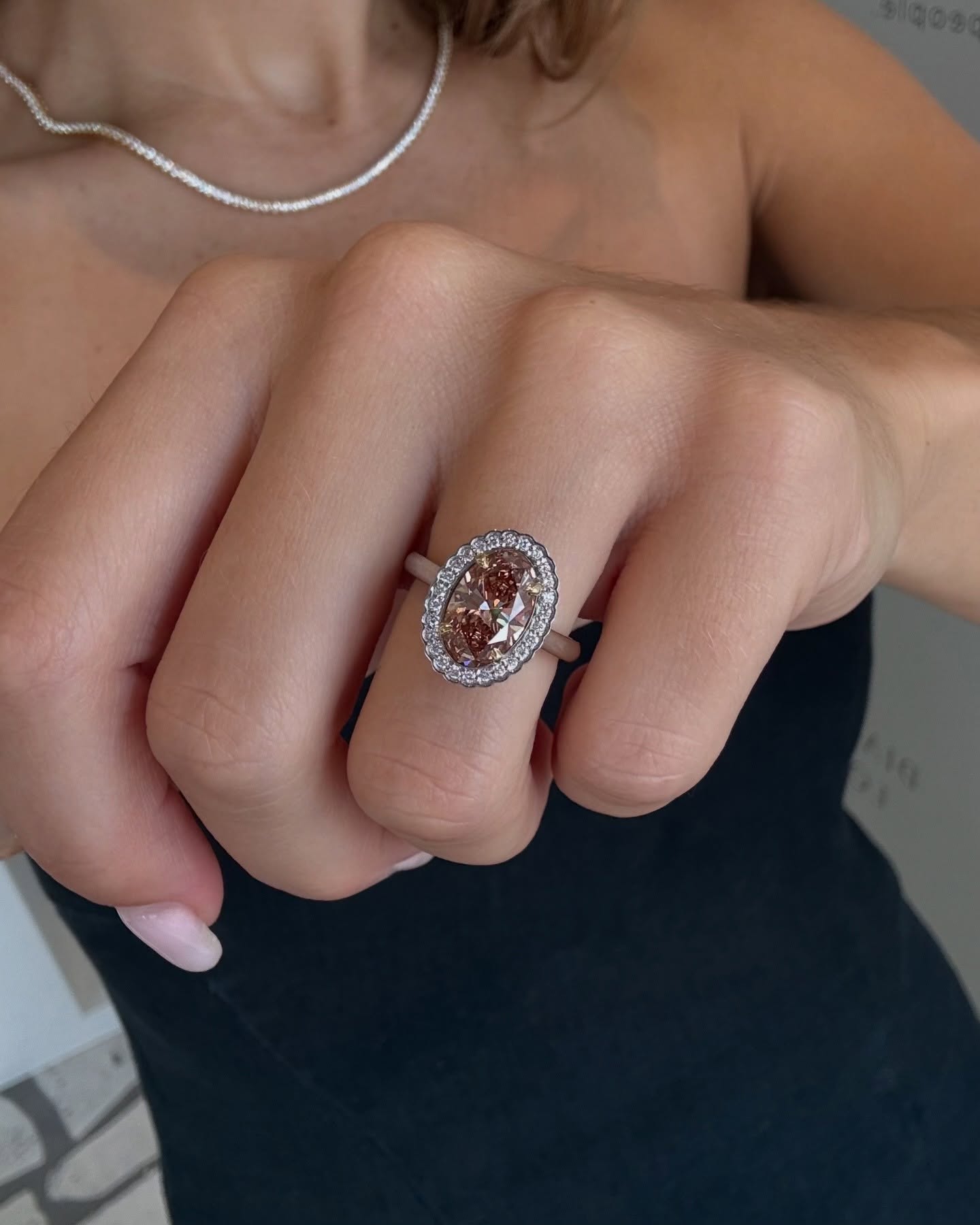
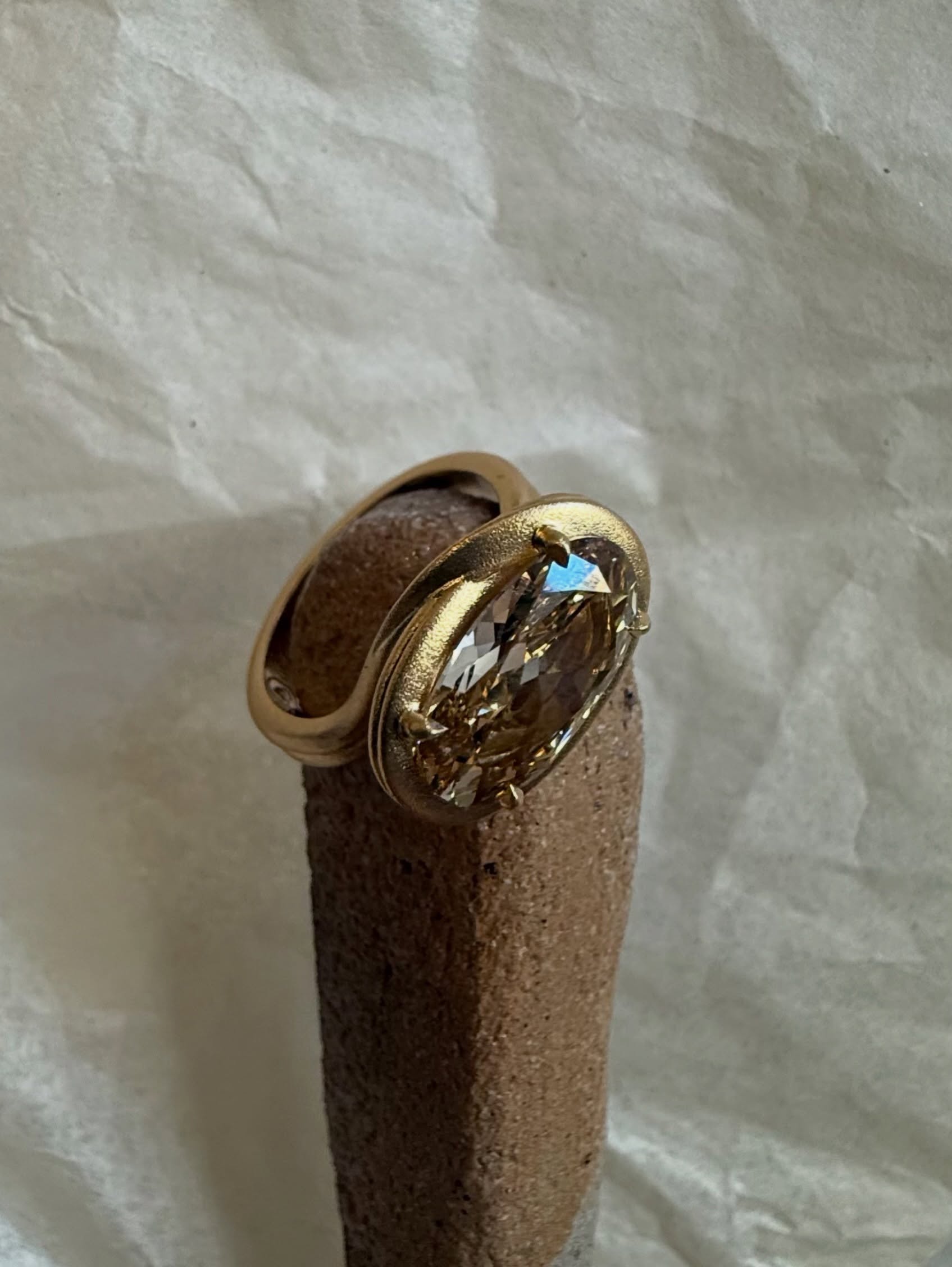
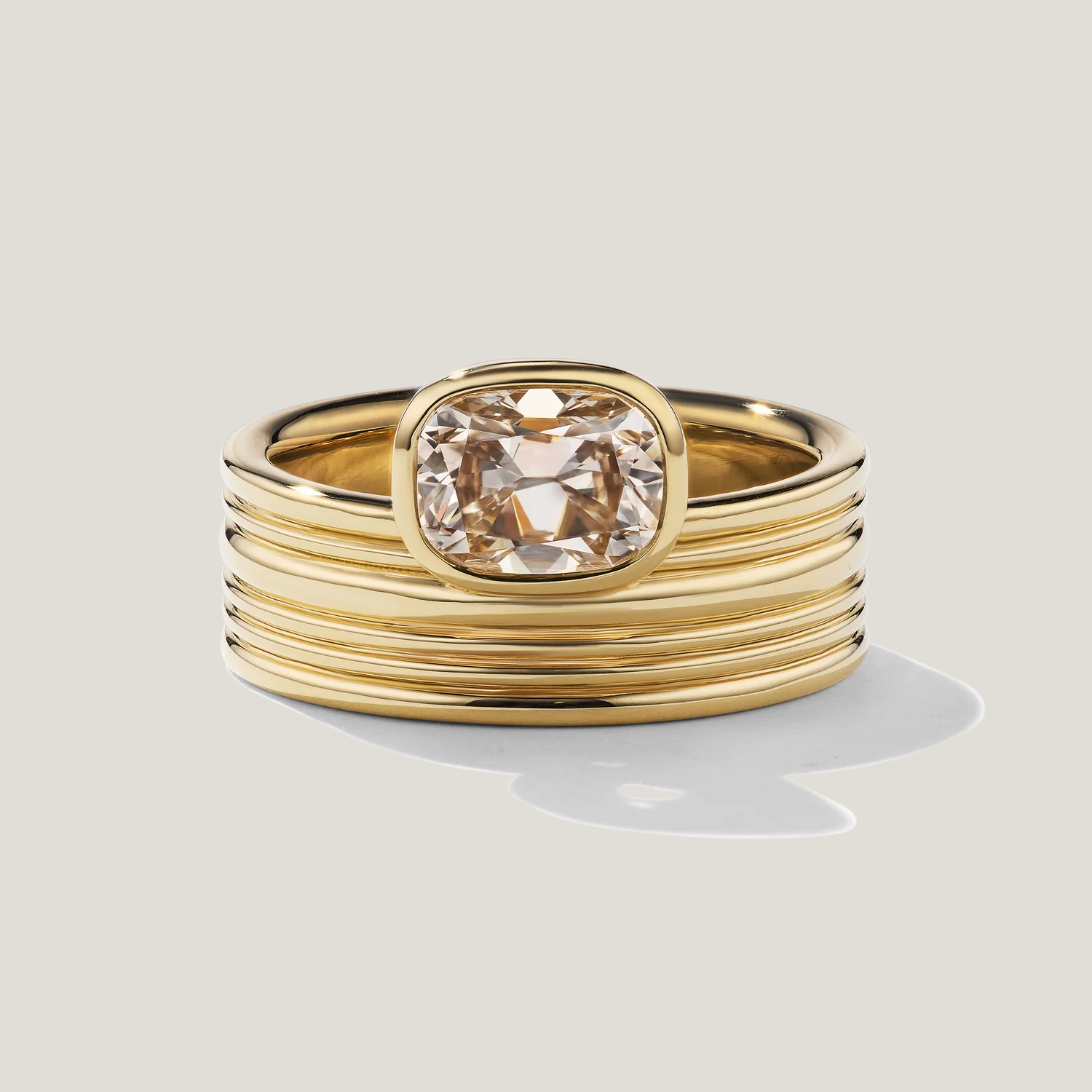
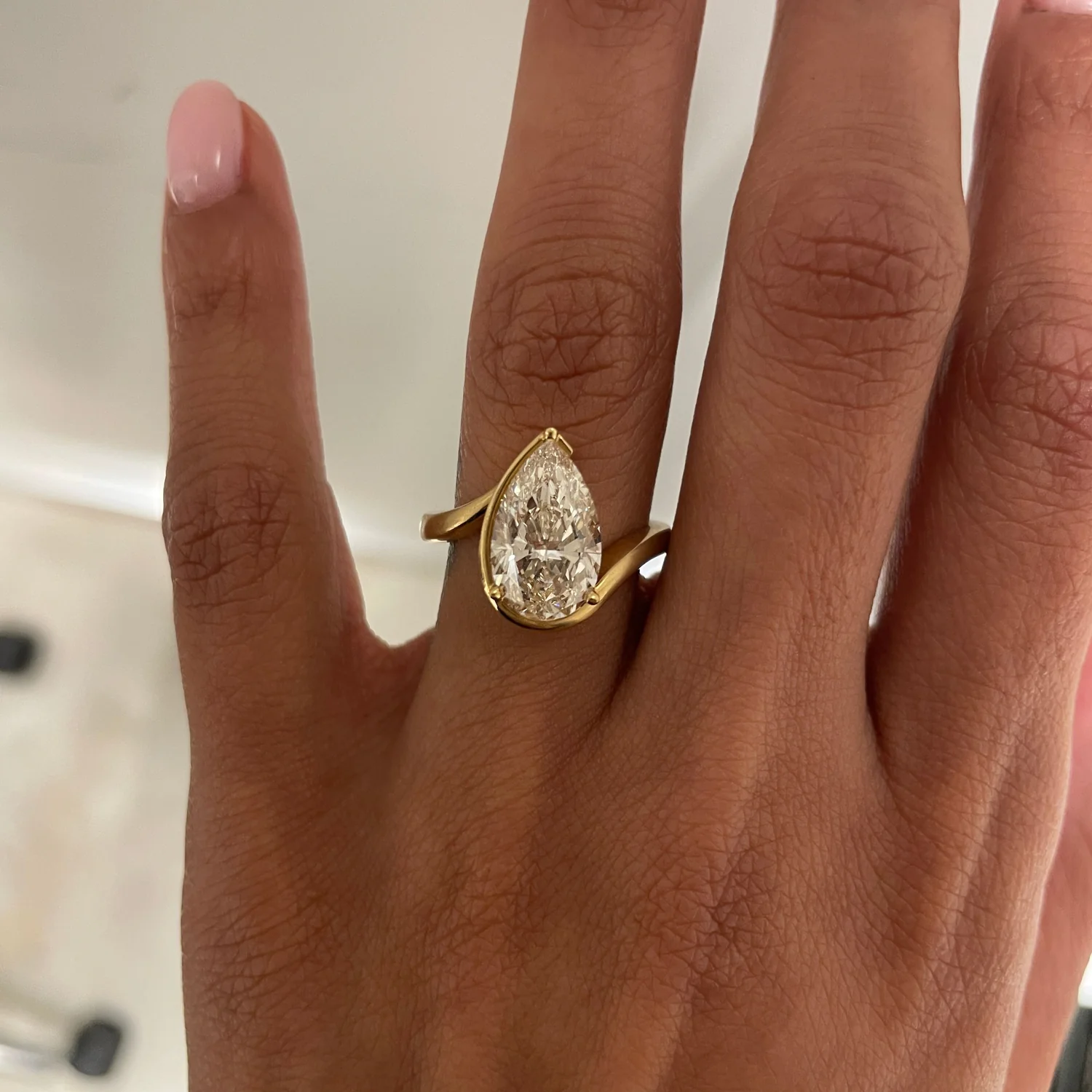
Brown is an officially recognized fancy color in its own right, and one of the more naturally occurring ones. “Champagne” isn’t a separate gemological category so much as a marketing term for the lighter, more golden-brown end of that same color range, while deeper, richer tones sometimes get labeled “cognac” instead. Champagne stones even have their own dedicated grading scale, developed by Australia’s Argyle mine and running from C1, a light, barely-there brown, up through C7, a deep cognac. Whatever the name, brown diamonds tend to be among the more affordable fancy colors, with an earthy, warm quality that pairs particularly well with yellow or rose gold.
Green Diamond Rings
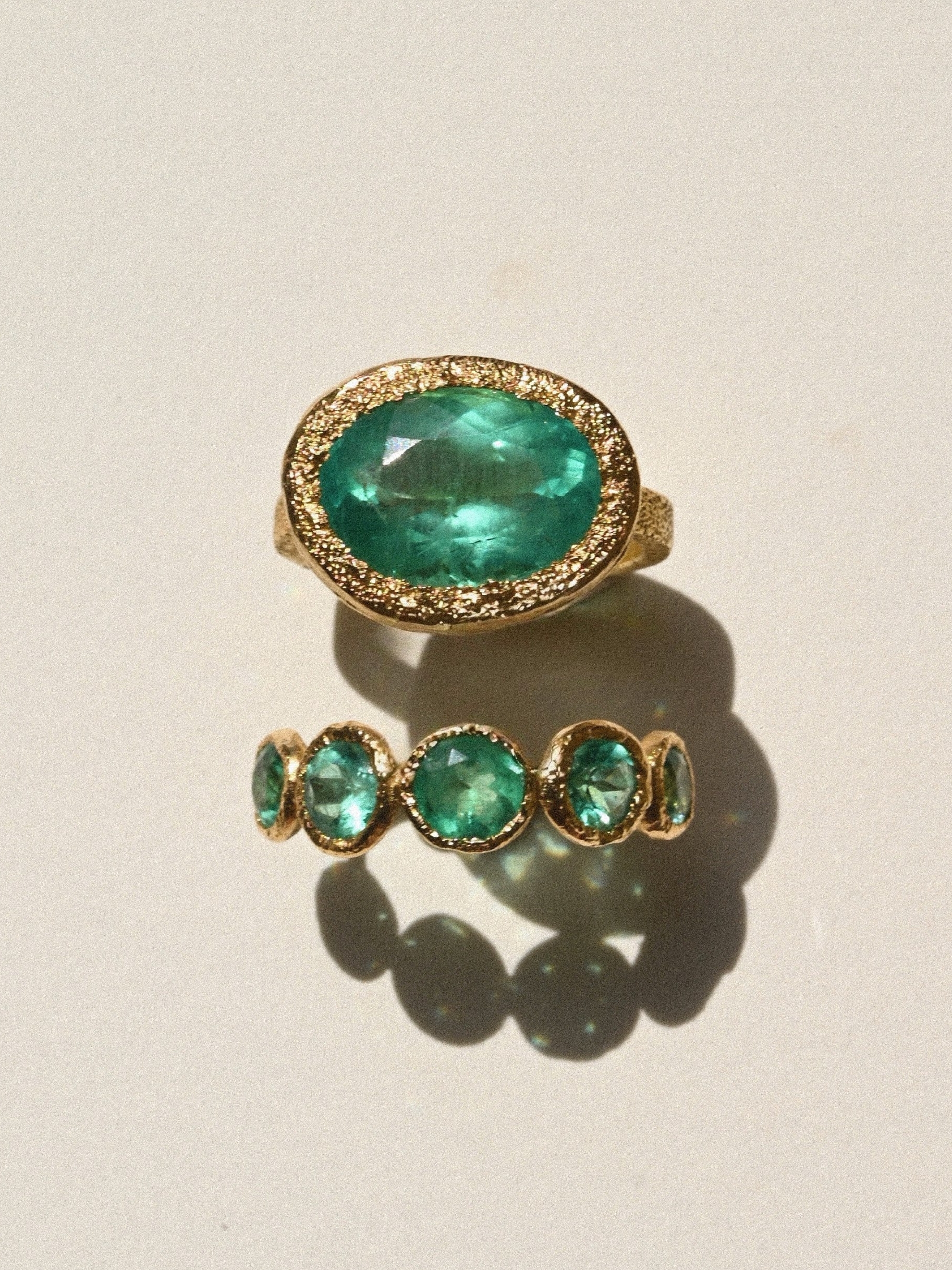
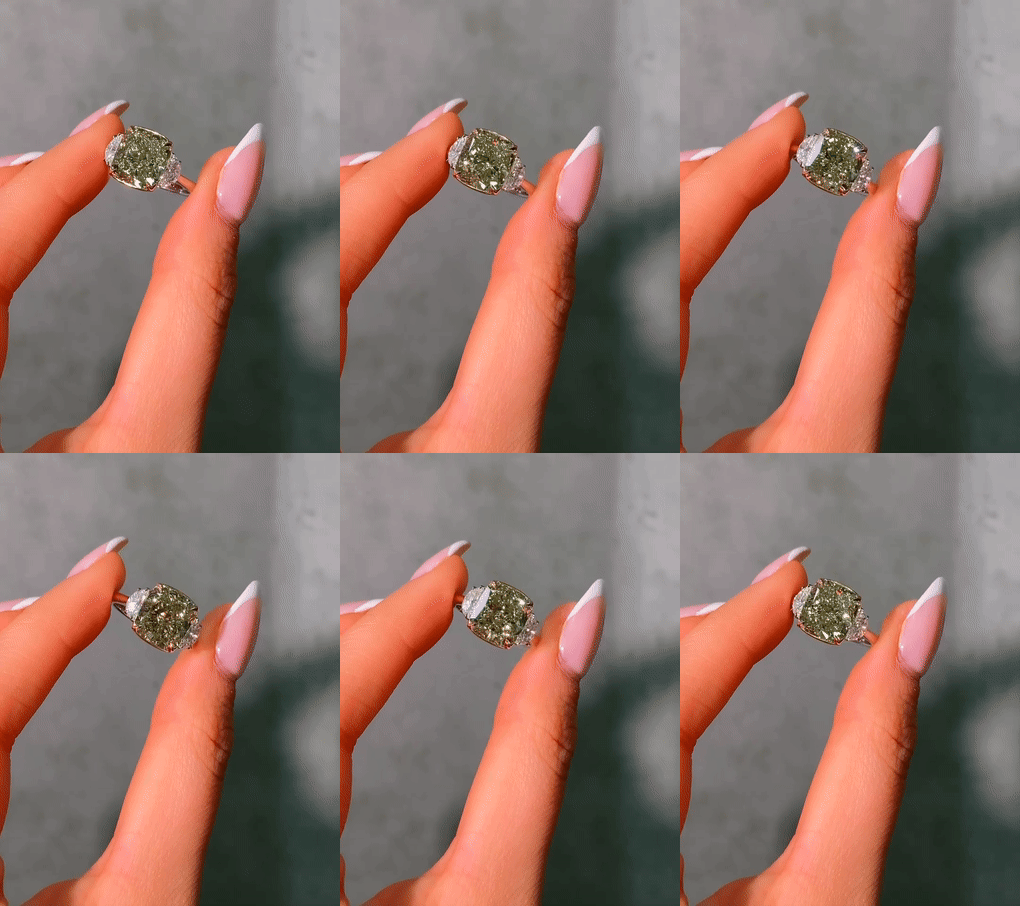
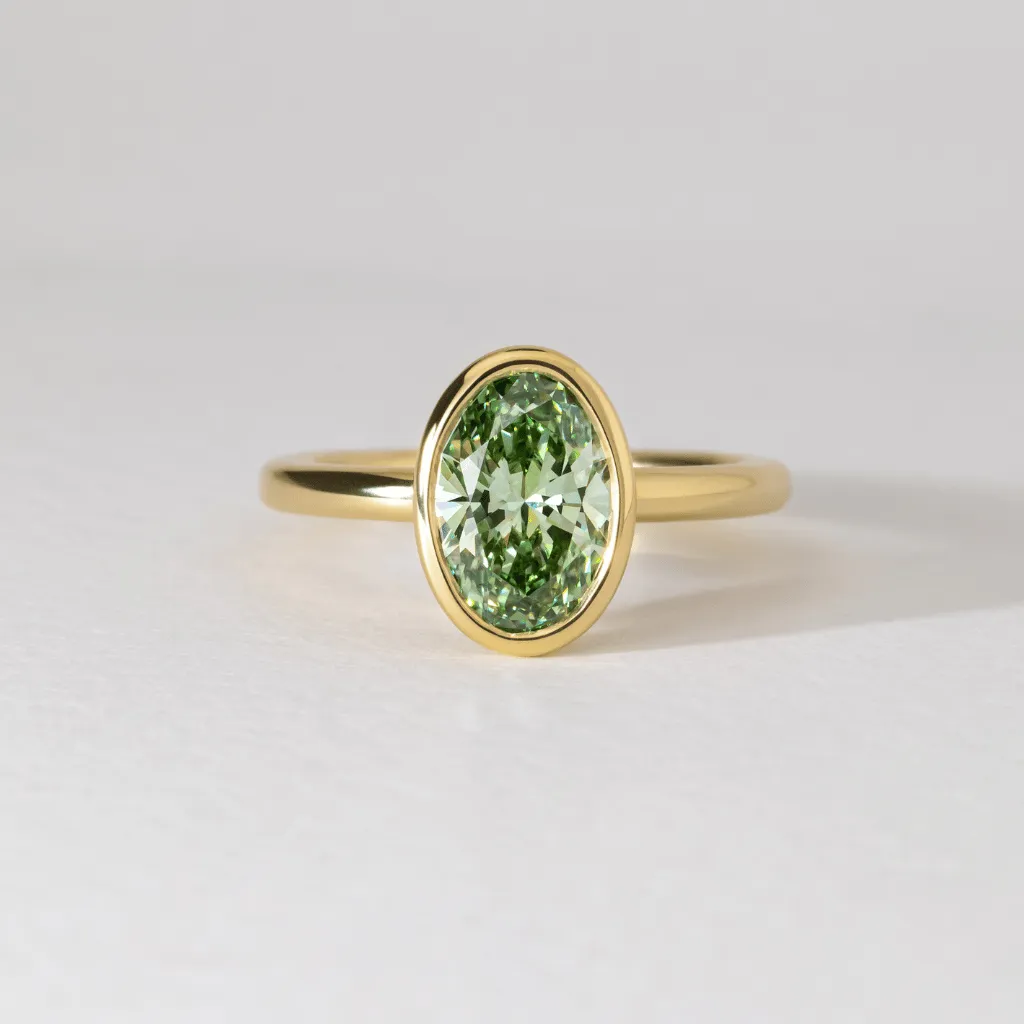
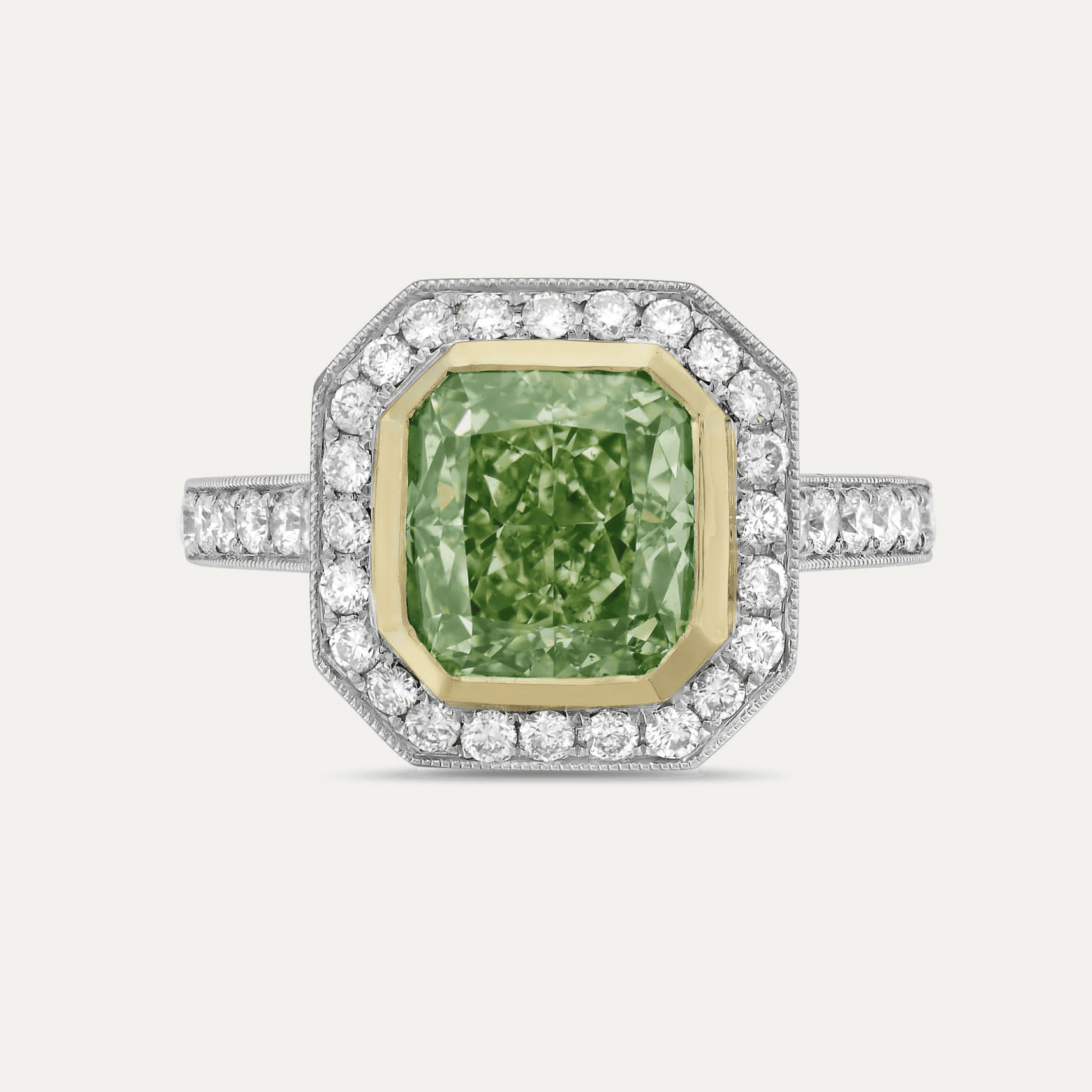
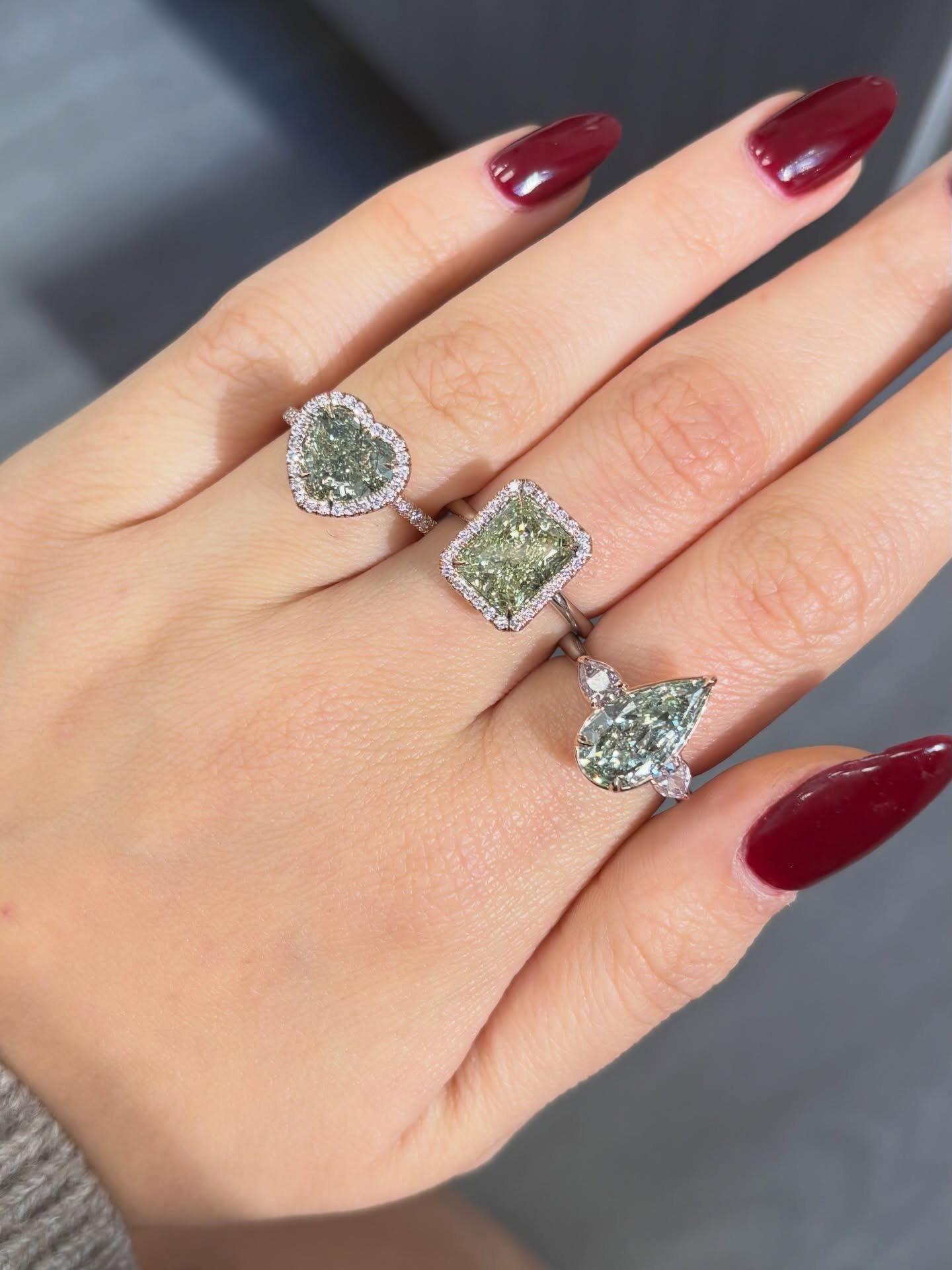
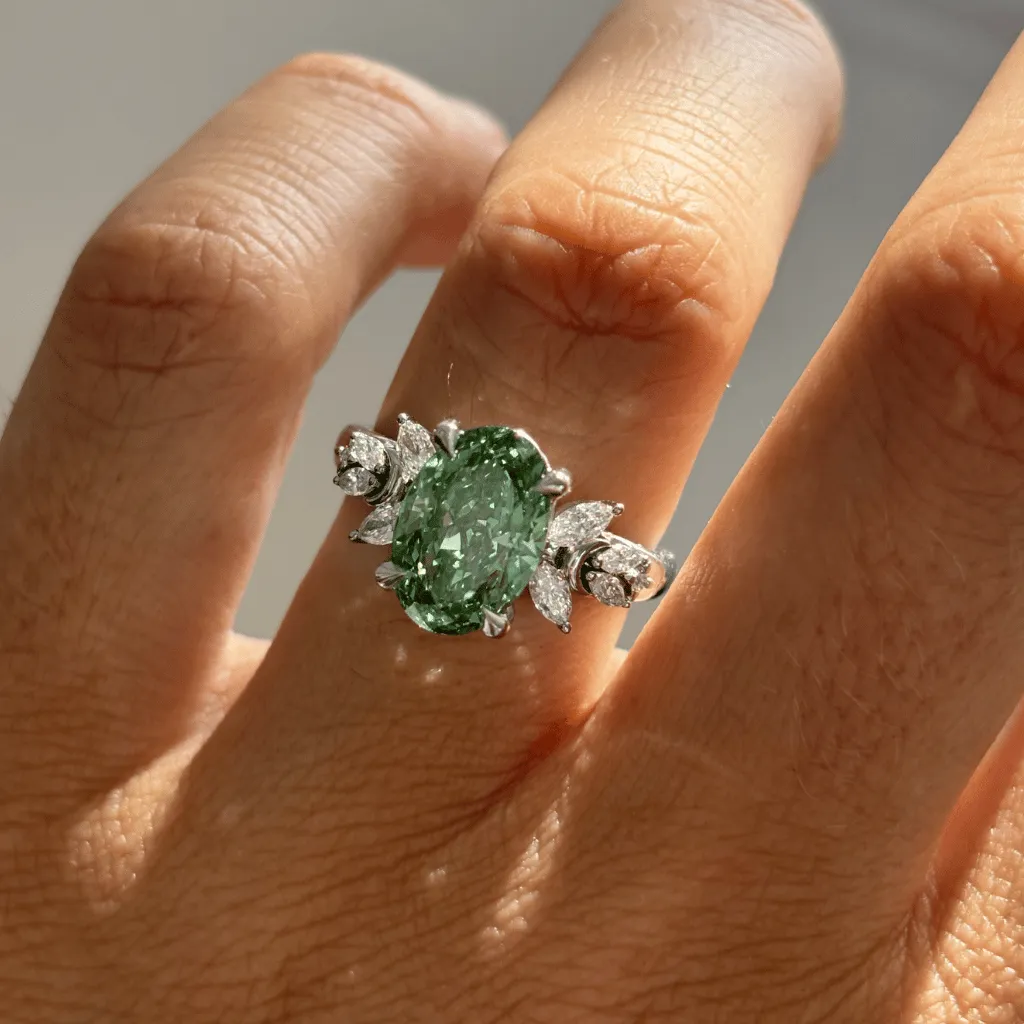
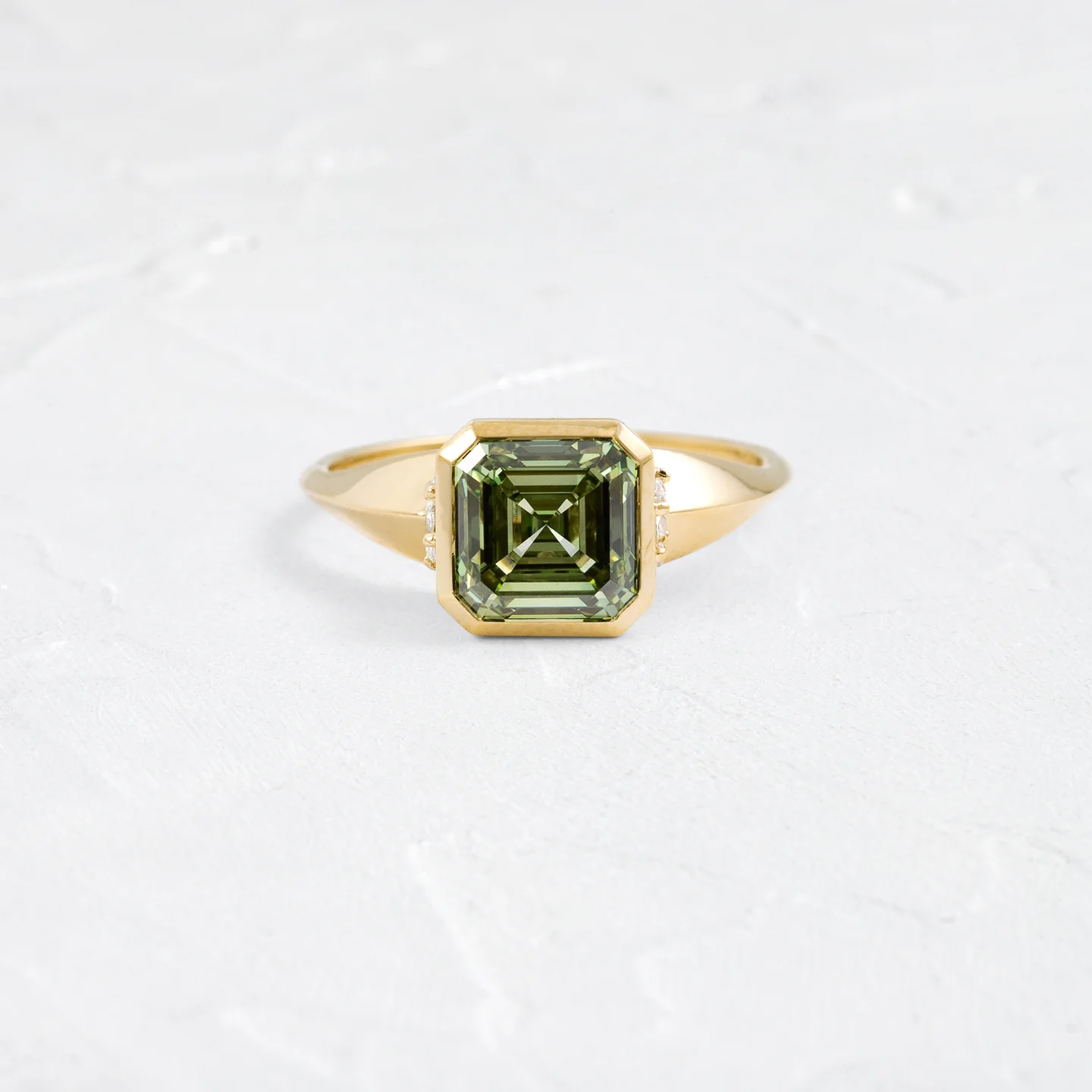
Green diamonds are among the rarest fancy colors on the market, and the way they get their color is genuinely unusual: natural radiation from nearby radioactive minerals like uranium or thorium knocks carbon atoms out of place in the crystal structure over the course of thousands or millions of years, eventually producing the green hue. The stones are completely safe to wear despite that origin. Shades range from a soft mint to a deep forest tone, and the color has its own recent celebrity moment: Jennifer Lopez‘s second engagement ring from Ben Affleck, in 2022, was an 8.5-carat green diamond, with Lopez calling green her “lucky color.” That rarity does come at a real cost for natural stones, which is why lab-grown green diamonds, chemically identical but produced in a controlled setting rather than mined, have become a genuinely popular workaround. The gap in price can be substantial, and it tends to widen further as carat size and rarity go up, so it’s worth pricing out both before settling on one.
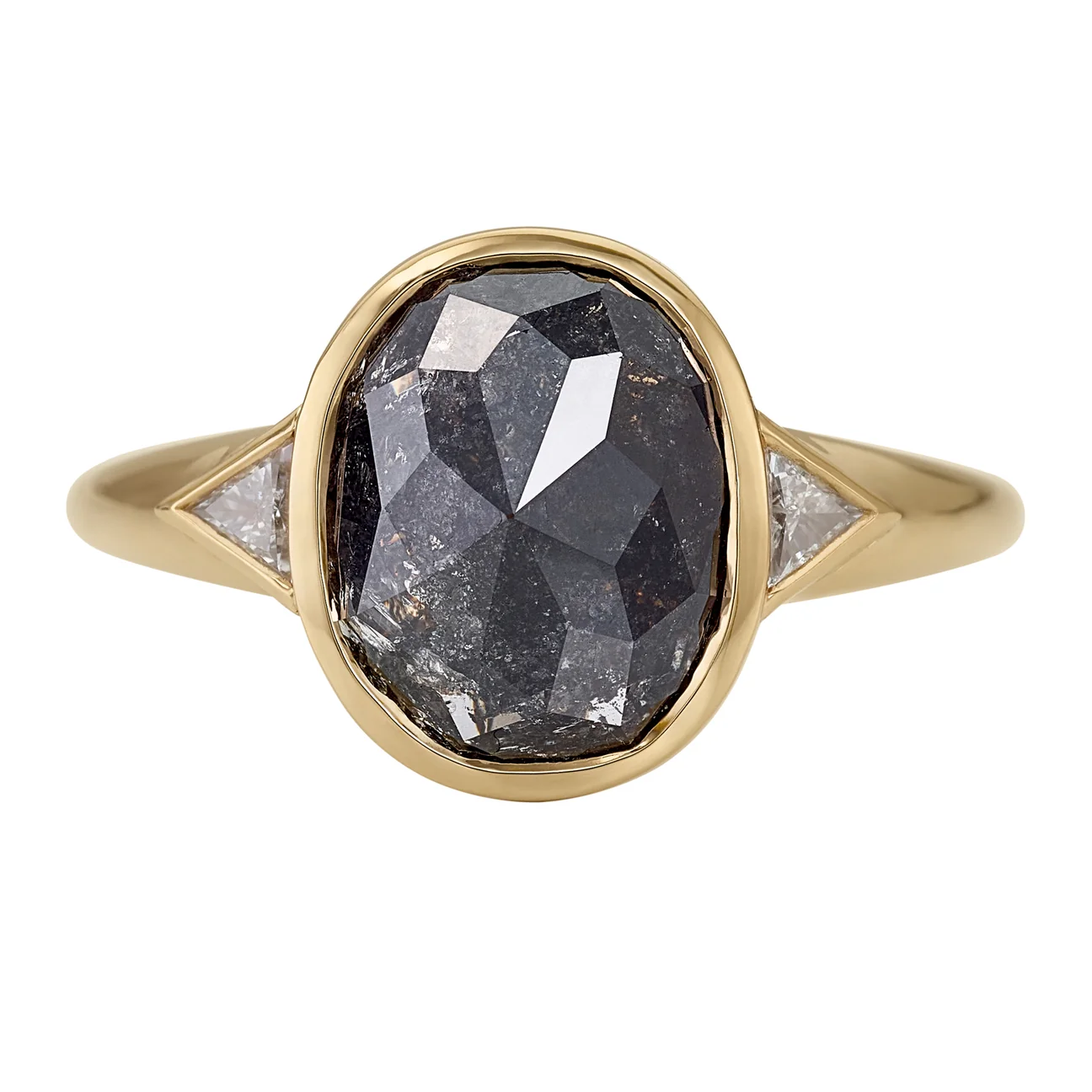
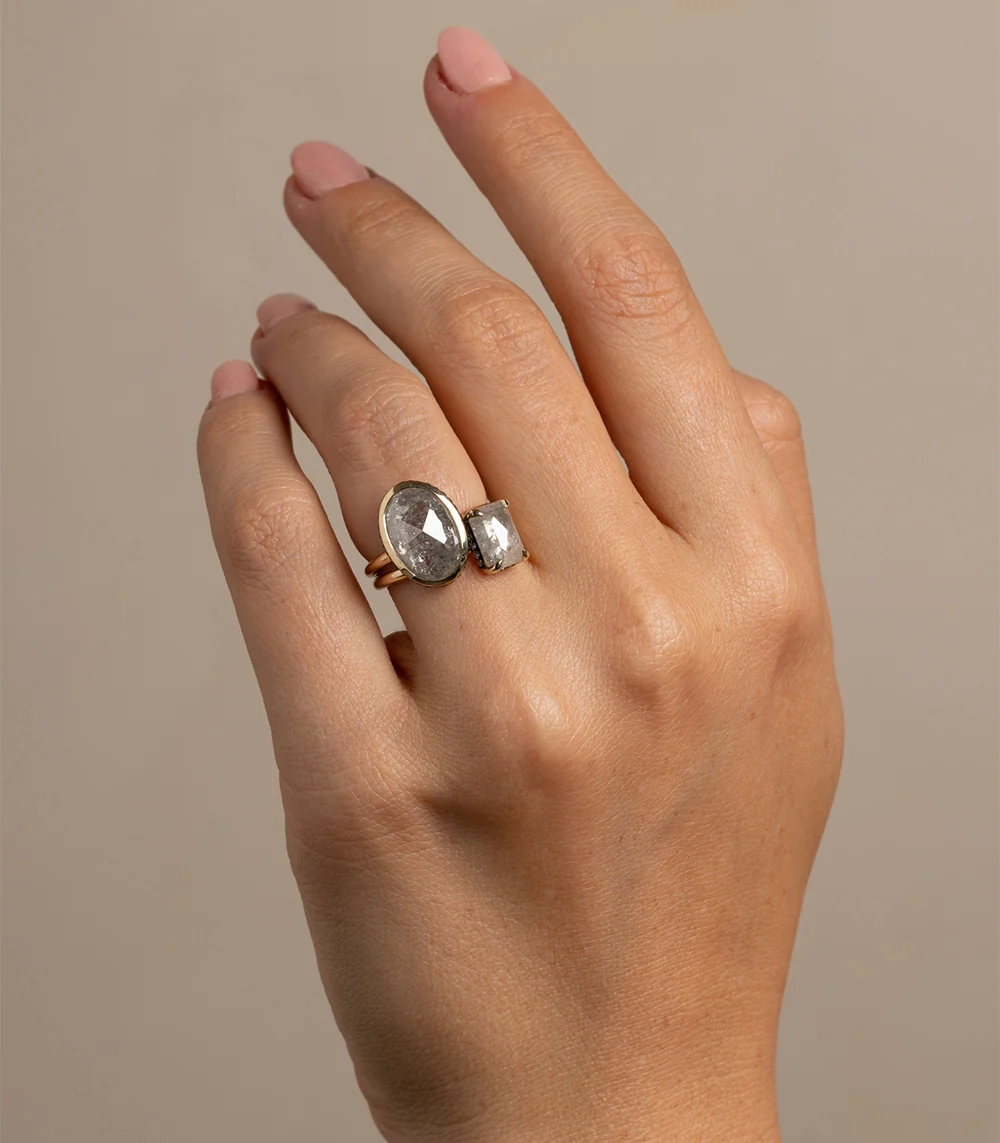
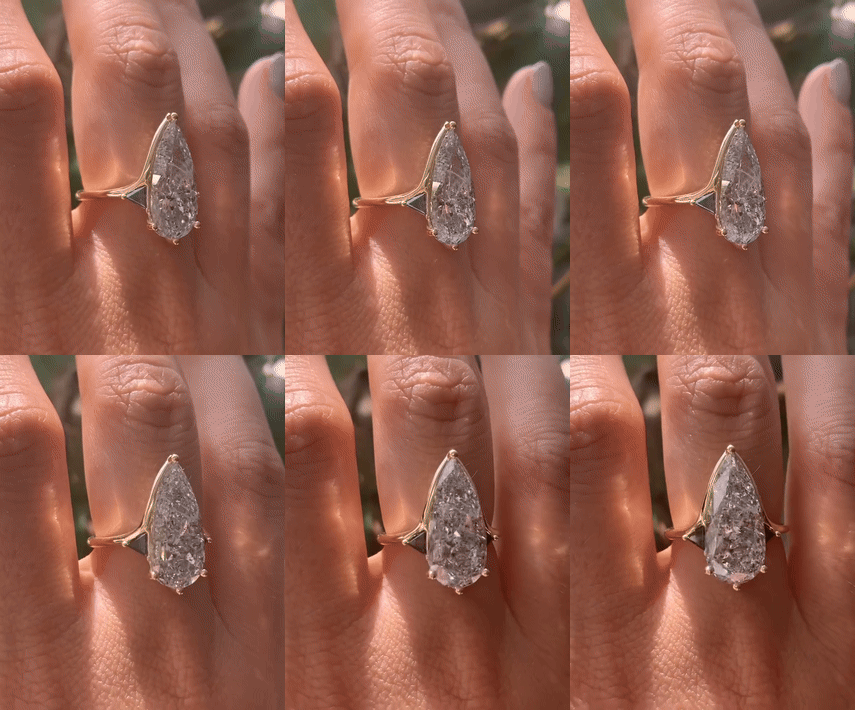
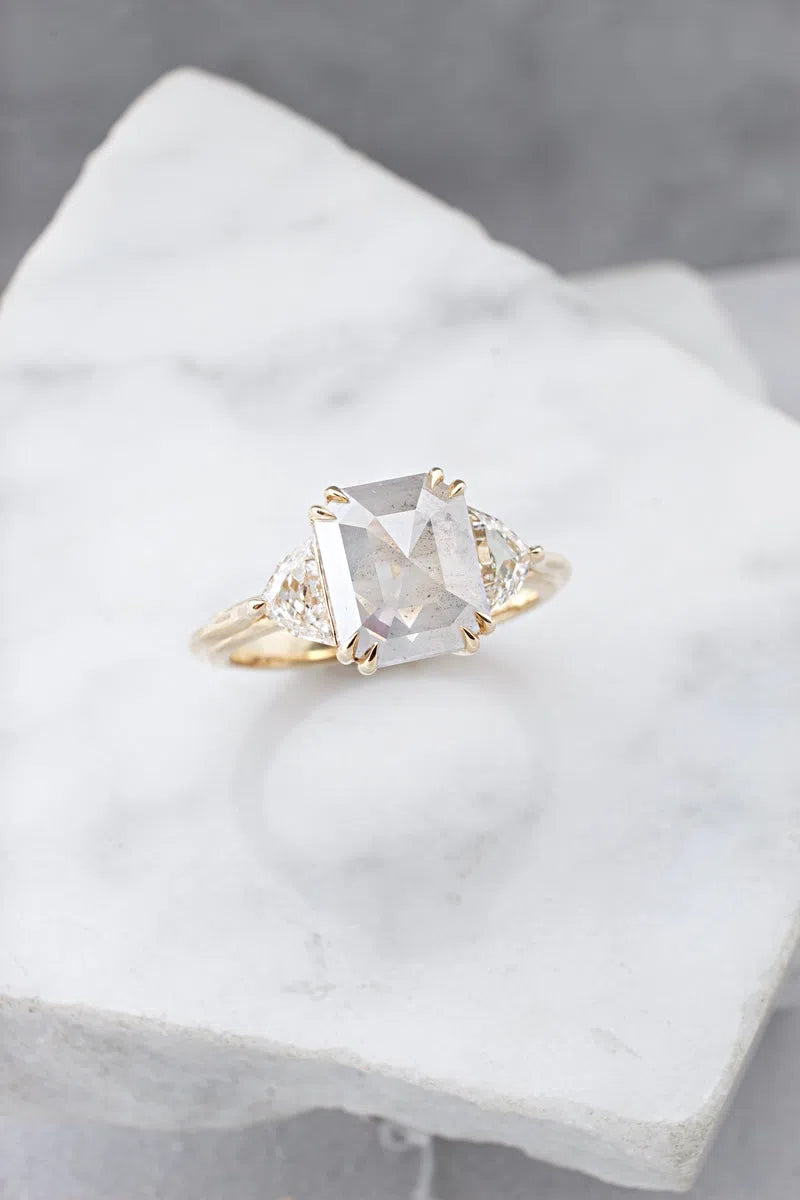
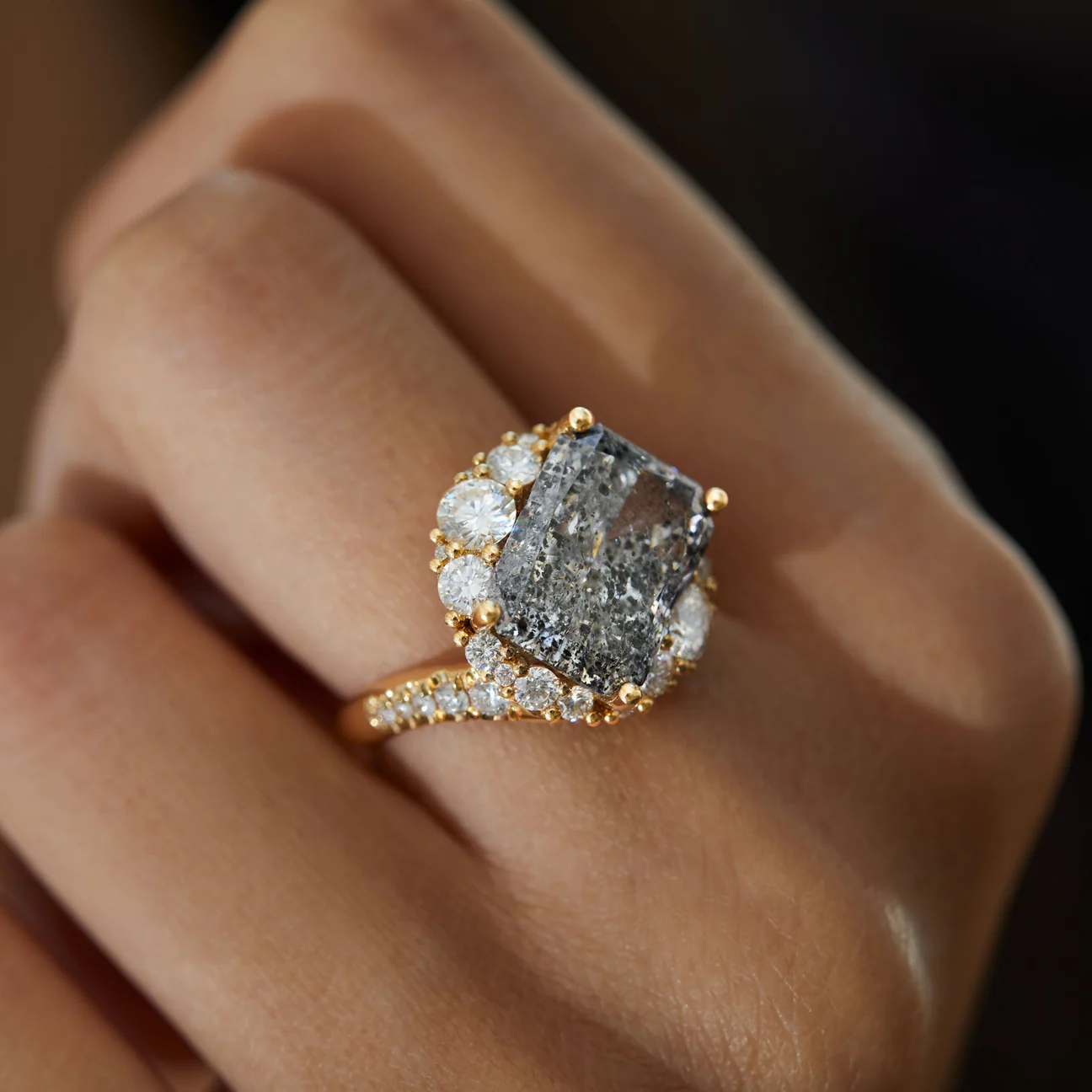
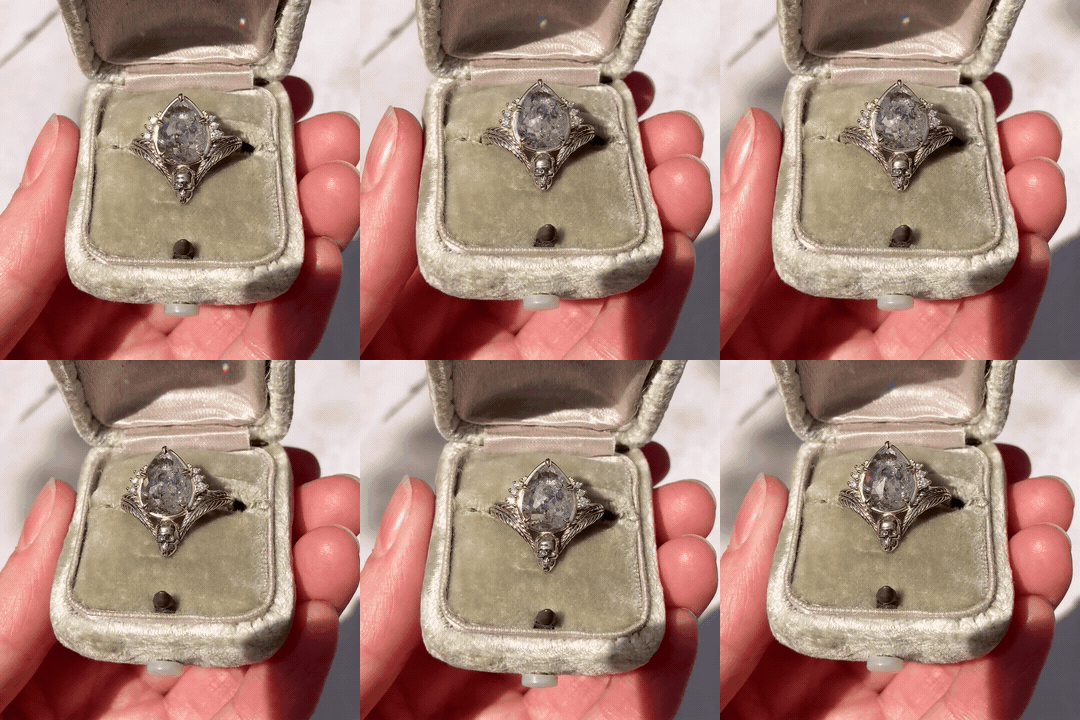
Salt and pepper diamonds aren’t a color in the traditional fancy-color sense at all, they’re diamonds packed with visible black and white inclusions that create a speckled, smoky, sometimes almost galaxy-like effect. Because the inclusions are the entire point, salt and pepper diamonds get graded differently than white or fancy-color stones: clarity isn’t a concern, and cutters actually shape the stone to highlight the inclusions rather than maximize brilliance, which is why fancy cuts like hexagons, kites, and rose cuts show up so often in this category. A diamond with a heavier concentration of black inclusions reads more gray overall, sometimes marketed separately as “fancy gray” or “included gray.” Because salt and pepper diamonds fall outside the traditional value scale built around clarity, they’re also typically far more affordable than a comparably sized white or fancy-color diamond, which has made them one of the fastest-growing choices for couples who want something individual without the price tag that usually comes with it.