More couples are separating the legal side of getting married from the celebration of it entirely, quietly making things official at the courthouse months before the bigger event, often a destination wedding, actually happens. It turns the legal paperwork into its own small, private moment rather than a footnote squeezed into a much bigger day. It frees up everything that comes later to be purely about the emotional and aesthetic experience of the wedding itself. Other times, the courthouse appointment is the whole event, a small circle of family and friends along for the ceremony, followed by a dinner out to celebrate. Either way, the outfit still matters just as much as it would for a bigger day, arguably more, since it’s doing all the visual work a whole reception usually would. What follows are the directions worth considering before your own trip to city hall.
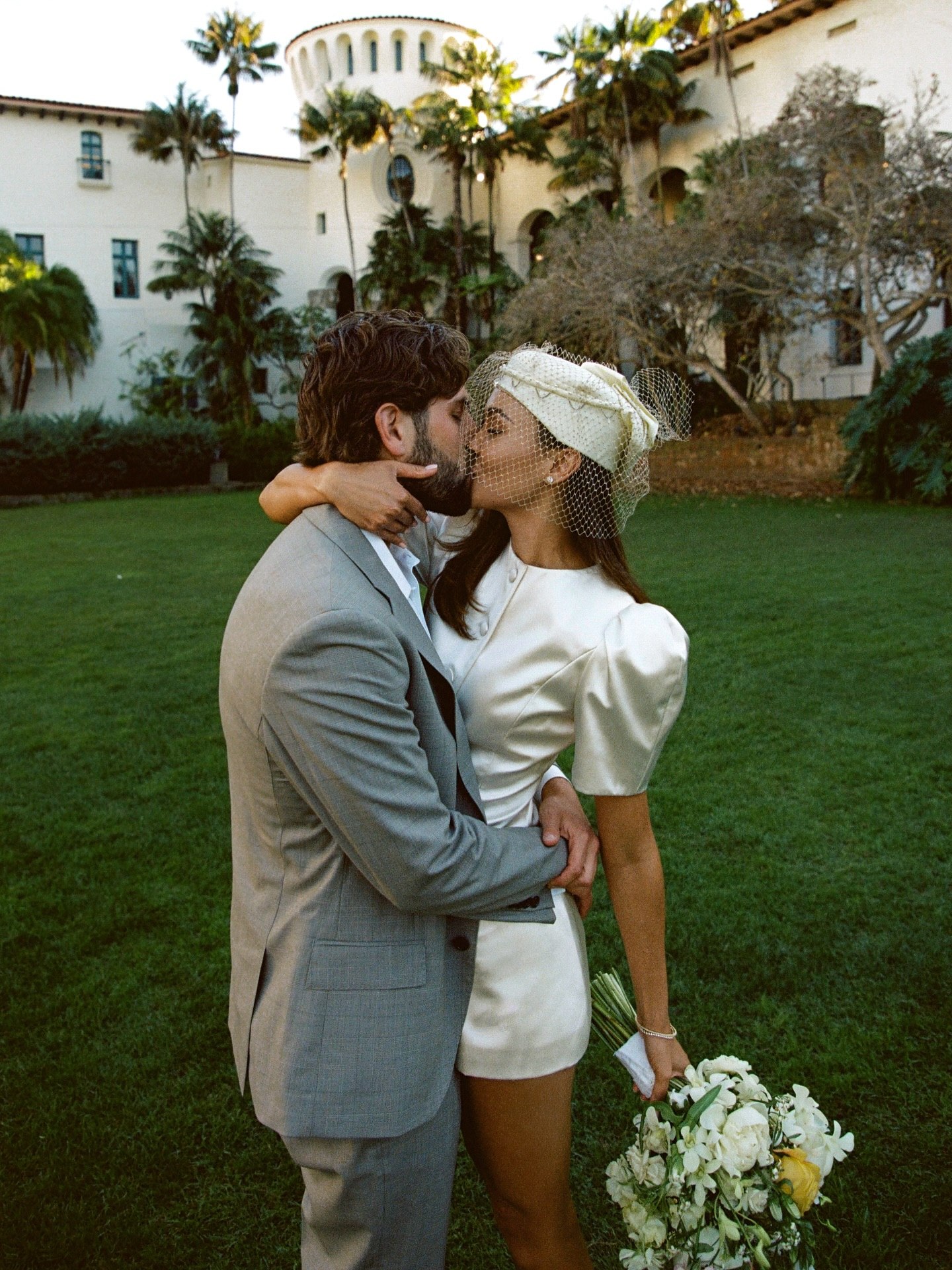
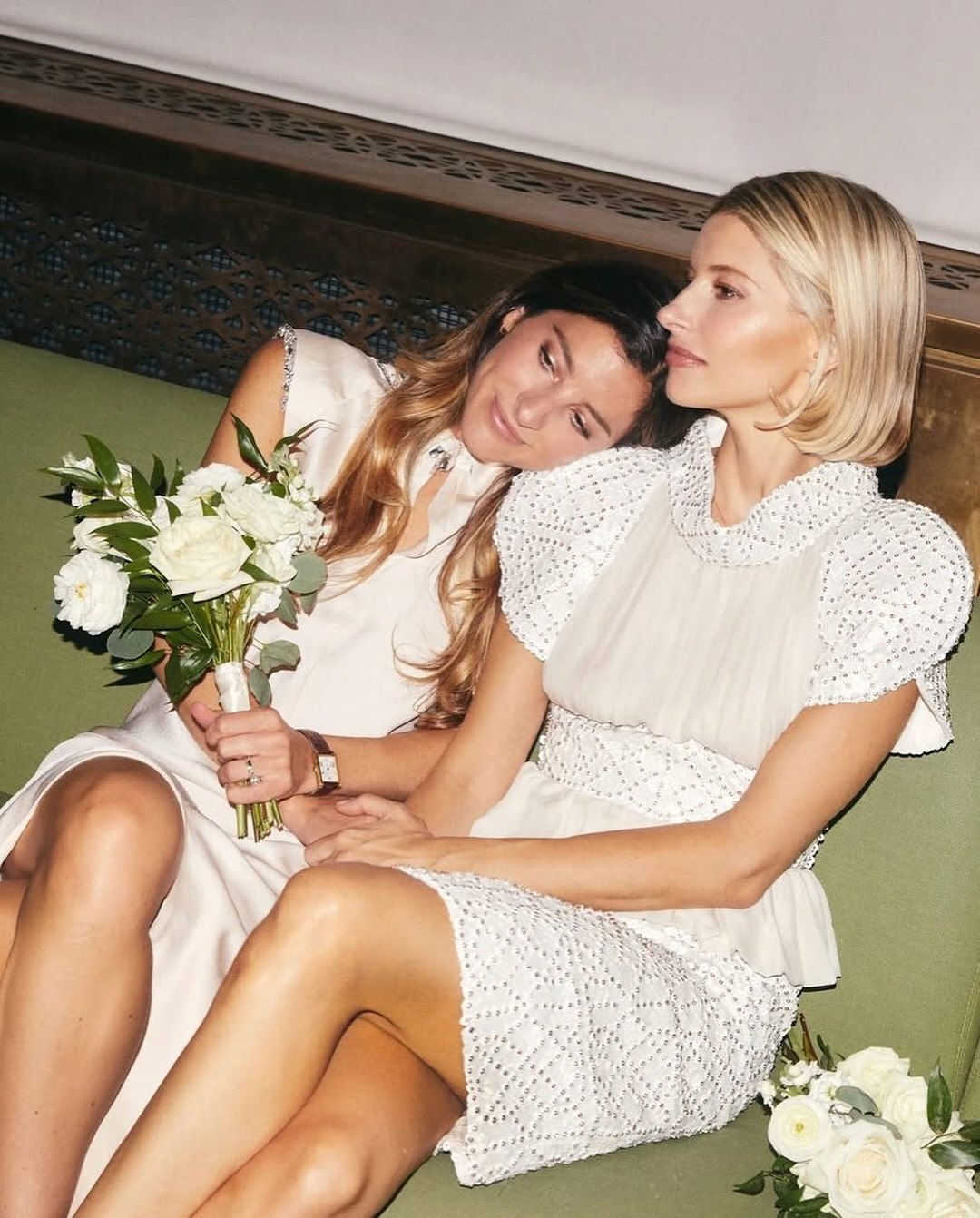
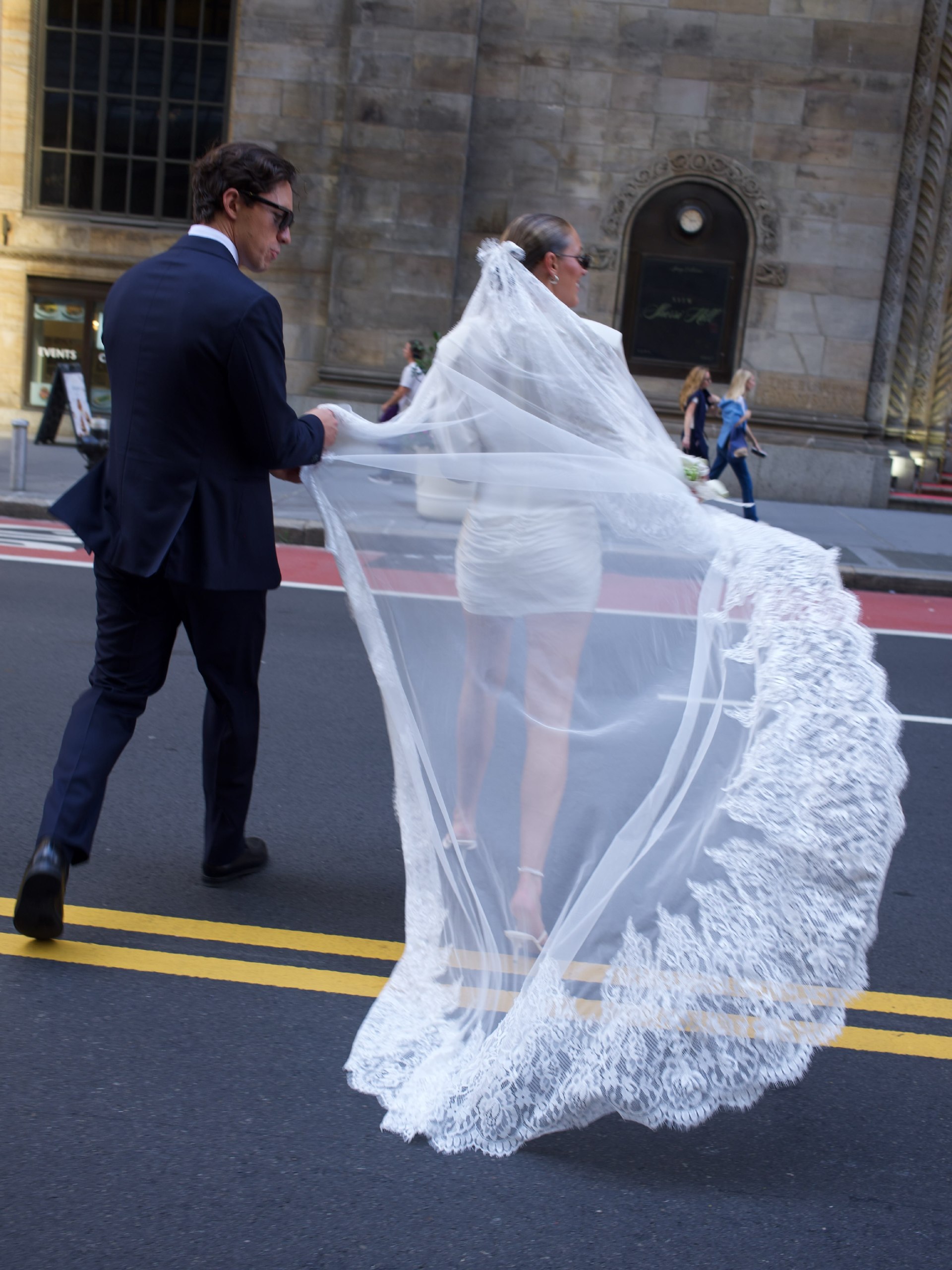
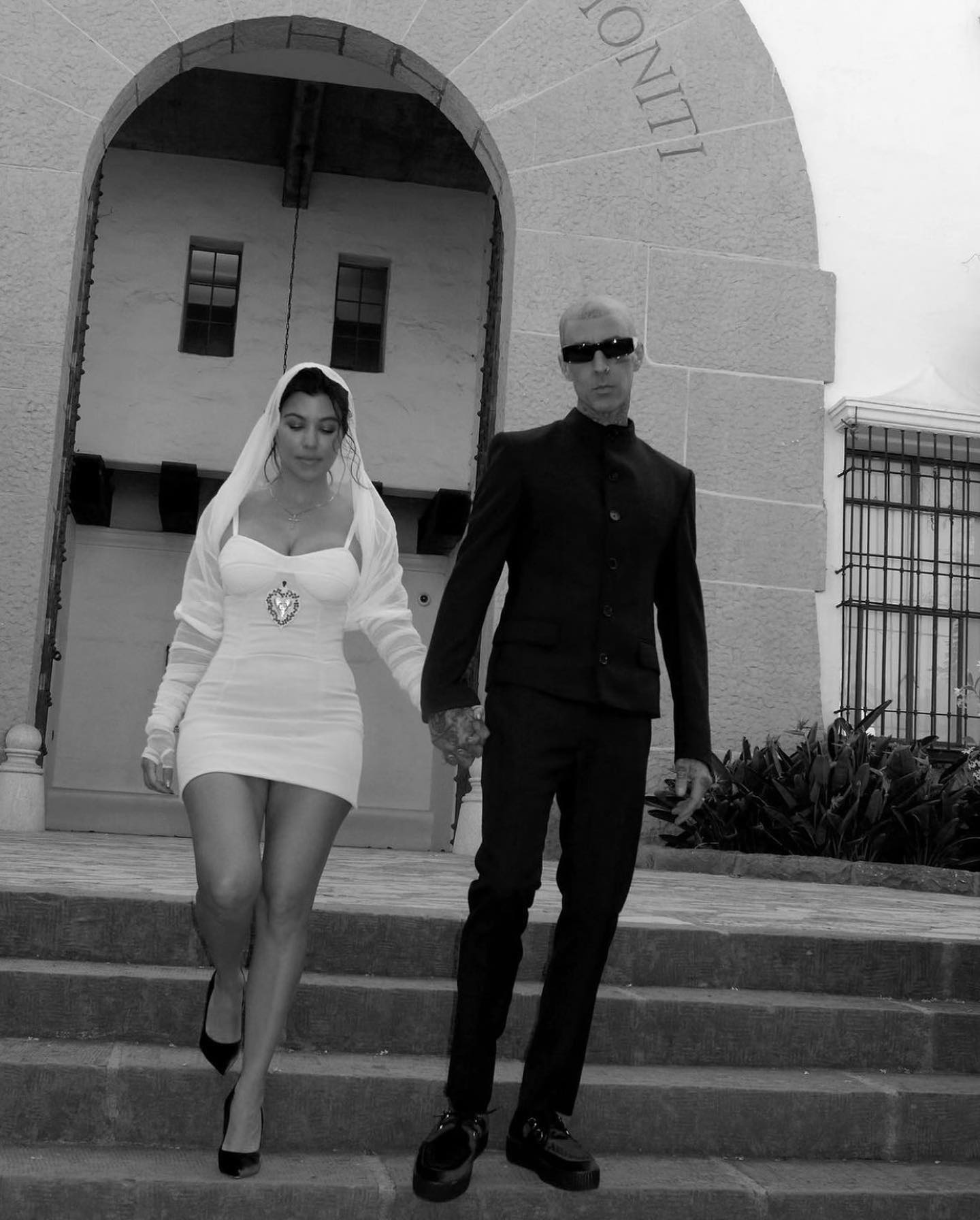
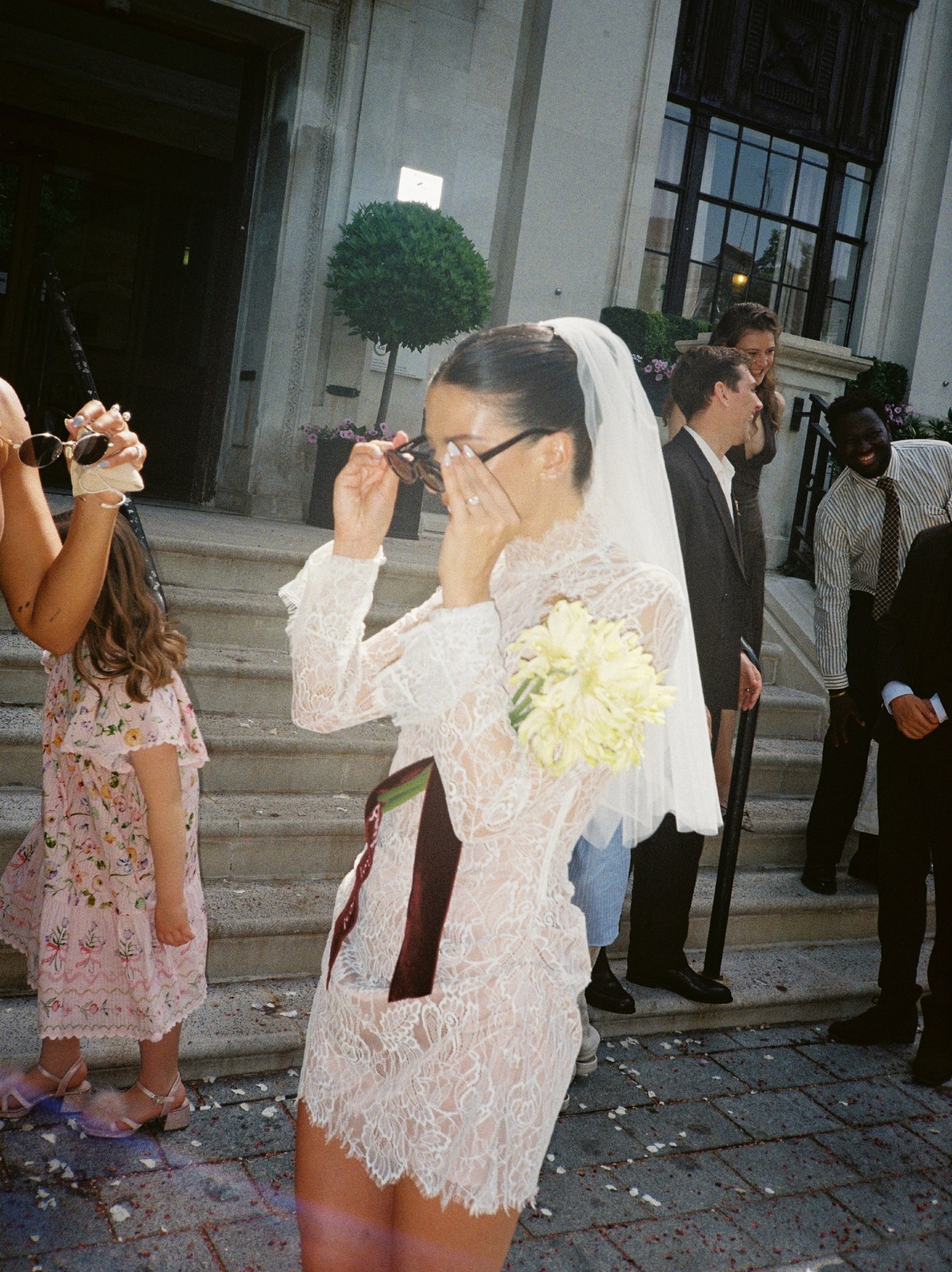
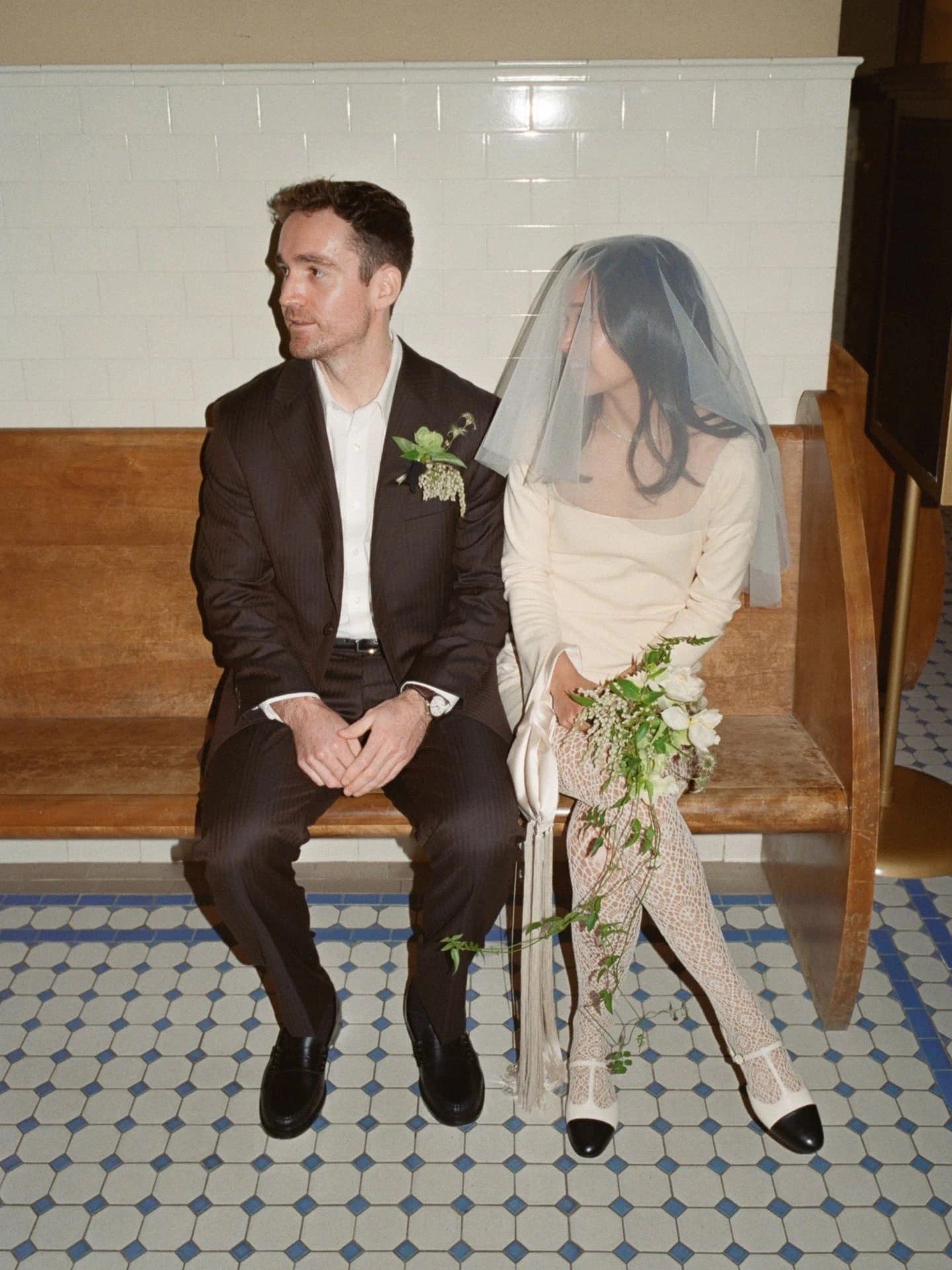
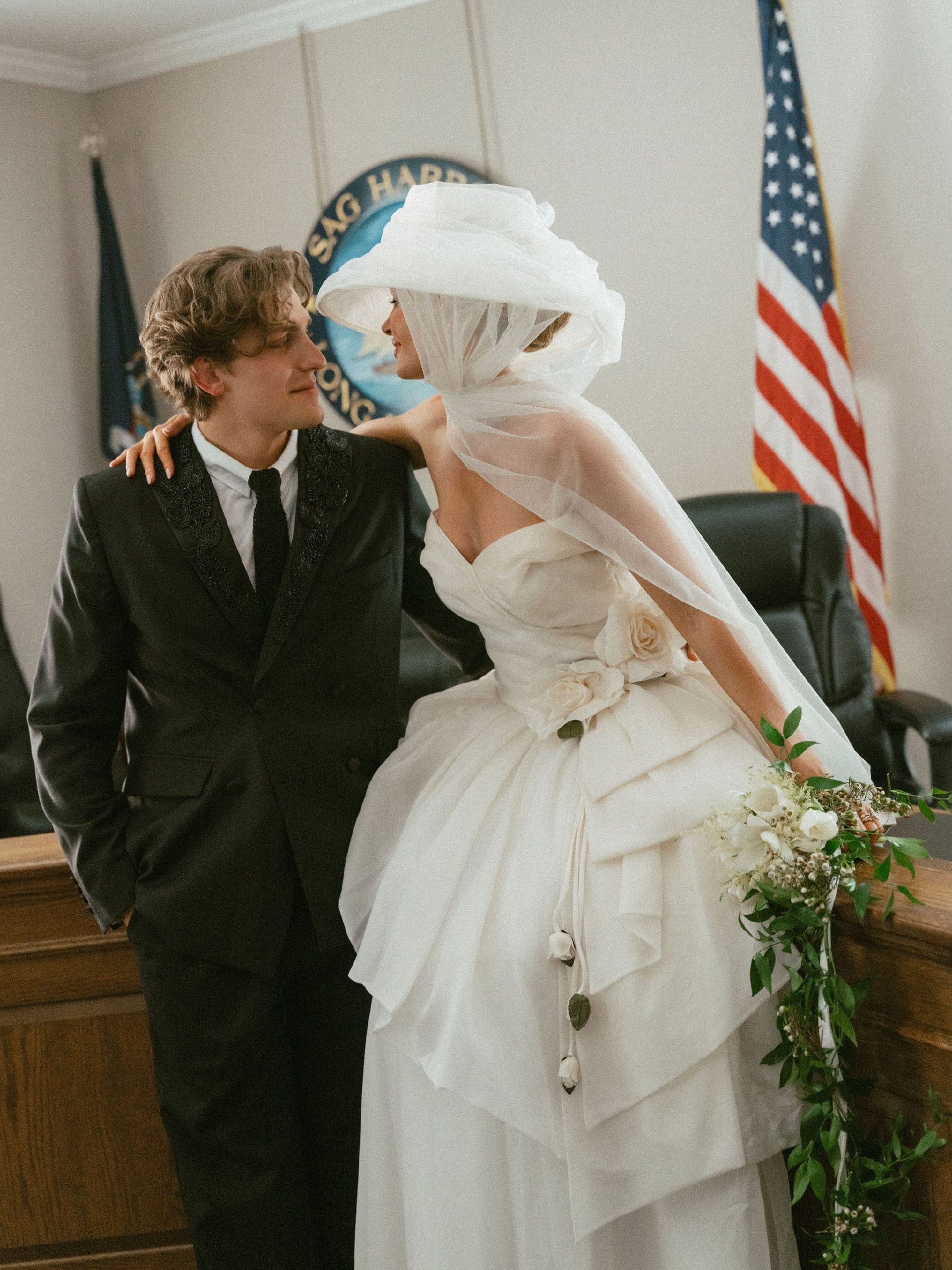
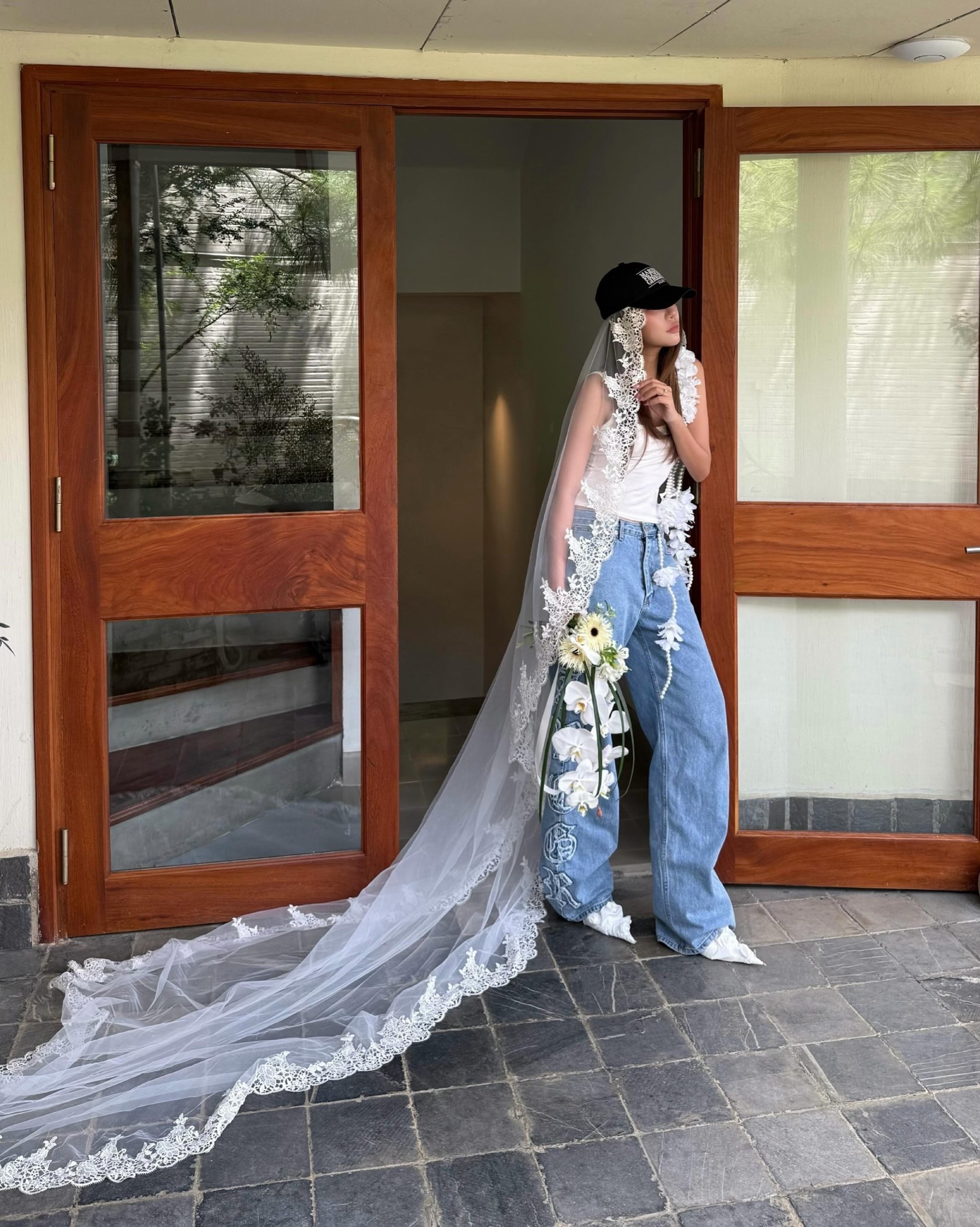
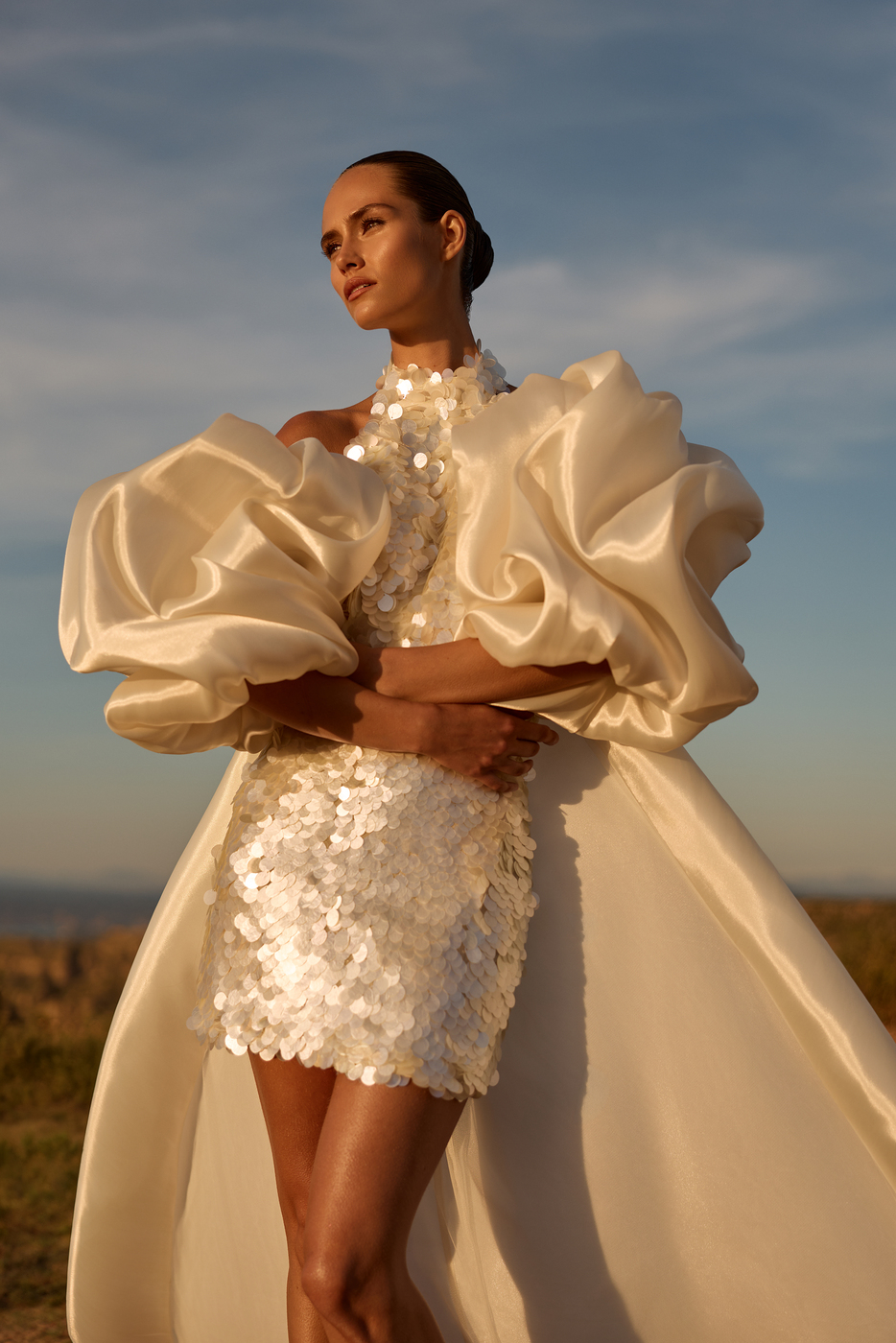
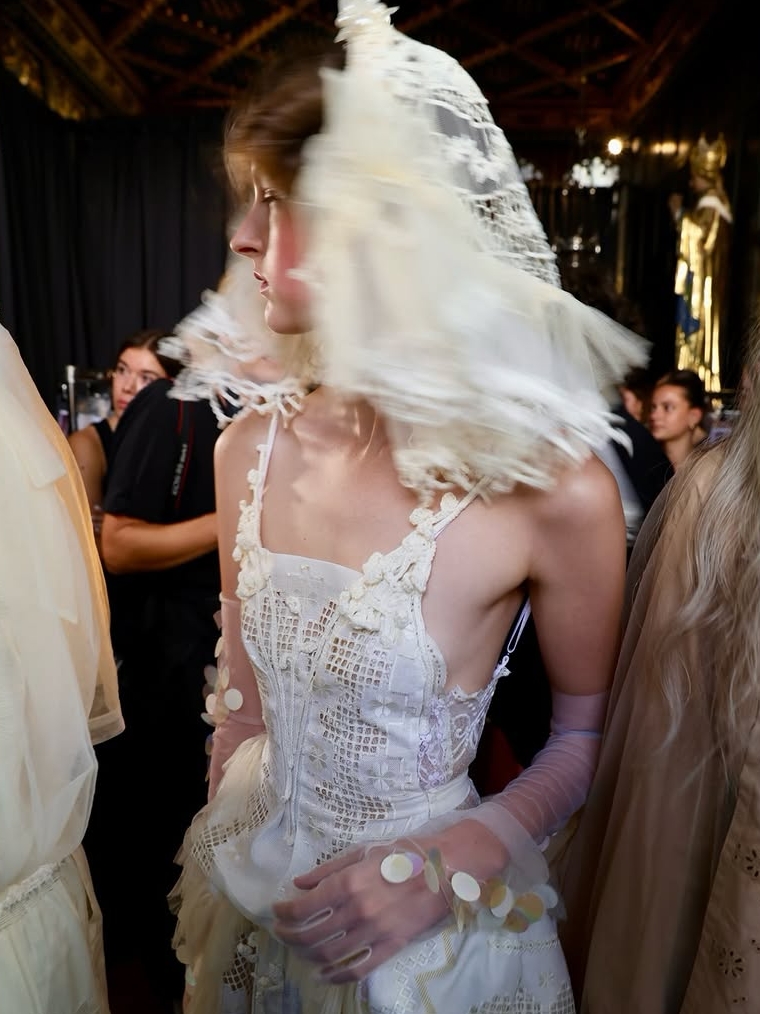
A mini dress does something a courthouse wedding rewards specifically: it moves easily through a government building, up stairs, through security, into a small elevator, without anyone managing a train. A short hemline also reads as a genuine style choice rather than a compromise, especially in a fabric with real presence, sequins, a bold lace, a graphic cutout. It photographs cleanly against the plain marble and municipal architecture most courthouses have, since there’s less fabric competing with the backdrop. For a more dressed-up version, a long veil worn over a short dress creates real contrast, unexpected drama against something otherwise simple and practical. It’s usually the fastest way to make a courthouse look feel like an actual fashion moment.
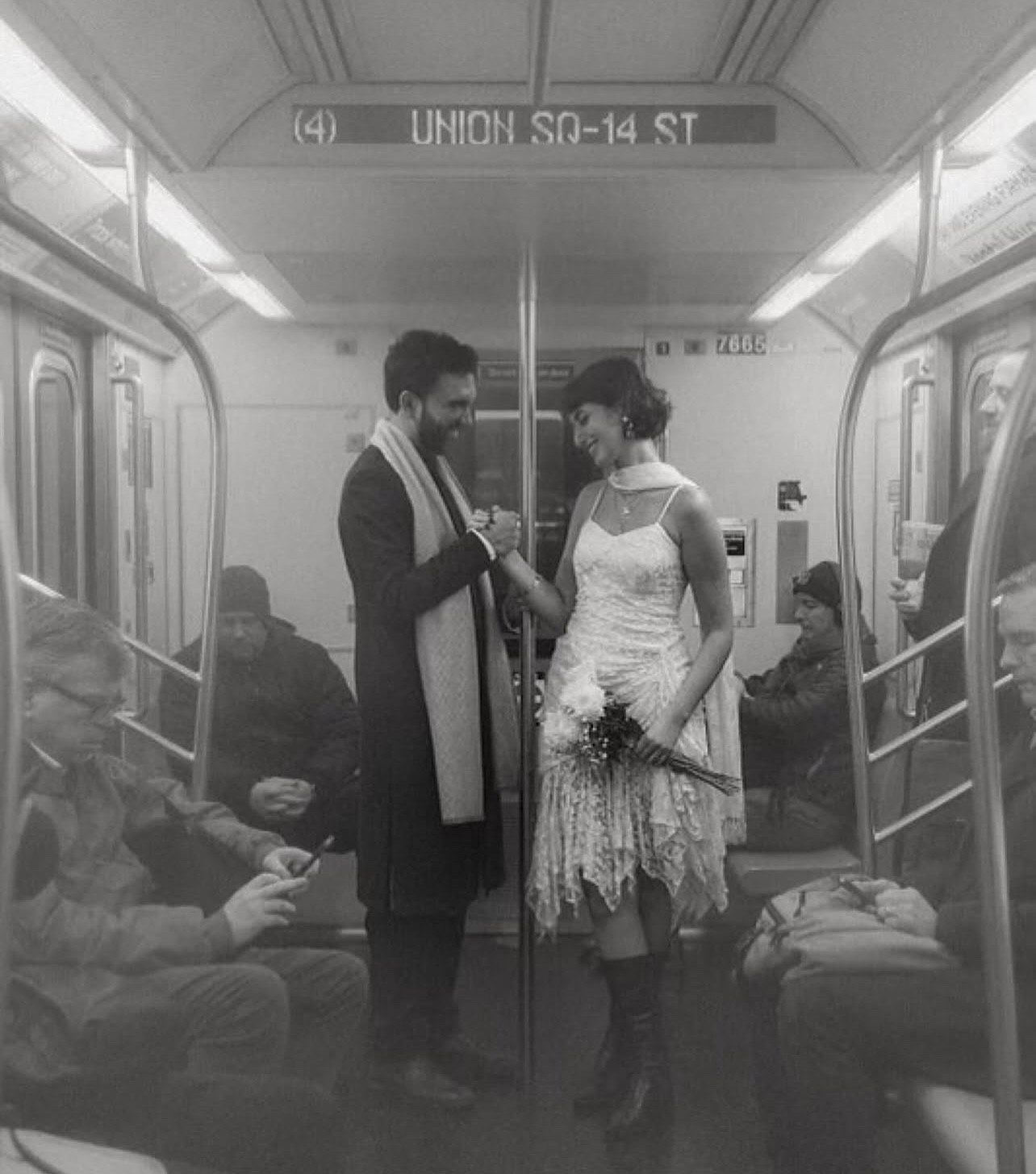
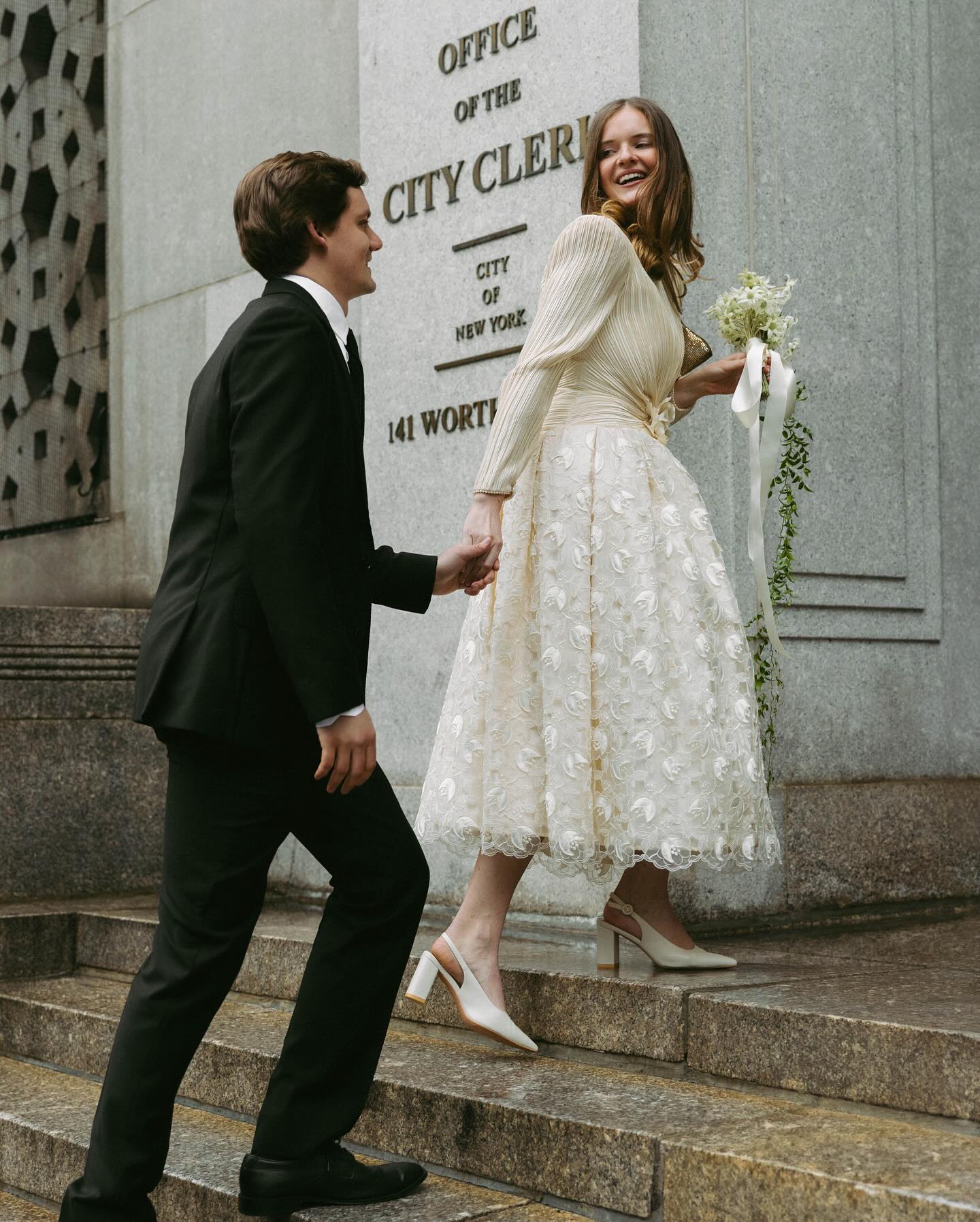
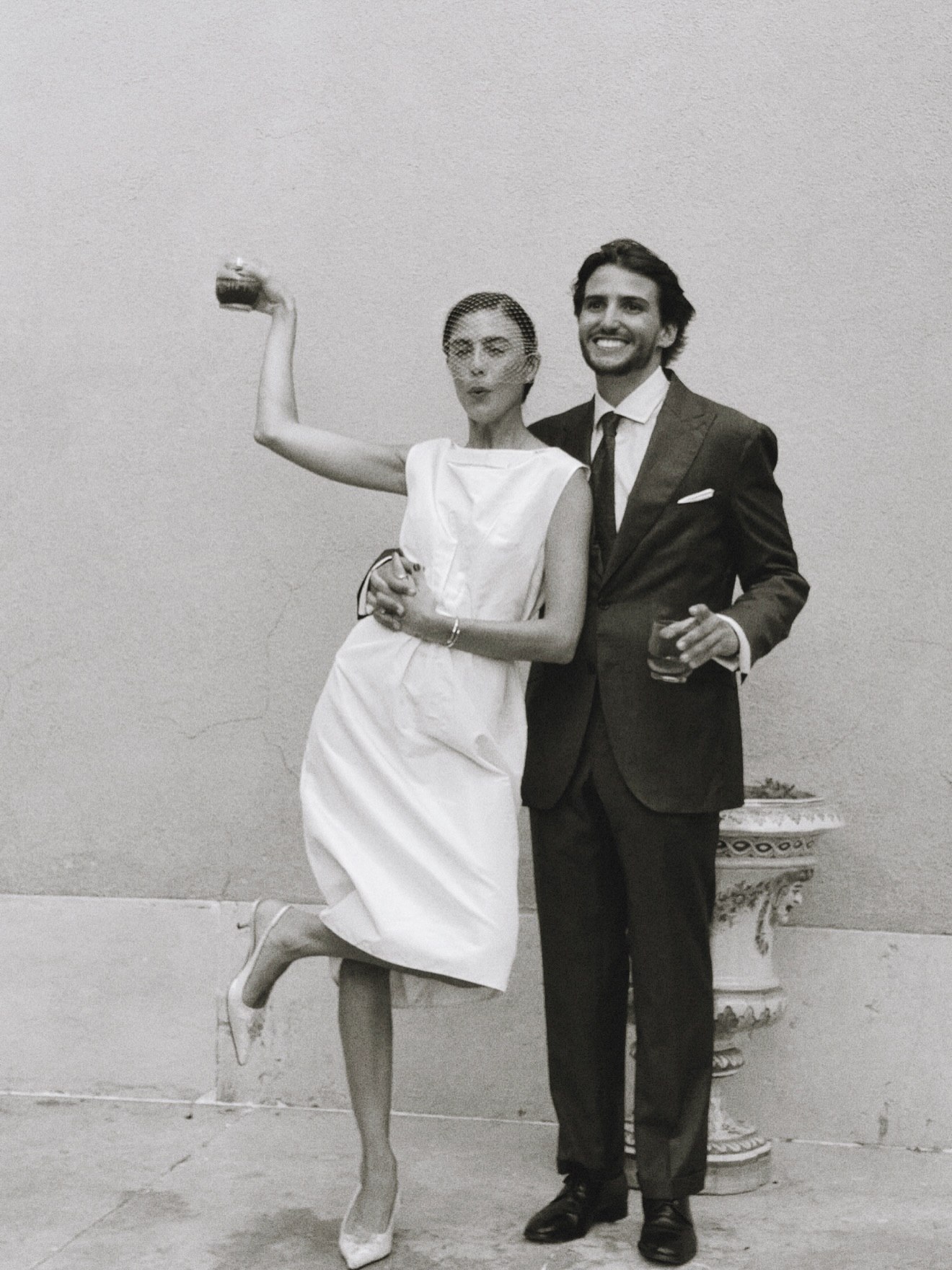
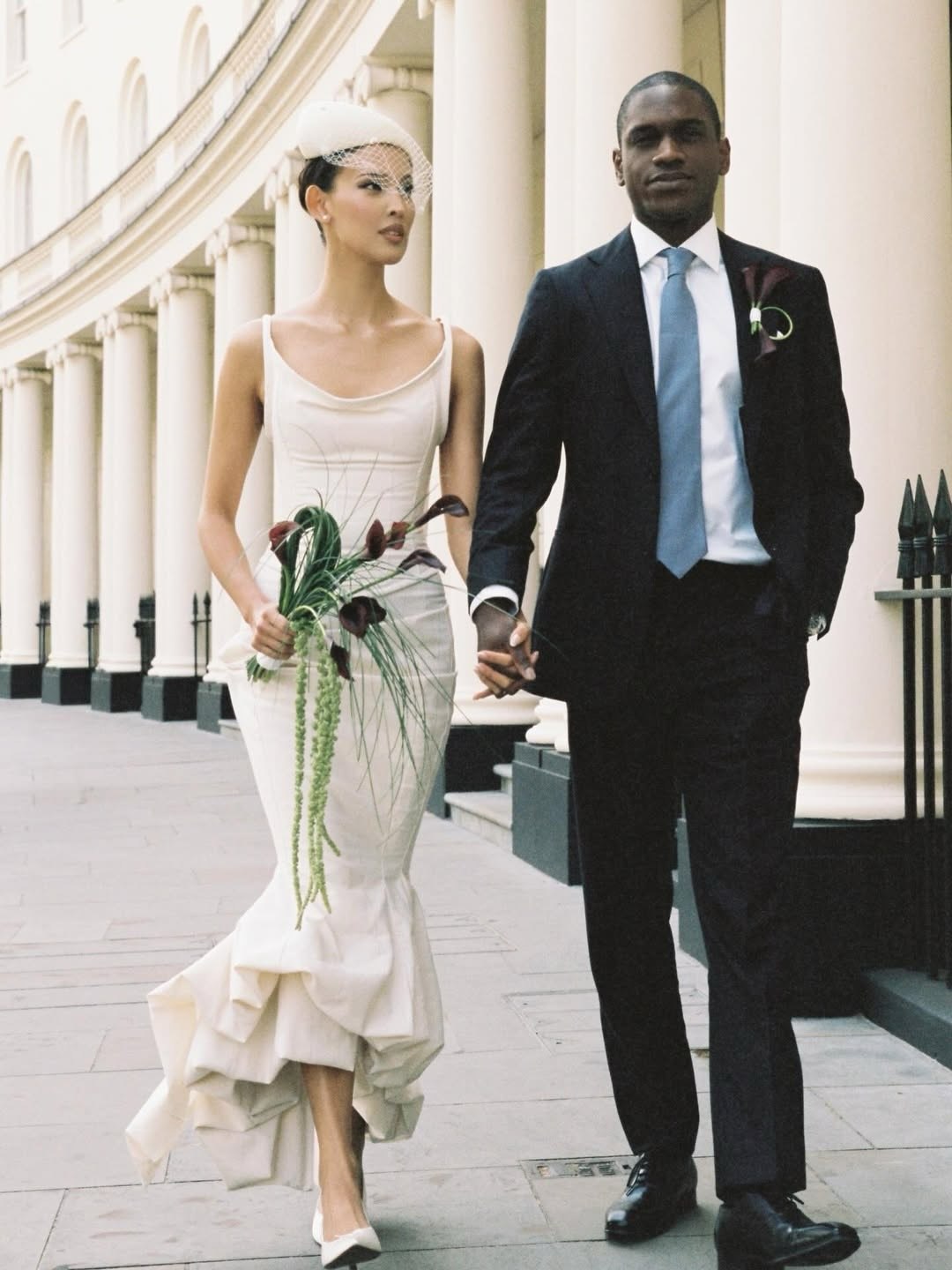
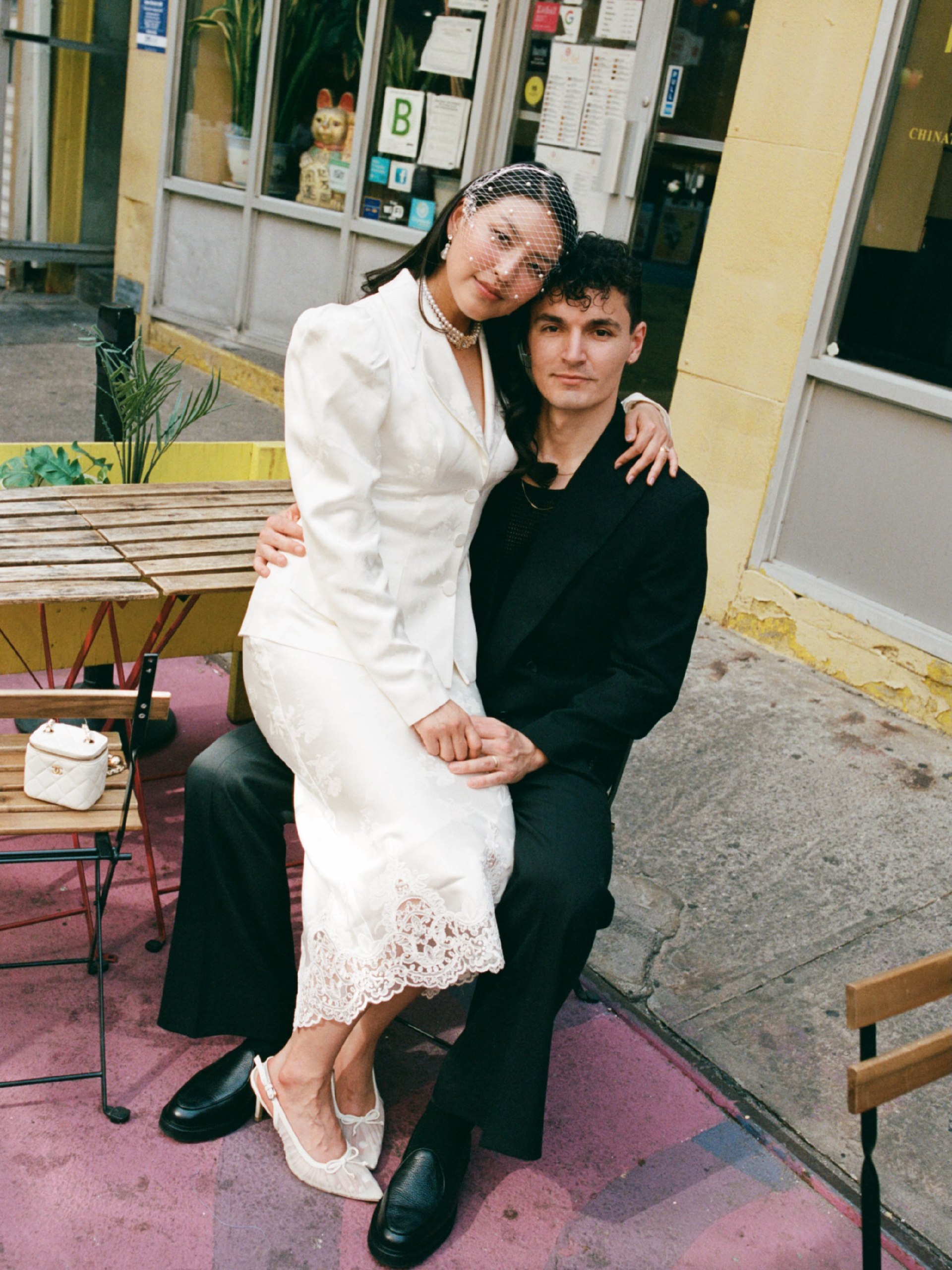
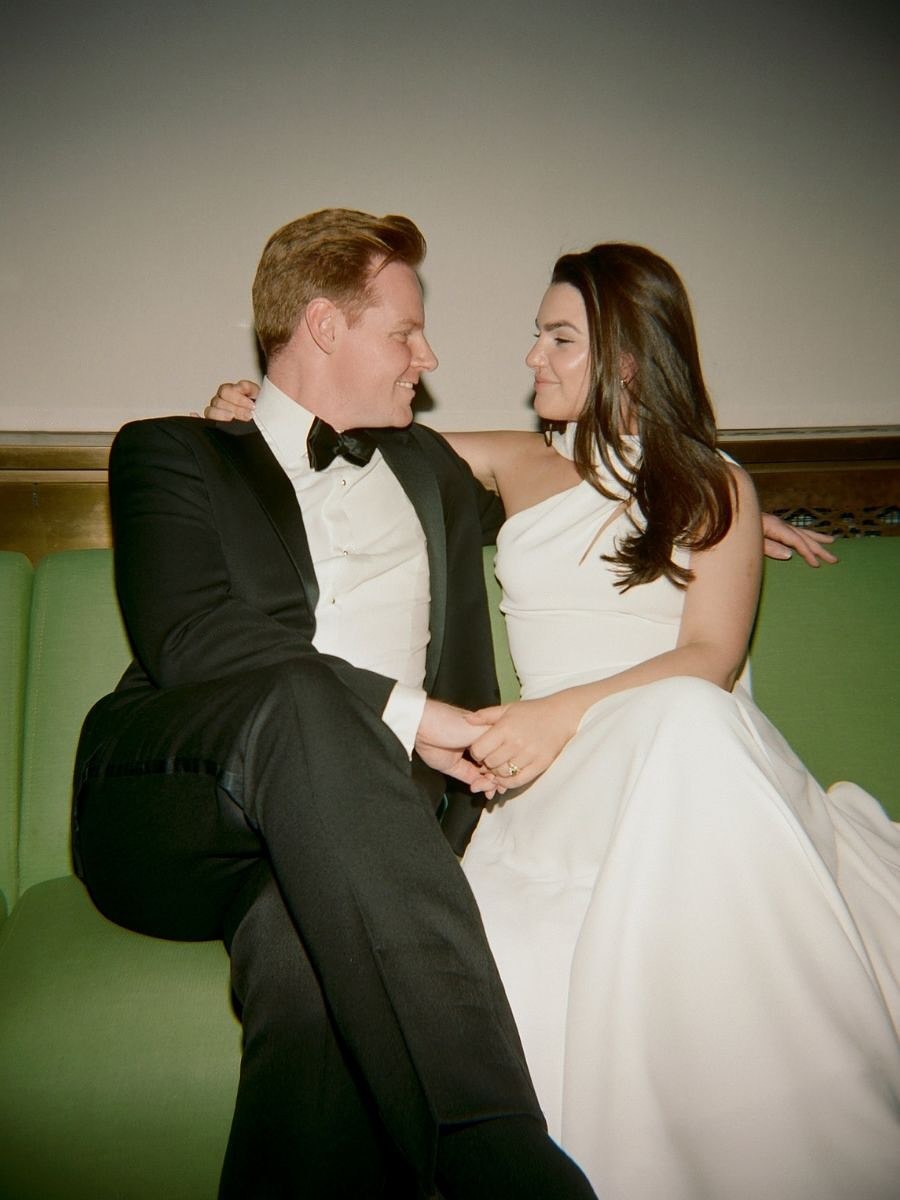
The midi length splits the difference between a mini’s ease and a gown’s formality, landing somewhere that reads polished without looking like it’s trying too hard for a government office. A fitted silhouette in a solid, saturated color, or a soft, structured white, tends to work best. It’s a genuinely versatile choice too: the same dress that photographs beautifully on courthouse steps can transition straight into a dinner with friends and family afterward without a single change, which matters for a bride who isn’t planning a second outfit for later in the day.
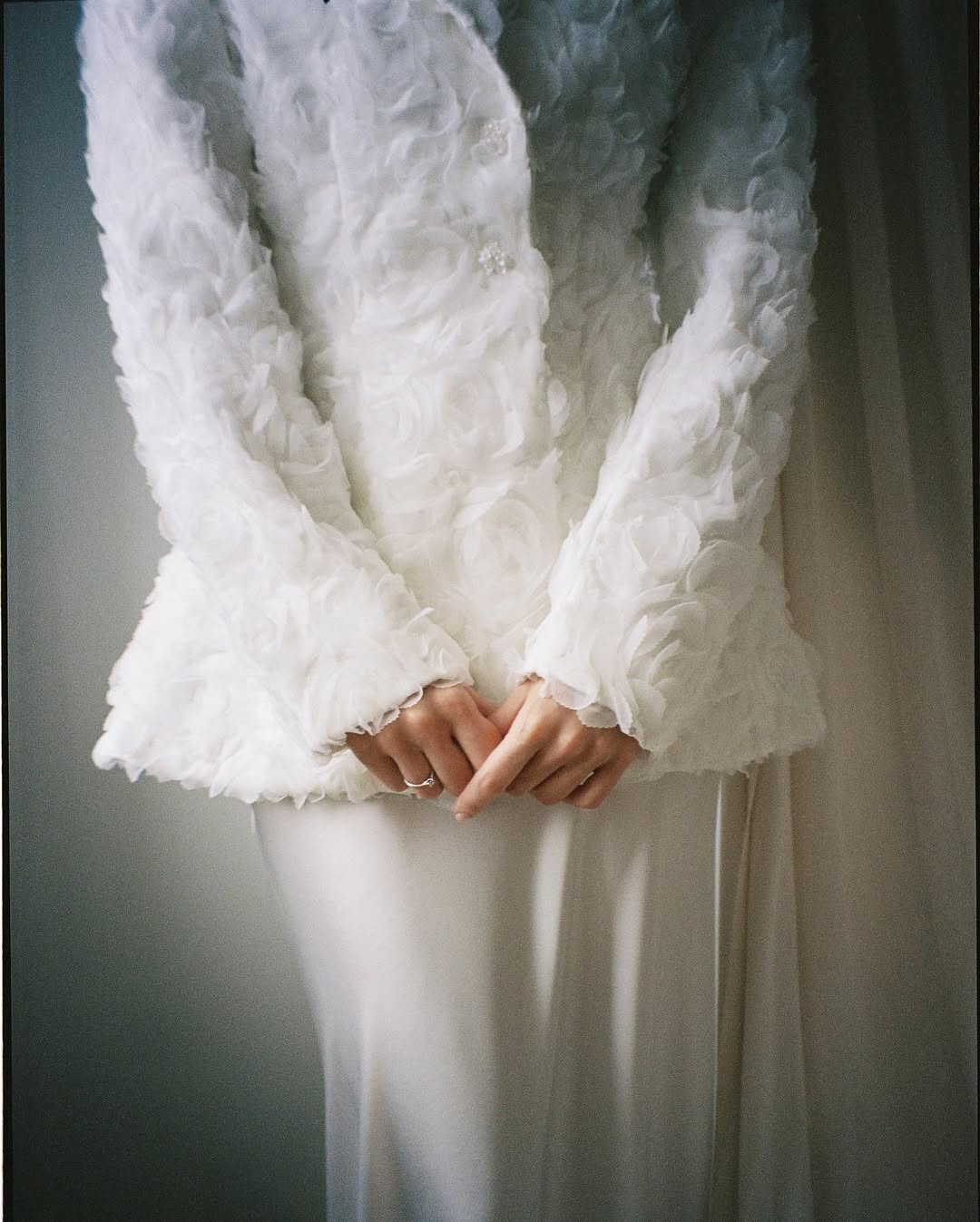
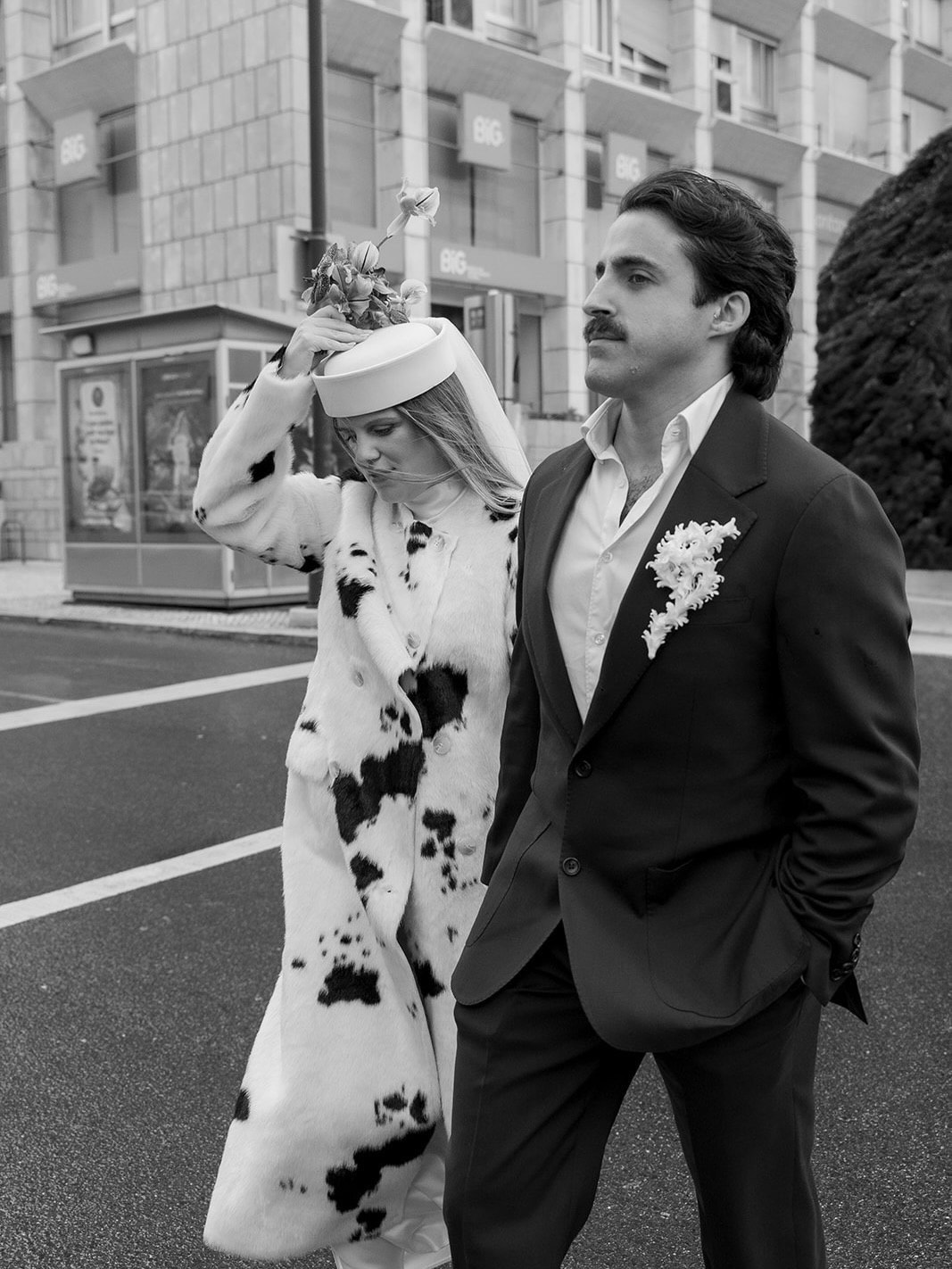
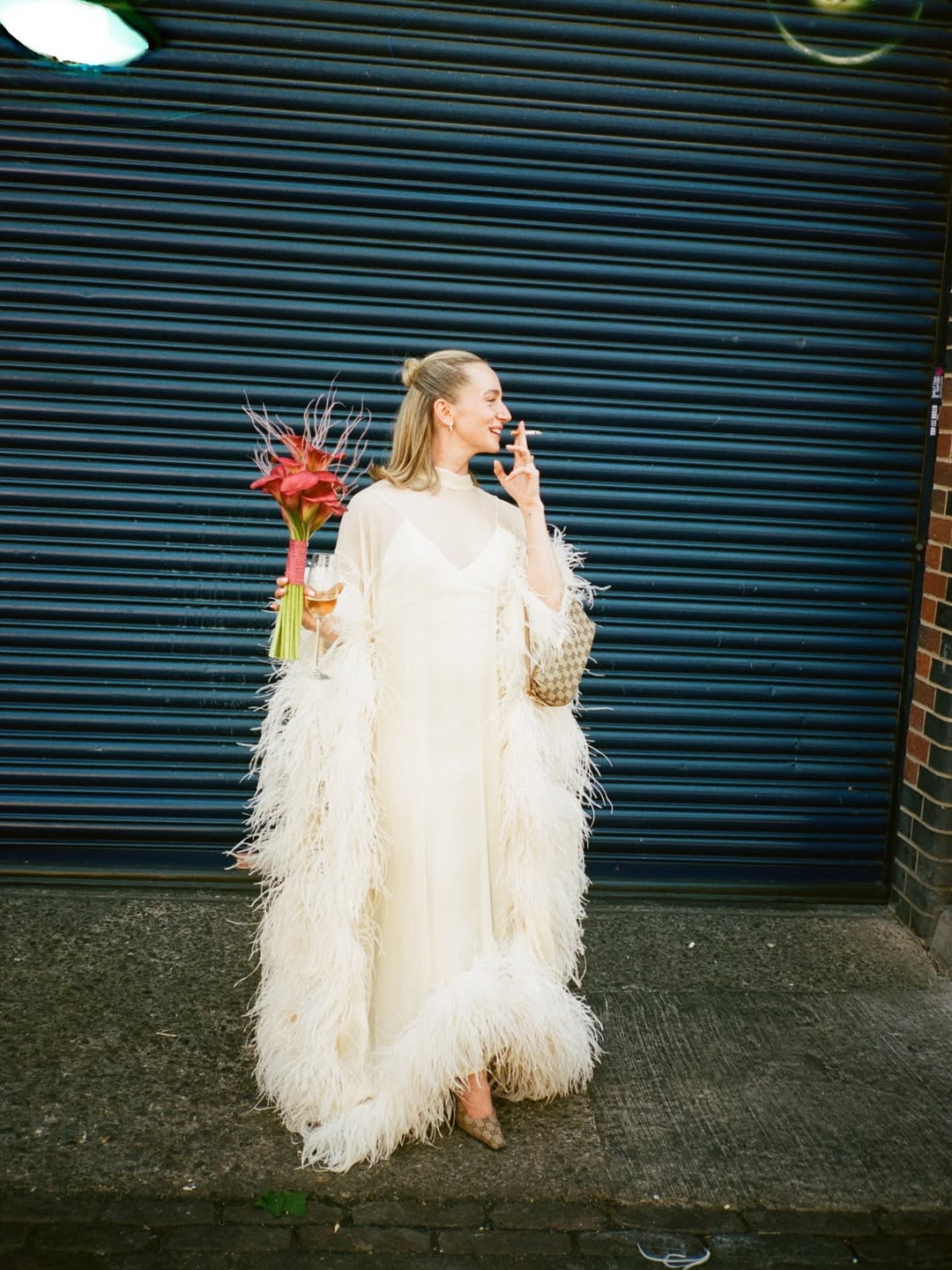
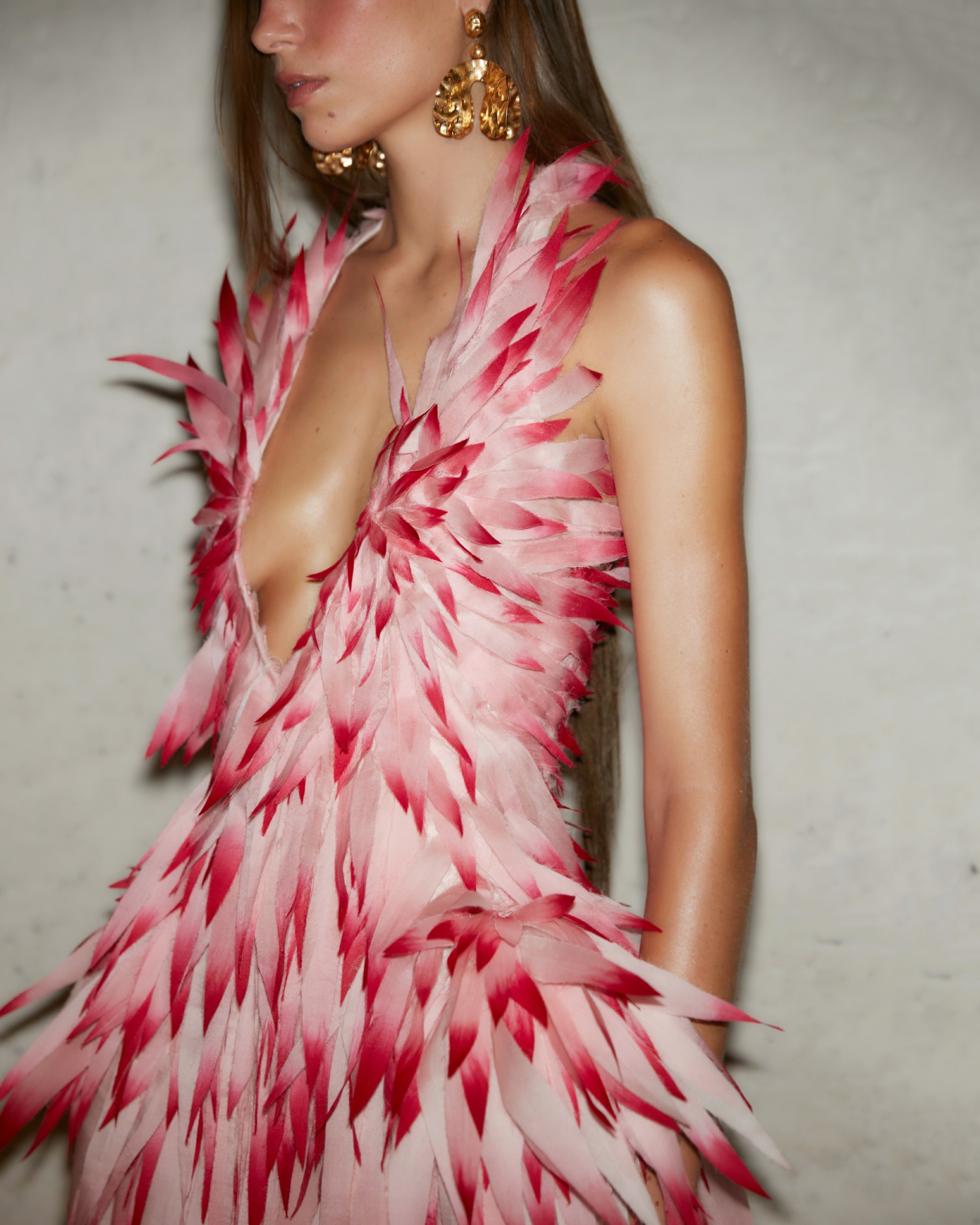
For a courthouse wedding in the colder months, the coat doesn’t have to be an afterthought thrown on for the walk outside; it can be the outfit itself. A heavily textured coat, whether that’s rosettes, feathers, or bouclé, turns even the simplest slip dress underneath into something sculptural. An animal-print coat skips subtlety altogether and reads memorable on a city sidewalk.
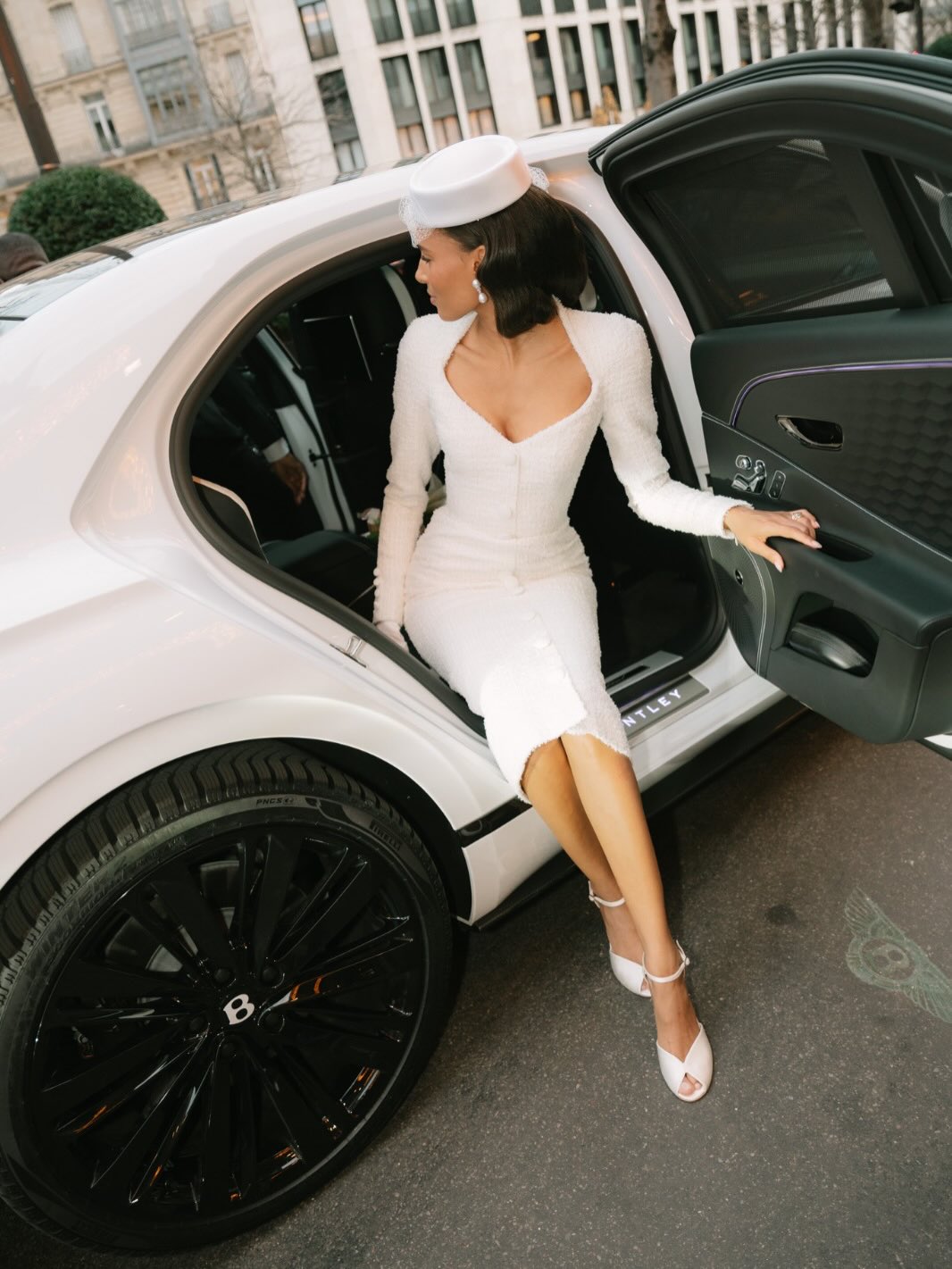
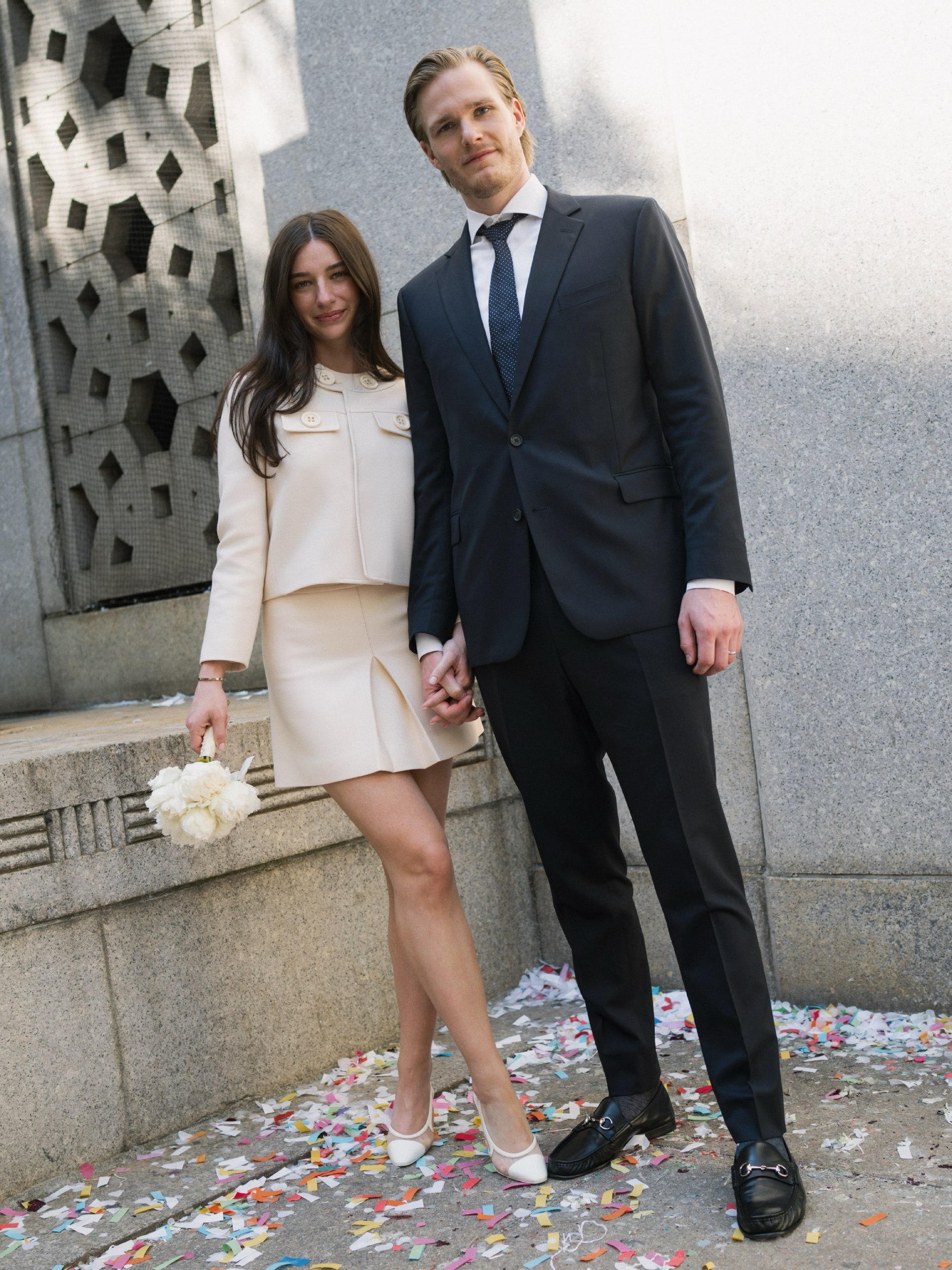
There’s a distinctly retro polish to a matching jacket-and-skirt set. A cropped jacket over a mini skirt keeps things playful and flirtatious, especially next to the longer pencil skirts elsewhere in this roundup, while a long-sleeved jacket in a more structured cut leans straight into Chanel-meets-Jackie territory.
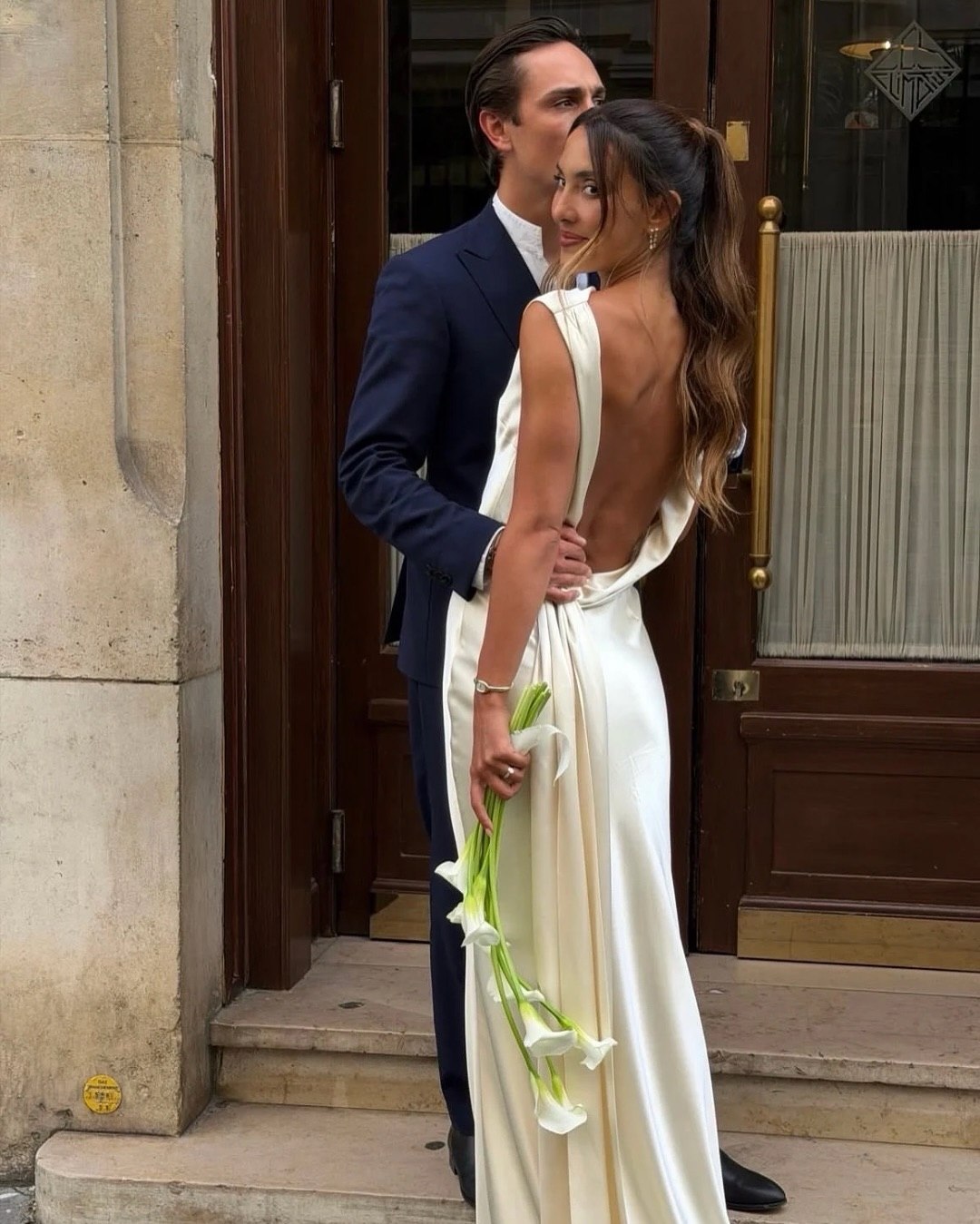
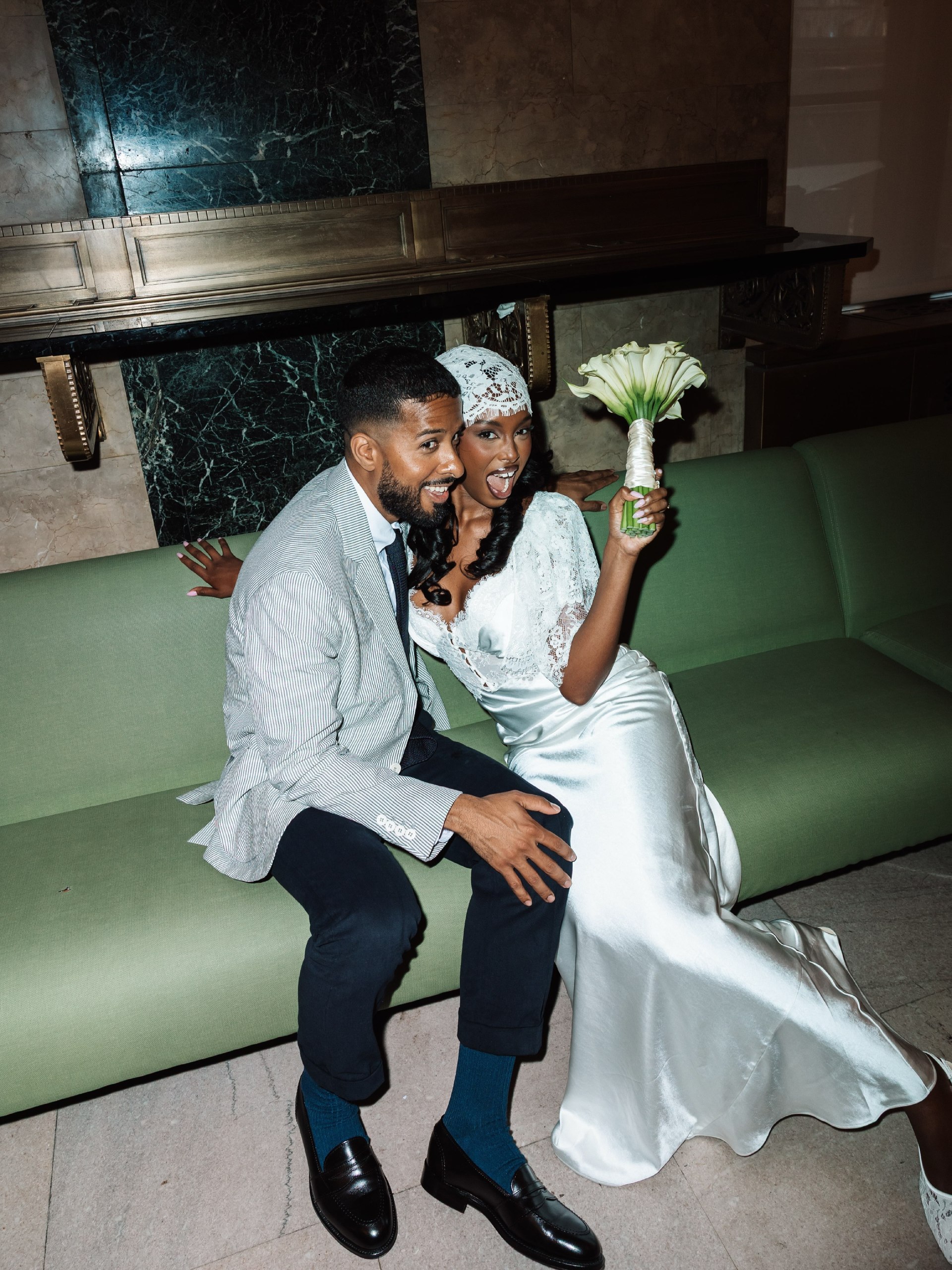
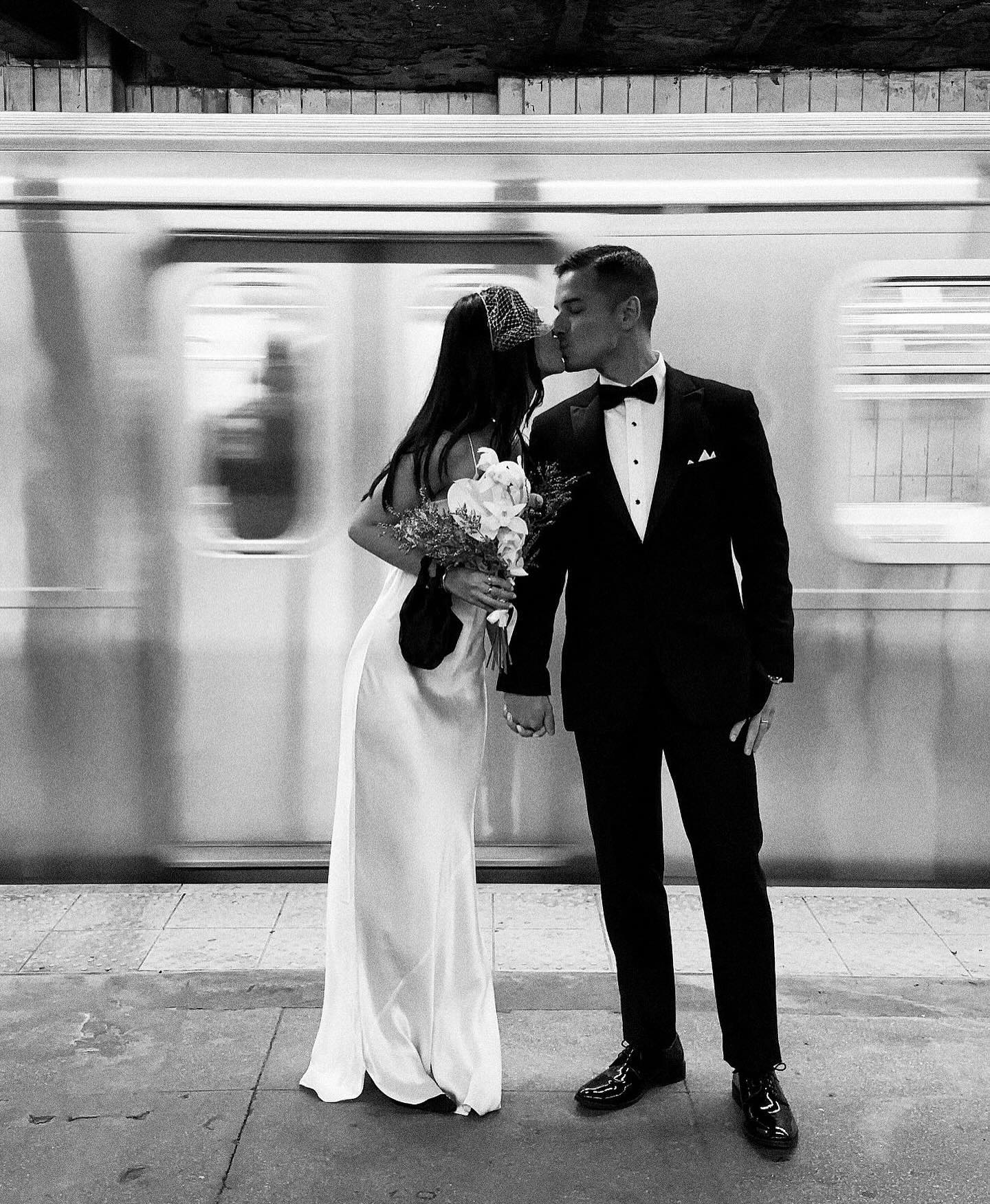
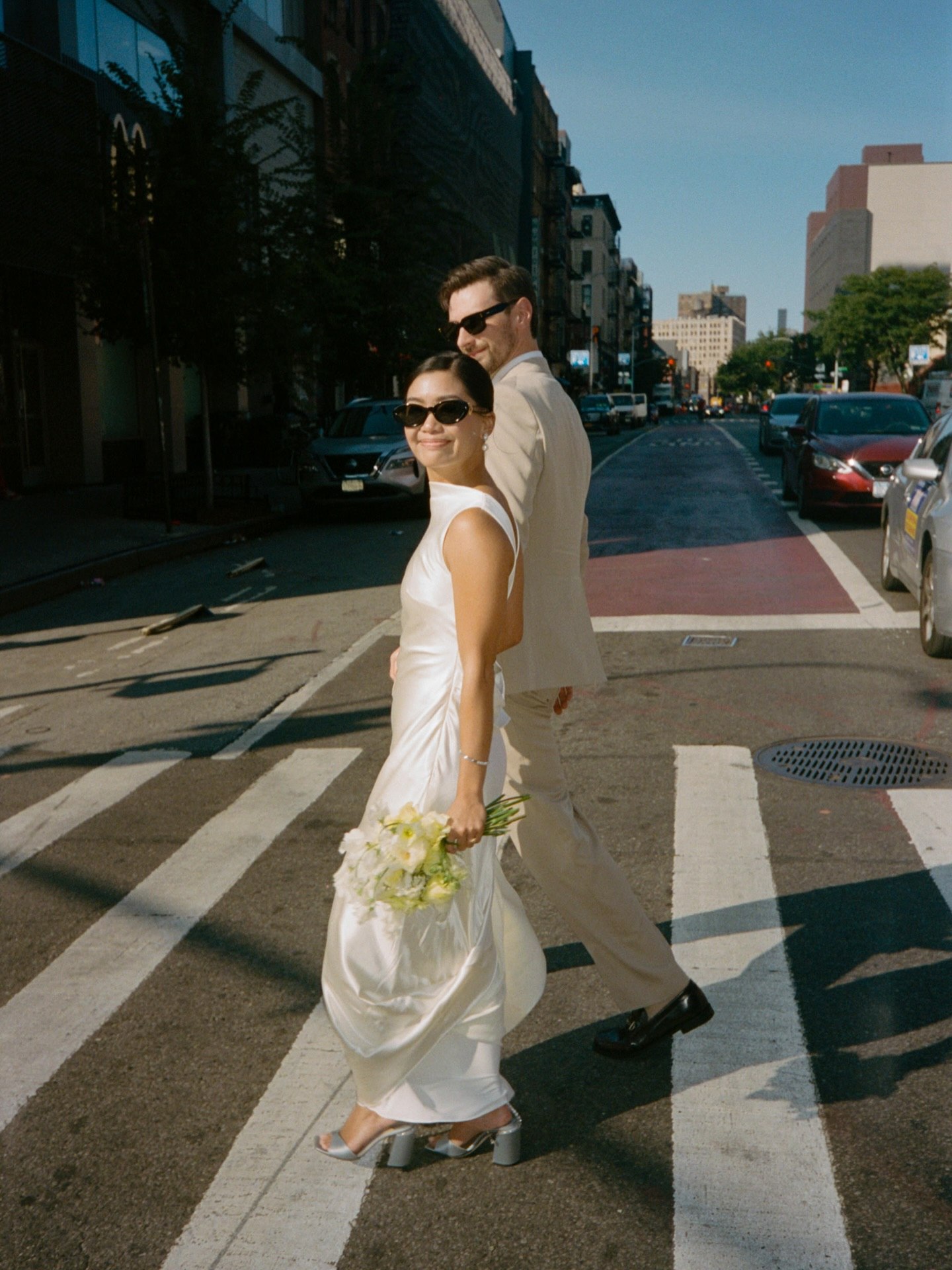
A slip-style silhouette in silk fabric feels effortlessly elevated without requiring embellishment or layers to do the heavy lifting, since the fabric itself already reads as luxurious. It’s also genuinely comfortable for a day that might involve standing in line, sitting in a waiting room, and walking between offices, none of which a heavily structured gown handles particularly gracefully.
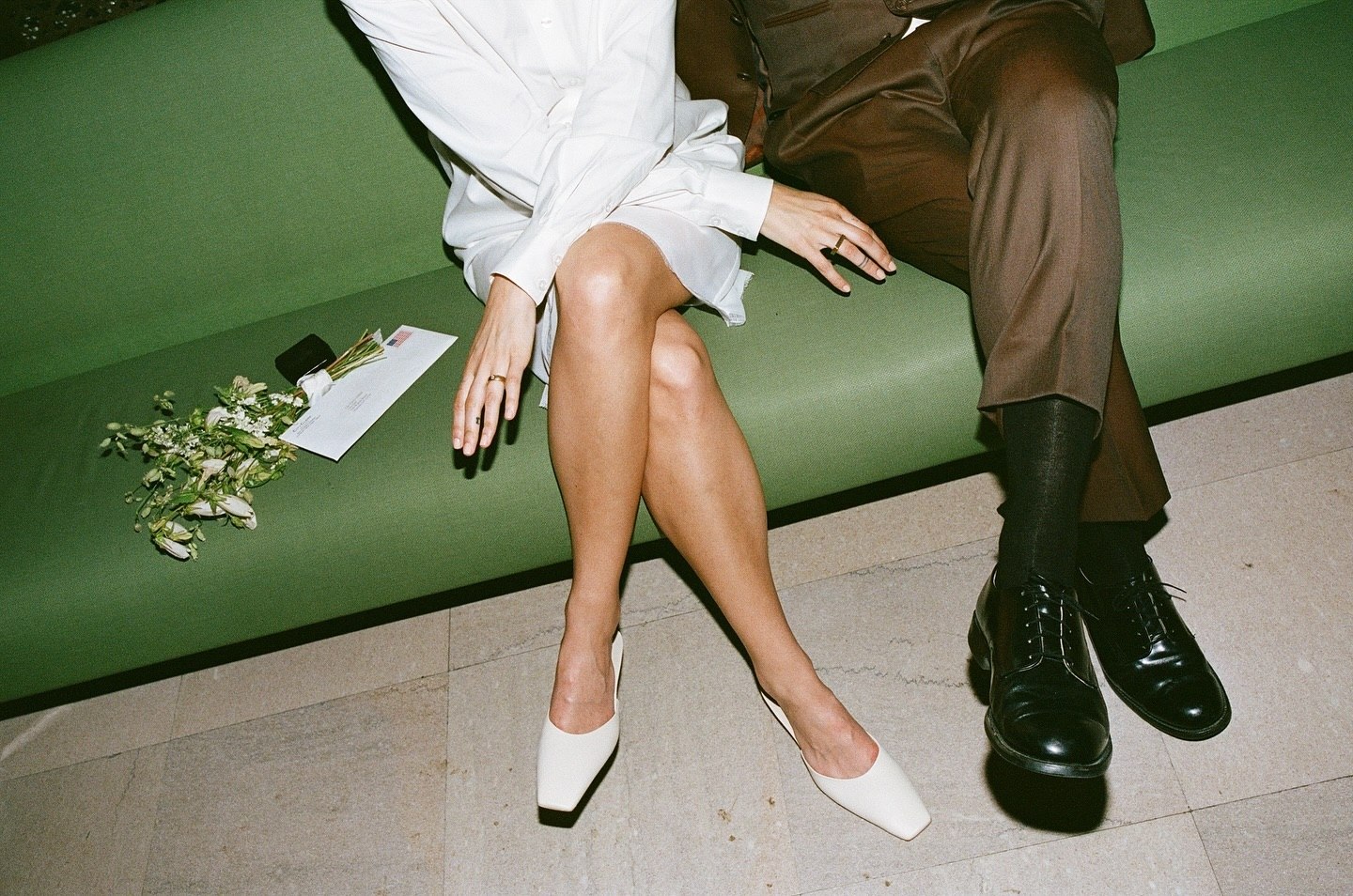
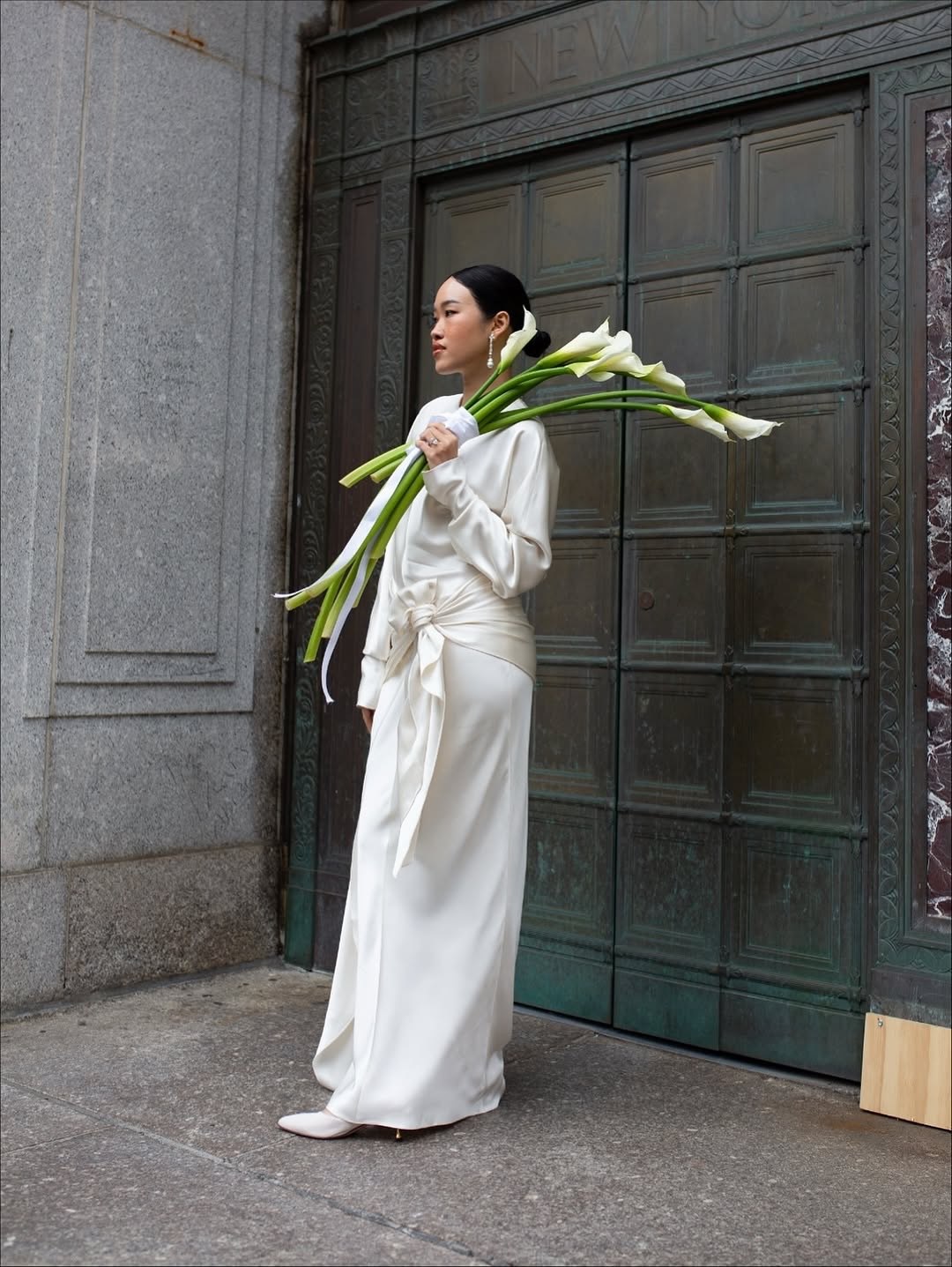
Nothing says effortless quite like a plain white shirt worn as the entire dress. It’s the ultimate low-key courthouse choice, unfussy enough to move in, wear heels or flats with, and dress up with just a veil, and it somehow still photographs as genuinely bridal. Even in its more structured, draped and belted version, the shirt dress keeps that same easy, unstudied quality that makes it feel like the anti-wedding-dress wedding dress.
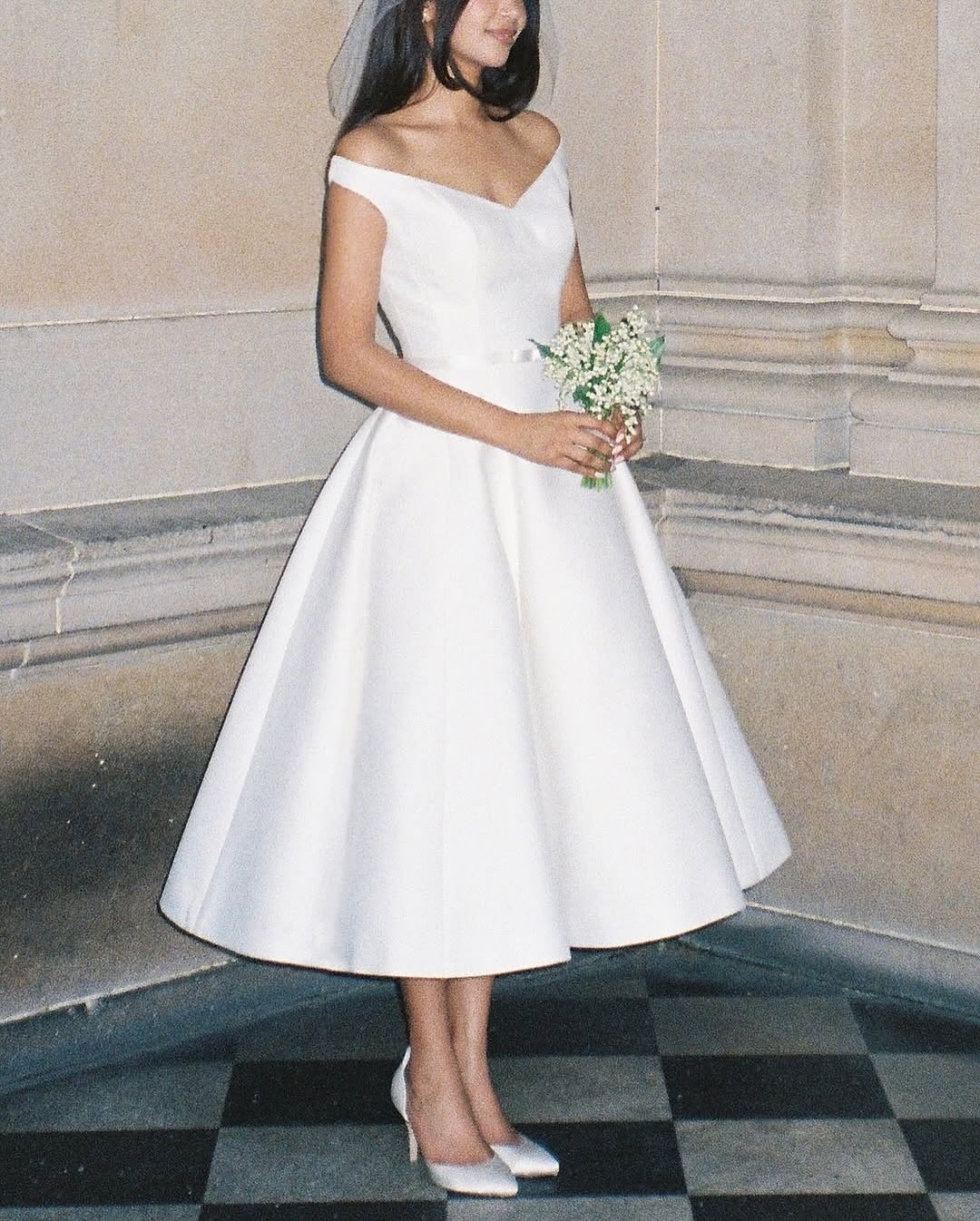
Leaning into a specific decade, 1950s full skirts, 1960s shift silhouettes, 1970s bias-cut drama, gives a courthouse look a clear identity without needing much else to build on. The vintage reference also tends to suit the setting itself, since courthouses and city halls are often genuinely old buildings with their own period architecture, which a retro silhouette can play off of rather than clash with. It’s a good option for a bride whose personal style already leans nostalgic, letting the outfit feel like a natural extension of her taste.
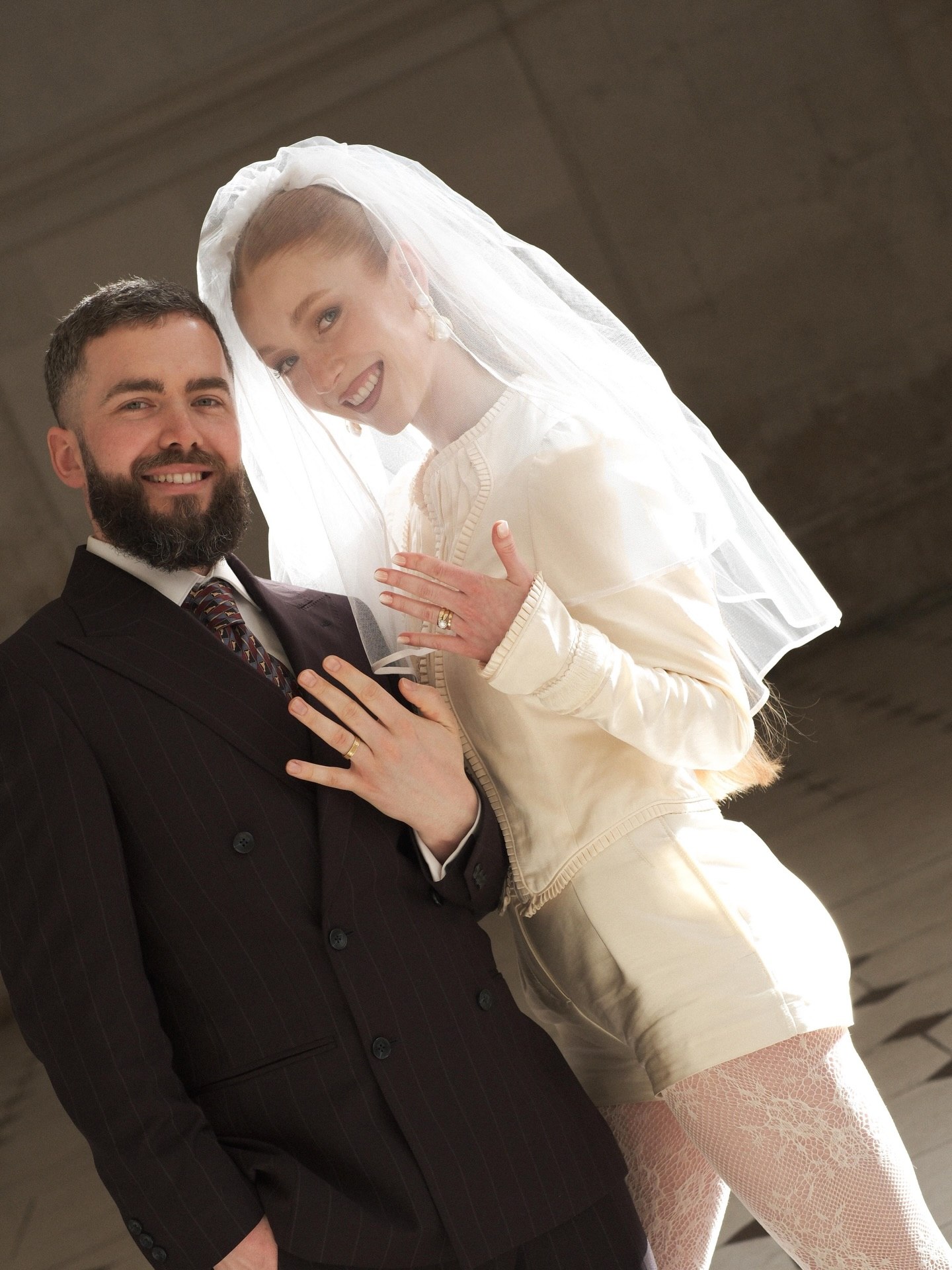
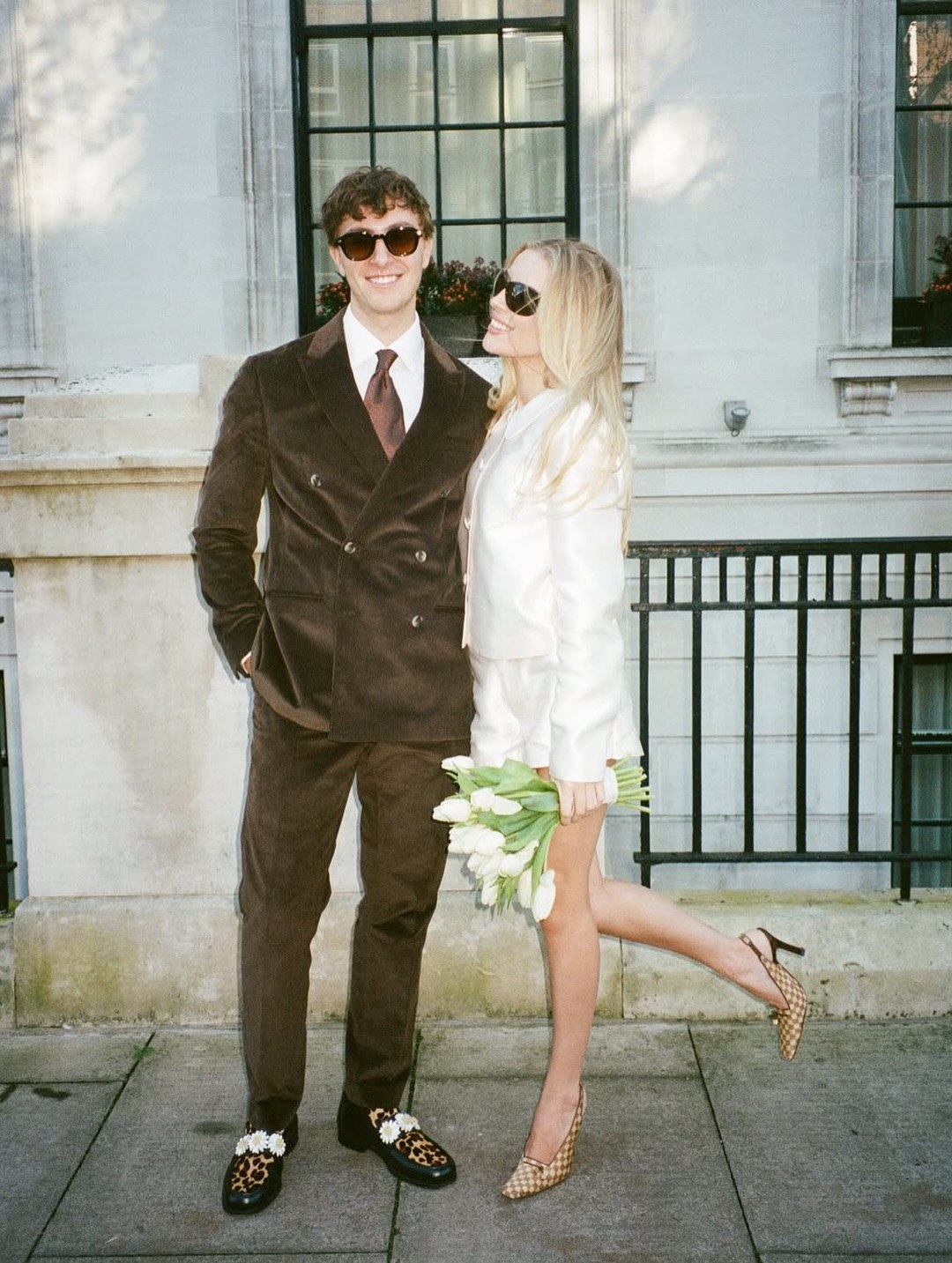
A matching jacket-and-shorts set is one of the easiest ways to sidestep the traditional gown altogether while still looking distinctly bridal. Cropped tailoring paired with shorts and sheer tights reads playful and undone in the best way, especially against a veil, which keeps the whole thing from tipping too casual. Elsewhere, a boxier, double-breasted jacket over shorts leans more masculine-tailored, proof the silhouette flexes from soft and romantic to sharp and clean depending on the cut. Either way, it’s a look built for movement, ideal for a bride who wants her legs free to actually enjoy the day.
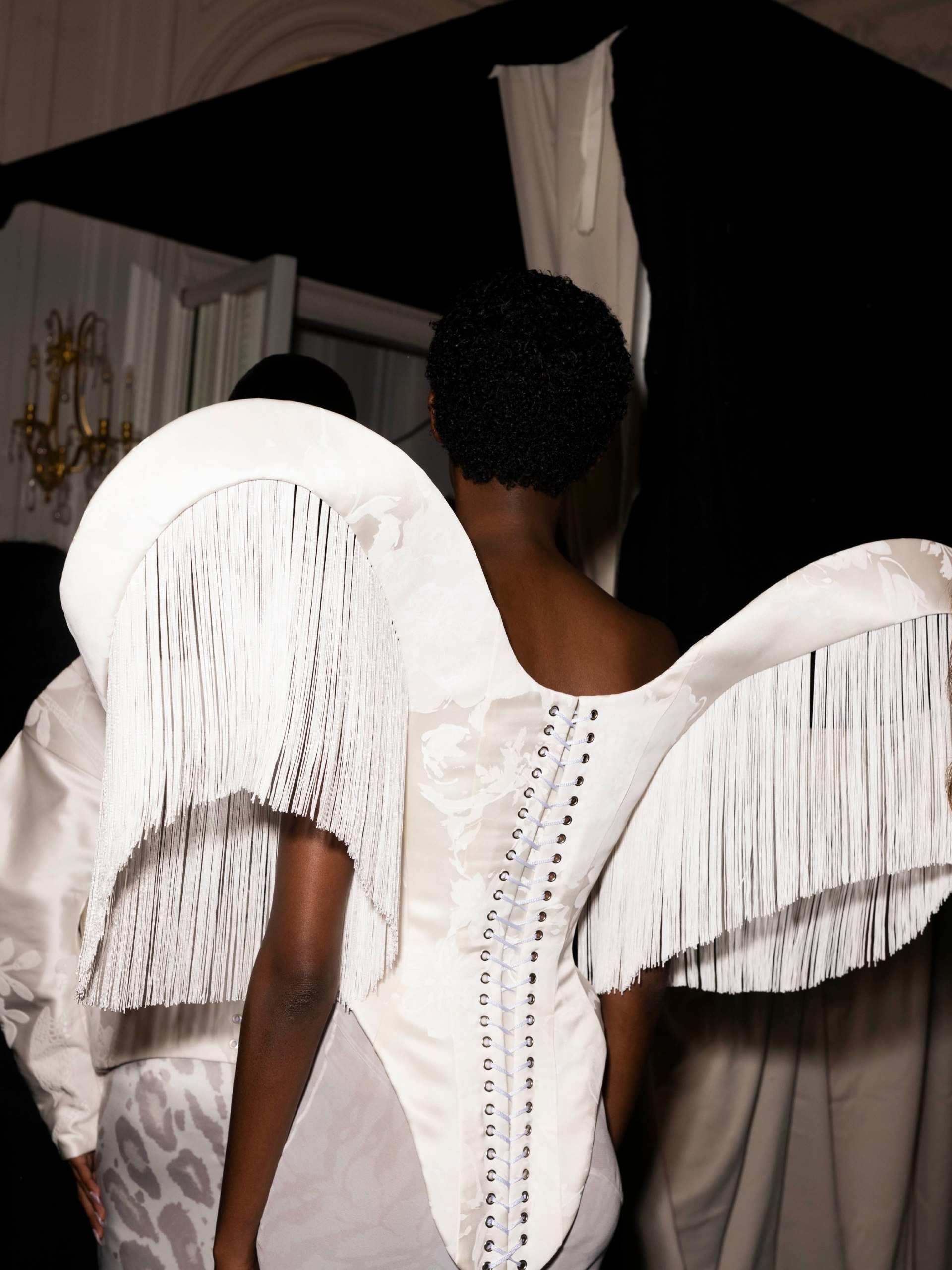
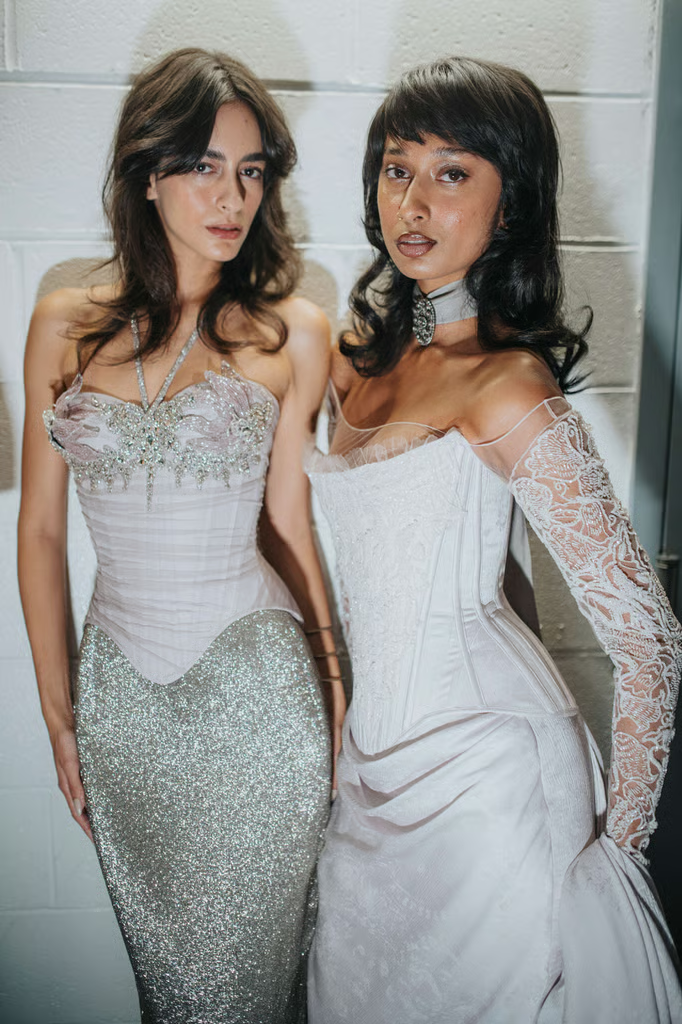
Not every courthouse bride wants to scale down, and a full, dramatic gown works just as well here as it would anywhere else; it simply changes the mood of the room rather than the other way around. This bride is eager for dramatic ruffled trains, voluminous sleeves, structured bustiers, or feather and fringe trims, and she wants her courthouse appointment to feel like a real wedding moment rather than a scaled-back version of one.
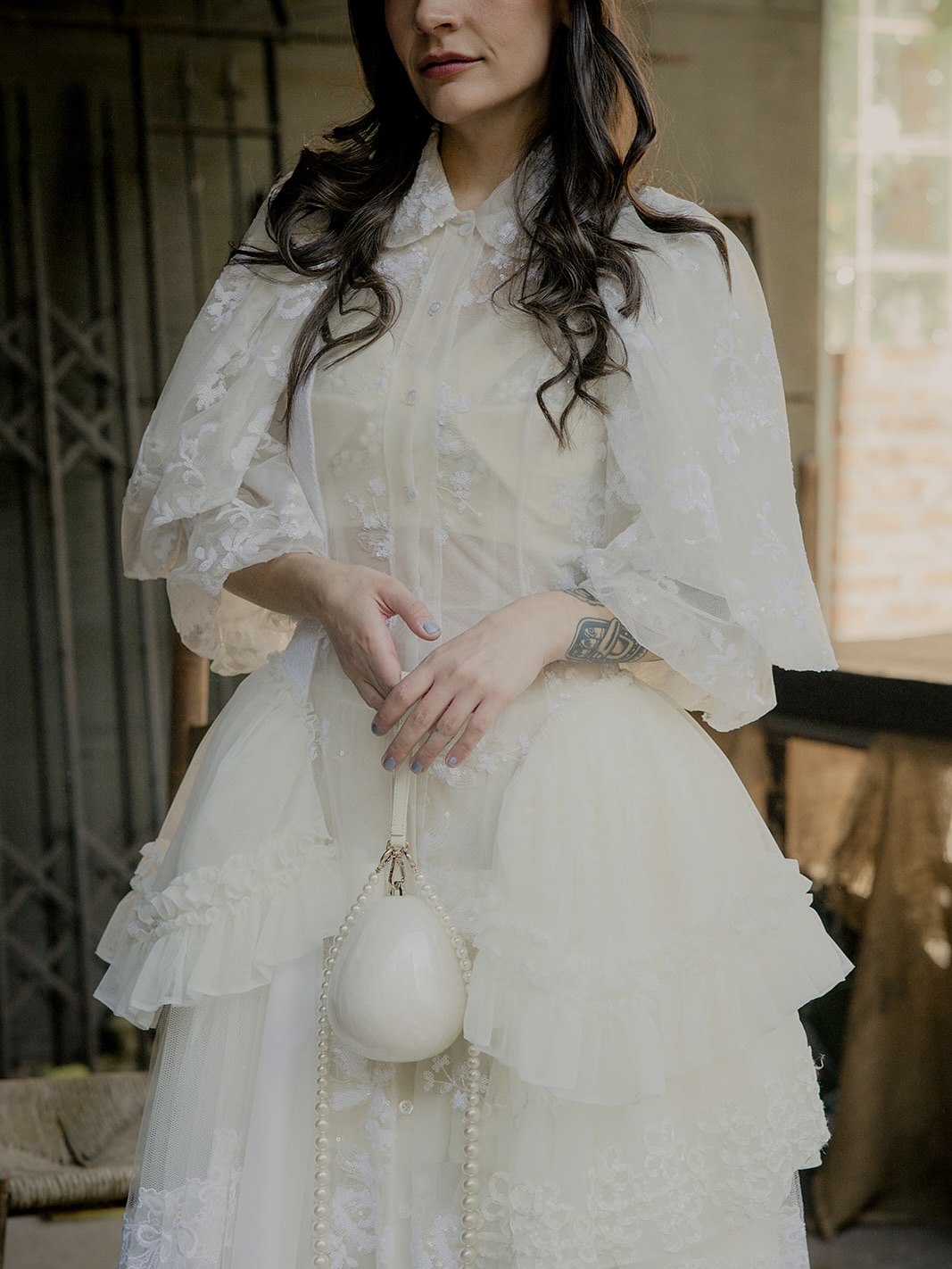
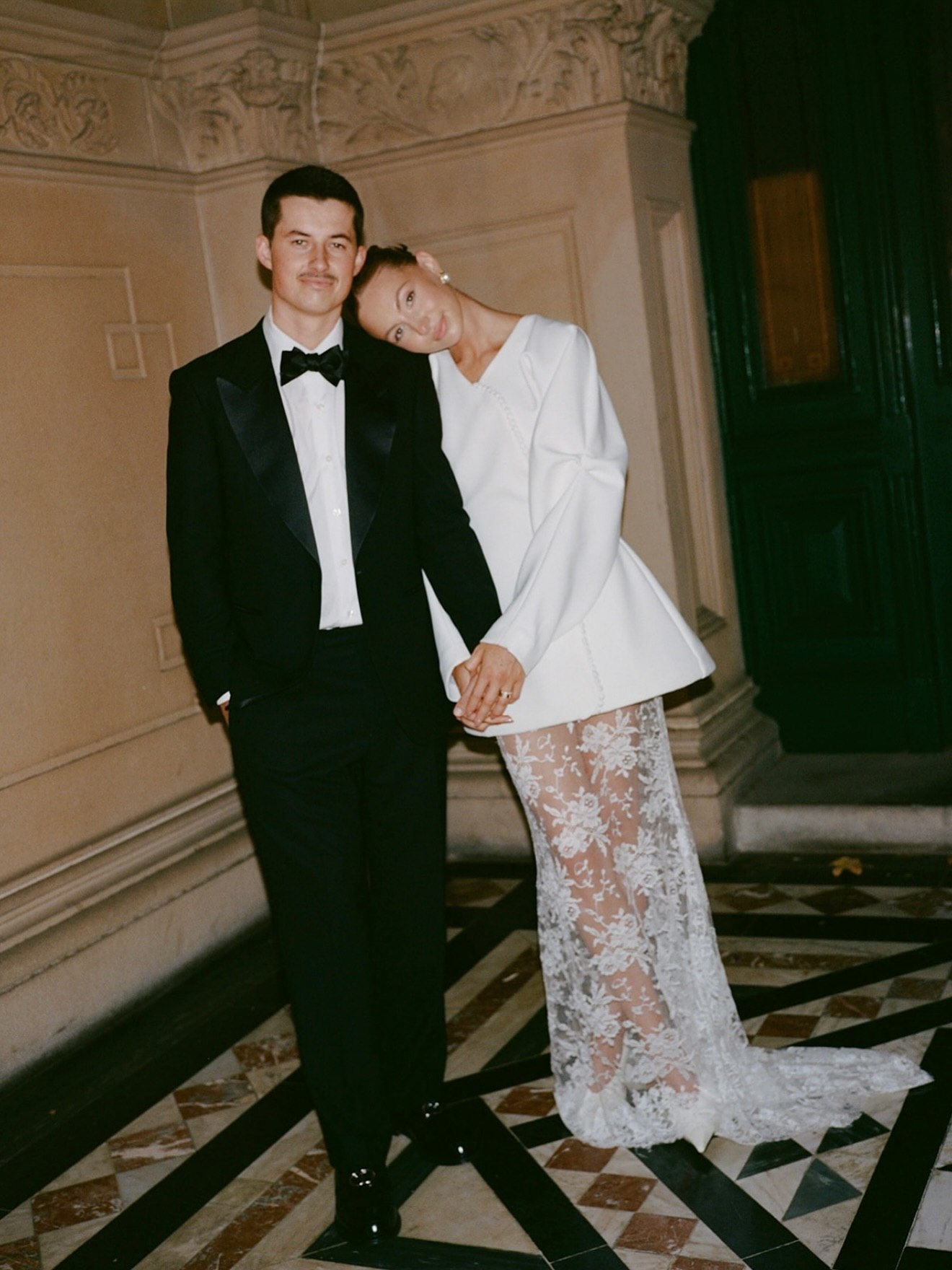
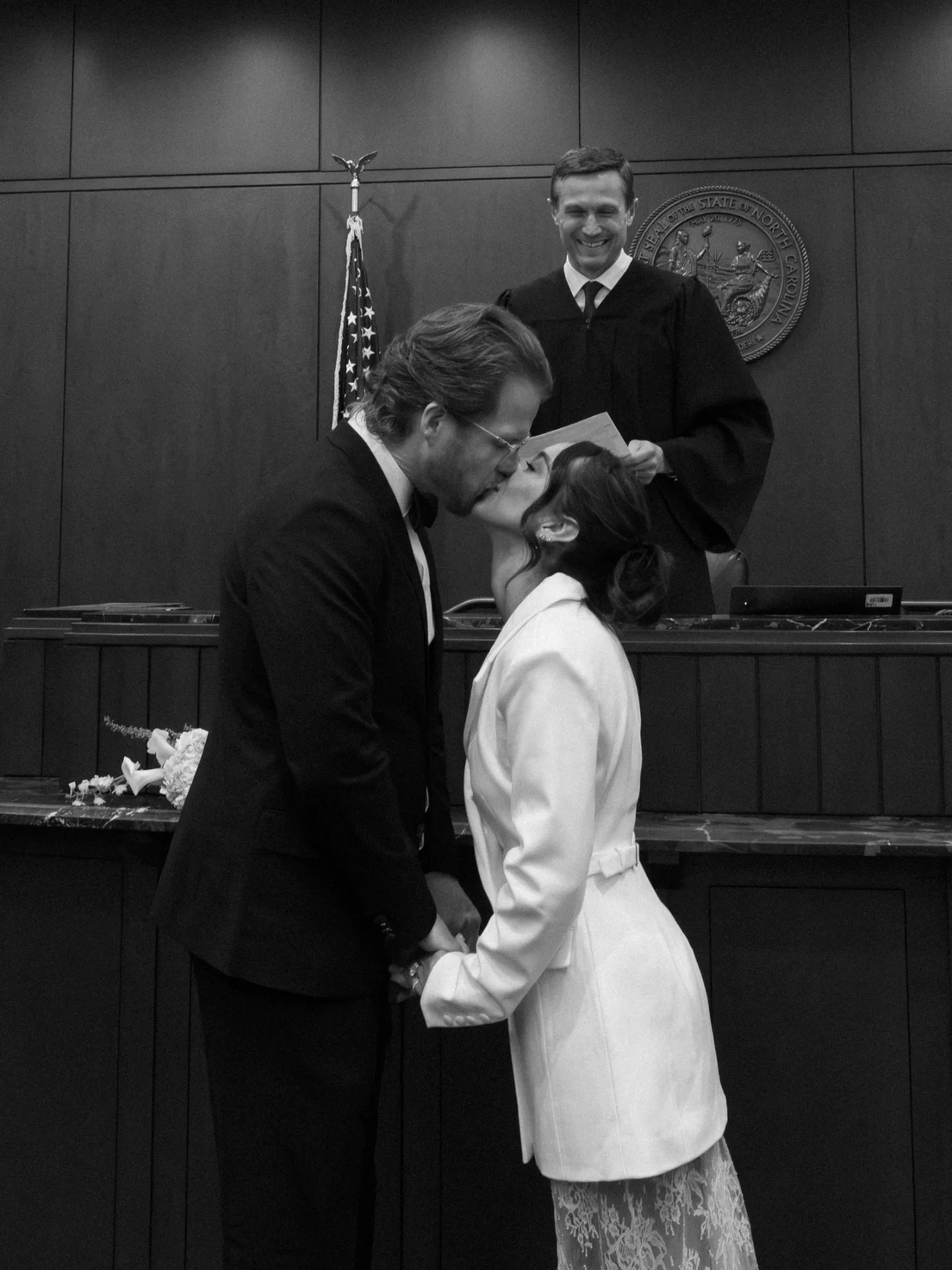
A sheer skirt layered under a structured jacket plays two very different textures against each other on purpose, something soft and revealing against something sharp and buttoned-up. The jacket keeps the whole look grounded and appropriate for a formal government setting, while the sheer skirt underneath adds real movement and a little edge once it’s actually in motion, walking up steps or through a hallway.
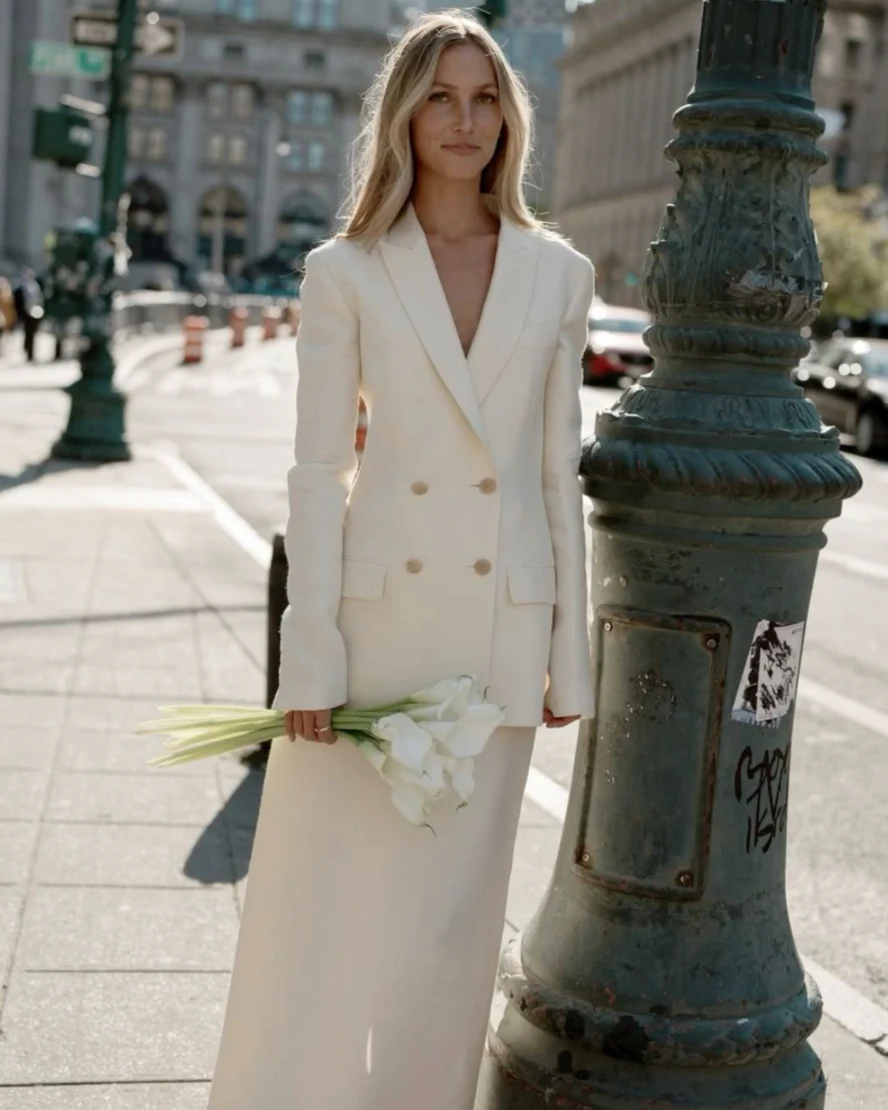
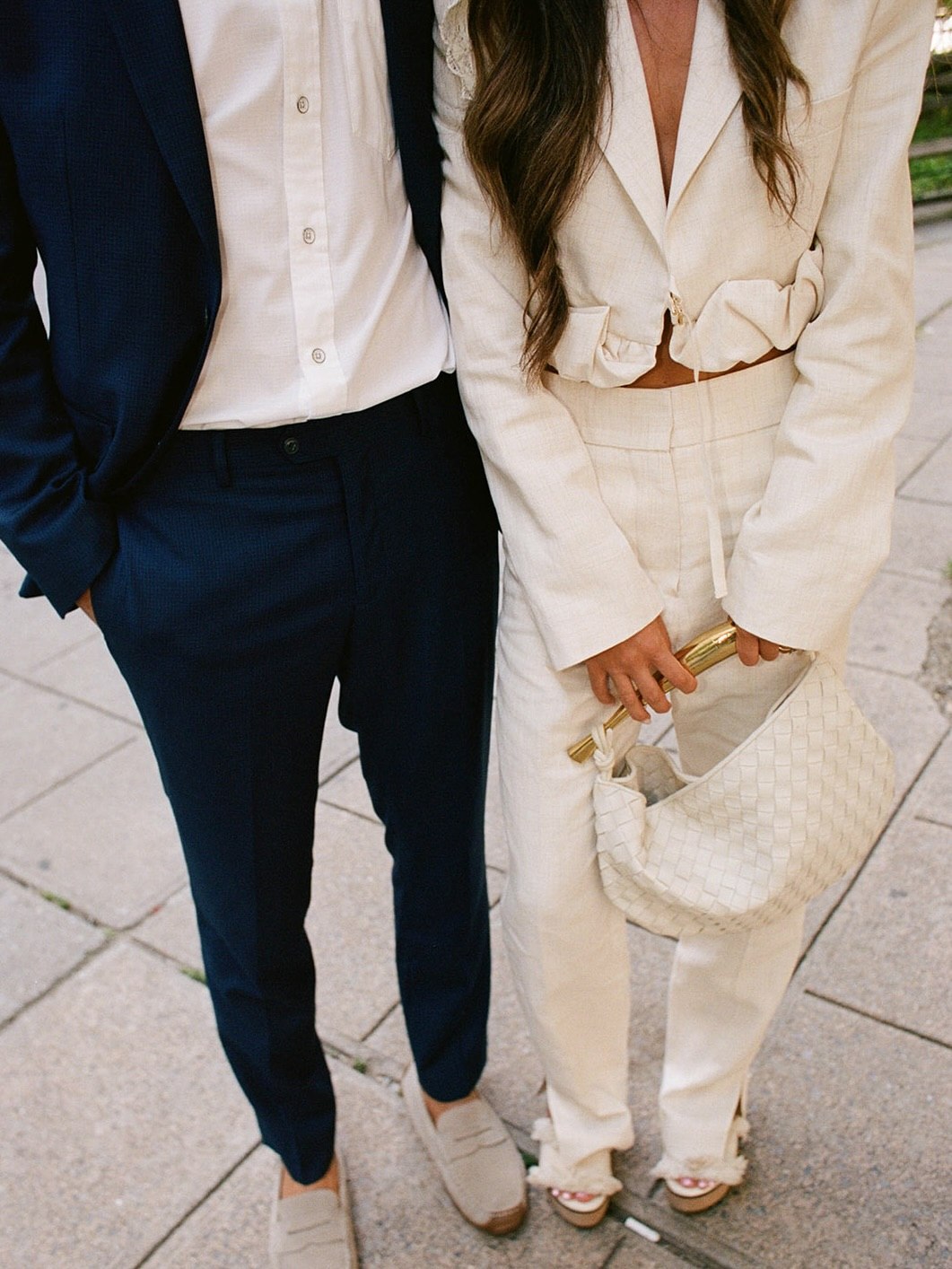
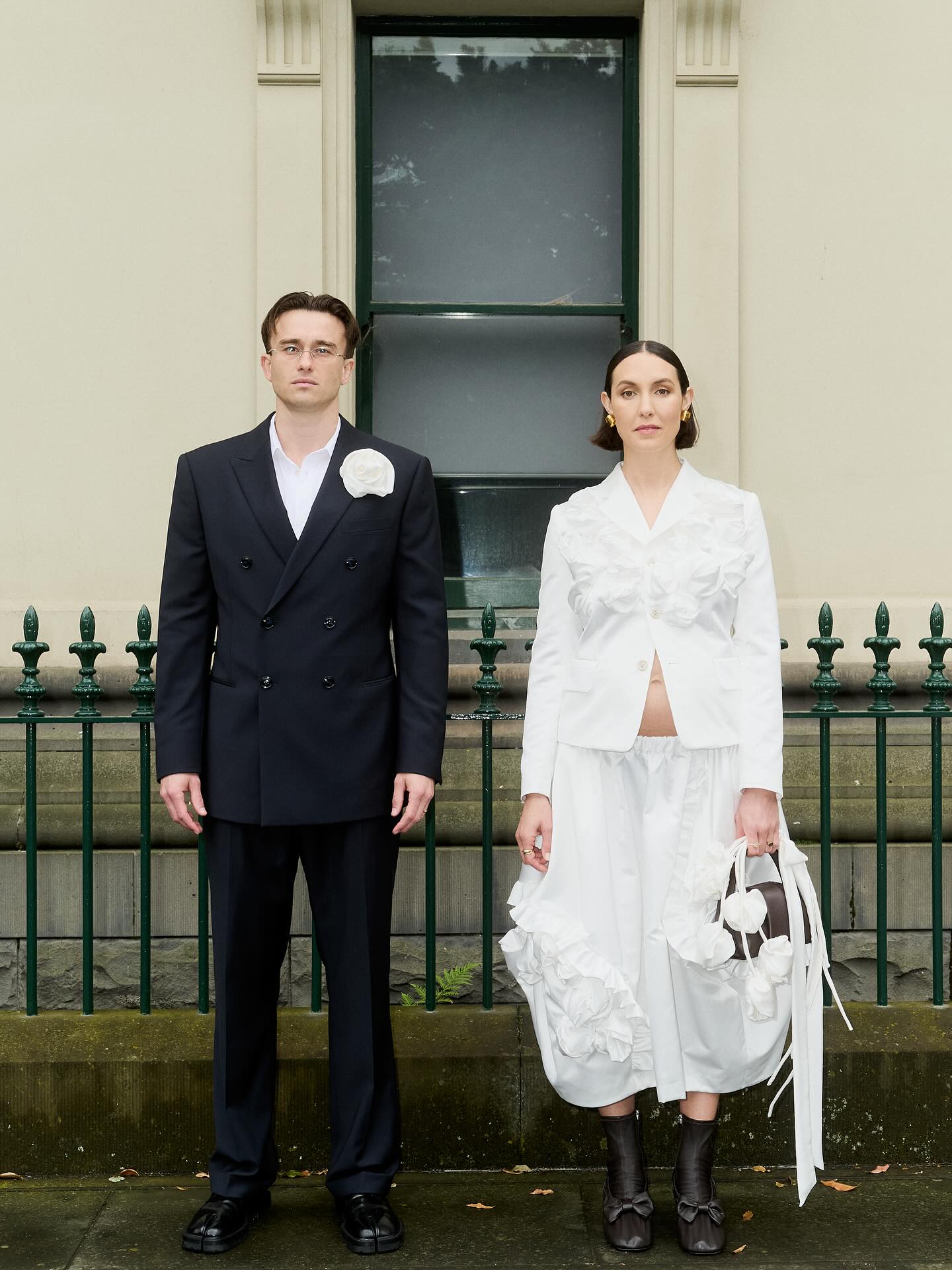
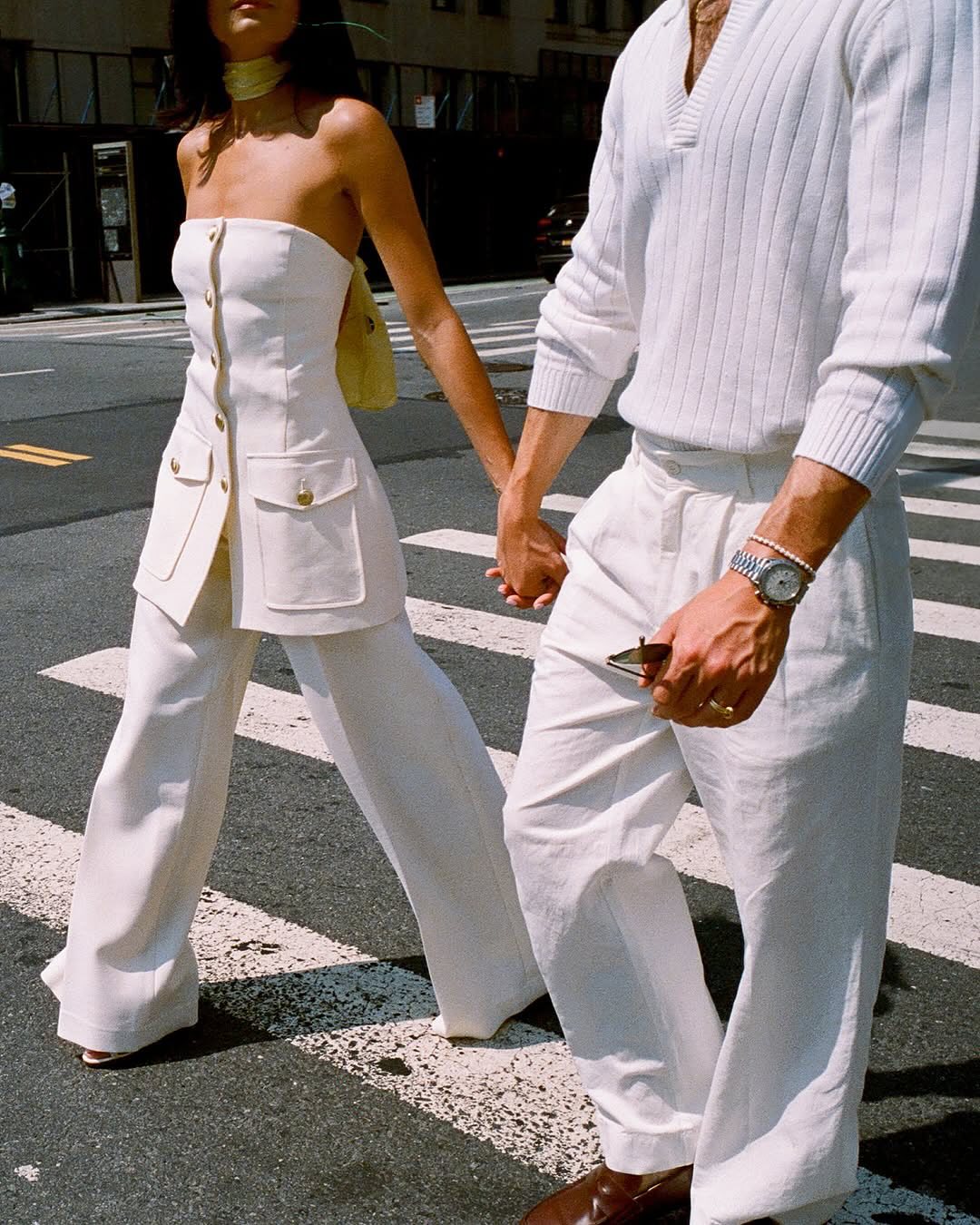
For the brides who already have a fashion point of view, their wedding look isn’t a departure from their style, it’s just proof of it. A directional two-piece, an unexpected color pairing, an architectural cut, a linen set, a proportion that isn’t quite what’s expected: each one treats the courthouse appointment as a genuine styling opportunity rather than a formality to get through.
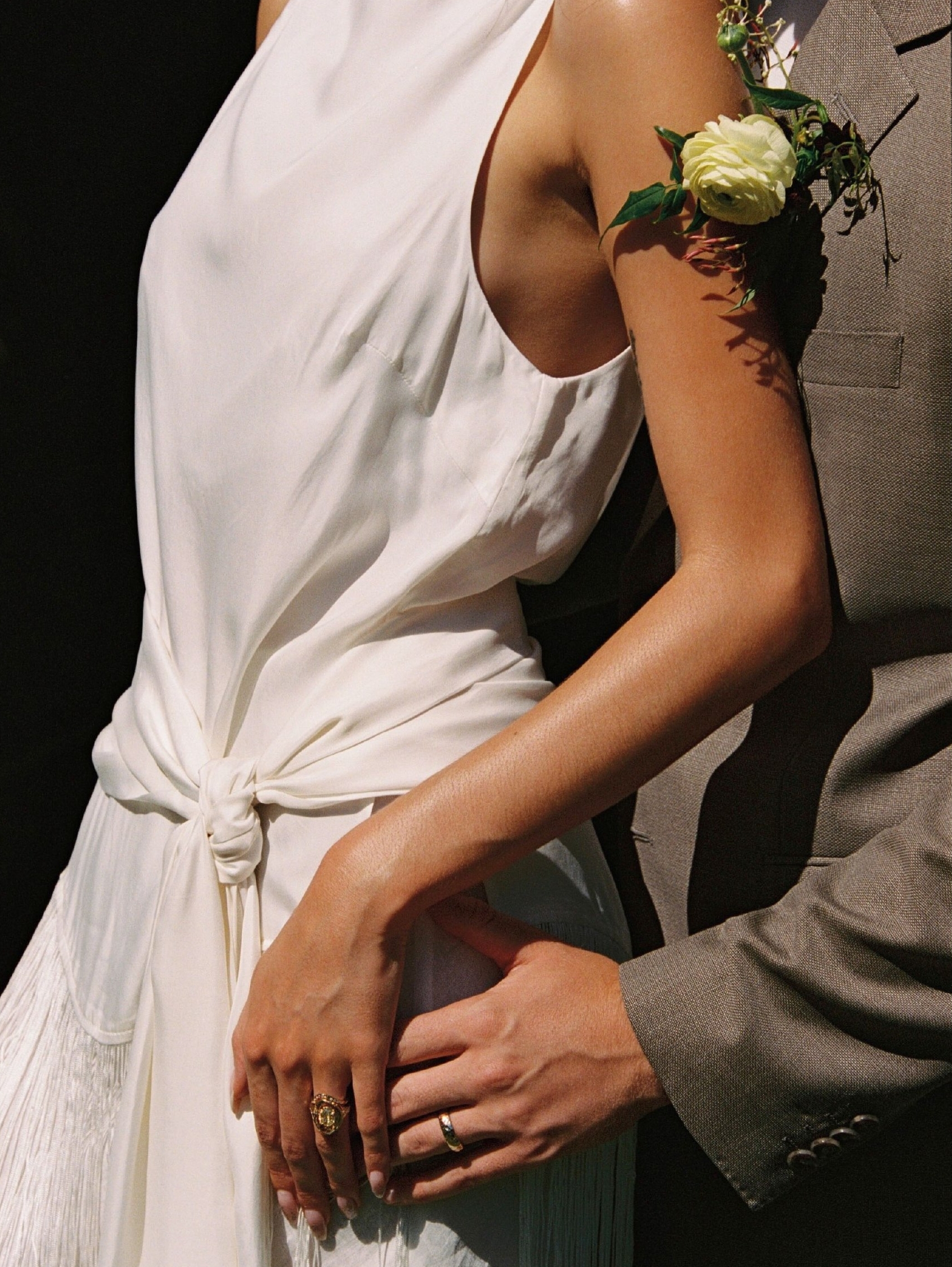
Rather than a bow or a belt, these dresses feature one simple knot, tied directly into the fabric, to do all the shaping. It’s a small move with a big effect: the fabric drapes loose and fluid everywhere else, then cinches at exactly one point, giving the silhouette visual interest. On a draped, fringe-hemmed slip, the knot reads almost like a sarong, casual and a little undone. On a more sculptural silk dress, tied at the hip with the fabric falling long past it, the same trick turns into something closer to origami, precise and considered.
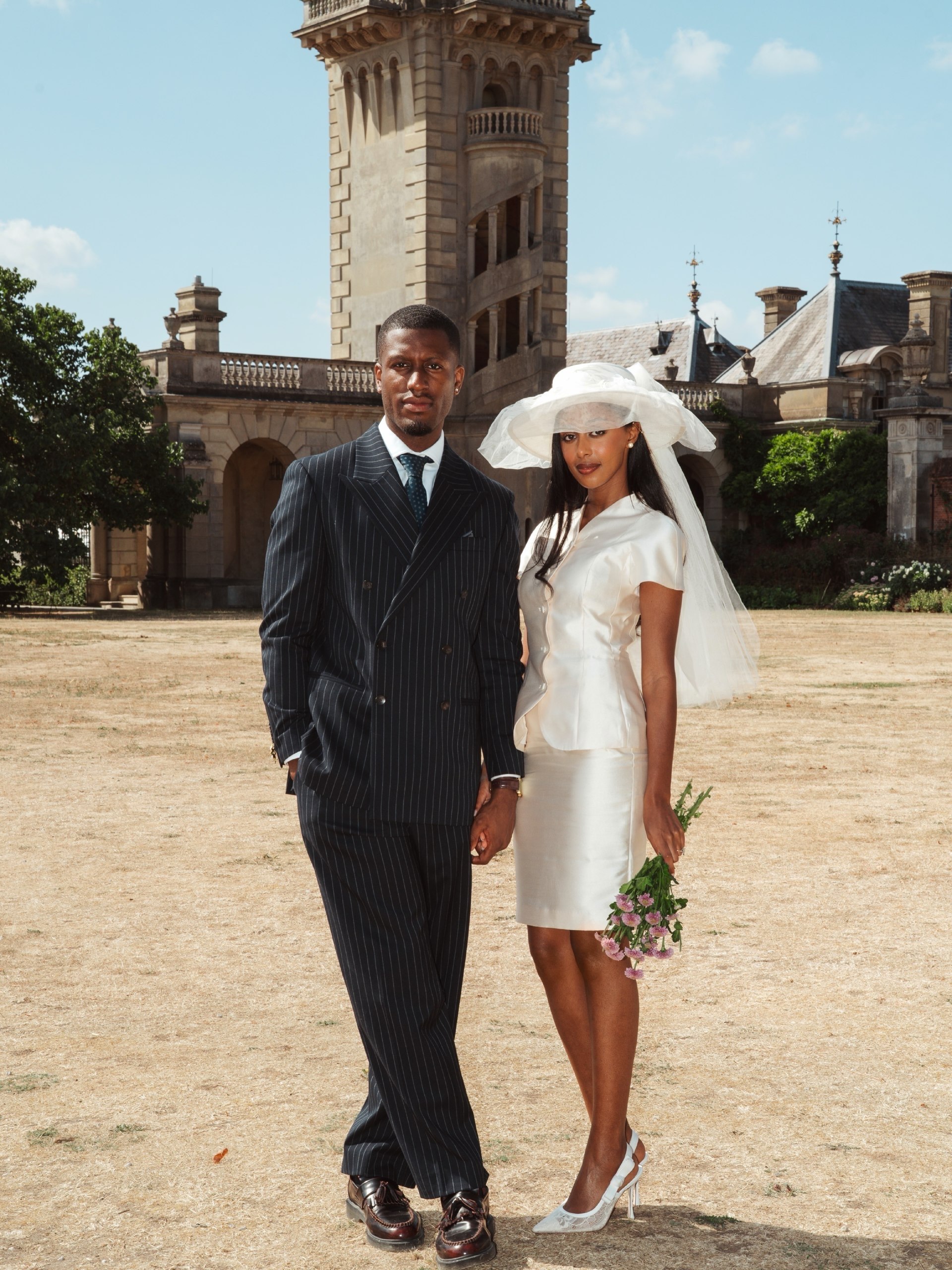
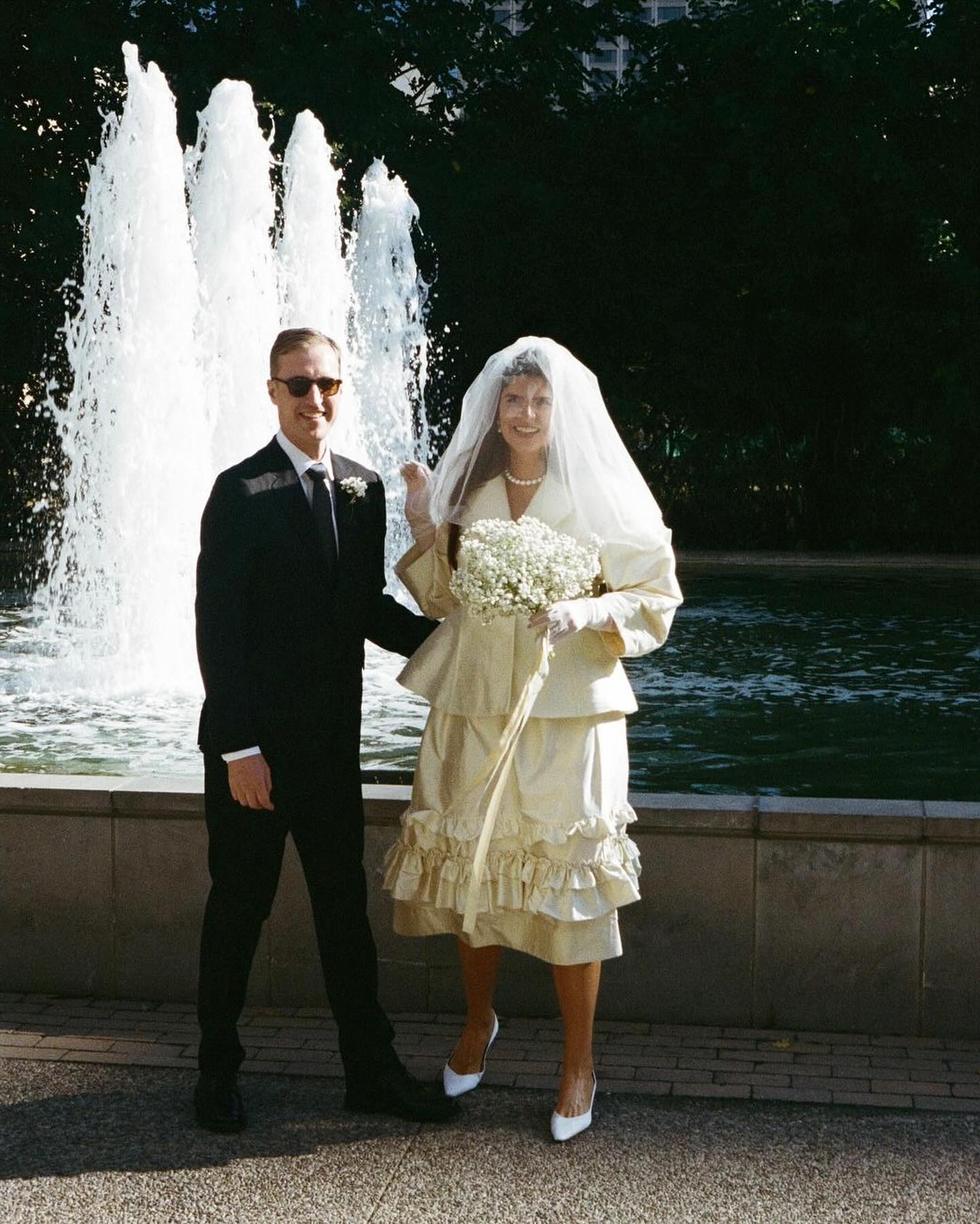
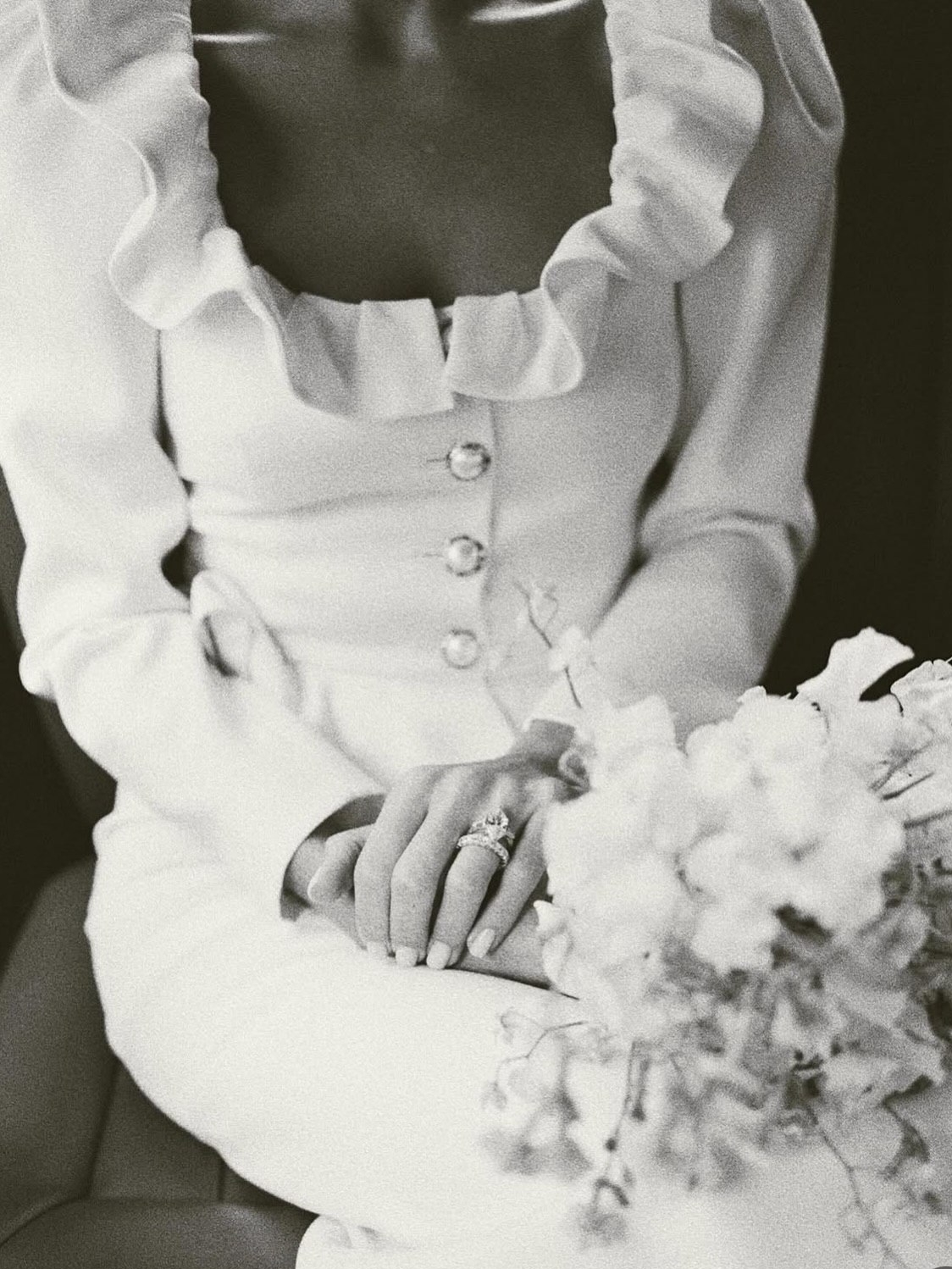
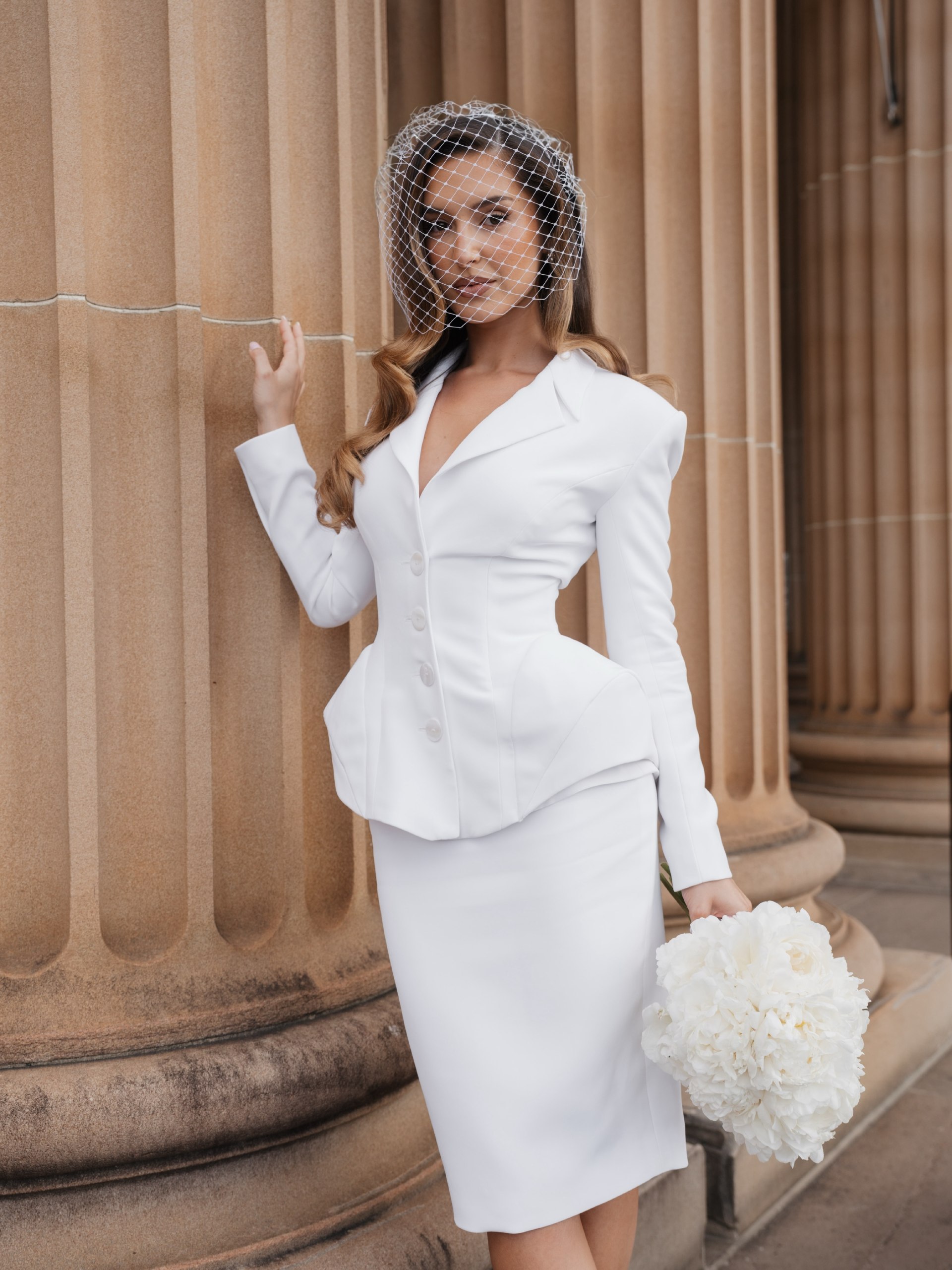
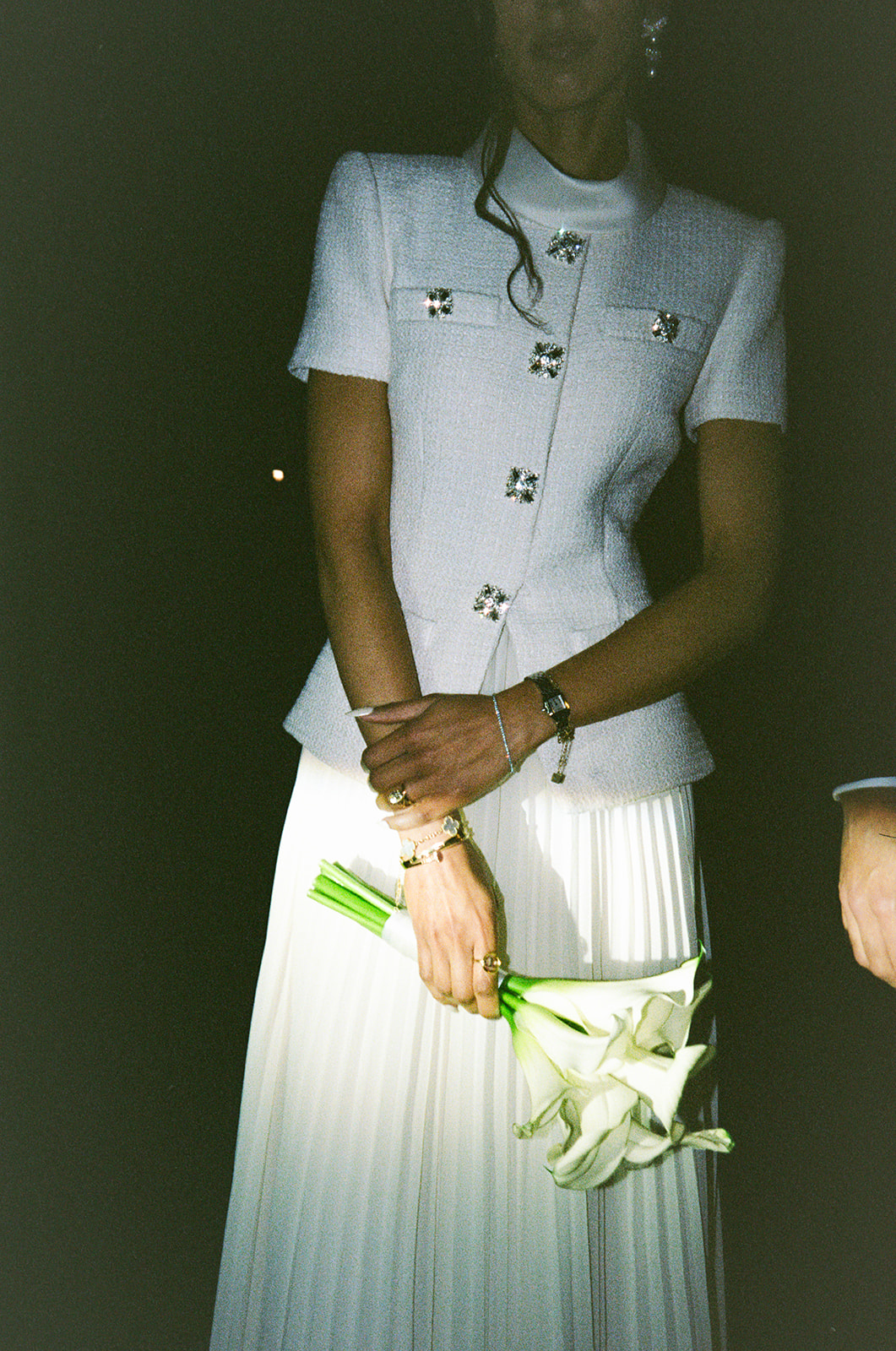
For brides who want the polish of a suit without losing bridal romance, the skirt suit split the difference. A structured jacket, peplum-cinched or ruffle-collared, pairs with a matching pencil or pleated skirt, giving sharp tailoring the same authority a blazer brings to a boardroom, just in ivory silk or bouclé tweed instead of wool. Jeweled buttons or a peplum waist add just enough decoration to keep it from reading corporate. It’s a look that photographs as confident as it is comfortable, built for actually moving through a day rather than posing through one.
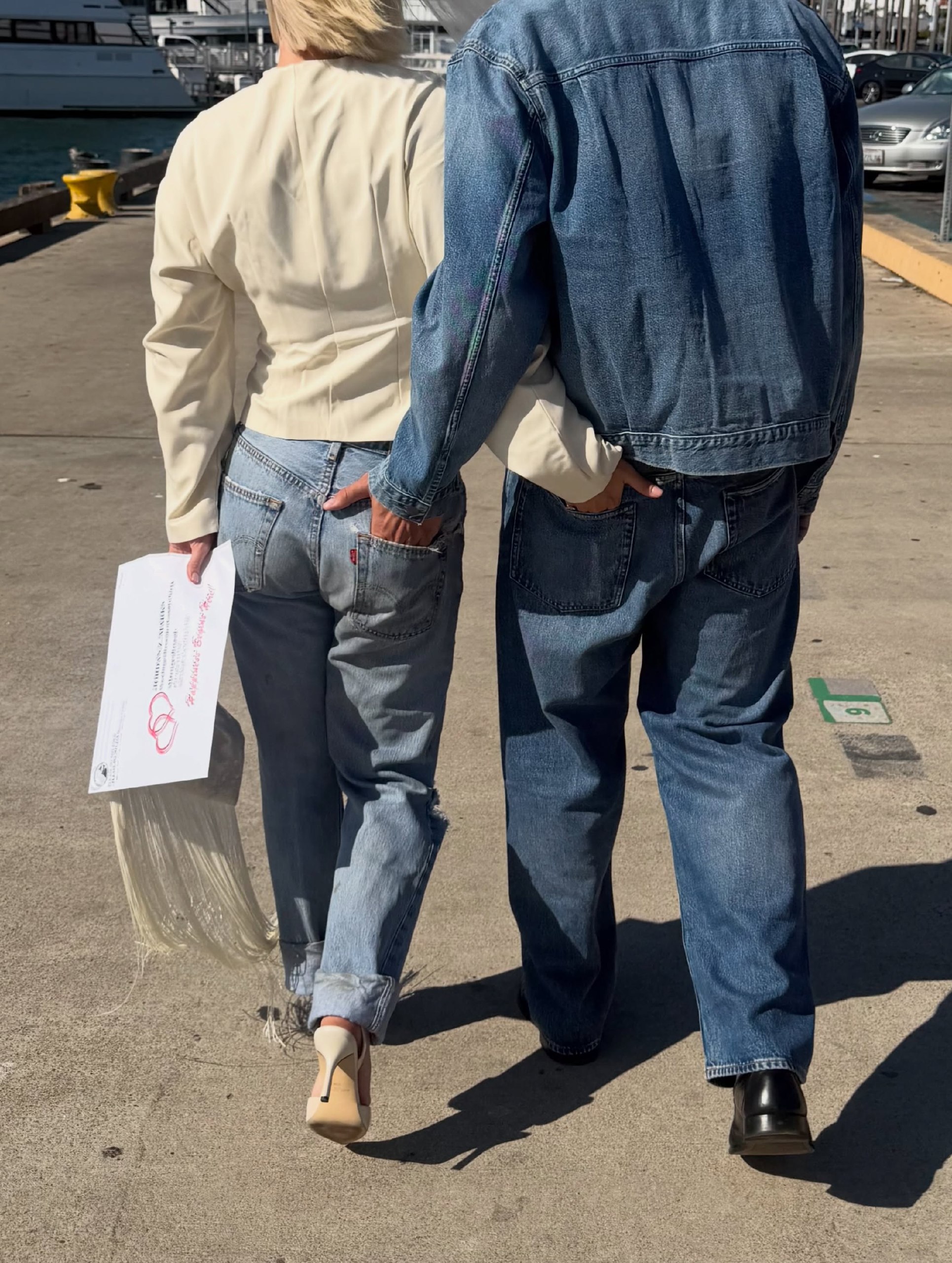
Not every courthouse look needs to read as a wedding dress in disguise, and a pair of well-fitted jeans with something white on top is one of the clearest ways to say so. It’s the most relaxed look on this list, and also the one that tends to feel most like the person wearing it, especially for a bride who would rather save the money and energy for the celebration that comes later.
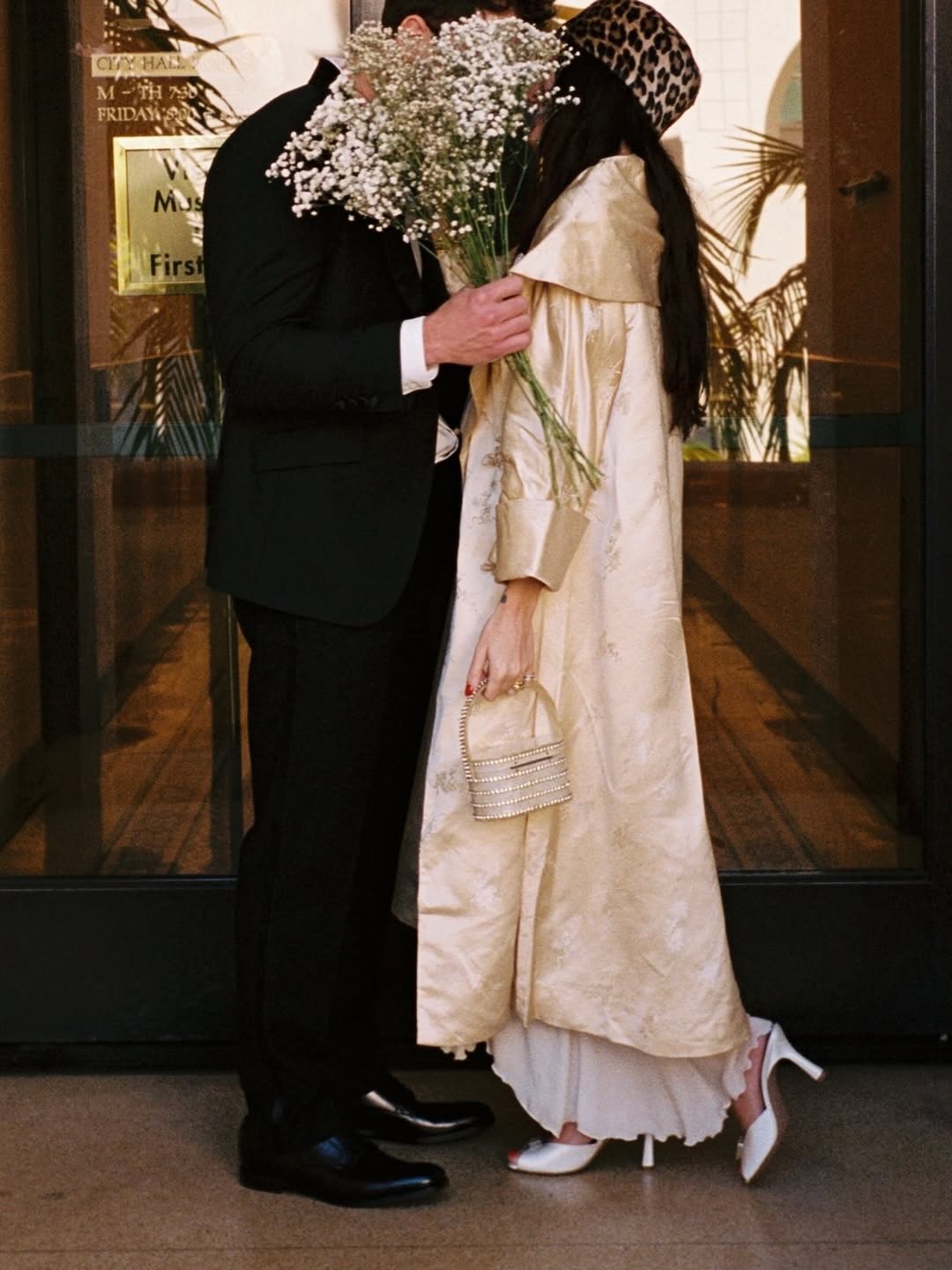
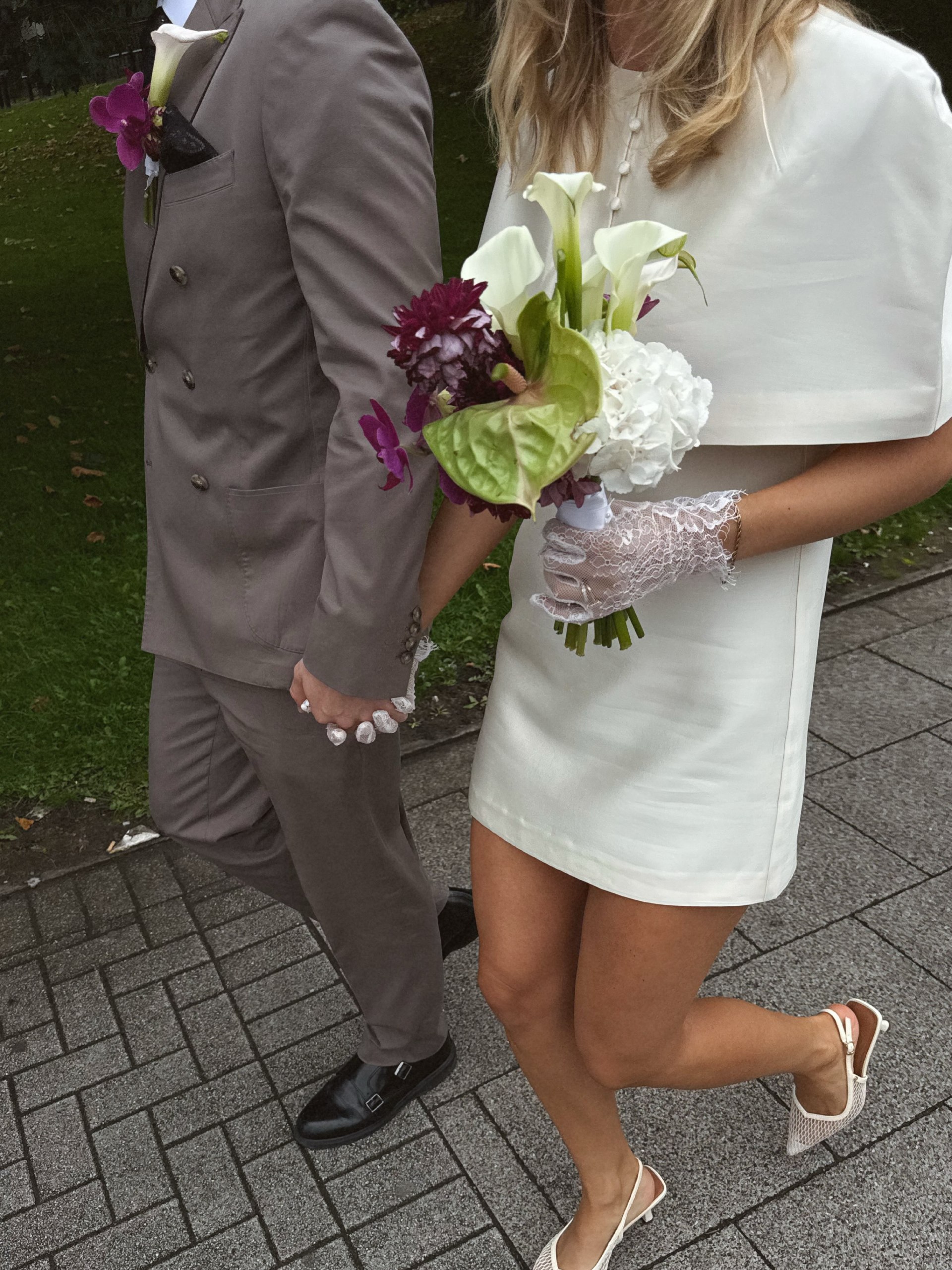
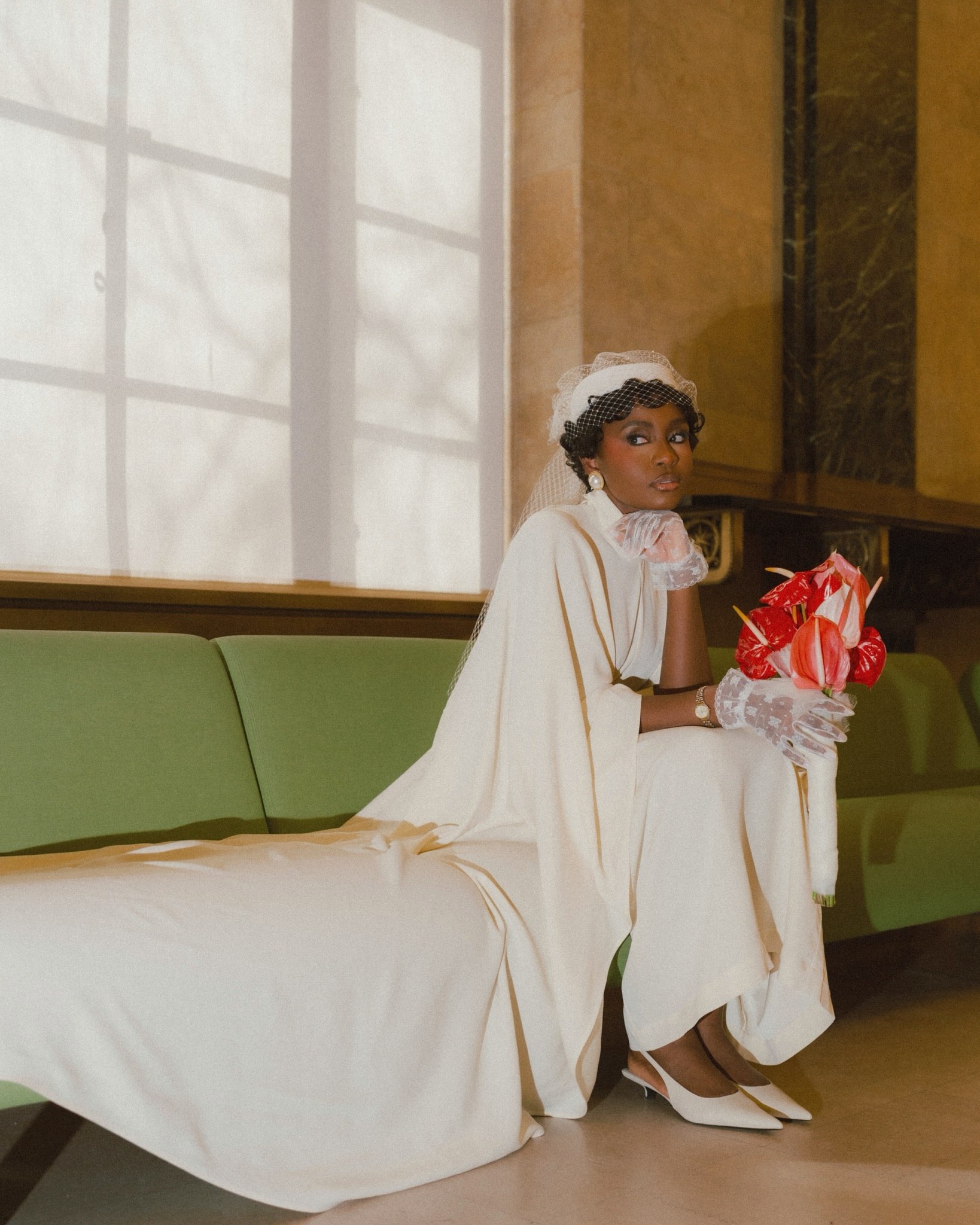
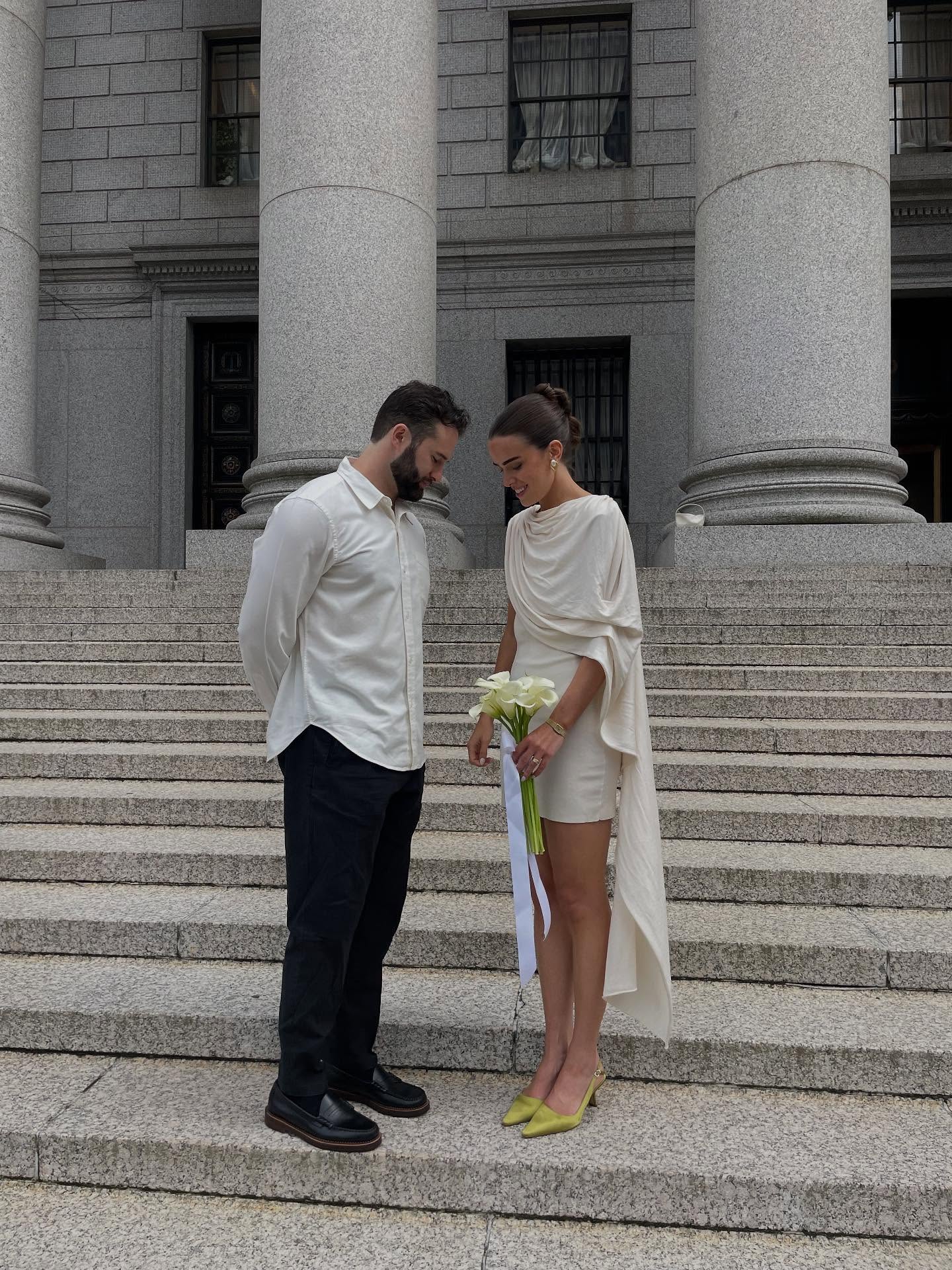
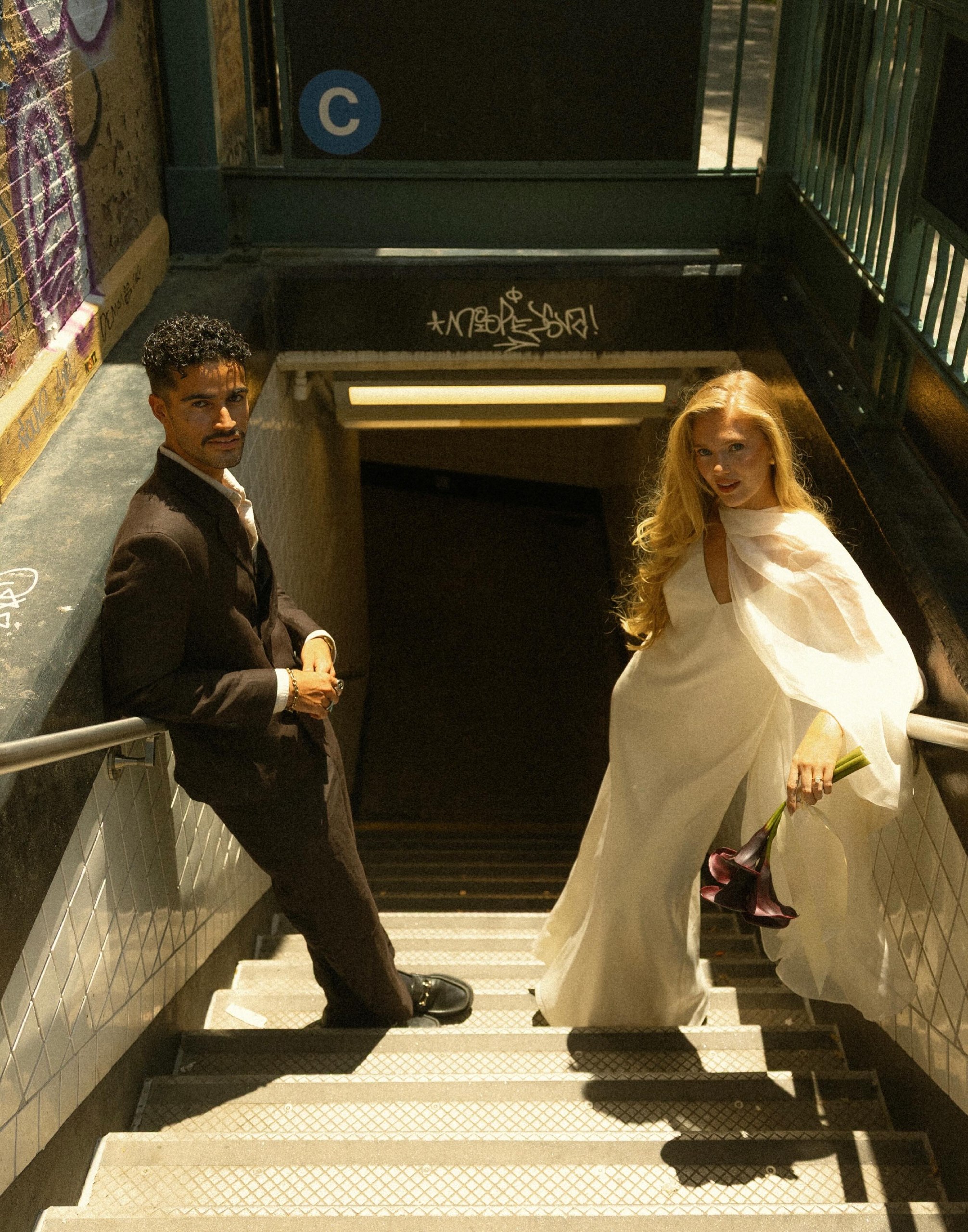
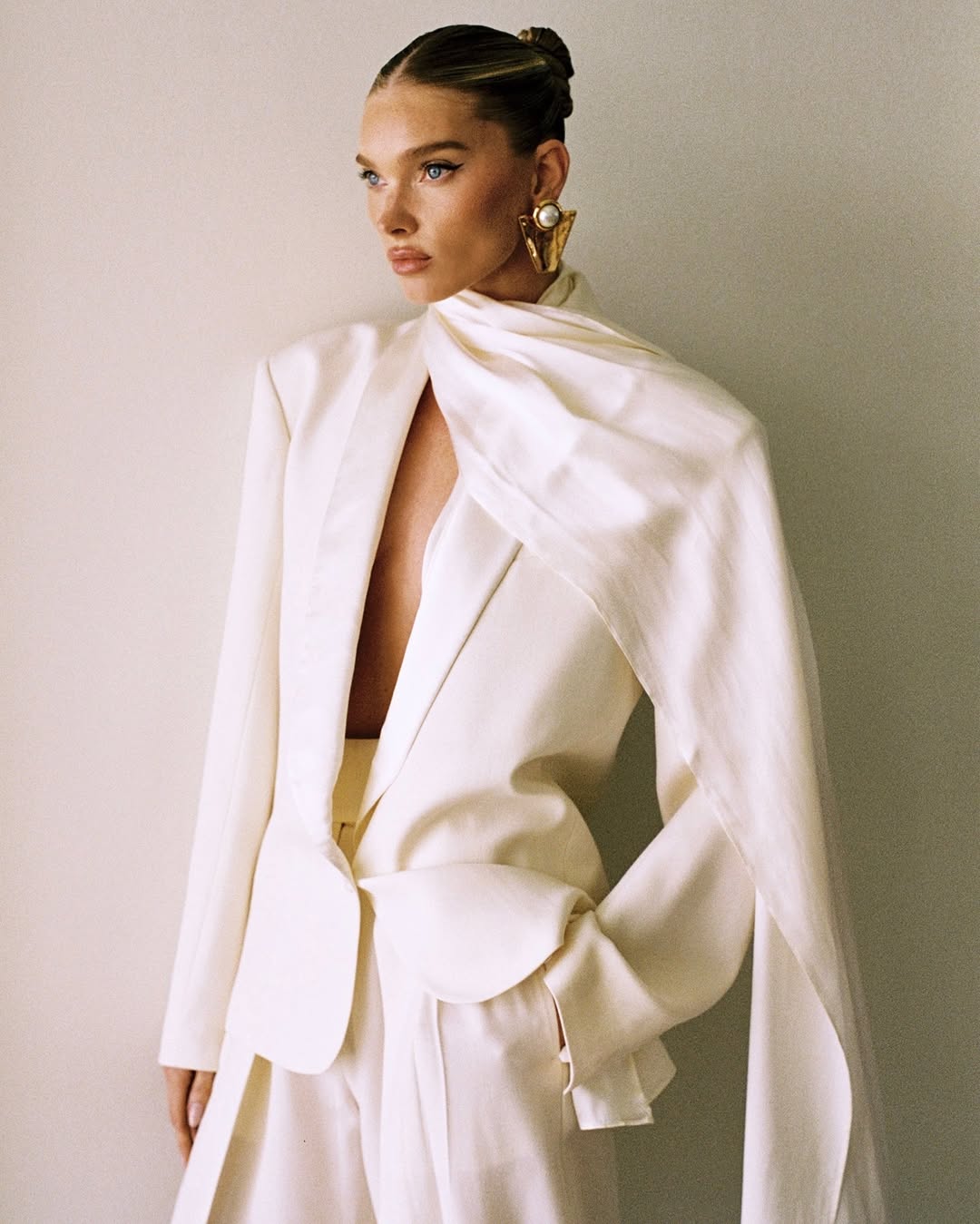
A cape or a draped scarf adds real drama and movement to an otherwise simple dress, without the practical weight or cost of a traditional train. It catches air in a way a fitted silhouette alone can’t, which makes for genuinely dynamic photos walking up courthouse steps or through a doorway. It also gives a bride the option to remove it entirely once the ceremony itself is over, keeping the simpler dress underneath for whatever comes next in the day. It’s a flexible way to get a sense of occasion without fully committing to a formal gown.
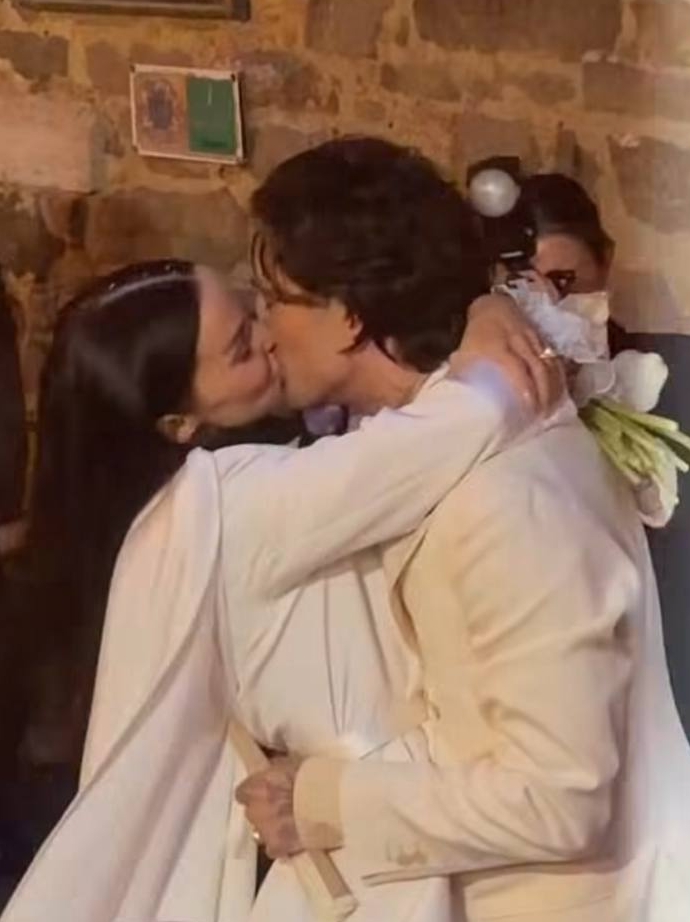
A tailored pantsuit turns a courthouse wedding into a genuine power move, structured, a little masculine-coded, and about as far from a traditional gown as a bridal look can get while still reading as unmistakably bridal. Dove Cameron made the case for it just days ago, marrying Damiano David at Montalcino’s town hall in a custom ivory Giorgio Armani suit, a single-breasted, collarless blazer cinched at the waist with a matching belt, wide-leg trousers, a white cravat, and a one-shoulder cape standing in for a train. It’s proof that a suit can carry just as much drama and craftsmanship as a gown, while staying genuinely easy to move in for a day spent walking through a government building rather than down a long aisle.
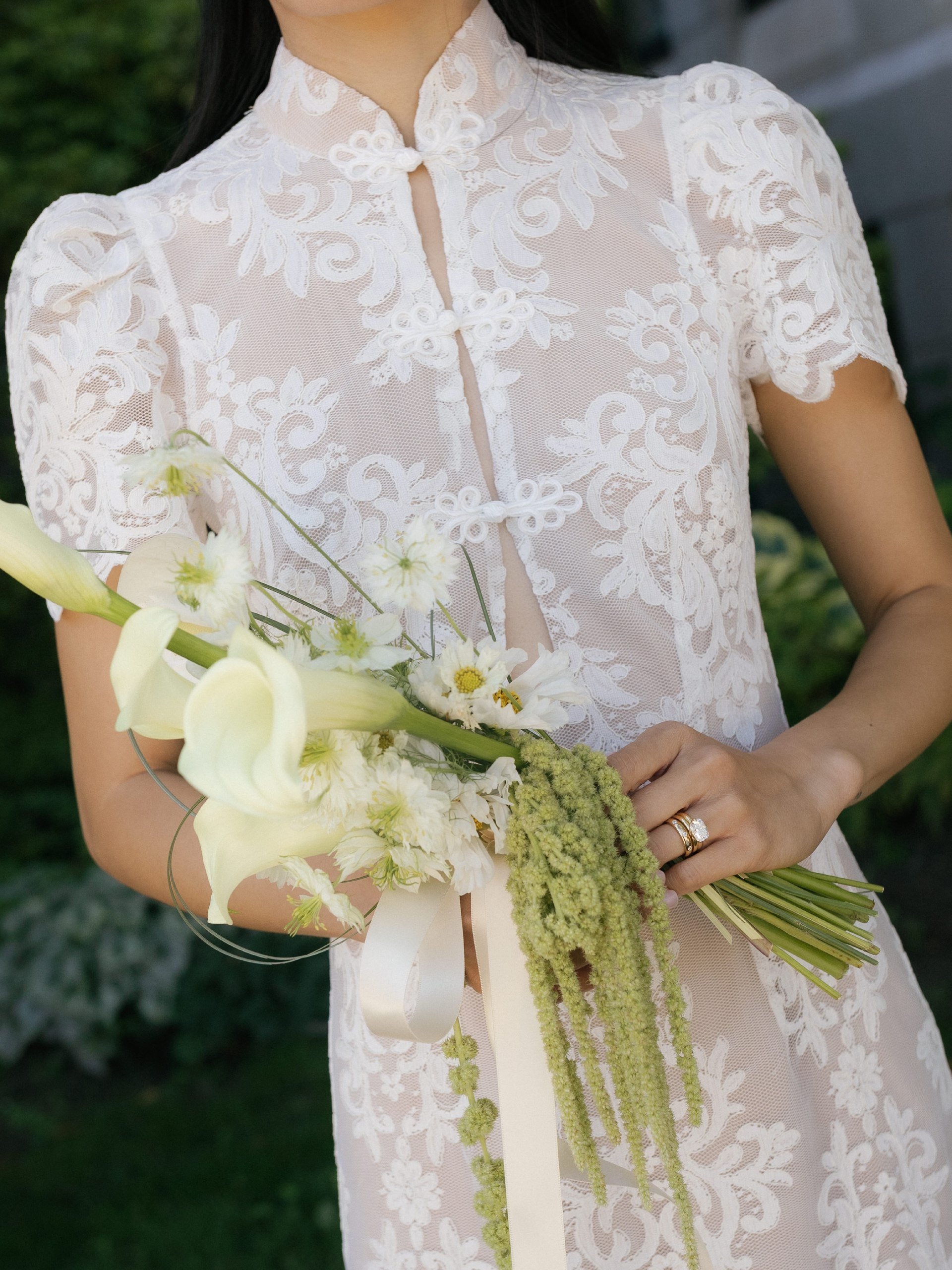
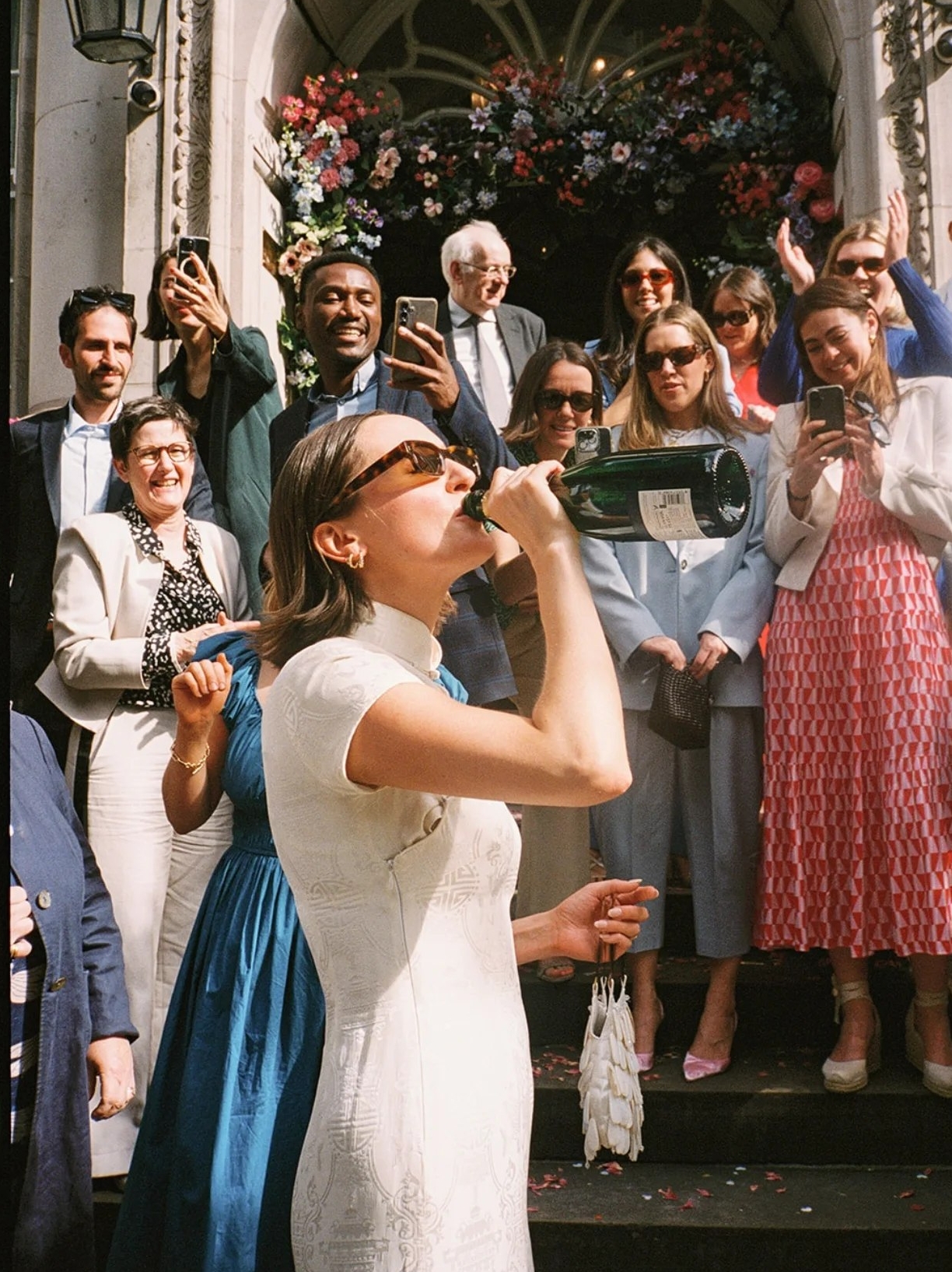
A qipao or cheongsam-inspired silhouette, fitted through the body with a mandarin collar and often a side slit, brings genuine cultural significance to a courthouse wedding along with real visual impact. Traditionally worn in red for luck and celebration, though it shows up now in a much wider range of colors and fabrics, it can honor the bride’s own heritage, nod to the groom’s or his family’s background, or simply reflect a genuine appreciation for the silhouette and its history.