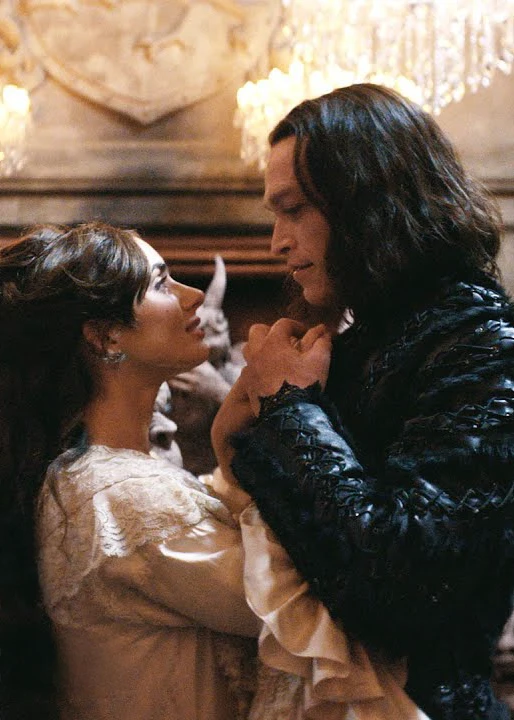
Dearest gentle reader,
Let’s be honest: after Season 4 of Bridgerton, each of us simply got a full aesthetic upgrade. It was as if someone quietly installed a new visual plug-in directly into our brains, and now any celebration without candles, gloves, and at least one dramatic staircase entrance suddenly feels… underproduced. And yes, this is one of those rare moments when screen romance unexpectedly becomes a creative brief for real life.
Benedict Bridgerton becomes the center of the narrative, and Sophie Baek enters as a heroine with obstacles at every level, social class, status, and her own fight to be seen as a full person in the world. In short, Season 4 did exactly what the best moodboard universes always do: it gave the wedding industry an entirely new vocabulary of desire. And now we’re going to unpack it piece by piece!
How Regency Became a Wedding Trend
Bridgerton premiered on Christmas Day 2020 and arrived as a visual sugar rush at a moment when “going out” felt like a historical reenactment in itself. It was called a visual feast, and the show’s whole proposition is basically: what if the marriage market looked like an editorial spread?
Weddings are one of the only modern rituals where heightened romance, high aesthetics, and a little theatrical drama are not only allowed, they’re expected. That’s the first reason it hit brides exactly where they live.
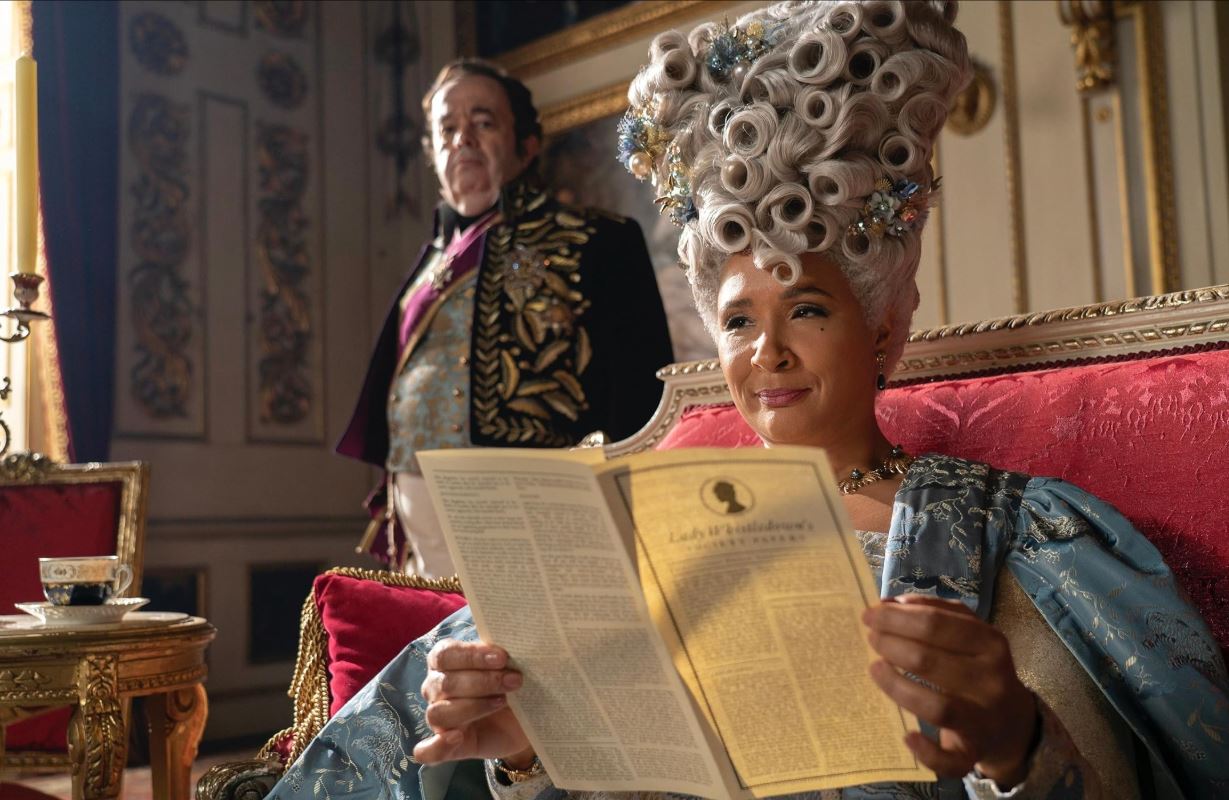
Photo: Courtesy of Netflix
Then came the measurable ripple, which is where the Bridgerton effect stops being a metaphor and starts being a graph. Pinterest reported searches for “Regencycore” rising by more than 200 percent. Bridal designers noted a renewed demand for empire waist silhouettes, corsetry, and opera-length gloves.
By the time Season 2 arrived, the aesthetic had matured. Brides were not simply referencing Regency fashion. They were building entire weddings around the idea of a social season. Even wedding planners began receiving requests for “ballroom-style receptions,” a phrase that had been sitting quietly in the archives of European aristocracy for about two centuries.
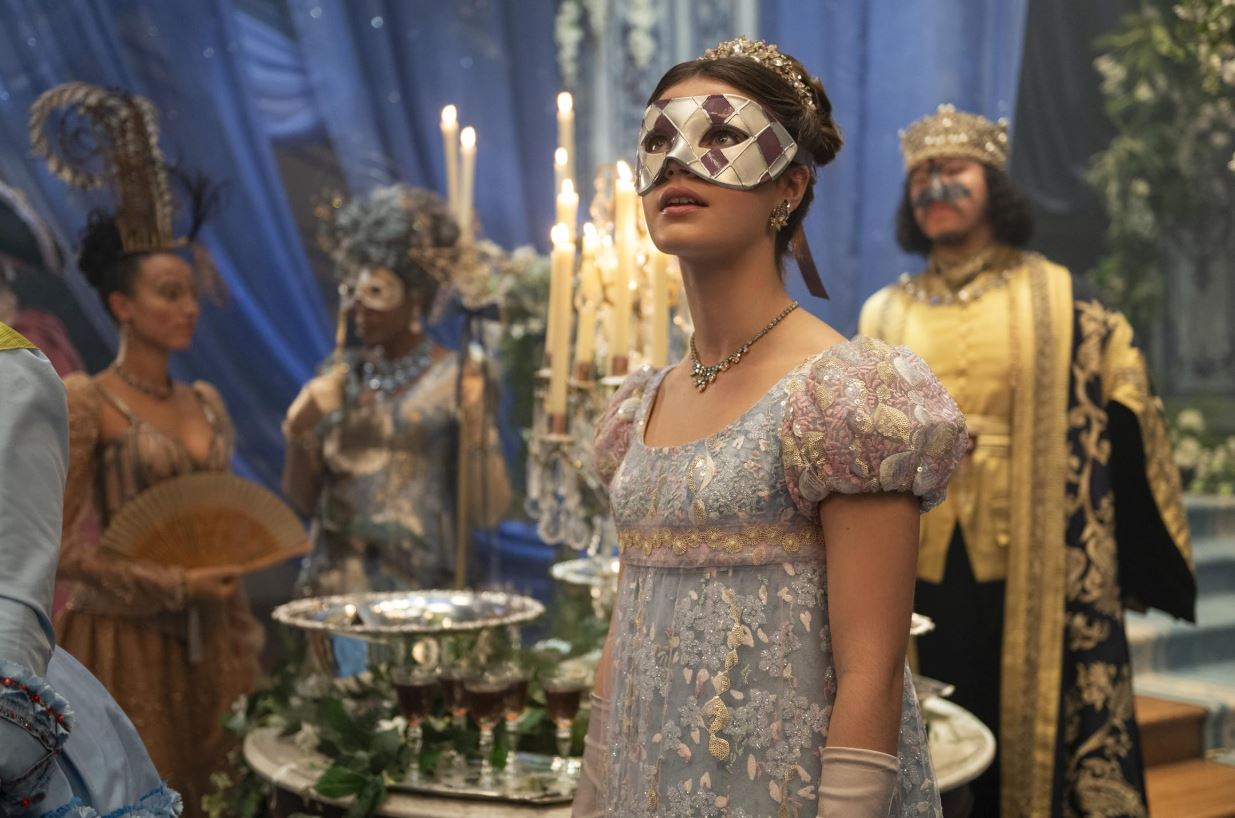
Photo: Courtesy of Netflix
Bridgerton’s Secret
It’s not historically accurate; it is better than that. The central magic of the show operates almost like a fashion fanfiction of the Regency era, and it does so very consciously. This philosophy, “we are building a world, not teaching a history lesson,” appears again and again in official interviews. The production design of the show has often been described as a heightened pastiche: a version of the era pushed toward its most expressive limits through color, lighting, floral abundance, ballroom themes, and rich textures.
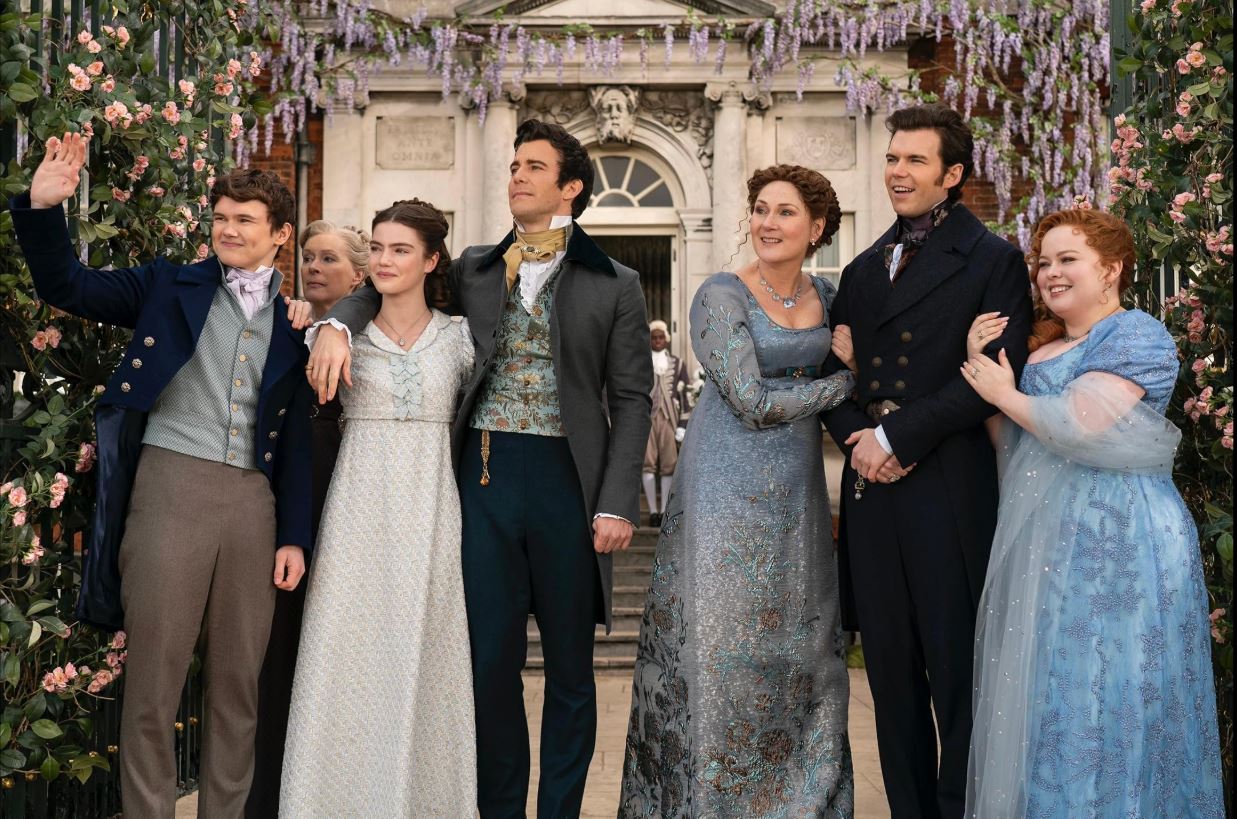
Photo: Courtesy of Netflix
This is where the series does something the wedding industry in 2026 can no longer ignore: inclusion is presented as a visual norm. Hair design offers a particularly clear example. In interviews about hair and wigs, designer Marc Pilcher explained that when working on Queen Charlotte’s image, he did not want to simply replicate the white European portraits of the period. Instead, he aimed to represent a multiracial identity, incorporating braids, dreadlocks, and natural Afro textures within the silhouette of powdered aristocratic authority.
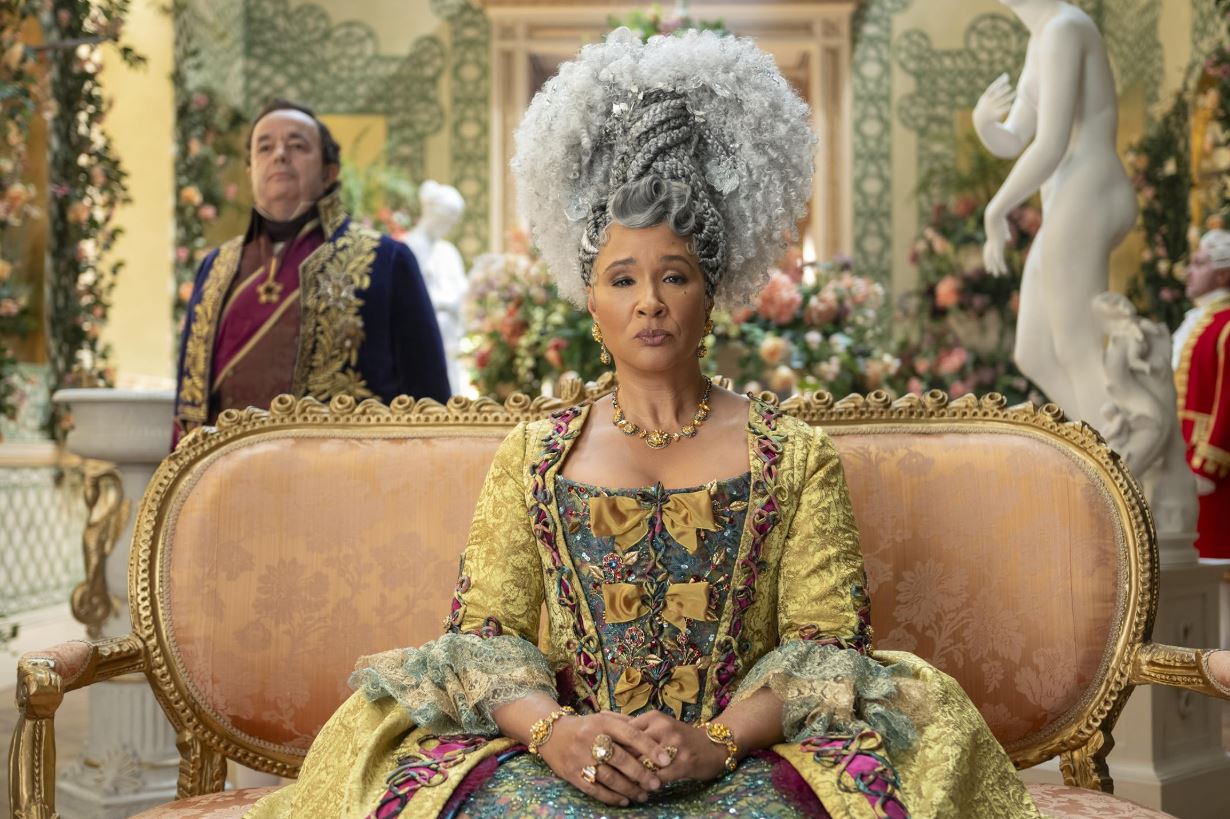
Photo: Courtesy of Netflix
Inclusion also appears subtly in the wardrobe itself. The costumes of Kate Sharma, Anthony Bridgerton’s wife, carry carefully integrated references to South Asian aesthetics. Her looks incorporate elements inspired by sari draping, along with paisley motifs and jewel tones associated with Indian textiles. The jewelry echoes traditional South Asian bridal adornment, including ornate chandelier earrings and headpiece-inspired designs reminiscent of the maang tikka. Even some silhouettes hint at structures reminiscent of lehenga ensembles, though they are always adapted to the Regency framework of the show.
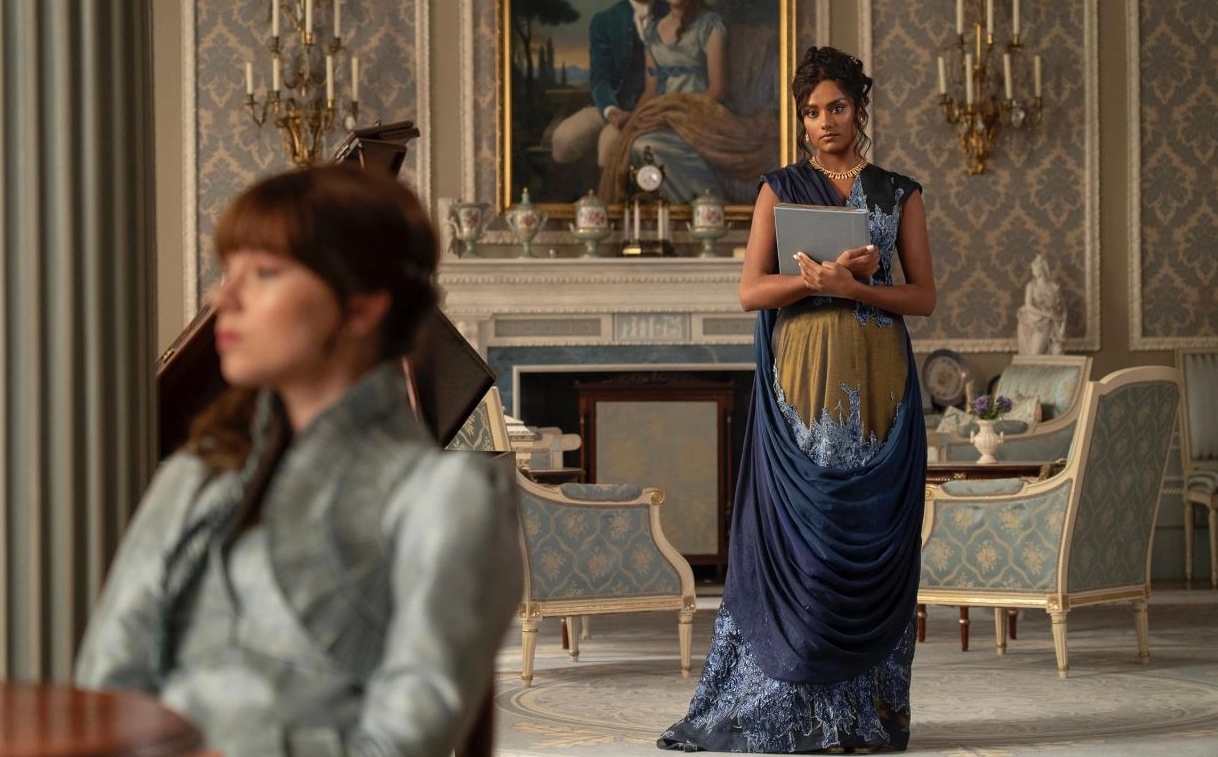
Photo: Courtesy of Netflix
Main Fashion Takes
One of the most recognizable fashion signatures of the series is how every family operates within its own color universe. The Bridgertons move through the series in soft blues, lilacs, and powdery pastels, a palette that quietly signals heritage, restraint, and classic “old money” polish. The Featheringtons sit on the opposite end of the spectrum, leaning into punchy yellows, citrus greens, and saturated oranges that feel intentionally loud, playful, and just a little socially ambitious.
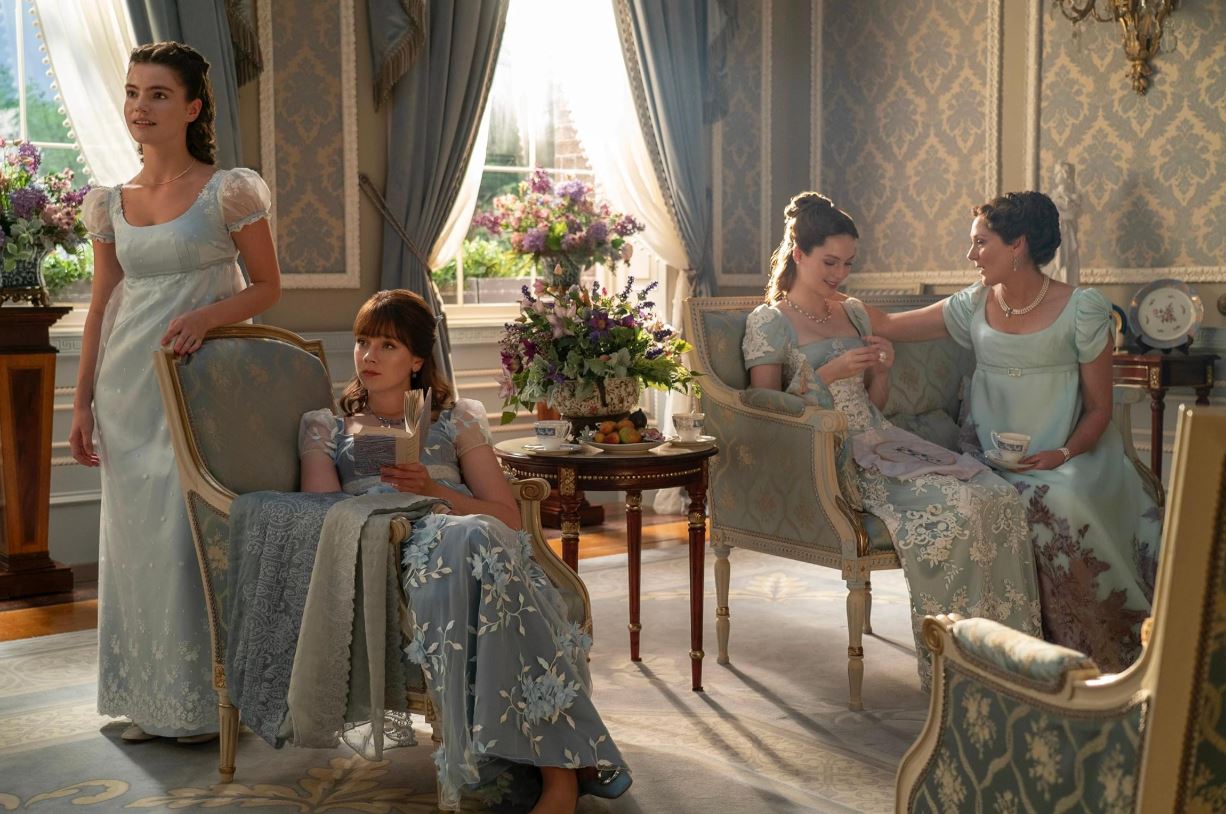
Photo: Courtesy of Netflix
Across the seasons, thousands of costumes have been created for the series, many handcrafted and intricately detailed, yet the costume team has also taken a surprisingly sustainable approach, often reworking garments across seasons and background characters. Within this expansive visual world, each leading woman still emerges with a completely distinct fashion identity. Silhouettes, fabrics, and styling choices evolve alongside their personal arcs, turning the show into something like a study of four very different bridal archetypes.
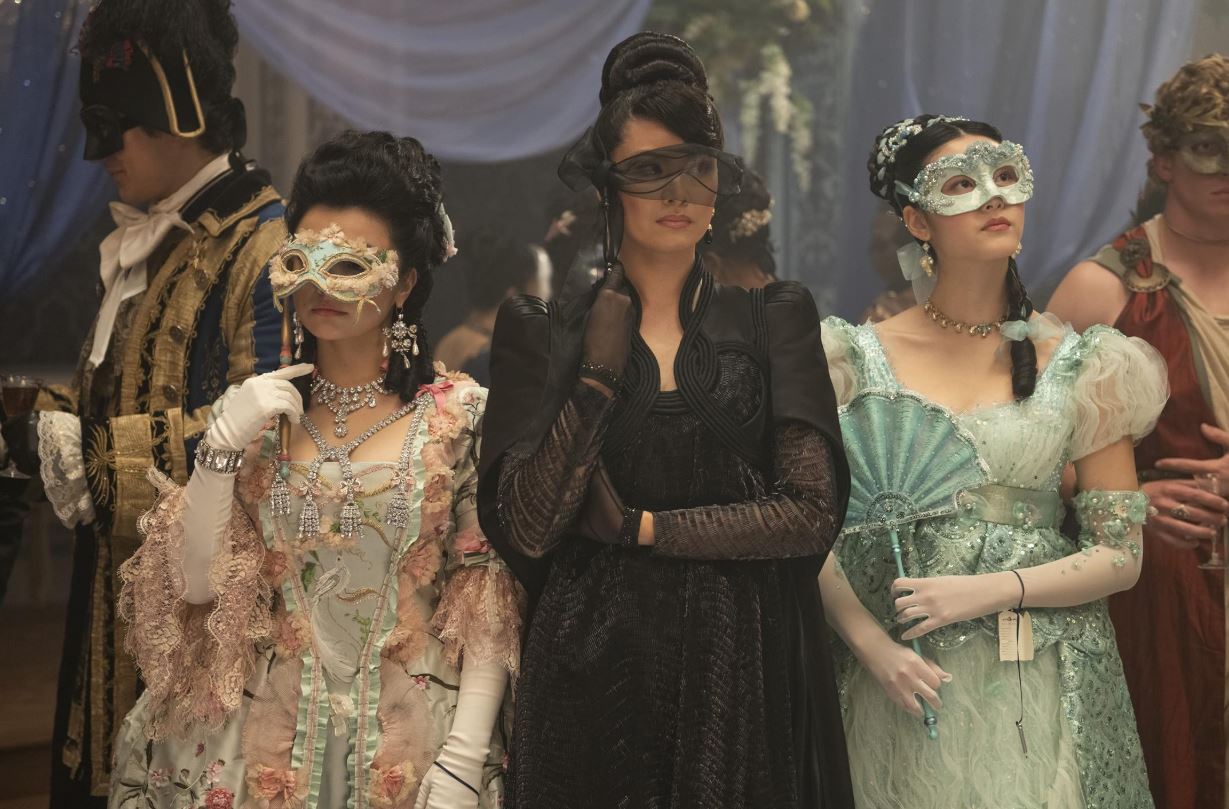
Photo: Courtesy of Netflix
Daphne: The Season’s Diamond
Daphne’s wardrobe is basically a masterclass in aristocratic restraint. The silhouettes stay clean, the empire waistlines sharp, and the palette lives almost entirely in ivory, powder blue, and pale lilac, a visual code for innocence, pedigree, and quiet power.
Across the series, the costume team created thousands of garments, with Daphne alone cycling through around a hundred looks as her character moves from porcelain debutante to self-assured woman. For modern bridal fashion, the takeaway is simple: classic only works when it feels intentional. When the cut is perfect, and the fabric carries the weight, silence becomes the loudest statement in the room.
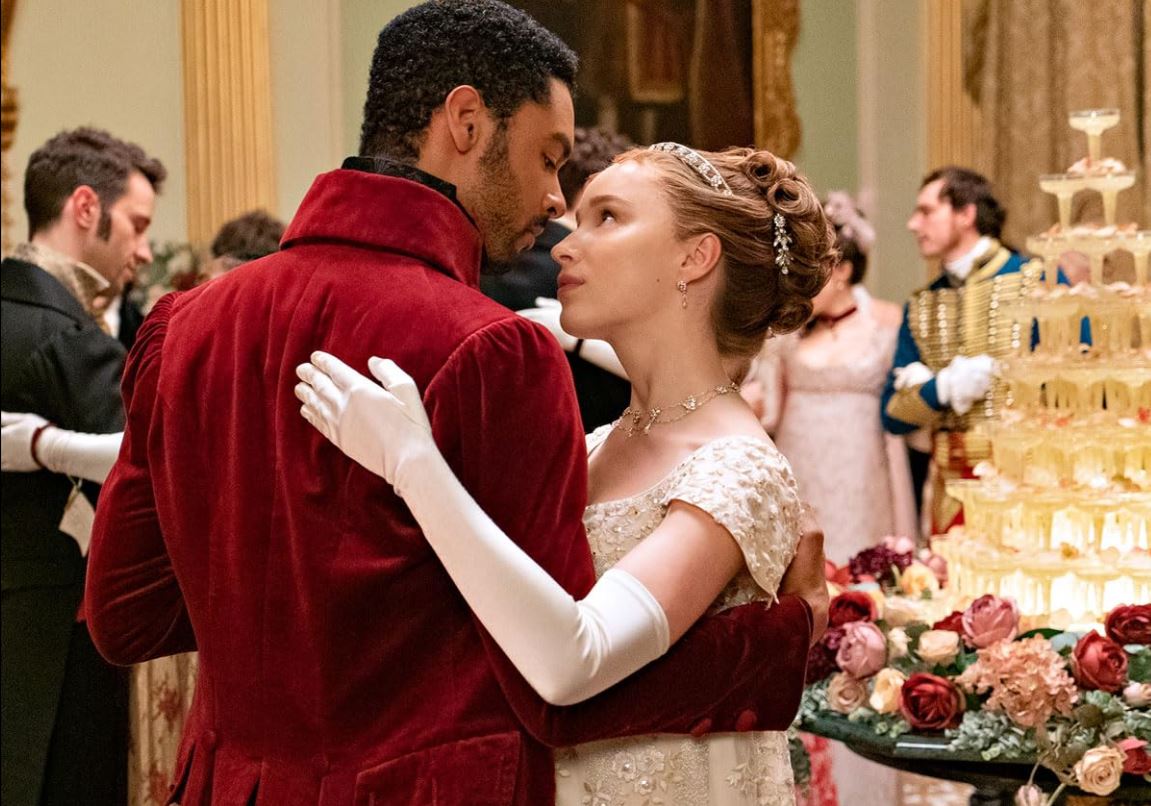
Photo: Courtesy of Netflix
Kate: Jewel Tones and Quiet Rebellion
Kate enters Season II with an entirely different energy. Where Daphne’s wardrobe floats, Kate’s grounds itself. The fabrics grow heavier, the silhouettes sharper, and the color palette deepens into jewel tones, saturated greens, teals, and midnight blues that immediately signal strength and independence.
For weddings, Kate’s fashion language pushes a powerful idea: cultural references don’t need to scream to be visible. Sometimes the most sophisticated nods live in the cut, the fabric weight, and the way a silhouette moves.
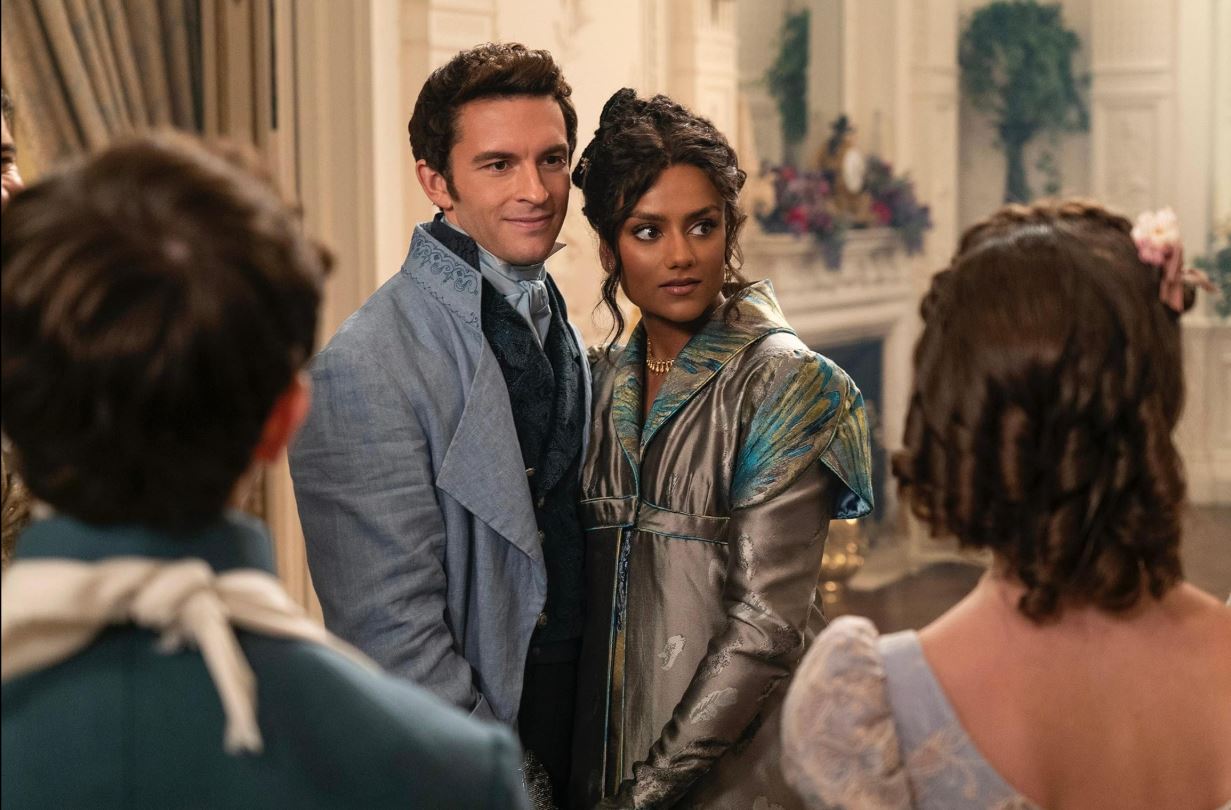
Photo: Courtesy of Netflix
Penelope: the Glow-up that Rewrote the Rules
Season III delivers one of the most satisfying wardrobe transformations on television. Penelope moves from the chaotic citrus palette of the Featherington house into something deeper, richer, and her own. Her breakout moment arrives in dark emerald, layered over iridescent fabrics that catch green and copper in the light, echoing both her hair and her quiet rise into confidence.
From there, the palette softens into more controlled tones, proving that her transformation isn’t about abandoning color but about mastering it. The internet quickly turned the arc into a thousand “glow-up” edits, and for good reason. Penelope’s fashion story legitimizes a growing bridal shift: the bride doesn’t have to fade into neutrality. She can glow, shimmer, deepen, and take up space without apologizing for it.
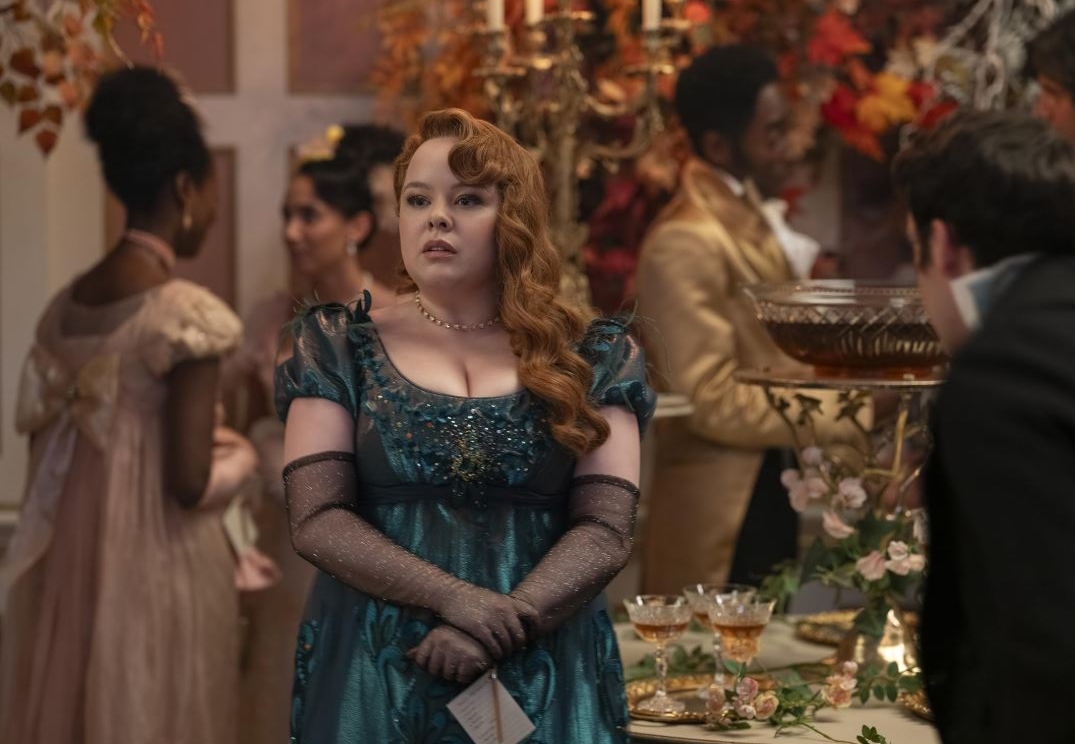
Photo: Courtesy of Netflix
Sophie: Cinderella, rewritten for 2026
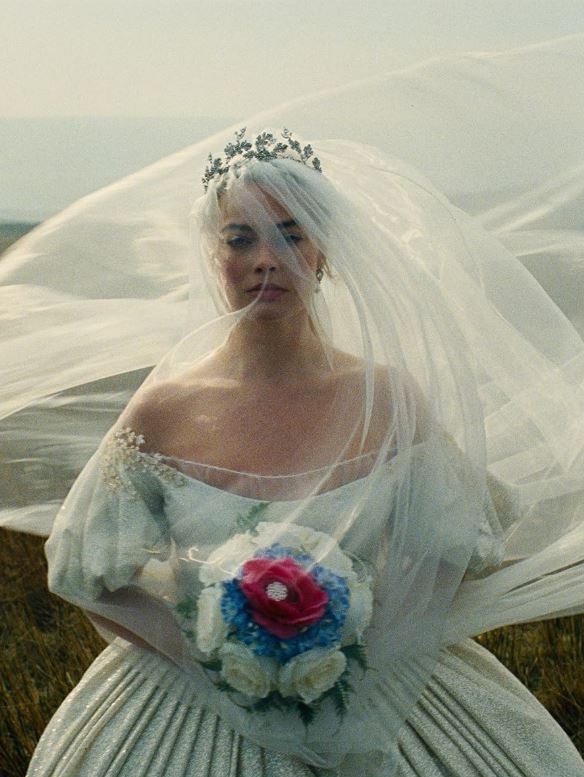
Season IV closes the arc with pure cinematic romance. Sophie’s now-iconic “Lady in Silver” look was a carefully engineered moment designed to hide her identity while making the entire room fall in love. Layers of silver lame chiffon, sequins, and light-catching textures create the illusion of liquid movement, while the mask adds a mysterious theatrical edge that feels far more modern than classic fairy-tale nostalgia. And when the story finally lands on her wedding scene with Benedict, the aesthetic shifts again into something softer and more organic.
The gown balances countryside simplicity with romantic detail, covered in hundreds of hand-crafted silk and tulle flowers with tiny beaded centers. Even Benedict’s vest carries delicate floral embroidery saved specifically for the moment. The result feels less like a costume finale and more like a blueprint for the new era of garden weddings: cinematic, textural, and just a little bit magical.
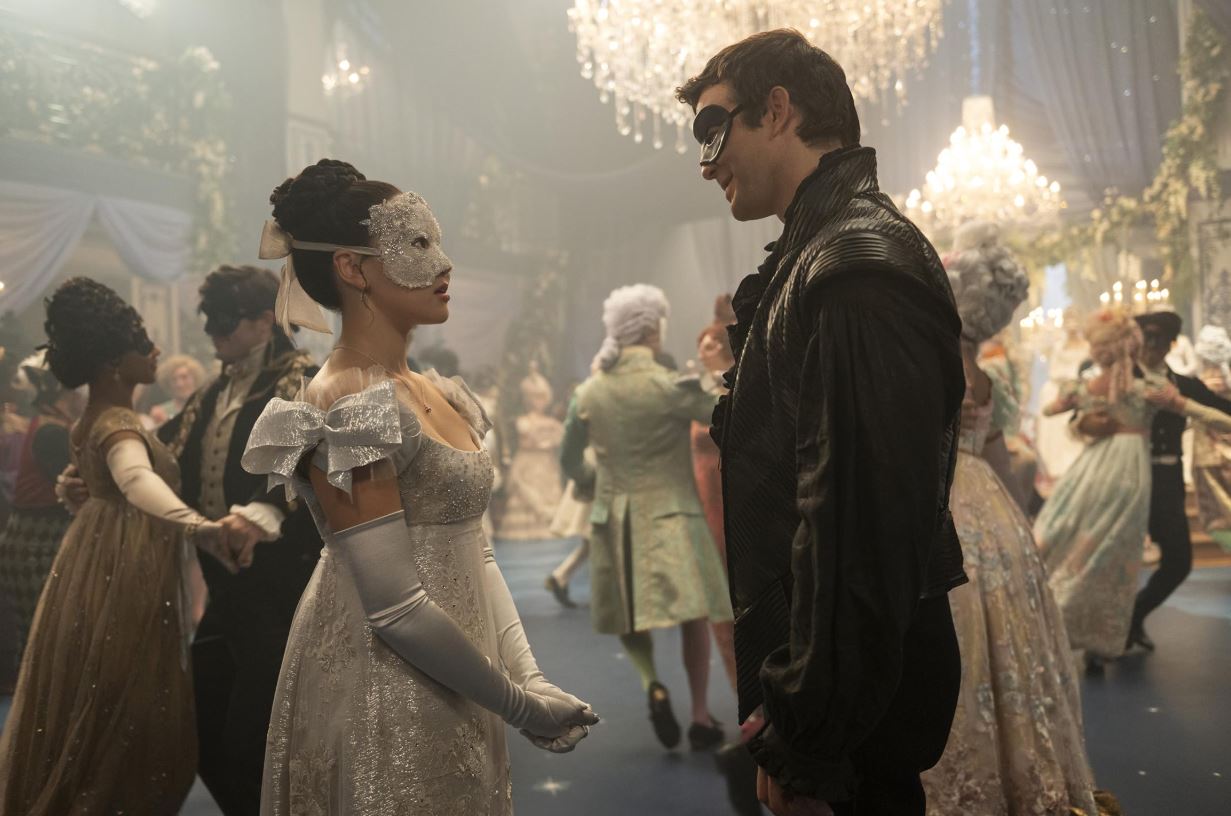
Photo: Courtesy of Netflix
Details Worth Borrowing
Beneath the spectacle, the series quietly operates as a machine of ideas, layering fashion, rituals, and small social codes that feel surprisingly adaptable to the modern world. So we looked a bit closer and pulled the details that actually translate into weddings today. Not the obvious ones, but the kinds of elements that slip naturally into a modern celebration and instantly elevate the atmosphere.
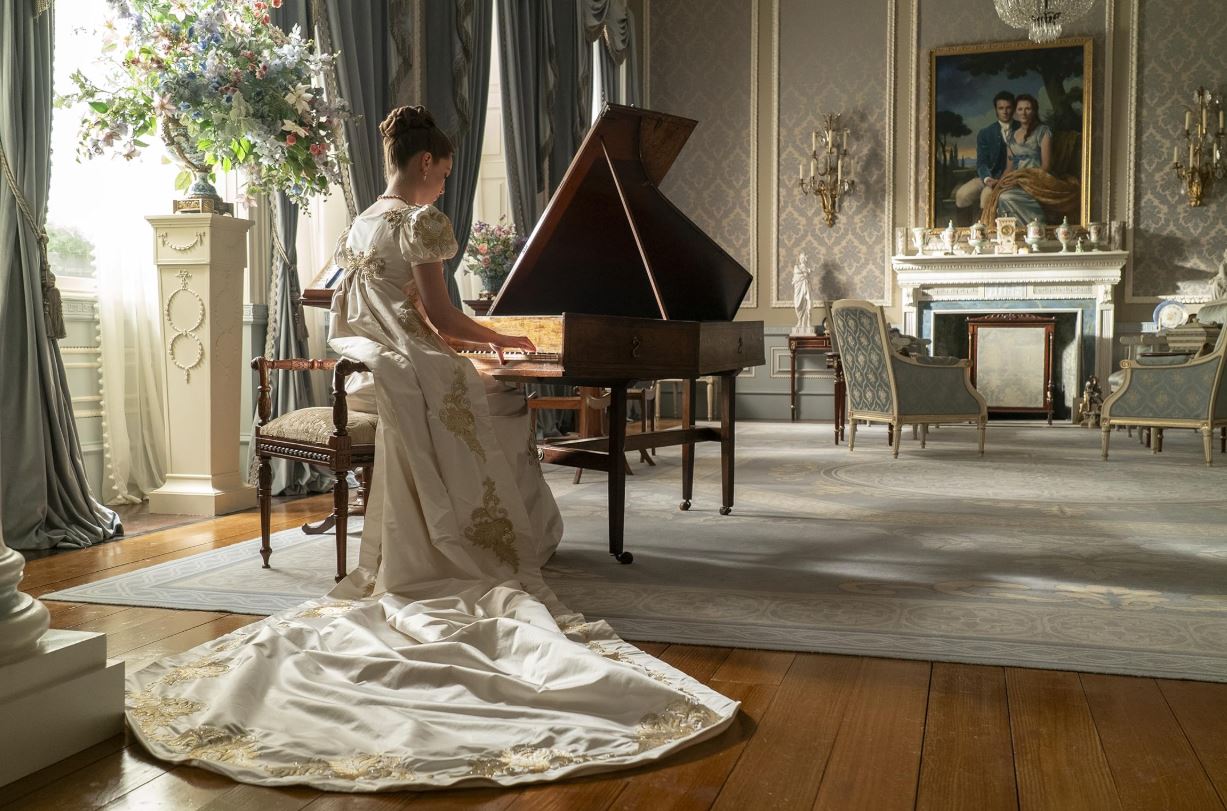
Photo: Courtesy of Netflix
Lingerie-Coded Bridal Morning
If your bridal morning is unfolding in a classic hotel suite with ornate molding, faded wallpapers, tall windows, and that quiet old-world mood, a Bridgerton-style boudoir look might be one of the most visually striking directions to take.
Throughout the series we constantly see lingerie-coded dressing moments, especially on Penelope, but in the latest season the look that quietly went viral belonged to Violet. It’s intimate and undeniably sensual, yet at the same time surprisingly covered and elegant, which is exactly why it works so well on camera. The formula itself is very Bridgerton: structured lace-up corsets, delicate bows, soft silk layers and sheer robes that float as you move through the room.
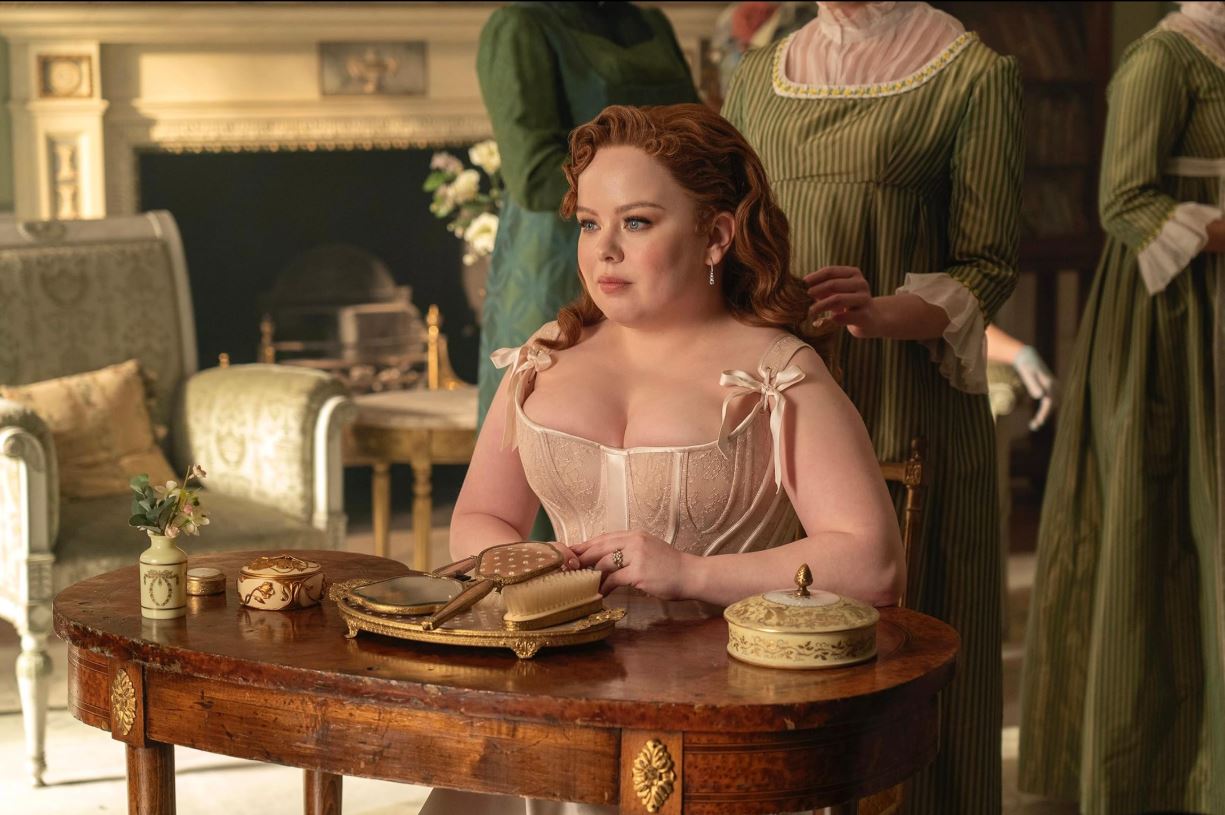
Photo: Courtesy of Netflix
The Masquerade Moment
A masquerade is one of those ideas that can either feel incredibly chic or instantly slip into Halloween territory, and Bridgerton shows exactly how to keep it on the fashion side of the line. Season four opens with a striking visual cue: the characters arrive at a ball dressed in elaborate personas, from Eloise as Joan of Arc to Violet as Titania, while Penelope and Colin lean into pirate-inspired looks.
The production created more than 170 costumes just for this sequence, turning the masquerade into what the designers described as a “production within a production.” Guests appear as everything from chess pieces to animals and celestial figures, leaning into the central idea of masquerade culture: for one evening, you become someone else. A masquerade works beautifully as a rehearsal dinner, welcome night, or afterparty moment. Give guests a clear dress code, keep the palette controlled, and opt for elegant demi-masks.
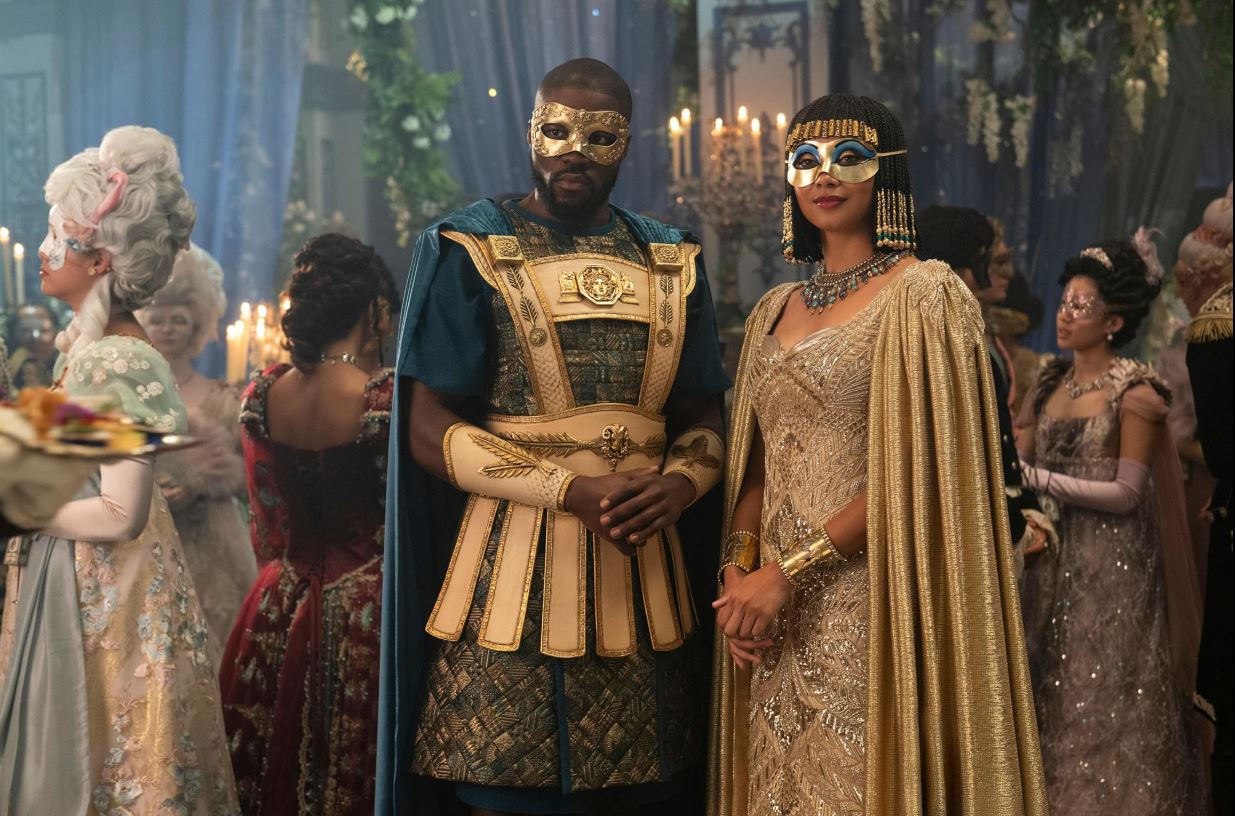
Photo: Courtesy of Netflix
Lady Whistledown–Coded Stationery
In Bridgerton, every major moment begins with paper. Letters arrive, society columns circulate, secrets travel through handwritten notes, and suddenly the entire social world feels like a story unfolding in ink. That aesthetic translates beautifully into weddings because handwritten details instantly make an event feel personal and cinematic rather than purely decorative.
One playful way to borrow the idea is to channel Lady Whistledown directly. Imagine opening a wedding invitation or welcome note with the now-iconic line, before slipping into your own version of a society announcement.
From there, the concept can weave quietly through the entire celebration: handwritten escort cards, calligraphed mini-menus, cocktail descriptions penned in ink, even small love notes tucked into napkins.
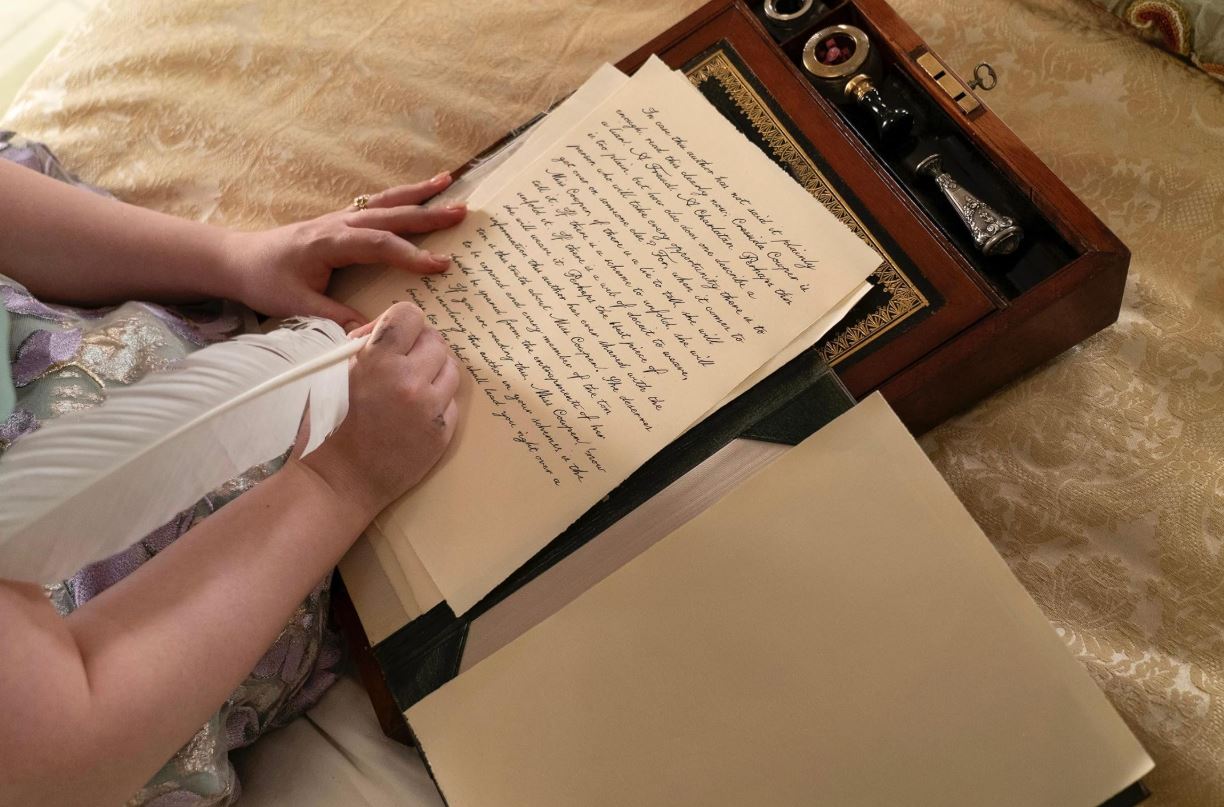
Photo: Courtesy of Netflix
A Thoughtful Approach to Event Staff Styling
In the series, every Great House has its own visual identity, and this extends even to the household staff. Their uniforms carry distinct colors, tailoring, and details that reflect the tone of the household itself, reinforcing the sense that each home is a carefully composed world.
For weddings, the idea translates beautifully when approached with respect and intention. Rather than leaving the service team visually disconnected from the event, couples sometimes choose a cohesive style that complements the overall design of the celebration. This might mean simple waistcoats for servers, elegant aprons for bartenders, ribbon accents that echo the color palette, or small monogrammed pins that tie the look together. The goal is to create a sense of visual continuity that allows the entire celebration to feel thoughtfully composed from beginning to end.
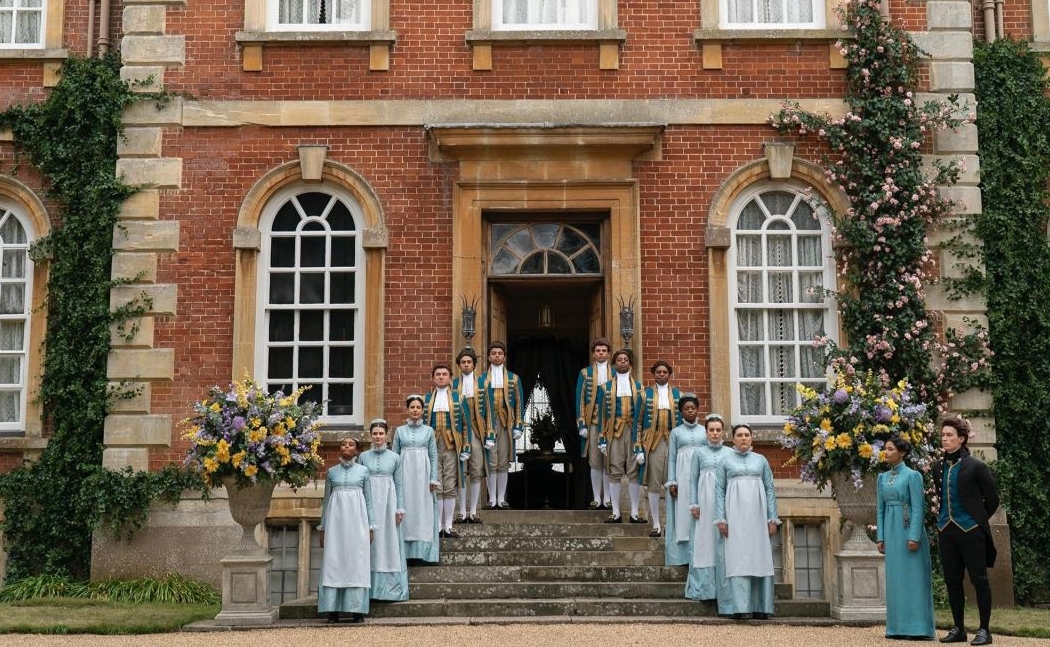
Photo: Courtesy of Netflix
The Ton on the Dance Floor
Bridgerton quietly reminds us of something modern weddings sometimes forget: dance is not just an activity, it’s a social language. The series works with movement director and choreographer Jack Murphy, who approaches these scenes almost like storytelling therapy. For him, the beauty of the steps is secondary. What matters is intention, the way movement reveals emotion and allows a scene to unfold without words.
That philosophy is why many Bridgerton dances feel so alive. Characters move, speak, argue, even confess feelings while dancing, something Murphy himself has pointed out is technically very difficult but dramatically powerful. For weddings, the idea can translate in a surprisingly simple way. Instead of limiting choreography to a single “first dance,” couples sometimes introduce a short group moment: a simple waltz, a light country dance pattern, or a brief ballroom sequence learned with friends or family. Placed during a welcome evening or midway through dinner, it becomes a shared ritual rather than a performance, the kind of moment guests end up replaying in their stories long after the weekend ends.
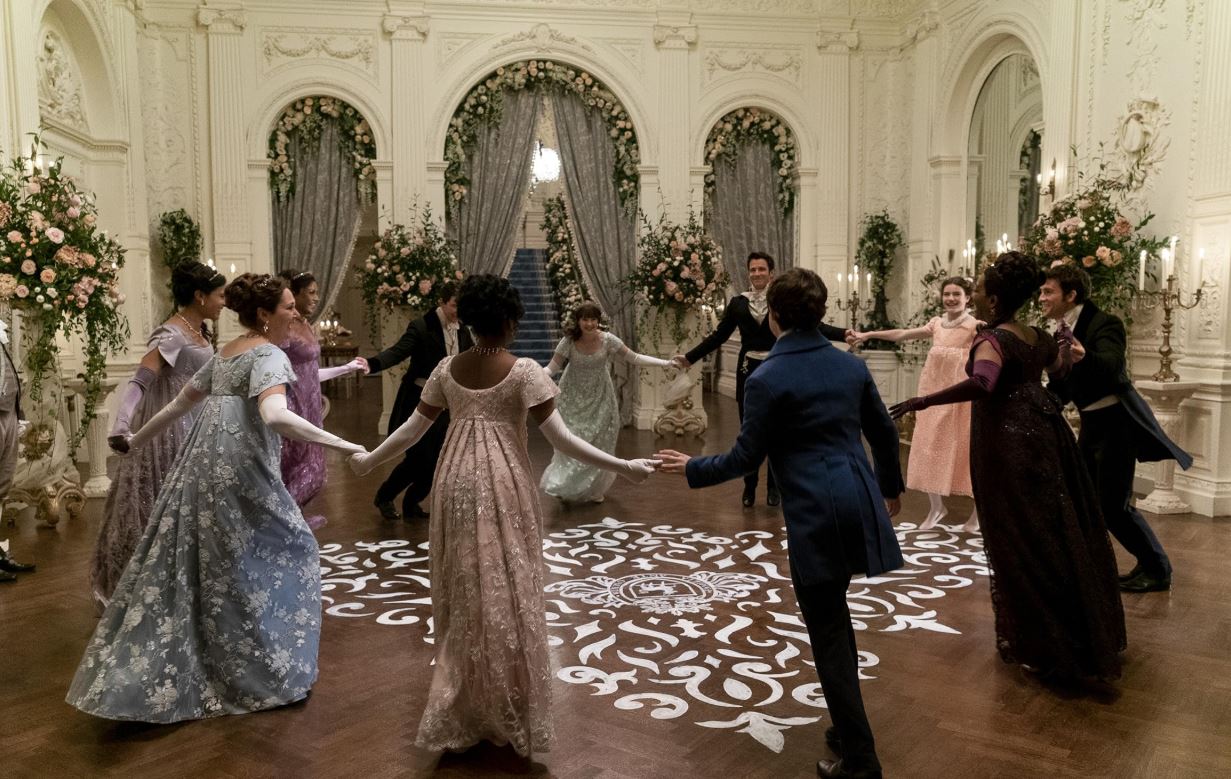
Photo: Courtesy of Netflix
Wedding As a Fair
For couples planning a summer celebration and looking for something more dynamic than a traditional banquet, one beautiful idea is to create the feeling of a small evening fair unfolding across the space. Instead of keeping everyone seated for hours, the celebration becomes something guests move through: wandering between softly lit tents, stopping for a drink, discovering desserts, chatting in lounge corners, and gradually drifting toward the dance floor as the night deepens.
The structure can be surprisingly simple. To keep the atmosphere elegant rather than festival-like, anchor everything with one clear visual thread, whether a defined palette, a crest, or repeating fabrics in the drapery.
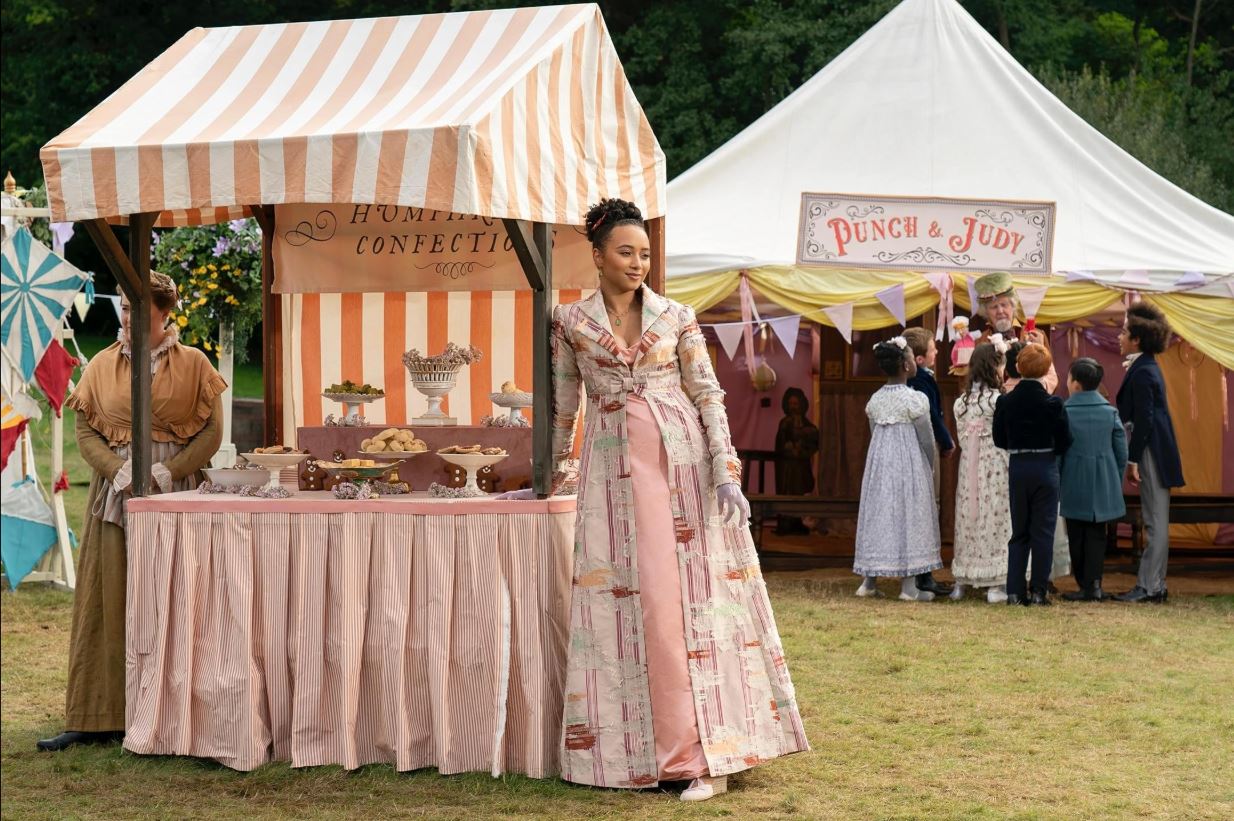
Photo: Courtesy of Netflix