Dearest gentle reader, the moment has arrived. A new season of Bridgerton is finally here, sweeping us back into the swirl of Regency-era London — all candlelight, whispered scandals, and impossibly good tailoring. And if there’s one thing this show does every single time, it’s make us fall in love with fashion all over again. We couldn’t resist diving in ourselves, spotlighting two accessories brides might want to consider as they channel a little of that Bridgerton magic into their own wedding day.
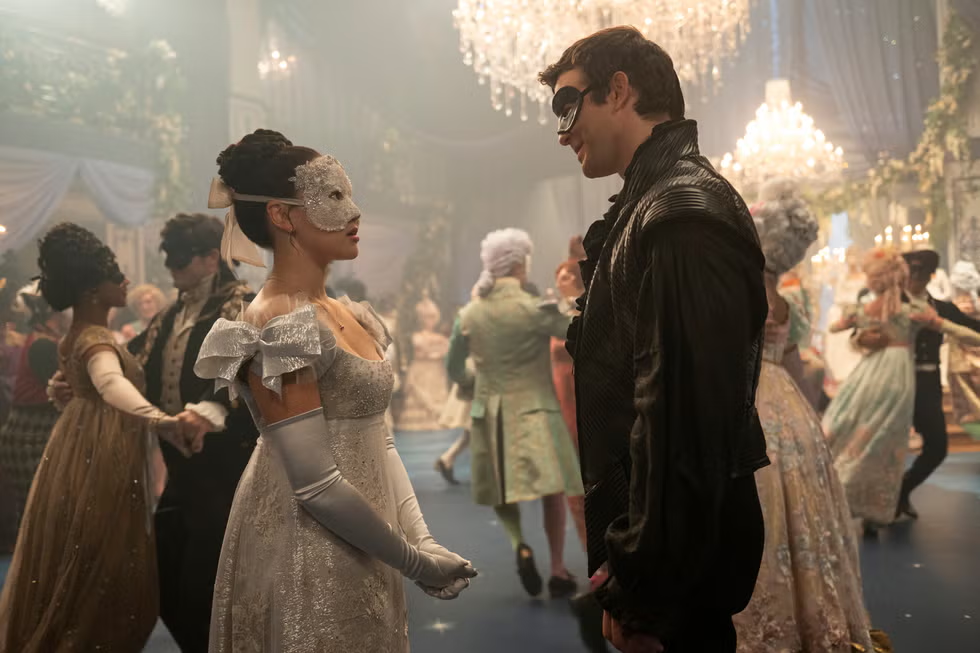
Season 4 turns its gaze to Benedict Bridgerton, played by Luke Thompson, and his unexpected romance with the mysterious Lady in Silver — Sophie Baek, portrayed by Yerin Ha. Their story begins at Lady Violet’s masquerade ball. Sparks fly instantly, of course. But in true fairytale style, Sophie disappears before midnight can expose her secret — leaving behind not a glass slipper, but a silver glove. Yes, a glove. And honestly, the show’s Regency-core aesthetic has breathed entirely new life into the idea of gloves for modern brides overall.
Photo: Courtesy of Netflix
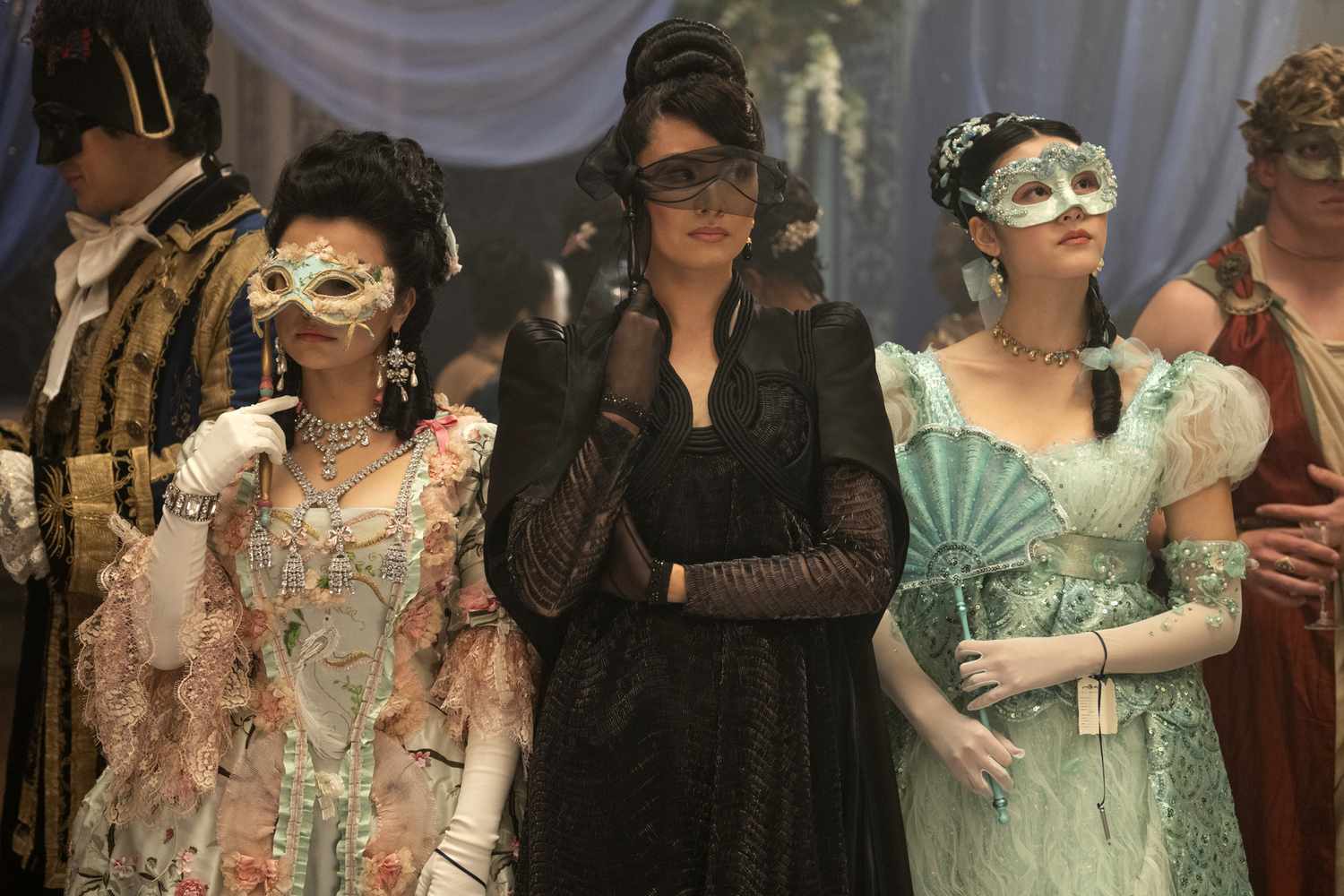
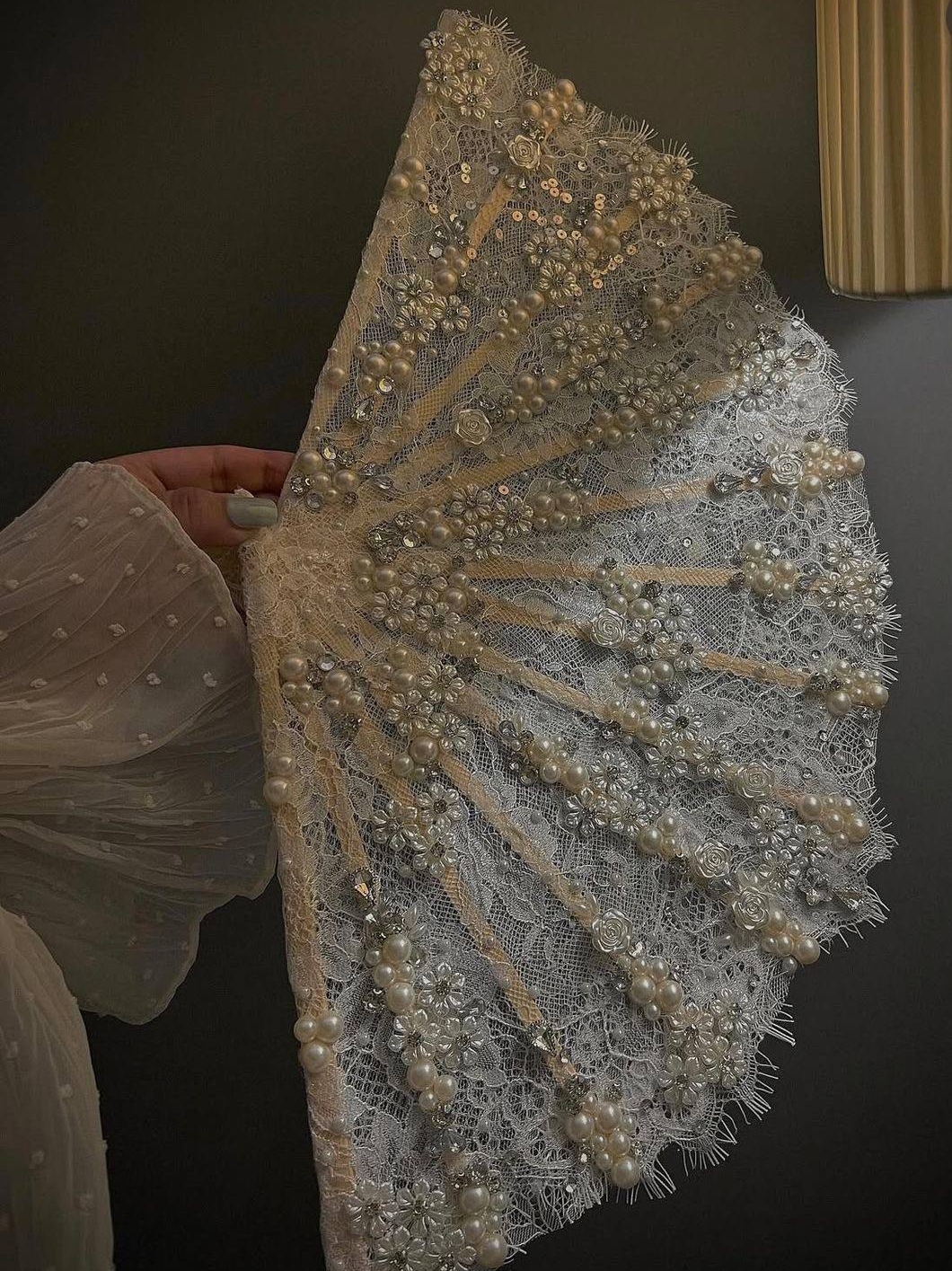
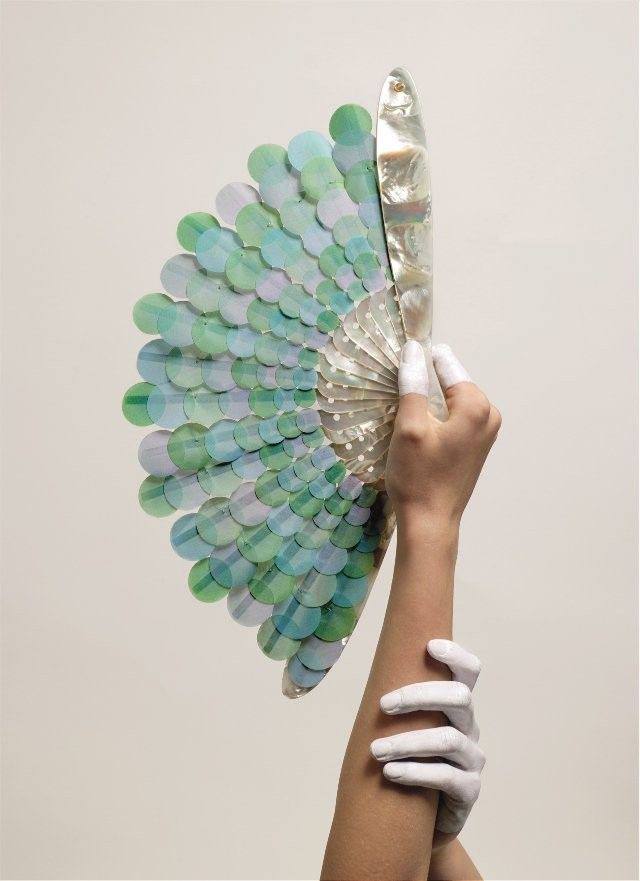
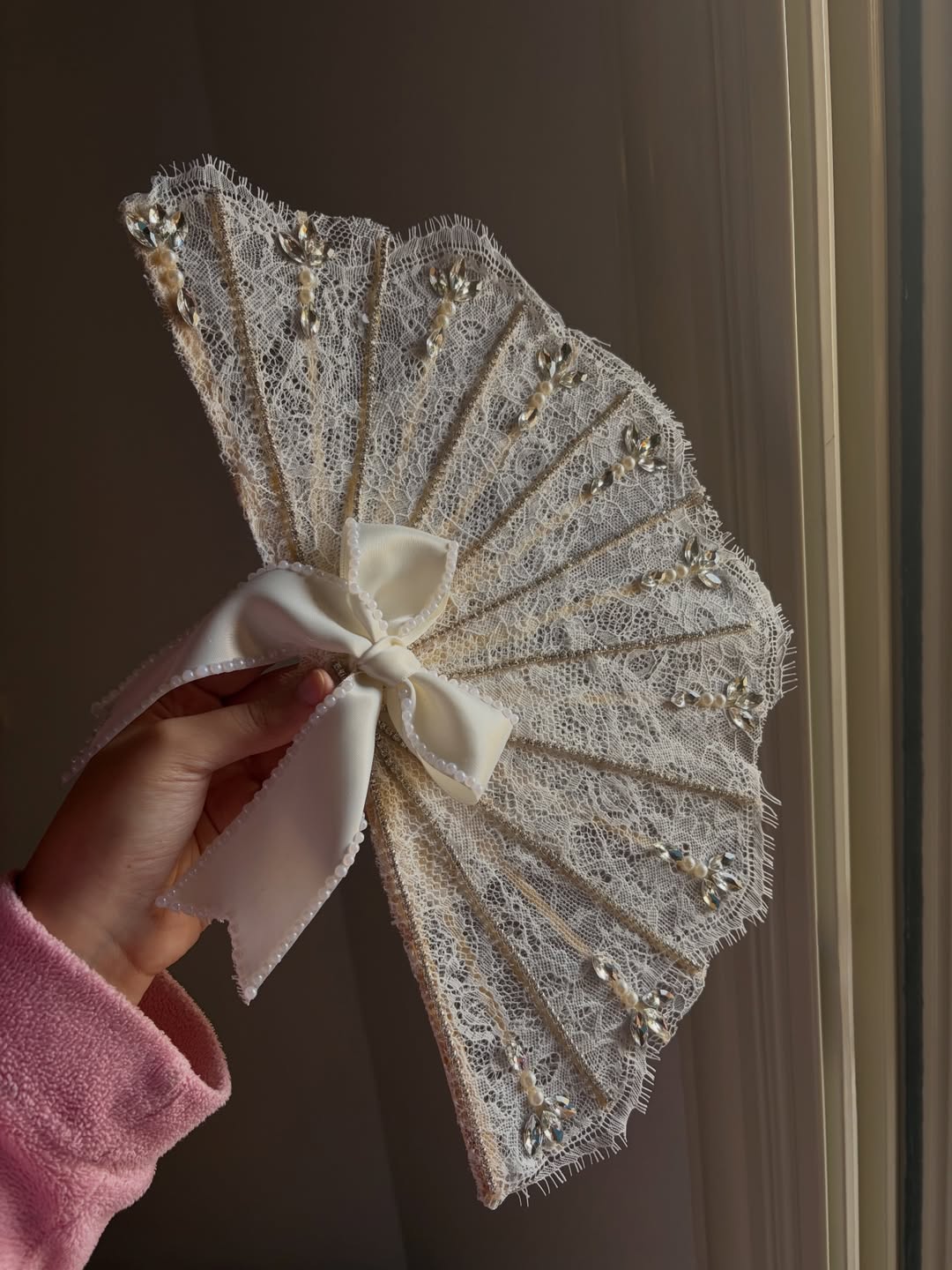
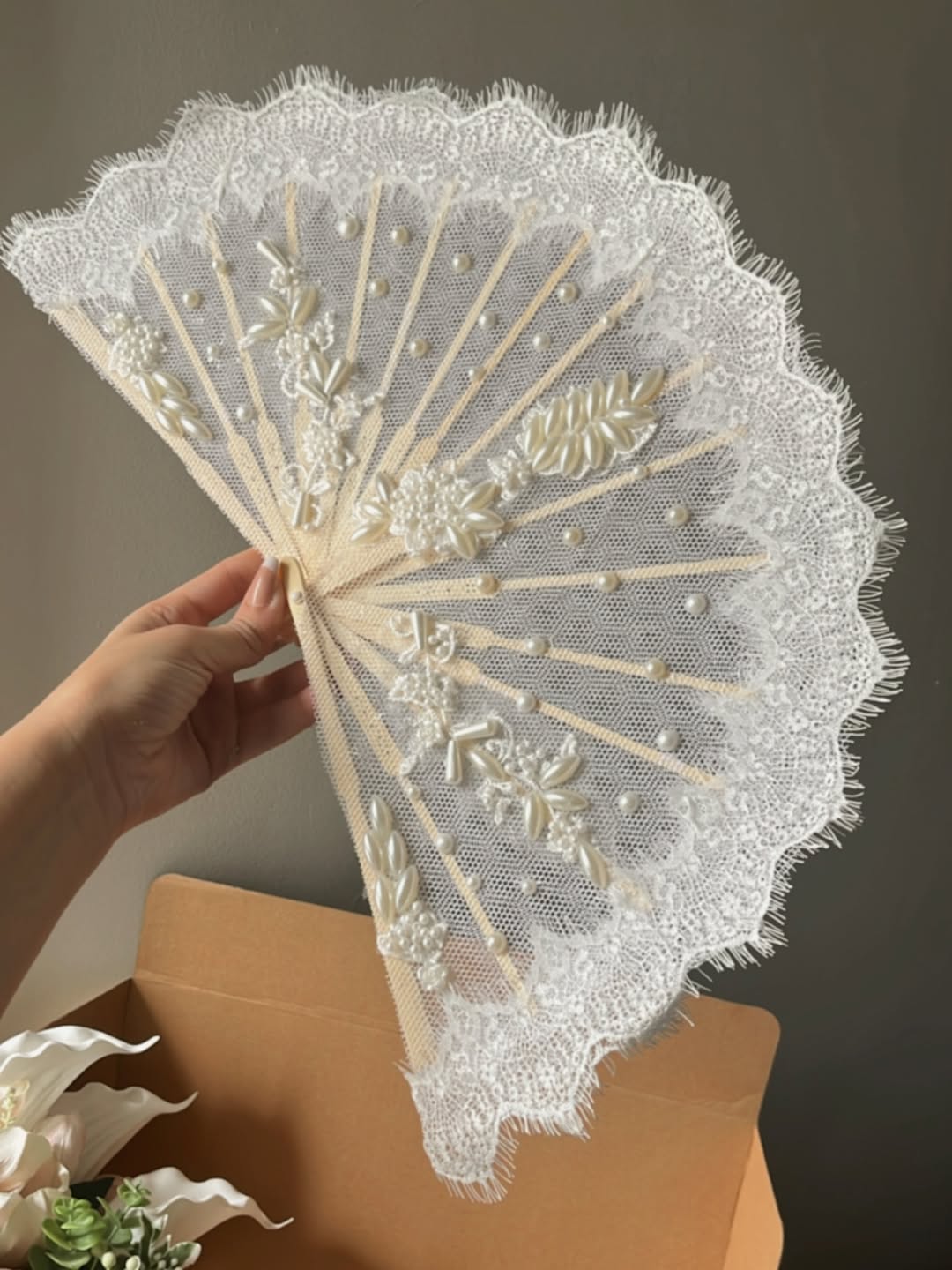
In the same iconic masquerade ball scene, Isabella Wei as Posy Li wore a sea-inspired gown that evoked a modern mermaid—a seafoam-green brocade dress with airy puffed sleeves, almost like foam dissolving into water under moonlight. She carried an exquisite fan, likely chosen to echo the theme, with delicate embellishments and textures reminiscent of mussel shells. The palette and fluid motifs even call to mind the ethereal hues of the Armani Privé Couture 2026 collection, which made such a splash.
We suggest brides keep an eye on bridal gloves and fans — not as costume play, but as expressive stylistic tools. These are details that work subtly, not loudly.
Photo: Courtesy of Netflix
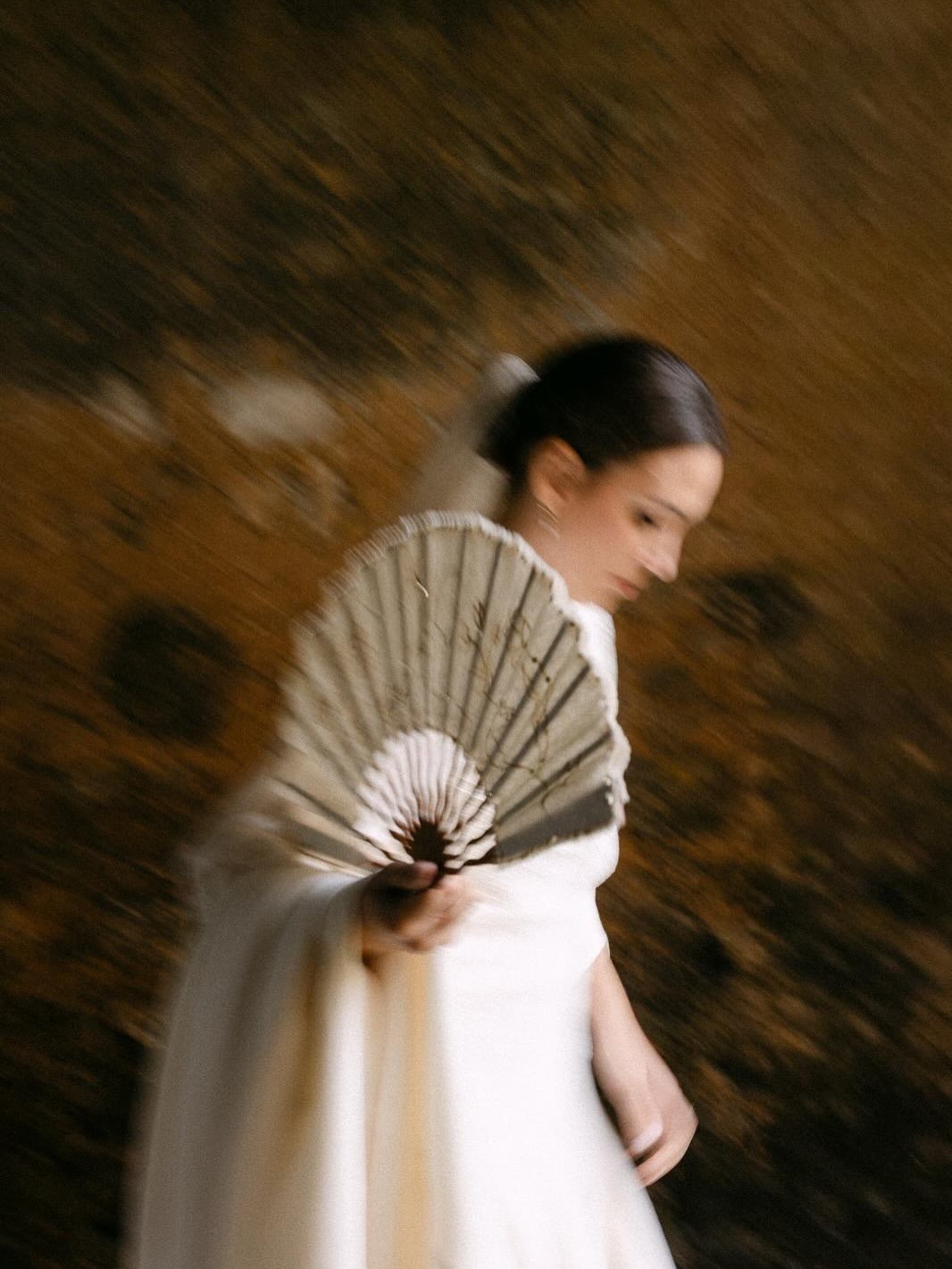
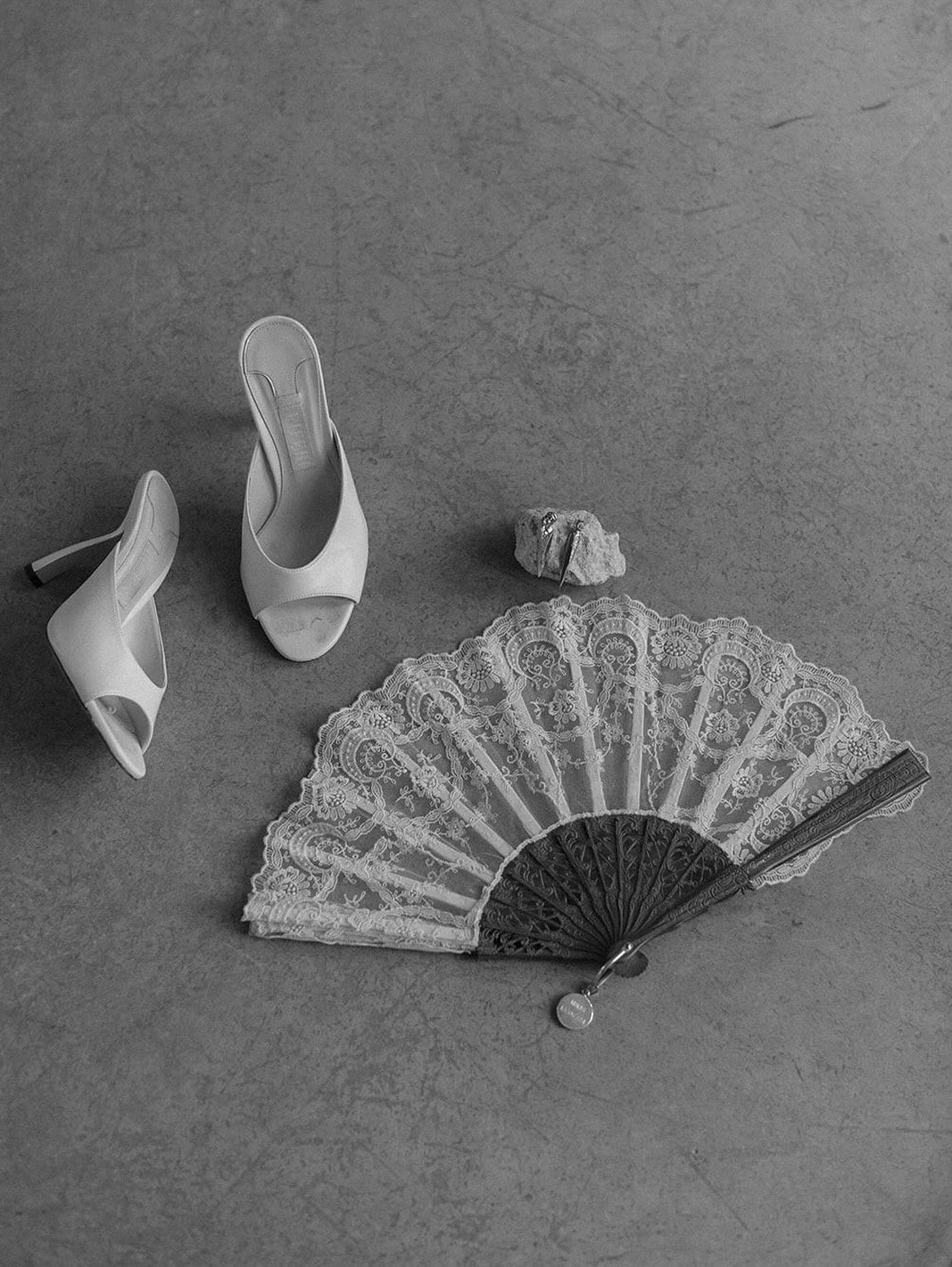
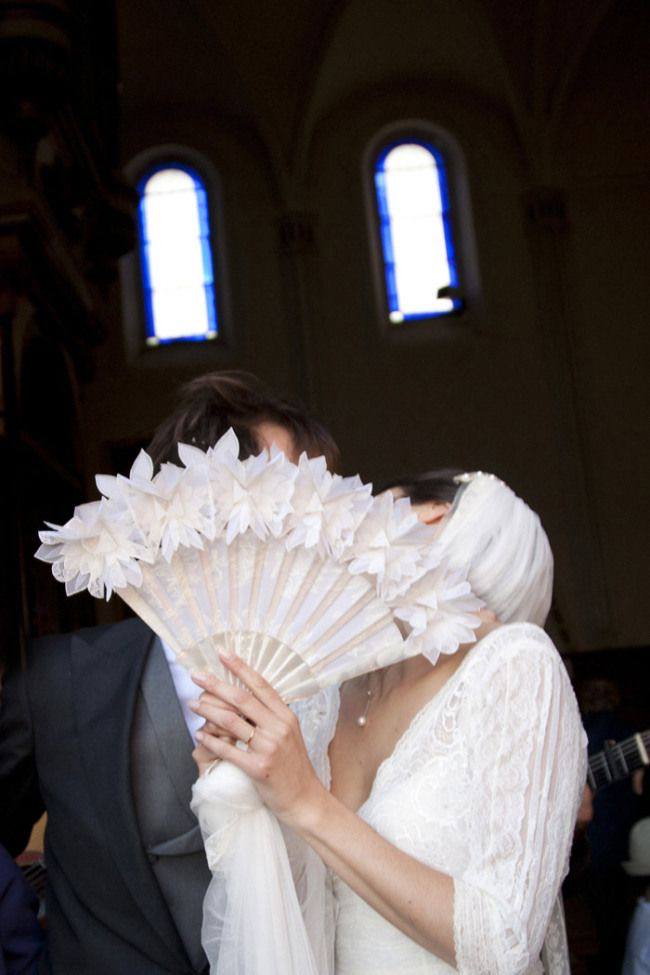
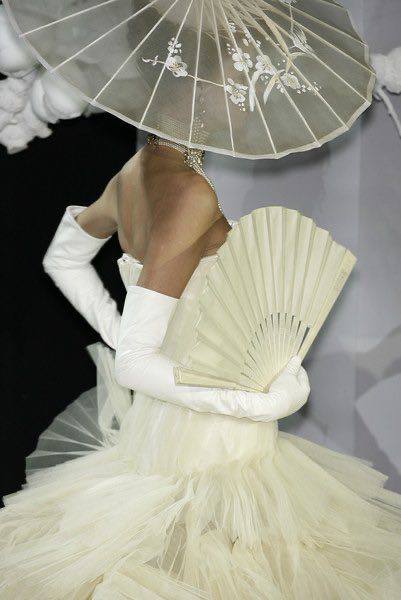
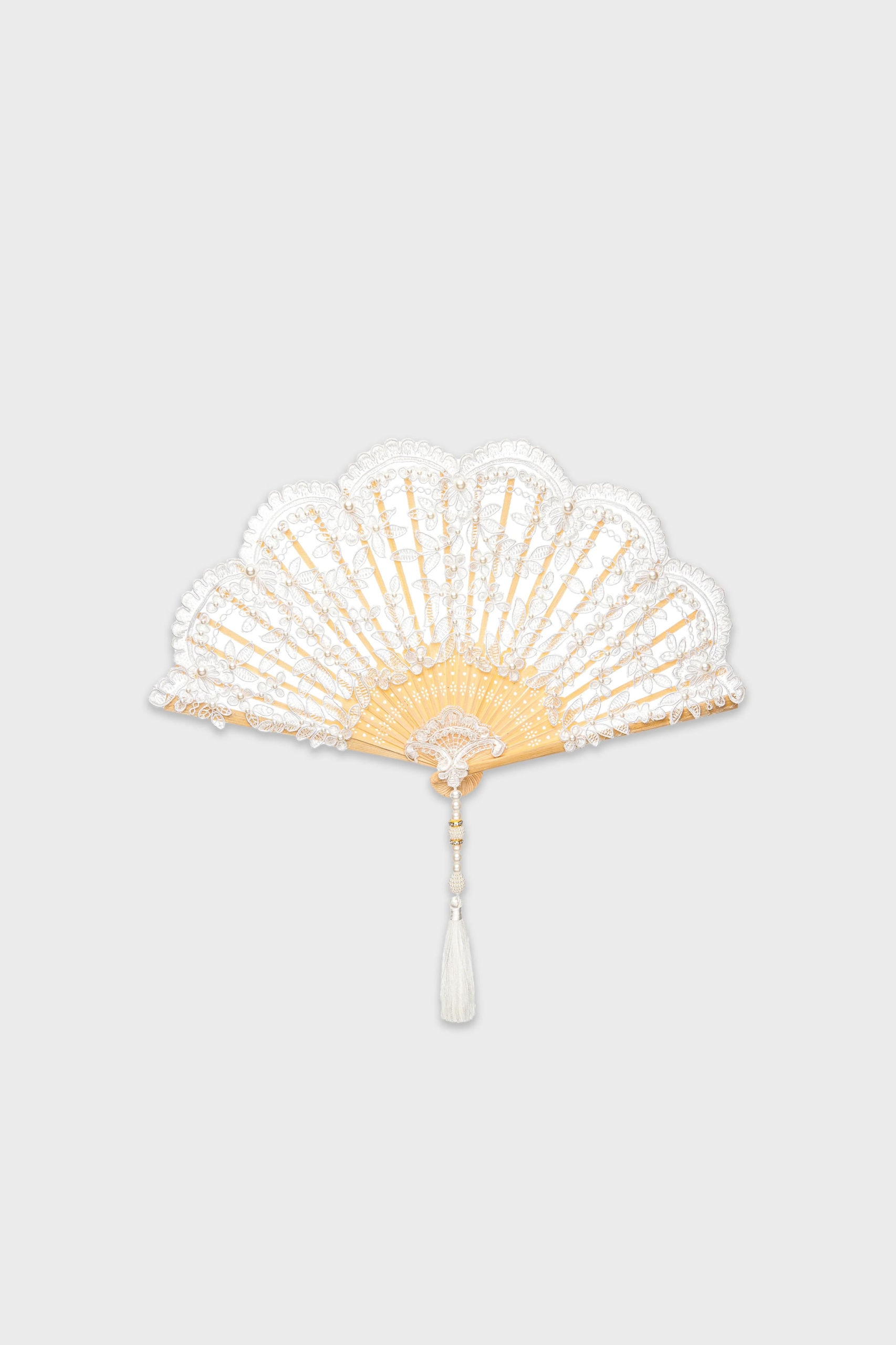
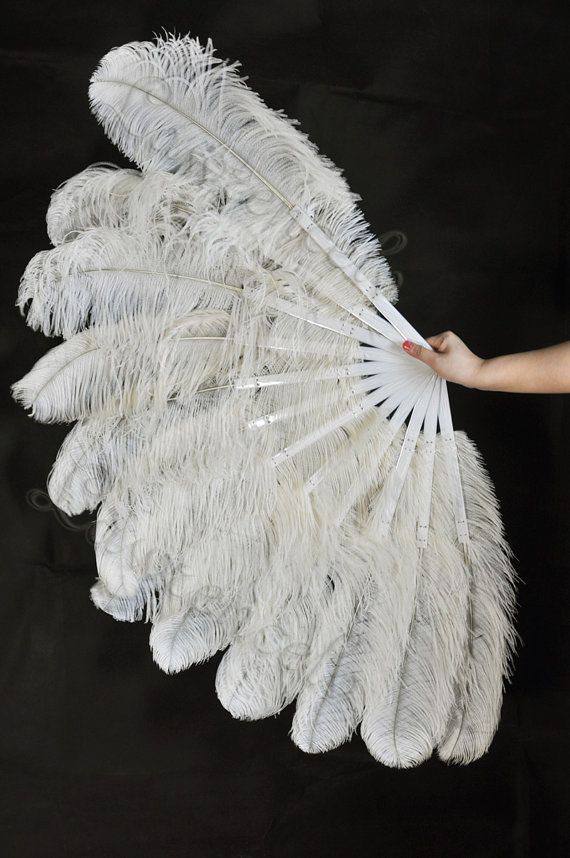
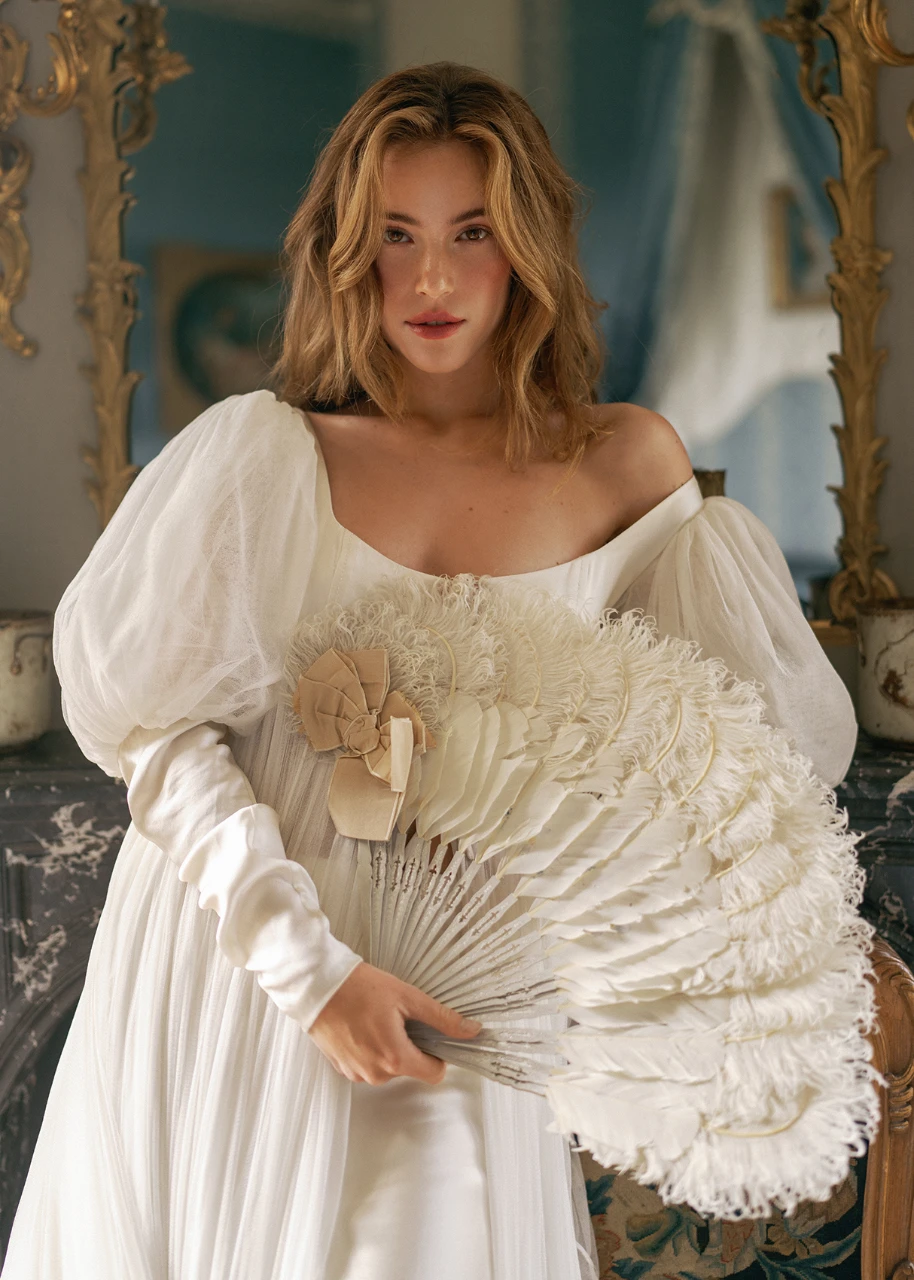
Fans
By the Regency period, the folding fan had already enjoyed centuries of cultural life in Europe. It arrived from East Asia in the 16th and 17th centuries and became an established marker of refinement among aristocratic women. By the early 19th century, when young debutantes were presented at court and entered society in hopes of making a match, the fan was both practical and symbolic.
Ballrooms were crowded, overheated spaces lit by candles and packed with bodies in layers of silk and satin. A fan was genuinely necessary. But it also became an extension of a woman’s social presence. Strict codes of decorum governed Regency society. Unmarried women in particular were expected to be modest, measured, and carefully observed. Open flirtation was unacceptable — but suggestion, wit, and nuance were part of the game.
This is where the mythology of “fan language” comes into play. In the 18th and 19th centuries, pamphlets circulated claiming that specific fan gestures conveyed secret romantic messages — touching the cheek meant “I love you,” closing the fan slowly meant “I promise to marry you,” and so on. Historians largely agree that this so-called codified system was more marketing fantasy than daily practice, likely promoted by fan manufacturers to make their wares more alluring. Still, the idea reflects something real: women did use fans expressively. A fan could conceal a smile, soften a gaze, or allow a moment of private emotion in a very public room.
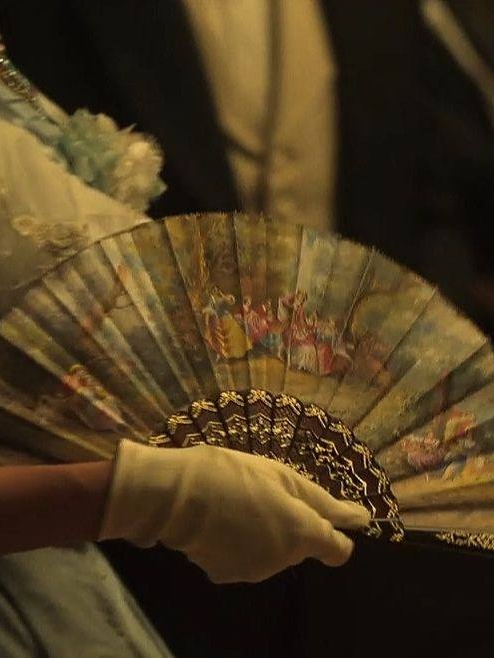
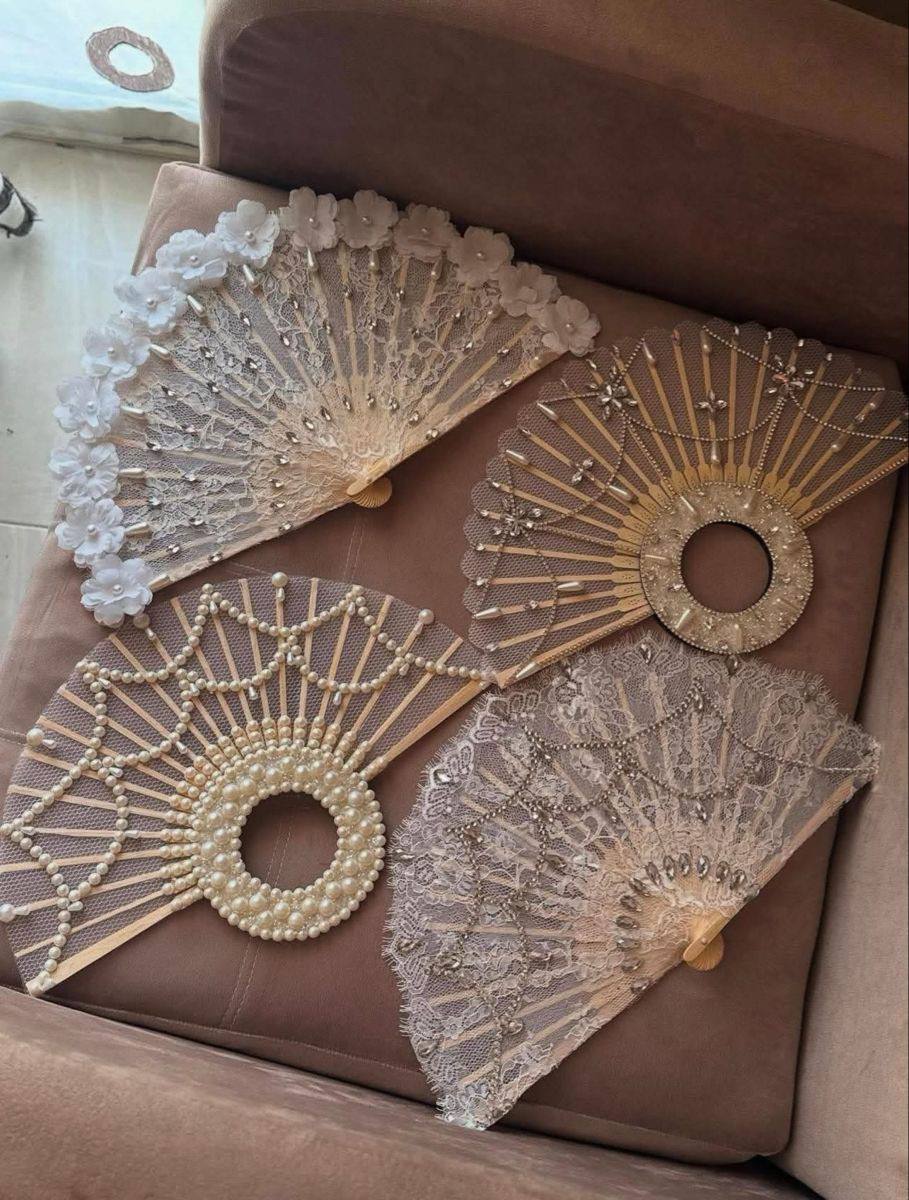
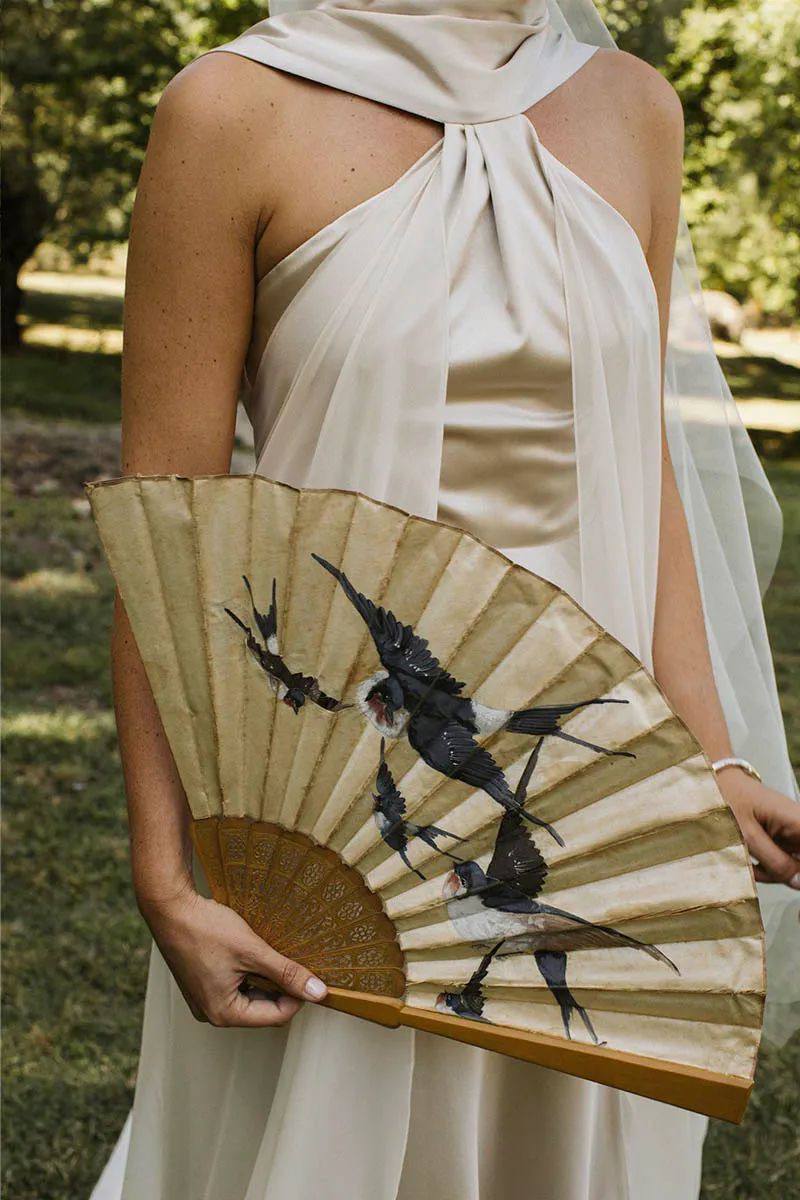
In the upper classes, fans were often beautifully crafted objects — hand-painted leaves depicting pastoral scenes, classical myths, or sentimental imagery, mounted on carved ivory or mother-of-pearl sticks. They were luxury goods, conversation pieces, and sometimes even political. During earlier periods, fans had carried allegorical imagery; by the Regency, they leaned toward romantic and neoclassical themes that mirrored broader aesthetic trends in art and fashion.
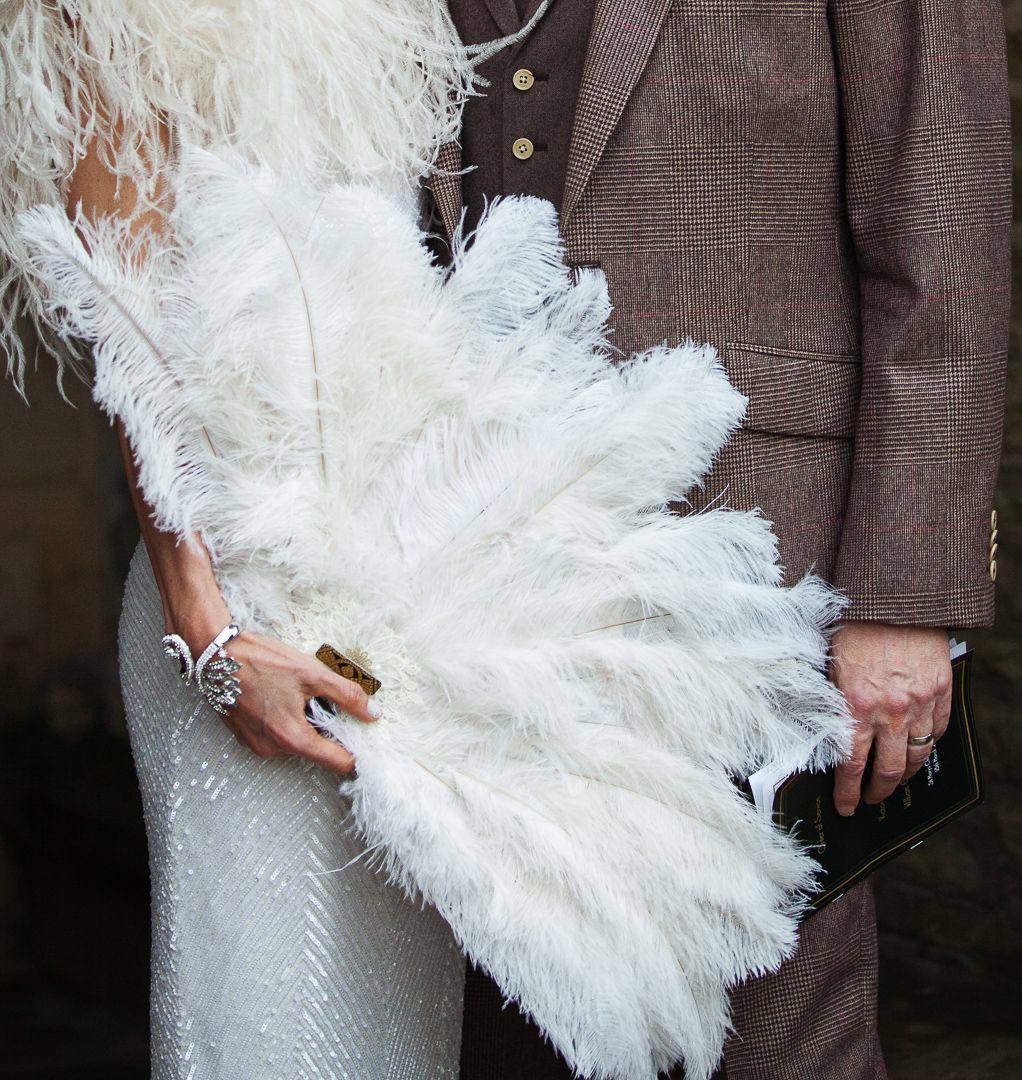
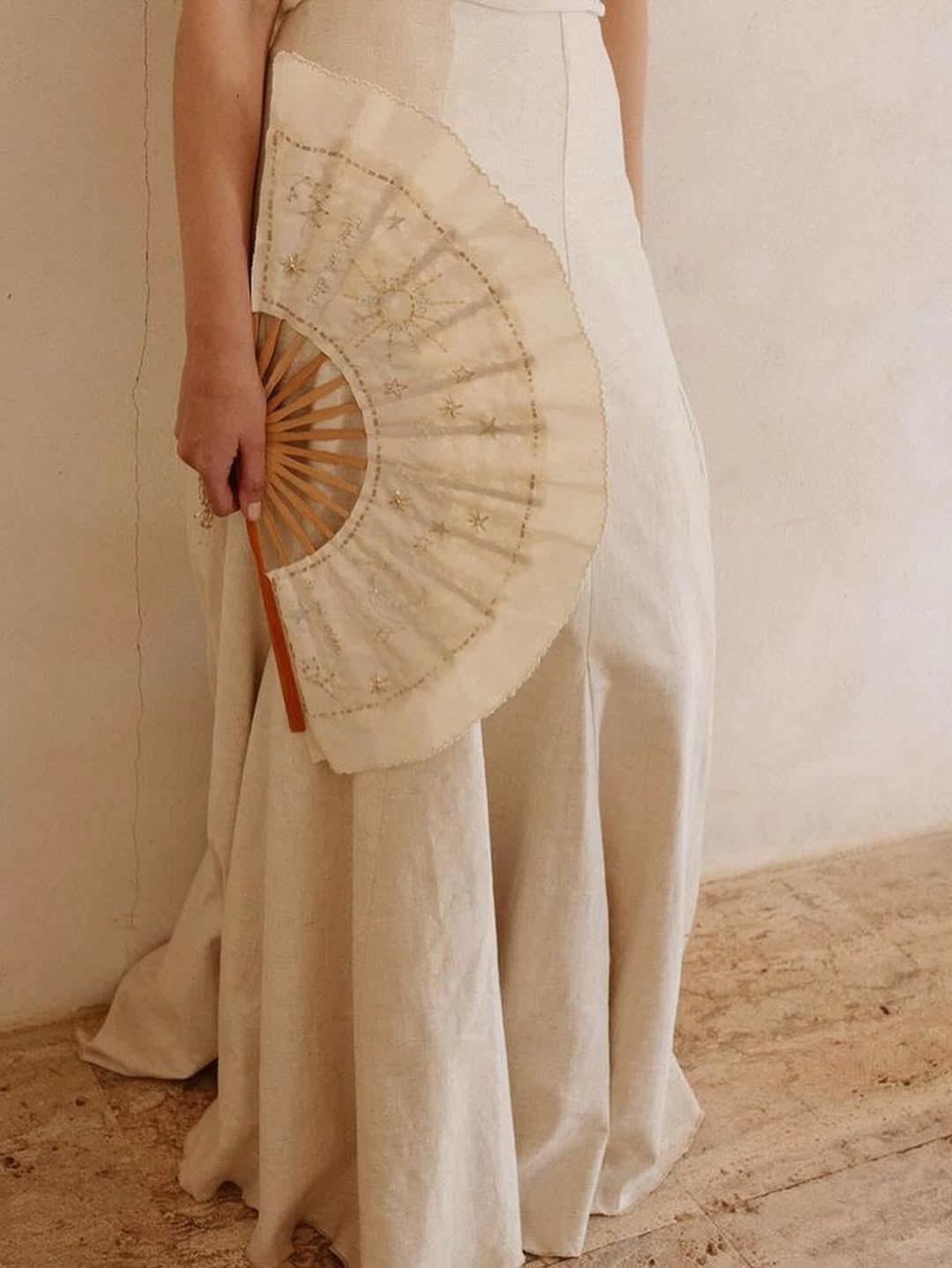
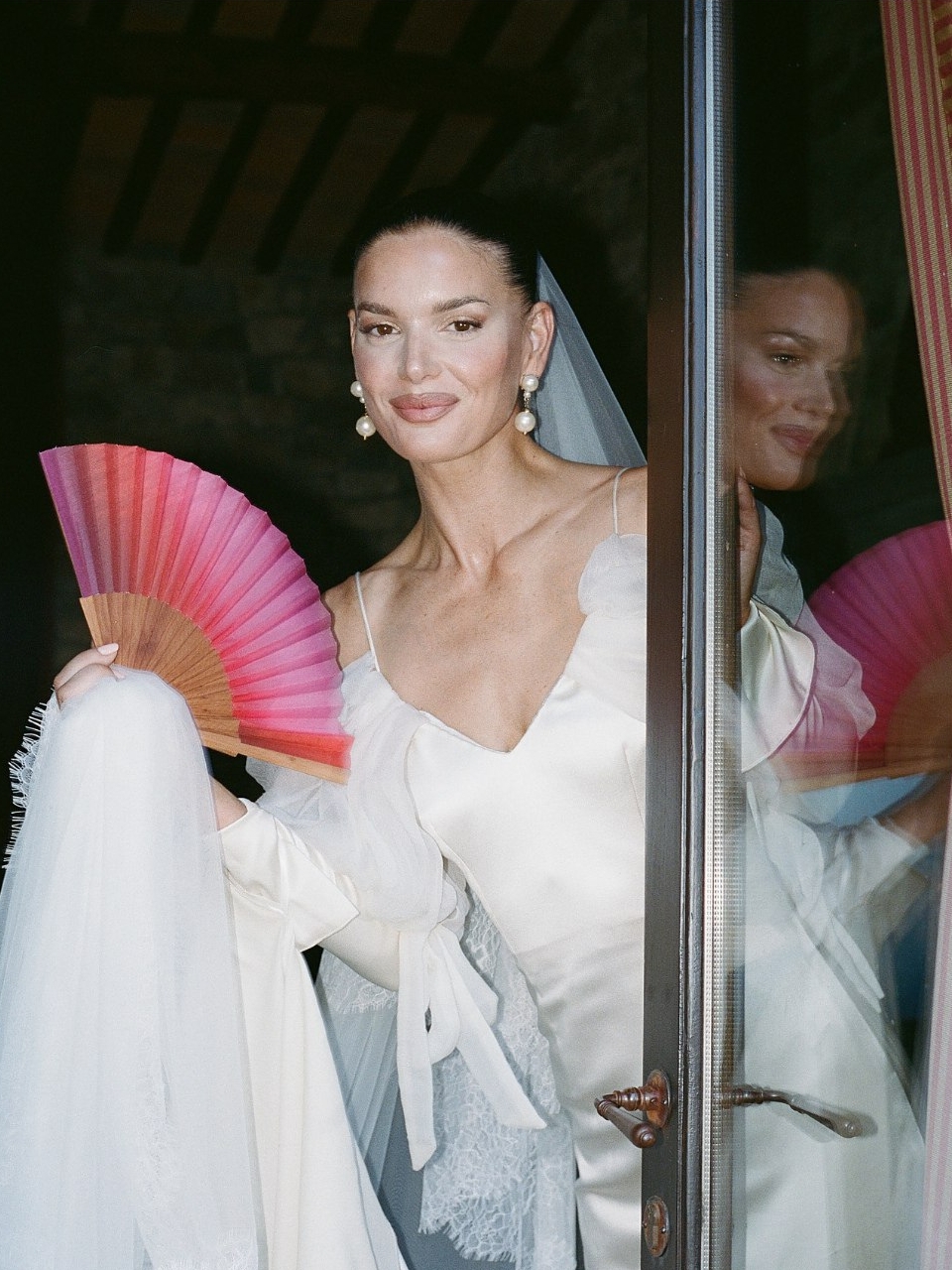
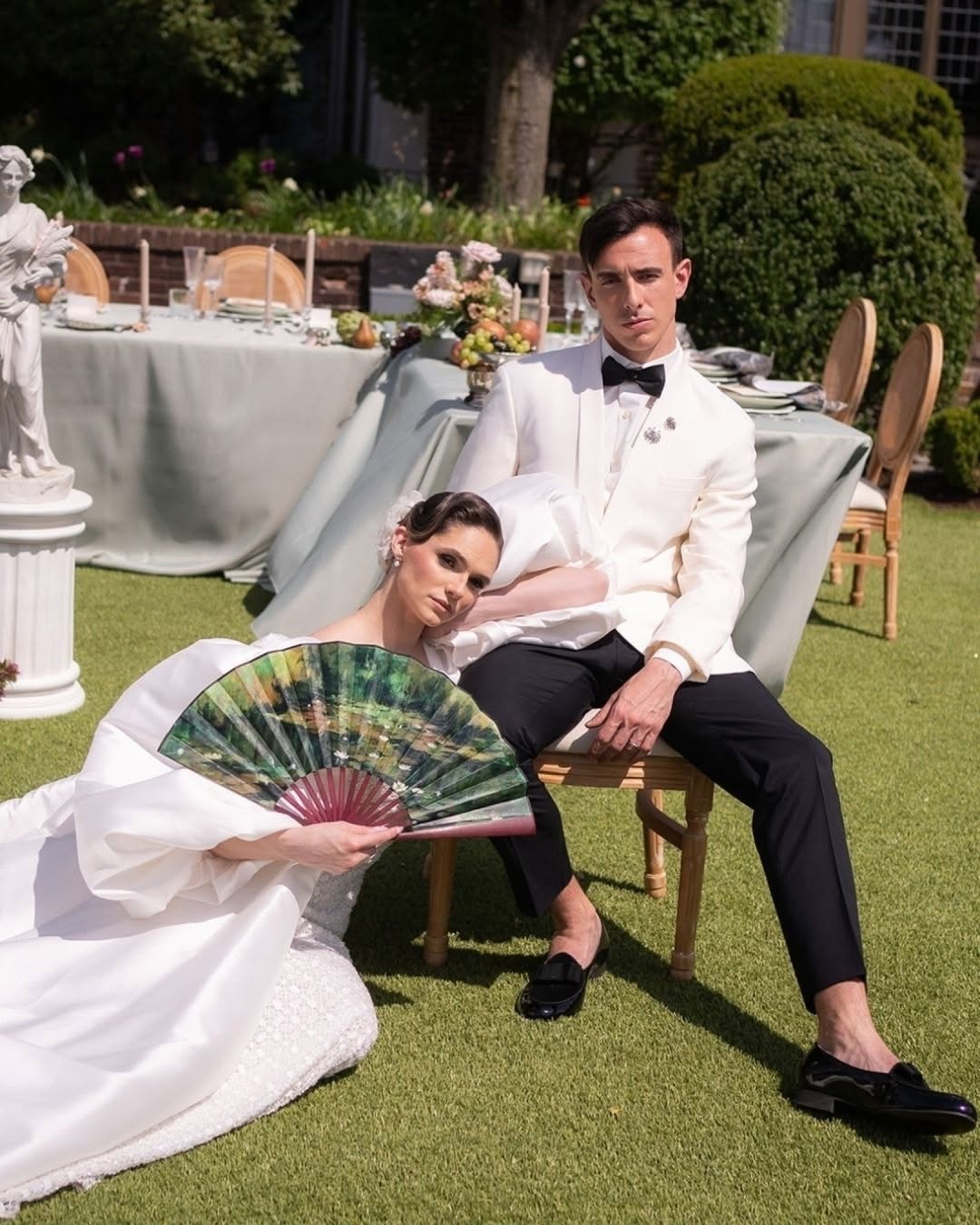
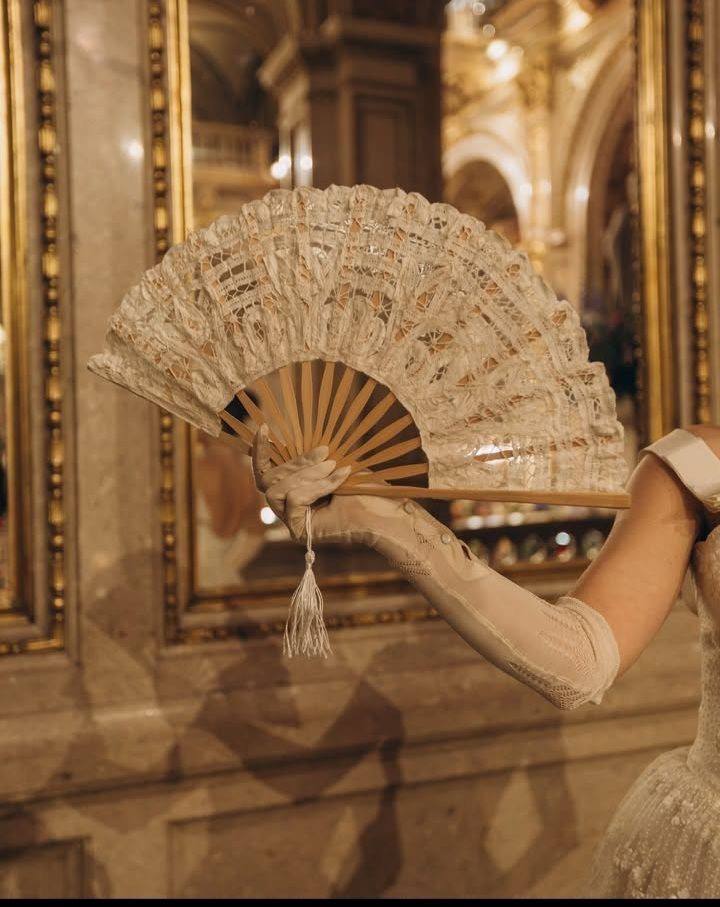
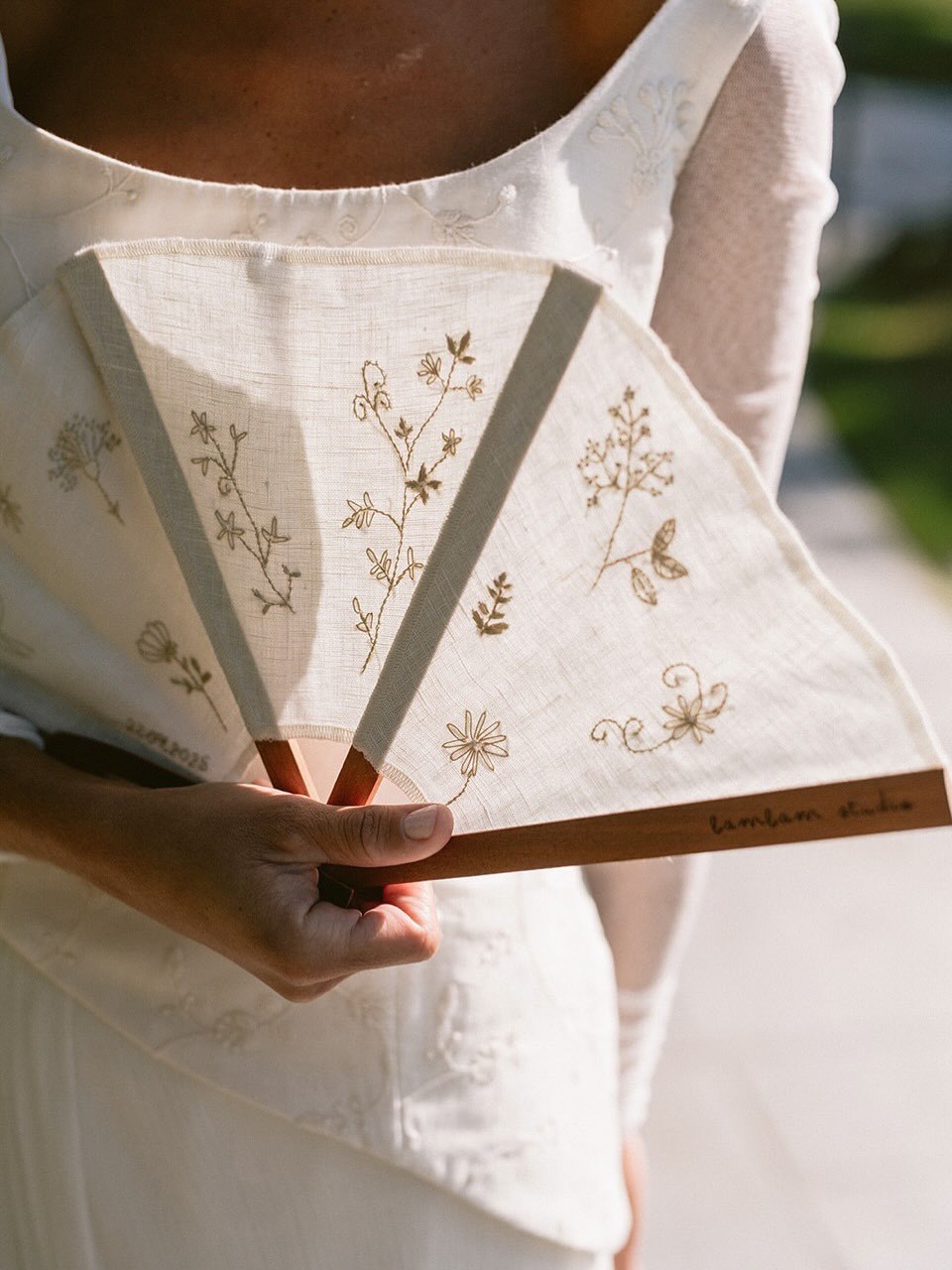
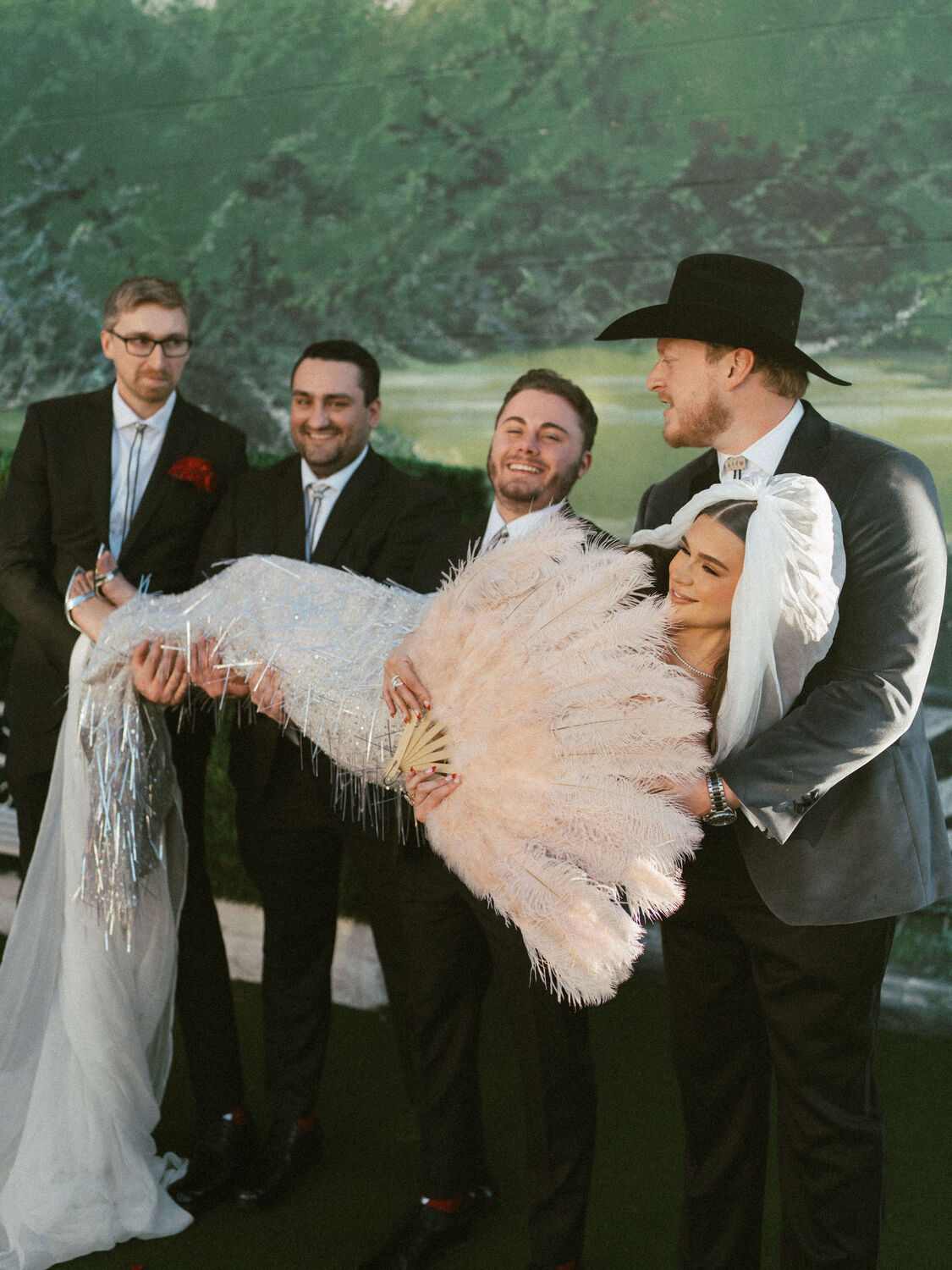
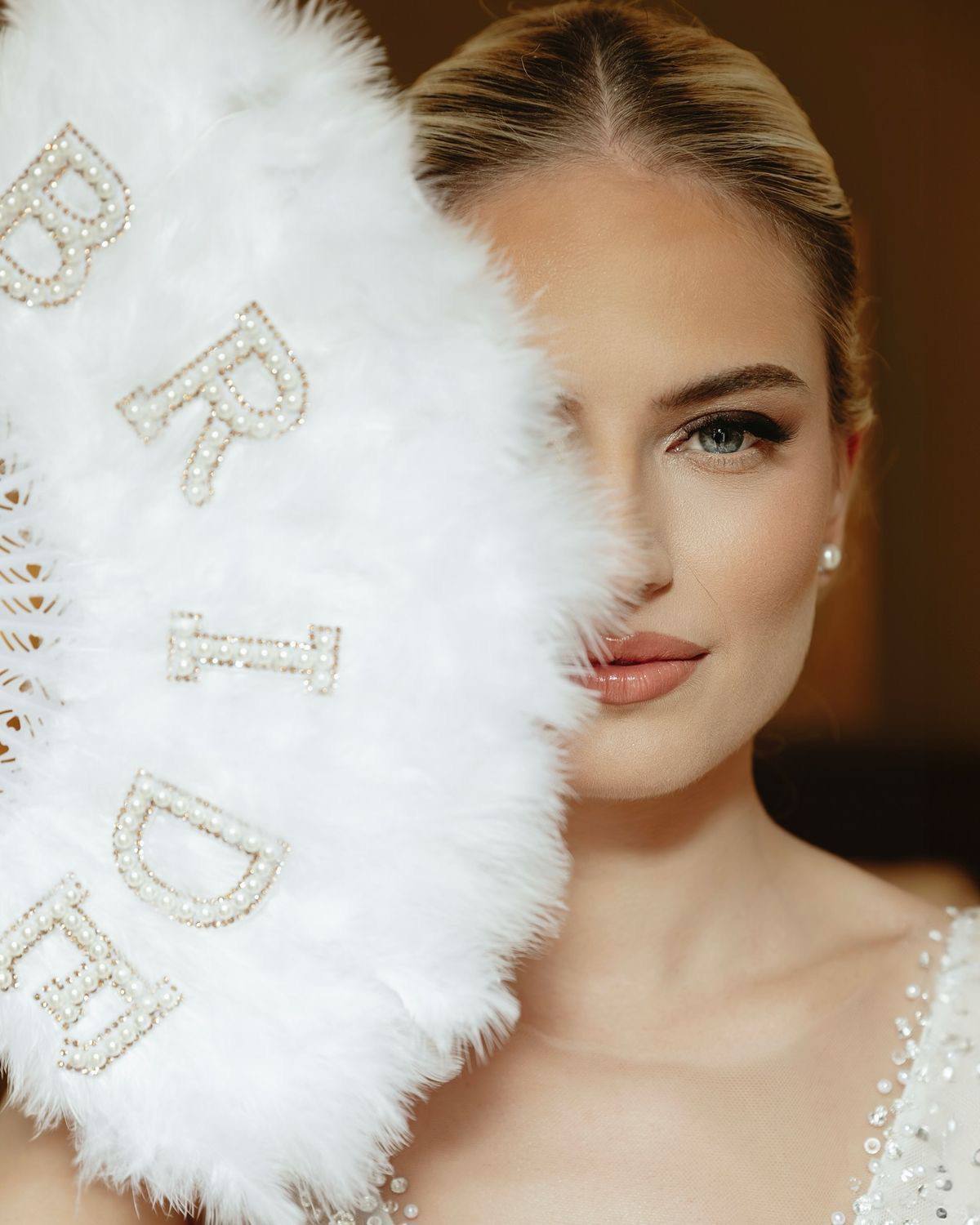
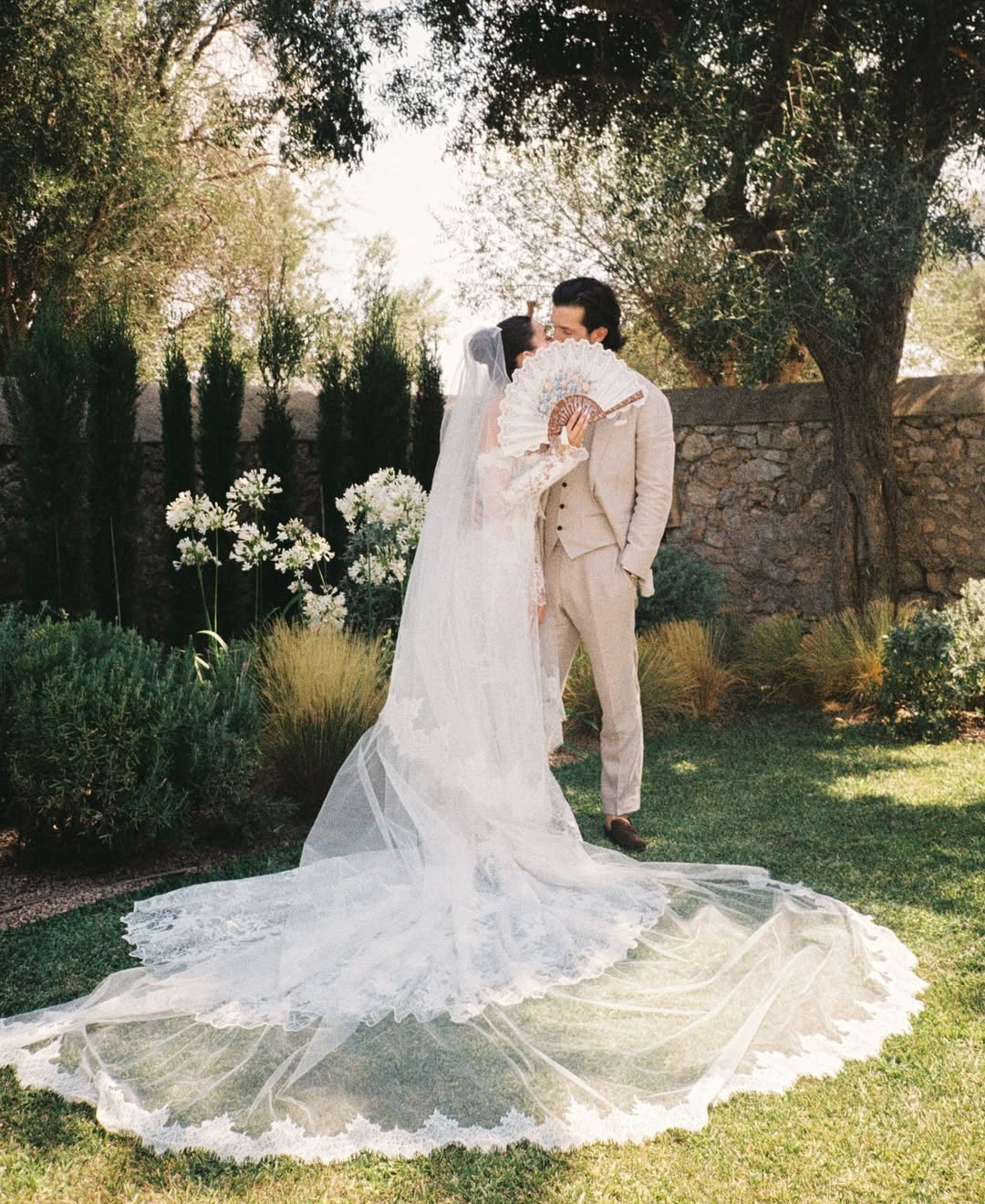
Today’s weddings are hyper-visual. Cameras are everywhere. Every expression is documented. And yet many brides don’t quite know what to do with their hands during portraits, during the ceremony, during those in-between seconds when the emotion is real but the body feels exposed. A fan gives shape to those moments. It creates choreography without forcing it. It introduces movement. When a bride opens a silk or lace fan, there’s a rhythm to it. When she lowers it slightly during vows, it becomes a frame around her face. When she laughs behind it during cocktail hour, it creates a candid intimacy that feels cinematic rather than staged.
Practically speaking, fans make sense for summer or destination weddings. But emotionally, they do something more layered. They soften minimal gowns, add texture to sleek silhouettes, balance structured tailoring with something fluid and expressive. A clean, modern dress paired with a delicate fan creates contrast — and it’s that contrast that makes fashion feel alive.
In the 19th century, the time portrayed (with creative flair) in Bridgerton, gloves were not optional accessories. For women of the upper classes, they were essential to appearing in public. A bare hand in a formal setting was considered improper, especially for an unmarried woman. Gloves were part of etiquette, part of modesty, part of the visual language of respectability. But beyond propriety, gloves carried social meaning.
Regency society revolved around touch — and restriction of touch. Physical contact between unmarried men and women was limited. A gloved hand created a barrier that made socially sanctioned contact acceptable. When a gentleman asked a lady to dance, he held her gloved hand. When he kissed her hand in greeting, the glove remained on. Fabric stood between skin and skin, preserving decorum while still allowing intimacy to exist within boundaries. That small layer of kid leather or silk created tension. It made touch charged and deliberate. A gloved hand slipping into another became an event.
Gloves also reflected status. Fine kid leather gloves were expensive and delicate; they required care and frequent replacement. To appear in fresh, perfectly fitted gloves signaled refinement and wealth. At evening balls, long gloves extending above the elbow were common, particularly with short-sleeved Empire gowns. During the day, shorter gloves sufficed for promenades or visits. The choice of length and material subtly communicated time of day, formality, and social awareness.
There was also something psychological about gloves. They shaped posture. They made women more aware of their hands, their gestures, the way they accepted a dance card or lifted a glass. In a culture where feminine virtue was tied to composure, gloves quite literally disciplined movement.
And yet, like fans, gloves were not only about restriction. They were about control: a woman could remove a glove slowly or allow someone to help her with it — an intimate gesture wrapped in ritual. The act of taking off a glove in literature of the time often signaled vulnerability or emotional shift.
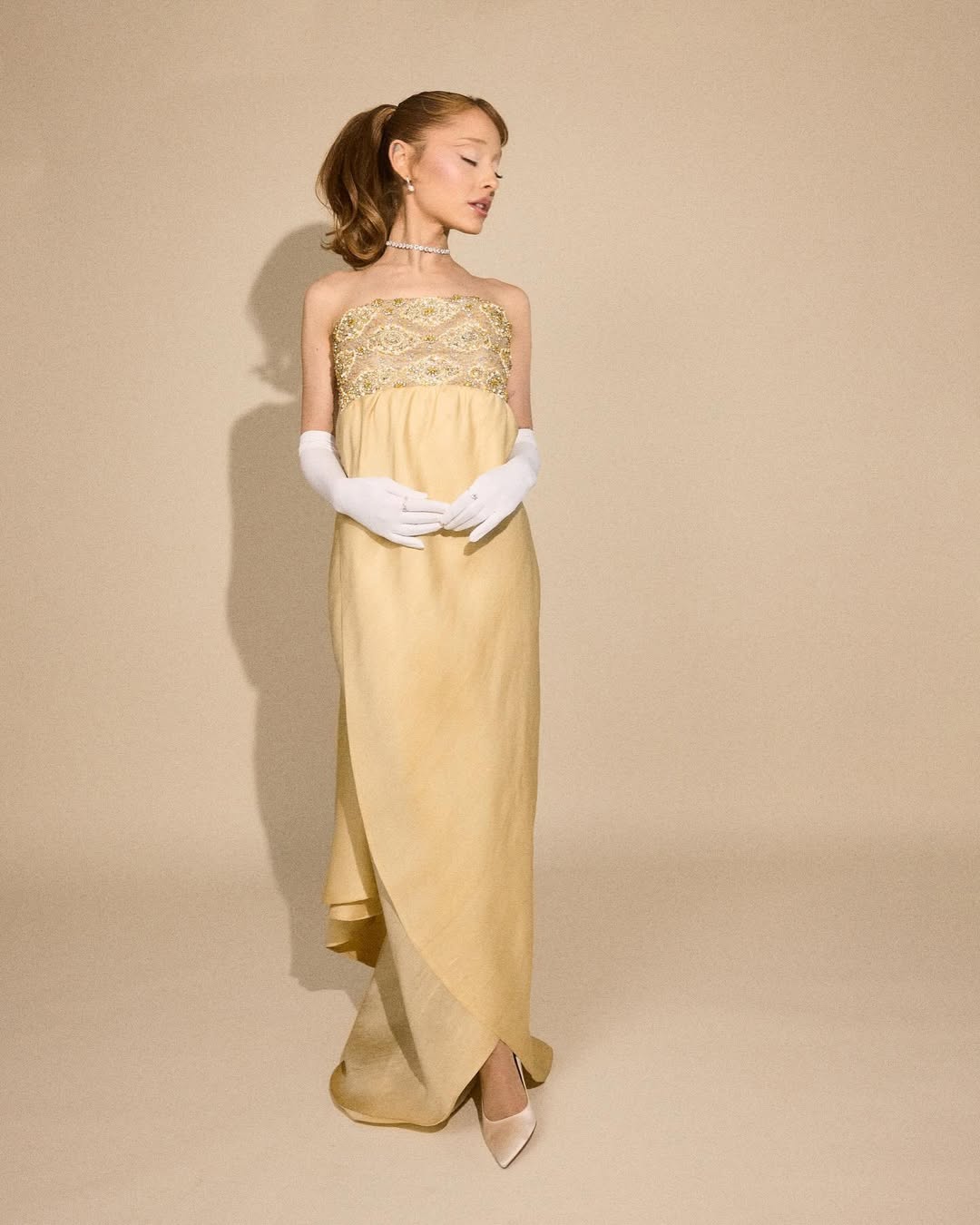
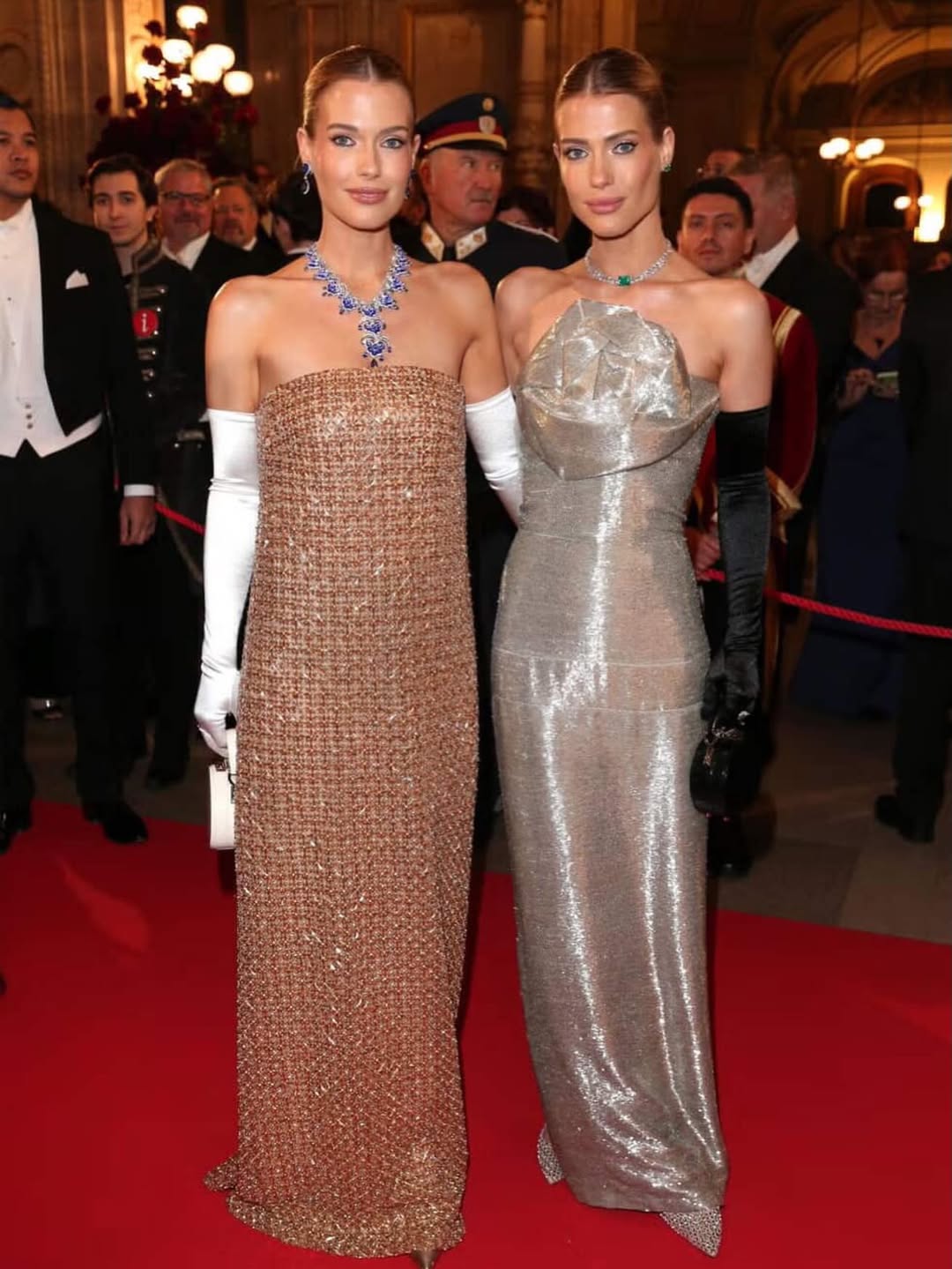
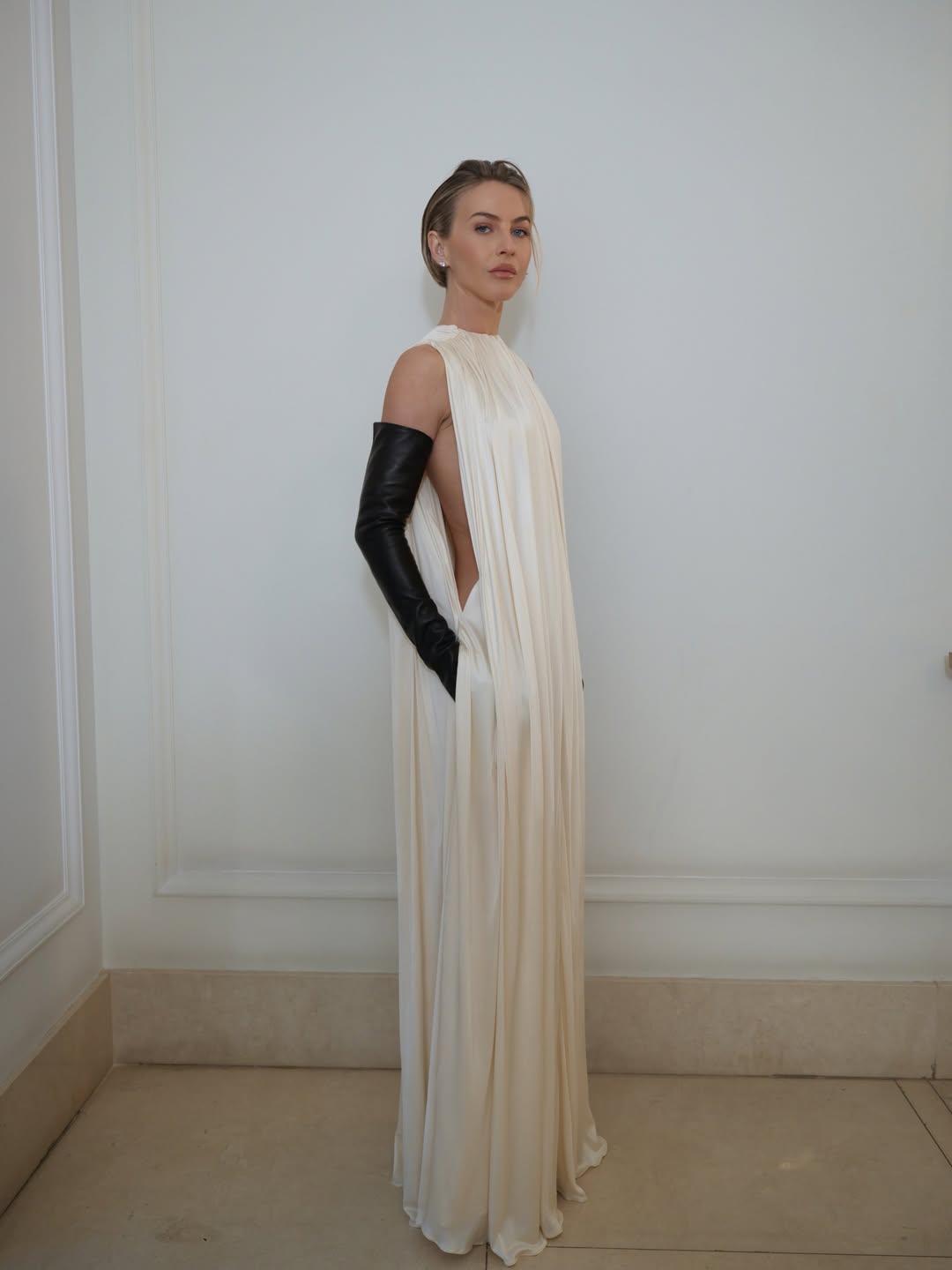
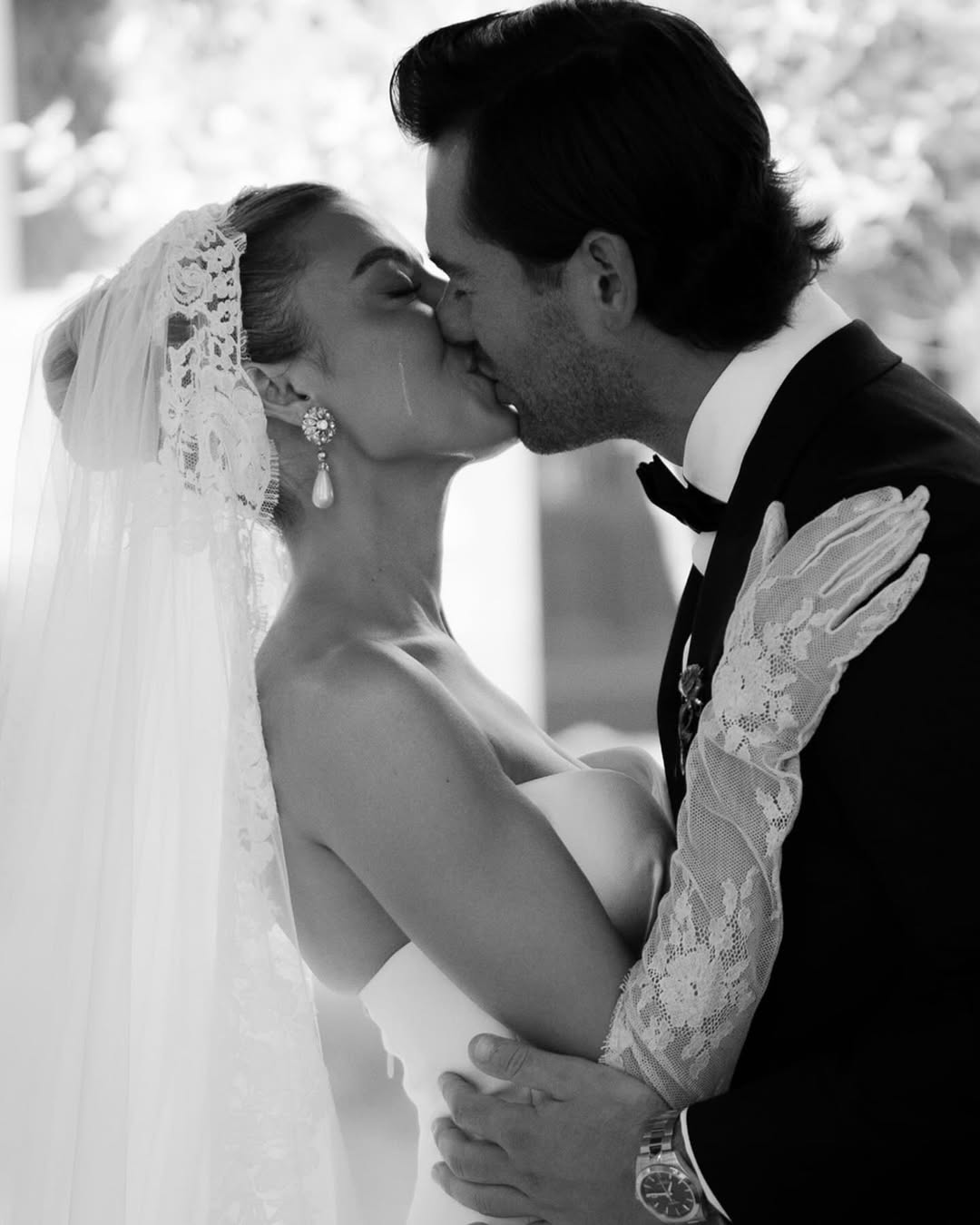
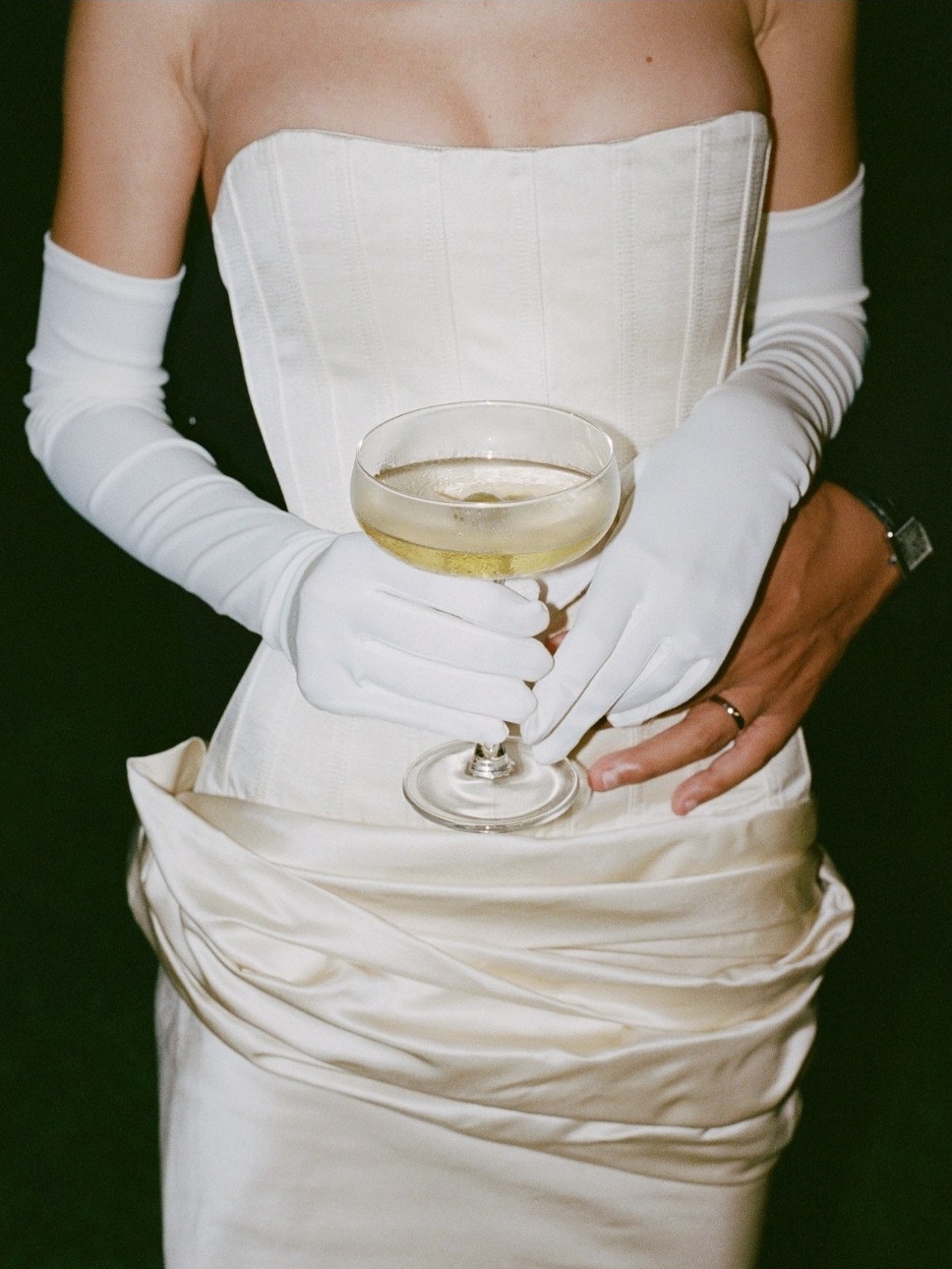
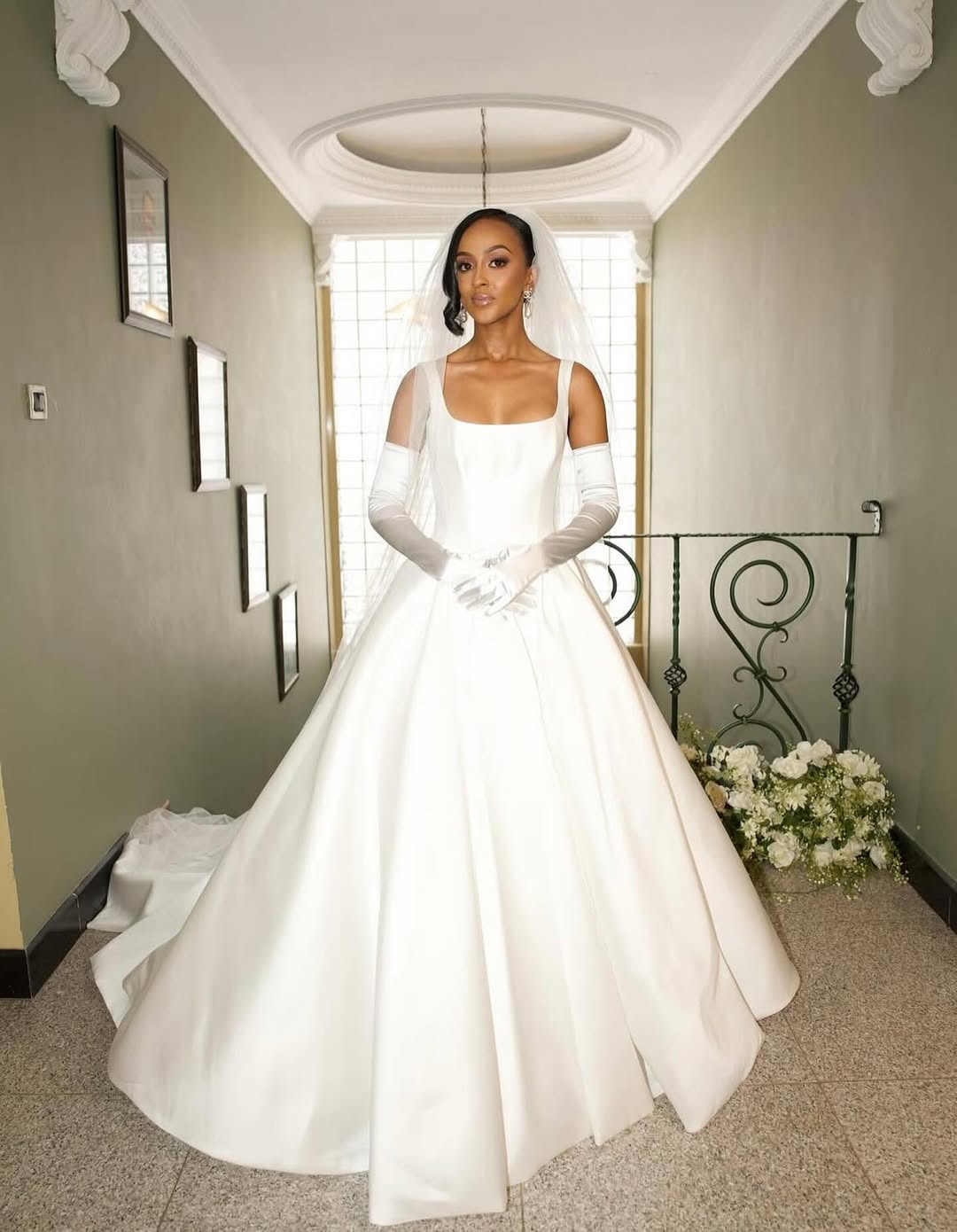
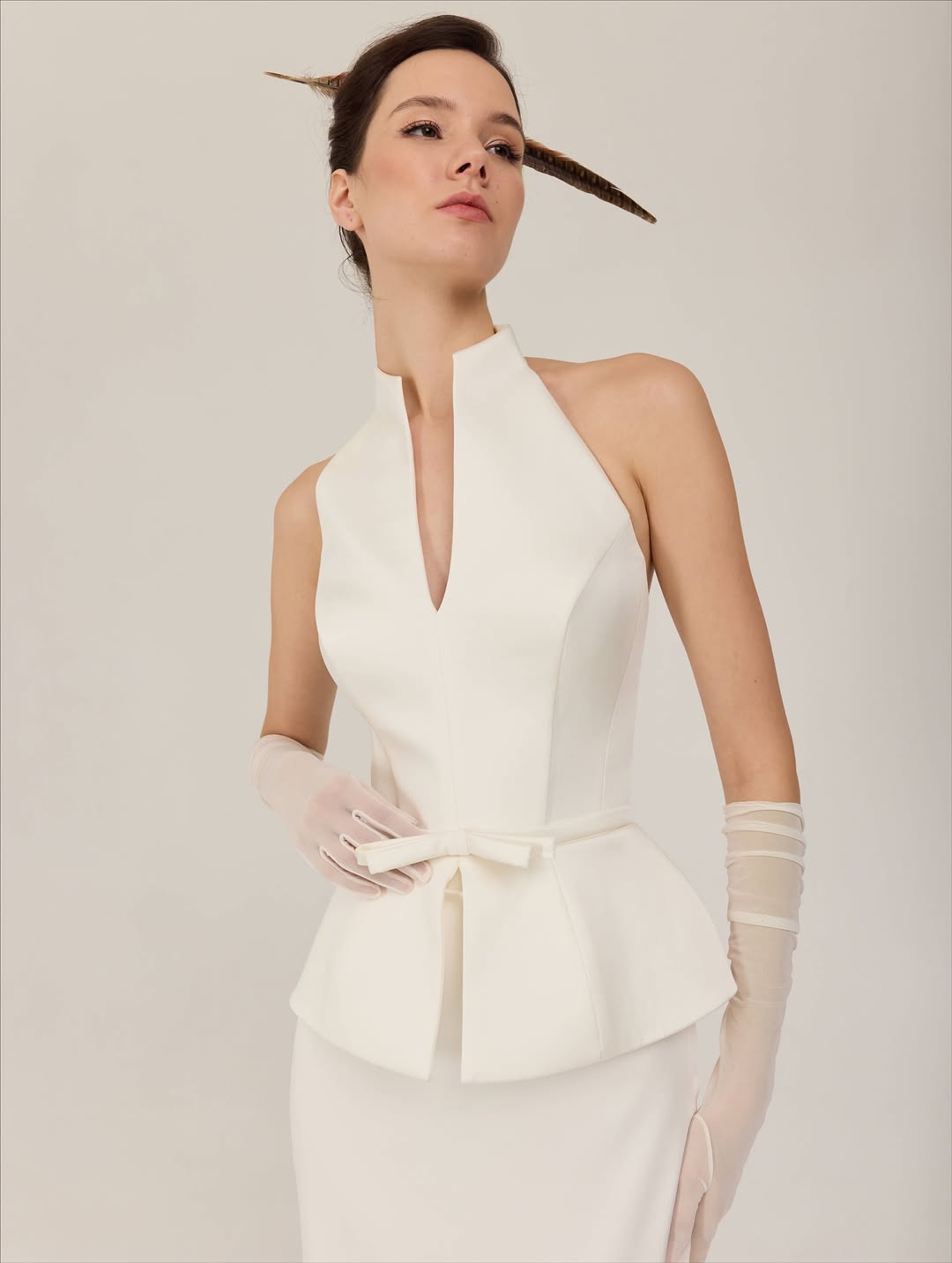
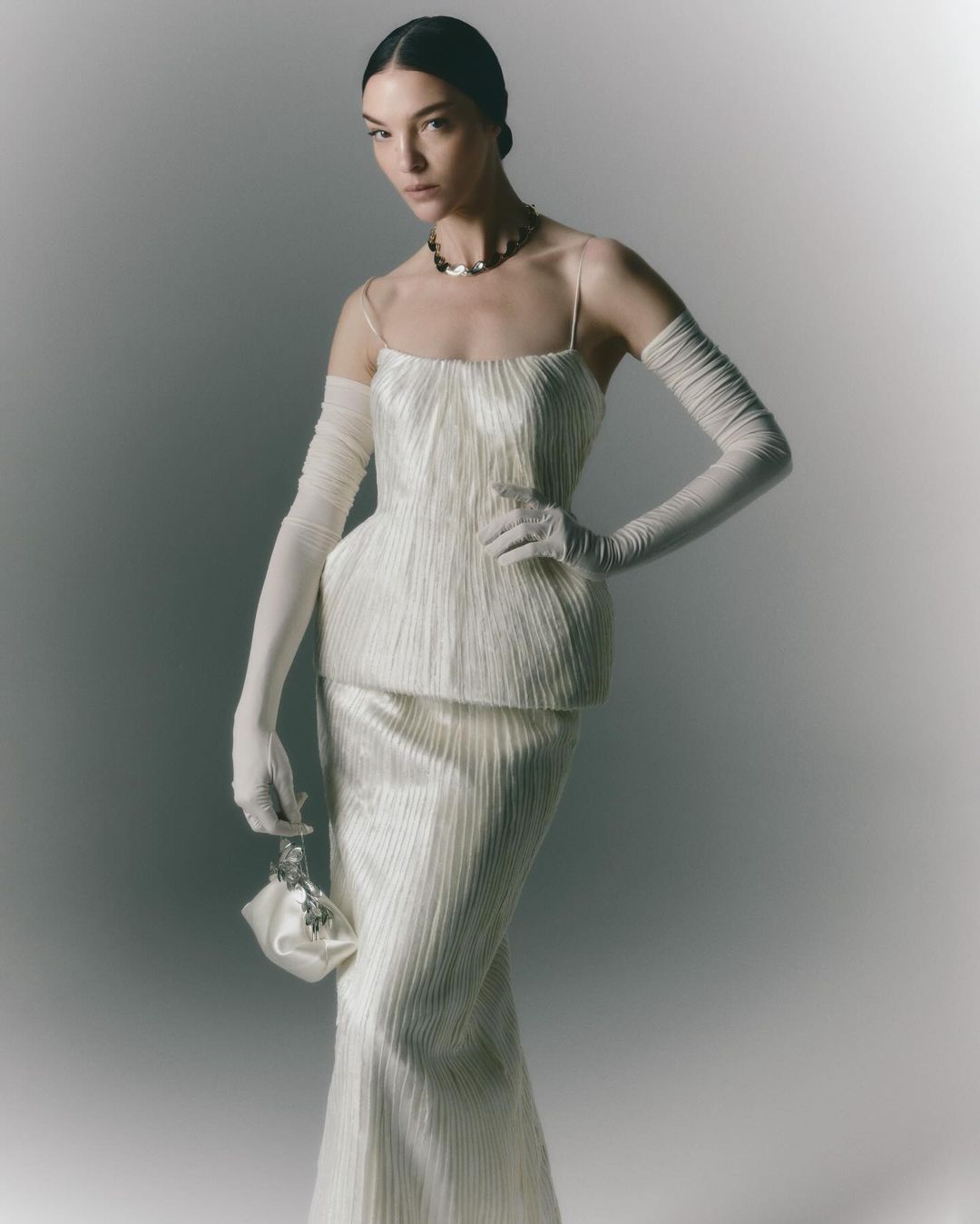
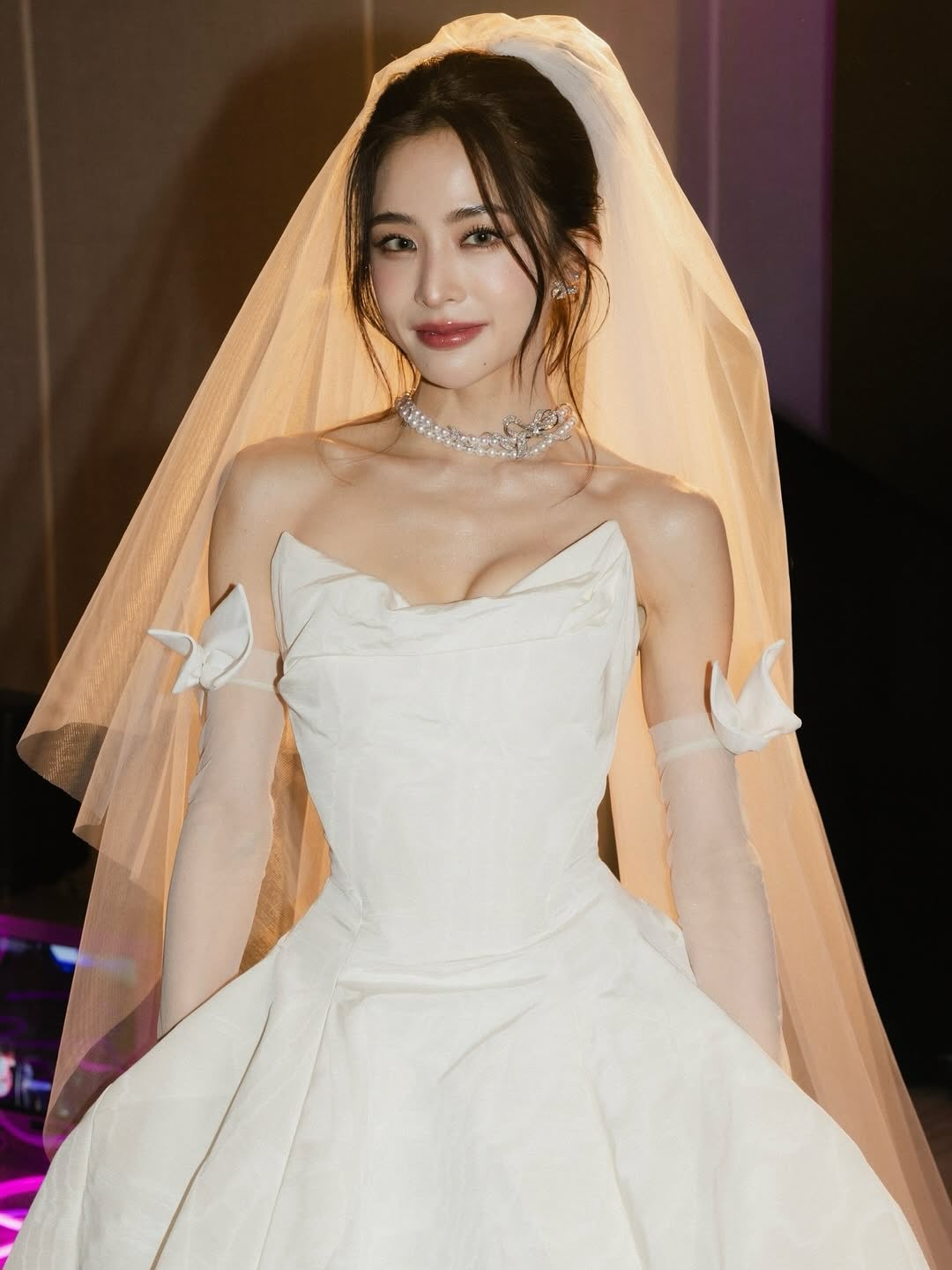
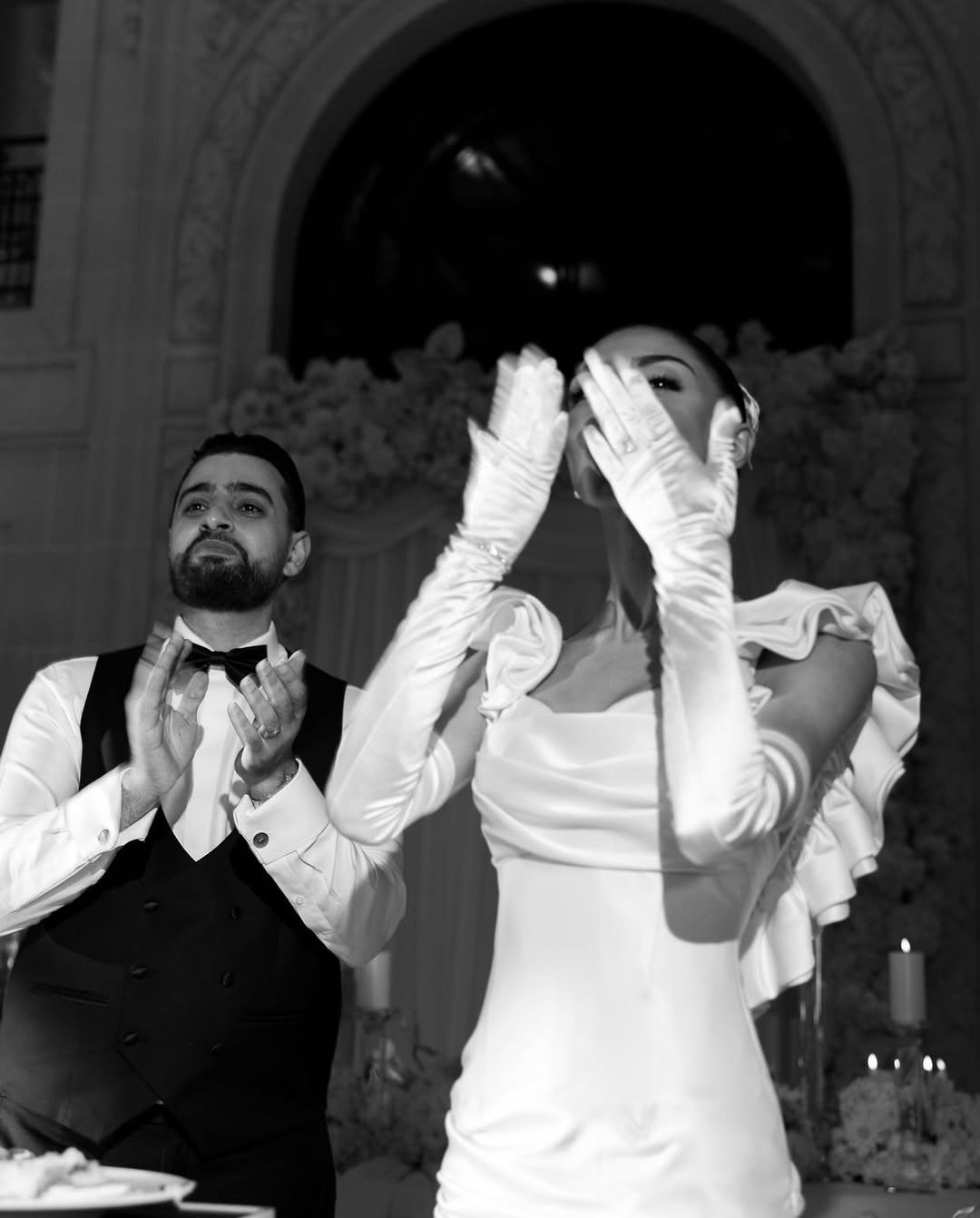
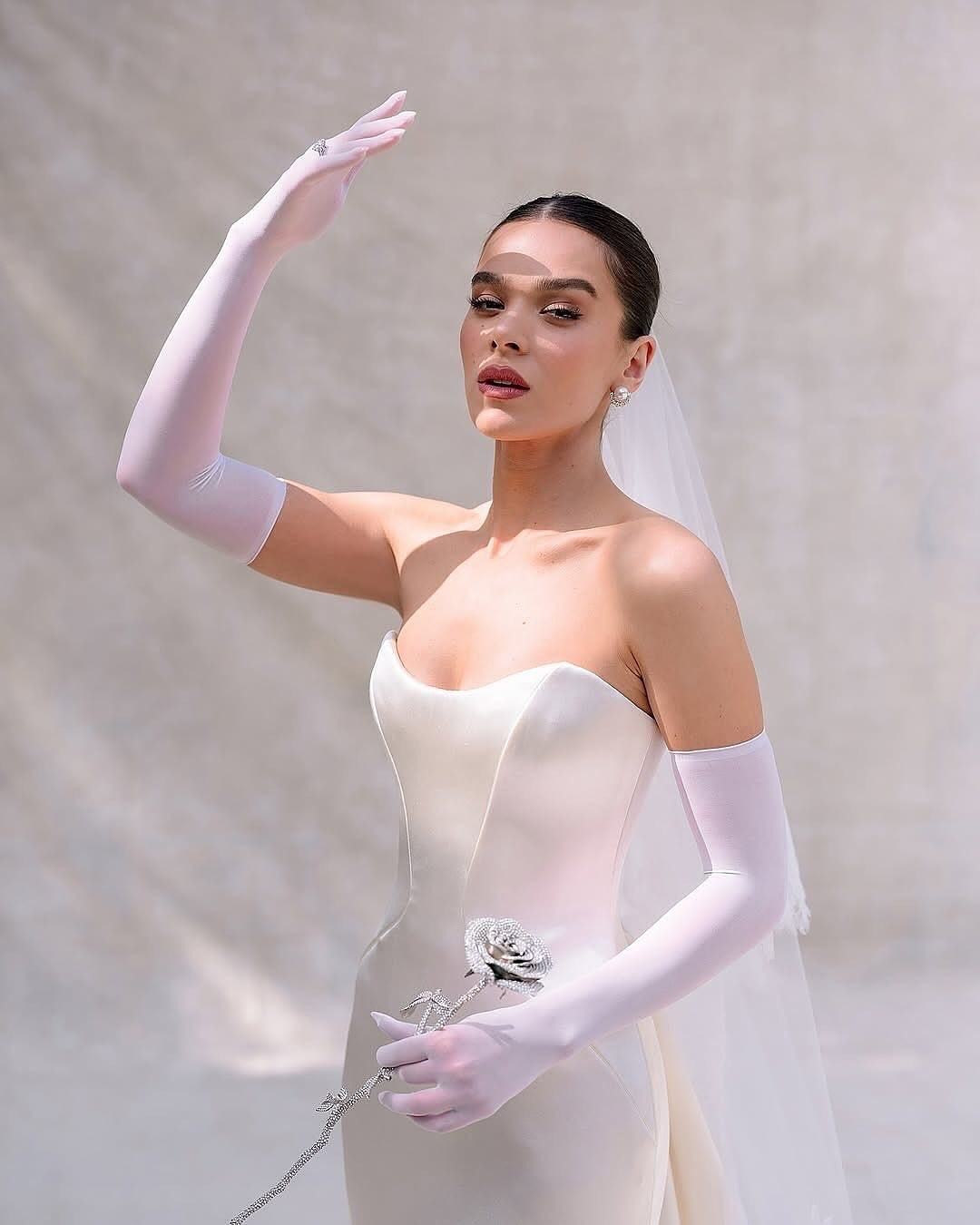
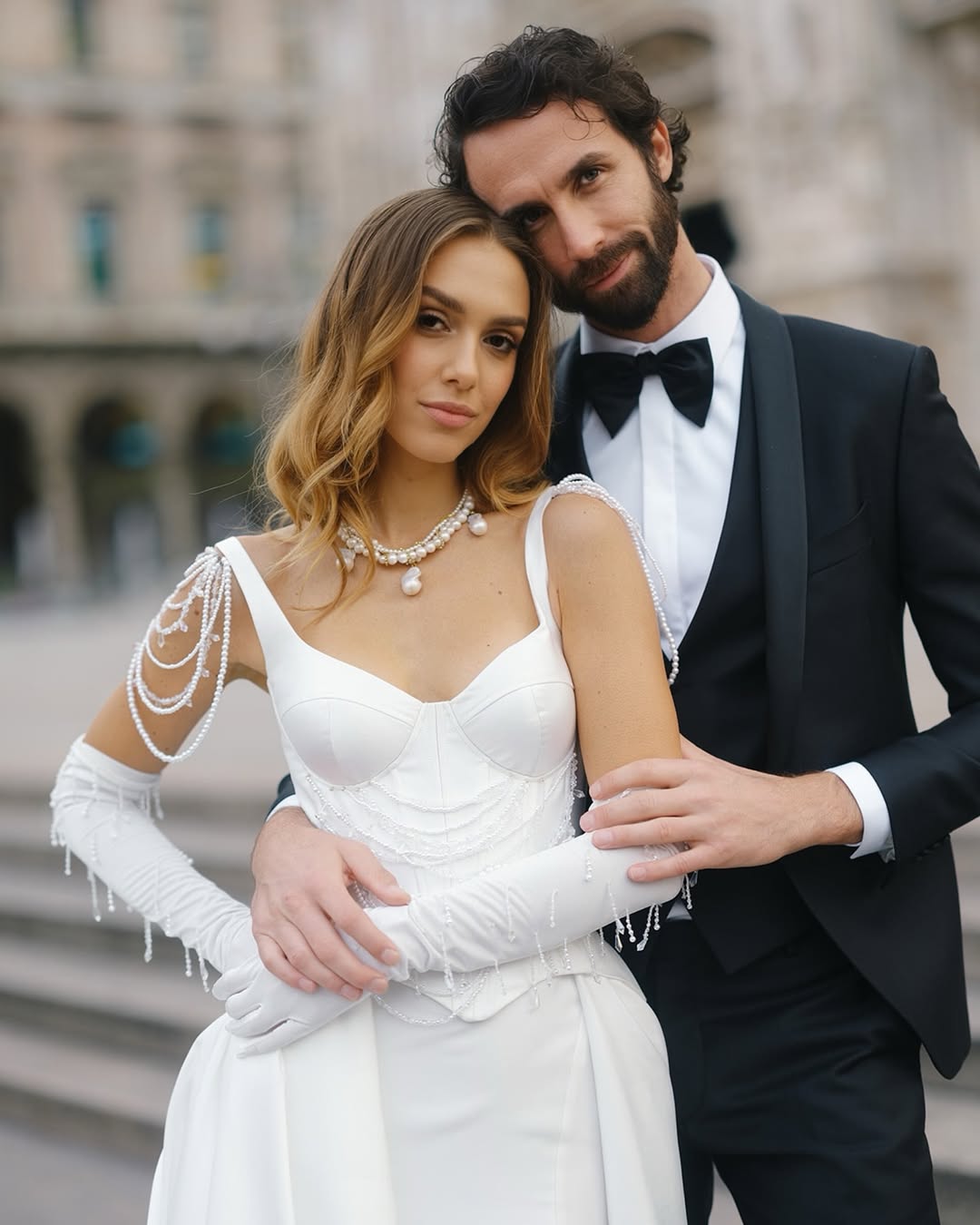
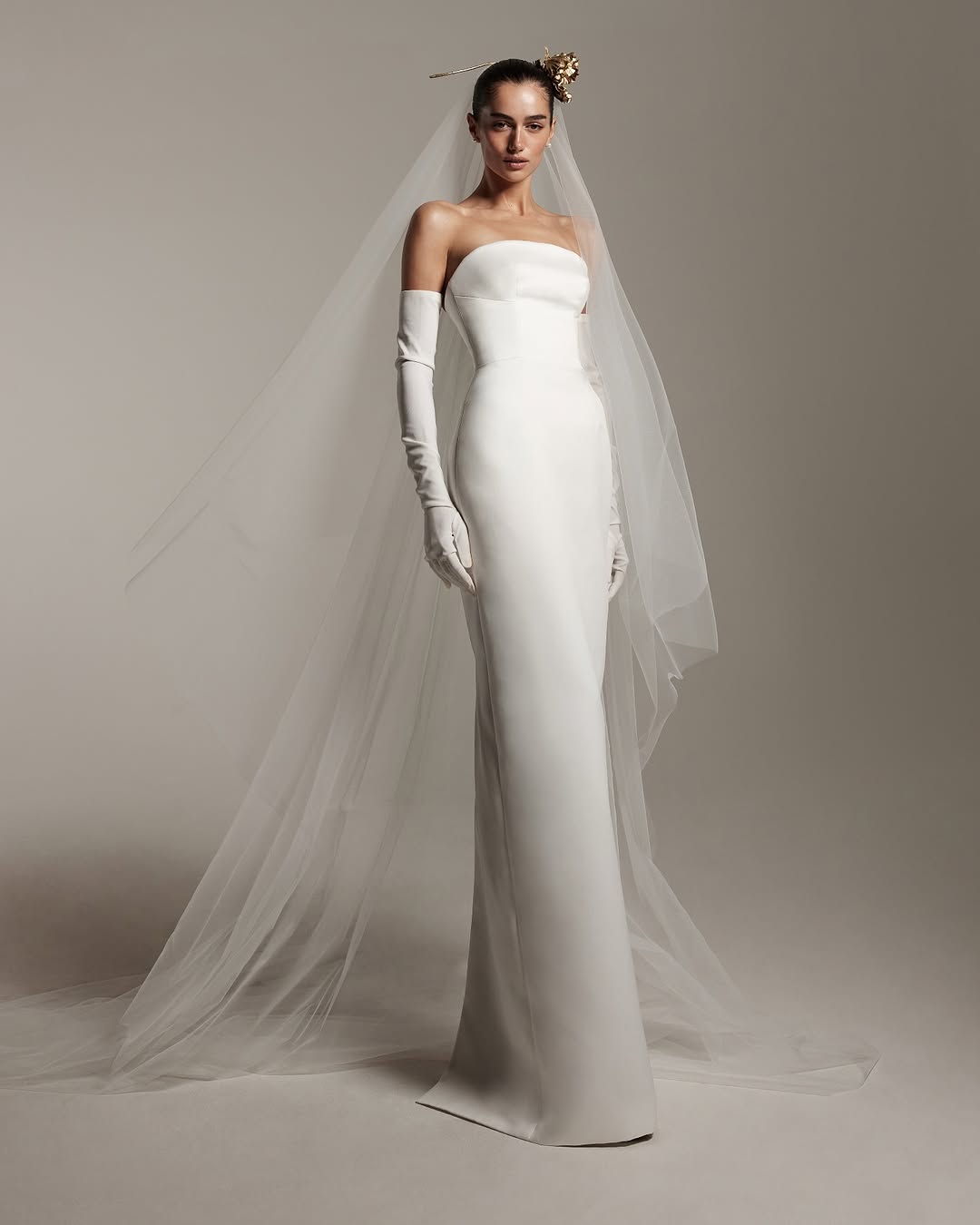
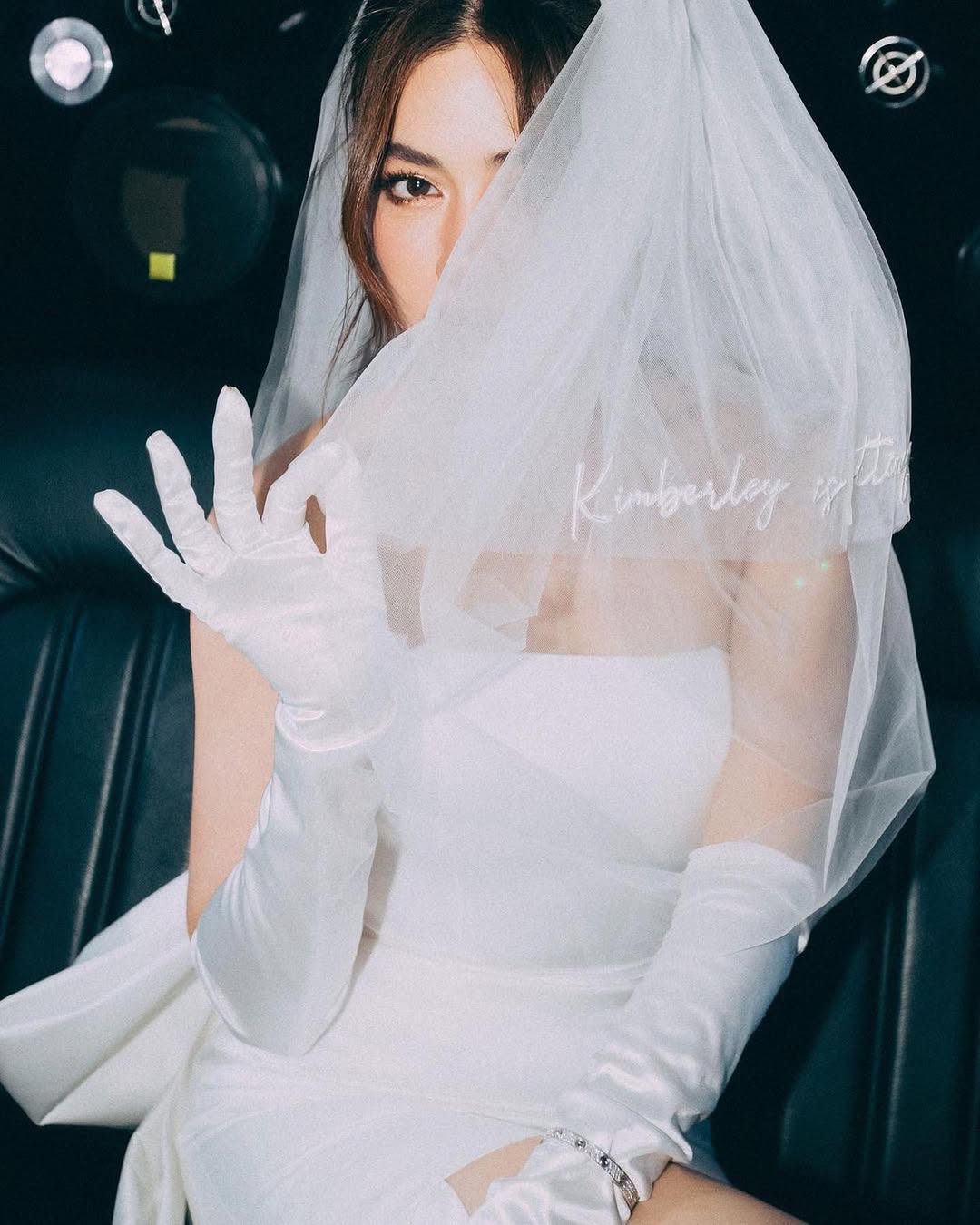
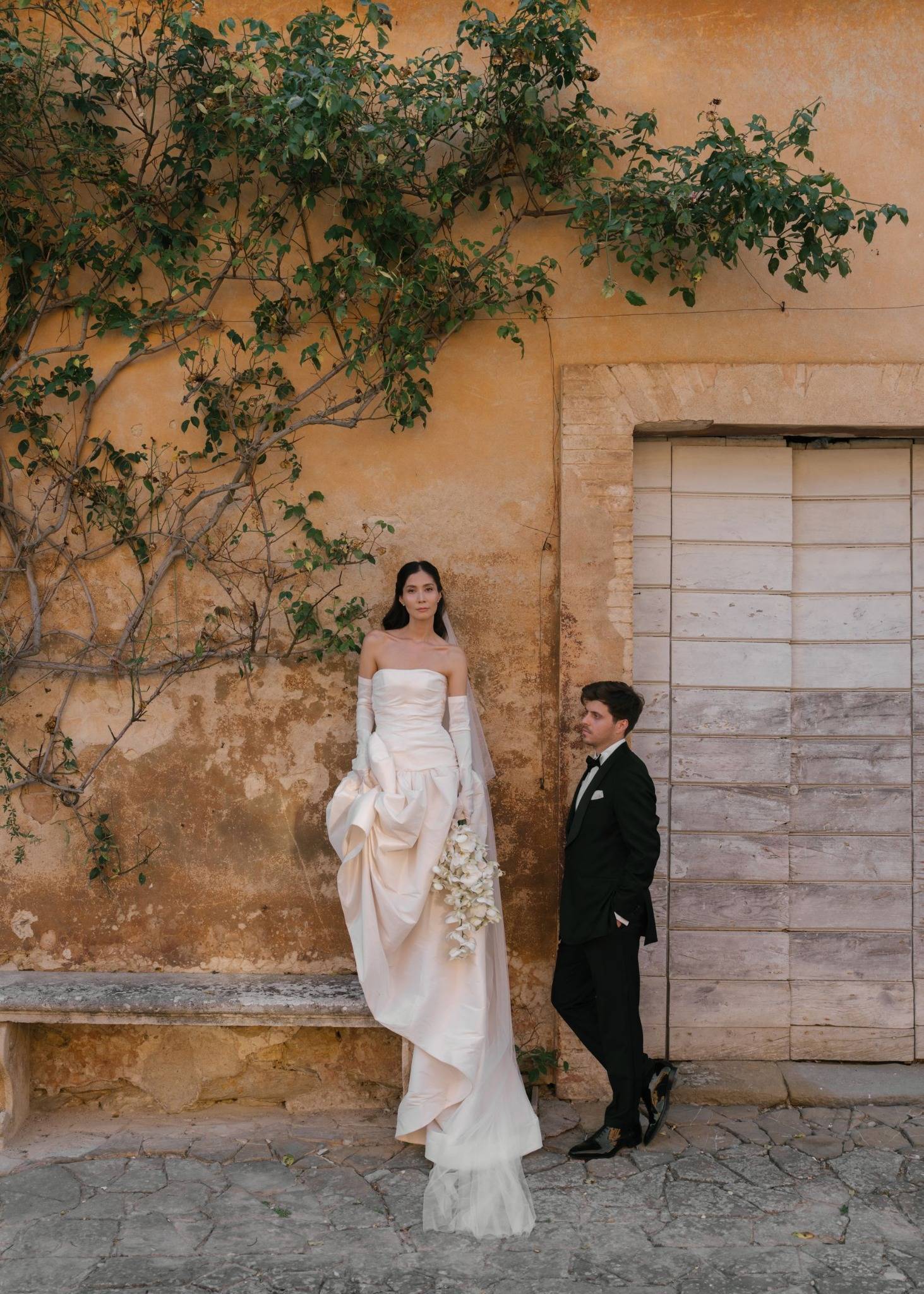
This layered symbolism is precisely why gloves resonate today. When a modern bride wears long gloves with a minimalist gown, it doesn’t read as historical reenactment. It reads as intention. The glove frames the arm, elongates the silhouette, and changes how she moves. It creates structure against softness. It makes every gesture more deliberate — from holding a bouquet to slipping a ring onto a finger. And in photographs, gloves do something extraordinary as they transform hands — often the most awkward part of posing — into sculptural elements.
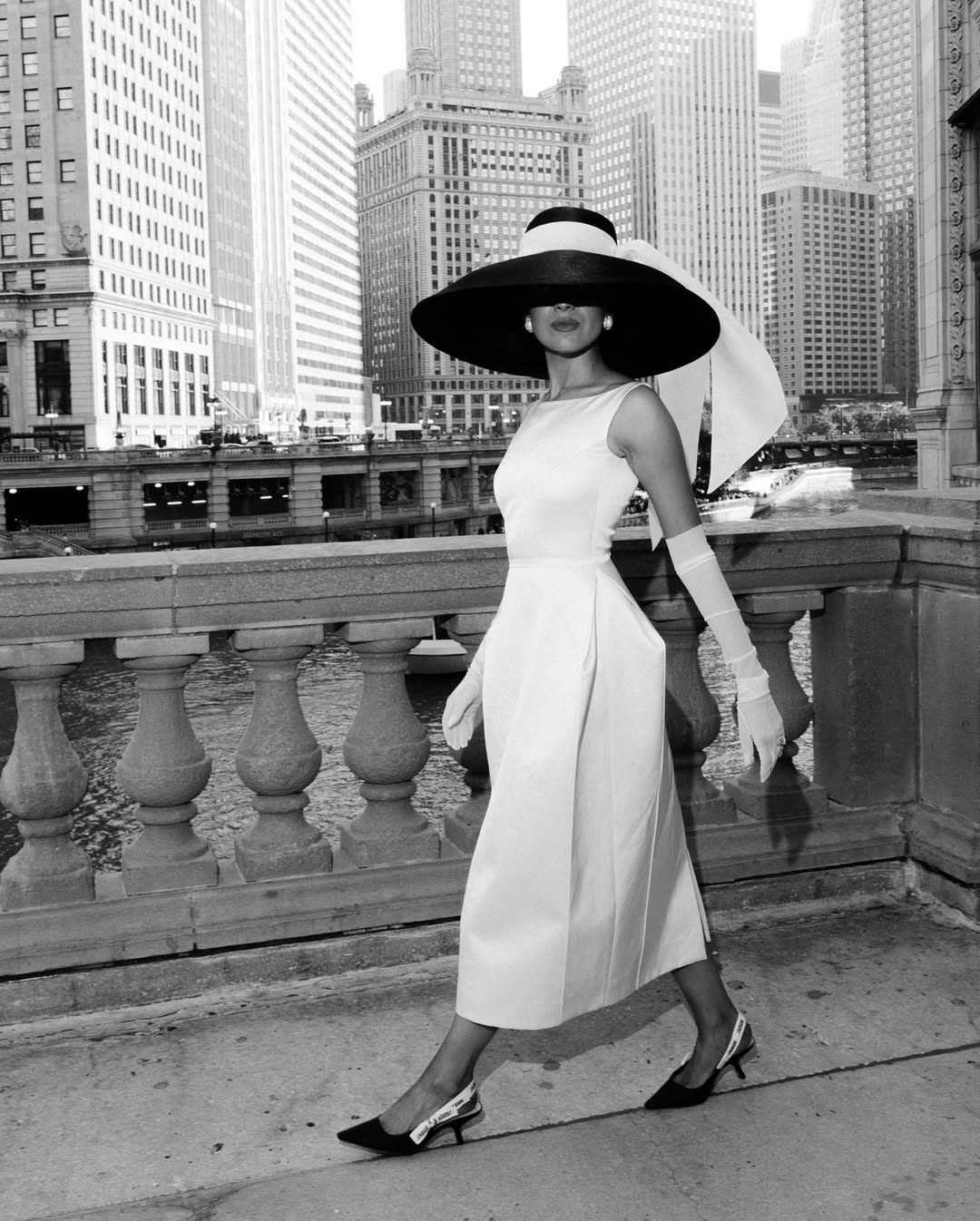
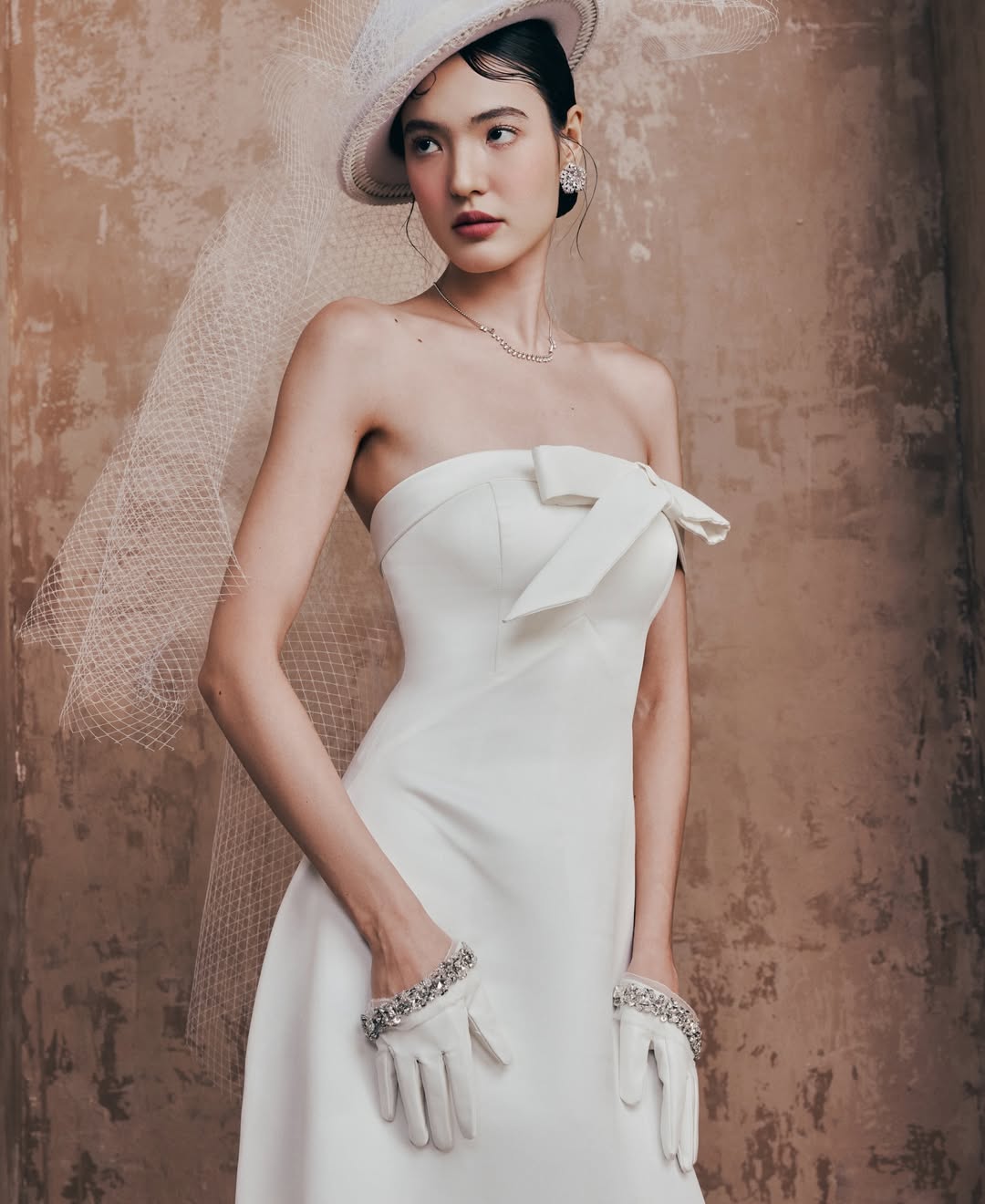
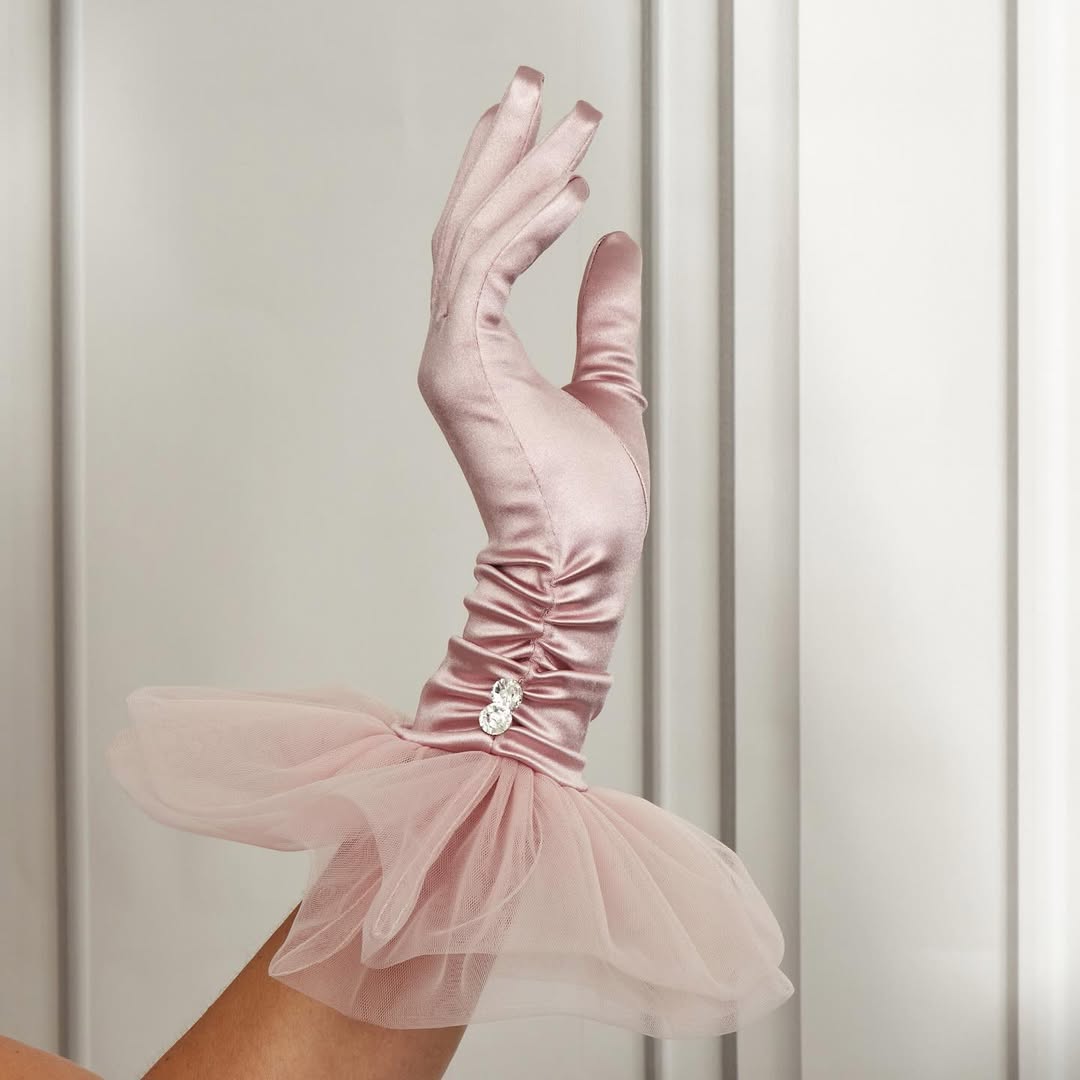
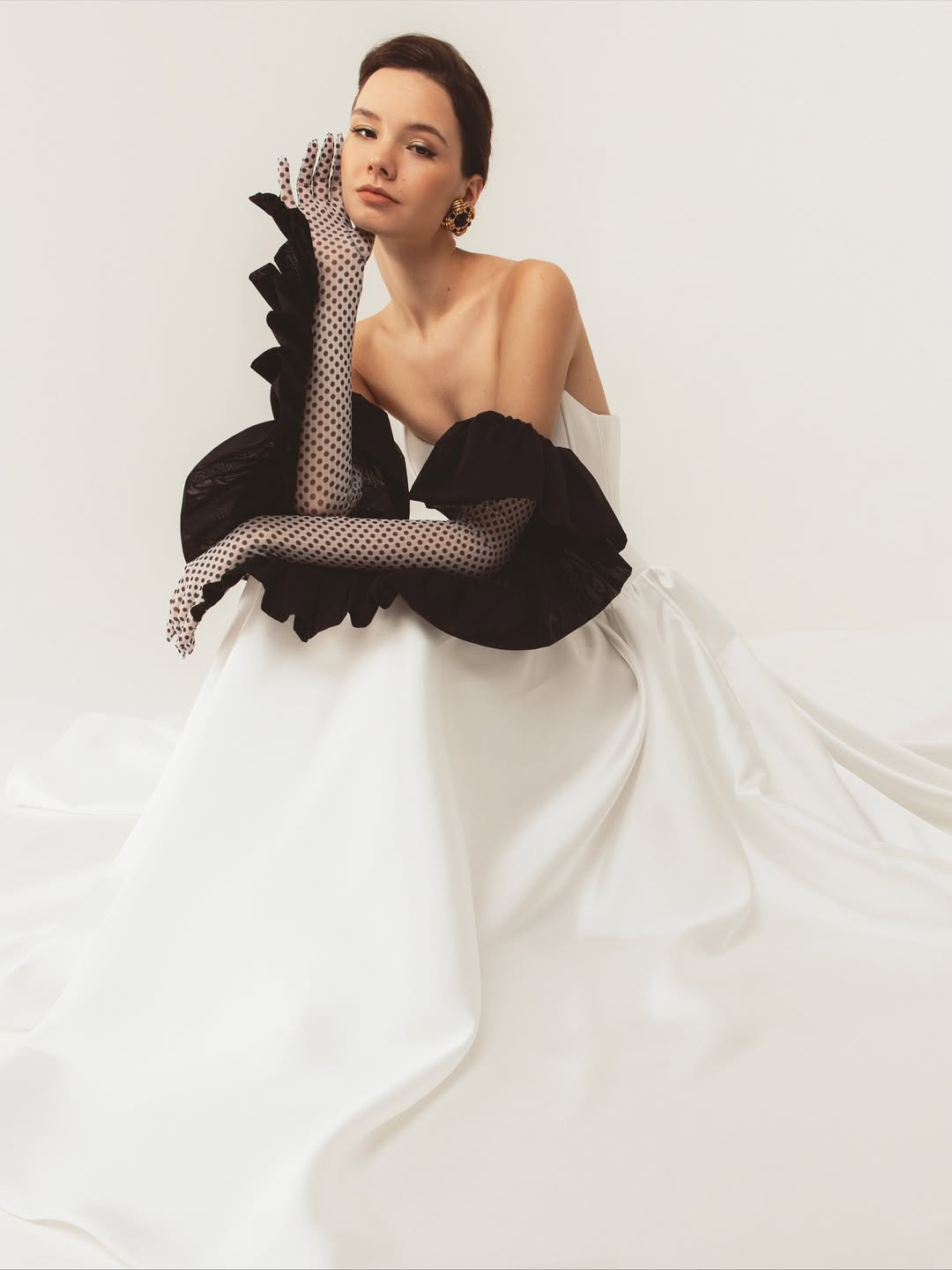
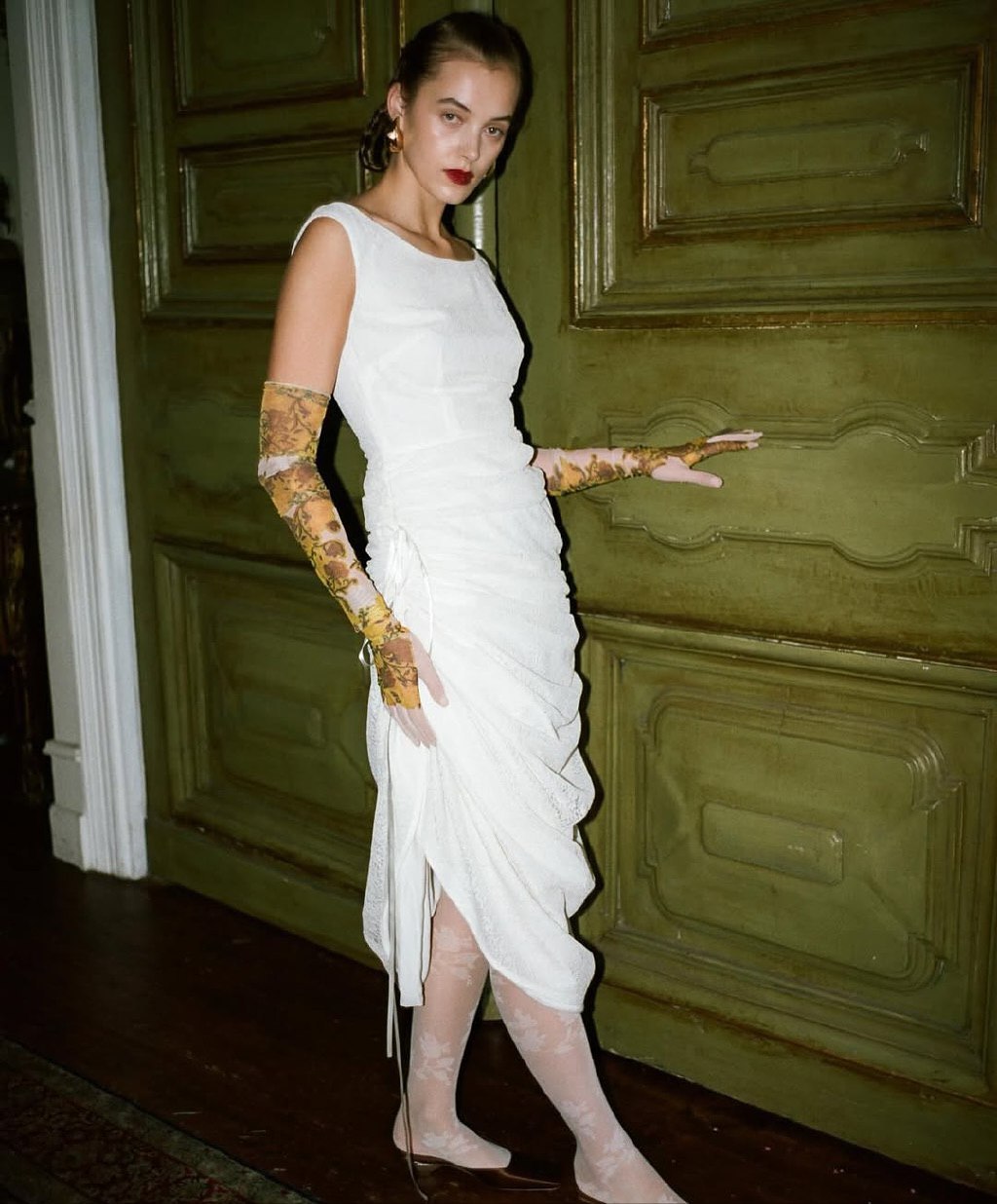
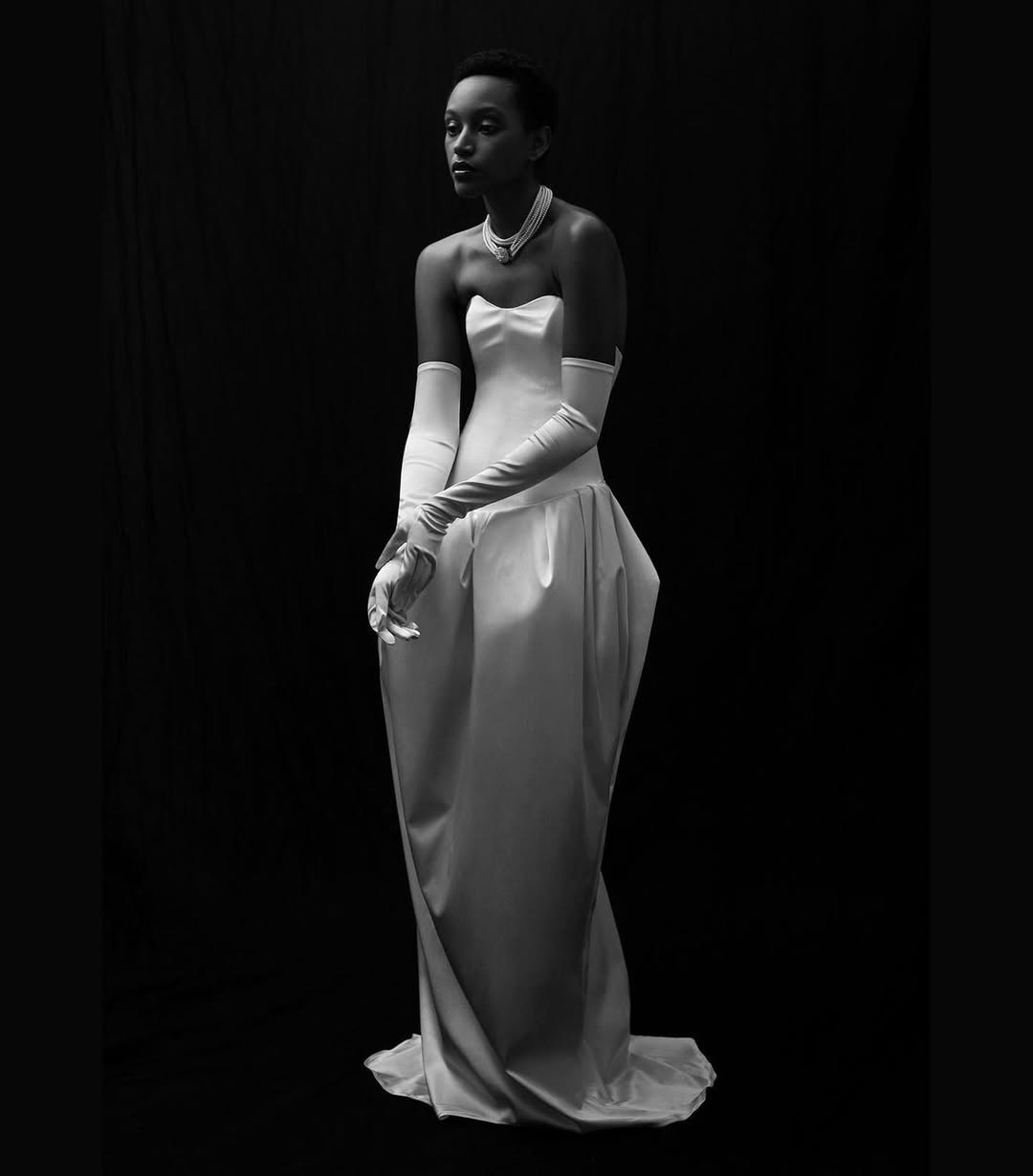
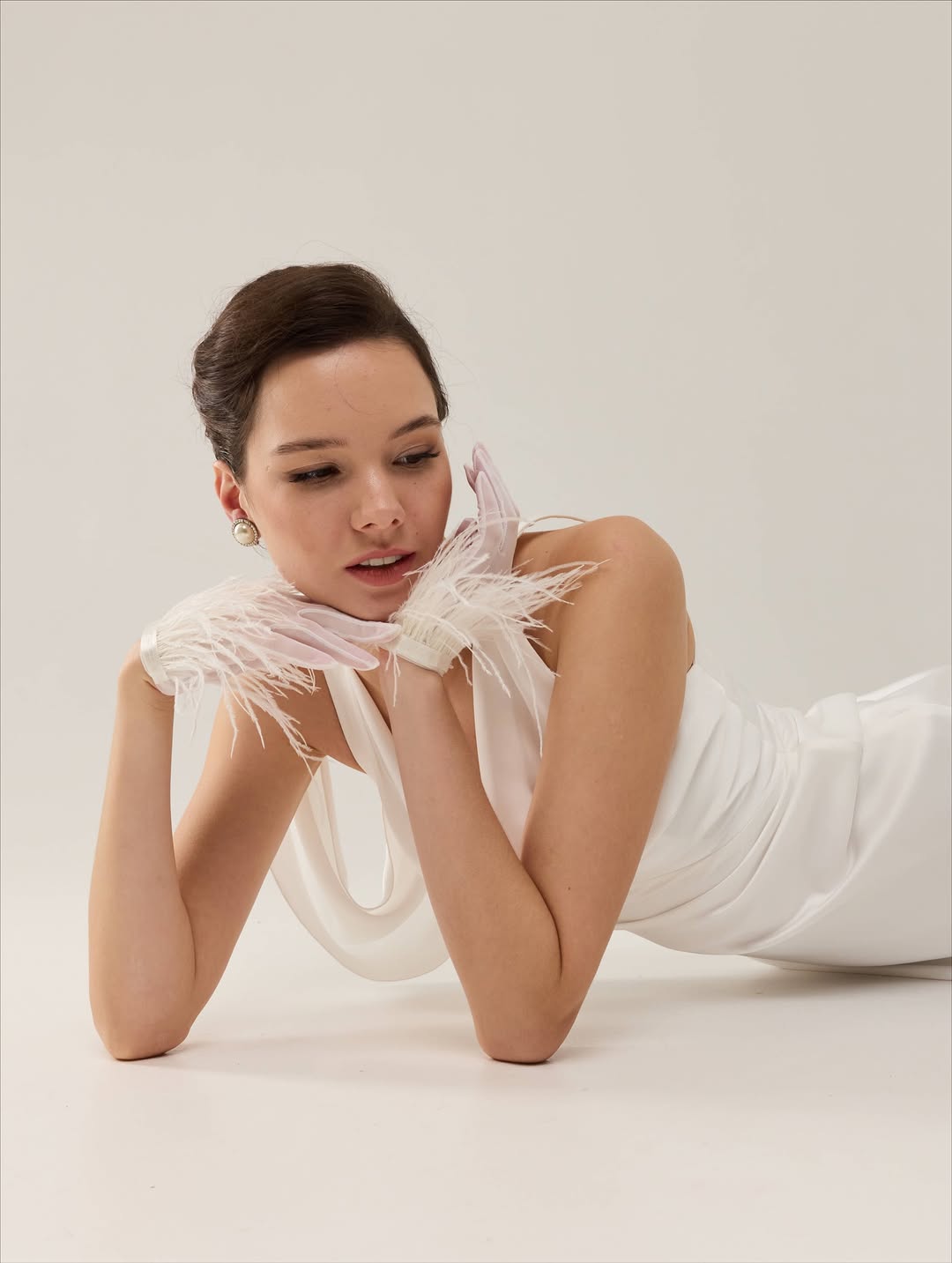
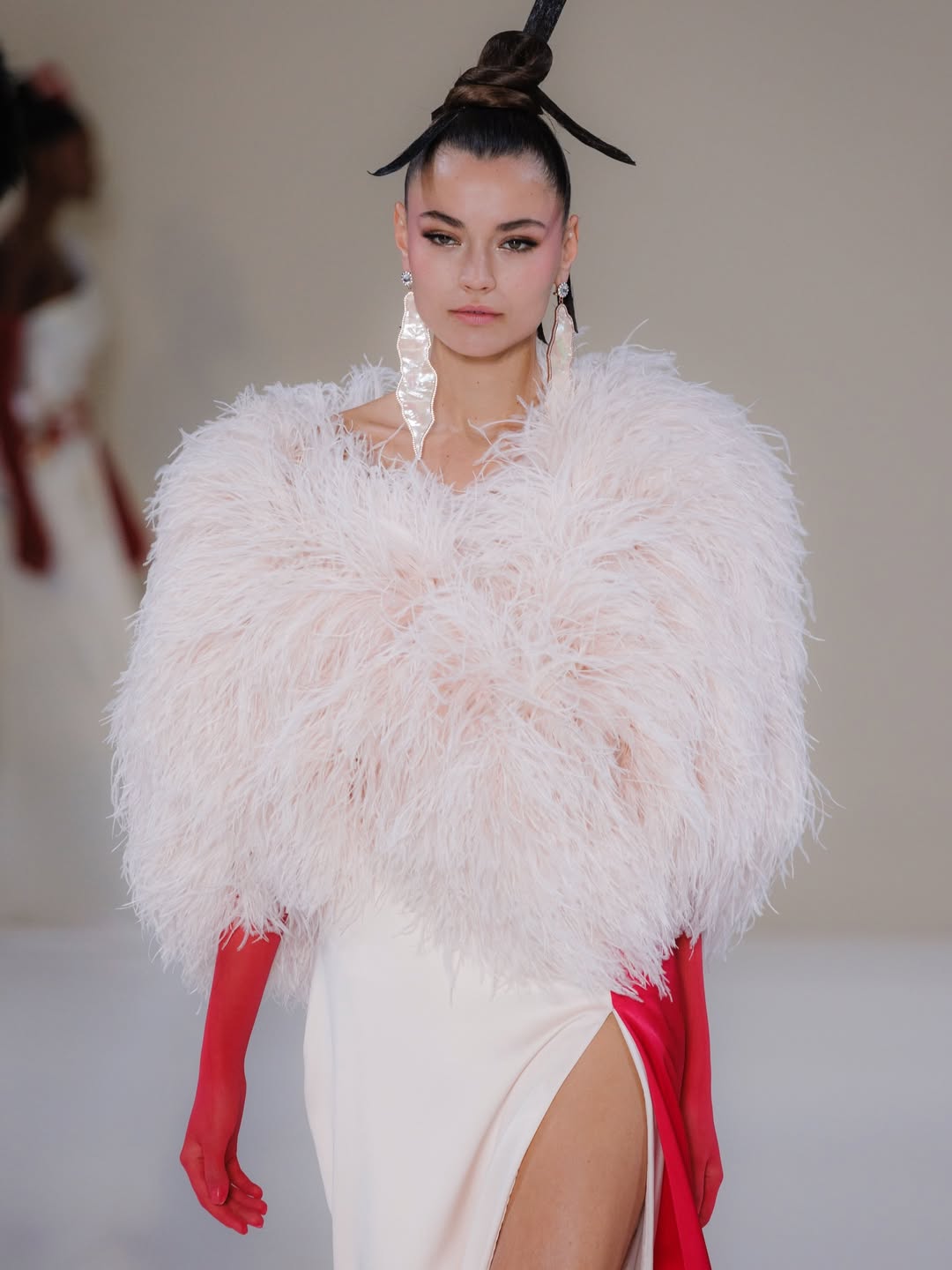
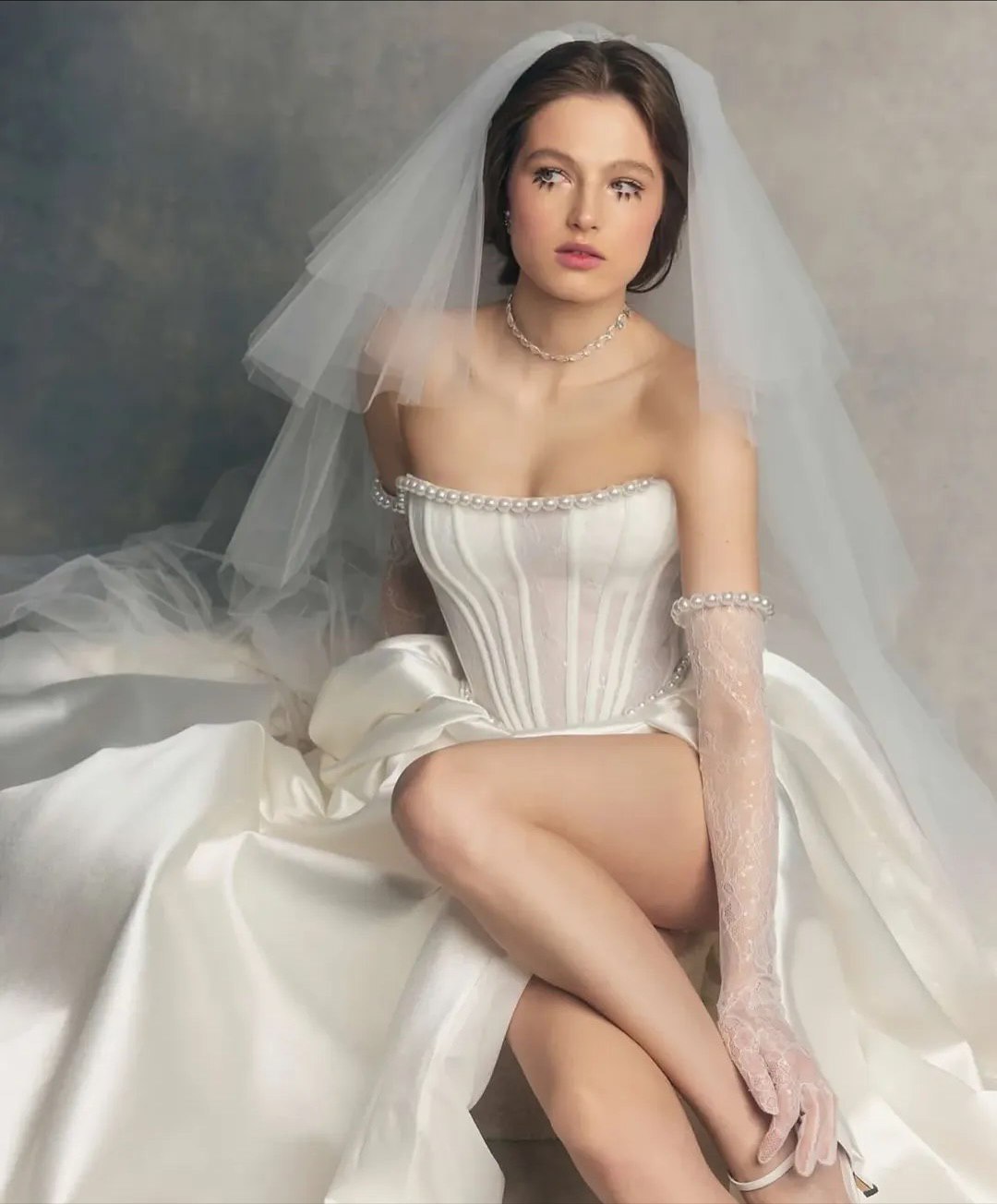
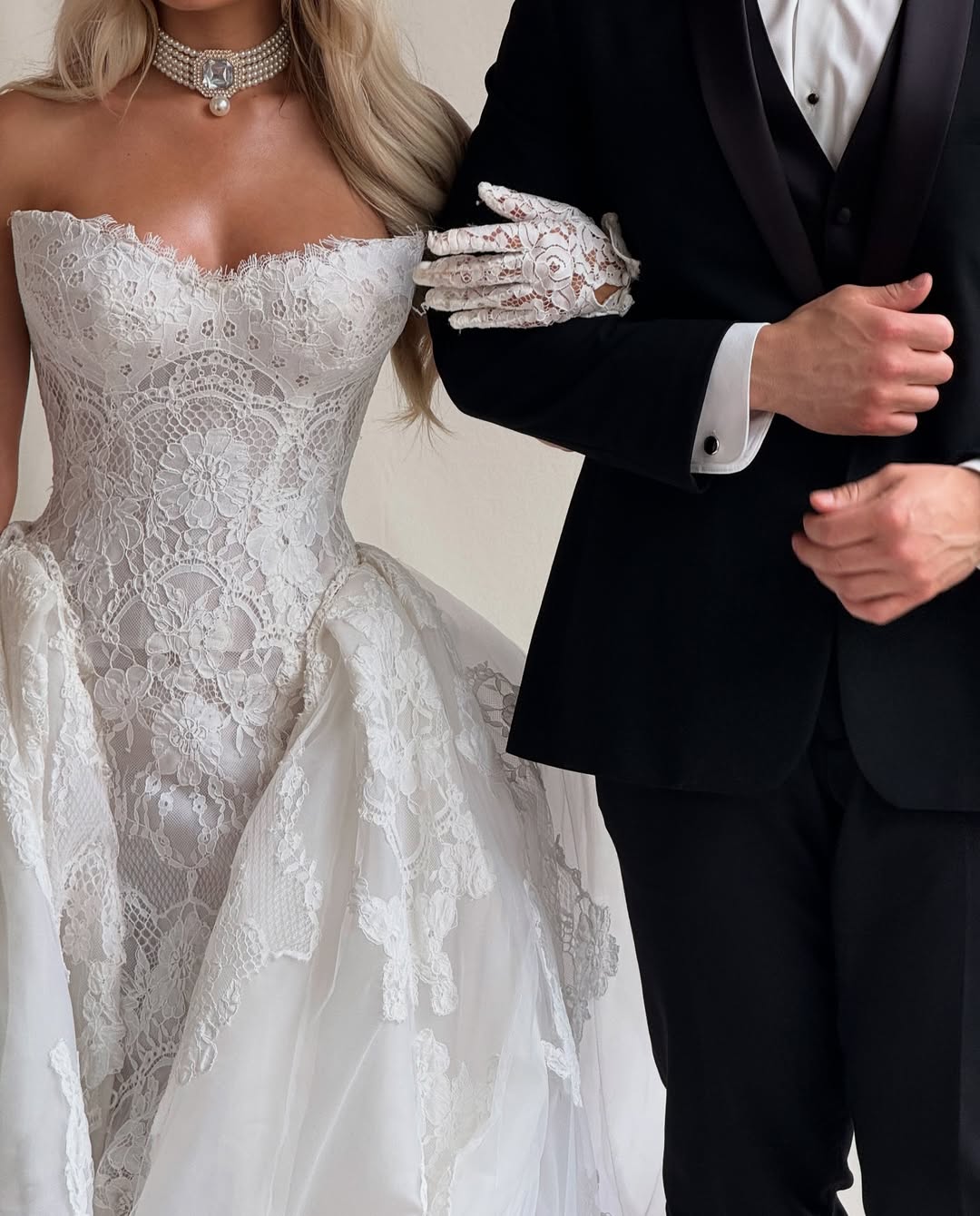
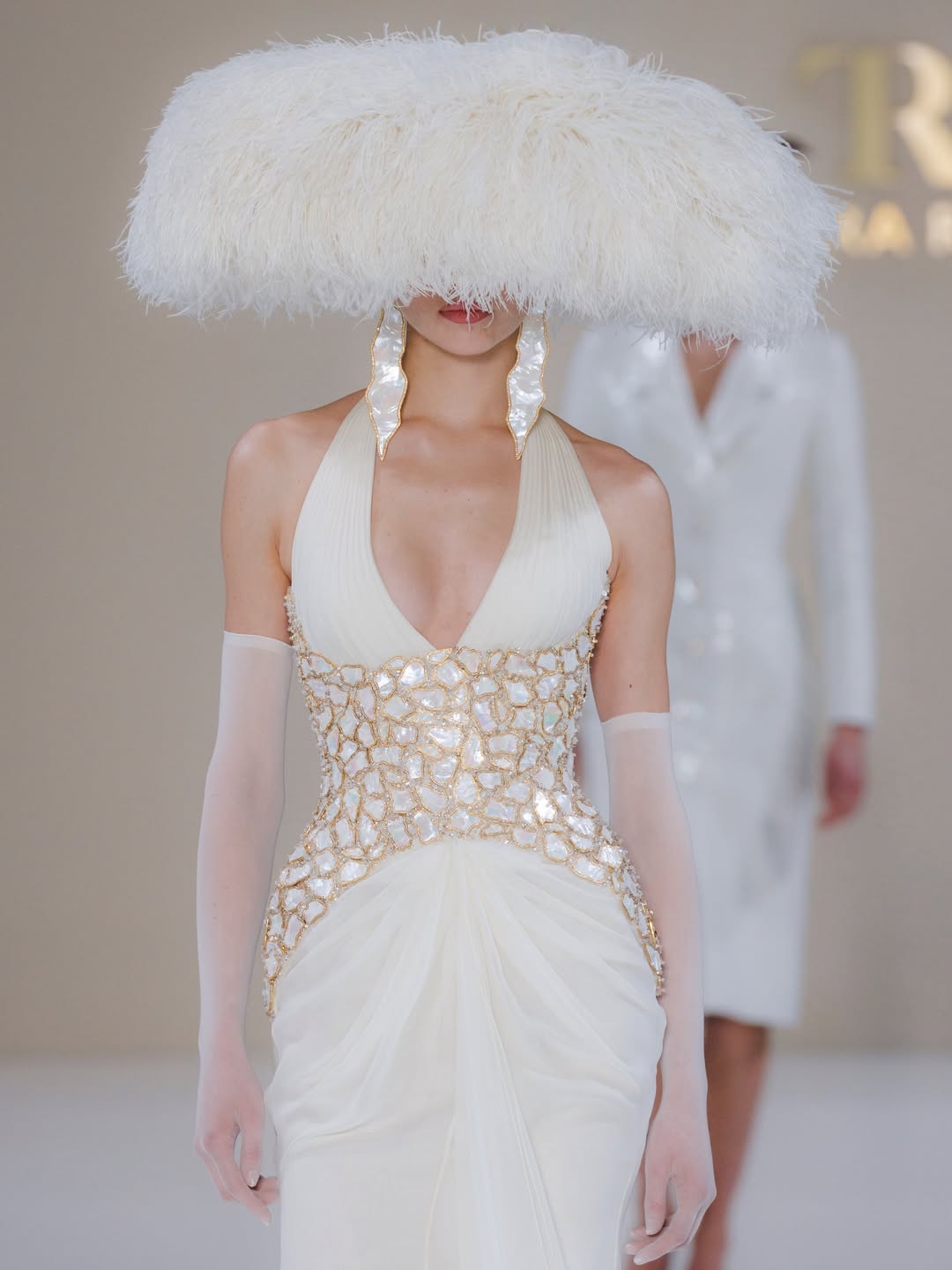
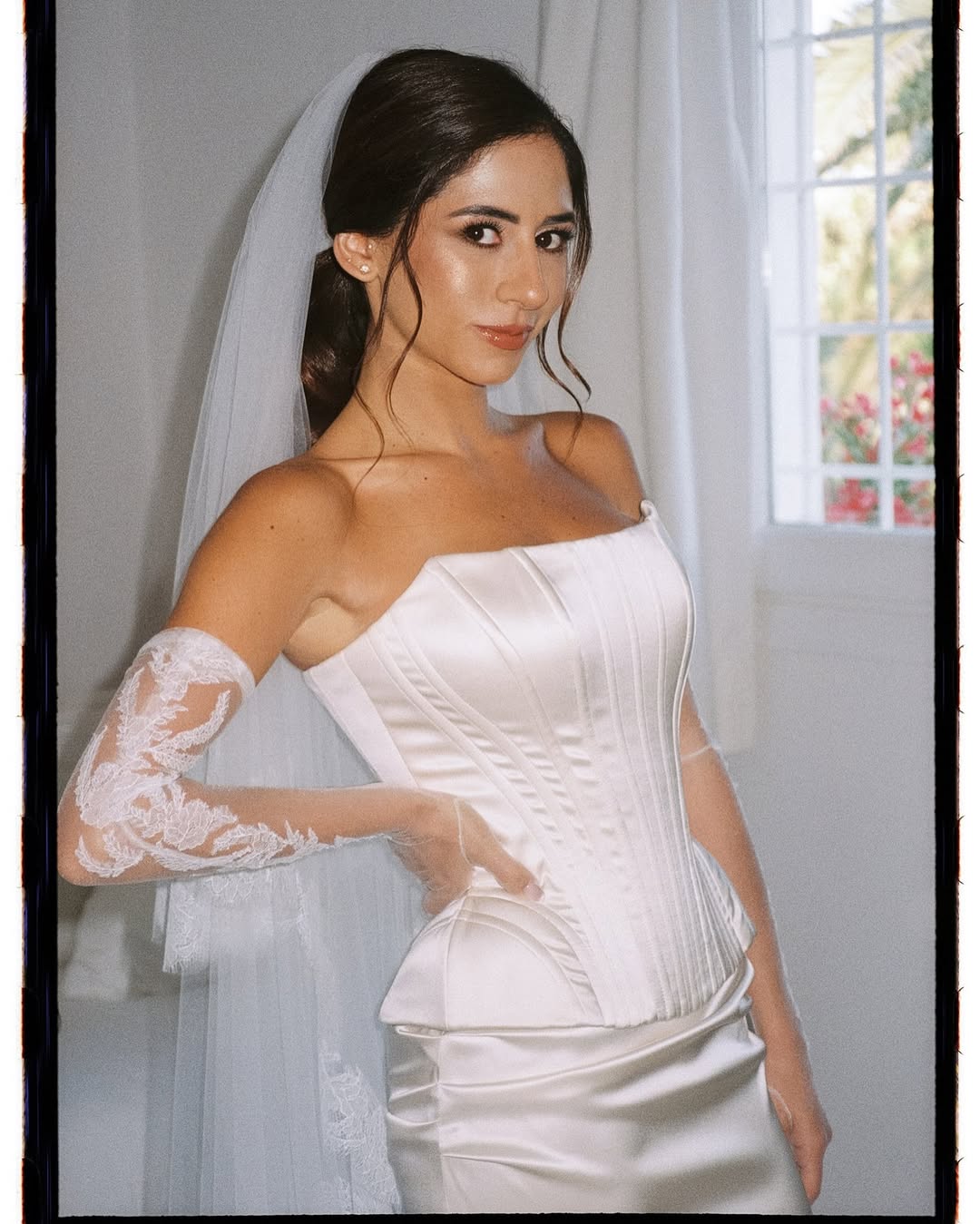
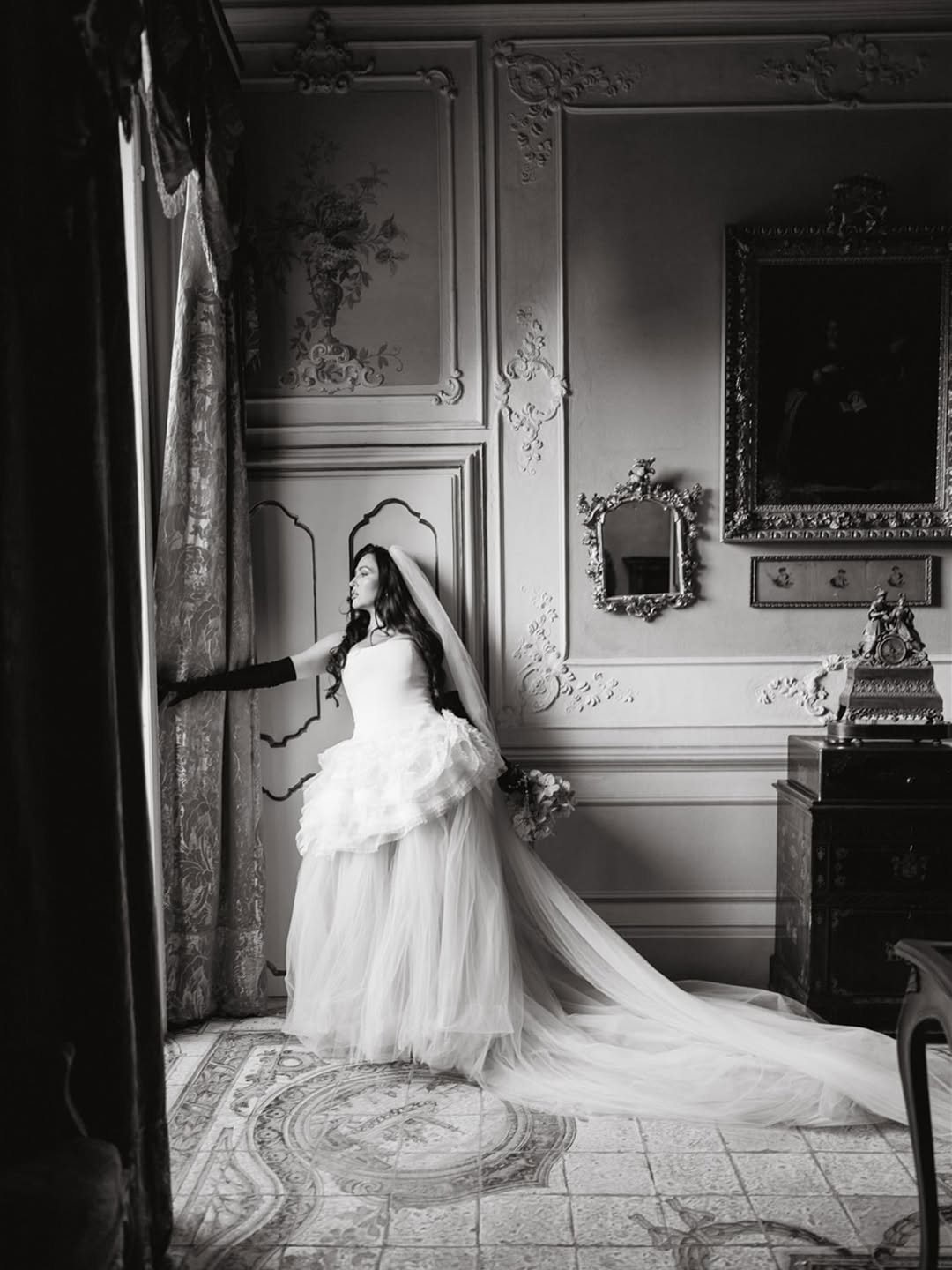
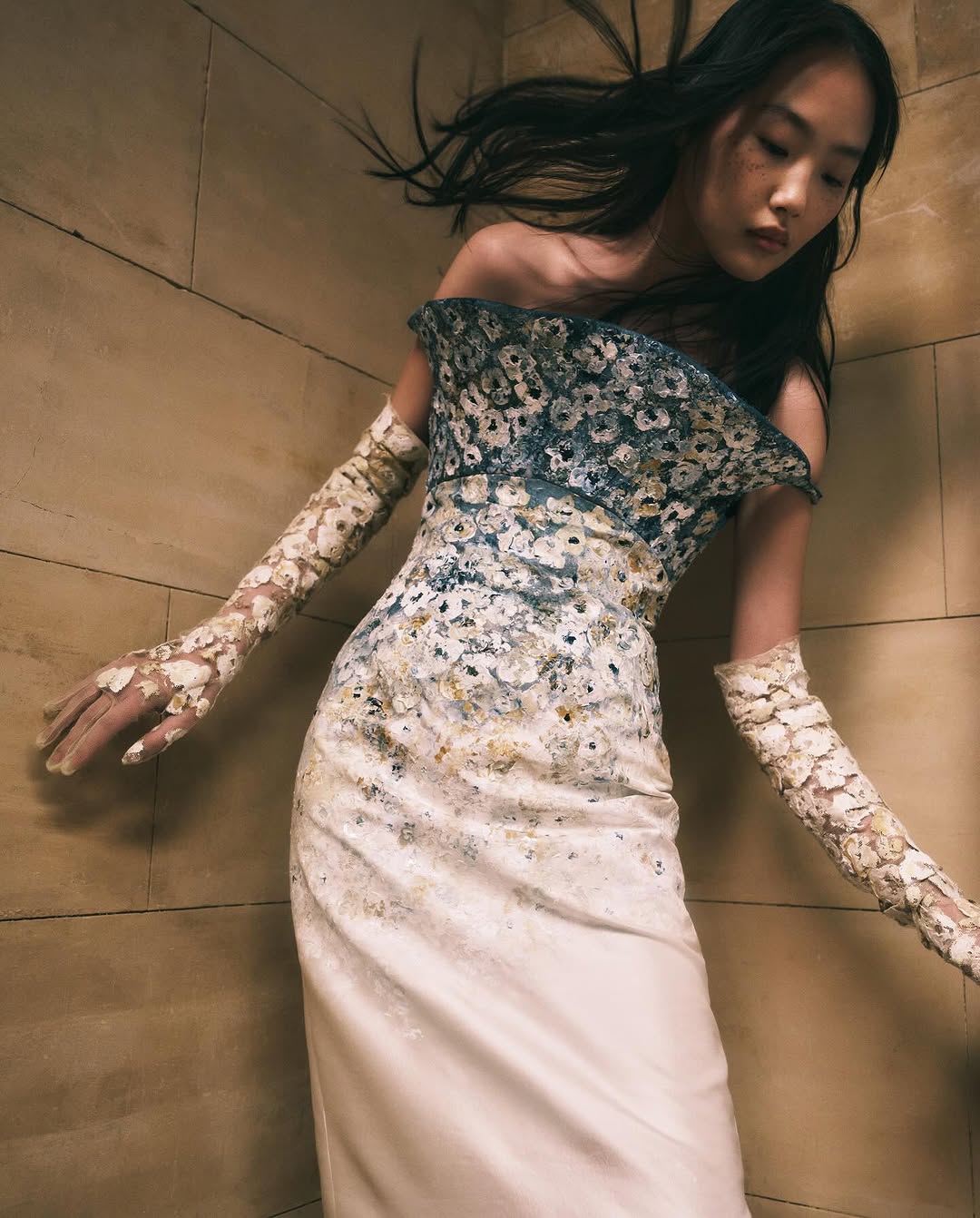
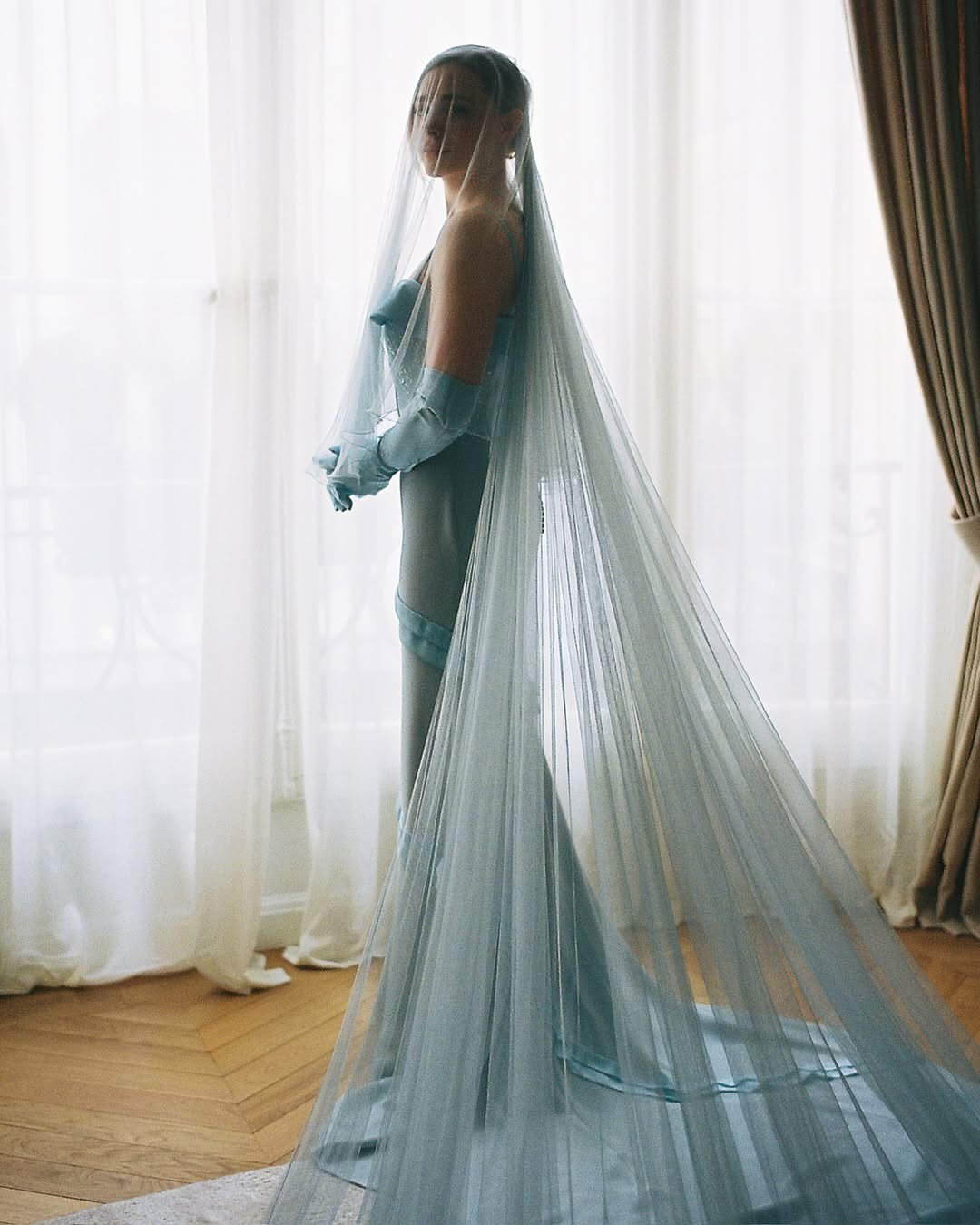
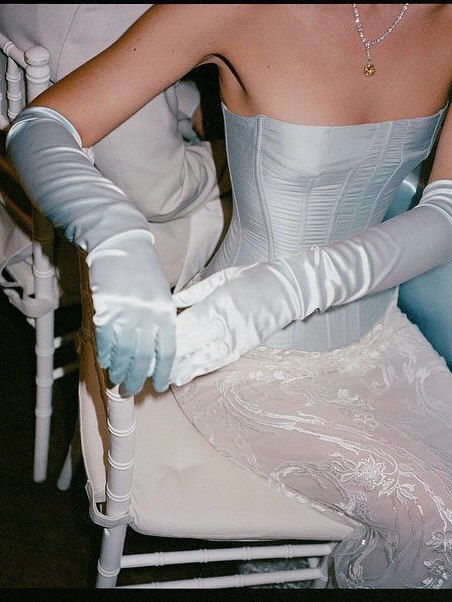
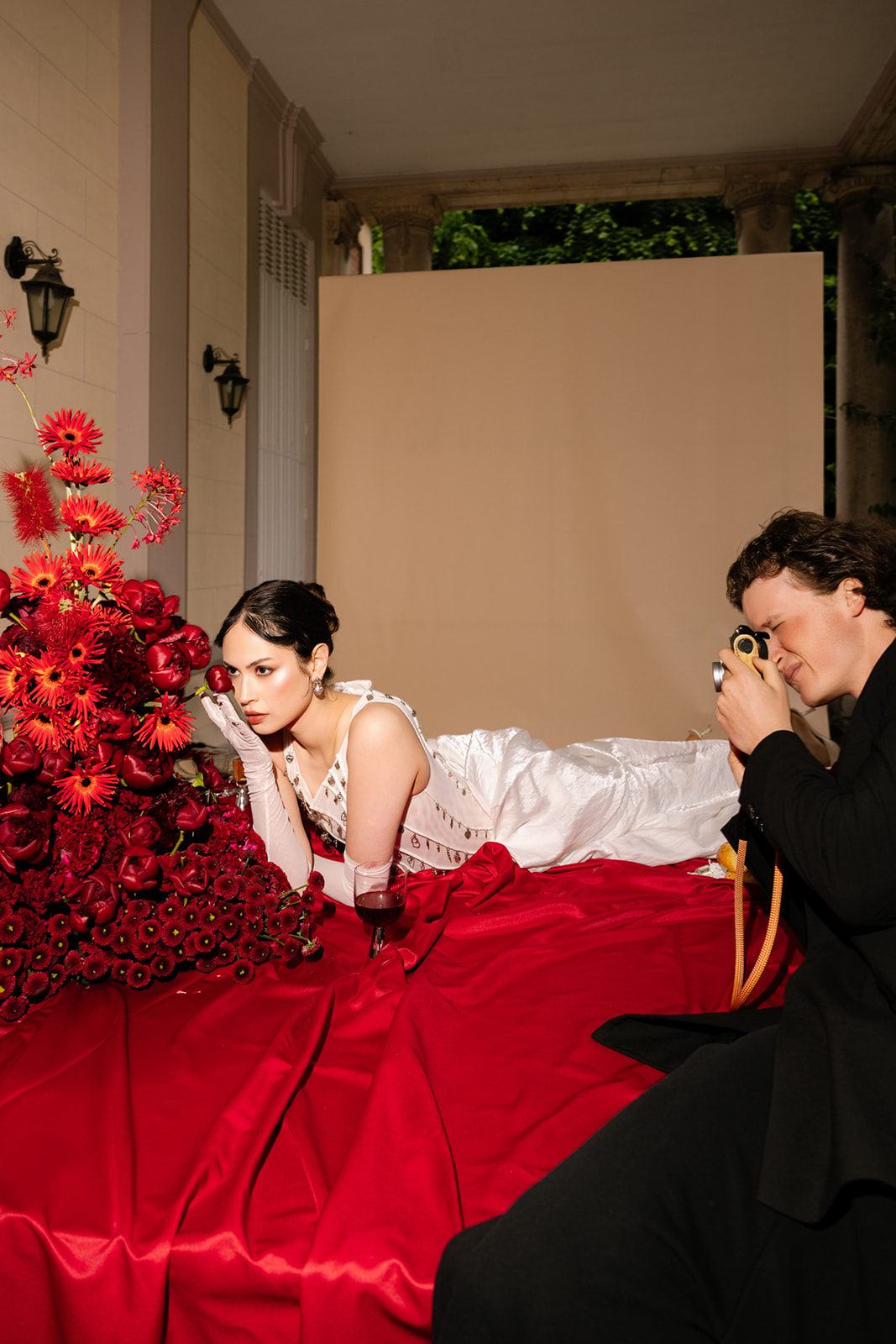
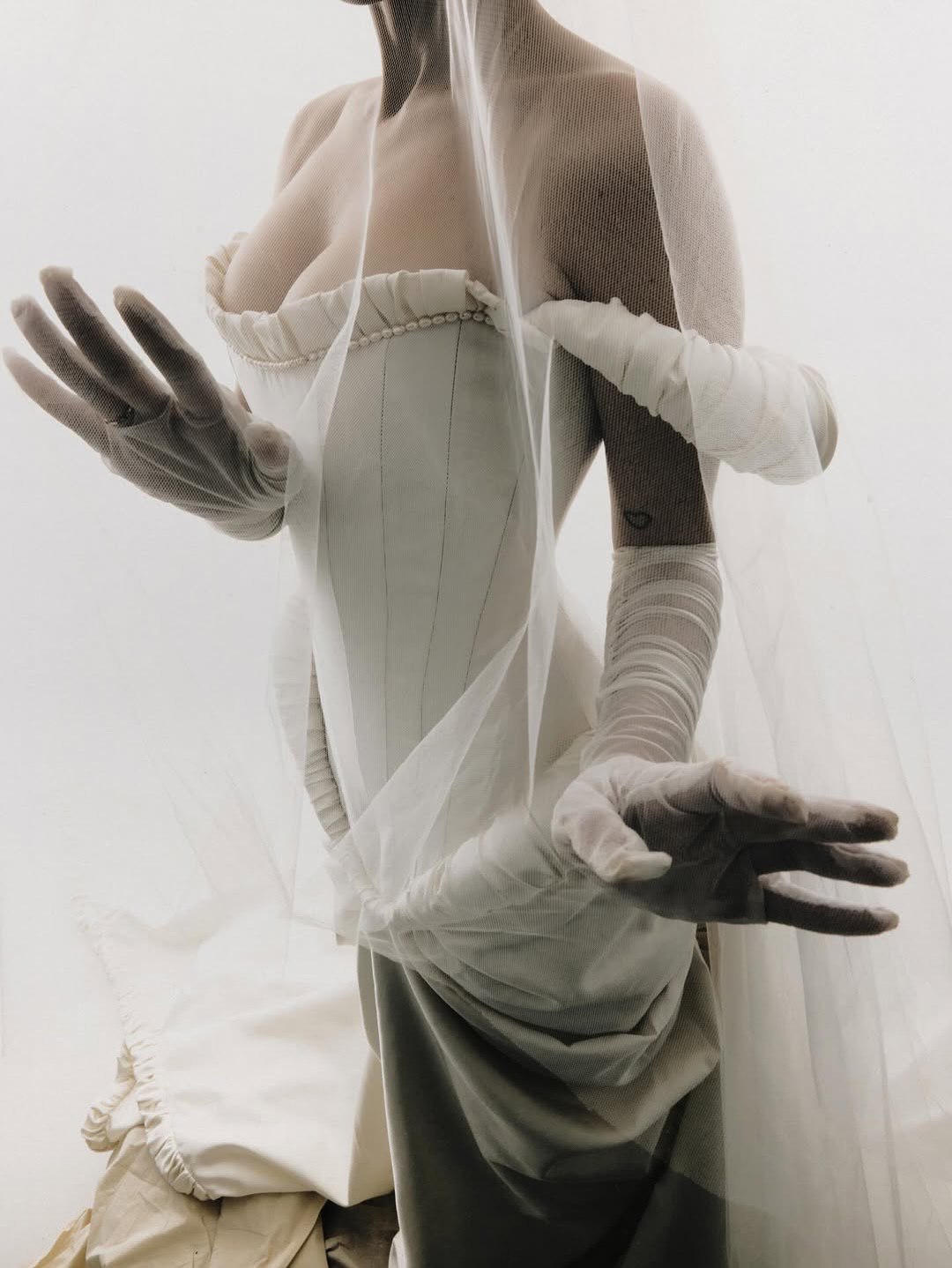
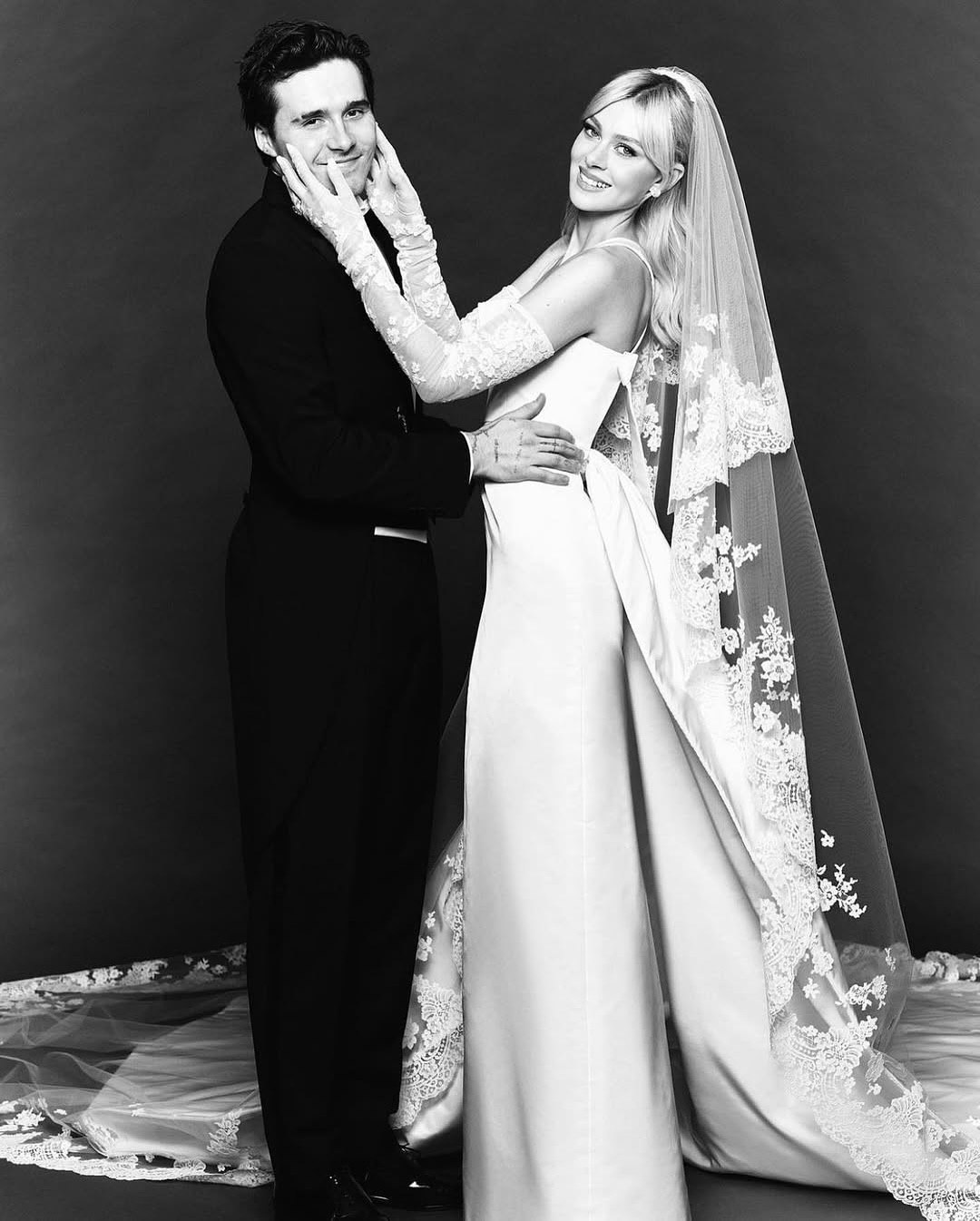
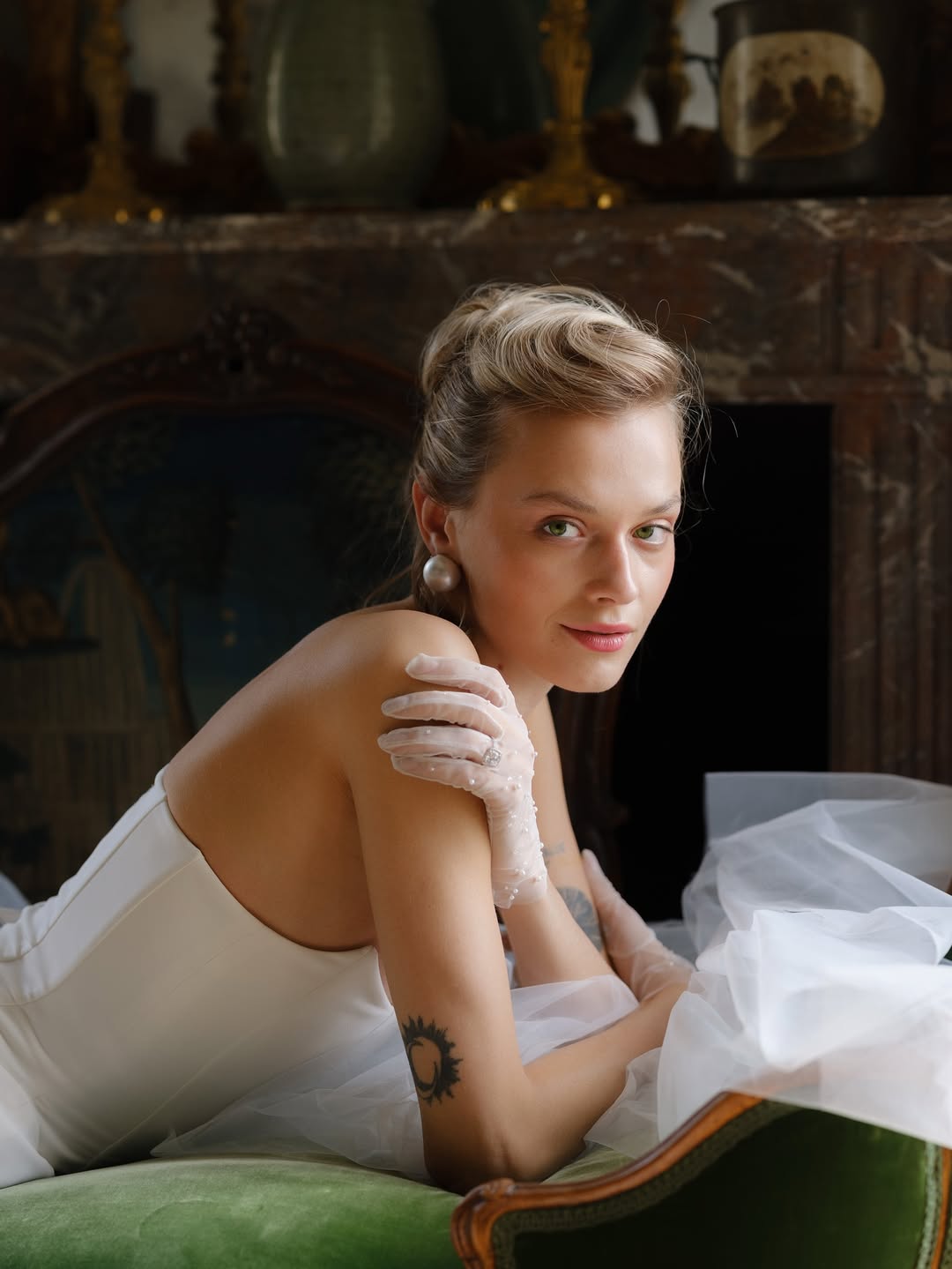
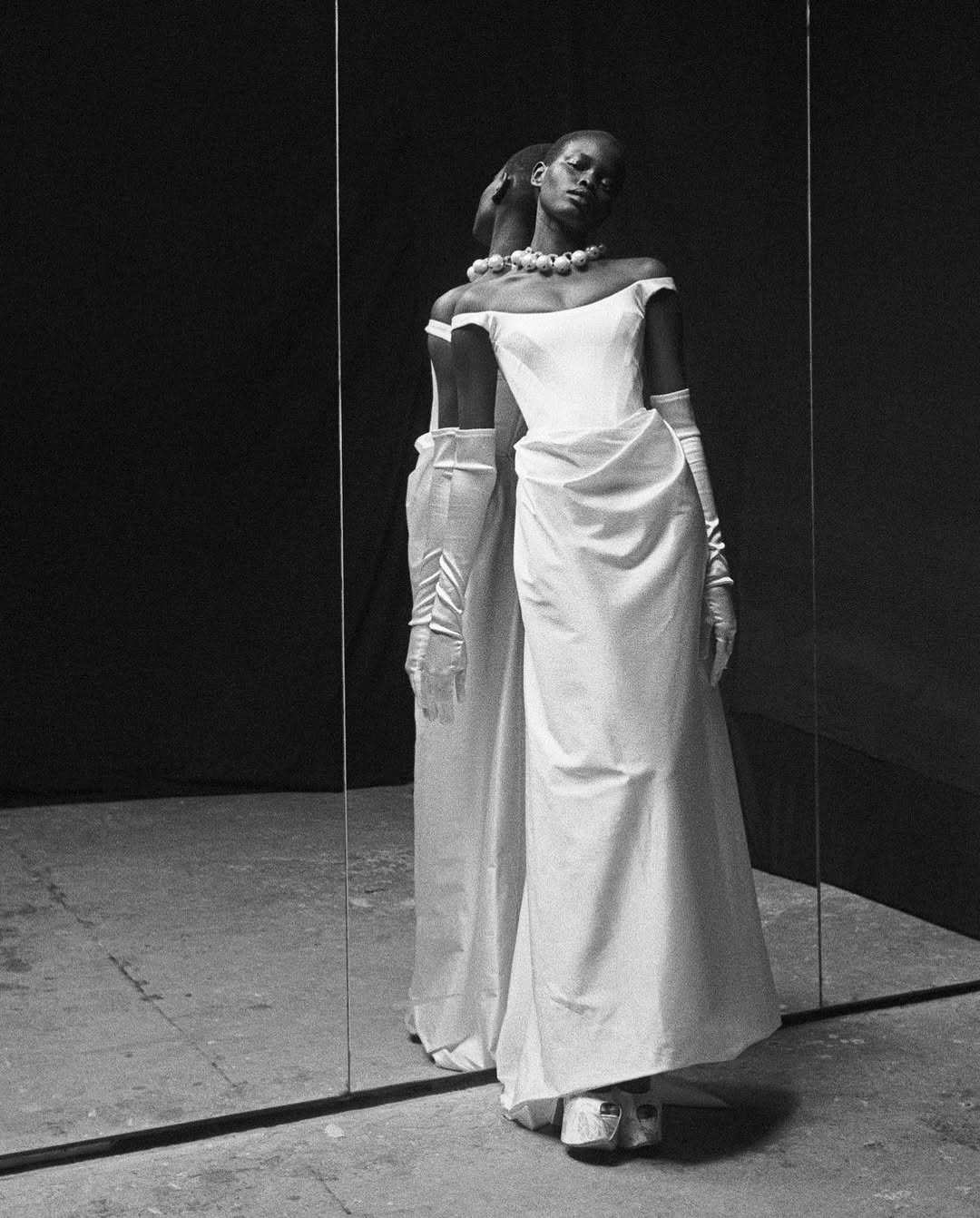
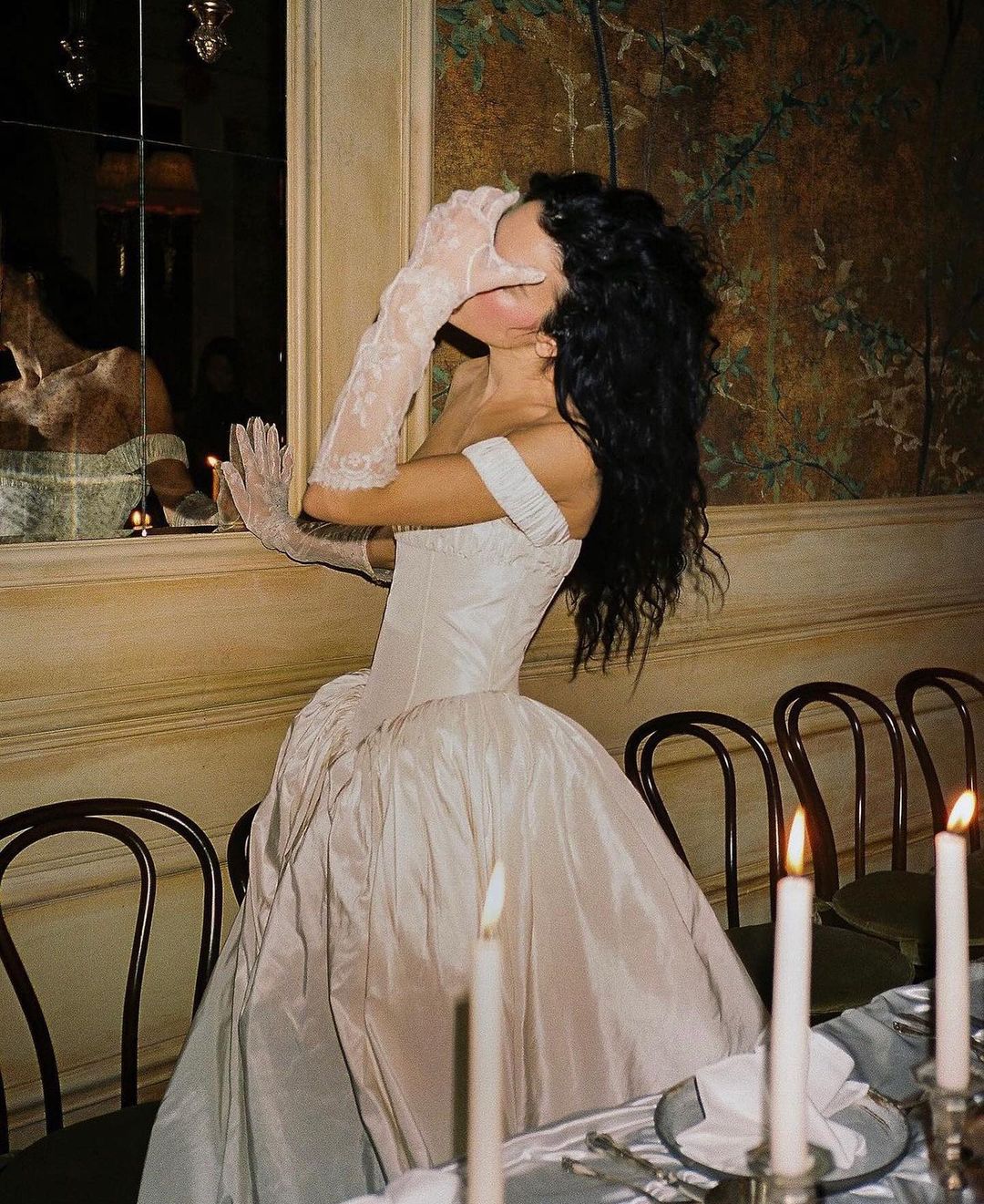
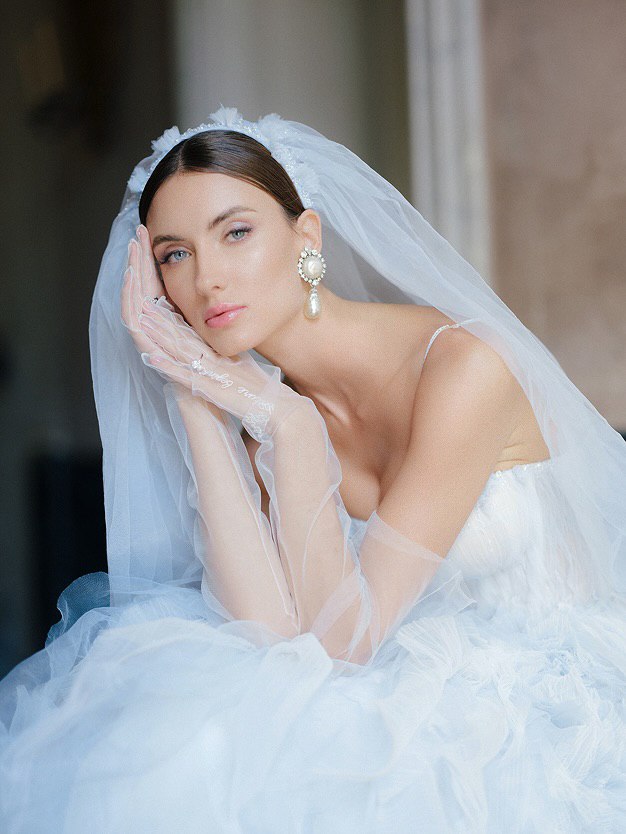
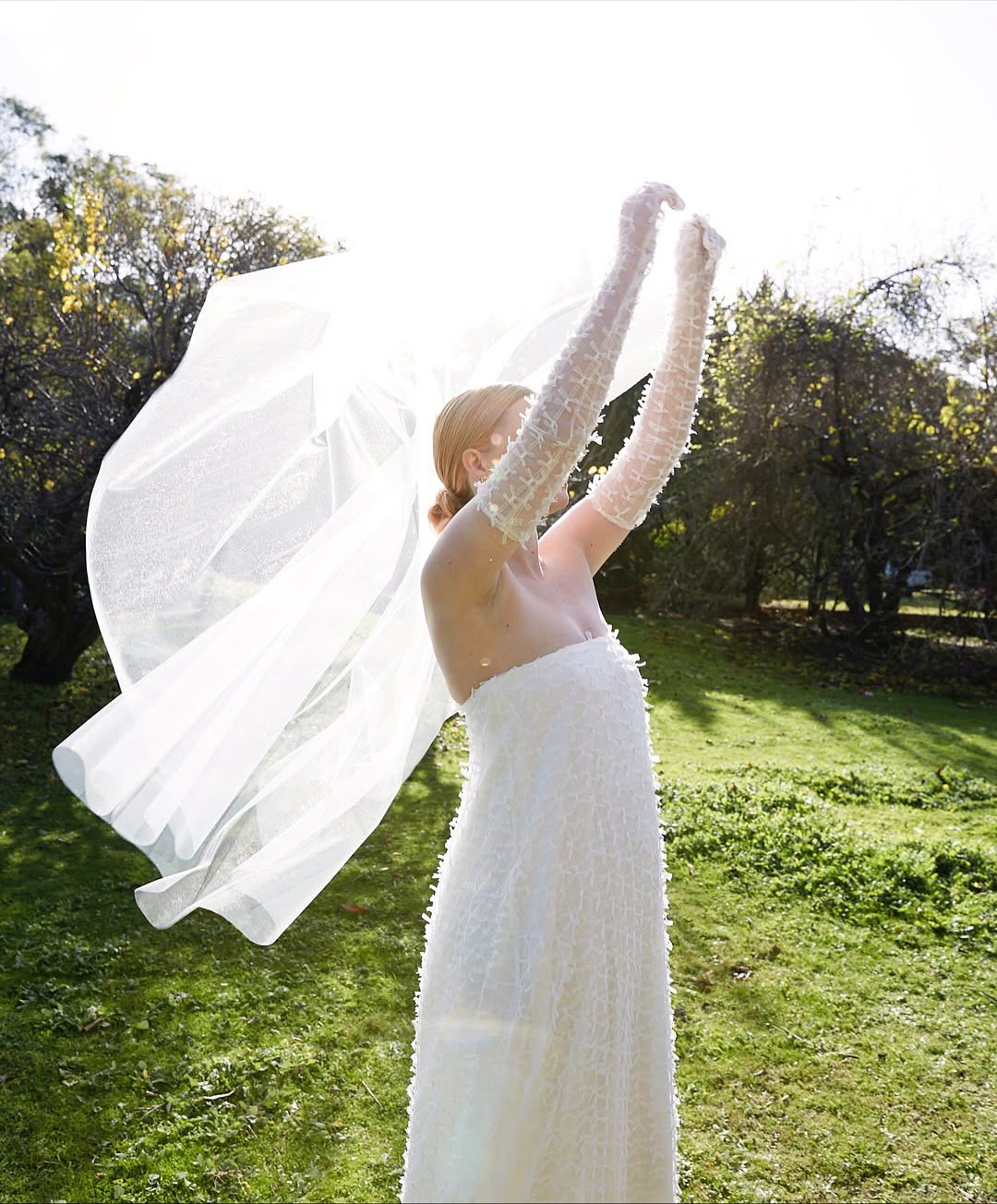
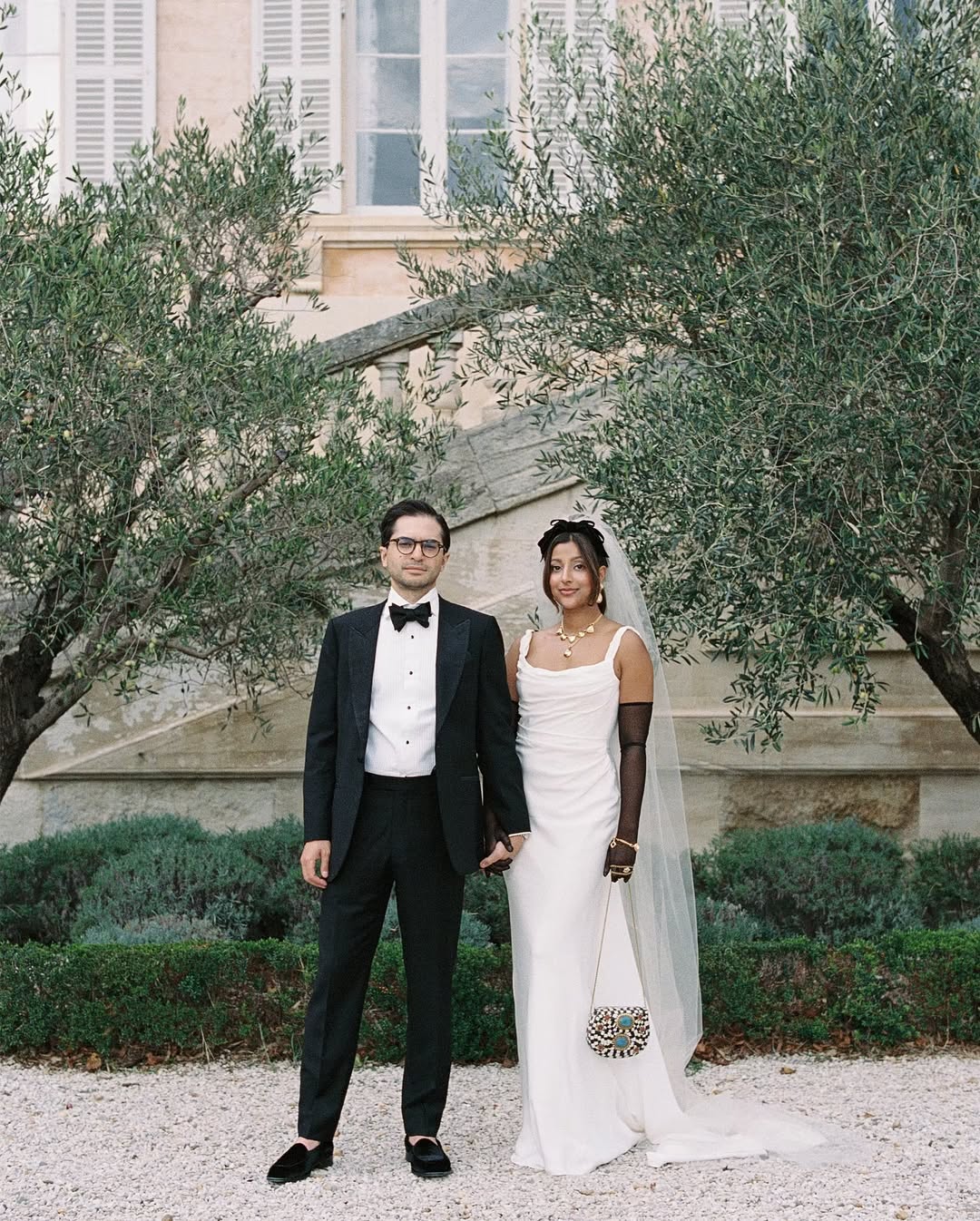
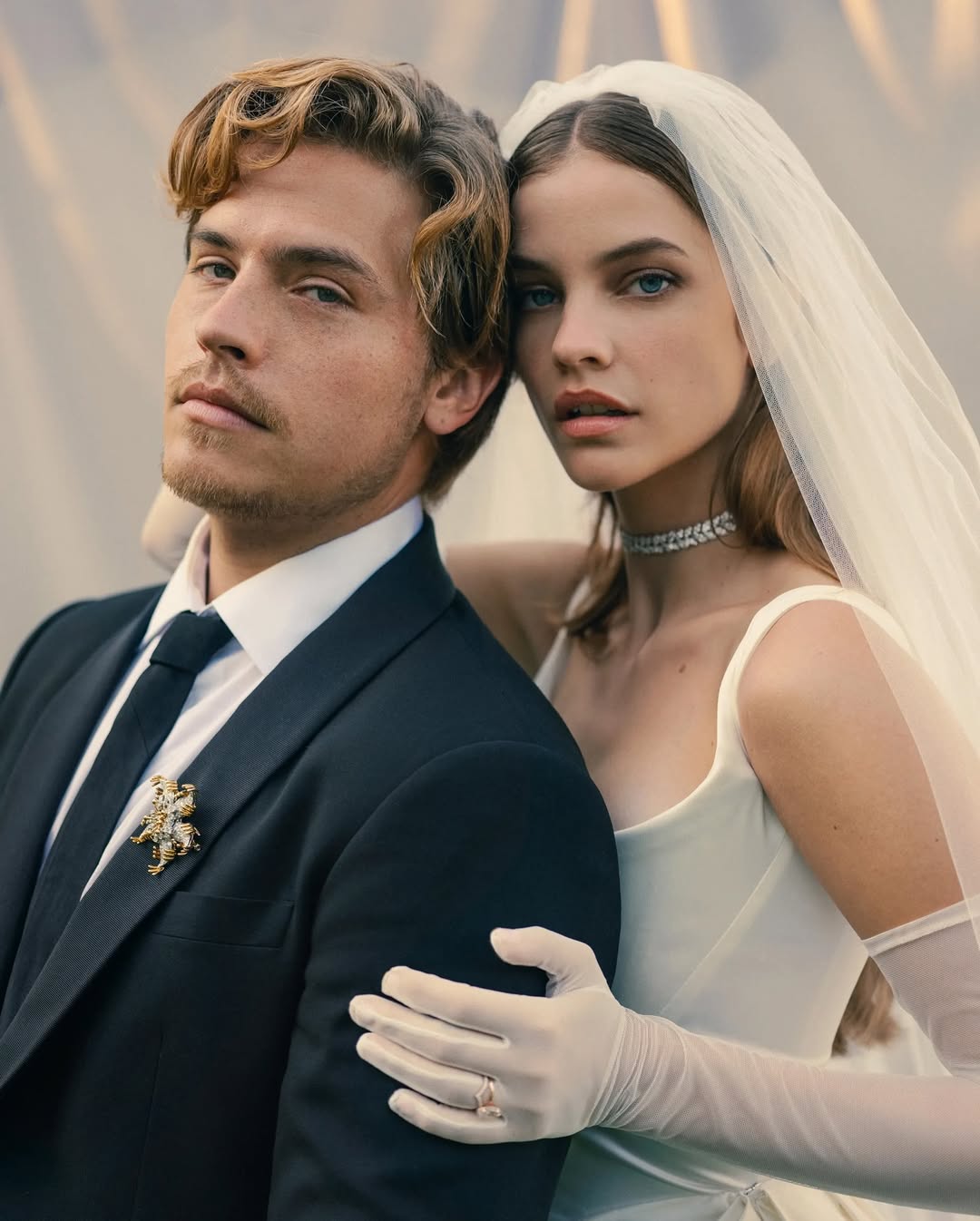
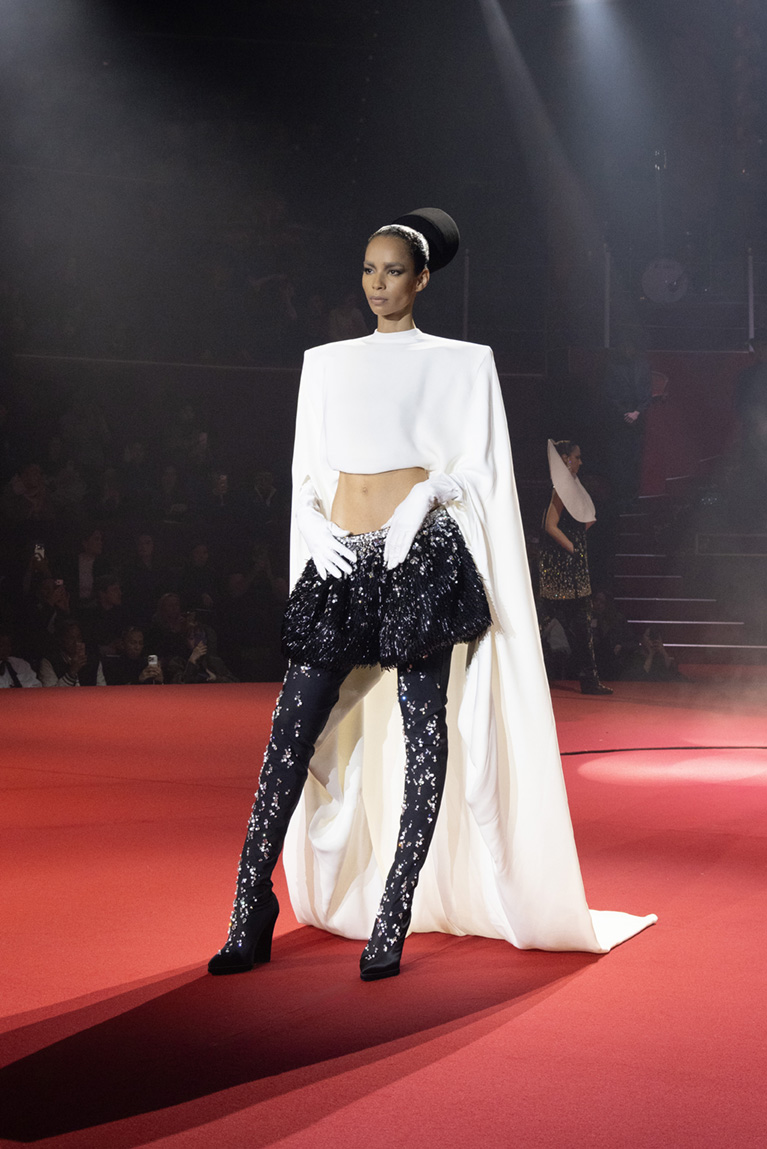
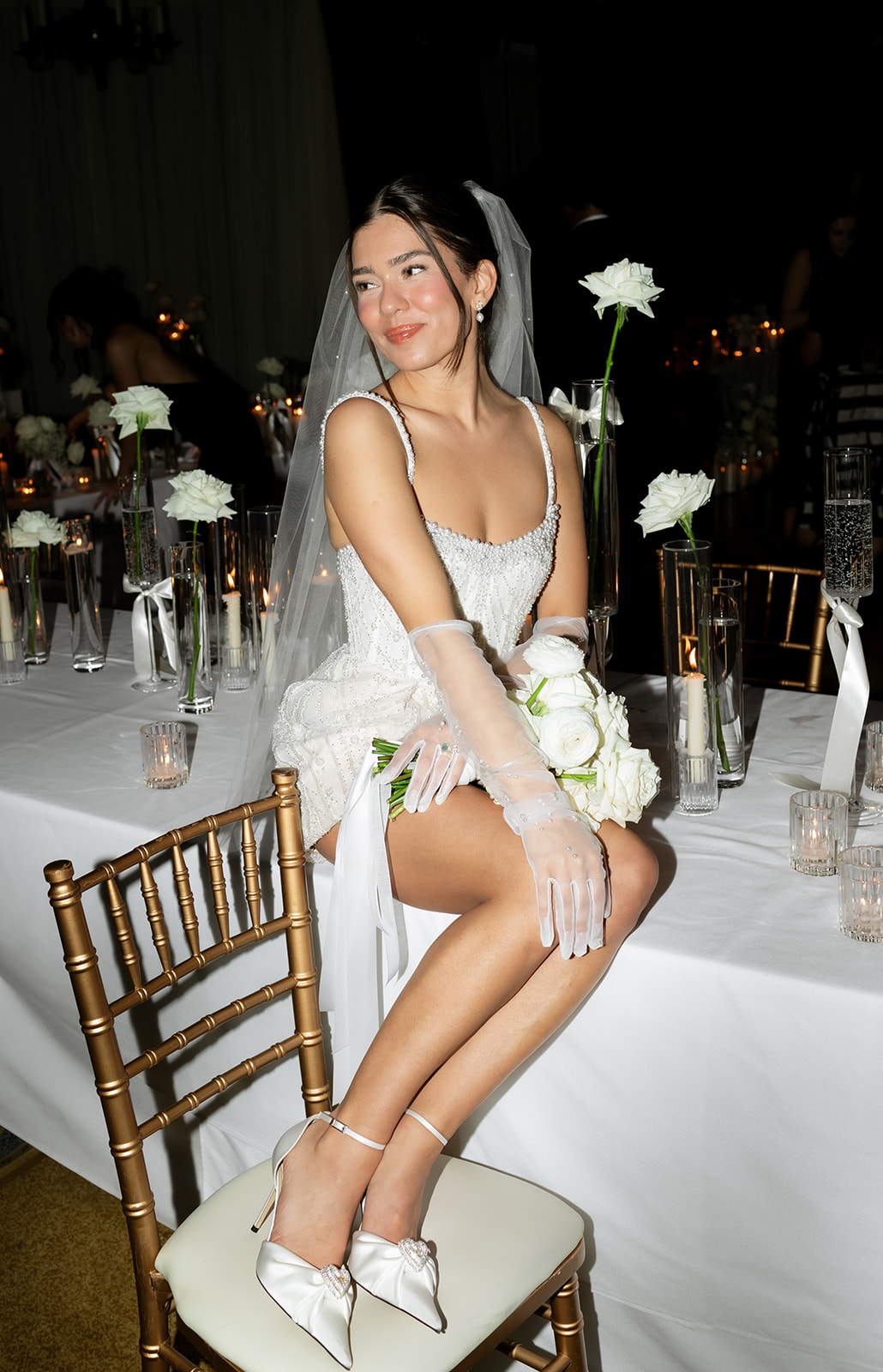
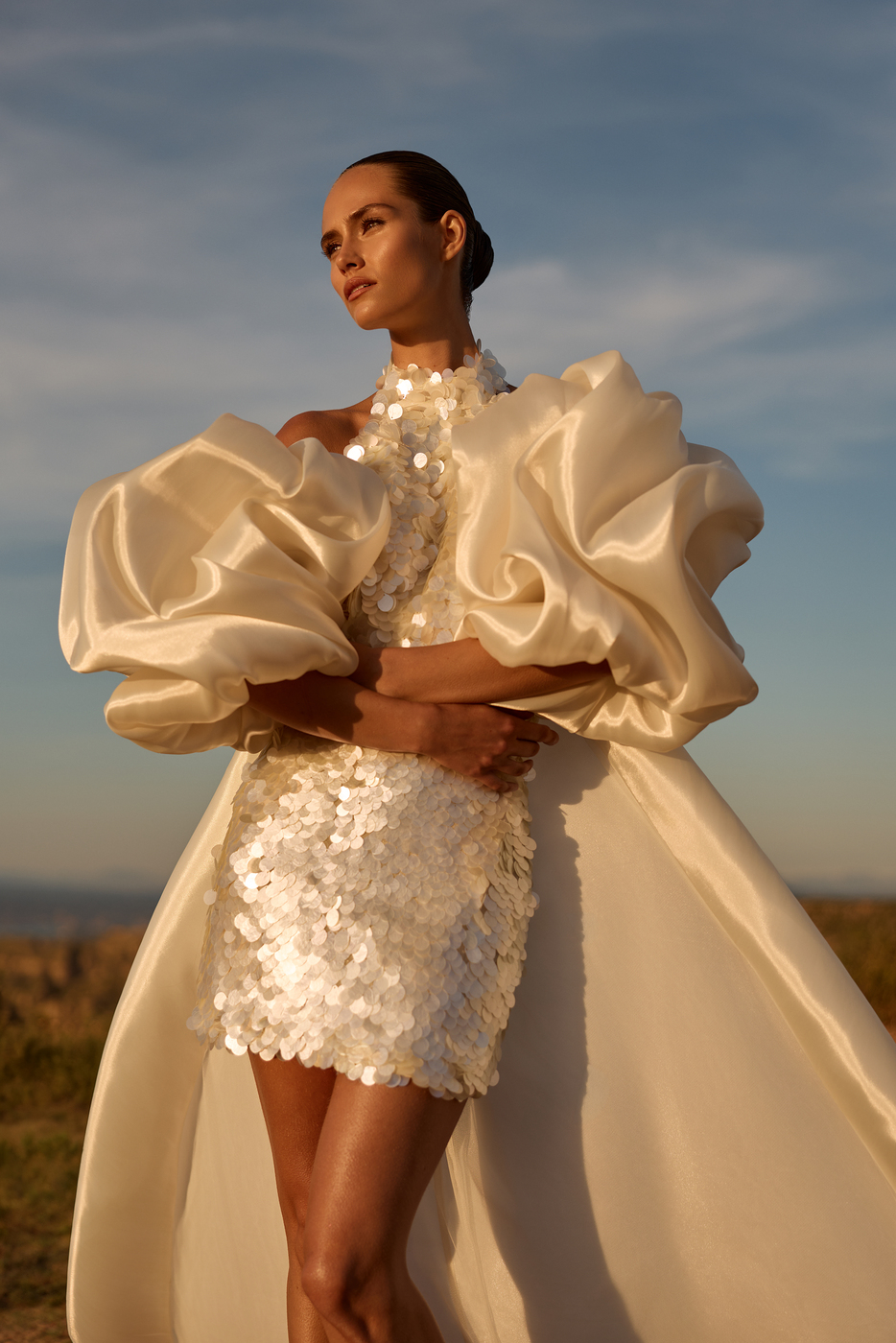
What makes gloves especially exciting right now is how open they are to interpretation. In the Regency era, they were largely dictated by etiquette. Today, they’re pure expression. With a variety of materials, textures, and embellishments to choose from, brides can select gloves that enhance their dress and reflect their personal style rather than follow a rulebook. Look closely at the range of bridal imagery emerging here and you’ll see just how far this accessory can stretch. Some brides choose classic white, of course — soft ivory kid leather or satin pulled seamlessly over the arm. Others lean into contrast: red gloves with a minimalist gown for a bold moment; black for graphic drama; powder blue for something romantic and unexpected.
Length alone changes the entire mood. Opera-length gloves that reach above the elbow feel regal and sculptural. Elbow-length styles strike a balance between refinement and ease. Short gloves, barely grazing the wrist, can feel retro, city-chic, or delightfully understated. Some are ruched gently along the forearm, creating softness and texture; others are perfectly taut, like a second skin, emphasizing clean lines and precision.
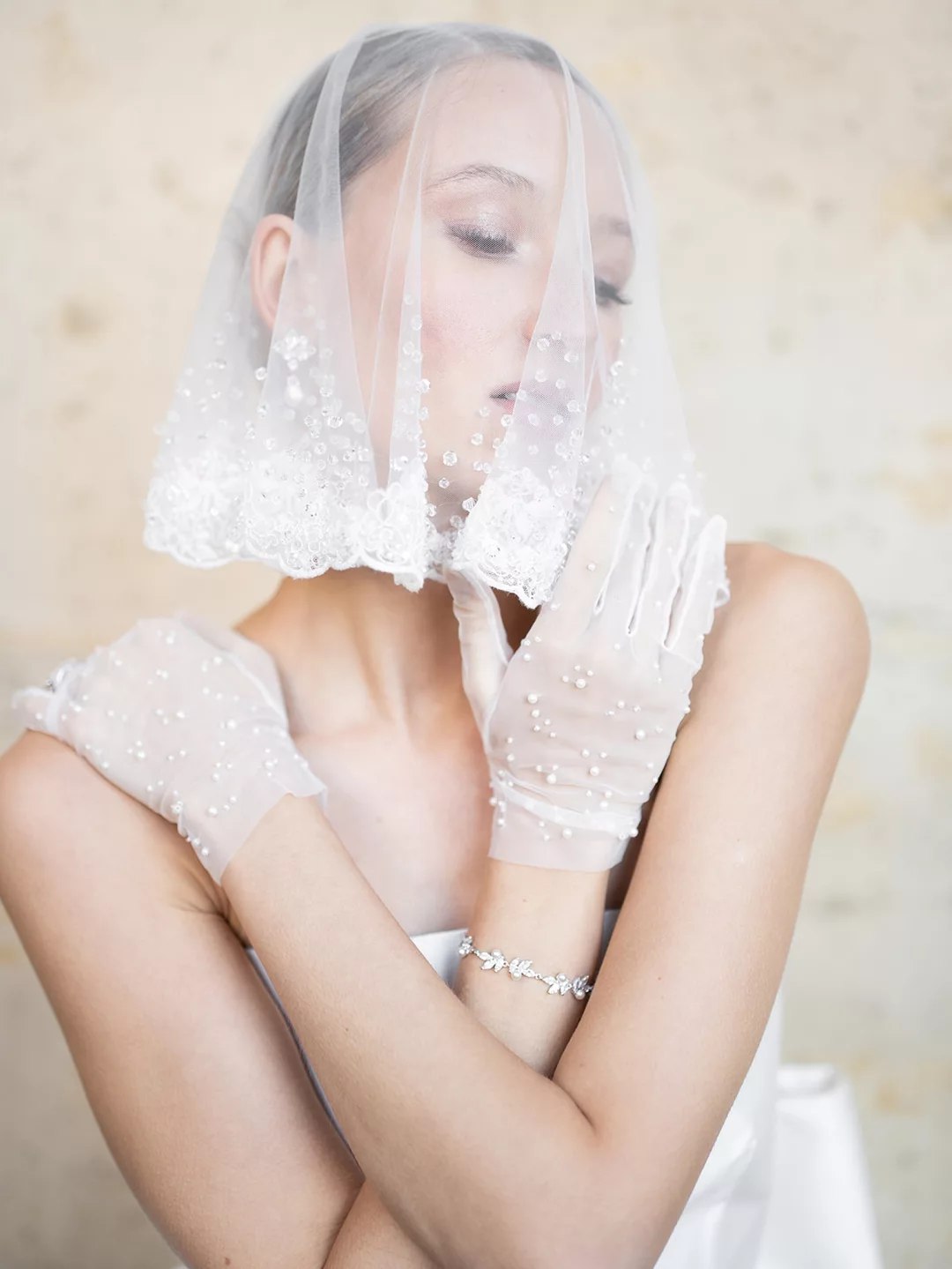
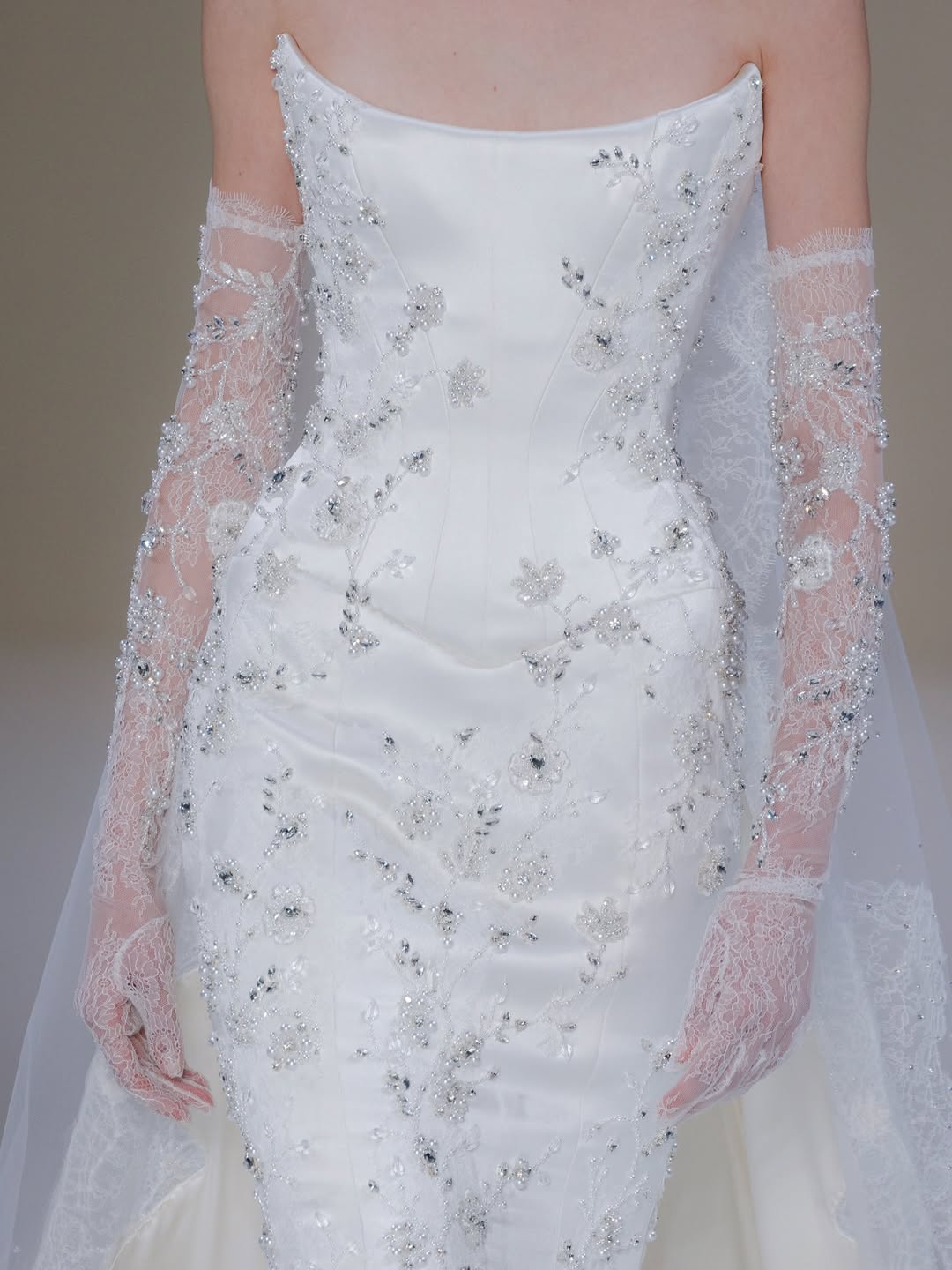
Then there’s surface. Crystals scattered along sheer tulle catch candlelight during an evening reception. Pearls stitched along the wrist echo bridal jewelry. Feathers introduce a fashion-forward edge. Embroidery — even scripted phrases or meaningful words — turns gloves into something deeply personal. Lace gloves soften structured gowns; satin ones heighten their polish. Leather can feel daring and modern. Transparent tulle adds barely-there romance. There are even bespoke designs where the gloves extend the very print or embroidery of the gown itself, continuing florals or motifs seamlessly down the arm so the entire look feels intentional, unified, complete.