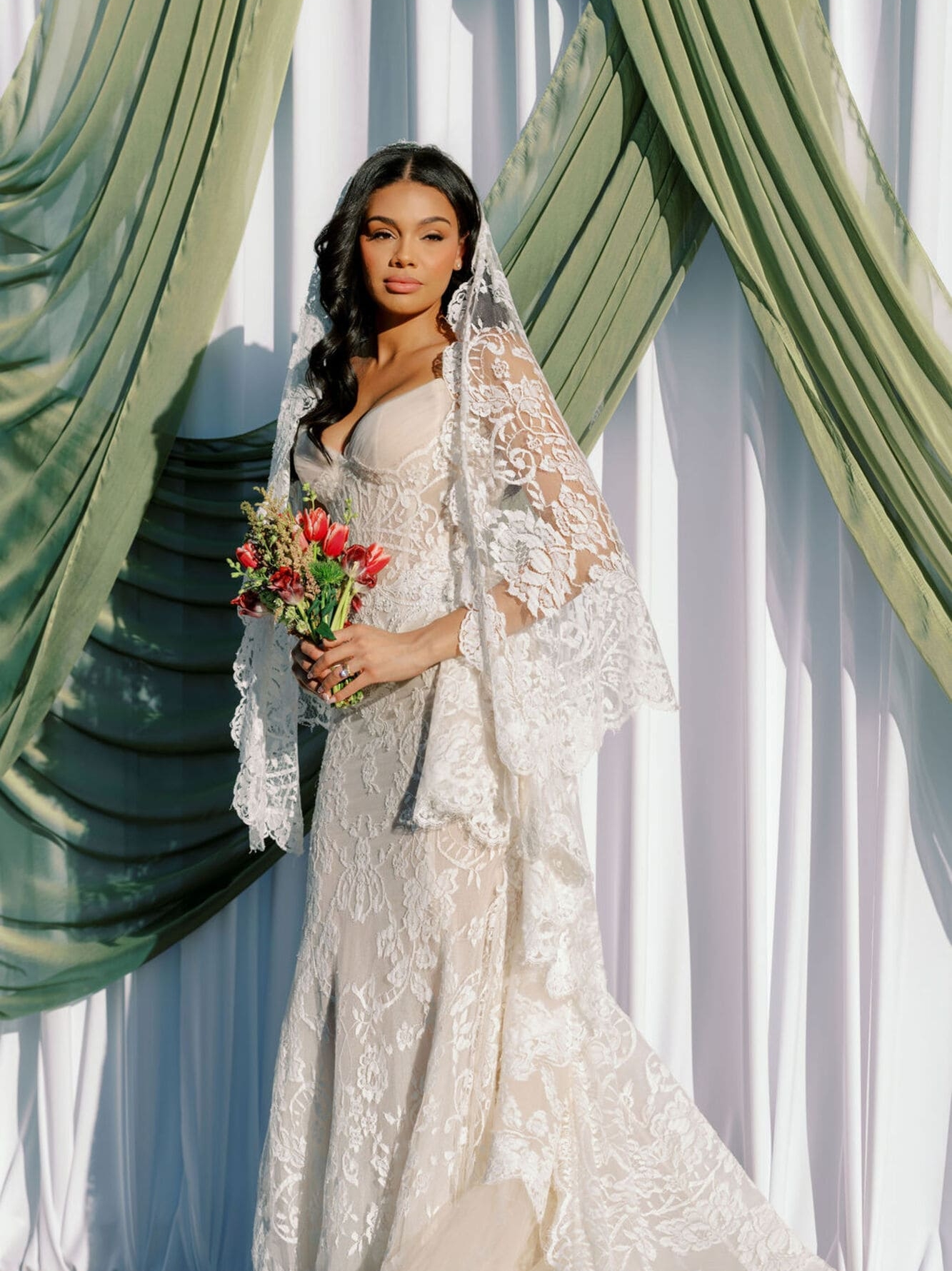
In Nicolò Brunelli’s photographs, Eleonora and Niccolò’s wedding feels like a fresh take on the classic castle banquet. Their idea was simple and confident: keep the old-money elegance of San Salvatore, but bring it into 2025. They wanted a celebration that felt grand, but still personal, with the kind of atmosphere that comes from choosing every detail with intention.
The aesthetic leaned into modern decadence: soft drapery, candlelit tables, and florals in white and burgundy that gave the castle’s halls a deeper tone without overwhelming them. Brunelli captures it all with a clarity that suits the couple: refined, warm, and rooted in a sense of heritage reinterpreted rather than preserved.
Location: Castello di San Salvatore, Italy Style: Aristocratic, Italian, Elegant Time of planning: 1.5 year Number of guests: 220 Setting: Castle Season: Summer
Eleonora and Niccolò met in Milan. Their relationship grew quietly and confidently. The proposal reflected the same instinct. It happened early in the morning, before the day had fully started: roses arranged quietly, her favorite brioches waiting on the table, and Niccolò asking the question without ceremony or staging. Eleonora said yes in the middle of that simplicity, still in pajamas. Niccolò wanted the moment to feel fully theirs, and it did.
Bride's Morning & Fashion
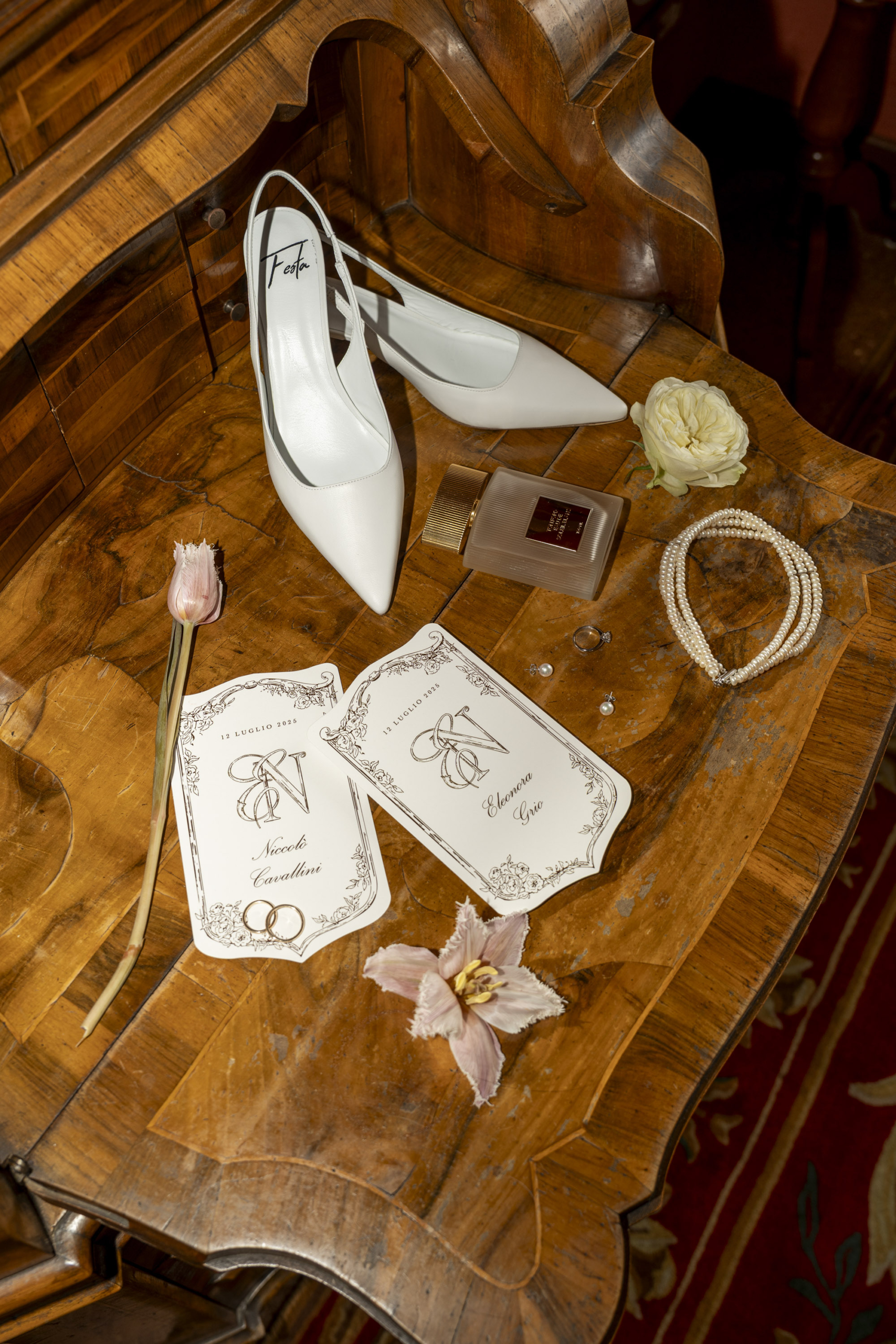
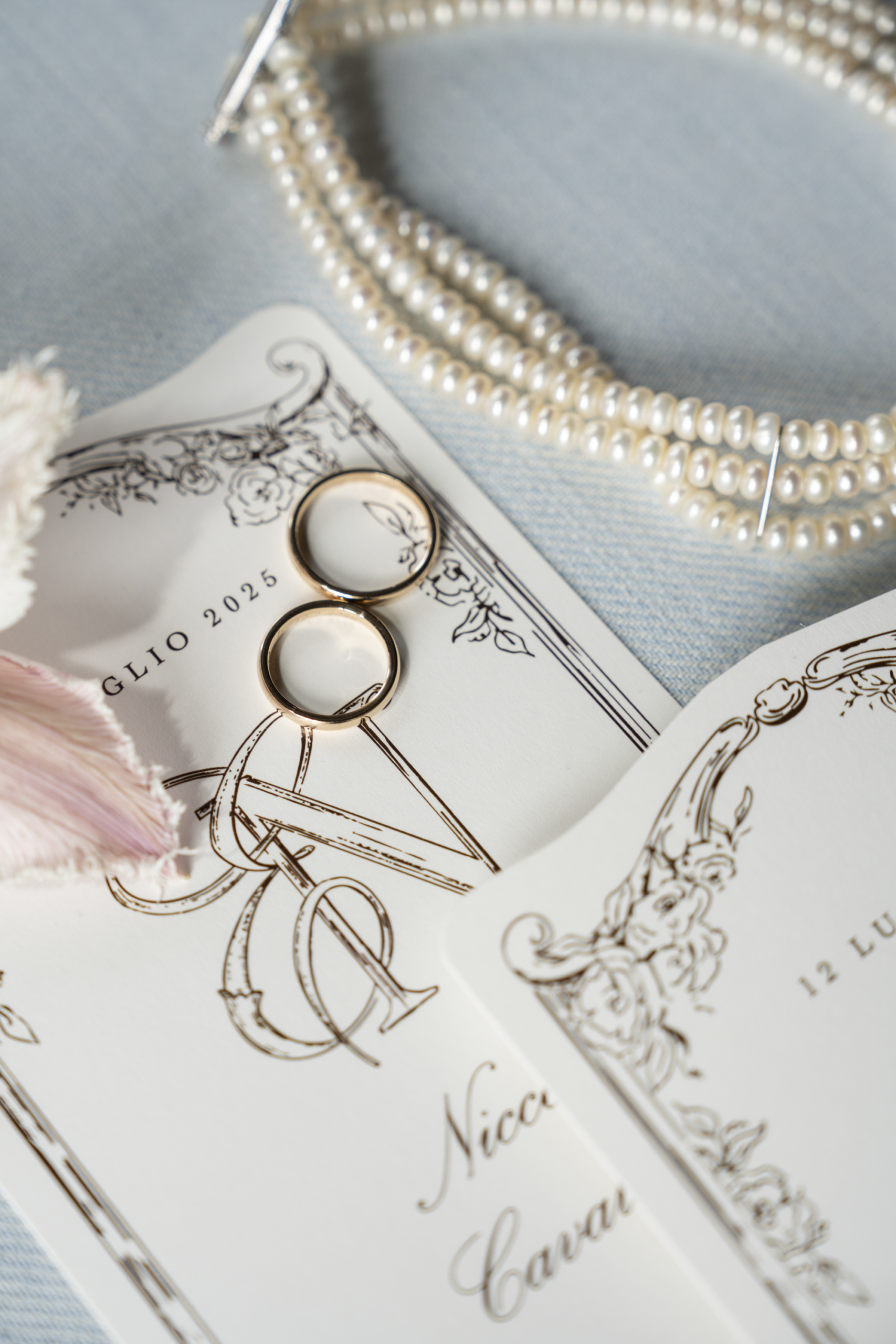
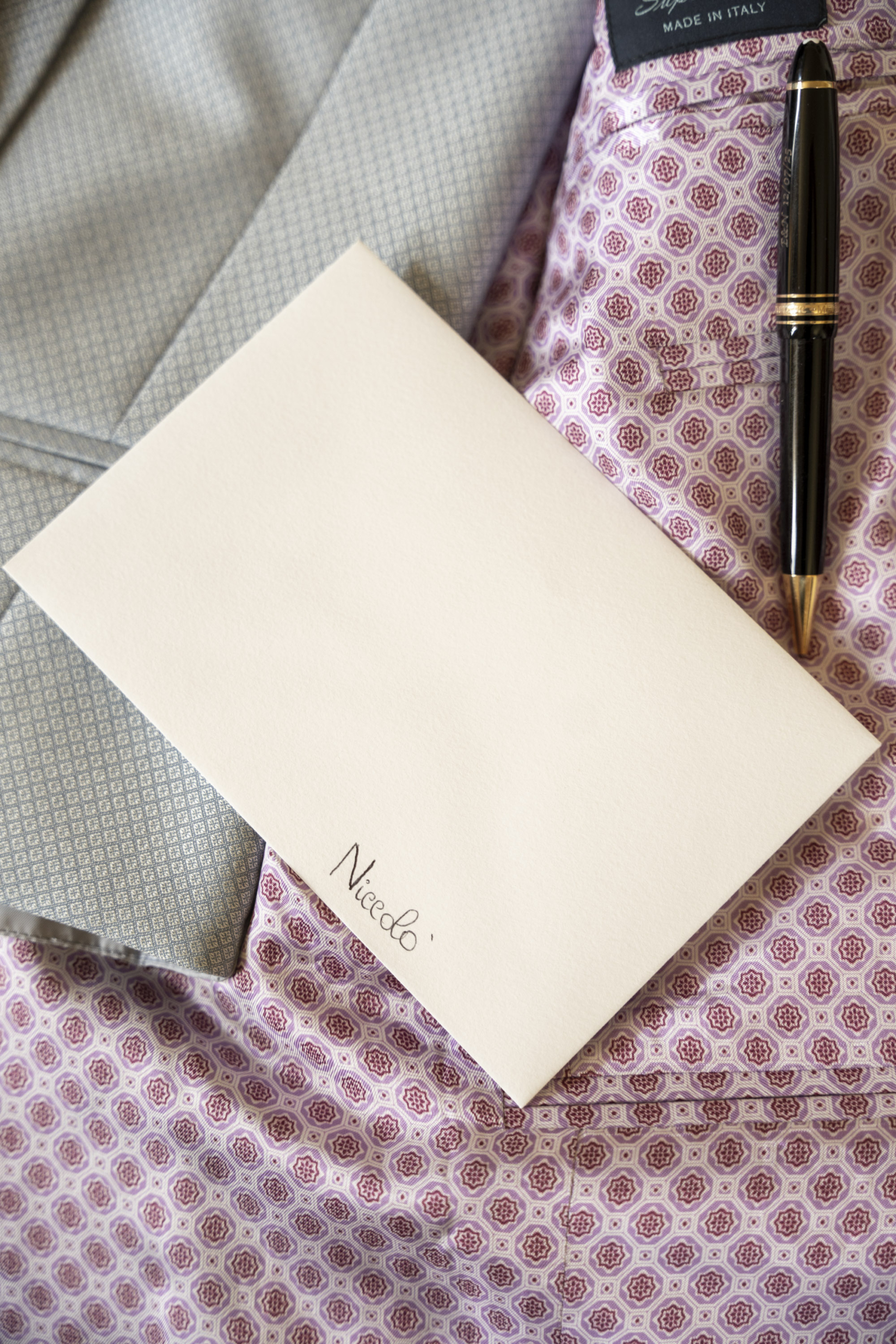
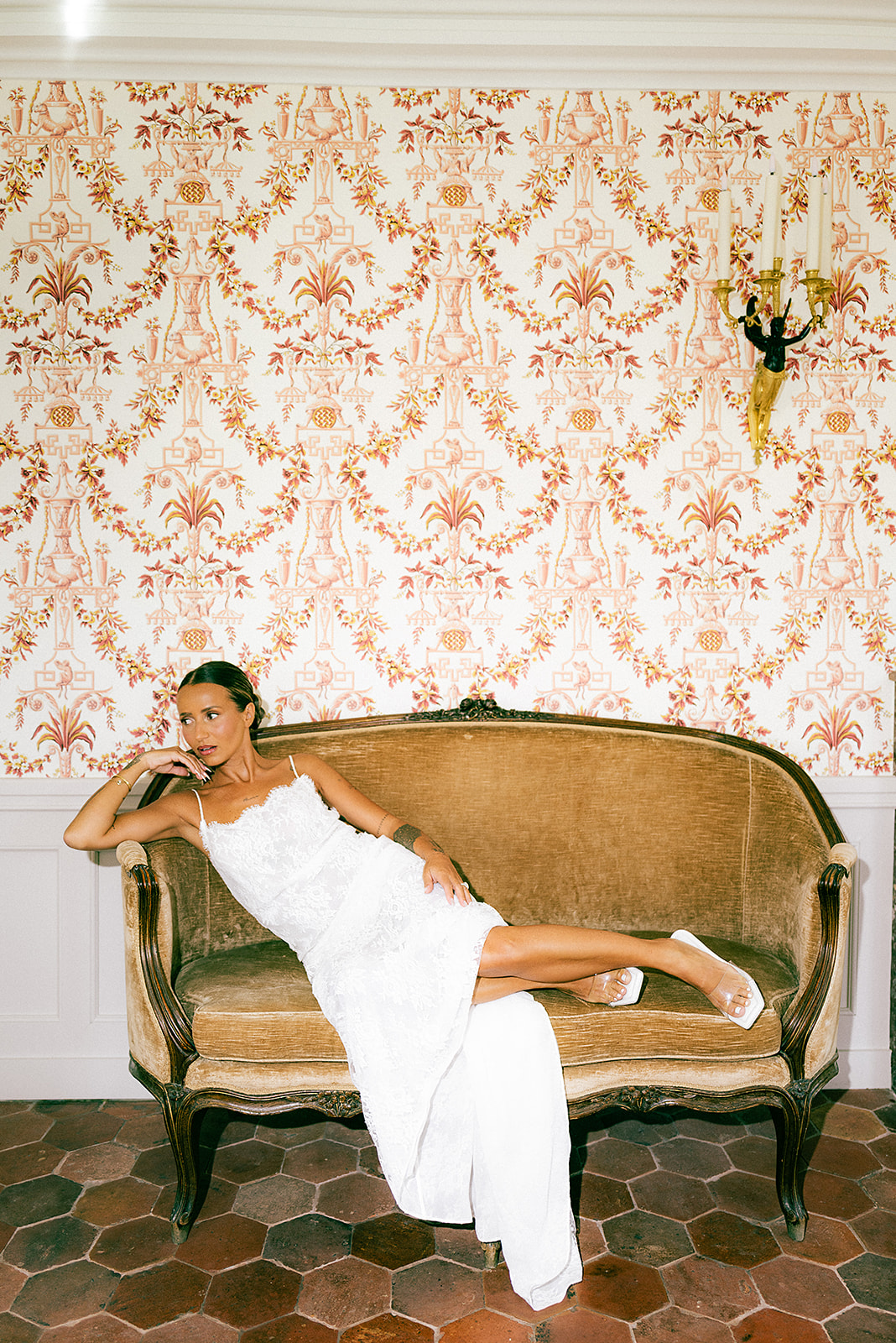
The morning unfolded in the castle’s quietest rooms, where the light moves slowly and the shadows have texture. Photographs lean into this kind of environment with warm highlights, soft falloff, and that matte quality old stone gives to anything placed near it. Images from the morning feel unhurried: flatlays arranged on antique wooden surfaces, pearls catching just a trace of light, the invitation suite by Backwood Italy looking almost archival against the walls of San Salvatore.
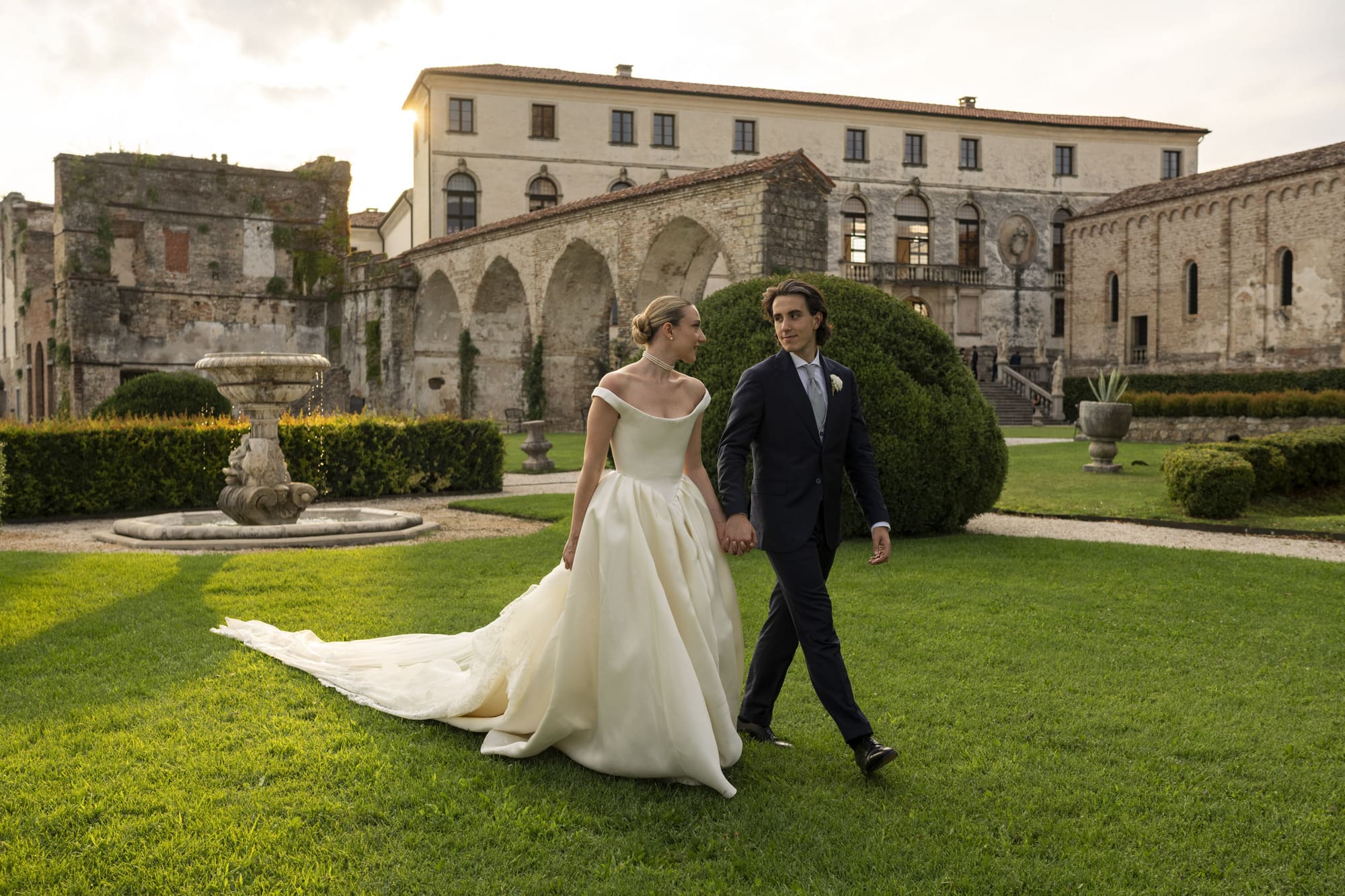
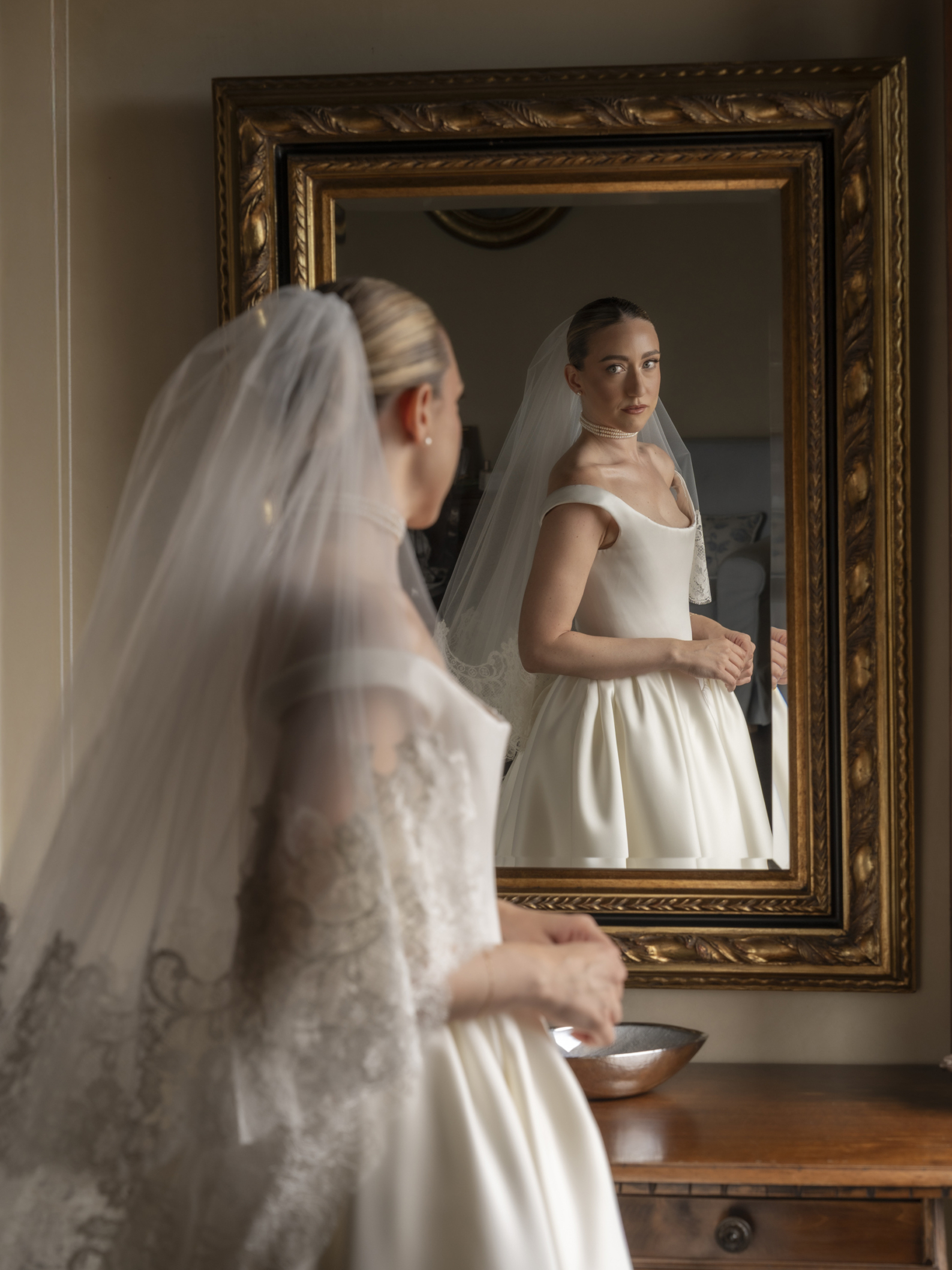
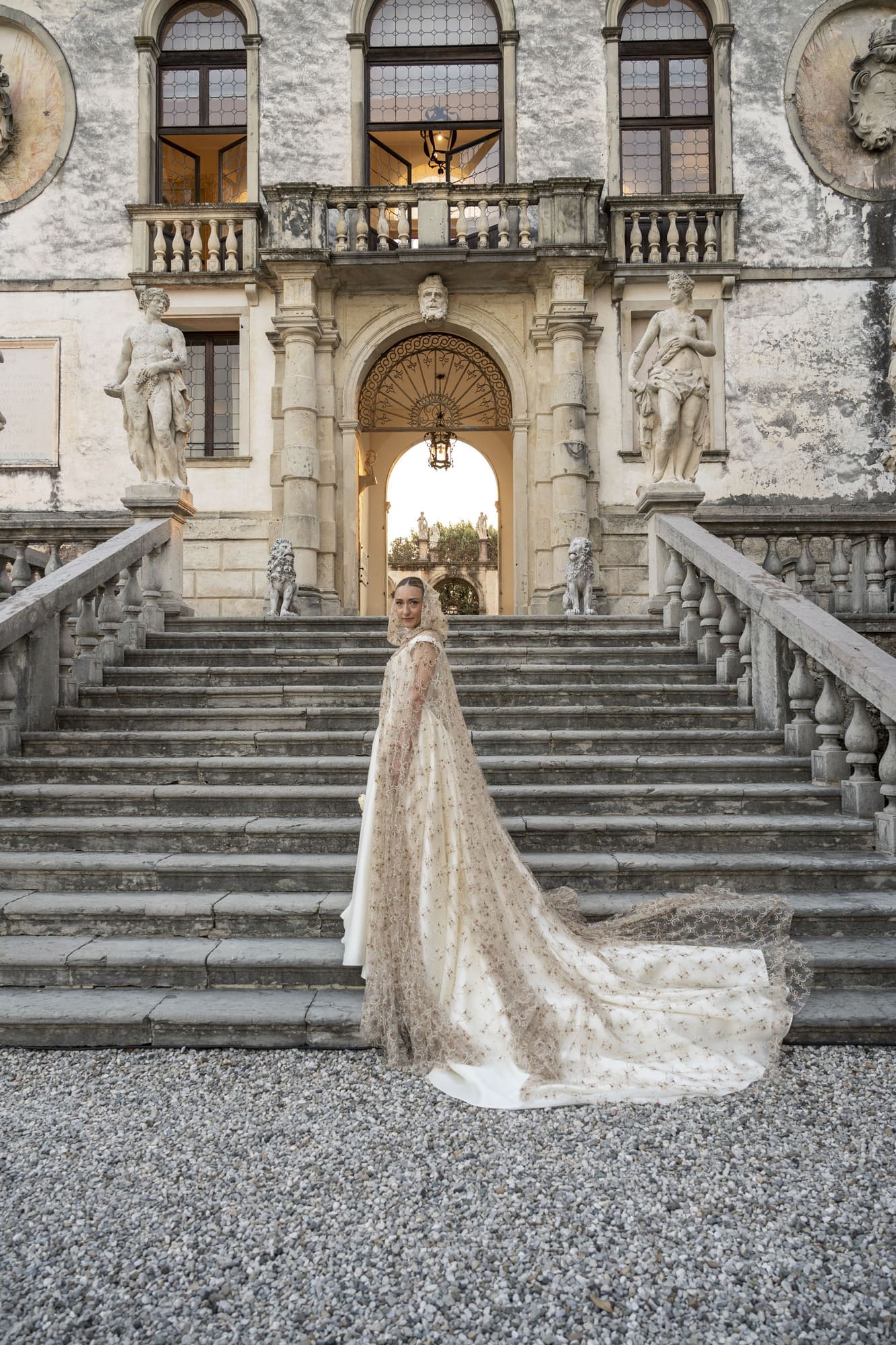
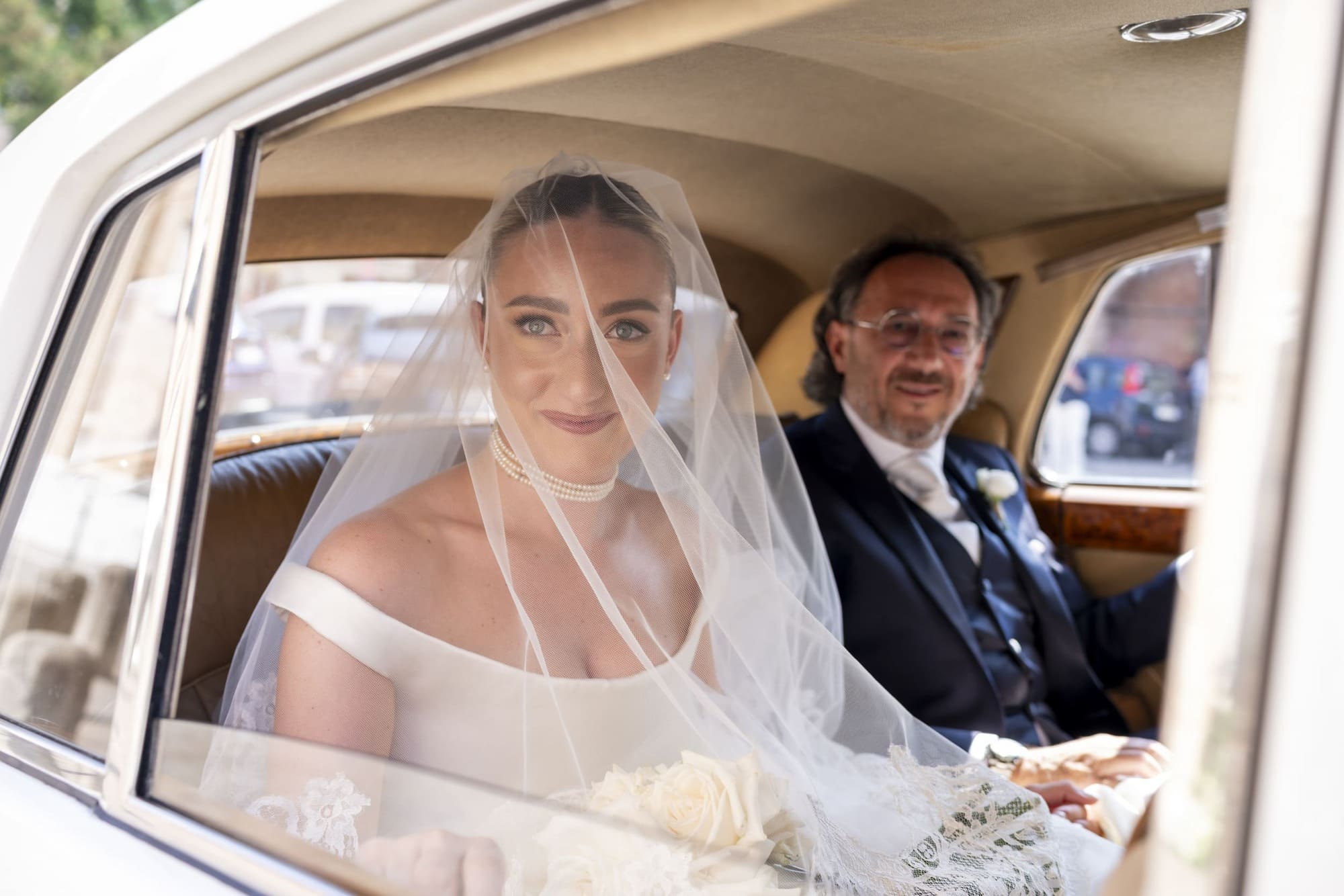
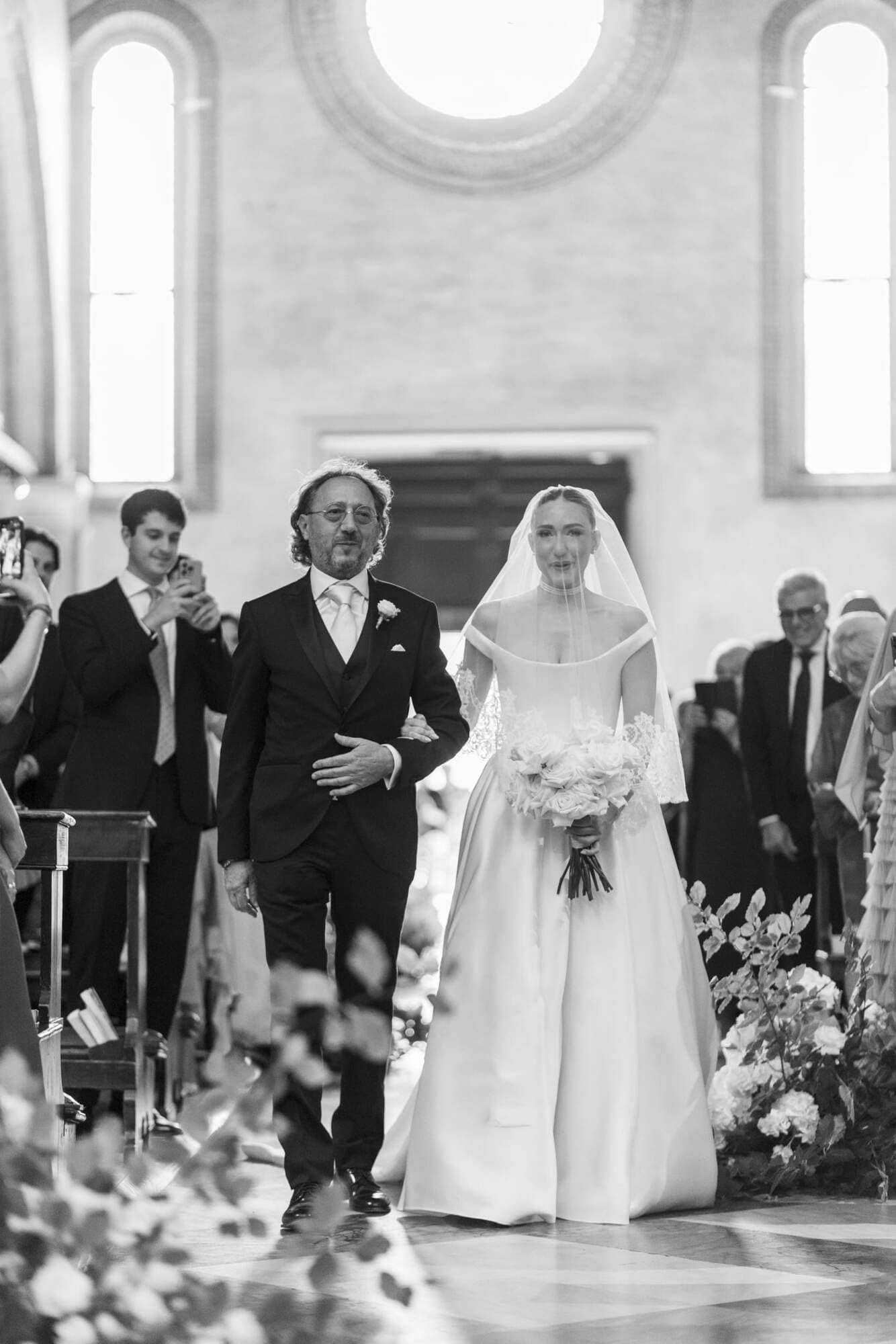
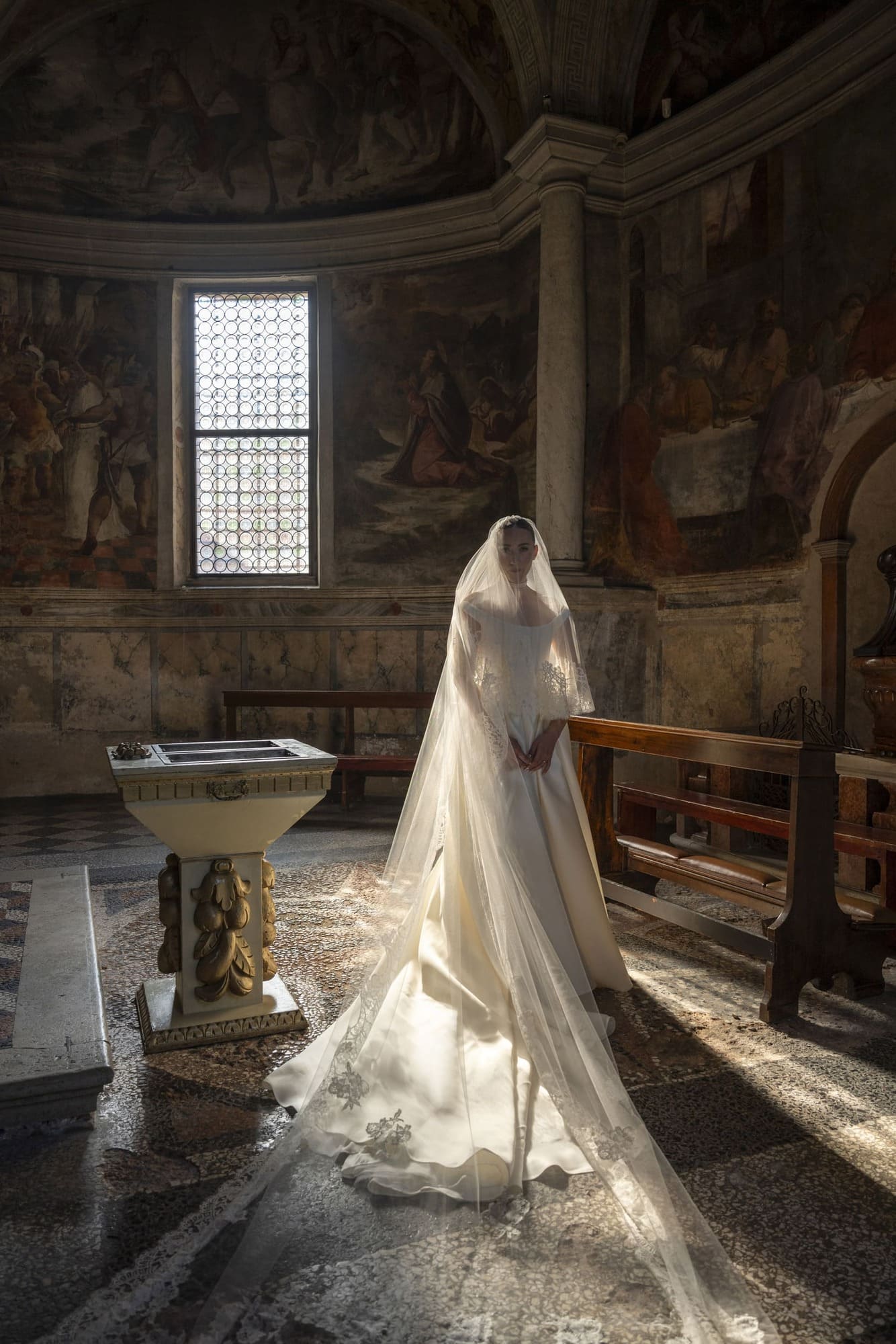
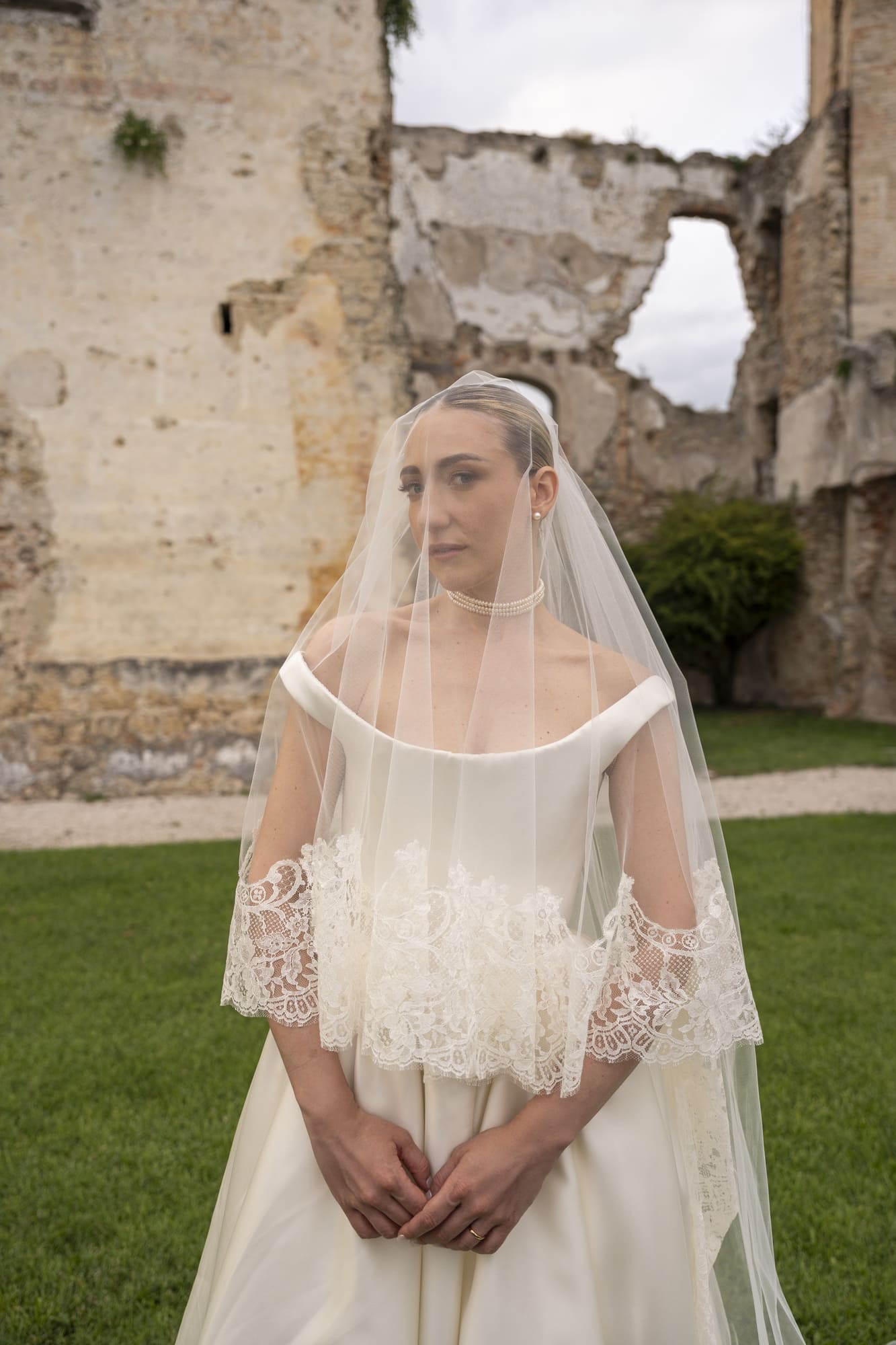
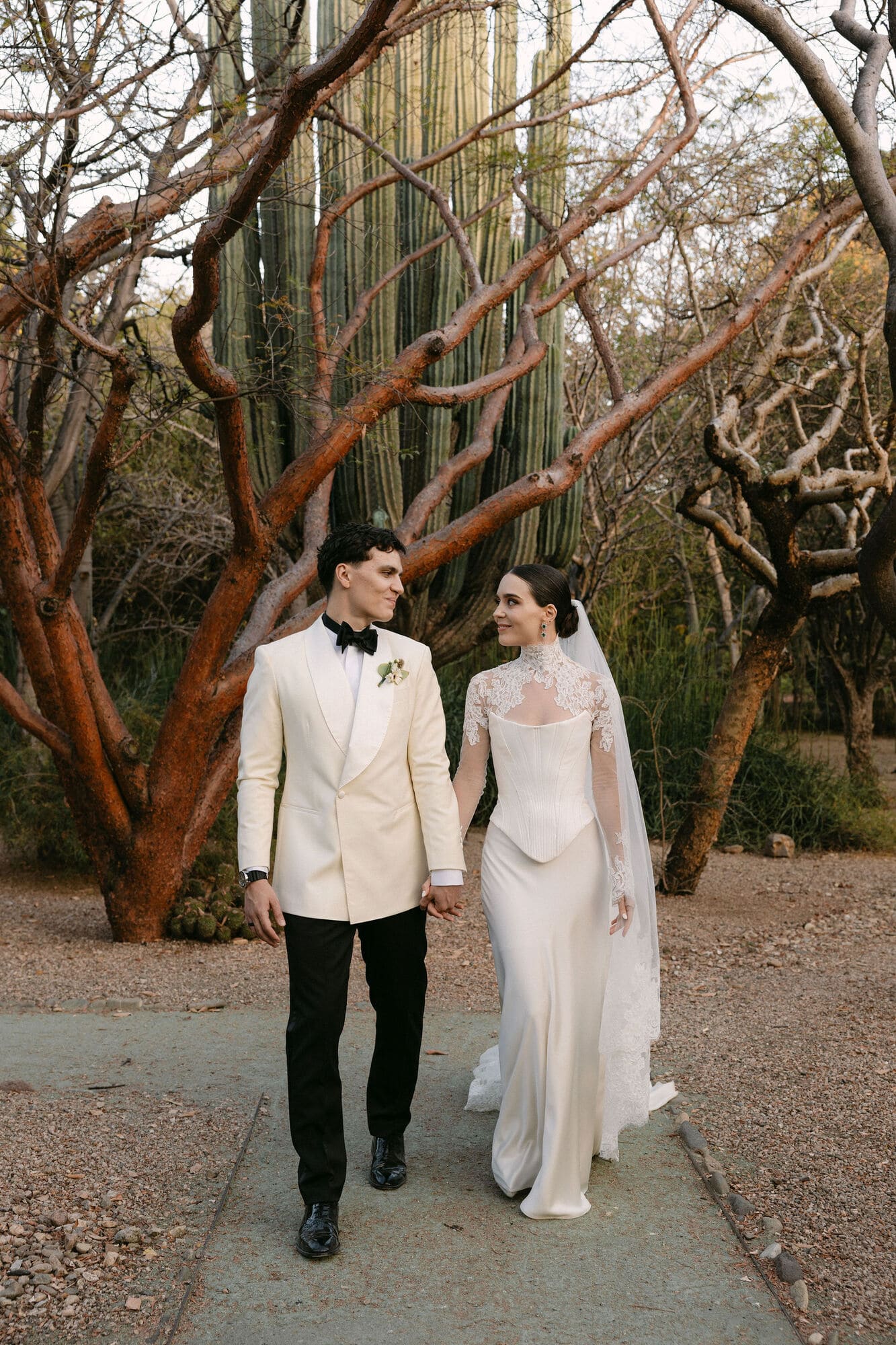
The bridal gown was a custom creation by Francesca Piccini, designed for a space with scale. The fabric had weight, not volume, and the structure of the corset held a clean, uninterrupted line. The neckline sits just below the shoulders, not fully off-the-shoulder but gently lowered, giving the silhouette an aristocratic quality reminiscent of early court dress without feeling historic. Her hair was pulled into a tight, low bun, a choice that worked beautifully with the voluminous veil. Makeup stayed close to her natural palette, giving the skin a polished glow.
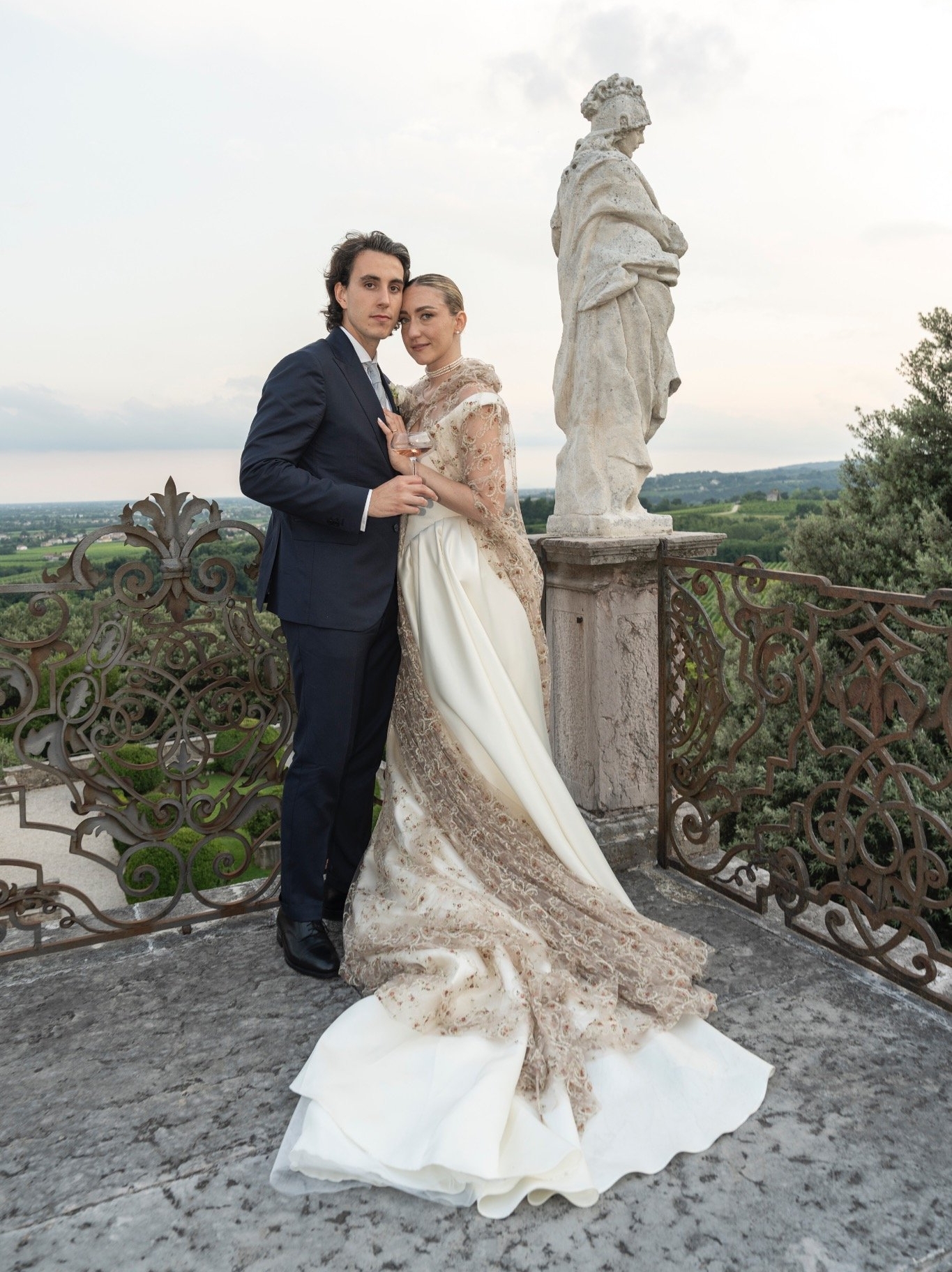
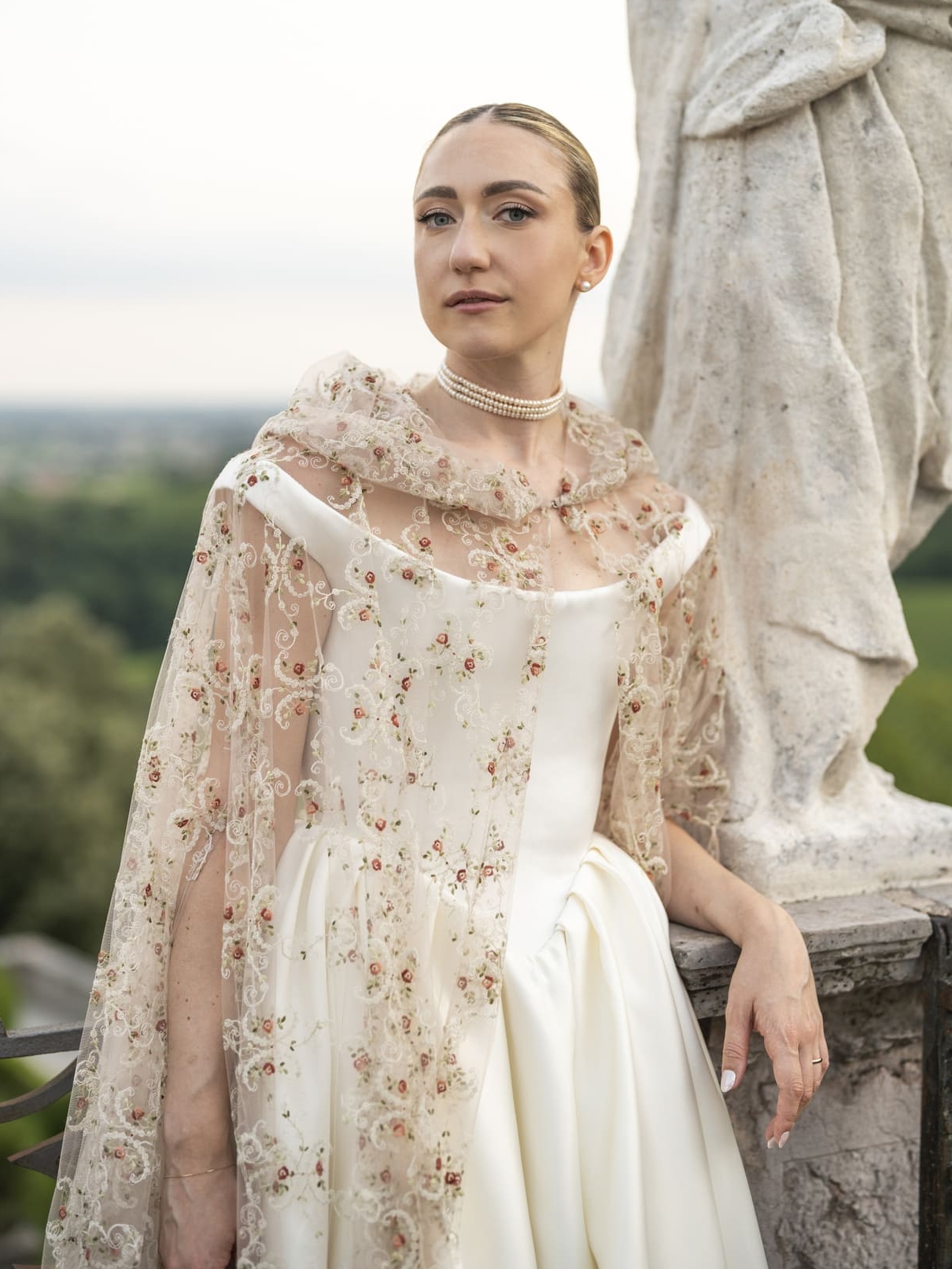
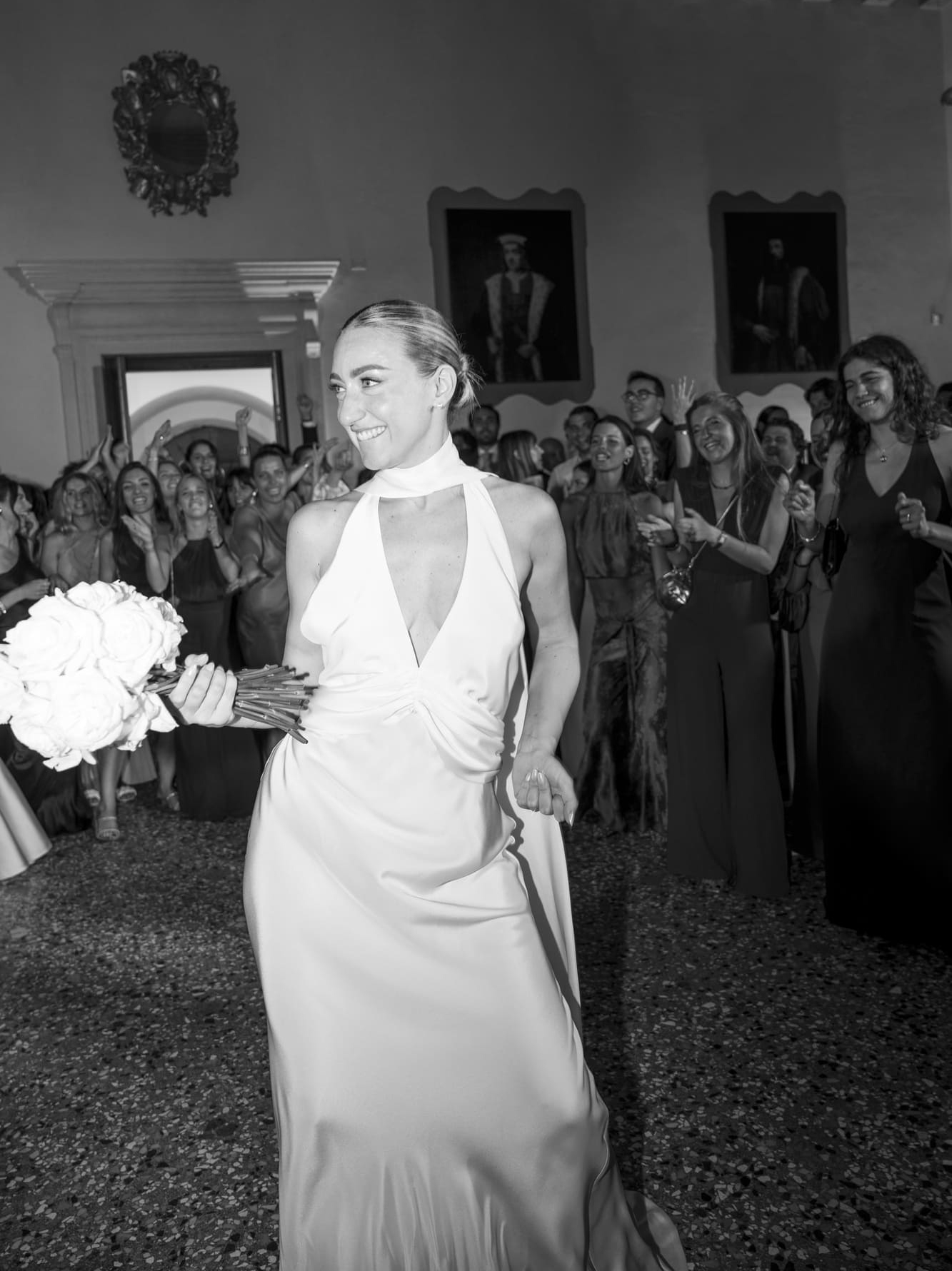
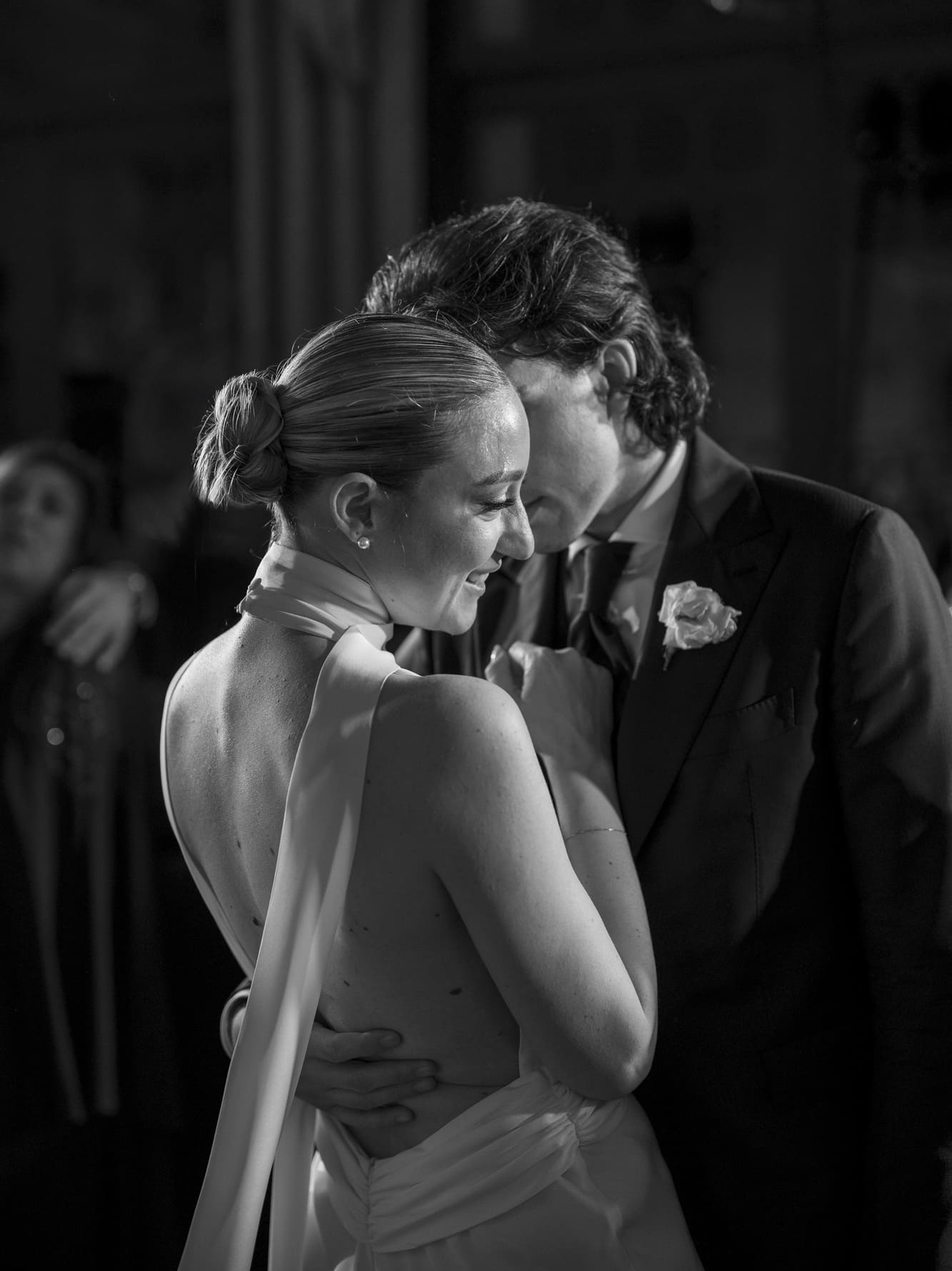
For the reception, Eleonora replaced the veil with an embroidered cape, a piece that shifted the entire mood of her look. It reads almost sculptural, a minimalistic interpretation of royal formalwear.
Groom’s Fashion
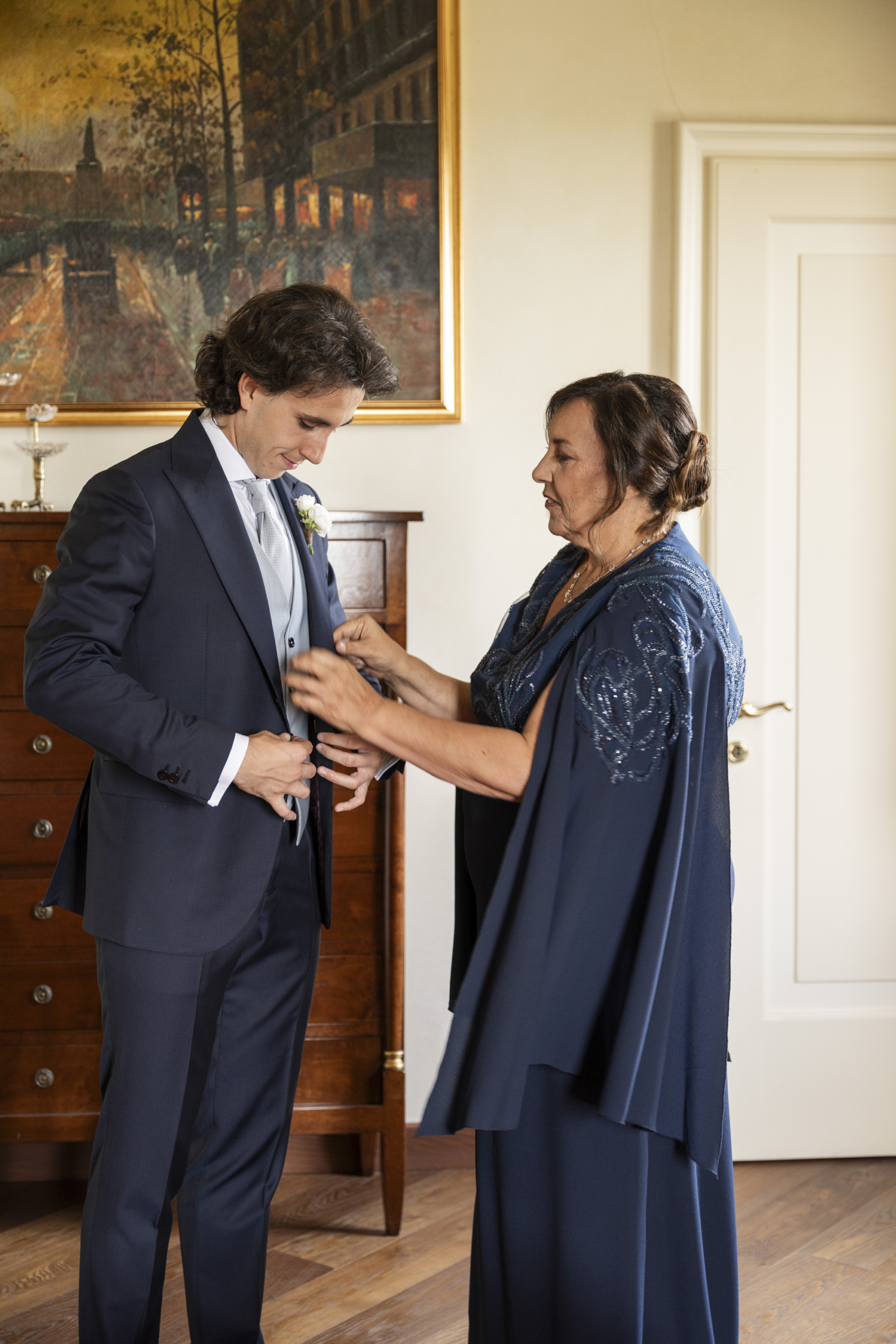
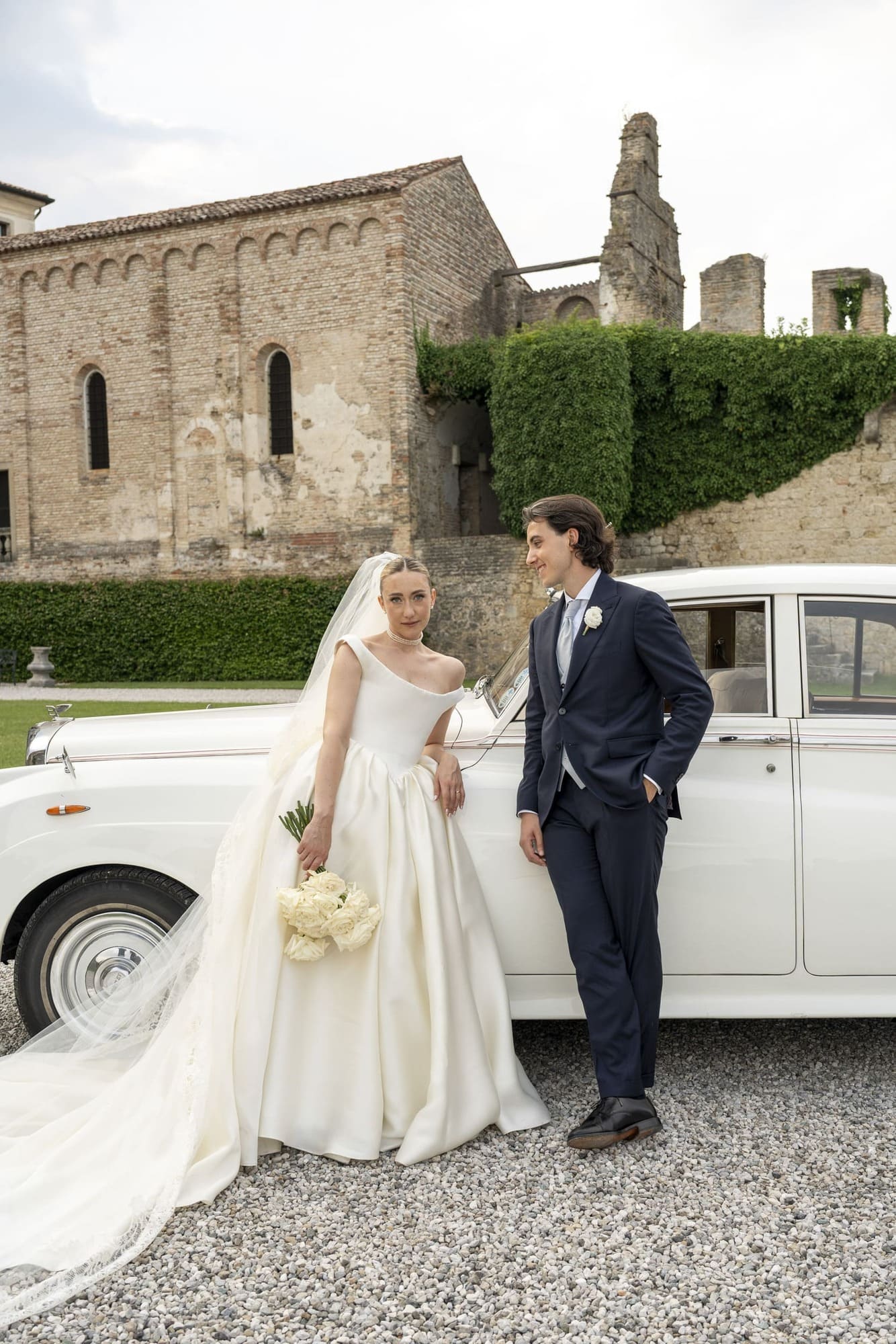
Niccolò’s custom Santorialist suit is tailored with intention: a clean shoulder, a close fit, and a fabric that holds its structure against the texture of the castle walls. What defines Niccolò’s style is a sense of quiet refinement. The lapel sat with a perfect architectural precision, the stitching was fine and measured, and the overall silhouette was controlled without ever looking rigid.
Ceremony
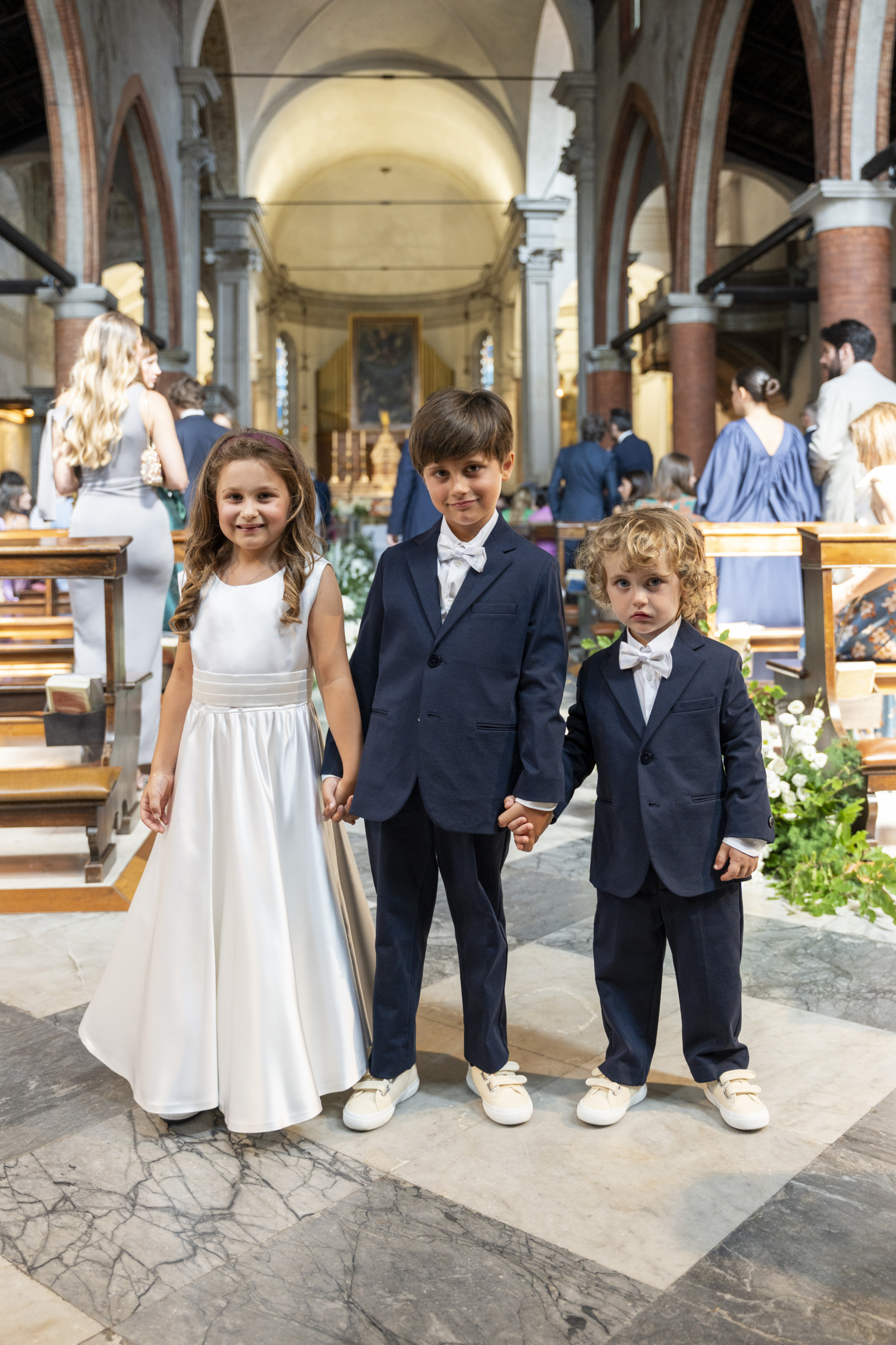
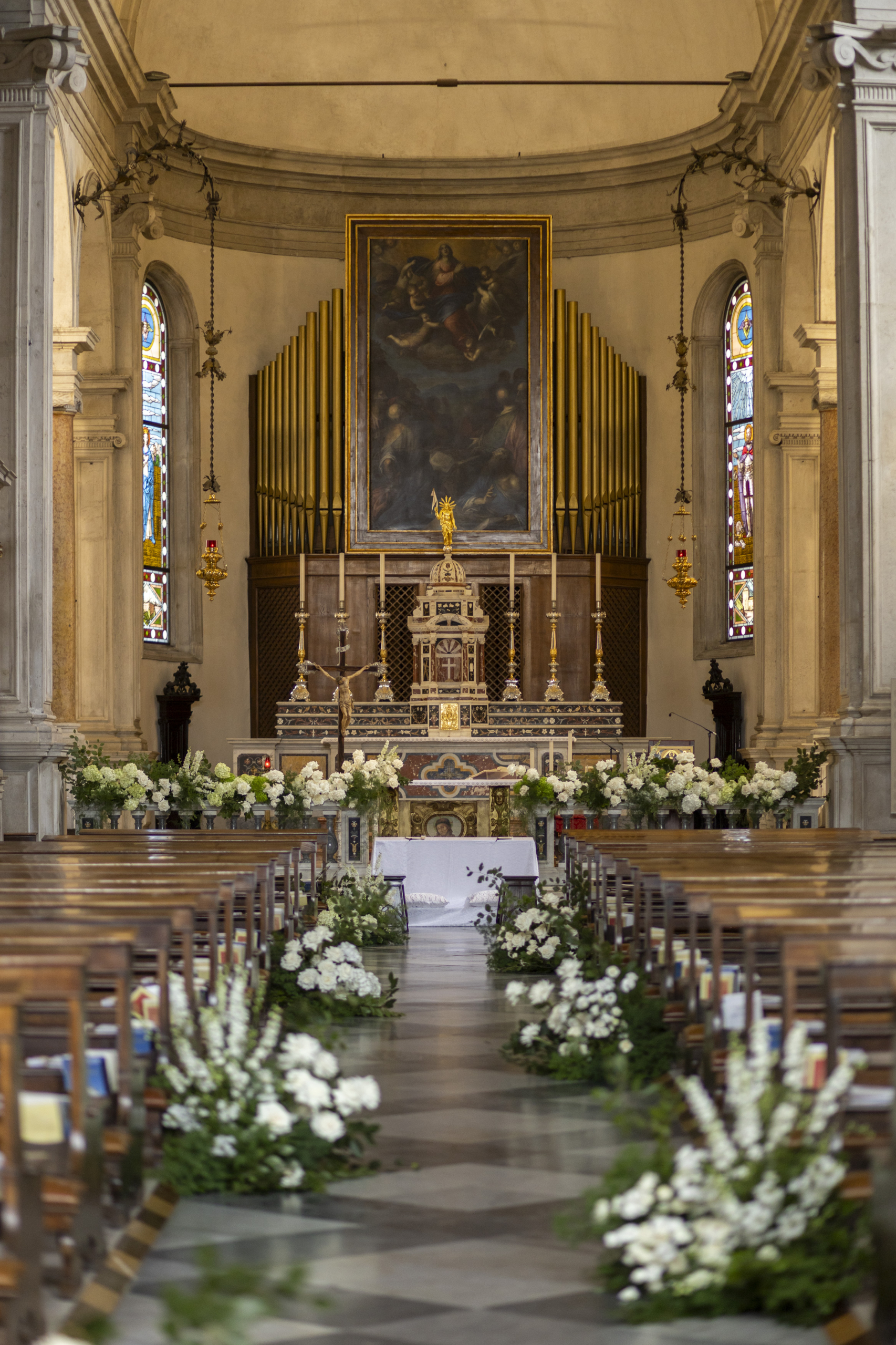
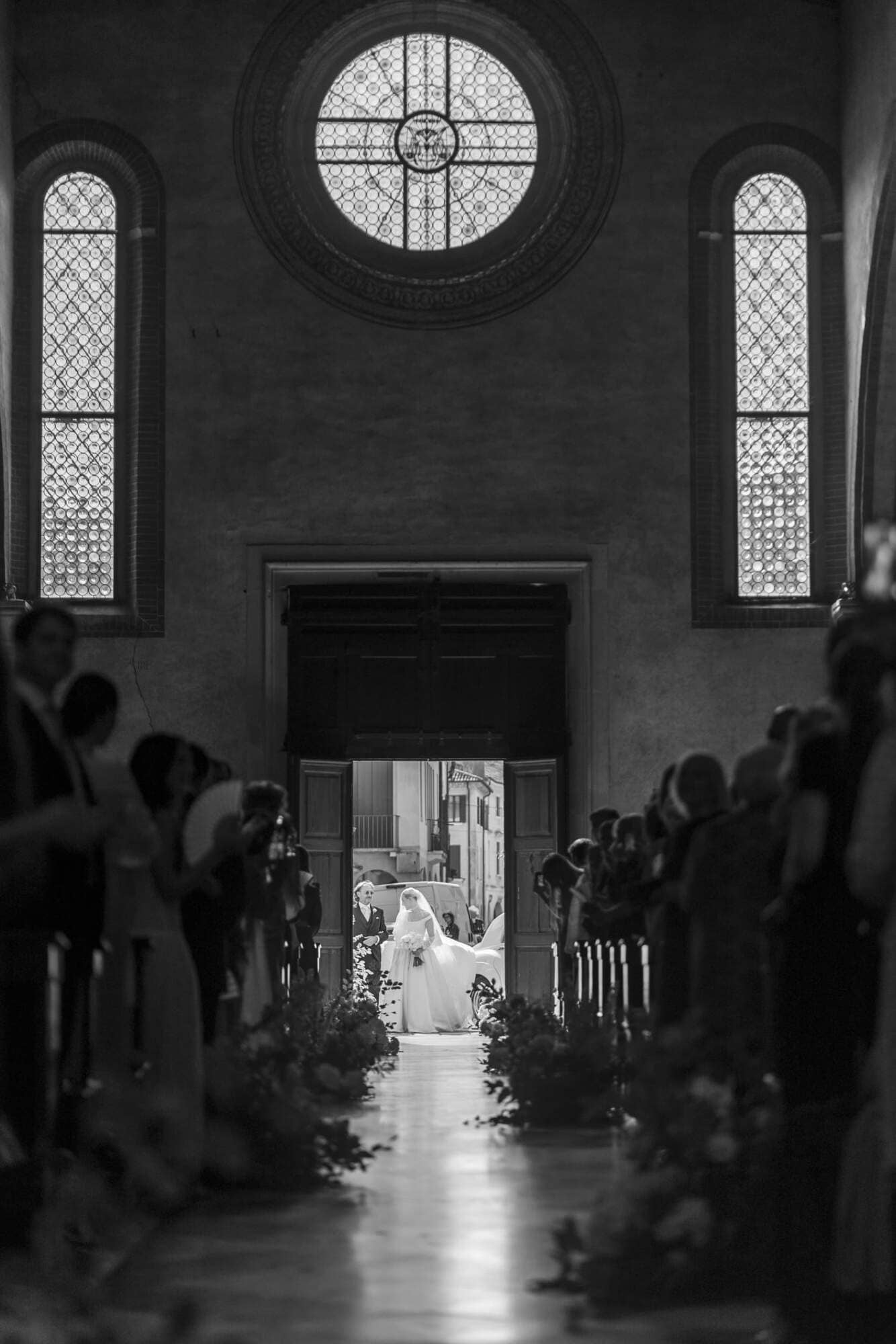
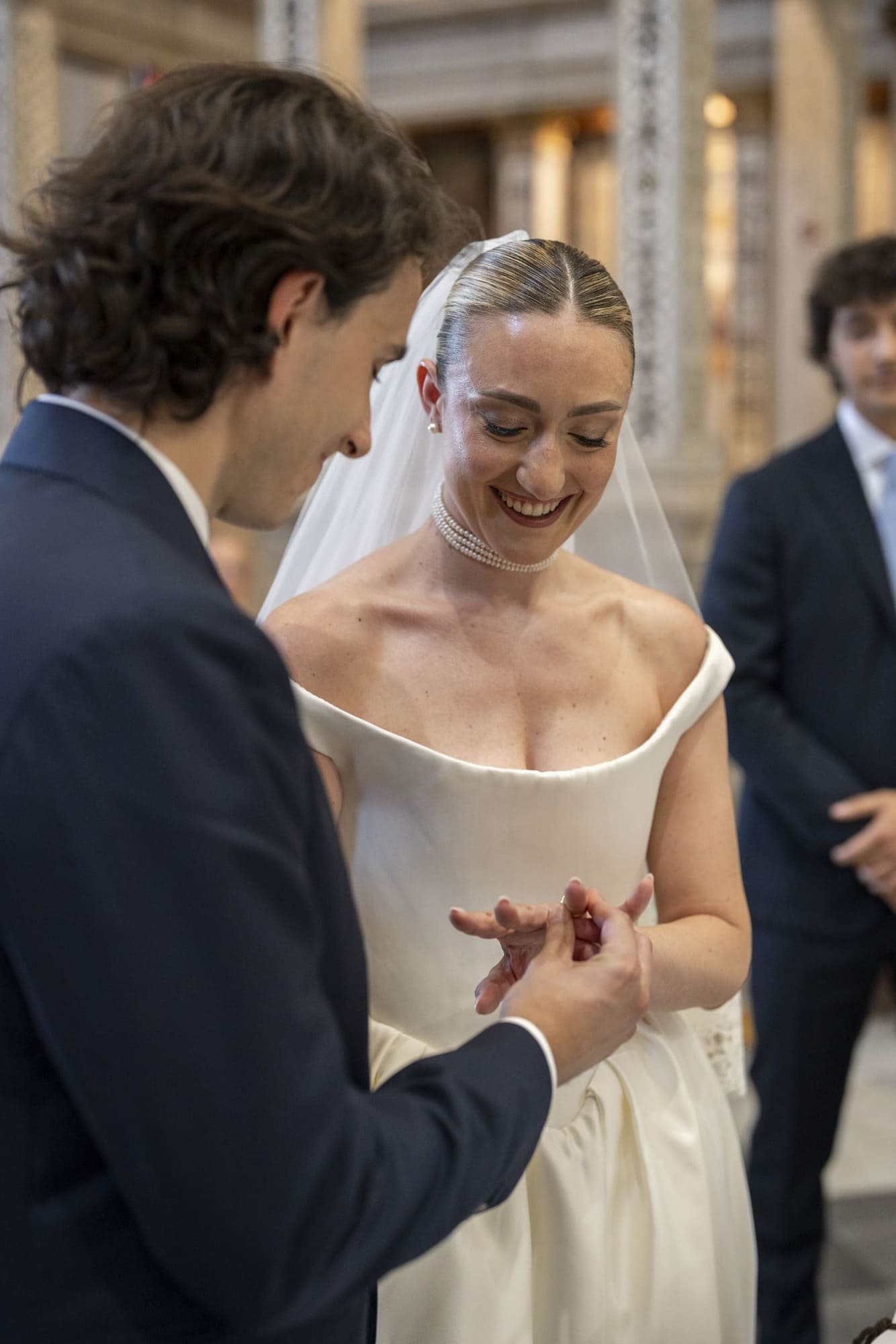
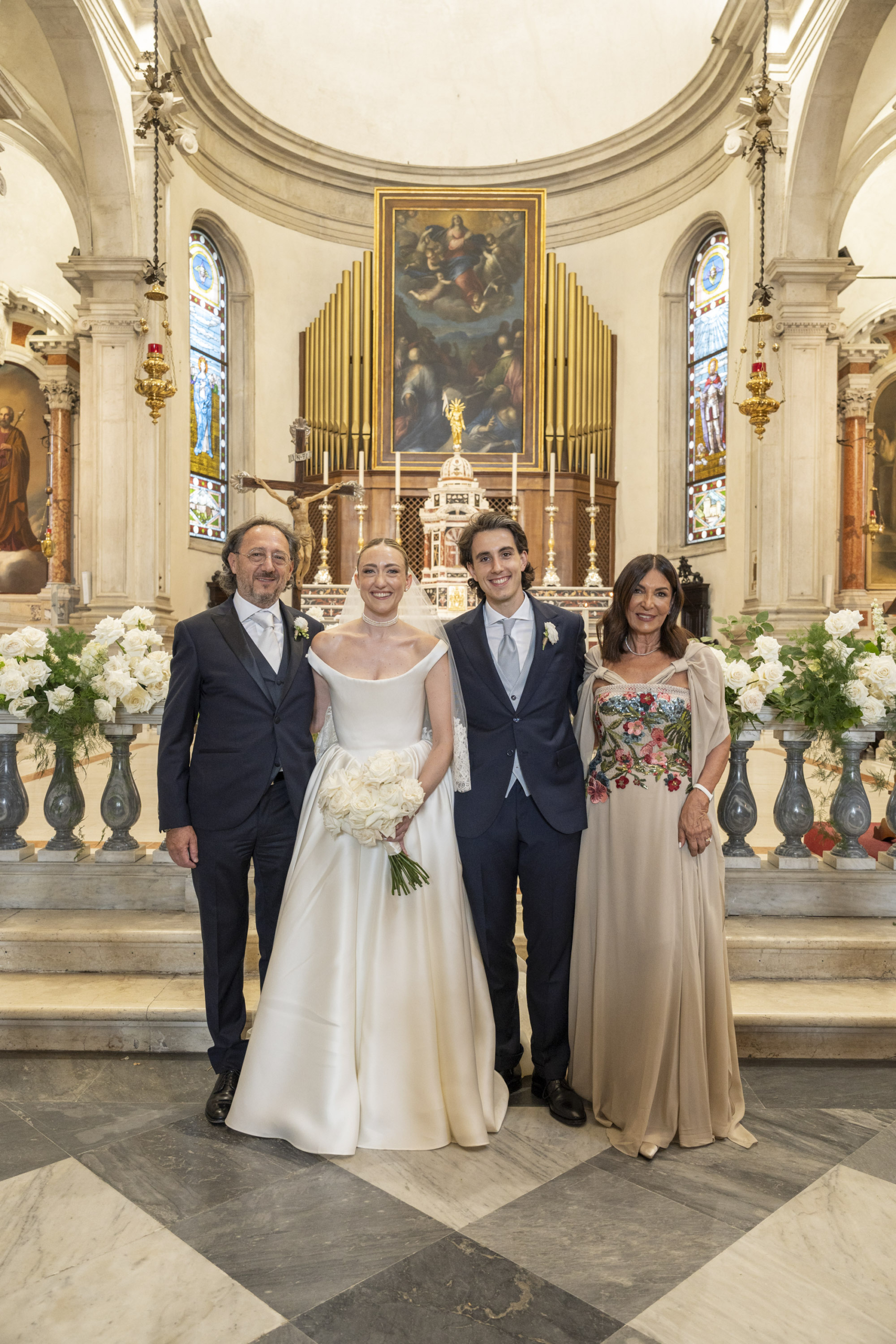
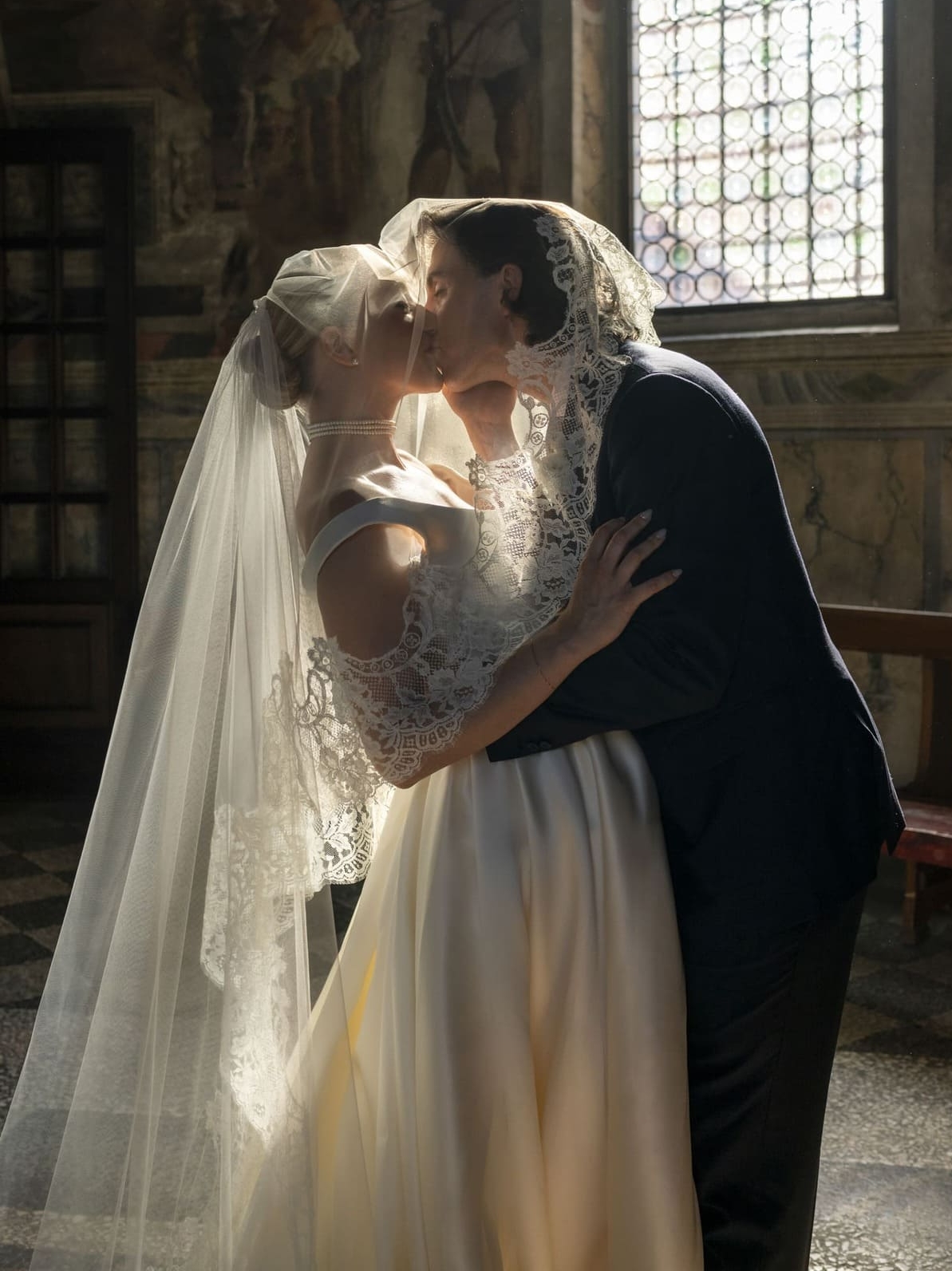
The ceremony was held at Santa Maria Maggiore in Treviso, a church that carries the same aristocratic gravity as the castle itself. It’s a space made for tall arches, deep shadow, and sudden shafts of light that move across the floor like something cinematic.
Florals by IL Profumo dei Fiori were kept in soft ivory tones, scaled to the height of the altar rather than used as ornament. They follow the same logic as the couple’s overall vision: a modern interpretation of aristocratic elegance, where form and restraint speak more loudly than color.
Music pulled the ceremony together with a sense of tradition that felt lived rather than formal. The groom entered to Trumpet Voluntary, the bride to Canon in D, and the couple walked out to the Wedding March. But the true shift happened when tenor Francesco Grollo began to sing. His voice filled the church with a resonance that seemed to rearrange the space; several guests later said it “felt as if the church expanded for a moment,” which is exactly how it reads on camera.
“The most memorable moment was seeing the happiness and joy of
the people who came to celebrate with us. Feeling surrounded by so
much love was unforgettable.”
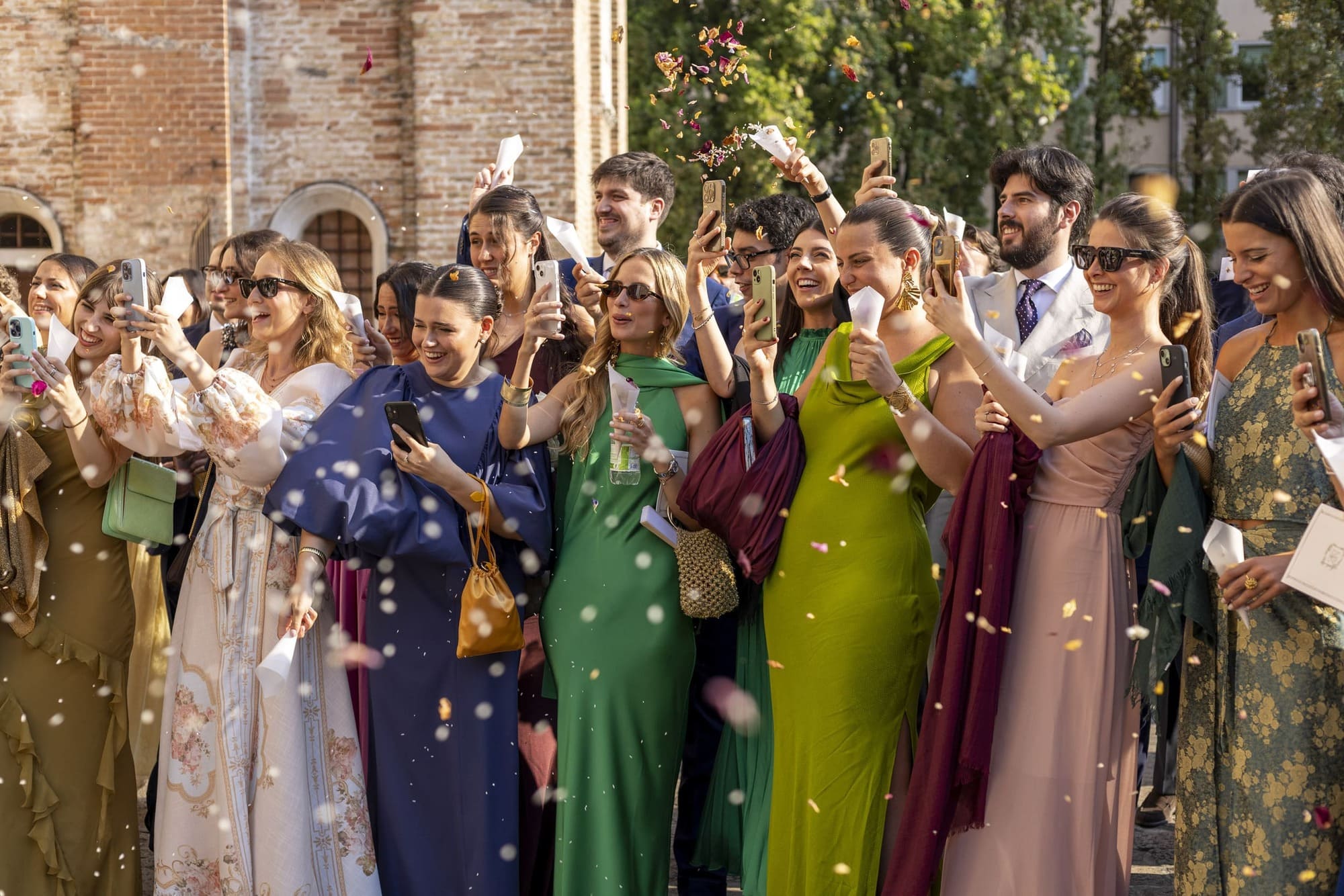
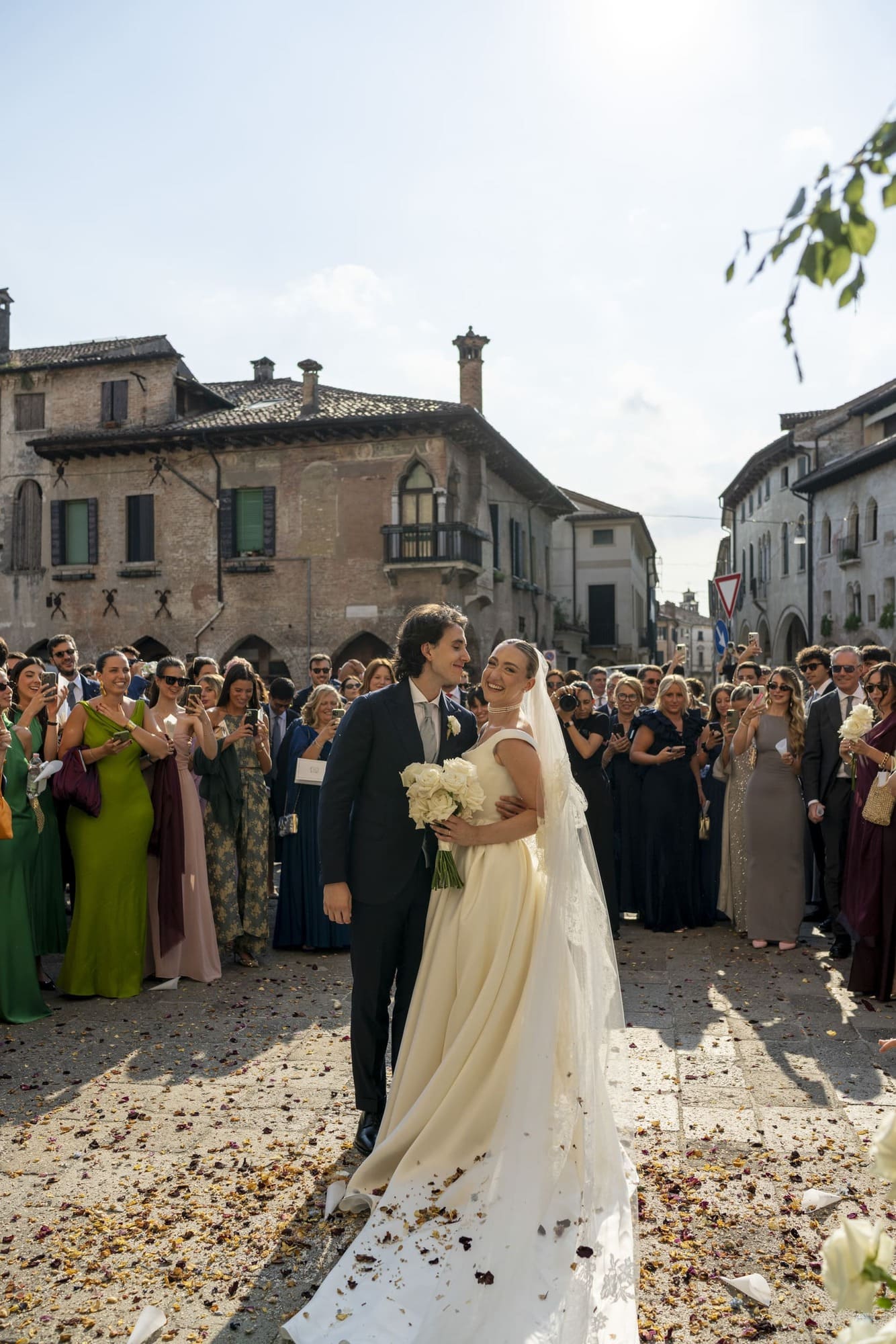
The exit from the church became one of the most vivid sequences of the day. Confetti, movement, voices rising, guests leaning in, the kind of spontaneous energy that contrasts beautifully with the ceremony’s earlier stillness.
Moments Together
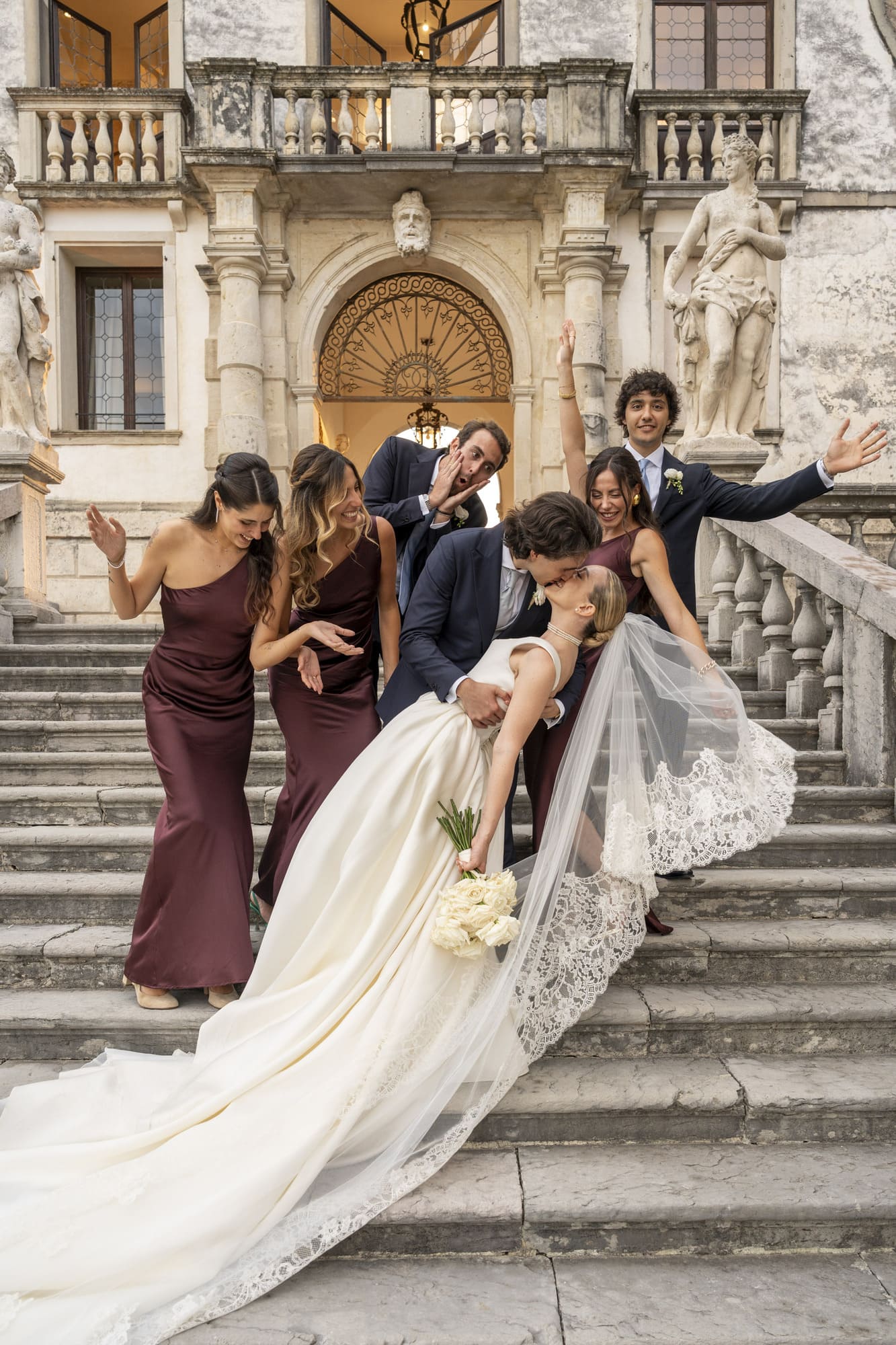
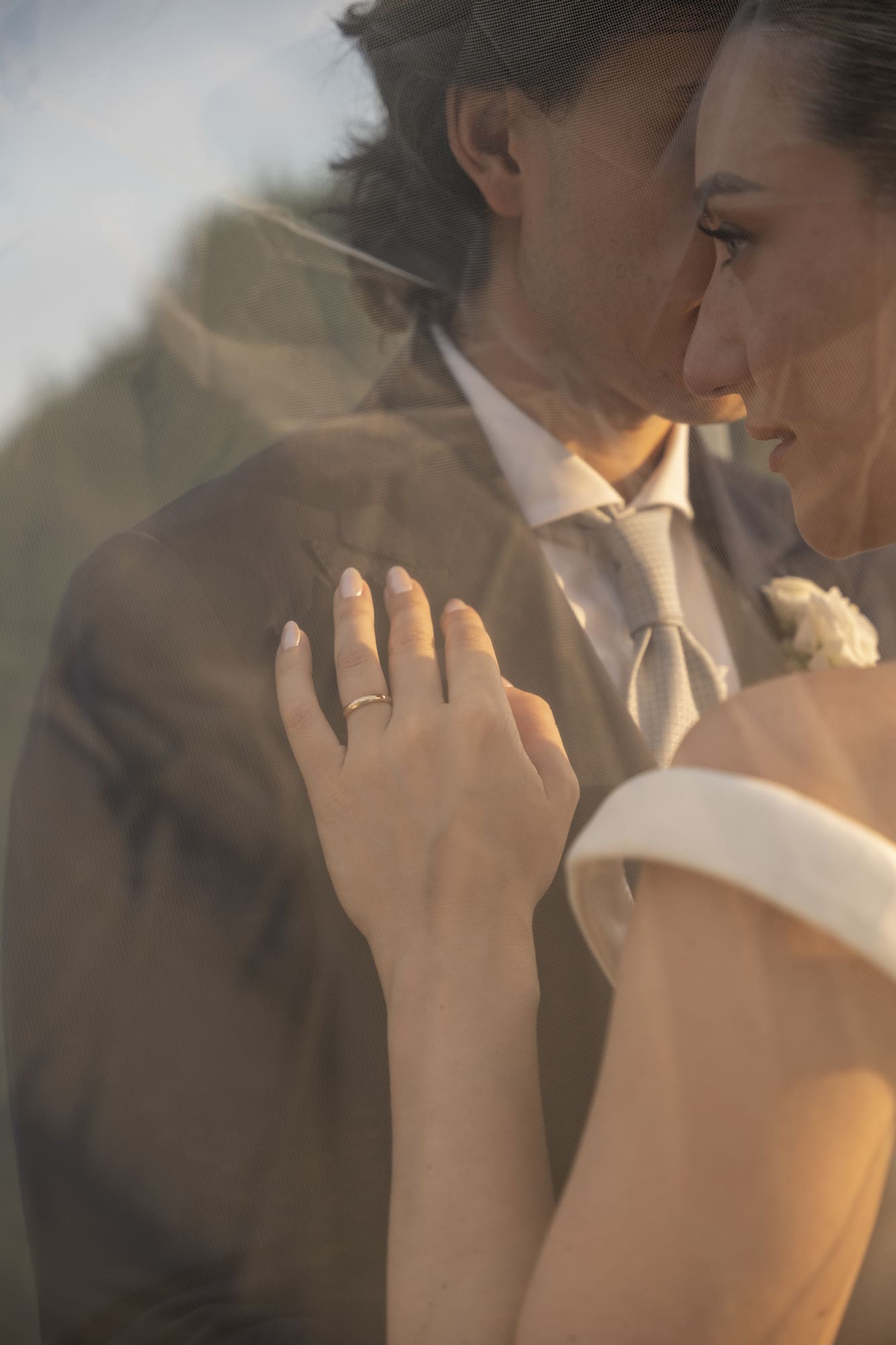
The portrait session unfolded across the castle in spaces that carry centuries of Italian restraint, stone corridors, carved staircases, and rooms where the light falls in narrow, expressive angles. Nicolò Brunelli uses these interiors as if they were a Renaissance study in chiaroscuro. In the darker rooms, the couple was shaped by contrast alone.
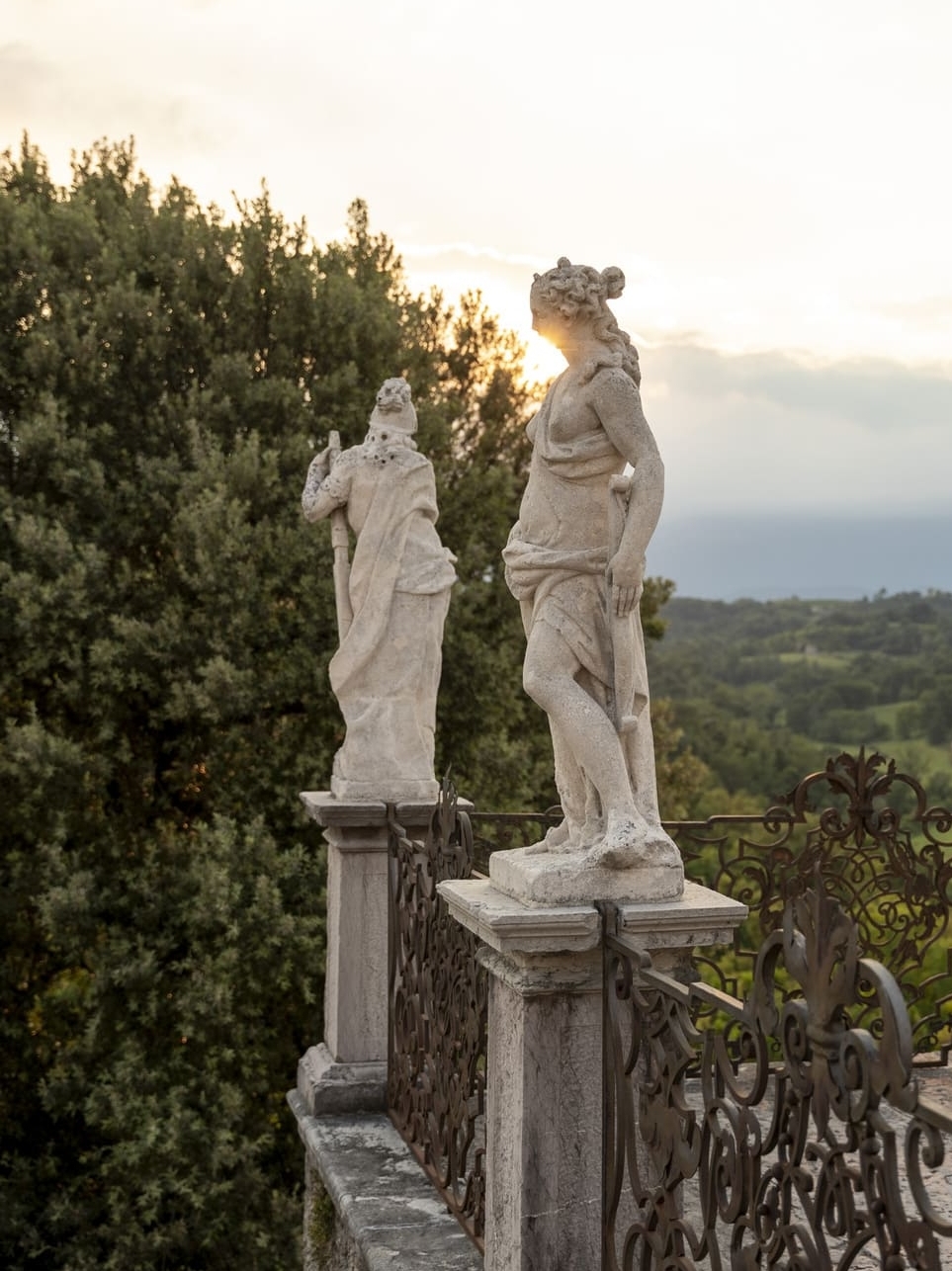
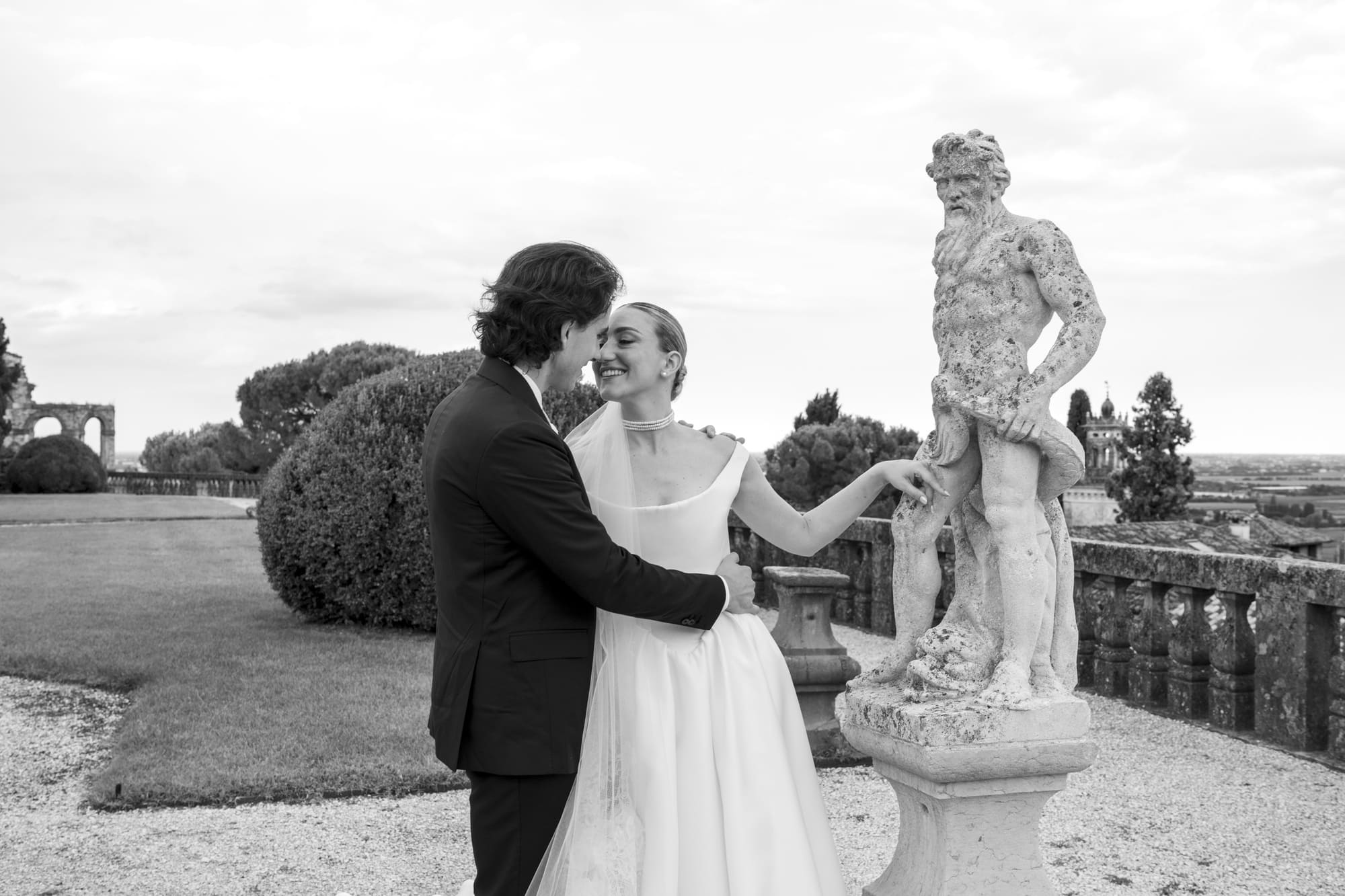
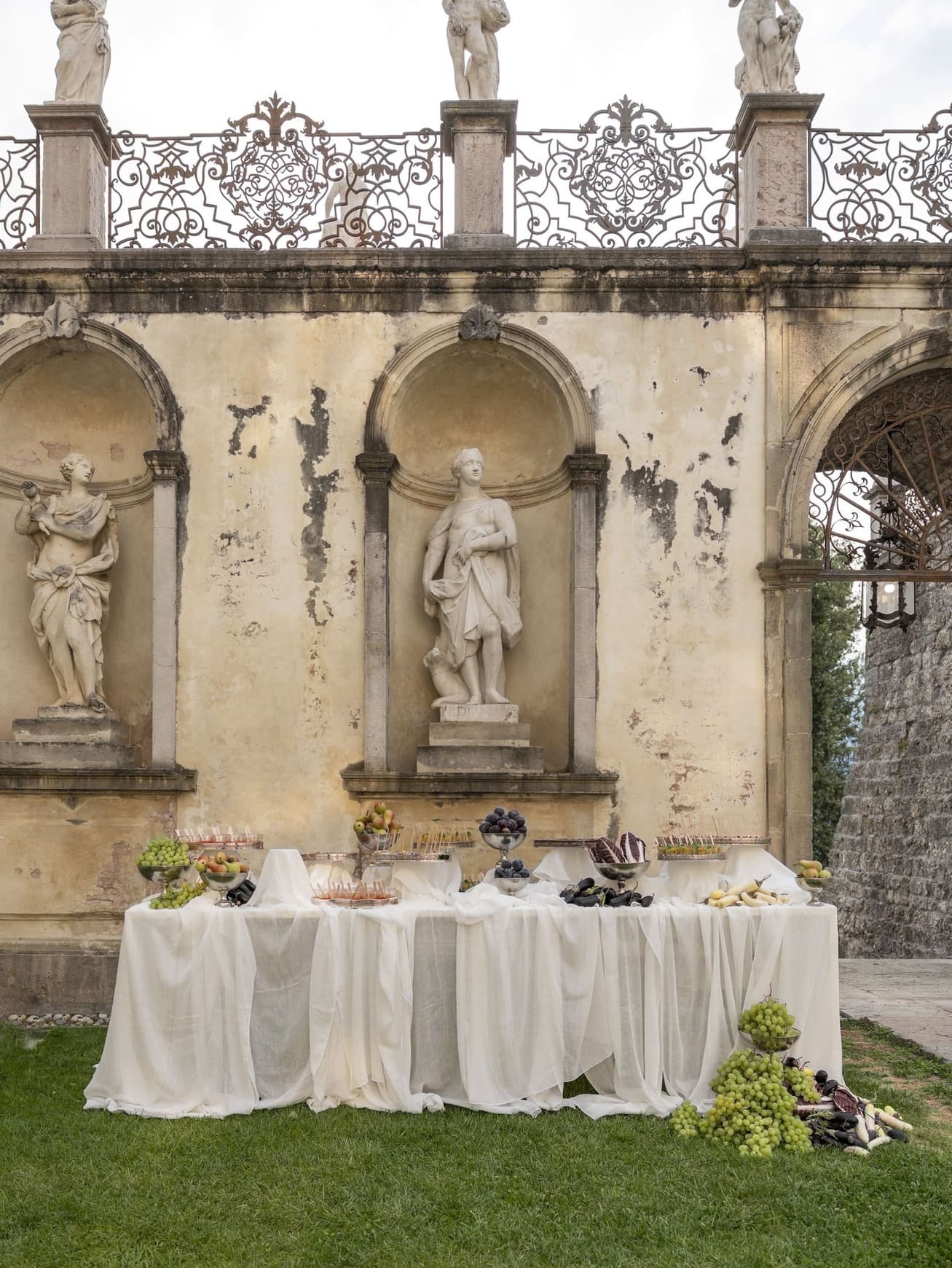
Outside, the atmosphere shifts. The gardens and statues give the portraits a sense of monumental calm, that particular Italian blend of nature and stone, where the backdrop feels intentional.
The couple was on the terrace lined with statues, a space that already carries a quiet formality, but that afternoon the atmosphere changed even further. The clouds had thickened, muting the light into a cool, even tone, and the combination gave the images a distinctly European, almost medieval character.
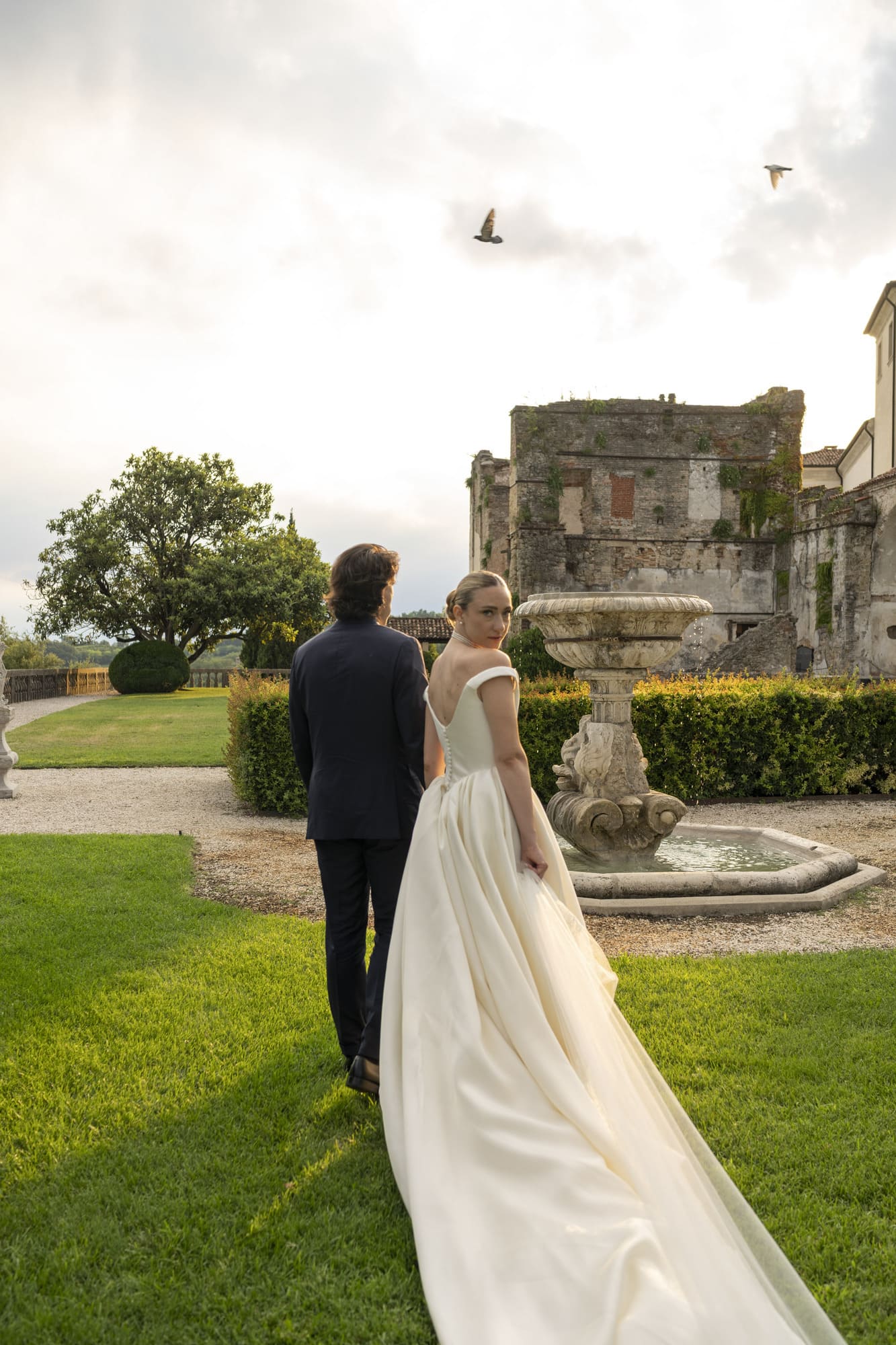
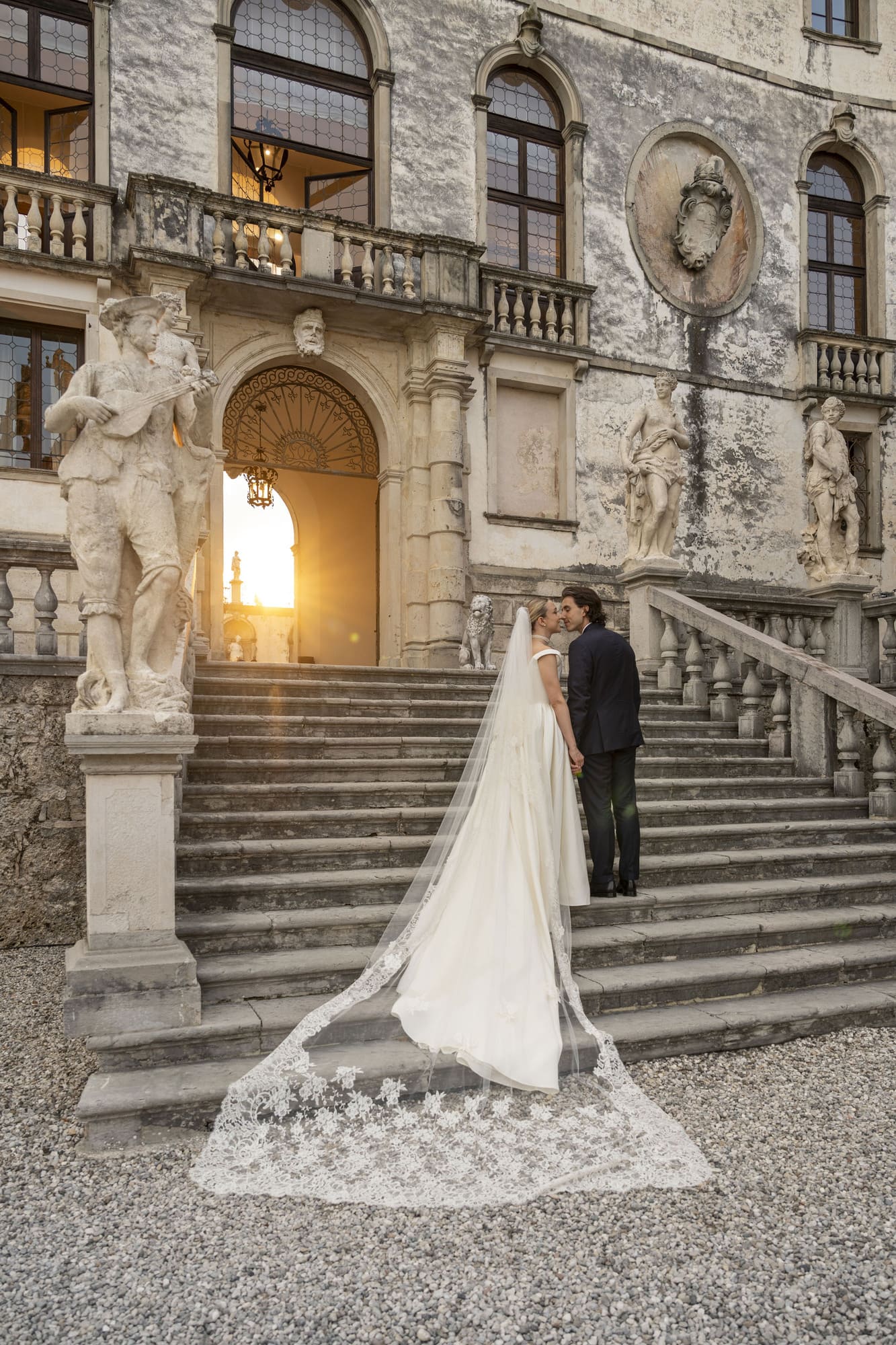
What makes these portraits so strong is how naturally the couple inhabits the architecture. They don’t pose against it, they seem to belong to it. Brunelli captures their walk through the courtyard, a quiet exchange on the staircase, the way Eleonora briefly lifts her dress while stepping over a stone path, small movements framed by monumental surroundings.
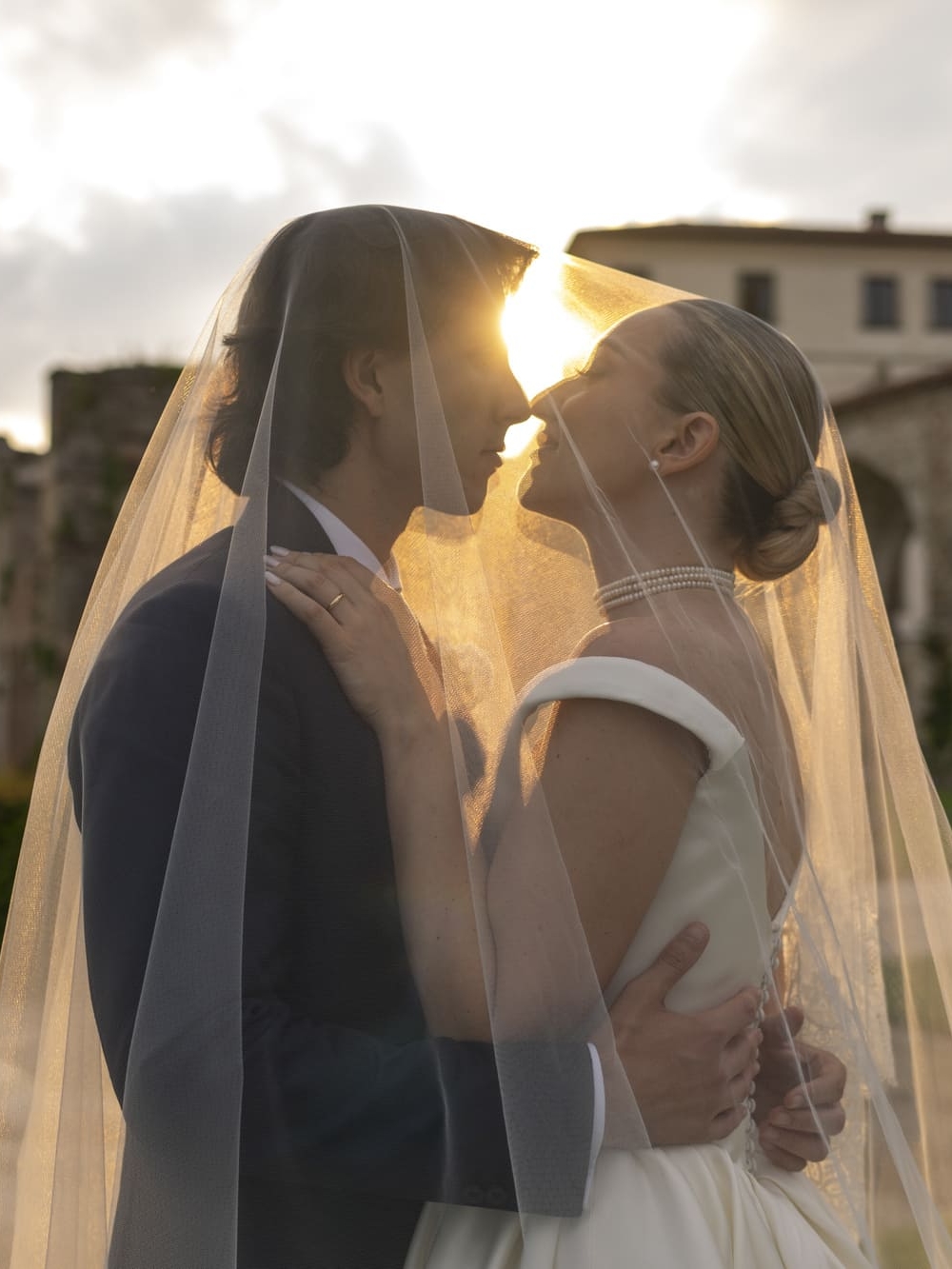
The castle’s staircases, with their worn steps and classical proportions. The sunset portraits carry a different tone: warmer, looser, with the castle glowing behind them like an echo of old aristocratic estates.
Cocktail Hour
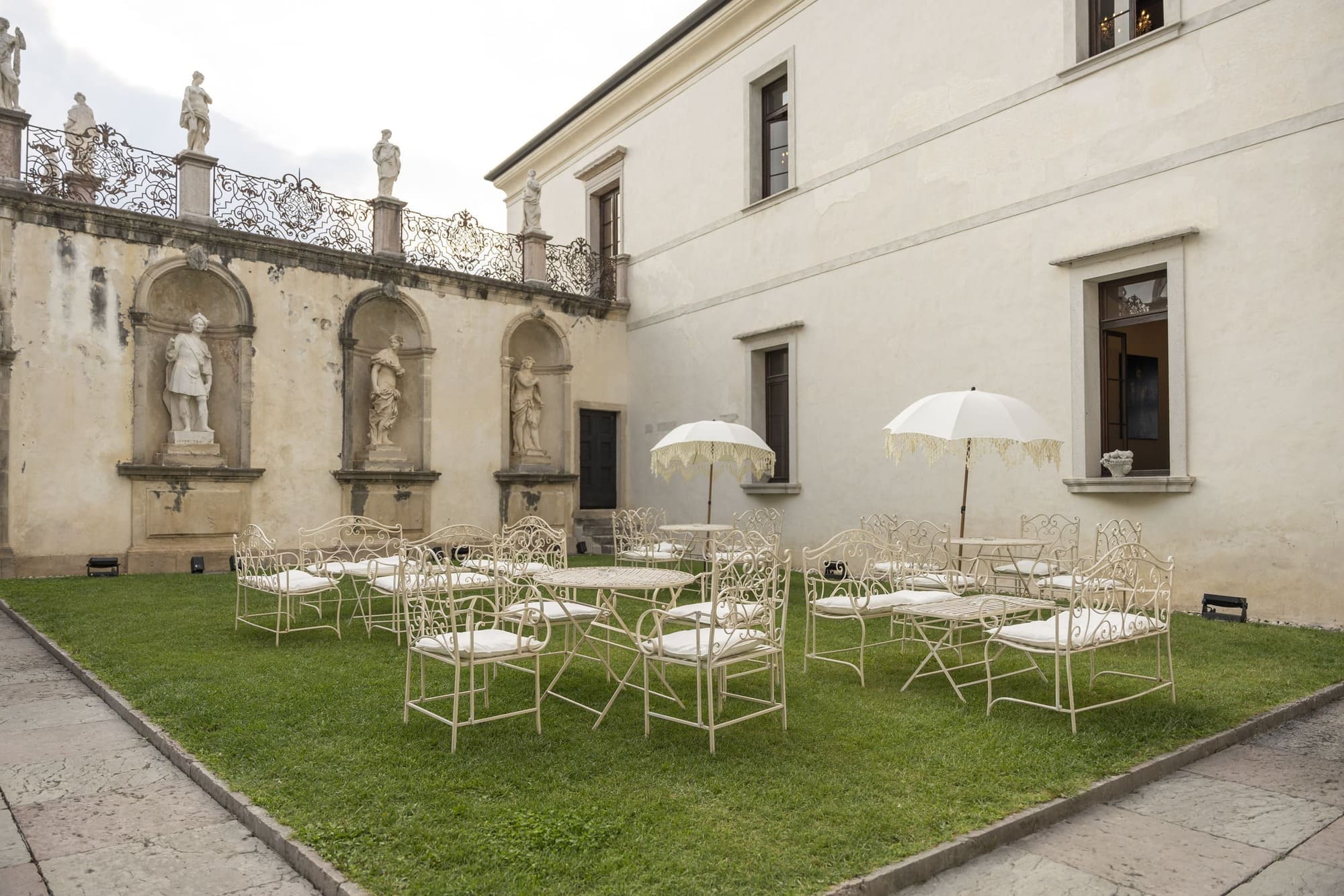
After the portraits, the newlyweds stepped out onto the lawn where the cocktail hour had already begun, a bright, open setting softened by white parasols and slim metal benches arranged across the grass.
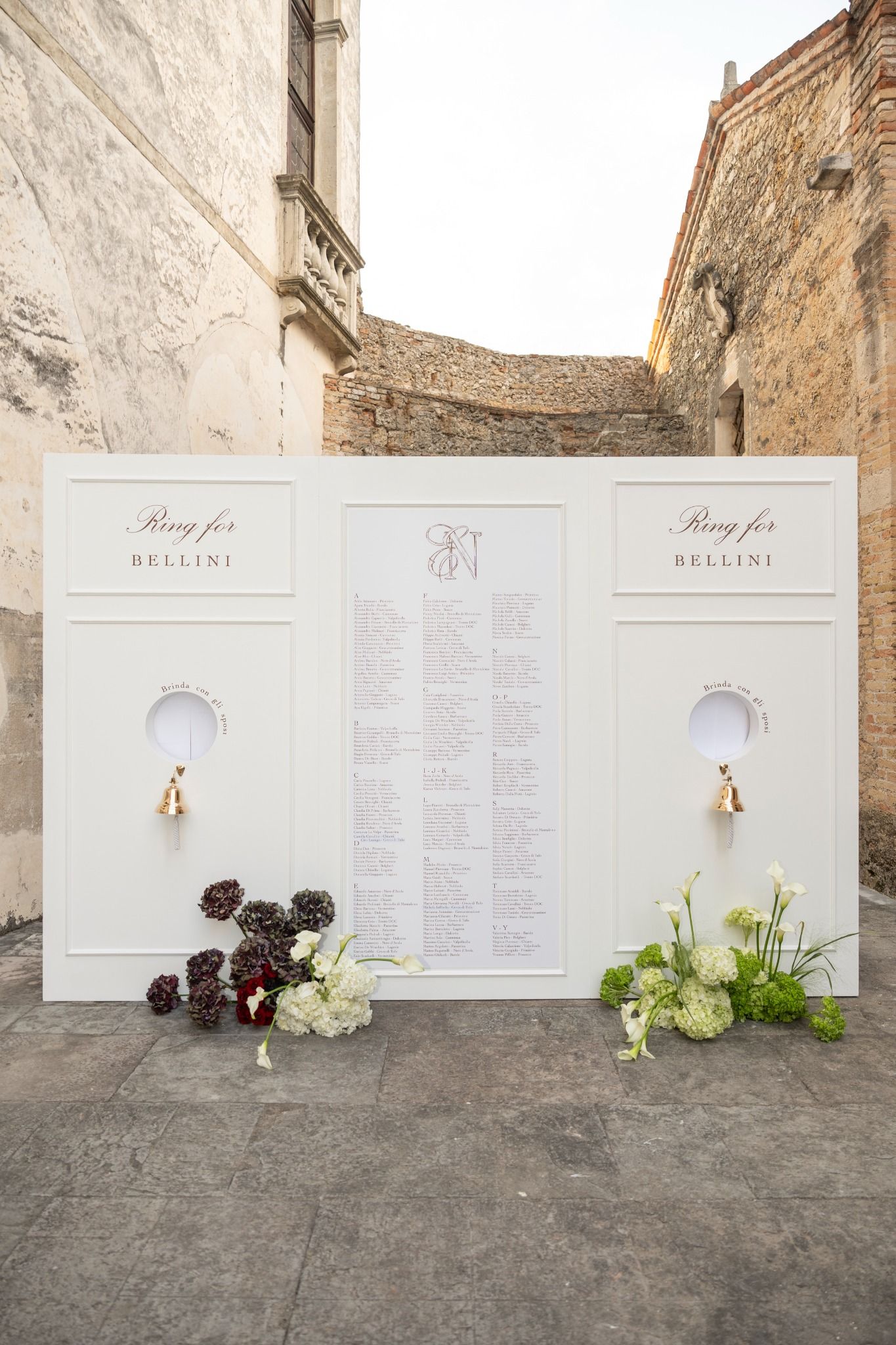
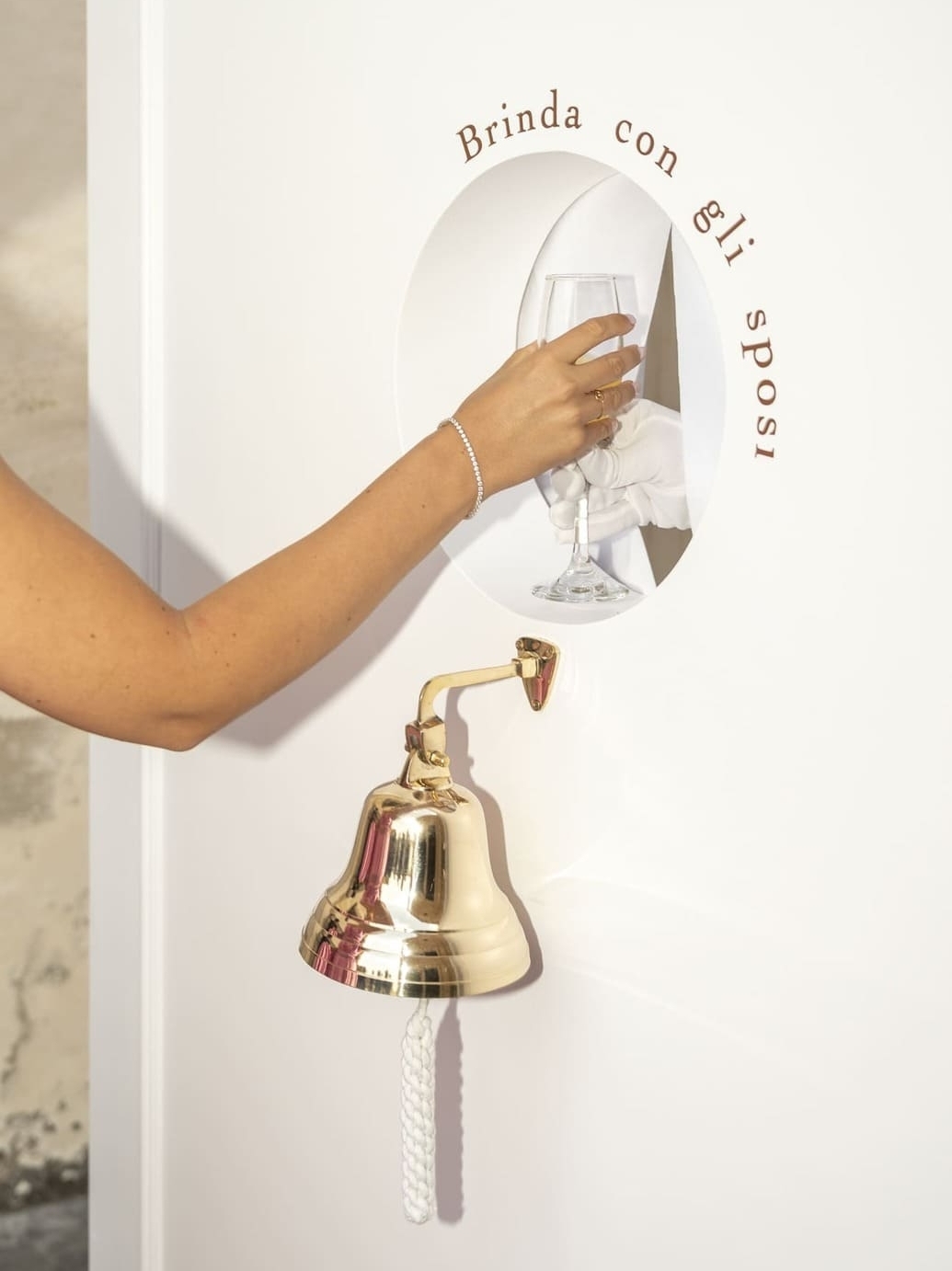
The centerpiece of the cocktail hour was the playful installation that immediately became a guest favorite. The first sign read “Ring the bell for Bellini,” inviting people to press a brass bell that triggered a hand to appear through a small opening with a freshly poured Bellini. Nearby, a second message, “Brinda con gli sposi,” translated to “Toast with the newlyweds,” and added a warm, celebratory tone to the experience.
Once the couple joined the guests, the scene shifted from anticipation to ease. Conversations gathered under the parasols, the castle stood behind them like a quiet spectator, and the whole atmosphere carried that specific Italian balance of formality and informality, structured, but never stiff.
Reception & Decor
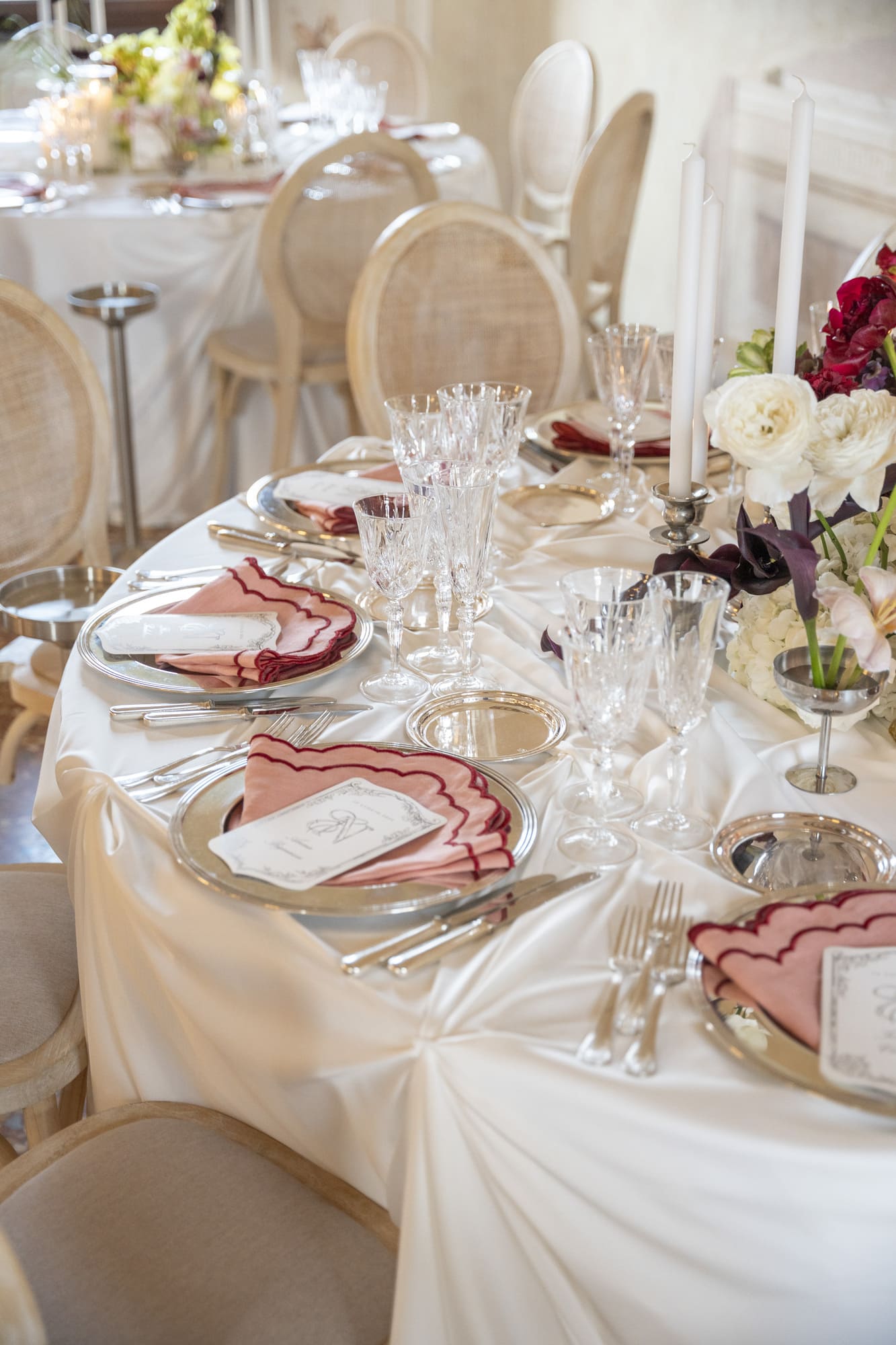
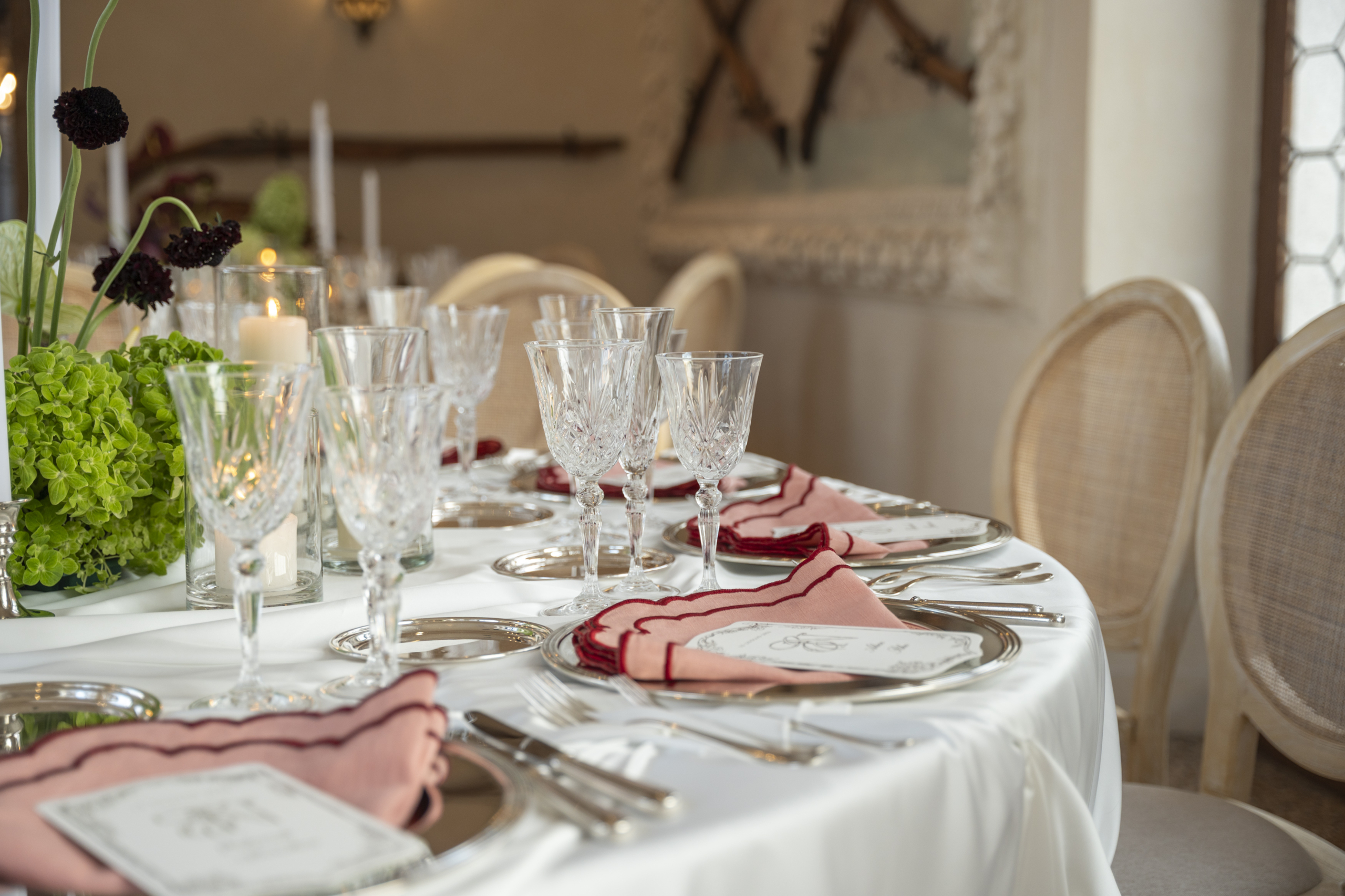
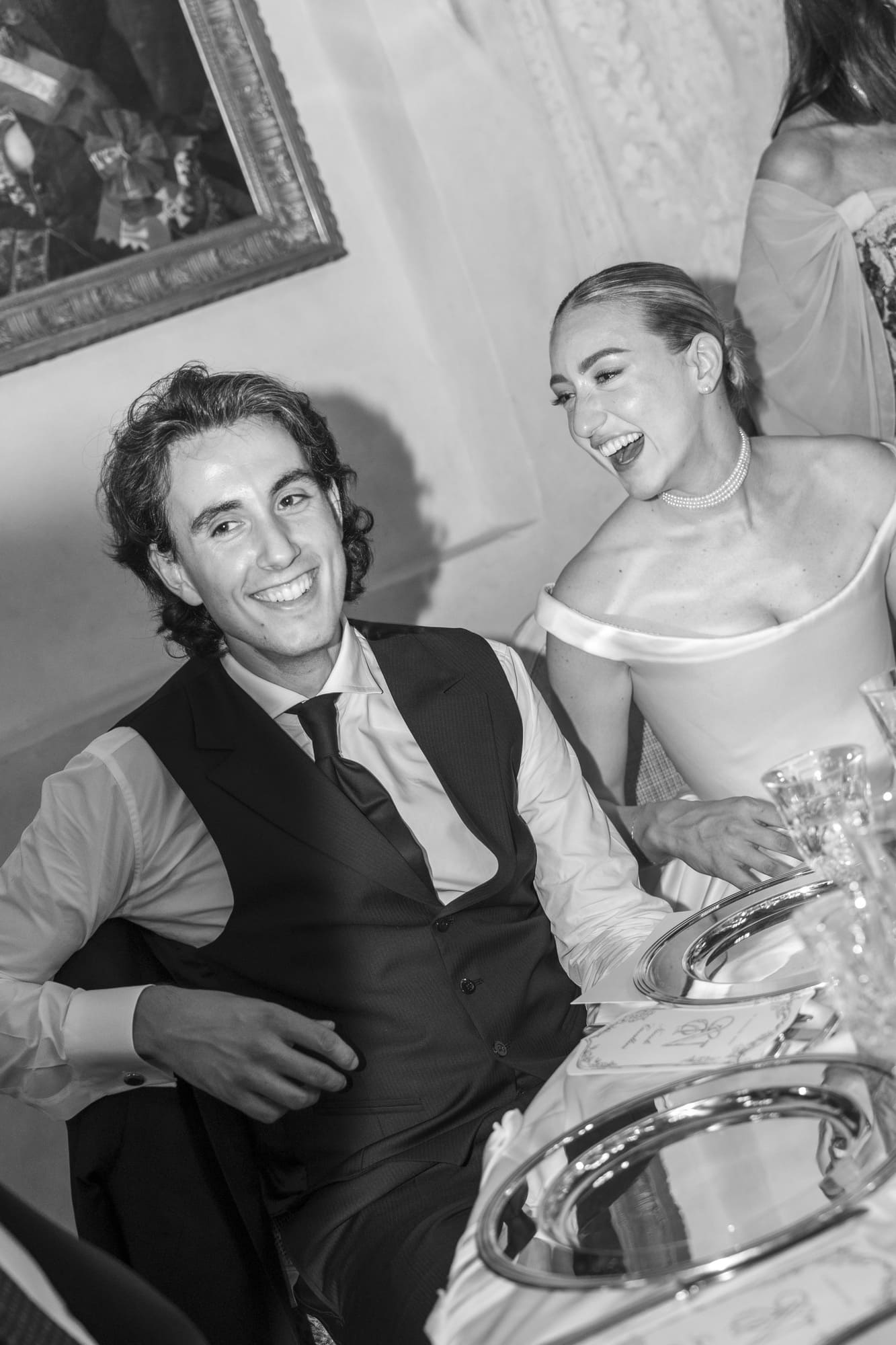
The reception hall opened into a world shaped almost entirely by candlelight. Dozens of flames stretched down the length of the tables, creating a warm, low glow that softened the castle’s architecture and added depth to every surface. It felt almost tactile: the golden reflections in the glassware, the quiet shimmer on the cutlery, the glow moving across the linen as guests took their seats.
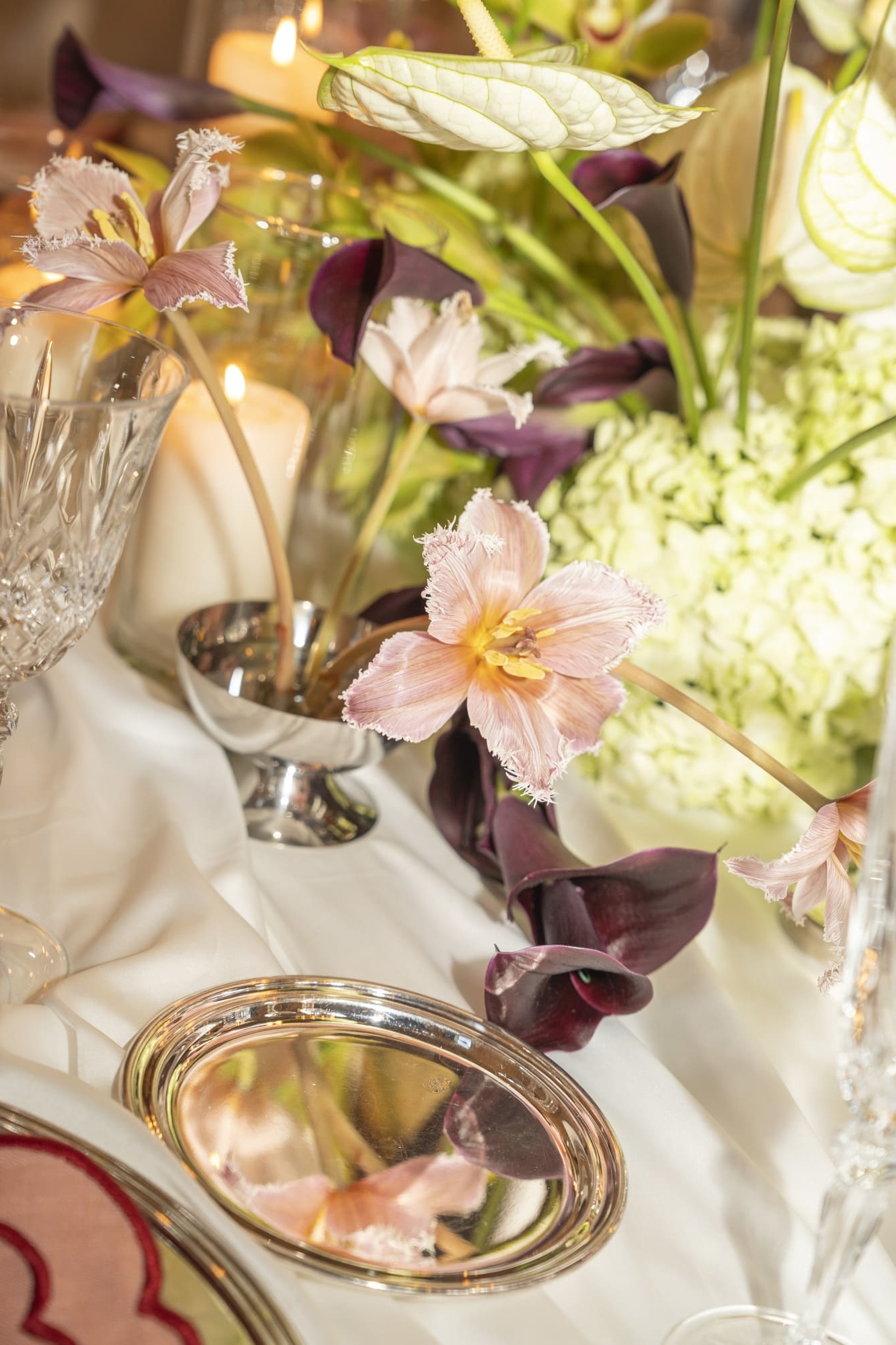
Florals stayed close to the day’s aesthetic: sculptural white roses, rounded forms, and arrangements set low enough to keep the tables uninterrupted. They created a soft contrast against the textiles, especially the pink napkins trimmed with a deep red edge, which added a subtle hit of color without breaking the palette. Instead of falling straight, the tablecloths were gathered into gentle folds along the edges, creating a sense of movement that echoed the drapery used throughout the day.
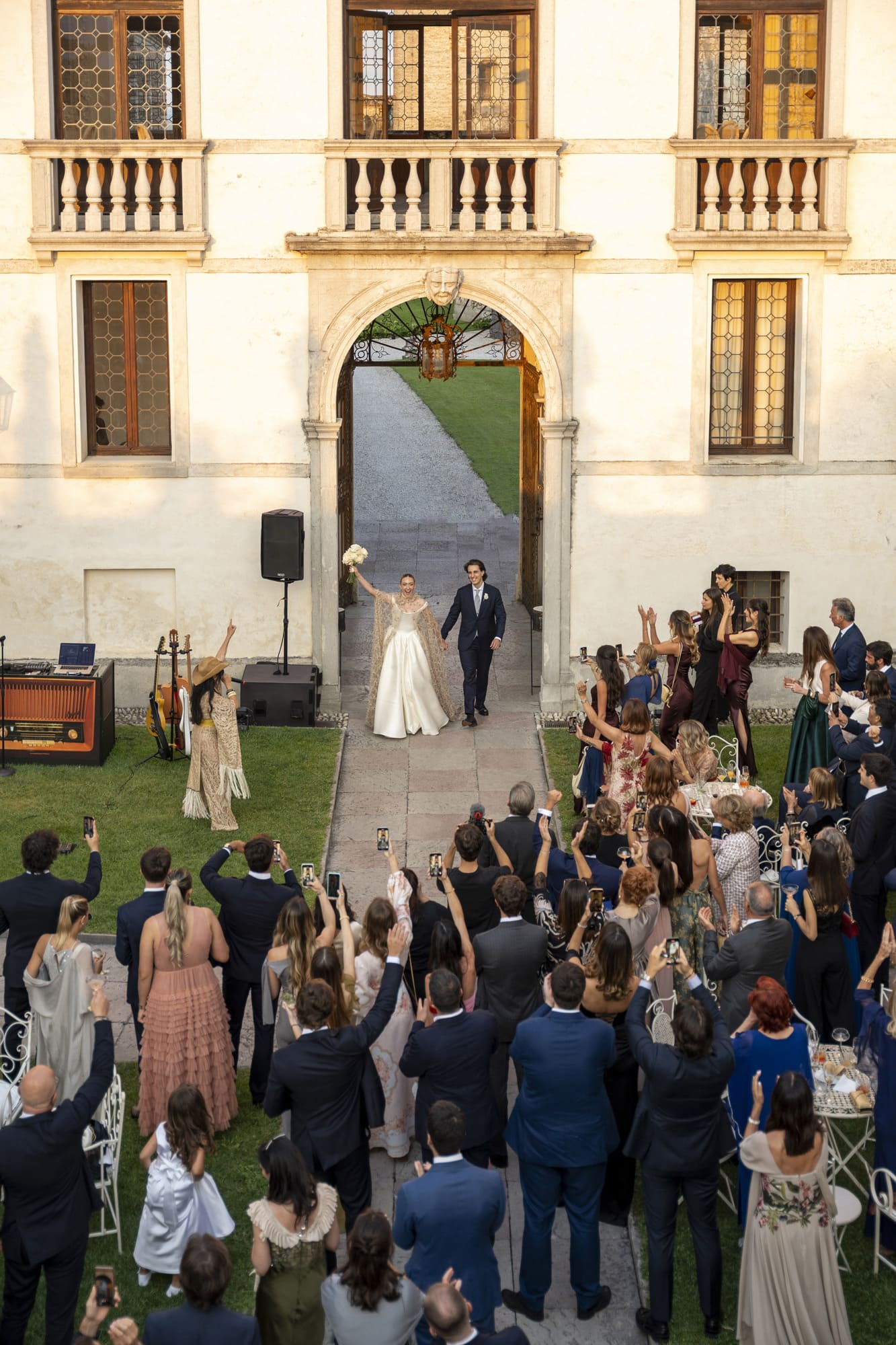
The dinner began with a burst of energy as Eleonora and Niccolò entered to “Bamboleo,” a choice that instantly lifted the room: guests rising, napkins in the air, the candlelit hall turning from stillness to movement in seconds. It was the perfect counterbalance to the ceremony’s formality.
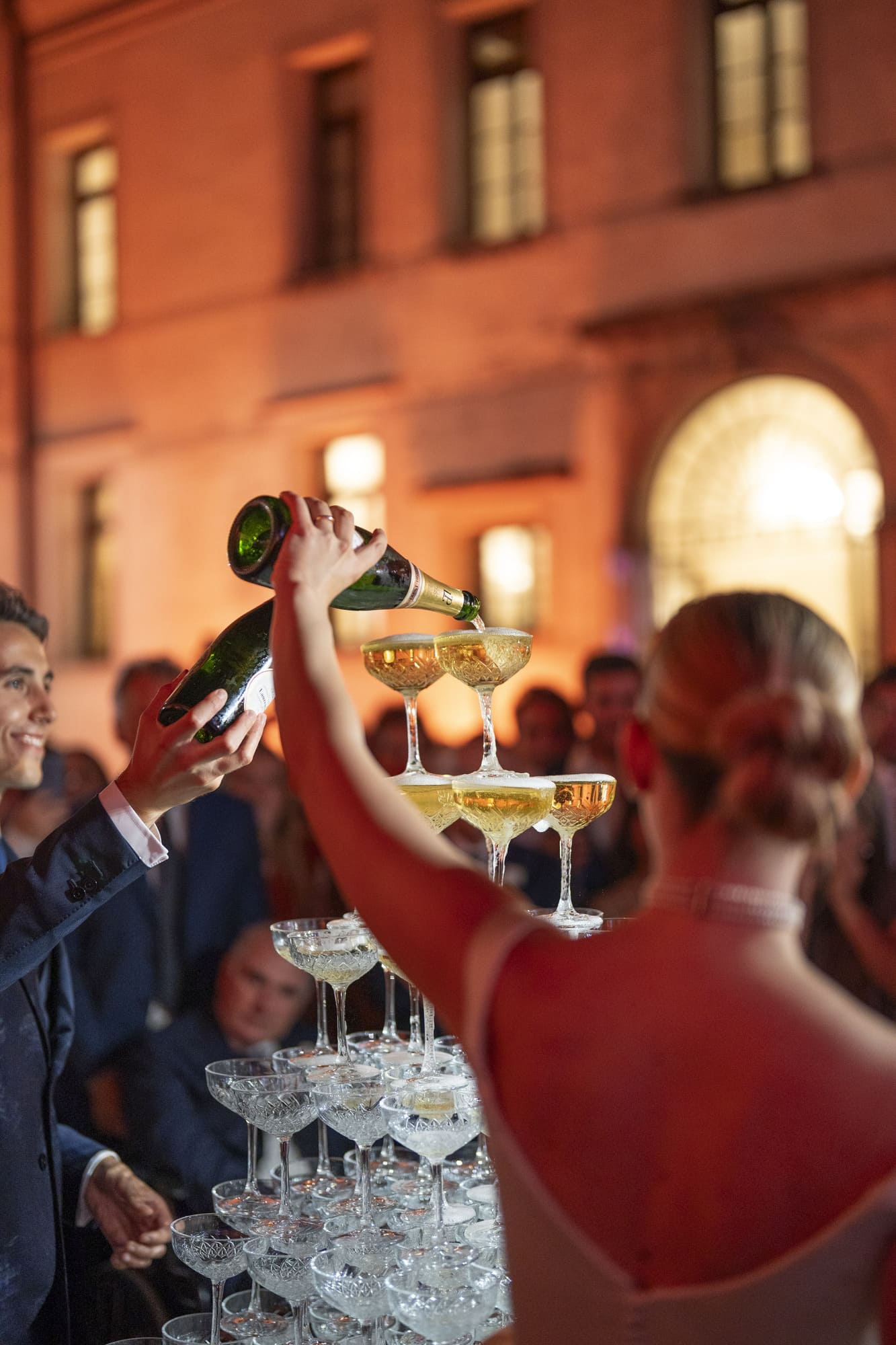
Speeches anchored the evening with the same clarity that shaped the couple’s entire vision. The bride’s father spoke first, followed by Niccolò and their witnesses. The champagne tower became the bridge between dinner and the night’s celebration. Stacked flutes, warm candlelight, and a room gathering closer around them gained a kind of ceremony through composition.
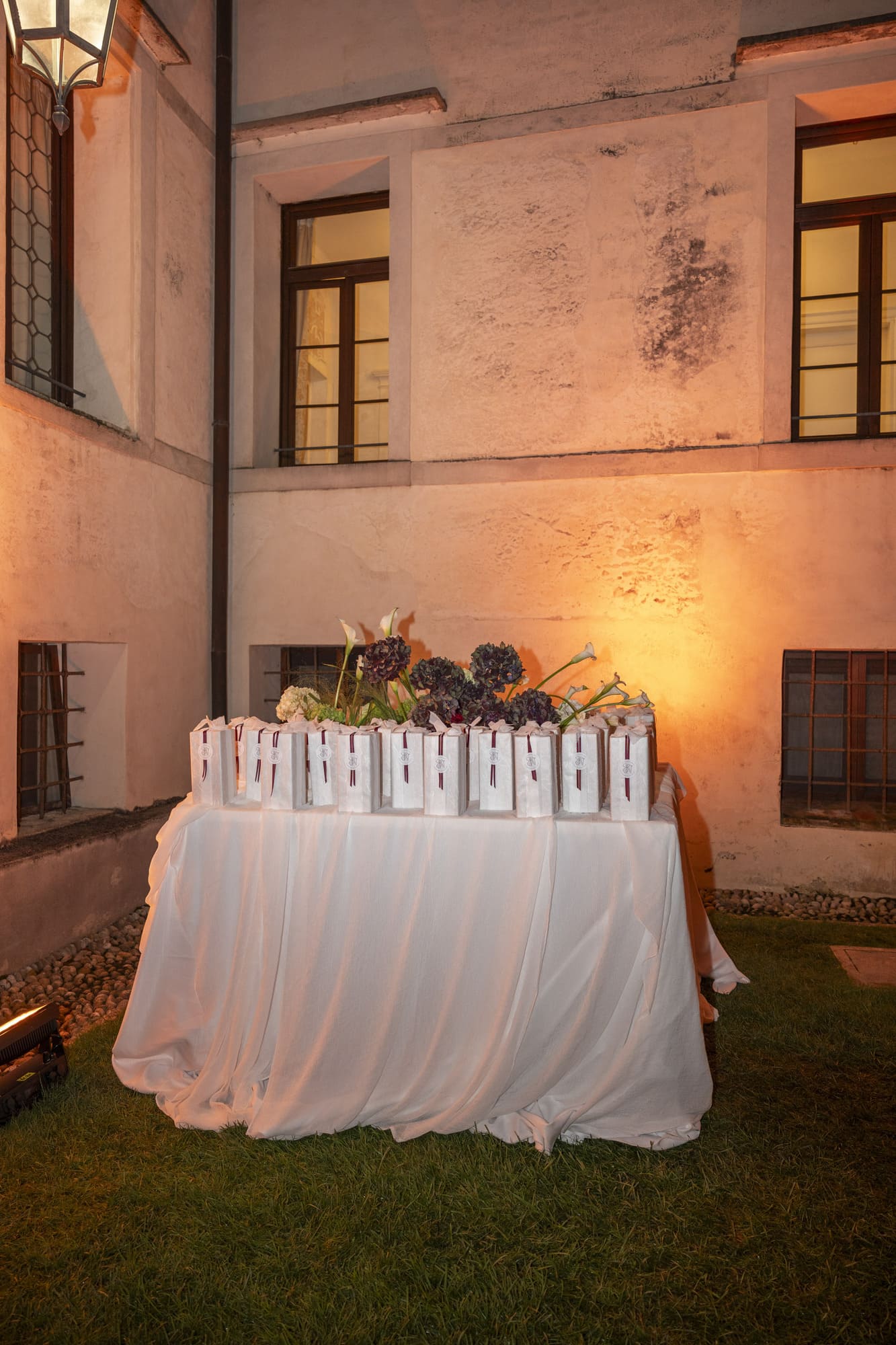
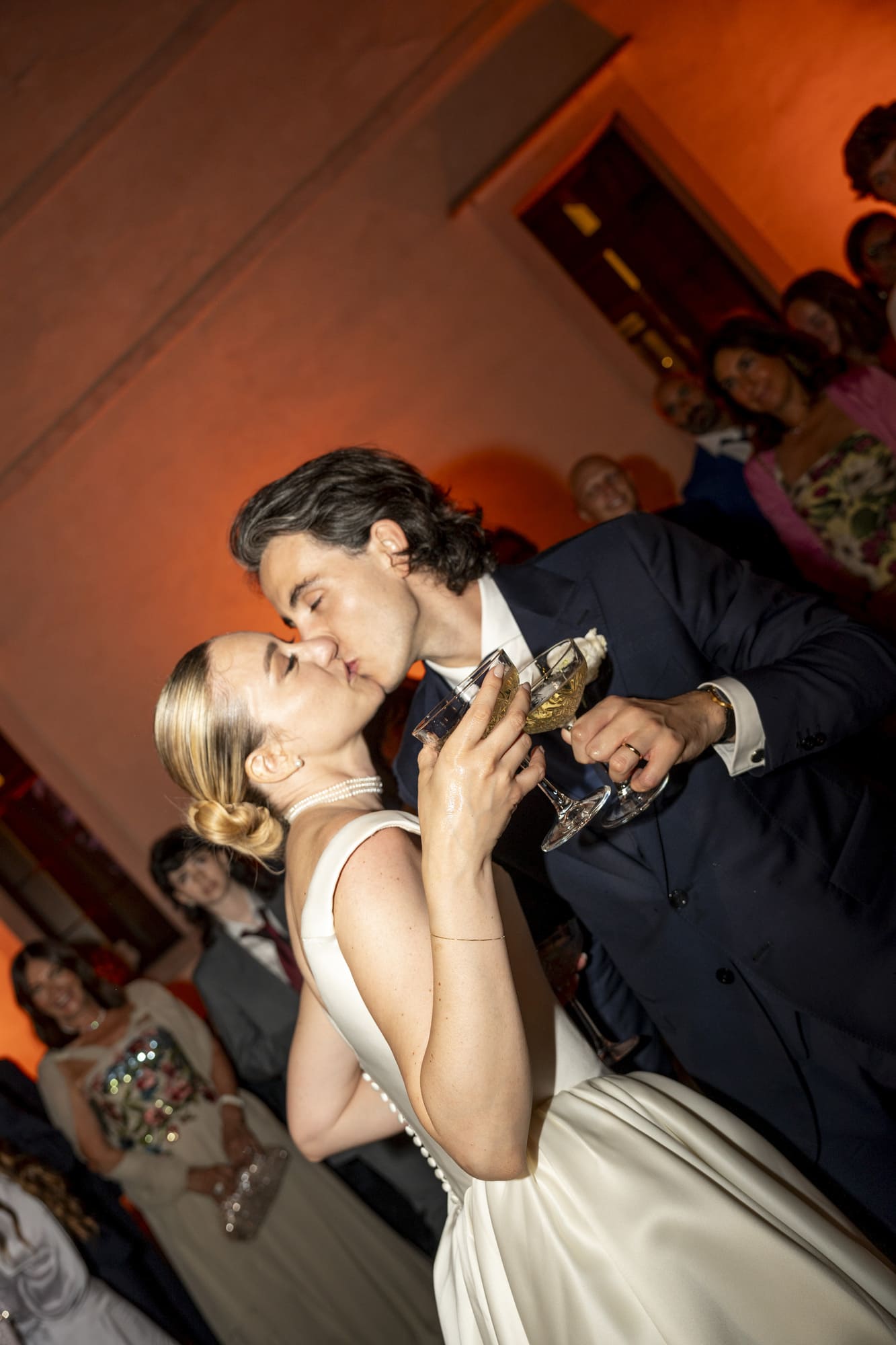
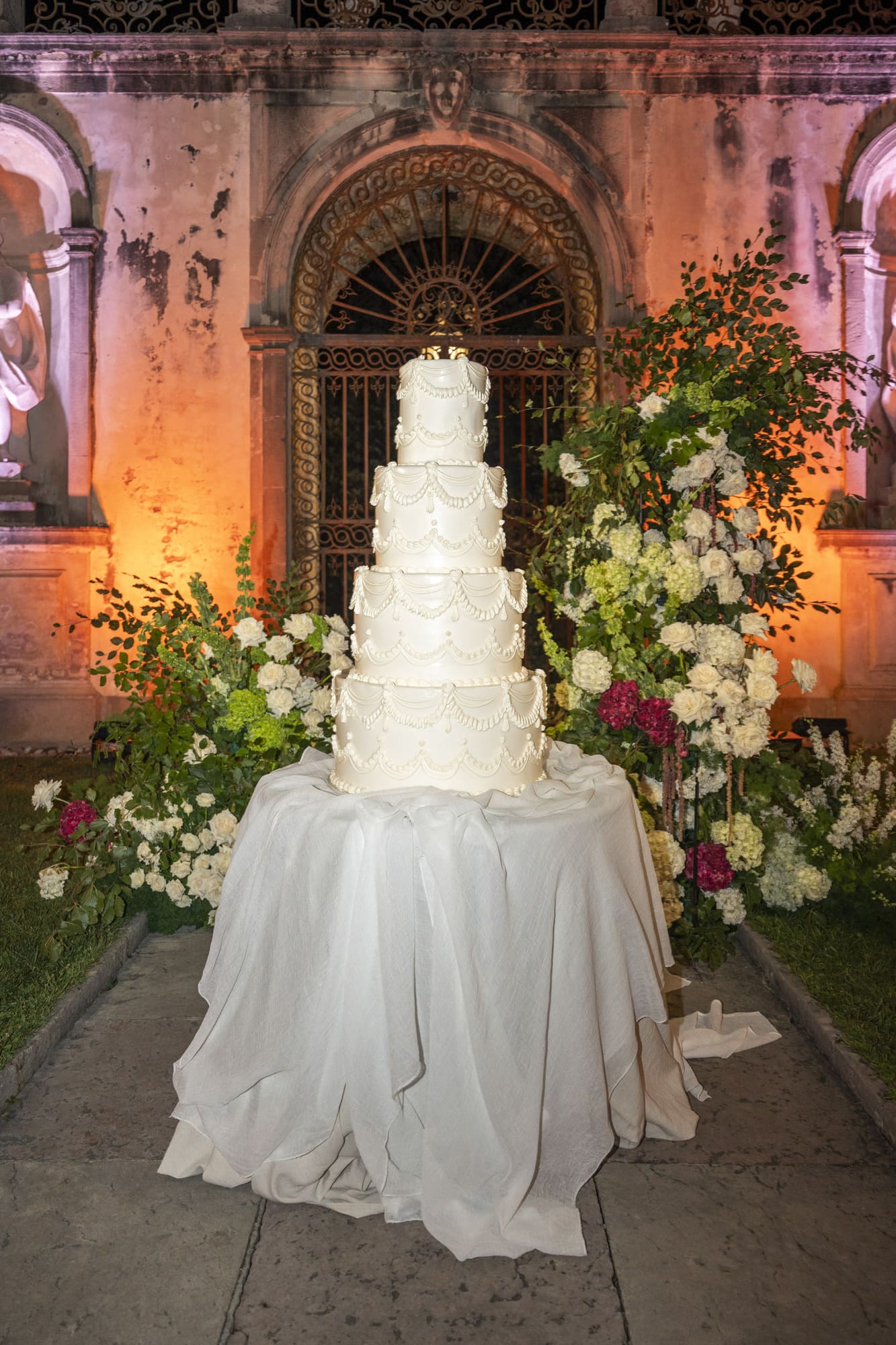
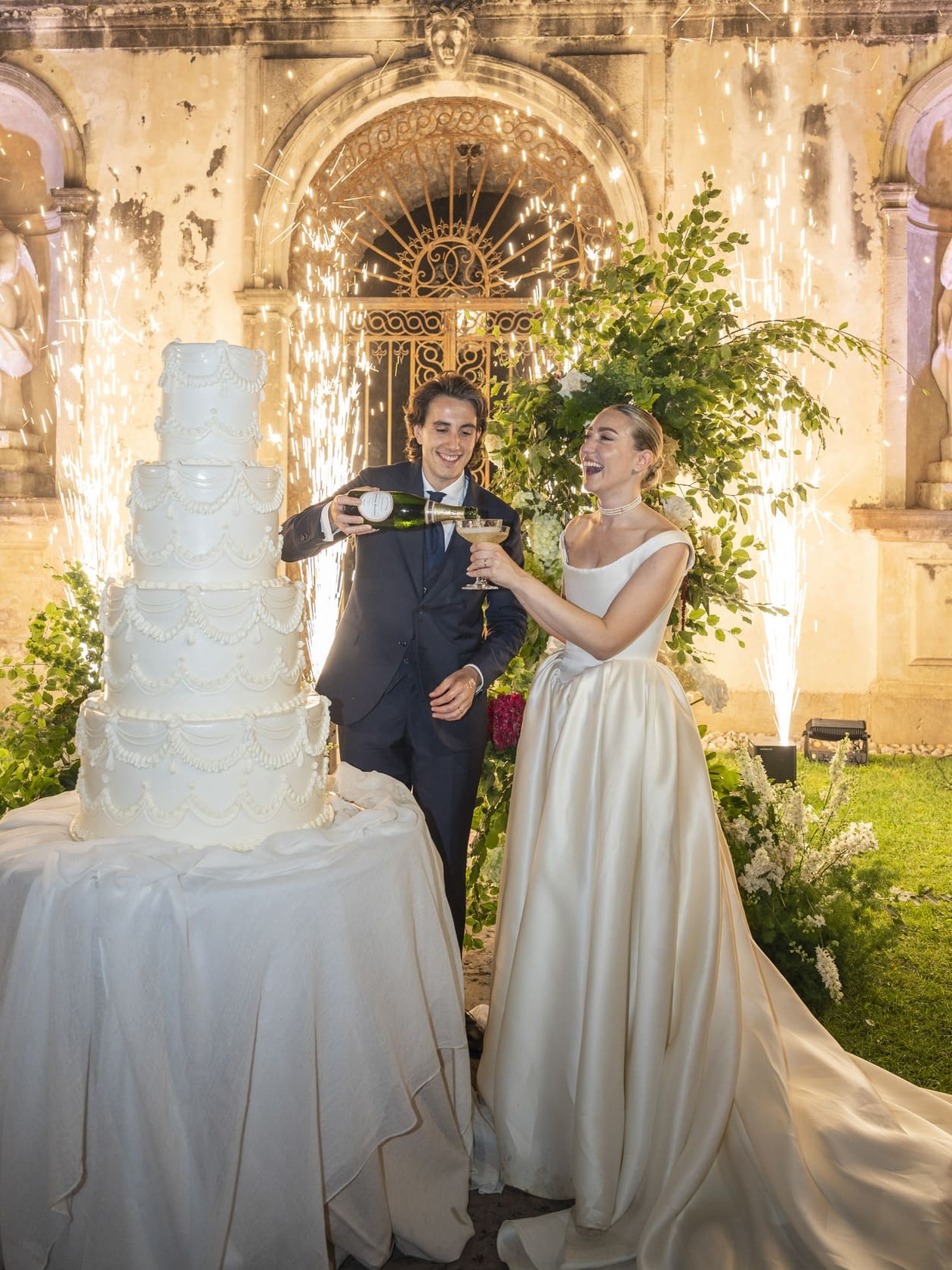
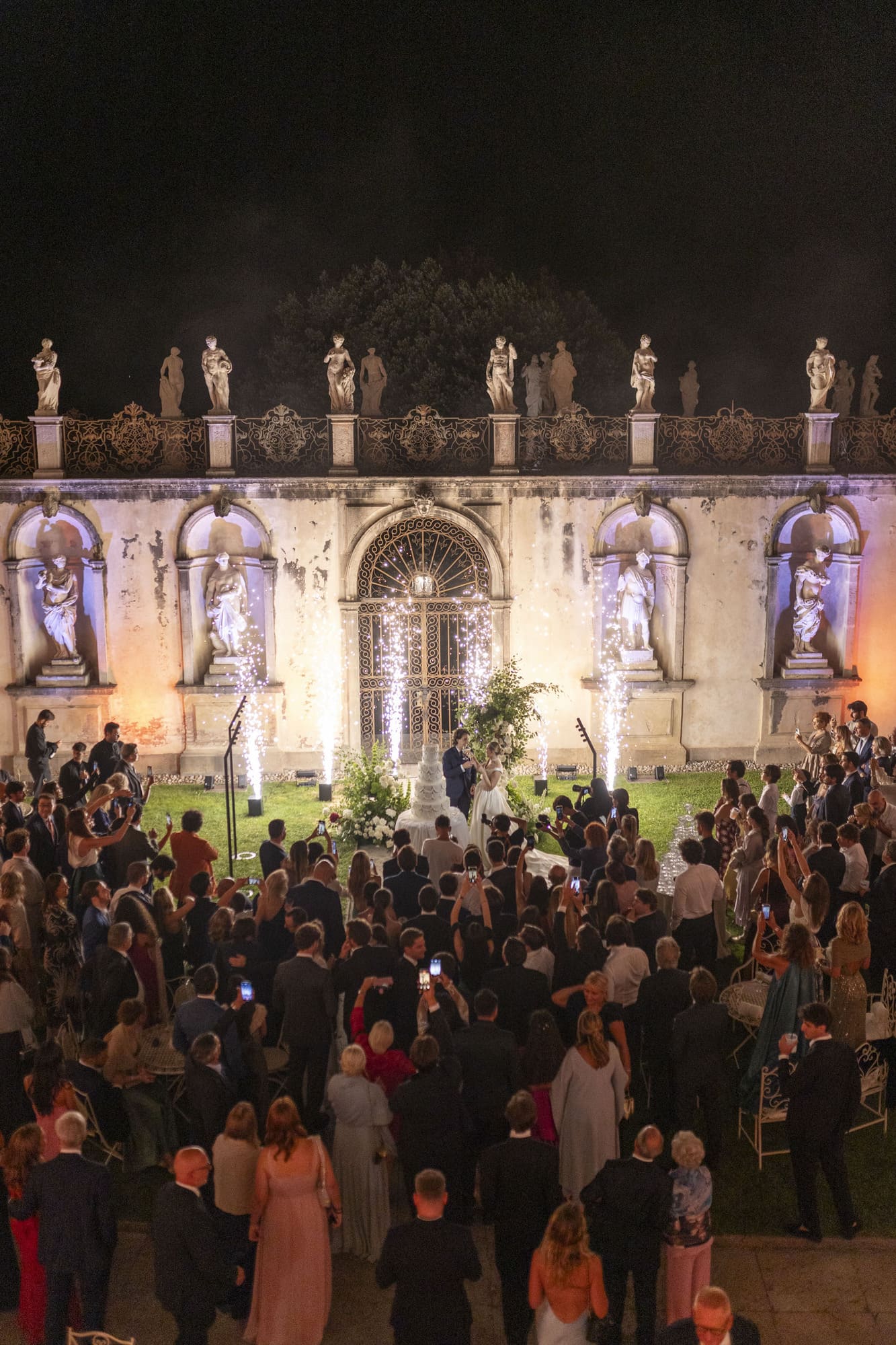
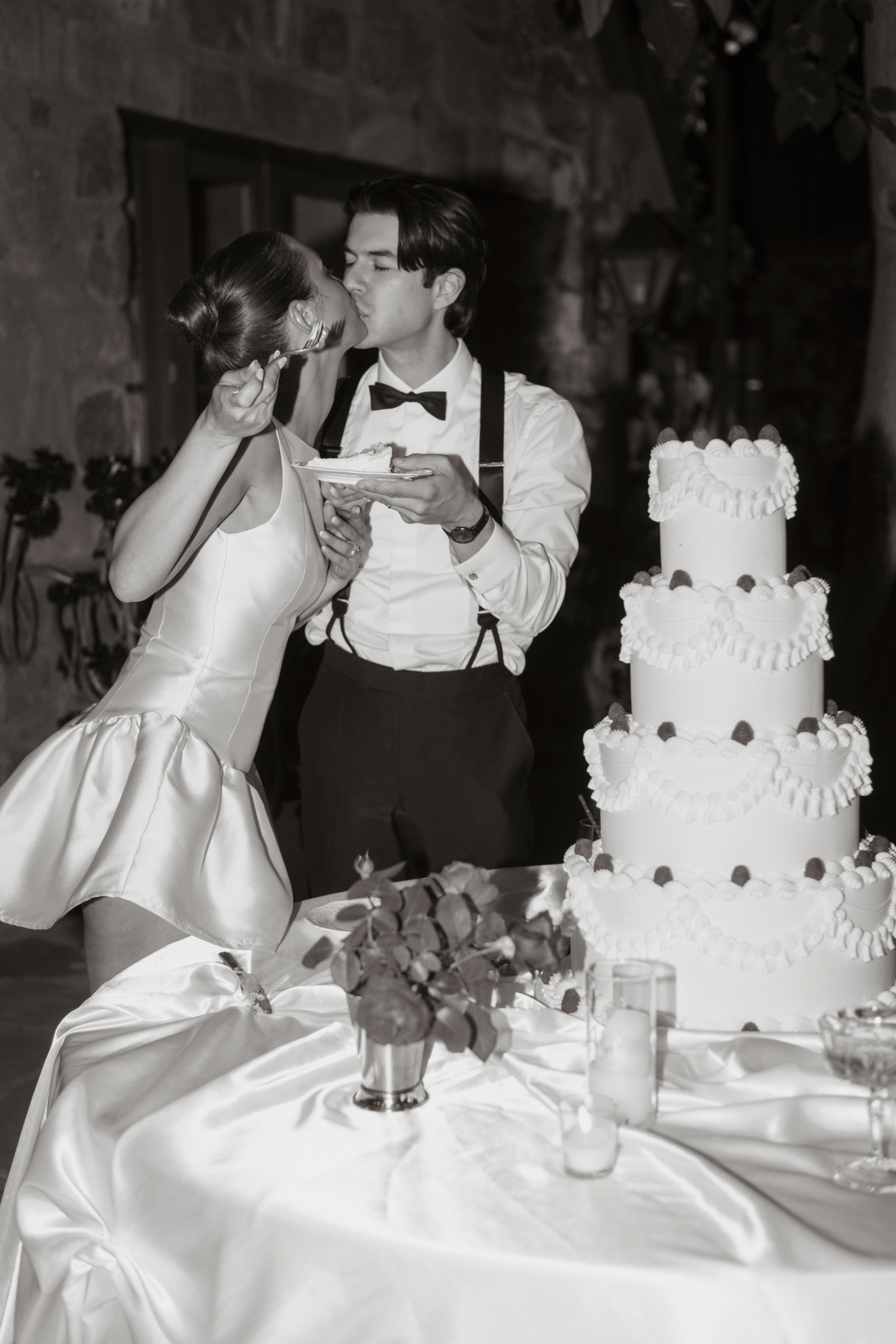
The cake stood outside against the castle facade, a symmetrical white creation placed beside a sculptural floral installation by IL Profumo dei Fiori . The arrangement reads like a second altar: a deliberate vertical form echoing the florals from the church, now translated into the evening’s palette. When the couple cut the cake to Coldplay’s “Paradise,” the scene felt complete.
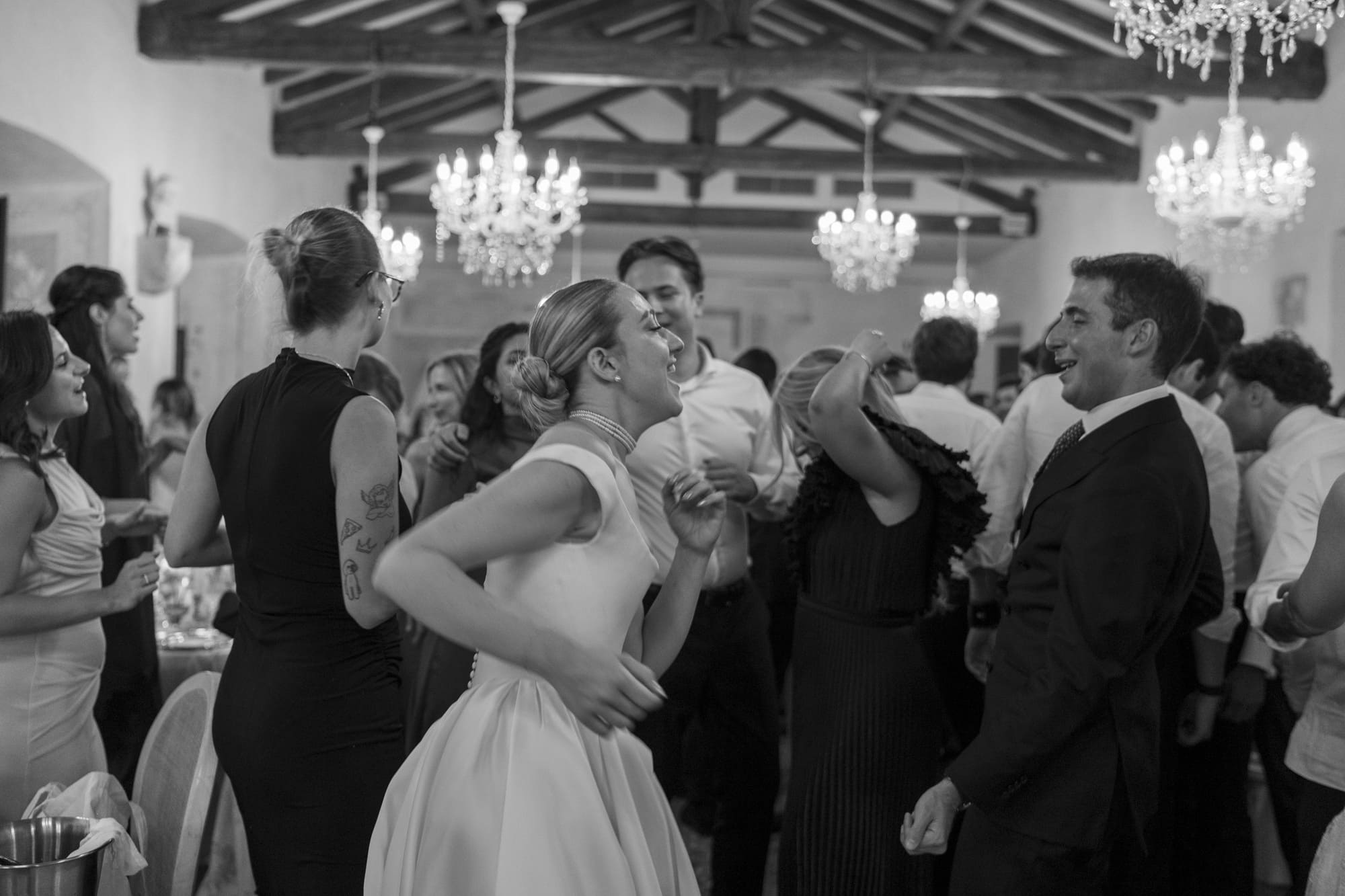
Most of the dancefloor images are in black and white, a choice that amplifies movement and expression. Without color, the room becomes a study in rhythm: hands raised, hair in motion, candle glints turning into thin streaks of light. The couple is surrounded by friends, and the photography captures the night not as a sequence of moments, but as a continuous flow — energetic, intimate, and unmistakably theirs.
Advice from the couple:
• Enjoy every single moment and live it to the fullest with the person you love — it all goes by so quickly.