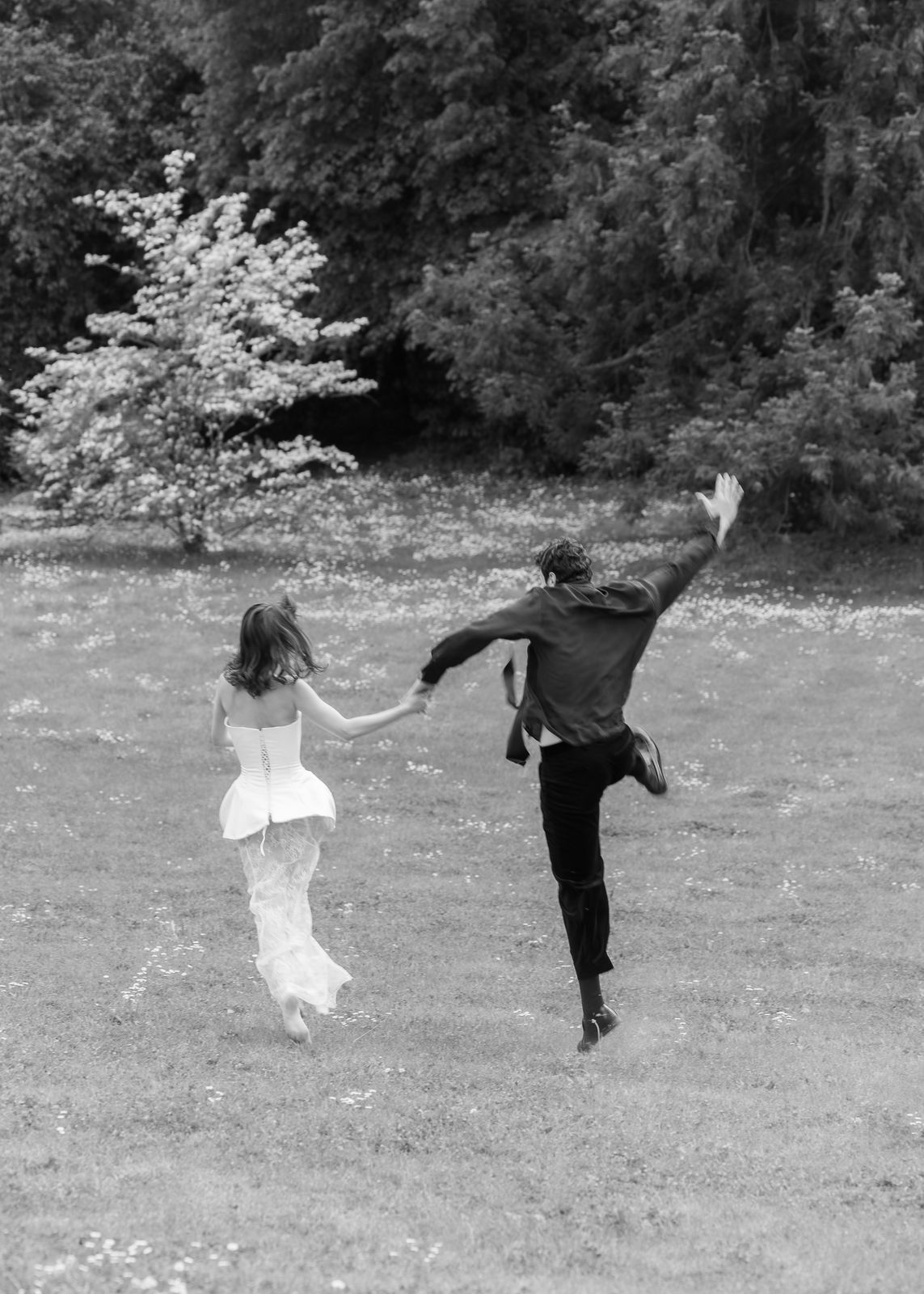
This editorial by Kapetanakis Studios, produced with Sparkling Moments Events, unfolds on Lake Como before shifting into the rhythm of Milan. It moves fluidly between architecture and light, capturing sculpted gowns, handmade textures, and florals in soft restraint. The lake becomes part of the story through boat moments and the villa’s darsena, while the city introduces a sharper, urban register.
Then shoot moves into city, where light and fabric sharpen into fashion, and ends at the Duomo, where bridal design holds its own against centuries of stone. The idea was simple yet daring: to show Italy as we know it, and as we rarely see it.
Consider this editorial as a play in three parts. Each act reveals how bridal imagery can stretch its boundaries: Romantic and serene, golden and cinematic, urban and timelessly modern.
Act I: The Lake Como
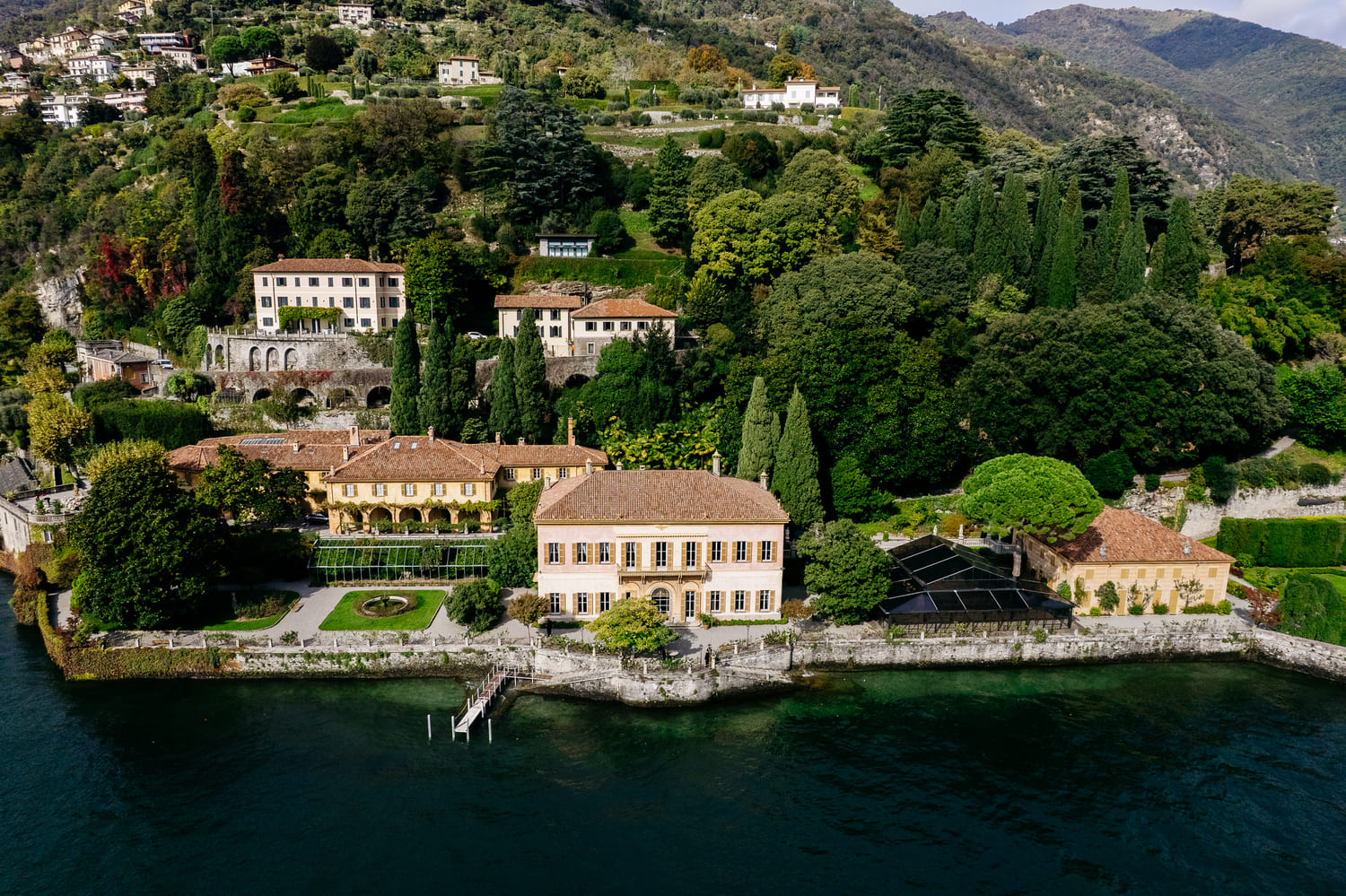
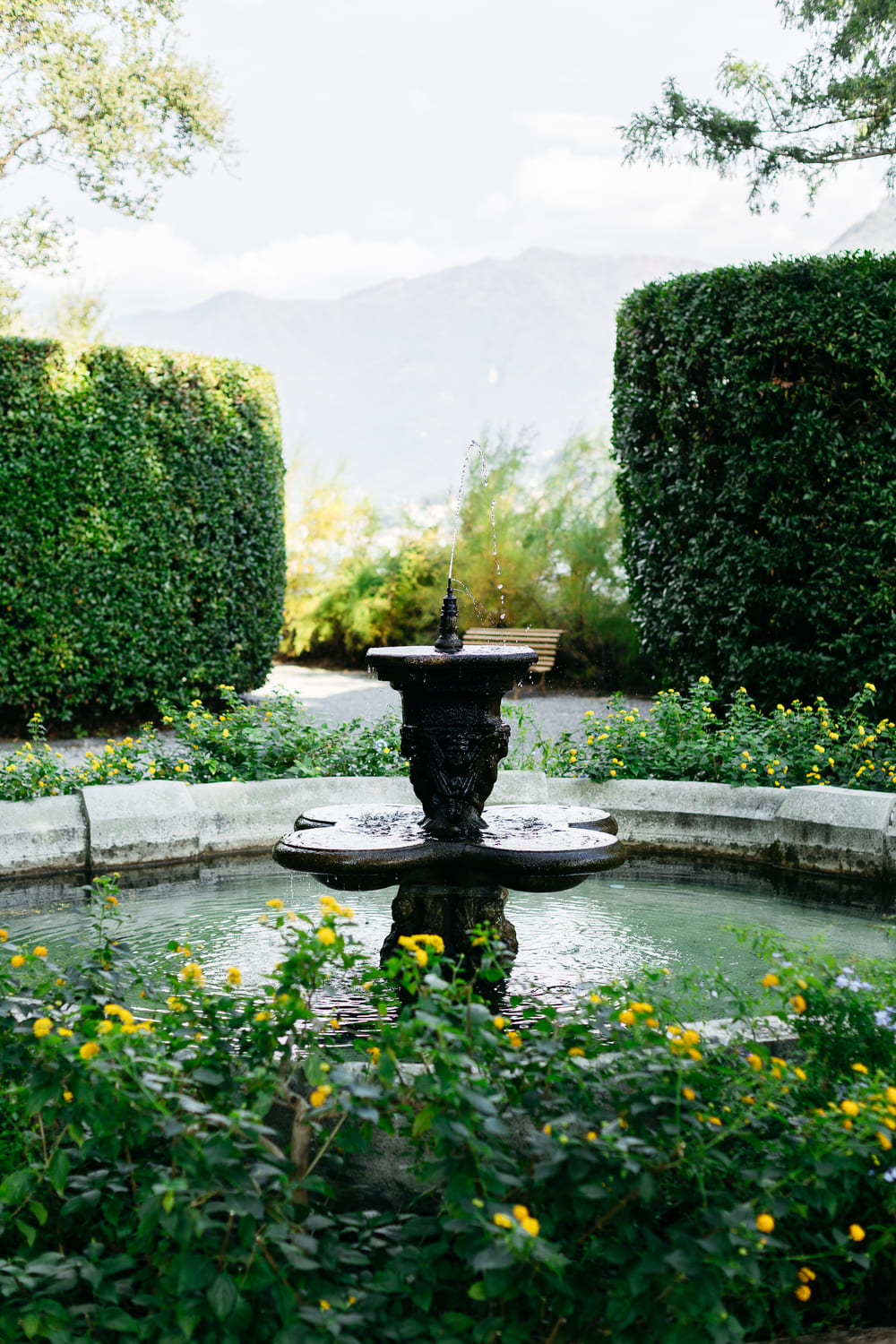
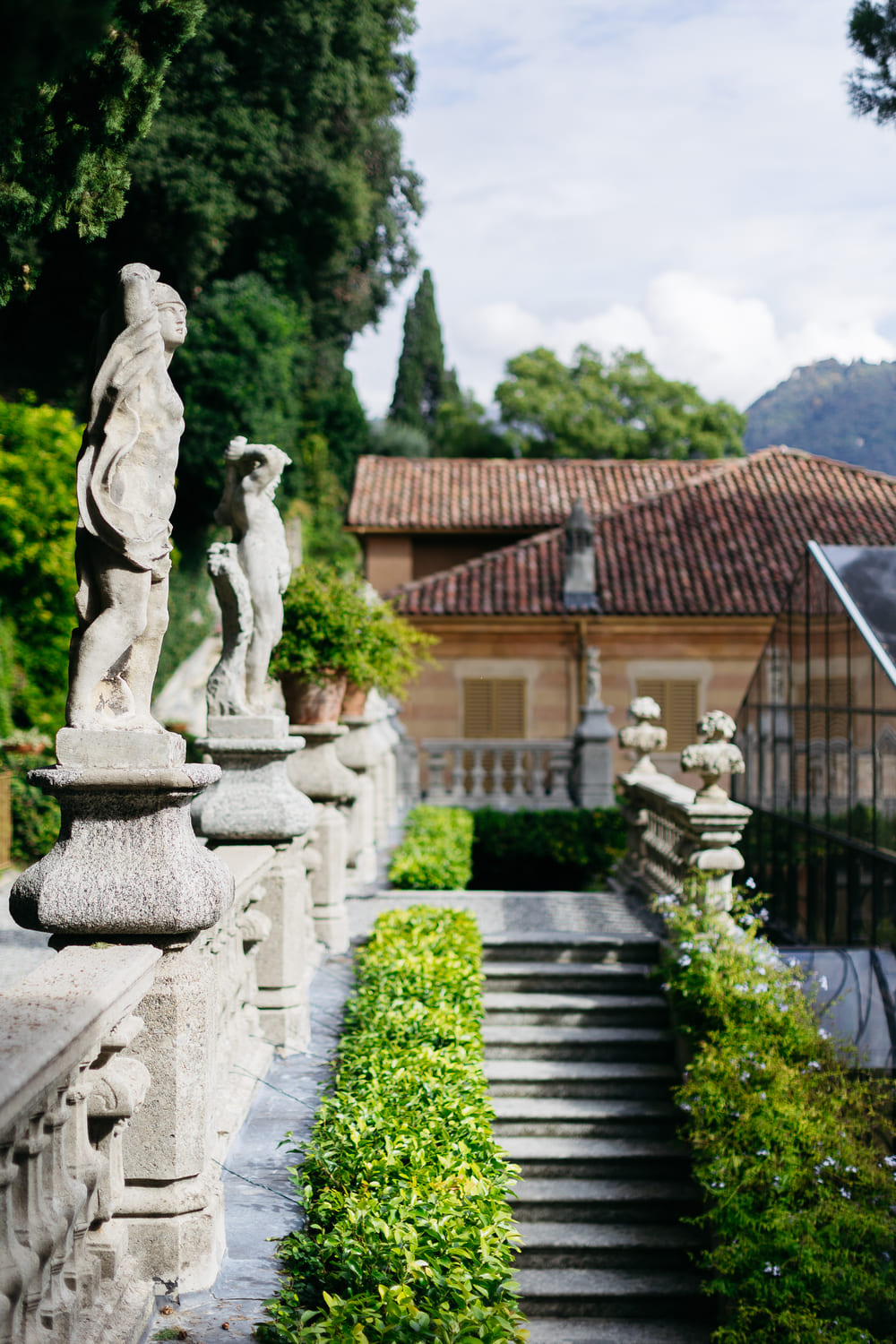
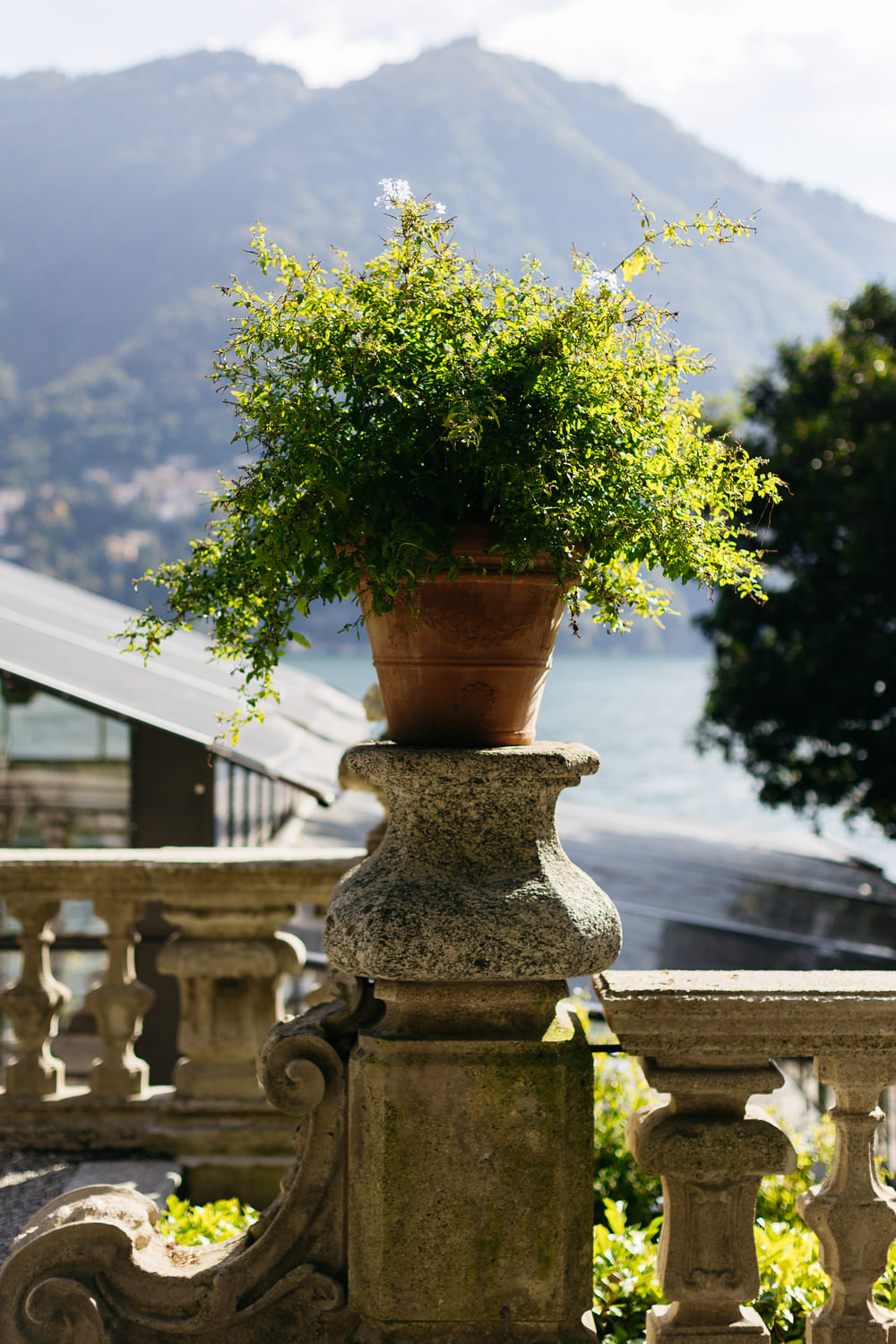
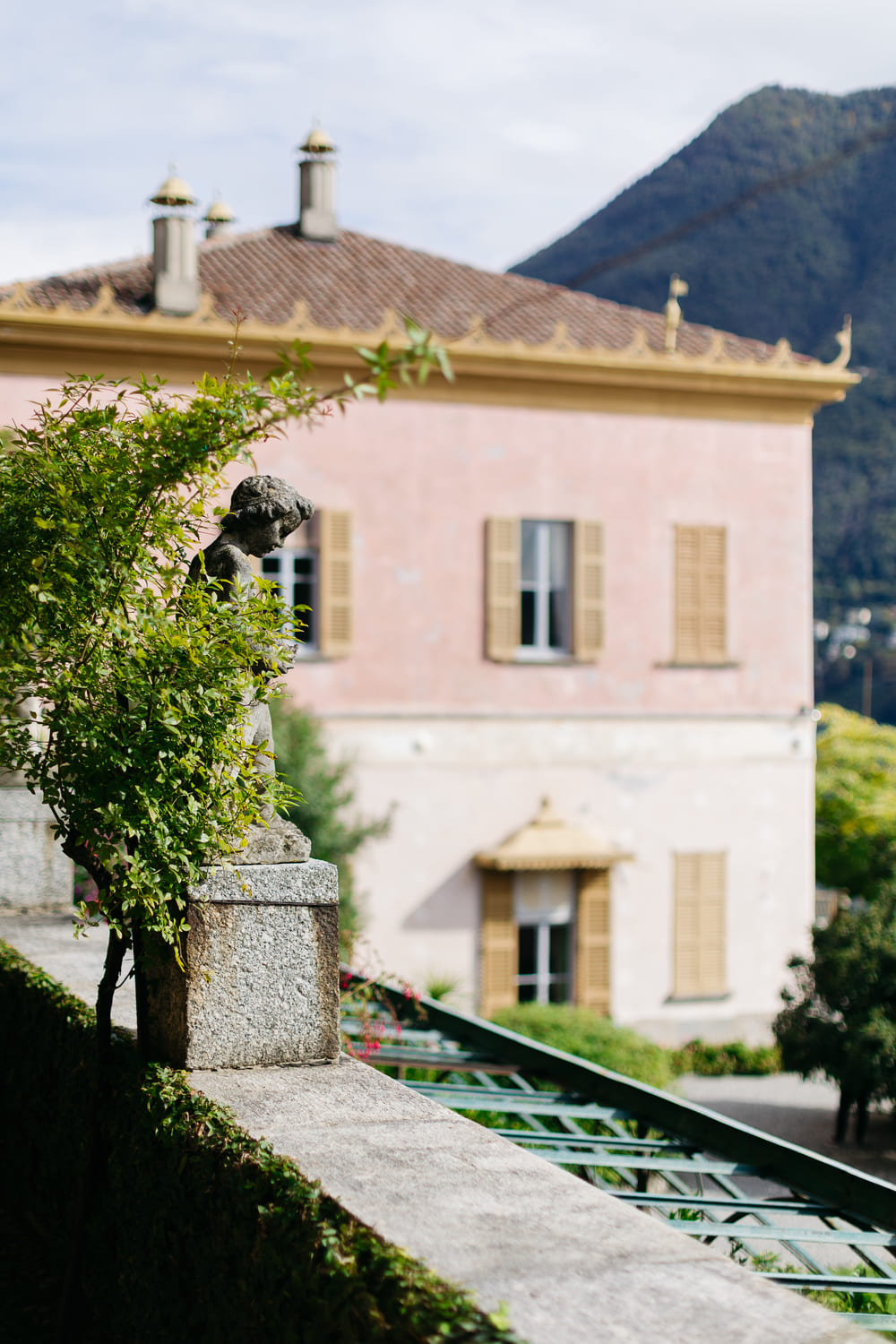
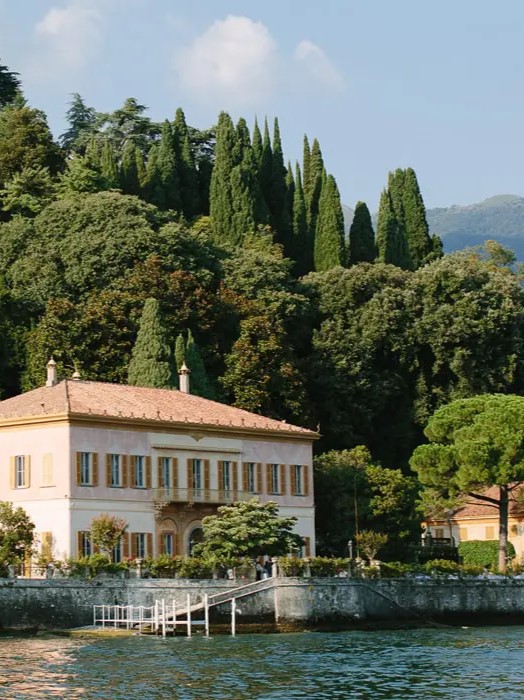
There are villas on Lake Como that feel less like venues and more like characters, and Villa Pizzo is one of them. With its rose-washed facade and frescoed salons opening onto terraced lawns, it holds centuries of history yet speaks fluently to the language of contemporary celebrations. Here, gardens slip into the lake with a natural ease, and light draws sharp lines through shuttered windows before softening over the darsena at dusk.
The mood of this act is intimate yet cinematic: preparations unfolding in gilded rooms, guests arriving into the geometry of the gardens, the first notes of ceremony against the water. It is Lake Como at its most articulate, not staged, not forced, but revealing its own architecture, colors, and rhythm.
Fashion
The day opened inside the villa’s gilded rooms, where the bride stepped into her first gown by Tina Valerdi. Structured bodice, sculpted waist, and a skirt cut to capture the fall of light turned every movement into architecture. The fabric responded to the villa itself: lace and tulle against frescoed walls, shadows tracing her silhouette like part of the design.
To complement it, the bride wore statement pearls and chandelier earrings from Jonida Ripani, pieces that read less as adornment and more as part of the architecture of the look. Anastasia Kataurova and Elen Lenko kept hair in soft waves and makeup luminous, allowing the fabrics, textures, and the built-in embellishment of the gown to remain the focal point. On the floor, details completed the tableau: glittering Jimmy Choo pumps, a velvet ring box, strands of pearls laid beside florals in muted pastels.
The groom entered this frame with quiet precision. Dressed in a Carlo Pignatelli tuxedo, his look was sharp and measured, tailored lines balanced by a classic bow tie. The artistry of the day extended into the details: the stationery suite by Papier Handmade lay out like a still life, handmade paper edged in watercolor, sealed with wax and ribbon, resting beside blooms and heirlooms.
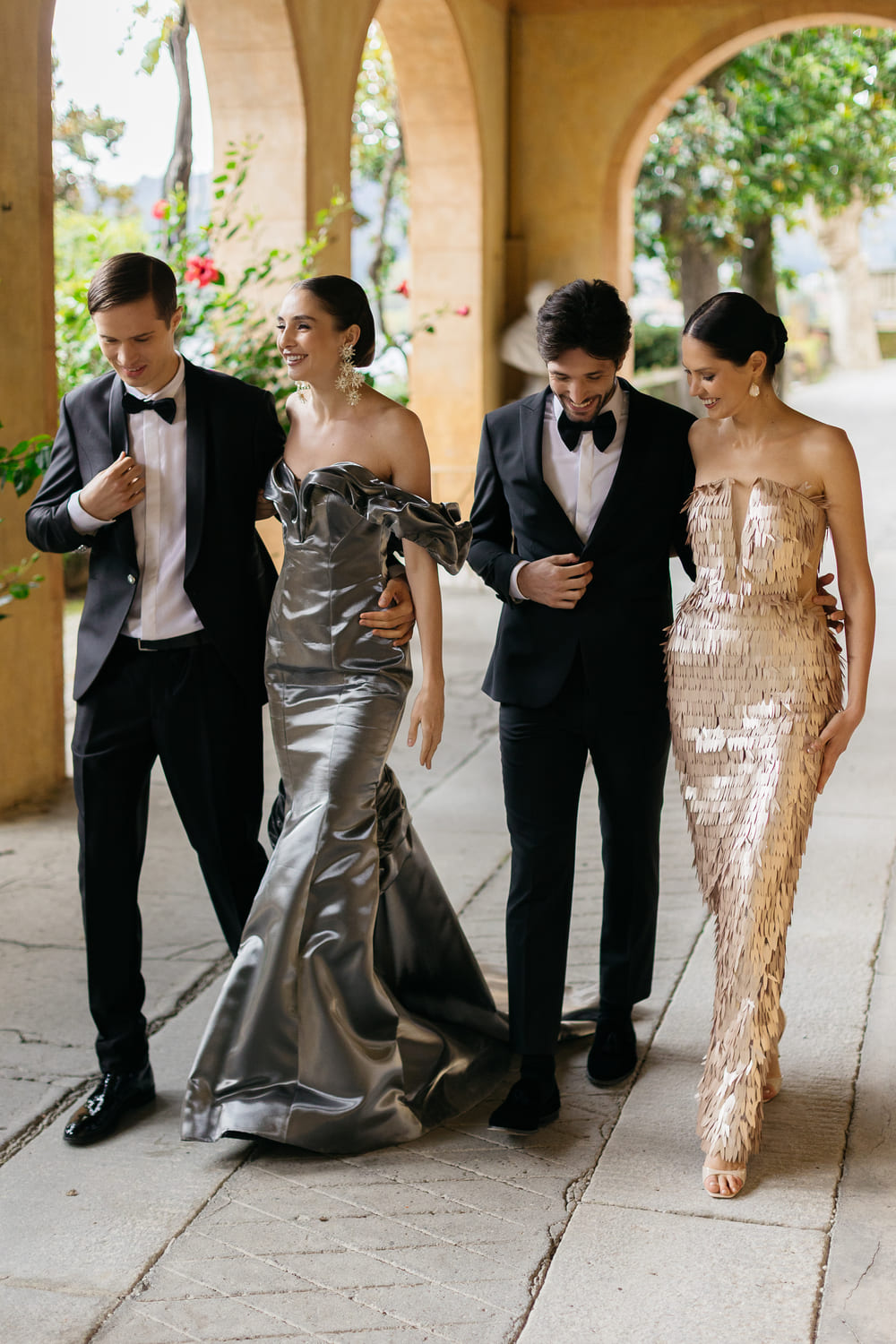
The guests were not treated as background figures but as main characters in their own right. Their looks, created by Ricca Sposa, carried the same editorial weight as the bride and groom. Metallic fabrics caught the light with every step, from liquid-silver satin sculpted into exaggerated off-shoulder forms to a strapless column entirely sequined in gold tones.
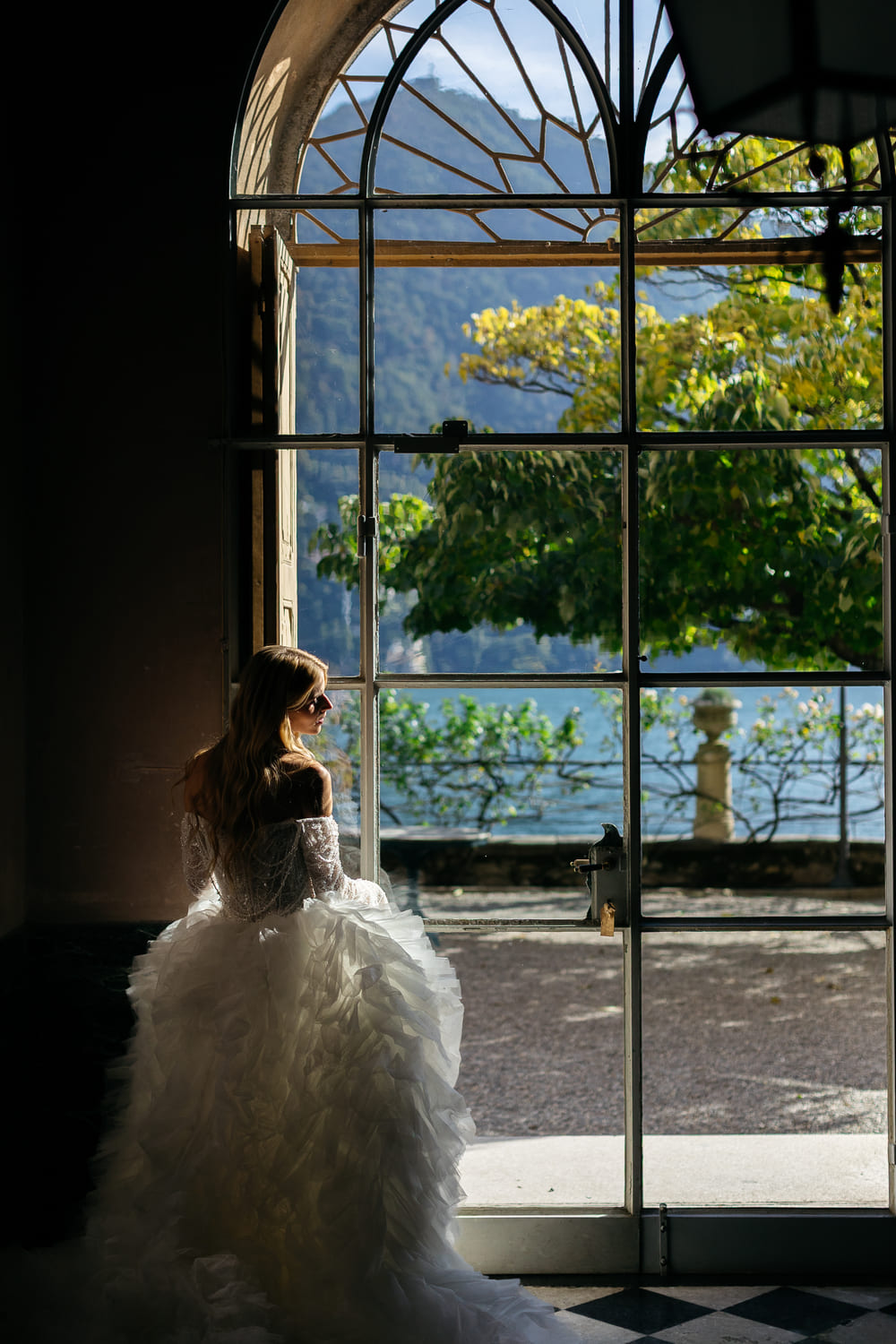
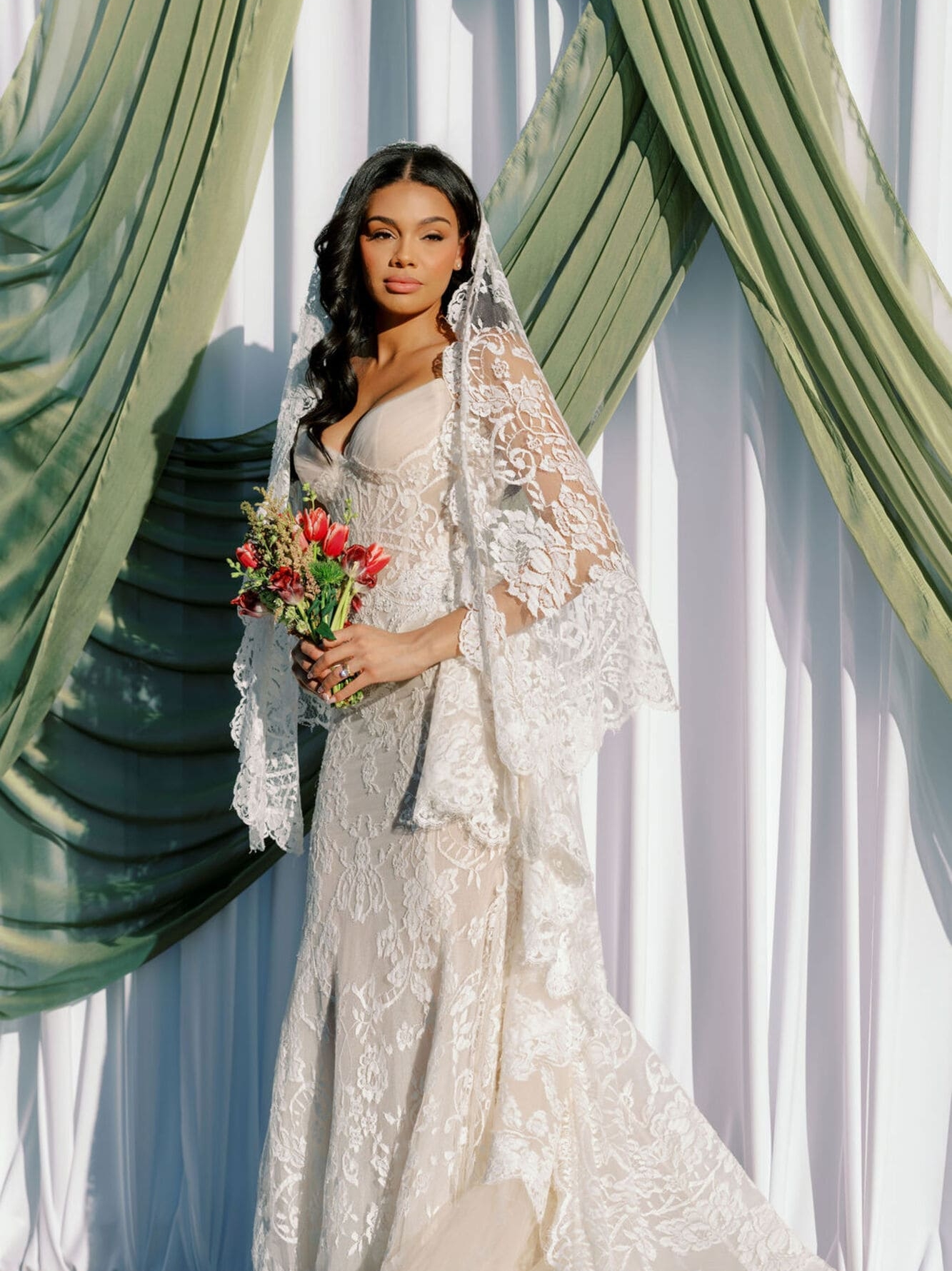
The bride’s second look shifted the mood with confidence. The she wore a corseted gown by Tina Valerdi, its lace sleeves and off-shoulder neckline draped with cascading pearls that shimmered in the light. A voluminous overskirt in frothy tulle added sculptural drama, but it was designed to be removed, revealing a sleeker silhouette later for ceremony and reception.
Captured by Kapetanakis Studios, the gown and its pearl details became part of a striking visual play of light and shadow, known in Italian as chiaroscuro. It’s this sensitivity to how fashion responds to natural light that gives the editorial its resonance.
The Ceremony
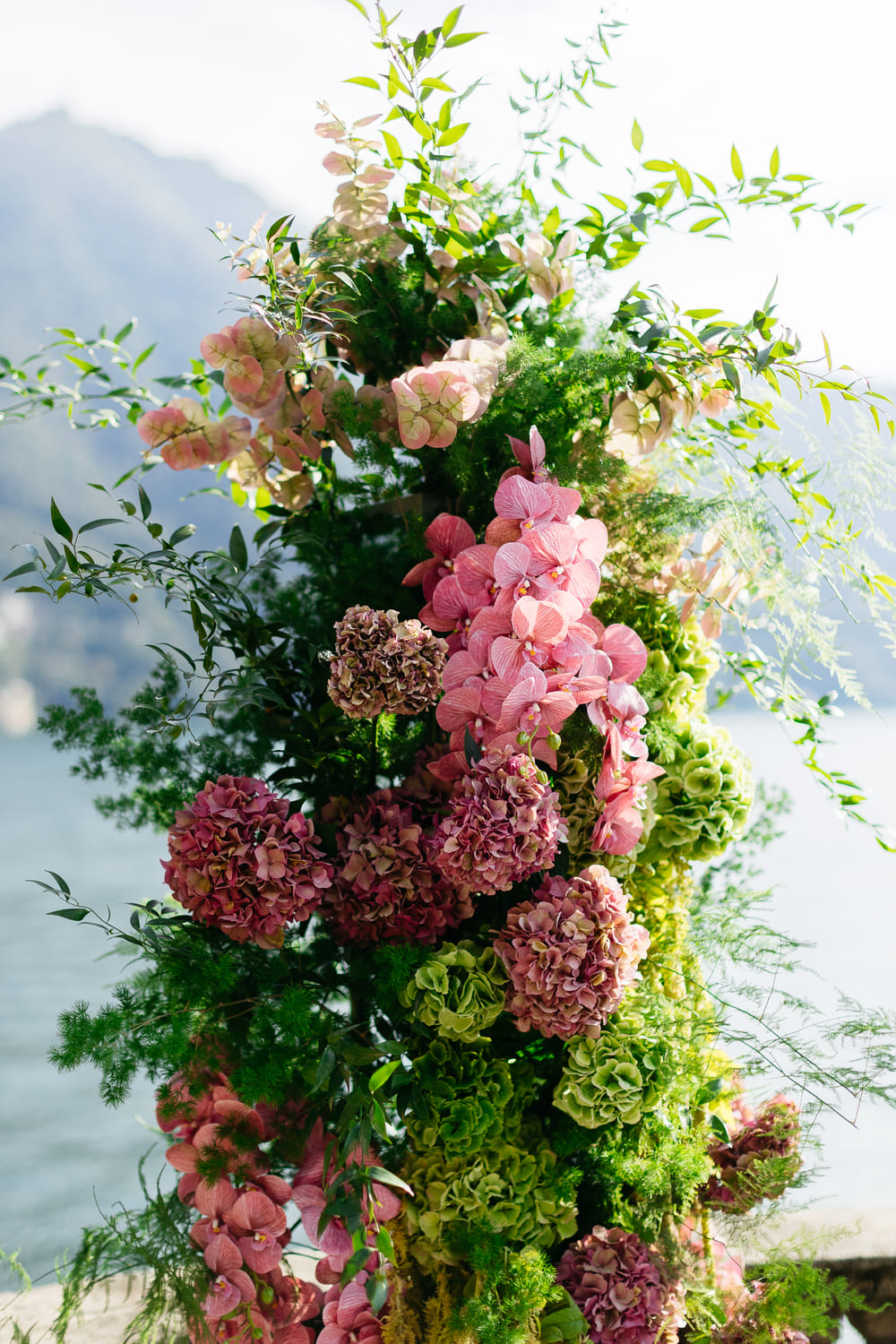
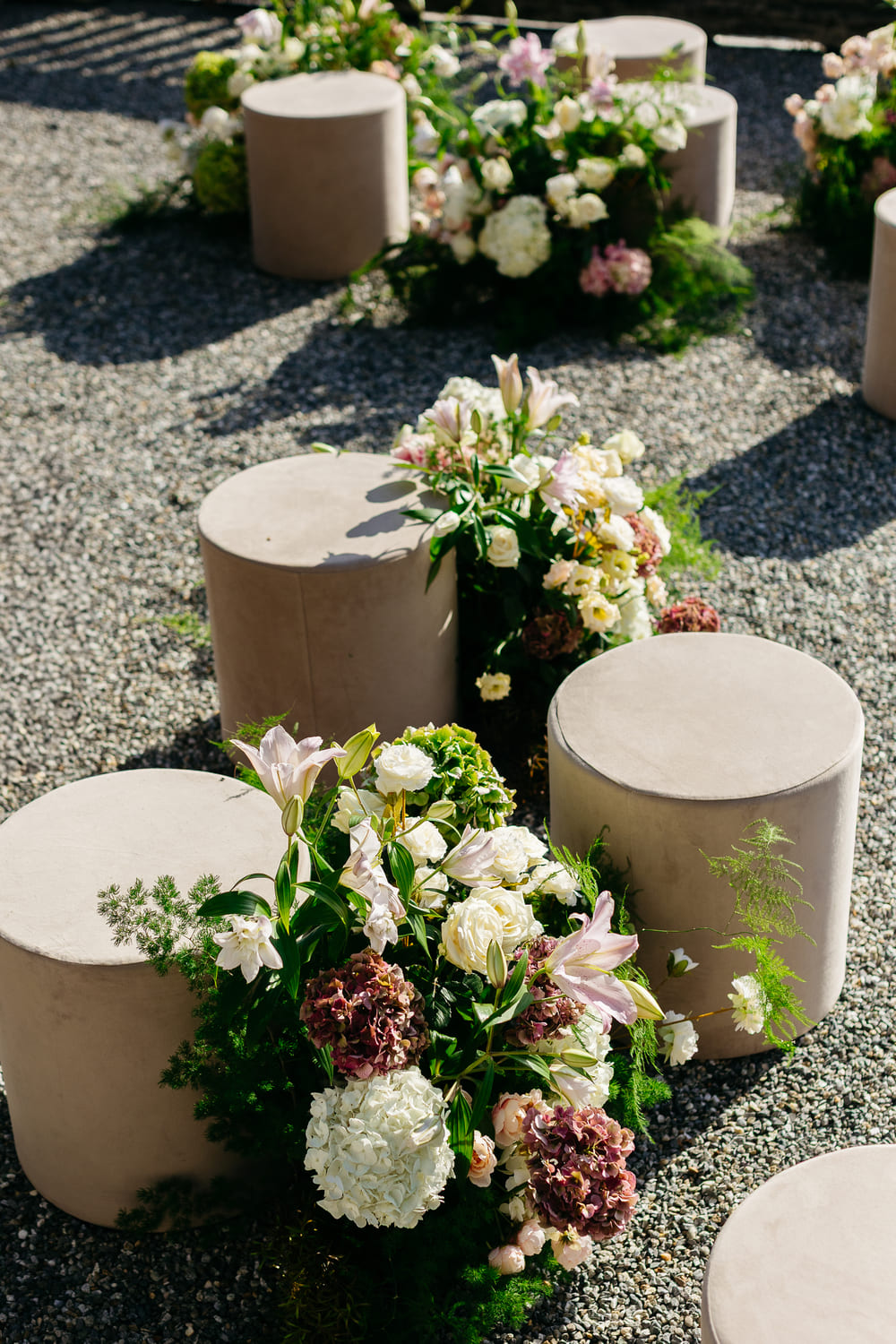
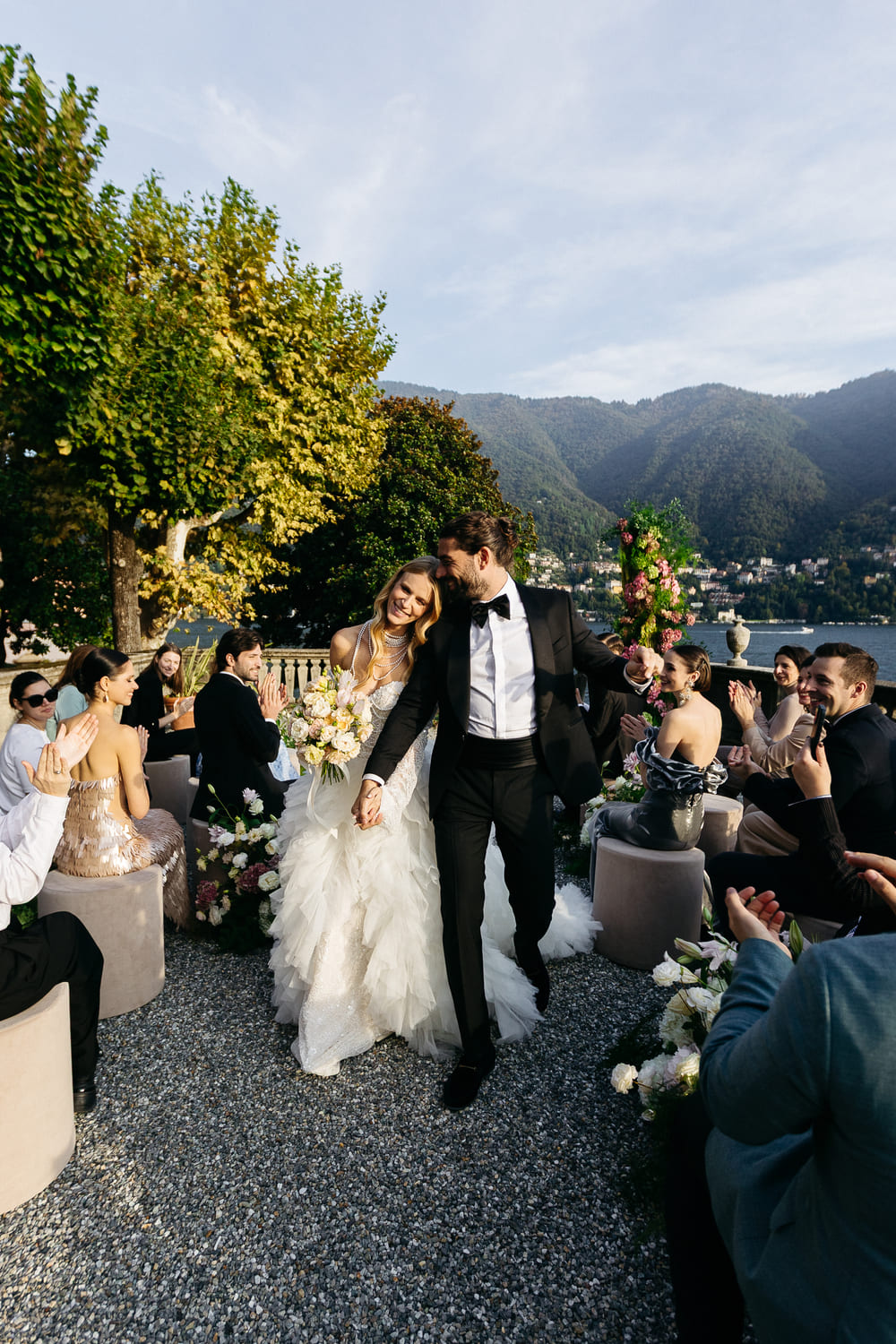
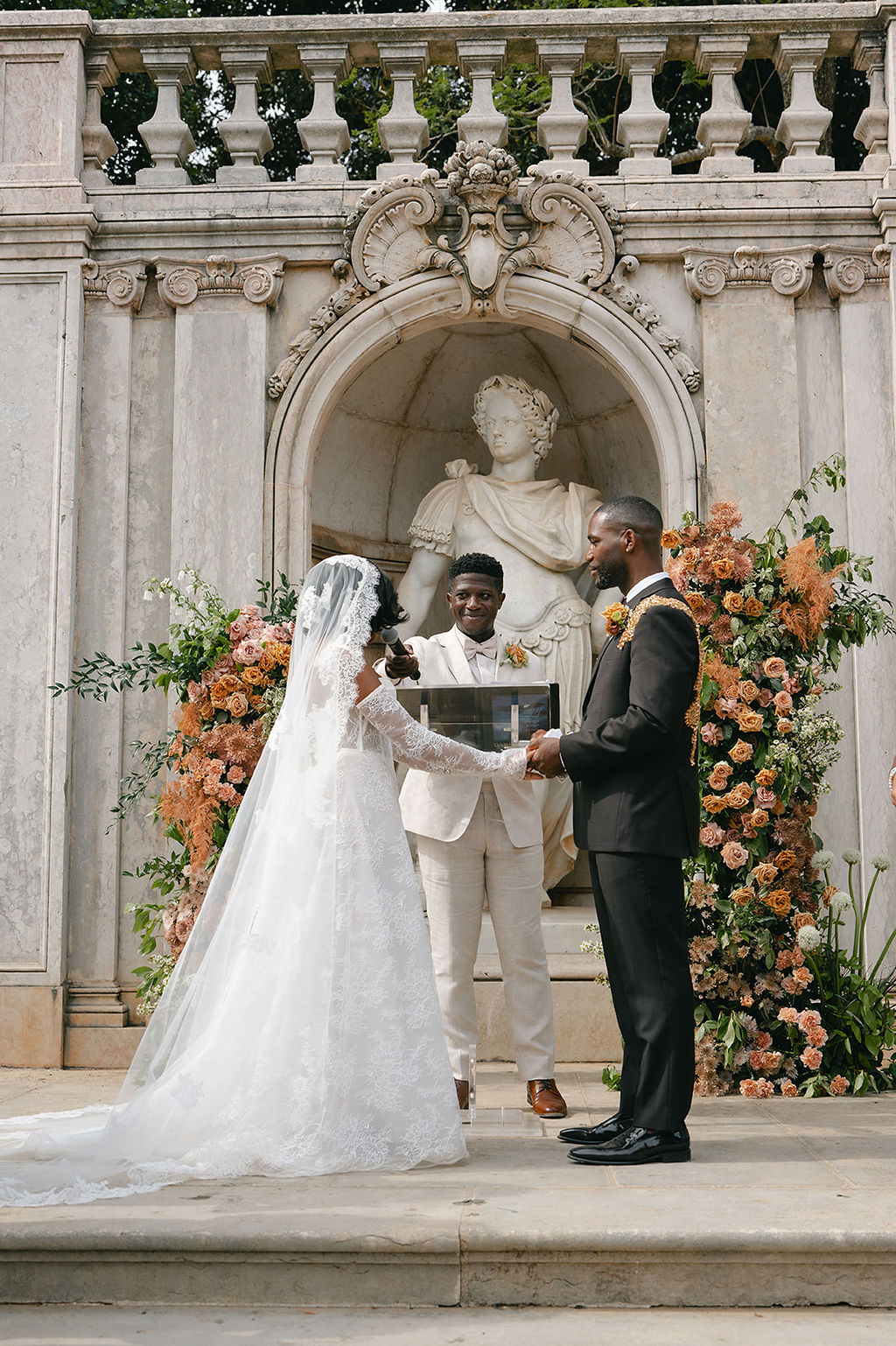
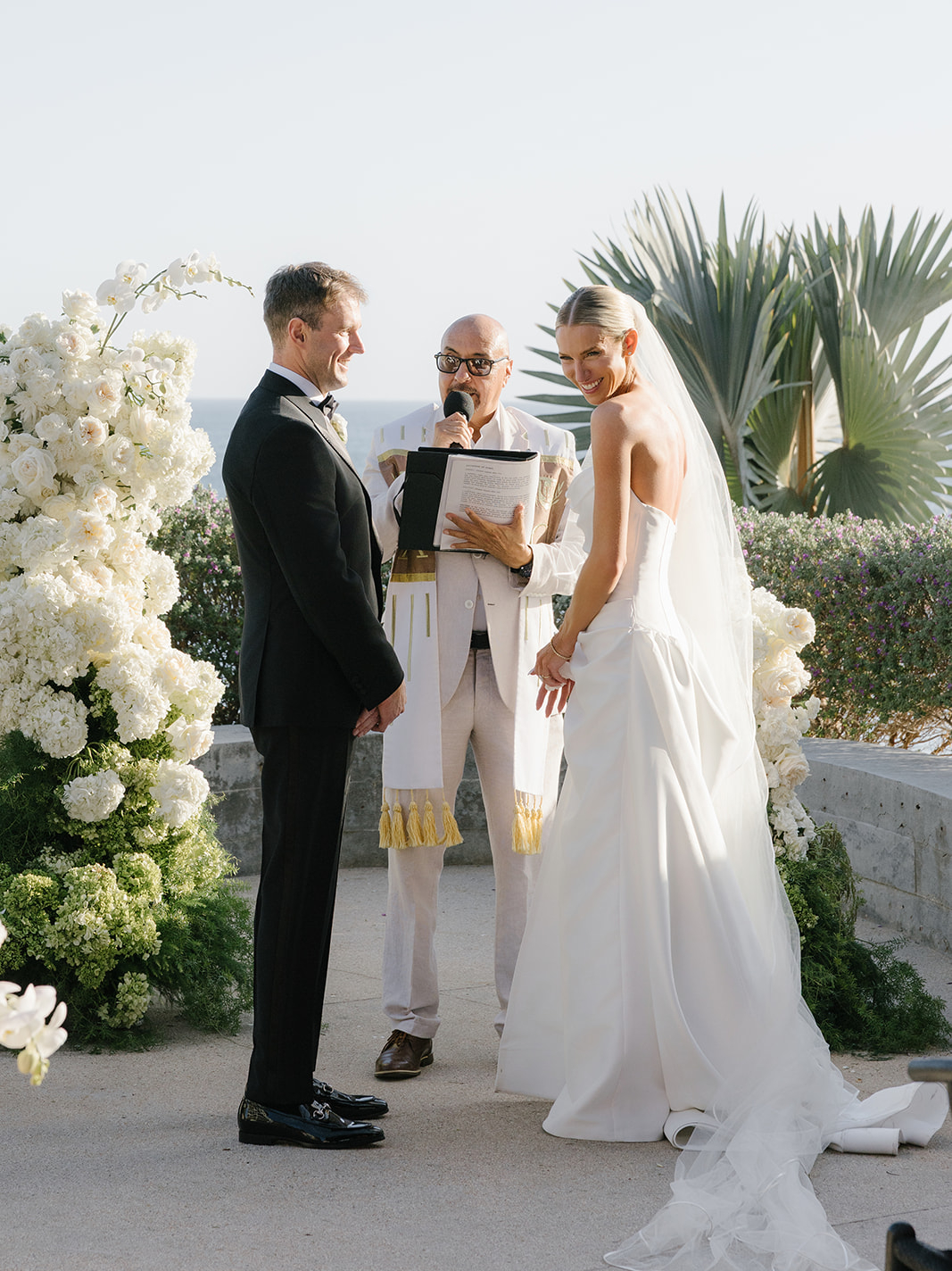
The villa’s outdoor spaces slope gently towards the water, opening long views of the mountains and the glistening lake surface. For the setting itself, Dome Flowers composed a scene that felt both structured and organic. Towers of hydrangea, roses, and greenery rose on either side of the aisle, paired with low garden-style arrangements that echoed the villa’s own plantings.
Seating was minimal and refined, allowing the floral palette to take focus while leaving the architecture and waterline visible. It is the kind of design approach often described as “aesthetic moderation” in luxury weddings: nothing is superfluous, every detail earns its place.
As the bride appeared against the stone balustrade, the florals softened the grandeur of the setting, making it feel like an extension of the gardens. The light had begun to shift toward evening, catching in petals and leaves, so the ceremony seemed to breathe with the landscape itself.
Boat Tour
No Lake Como celebration feels complete without taking to the water. The editorial continued with a classic wooden Riva. Gliding away from the villa, they had the shoreline villas, cypress-covered hills, and pastel facades as their backdrop.
Reception
The reception styling leaned into refinement through detail. Place settings combined soft green linens with patterned napkins and pale ceramic plates, each accented by delicate stems of florals. The centerpieces balanced pastel roses with bolder notes of anthurium, creating arrangements that felt sculptural without overwhelming the table. From a wider view, the tablescape introduced drama through its voluminous draping: fabric falling in folds that pooled onto the gravel, giving movement and depth to the setting.
To close, the editorial introduced a champagne tower, catching the glow of evening light. Rather than being a moment of celebration in narrative terms, it worked here as a stylistic punctuation: glass, sparkle, and effervescence layered into the visual language of the shoot.
Act II: The Galleria
The second act unfolded in the heart of Milan, where the city itself became both stage and inspiration. Here, the pace quickened, the lines grew sharper, and the mood shifted into something unapologetically fashion-forward. Metallic fabrics, urban backdrops, and directional styling transformed the bridal narrative into a dialogue with Italy’s capital of style.
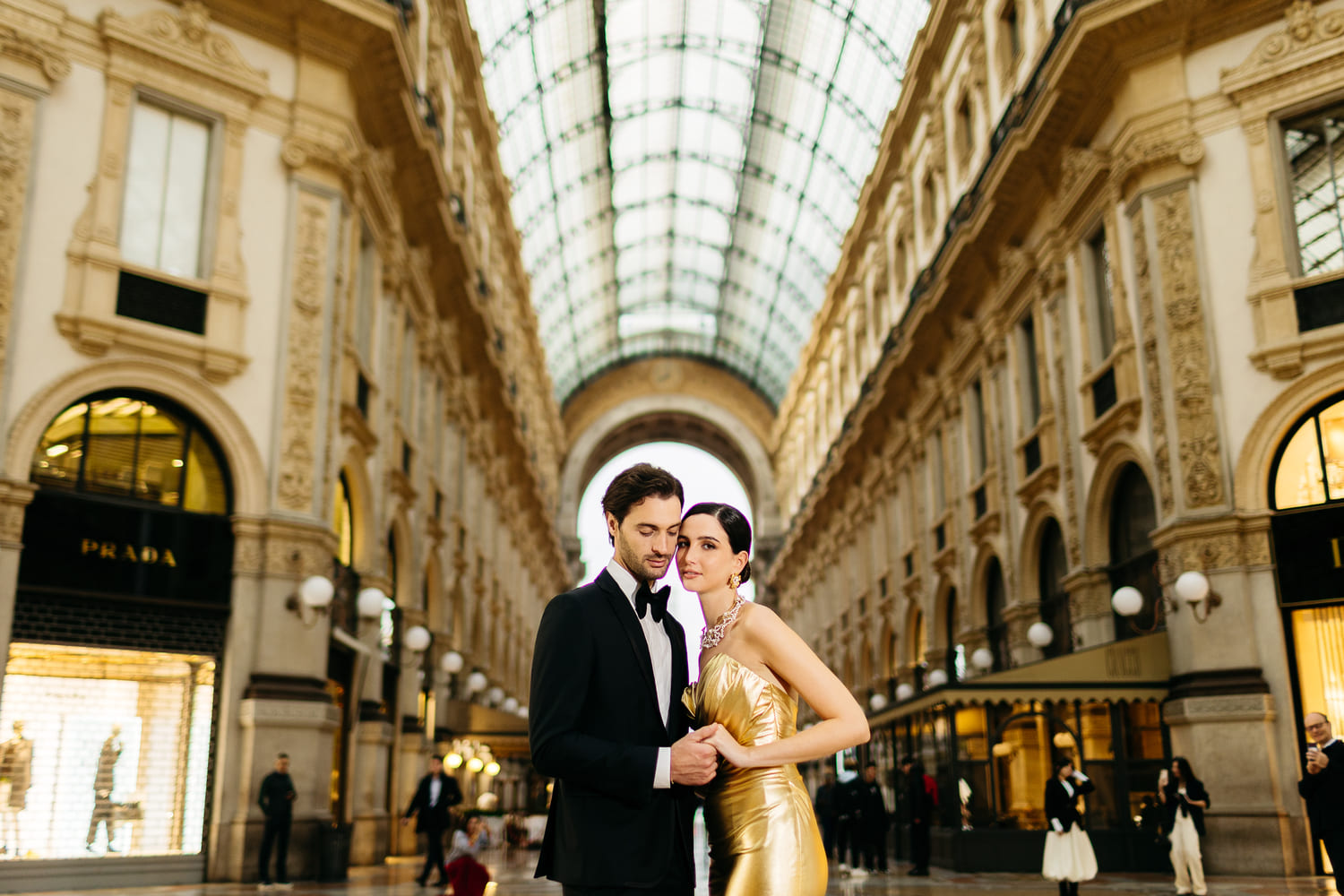
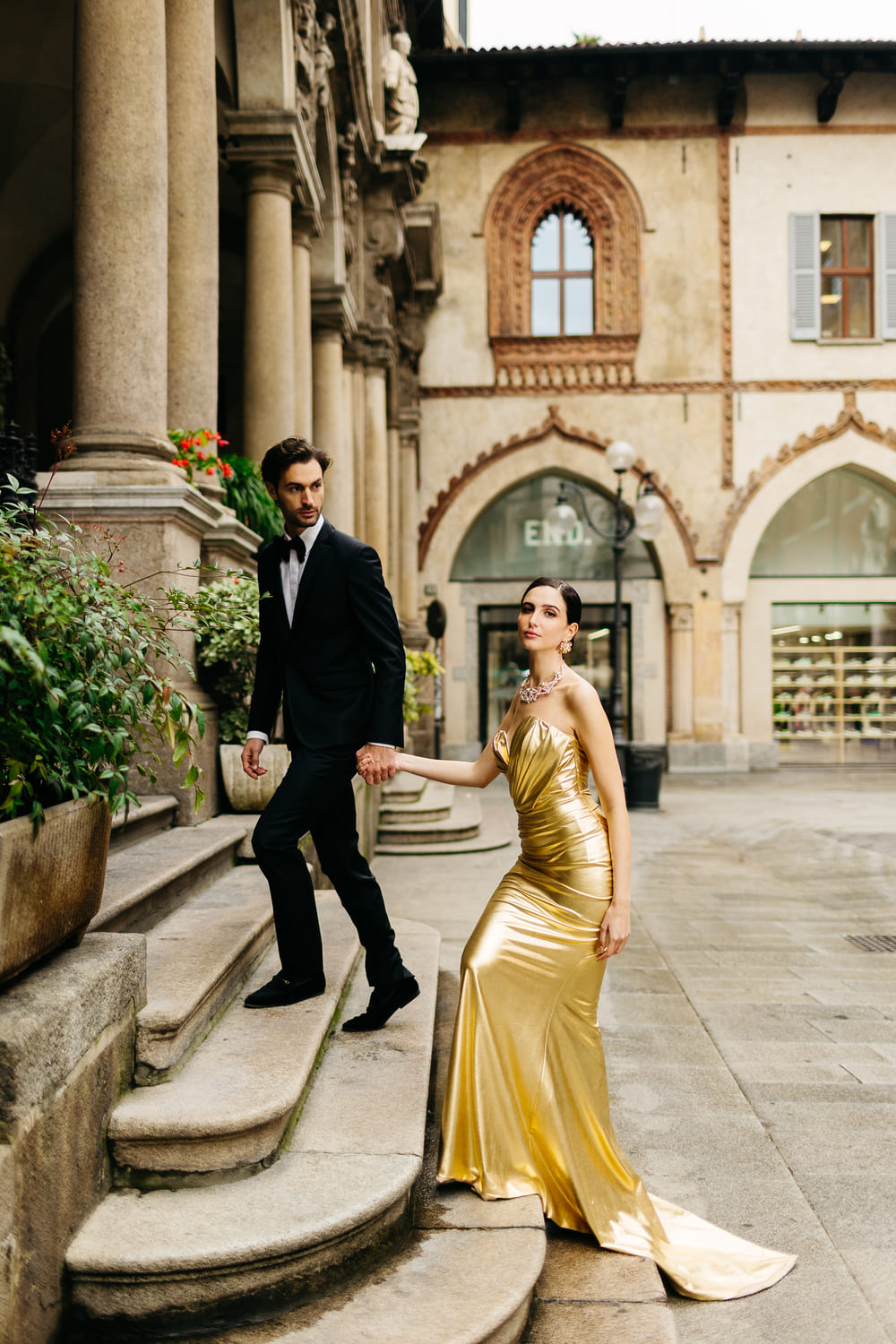
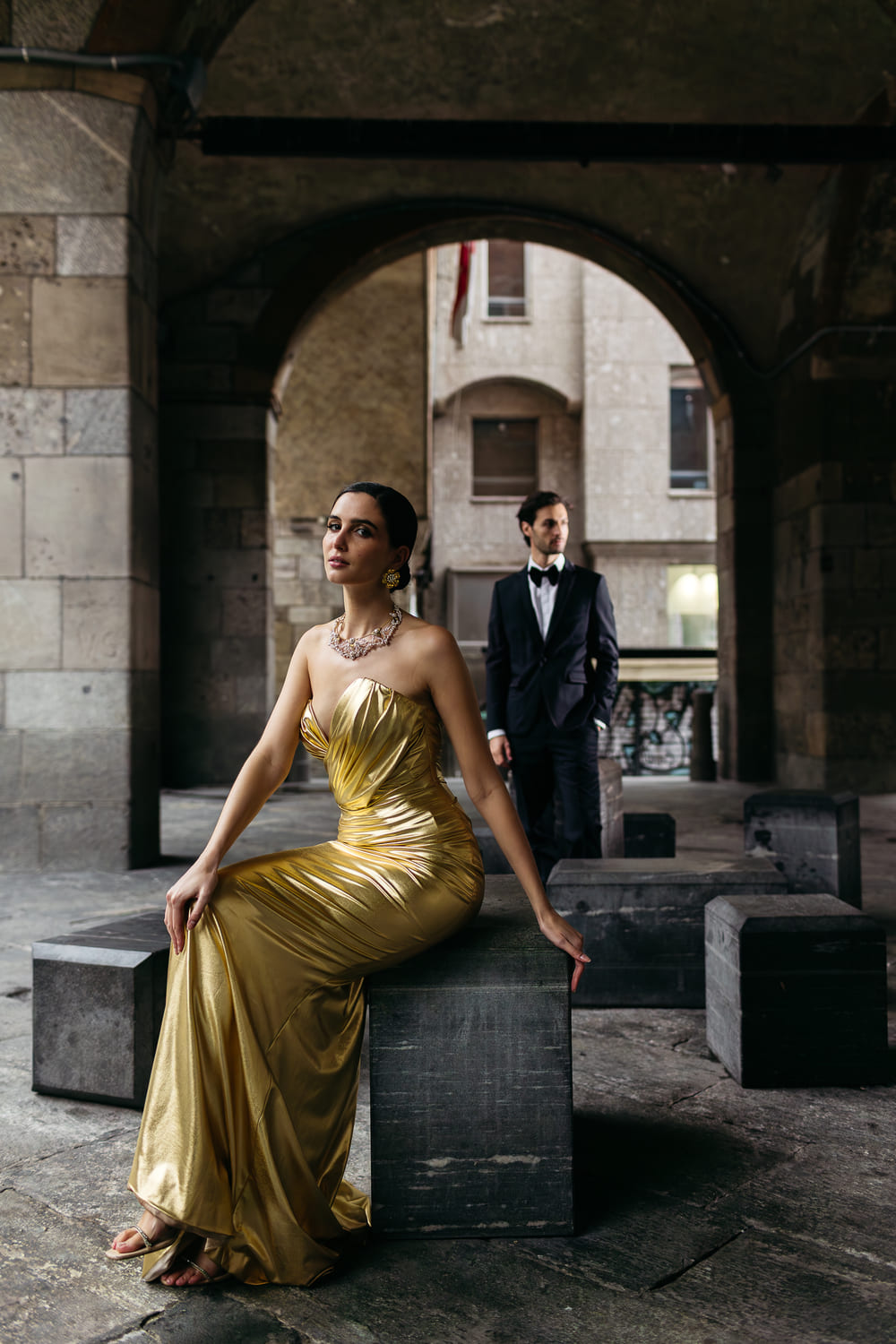
The Galleria Vittorio Emanuele II, with its mosaic floors and glass-vaulted ceilings, has long been called “the drawing room of Milan”, a crossroads of luxury and heritage. Its gold and marble textures created a natural dialogue with the bride’s liquid-gold gown, designed to catch and reflect light like the floor beneath her.
The gown itself, fluid and metallic, carried the codes of both red carpet and bridal couture. Its liquid-gold fabric traced the body in clean lines, echoing the current trend of high-shine textiles and body-conscious silhouettes. Paired with a structured bodice and statement jewelry, the look felt aligned with what fashion houses are bringing back to the runway: glamour stripped of excess, but heightened in impact.
Kapetanakis brothers leaned into this contrast, photographing the couple in ways that echoed editorial fashion spreads. Angles emphasized geometry: arches, columns, and tiled patterns became part of the styling itself. Where the first act embraced softness, this one was sharp, directional, and modern.
Act III: The Duomo
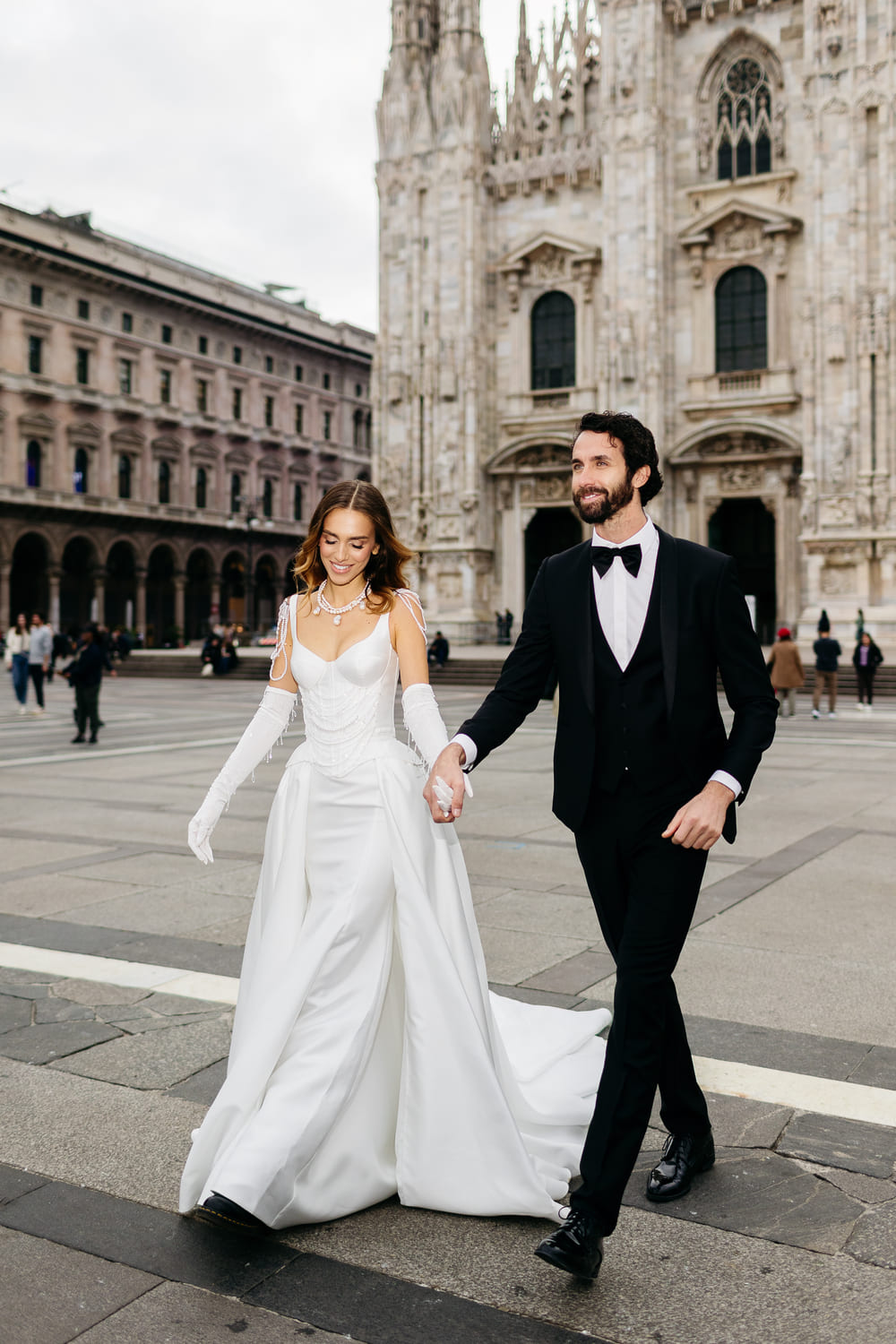
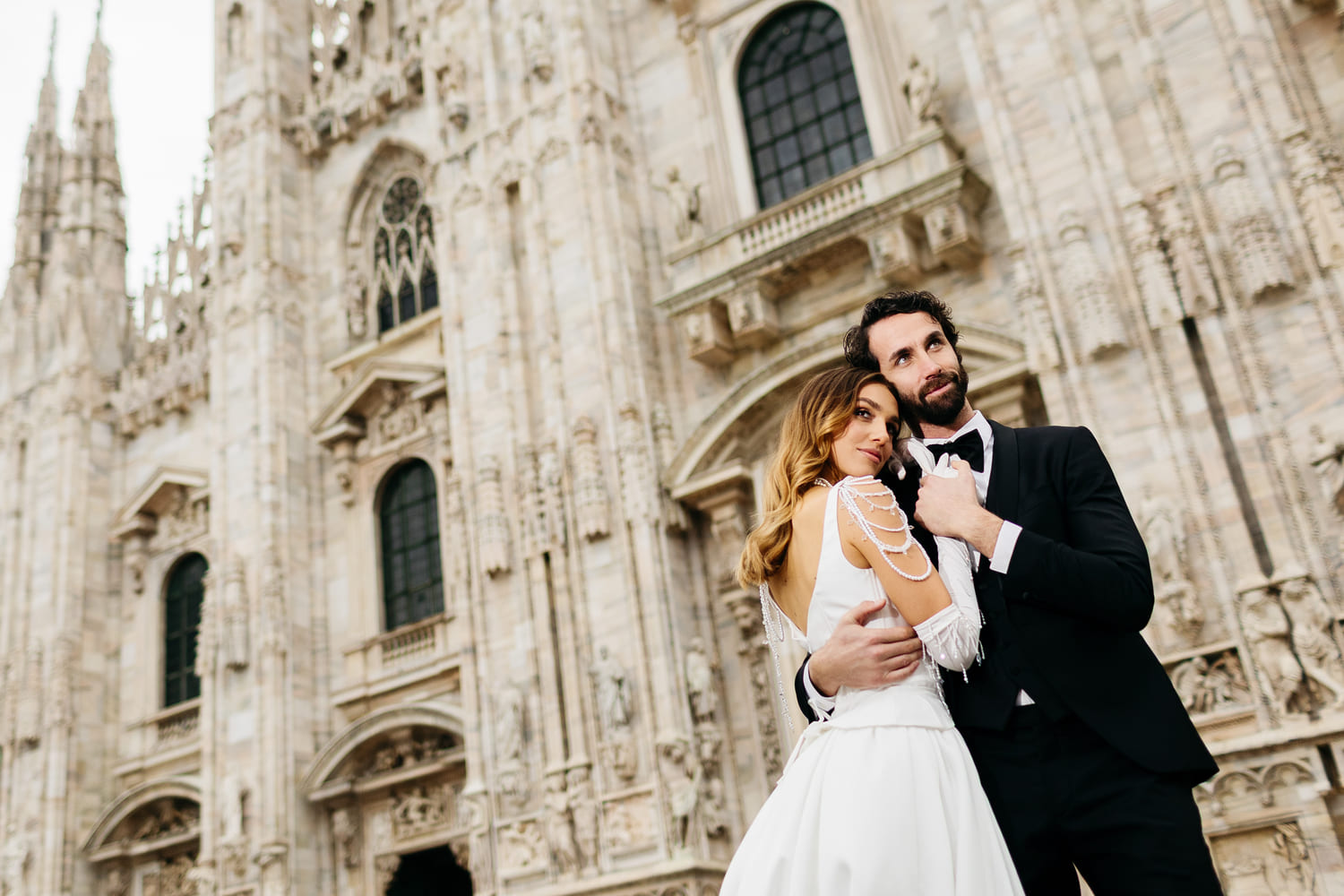
The final act unfolded in front of Milan’s most recognizable icon: the Duomo. Few facades in the world command such presence: drama in scale, stone, and shadow. Against this backdrop, the editorial embraced contrast: centuries of Gothic stone met the precision of contemporary bridal design.
The fashion narrative extended beyond the cathedral steps. Inside a Milanese cafe, the same bride sat in a pared-back setting, gown matched with modern interiors and the casual ritual of a city meal. It was a proof of how couture can live not only in grand gestures but also in intimate frames.
The bride wore a structured gown with architectural lines, its clean bodice and flowing skirt echoing the vertical sweep of the cathedral itself. The way the fabric caught air on the piazza gave the look cinematic dimension, as though the gown itself was in dialogue with the monumental square.
In the projectItaly was not a backdrop but an active collaborator. The stone, the light, the rhythm of the streets all became part of the styling. If the lake had given romance and the Galleria had offered spectacle, the Duomo gave permanence: a setting where bridal fashion could hold its own against history itself.