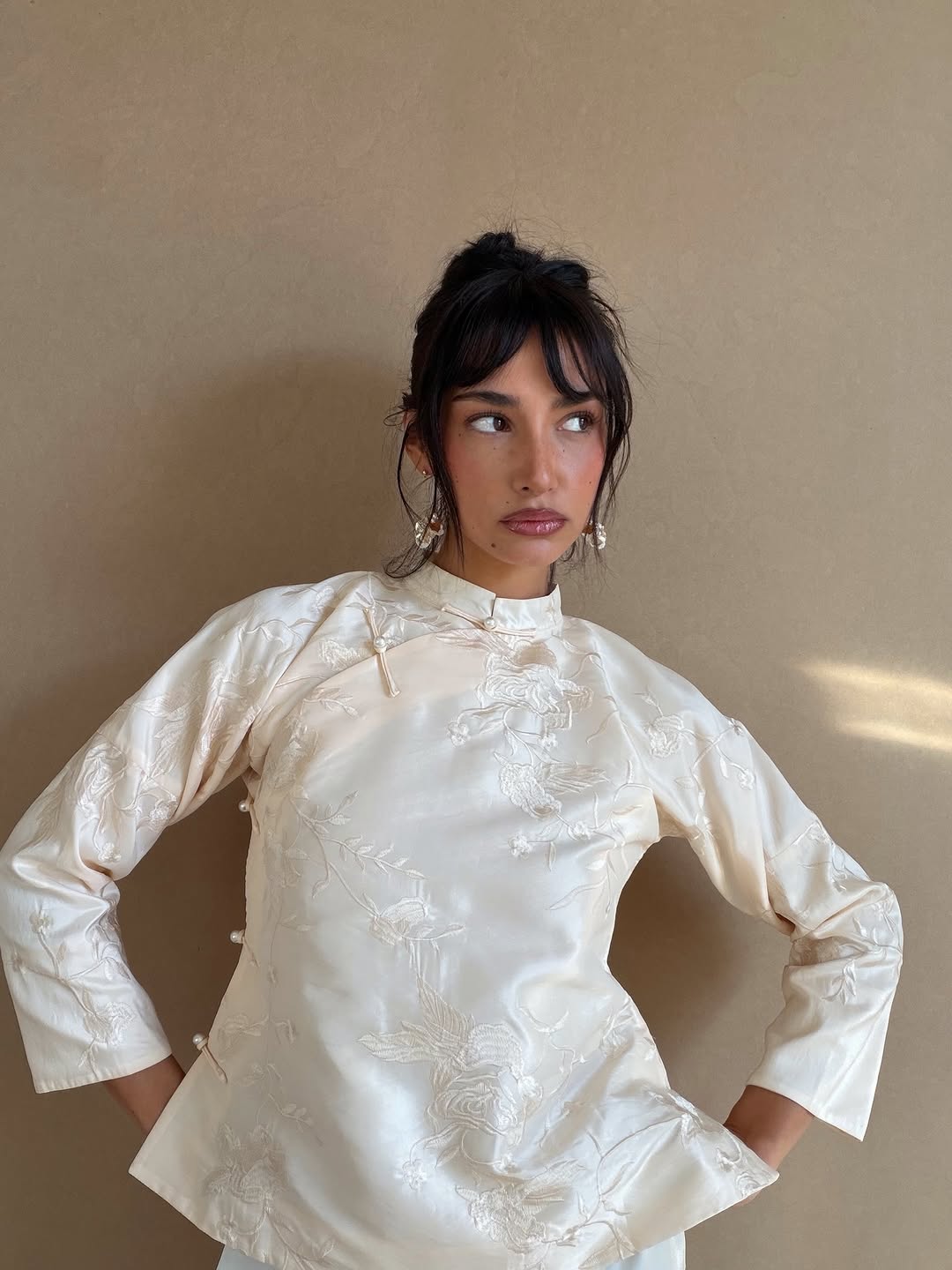
The bridal headpiece is more than a decorative accent. It draws the eye, shapes the silhouette, and signals a clear sense of style. At its best, it feels rooted, connected to something older, ceremonial, and quietly powerful.
Across cultures, embellished crowns, pearls, and forehead adornments have long symbolized protection, transition, and femininity. In Central Asia, headpieces are often passed down through generations, representing both heritage and womanhood. In Indian and Middle Eastern traditions, bridal jewelry marks sacred rites. And in the West, the Art Deco era brought crystal bandeaus and flapper tiaras into the spotlight. Brides today are returning to something with presence. Minimal or theatrical, with or without a veil, the headpiece was never gone. It’s simply being seen through a different lens. And the next few looks show why.
Let’s start with the most iconic: the bejeweled bridal headpiece that channels the energy of the 1920s. Crystals that drip across the forehead. Fringed metallic strands that move like light. This is the Gatsby school of bridal styling: bold, playful, and unapologetically styled. The Art Deco era brought bridal headpieces into fashion through flapper culture, when women cut their hair, danced until dawn, and used jewelry to frame their newfound independence.
Today, the aesthetic of that era is everywhere again, from fashion details to engagement rings in geometric Art Deco styles. Modern brides are revisiting this language with fresh energy. Paired with graphic liner or sleek finger waves, a bejeweled bridal headpiece channels vintage glamour and reads like an elegant rebellion.
These wedding pieces go beyond simple accessorizing. And they’re not about traditions. Inspired by couture and costume design, sculptural headpieces can cover the crown or even the entire head, catching light and reshaping the silhouette. One might be made of hundreds of glass beads that fall like a curtain across the face. Another might take on the shape of a helmet or a wig, built entirely from crystals. Worn with confidence, they shift the energy of a reception into something closer to performance.
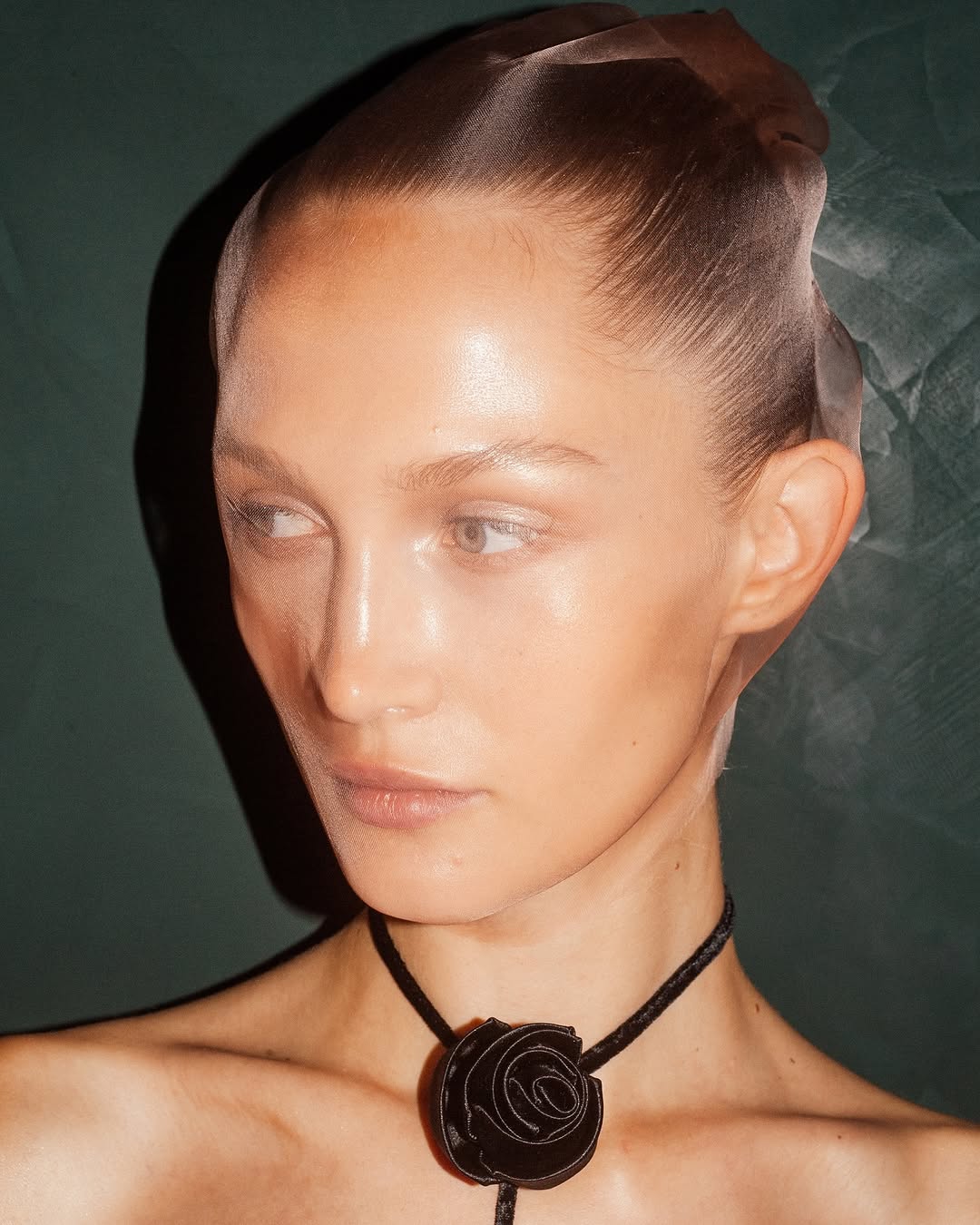
Some headpieces are barely there: just a trace of shimmer or a soft curve of pearls. A fine mesh woven like lace, a line of crystals sitting low across the forehead. These bridal pieces feel modern and unfussy. They work especially well with clean makeup and romantic silhouettes. Nothing fights for attention, and yet everything feels considered. For brides who don’t want full drama but still want a sense of ritual, this kind of piece offers the right balance: subtle, intentional, and quietly striking.
What makes bridal headpieces so compelling today is how effortlessly they bridge past and present. They recall traditions without replicating them. A piece might carry personal meaning: woven by hand, passed from mother to daughter, or chosen for its cultural symbolism. Or it might simply reflect a moment of clarity in the styling process, when something clicks into place and feels right.
In a wedding landscape where so much is curated and documented, the headpiece remains one of the few details that can still surprise. Quietly powerful, visually expressive, and deeply personal.