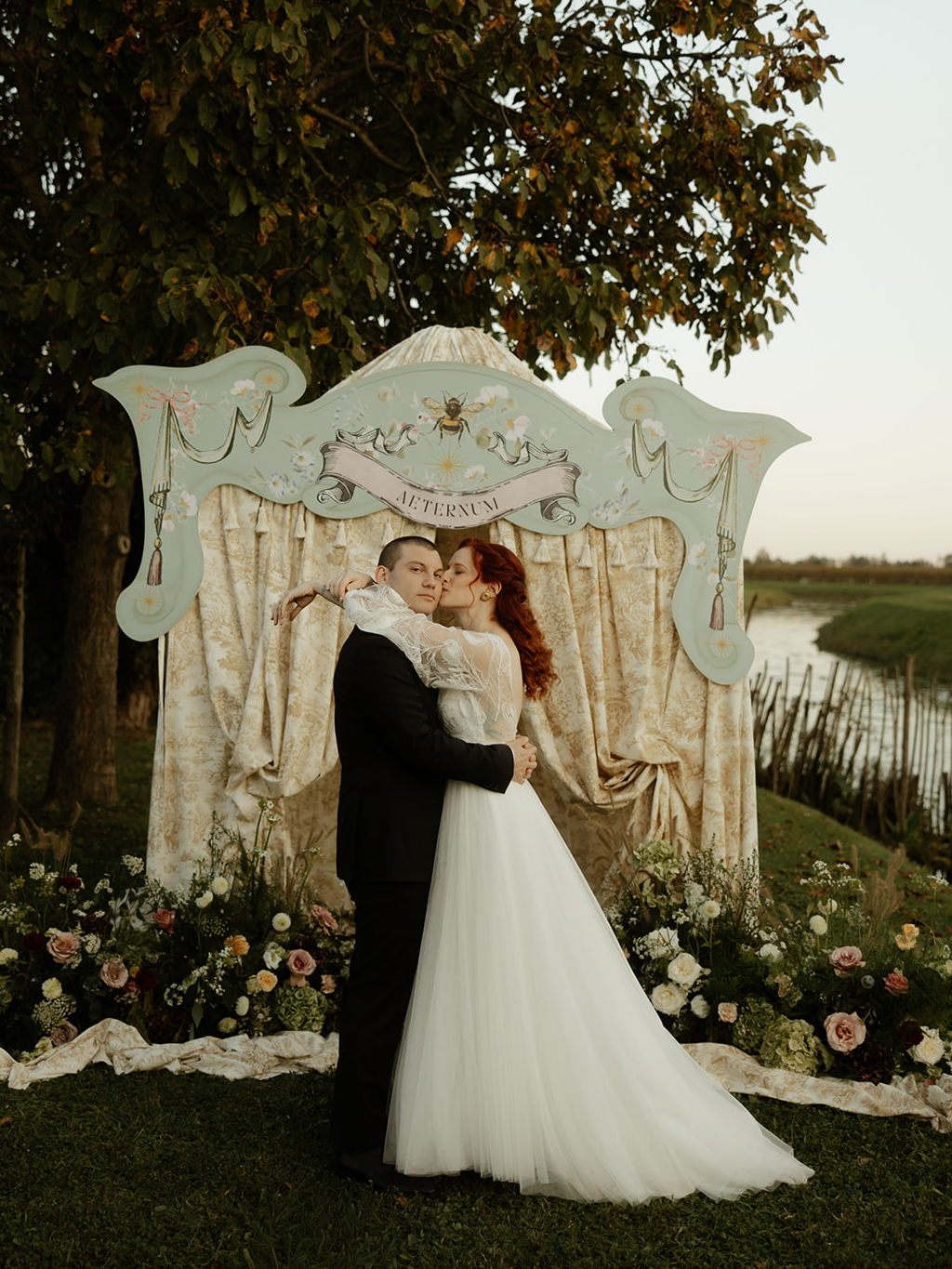
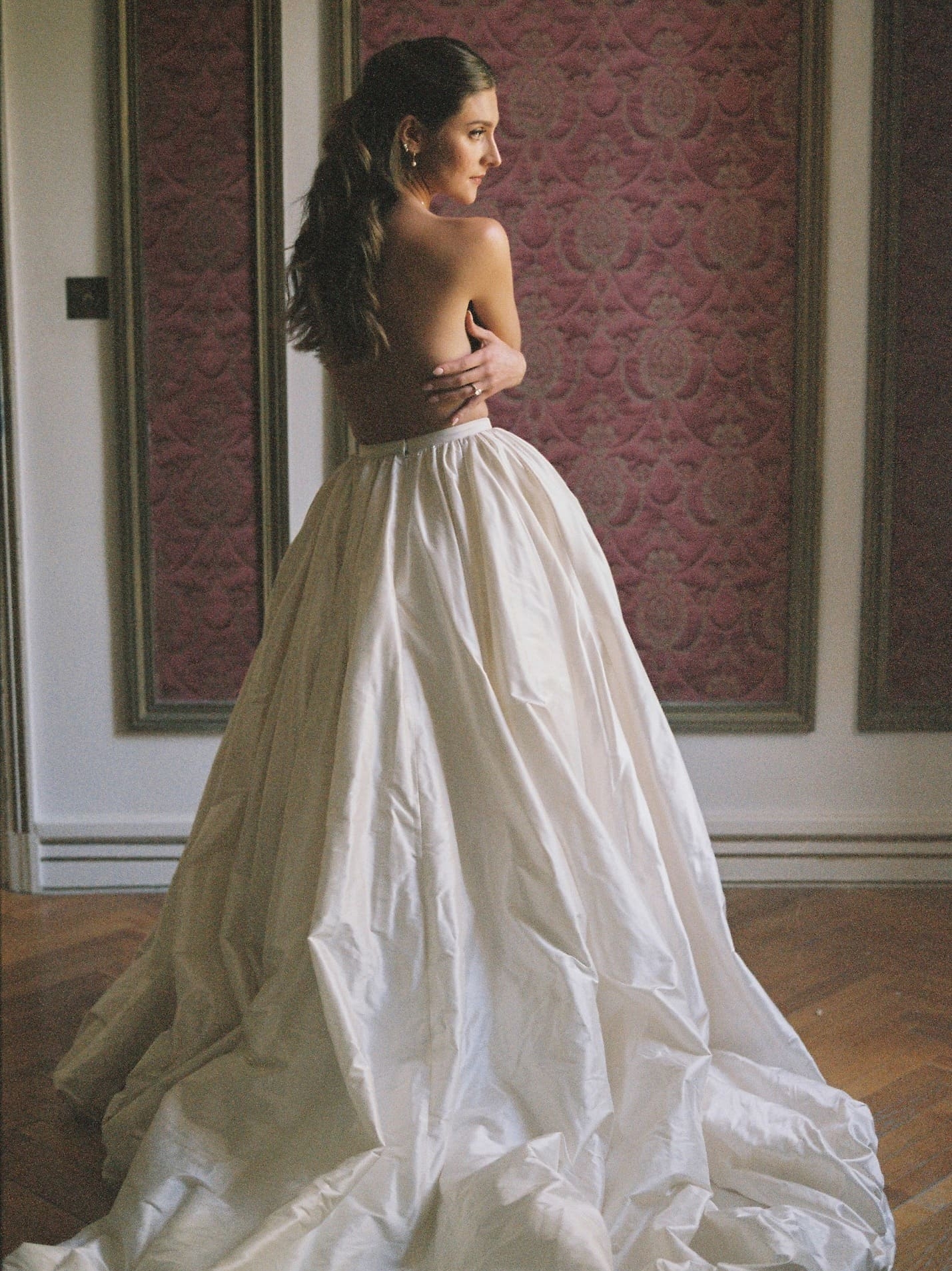
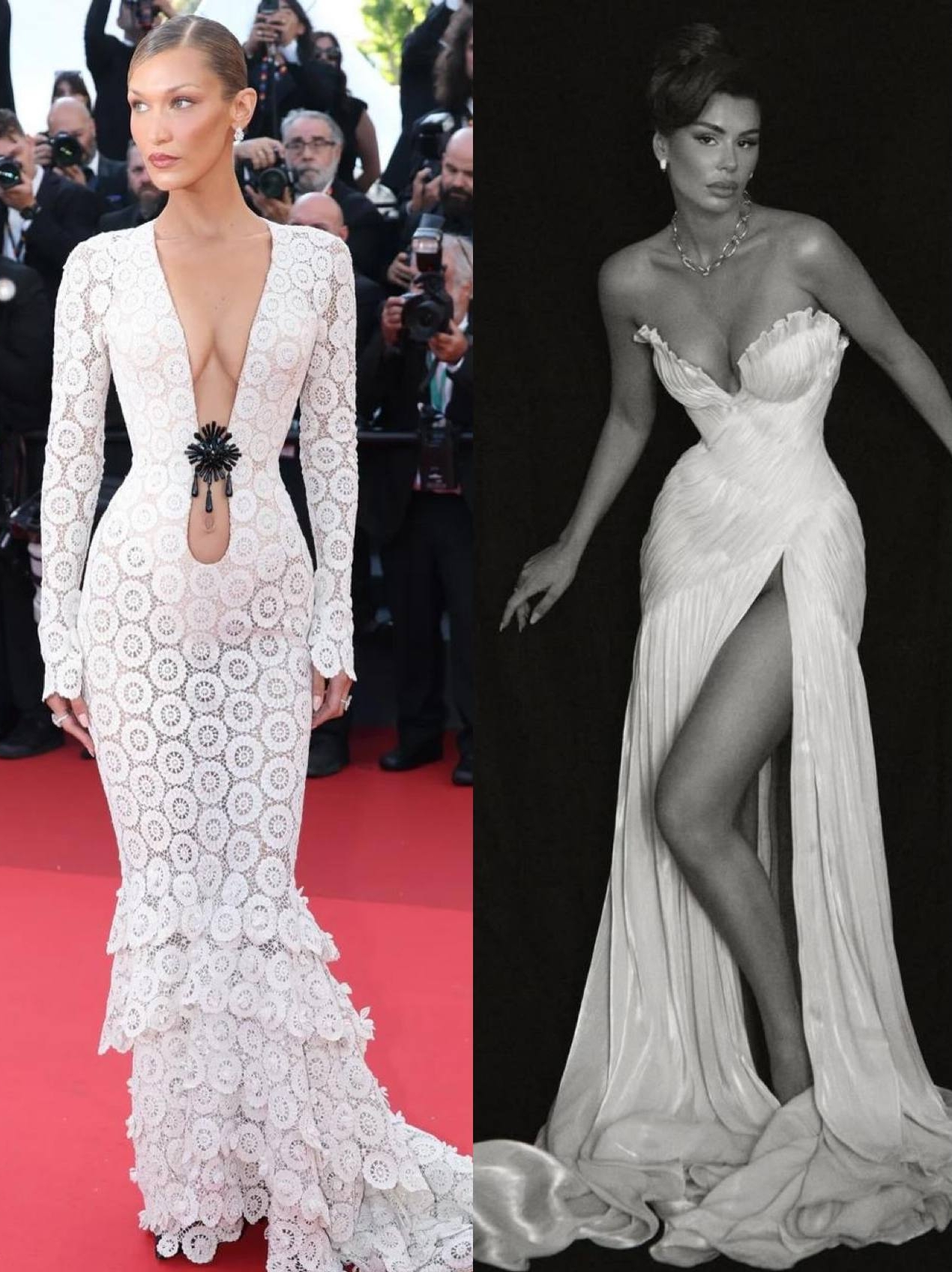
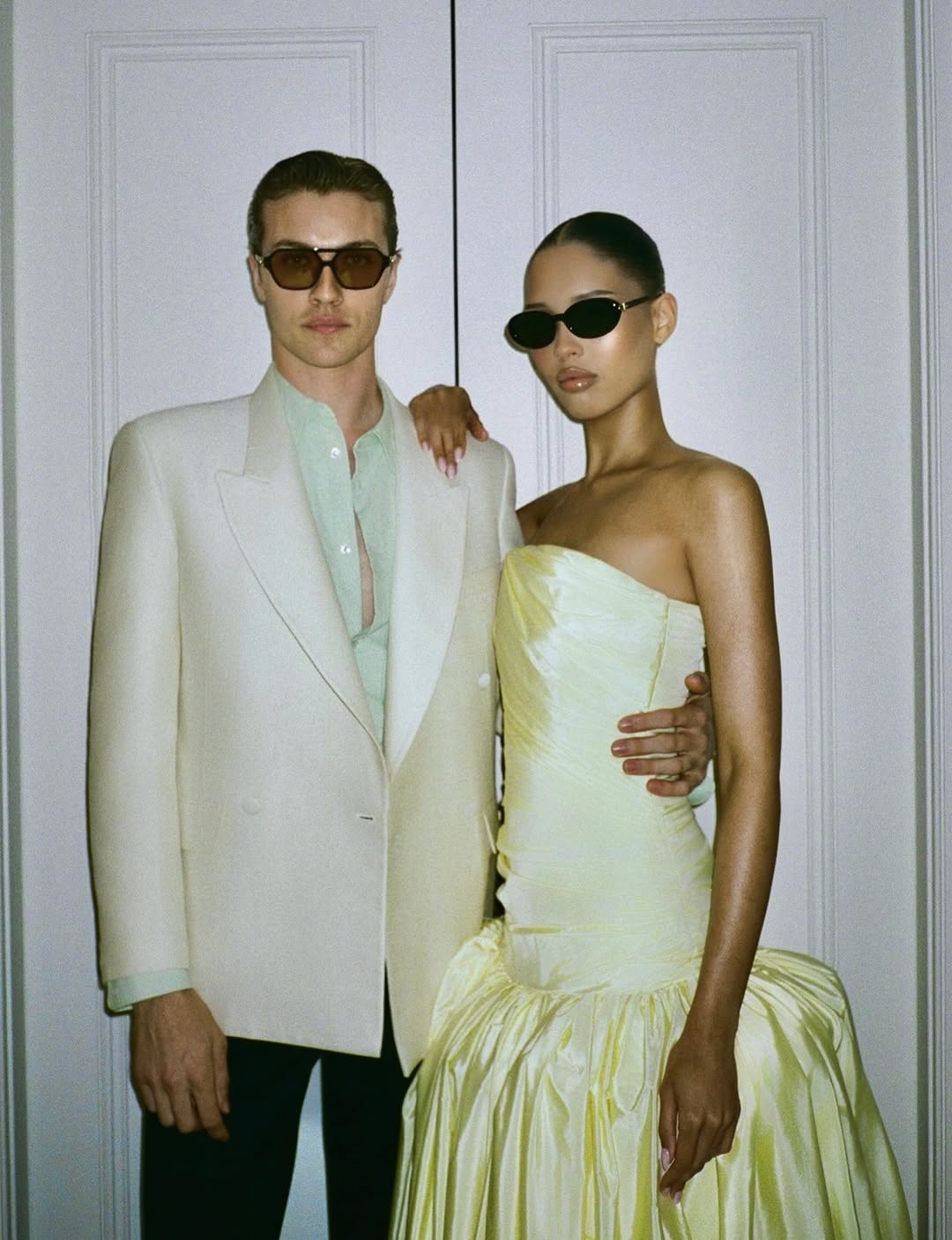
If you usually wear your hair the same way every day—whether loose or in a simple updo—then trying something different for your wedding day can feel like a major transformation. In that case, it’s important to choose a hairstyle that still feels true to your style and personality. But if you’re someone who loves styling and surprising yourself with it, then for your upcoming wedding you need something unique but also an extension of your creative side.
Whatever your style, vintage-inspired hairstyles are always worth exploring. Below you will find many looks created nowadays that carry a strong retro influence, beautifully blending past and present. So, first, we’ll showcase contemporary interpretations from weddings, red carpets, and runways, and then step back in time and dive into the hair history.
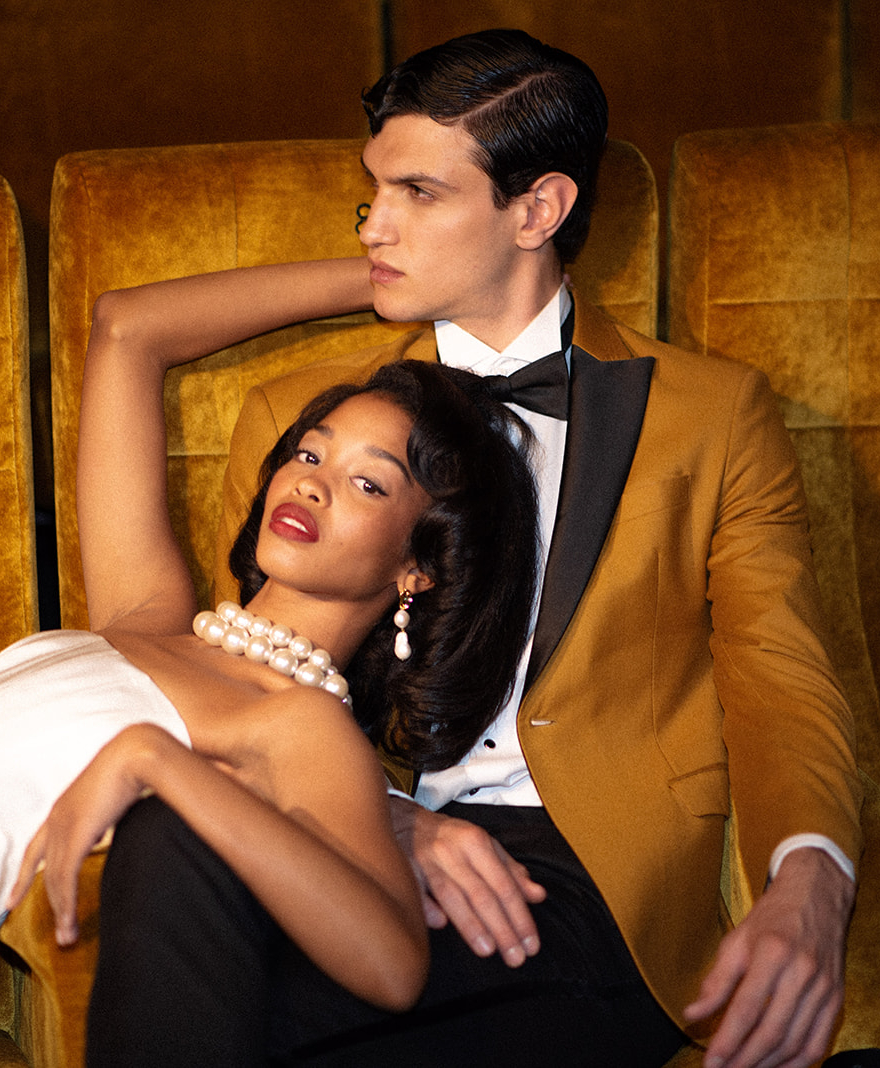
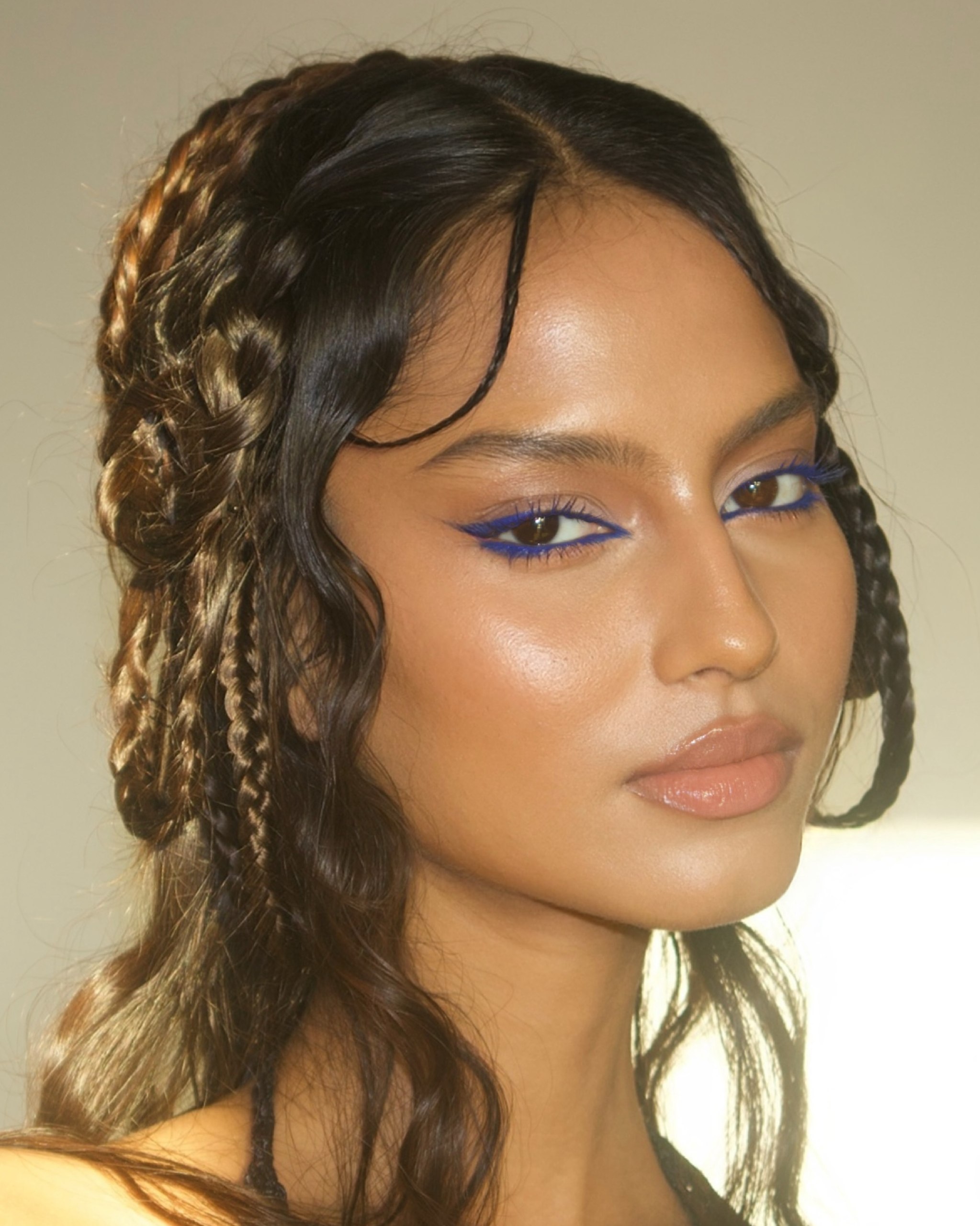
We’re kicking things off with the present day. We’ve gathered over 50 examples from weddings, red carpets, and runways that hint at retro style. There’s a little bit of everything here: romantic updos with face-framing tendrils inspired by the Early Victorian era, long flowing curls reminiscent of Pre-Raphaelite paintings, sharp bobs and micro-bangs from the 1920s, Old Hollywood waves, polished 1950s styles, and the voluminous bouffant and beehive silhouettes that defined the 1960s.
Among the celebrities, you’ll naturally spot nostalgia queen Lana Del Rey and modern retro muse Margaret Qualley. Elle Fanning and Bella Hadid also often channel that same vintage-inspired mood. Get inspired, sisters.
From the 15th to the 19th century, women’s hairstyles changed dramatically, reflecting broader shifts in fashion, religion, culture, and society. Hairstyles were closely connected to clothing silhouettes, beauty ideals, and social expectations of each period. For example, influences from classical antiquity, the impact of royal courts, and later the effects of major events such as the French Revolution all contributed to changing aesthetics. Hairstyles could signal wealth, status, and even political attitudes, which is why styles evolved so noticeably across these centuries.
15th Century – The Early Renaissance
During the Renaissance, the church’s grip on people loosened a bit, and there was a newfound interest in the classical era. People would look back at the Greeks and Romans and admire their progressive society and how they lived, trying to learn from that to rebuild society to the grandeur it used to have. You can also see that in the way hair was worn. People would look at ancient statues or any art that was still around and try to imitate those hairstyles.
Women are starting to move back to the kind of natural, loose waves of the ancient Greeks. Ladies of higher standing and nobility used their hair, and especially the elaborateness and decorations in their hair, as a status symbol to show that they had enough time and money to get their hair done like that. So you would see a lot of ribbons, loads of braiding, soft waves, and especially hair that was braided and then wrapped around the head. Generally, throughout Europe, the fashion was to wear hair in braids and coil them around the head.
Courtesy of Städel Museum (Sandro Botticelli, Portrait of Simonetta Vespucci as Nymph, c.1485) Courtesy of Scarlett O’Hair Courtesy of KiKi He
16th Century – The High and Late Renaissance
At the beginning of the sixteenth century, hairstyles remained relatively similar to those of the previous century. A center part was especially fashionable, with the hair smoothed down along the sides of the head and then gathered into braids or coils arranged around the crown.
Later in the century, however, hair fashion began to shift toward greater theatricality. Women started shaping their hair around wire structures, padded supports, or other hidden frameworks designed to create height and unusual silhouettes. These architectural styles signaled a move away from the softer, romantic look of the earlier Renaissance toward something far more extravagant. Hair became an increasingly visible symbol of social rank. The more elaborate the structure, the more it suggested wealth, influence, and access to skilled hairstyling.
Early 17th-century hairstyles initially continued the elaborate traditions of the late 16th century, with added hairpieces, padding, and structures used to create height and volume. Around the 1610s, however, fashion changed dramatically. Instead of vertical shapes, hairstyles became lower and more restrained.
Hair was typically drawn smoothly back and secured into a flat bun or chignon at the back of the head. This understated silhouette dominated much of the century. While the back of the hairstyle remained fairly simple, the front allowed for more variation. Soft curls were often arranged around the forehead, sometimes forming a short fringe or loose tendrils.
The overall emphasis of volume also shifted from height to width. Women began favoring fuller shapes that expanded outward rather than upward. To achieve this broader silhouette, many relied on false hair, detachable curls, and small hairpieces that could be pinned into place. These additions came in various forms and were known by different names across Europe. By the end of the century, the growing use of wigs and artificial hair elements was already pointing toward the dramatic powdered hairstyles that would dominate the eighteenth century.
Courtesy of Statens Historiska Museer (Anselm van Hulle, Portrait of Anna Margareta Wearing a Floor-length Black Dress, 1649) Pinterest Courtesy of Wikimedia (Jacob Ferdinand Voet, Portrait of Hortense Mancini Duchesse de Mazarin, 1675)
18th Century – Rococo
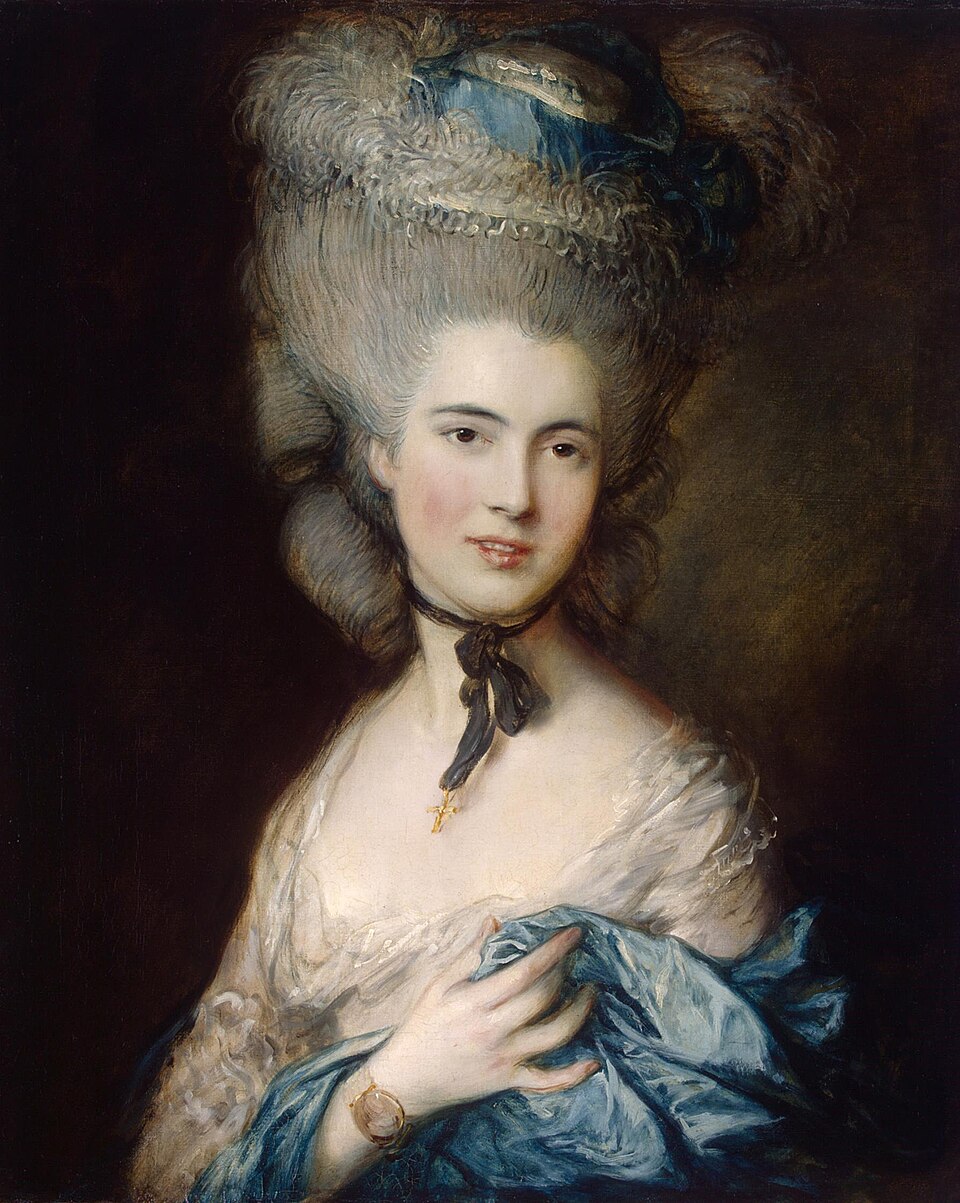
Rococo flourished in English design between 1740 and 1770. It first appeared in England in silver and engravings of ornament in the 1730s. This era produced some of the most dramatic hairstyles in history – the flamboyant towers. The most iconic examples were worn by Marie Antoinette, whose extravagant styles became symbols of aristocratic luxury. Chances are these powdered heights may be too much for modern brides, but if this theatrical vibe fits you, the floor is yours.
Courtesy of Wikipedia (Thomas Gainsborough, Portrait of a Lady in Blue, c. 1775–1785) Courtesy of Sony Pictures / Columbia Pictures (Kirsten Dunsten in Marie Antoinette, 2006)
19th Century – Romanticism & Victorian Era
After the upheaval of the French Revolution, the extravagant powdered hairstyles of the 18th century largely disappeared. At the start of the 19th century, fashion drew inspiration from classical antiquity, with softly waved hair, braids, and loosely gathered shapes but richer and fuller than anything seen in ancient Greece.
As the century progressed, the top knot became a defining feature, growing elaborate in the 1820s with decorative loops resembling bows. By the 1830s, buns moved lower and smoother, while braids, waves, and romantic curls remained essential, often pinned into structured arrangements. A popular variation involved side braids tucked beneath the ears, famously worn by a young Queen Victoria.
From the 1840s onward, softer curls and delicate shapes returned, with buns gradually shifting to the nape. Artificial hairpieces allowed for more volume, creating elaborate styles that reached their peak in the 1880s. By the 1890s, hair was often loosely gathered into a full, middle-positioned bun—one of the most iconic looks of the late Victorian era in France and the United States.
Pinterest Pinterest Courtesy of Wikimedia (Margaret Sarah Carpenter, Portrait of Harriet Brudenell, Countess Howe, 1834)
Pre-Raphaelites
In 1848, a group of young British artists founded the Pre-Raphaelite Brotherhood, challenging the Royal Academy’s artistic conventions. Their work sought inspiration in medieval and early Renaissance art, often combining rich symbolism with emotionally charged imagery. Women became central figures in their paintings, depicted not merely as passive subjects but as complex characters with their own desires, emotions, and inner lives.
The hairstyles portrayed in Pre-Raphaelite paintings became iconic in their own right. These looks emphasized long, flowing hair with natural texture—loose waves, soft curls, and an almost ethereal sense of movement. Unlike the tightly controlled Victorian styles of the period, Pre-Raphaelite hair appeared relaxed and slightly undone, often achieved with smaller curling wands, overnight half-dry braids, or crimping tools to add texture and volume. The effect was sensual, romantic, and dreamlike, and it continues to influence modern interpretations of historical beauty today.
Interestingly, even during the reign of Queen Victoria—a period often associated with more structured, conservative hairstyles—there were moments when similarly soft, natural textures emerged. Early photographic portraits and private images from the mid-19th century occasionally show the young queen with her hair worn long and gently waved, falling in fine, natural ripples rather than tightly arranged styles.
Courtesy of The MET (Dante Gabriel Rossetti, Lady Lilith, 1867) Courtesy of Meer (John Everett Millais, The Bridesmaid, 1851)
1900-1910s – Edwardian Era
The early decades of the 20th century are often associated with the Edwardian Era, which followed the death of Queen Victoria and roughly coincided with the reign of King Edward VII from 1901 to 1910, until World War I. It was a time of social change, marked by movements such as the growing campaign for women’s suffrage and broader debates about women’s roles in society.
Although it technically belongs to the 20th century, it’s important to remember that the world didn’t suddenly change on January 1, 1900. The turn of the century is always a transitional moment, when the influence of the past remains strong, and something new is only beginning to emerge. Same with the hairstyles—they didn’t change overnight either. Hair was usually gathered into structured buns or knots, while the most recognizable feature was the voluminous front section known as the pompadour. At the same time, the top of the head was typically styled quite flat. This was done intentionally to accommodate the large, fashionable hats of the era. The smooth, flat surface allowed women to place wide, floppy hats securely on their heads without disturbing their hairstyles.
At the start of the decade, hairstyles were often embellished with ornate accessories such as jeweled pins, pearls, or tortoiseshell combs. By the 1910s, however, styles gradually began to soften. Hairpieces became less common, and women increasingly favored arrangements that followed the natural contour of the head. Gentle volume, smooth shapes, and soft curls around the face created a more relaxed, romantic silhouette.
Courtesy of GBACG (Postcard of Lily Elsie, famous Edwardian beauty, c. 1907) Courtesy of From the Bygone (Nancy Astor with a knot, 1908) Courtesy of Geena Hunt
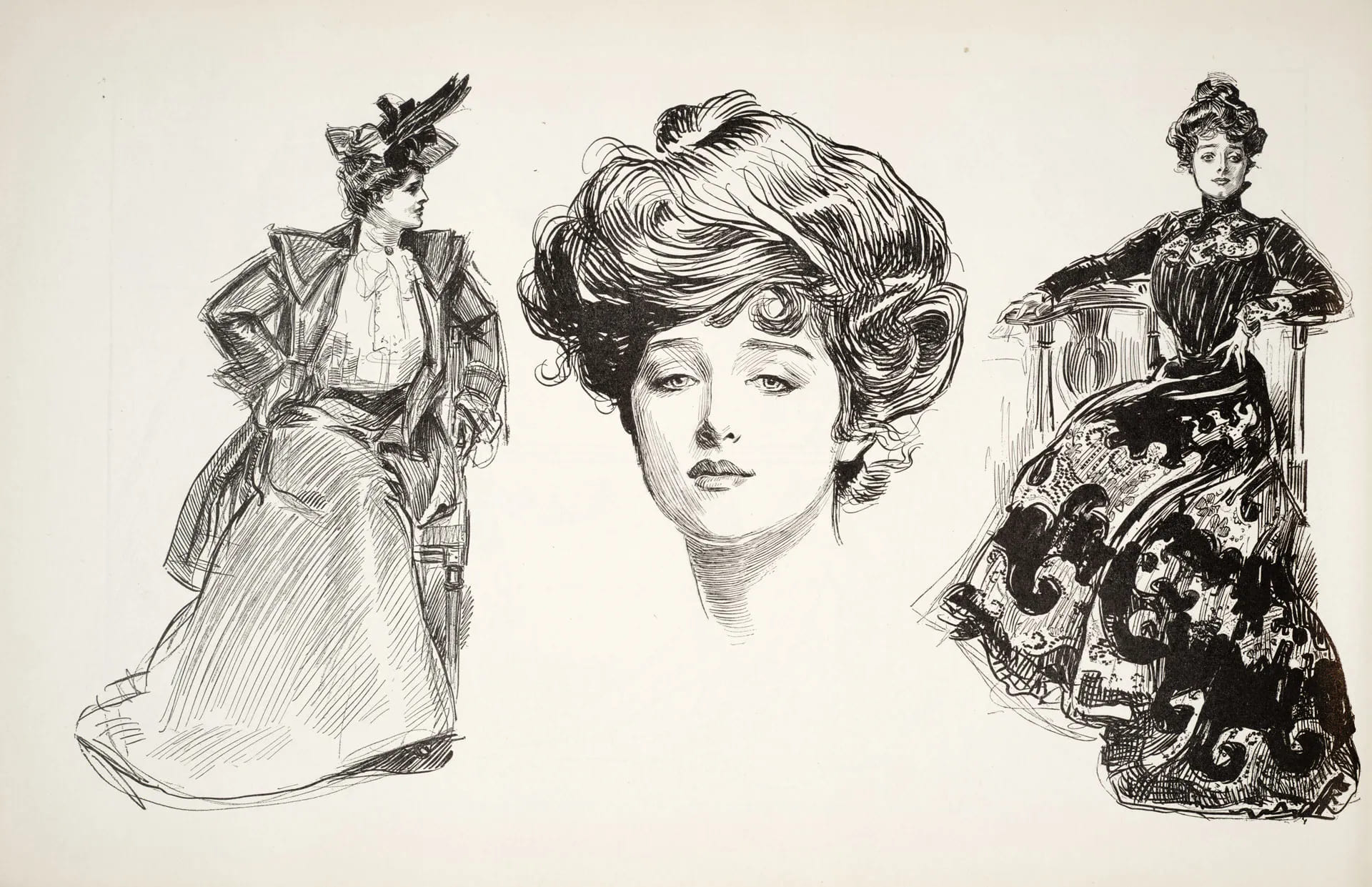
Charles Dana Gibson’s illustrations strongly shaped the era’s beauty ideal. His famous character, the Gibson Girl, came to represent the modern woman—confident, elegant, and independent. Her signature hairstyle featured abundant volume at the crown, loosely gathered hair, and delicate curls framing the temples. Although the look appeared effortless, achieving that airy height often required chignons, small hair pads made from collected hair, and a considerable number of hairpins hidden within the style.
Hairstyles in the 20th century changed dramatically from decade to decade. Each era had its own beauty ideals, often influenced by cinema, music, and cultural shifts. Here’s a quick journey through some of the most iconic styles
1920s — The Bob & Finger Waves
The 1920s brought one of the most dramatic hair revolutions of the twentieth century. As women embraced new freedoms in fashion and social life, long Edwardian hair gave way to shorter, more daring styles. The bob became the defining haircut of the decade—sharp, modern, and often worn with a sleek, straight finish or sculpted into glossy finger waves. Hair was usually cut around chin length, sometimes paired with a fringe, and styled close to the head to complement the cloche hats that were so popular at the time. The overall look felt clean, youthful, and slightly rebellious, reflecting the spirit of the Jazz Age and the emergence of the modern woman. Style icons included actress Louise Brooks, lapper archetype Clara Bow, and jazz performer Josephine Baker.
In the 1930s, hairstyles softened and became more refined compared to the sharp geometry of the previous decade. Hair was typically worn slightly longer and styled into smooth, sculpted waves that framed the face. Hollywood had a huge influence during this period, and many women looked to film stars for inspiration. Deep side parts and elegant S-shaped waves became a signature look, often created through meticulous setting techniques. These styles emphasized shine, polish, and femininity. Even shorter cuts were styled to look fluid and glamorous, giving hair a graceful, almost liquid appearance that suited the sophisticated mood of the decade.
Courtesy of Fashion Gone Rouge // PictureLux / The Hollywood Archive / Alamy Stock Photo Courtesy of Fashion Gone Rouge // PictureLux / The Hollywood Archive / Alamy Stock Photo Courtesy of Glam Amor
1940s — Victory Rolls & Structured Waves
The 1940s combined practicality with glamour. During the wartime years, many women worked in factories and other demanding jobs, which influenced hairstyles to become more structured and practical. Hair was often worn shoulder-length and styled in rolls or pinned shapes that kept it neatly off the face. Victory rolls became one of the most recognizable styles of the decade, creating dramatic loops at the front of the head. Despite wartime restrictions, women still sought elegance, and carefully set curls and shoulder-length waves remained common. These looks were often associated with pin-up icons like Rita Hayworth.
Courtesy of Wikipedia // Robert Coburn Courtesy of HJ // Frank Powolny/20th Century Fox/Kobal/Shutterstock
Hairstyles in the 1950s emphasized polish, neatness, and structure. Among shorter hairstyles, different versions of the bob were especially popular, including the soft bob, which featured gentle curls and modest volume designed to frame the face. One of the most striking short styles of the decade was the pixie cut, popularized by Audrey Hepburn after her appearance in the film Roman Holiday. The pixie was cropped close to the head with short bangs and tapered sides, creating a youthful silhouette. Although it was admired for its chic, European feel, the cut was considered bold and was not as widely adopted as softer, more traditionally feminine styles.
The decade also saw the rise of the bouffant. Hair was brushed upward and backward to create height at the crown, often achieved through teasing and generous amounts of hairspray. Even when women kept their hair longer, it was rarely left loose. Instead, it was often styled in elegant ways, such as chignons, French twists, or soft updos. Curls were everywhere, usually set with rollers to create controlled volume and soft, rounded shapes.
Overall, 1950s hairstyles were carefully styled and highly structured, reflecting the decade’s ideal of refined beauty and perfectly maintained appearance.
The 1960s became a decade of bold experimentation in hair. At the beginning of the decade, glamorous styles inherited from the 1950s still dominated. Voluminous looks such as the bouffant remained extremely popular, with hair teased and sprayed into rounded shapes that created dramatic silhouettes. One of the most iconic variations was the towering beehive, which rose a foot above the crown to form a cone-like structure. Achieving these styles required heavy teasing, careful shaping, and plenty of hairspray.
At the same time, the decade introduced a more modern and graphic aesthetic. Sleek bobs and short geometric cuts became fashionable, often worn with long side-swept bangs or sharp straight fringes. Many women who had worn very short pixie cuts earlier gradually grew them into chin-length bobs, which felt fresh and youthful and echoed the revived interest in 1920s-inspired fashion.
Another widely recognized style was the flip, where smooth hair was slightly teased at the crown while the ends were curled outward, creating a playful, lifted edge around the chin or shoulders. Headbands and simple accessories often complemented these youthful looks.
By the late 1960s, hairstyles began to move away from structured volume. Influenced by changing cultural attitudes and youth movements, many women adopted long, straight, natural-looking hair. At the same time, natural textures also gained visibility, including the early popularity of the Afro among Black communities.
Pinterest Courtesy of Getty Images/Ralph Crane/Contributor
Hairstyles in the 1970s moved toward a more relaxed and natural aesthetic. Instead of heavily structured sets and heavily sprayed shapes, hair began to flow more freely. Long layers became popular, creating movement and softness around the face and shoulders. Feathered styles, where the hair was cut and styled to sweep away from the face in light, airy layers, became particularly iconic, largely thanks to figures like Farrah Fawcett, whose voluminous, sun-kissed hair became one of the decade’s most recognizable looks. Shag cuts also rose to prominence, featuring choppy layers, lots of texture, and a deliberately undone feel.
At the same time, the influence of counterculture encouraged many women, including style icons like Jane Birkin and Cher, to wear their hair longer and more natural, embracing texture rather than controlling it. Meanwhile, the glamorous energy of the disco era brought bold curls and dramatic volume to the spotlight. Stars like Donna Summer and Diana Ross popularized exuberant disco curls that celebrated texture, movement, and stage-ready glamour.