Setting a table outside is a beautiful choice, and a genuinely fitting one for a summer wedding, but it isn’t, on its own, a design decision. What separates a cute outdoor dinner from one that actually gets remembered is whether the table is responding to the land it’s sitting on, either by echoing it or by deliberately cutting against it. That relationship changes completely depending on the terrain, which is really the whole argument for thinking about al fresco dinners by landscape rather than as one generic category. Find the setting closest to your own venue below, and steal whatever works.
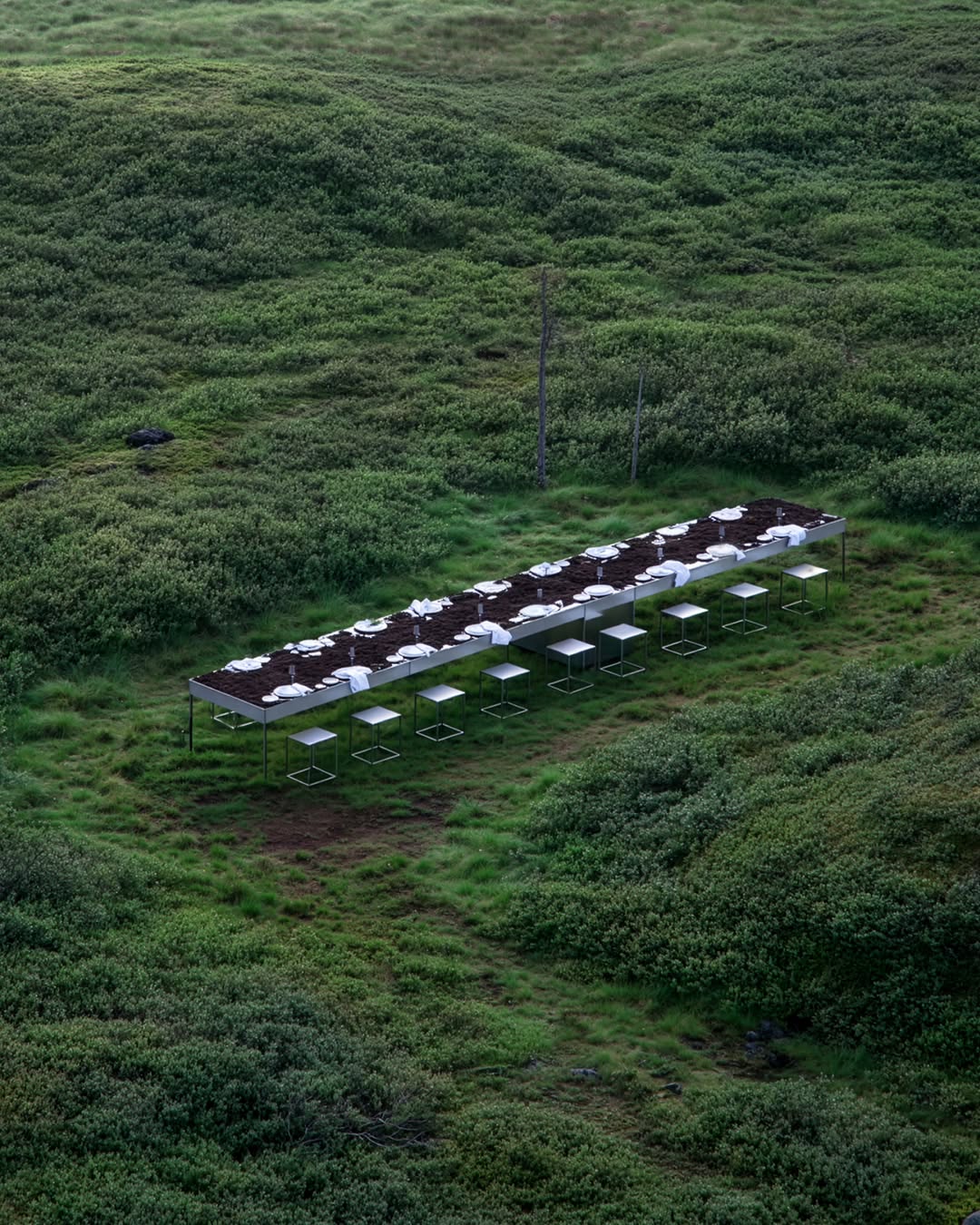
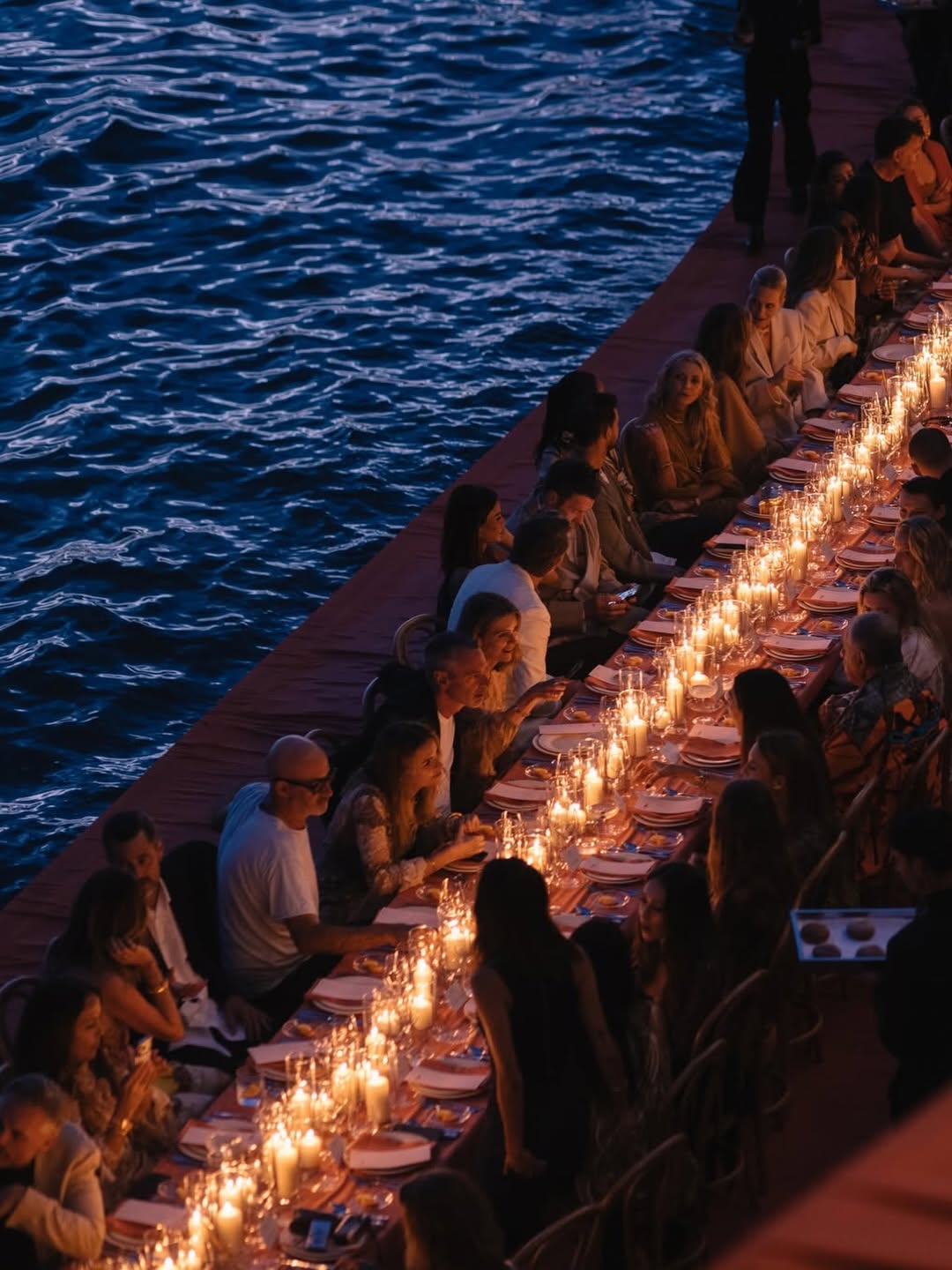
Photo: Fofo, Zimmermann
Fields
A field is essentially free architecture for a wedding dinner. Wheat, corn, sunflowers, lavender, whatever’s actually growing on does most of the work. The most direct way to work with a field is to decorate the table with the same crop growing around it: cut lavender piled into a runner in front of a lavender field, loose sheaves of wheat bundled down the center of a table set in a wheat field. Hence, the line between the crop and the wedding tablescape essentially disappears. The other option is real contrast instead of an echo: a table piled with bright red anthuriums and tomatoes against a field of dry gold wheat has nothing botanically in common with the crop behind it, and that color clash is exactly what makes it a deliberate, creative choice. Either approach works, but the practical trade-offs remain the same. Wind moves through open fields more than people expect, cut ground is rarely level, and insects get considerably more active once the sun starts going down.
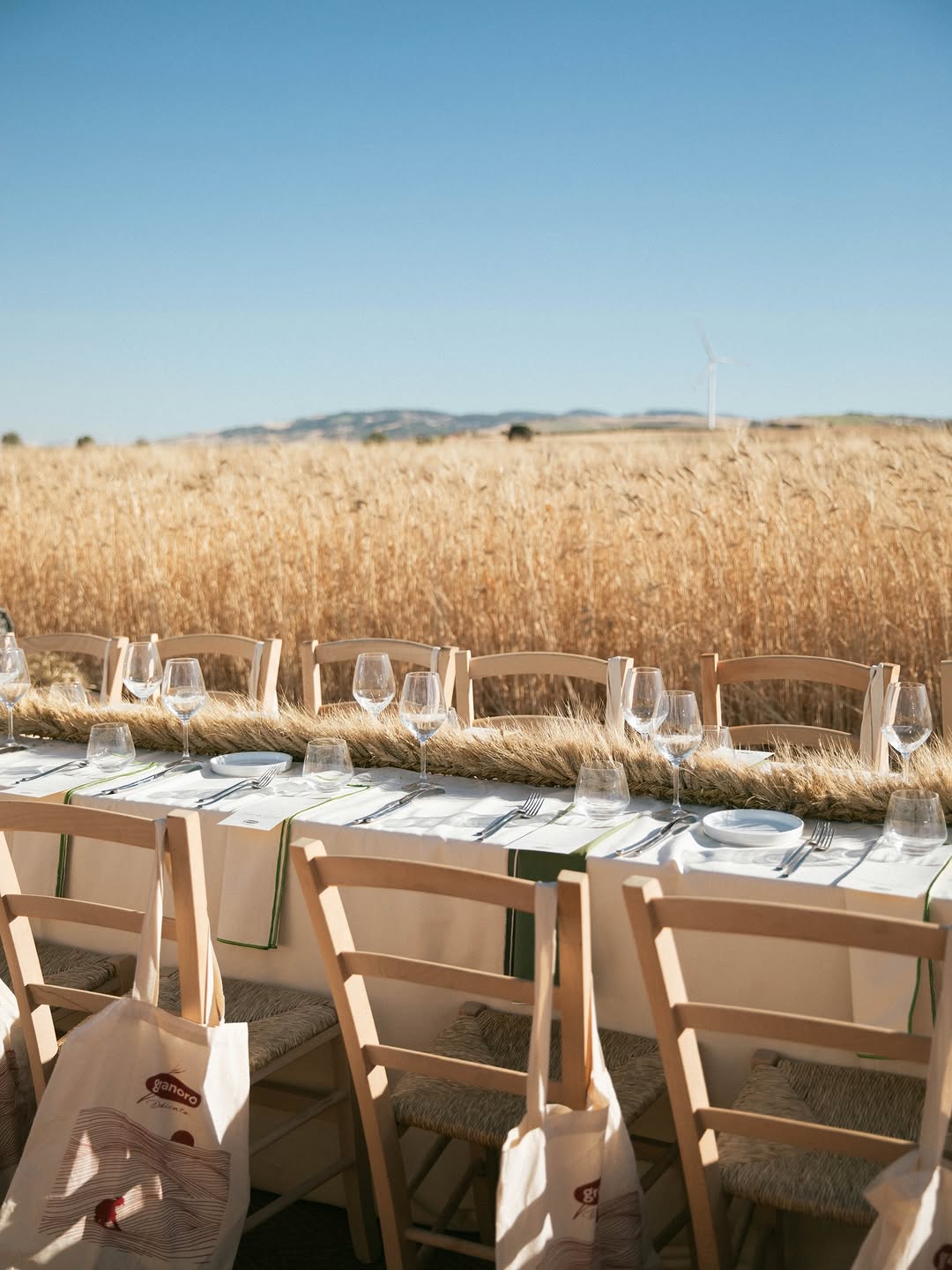
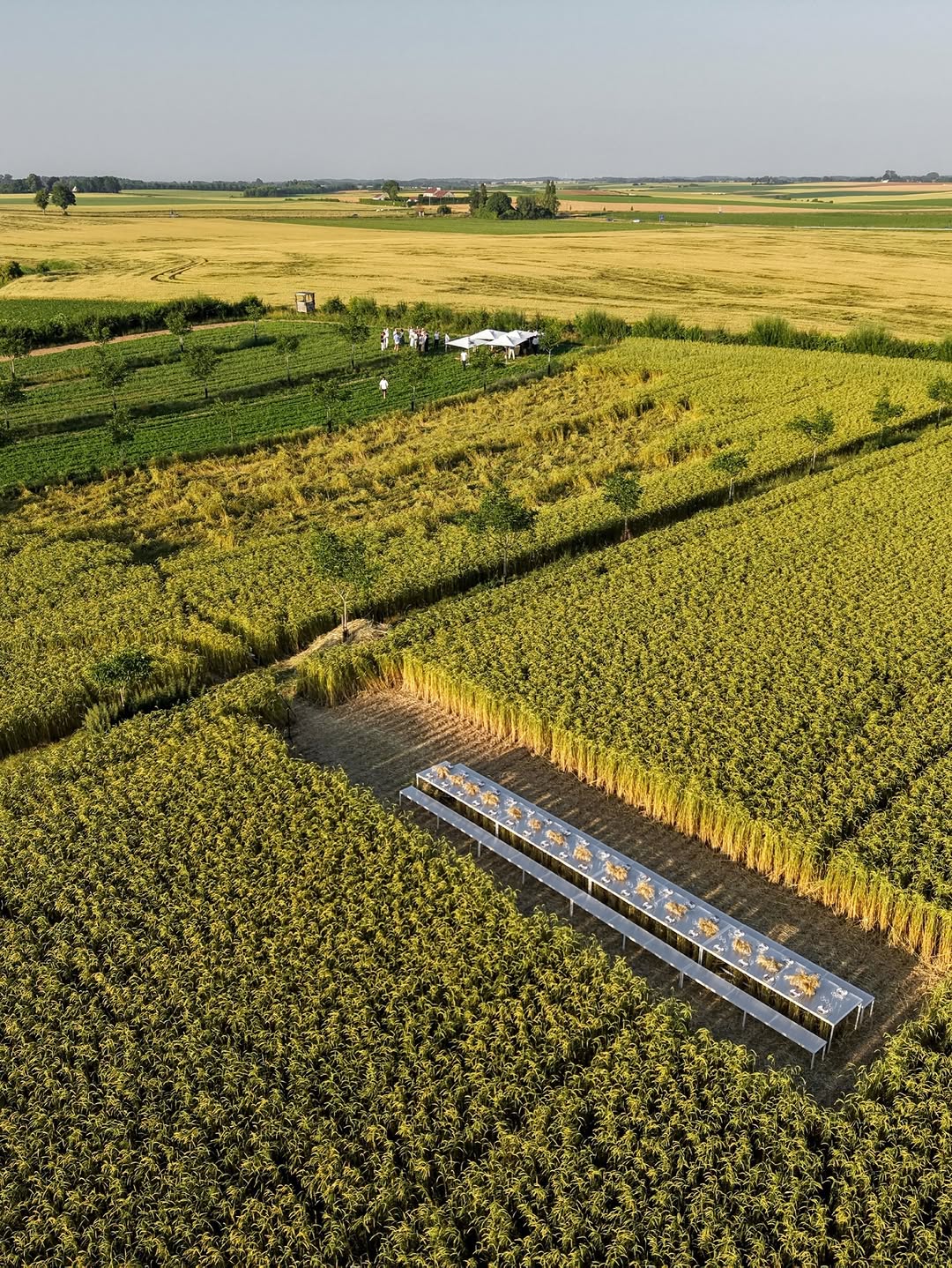
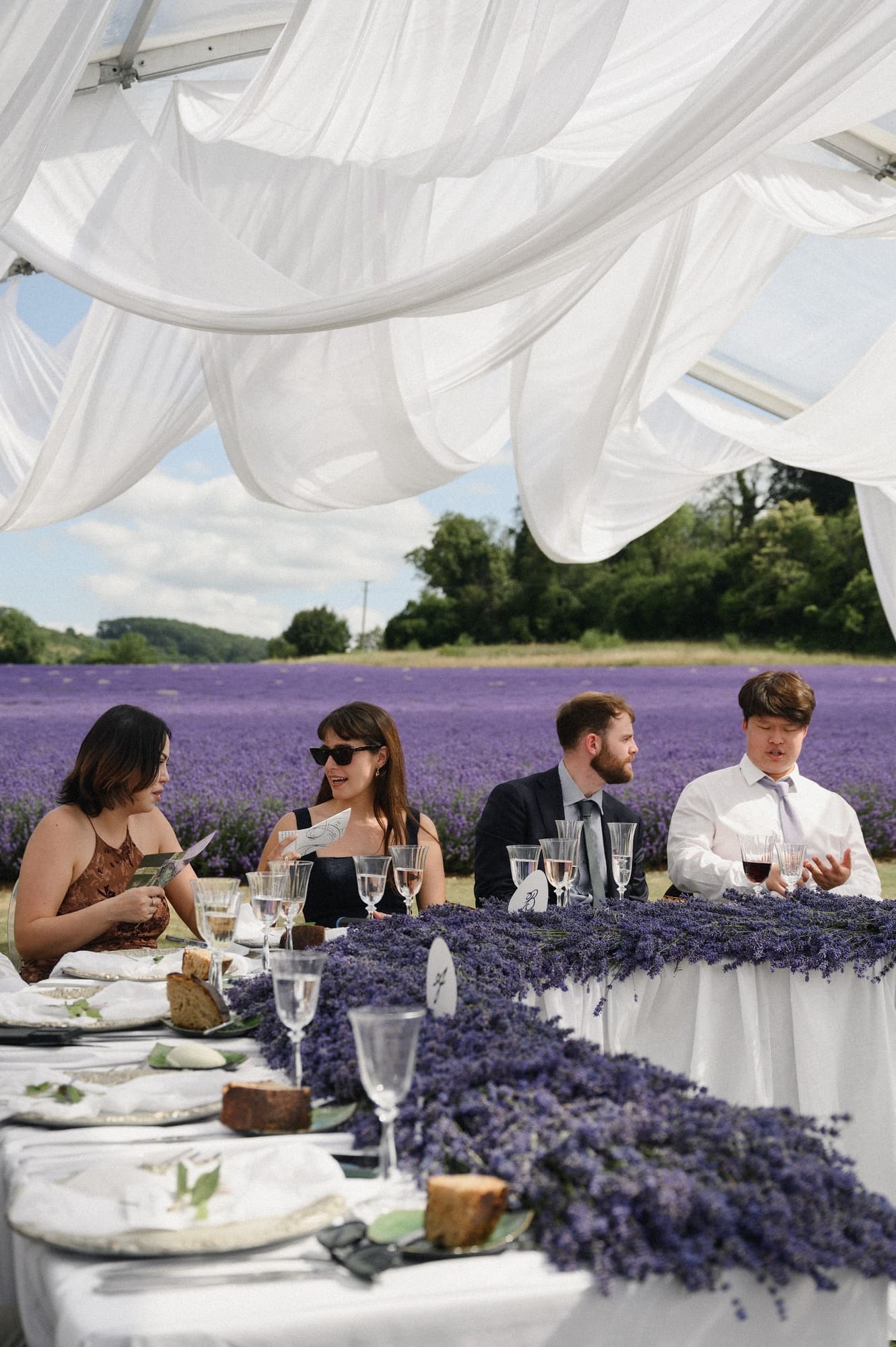
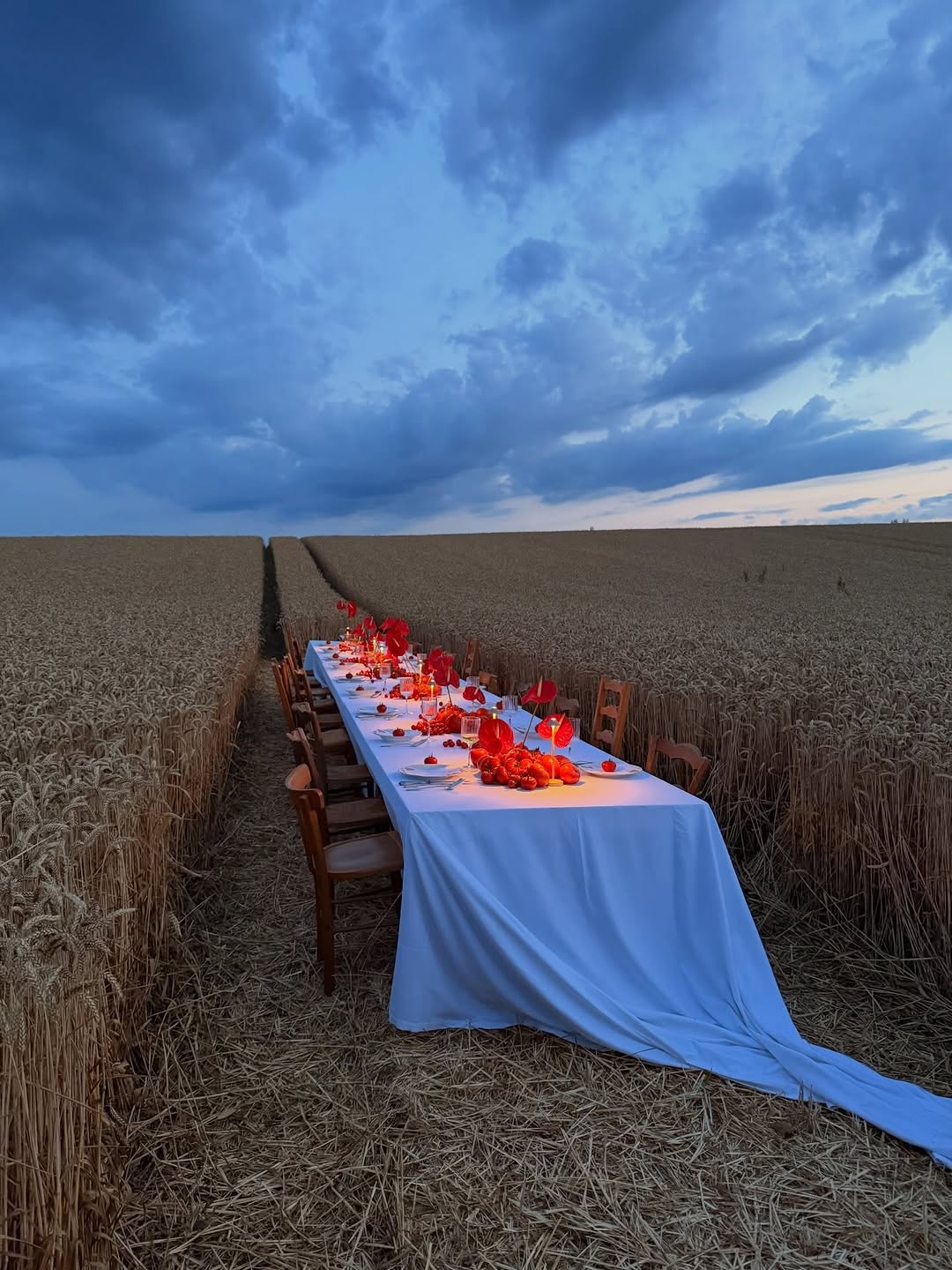
Photo: Supper Segreta, Elias Derboven, Vladimir Zakharov, Tom Gotro
Design: Supper Segreta, Thierry Boutemy for Studio27, Isa.bel Wedding, Tom Gotro
Desert and Arid Landscapes
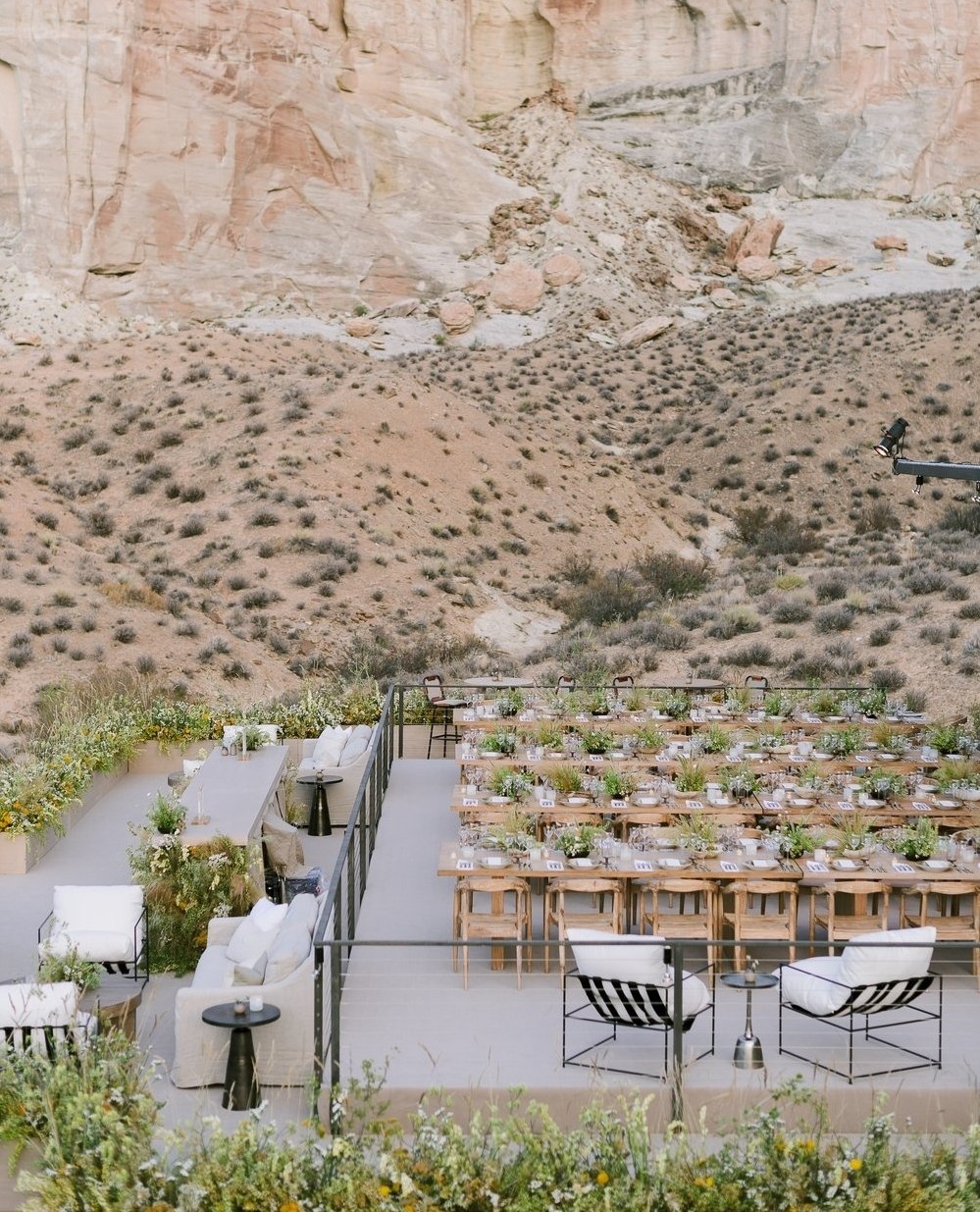
Scale is the whole point in a desert wedding’s setting. A rock face, a canyon wall, or an ancient monument makes any human-sized table look small, and that contrast in scale does most of the emotional work, though the tablescape can be styled to amplify the effect. Sand and warm neutral tones are the most natural palette choice, letting the table recede into the terrain so the landscape stays the obvious subject. If the goal isn’t to blend in completely but to add just a touch of drama, darker, more graphic furniture can create the necessary sharp contrast against pale stone. Planting choices matter more here than people expect, too. Loose, scrubby greenery and small wildflowers, left to look as natural and unmanicured as possible, can echo the sagebrush already growing around. Either way, extreme daytime heat and a rapid temperature drop after sunset pose real planning challenges for an arid-landscape wedding, on top of getting furniture and catering equipment into a location that likely has no roads.
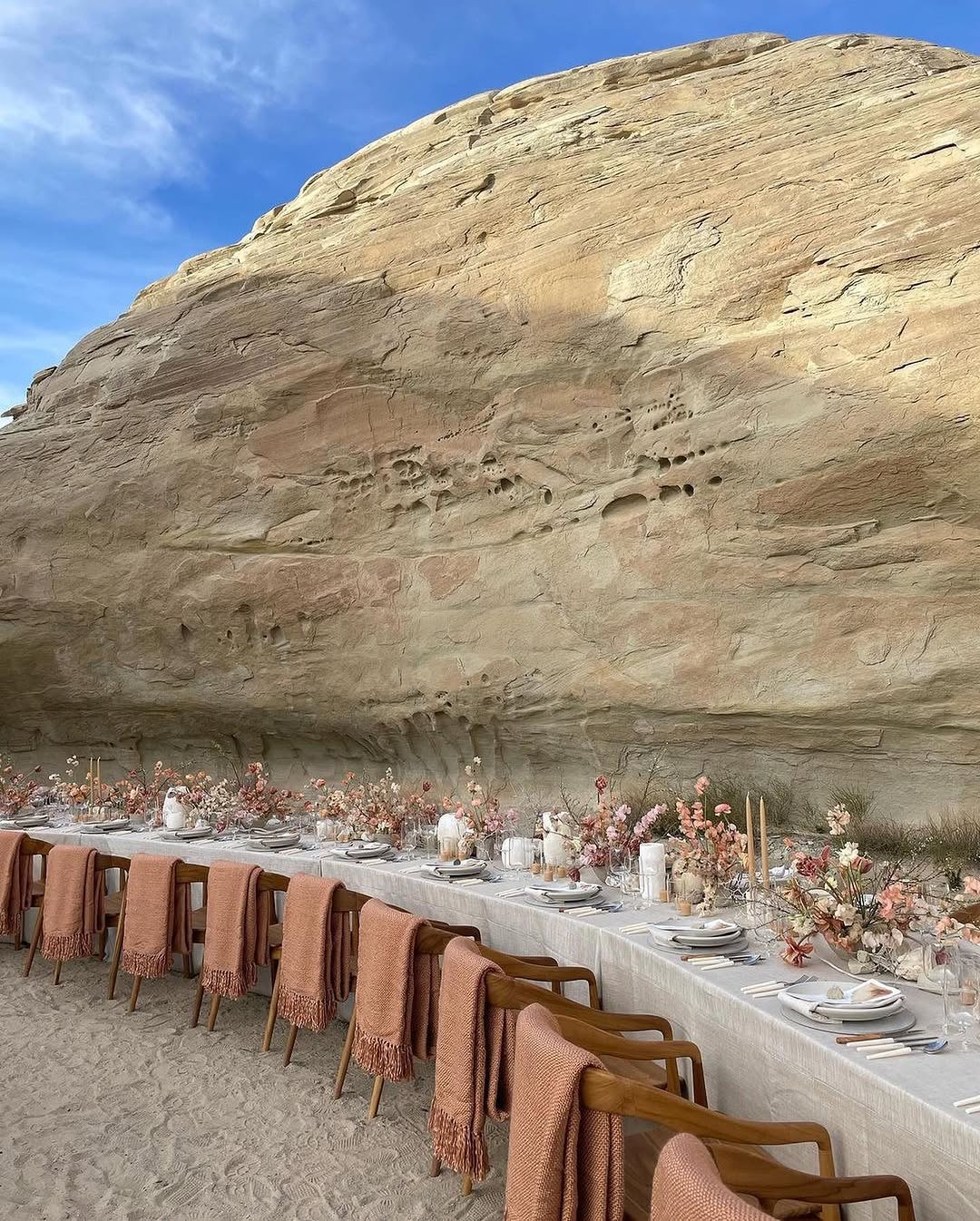

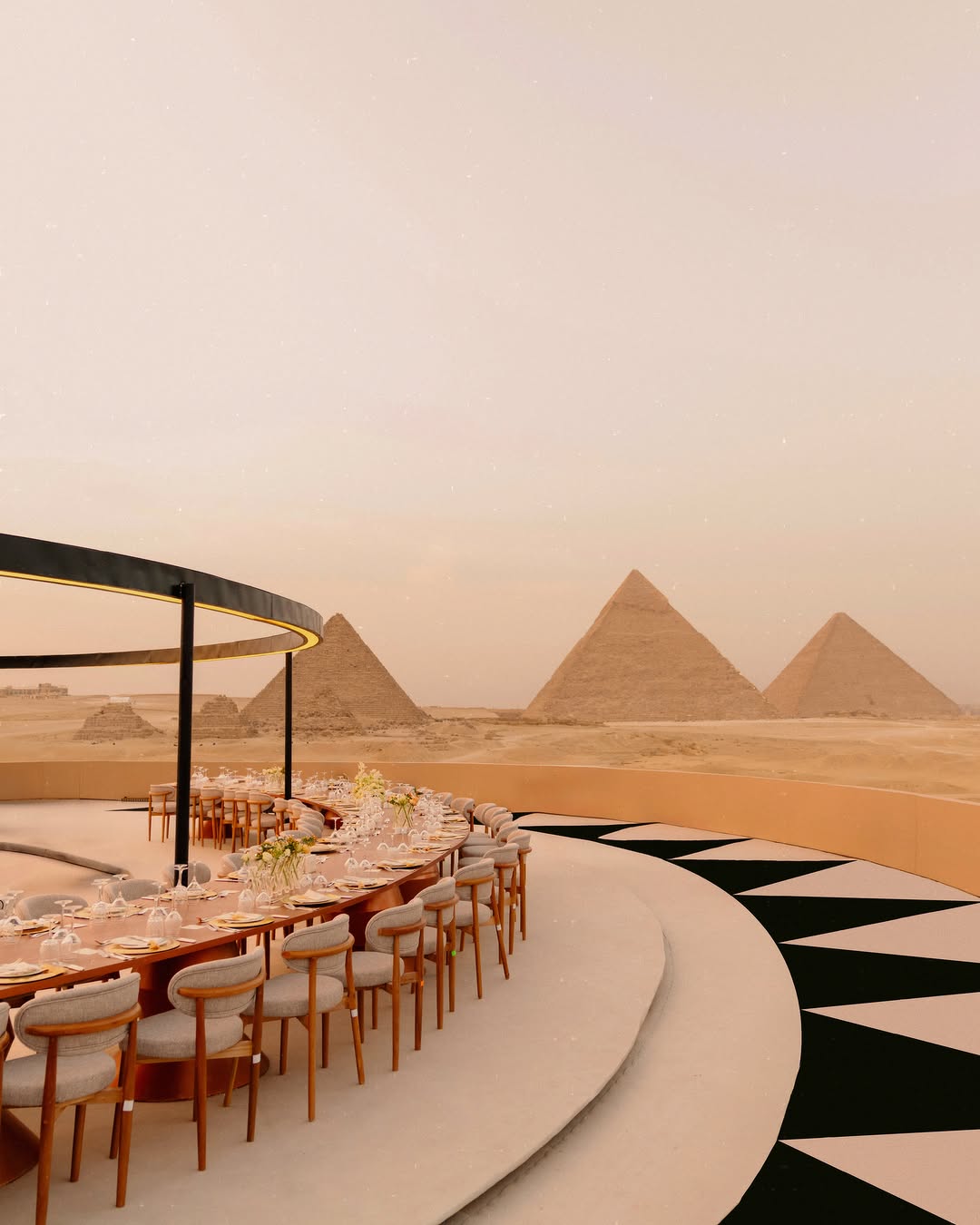
Vineyards and Olive Groves
Agriculture comes with a layout already built in, which is a big part of why a vineyard wedding so often looks effortlessly styled. Rows of vines or trees function as a ready-made aisle, so a long table set straight down a row looks intentional with almost no additional structure needed, an ordering problem that a farmer already solved decades before any planner showed up. Dappled light through a leaf canopy also does real lighting design for free, part of why this setting so often reads as effortless even when a lot of production went into it.
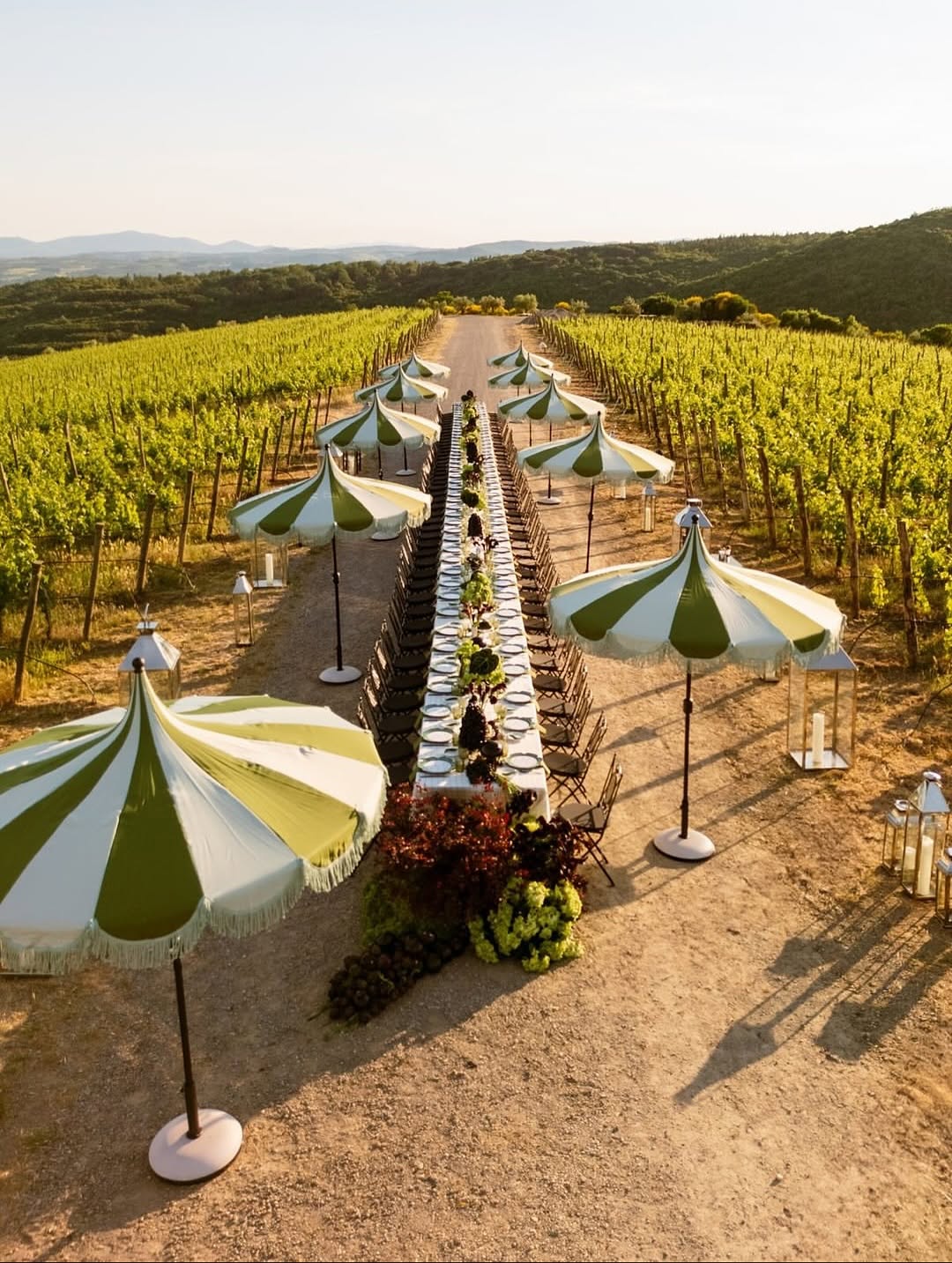
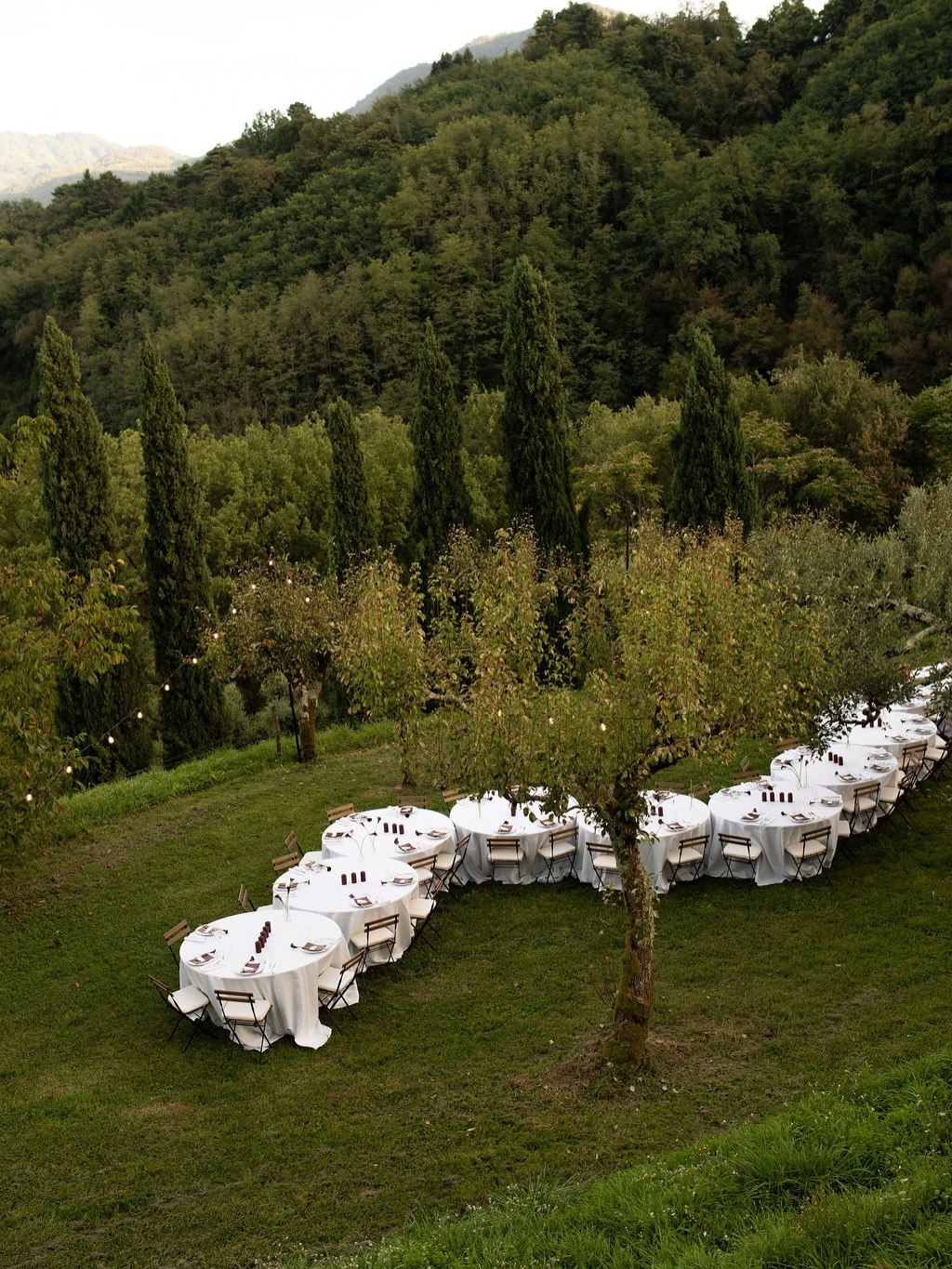
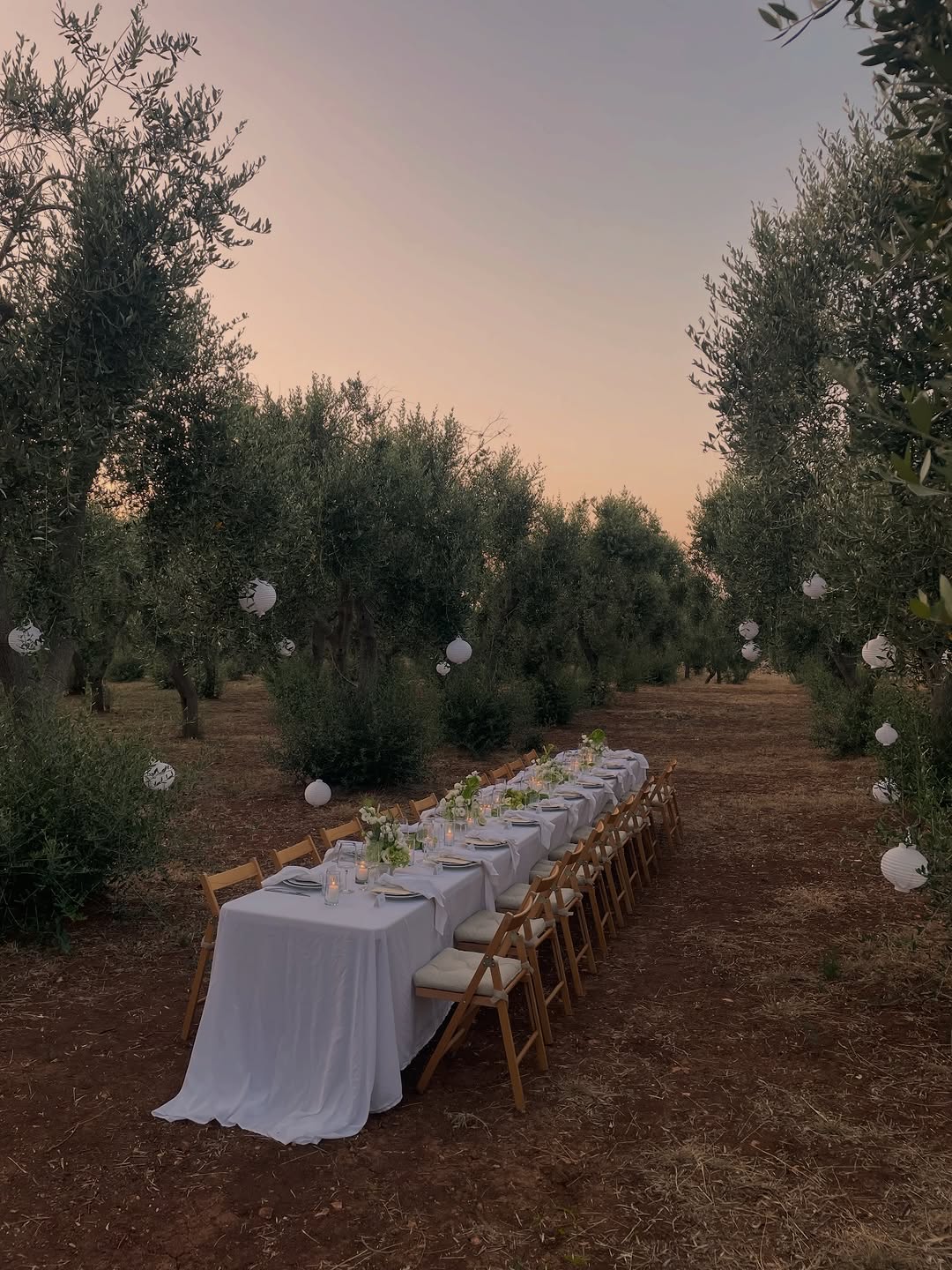
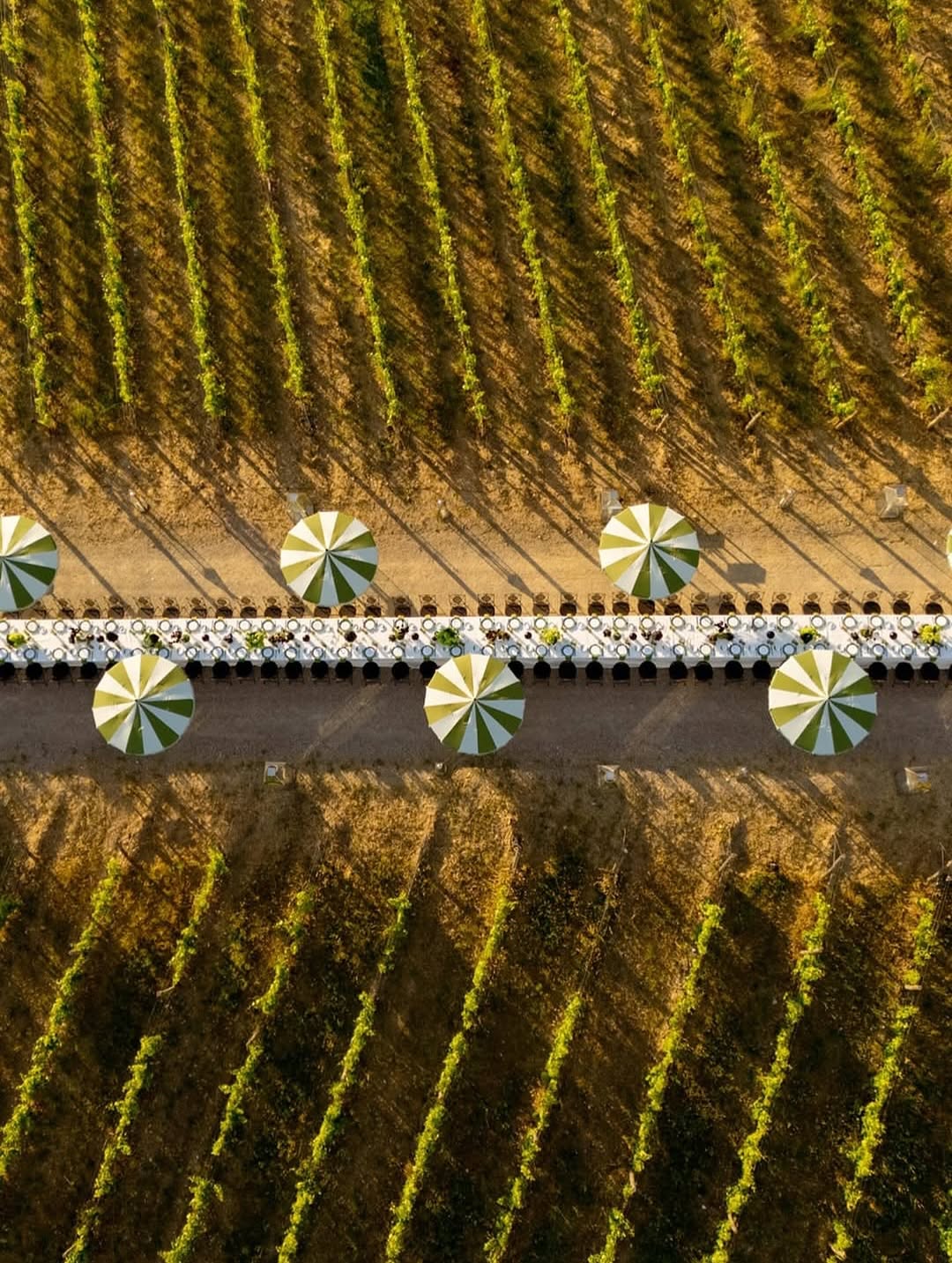
Photo: Bottega53, Eliza Zahar, Alessandra Ricci, Bottega53
Design: Design Anarchy, Se Marier, Alessandra Ricci, Design Anarchy
Waterside
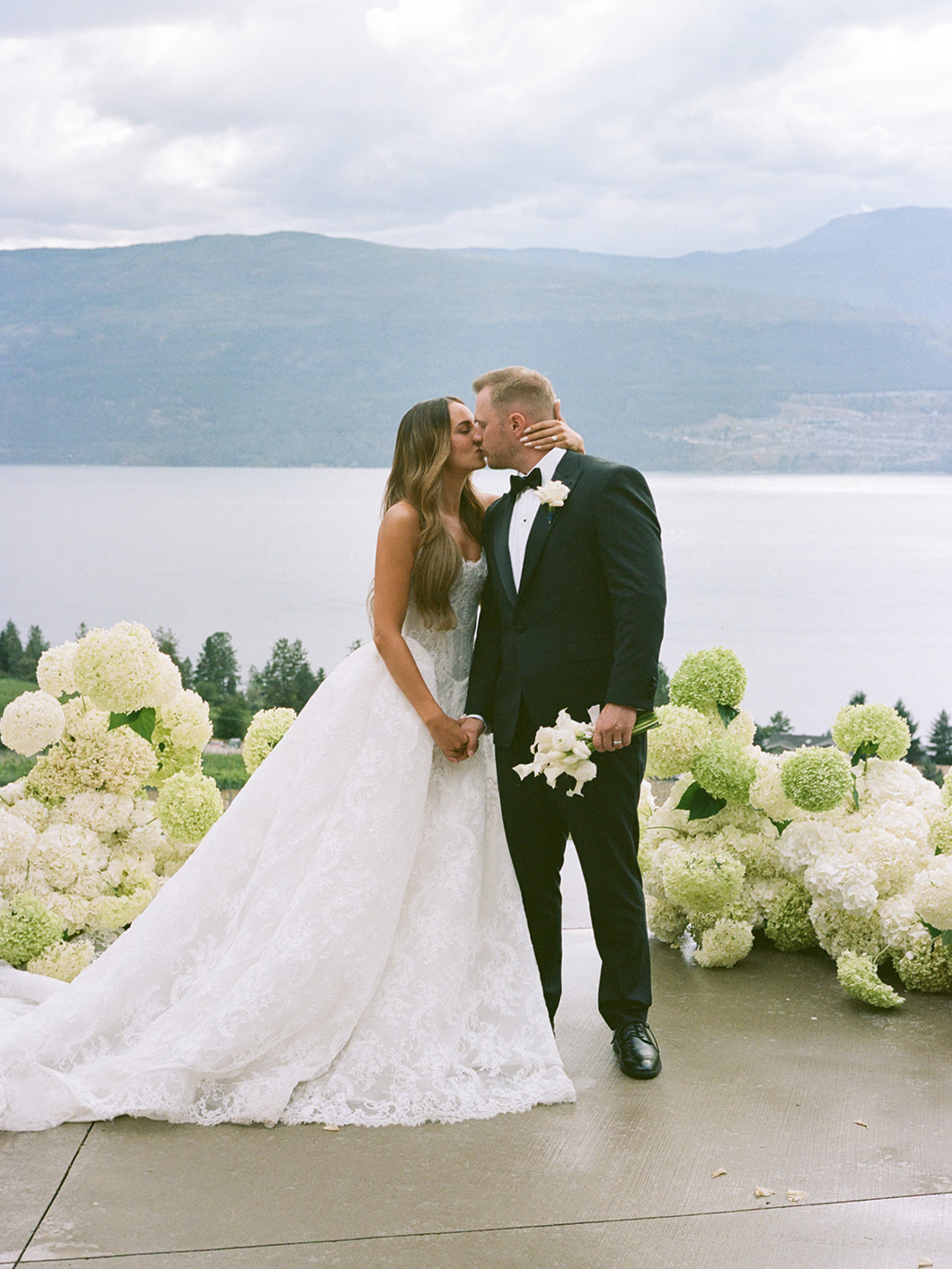
Most of these settings place a table on solid, walkable ground, with the landscape set somewhere around it. Water flips that. The table usually ends up perched right at the edge of something, a cliff over the sea, a ledge above a caldera, the last few feet of grass before a lake, and that proximity to the drop is doing a lot of the drama on its own, often with barely a railing between the chairs and the view. The shape follows from that logic too: instead of a table free to sit anywhere in an open field, it tends to run in a long line that hugs the edge, so every seat gets the same uninterrupted view out rather than half the guests facing away from the water. The other thing that changes is how much lighting actually matters. A field or a mountainside still holds some ambient light after the sun goes down, but water goes flat black almost immediately, so candles, string lights, or tall lamps along the table stop being a nice finishing touch and become the only thing keeping the view from disappearing entirely once dinner runs past sunset.
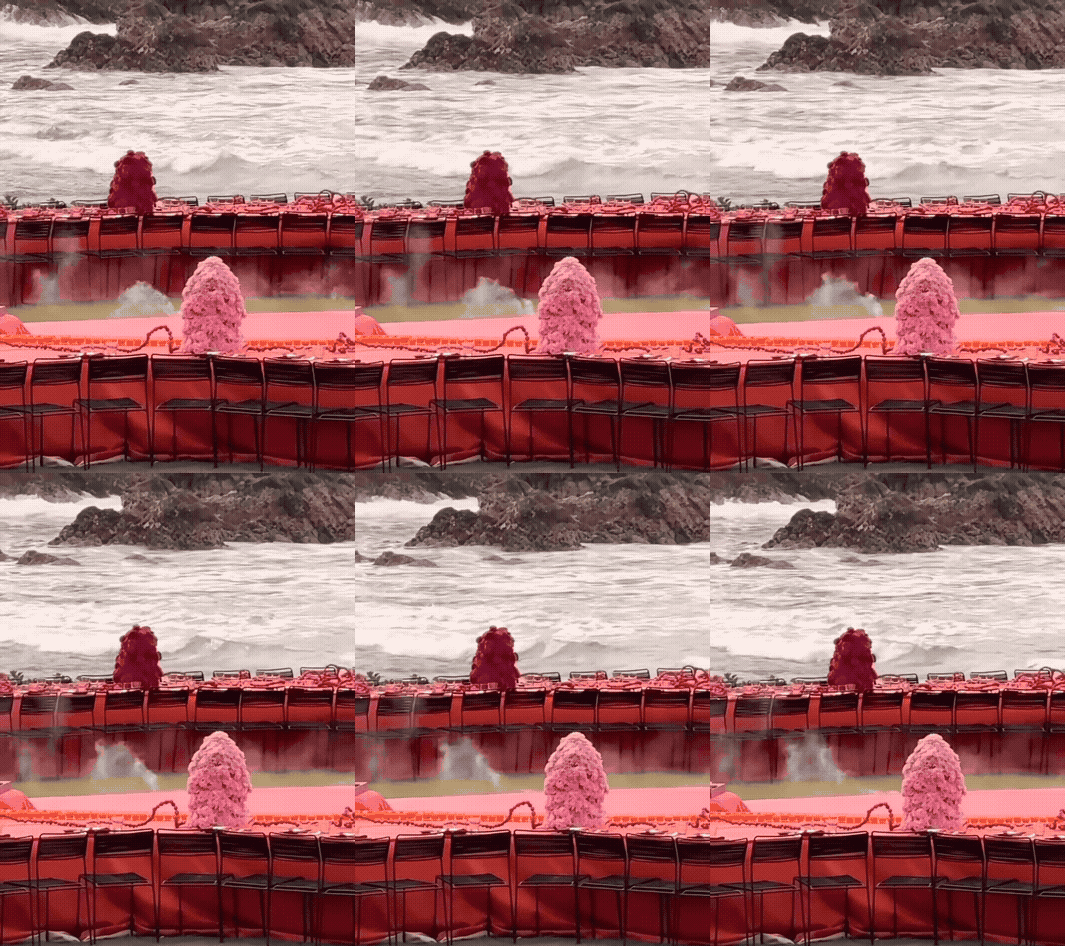
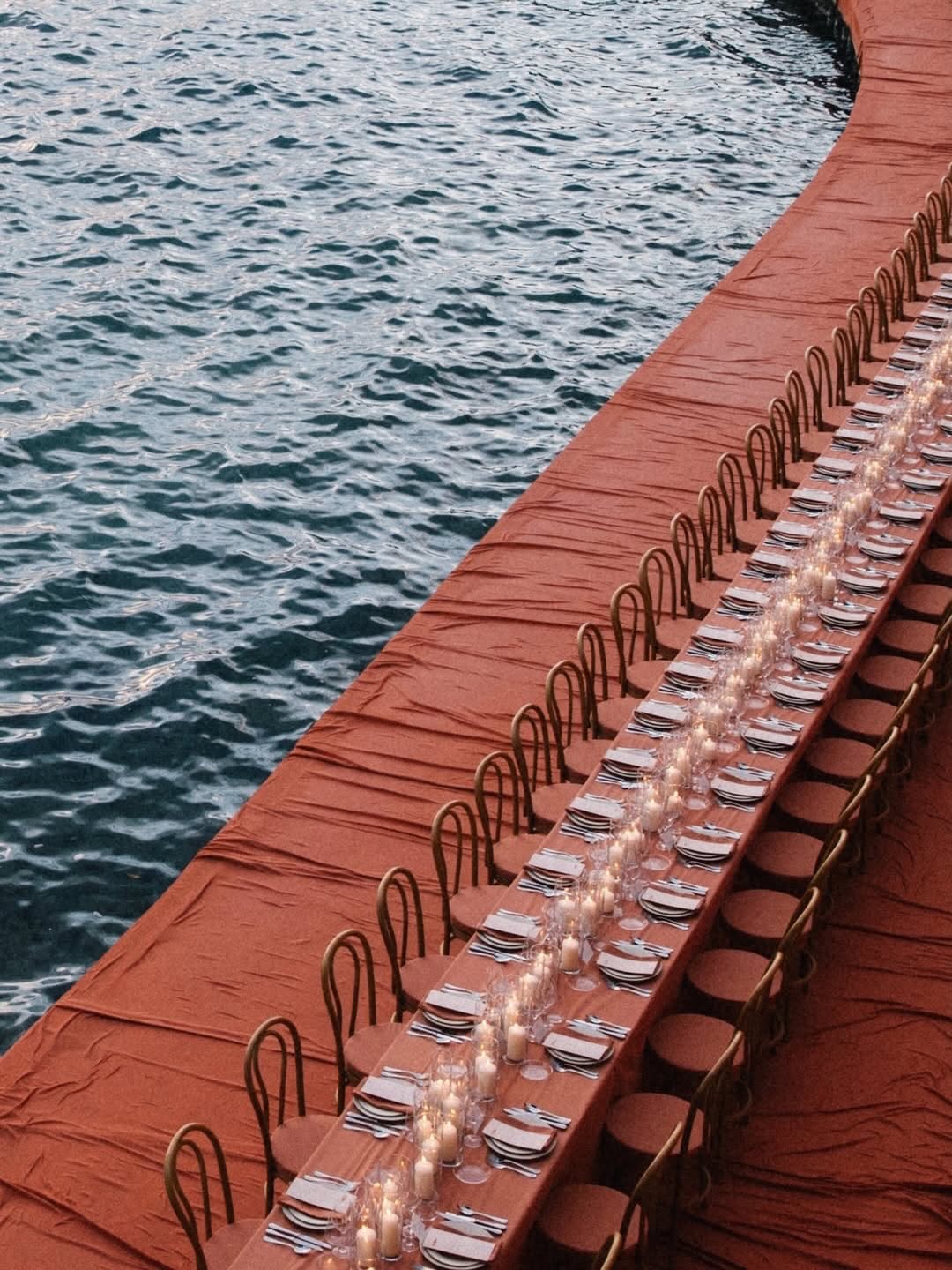
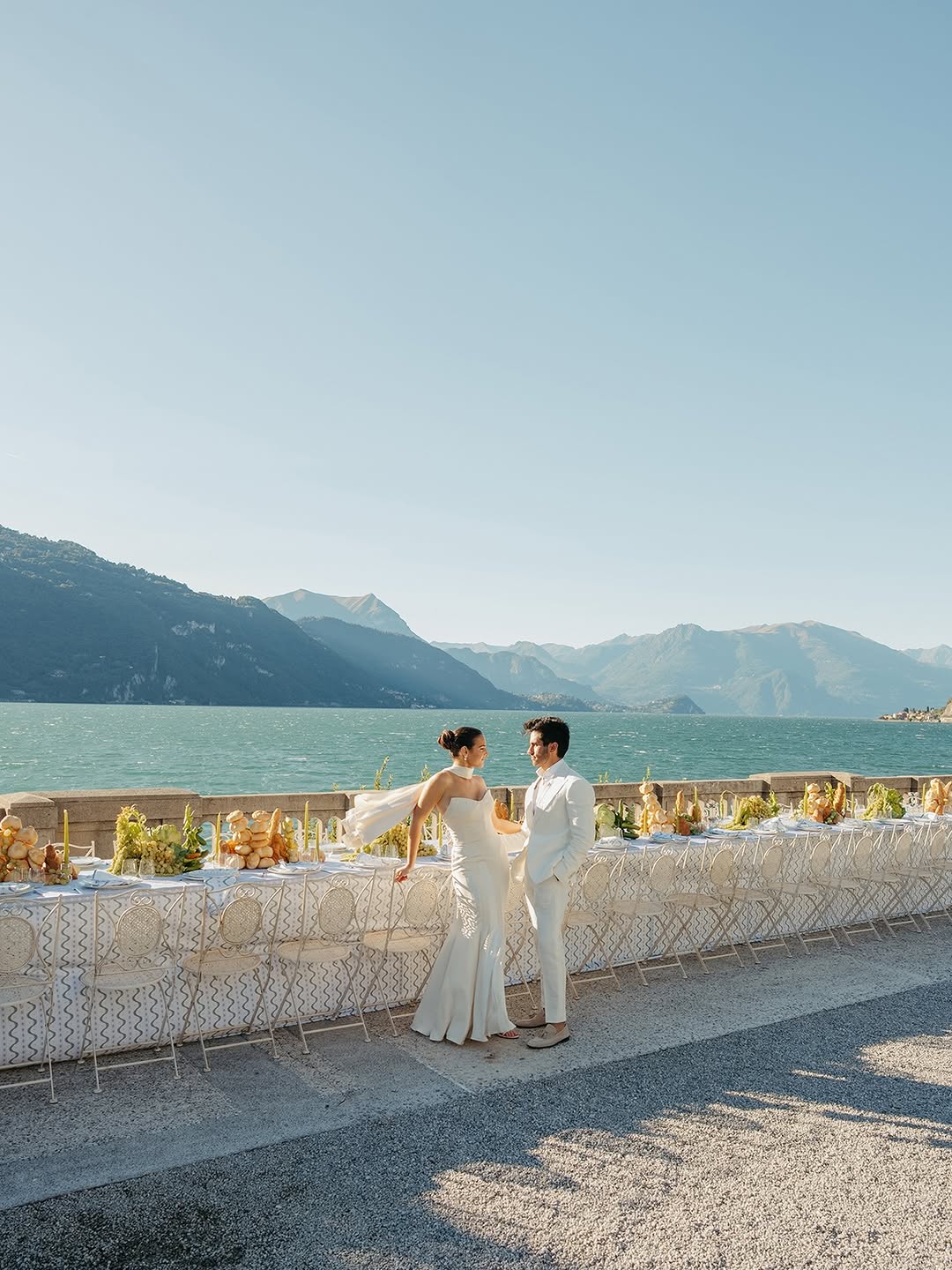
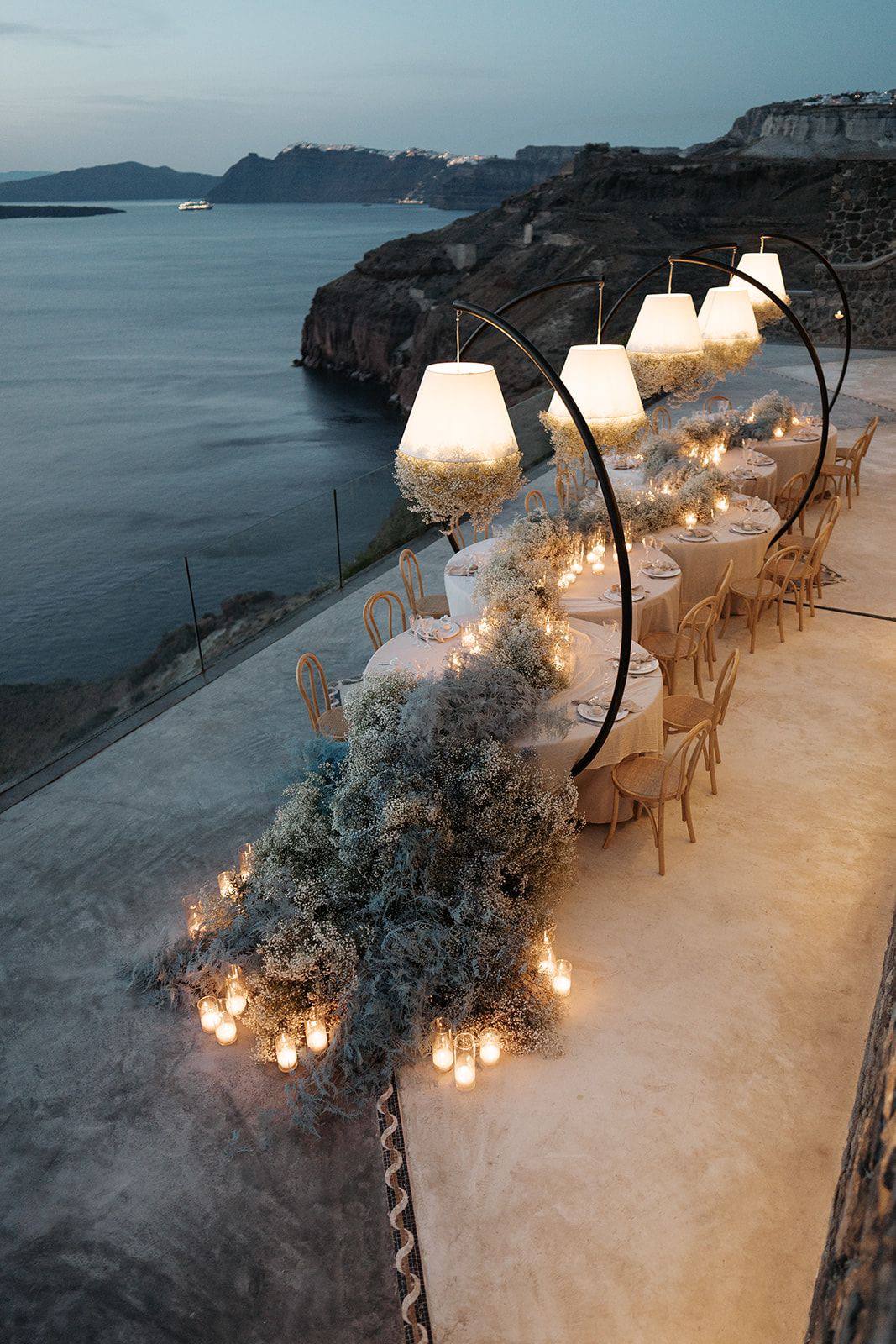
Photo: Courtesy of Byv, Zimmermann, Stas Moiseev, Phosart
Design: Cordero Atelier, Zimmermann, Benevent Planner, Tie the Knot Santorini
Mountains and Forests
This is the one landscape on the list where the table’s shape gets dictated by the land rather than the other way around. A straight table works on flat ground almost anywhere, but a hillside forces a real decision, and letting a long table curve and wind along the actual contour of the slope tends to look far more considered than fighting the terrain into a straight line. Alpine meadows and dramatic peaks in the background do enough visual work on their own that heavy floral styling usually competes rather than helps, which is why what actually works here tends to be small and repeated rather than tall and built-up: single sunflower stems or wildflowers in individual bud vases marching the length of the table, or, let’s say, foraged moss and pinecones gathered straight off the mountainside. Cooler air is a genuine advantage for a long, multi-course dinner that would otherwise drag in summer heat, though temperatures at altitude can drop fast once the sun goes down, which is worth warning guests about in advance.
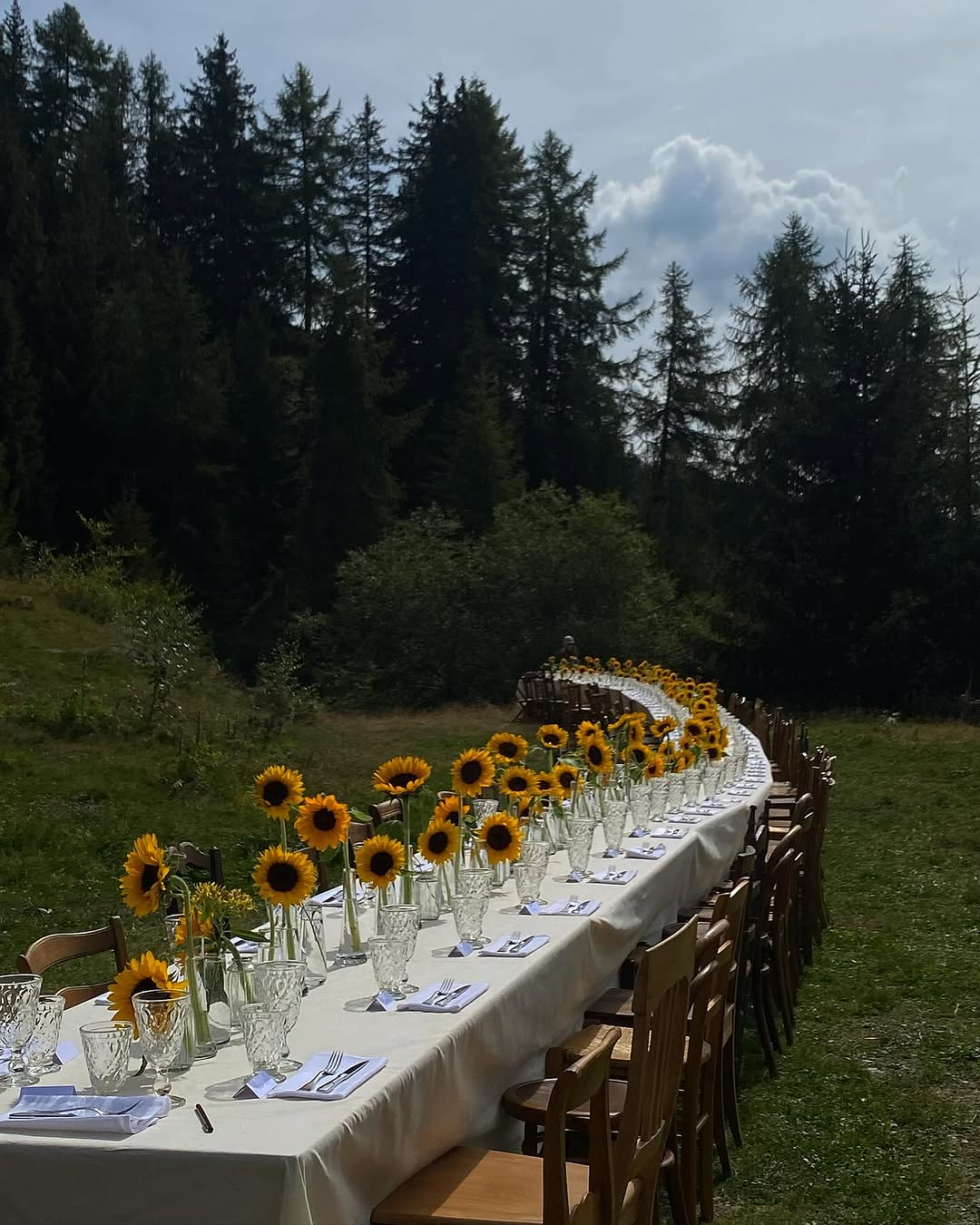
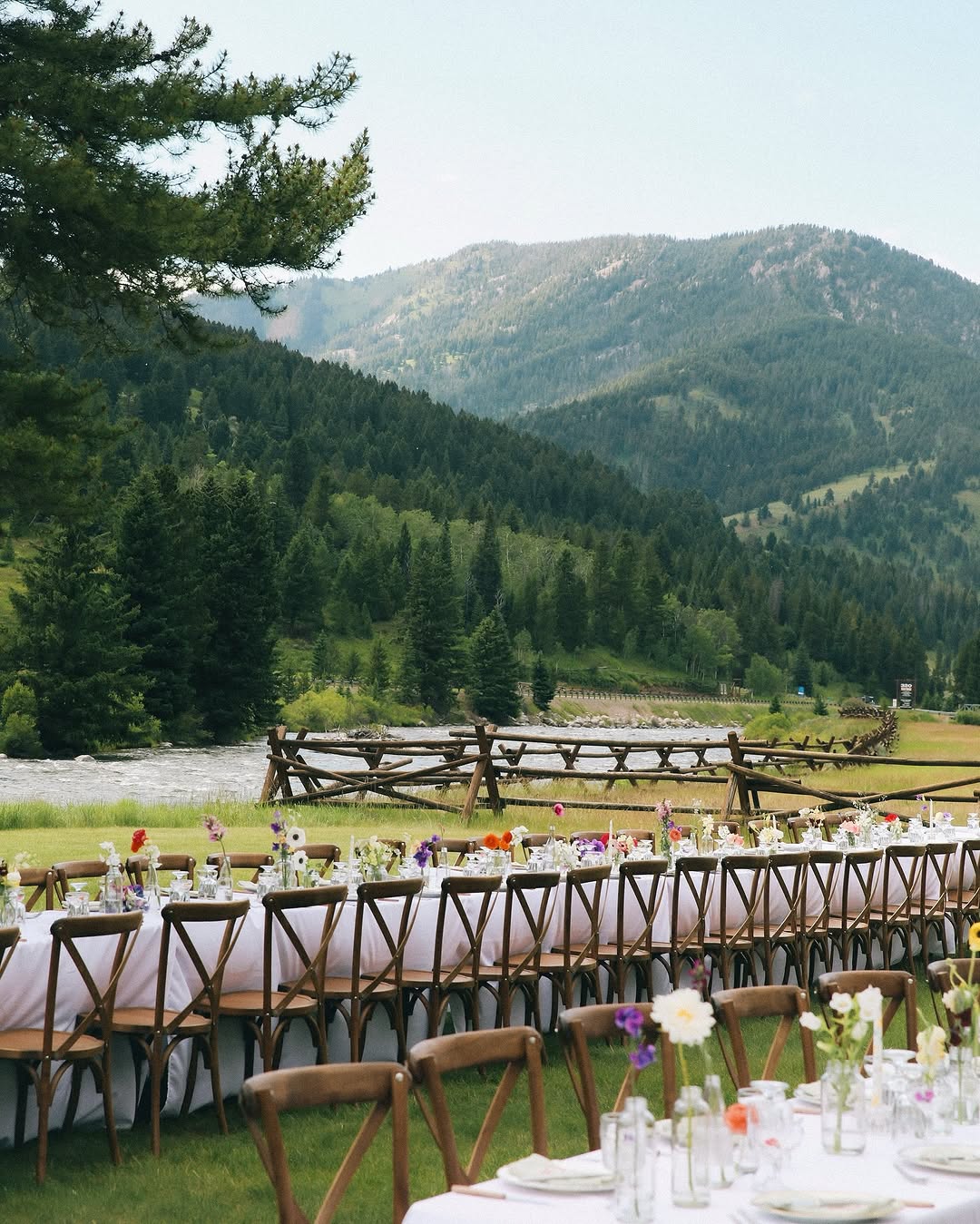
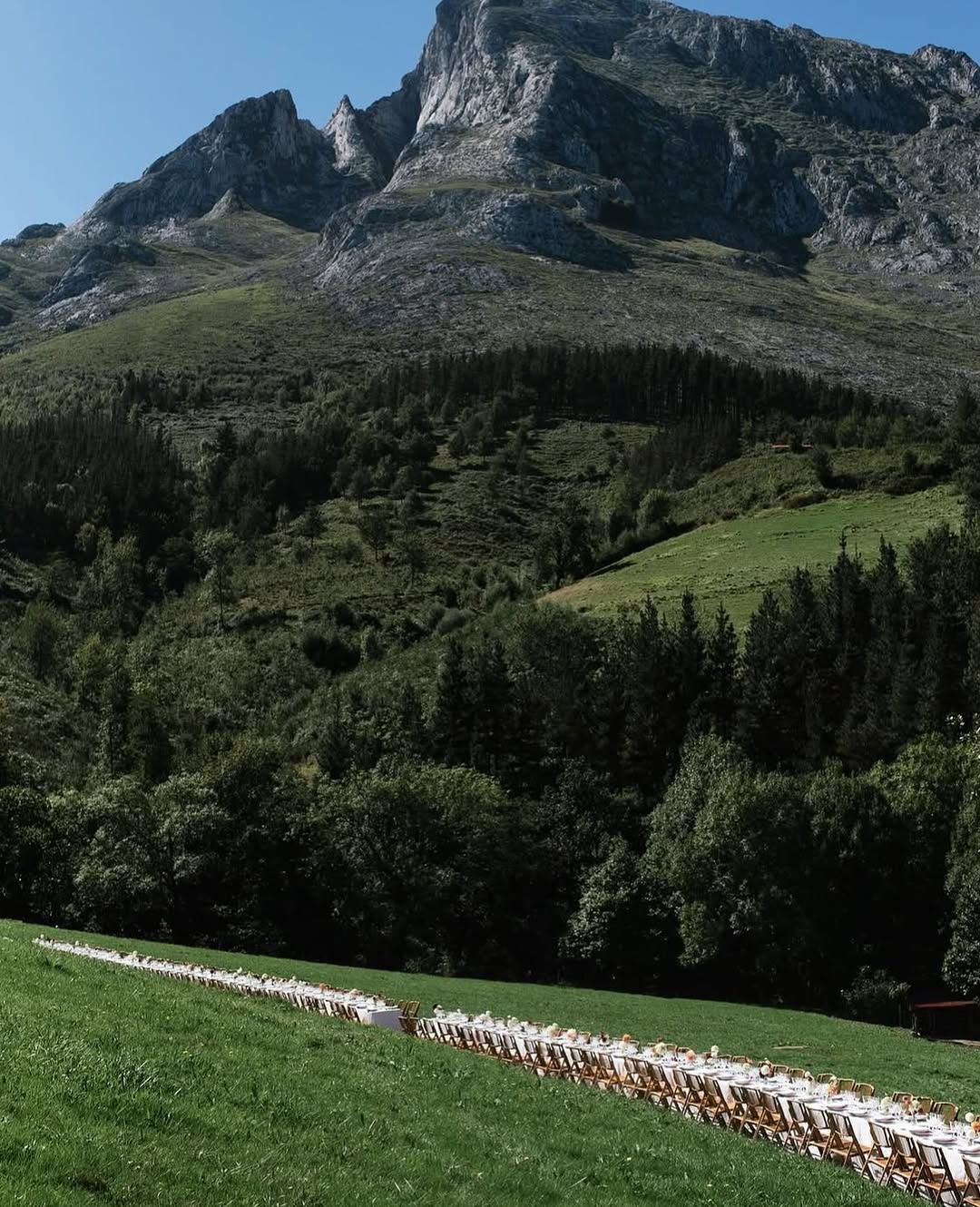
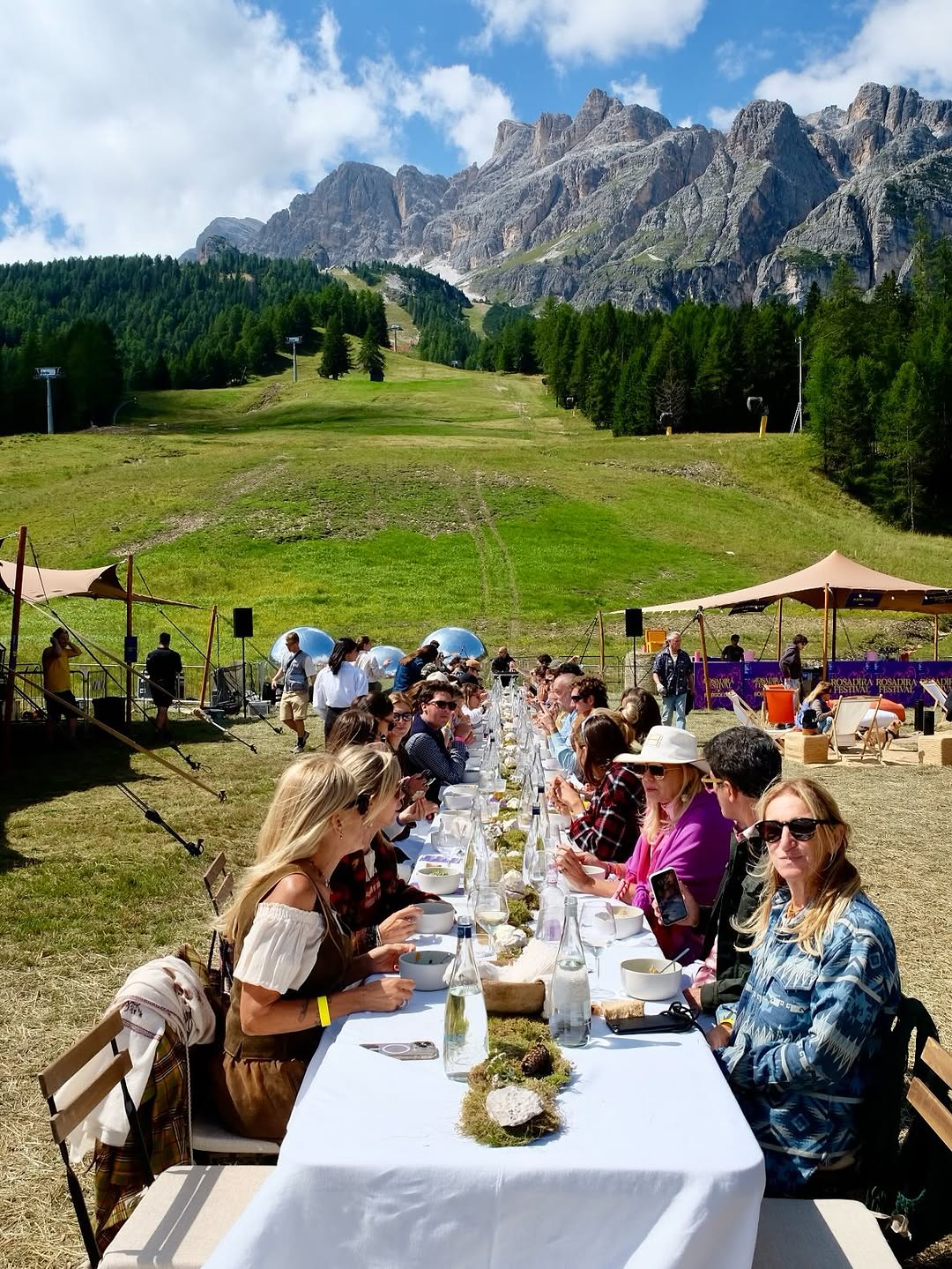
Photo: Davide Capasso, Stephanie Marie Photo, Atodoconfetti, Tavolata
Design: Davide Capasso, Moments Event Planning, Octubre, Tavolata
The Trade-Offs Worth Knowing
An al fresco dinner offers a backdrop no indoor venue can fully fake, and a huge amount of the styling work gets done for free by the landscape and the light. That’s the appeal, and it’s a real one.
The flip side is that none of this comes with a built-in backup plan. Wind, sudden rain, and bugs at dusk are all genuine risks in an open field or forest clearing; uneven ground can make traditional table-and-chair rentals a real headache; and there’s usually no bathroom, kitchen, or power source nearby. Guest comfort over a two- or three-hour dinner also requires careful planning, since a stunning golden-hour setup can turn cold and uncomfortable quickly once the sun actually sets.
For couples who love the look but aren’t willing to gamble entirely on the weather, a structure doesn’t have to cancel out the landscape. A sheer, open-sided canopy or a simple fabric teepee strung above the table can offer shade or light rain cover while keeping the view fully visible on every side, which is a very different result than a fully enclosed marquee that blocks the setting out completely. It’s a reasonable middle ground for anyone who still wants the landscape to be the main event.
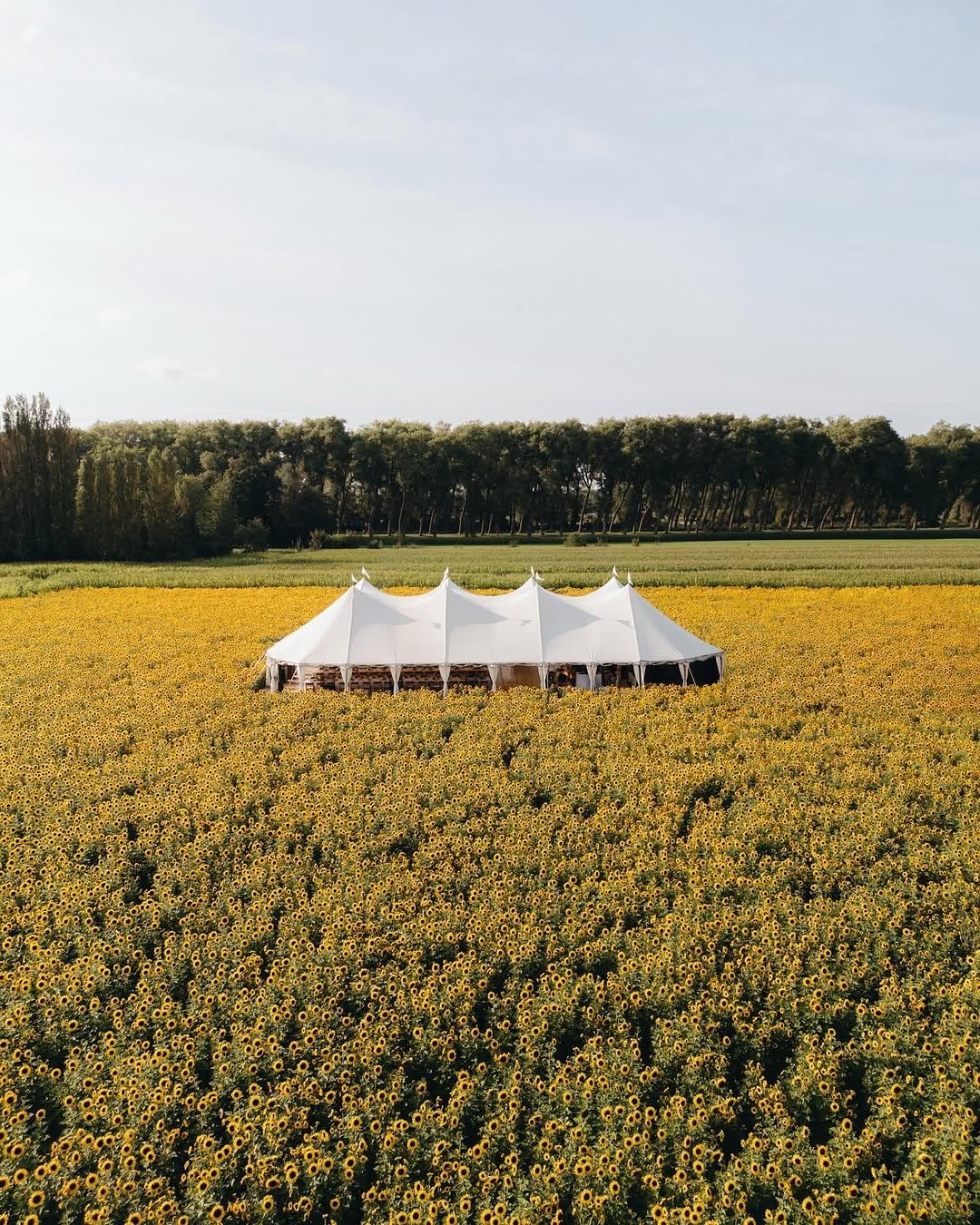
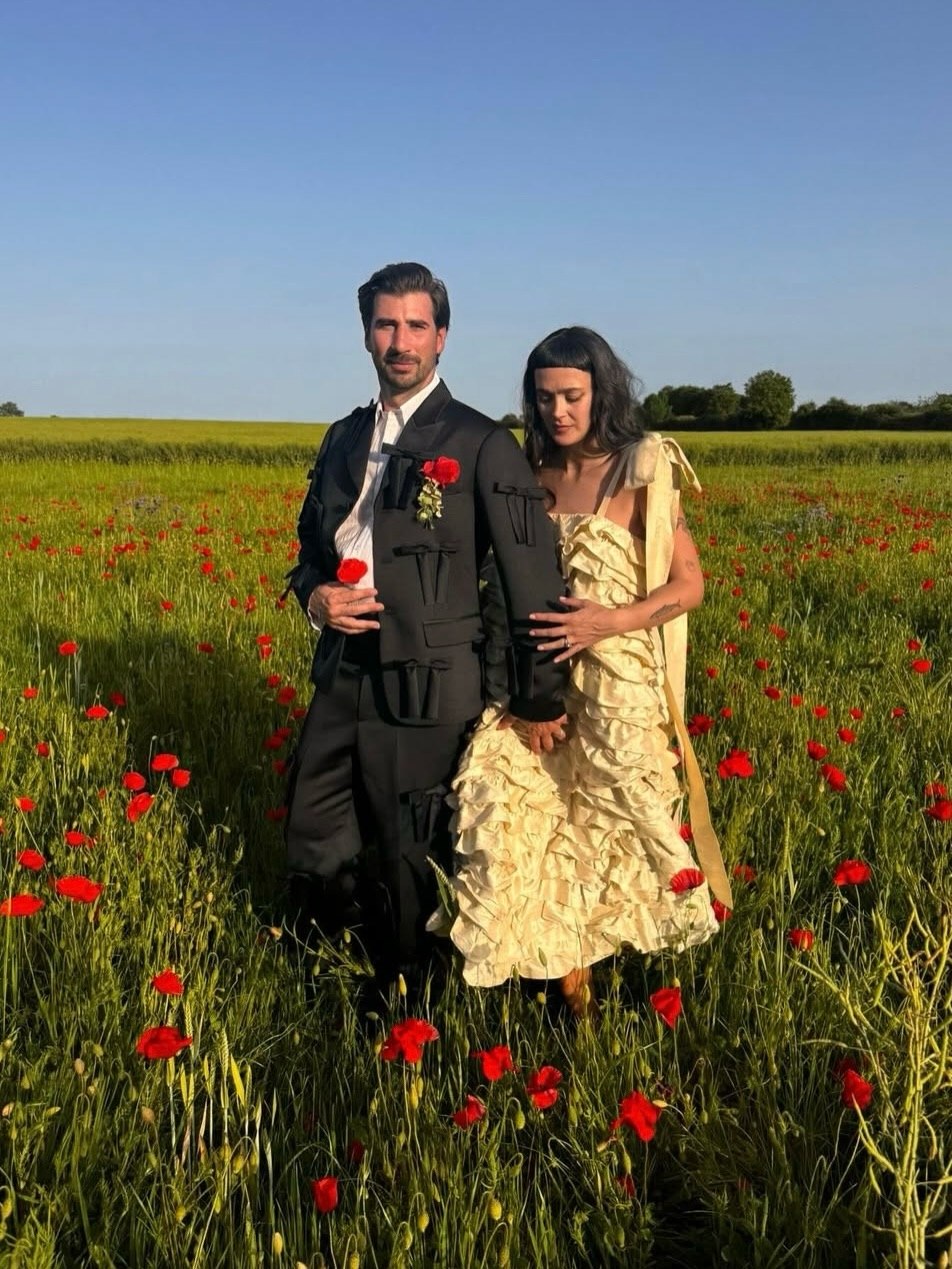
Photo: Tabloo Margot, Courtesy of Abigail Bergstrom