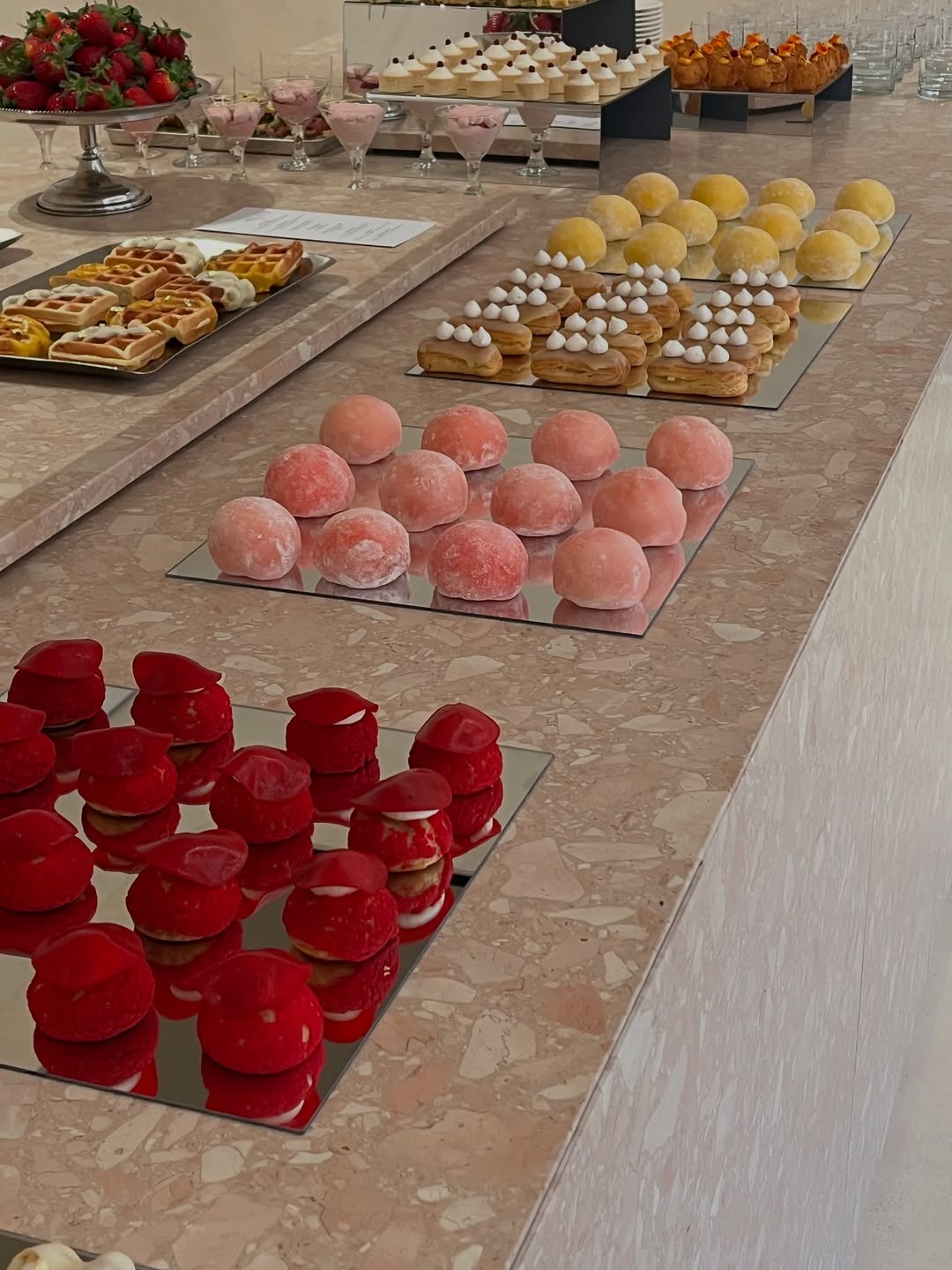
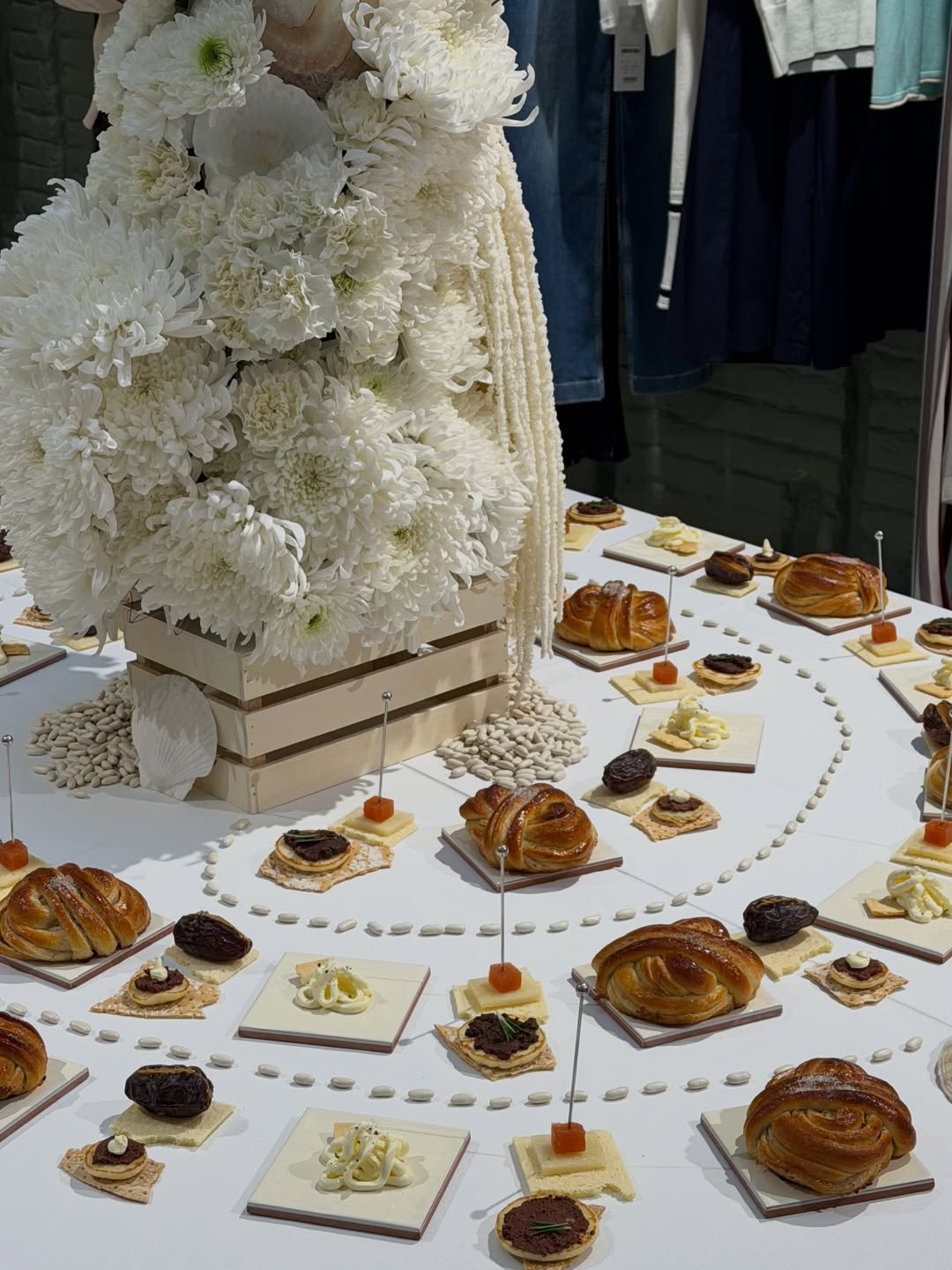
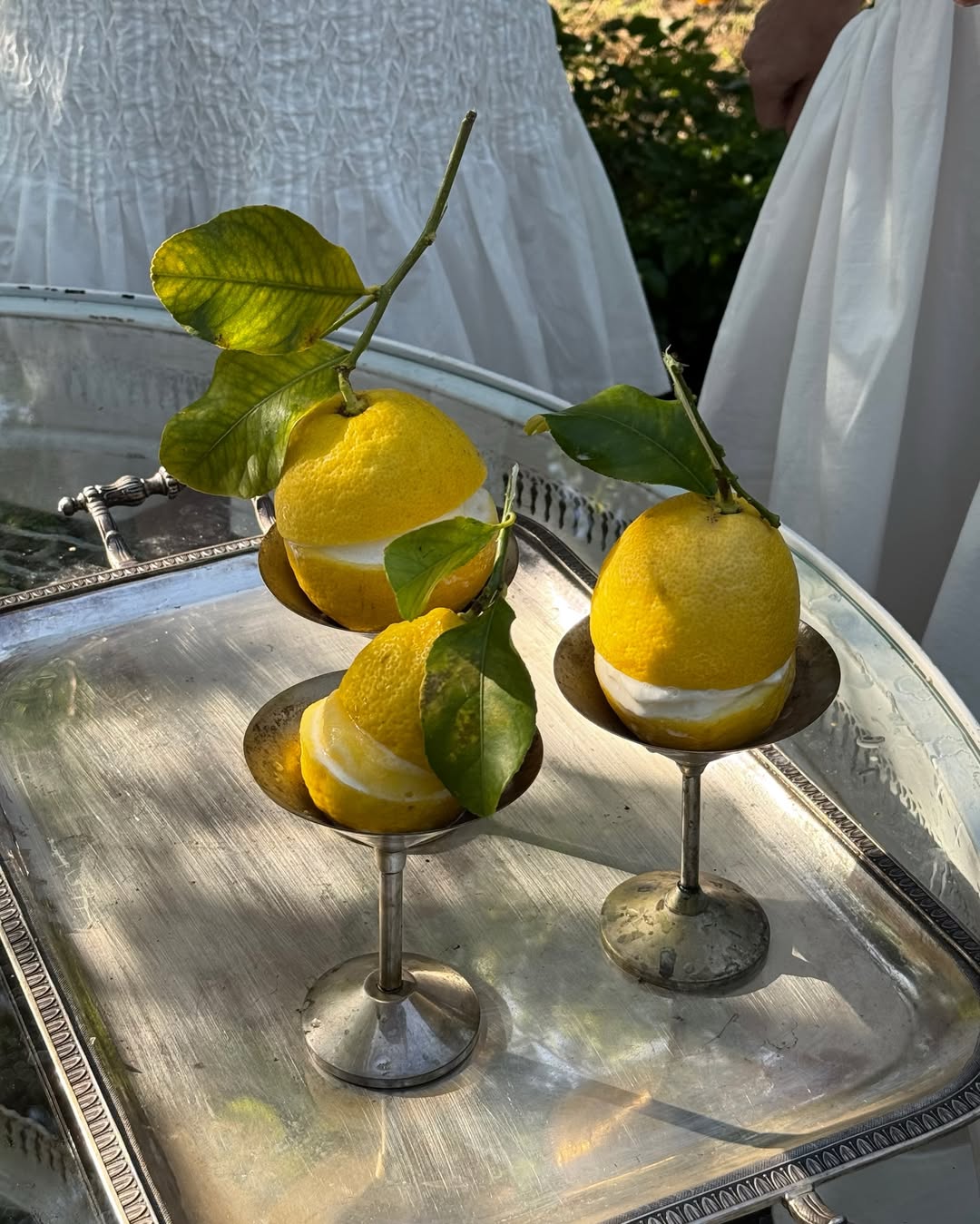
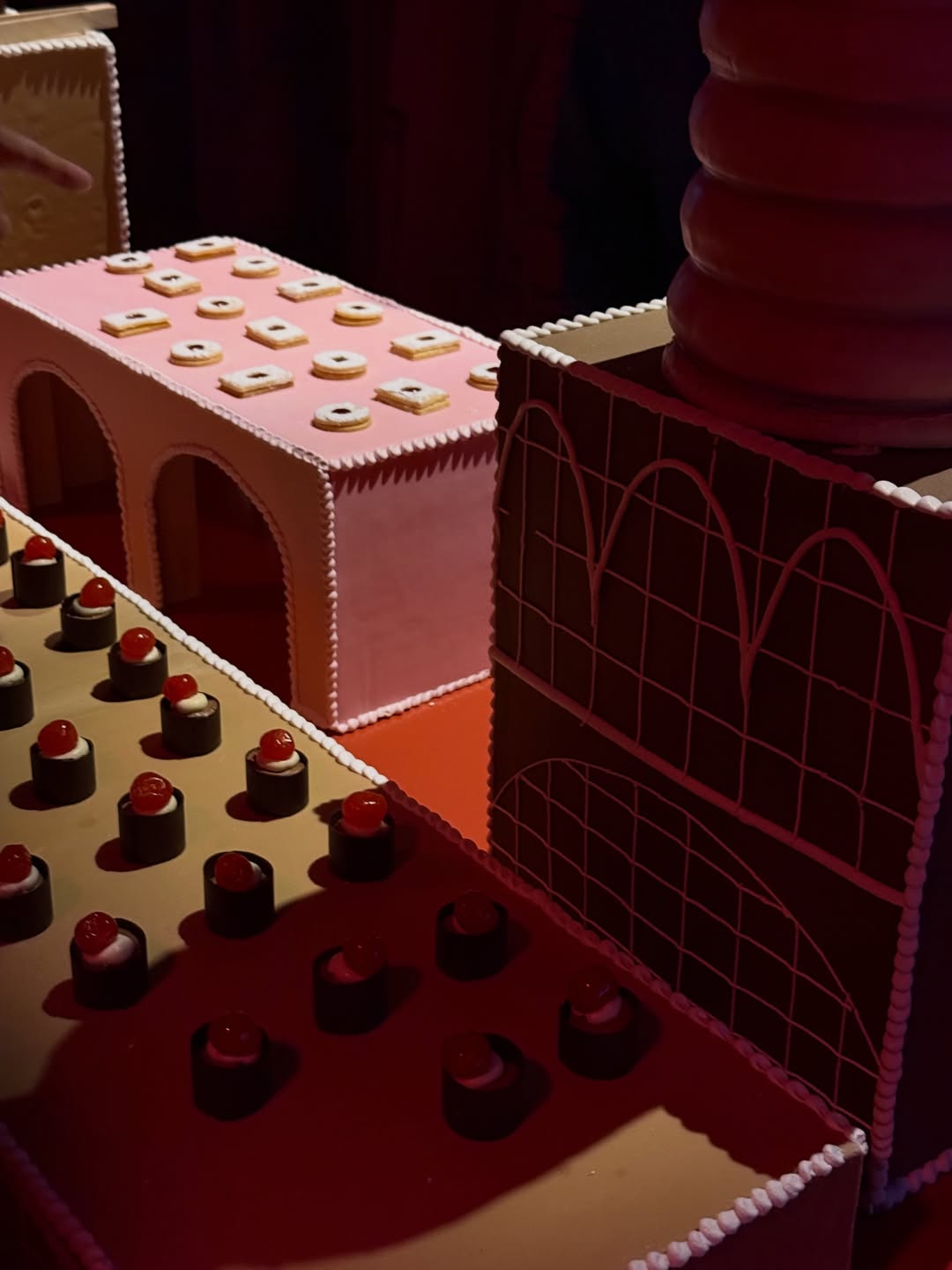
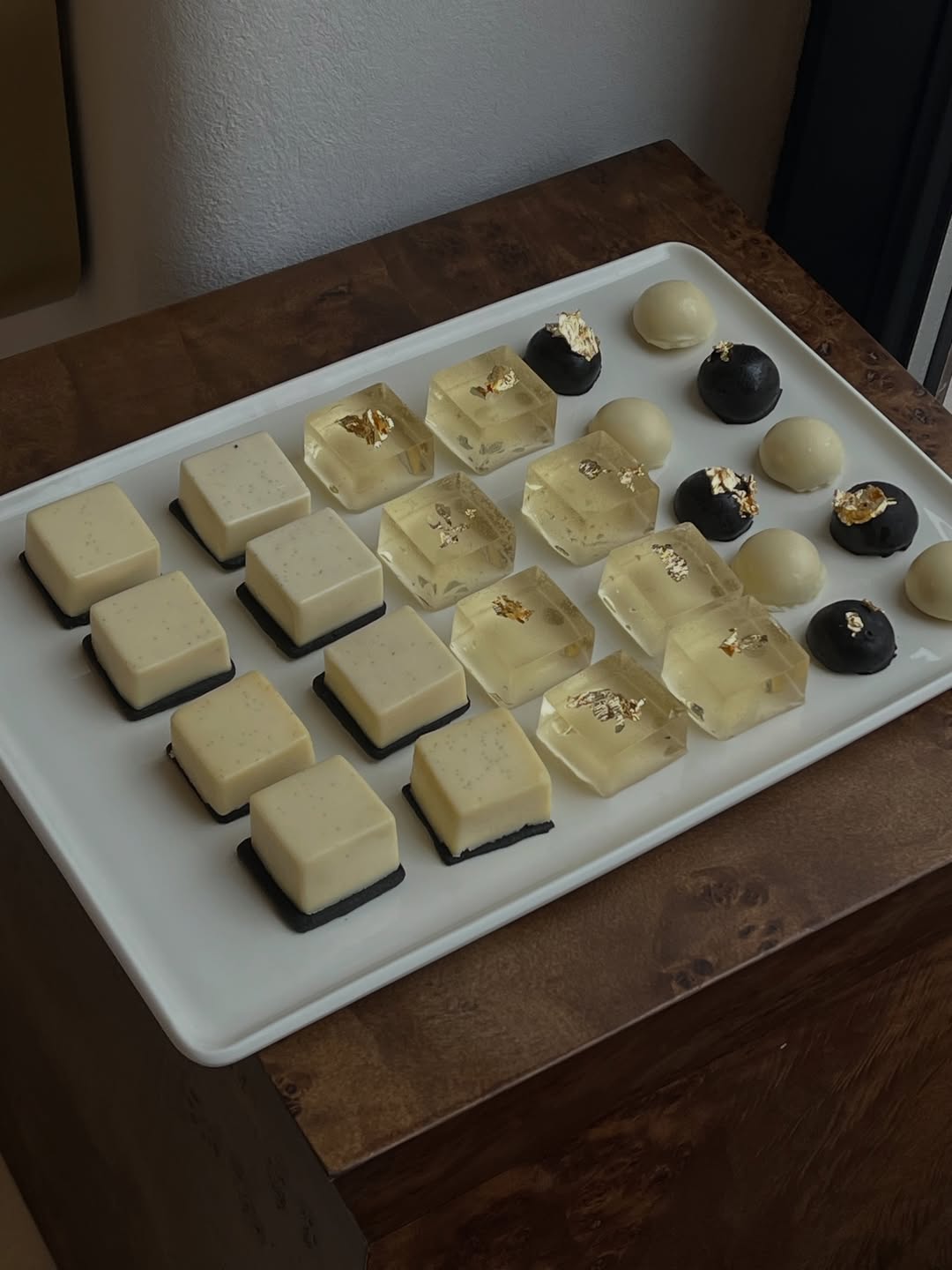
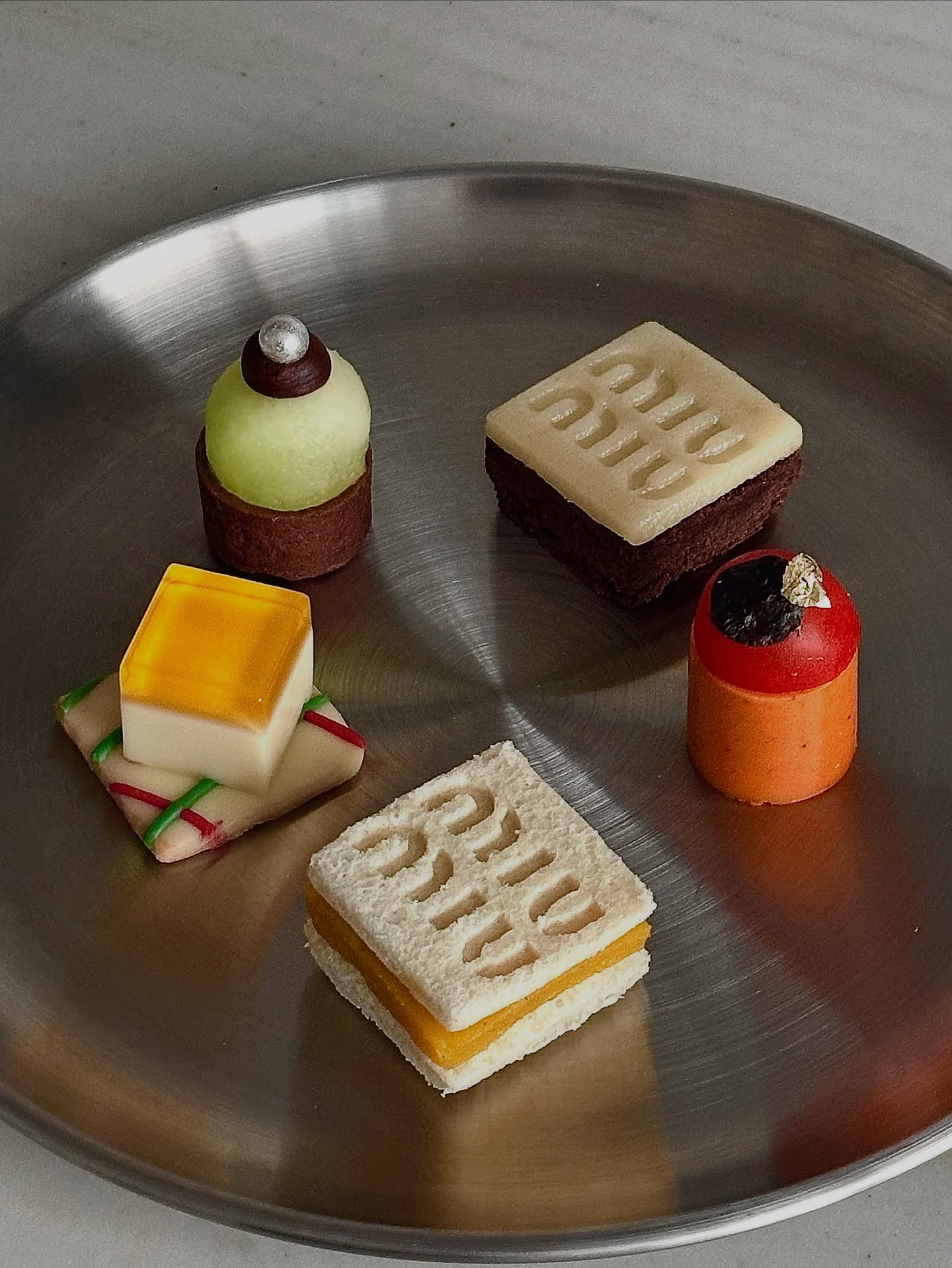
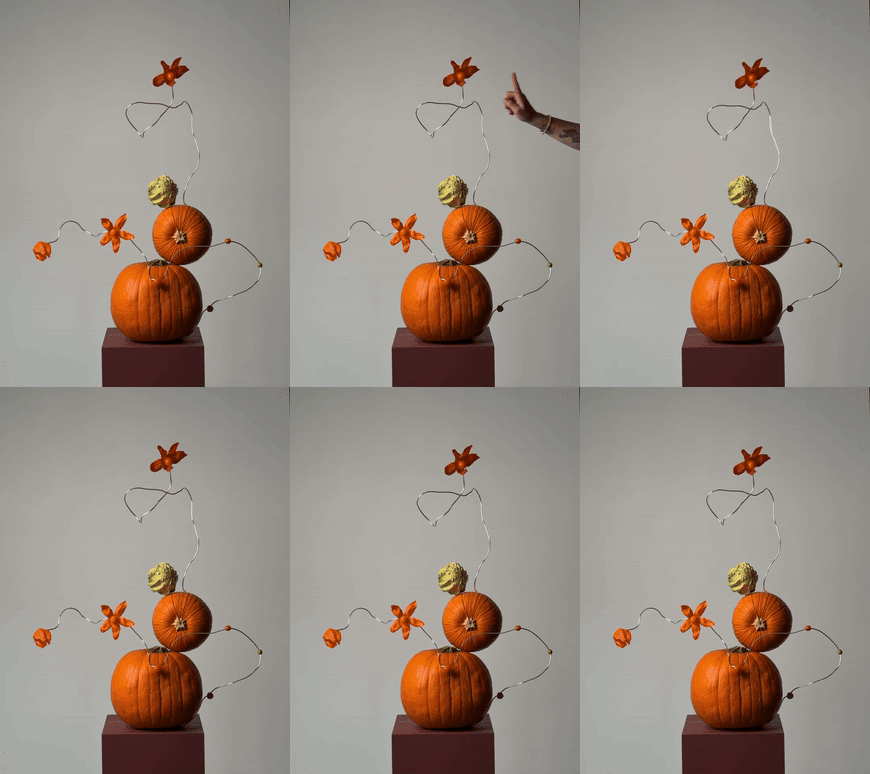
Color story, concept, visual logic — the modern wedding dessert table is closer to an installation than a buffet. The vessels matter as much as what’s in them. The arrangement, the height, the negative space: all deliberate. Here’s what that looks like in practice.
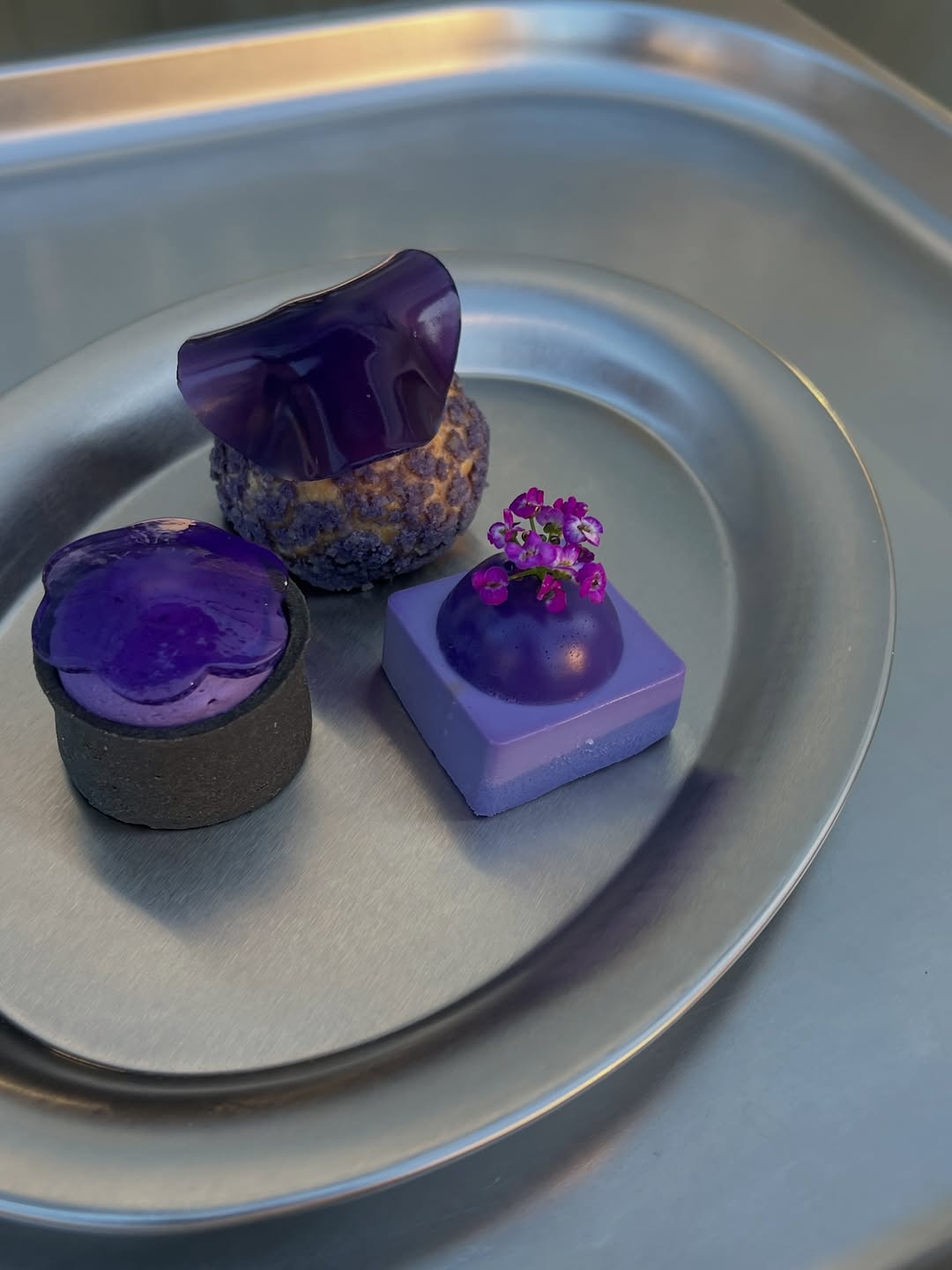
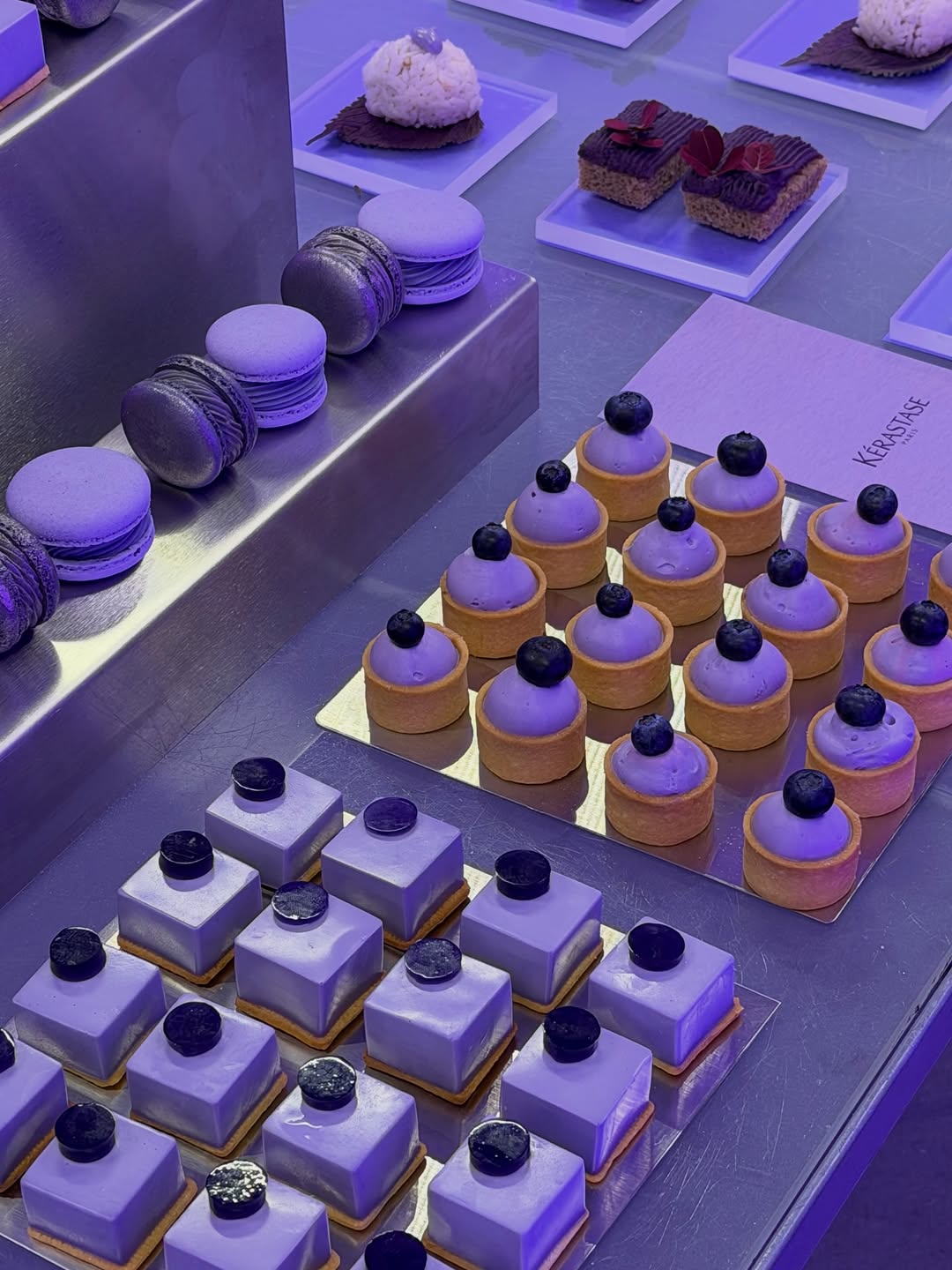
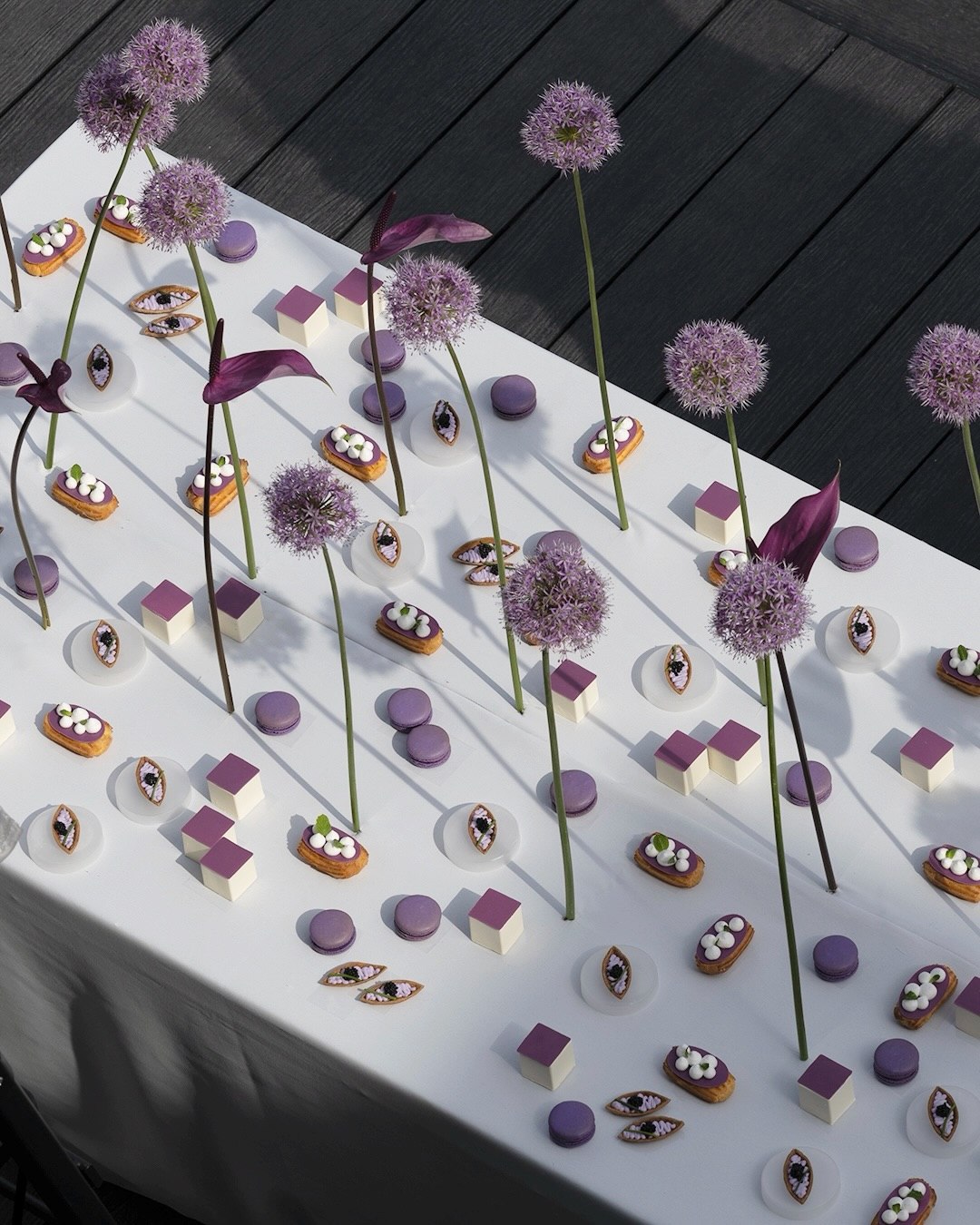
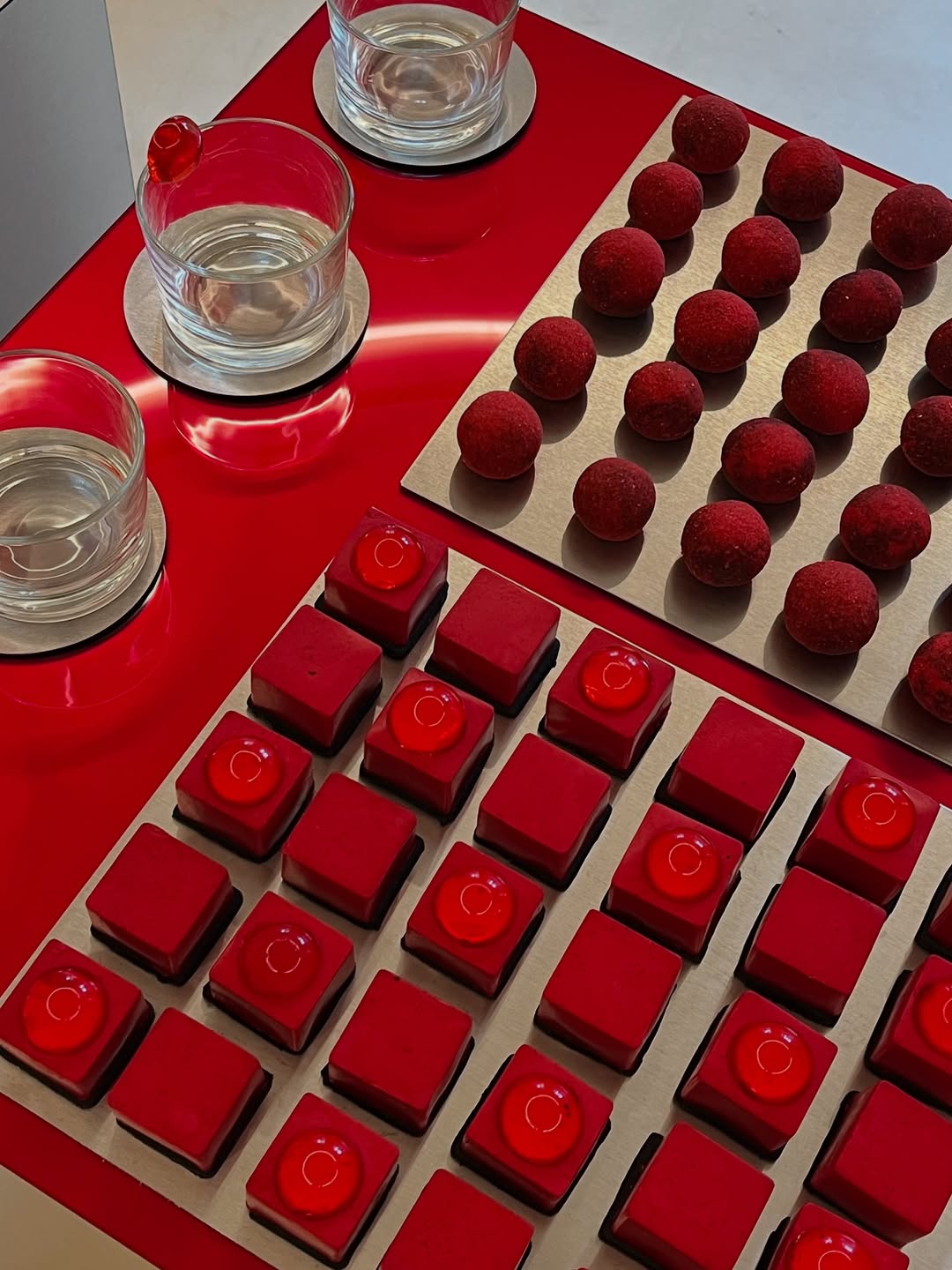
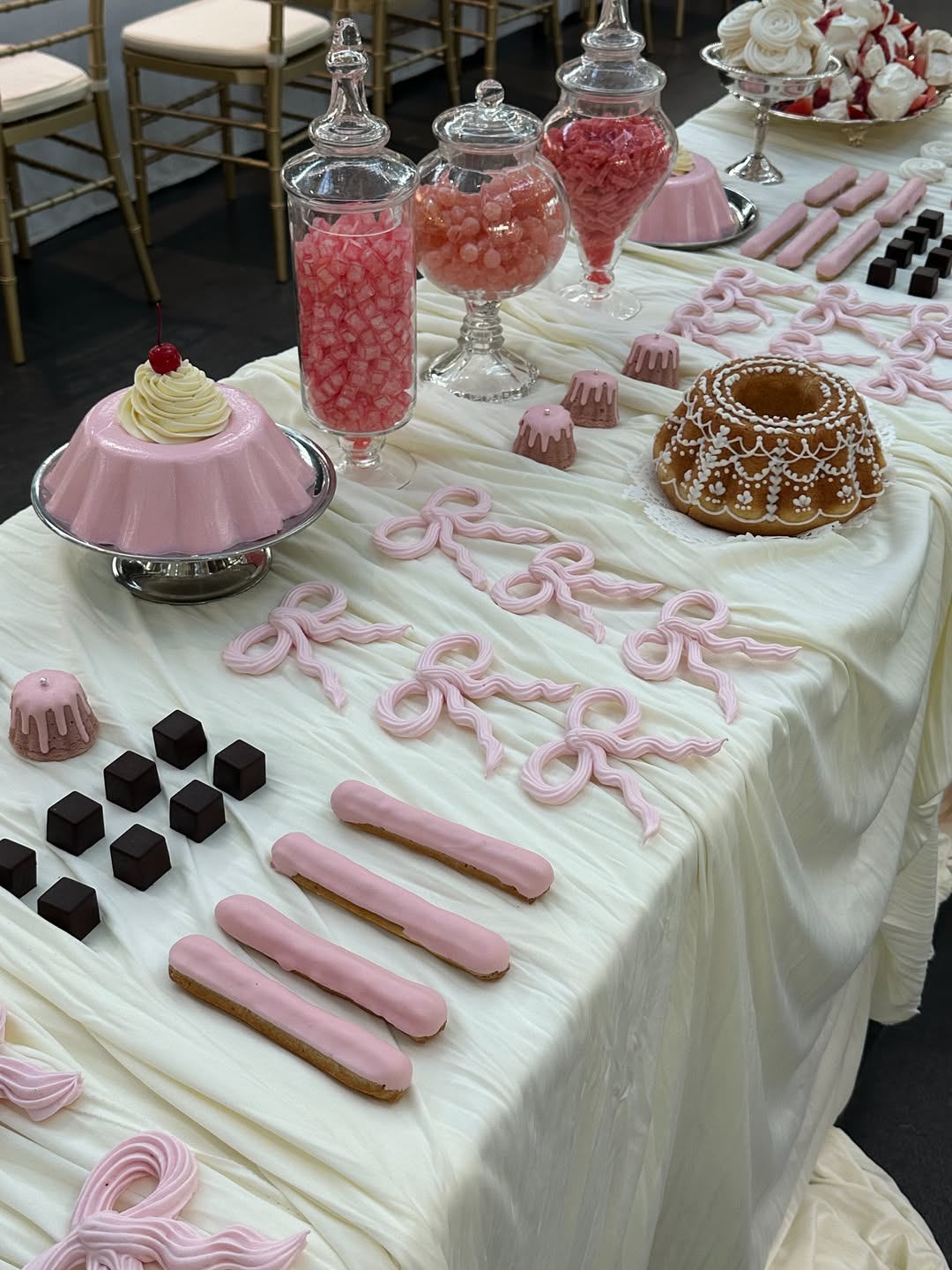
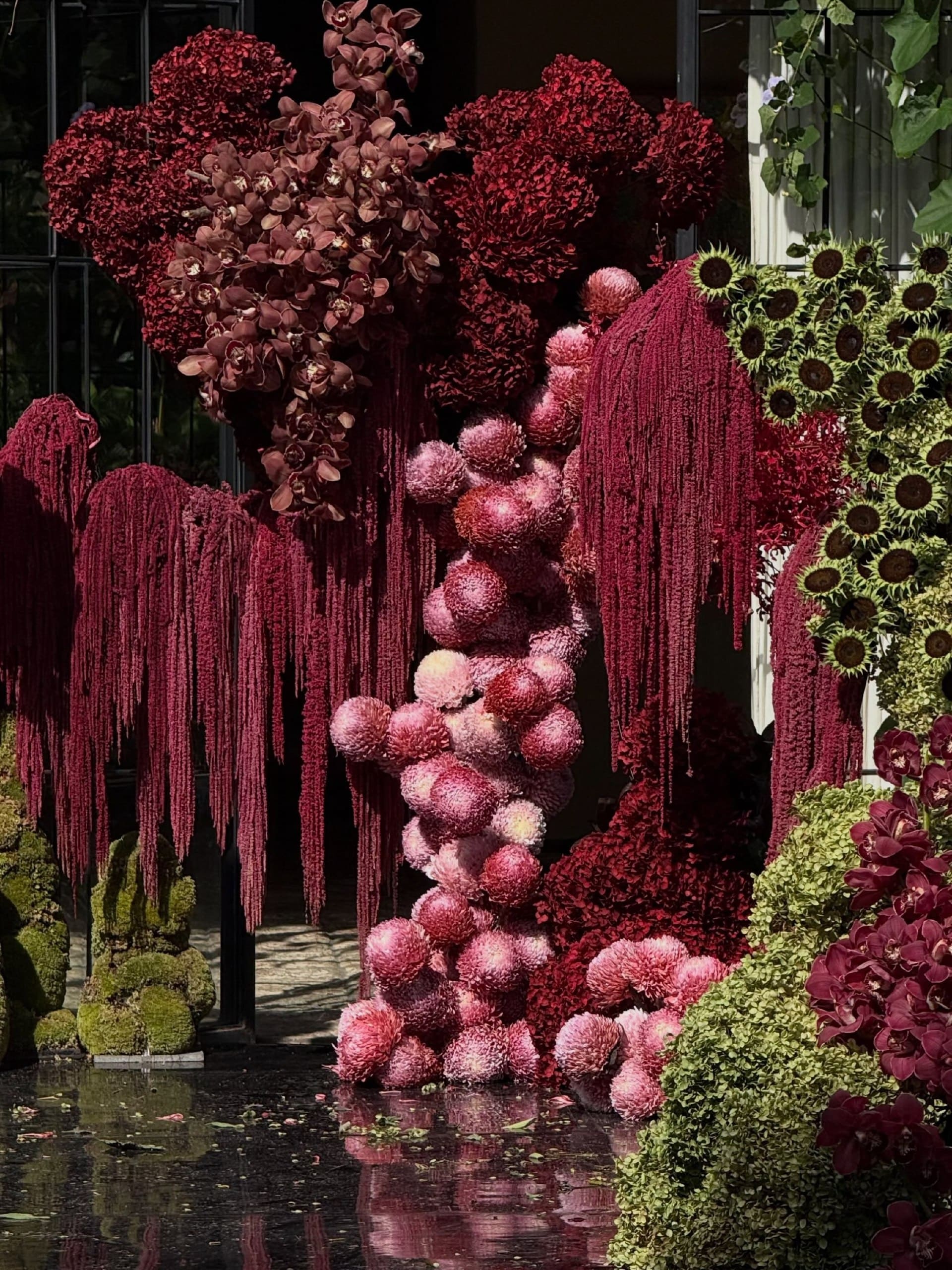
An all-red table works because it is entirely red. A purple table works because the macarons, tarts, flowers, jelly cubes, and background are all in conversation with one another. Introducing a contrasting color without reason dilutes the effect — the palette is the concept, and it has to hold.
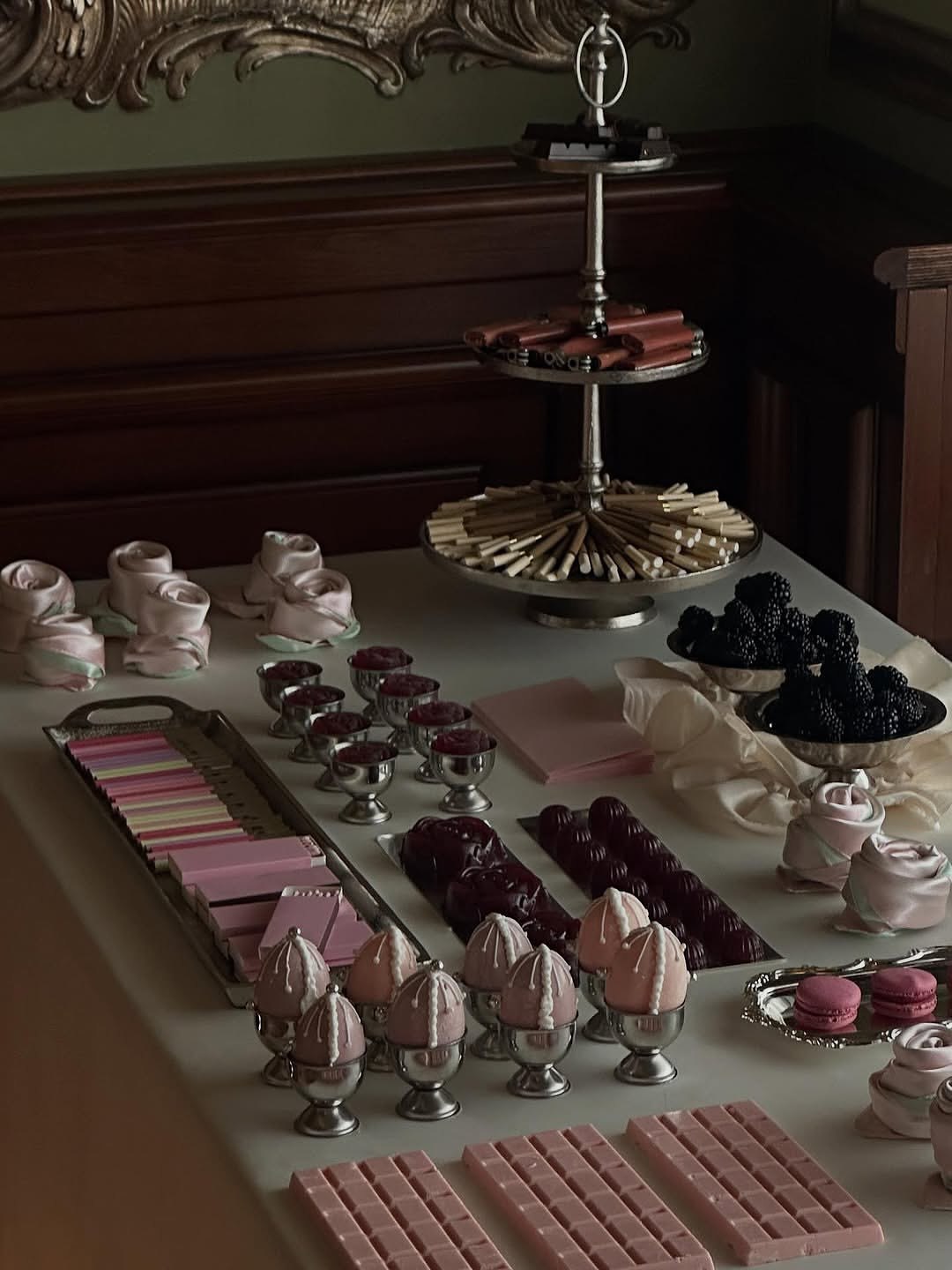
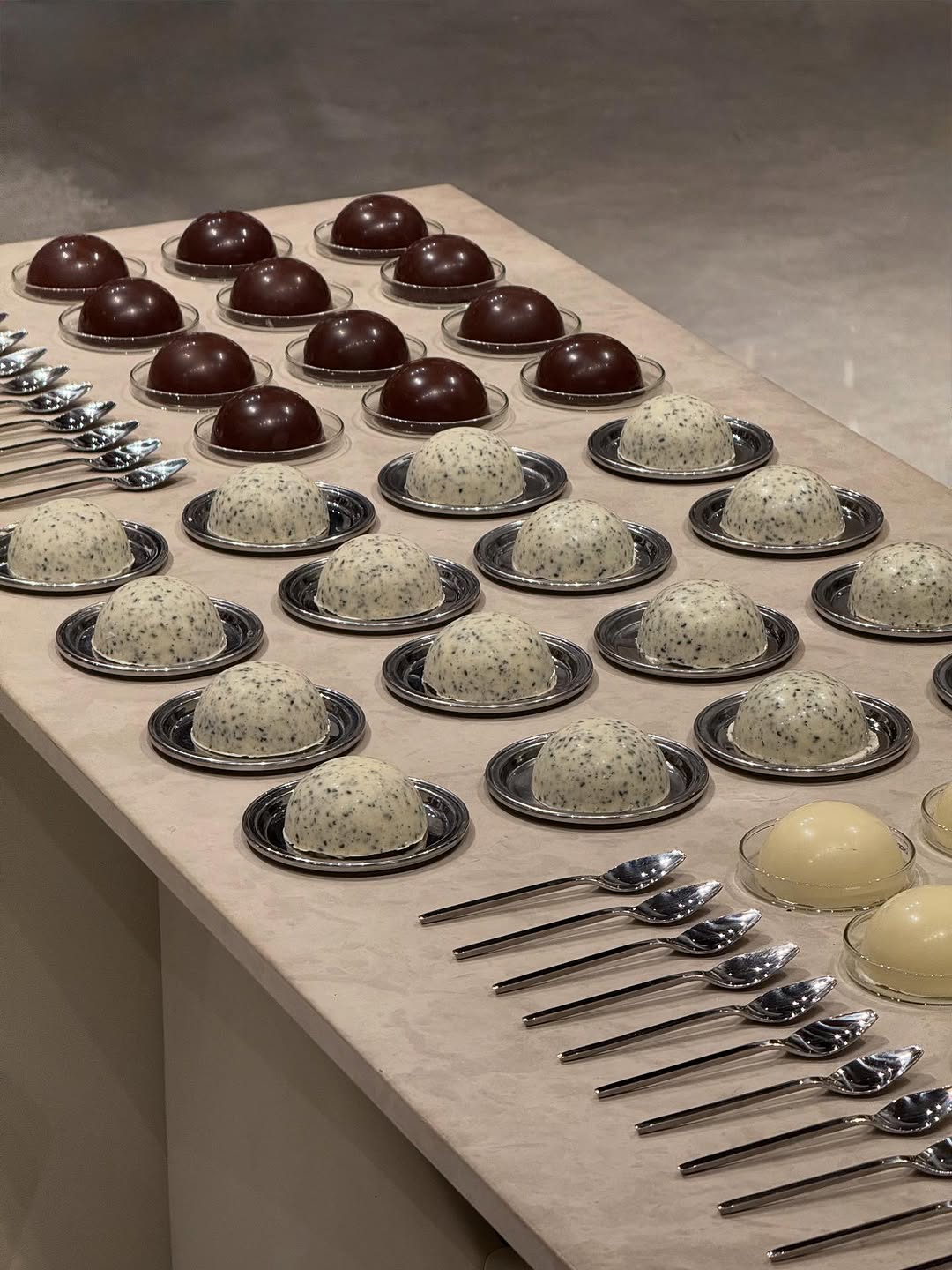
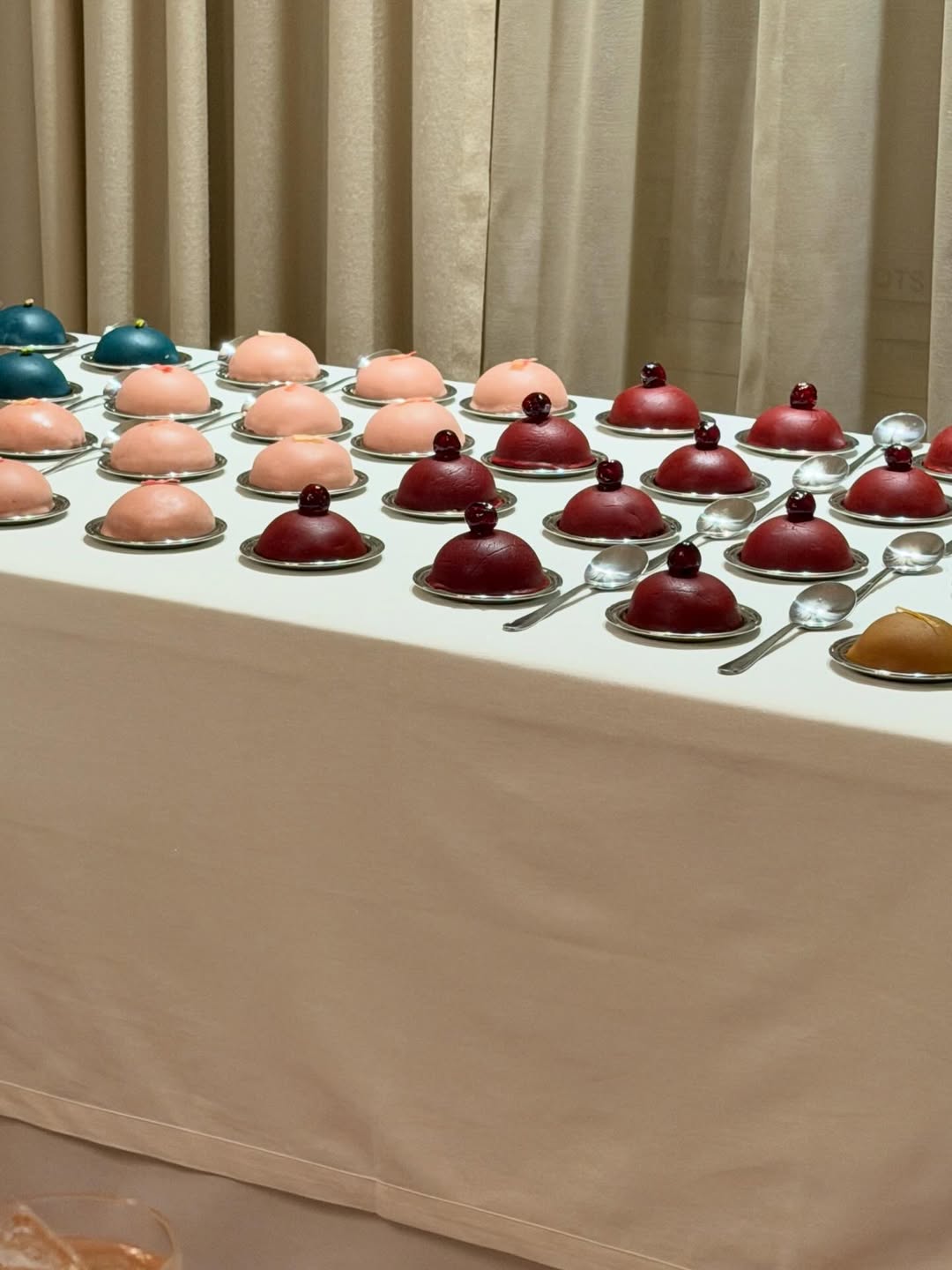
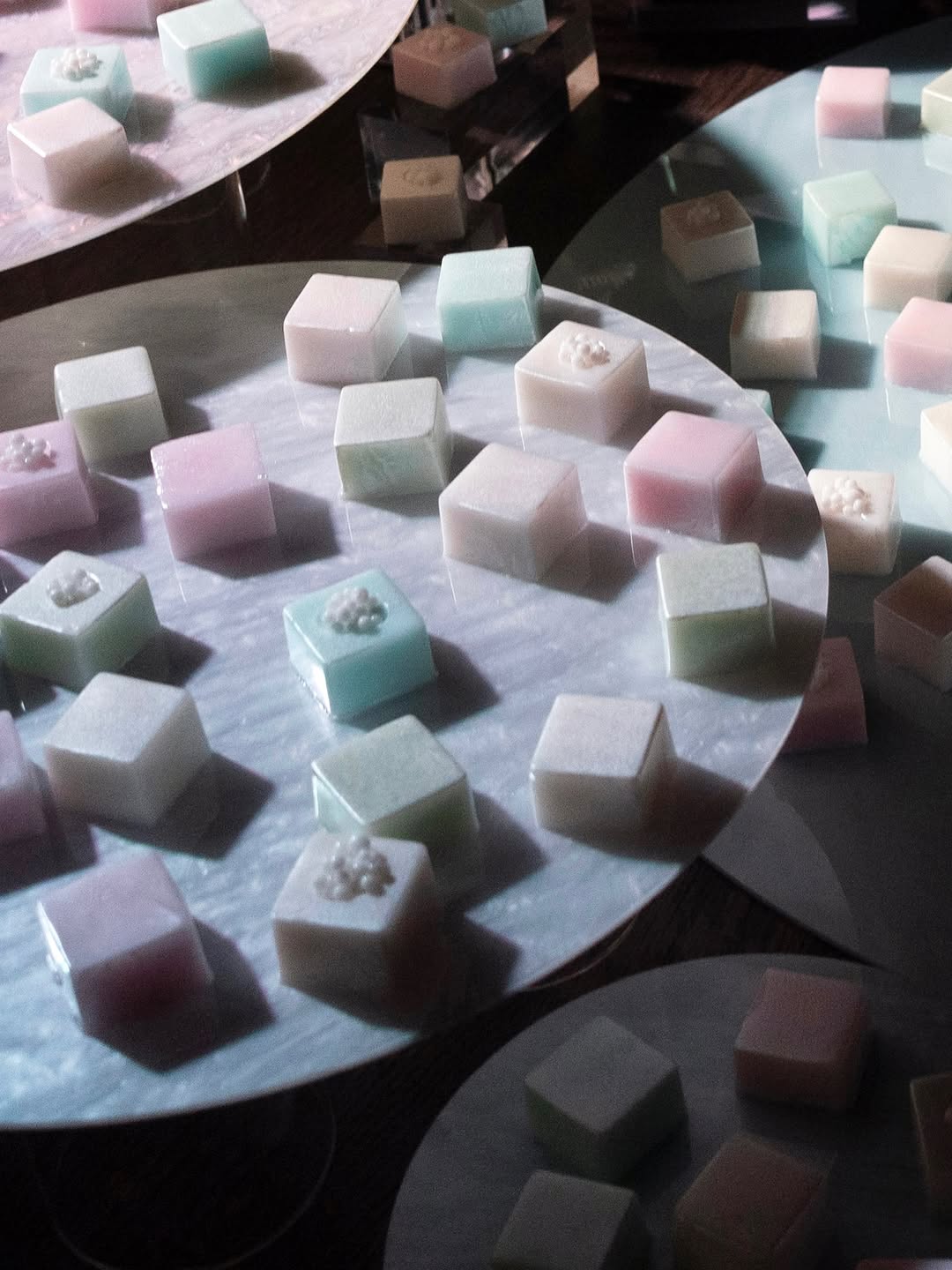
That doesn’t mean a single flat hue. Some of the most considered tables use gradated shades: 60 dome desserts moving from blush to deep burgundy to teal, each on its own silver saucer, the color shift doing all the work. Others stay within a family — pearly pastel coconut jelly cubes in mint, lilac, and white arranged on iridescent platters, the whole table reading soft and luminous without a single strong accent.
Individual items don’t read from a distance. Groups of twelve, twenty, fifty — that’s when something becomes a visual statement.
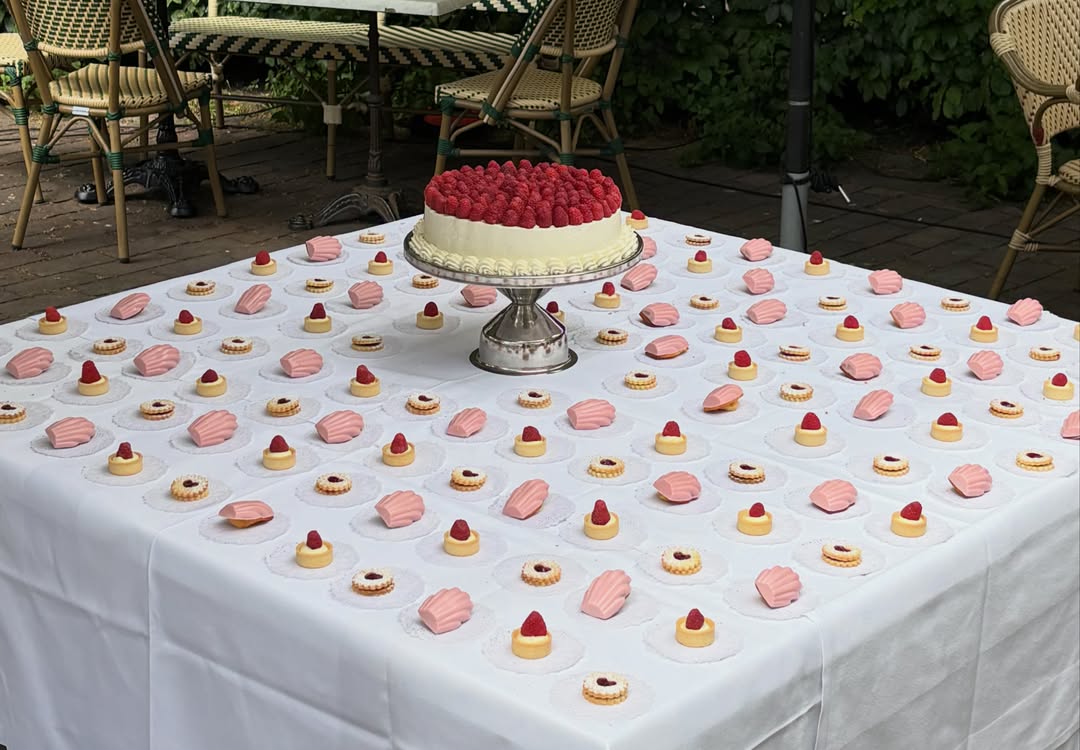
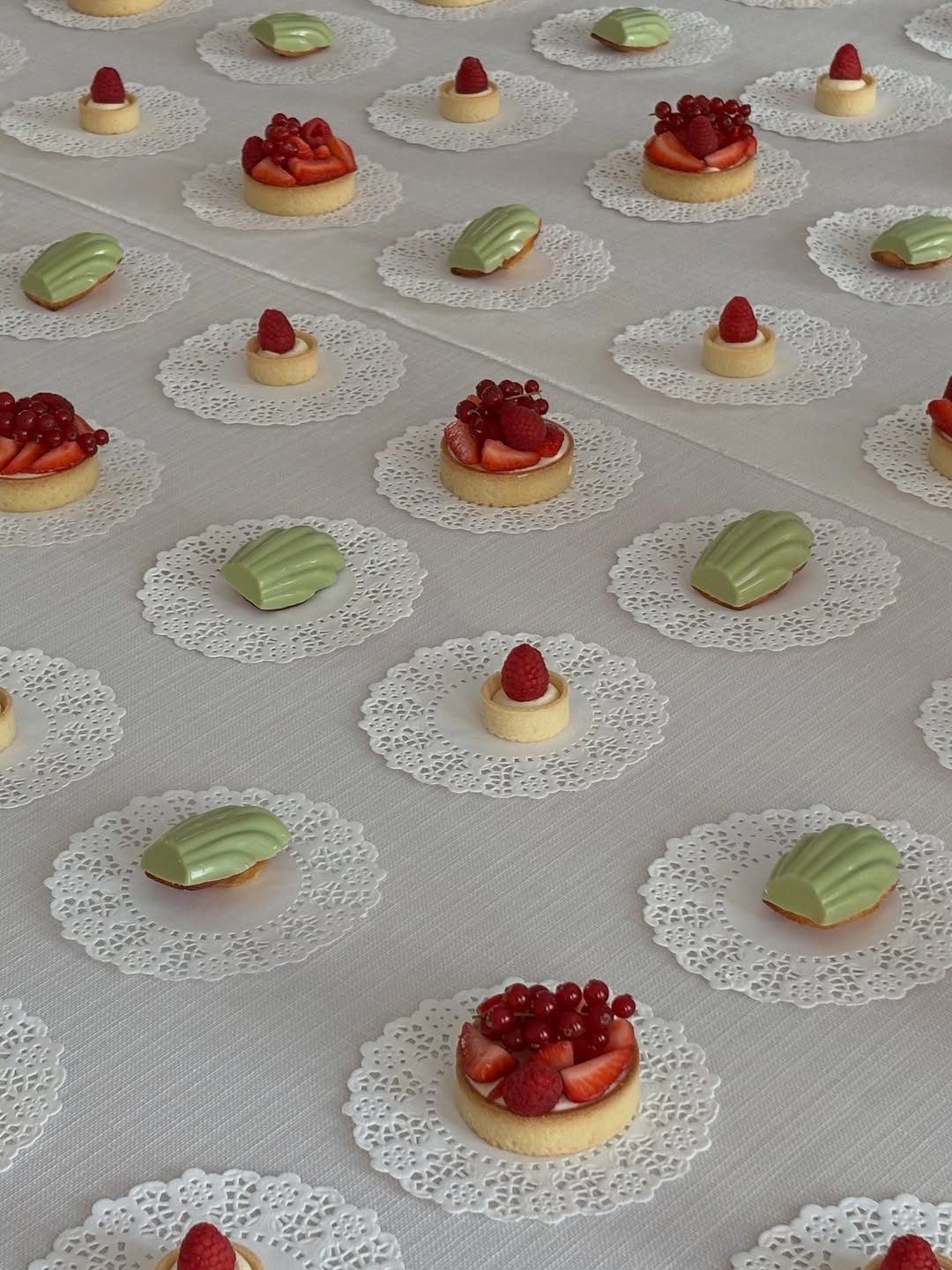
Some of the most striking examples work through strict repetition: dozens of individual dome desserts, lined up in rows across a long table, form a pattern. The power comes from multiplicity. The same logic applies to a table covered edge-to-edge in mini pastries: pink-glazed madeleines alternating with raspberry tartlets, each unit on its own doily-lined circle, the whole surface turning into something like a mosaic. But embracing deliberate asymmetry and scatter works just as well.
Think in Layers
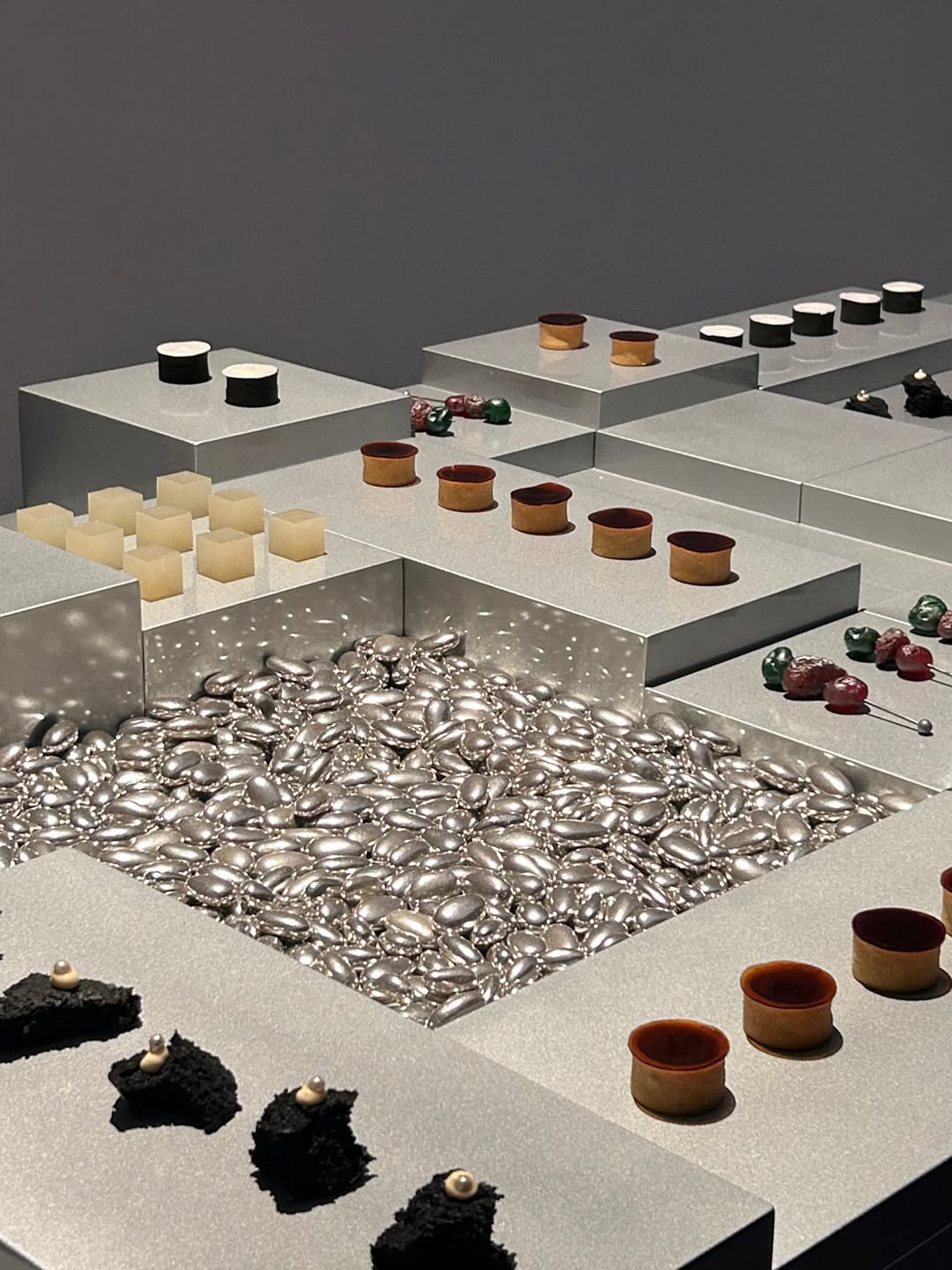
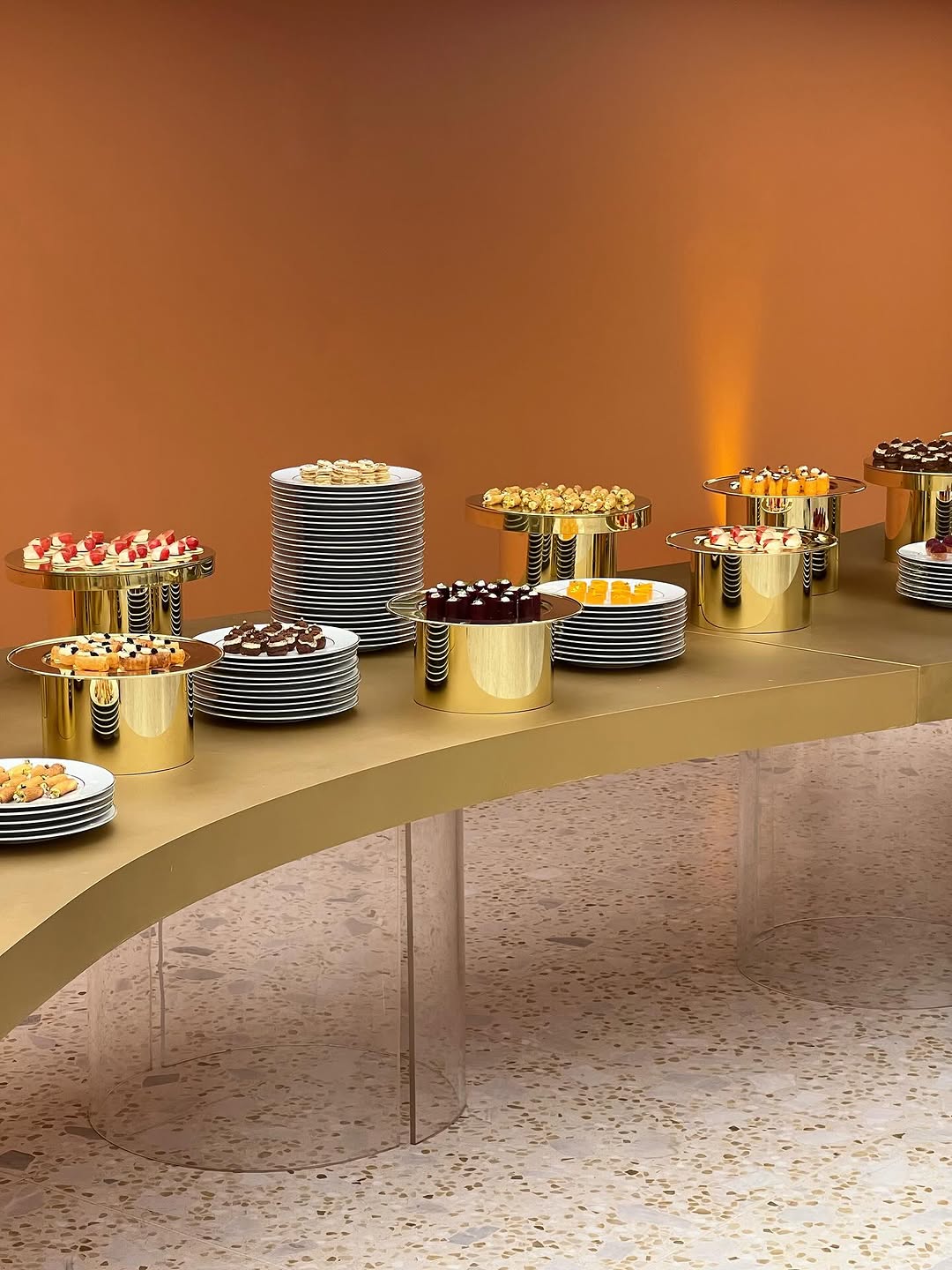
The moment levels are introduced — through risers, stepped platforms, stands of different heights, or the table structure itself — the display gains rhythm and a reason to be circled. Height can also do real work beyond aesthetics: it organizes, separates categories, guides the eye from one zone to the next. The vertical dimension is where a table stops looking like catering and starts looking intentional.
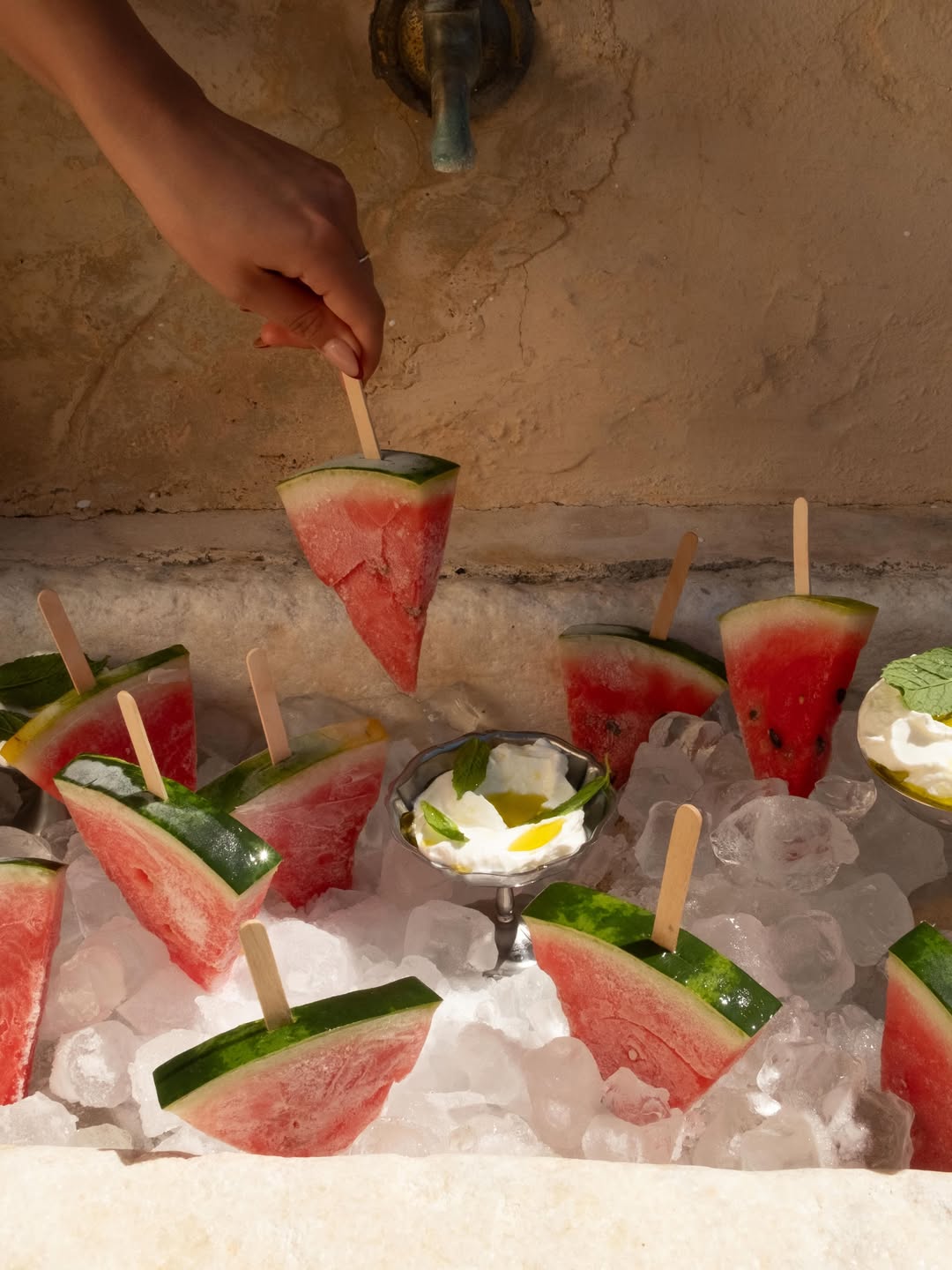
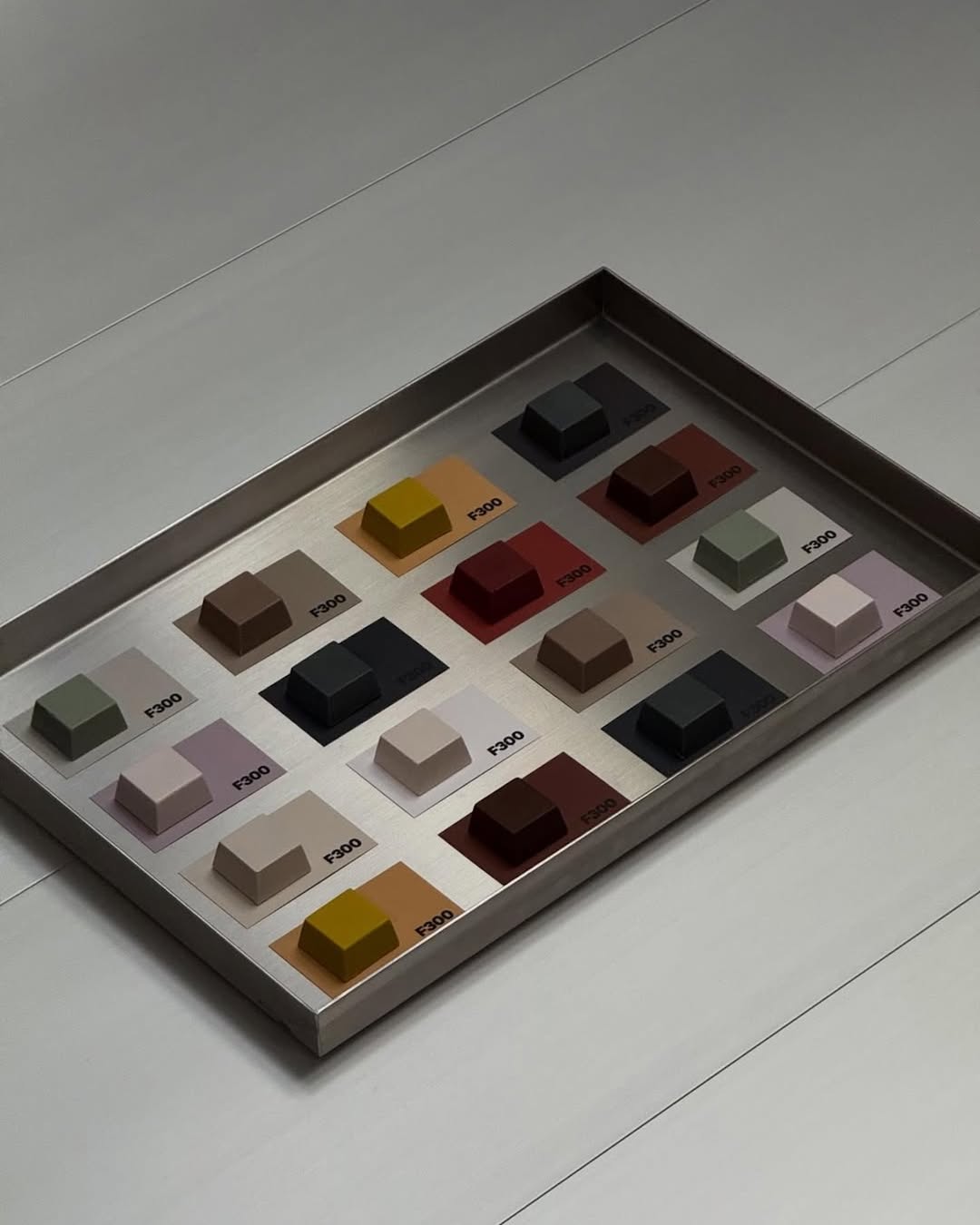
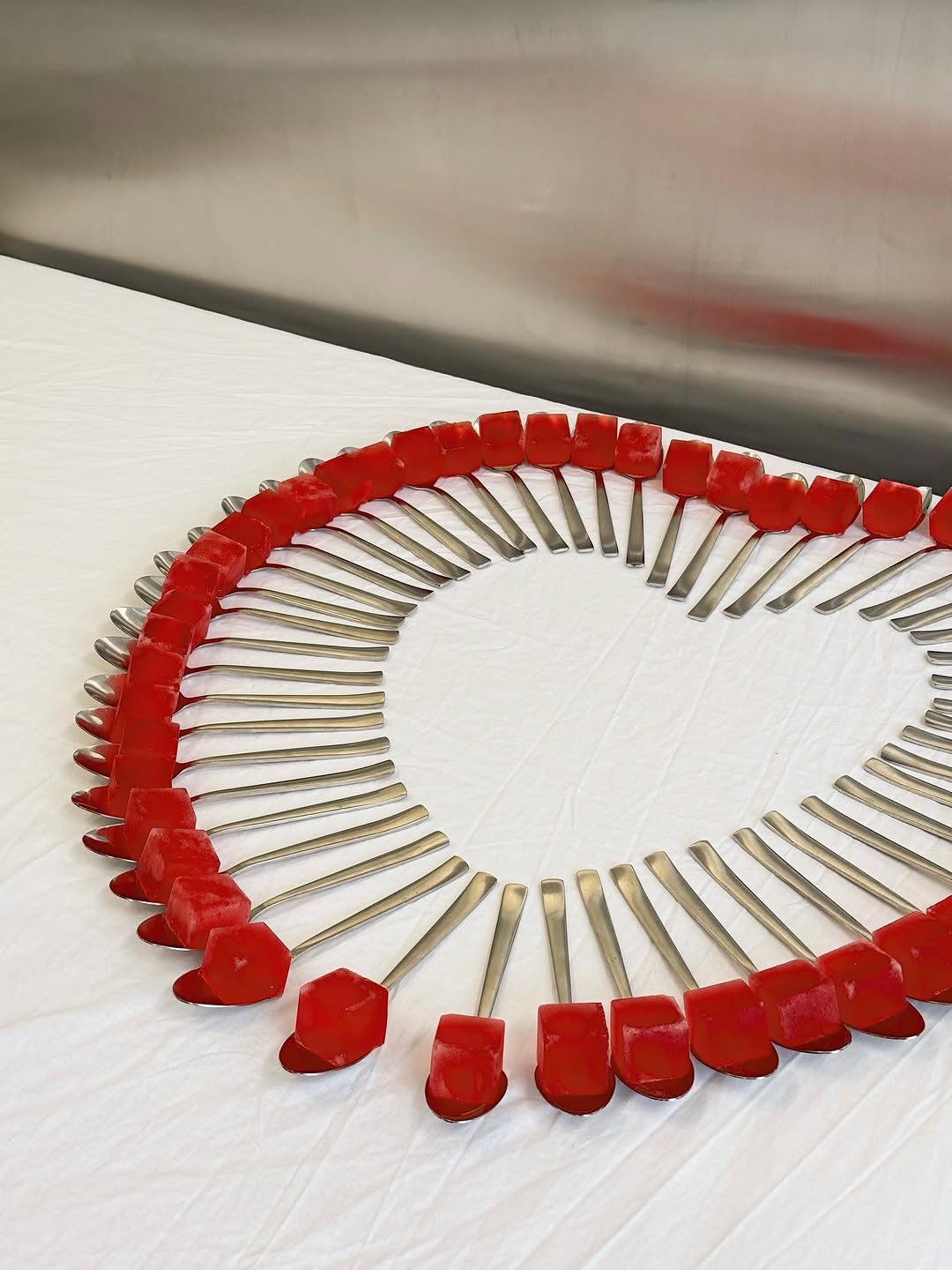
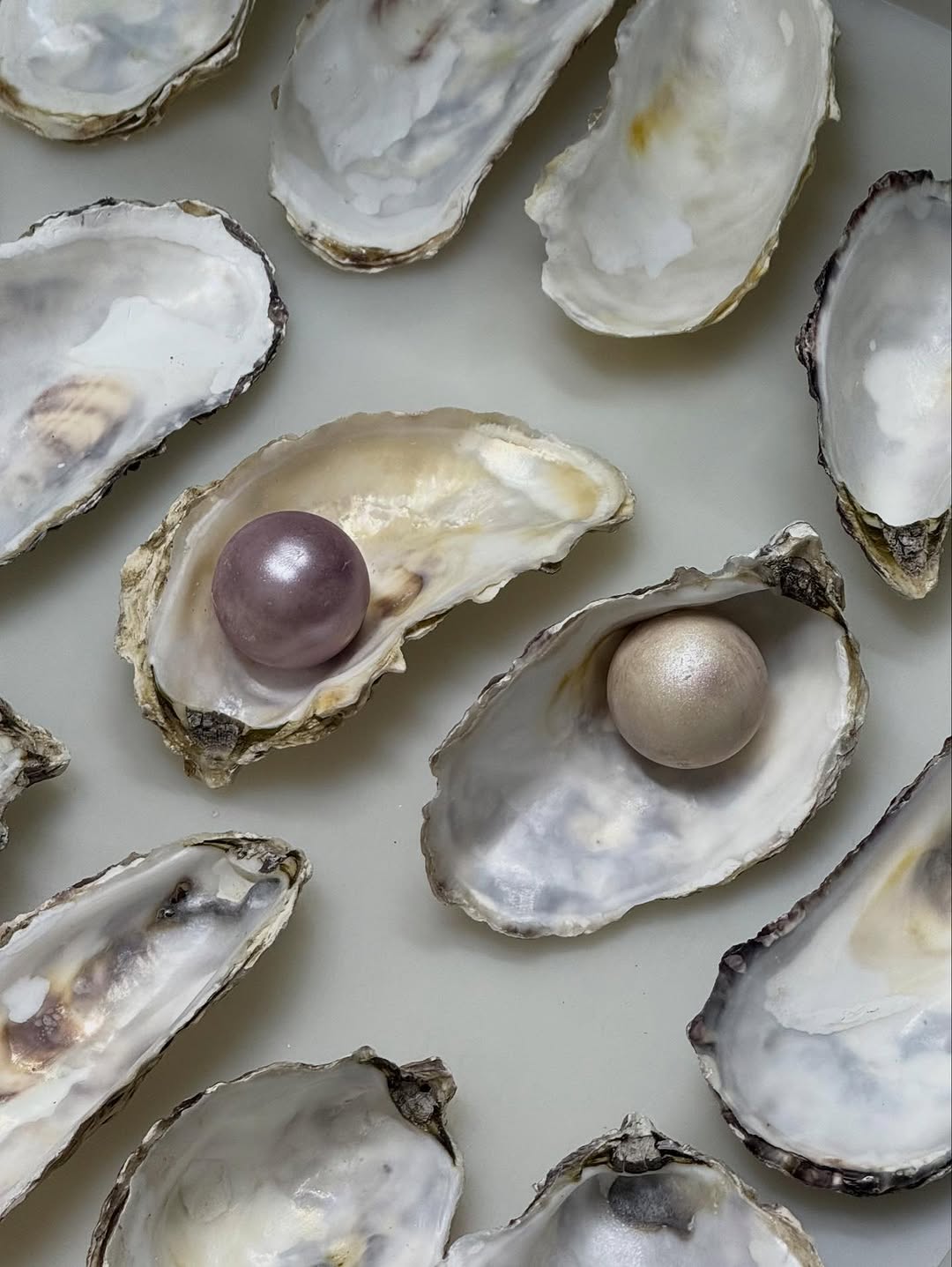
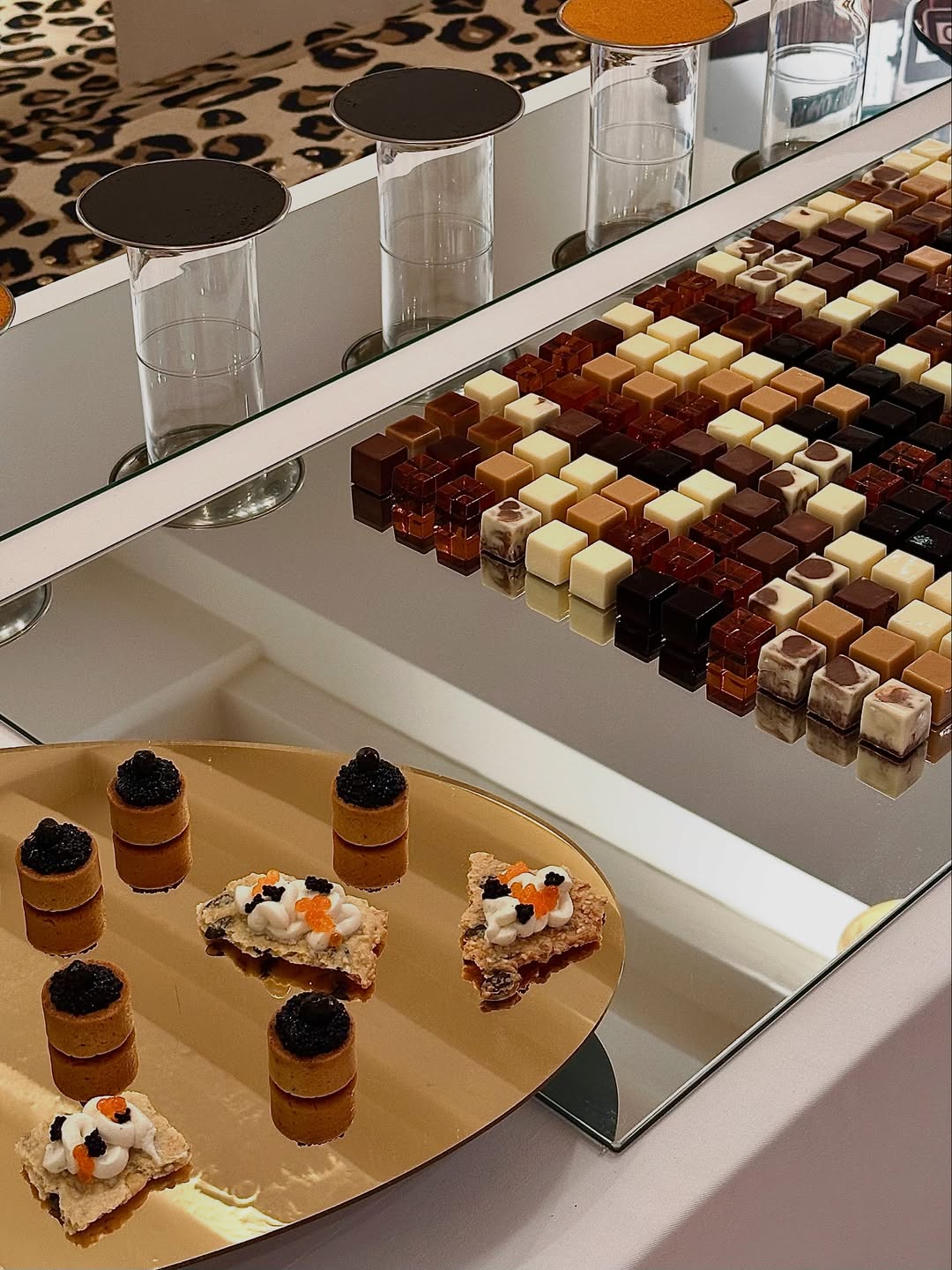
The specific, unexpected touch is what guests remember and what photographs best. Take a closer look at pearl-shaped chocolate bonbons nestled individually into real oyster shells, red gelée cubes fanned into a perfect spiral on silver spoons, a tray of chocolate bonbons styled to look like a paint swatch reference chart, or watermelon wedges on popsicle sticks buried in crushed ice, a small silver bowl of labneh drizzled with olive oil nestled between them. None of these ideas are complicated. All of them are specific. That’s the difference.
The Table as Social Experience
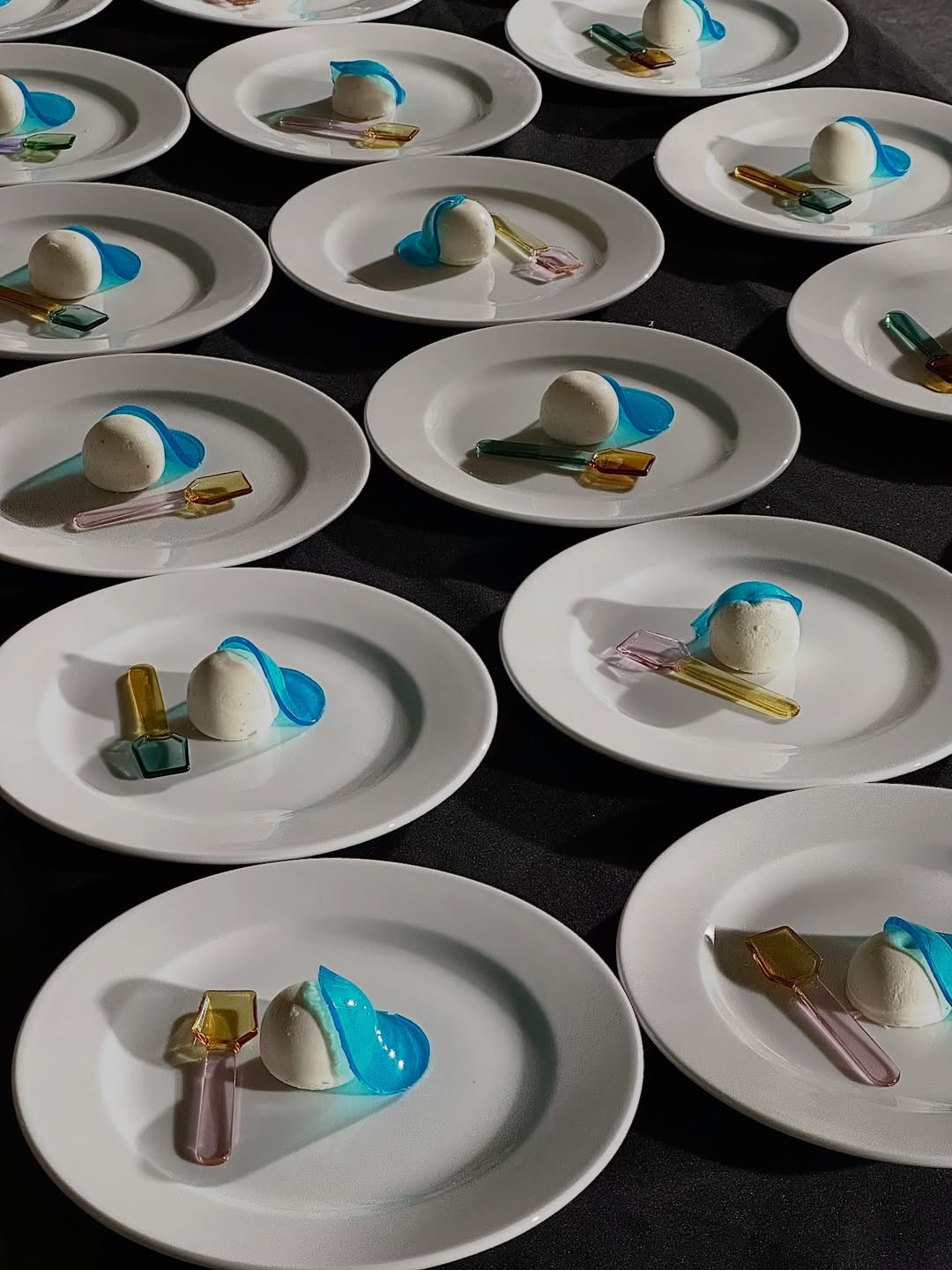
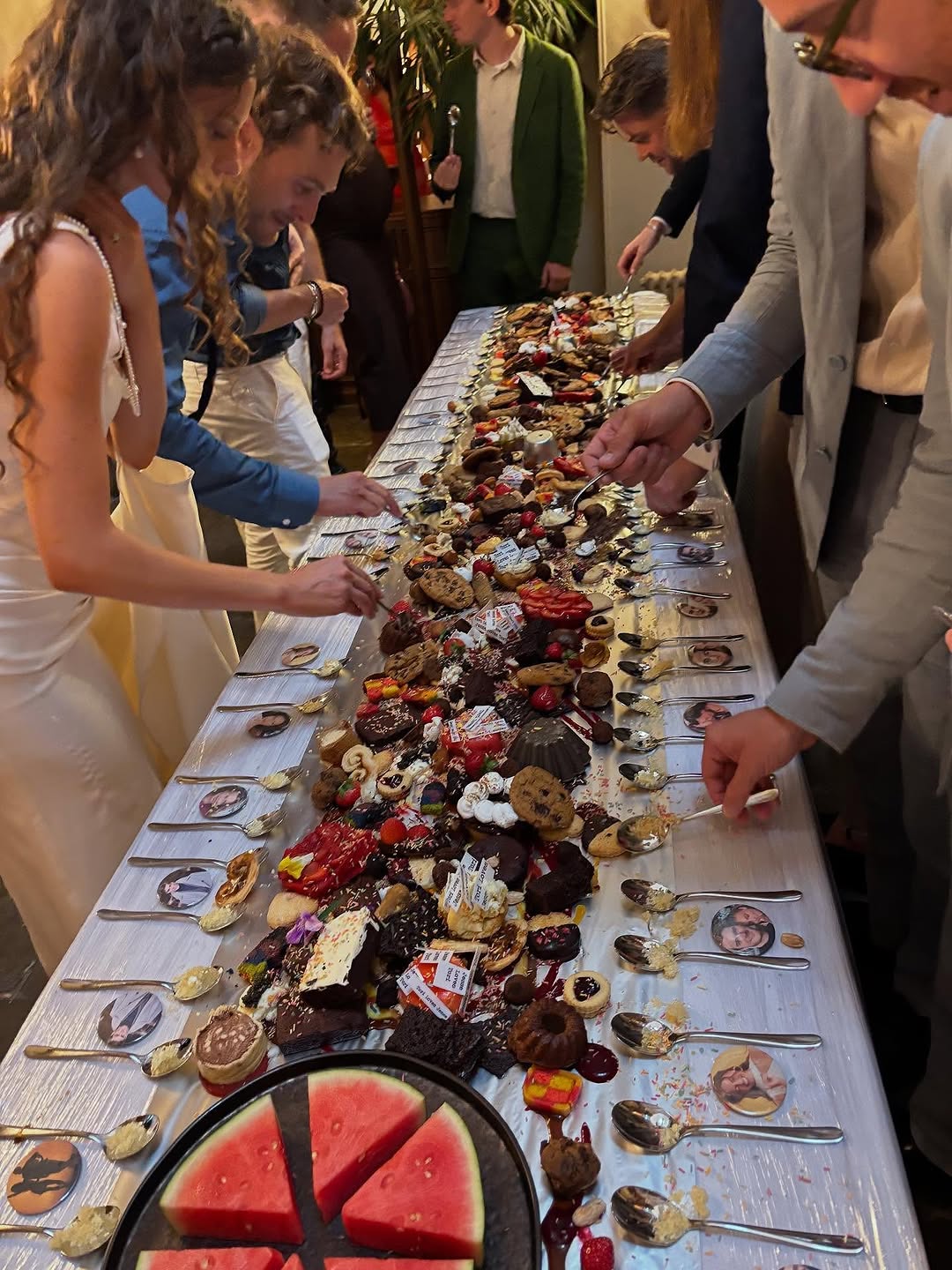
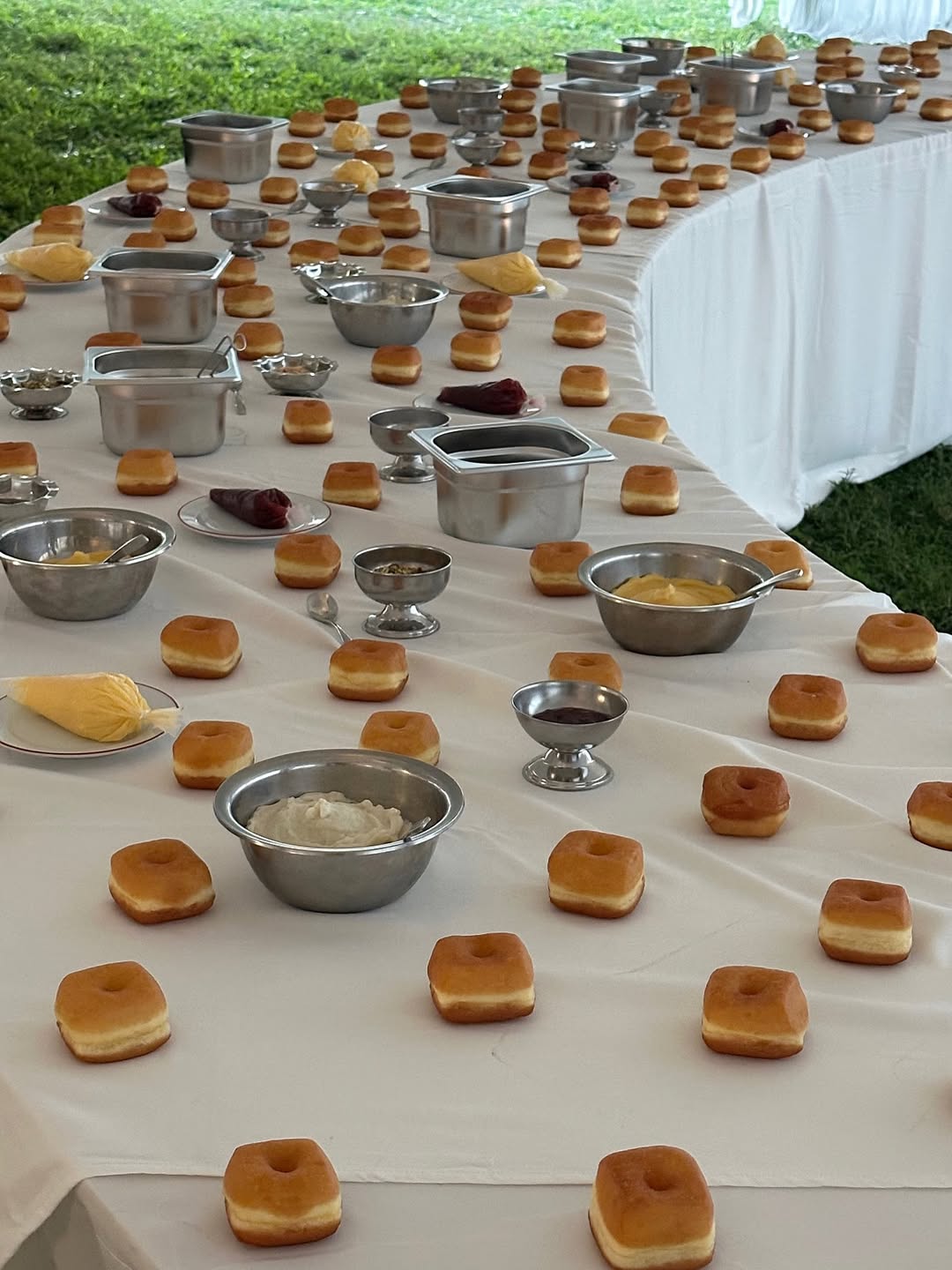
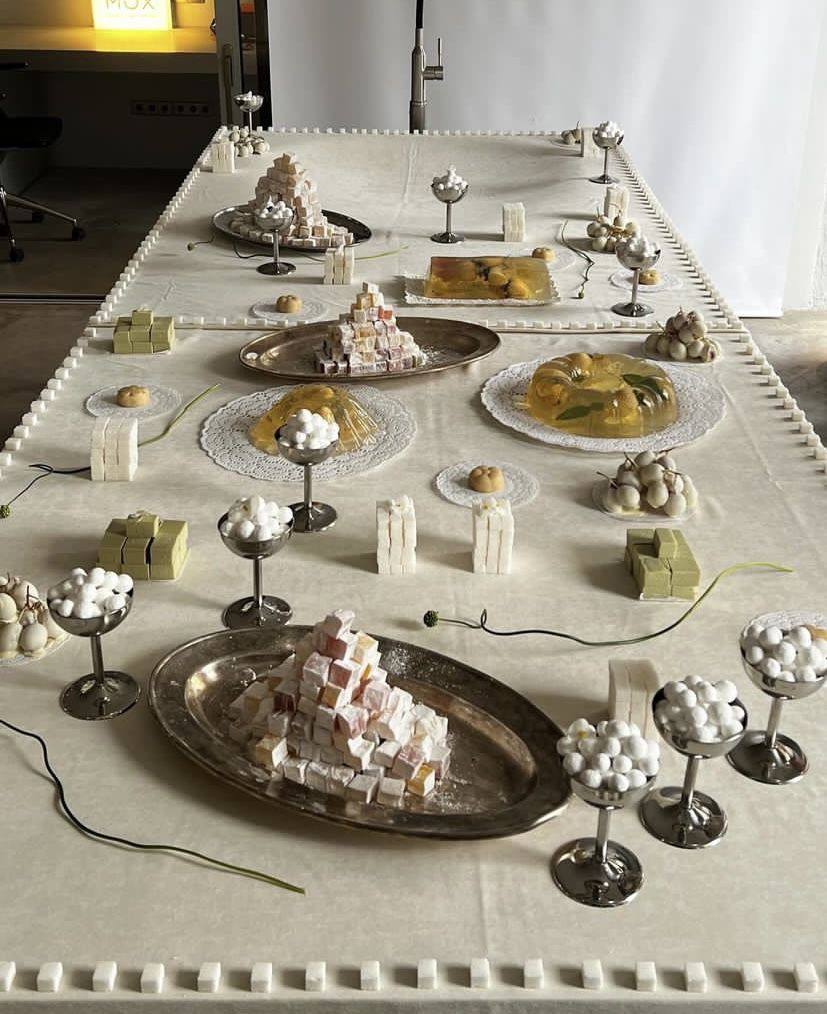
There’s a difference between a table that invites you in and one that holds you at arm’s length. Individual spoons, individual doily rounds, small saucers, and designated serving pieces signal that the food is meant to be eaten, not just admired. Think about the long table covered in every possible sweet thing, with guests leaning in from both sides, or make it devoted to one dessert like a donut bar with steel containers of various fillings — crème pâtissière, jam, mascarpone — placed among them, guests building their own.
What the dessert sits in — or on — is as important as the dessert itself.
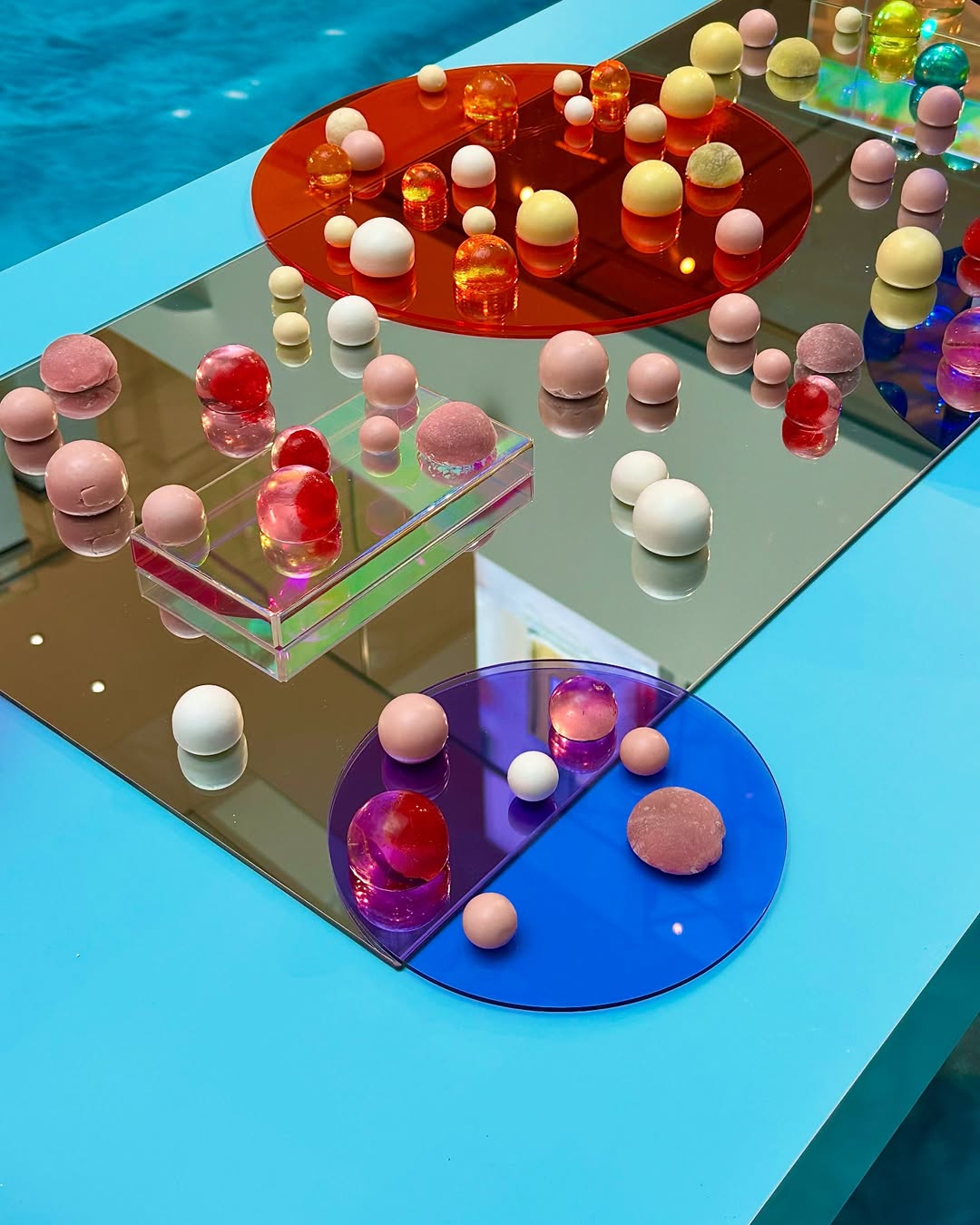
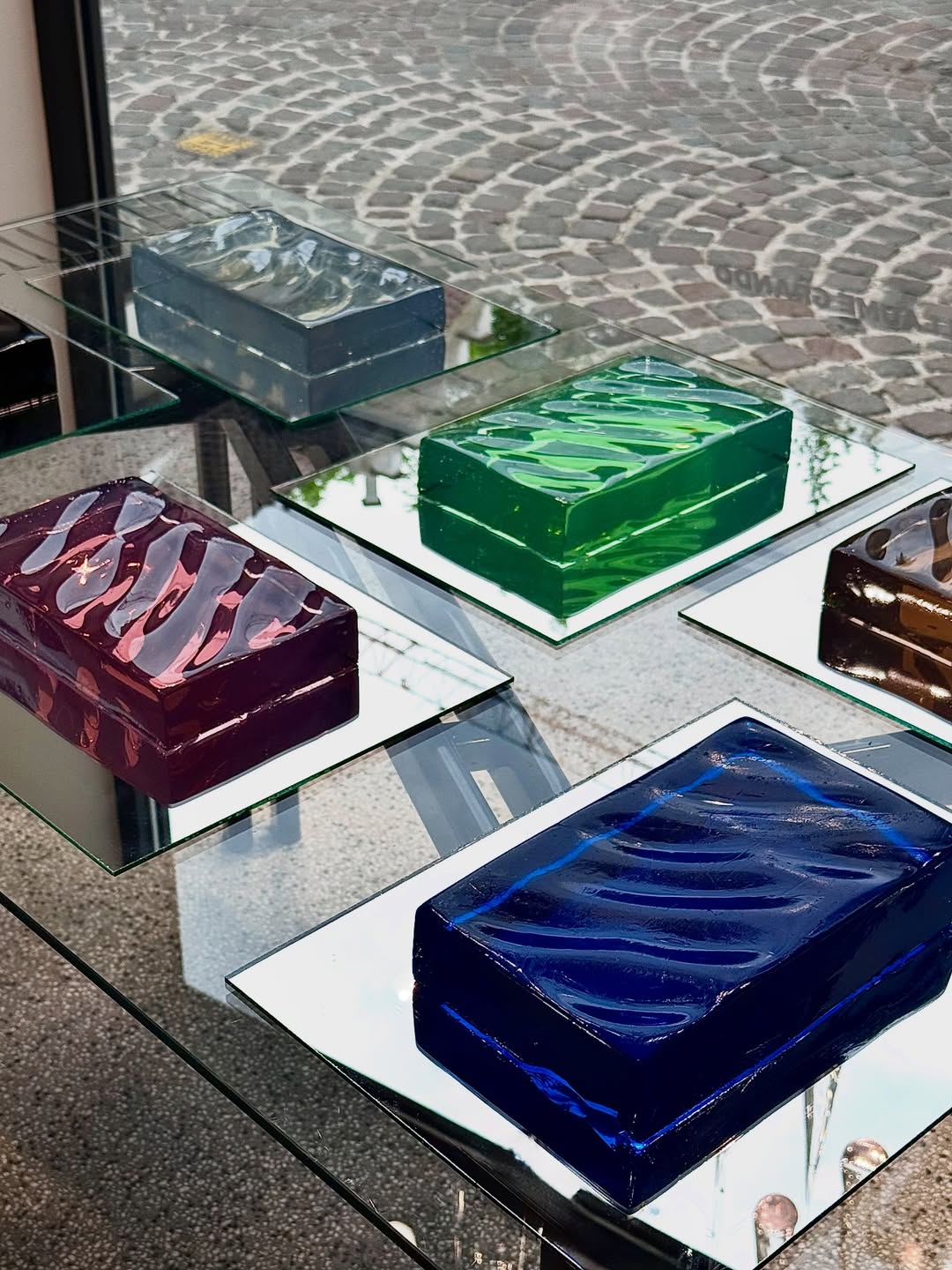
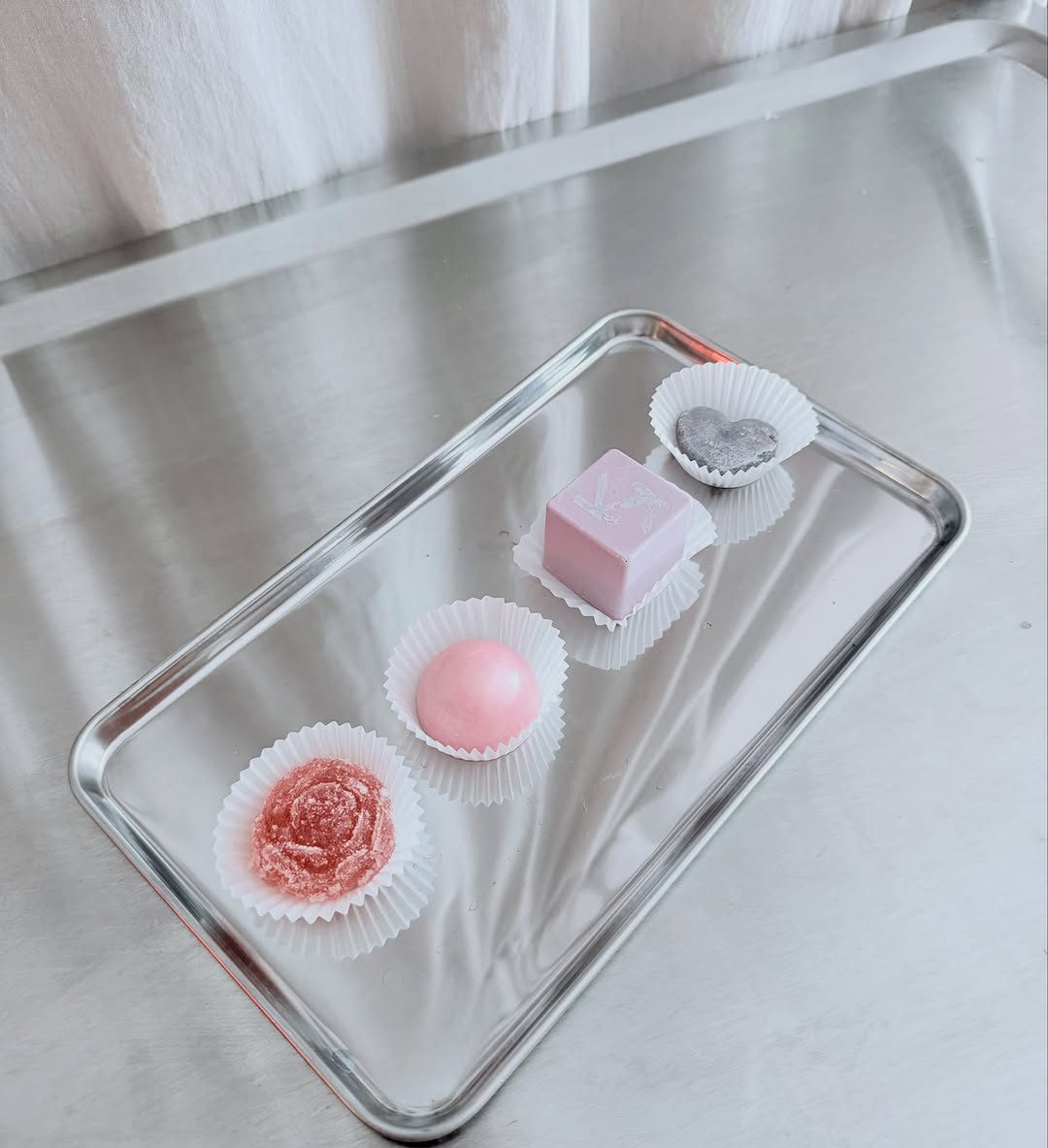
Mirror and acrylic trays. Colored acrylic discs in red, purple, and blue hold sphere bonbons and jelly drops, their reflections multiplying the display. Tinted surfaces make even a loose arrangement look considered.
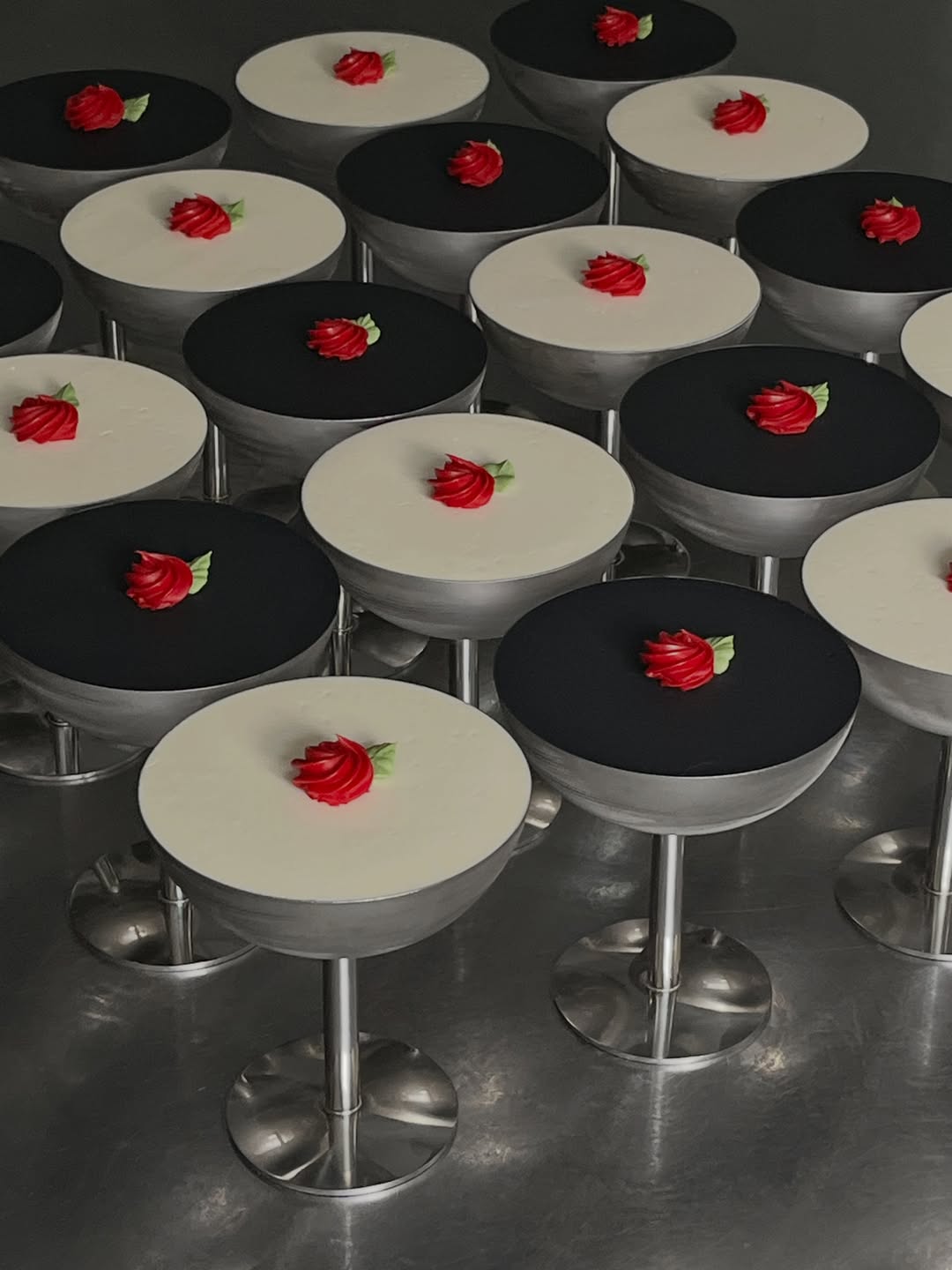
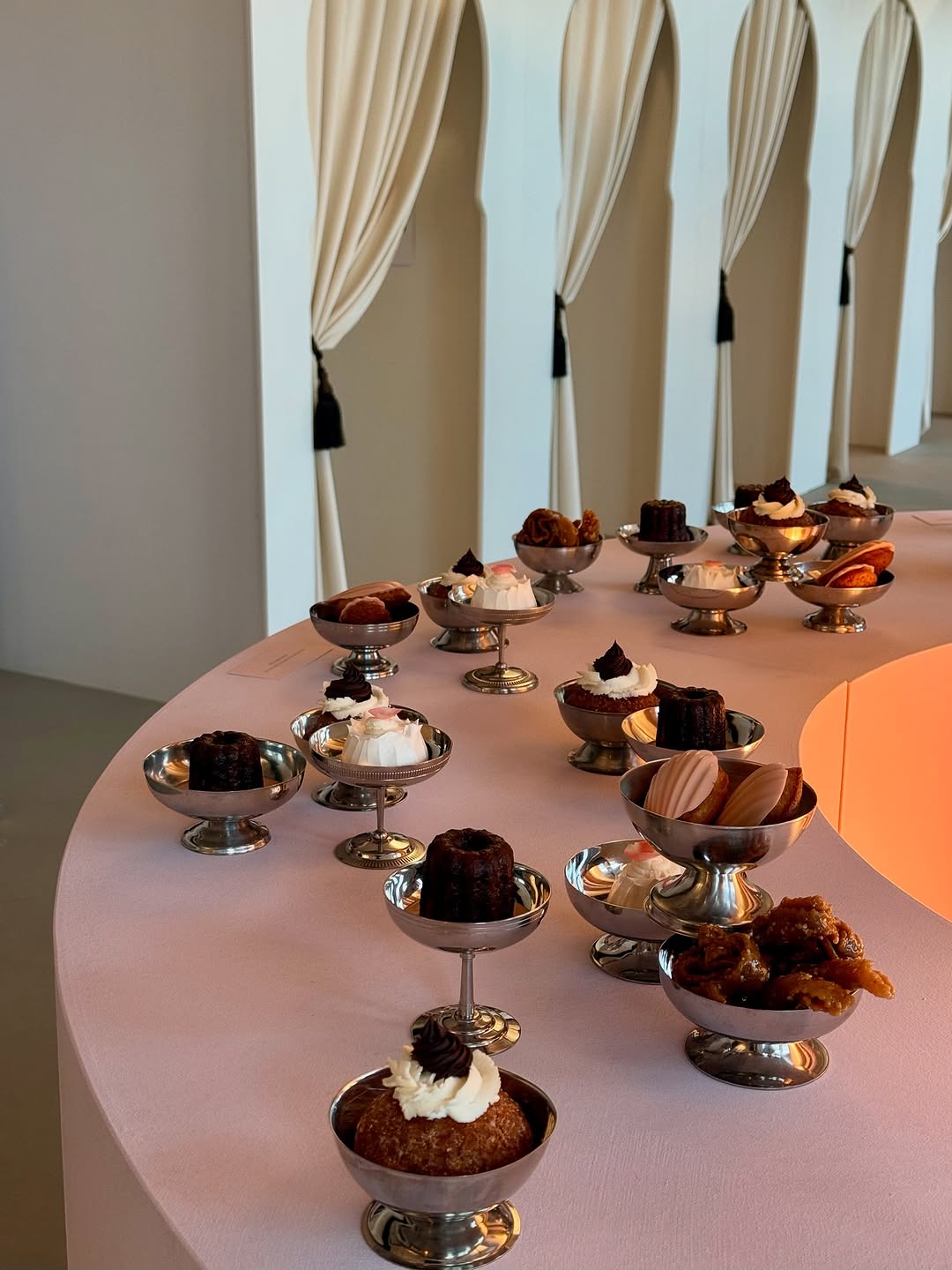
Silver coupe stands and compotes. The antique silver coupe elevates individual canelés, single madeleines, or small clusters of truffles, giving a table ceremony and height variation without visual noise.
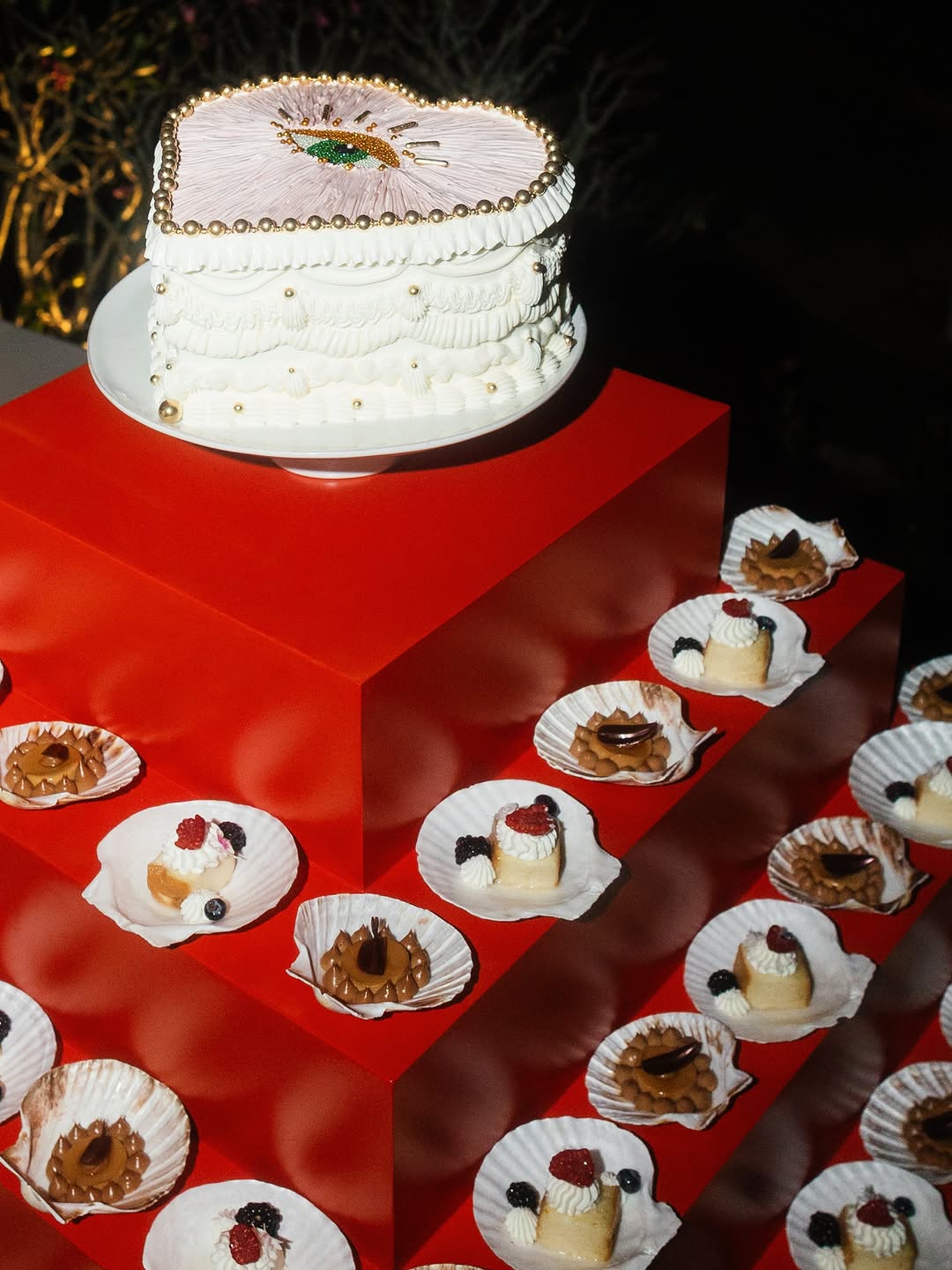
Scallop shells. Used as individual serving vessels for panna cotta, mini tarts, and berry desserts — scattered across a stepped red platform beneath a centerpiece cake, each shell functioning as its own small stage.
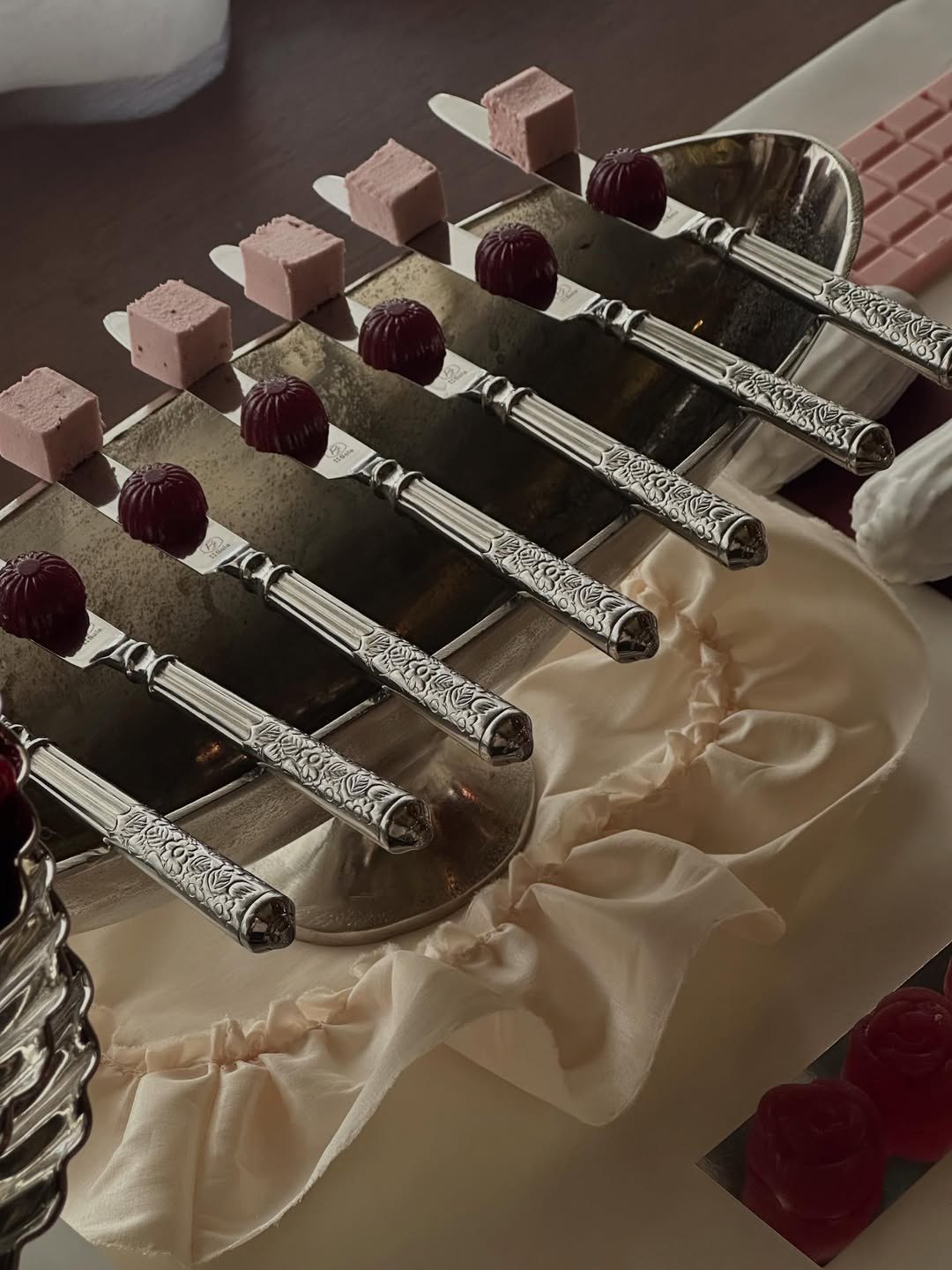
Ornate silver cutlery. A row of engraved silver butter knives laid flat, each carrying a pink marshmallow cube and a dark chocolate bonbon, is an image no cake stand could replicate.
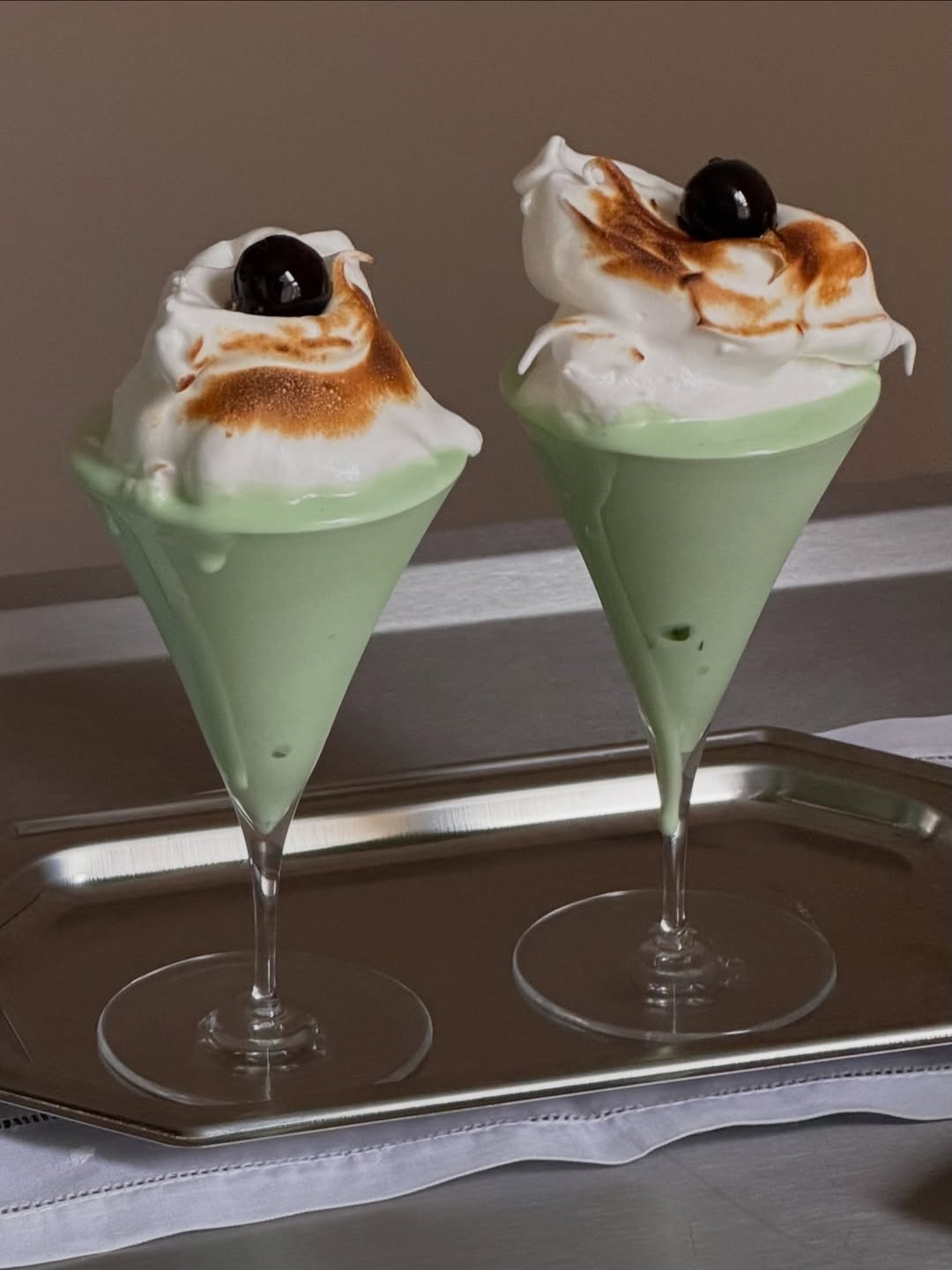
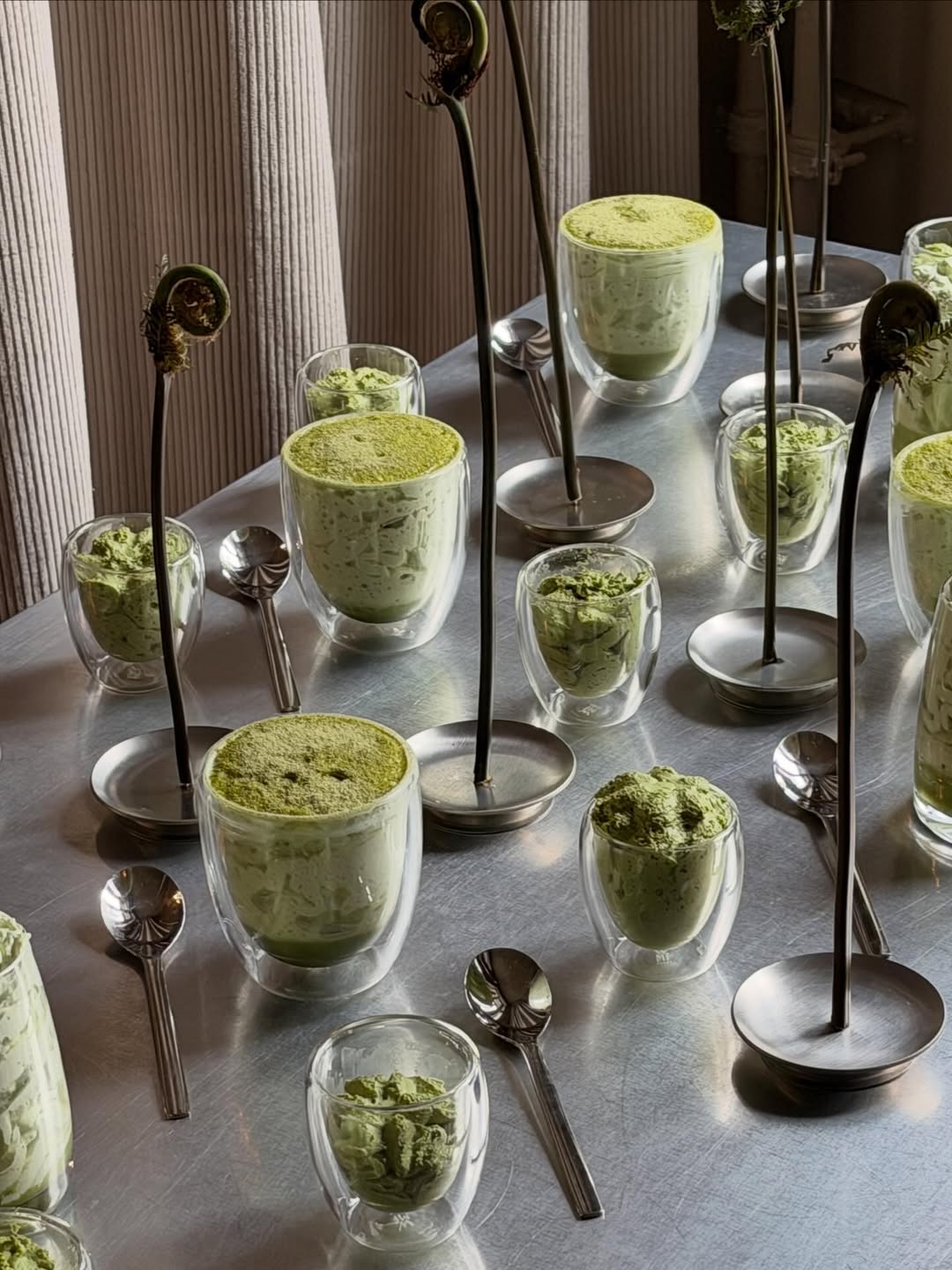
Double-walled glass cups. For something like a matcha tiramisu, where the visual of the layers is part of the appeal, clear glass is the right container. Fern fronds standing tall between the cups make the table feel overgrown, wild, botanical.